EP0360290B1 - Verfahren zur Herstellung eines Antipilzmittels - Google Patents
Verfahren zur Herstellung eines Antipilzmittels Download PDFInfo
- Publication number
- EP0360290B1 EP0360290B1 EP89117587A EP89117587A EP0360290B1 EP 0360290 B1 EP0360290 B1 EP 0360290B1 EP 89117587 A EP89117587 A EP 89117587A EP 89117587 A EP89117587 A EP 89117587A EP 0360290 B1 EP0360290 B1 EP 0360290B1
- Authority
- EP
- European Patent Office
- Prior art keywords
- afp
- product
- growth
- growth medium
- antifungal
- Prior art date
- Legal status (The legal status is an assumption and is not a legal conclusion. Google has not performed a legal analysis and makes no representation as to the accuracy of the status listed.)
- Expired - Lifetime
Links
Images
Classifications
-
- C—CHEMISTRY; METALLURGY
- C07—ORGANIC CHEMISTRY
- C07K—PEPTIDES
- C07K4/00—Peptides having up to 20 amino acids in an undefined or only partially defined sequence; Derivatives thereof
- C07K4/04—Peptides having up to 20 amino acids in an undefined or only partially defined sequence; Derivatives thereof from bacteria
-
- A—HUMAN NECESSITIES
- A01—AGRICULTURE; FORESTRY; ANIMAL HUSBANDRY; HUNTING; TRAPPING; FISHING
- A01N—PRESERVATION OF BODIES OF HUMANS OR ANIMALS OR PLANTS OR PARTS THEREOF; BIOCIDES, e.g. AS DISINFECTANTS, AS PESTICIDES OR AS HERBICIDES; PEST REPELLANTS OR ATTRACTANTS; PLANT GROWTH REGULATORS
- A01N63/00—Biocides, pest repellants or attractants, or plant growth regulators containing microorganisms, viruses, microbial fungi, animals or substances produced by, or obtained from, microorganisms, viruses, microbial fungi or animals, e.g. enzymes or fermentates
- A01N63/20—Bacteria; Substances produced thereby or obtained therefrom
-
- A—HUMAN NECESSITIES
- A23—FOODS OR FOODSTUFFS; TREATMENT THEREOF, NOT COVERED BY OTHER CLASSES
- A23B—PRESERVATION OF FOODS, FOODSTUFFS OR NON-ALCOHOLIC BEVERAGES; CHEMICAL RIPENING OF FRUIT OR VEGETABLES
- A23B11/00—Preservation of milk or dairy products
- A23B11/60—Preservation of cheese or cheese preparations
- A23B11/65—Preservation of cheese or cheese preparations by addition of preservatives
-
- A—HUMAN NECESSITIES
- A23—FOODS OR FOODSTUFFS; TREATMENT THEREOF, NOT COVERED BY OTHER CLASSES
- A23B—PRESERVATION OF FOODS, FOODSTUFFS OR NON-ALCOHOLIC BEVERAGES; CHEMICAL RIPENING OF FRUIT OR VEGETABLES
- A23B2/00—Preservation of foods or foodstuffs, in general
- A23B2/70—Preservation of foods or foodstuffs, in general by treatment with chemicals
- A23B2/725—Preservation of foods or foodstuffs, in general by treatment with chemicals in the form of liquids or solids
- A23B2/729—Organic compounds; Microorganisms; Enzymes
- A23B2/742—Organic compounds containing oxygen
- A23B2/754—Organic compounds containing oxygen containing carboxyl groups
-
- A—HUMAN NECESSITIES
- A23—FOODS OR FOODSTUFFS; TREATMENT THEREOF, NOT COVERED BY OTHER CLASSES
- A23B—PRESERVATION OF FOODS, FOODSTUFFS OR NON-ALCOHOLIC BEVERAGES; CHEMICAL RIPENING OF FRUIT OR VEGETABLES
- A23B2/00—Preservation of foods or foodstuffs, in general
- A23B2/70—Preservation of foods or foodstuffs, in general by treatment with chemicals
- A23B2/725—Preservation of foods or foodstuffs, in general by treatment with chemicals in the form of liquids or solids
- A23B2/729—Organic compounds; Microorganisms; Enzymes
- A23B2/783—Microorganisms; Enzymes
-
- A—HUMAN NECESSITIES
- A23—FOODS OR FOODSTUFFS; TREATMENT THEREOF, NOT COVERED BY OTHER CLASSES
- A23C—DAIRY PRODUCTS, e.g. MILK, BUTTER OR CHEESE; MILK OR CHEESE SUBSTITUTES; PREPARATION THEREOF
- A23C9/00—Milk preparations; Milk powder or milk powder preparations
- A23C9/12—Fermented milk preparations; Treatment using microorganisms or enzymes
- A23C9/13—Fermented milk preparations; Treatment using microorganisms or enzymes using additives
-
- C—CHEMISTRY; METALLURGY
- C12—BIOCHEMISTRY; BEER; SPIRITS; WINE; VINEGAR; MICROBIOLOGY; ENZYMOLOGY; MUTATION OR GENETIC ENGINEERING
- C12N—MICROORGANISMS OR ENZYMES; COMPOSITIONS THEREOF; PROPAGATING, PRESERVING, OR MAINTAINING MICROORGANISMS; MUTATION OR GENETIC ENGINEERING; CULTURE MEDIA
- C12N1/00—Microorganisms; Compositions thereof; Processes of propagating, maintaining or preserving microorganisms or compositions thereof; Processes of preparing or isolating a composition containing a microorganism; Culture media therefor
- C12N1/20—Bacteria; Culture media therefor
- C12N1/205—Bacterial isolates
-
- C—CHEMISTRY; METALLURGY
- C12—BIOCHEMISTRY; BEER; SPIRITS; WINE; VINEGAR; MICROBIOLOGY; ENZYMOLOGY; MUTATION OR GENETIC ENGINEERING
- C12P—FERMENTATION OR ENZYME-USING PROCESSES TO SYNTHESISE A DESIRED CHEMICAL COMPOUND OR COMPOSITION OR TO SEPARATE OPTICAL ISOMERS FROM A RACEMIC MIXTURE
- C12P1/00—Preparation of compounds or compositions, not provided for in groups C12P3/00 - C12P39/00, by using microorganisms or enzymes
- C12P1/04—Preparation of compounds or compositions, not provided for in groups C12P3/00 - C12P39/00, by using microorganisms or enzymes by using bacteria
-
- A—HUMAN NECESSITIES
- A23—FOODS OR FOODSTUFFS; TREATMENT THEREOF, NOT COVERED BY OTHER CLASSES
- A23V—INDEXING SCHEME RELATING TO FOODS, FOODSTUFFS OR NON-ALCOHOLIC BEVERAGES AND LACTIC OR PROPIONIC ACID BACTERIA USED IN FOODSTUFFS OR FOOD PREPARATION
- A23V2400/00—Lactic or propionic acid bacteria
- A23V2400/41—Pediococcus
- A23V2400/429—Urinaeequi
-
- C—CHEMISTRY; METALLURGY
- C12—BIOCHEMISTRY; BEER; SPIRITS; WINE; VINEGAR; MICROBIOLOGY; ENZYMOLOGY; MUTATION OR GENETIC ENGINEERING
- C12R—INDEXING SCHEME ASSOCIATED WITH SUBCLASSES C12C - C12Q, RELATING TO MICROORGANISMS
- C12R2001/00—Microorganisms ; Processes using microorganisms
- C12R2001/01—Bacteria or Actinomycetales ; using bacteria or Actinomycetales
-
- Y—GENERAL TAGGING OF NEW TECHNOLOGICAL DEVELOPMENTS; GENERAL TAGGING OF CROSS-SECTIONAL TECHNOLOGIES SPANNING OVER SEVERAL SECTIONS OF THE IPC; TECHNICAL SUBJECTS COVERED BY FORMER USPC CROSS-REFERENCE ART COLLECTIONS [XRACs] AND DIGESTS
- Y10—TECHNICAL SUBJECTS COVERED BY FORMER USPC
- Y10S—TECHNICAL SUBJECTS COVERED BY FORMER USPC CROSS-REFERENCE ART COLLECTIONS [XRACs] AND DIGESTS
- Y10S435/00—Chemistry: molecular biology and microbiology
- Y10S435/8215—Microorganisms
- Y10S435/822—Microorganisms using bacteria or actinomycetales
Definitions
- the present invention relates to an antifungal product (AFP) produced by Pediococcus species.
- the present invention relates to a method for producing the antifungal product (AFP) and to its use in preventing fungal (yeast and mold) growth in foods and other materials.
- Antimicrobial compounds produced by lactic acid bacteria have been previously described (Abdel-Bar, N., N. D. Harris, and R. L. Rill., J. Food Sci. 52 : 411-415 (1987); Angelo, J. A., Shahani, K. M., and A.D. Angelo, J. Dairy Sci. 63 : 52 (1980); and Branen, A. L., Go, H. C., and R. P. Genske, J. Food Sci. 40 : 446-450 (1975)).
- the compounds produced are usually bacteriocins, hydrogen peroxide and lactic acid (Raccach, M., CRC Crit. Rev. Microbiol. 14 : 291-309 (1987); and Dahiya, R.
- the pediococci are considered lactic acid bacteria and produce lactic acid (Mundt, J. O., W. G. Beattie, and F.R. Wieland, J. Bacteriol. 98 : 938-942 (1969)).
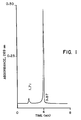
- Figure 1 shows a reverse phase HPLC chromatogram of the purified product (AFP) from Pediococcus acidilactici ATCC 25742.
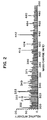
- Figure 2 shows the FAB mass spectrum of the partially purified product (AFP) of Figure 1.
- the present invention relates to a method for producing an antifungal product which comprises: incubating live cells of a Pediococcus species in a growth medium for the cells to produce an isolable antifungal product in the growth medium which inhibits the growth of Penicillium oxalicum as an assay strain.
- the present invention also relates to a method for producing an antifungal product (AFP) which comprises: incubating live cells of a Pediococcus species in a growth medium for the cells so as to produce an isolable amount of the product (AFP) in the growth medium, wherein the product (AFP) produced in the growth medium or separated from the growth medium inhibits the growth of Penicillium oxalicum , as an assay strain and wherein the product (AFP) is a compound containing valine and lactic acid having a molecular weight of less than about 500 daltons.
- AFP antifungal product
- the present invention further relates to a method for inhibiting fungal growth in a material in need thereof which comprises: adding to the material an antifungal product produced by a method which comprises incubating live cells of a Pediococcus species in a growth medium for the cells to produce an isolable amount of the antifungal product in the growth medium which inhibits the growth of Penicillium oxalicum as an assay strain.
- the present invention also relates to an antifungal product (AFP) produced by a Pediococcus sp which comprises a compound containing lactic acid and valine having a molecular weight of less than about 500 daltons, which is digested by protease and which inhibits Penicillium oxalicum , as an assay strain, in an optimal pH range between about pH 1 and 5.
- AFP antifungal product
- the present invention also relates to a method for producing an antifungal product (AFP) which comprises: incubating live cells of a Pediococcus species in a growth medium for the cells containing growth factors present in corn steep liquor, cysteine, garlic extract, milk digest, yeast extract, milk, egg or soy enzymatic digest or milk, egg or soy hydrolyzate which induce the formation of the product (AFP), containing a protein source and containing a carbon source, so as to produce the product (AFP) in the growth medium; and treating the growth medium which has been incubated so as to produce the product (AFP) with or without the live cells, wherein the product (AFP) inhibits the growth of Penicillium oxalicum spores as an assay strain in an assay with the product (AFP) and the Penicillium oxalicum spores mixed and wherein the product (AFP) comprises a compound containing valine and lactic acid having a molecular weight of less than about 500 daltons.
- AFP anti
- the preferred antifungal product is produced by Pediococcus acidilactici ATCC 25742. It is on deposit with the American Type Culture Collection, Beltsville, Maryland. Any Pediococcus strain, whether naturally occurring or genetically engineered, with genetic material (in chromosomes or plasmids) encoding for the antifungal product can be used to produce the product. Pediococcus acidilactici ATCC 25742 appears to be the most effective naturally occurring (non-genetically engineered) source of the preferred product (AFP).
- the medium must promote growth of cells and production of the antifungal product (AFP).
- the medium must contain protein and a carbon source to promote growth.
- the medium includes growth factors which promote the production of the product (AFP). Growth factors are cornsteep liquor, cysteine, garlic extract, milk digest, yeast extract, milk, egg or soy enzymatic digest or milk, egg or soy hydrolyzate.
- Proteinaceous or amino acid materials from natural sources are used in the growth medium.
- protein sources such as milk, whey, yeast, yeast extract or protein digest can be used.
- the carbon source can include fructose, sucrose, dextrose, or molasses.
- Minerals which facilitate growth of the cells such as manganese and magnesium salts are available in cornsteep liquor or can be added as pure salts.
- buffers such as alkali metal phosphates are used to maintain the pH.
- the cells are grown at a temperature between 10° and 50°C. Numerous variations of the nutrient medium and growth conditions will occur to those skilled in the art.
- the growth medium preferably is processed to eliminate most of the live cells and then the growth medium is concentrated or the antifungal product (AFP) is separated from the growth medium.
- AFP antifungal product
- the antifungal product can be dried, lyophilized, refrigerated or frozen prior to use.
- the preferred process for producing the product in a relatively unconcentrated form includes spray drying the growth medium after the antifungal product is produced in the medium. All of these methods are well known to those skilled in the art.
- the product can be separated from the growth medium by ultrafiltration, which is preferred, and by chromatographic methods including molecular sieve, ion exchange and high pressure liquid chromatography methods well known to those skilled in the art. Impurities can be removed from the product (AFP) using molecular sieves, ultrafiltration, reverse osmosis and other microporous filter means. Various organic solvents can also be used to extract the product from the growth medium, such as lower alkyl alcohols and esters. Preferably n-butanol isopropanol, acetone, ethyl acetate or ethanol and combinations with water are used. Essentially any chemical and/or mechanical method can be used for the separation.
- the preferred product comprises substantially a peptide which has a molecular weight of less than about 500 daltons, a pH optimum of 3 and is not sensitive to exposure to a temperature of 100°C for 60 minutes.
- the product was purified through the use of butanol extraction and HPLC. Chromatography was performed using reverse phase HPLC on a C8 preparative column. Amino acid analysis demonstrated the presence of the amino acid valine in the purified fraction. Mass spectral analysis demonstrated a molecular weight for the peptide of less than about 500 and above about 400 daltons. Substantial amounts of lactic acid can be present in the particular purified product (AFP)
- AFP inhibited the following representative fungi: Aspergillus flavus , A . niger , A . terreus , Chaetomium globosum , Cladosporium sp., Fusarium solani , Monilinia fructicola , Penicillium oxalicum , Penicillium sp, Trichoderma sp and Saccharomyces cerevisiae .
- the term "material” means any surface in need of treatment by the product.
- the term “material” includes living and non-living surfaces.
- the antifungal product (AFP) is preferably used in foods in an amount which inhibits P . oxalicum as the assay strain for at least 72 hours.
- the term “inhibition” means that the assay strain does not grow as effectively as without the product (AFP).
- the amount of product (AFP) used depends upon the number of fungal cells in the material to be treated.
- any food can be preserved by the method of the present invention especially pet foods; carbonated beverages; Cottage cheese; yogurt; margarine; bread; grains and nuts.
- the product (AFP) is especially useful in any food treated by the method of the present invention.
- the antifungal product is particularly useful in fermented foods, processed foods and preserved foods which are prone to fungal spoilage.
- Other food applications include silage, corn and peanut mold treatment to prevent aflatoxin contamination by mold.
- Various non-food materials such as paper, fabrics and plastic materials, can be treated with the product (AFP).
- the product (AFP) can be used to prevent infection in living tissue either in tissue culture or in an animal, particularly in mammals. Topical application of the product (AFP) to mammals either internal or external is preferred. Soaps, shampoos, hair and skin conditioners, and cosmetics can be combined with the product (AFP).
- Example 1 show the isolation of and testing of the product (AFP) from Pediococcus acidilactici ATCC 25742 which is preferred.
- Product (AFP) having similar antifungal characteristics to the preferred product (AFP) are obtained from other strains of Pediococcus as shown hereinafter in Example 1.
- the Pediococci sp. were cultivated for 18 hours on MRSTM agar at 35°C in 1.0 cm circular patches on the surface of the agar. Each plate was then overlayed with 8ml of MRSTM soft agar containing 105 spores/ml of Penicillium oxalicum . Fungal spore suspensions were prepared in sterile distilled water and adjusted to an absorbence of 0.1 at 530nm. After 48 hours, the inhibitory zone surrounding each 1.0 cm circular cultural patch was examined. The results are shown in Table 1.
- Pediococcus acidilactici ATCC 25742 is the best producer of an antifungal product (AFP).
- Pediococcus pentosaceus also produced good amounts of the antifungal product (AFP).
- This Example shows nutritional requirements of the preferred strain in various growth media.
- Pediococcus acidilactici ATCC 25742 was grown for 18 hours at 35°C in 100 ml of MRSTM broth supplemented with different nutritional additives. After 18 hours the culture was then centrifuged at 10,000 x g for 20 minutes at 4°C and the supernatant was then subjected to further extractions. The supernatant was concentrated on a flash evaporator to dryness and resuspended in 10 ml of distilled water. This was mixed with 100 ml n-butanol. The water-butanol mixture was then placed in a separatory funnel and allowed to equilibrate for 60 minutes at 25°C.
- This Example shows the inhibitory spectrum of the product (AFP) from Pediococcus acidilactici ATCC 25742 against various fungal species.
- Pediococcus acidilactici ATCC 25742 was grown for 18 hours at 35°C in one liter of MRSTM broth supplemented with 1.0% Edamin STM (Kraft, Norwich, NY). The culture was centrifuged at 10,000 xg at 4°C for 20 minutes. The supernatant was then concentrated using a flash evaporator and concentrated to 100 ml. This material was then extracted with 900 ml of n-butanol, placed in a separatory funnel and equilibrated for 60 minutes at 25°C.
- AFP Aspergillus flavus , A . niger , A . terreus , Chaetomium globosum , Cladosporium sp ., Fusarium solani , Monilinia fructicola , Penicillium oxalicum , Trichoderma sp , Penicillium sp . and Saccharomyces cerevisiae .
- Pediococcus acidilactici ATCC 25742 was inoculated into 1.0 liter of MRSTM broth supplemented with 1.0% Edamin STM. The culture was incubated for 18 hours at 35°C. The material was then processed in the following manner:
- fractions were assayed in a sterile tube using 50 ul of assay material was mixed with 50 ul of Penicillium oxalicum (105 spores/ml concentration standardized at A 530 nm to 0.1) and combined with 400 ul of MRSTM soft agar.
- Samples of the butanol extracted, concentrated material were adjusted to pH values in a range from 1.0 to 12.0 using 1.0 N HCl or 1.0 N NaOH. Antifungal activities were then measured after storage at 4°C for 24 hours. One ml samples of the butanol extracted, concentrated material was incubated at various temperatures 25°, 37°, 60°, 100° and 121°C for various time intervals. Antifungal activities were then measured to determine whether there was any degradation.
- AFP antifungal product
- Amino acid profiles for purified fractions were obtained using a modification of the PICO-TAGTM system (Waters Associates, Milford, MA). The method involves sample hydrolysis followed by derivatization with phenylisothiocyanate and subsequent analysis by HPLC (Mundt, J. O.,W. G. Beattie, and F.R. Wieland, J. Bacteriol. 98 : 938-942 (1969)). Amino acids were identified by comparing the retention times of a known standard to that of the active fraction hydrolyzate.
- Mass spectra were obtained using a VG Micromass 7070 EQ magnetic sector mass spectrometer. Ionization was accomplished using an Ion TechTM FAB gun accelerating neutral xenon atoms to 8KV. The sample matrix was dithiothreitol:dithioerythritol (3:1).
- AFP antifungal activity of the product (AFP) of Example 4 was determined using various enzymes obtained from Sigma Chemical Co., St. Louis, MO.
- the enzymes included protease, lysozyme, lipase, DNase and RNase. Stock solutions (10mg/ml) of each of the enzymes in their appropriate buffers were prepared. Partially purified antifungal product (AFP) was incubated with each stock enzyme for 60 minutes at the appropriate temperature. Following the incubation, each preparation was then boiled at 100°C for 3 minutes to inactivate the enzymes. The antifungal product (AFP) was then assayed for activity.
- the product (AFP) was sensitive to protease.
- the antifungal activity was not affected by lipase, lysozyme, DNase, RNase or heating to 100°C for 60 minutes. Autoclaving at 121°C for 15 minute at 15 lbs/in2 did not affect activity. Activity was observed to be most stable at pH 1 to 5 with a loss in activity above a pH of about 5. Dialysis experiments using various membranes demonstrated the molecular size of the antifungal product (AFP) to be less than 1000 daltons.
- the example shows membrane ultrafiltration of the product (AFP).
- Pediococcus acidilactici ATCC 25742 was grown in 1 liter of MRSTM broth supplemented with 1% yeast extract at 35°C for 18 hours.
- the cells were centrifuged at 10,000 x g for 15 minutes at 4°C. The supernatant was collected and filter sterilized through a 0.22 micrometer filter.
- the filter sterilized supernatant was then placed in an AmiconTM Model 8200 Ultrafiltration cell (Division of W. R. Grace Co., Danvers, MA).
- the supernatant was then filtered through two DiafloTM ultrafiltration membranes, YM10 and YC05. Their molecular weight cutoffs are 10,000 and 500 daltons, respectively.
- Antifungal activity assays were performed on the filtrates from the membrane ultrafiltration.
- the starting volume was 1000 ml and the final volume was 950 ml. This showed that the antifungal product had a molecular weight of less than 500 daltons.
- the example shows the concentration of the ultrafiltrated product (AFP).
- the product (AFP) was prepared using the AmiconTM Model 8200 ultrafiltration cell. The supernatant was filtered through a YM10 DiafloTM and a YC05 DiafloTM ultrafiltration membrane. The filtrate from the YC05 membrane was then subjected to 10 fold concentration using flash evaporation or using lyophilization.
- the (AFP) product was assayed undiluted and serially diluted 1:1 and 1:2.
- the flash evaporated YC05 filtrate product (AFP) showed antifungal activity in the undiluted and 1:1 diluted preparations.
- the lyophilized YC05 filtrate product (AFP) showed antifungal activity in the undiluted, 1:1 and 1:2 preparations.
- the product was added to commercial spaghetti sauce (pH 4.3) and examined for its ability to inhibit the growth of P . oxalicum .
- the spaghetti sauce contained the following ingredients: crushed tomatoes, soybean oil, salt, olive oil, romano cheese, dehydrated garlic spice, and natural flavoring.
- Spaghetti sauce (20 g) was placed in a sterile petri dish, and P . oxalicum was added to result in a final concentration of 2.5 x 10³ spores/gm of spaghetti sauce.
- AFP (1 ml) made as in Example 3 was mixed with the sauce in the experimental plate. The petri dishes were then incubated at 30°C for several days. The growth of P . oxalicum was observed after 48 hours in the control (no AFP added), whereas the experimental that contained AFP did not have observable fungal growth even after 120 hours.
- the product (AFP) was added to yogurt (pH 4.1) and examined for its ability to inhibit the growth of P . oxalicum .
- the yogurt contained the following ingredients: cultured skim milk, gelatin and modified food starch and live yogurt cultures.
- Yogurt (20 g) was placed in a sterile petri dish, and P . oxalicum was added to result in a final concentration of 2.5 x 10³ spores/gm of yogurt.
- AFP (1 ml) made as in Example 3 was mixed with the yogurt in the experimental plate. The plates were incubated at 30°C for several days. The growth of P . oxalicum was observed after 96 hours in the control (no AFP added), whereas the experimental plate that contained AFP did not have observable fungal growth even after 144 hours.
- the product (AFP) was added to soft margarine (pH 5.0) and examined for its ability to inhibit the growth of P . oxalicum .
- the soft margarine contained the following ingredients: liquid soybean oil, partially hydrogenated soybean oil, water, salt, whey, vegetable mono and diglycerides, soybean lecithin, sodium benzoate and citric acid.
- Soft margarine (20 g) was placed in a sterile petri dish, and P . oxalicum was added to result in a final concentration of 2.5 x 10³ spores/gm of margarine.
- AFP (1 ml) made as in Example 3 was mixed with the margarine in the experimental plate. The petri dishes were then incubated at 30°C for several days. The growth of P . oxalicum was observed after 96 hours in the control (no AFP added), whereas the experimental plate that contained AFP did not have observable fungal growth even after 144 hours.
- the product was added to cheese slices and examined for its ability to inhibit the growth of P . oxalicum .
- the cheese contained the following ingredients: milk, cheese culture, salt, enzymes, calcium chloride, water, skim milk cheese, whey, cream, sodium citrate, salt and sorbic acid.
- Cheese slices (20 g) were placed in a sterile petri dish, and P . oxalicum was added to result in a final concentration of 2.5 x 10³ spores/gm of cheese slices.
- AFP (1 ml) made as in Example 3 was mixed with the cheese slices in the experimental plate. The petri dishes were then incubated at 30°C for several days. The growth of P . oxalicum was observed after 48 hours in the control (no AFP added), whereas the experimental that contained AFP did not have observable fungal growth even after 120 hours.
- the product (AFP) was added to Cottage cheese (pH 5.1) and examined for its ability to inhibit the growth of P . oxalicum .
- the Cottage cheese contained the following ingredients: cultured skim milk, milk cream, salt, stabilizer (guar gum, locust bean gum and carrogeenan), lactic acid and phosphoric acid.
- Cottage cheese (20 g) was placed in a sterile petri dish, and P . oxalicum was added to result in a final concentration of 2.5 x 10³ spores/gm of Cottage cheese.
- AFP (1 ml) made as in Example 3 was mixed with the experimental plate. The petri dishes were then incubated at 30°C for several days. The growth of P . oxalicum was observed after 72 hours in the control (no AFP added), whereas the experimental plate that contained AFP did not have observable fungal growth even after 120 hours.
- the product (AFP) was added to pepperoni slices (pH 4.8) and examined for its ability to inhibit the growth of P . oxalicum .
- the pepperoni contained the following ingredients: pork, beef, salt, water, dextrose, natural spices, lactic acid, starter culture, oleoresin, paprika, dehydrated garlic, sodium nitrite, BHA, BHT and citric acid.
- Pepperoni slices (20 g) were placed in a sterile petri dish, and P . oxalicum was added to result in a final concentration of 2.5 x 10³ spores/gm of pepperoni slices.
- AFP (1 ml) made as in Example 3 was mixed with the pepperoni slices in the experimental plate.
- the petri dishes were then incubated at 30°C for several days.
- the growth of P . oxalicum was observed after 36 hours in the control (no AFP added), whereas the experimental that contained AFP did not have observable fungal growth even after 144 hours.
Landscapes
- Life Sciences & Earth Sciences (AREA)
- Engineering & Computer Science (AREA)
- Chemical & Material Sciences (AREA)
- Zoology (AREA)
- Wood Science & Technology (AREA)
- Organic Chemistry (AREA)
- Health & Medical Sciences (AREA)
- Polymers & Plastics (AREA)
- General Health & Medical Sciences (AREA)
- Food Science & Technology (AREA)
- Microbiology (AREA)
- Genetics & Genomics (AREA)
- Biotechnology (AREA)
- Biochemistry (AREA)
- Bioinformatics & Cheminformatics (AREA)
- General Engineering & Computer Science (AREA)
- Medicinal Chemistry (AREA)
- Virology (AREA)
- Plant Pathology (AREA)
- Agronomy & Crop Science (AREA)
- Molecular Biology (AREA)
- Mycology (AREA)
- Biophysics (AREA)
- Tropical Medicine & Parasitology (AREA)
- Chemical Kinetics & Catalysis (AREA)
- Environmental Sciences (AREA)
- Dentistry (AREA)
- Pest Control & Pesticides (AREA)
- Proteomics, Peptides & Aminoacids (AREA)
- General Chemical & Material Sciences (AREA)
- Biomedical Technology (AREA)
- Medicines Containing Material From Animals Or Micro-Organisms (AREA)
- Preparation Of Compounds By Using Micro-Organisms (AREA)
- Medicines That Contain Protein Lipid Enzymes And Other Medicines (AREA)
- Acyclic And Carbocyclic Compounds In Medicinal Compositions (AREA)
- Agricultural Chemicals And Associated Chemicals (AREA)
- Organic Low-Molecular-Weight Compounds And Preparation Thereof (AREA)
- Peptides Or Proteins (AREA)
- Food Preservation Except Freezing, Refrigeration, And Drying (AREA)
- Coloring Foods And Improving Nutritive Qualities (AREA)
Claims (31)
- Verfahren zum Herstellen eines Antipilzmittels, welches umfaßt:
Inkubieren lebender Zellen einer Pediococcus-Art in einem Kulturmedium für die Zellen, um ein isolierbares Antipilzmittel in dem Kulturmedium herzustellen, welches das Wachstum von Penicillium oxalicum als Teststamm hemmt. - Verfahren zum Herstellen eines Antipilzmittels (antifungal product; AFP), welches umfaßt:
Inkubieren lebender Zellen einer Pediococcus-Art in einem Kulturmedium für die Zellen, um eine isolierbare Menge des Mittels (AFP) in dem Kulturmedium herzustellen, worin das Mittel (AFP), das in dem Kulturmedium hergestellt oder von dem Kulturmedium getrennt wird, das Wachstum von Penicillium oxalicum als Teststamm hemmt, und worin das Mittel (AFP) eine Valin- und Milchsäure-enthaltende Verbindung umfaßt und ein Molekulargewicht von weniger als ungefähr 500 Dalton besitzt. - Verfahren zum Herstellen eines Antipilzmittels (AFP), welches umfaßt:(a) Kultivieren einer Pediococcus-Art in der Gegenwart von Aminosäure oder Peptid, Protein, Proteinhydrolysat oder enzymatisch verdautem Protein in einem Kulturmedium; undb) Isolieren des Antipilzmittels (AFP) aus dem Kulturmedium, worin das Mittel (AFP), welches eine Valin- und Milchsäure-enthaltende Verbindung umfaßt und ein Molekulargewicht von weniger als ungefähr 500 Dalton besitzt durch Protease verdaut wird und das Wachstum von Penicillium oxalicum als Teststamm in einem optimalen pH-Bereich zwischen ungefähr pH 1 bis 5 hemmt.
- Verfahren nach Anspruch 3, worin das enzymatisch verdaute Protein enzymatisch verdautes Lactalbumin ist.
- Verfahren nach Anspruch 3, worin das enzymatisch verdaute Protein enzymatisch verdautes Eialbumin ist.
- Verfahren nach Anspruch 3, worin das Proteinhydrolysat Hefeextrakt ist.
- Verfahren nach Anspruch 3, worin die Aminosäure Cystein ist.
- Verfahren nach Anspruch 3, worin das enzymatisch verdaute Protein enzymatisch verdautes Kasein ist.
- Verfahren nach Anspruch 3, worin das Mittel (AFP) als Puder bereitgestellt wird.
- Verfahren zum Herstellen eines Antipilzmittels (AFP), welches umfaßt:(a) Inkubieren lebender Zellen einer Pediococcus-Art in einem Wachstumsmedium für die Zellen, enthaltend Wachstumsfaktoren, die in Maisquellwasser vorhanden sind, Cystein, Knoblauchextrakt, Milchaufschluß, Hefeextrakt, enzymatisch verdaute(s) Milch, Ei oder Soja oder Milch-Ei- oder Sojahydrolysat, welche die Bildung des Mittels (AFP) induzieren, enthaltend eine Proteinquelle und enthaltend eine Kohlenstoffquelle, um das Mittel (AFP) in dem Kulturmedium herzustellen; und(b) Behandeln des Kulturmediums, das inkubiert worden ist, um das Mittel (AFP) herzustellen, mit oder ohne lebende Zellen, worin das Mittel (AFP) das Wachstum von Penicillium oxalicum-Sporen als Teststamm in einem Assay mit dem Mittel (AFP) und den darunter gemischten Pencillium oxalicum-Sporen hemmt, und worin das Mittel (AFP) eine Valin- und Milchsäure-enthaltende Verbindung umfaßt und ein Molekulargewicht von weniger als ungefähr 500 Dalton besitzt.
- Verfahren nach Anspruch 10, worin das Kulturmedium, welches inkubiert wird, Hefeextrakt für Wachstumsfaktoren, einen Kasein- oder Sojaaufschluß als Proteinquelle, Maisquellwasser als Quelle essentieller Mineralien und der Wachstumsfaktoren, und Saccharose, Dextrose, Fructose oder Melasse als Kohlenstoffquelle enthält.
- Verfahren nach Anspruch 10, worin das Kulturmedium mit den lebenden Zellen getrocknet wird, nachdem das Kulturmedium inkubiert worden ist.
- Verfahren nach Anspruch 10, worin das Mittel (AFP) teilweise von wenigstens einigen Bestandteilen des Kulturmediums abgetrennt wird.
- Verfahren zum Herstellen eines Antipilzmittels (AFP), welches umfaßt:(a) Inkubieren lebender Zellen einer Pediococcus-Art mit den Antipilzeigenschaften von Pediococcus acidilactici ATCC 25742 in einem Kulturmedium für die Zellen, enthaltend Wachstumsfaktoren, die in Maisquellwasser vorhanden sind, Cystein, Knoblauchextrakt, Milchaufschluß, Hefeextrakt, enzymatisch verdaute(s) Milch, Ei oder Soja, oder Milch-, Ei- oder Sojahydrolysat, oder Melasse, welche die Bildung des Mittels (AFP) induzieren, enthaltend eine Proteinquelle und enthaltend eine Kohlenstoffquelle, um dadurch das Mittel (AFP) in dem Nährmedium herzustellen; und(b) Behandeln des Kulturmediums, welches inkubiert worden ist, um das Mittel (AFP) herzustellen, mit oder ohne lebende Zellen, worin das Mittel (AFP) das Wachstum von Penicillium oxalicum-Sporen in einem Assay mit dem Mittel (AFP) und untergemischten Penicillium oxalicum-Sporen hemmt, und worin das Produkt (AFP) eine Valin- und Milchsäure-enthaltende Verbindung umfaßt und ein Molekulargewicht von weniger als 500 Dalton besitzt.
- Verfahren nach Anspruch 14, worin das Kulturmedium mit den lebenden Zellen der Pediococcus-Art getrocknet wird, nachdem das Kulturmedium inkubiert worden ist, um das Mittel (AFP) herzustellen.
- Verfahren nach Anspruch 14, worin das Mittel (AFP) wenigstens teilweise von den Bestandteilen des Kulturmediums abgetrennt wird.
- Verfahren nach Anspruch 14, worin die Pediococcus-Art in dem Kulturmedium bei einer Temperatur zwischen ungefähr 10°C und 50°C inkubiert und danach getrocknet wird, um das Mittel (AFP) herzustellen.
- Verfahren nach Anspruch 14, worin das Kulturmedium Hefeextrakt für die Wachstumsfaktoren, einen Kasein- oder Sojaaufschluß als Proteinquelle, Maisquellwasser als Quelle essentieller Mineralien und der Wachstumsfaktoren, und Saccharose, Dextrose, Fructose oder Melasse als Kohlenstoffquelle enthält.
- Verfahren zum Herstellen eines Antipilzmittels (AFP), welches umfaßt:(a) Inkubieren von Zellen einer Pediococcus-Art mit den Antipilzeigenschaften des Pediococcus acidilactici ATCC 25742 hinsichtlich der Hemmung des Wachstums von Penicillium oxalicum als Teststamm in einem Kulturmedium für die Zellen, enthaltend Wachstumsfaktoren, die in Maisquellwasser vorhanden sind, Cystein, Knoblauchextrakt, Milchaufschluß, Hefeextrakt, enzymatisch verdaute(s) Milch, Ei oder Soja, oder Milch-, Ei- oder Sojahydrolysat, welche die Bildung des Mittels (AFP) induzieren, und enthaltend eine Kohlenstoffquelle, um das Mittel (AFP) in dem Nährmedium herzustellen, worin das Mittel (AFP) das Wachstum von Penicillium oxalicum-Sporen als Teststamm in einem Assay mit dem Mittel (AFP) und untergemischten Penicillium oxalicum-Sporen hemmt;(b) Passieren des inkubierten Kulturmediums durch eine mikroporöse Filtervorrichtung, welche das Mittel AFP passieren läßt und welche andere Bestandteile des Kulturmediums zurückhält.
- Verfahren nach Anspruch 19, worin das Mittel (AFP) nach dem Passieren durch das mikroporöse Filter getrocknet wird.
- Verfahren nach Anspruch 19, worin zusätzlich das Mittel (AFP) nach dem Passieren durch das mikroporöse Filter unter Verwendung von Flüssigchromatographie weiter gereinigt wird.
- Verfahren nach Anspruch 1, worin das Kulturmedium, welches inkubiert werden soll, vor dem Inkubieren der Zellen pasteurisiert oder sterilisiert wird.
- Verfahren zum Hemmen des Pilzwachstums in einem Material, welches umfaßt:
Zufügen eines Antipilzmittels (AFP), hergestellt durch ein Verfahren, welches das Inkubieren lebender Zellen einer Pediococcus-Art in einem Kulturmedium für die Zellen umfaßt, um eine isolierbare Menge des Antipilzmittels in dem Kulturmedium herzustellen, welches das Wachstum von Penicillium oxalicum als Teststamm hemmt, zu dem Material. - Verfahren zum Verhindern von Pilzwachstum in einem Material, welches umfaßt:
Zufügen eines Antipilzmittels (AFP), hergestellt durch ein Verfahren, welches das Inkubieren lebender Zellen einer Pediococcus-Art in einem Kulturmedium für die Zellen umfaßt, um eine isolierbare Menge des Mittels (AFP) in dem Kulturmedium herzustellen, zu dem Material, worin das Mittel (AFP), hergestellt in dem Medium oder abgetrennt von dem Kulturmedium, das Wachstum von Penicillium oxalicum als Teststamm hemmt, und worin das Mittel (AFP) eine Valin- und Milchsäure-enthaltende Verbindung umfaßt und ein Molekulargewicht von weniger als ungefähr 500 Dalton besitzt. - Verfahren nach Anspruch 24, worin das Material ein Lebensmittel ist.
- Verfahren nach Anspruch 25, worin das Lebensmittel ein Haustierfutter, ein mit Kohlensäure versetztes Getränk, Hüttenkäse, Yoghurt, Margarine oder Aufstrich, Brot, Getreide und Nüsse ist.
- Verfahren nach Anspruch 24, worin das Material Lebendgewebe ist.
- Antipilzmittel (AFP), herstellbar durch eine Pediococcus-Art, welches eine Milchsäure- und Valin-enthaltende Verbindung umfaßt und ein Molekulargewicht von weniger als ungefähr 500 Dalton besitzt, welches durch Protease verdaut wird und welches Penicillium oxalicum als Teststamm in einem optimalen pH-Bereich zwischen ungefähr pH 1 und 5 hemmt.
- Mittel (AFP) mit einem Hochdruckflüssigkeitschromatographie-Spektrum in Wasser wie in Fig. 1 gezeigt.
- Mittel (AFP) mit einem FAB-Massenspektrum wie in Figur 2 gezeigt.
- Mittel, herstellbar durch das Verfahren nach Anspruch 1.
Applications Claiming Priority (2)
| Application Number | Priority Date | Filing Date | Title |
|---|---|---|---|
| US07/248,438 US4877615A (en) | 1988-09-23 | 1988-09-23 | Antifungal product |
| US248438 | 1988-09-23 |
Publications (3)
| Publication Number | Publication Date |
|---|---|
| EP0360290A2 EP0360290A2 (de) | 1990-03-28 |
| EP0360290A3 EP0360290A3 (de) | 1991-10-30 |
| EP0360290B1 true EP0360290B1 (de) | 1994-06-01 |
Family
ID=22939133
Family Applications (1)
| Application Number | Title | Priority Date | Filing Date |
|---|---|---|---|
| EP89117587A Expired - Lifetime EP0360290B1 (de) | 1988-09-23 | 1989-09-22 | Verfahren zur Herstellung eines Antipilzmittels |
Country Status (9)
| Country | Link |
|---|---|
| US (1) | US4877615A (de) |
| EP (1) | EP0360290B1 (de) |
| JP (1) | JPH0748997B2 (de) |
| AT (1) | ATE106408T1 (de) |
| AU (1) | AU612479B2 (de) |
| CA (1) | CA1340809C (de) |
| DE (2) | DE360290T1 (de) |
| ES (1) | ES2016782T3 (de) |
| NZ (1) | NZ229398A (de) |
Families Citing this family (10)
| Publication number | Priority date | Publication date | Assignee | Title |
|---|---|---|---|---|
| US4929445A (en) * | 1988-01-25 | 1990-05-29 | Microlife Technics, Inc. | Method for inhibiting Listeria monocytogenes using a bacteriocin |
| EP0574681A1 (de) * | 1992-06-15 | 1993-12-22 | Quest International B.V. | Joghurtprodukt, das Bacteriocin aus Pediococcus acidilactici enthält |
| FI94875C (fi) * | 1993-01-15 | 1995-11-03 | Panimolaboratorio Bryggerilabo | Menetelmä elintarvikekäyttöön tarkoitetun teollisesti idätettävän siemenmateriaalin käsittelemiseksi |
| US6635659B1 (en) | 1995-03-20 | 2003-10-21 | Arrie Kegler | Topical formulation for arthritic symptoms treatment |
| ATE535154T1 (de) * | 1998-03-12 | 2011-12-15 | Vhsquared Ltd | Produkten die inaktivierte hefen oder schimmel enthalten, die auf ihrer aussenoberfläche aktive antikörper haben |
| EP0954978B1 (de) | 1998-03-12 | 2011-11-30 | VHsquared Limited | Produkten die inaktivierte Hefen oder Schimmel enthalten, die auf ihrer Aussenoberfläche aktive Antikörper haben |
| GB0307350D0 (en) | 2003-03-29 | 2003-05-07 | Smiths Group Plc | Catheters |
| JP5049489B2 (ja) * | 2005-12-16 | 2012-10-17 | サントリーホールディングス株式会社 | β−N−アセチルグルコサミニダーゼ阻害活性を有する化合物 |
| JP5569710B2 (ja) | 2009-02-27 | 2014-08-13 | 国立大学法人広島大学 | 肥満予防又は改善剤 |
| CN110250396A (zh) * | 2019-07-24 | 2019-09-20 | 天津科技大学 | 乳酸片球菌cgmcc 1.4在抑制黄曲霉中的应用 |
Family Cites Families (8)
| Publication number | Priority date | Publication date | Assignee | Title |
|---|---|---|---|---|
| US3592926A (en) * | 1969-04-14 | 1971-07-13 | American Cyanamid Co | Antifungals bk217beta and bk217upsilon and process for producing same |
| KR800001462B1 (ko) * | 1979-05-01 | 1980-12-10 | 강원명 | 탈지유로부터 화장품 원료를 제조하는 방법 |
| JPS57105194A (en) * | 1980-12-24 | 1982-06-30 | Kyowa Hakko Kogyo Co Ltd | Novel antibiotic xk-210 and its preparation |
| US4508738A (en) * | 1982-03-17 | 1985-04-02 | Microlife Technics, Inc. | Non-sucrose fermenting Pedioccus pentosaceus |
| US4452895A (en) * | 1982-03-17 | 1984-06-05 | Microlife Genetics | Non-lactose fermenting Pediococcus pentosaceus |
| JPS5993092A (ja) * | 1982-11-16 | 1984-05-29 | Snow Brand Milk Prod Co Ltd | 蛋白多糖体 |
| JPS59104326A (ja) * | 1982-12-04 | 1984-06-16 | Toyo Jozo Co Ltd | マクロライド抗生物質の安定な経口用製剤および安定化法 |
| JPS61115100A (ja) * | 1984-11-09 | 1986-06-02 | Kyowa Hakko Kogyo Co Ltd | Dc−79およびその製造法 |
-
1988
- 1988-09-23 US US07/248,438 patent/US4877615A/en not_active Expired - Fee Related
-
1989
- 1989-03-23 CA CA000594631A patent/CA1340809C/en not_active Expired - Fee Related
- 1989-04-24 AU AU33374/89A patent/AU612479B2/en not_active Ceased
- 1989-06-02 NZ NZ229398A patent/NZ229398A/en unknown
- 1989-06-23 JP JP1162490A patent/JPH0748997B2/ja not_active Expired - Lifetime
- 1989-09-22 EP EP89117587A patent/EP0360290B1/de not_active Expired - Lifetime
- 1989-09-22 DE DE198989117587T patent/DE360290T1/de active Pending
- 1989-09-22 DE DE68915665T patent/DE68915665T2/de not_active Expired - Fee Related
- 1989-09-22 ES ES89117587T patent/ES2016782T3/es not_active Expired - Lifetime
- 1989-09-22 AT AT89117587T patent/ATE106408T1/de not_active IP Right Cessation
Also Published As
| Publication number | Publication date |
|---|---|
| CA1340809C (en) | 1999-11-02 |
| ATE106408T1 (de) | 1994-06-15 |
| AU3337489A (en) | 1990-03-29 |
| JPH0748997B2 (ja) | 1995-05-31 |
| JPH02117389A (ja) | 1990-05-01 |
| NZ229398A (en) | 1992-02-25 |
| US4877615A (en) | 1989-10-31 |
| AU612479B2 (en) | 1991-07-11 |
| EP0360290A3 (de) | 1991-10-30 |
| ES2016782A4 (es) | 1990-12-01 |
| DE360290T1 (de) | 1990-12-20 |
| ES2016782T3 (es) | 1994-08-16 |
| DE68915665D1 (de) | 1994-07-07 |
| EP0360290A2 (de) | 1990-03-28 |
| DE68915665T2 (de) | 1994-09-15 |
Similar Documents
| Publication | Publication Date | Title |
|---|---|---|
| Batish et al. | Antifungal attributes of lactic acid bacteria—a review | |
| US4740593A (en) | Derived nisin producing microorganisms, method of production and use and products obtained thereby | |
| US4956177A (en) | Method for inhibiting fungi | |
| Kim et al. | Antibacterial activity in extracts of Camellia japonica L. petals and its application to a model food system | |
| De Wit et al. | A comparative study of lipolysis and proteolysis in Cheddar cheese and yeast-inoculated Cheddar cheeses during ripening | |
| US4716115A (en) | Derived nisin producing microorganisms, method of production and use and products obtained thereby | |
| CA2034425C (en) | Method for inhibiting bacteria using a novel lactococcal bacteriocin | |
| KR102274489B1 (ko) | 풍미미생물을 활용한 소고기 저지방부위의 건식숙성 방법 | |
| US4877615A (en) | Antifungal product | |
| Luchese et al. | Growth of, and aflatoxin production by Aspergillus parasiticus when in the presence of either Lactococcus lactis or lactic acid and at different initial pH values | |
| EP0302300B1 (de) | Verfahren zur Herstellung von neuen Produkten zur Hemmung des Wachstums von Hefe und Pilzen | |
| CA2281102A1 (en) | Stabilization of cooked meat compositions using whey from nisin-producing cultures | |
| Sudirman et al. | Detection and properties of curvaticin 13, a bacteriocin-like substance produced by Lactobacillus curvatus SB13 | |
| US4942032A (en) | Process for producing a novel antifungal product | |
| US6277374B1 (en) | Process for producing by culturing Lactobacillus casei var. rhamnosus yeast and mold inhibiting products | |
| US4906611A (en) | Process for using a novel antifungal product | |
| EP0137869B1 (de) | Abgeleitete Nisin produzierende Mikroorganismen, Verfahren zur Herstellung und Verwendung und so erhaltene Produkte | |
| KR100720815B1 (ko) | 김치에서 분리한 항진균 활성 락토바실러스 플란타룸 af1과상기균의 배양액을 이용한 제품 | |
| CN119371497A (zh) | 一种乳酸链球菌素的生产方法和应用 | |
| Rusul et al. | Growth and aflatoxin production by Aspergillus parasiticus NRRL 2999 in the presence of acetic or propionic acid and at different initial pH values | |
| Lord et al. | Fatty acids as substrates and inhibitors of fungi from propionic acid treated hay | |
| Gujarathi et al. | Fermentative production, purification and characterization of nisin | |
| US20020192331A1 (en) | Prevention of lactic acid bacteria spoilage of beer through use of bacteriocin-containing fermented wort | |
| JP2018012675A (ja) | 細菌増殖抑制剤 | |
| US4954358A (en) | Multiplication inhibitor for Bacillus cereus |
Legal Events
| Date | Code | Title | Description |
|---|---|---|---|
| PUAI | Public reference made under article 153(3) epc to a published international application that has entered the european phase |
Free format text: ORIGINAL CODE: 0009012 |
|
| AK | Designated contracting states |
Kind code of ref document: A2 Designated state(s): AT BE CH DE ES FR GB GR IT LI LU NL SE |
|
| ITCL | It: translation for ep claims filed |
Representative=s name: JACOBACCI CASETTA & PERANI S.P.A. |
|
| TCAT | At: translation of patent claims filed | ||
| EL | Fr: translation of claims filed | ||
| DET | De: translation of patent claims | ||
| PUAL | Search report despatched |
Free format text: ORIGINAL CODE: 0009013 |
|
| AK | Designated contracting states |
Kind code of ref document: A3 Designated state(s): AT BE CH DE ES FR GB GR IT LI LU NL SE |
|
| 17P | Request for examination filed |
Effective date: 19920116 |
|
| 17Q | First examination report despatched |
Effective date: 19930804 |
|
| GRAA | (expected) grant |
Free format text: ORIGINAL CODE: 0009210 |
|
| AK | Designated contracting states |
Kind code of ref document: B1 Designated state(s): AT BE CH DE ES FR GB GR IT LI LU NL SE |
|
| PG25 | Lapsed in a contracting state [announced via postgrant information from national office to epo] |
Ref country code: GR Free format text: LAPSE BECAUSE OF FAILURE TO SUBMIT A TRANSLATION OF THE DESCRIPTION OR TO PAY THE FEE WITHIN THE PRESCRIBED TIME-LIMIT Effective date: 19940601 Ref country code: AT Effective date: 19940601 |
|
| REF | Corresponds to: |
Ref document number: 106408 Country of ref document: AT Date of ref document: 19940615 Kind code of ref document: T |
|
| RIN1 | Information on inventor provided before grant (corrected) |
Inventor name: KUNKA, BLAIR S. Inventor name: VANDENBERGH, PETER A. |
|
| REF | Corresponds to: |
Ref document number: 68915665 Country of ref document: DE Date of ref document: 19940707 |
|
| REG | Reference to a national code |
Ref country code: ES Ref legal event code: FG2A Ref document number: 2016782 Country of ref document: ES Kind code of ref document: T3 |
|
| ITF | It: translation for a ep patent filed | ||
| PG25 | Lapsed in a contracting state [announced via postgrant information from national office to epo] |
Ref country code: SE Effective date: 19940901 |
|
| ET | Fr: translation filed | ||
| PG25 | Lapsed in a contracting state [announced via postgrant information from national office to epo] |
Ref country code: LU Free format text: LAPSE BECAUSE OF NON-PAYMENT OF DUE FEES Effective date: 19940930 |
|
| PLBE | No opposition filed within time limit |
Free format text: ORIGINAL CODE: 0009261 |
|
| STAA | Information on the status of an ep patent application or granted ep patent |
Free format text: STATUS: NO OPPOSITION FILED WITHIN TIME LIMIT |
|
| 26N | No opposition filed | ||
| PGFP | Annual fee paid to national office [announced via postgrant information from national office to epo] |
Ref country code: FR Payment date: 19990807 Year of fee payment: 11 |
|
| PGFP | Annual fee paid to national office [announced via postgrant information from national office to epo] |
Ref country code: CH Payment date: 19990813 Year of fee payment: 11 |
|
| PGFP | Annual fee paid to national office [announced via postgrant information from national office to epo] |
Ref country code: GB Payment date: 19990818 Year of fee payment: 11 |
|
| PGFP | Annual fee paid to national office [announced via postgrant information from national office to epo] |
Ref country code: NL Payment date: 19990819 Year of fee payment: 11 |
|
| PGFP | Annual fee paid to national office [announced via postgrant information from national office to epo] |
Ref country code: BE Payment date: 19990823 Year of fee payment: 11 |
|
| PGFP | Annual fee paid to national office [announced via postgrant information from national office to epo] |
Ref country code: DE Payment date: 19990825 Year of fee payment: 11 |
|
| PGFP | Annual fee paid to national office [announced via postgrant information from national office to epo] |
Ref country code: ES Payment date: 19990907 Year of fee payment: 11 |
|
| PG25 | Lapsed in a contracting state [announced via postgrant information from national office to epo] |
Ref country code: GB Free format text: LAPSE BECAUSE OF NON-PAYMENT OF DUE FEES Effective date: 20000922 |
|
| PG25 | Lapsed in a contracting state [announced via postgrant information from national office to epo] |
Ref country code: ES Free format text: LAPSE BECAUSE OF NON-PAYMENT OF DUE FEES Effective date: 20000923 |
|
| PG25 | Lapsed in a contracting state [announced via postgrant information from national office to epo] |
Ref country code: LI Free format text: LAPSE BECAUSE OF NON-PAYMENT OF DUE FEES Effective date: 20000930 Ref country code: CH Free format text: LAPSE BECAUSE OF NON-PAYMENT OF DUE FEES Effective date: 20000930 Ref country code: BE Free format text: LAPSE BECAUSE OF NON-PAYMENT OF DUE FEES Effective date: 20000930 |
|
| BERE | Be: lapsed |
Owner name: MICROLIFE TECHNICS INC. Effective date: 20000930 |
|
| PG25 | Lapsed in a contracting state [announced via postgrant information from national office to epo] |
Ref country code: NL Free format text: LAPSE BECAUSE OF NON-PAYMENT OF DUE FEES Effective date: 20010401 |
|
| GBPC | Gb: european patent ceased through non-payment of renewal fee |
Effective date: 20000922 |
|
| REG | Reference to a national code |
Ref country code: CH Ref legal event code: PL |
|
| PG25 | Lapsed in a contracting state [announced via postgrant information from national office to epo] |
Ref country code: FR Free format text: LAPSE BECAUSE OF NON-PAYMENT OF DUE FEES Effective date: 20010531 |
|
| NLV4 | Nl: lapsed or anulled due to non-payment of the annual fee |
Effective date: 20010401 |
|
| PG25 | Lapsed in a contracting state [announced via postgrant information from national office to epo] |
Ref country code: DE Free format text: LAPSE BECAUSE OF NON-PAYMENT OF DUE FEES Effective date: 20010601 |
|
| REG | Reference to a national code |
Ref country code: FR Ref legal event code: ST |
|
| REG | Reference to a national code |
Ref country code: ES Ref legal event code: FD2A Effective date: 20011011 |
|
| PG25 | Lapsed in a contracting state [announced via postgrant information from national office to epo] |
Ref country code: IT Free format text: LAPSE BECAUSE OF NON-PAYMENT OF DUE FEES;WARNING: LAPSES OF ITALIAN PATENTS WITH EFFECTIVE DATE BEFORE 2007 MAY HAVE OCCURRED AT ANY TIME BEFORE 2007. THE CORRECT EFFECTIVE DATE MAY BE DIFFERENT FROM THE ONE RECORDED. Effective date: 20050922 |