EP0361468A1 - Testsatz zum Nachweis von denaturierten Lipoproteinen - Google Patents
Testsatz zum Nachweis von denaturierten Lipoproteinen Download PDFInfo
- Publication number
- EP0361468A1 EP0361468A1 EP89117937A EP89117937A EP0361468A1 EP 0361468 A1 EP0361468 A1 EP 0361468A1 EP 89117937 A EP89117937 A EP 89117937A EP 89117937 A EP89117937 A EP 89117937A EP 0361468 A1 EP0361468 A1 EP 0361468A1
- Authority
- EP
- European Patent Office
- Prior art keywords
- apoprotein
- lipoproteins
- kit
- denatured
- lipid metabolism
- Prior art date
- Legal status (The legal status is an assumption and is not a legal conclusion. Google has not performed a legal analysis and makes no representation as to the accuracy of the status listed.)
- Granted
Links
- 102000004895 Lipoproteins Human genes 0.000 title claims abstract description 61
- 108090001030 Lipoproteins Proteins 0.000 title claims abstract description 61
- 238000001514 detection method Methods 0.000 title description 13
- 239000000499 gel Substances 0.000 claims abstract description 35
- 102000006410 Apoproteins Human genes 0.000 claims abstract description 34
- 108010083590 Apoproteins Proteins 0.000 claims abstract description 34
- 238000000034 method Methods 0.000 claims abstract description 24
- 239000000203 mixture Substances 0.000 claims abstract description 15
- 230000037356 lipid metabolism Effects 0.000 abstract description 30
- 230000002159 abnormal effect Effects 0.000 abstract description 27
- 208000037265 diseases, disorders, signs and symptoms Diseases 0.000 abstract description 18
- 201000001320 Atherosclerosis Diseases 0.000 abstract description 5
- 206010012601 diabetes mellitus Diseases 0.000 abstract description 5
- 206010061216 Infarction Diseases 0.000 abstract description 4
- 230000000747 cardiac effect Effects 0.000 abstract description 4
- 238000003745 diagnosis Methods 0.000 abstract description 4
- 208000019622 heart disease Diseases 0.000 abstract description 4
- 230000007574 infarction Effects 0.000 abstract description 4
- 238000011835 investigation Methods 0.000 abstract description 3
- HVYWMOMLDIMFJA-DPAQBDIFSA-N cholesterol Chemical compound C1C=C2C[C@@H](O)CC[C@]2(C)[C@@H]2[C@@H]1[C@@H]1CC[C@H]([C@H](C)CCCC(C)C)[C@@]1(C)CC2 HVYWMOMLDIMFJA-DPAQBDIFSA-N 0.000 description 72
- 235000012000 cholesterol Nutrition 0.000 description 28
- 201000010099 disease Diseases 0.000 description 15
- 210000004369 blood Anatomy 0.000 description 11
- 239000008280 blood Substances 0.000 description 11
- 238000005259 measurement Methods 0.000 description 11
- 108010010234 HDL Lipoproteins Proteins 0.000 description 8
- 102000015779 HDL Lipoproteins Human genes 0.000 description 8
- 239000000872 buffer Substances 0.000 description 7
- 239000000047 product Substances 0.000 description 6
- 238000012360 testing method Methods 0.000 description 6
- UFTFJSFQGQCHQW-UHFFFAOYSA-N triformin Chemical compound O=COCC(OC=O)COC=O UFTFJSFQGQCHQW-UHFFFAOYSA-N 0.000 description 6
- 230000005856 abnormality Effects 0.000 description 5
- 238000007796 conventional method Methods 0.000 description 5
- PXIPVTKHYLBLMZ-UHFFFAOYSA-N Sodium azide Chemical compound [Na+].[N-]=[N+]=[N-] PXIPVTKHYLBLMZ-UHFFFAOYSA-N 0.000 description 4
- FAPWRFPIFSIZLT-UHFFFAOYSA-M Sodium chloride Chemical compound [Na+].[Cl-] FAPWRFPIFSIZLT-UHFFFAOYSA-M 0.000 description 4
- 208000026106 cerebrovascular disease Diseases 0.000 description 4
- 238000006911 enzymatic reaction Methods 0.000 description 4
- 150000002632 lipids Chemical class 0.000 description 4
- 210000002966 serum Anatomy 0.000 description 4
- QKNYBSVHEMOAJP-UHFFFAOYSA-N 2-amino-2-(hydroxymethyl)propane-1,3-diol;hydron;chloride Chemical compound Cl.OCC(N)(CO)CO QKNYBSVHEMOAJP-UHFFFAOYSA-N 0.000 description 3
- QTBSBXVTEAMEQO-UHFFFAOYSA-N Acetic acid Chemical compound CC(O)=O QTBSBXVTEAMEQO-UHFFFAOYSA-N 0.000 description 3
- 102000005666 Apolipoprotein A-I Human genes 0.000 description 3
- 108010059886 Apolipoprotein A-I Proteins 0.000 description 3
- PEDCQBHIVMGVHV-UHFFFAOYSA-N Glycerine Chemical compound OCC(O)CO PEDCQBHIVMGVHV-UHFFFAOYSA-N 0.000 description 3
- 108010062497 VLDL Lipoproteins Proteins 0.000 description 3
- 238000002835 absorbance Methods 0.000 description 3
- 238000005859 coupling reaction Methods 0.000 description 3
- ATDGTVJJHBUTRL-UHFFFAOYSA-N cyanogen bromide Chemical compound BrC#N ATDGTVJJHBUTRL-UHFFFAOYSA-N 0.000 description 3
- 230000000694 effects Effects 0.000 description 3
- 208000031225 myocardial ischemia Diseases 0.000 description 3
- 239000003755 preservative agent Substances 0.000 description 3
- 230000002335 preservative effect Effects 0.000 description 3
- 239000006228 supernatant Substances 0.000 description 3
- 206010008111 Cerebral haemorrhage Diseases 0.000 description 2
- LYCAIKOWRPUZTN-UHFFFAOYSA-N Ethylene glycol Chemical compound OCCO LYCAIKOWRPUZTN-UHFFFAOYSA-N 0.000 description 2
- 229920002684 Sepharose Polymers 0.000 description 2
- 238000010521 absorption reaction Methods 0.000 description 2
- 239000003153 chemical reaction reagent Substances 0.000 description 2
- 201000005577 familial hyperlipidemia Diseases 0.000 description 2
- 230000005484 gravity Effects 0.000 description 2
- 238000012544 monitoring process Methods 0.000 description 2
- 102000004169 proteins and genes Human genes 0.000 description 2
- 108090000623 proteins and genes Proteins 0.000 description 2
- 239000011780 sodium chloride Substances 0.000 description 2
- 102100040202 Apolipoprotein B-100 Human genes 0.000 description 1
- 108010008150 Apolipoprotein B-100 Proteins 0.000 description 1
- 102000004506 Blood Proteins Human genes 0.000 description 1
- 108010017384 Blood Proteins Proteins 0.000 description 1
- 108010004942 Chylomicron Remnants Proteins 0.000 description 1
- 208000032170 Congenital Abnormalities Diseases 0.000 description 1
- KCXVZYZYPLLWCC-UHFFFAOYSA-N EDTA Chemical compound OC(=O)CN(CC(O)=O)CCN(CC(O)=O)CC(O)=O KCXVZYZYPLLWCC-UHFFFAOYSA-N 0.000 description 1
- LFQSCWFLJHTTHZ-UHFFFAOYSA-N Ethanol Chemical compound CCO LFQSCWFLJHTTHZ-UHFFFAOYSA-N 0.000 description 1
- 108010023302 HDL Cholesterol Proteins 0.000 description 1
- 208000008589 Obesity Diseases 0.000 description 1
- 229930006000 Sucrose Natural products 0.000 description 1
- CZMRCDWAGMRECN-UGDNZRGBSA-N Sucrose Chemical compound O[C@H]1[C@H](O)[C@@H](CO)O[C@@]1(CO)O[C@@H]1[C@H](O)[C@@H](O)[C@H](O)[C@@H](CO)O1 CZMRCDWAGMRECN-UGDNZRGBSA-N 0.000 description 1
- 230000002411 adverse Effects 0.000 description 1
- 208000011775 arteriosclerosis disease Diseases 0.000 description 1
- 230000015572 biosynthetic process Effects 0.000 description 1
- 239000012888 bovine serum Substances 0.000 description 1
- 239000007853 buffer solution Substances 0.000 description 1
- 230000015556 catabolic process Effects 0.000 description 1
- 238000006243 chemical reaction Methods 0.000 description 1
- 150000001841 cholesterols Chemical class 0.000 description 1
- 238000004040 coloring Methods 0.000 description 1
- 150000001875 compounds Chemical class 0.000 description 1
- 230000008878 coupling Effects 0.000 description 1
- 238000010168 coupling process Methods 0.000 description 1
- 238000006731 degradation reaction Methods 0.000 description 1
- MTHSVFCYNBDYFN-UHFFFAOYSA-N diethylene glycol Chemical compound OCCOCCO MTHSVFCYNBDYFN-UHFFFAOYSA-N 0.000 description 1
- 235000020937 fasting conditions Nutrition 0.000 description 1
- 239000012530 fluid Substances 0.000 description 1
- 235000021588 free fatty acids Nutrition 0.000 description 1
- 150000002314 glycerols Chemical class 0.000 description 1
- WGCNASOHLSPBMP-UHFFFAOYSA-N hydroxyacetaldehyde Natural products OCC=O WGCNASOHLSPBMP-UHFFFAOYSA-N 0.000 description 1
- -1 i.e. Proteins 0.000 description 1
- 230000001900 immune effect Effects 0.000 description 1
- 238000001727 in vivo Methods 0.000 description 1
- 238000011534 incubation Methods 0.000 description 1
- 230000008604 lipoprotein metabolism Effects 0.000 description 1
- 229910052748 manganese Inorganic materials 0.000 description 1
- 239000011572 manganese Substances 0.000 description 1
- 239000011259 mixed solution Substances 0.000 description 1
- 238000012986 modification Methods 0.000 description 1
- 230000004048 modification Effects 0.000 description 1
- 235000020824 obesity Nutrition 0.000 description 1
- 150000003904 phospholipids Chemical class 0.000 description 1
- 238000001556 precipitation Methods 0.000 description 1
- FYPMFJGVHOHGLL-UHFFFAOYSA-N probucol Chemical compound C=1C(C(C)(C)C)=C(O)C(C(C)(C)C)=CC=1SC(C)(C)SC1=CC(C(C)(C)C)=C(O)C(C(C)(C)C)=C1 FYPMFJGVHOHGLL-UHFFFAOYSA-N 0.000 description 1
- 229960003912 probucol Drugs 0.000 description 1
- 230000028327 secretion Effects 0.000 description 1
- 239000003381 stabilizer Substances 0.000 description 1
- 239000005720 sucrose Substances 0.000 description 1
- 208000024891 symptom Diseases 0.000 description 1
- 238000003786 synthesis reaction Methods 0.000 description 1
- 150000003626 triacylglycerols Chemical class 0.000 description 1
Images

Classifications
-
- G—PHYSICS
- G01—MEASURING; TESTING
- G01N—INVESTIGATING OR ANALYSING MATERIALS BY DETERMINING THEIR CHEMICAL OR PHYSICAL PROPERTIES
- G01N33/00—Investigating or analysing materials by specific methods not covered by groups G01N1/00 - G01N31/00
- G01N33/48—Biological material, e.g. blood, urine; Haemocytometers
- G01N33/50—Chemical analysis of biological material, e.g. blood, urine; Testing involving biospecific ligand binding methods; Immunological testing
- G01N33/92—Chemical analysis of biological material, e.g. blood, urine; Testing involving biospecific ligand binding methods; Immunological testing involving lipids, e.g. cholesterol, lipoproteins, or their receptors
-
- G—PHYSICS
- G01—MEASURING; TESTING
- G01N—INVESTIGATING OR ANALYSING MATERIALS BY DETERMINING THEIR CHEMICAL OR PHYSICAL PROPERTIES
- G01N2800/00—Detection or diagnosis of diseases
- G01N2800/04—Endocrine or metabolic disorders
- G01N2800/044—Hyperlipemia or hypolipemia, e.g. dyslipidaemia, obesity
Definitions
- the present invention relates to a kit and a method for detecting denatured lipoproteins, and, more particularly, to a kit and a method for detecting denatured lipoproteins useful for the clinical investigation and diagnosis of abnormal lipid metabolism which can be a cause of heart diseases (e.g. cardiac infarction), diabetes, and various types of atherosclerosis diseases such as cerebrovascular disorders (e.g. cerebral hemorrhage).
- heart diseases e.g. cardiac infarction
- diabetes e.g. coronarys, diabetes, and various types of atherosclerosis diseases such as cerebrovascular disorders (e.g. cerebral hemorrhage).
- Abnormal lipid metabolism can be defined as abnormality in either synthesis, secretion, or degradation of lipoproteins.
- Abnormal lipoprotein metabolism includes congenital abnormality and acquired abnormality.
- Abnormal lipid metabolism is considered to be a cause of various diseases such as heart diseases (e.g. cardiac infarction) and various types of atherosclerosis diseases such as cerebrovascular disorders (e.g. cerebral hemorrhage), and to have significant influence on the progress and aftercare of these diseases. Detection of abnormal lipid metabolism is thus very important for the clinical investigation and diagnosis of these diseases.
- heart diseases e.g. cardiac infarction
- atherosclerosis diseases e.g. cerebral hemorrhage
- a method most widely accepted for detecting abnormal lipid metabolism is that using the total cholesterol value in blood as a parameter.
- the total cholesterol value in blood is measured by a conventional method (e.g, an enzymatic method), and abnormal lipid metabolism is judged to be present if the value falls outside the normal range which was established based on clinical and experiential knowledge.
- lipoproteins in blood i.e., combined lipid-apoproteins, are fractionated by specific gravities, and a cholesterol value for high specific gravity lipoproteins (high density lipoproteins; HDL) is measured.
- the HDL cholesterol value or the value obtained by subtracting the HDL cholesterol value from the total cholesterol value (the atherosclerosis index), is used as a parameter for detecting abnormal lipid metabolism.
- VLDL very low density lipoproteins
- denatured lipoproteins can therefore more accurately detect the incidence of abnormal lipid metabolism and is thus considered to be clinically very useful as a diagnostic means for determining diseases involving abnormal lipid metabolism, especially for the early discovery of the diseases and for monitoring the progress or curing effects of the diseases. Details of such denatured lipoproteins are, however, not yet elucidated at the present time and there are no known methods for their detection.
- the present inventors have conducted extensive studies in order to develop a method and a kit for accurately detecting abnormal lipid metabolism which can detect various diseases involving abnormal lipid metabolism and can monitor the progress or curing effects of such diseases. As a result, the present inventors found that a portion obtained by excluding lipoproteins constituting apoprotein A-I (Apo A-I-containing lipoprotein) and lipoproteins constituting apoprotein B-100 (Apo B-100-containing lipoprotein) from total plasma lipoproteins corresponded to the above denatured lipoproteins.
- the inventors further found that the Apo A-I-containing lipoprotein and the Apo B-100-containing lipoprotein could be removed when a blood sample was incubated with affinity gels containing specific antibodies, thus ensuring an accurate and ready measurement or detection of the amount of denatured lipoproteins in the sample. Such a finding has led to the completion of the present invention.
- an object of the present invention is to provide a kit for detecting denatured lipoproteins which comprises as an essential component a mixture of an affinity gel with which a monoclonal antibody for apoprotein A-I is coupled and an affinity gel with which a monoclonal antibody for apoprotein B-100 is coupled.
- Another object of the present invention is to provide a method for measuring an amount of denatured lipoproteins which comprises: adding to a sample a mixture of an affinity gel with which a monoclonal antibody for apoprotein A-I is coupled and an affinity gel with which a monoclonal antibody for apoprotein B-100 is coupled; removing apoprotein A-I and apoprotein B-100 in the sample by combining the apoprotein A-I and apoprotein B-100 with the affinity gels; and measuring the amount of lipoproteins in the residue.
- the kit of the present invention is designed to measure the amount of denatured lipoproteins, i.e., lipoproteins excluding Apo A-I-containing lipoprotein and Apo B-100-containing lipoprotein, from the total lipoproteins in blood. According to the present invention it is possible to detect abnormal lipid metabolism and to clinically investigate and diagnose various diseases involving abnormal lipid metabolism by using the kit. Since the above denatured lipoproteins are rarely present in blood when lipid metabolism is normal and increase depending on the degree of abnormality of lipid metabolism, their amount in blood accurately reflects any abnormality of the lipid metabolism. Thus, an accurate measurement and detection of abnormal lipid metabolism can be ensured by using the kit of the present invention.
- kit of the present invention as well as the measurement of denatured lipoproteins or the detection of abnormal lipid metabolism by using the kit are described in detail in the following.
- a sample used in the detection by using the kit of the present invention is blood. Serum or plasma collected while the subject is under fasting conditions is especially preferable as samples. Samples are prepared for the test according to conventional methods after having been collected from subjects.
- lipoproteins exist in blood as a combination of a lipid such as a cholesterol, triglyceride, phospholipid, free fatty acid, or the like and an apoprotein, either the total amount of lipids or the total amount of apoproteins can be used for the measurement of the amount of lipoproteins.
- the cholesterol values for the lipids or for the apoproteins can be determined by an enzymatic method or the like.
- a mixture of an affinity gel with which a monoclonal antibody for apoprotein A-I (anti-apoprotein A-I antibody) is coupled and an affinity gel with which a monoclonal antibody for apoprotein B-100 (anti-apoprotein B-100 antibody) is coupled is used as is or packed in a tube which can be shaken or centrifuged.
- a suitable buffer for example, with a 0.1 M Tris-HCl (pH 7.4) + 0.15 M NaCl buffer.
- a conventional preservative such as sodium azide or the like can be added to the buffer.
- An affinity gel used in the present invention can be prepared by using a conventional method. Specifically, the anti-apoprotein A-I antibody and the anti-apoprotein B-100 antibody are activated by cyanogen bromide and each is coupled with an affinity gel. The gels are mixed and equilibrated with a suitable buffer solution. Typical examples of antibodies which can be used are anti-humanapo A-I monoclonal antibody and anti-humanapo B-100 monoclonal antibody (both produced by Japan Immunoresearch Lab. Co.). Antibodies are by no means limited to these antibodies in this invention.
- a typical example of an affinity gel is Sepharose 4B (trade name, product of Pharmacia Co.) activated by cyanogen bromide or the like in advance.
- a coupling reaction can be carried out according to a method conventionally used for coupling reactions of the above type of gels and proteins, usually at pH range of 8-10 using an antibody in an amount of about 1-10 mg for 1 ml of a gel at room temperature (20-25°C) within 2 hours.
- anti-apoprotein A-I antibody and anti-apoprotein B-100 antibody there are no specific limitations as to the proportion of anti-apoprotein A-I antibody and anti-apoprotein B-100 antibody in the above gel mixture which is the essential component of the kit of this invention. Usually, an equivalent or more, preferably 1-2 times by weight, of anti-apoprotein B-100 antibody is used for anti-apoprotein A-I antibody. It is desirable to adjust the pH value of the gel mixture to about 7-7.5.
- a stabilizer such as sucrose, a bovine serum protein, or the like, or a preservative can be added to the kit of the present invention containing the gel mixture as an essential component.
- a preservative is selected from compounds which will not adversely affect the result obtained by the use of the kit.
- a typical example is diluted sodium azide.
- Glycerol or a water-soluble glycerol derivative, alcohol, glycol, glycol ether, or the like can also be added to the kit.
- the affinity gel mixture which is the essential component of the kit is placed in a suitable container or test tube and equilibrated with a suitable buffer.
- a prescribed amount of serum to be tested is added to the container or the tube and allowed to react at room temperature by being left to stand still.
- a cholesterol coloring reagent is added to the supernatant.
- an absorbance of the supernatant is measured to determine the amount of lipids or apoproteins contained therein.
- the amount of denatured lipoproteins in the serum sample is then determined.
- about 1/4-1/16 by weight, preferably about 1/8 by weight, of a sample serum is used for the gel mixture of the present invention.
- Denatured lipoproteins can be readily measured by the use of the kit of the present invention.
- the amount of the denatured lipoproteins thus measured can be used as a parameter for detecting abnormal lipid metabolism.
- the kit of the present invention provides a ready and effective means for the detection of abnormal lipid metabolism. Since the amount of denatured lipoproteins in blood accurately reflects the abnormality of lipid metabolism and its degree, the kit of the present invention is very useful for the discovery of the above-mentioned diseases and for the monitoring of the progress or curing effects of such diseases. It is especially useful for the accurate and effective detection of heart diseases such as cardiac infarction and various types of obesities which have not previousely been detectable by conventional detection methods.
- Fig. 1 shows their correlations, in which the amounts of plasma cholesterol (mg/dl) are plotted along the ordinate and the amounts of denatured lipoproteins are plotted along the abscissa (mg/dl).
- Fig. 1 demonstrates that in healthy subjects the denatured lipoprotein values are constant having values in the close vicinity of 0 irrespective of the cholesterol values.
- the denatured lipoprotein values and cholesterol values are determined by the following method without using the above method of the present invention.
- a column packed with an affinity gel coupled with anti-apo A-I monoclonal antibody and a column packed with an affinity gel coupled with anti-apo B-100 monoclonal antibody were used to determine each cholesterol value for apoprotein A-1-containing lipoproteins (absorbed fractions) and apoprotein B-100-containing lipoproteins (absorbed fractions) in plasma.
- the cholesterol values for denatured lipoproteins were then determined by subtracting the sum of these cholesterol values from the total plasma cholesterol value.
- each 250 ⁇ l of plasma from the same healthy subjects as in (4) above was charged for absorption into the columns packed with an affinity gel coupled with anti-apo A-I monoclonal antibody and an affinity gel coupled with anti-apo B-100 monoclonal antibody.
- the columns were washed with 20 ml of a 0.1 M PBS buffer (pH 7.2) and eluted using 10 ml of a mixed solution of 1 M acetic acid and 0.5 M NaCl. A 1/2-fold 3.5 M Tris-HCl buffer was added to the eluant.
- To a 1 ml aliqout of this mixture was added 2 ml of Mereko Test CHO (trade name, product of Kanto Chemical Co., Ltd.). After incubating at 37°C for 30 minutes, the cholesterol value was measured by absorption at 365 nm.
- a parameter (P) was calculated from the cholesterol values measured as above according to the following formula: wherein A is the total plasma cholesterol value (mg/dl), B is the cholesterol value (mg/dl) of apoprotein A-1-containing lipoproteins separated from the plasma, and C is the cholesterol value (mg/dl) of apoprotein B-100-containing lipoproteins separated from the plasma.
- Example 1 500 mg (2 tablets each containing 250 mg) of Probucol (trade name, produced by Dow Pharmaceutical Co.) was given twice each day in the morning and evening for 98 days to a subject who had a high triglyceride value (TG > 150) and a high total cholesterol value (TC > 250) in the determination in Example 1 (1) and was thus judged to be hyperlipidemic.
- the triglyceride value and the total plasma cholesterol value as well as the denatured lipoprotein value according to the method of the present invention of the subject were measured in the same manner as in Example 1 before and after the 98-day period.
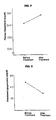
- triglyceride value changed from 425 (the value before treatment) to 389 (the value after treatment). Changes in the plasma cholesterol value and the denatured lipoprotein value are respectively shown in Figs. 2 (1) and (2).
- T-CHO total cholesterol values
- TG triglyceride values
- HDL-C HDL cholesterol values
- DLP-CHO denatured lipoprotein values
- Denatured lipoprotein values in the plasma of the hyperlipidemic patients were measured according to the method described in Example 1. The patients were grouped into three types as defined by WHO. The results are shown in Table 3. TABLE 3 Types of hyperlipidemic patients Number of patients Denatured lipoprotein values * IIa 31 2.1 ⁇ 3.9 (mg/dl CHO) IIb 53 20.1 ⁇ 25.0 IV 16 7.7 ⁇ 6.7 * Mean value ⁇ S.D.
Landscapes
- Life Sciences & Earth Sciences (AREA)
- Health & Medical Sciences (AREA)
- Molecular Biology (AREA)
- Engineering & Computer Science (AREA)
- Urology & Nephrology (AREA)
- Hematology (AREA)
- Biomedical Technology (AREA)
- Chemical & Material Sciences (AREA)
- Immunology (AREA)
- Medicinal Chemistry (AREA)
- Physics & Mathematics (AREA)
- Microbiology (AREA)
- Biophysics (AREA)
- Biotechnology (AREA)
- Food Science & Technology (AREA)
- Endocrinology (AREA)
- Cell Biology (AREA)
- Analytical Chemistry (AREA)
- Biochemistry (AREA)
- General Health & Medical Sciences (AREA)
- General Physics & Mathematics (AREA)
- Pathology (AREA)
- Investigating Or Analysing Biological Materials (AREA)
- Peptides Or Proteins (AREA)
- Preparation Of Compounds By Using Micro-Organisms (AREA)
Applications Claiming Priority (4)
| Application Number | Priority Date | Filing Date | Title |
|---|---|---|---|
| JP24498788 | 1988-09-29 | ||
| JP244987/88 | 1988-09-29 | ||
| JP23189389A JPH07104351B2 (ja) | 1988-09-29 | 1989-09-06 | 脂質代謝異常検出用キット |
| JP231893/89 | 1989-09-06 |
Publications (2)
| Publication Number | Publication Date |
|---|---|
| EP0361468A1 true EP0361468A1 (de) | 1990-04-04 |
| EP0361468B1 EP0361468B1 (de) | 1993-05-26 |
Family
ID=26530168
Family Applications (1)
| Application Number | Title | Priority Date | Filing Date |
|---|---|---|---|
| EP89117937A Expired - Lifetime EP0361468B1 (de) | 1988-09-29 | 1989-09-28 | Testsatz zum Nachweis von denaturierten Lipoproteinen |
Country Status (3)
| Country | Link |
|---|---|
| EP (1) | EP0361468B1 (de) |
| JP (1) | JPH07104351B2 (de) |
| DE (1) | DE68906742T2 (de) |
Cited By (3)
| Publication number | Priority date | Publication date | Assignee | Title |
|---|---|---|---|---|
| WO1991017441A1 (en) * | 1990-04-27 | 1991-11-14 | Genzyme Corporation | Analyte determination in biological fluids in the presence of interfering substances |
| EP0650055A1 (de) * | 1993-10-22 | 1995-04-26 | Daiichi Pure Chemicals Co., Ltd. | Bestimmung von denaturierten Lipoproteinen |
| CN1048808C (zh) * | 1995-05-17 | 2000-01-26 | 北京大学 | 一种用于检测高血脂血清的试剂盒及其制备方法 |
Families Citing this family (2)
| Publication number | Priority date | Publication date | Assignee | Title |
|---|---|---|---|---|
| KR20040025931A (ko) * | 2001-07-12 | 2004-03-26 | 교와 메덱스 가부시키가이샤 | 변성 리포단백질의 정량법, 변성 리포단백질의 정량용시약, 순환기 질환의 검출방법 및 순환기 질환의 검출시약 |
| WO2005064344A1 (ja) * | 2003-12-26 | 2005-07-14 | Takeda Pharmaceutical Company Limited | 脂質代謝異常症の予測方法 |
Citations (1)
| Publication number | Priority date | Publication date | Assignee | Title |
|---|---|---|---|---|
| EP0257778A2 (de) * | 1986-08-06 | 1988-03-02 | Scripps Clinic And Research Foundation | Monoklonale Antikörper, B-spezifisch für Apolipoprotein, die von zwei Hybridomen erzeugt werden |
-
1989
- 1989-09-06 JP JP23189389A patent/JPH07104351B2/ja not_active Expired - Lifetime
- 1989-09-28 EP EP89117937A patent/EP0361468B1/de not_active Expired - Lifetime
- 1989-09-28 DE DE1989606742 patent/DE68906742T2/de not_active Expired - Lifetime
Patent Citations (1)
| Publication number | Priority date | Publication date | Assignee | Title |
|---|---|---|---|---|
| EP0257778A2 (de) * | 1986-08-06 | 1988-03-02 | Scripps Clinic And Research Foundation | Monoklonale Antikörper, B-spezifisch für Apolipoprotein, die von zwei Hybridomen erzeugt werden |
Non-Patent Citations (7)
| Title |
|---|
| ARTERIAL SCLEROSIS, vol. 14, no. 4, 1986, pages 931 - 936 |
| CHEMICAL ABSTRACTS, vol. 106, no. 26, June 29, 1987, Columbus, Ohio, USA T.MORI et al. "Monoclonal antibodies to human lipo- protein A-I and their use in affinity chromatography of the arteriosclerosis prevention factor" page 375, Abstract-no. 219 579m & Jpn. Kokai Tokkyo Koho JP 62 58, 997 (87 58,997) * |
| CHEMICAL ABSTRACTS, vol. 107, no. 17, October 26, 1987, Columbus, Ohio, USA S.KSAHARA et al. "Metabolism of lipoproteins using selected-affinity columns with monoclonal antibodies. I. Isolation of apolipopro- tein A-I and apolipoprotein B-100 containing particles from human plasma" page 360, Abstract-no. 150 520m * |
| CHEMICAL ABSTRACTS, vol. 108, no. 13, March 28, 1988, Columbus, Ohio, USA T.SAITO et al. "Study on metabolism of lipoproteins using selected-affinity columns with monoclonal antibodies. II. Analysis of components in apo A-I and B-100 particles" page 325, Abstract-no. 109 122r * |
| GONEN ET AL., DIABETES, vol. 30, 1981, pages 875 |
| HUI, D. Y.; INNERARITY, T. L.; MAHLEY, R. W., J. BIO. CHEM., vol. 259, 1984, pages 860 - 869 |
| MED. CLIN. NORTH AM., vol. 58, 1974, pages 363 - 379 |
Cited By (4)
| Publication number | Priority date | Publication date | Assignee | Title |
|---|---|---|---|---|
| WO1991017441A1 (en) * | 1990-04-27 | 1991-11-14 | Genzyme Corporation | Analyte determination in biological fluids in the presence of interfering substances |
| EP0650055A1 (de) * | 1993-10-22 | 1995-04-26 | Daiichi Pure Chemicals Co., Ltd. | Bestimmung von denaturierten Lipoproteinen |
| US6248545B1 (en) | 1993-10-22 | 2001-06-19 | Daiichi Pure Chemicals Co., Ltd. | Assay of denatured lipoproteins |
| CN1048808C (zh) * | 1995-05-17 | 2000-01-26 | 北京大学 | 一种用于检测高血脂血清的试剂盒及其制备方法 |
Also Published As
| Publication number | Publication date |
|---|---|
| JPH07104351B2 (ja) | 1995-11-13 |
| EP0361468B1 (de) | 1993-05-26 |
| DE68906742T2 (de) | 1993-12-16 |
| DE68906742D1 (de) | 1993-07-01 |
| JPH02216460A (ja) | 1990-08-29 |
Similar Documents
| Publication | Publication Date | Title |
|---|---|---|
| Solnica et al. | 2020 Guidelines of the Polish Society of Laboratory Diagnostics (PSLD) and the Polish Lipid Association (PoLA) on laboratory diagnostics of lipid metabolism disorders | |
| Magill et al. | Relationships between the metabolism of high‐density and very‐low‐density lipoproteins in man: studies of apolipoprotein kinetics and adipose tissue lipoprotein lipase activity | |
| Bersot et al. | Fat feeding in humans induces lipoproteins of density less than 1.006 that are enriched in apolipoprotein [a] and that cause lipid accumulation in macrophages. | |
| Young et al. | Familial hypobetalipoproteinemia caused by a mutation in the apolipoprotein B gene that results in a truncated species of apolipoprotein B (B-31). A unique mutation that helps to define the portion of the apolipoprotein B molecule required for the formation of buoyant, triglyceride-rich lipoproteins. | |
| Seigler et al. | Separation of serum high-density lipoprotein for cholesterol determination: ultracentrifugation vs precipitation with sodium phosphotungstate and magnesium chloride. | |
| Finley et al. | Cholesterol in high-density lipoprotein: use of Mg2+/dextran sulfate in its enzymic measurement. | |
| JP3040162B2 (ja) | 被検体のアッセイを妨害する物質の存在下における生体液中の被検体の測定法 | |
| Dods et al. | Glycosylated hemoglobin assay and oral glucose tolerance test compared for detection of diabetes mellitus. | |
| Maciejko et al. | New assay of apolipoproteins AI and B by rate nephelometry evaluated. | |
| Albers et al. | Apoprotein measurements and their clinical application | |
| Levinson | Relationship between bilirubin, apolipoprotein B, and coronary artery disease | |
| Iwai et al. | Abnormal lipoprotein composition in normolipidemic diabetic patients | |
| Rao et al. | Plasma high-density lipoprotein metabolism in subjects with primary hypertriglyceridaemia: altered metabolism of apoproteins AI and AII | |
| EP0361468B1 (de) | Testsatz zum Nachweis von denaturierten Lipoproteinen | |
| Superko et al. | High-density lipoprotein cholesterol measurements: A help or hindrance in practical clinical medicine? | |
| Ishikawa et al. | A study of the heparin-manganese chloride method for determination of plasma α-lipoprotein cholesterol concentration | |
| Whiting et al. | Measurement of plasma LDL cholesterol in patients with diabetes | |
| Lopes-Virella et al. | Urinary high density lipoprotein in minimal change glomerular disease and chronic glomerulopathies | |
| WO1996004556A1 (en) | Lipoprotein cholesterol assays | |
| US5183738A (en) | Kit for the detection of denatured lipoproteins | |
| Alaupovic et al. | Separation and identification of apo-B-containing lipoprotein particles in normolipidemic subjects and patients with hyperlipoproteinemias | |
| EP2684047B1 (de) | Zusammensetzungen und verfahren zur bestimmung des risikos eines kardiovaskulären okklusionsereignisses | |
| Magkos et al. | Plasma lipid transfer enzymes in non-diabetic lean and obese men and women | |
| US5783400A (en) | Method for the isolation of lipoprotein allowing for the subsequent quantification of its mass and cholesterol content | |
| Durrington | A comparison of three methods of measuring serum high density lipoprotein cholesterol in diabetics and non-diabetics |
Legal Events
| Date | Code | Title | Description |
|---|---|---|---|
| PUAI | Public reference made under article 153(3) epc to a published international application that has entered the european phase |
Free format text: ORIGINAL CODE: 0009012 |
|
| AK | Designated contracting states |
Kind code of ref document: A1 Designated state(s): DE FR GB |
|
| 17P | Request for examination filed |
Effective date: 19900702 |
|
| 17Q | First examination report despatched |
Effective date: 19920416 |
|
| GRAA | (expected) grant |
Free format text: ORIGINAL CODE: 0009210 |
|
| AK | Designated contracting states |
Kind code of ref document: B1 Designated state(s): DE FR GB |
|
| REF | Corresponds to: |
Ref document number: 68906742 Country of ref document: DE Date of ref document: 19930701 |
|
| ET | Fr: translation filed | ||
| PLBE | No opposition filed within time limit |
Free format text: ORIGINAL CODE: 0009261 |
|
| STAA | Information on the status of an ep patent application or granted ep patent |
Free format text: STATUS: NO OPPOSITION FILED WITHIN TIME LIMIT |
|
| 26N | No opposition filed | ||
| REG | Reference to a national code |
Ref country code: GB Ref legal event code: IF02 |
|
| REG | Reference to a national code |
Ref country code: FR Ref legal event code: CD |
|
| PGFP | Annual fee paid to national office [announced via postgrant information from national office to epo] |
Ref country code: FR Payment date: 20080917 Year of fee payment: 20 |
|
| PGFP | Annual fee paid to national office [announced via postgrant information from national office to epo] |
Ref country code: GB Payment date: 20080922 Year of fee payment: 20 |
|
| PGFP | Annual fee paid to national office [announced via postgrant information from national office to epo] |
Ref country code: DE Payment date: 20080911 Year of fee payment: 20 |
|
| REG | Reference to a national code |
Ref country code: GB Ref legal event code: PE20 Expiry date: 20090927 |
|
| PG25 | Lapsed in a contracting state [announced via postgrant information from national office to epo] |
Ref country code: GB Free format text: LAPSE BECAUSE OF EXPIRATION OF PROTECTION Effective date: 20090927 |