EP0650055A1 - Bestimmung von denaturierten Lipoproteinen - Google Patents
Bestimmung von denaturierten Lipoproteinen Download PDFInfo
- Publication number
- EP0650055A1 EP0650055A1 EP94116477A EP94116477A EP0650055A1 EP 0650055 A1 EP0650055 A1 EP 0650055A1 EP 94116477 A EP94116477 A EP 94116477A EP 94116477 A EP94116477 A EP 94116477A EP 0650055 A1 EP0650055 A1 EP 0650055A1
- Authority
- EP
- European Patent Office
- Prior art keywords
- mda
- antibody
- denatured
- lipoprotein
- modified
- Prior art date
- Legal status (The legal status is an assumption and is not a legal conclusion. Google has not performed a legal analysis and makes no representation as to the accuracy of the status listed.)
- Granted
Links
Images




Classifications
-
- G—PHYSICS
- G01—MEASURING; TESTING
- G01N—INVESTIGATING OR ANALYSING MATERIALS BY DETERMINING THEIR CHEMICAL OR PHYSICAL PROPERTIES
- G01N33/00—Investigating or analysing materials by specific methods not covered by groups G01N1/00 - G01N31/00
- G01N33/48—Biological material, e.g. blood, urine; Haemocytometers
- G01N33/50—Chemical analysis of biological material, e.g. blood, urine; Testing involving biospecific ligand binding methods; Immunological testing
- G01N33/92—Chemical analysis of biological material, e.g. blood, urine; Testing involving biospecific ligand binding methods; Immunological testing involving lipids, e.g. cholesterol, lipoproteins, or their receptors
-
- Y—GENERAL TAGGING OF NEW TECHNOLOGICAL DEVELOPMENTS; GENERAL TAGGING OF CROSS-SECTIONAL TECHNOLOGIES SPANNING OVER SEVERAL SECTIONS OF THE IPC; TECHNICAL SUBJECTS COVERED BY FORMER USPC CROSS-REFERENCE ART COLLECTIONS [XRACs] AND DIGESTS
- Y10—TECHNICAL SUBJECTS COVERED BY FORMER USPC
- Y10T—TECHNICAL SUBJECTS COVERED BY FORMER US CLASSIFICATION
- Y10T436/00—Chemistry: analytical and immunological testing
- Y10T436/25—Chemistry: analytical and immunological testing including sample preparation
- Y10T436/2525—Stabilizing or preserving
Definitions
- the present invention relates to a reliable assay of denatured lipoproteins which are considered to involve arteriosclerosis and present in the living body.
- Arteriosclerosis is known to be the main cause of ischemic heart diseases, cerebral infarction and the like.
- the mechanism causative of arteriosclerosis is reported to form atheroma due to accumulation of smooth muscle cells, connective tissues and a great amount of lipids (mainly, cholesterol esters) on a vascular subendothelium, resulting in the hypertrophy of the arterial wall and advanced induration, which finally brings about the hypofunction of the artery.
- the atheroma recognized in the initial lesion of this disease is formed from foam cells produced by the accumulation of a denatured low density lipoprotein (LDL) into macrophages.
- LDL denatured low density lipoprotein
- lipoprotein (a) [Lp(a)] involves the causation of the coronary artery disease independent of other risk factors in the causation of arteriosclerotic diseases.
- Lp(a) lipoprotein
- lipoproteins those in which the existence of denatured lipoproteins has been recognized include high density lipoprotein (HDL) and the like.
- HDL high density lipoprotein
- no assay has been yet developed even on these denatured lipoproteins [Morel, D. W., Biochem. Biophys. Res. Commun., 200 , 408-416 (1994); Maziere, J. C., Myara, I., Santus, R. & Mazier E. C., Atherosclerosis, 104 , 213-219 (1993)].
- the present inventor has carried out an extensive investigation. As a result, it has been found that the fact that even when an antibody (hereinafter referred to as "anti-denatured lipoprotein antibody”) which recognizes a denatured lipoprotein is used, the denatured lipoprotein in the living body can not be assayed is attributed to the fact that the denatured site of the denatured lipoprotein is hidden in the interior of its lipoprotein particle, whereby the denatured lipoprotein is inactivated, and hence that if this denatured site is exposed to the surface of the lipoprotein particle, the denatured lipoprotein can react with the anti-denatured lipoprotein antibody to selectively assay it, thus leading to completion of the present invention.
- an antibody hereinafter referred to as "anti-denatured lipoprotein antibody”
- an assay of a denatured lipoprotein which comprises exposing the denatured site of the denatured lipoprotein contained in a vital sample to the surface of its lipoprotein particle upon the reaction of an anti-denatured lipoprotein antibody with the vital sample containing the denatured lipoprotein.
- the denatured site of a denatured lipoprotein which has been hidden in the interior of its lipoprotein particle, can be exposed to the surface of the lipoprotein particle to succeed in reaction with the anti-denatured lipoprotein antibody, whereby the denatured lipoprotein in the living body can be reliably assayed.
- Denatured lipoproteins intended to be assayed in the present invention include denatured LDL, denatured Lp(a), denatured HDL and the like.
- the denatured LDL deeply participates in the causation of arteriosclerosis.
- the denatured Lp(a) deeply participates in the causation of sclerosis particularly in a coronary artery among arteries.
- the denatured HDL also deeply participates in the causation of arteriosclerosis.
- vital sample used in the present invention is a sample in which a denatured lipoprotein may exist.
- samples thereof include blood, plasma, serum and the like. Of these, plasma or serum is particularly preferred.
- the anti-denatured lipoprotein antibody used in the present invention may be either a polyclonal antibody or a monoclonal antibody so far as it reacts with the denatured lipoprotein, but does not react with its normal lipoprotein.
- the monoclonal antibody is preferred.
- the anti-denatured lipoprotein antibody include anti-MDA-modified lipoprotein antibodies and anti-hapten antibodies which recognize an MDA residue.
- anti-MDA-modified lipoprotein monoclonal antibodies are particularly preferred. Specific examples thereof include an anti-MDA-modified LDL antibody, an anti-MDA-modified Lp(a) antibody and an anti-MDA-modified HDL antibody.
- the anti-MDA-modified LDL antibody may be used because it has almost similar composition of LDL binding with apo(a).
- the monoclonal antibody can be produced in the following manner in accordance with, for example, the method described in Japanese patent Application Laid-Open No. 173096/1992.
- a purified lipoprotein is first prepared from a fresh human serum by an ultracentrifugation known per se in the art. MDA is then reacted with this lipoprotein to prepare an MDA-modified lipoprotein.
- the MDA-binding reaction of the lipoprotein is preferably performed for 30 minutes to 24 hours usually at a pH of 6-7 and a reaction temperature of 20-40°C. Since this reaction can be stopped by cooling the reaction mixture to 4°C, the reaction mixture is cooled to 4°C to stop the reaction. The reaction mixture thus cooled is dialyzed at 4°C to a buffer solution kept at pH 6-8 and added with 10-100 ⁇ M of EDTA as needed.
- This human MDA-modified lipoprotein can be used as an immunogen to prepare an anti-human MDA-modified lipoprotein monoclonal antibody by an already-known cell fusion means. More specifically, a mouse is immunized to the human MDA-modified lipoprotein, and a spleen is taken out of the mouse after a predetermined period of time.
- the fused cell After the cell of the spleen taken out is fused with a myeloma cell in the presence of polyethylene glycol, the fused cell is cultured for a predetermined period of time, whereby a hybridoma strain which produces an anti-human MDA-modified lipoprotein monoclonal antibody high in specificity can be obtained owing to a difference in reactivity to the lipoprotein and the MDA-modified lipoprotein among antibodies produced in a culture supernatant.
- the thus-obtained hybridoma cell strain is cultured in vitro or in vivo to obtain an anti-MDA-modified lipoprotein antibody.
- a surfactant treatment As a means for exposing the denatured site of the denatured lipoprotein in a vital sample to the surface of its lipoprotein particle, which is most important in the present invention, may be mentioned a surfactant treatment.
- the lipoprotein undergoes a structural change, whereby the denatured site hidden in the interior of the lipoprotein particle is exposed to the surface of the lipoprotein particle.
- the surfactant is caused to coexist in a reaction system containing the vital sample and the anti-denatured lipoprotein antibody.
- a reaction of the antibody with the denatured lipoprotein takes place, whereby the denatured lipoprotein in the vital sample can be selectively assayed.
- surfactant used examples include anionic surfactants, cationic surfactants, amphoteric surfactants and nonionic surfactants.
- anionic surfactants are preferred.
- mono- or di-C8 ⁇ 18 alkyl quaternary ammonium salts, C8 ⁇ 18 alkylsulfates, C8 ⁇ 18 alkylbenzenesulfonates, C8 ⁇ 18 alkylphosphates, C8 ⁇ 18 alkyl ether sulfates, C8 ⁇ 18 alkyl ether benzenesulfonates, polyoxyethylene secondary alkyl ethers and the like may be mentioned.
- cetyltrimethylammonium chloride benzalkonium chloride, sodium dodecyl sulfate (SDS), sodium dodecylbenzenesulfonate, diethanolamine alkylphosphates, polyoxyethylene secondary alkyl ethers (added with 9 mols of ethylene oxide) are particularly preferred.
- the surfactant may preferably be used in a concentration ranging from 0.1 to 50 mM, particularly from 0.5 to 20 mM.
- SDS may preferably be used in a range of 1-5 mM.
- MDA-modified proteins other than human MDA-modified lipoproteins exist in human sera [Kergonou, J. F., Bruna, B., Pennacino, I. & Ducousso, R., Advances in the Biosciences, 71 , 121-124 (1988)]. Therefore, it is first necessary to take account of the possibility that the anti-human MDA-modified lipoprotein antibody may react with the other MDA-modified proteins.
- a sandwich immunoassay making use of both antibodies which respectively recognize human MDA-modified LDL and human apoB constituting LDL so as to enhance the specificity for the detection of the human MDA-modified LDL. More specifically, one of an anti-human MDA-modified LDL monoclonal antibody and an anti-human apoB antibody is immobilized on an insoluble carrier, and the other is labeled with a labeling substance. These antibodies are then brought into contact with a vital sample to perform the sandwich immunoassay, thereby determining the human MDA-modified LDL.
- the denatured Lp(a) is assayed, it is preferable to use a sandwich immunoassay making use of an antibody which recognizes human apo(a) constituting human MDA-modified Lp(a) so as to enhance the specificity for the detection of the human MDA-modified Lp(a). More specifically, one of an anti-human MDA-modified Lp(a) monoclonal antibody and an anti-human apo(a) antibody is immobilized on an insoluble carrier, and the other is labeled with a labeling substance. These antibodies are then brought into contact with a vital sample to perform the sandwich immunoassay, thereby determining the human MDA-modified Lp(a).
- a sandwich immunoassay making use of an antibody which recognize human apoA-I or apoA-II constituting human MDA-modified HDL so as to enhance the specificity for the detection of the human MDA-modified HDL. More specifically, one of an anti-human MDA-modified HDL monoclonal antibody and an anti-human apoA-I antibody or human apoA-II antibody is immobilized on an insoluble carrier, and the other is labeled with a labeling substance. These antibodies are then brought into contact with a vital sample to perform the sandwich immunoassay, thereby determining the human MDA-modified HDL.
- insoluble carrier examples include various kinds of synthetic polymers such as polyethylene and polypropylene, glass, silicon, insoluble polysaccharides, and the like. These carriers may be used in the form of a sphere, a rod, fine particles or the like, or as a test tube, a microtiter plate or the like.
- the preparation of the insolubilized antibody is conducted by binding an antibody to an insoluble carrier by physical adsorption or covalent binding.
- the labeling substance used in the labeled antibody examples include radioisotopes, enzymes, various kinds of fluorescent materials and fine particles such as colloidal gold.
- the enzyme-labeled antibody can be prepared by any known method.
- an antibody to be used may be partially degested into F(ab')2 by a suitable protease or further into Fab' in the presence of a reducing agent, and such a fragment may be then labeled with an enzyme.
- the enzyme used in labeling the antibody include ⁇ -D-galactosidase, peroxydase, alkaline phosphatase, glucose oxidase and the like.
- the immune reaction may be either a one-step reaction or a two-step reaction. If the reaction is conducted by the one-step reaction, the surfactant may be added during the immune reaction. If the immune reaction is performed by two steps, the vital sample is first brought into contact with the insolubilized antibody in the first reaction to bind an antigen into an insolubilized antibody-antigen complex. In the second reaction, the enzyme-labeled antibody is then bound to this complex into an insolubilized antibody-antigen-enzyme-labeled antibody complex. In this two-step reaction, an buffer solution with which the surfactant has been caused to coexist is used in a liquid reaction mixture in the stage that the anti-denatured lipoprotein antibody is brought into contact with the antigen.
- the buffer solution containing the surfactant therein is caused to coexist with the insolubilized antibody in the first reaction or the labeled antibody in the second reaction to conduct the immune reaction.
- the buffer solution may be used those having a pH ranging from 6 to 10.
- glycine, tris, phosphate, imidazole, triethanolamine, barbiturate or Good's buffer may preferably be used in a range of 10-100 mM.
- a suitable protein be caused to coexist with them.
- the protein include BSA, HSA, gelatin and the like.
- the protein may preferably be used in a concentration ranging from 0.05 to 2.0% (w/v). It is particularly preferable to use BSA in a range of 0.1-1.0% (w/v).
- a salt such as NaCl or KCl may be added in a concentration ranging from 10 to 300 mM for controlling ionic strength, and besides an antiseptic such as chlorhexidine or NaN3 may be added for preventing the growth of bacteria.
- the label activity of the complex thus obtained is then measured, whereby the amount of the denatured lipoprotein in the vital sample can be determined.
- an anti-human MDA-modified LDL monoclonal antibody No. 29225 to be used in the following examples was produced in accordance with the procedure described in Example 1 of Japanese Patent Application Laid-Open No. 173096/1992.
- the anti-human MDA-modified LDL monoclonal antibody No. 29225 was first prepared with a phosphate buffer solution (pH: 7.2)-saline (hereinafter referred to as "PBS") so as to give a concentration of 16 ⁇ g/ml.
- PBS phosphate buffer solution
- the thus-obtained preparation was then poured in portions of 100 ⁇ l/well into microplates. Each of the microplates was left at rest overnight at 4°C to immobilize the antibody. After the microplate was then fully washed with distilled water, the antibody was blocked overnight at 4°C in PBS containing 4% of non-fat dry milk. The antibody-bound plates thus obtained were used in reaction.
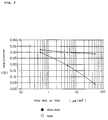
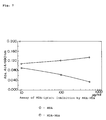
- the results are as illustrated in FIG. 1, and revealed that in the reaction system to which no SDS is added, the MDA-modified LDL in the serum cannot be detected at all, while the MDA-modified LDL in the serum can be determined by adding SDS to the reaction system.
- Example 2 Identification of specificity of assaying system of MDA-modified LDL making use of MDA-modified human serum albumin (HSA)
- MDA modified HSA was conducted in accordance with the method described in Example 1 of Japanese Patent Application Laid-Open No. 173096/1992. More specifically, HSA and MDA were dissolved in 50 mM of a phosphate buffer solution (pH: 6) so as to give final concentrations of 3 mg/ml and 16.7 mM, respectively, to react them at 25°C for 5 hours. The liquid reaction mixture was cooled to 4°C to stop the reaction, and then dialyzed at 4°C to PBS containing 100 ⁇ M of EDTA. The thus-obtained product was used as MDA-modified HSA.
- a phosphate buffer solution pH: 6
- Antibody-bound plates prepared in the same manner as in Example 1 were used in reaction.
- Samples used in the reaction were prepared by mixing, in a proportion of 1:1, a dilute serum of person of health which had been obtained by diluting the serum to 1/3200 with 25 mM of a phosphate buffer solution (pH: 7.2) containing 0.5% of BSA, 150 mM of NaCl and 0.05% of NaN3 in advance (hereinafter called "BSA-PBS”) with individual BSA-PBSs that the concentrations of MDA-modified HSA or HSA contained therein were 0, 1, 10 and 100 ⁇ g/ml.
- BSA-PBS phosphate buffer solution
- Example 1 The following assaying procedure was followed. Namely, BSA-PBS containing 2.5 mM of SDS was added in portions of 100 ⁇ l/well to the antibody-bound plates. Thereafter, the samples prepared in the above-described manner were separately poured in portions of 50 ⁇ l/well into the plates to start reaction. Thereafter, the procedure of Example 1 was followed to conduct the succeeding steps of the assay.
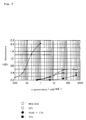
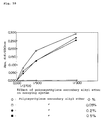
- This example is intended to use the nature of the MDA-modified HSA that reacts with the anti-MDA-modified LDL monoclonal antibody coated on the plate, so as to demonstrate that if the substance detected in the assay of the present invention is MDA-modified LDL in the blood, the MDA-modified LDL undergoes competitive inhibition against the MDA-modified HSA added to the reaction system.
- Lipoprotein fractions were first obtained from a fresh human serum by an ultracentrifugation known per se in the art. More specifically, after chylomicron was removed from the fresh human serum by centrifugation, KBr was added to adjust the specific density d of the serum. The thus-adjusted serum was fractionated by step-wise ultracentrifugation into fractions respectively having specific densities of d ⁇ 1.019, 1.019 ⁇ d ⁇ 1.063, and 1.063 ⁇ d ⁇ 1.21, which were regarded as "very low density lipoprotein (VLDL) + intermediate density lipoprotein (IDL)", “LDL” and “high density lipoprotein (HDL)", respectively.
- VLDL very low density lipoprotein
- IDL intermediate density lipoprotein
- HDL high density lipoprotein
- the individual lipoprotein fractions were dialyzed to PBS containing 100 ⁇ M of EDTA and then subjected to determination of protein by the Lowry method.
- a part of LDL was bound with MDA (MDA-modified LDL was prepared in the same manner as the MDA modification of HSA in Example 2), and the MDA-modified LDL thus obtained was then dialyzed to PBS containing 100 ⁇ M of EDTA like the individual lipoprotein fractions and moreover subjected to determination of protein by the Lowry method.
- Portions of the thus-prepared lipoproteins were respectively diluted with BSA-Gly (see Example 1) so as to give concentrations of 0.01, 0.04, 0.2 and 1.0 ⁇ g/ml for the MDA-modified LDL, and of 0.5, 5.0, 50 and 500 ⁇ g/ml for the other lipoprotein fractions, thereby preparing samples.
- Example 1 The following assaying procedure was followed. Namely, BSA-Gly containing 3.75 mM of SDS was added in portions of 100 ⁇ l/well to antibody-bound plates prepared in the same manner as in Example 1, and the samples prepared above were separately poured in portions of 50 ⁇ l/well into the plates to start reaction. Thereafter, the procedure of Example 1 was followed to conduct the succeeding steps of the assay.
- Antibody-bound plates prepared in the same manner as in Example 1 were used in reaction.
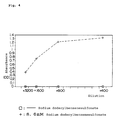
- Example 1 The following assaying procedure was followed. Namely, PBS (see Example 1) containing 0.1% of BSA, to which 8.6 mM of sodium dodecylbenzenesulfonate had been added, was added in portions of 100 ⁇ l/well to the antibody-bound plates. Further, dilute samples of a human serum, which had been obtained by diluting the serum from 1/400 to 1/3200 in four steps with PBS containing 0.1% of BSA, were separately poured in portions of 50 ⁇ l/well into the antibody-bound plates to start reaction. Thereafter, the procedure of Example 1 was followed to conduct the succeeding steps of the assay.
- PBS see Example 1 containing 0.1% of BSA, to which 8.6 mM of sodium dodecylbenzenesulfonate had been added
- dilute samples of a human serum which had been obtained by diluting the serum from 1/400 to 1/3200 in four steps with PBS containing 0.1% of BSA, were separately poured in portions of 50 ⁇ l/well into the antibody-
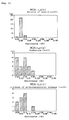
- Example 1 antibody-bound plates prepared in the same manner as in Example 1 were used in reaction, and the following assaying procedure was followed. Each of the sera diluted to 1/401 and BSA-Gly containing 3.75 mM of SDS were added in proportions of 50 ⁇ l/well and 100 ⁇ l/well, respectively, to the antibody-bound plate. Thereafter, the procedure of Example 1 was followed to conduct the succeeding steps of the assay.
- An anti-human MDA-modified Lp(a) monoclonal antibody No. 29225 (corresponding to the anti-human MDA-modified LDL monoclonal antibody described in Japanese Patent Application Laid-Open No. 173096/1992) was first prepared with PBS so as to give a concentration of 16 ⁇ g/ml. The thus-obtained preparation was then poured in portions of 100 ⁇ l/well into microplates. Each of the microplates was left at rest overnight at 4°C to immobilize the antibody. After the microplate was then fully washed with PBS containing 0.05% of Tween 20 (hereinafter referred to as "PBST”), the antibody was blocked overnight at 4°C in PBS containing 4% of non-fat dry milk. The antibody-bound plates thus obtained were used in reaction.
- PBST PBS containing 0.05% of Tween 20
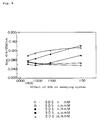
- HEPES buffer solution which contained 0.2% of BSA, 30 mM of NaCl and 0.1% of NaN3 (hereinafter called "BSA-HEPES"), and were added separately with SDS in concentrations of 0, 3.75, 6.75, 9.75 and 15.75 mM, were separately added in portions of 100 ⁇ l/well to the antibody-bound plates.
- BSA-HEPES HEPES buffer solution
- Dilute samples of a human serum which had been obtained by diluting the serum from 1/50 to 1/400 in four steps with BSA-HEPES, were separately poured in portions of 50 ⁇ l/well into the antibody-bound plates to start reaction.
- Example 7 Identification of specificity of assaying system of MDA-modified Lp(a) making use of MDA-bound human serum albumin (HSA)
- MDA modified HSA was first conducted. HSA and MDA were dissolved in 50 mM of an acetate buffer solution (pH: 4) so as to give final concentrations of 9 mg/ml and 133.3 mM, respectively, to react them at 25°C for 5 hours. The liquid reaction mixture was cooled at 4°C to stop the reaction, and then dialyzed at 4°C to a 25 mM HEPES buffer solution (pH: 7) containing 30 mM of NaCl and 0.1% of NaN3. The thus-obtained product was used as MDA-modified HSA. Besides, antibody-bound plates prepared in the same manner as in Example 6 were used in reaction.
- Samples used in the reaction were prepared by mixing, in a proportion of 1:1, a dilute human serum which had been obtained by diluting the serum to 1/50 with BSA-HEPES (see Example 6) with individual BSA-HEPESs that the concentrations of MDA-bound HSA or HSA contained therein were 0, 10, 100 and 500 ⁇ g/ml.
- O-nitrophenyl- ⁇ -D-galactopyranoside was used as a substrate to perform an enzyme reaction at room temperature. After 1.5 hours, a 0.1 M Na2CO3 solution was added in portions of 100 ⁇ l/well to the plates to stop the reaction. Thereafter, the absorbances of the liquid reaction mixtures in the individual plates were measured at a wavelength of 414 nm (reference wavelength: 690 nm).
- This example is intended to use the nature of the MDA-modified HSA that reacts with the anti-MDA-modified Lp(a) monoclonal antibody coated on the plate, so as to demonstrate that if the substance detected in the assay of the present invention is MDA-modified Lp(a) in the blood, the MDA-modified Lp(a) undergoes competitive inhibition against the MDA-modified HSA added to the reaction system.
- Example 8 Assay of MDA-modified Lp(a) added with sodium dodecylbenzenesulfonate as anionic surfactant
- Antibody-bound plates prepared in the same manner as in Example 6 were used in reaction.
- Example 9 Assay of MDA-modified Lp(a) added with cetyltrimethylammonium chloride as cationic surfactant
- Antibody-bound plates prepared in the same manner as in Example 6 were used in reaction.
- Example 10 Assay of MDA-modified Lp(a) added with polyoxyethylene secondary alkyl ether as nonionic surfactant
- Antibody-bound plates prepared in the same manner as in Example 6 were used in reaction.
- a ⁇ -galactosidase-labeled anti-human apo(a) monoclonal antibody solution was then poured in portions of 100 ⁇ m/well into the antibody-bound plates to conduct reaction for 1.5 hours at room temperature. After fully washing the plates, O-nitrophenyl- ⁇ -D-galactopyranoside was used as a substrate to perform an enzyme reaction at room temperature. After 30 minutes, a 0.1 M Na2CO3 solution was added in portions of 100 ⁇ l/well to the plates to stop the reaction. Thereafter, the absorbances of the liquid reaction mixtures in the individual plates were measured at a wavelength of 414 nm (reference wavelength: 690 nm).
- Example 7 antibody-bound plates prepared in the same manner as in Example 6 were used in reaction, and the following assaying procedure was followed. Each of the sera diluted to 1/50 and BSA-HEPES containing 6.75 mM of SDS were added in proportions of 50 ⁇ l/well and 100 ⁇ l/well, respectively, to the antibody-bound plate. Thereafter, the procedure of Example 7 was followed to conduct the succeeding steps of the assay.
Landscapes
- Life Sciences & Earth Sciences (AREA)
- Health & Medical Sciences (AREA)
- Molecular Biology (AREA)
- Engineering & Computer Science (AREA)
- Urology & Nephrology (AREA)
- Hematology (AREA)
- Biomedical Technology (AREA)
- Chemical & Material Sciences (AREA)
- Immunology (AREA)
- Medicinal Chemistry (AREA)
- Biochemistry (AREA)
- Microbiology (AREA)
- Biophysics (AREA)
- Biotechnology (AREA)
- Food Science & Technology (AREA)
- Endocrinology (AREA)
- Physics & Mathematics (AREA)
- Analytical Chemistry (AREA)
- Cell Biology (AREA)
- General Health & Medical Sciences (AREA)
- General Physics & Mathematics (AREA)
- Pathology (AREA)
- Peptides Or Proteins (AREA)
- Preparation Of Compounds By Using Micro-Organisms (AREA)
- Investigating Or Analysing Biological Materials (AREA)
- Measuring Or Testing Involving Enzymes Or Micro-Organisms (AREA)
Applications Claiming Priority (9)
| Application Number | Priority Date | Filing Date | Title |
|---|---|---|---|
| JP26480993 | 1993-10-22 | ||
| JP26480993 | 1993-10-22 | ||
| JP264809/93 | 1993-10-22 | ||
| JP181329/94 | 1994-08-02 | ||
| JP18132994 | 1994-08-02 | ||
| JP18132994 | 1994-08-02 | ||
| JP190279/94 | 1994-08-12 | ||
| JP19027994A JP3356556B2 (ja) | 1993-10-22 | 1994-08-12 | 変性リポプロテイン類の測定法 |
| JP19027994 | 1994-08-12 |
Publications (2)
| Publication Number | Publication Date |
|---|---|
| EP0650055A1 true EP0650055A1 (de) | 1995-04-26 |
| EP0650055B1 EP0650055B1 (de) | 1999-07-21 |
Family
ID=27325001
Family Applications (1)
| Application Number | Title | Priority Date | Filing Date |
|---|---|---|---|
| EP94116477A Expired - Lifetime EP0650055B1 (de) | 1993-10-22 | 1994-10-19 | Bestimmung von denaturierten Lipoproteinen |
Country Status (6)
| Country | Link |
|---|---|
| US (1) | US6248545B1 (de) |
| EP (1) | EP0650055B1 (de) |
| JP (1) | JP3356556B2 (de) |
| AT (1) | ATE182407T1 (de) |
| AU (1) | AU674446B2 (de) |
| DE (1) | DE69419577T2 (de) |
Cited By (1)
| Publication number | Priority date | Publication date | Assignee | Title |
|---|---|---|---|---|
| US5783400A (en) * | 1990-04-27 | 1998-07-21 | Genzyme Corporation | Method for the isolation of lipoprotein allowing for the subsequent quantification of its mass and cholesterol content |
Families Citing this family (11)
| Publication number | Priority date | Publication date | Assignee | Title |
|---|---|---|---|---|
| US20040241744A1 (en) * | 2001-07-12 | 2004-12-02 | Hiroaki Kohno | Method of quantifying denatured lipoprotein, reagents for quantifying denatured lipoprotein, method of detecting circulatory disease and reagents for detecting circulatory disease |
| US7061834B2 (en) * | 2001-11-12 | 2006-06-13 | Matsushita Electric Industrial Co., Ltd. | Optical head and disk recording and reproducing apparatus |
| JP4705754B2 (ja) * | 2001-11-13 | 2011-06-22 | ザ リージェンツ オブ ザ ユニヴァーシティ オブ カリフォルニア | 生体粒子のイオン移動度分析 |
| JP2005106466A (ja) * | 2003-01-24 | 2005-04-21 | Mitsubishi Kagaku Bio-Clinical Laboratories Inc | 酸化度の定量法 |
| JP4781169B2 (ja) * | 2006-05-31 | 2011-09-28 | 積水メディカル株式会社 | 再狭窄の発症リスクを判定する方法 |
| US20080302666A1 (en) * | 2007-06-08 | 2008-12-11 | Benner W Henry | Apparatus for differential charged-particle mobility |
| US8247235B2 (en) | 2007-06-08 | 2012-08-21 | Quest Diagnostics Investments Incorporated | Lipoprotein analysis by differential charged-particle mobility |
| US9354200B1 (en) | 2008-08-07 | 2016-05-31 | Quest Diagnostics Investments Incorporated | Detection apparatus for differential-charged particle mobility analyzer |
| US9250211B2 (en) | 2010-12-30 | 2016-02-02 | Quest Diagnostics Investments Incorporated | Magnetic separation of lipoproteins using dextran sulfate |
| WO2013188879A1 (en) * | 2012-06-16 | 2013-12-19 | Atherotech, Inc. | Measurement of serum lipoproteins |
| CN117192134A (zh) * | 2023-09-14 | 2023-12-08 | 宁波美康盛德生物科技有限公司 | 一种氧化型低密度脂蛋白的检测试剂盒、检测方法 |
Citations (2)
| Publication number | Priority date | Publication date | Assignee | Title |
|---|---|---|---|---|
| EP0361468A1 (de) * | 1988-09-29 | 1990-04-04 | Japan Immuno Research Laboratories Co., Ltd. | Testsatz zum Nachweis von denaturierten Lipoproteinen |
| JPH03245058A (ja) * | 1990-02-22 | 1991-10-31 | Nippon Koutai Kenkyusho:Kk | 変性リポタンパクの測定法及びこれに用いるキット |
Family Cites Families (4)
| Publication number | Priority date | Publication date | Assignee | Title |
|---|---|---|---|---|
| US4376110A (en) * | 1980-08-04 | 1983-03-08 | Hybritech, Incorporated | Immunometric assays using monoclonal antibodies |
| JPH05506990A (ja) * | 1990-04-24 | 1993-10-14 | ザ リージェンツ オブ ザ ユニバーシティ オブ カリフォルニア | プロテアーゼ ネキシン―2の精製、検出、及び使用方法 |
| JP3115587B2 (ja) * | 1990-11-07 | 2000-12-11 | 第一化学薬品株式会社 | モノクローナル抗体及びマロンジアルデヒド化低比重リポタンパクの測定法 |
| US5744318A (en) * | 1994-12-30 | 1998-04-28 | Alteon Inc. | Monoclonal antibody for the detection of advanced glycosylation endproducts in biological samples |
-
1994
- 1994-08-12 JP JP19027994A patent/JP3356556B2/ja not_active Expired - Lifetime
- 1994-10-19 DE DE69419577T patent/DE69419577T2/de not_active Expired - Lifetime
- 1994-10-19 AT AT94116477T patent/ATE182407T1/de not_active IP Right Cessation
- 1994-10-19 AU AU75923/94A patent/AU674446B2/en not_active Ceased
- 1994-10-19 EP EP94116477A patent/EP0650055B1/de not_active Expired - Lifetime
-
1997
- 1997-10-14 US US08/949,911 patent/US6248545B1/en not_active Expired - Lifetime
Patent Citations (2)
| Publication number | Priority date | Publication date | Assignee | Title |
|---|---|---|---|---|
| EP0361468A1 (de) * | 1988-09-29 | 1990-04-04 | Japan Immuno Research Laboratories Co., Ltd. | Testsatz zum Nachweis von denaturierten Lipoproteinen |
| JPH03245058A (ja) * | 1990-02-22 | 1991-10-31 | Nippon Koutai Kenkyusho:Kk | 変性リポタンパクの測定法及びこれに用いるキット |
Non-Patent Citations (1)
| Title |
|---|
| CHEMICAL ABSTRACTS, vol. 116, no. 7, 17 February 1992, Columbus, Ohio, US; abstract no. 55123M, K. NAKAJIMA ET AL.: "Method and kit for determination of denatured lipoprotein in blood by EIA" page 446-447; * |
Cited By (1)
| Publication number | Priority date | Publication date | Assignee | Title |
|---|---|---|---|---|
| US5783400A (en) * | 1990-04-27 | 1998-07-21 | Genzyme Corporation | Method for the isolation of lipoprotein allowing for the subsequent quantification of its mass and cholesterol content |
Also Published As
| Publication number | Publication date |
|---|---|
| JP3356556B2 (ja) | 2002-12-16 |
| ATE182407T1 (de) | 1999-08-15 |
| EP0650055B1 (de) | 1999-07-21 |
| AU674446B2 (en) | 1996-12-19 |
| DE69419577T2 (de) | 1999-11-11 |
| DE69419577D1 (de) | 1999-08-26 |
| JPH08101195A (ja) | 1996-04-16 |
| US6248545B1 (en) | 2001-06-19 |
| AU7592394A (en) | 1995-05-11 |
Similar Documents
| Publication | Publication Date | Title |
|---|---|---|
| US5900359A (en) | Method for determination of oxidized lipoproteins and use thereof | |
| JP2505218B2 (ja) | アポリポタンパクa―1に対して特異性を有するモノクロ―ナル抗体又はそのパラト―プ含有ポリペプチド部分並びにそれを使用する診断装置 | |
| EP0650055B1 (de) | Bestimmung von denaturierten Lipoproteinen | |
| AU3001595A (en) | Antibodies to lipoproteins and apolipoproteins and methods of use thereof | |
| EP0166623A2 (de) | Antikörper-Lectin-Sandwichtest | |
| CA2366309C (en) | Method and device for detection of apo a, apo b and the ratio thereof in saliva | |
| EP0189688A2 (de) | Zum Erkennen von Adernverkalkungsschäden fähiger monoklonaler Antikörper und Mittel zum Nachweis und zur Behandlung von Adernverkalkung | |
| JPWO1999015691A1 (ja) | 骨代謝異常症の診断方法 | |
| US20020177240A1 (en) | Immunoassay for detection of very low density lipoprotein and antibodies useful therefor | |
| JPWO1996015152A1 (ja) | 抗アネキシンvモノクローナル抗体並びにその製法及びその利用 | |
| US4698298A (en) | Competitive immunoassay protocal for targets including lipoproteins and alpha-fetoprotein | |
| DK169571B1 (da) | Monoklont antistof, fremgangsmåde til dets fremstilling, hybridomcellelinie, der producerer antistoffet, fremgangsmåder til kvantitativ immunologisk bestemmelse af prokollagen-peptid (type III) med antistoffet, samt diagnostisk præparat indeholdende det monoklonale antistof | |
| WO1991005257A1 (en) | Kit for immunoassay of human tissue plasminogen activator/human plasminogen activator inhibitor complex and method of immunoassay | |
| US20040053321A1 (en) | Method for makin antibodies immunoreative with an epitope of an apolipoprotein | |
| JP3499875B2 (ja) | 解離性大動脈瘤を検出するための抗体試薬及びその用途 | |
| EP1412747B1 (de) | Verfahren und antikörper zum nachweis von alkoholkonsum | |
| JP2561753B2 (ja) | ヒト組織プラスミノーゲンアクチベーター・ヒトプラスミノーゲンアクチベーター複合体の免疫学的測定キツト及び測定方法 | |
| JP2949354B2 (ja) | 変性リポタンパクの測定法及びこれに用いるキット | |
| JP2005106466A (ja) | 酸化度の定量法 | |
| JP2508915B2 (ja) | 抗SSA/RoおよびSSB/La抗体測定用抗原、その製造法ならびに抗SSA/RoおよびSSB/La抗体の測定法 | |
| JPWO1991005257A1 (ja) | ヒト組織プラスミノーゲンアクチベーター・ヒトプラスミノーゲンアクチベーター複合体の免疫学的測定キツト及び測定方法 | |
| WO1991006857A1 (en) | Immunoassay of human thrombomodulin, and reagent and kit therefor | |
| JP2613320B2 (ja) | ヒト・コンドロカルシンの測定方法 | |
| CA2117745A1 (en) | Treating of lipoprotein containing samples | |
| JPWO1990008320A1 (ja) | 免疫学的測定方法、試薬及びキツト |
Legal Events
| Date | Code | Title | Description |
|---|---|---|---|
| PUAI | Public reference made under article 153(3) epc to a published international application that has entered the european phase |
Free format text: ORIGINAL CODE: 0009012 |
|
| AK | Designated contracting states |
Kind code of ref document: A1 Designated state(s): AT DE FR IT |
|
| 17P | Request for examination filed |
Effective date: 19950816 |
|
| 17Q | First examination report despatched |
Effective date: 19980715 |
|
| GRAG | Despatch of communication of intention to grant |
Free format text: ORIGINAL CODE: EPIDOS AGRA |
|
| GRAG | Despatch of communication of intention to grant |
Free format text: ORIGINAL CODE: EPIDOS AGRA |
|
| GRAH | Despatch of communication of intention to grant a patent |
Free format text: ORIGINAL CODE: EPIDOS IGRA |
|
| GRAH | Despatch of communication of intention to grant a patent |
Free format text: ORIGINAL CODE: EPIDOS IGRA |
|
| GRAA | (expected) grant |
Free format text: ORIGINAL CODE: 0009210 |
|
| AK | Designated contracting states |
Kind code of ref document: B1 Designated state(s): AT DE FR IT |
|
| REF | Corresponds to: |
Ref document number: 182407 Country of ref document: AT Date of ref document: 19990815 Kind code of ref document: T |
|
| REF | Corresponds to: |
Ref document number: 69419577 Country of ref document: DE Date of ref document: 19990826 |
|
| ITF | It: translation for a ep patent filed | ||
| ET | Fr: translation filed | ||
| PLBE | No opposition filed within time limit |
Free format text: ORIGINAL CODE: 0009261 |
|
| STAA | Information on the status of an ep patent application or granted ep patent |
Free format text: STATUS: NO OPPOSITION FILED WITHIN TIME LIMIT |
|
| 26N | No opposition filed | ||
| PGFP | Annual fee paid to national office [announced via postgrant information from national office to epo] |
Ref country code: AT Payment date: 20051027 Year of fee payment: 12 |
|
| PG25 | Lapsed in a contracting state [announced via postgrant information from national office to epo] |
Ref country code: AT Free format text: LAPSE BECAUSE OF NON-PAYMENT OF DUE FEES Effective date: 20061019 |
|
| PGFP | Annual fee paid to national office [announced via postgrant information from national office to epo] |
Ref country code: DE Payment date: 20101028 Year of fee payment: 17 |
|
| PGFP | Annual fee paid to national office [announced via postgrant information from national office to epo] |
Ref country code: IT Payment date: 20101023 Year of fee payment: 17 |
|
| REG | Reference to a national code |
Ref country code: DE Ref legal event code: R082 Ref document number: 69419577 Country of ref document: DE Representative=s name: PATENT- UND RECHTSANWAELTE KRAUS & WEISERT, DE Effective date: 20111020 Ref country code: DE Ref legal event code: R081 Ref document number: 69419577 Country of ref document: DE Owner name: SEKISUI MEDICAL CO., LTD., JP Free format text: FORMER OWNER: DAIICHI PURE CHEMICALS CO. LTD., TOKIO/TOKYO, JP Effective date: 20111020 |
|
| REG | Reference to a national code |
Ref country code: FR Ref legal event code: CD Owner name: SEKISUI MEDICAL CO., LTD. Effective date: 20111117 |
|
| PGFP | Annual fee paid to national office [announced via postgrant information from national office to epo] |
Ref country code: FR Payment date: 20111103 Year of fee payment: 18 |
|
| REG | Reference to a national code |
Ref country code: FR Ref legal event code: ST Effective date: 20130628 |
|
| PG25 | Lapsed in a contracting state [announced via postgrant information from national office to epo] |
Ref country code: DE Free format text: LAPSE BECAUSE OF NON-PAYMENT OF DUE FEES Effective date: 20130501 |
|
| REG | Reference to a national code |
Ref country code: DE Ref legal event code: R119 Ref document number: 69419577 Country of ref document: DE Effective date: 20130501 |
|
| PG25 | Lapsed in a contracting state [announced via postgrant information from national office to epo] |
Ref country code: FR Free format text: LAPSE BECAUSE OF NON-PAYMENT OF DUE FEES Effective date: 20121031 Ref country code: IT Free format text: LAPSE BECAUSE OF NON-PAYMENT OF DUE FEES Effective date: 20121019 |