EP0364799A2 - Krebsbehandlung - Google Patents
Krebsbehandlung Download PDFInfo
- Publication number
- EP0364799A2 EP0364799A2 EP89118180A EP89118180A EP0364799A2 EP 0364799 A2 EP0364799 A2 EP 0364799A2 EP 89118180 A EP89118180 A EP 89118180A EP 89118180 A EP89118180 A EP 89118180A EP 0364799 A2 EP0364799 A2 EP 0364799A2
- Authority
- EP
- European Patent Office
- Prior art keywords
- blood
- catheter
- contaminated
- organ
- returning
- Prior art date
- Legal status (The legal status is an assumption and is not a legal conclusion. Google has not performed a legal analysis and makes no representation as to the accuracy of the status listed.)
- Granted
Links
Images

Classifications
-
- A—HUMAN NECESSITIES
- A61—MEDICAL OR VETERINARY SCIENCE; HYGIENE
- A61M—DEVICES FOR INTRODUCING MEDIA INTO, OR ONTO, THE BODY; DEVICES FOR TRANSDUCING BODY MEDIA OR FOR TAKING MEDIA FROM THE BODY; DEVICES FOR PRODUCING OR ENDING SLEEP OR STUPOR
- A61M25/00—Catheters; Hollow probes
- A61M25/0067—Catheters; Hollow probes characterised by the distal end, e.g. tips
- A61M25/0074—Dynamic characteristics of the catheter tip, e.g. openable, closable, expandable or deformable
- A61M25/0075—Valve means
-
- A—HUMAN NECESSITIES
- A61—MEDICAL OR VETERINARY SCIENCE; HYGIENE
- A61M—DEVICES FOR INTRODUCING MEDIA INTO, OR ONTO, THE BODY; DEVICES FOR TRANSDUCING BODY MEDIA OR FOR TAKING MEDIA FROM THE BODY; DEVICES FOR PRODUCING OR ENDING SLEEP OR STUPOR
- A61M1/00—Suction or pumping devices for medical purposes; Devices for carrying-off, for treatment of, or for carrying-over, body-liquids; Drainage systems
- A61M1/36—Other treatment of blood in a by-pass of the natural circulatory system, e.g. temperature adaptation, irradiation ; Extra-corporeal blood circuits
- A61M1/3615—Cleaning blood contaminated by local chemotherapy of a body part temporarily isolated from the blood circuit
-
- A—HUMAN NECESSITIES
- A61—MEDICAL OR VETERINARY SCIENCE; HYGIENE
- A61M—DEVICES FOR INTRODUCING MEDIA INTO, OR ONTO, THE BODY; DEVICES FOR TRANSDUCING BODY MEDIA OR FOR TAKING MEDIA FROM THE BODY; DEVICES FOR PRODUCING OR ENDING SLEEP OR STUPOR
- A61M1/00—Suction or pumping devices for medical purposes; Devices for carrying-off, for treatment of, or for carrying-over, body-liquids; Drainage systems
- A61M1/36—Other treatment of blood in a by-pass of the natural circulatory system, e.g. temperature adaptation, irradiation ; Extra-corporeal blood circuits
- A61M1/3621—Extra-corporeal blood circuits
-
- A—HUMAN NECESSITIES
- A61—MEDICAL OR VETERINARY SCIENCE; HYGIENE
- A61M—DEVICES FOR INTRODUCING MEDIA INTO, OR ONTO, THE BODY; DEVICES FOR TRANSDUCING BODY MEDIA OR FOR TAKING MEDIA FROM THE BODY; DEVICES FOR PRODUCING OR ENDING SLEEP OR STUPOR
- A61M25/00—Catheters; Hollow probes
- A61M25/10—Balloon catheters
- A61M25/1011—Multiple balloon catheters
-
- A—HUMAN NECESSITIES
- A61—MEDICAL OR VETERINARY SCIENCE; HYGIENE
- A61M—DEVICES FOR INTRODUCING MEDIA INTO, OR ONTO, THE BODY; DEVICES FOR TRANSDUCING BODY MEDIA OR FOR TAKING MEDIA FROM THE BODY; DEVICES FOR PRODUCING OR ENDING SLEEP OR STUPOR
- A61M60/00—Blood pumps; Devices for mechanical circulatory actuation; Balloon pumps for circulatory assistance
- A61M60/10—Location thereof with respect to the patient's body
- A61M60/104—Extracorporeal pumps, i.e. the blood being pumped outside the patient's body
- A61M60/109—Extracorporeal pumps, i.e. the blood being pumped outside the patient's body incorporated within extracorporeal blood circuits or systems
- A61M60/113—Extracorporeal pumps, i.e. the blood being pumped outside the patient's body incorporated within extracorporeal blood circuits or systems in other functional devices, e.g. dialysers or heart-lung machines
-
- A—HUMAN NECESSITIES
- A61—MEDICAL OR VETERINARY SCIENCE; HYGIENE
- A61M—DEVICES FOR INTRODUCING MEDIA INTO, OR ONTO, THE BODY; DEVICES FOR TRANSDUCING BODY MEDIA OR FOR TAKING MEDIA FROM THE BODY; DEVICES FOR PRODUCING OR ENDING SLEEP OR STUPOR
- A61M60/00—Blood pumps; Devices for mechanical circulatory actuation; Balloon pumps for circulatory assistance
- A61M60/20—Type thereof
- A61M60/205—Non-positive displacement blood pumps
- A61M60/216—Non-positive displacement blood pumps including a rotating member acting on the blood, e.g. impeller
- A61M60/226—Non-positive displacement blood pumps including a rotating member acting on the blood, e.g. impeller the blood flow through the rotating member having mainly radial components
- A61M60/232—Centrifugal pumps
-
- A—HUMAN NECESSITIES
- A61—MEDICAL OR VETERINARY SCIENCE; HYGIENE
- A61M—DEVICES FOR INTRODUCING MEDIA INTO, OR ONTO, THE BODY; DEVICES FOR TRANSDUCING BODY MEDIA OR FOR TAKING MEDIA FROM THE BODY; DEVICES FOR PRODUCING OR ENDING SLEEP OR STUPOR
- A61M60/00—Blood pumps; Devices for mechanical circulatory actuation; Balloon pumps for circulatory assistance
- A61M60/30—Medical purposes thereof other than the enhancement of the cardiac output
- A61M60/31—Medical purposes thereof other than the enhancement of the cardiac output for enhancement of in vivo organ perfusion, e.g. retroperfusion
-
- A—HUMAN NECESSITIES
- A61—MEDICAL OR VETERINARY SCIENCE; HYGIENE
- A61M—DEVICES FOR INTRODUCING MEDIA INTO, OR ONTO, THE BODY; DEVICES FOR TRANSDUCING BODY MEDIA OR FOR TAKING MEDIA FROM THE BODY; DEVICES FOR PRODUCING OR ENDING SLEEP OR STUPOR
- A61M60/00—Blood pumps; Devices for mechanical circulatory actuation; Balloon pumps for circulatory assistance
- A61M60/30—Medical purposes thereof other than the enhancement of the cardiac output
- A61M60/36—Medical purposes thereof other than the enhancement of the cardiac output for specific blood treatment; for specific therapy
-
- A—HUMAN NECESSITIES
- A61—MEDICAL OR VETERINARY SCIENCE; HYGIENE
- A61M—DEVICES FOR INTRODUCING MEDIA INTO, OR ONTO, THE BODY; DEVICES FOR TRANSDUCING BODY MEDIA OR FOR TAKING MEDIA FROM THE BODY; DEVICES FOR PRODUCING OR ENDING SLEEP OR STUPOR
- A61M60/00—Blood pumps; Devices for mechanical circulatory actuation; Balloon pumps for circulatory assistance
- A61M60/30—Medical purposes thereof other than the enhancement of the cardiac output
- A61M60/36—Medical purposes thereof other than the enhancement of the cardiac output for specific blood treatment; for specific therapy
- A61M60/37—Haemodialysis, haemofiltration or diafiltration
-
- A—HUMAN NECESSITIES
- A61—MEDICAL OR VETERINARY SCIENCE; HYGIENE
- A61M—DEVICES FOR INTRODUCING MEDIA INTO, OR ONTO, THE BODY; DEVICES FOR TRANSDUCING BODY MEDIA OR FOR TAKING MEDIA FROM THE BODY; DEVICES FOR PRODUCING OR ENDING SLEEP OR STUPOR
- A61M60/00—Blood pumps; Devices for mechanical circulatory actuation; Balloon pumps for circulatory assistance
- A61M60/50—Details relating to control
- A61M60/508—Electronic control means, e.g. for feedback regulation
- A61M60/515—Regulation using real-time patient data
- A61M60/531—Regulation using real-time patient data using blood pressure data, e.g. from blood pressure sensors
-
- A—HUMAN NECESSITIES
- A61—MEDICAL OR VETERINARY SCIENCE; HYGIENE
- A61M—DEVICES FOR INTRODUCING MEDIA INTO, OR ONTO, THE BODY; DEVICES FOR TRANSDUCING BODY MEDIA OR FOR TAKING MEDIA FROM THE BODY; DEVICES FOR PRODUCING OR ENDING SLEEP OR STUPOR
- A61M60/00—Blood pumps; Devices for mechanical circulatory actuation; Balloon pumps for circulatory assistance
- A61M60/50—Details relating to control
- A61M60/508—Electronic control means, e.g. for feedback regulation
- A61M60/538—Regulation using real-time blood pump operational parameter data, e.g. motor current
- A61M60/554—Regulation using real-time blood pump operational parameter data, e.g. motor current of blood pressure
-
- A—HUMAN NECESSITIES
- A61—MEDICAL OR VETERINARY SCIENCE; HYGIENE
- A61M—DEVICES FOR INTRODUCING MEDIA INTO, OR ONTO, THE BODY; DEVICES FOR TRANSDUCING BODY MEDIA OR FOR TAKING MEDIA FROM THE BODY; DEVICES FOR PRODUCING OR ENDING SLEEP OR STUPOR
- A61M60/00—Blood pumps; Devices for mechanical circulatory actuation; Balloon pumps for circulatory assistance
- A61M60/80—Constructional details other than related to driving
- A61M60/802—Constructional details other than related to driving of non-positive displacement blood pumps
- A61M60/818—Bearings
-
- A—HUMAN NECESSITIES
- A61—MEDICAL OR VETERINARY SCIENCE; HYGIENE
- A61M—DEVICES FOR INTRODUCING MEDIA INTO, OR ONTO, THE BODY; DEVICES FOR TRANSDUCING BODY MEDIA OR FOR TAKING MEDIA FROM THE BODY; DEVICES FOR PRODUCING OR ENDING SLEEP OR STUPOR
- A61M60/00—Blood pumps; Devices for mechanical circulatory actuation; Balloon pumps for circulatory assistance
- A61M60/80—Constructional details other than related to driving
- A61M60/802—Constructional details other than related to driving of non-positive displacement blood pumps
- A61M60/833—Occluders for preventing backflow
-
- A—HUMAN NECESSITIES
- A61—MEDICAL OR VETERINARY SCIENCE; HYGIENE
- A61M—DEVICES FOR INTRODUCING MEDIA INTO, OR ONTO, THE BODY; DEVICES FOR TRANSDUCING BODY MEDIA OR FOR TAKING MEDIA FROM THE BODY; DEVICES FOR PRODUCING OR ENDING SLEEP OR STUPOR
- A61M60/00—Blood pumps; Devices for mechanical circulatory actuation; Balloon pumps for circulatory assistance
- A61M60/80—Constructional details other than related to driving
- A61M60/845—Constructional details other than related to driving of extracorporeal blood pumps
- A61M60/849—Disposable parts
-
- A—HUMAN NECESSITIES
- A61—MEDICAL OR VETERINARY SCIENCE; HYGIENE
- A61M—DEVICES FOR INTRODUCING MEDIA INTO, OR ONTO, THE BODY; DEVICES FOR TRANSDUCING BODY MEDIA OR FOR TAKING MEDIA FROM THE BODY; DEVICES FOR PRODUCING OR ENDING SLEEP OR STUPOR
- A61M25/00—Catheters; Hollow probes
- A61M2025/0001—Catheters; Hollow probes for pressure measurement
- A61M2025/0003—Catheters; Hollow probes for pressure measurement having an additional lumen transmitting fluid pressure to the outside for measurement
-
- A—HUMAN NECESSITIES
- A61—MEDICAL OR VETERINARY SCIENCE; HYGIENE
- A61M—DEVICES FOR INTRODUCING MEDIA INTO, OR ONTO, THE BODY; DEVICES FOR TRANSDUCING BODY MEDIA OR FOR TAKING MEDIA FROM THE BODY; DEVICES FOR PRODUCING OR ENDING SLEEP OR STUPOR
- A61M25/00—Catheters; Hollow probes
- A61M25/10—Balloon catheters
- A61M2025/1043—Balloon catheters with special features or adapted for special applications
- A61M2025/1052—Balloon catheters with special features or adapted for special applications for temporarily occluding a vessel for isolating a sector
-
- A—HUMAN NECESSITIES
- A61—MEDICAL OR VETERINARY SCIENCE; HYGIENE
- A61M—DEVICES FOR INTRODUCING MEDIA INTO, OR ONTO, THE BODY; DEVICES FOR TRANSDUCING BODY MEDIA OR FOR TAKING MEDIA FROM THE BODY; DEVICES FOR PRODUCING OR ENDING SLEEP OR STUPOR
- A61M2205/00—General characteristics of the apparatus
- A61M2205/33—Controlling, regulating or measuring
- A61M2205/3331—Pressure; Flow
- A61M2205/3344—Measuring or controlling pressure at the body treatment site
-
- A—HUMAN NECESSITIES
- A61—MEDICAL OR VETERINARY SCIENCE; HYGIENE
- A61M—DEVICES FOR INTRODUCING MEDIA INTO, OR ONTO, THE BODY; DEVICES FOR TRANSDUCING BODY MEDIA OR FOR TAKING MEDIA FROM THE BODY; DEVICES FOR PRODUCING OR ENDING SLEEP OR STUPOR
- A61M2205/00—General characteristics of the apparatus
- A61M2205/33—Controlling, regulating or measuring
- A61M2205/3331—Pressure; Flow
- A61M2205/3355—Controlling downstream pump pressure
Definitions
- the process prevents toxic levels of the agents from entering the body's general circulation while delivering lethal doses of them to the tumor.
- a variety of apparatus for effecting the intra- and extra-corporeal treatment of such contaminated blood are described.
- hepatocellular tumor hepatocellular tumor, hepatoma
- hepatoma Primary cancer of the liver (hepatocellular tumor, hepatoma) is a disease with a dismal prognosis due to its relentless progression despite many therapeutic modalities. Although uncommon in the United States (approximately 14,000 new cases per year), hepatoma is the most prevalent tumor in the most populous countries of the world. It is quite common in sub-Sahara Africa, Southeast Asia, Japan, the Pacific Islands, Greece and Italy. For those patients not surgically resectable, median survival is approximately 8 weeks. In North America, this malignancy most commonly arises in elderly patients with alcoholic or postnecrotic cirrhosis. However, in other parts of the world, it is epidemic and often occurs in young patients. This demographic variation is correlated with a high incidence of early childhood infection with hepatitis B virus in the geographic areas where hepatocellular tumor is most common.
- cancer of the colon is a major health problem, and cancer of the colon reaches the liver in about 50% of the patients. Over 140,000 new cases are diagnosed yearly. Once the desease has spread, therapy is ineffective, with approximately 50% of all patients dying from their disease within five years of diagnosis. In 15% to 20% of the patients, the tumor will have spread to the liver by the time of diagnosis, and in over 50% of patients, colon cancer will eventually spread to the liver metastasis even when there is no tumor spread elsewhere. Tumor cells reach the liver via the portal vein and establish a blood supply from the hepatic artery, perhaps through the elaboration of tumor angiogenesis factor(s).
- Hepatic artery infusion (HAI) of chemotherapy has been widely investigated.
- Arterial infusion of 5-FU and FUDR increases their effectiveness by delivering the drug directly to liver tumor cells before its dilution by the systemic circulation.
- This approach is attractive because hepatocellular tumors frequently remains localized to the liver, and, like most chemotherapeutic drugs, 5-FU displays a dose-response effect, i.e., increasing the dose can give a proportionately greater increase in effect.
- certain drugs including the fluorinated pyrimidines, doxorubicin and others, are metabolized by the liver and excreted through the biliary tract thereby reducing systemic drug toxicity.
- Local toxicities 1 in the gastrointestinal tract have included gastric and duodenal ulceration, gastric bleeding and/or perforation, severe dyspepsia, gastritis and diarrhea. Many of the patients who developed these local toxicities were found to have had a misplaced or dislodged catheter tip. In these cases, the drug was perfusing a large portion of the stomach and duodenum via the gastric arteries. Gastrointestinal toxicities did not occur when the gastric arteries were separated and ligated from the hepatic artery or embolized at the time of catheter placement.
- Diarrhea a systemic toxicity of the fluorinated pyrimidines, occurs more commonly in patients with arterial to venous (A-V) shunting of 30% or greater.
- A-V shunting allows drug to bypass functioning liver cells and avoid being metabolized by the liver thereby increasing systemic drug exposure.
- hepatobiliary toxicities hepatitis, cholecystitis, biliary sclerosis, stenosis and stricture
- hepatitis, cholecystitis, biliary sclerosis, stenosis and stricture occur in up to 50% of the patients treated with conventional HAI 5-FU or FUDR chemotherapy.
- the gallbladder and biliary tree receive all of their blood supply from the hepatic artery whereas the liver receives approximately one-fourth of its blood supply from the hepatic artery. Biliary tract toxicity seems to be more common in patients who have had the blood supply to the biliary tree disrupted by ligation of the gastric arteries.
- Hepatitis manifested by nausea, vomiting, abdominal pain and jaundice in association with elevated serum concentrations of liver transaminases and bilirubin has occurred in patients receiving conventional HAI 5-FU or FUDR. Hepatitis appears to be related to the dose and duration of the hepatic arterial drug infusion.
- liver metastases such as resection, intraarterial infusion, isolated perfusion, or chemoembolization
- isolated perfusion enables chemotherapeutic agents to be added to the perfusion circuit in dosages higher than could be tolerated by systemic administration.
- the upper limit of dosage is only the local toxicity.
- hepatic metastases are mainly vascularized by the hepatic artery
- intraarterial infusion of anti-cancer agents provides a much higher concentration of the drug in these tumors than can be achieved by systemic chemotherapy.
- a double-channel catheter is inserted into the caval vein from below the renal veins.
- This special catheter consists of a longer channel shunting the caval vein to maintain cardiac venous return and a second shorter channel for the isolated hepatic venous return.
- the portocaval shunt tube is inserted into the caval vein channel, whereas two lateral openings collect the venous return from the kidneys.
- the portal vein is cannulated in both directions.
- the peripheral catheter is connected to the portocaval filtration unit consisting of a roller pump and a hemofiltrating system.
- the portocaval filtration unit consisting of a roller pump and a hemofiltrating system.
- At flow rates of approximately 300-400 ml portal venous blood has been filtered and with adequate volume substitution returned to the caval shunt tube.
- blood levels of ammonium have been kept within normal ranges during the period of isolated hepatic perfusion.
- a part of the anti-cancer drugs as well has been filtered out in that portacaval shunt.
- the common hepatic artery is clamped and perfusion is started via the central portal vein catheter in a partial circuit.
- the arterial catheter is inserted into the gastroduodenal artery and the liver is perfused via two arterial lines at a flow rate of 200-350 ml/min in the hepatic artery and 150 ml/min in the portal vein.
- Heating the perfusion circuit the temperature of the hepatic tissue is increased.
- the temperature which should not exceed 40°C, is measured with needle probes in the right and left liver lobes.
- 5-fluorouracil 5-FU
- the hepatic artery was temporarily clamped, and oxygenated blood, and oxygenated blood from the pump and the chemotherapeutic agents were delivered to the liver through the proximal portal vein.
- Blood from the distal portal vein and vena cava was returned to the heart through an accessory bypass from the femoral vein to the external jugular vein.
- the approach developed by Aigner and colleagues uses a double-lumen tube to collect hepatic venous blood in the outer tube, with bypass of the distal caval blood through the inner tube.
- Arterial blood and chemotherapy are delivered through the hepatic artery and proximal protal [sic: portal] vein to the liver. This method is under study, particularly in Germany, and has been performed safely with acceptable morbidity.”
- Double balloon catheters in general are described in the following references: ⁇ Weikl, et al., U.S. 4,573,966, patented March 4, 1986, and U.S. 4,610,662, patented September 9, 1986, describe the use of double balloon catheters to treat stenosis; ⁇ Solar, U.S. 4,546,759, patented October 15, 1985, is directed to a triple balloon catheter to assist right ventricle functioning; ⁇ Hussein, et al., U.S. 4,445,892, patented May 1, 1984, relate to a dual balloon catheter for insertion in blood vessels to provide an isolated operating region in the vessel between the balloons which facilitates the use of an optic system; ⁇ Baran, et al., U.S.
- Russian patent 511951 describes the use of a perforated wall catheter for removing blood from the liver and isolating it via a pump, and with respect to the perfusion of the liver with medicants and coolants, the perfusate is collected and returned to the liver via a pump.
- Implantable pumps have recently come into vogue. However, studies have indicated that a large proportion of the patients developed toxicity due to the systemic effects of chemotherapy.
- a treatment which exposes tumors to high concentrations of antineoplastic drugs and biologicals and removes them from the blood before systemic exposure would be an advance in therapy for cancer in the liver.
- it would be desirable to have a method which allows the opportunity for exploring HAI therapy with a variety of drugs and biologicals at dosage levels higher than ever before found tolerable by the body A process which allows the variations in the kind and dosage of chemotherapuetic agents to livers would be a significant advance in the treatment of such cancers.
- a process that does not require general anesthesia or surgery, and is sufficiently non-invasive to allow frequent repetition of therapy would be a significant advance in the art. There is described herein a process which provides such advantages.
- This invention relates to a process of perfusing a high concentration of anti-cancer agents through a body organ containing a tumor without contaminating the body's general circulation, removing them from the organ with effluent blood, transporting the contaminated blood to an extracorporeal circuit, treating the blood in the extracorporeal circuit to remove the contamination, and returning the treated blood to the body.
- the process prevents toxic levels of the agents from entering the body's general circulation while delivering lethal doses of them to the tumor.
- a variety of apparatus for effecting the intra- and extracorporeal treatment of such contaminated blood are described.
- the process of the invention embraces a system of non-operative and sufficiently non-invasive intracorporeal and extracorporeal means to allow frequent repetition of therapy, if desired, which comprises ⁇ perfusing an anti-cancer agent to a tumor, ⁇ collecting and containing the contaminated blood emanating from the tumor without general circulation of the contaminated blood to the body, ⁇ transporting the contaminated blood from the body to an extracorporeal treatment system, ⁇ removing anti-cancer agent from the blood in the extracorporeal treatment system, and ⁇ returning the treated blood to the body.
- anti-cancer agents such as chemotherapeutic agents
- chemotherapeutic agents can be removed from the hepatic venous blood before entering the systemic circulation.
- the invention in its broadest sense, allows the treatment of a variety of tumor-bearing organs with anti-cancer agents, such as chemotherapeutic agents, while avoiding systemic toxicity.
- the invention encompasses a process of treating organ site tumors which comprises
- the invention relates to the treatment of organ site tumors which comprises
- the extracorporeal circuit or treatment system comprises (a) means for transporting the contaminated blood to (b) means for separating the drug concentration from the blood and also returning the decontaminated blood to the body.
- the invention has particular importance in the antineoplastic treatment of tumors of the liver since anti-cancer levels of antineoplastic agents can be safely infused into the hepatic artery for treatment and systemic toxicity can be avoided.
- the invention involves intraarterial infusion of the liver with antineoplastic agents and removal of the antineoplastic agents from the hepatic venous blood before it enters the systemic circulation.
- This invention includes the percutaneous insertion of a special double balloon catheter into the inferior vena cava.
- the catheter contains two inflatable balloons appropriately spaced to obstruct the inferior vena cava above and below the hepatic veins.
- Hepatic venous blood is drawn through fenestrations in the catheter wall and thence into an extracorporeal circuit that is openly connected with the catheter's lumen.
- the blood is decontaminated in this circuit and then returned to the systemic circulation via either a subclavian vein, an external jugular veins, the superior vena cava or the right atrium.
- the invention includes the use of detoxification means, such as one or more of: a hemoperfusion cartridge, hemodialysis, hemofiltration, and hemoadsorbtion through antibodies or biological ligands or molecules able to render them nontoxic and/or to clear the blood of the antineoplastic agent and allow the re-administration of the patient's own detoxified blood.
- the invention embraces the passage of the contaminated blood from the double balloon catheter through tubing into a pump that assists the passage of the contaminated blood to a detoxification means such as a hemoperfusion cartridge containing one of a variety of substances, such as a sorbing solid, and/or a hemodialysis unit that removes the drug from the blood.
- the treated blood is returned to the body via an appropriate large caliber vein.
- the invention also includes a disposable kit, that may be used, e. g., for inpatient hospital use with cancer patients, comprising a double balloon catheter, a detoxification means, piping and valves.
- the kit may include for guidewires, heparin, and other related equipment.
- the invention encompasses a double balloon catheter capable of
- a variety of novel catheters are described that may be used for the recovery of contaminated blood derived from an organ containing a tumor that has been perfused with a anti-cancer agent for its treatment, and for the removal of the contaminated blood from the body so that the blood can be detoxified outside of the body.
- the process of the invention avoids the use of surgery to isolate the flow of contaminated blood and returns the same blood but in a more purified condition to the patient.
- the process of the invention may be used for extended periods of time, indeed, for periods of time far longer than previously used in the treatment of the same tumors.
- the process of the invention is applicable to the treatment of a number of tumors such as those of the kidney, liver, pancreas, bladder and pelvis.
- Primary and metastatic liver tumors are especially treatable by the process of this invention. As pointed out above, many of them have shown responsiveness to chemotherapeutic drugs.
- the invention is directed to the treatment of tumors in the liver by the use of one or more antineoplastic agents, such as chemotherapjetic agents and/or biologicals, and the purification of venous blood from the liver to avoid systemic circulation of the agent(s).
- antineoplastic agents such as chemotherapjetic agents and/or biologicals
- This may involve the use of balloon catheters that are suitable for insertion in the inferior vena cava to isolate venous outflow from the liver and permit the removal of blood contaminated with antineoplastic agent from the body with a pump.
- the contaminated blood will be filtered through detoxifying means and then returned to the patient via a large caliber systemic vein at a point above the diaphragm.
- a chemotherapeutic agent such as 5-FU or biologicals.
- a normal liver receives three-fourths of its blood supply from the portal vein the drug or biological will be diluted by a factor of about three before it reaches normal, uninvolved liver cells, thereby protecting them against hepatotoxicity.
- the process of the invention involves the percutaneous placement of unique double balloon catheter designs.
- These catheters may use a variety of designs and sizes depending on the organ whose veins are isolated and the sizes and locations of it's veins.
- the primary function of the double balloon catheter is to isolate the flow of blood from the veins carrying the effluent blood from the organ containing the tumor that is under treatment. Venous isolation precludes systemic perfusion of the contaminated blood.
- the tip of the double balloon catheter is to be placed in the body so that the venous effluent from the organ being treated is prevented from flowing to the heart.
- the space between the two balloons is predetermined to ensure removing the full quantity of contaminated blood from the treated organ.
- the space between the balloons is large enough that the balloon central in position can be located in a position in the most central draining vein to block contaminated venous blood flow to the heart and the balloon peripheral in position can be located peripheral in the most central draining vein to block the flow of uncontaminated blood to the contaminated venous blood flow.
- Veins from organs not under treatment can enter the segment between balloons without detrimental effect as long as the pump and filtration system can accommodate the additional volume.
- the venous anatomy of the organ under treatment or of adjacent organs can be altered where necessary by obstruction using angiographic embolisation or ablation techniques and materials, including detachable balloons or stainless steel coils.
- the lumen of the catheter between the balloons is openly connected, or can be made openly connected, to the surrounding vein.
- the same lumen of the catheter is also openly connected, or can be made openly connected, to the extracorporeal circuit, thereby providing free flow of the contaminated blood from the veins to the extracorporeal circuit.
- the catheter has a main lumen to act as a conduit for the contaminated blood flow from the venous effluent(s) to the extracorporeal circuit.
- the size of the main lumen is determined by the material of which it is made, the volume of blood to be transported through it and the diameter of the vein in which it will be located.
- the main lumen may be an open annulus or semi-annulus located within the peripheral balloon that is openly connected to the extracorporeal circuit.
- a central rod or rodlike axis is provided for support for the balloons.
- the catheter may also have supplemental lumina.
- the supplemental lumina are smaller in size, i.e., in diameter or cross-sectional area, than the main lumen. They may serve any of a number of ancillary functions in the process.
- a supplemental lumen courses through the full length of the catheter for the purpose of accommodating a guidewire that is desirable for percutaneous insertion of the catheter.
- Each balloon may be provided with a supplemental lumina to be used for its inflation, or one supplemental lumen may be used for supplying fluid for the inflation of both balloons.
- An additional supplemental lumen may be provided for connection to a pressure monitor to continuously measure the pressure of the venous effluent.
- This lumen can also be used to inject contrast medium, if provided with a connector that can accommodate an injection device.
- the main lumen may be used for one or more of the above functions. This multifunctionality can serve to reduce the cost in making the catheter and simplify the apparatus.
- the main and/or supplemental lumina may be made from separate tubing threaded into the catheter or from channels molded into the structure of the catheter.
- Another supplemental lumen can be used to return detoxified blood to the general circulation and avoid puncture of another vein.
- the wall(s) of the segment of the catheter between the balloons is/are provided with fenestrations to allow entry of venous blood into the main lumen.
- the number, shape and size of the fenestrations may vary according to the size of the catheter, the rate and volume of blood they must transmit, and the materials of construction of the catheter.
- the shape and size of the fenestrations should take into consideration turbulence effects as the blood courses though the fenestrations and into the main lumen. Fenestrations that are too small can elevate hepatic sinusoidal pressure and fenestrations that are too large may weaken the catheter walls and compromise the integrity of the catheter.
- One practical double balloon catheter design would have one large central lumen, 2 smaller lumina and 2 inflatable balloons that are separated by about 9 to 10 cm. in the length of catheter that contains perforations.
- the catheter is designed to be positioned (under fluoroscopic guidance) in the inferior vena cava (IVC) such that the central balloon, when inflated, occludes the IVC just above the hepatic veins.
- the peripheral balloon when inflated, occludes the IVC just below the hepatic veins, thus isolating hepatic venous blood from the systemic circulation.
- Perforations in the catheter between the two inflated balloons convey blood through the large central catheter lumen to a variable speed pump and filtering device.
- An inferior vena cavagram through the main lumen can be used to document complete obstruction of the inferior vena cava proximal and distal to the hepatic veins.
- the effectiveness of passage of blood from the liver through the extracorporeal circuit can be monitored by pressure measurement in the central catheter lumen.
- the variable speed pump is adjusted to maintain normal hepatic vein pressure and flow.
- the detoxifying means reduce the chemotherapeutic agent such as 5-FU in the blood to nontoxic levels before the blood is returned to the systemic circulation.
- an independent return lumen courses through the main lumen.
- One end to the return lumen is connected to the outlet of the extracorporeal circuit and the other end openly outlets into a vein at a location superior to the diaphragm.
- this return lumen extends beyond the end of the main catheter to the right atrium.
- the return lumen consists of a separate piece of tubing threaded inside the main lumen and through the end hole of the catheter. The return lumen is large enough to carry the full volume of the blood being returned to the patient from the detoxifying apparatus.
- part of the return flow of the effectively detoxified blood is fed through the return lumen and the remainder is separately fed to the patient via a separate feed system, such as through a separate catheter feed to one of the subclavian veins, as described by Krementz, supra .
- the double balloon catheter once properly located in the body, extends through the skin to the outside of the body. It terminates in a Luer fitting and a valve cutoff such as a stopcock.
- the extracorporeal circuit can be separated from the double balloon catheter and reconnected at will.
- the plastic reservoir contains a resealing membrane of a type similar to those used in multi-dose vials that can be percutaneously penetrated from the outside of the body by one or more needles to reinitiate the flow of chemotherapuetic agent to the diseased organ.
- Implantofix® Drug Delivery System sold by Burron Medical Inc., 824 Twelfth Avenue, Bethlehem, PA 18018.
- the double balloon catheter can be introduced into the femoral vein using the Seldinger technique.
- a guidewire made of stainless steel is first passed through a needle that has been inserted percutaneously into the vein.
- a catheter with a single balloon is inserted over the guidewire and the balloon is inflated to dilate the percutaneous tract to the diameter of the sheath that will transmit the double balloon catheter.
- a plastic sheath tubing is passed over the guidewire when the single balloon catheter is removed.
- the double balloon catheter is inserted within the sheath and over the guidewire and advanced to the proper position relative to the organ to be treated. All manipulations of the double balloon catheter are done under fluoroscopic control.
- An inferior vena cavagram can be performed prior to catheter insertion or prior to balloon inflation with the patient lying on an opaque ruler, parallel to the IVC.
- the hepatic veins and renal veins can be identified and their location determined according to the opaque ruler.
- the catheter Under fluoroscopic guidance, the catheter is positioned so that the central balloon, when inflated, occludes the IVC just above the hepatic veins.
- the peripheral balloon when inflated, occludes the IVC just below the hepatic veins.
- Dilute contrast medium such as saline solution is used to inflate the balloons and reference to the ruler insures their accurate positioning.
- the double-balloon catheter contains three lumina.
- One lumen transmits an angiographic guidewire and is used for percutaneous insertion.
- a main lumen carries hepatic venous blood from the fenestrations between the balloons to the extracorporeal circuit.
- the third lumen terminates at the fenestrations and is used to measure pressure or inject contrast medium.
- a pressure monitor attached to this lumen, measures pressure within the isolated segment of the vena cava before and during balloon inflation. The pressure measured before balloon inflation is the systemic venous pressure. The pressure measured after balloon inflation but before opening the extracorporeal circuit is equal to the wedge hepatic venous pressure, which is assumed to be equal to portal pressure.
- This measurement can determine the presence or absence of portal hypertension.
- the pressure measured after balloon inflation and during flow through the extracorporeal circuit is the hepatic venous pressure.
- the hepatic venous pressure can be monitored continuously during drug infusion.
- the speed of the pump in the extracorporeal circuit can be adjusted to maintain hepatic venous pressure above systemic venous pressure but below portal pressure. This prevents hepatic sinusoidal congestion.
- the caliber of the balloon catheter and of the tubing in the extracorporeal circuit are calculated to ensure that they are of sufficient size to transmit the necessary volumes of blood with minimal resistance.
- an inferior vena cavagram (contrast medium injected into the inferior vena cava) is typically performed through the double balloon catheter prior to infusion to document complete obstruction of the vena cava proximal and distal to the hepatic veins and to demonstrate the anatomy of the hepatic veins.
- Samples of hepatic venous blood are generally aspirated through the pressure port of the double balloon catheter immediately after the beginning of infusion, and, in the typical case, at intervals not to exceed one hour during infusion, and for at least three hours after infusion, the samples are analyzed for chemotherapy agent concentrations.
- Simultaneous blood samples are taken from the extracorporeal circuit after detoxification and analyzed for drug concentrations in order to document the efficiency of the detoxification means in removing the drug from the blood before returnlng the blood to the systemic circulation.
- blood samples are obtained from a peripheral vein to evaluate drug concentrations reaching the systemic circulation. Systemic drug concentrations are then measured over 24 to 48 hours following the infusion.
- Another double balloon catheter design may utilize only 2 supplemental lumina and one main lumen for blood transfer to the extracorporeal circuit.
- Each supplemental lumen can supply fluids to one of the balloons.
- the venous pressure provides the pressure for passage of blood to the extracorporeal circuit.
- the function of the pump is to continue the movement of blood though the extracorporeal circuit and return it to the patient.
- the blood is removed from the body by a combination of gravitational displacement and the venous blood pressure.
- the pump does not generate a negative pressure and pull blood from the body.
- the pressure of the return flow of the blood from the extracorporeal circuit to the systemic veneous system should be less than about 300 mm Hg.
- a variety of suitable pumps are commercially available. They come in a number of designs.
- a preferred design is a centrifugal cardiopulmonary bypass pump that utilizes smooth surface rotators without relying on rotating vanes. These pumps have been used in long term support of cardiac bypass and in liver transplants.
- Such designs are shown in the following U.S. Patents: 3,487,784, patented Jan. 6, 1970 Reissue 28,742, reissued Mar. 23, 1976 3,647,324, patented Mar. 7, 1972 3,864,055, patented Feb. 4, 1975 3,957,389, patented May 18, 1976 3,970,408, patented July 20, 1976 4,037,984, patented July 26, 1977
- Such pumps are obtainable from Bio-Medicus, Inc., Minneapolis, MN 55344. This pump reacts to pressure changes automatically, and it has several inherent safety features.
- the centrifuge is volume dependent and the pump can decrease the flow rate if the venous drainage is interrupted.
- the pump can also slow itself down in instances of too much resistance to flow. For example, at a resistance of 700 mm Hg., the smooth rotator pump reduces its output flow to zero. In the event of power failure, the pump can automatically change over to battery power for uninterrupted pumping.
- This type of pump does not impose a negative pressure that pulls the blood flowing from the body and does not adversely affect the chemistry of the blood. They are herein characterized as smooth rotator pumps and referred to herein and in the claims as a "smooth rotator pump.”
- centrifugal pump such as the vane (impeller) design sold by Sarns Inc/3M, Ann Arbor, MI 48106.
- roller bearing pump Another type of pump is the roller bearing pump.
- the preferred pump for practicing the process of the invention is the smooth rotator pump.
- the contaminated blood captured by the double balloon catheter is fed through tubing to the pump and then to a blood detoxification step.
- the process will be successful even if the anti-cancer agent is not completely removed from the blood.
- the important point is that the amount of anti-cancer agent in the body be kept below toxicity levels. One hundred percent removal of any drug is seldom possible and generally not practical.
- the decontamination of the blood may be effected by a number of standard procedures known to the art.
- detoxification means such as a hemoperfusion cartridge and/or hemodialysis and/or hemofiltration and/or hemoadsorbtion through antibodies or biological ligands or molecules able to render them nontoxic, to clear the blood of the antineoplastic agent and allow the re-administration of the patient's own detoxified blood.
- the detoxification step comprises any process by which the concentration of the anti-cancer agent in the blood can be removed so that the blood can be returned to the body without causing systemic toxicity.
- Hemoperfusion involves the passage of the contaminated blood over a solid surface detoxicant particulate mass that separates the contaminant by sorption or by ion exchange.
- detoxicant particulates are known in the art.
- a common one is carbon or graphite. Activated carbon is commonly employed for this purpose.
- Clark describes the use of a heparin loaded polymer coating of the carbon particles, preferably activated carbon, to provide a semipermeable coating on the particles.
- a mass of the coated particles is then placed in a nylon mesh sack and the sack is placed in a container that has an inlet on one end and an outlet on the other.
- the blood is then fed to the container and passed through the bed of coated activated carbon particles where it penetrates the polymer coating, obtains heparin treatment and the contamination is removed by adsorption.
- Clark and Winchester, et al. are incorporated herein by reference. Needless to say, modifications of the separation canisters suggested by Clark and Winchester, et al. will be dictated by the blood flow rate and the degree of drug contamination. If the blood flow rate is higher in the separation canister containing the bed or mass of the sorbents than the particle strength of the sorbent, then the techniques of treating the sorbents or operating the separation should be altered. For example, if the sorbent breaks up in the course of hemoperfusion, then the sorbent should be larger and the flow rates of the contaminated blood into and through the bed should be lower. Another approach to such a problem is to eliminate any leachables such as heparin from the polymer coating. This will make the coating more resistant to breakup.
- the problem may also be helped by the use of stronger coatings which means the use of, e.g., a slightly more crosslinked polymer than those conventionally employed in the art for this purpose.
- Hemofiltration is a well defined technology and is characterized in a number of texts. It involves the filtration from the contaminated blood of the antineoplastic agent through membrane walls. Details of the process and the apparatus used in effecting the process are described in inter alias Malchesky, Membrane Plasma Separation: Critical Issues , Therapeutic Apheresis: A Critical Look , edited by Y. Nosé, P. S. Malchesky, and J. W. Smith, ISAO Press, No. 304, pp.
- Hemofiltration and hemodialysis can be carried out with a renal® Hemofiltration System, sold by renal systems, a division of Minntech Corporation, Minneapolis, Mn 55441.
- the chemical, physical or immunologic means for precipitation of the chemotherapeutic agent or the immunomodulating biologicals include separation through hemoadsorbtion using antibodies or biological ligands or molecules able to render them nontoxic, and/or to clear the blood of the antineoplastic agent and allow the re-administration of the patient's own detoxified blood.
- These systems have enjoyed extensive consideration in the art and descriptions of them may be found in the following publications: Pineda, Method For Selective Removal Of Plasma Constituents , Therapeutic Apheresis and Plasma Perfusion , pp. 361 - 373, 1982, Alan R.
- the pressure of the blood after detoxification in the extracorporeal circuit is measured in the tubing.
- the pressure in the tubing must be maintained above systemic venous pressure.
- the detoxified blood is returned to the body through the subclavian veins via a catheter percutaneously placed. Alternatively, the blood may be returned through a return lumen that traverses the double balloon catheter and delivers the detoxified blood to the right atrium or the superior vena cava.
- the prior art illustrates a variety of procedures for supplying a chemotherapuetic agent to an organ containing a malignant tumor. These procedures may be used in the practice of the process of this invention.
- a perfusion catheter can be introduced into the femoral artery.
- the catheter can be manipulated into the hepatic artery or, if the tumor is localized, into the branch of the hepatic artery that supplies the tumor.
- Arterial blood reaches normal liver cells from two sources, the hepatic artery and the portal vein.
- the catheter can be sutured to the skin of the groin to maintain its position. This catheter can be used for infusion of suitable anti-cancer agents directly into the artery that supplies the tumor. This procedure can be repeated as often as it would be clinically useful.
- Suitable chemotherapuetic agents for use in the practice of this invention are Adriamycin (doxorubicin), fluorinated pyrmidines (5-FU or floxuridine (FUDR)), cisplatin, Mitomycin C, cyclophospamide, methotrexate, vincristine, Bleomycin, FAMT, and any other anti-cancer agent, As pointed out above, the invention may be employed to effect treatment of organs with biologicals (immunomodulators) as part of a cancer therapy.
- Illustrative immunomodulating biologicals suitable for use in the invention are alpha interferon, beta interferon, gamma interferon, interleukin-2, interleukin-3, tumor necrosis factor, granulocyte-macrophage colony-stimulating factors, and the like.
- Selective arteriography can be performed through the arterial infusion catheter prior to drug infusion and again prior to removal of the catheter to demonstrate the anatomic distribution of the supplying arteries and to evaluate any early changes in the vascular pattern of the tumor or the liver.
- the vessel which supplies the main bulk of the tumor is the vessel that is infused. If more than one artery supplies large volumes of blood to the tumor, two infusion catheters may be used, one placed through each femoral artery, and dividing the infused dose of drug between the two catheters.
- the arterial catheter can be removed immediately following post-infusion arteriography, and the vena cava catheter can be removed after the last hepatic venous blood samples have been collected. Heparin can be given intravenously at least 15 minutes before the extracorporeal circuit is opened and discontinued or reversed with protamine shortly after deflation of the balloons but before removal of the venous catheter.
- Liver function tests will be measured before therapy, daily for three days following therapy, and then at least monthly for at least 3 months to evaluate the possibility of functional alterations of the liver, either as a result of the perfusion technique, drug toxicity or growth of the tumor.
- the process of the invention can be used repeatedly over periods of months or years and as frequently as desired, since the catheter should not produce permanent alteration of anatomy at the puncture site, at the site of arterial infusion, or at the site where the balloons are inflated.
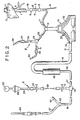
- FIG. 1 there is shown the featured components of the apparatus assembly of the invention used to practice the process of the invention in relation to a human body 2.
- Liver 3 is supplied with cancer therapy drugs from syringe 4 through tubing leading to catheter 6 located in hepatic artery 5.
- the hepatic venous blood containing anti-cancer concentrations of chemotherapuetic agent is passed via the hepatic veins 7 to the double balloon catheter located in IVC 1.
- the balloons of the double balloon catheter are positioned central and peripheral of the hepatic veins 7.
- the contaminated blood is passed through the double balloon catheter to tubing 17 to a point exterior to the body 2, thence to a pump 21 such as a Bio Medicus BP-50 Bio-Pump having a priming volume of 48 ml, containing two rotator cones and providing a maximum flow rate of 5 liters per minute.
- Pump 21 moves the blood through the extracorporeal circuit at relatively constant low pressure, the object being to avoid raising or lowering the fluid pressure of the total circuit ranging from the hepatic veins through the return to the body.
- the contaminated blood is transported through tubing 41 into detoxification zone 43, which in this case is a hemoperfusion cartridge containing activated carbon. Suitable cartridge systems are obtainable from Clark Research and Development, Inc., New Orleans, LA.
- Double balloon catheter 9 comprises central balloon 11 and peripheral balloon 12, each in juxtaposition to cylindrical fenestration zone 8.
- Zone 8 contains fenestrations 13 sufficient in total area to allow the complete removal of the hepatic venous flow into the catheter 9.
- the hollow interior (main lumen) of catheter 9 is of sufficient size to completely remove the blood from the hepatic veins without elevating hepatic back pressure.
- Catheter 9 is provided with channel 15 that is used to inject fluid into the balloons 11 and 12 for inflation or to withdraw fluids for deflation.
- Tube 17 may be interrupted by a pressure monitor the same as assembly A, discussed below, that is later provided in the extracorporeal circuit. Tube 17 may connect directly with pump 21 or to Y-fitting 19, as shown. Also connected to Y-fitting 19 is ancillary feed system B comprising tube 23, Y-fitting 25, and multiple IV spikes 29 and 33 each connected to tubes 30 and 31 respectively, and each is provided with a clamp, 27 and 28, respectively. These lines can be used for the introduction of medications as required.
- Pump 21 is a smooth rotator pump design and a particularly desirable pump is a Bio Medicus BP-50 Bio-Pump having a priming volume of 48 ml, containing two rotator cones and providing a maximum flow rate of 5 liters per minute.
- the contaminated blood is gently pushed between the smooth rotators 37 in zones 35 and issued from the pump through port 39 into tube 41.
- Tube 41 is connected to cartridge or canister 43 containing a meshed sack of activated carbon particles coated with an acrylic resin containing heparin, see Clark, supra .
- the outflow from cartridge 43 is fed to tube 45 and then to tube 47 that is connected to pressure monitoring assembly A.
- Pressure monitoring assembly A comprises a pressure monitor gauge 55 connected to fluid membrane vessel 53 that contains a thin membrane that separates the gauge 55 from the blood in vessel 53 and responds to the fluid pressure of the blood in vessel 53. That response is read by the gauge.
- Vessel 53 is connected to tubing 57, that is connected to stopcock 52.
- Stopcock 52 is connected to flexible tubing 59 that in turn is connected to stopcock 51, the latter secured in fitting 49.
- Blood from tubing 47 is passed to Y-connector 63 via tubing 61, then to tubings 65 and 67.
- Tubings 65 and 67 are each connected to catheter 69 and another catheter (connected to tube 65) not shown. These catheters are provided for returning the purified blood to the subclavian veins.
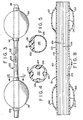
- FIG 3 there is shown a double balloon catheter design that can have up to a 24 French (Fr) O.D. Zone 100 is provided with slotted fenestra tions 104 in the solid plastic tubing 102.
- the open end 118 terminates the catheter.
- End 118 is tapered to the caliber of an angiographic guide wire that will, under fluoroscope control, allow the catheter to be advanced from the femoral vein to the proper location in the inferior vena cava without risk of injury to the interior of the vessels.
- Appropriate guide wires may be, for example, 0.035, 0.038, or 0.045 inch in diameter.
- the catheter end hole is closed using a standard angiographic apparatus (tip-occluding wire), that consists of a thin wire long enough to traverse the length of the catheter at the end of which is a stainless steel bead just large enough to obstruct the catheter's end-hole when advanced into it (similar to a metal stopper that closes the outlet from a sink when advanced).
- a standard angiographic apparatus tip-occluding wire
- the end hole can be made 7-12 Fr in diameter in order to accommodate a return catheter.
- the return catheter can be used to return treated blood to the systemic circulation.
- the return catheter is advanced over a guide wire through the main lumen of the double balloon catheter and through the end hole 118 into the right atrium or superior vena cava.
- the return catheter can be made to gradually taper its O.D. by decreasing its wall thickness, leaving the I.D. constant, since the location of the tip of the return catheter is not critical.
- the length over which the catheter tapers is arbitrary.
- the taper is constructed so that the tip of the catheter is its narrowest O.D. and the O.D. increases toward the femoral vein.
- the tip easily passes through the end hole 118 of the double balloon catheter.
- the tapered end of the return catheter is advanced until it obstructs the end hole 118, preventing systemic blood from entering the double balloon catheter when the balloons are inflated but leaving an open lumen through the return catheter to return blood beyond the isolated venous segment without mixing with contaminated blood.
- the catheter tubing can be made of a variety of plastic materials such as polypropylene, polyethylene, polyvinylchloride, ethylene vinylacetate copolymers, polytetrafluoroethylene, polyurethane, and the like.
- a favorable plastic combination for catheters containing a return lumen are a homogeneous mixture of high density polyethylene and linear low density polyethylene. That combination gives favorable stiffness at ambient conditions and allows the use of especially thin wall thicknesses.
- the plastic may be treated first by one or more of a number of well known methods that make bonding possible. The methods include plasma treatment, ozone treatment, and the like.
- Balloons 110 and 114 may be made from a plurality of elastomeric materials such as latex rubber, polyurethanes, spandex type polyurethanes, EPDM rubber, and the like.
- the balloons are typically adhesively bonded at sheath surfaces 108 and 112, respectively.
- a wide variety of adhesives may be employed. Polyacrylonitrile type adhesives, rubber latex adhesives and the like may be used to secure the balloon to the sheath surfaces 108 and 112.
- FIG 4 there is shown a cross section of a typical catheter design such as that shown in Figure 3.
- the interior of the catheter contains main lumen 120 and 4 additional lumina 124 molded into the outer wall 122.
- the additional lumina can be used for the various functions described above.
- FIG. 5 there is shown a cross section of another catheter design such as that shown in Figure 3 but containing only three lumina.
- the interior of the catheter contains main lumen 130 and two supplementary lumina 131 molded into segment 133 of wall 135.
- the supplementary lumina can be used for the various functions described above.
- FIG. 6 there is shown a double balloon catheter design which can have an outside diameter of 24 French such as in the fenestration zone 140 and an inside diameter of less than 22 Fr. Zone 140 is provided with slotted fenestrations 141 in the plastic tubing 142.
- Figure 7 it is a cross sectional view of another typical catheter design showing a main lumen 150 and 3 supplemental lumina 151.
- Figure 8 provides a more detailed schematic cross sectional side view of a typical double balloon catheter 161. In this depiction, the catheter sidewall 163 is penetrated by a plurality of fenestrations 165.
- the main lumen 169 contains at its periphery supplemental lumina 170, 171 and 173.
- Supplemental lumen 170 can be used to accommodate a guidewire, supplemental lumen 171 can be used to accommodate a pressure monitor, and supplemental lumen 173 is used to supply fluid to the balloons 166 and 167 through openings 175 and 177.
- the invention is useful for the treatment of any organ in which the treating agent would cause toxological effects if it entered the body's general circulation.
- the invention could be applied to the treatment of infectious deseases of organs such as fungal deseases.
- a specific illustration would be the treatment of hepatic fungal infections with Amphotericen B.
- the procedures described above would be directly applicable to extracorporeal recovery of this agent and its isolation from entering the general circulation of the body during treatment of the liver with significant concentrations of this drug.
- the breadth of the invention encompasses the perfusing of a high concentration of an agent to treat an organ, such as anti-cancer agents through a body organ containing a tumor, without their entering the body's general circulation, removing them from the organ with effluent blood and transporting the contaminated blood to an extracorporeal circuit where the blood is treated to remove the contamination, and returning the treated blood to the body.
- an organ such as anti-cancer agents
- the process prevents toxic levels of the agents from entering the body's general circulation while delivering lethal doses of the agents to the tumor.
Landscapes
- Health & Medical Sciences (AREA)
- Heart & Thoracic Surgery (AREA)
- Engineering & Computer Science (AREA)
- Life Sciences & Earth Sciences (AREA)
- Cardiology (AREA)
- Veterinary Medicine (AREA)
- Hematology (AREA)
- Anesthesiology (AREA)
- Animal Behavior & Ethology (AREA)
- General Health & Medical Sciences (AREA)
- Public Health (AREA)
- Biomedical Technology (AREA)
- Mechanical Engineering (AREA)
- Vascular Medicine (AREA)
- Pulmonology (AREA)
- Biophysics (AREA)
- Urology & Nephrology (AREA)
- Optics & Photonics (AREA)
- Medical Informatics (AREA)
- Child & Adolescent Psychology (AREA)
- Physics & Mathematics (AREA)
- Oncology (AREA)
- External Artificial Organs (AREA)
- Media Introduction/Drainage Providing Device (AREA)
- Medicines Containing Material From Animals Or Micro-Organisms (AREA)
Applications Claiming Priority (2)
| Application Number | Priority Date | Filing Date | Title |
|---|---|---|---|
| US07/260,623 US5069662A (en) | 1988-10-21 | 1988-10-21 | Cancer treatment |
| US260623 | 1988-10-21 |
Publications (3)
| Publication Number | Publication Date |
|---|---|
| EP0364799A2 true EP0364799A2 (de) | 1990-04-25 |
| EP0364799A3 EP0364799A3 (en) | 1990-12-27 |
| EP0364799B1 EP0364799B1 (de) | 1995-05-03 |
Family
ID=22989916
Family Applications (1)
| Application Number | Title | Priority Date | Filing Date |
|---|---|---|---|
| EP89118180A Expired - Lifetime EP0364799B1 (de) | 1988-10-21 | 1989-09-30 | Krebsbehandlung |
Country Status (7)
| Country | Link |
|---|---|
| US (2) | US5069662A (de) |
| EP (1) | EP0364799B1 (de) |
| JP (1) | JP2831056B2 (de) |
| AT (1) | ATE121952T1 (de) |
| CA (1) | CA1333872C (de) |
| DE (1) | DE68922456T2 (de) |
| ES (1) | ES2075022T3 (de) |
Cited By (16)
| Publication number | Priority date | Publication date | Assignee | Title |
|---|---|---|---|---|
| WO1995005864A1 (en) * | 1993-08-27 | 1995-03-02 | Government Of The United States Of America, Represented By The Secretary Of The Department Of Health And Human Services | Convection-enhanced drug delivery |
| EP0654283A1 (de) * | 1993-11-22 | 1995-05-24 | Anaya Fernandez de Lomana, Eugenio Fernando | Intraaortaler Katheter zur Perfusion und Konservation der Niere |
| DE19514638A1 (de) * | 1995-04-20 | 1996-10-24 | Peter Dr Med Boekstegers | Verfahren zur venendruckgesteuerten selektiven Absaugung und Retroinfusion eines Fluides aus bzw. in Körpervenen |
| WO2000029046A2 (en) | 1998-11-12 | 2000-05-25 | Jostra Ab | Perfusion system |
| WO2000047251A1 (fr) | 1999-02-10 | 2000-08-17 | Nikkiso Co., Ltd. | Dispositif de traitement sans perfusion |
| WO2000062853A1 (de) * | 1999-04-20 | 2000-10-26 | Eberhard-Karls-Universität Tübingen Universitätsklinikum | Katheterset zum konservieren von inneren organen |
| WO2001003755A1 (en) * | 1999-07-10 | 2001-01-18 | Argmed Kommanditbolag | Perfusion system |
| WO2004091695A3 (en) * | 2003-04-18 | 2005-04-14 | Bellco Spa | Device and machine for regenerating a human liver |
| WO2007107327A1 (en) | 2006-03-20 | 2007-09-27 | Medical Device Works Nv Sa | A device for delivering medical treatment |
| EP1027094A4 (de) * | 1997-07-14 | 2008-03-12 | Delcath Systems Inc | Neue vorrichtung und neues verfahren für eine isolierte beckenperfusion |
| US8425397B2 (en) | 2003-10-31 | 2013-04-23 | Sunshine Heart Company Pty Ltd | Percutaneous gas-line |
| US8469873B2 (en) | 2003-10-30 | 2013-06-25 | Sunshine Heart Company Pty Ltd | Blood vessel wrap |
| EP2498858A4 (de) * | 2009-11-09 | 2013-08-28 | Delcath Systems Inc | Systeme und verfahren zur homestatischen behandlung von organerkrankugen mittels lokaler freisetzung von therapeutika |
| US8702583B2 (en) | 2003-11-11 | 2014-04-22 | Sunshine Heart Company Pty, Ltd. | Actuator for a heart assist device |
| CN104349804A (zh) * | 2012-03-01 | 2015-02-11 | 医疗设备工程公司 | 用于监视和控制器官血液灌注的系统 |
| CN108030996A (zh) * | 2018-01-19 | 2018-05-15 | 北京大学第三医院 | 集成式胆道自脱内引流装置 |
Families Citing this family (218)
| Publication number | Priority date | Publication date | Assignee | Title |
|---|---|---|---|---|
| US5474772A (en) * | 1989-08-02 | 1995-12-12 | Cobe Laboratories, Inc. | Method of treatment with medical agents |
| US5423754A (en) * | 1990-09-20 | 1995-06-13 | Scimed Life Systems, Inc. | Intravascular catheter |
| SE9100142L (sv) * | 1991-01-17 | 1992-07-18 | Bengt Sandberg | En metod och ett system foer foerbaettrad in vivo reducering av diagnostiska och/eller terapeutiska substanser medelst extrakorporeal borttagning, och anvaendandet av naemnda substanser foer detta aendamaal |
| US5454788A (en) * | 1991-04-24 | 1995-10-03 | Baxter International Inc. | Exchangeable integrated-wire balloon catheter |
| JP2939893B2 (ja) * | 1991-04-24 | 1999-08-25 | バクスター インターナショナル インコーポレーテッド | 交換可能な一体式−ワイヤーバルーンカテーテル |
| US5769812A (en) | 1991-07-16 | 1998-06-23 | Heartport, Inc. | System for cardiac procedures |
| US5584803A (en) | 1991-07-16 | 1996-12-17 | Heartport, Inc. | System for cardiac procedures |
| US6482171B1 (en) | 1991-07-16 | 2002-11-19 | Heartport, Inc. | Multi-lumen catheter |
| CA2074304C (en) * | 1991-08-02 | 1996-11-26 | Cyril J. Schweich, Jr. | Drug delivery catheter |
| US5308342A (en) * | 1991-08-07 | 1994-05-03 | Target Therapeutics, Inc. | Variable stiffness catheter |
| US6224619B1 (en) | 1991-12-17 | 2001-05-01 | Heartport, Inc. | Blood vessel occlusion trocar having size and shape varying insertion body |
| US5257979A (en) * | 1992-07-27 | 1993-11-02 | Ravindar Jagpal | Instrument for catheterization |
| US5730722A (en) * | 1992-08-19 | 1998-03-24 | Wilk; Peter J. | Method and apparatus for supplying a medical treatment composition to a patient |
| US5318519A (en) * | 1992-08-19 | 1994-06-07 | Wilk Peter J | Method and apparatus for supplying nutrition |
| US5544651A (en) * | 1992-09-08 | 1996-08-13 | Wilk; Peter J. | Medical system and associated method for automatic treatment |
| US5695479A (en) * | 1993-11-01 | 1997-12-09 | Jagpal; Ravindar | Instrument, system, kit and method for catheterization procedures |
| US7008395B1 (en) | 1994-04-04 | 2006-03-07 | Wake Forset University Health Sciences | Multi-lumen catheter system used in a blood treatment process |
| CA2187027A1 (en) * | 1994-04-04 | 1995-10-12 | Brian W. Loggie | Multi-lumen catheter system |
| US5478309A (en) | 1994-05-27 | 1995-12-26 | William P. Sweezer, Jr. | Catheter system and method for providing cardiopulmonary bypass pump support during heart surgery |
| US5681278A (en) * | 1994-06-23 | 1997-10-28 | Cormedics Corp. | Coronary vasculature treatment method |
| US5900433A (en) * | 1995-06-23 | 1999-05-04 | Cormedics Corp. | Vascular treatment method and apparatus |
| US5736129A (en) * | 1995-11-17 | 1998-04-07 | Medenica; Rajko D. | Flow cytometric pharmacosensitivity assay and method of cancer treatment |
| US5868703A (en) * | 1996-04-10 | 1999-02-09 | Endoscopic Technologies, Inc. | Multichannel catheter |
| US6821265B1 (en) | 1996-04-10 | 2004-11-23 | Endoscopic Technologies, Inc. | Multichannel catheter |
| JP3526690B2 (ja) * | 1996-04-26 | 2004-05-17 | 富雄 太田 | 分離冷却法のための体外循環装置 |
| US5876366A (en) * | 1996-07-22 | 1999-03-02 | Dykstra; Todd M. | Kidney dialysis method and device |
| US6186146B1 (en) * | 1996-08-30 | 2001-02-13 | Delcath Systems Inc | Cancer treatment method |
| US5879320A (en) * | 1996-12-23 | 1999-03-09 | Cazenave; Craig Richard | Implantable vascular device |
| US5879321A (en) * | 1997-01-22 | 1999-03-09 | The University Of Kentucky Research Foundation | Portocaval-right atrial shunt |
| JP2001510365A (ja) * | 1997-02-04 | 2001-07-31 | クック ウロロジカル インク. | 恥骨上ドレナージカテーテル |
| US5755687A (en) | 1997-04-01 | 1998-05-26 | Heartport, Inc. | Methods and devices for occluding a patient's ascending aorta |
| US5980481A (en) * | 1997-05-08 | 1999-11-09 | Transvivo, Inc. | Method and apparatus for continuous peritoneal cascade dialysis and hemofiltration (CPCD/H) |
| EP0998565A1 (de) * | 1997-07-11 | 2000-05-10 | Introgene B.V. | Interleukin-3 gentherapie für krebs |
| US5919163A (en) * | 1997-07-14 | 1999-07-06 | Delcath Systems, Inc. | Catheter with slidable balloon |
| WO2001028618A2 (en) | 1999-10-22 | 2001-04-26 | Boston Scientific Corporation | Double balloon thrombectomy catheter |
| US7037316B2 (en) | 1997-07-24 | 2006-05-02 | Mcguckin Jr James F | Rotational thrombectomy device |
| US6416487B1 (en) | 1997-07-30 | 2002-07-09 | Renal Tech International Llc | Method of removing beta-2 microglobulin from blood |
| US20010041862A1 (en) | 1997-09-02 | 2001-11-15 | Morton G. Glickman | Novel apparatus and method of treating a tumor in the extremity of a patient |
| US5897533A (en) * | 1997-09-02 | 1999-04-27 | Delcath Systems, Inc. | Catheter flow and lateral movement controller |
| ATE236577T1 (de) * | 1997-09-26 | 2003-04-15 | Univ Duke | Katheter zur perfusion und okklusion |
| US6390969B1 (en) | 1997-10-09 | 2002-05-21 | Orqis Medical Corporation | Implantable heart assist system and method of applying same |
| UA56262C2 (uk) | 1997-10-09 | 2003-05-15 | Орквіс Медікел Корпорейшн | Імплантовувана система підтримки серця |
| US6610004B2 (en) | 1997-10-09 | 2003-08-26 | Orqis Medical Corporation | Implantable heart assist system and method of applying same |
| US6889082B2 (en) | 1997-10-09 | 2005-05-03 | Orqis Medical Corporation | Implantable heart assist system and method of applying same |
| US6387037B1 (en) | 1997-10-09 | 2002-05-14 | Orqis Medical Corporation | Implantable heart assist system and method of applying same |
| US6699231B1 (en) | 1997-12-31 | 2004-03-02 | Heartport, Inc. | Methods and apparatus for perfusion of isolated tissue structure |
| US6159178A (en) | 1998-01-23 | 2000-12-12 | Heartport, Inc. | Methods and devices for occluding the ascending aorta and maintaining circulation of oxygenated blood in the patient when the patient's heart is arrested |
| US6722370B1 (en) * | 1998-07-17 | 2004-04-20 | Corgentech, Inc. | Delivery of a composition to the liver by utilizing the portal vein |
| US6461327B1 (en) * | 1998-08-07 | 2002-10-08 | Embol-X, Inc. | Atrial isolator and method of use |
| WO2000030702A1 (en) * | 1998-11-19 | 2000-06-02 | Nikkiso Co., Ltd. | Extracorporeal circulation device and method for isolation temperature control method |
| US7481803B2 (en) | 2000-11-28 | 2009-01-27 | Flowmedica, Inc. | Intra-aortic renal drug delivery catheter |
| US6749598B1 (en) * | 1999-01-11 | 2004-06-15 | Flowmedica, Inc. | Apparatus and methods for treating congestive heart disease |
| US7780628B1 (en) * | 1999-01-11 | 2010-08-24 | Angiodynamics, Inc. | Apparatus and methods for treating congestive heart disease |
| CA2358949A1 (en) | 1999-01-22 | 2000-07-27 | Robert M. Strom | Surface modified divinylbenzene resin having a hemocompatible coating |
| EP1171178B1 (de) | 1999-04-23 | 2006-11-22 | RenaMed Biologics, Inc. | Extrakorporaler kreislauf |
| AUPQ090499A0 (en) | 1999-06-10 | 1999-07-01 | Peters, William S | Heart assist device and system |
| US6815170B1 (en) | 1999-06-30 | 2004-11-09 | John Wayne Cancer Institute | Methods for lymph node identification |
| US7892201B1 (en) * | 1999-08-27 | 2011-02-22 | Gore Enterprise Holdings, Inc. | Balloon catheter and method of mounting same |
| US8414543B2 (en) | 1999-10-22 | 2013-04-09 | Rex Medical, L.P. | Rotational thrombectomy wire with blocking device |
| IT1310933B1 (it) * | 1999-11-16 | 2002-02-27 | Luigi Benatti | Macchina multifunzionale per il monitoraggio ed il controllo diterapie locoregionali in oncologia. |
| US6485500B1 (en) * | 2000-03-21 | 2002-11-26 | Advanced Cardiovascular Systems, Inc. | Emboli protection system |
| US6569146B1 (en) * | 2000-08-18 | 2003-05-27 | Scimed Life Systems, Inc. | Method and apparatus for treating saphenous vein graft lesions |
| US6692458B2 (en) * | 2000-12-19 | 2004-02-17 | Edwards Lifesciences Corporation | Intra-pericardial drug delivery device with multiple balloons and method for angiogenesis |
| US6554819B2 (en) | 2001-01-09 | 2003-04-29 | Mount Sinai School Of Medicine Of New York University | Method and device for preventing contrast associated nephropathy |
| AU2002235462A1 (en) * | 2001-01-23 | 2002-08-06 | The Regents Of The University Of California | Method and apparatus to remove substances from vessels of the heart and other parts of the body to minimize or avoid renal or other harm or dysfunction |
| US7914478B2 (en) * | 2001-03-30 | 2011-03-29 | Tatsuo Kumazaki | Intrapelvic perfusion therapy with cancer therapeutic agent and apparatus for intrapelvic perfusion with cancer therapeutic agent |
| AUPR669001A0 (en) | 2001-07-30 | 2001-08-23 | Sunshine Heart Company Pty Ltd | A fluid pressure generating means |
| EP1450814B1 (de) * | 2001-10-01 | 2016-11-30 | Geistlich Pharma AG | Verfahren zur hemmung von metastasen |
| US7383073B1 (en) * | 2001-10-16 | 2008-06-03 | Z-Kat Inc. | Digital minimally invasive surgery system |
| US6913610B2 (en) * | 2001-10-16 | 2005-07-05 | Granit Medical Innovations, Inc. | Endoscopic retractor instrument and associated method |
| US20040053367A1 (en) * | 2001-12-04 | 2004-03-18 | Griffin Jennifer A. | Lipid-associated molecules |
| AU2003215613A1 (en) | 2002-03-09 | 2003-09-22 | Brodersen, Jens, P. | Sclerosing catheter for sclerosing blood vessels, especially veins |
| DE20203840U1 (de) * | 2002-03-09 | 2002-11-14 | Brodersen, Jens, Dr., 30175 Hannover | Sklerosierungskatheter zur Verödung von Krampfadern im Beinbereich |
| US6926725B2 (en) | 2002-04-04 | 2005-08-09 | Rex Medical, L.P. | Thrombectomy device with multi-layered rotational wire |
| US20030199449A1 (en) * | 2002-04-19 | 2003-10-23 | Tarcha Peter J. | Combination of ablation and controlled drug delivery for the treatment of cancer |
| US7166120B2 (en) | 2002-07-12 | 2007-01-23 | Ev3 Inc. | Catheter with occluding cuff |
| US6849062B2 (en) * | 2002-08-23 | 2005-02-01 | Medtronic Vascular, Inc. | Catheter having a low-friction guidewire lumen and method of manufacture |
| US20040044300A1 (en) * | 2002-09-03 | 2004-03-04 | Donnie Rudd | Method of replenishing cells damaged by treatment for cancer |
| US20040077985A1 (en) * | 2002-09-03 | 2004-04-22 | Donnie Rudd | Method of replenishing cells damaged by treatment for cancer |
| US7993325B2 (en) | 2002-09-20 | 2011-08-09 | Angio Dynamics, Inc. | Renal infusion systems and methods |
| EP1624909A2 (de) | 2002-09-20 | 2006-02-15 | FlowMedica, Inc. | Gerät und verfahren zur einführung eines intraaortakalen katheters durch eine ablageschleuse |
| AU2003276903A1 (en) | 2002-09-20 | 2004-05-04 | Flowmedica, Inc. | Method and apparatus for selective material delivery via an intra-renal catheter |
| EP1585572A4 (de) | 2002-09-20 | 2010-02-24 | Flowmedica Inc | Verfahren und vorrichtung zur intraaortalen wirkstoffabgabe an eine gefässverzweigung |
| US7063679B2 (en) * | 2002-09-20 | 2006-06-20 | Flowmedica, Inc. | Intra-aortic renal delivery catheter |
| AU2002952691A0 (en) | 2002-11-15 | 2002-11-28 | Sunshine Heart Company Pty Ltd | Heart assist device utilising aortic deformation |
| US20030130610A1 (en) * | 2002-12-09 | 2003-07-10 | Mager Larry F. | Aortic balloon catheter with improved positioning and balloon stability |
| US20040144387A1 (en) * | 2003-01-28 | 2004-07-29 | David Amar | Double-balloon endobronchial catheter for one lung isolation anesthesia and surgery |
| US7022097B2 (en) * | 2003-05-09 | 2006-04-04 | Morton Glickman | Method for treating glandular diseases and malignancies |
| EP1635736A2 (de) | 2003-06-05 | 2006-03-22 | FlowMedica, Inc. | Systeme und verfahren zur durchführung von bilateralen interventionen oder diagnose in verzweigten körperlumen |
| US20060167437A1 (en) * | 2003-06-17 | 2006-07-27 | Flowmedica, Inc. | Method and apparatus for intra aortic substance delivery to a branch vessel |
| AU2003275052A1 (en) * | 2003-08-05 | 2005-03-07 | Flowmedica, Inc. | System and method for prevention of radiocontrast induced nephropathy |
| US20070073264A1 (en) * | 2003-09-26 | 2007-03-29 | The Trustees Of The University Of Pennsylvania | Methods, compositions and apparatus for delivering heterologous molecules to cells |
| AU2004284842B2 (en) | 2003-10-31 | 2010-03-04 | Nuwellis, Inc. | Synchronisation control system |
| US7695491B2 (en) * | 2003-12-01 | 2010-04-13 | Ev3 Inc. | Rapid exchange catheters with tandem lumens |
| US20070203445A1 (en) * | 2004-02-26 | 2007-08-30 | V-Kardia Pty Ltd | Isolating cardiac circulation |
| WO2005091910A2 (en) | 2004-03-04 | 2005-10-06 | Flowmedica, Inc. | Sheath for use in peripheral interventions |
| GB0406728D0 (en) * | 2004-03-25 | 2004-04-28 | Hydrodynamic Gene Delivery Ltd | Gene therapy |
| WO2005112980A2 (en) | 2004-05-14 | 2005-12-01 | Flowmedica, Inc. | Bi-lateral local renal delivery for treating congestive heart failure and for bnp therapy |
| US7445592B2 (en) | 2004-06-10 | 2008-11-04 | Orqis Medical Corporation | Cannulae having reduced flow resistance |
| US20060015065A1 (en) * | 2004-07-15 | 2006-01-19 | Tatsuo Kumazaki | Method of drug perfusion in paraaortic lymph node tumors, sheath for inserting catheter, and oxygenated blood perfusion apparatus |
| US7758541B2 (en) * | 2004-08-17 | 2010-07-20 | Boston Scientific Scimed, Inc. | Targeted drug delivery device and method |
| US20060069323A1 (en) * | 2004-09-24 | 2006-03-30 | Flowmedica, Inc. | Systems and methods for bi-lateral guidewire cannulation of branched body lumens |
| US20090054823A1 (en) | 2004-09-30 | 2009-02-26 | The Trustees Of The University Of Pennsylvania | Perfusion circuit and use therein in targeted delivery of macromolecules |
| WO2006055813A2 (en) | 2004-11-16 | 2006-05-26 | Medrad, Inc. | Modeling of pharmaceutical propagation |
| EP2392379A3 (de) | 2004-11-24 | 2012-03-21 | Medrad, Inc. | Vorrichtungen, Systeme und Verfahren zur Flüssigkeitsabgabe |
| WO2006073870A2 (en) * | 2004-12-30 | 2006-07-13 | Reynaldo Calderon M D | Computerized system for monitored retrograde perfusion of tumor sites |
| EP1846080A4 (de) * | 2005-01-19 | 2010-05-19 | Sentinel Group Llc | System und verfahren zur freisetzung medizinsicher wirkstoffe |
| US20070167913A1 (en) * | 2005-10-11 | 2007-07-19 | Flowmedica, Inc. | Vascular sheath with variable lumen construction |
| CA2626829C (en) * | 2005-10-20 | 2017-01-03 | Frank M. Richmond | Conversion device |
| US20070173798A1 (en) * | 2006-01-23 | 2007-07-26 | Adams Mark L | Minimally invasive methods for thermal treatment |
| US7771401B2 (en) | 2006-06-08 | 2010-08-10 | Angiodynamics, Inc. | Selective renal cannulation and infusion systems and methods |
| ES2732090T3 (es) | 2006-08-21 | 2019-11-20 | Sunshine Heart Co Pty Ltd | Una envoltura mejorada para un dispositivo de asistencia cardiaca |
| US8858584B2 (en) * | 2006-11-07 | 2014-10-14 | Cook Medical Technologies Llc | Emergency transection device |
| DK2097835T3 (en) | 2006-12-29 | 2018-09-03 | Bayer Healthcare Llc | PATIENT-BASED PARAMETER GENERATION SYSTEMS FOR MEDICAL INJECTION PROCEDURES |
| CN100473432C (zh) * | 2006-12-30 | 2009-04-01 | 中国人民解放军第三军医大学第一附属医院 | 肝段定位导管 |
| US20100106181A1 (en) * | 2007-01-08 | 2010-04-29 | Yossi Gross | In-situ filter |
| CN101677526B (zh) * | 2007-03-01 | 2014-07-09 | 生命线科学有限公司 | 灌注调节 |
| US20080221551A1 (en) * | 2007-03-09 | 2008-09-11 | Flowmedica, Inc. | Acute kidney injury treatment systems and methods |
| US7824357B2 (en) * | 2007-06-11 | 2010-11-02 | Ibrahim Rashid Al-Rashdan | Method and system for preventing contrast associated nephropathy |
| JP5437240B2 (ja) | 2007-07-17 | 2014-03-12 | メドラッド インコーポレーテッド | 心肺機能の評価、及び流体搬送の手順のパラメータを決定する装置、システム及び方法 |
| US20090105799A1 (en) * | 2007-10-23 | 2009-04-23 | Flowmedica, Inc. | Renal assessment systems and methods |
| WO2009059371A2 (en) | 2007-11-07 | 2009-05-14 | Rodney James Lane | Systems, methods and devices for circulatory access |
| AU2009209515A1 (en) * | 2008-01-28 | 2009-08-06 | Milux Holding Sa | Blood clot removal device, system, and method |
| US8892182B2 (en) * | 2008-02-08 | 2014-11-18 | Ethicon, Inc. | Double balloon isolation catheters and methods therefor |
| US20090281634A1 (en) * | 2008-05-08 | 2009-11-12 | The University Of Mississippi Medical Center Research Development Foundation | Gut prosthetic |
| US20110218512A1 (en) * | 2008-06-03 | 2011-09-08 | Aethlon Medical, Inc. | Enhanced antiviral therapy methods and devices |
| US20100041984A1 (en) * | 2008-08-12 | 2010-02-18 | James Edward Shapland | Impedance sensing device and catheter system |
| US9050400B2 (en) * | 2008-08-12 | 2015-06-09 | Osprey Medical, Inc. | Remote sensing catheter system and methods |
| WO2010029190A1 (en) * | 2008-09-15 | 2010-03-18 | Joensson Anders | Medical device, method and system for temporary occlusion of an opening in a lumen of a body |
| EP2334366A4 (de) * | 2008-09-16 | 2011-10-05 | Intersect Partners Llc | Vorrichtung und verfahren zur probenahme von prostataflüssigkeit |
| US8162879B2 (en) * | 2008-09-22 | 2012-04-24 | Tyco Healthcare Group Lp | Double balloon catheter and methods for homogeneous drug delivery using the same |
| US9421330B2 (en) | 2008-11-03 | 2016-08-23 | Bayer Healthcare Llc | Mitigation of contrast-induced nephropathy |
| WO2010056732A1 (en) * | 2008-11-12 | 2010-05-20 | Marv Enterprises Llc | Utilization of stents for the treatment of blood borne carcinomas |
| ES2368404B1 (es) * | 2008-12-01 | 2012-09-24 | Fundacio Clinic Per A La Recerca Biomedica | Cateter percutáneo y método para medir presión en vasos sanguíneos. |
| WO2010107789A1 (en) | 2009-03-17 | 2010-09-23 | Marv Enterprises Llc | Sequential extracorporeal treatment of bodily fluids |
| US20100284510A1 (en) * | 2009-05-08 | 2010-11-11 | Jeffrey Neitlich | Imaging gallbladder using computed tomography |
| US10512761B2 (en) | 2009-12-02 | 2019-12-24 | Renovorx, Inc. | Methods for delivery of therapeutic materials to treat pancreatic cancer |
| US9295816B2 (en) * | 2009-12-09 | 2016-03-29 | Osprey Medical, Inc. | Catheter with distal and proximal ports |
| WO2011097295A1 (en) | 2010-02-02 | 2011-08-11 | Nirva Medical, Llc | Localized therapy delivery and local organ protection |
| US9308310B2 (en) | 2010-02-02 | 2016-04-12 | Nirva Medical, Llc | Localized therapy delivery and local organ protection |
| CN103037929B (zh) | 2010-03-06 | 2015-08-26 | 新融合血管系统有限公司 | 回收导管套件 |
| DE102010012050B4 (de) * | 2010-03-19 | 2016-09-29 | Fresenius Medical Care Deutschland Gmbh | Hämodialysemaschine |
| JP5918213B2 (ja) | 2010-04-02 | 2016-05-18 | サンシャイン・ハート・カンパニー・ピーティーワイ・リミテッド | 複合的心臓補助システム、方法および装置 |
| WO2011163578A2 (en) | 2010-06-24 | 2011-12-29 | Medrad, Inc. | Modeling of pharmaceutical propagation and parameter generation for injection protocols |
| US10583246B2 (en) | 2011-03-09 | 2020-03-10 | H. Lee Moffitt Cancer Center And Research Institute, Inc. | High flow rate isolated infusion for regional treatment of cancer and medical conditions |
| JP2012200573A (ja) * | 2011-03-28 | 2012-10-22 | Kobe Univ | 2バルーンカテーテル |
| WO2013020044A1 (en) | 2011-08-03 | 2013-02-07 | The Charlotte-Mecklenburg Hospital Authority D/B/A Carolinas Medical Center | Treatment of fibrosis using microrna-19b |
| EP2741804B1 (de) * | 2011-08-11 | 2017-04-26 | Osprey Medical Inc. | Systeme und verfahren zur behandlung der gliedmassen |
| HUE046954T2 (hu) | 2011-11-07 | 2020-03-30 | Delcath Systems Inc | Készülék a kemoterápiás vegyületek vérbõl való eltávolítására |
| US8251942B1 (en) * | 2011-12-19 | 2012-08-28 | Ibrahim Rashid Al-Rashdan | System and method for removing blood containing contrast dye |
| WO2013148405A2 (en) * | 2012-03-27 | 2013-10-03 | Felder Mitchell S | Treatment for atherosclerosis |
| JP2015128457A (ja) * | 2012-04-27 | 2015-07-16 | テルモ株式会社 | 塞栓物吐出カテーテル |
| CN111528872A (zh) | 2012-05-14 | 2020-08-14 | 拜耳医药保健有限公司 | 用于基于x射线管电压确定药用流体注射协议的系统和方法 |
| US9108029B2 (en) | 2012-05-21 | 2015-08-18 | Nfusion Vascular Systems, Llc | Recovery catheter assembly and method |
| US9332999B2 (en) | 2012-08-13 | 2016-05-10 | Covidien Lp | Apparatus and methods for clot disruption and evacuation |
| US9332998B2 (en) | 2012-08-13 | 2016-05-10 | Covidien Lp | Apparatus and methods for clot disruption and evacuation |
| US9541544B1 (en) | 2012-08-28 | 2017-01-10 | Delcath Systems, Inc. | Method of selecting chemotherapeutic agents for an isolated organ or regional therapy |
| US9750718B2 (en) | 2012-12-12 | 2017-09-05 | The Charlotte-Mecklenburg Hospital Authority | Methods of treating hepatic fibrosis and associated diseases by regulating Rev-ERB activity |
| US9872851B2 (en) | 2012-12-12 | 2018-01-23 | The Charlotte-Mecklenburg Hospital Authority | Methods of treating portal hypertension |
| EP2934376B1 (de) * | 2012-12-21 | 2018-06-06 | The Regents of The University of California | In vivo-positionierbare filtervorrichtungen |
| US9555379B2 (en) | 2013-03-13 | 2017-01-31 | Bayer Healthcare Llc | Fluid path set with turbulent mixing chamber, backflow compensator |
| US8795219B1 (en) | 2013-03-15 | 2014-08-05 | Ibrahim Rashid Al-Rashdan | System and method for removing blood containing contrast dye |
| US9901722B2 (en) | 2014-06-01 | 2018-02-27 | White Swell Medical Ltd | System and method for treatment of pulmonary edema |
| WO2016022797A1 (en) * | 2014-08-06 | 2016-02-11 | Edwards Lifesciences Corporation | Multi-lumen cannulae |
| WO2016054480A2 (en) * | 2014-10-03 | 2016-04-07 | The Regent Of The University Of Colorado, A Body Corporate | Venous access catheters and methods for portal venous system catheterization |
| IL324387A (en) | 2015-05-11 | 2026-01-01 | White Swell Medical Ltd | System and method for reducing outlet pressure from a duct |
| US10898638B2 (en) | 2016-03-03 | 2021-01-26 | Bayer Healthcare Llc | System and method for improved fluid delivery in multi-fluid injector systems |
| US10857328B2 (en) | 2018-01-16 | 2020-12-08 | Daniel Ezra Walzman | Bypass catheter |
| US10799092B2 (en) * | 2016-09-19 | 2020-10-13 | Covidien Lp | System and method for cleansing segments of a luminal network |
| EP3534985B1 (de) | 2016-11-01 | 2024-10-23 | White Swell Medical Ltd | Systeme und verfahren zur behandlung von flüssigkeitsüberlastung |
| EP3538182A1 (de) | 2016-11-14 | 2019-09-18 | Bayer Healthcare LLC | Verfahren und systeme zur verifizierung des inhalts einer zur abgabe einer medizinischen flüssigkeit verwendeten spritze |
| US10857335B2 (en) * | 2017-02-13 | 2020-12-08 | Daniel Ezra Walzman | Temporary bypass balloon catheter |
| IL268950B (en) | 2017-03-02 | 2022-08-01 | White Swell Medical Ltd | Systems and methods for reducing pressure at the exit of a pipe |
| US11406393B2 (en) | 2017-03-19 | 2022-08-09 | White Swell Medical Ltd | Methods and devices for reducing pressure |
| US12290564B2 (en) | 2017-05-18 | 2025-05-06 | Renovorx, Inc. | Methods and apparatuses for treating tumors |
| US11052224B2 (en) | 2017-05-18 | 2021-07-06 | Renovorx, Inc. | Methods for treating cancerous tumors |
| US10695543B2 (en) | 2017-05-18 | 2020-06-30 | Renovorx, Inc. | Methods for treating cancerous tumors |
| CN110944689B (zh) | 2017-06-07 | 2022-12-09 | 施菲姆德控股有限责任公司 | 血管内流体运动设备、系统和使用方法 |
| US11779702B2 (en) | 2017-08-31 | 2023-10-10 | Bayer Healthcare Llc | Method for dynamic pressure control in a fluid injector system |
| JP7252143B2 (ja) | 2017-08-31 | 2023-04-04 | バイエル・ヘルスケア・エルエルシー | 駆動部材の位置及び流体注入器システムの機械的較正のためのシステム及び方法 |
| WO2019046259A1 (en) | 2017-08-31 | 2019-03-07 | Bayer Healthcare Llc | SYSTEM AND METHOD COMPRISING A TRANSITION PHASE IN A MULTIPHASE INJECTION PROTOCOL |
| JP7317724B2 (ja) | 2017-08-31 | 2023-07-31 | バイエル・ヘルスケア・エルエルシー | 液注入器システムの容積補償システムおよび方法 |
| EP3675931B1 (de) | 2017-08-31 | 2021-08-11 | Bayer Healthcare LLC | System und verfahren zur einspritzdruckkalibrierung |
| AU2018323442B2 (en) | 2017-08-31 | 2024-06-27 | Bayer Healthcare Llc | Fluid path impedance assessment for improving fluid delivery performance |
| WO2019094963A1 (en) | 2017-11-13 | 2019-05-16 | Shifamed Holdings, Llc | Intravascular fluid movement devices, systems, and methods of use |
| US11596438B2 (en) | 2018-01-16 | 2023-03-07 | Daniel Ezra Walzman | Bypass catheter |
| US10926061B2 (en) | 2018-01-16 | 2021-02-23 | Daniel Ezra Walzman | Bypass catheter |
| US10799674B2 (en) | 2018-01-16 | 2020-10-13 | Daniel Ezra Walzman | Bypass catheter |
| US11596769B2 (en) | 2018-01-16 | 2023-03-07 | Daniel Ezra Walzman | Bypass catheter |
| US11006996B2 (en) | 2018-01-16 | 2021-05-18 | Daniel Ezra Walzman | Torus balloon with energy emitters for intravascular lithotripsy |
| WO2019152875A1 (en) | 2018-02-01 | 2019-08-08 | Shifamed Holdings, Llc | Intravascular blood pumps and methods of use and manufacture |
| US12144977B2 (en) | 2018-02-13 | 2024-11-19 | White Swell Medical Ltd | Intravascular catheters |
| WO2019204605A1 (en) | 2018-04-19 | 2019-10-24 | Bayer Healthcare Llc | System and method for air detection in fluid injector |
| US12161857B2 (en) | 2018-07-31 | 2024-12-10 | Shifamed Holdings, Llc | Intravascular blood pumps and methods of use |
| CA3111209A1 (en) | 2018-08-28 | 2020-03-05 | Bayer Healthcare Llc | Fluid injector system with improved ratio performance |
| CA3110859A1 (en) | 2018-08-28 | 2020-03-05 | Bayer Healthcare Llc | Fluid injector system, method of preventing fluid backflow, and computer program product |
| WO2020073047A1 (en) | 2018-10-05 | 2020-04-09 | Shifamed Holdings, Llc | Intravascular blood pumps and methods of use |
| US11793996B2 (en) | 2019-02-26 | 2023-10-24 | White Swell Medical Ltd | Devices and methods for treating edema |
| US11931560B2 (en) | 2019-02-26 | 2024-03-19 | White Swell Medical Ltd | Devices and methods for treating edema |
| US11660426B2 (en) | 2019-02-26 | 2023-05-30 | White Swell Medical Ltd | Devices and methods for treating edema |
| US11717652B2 (en) | 2019-02-26 | 2023-08-08 | White Swell Medical Ltd | Devices and methods for treating edema |
| US11724095B2 (en) | 2019-02-26 | 2023-08-15 | White Swell Medical Ltd | Devices and methods for treating edema |
| US11964145B2 (en) | 2019-07-12 | 2024-04-23 | Shifamed Holdings, Llc | Intravascular blood pumps and methods of manufacture and use |
| WO2021016372A1 (en) | 2019-07-22 | 2021-01-28 | Shifamed Holdings, Llc | Intravascular blood pumps with struts and methods of use and manufacture |
| EP4010046B1 (de) | 2019-08-07 | 2026-07-15 | Supira Medical, Inc. | Katheterblutpumpen und zusammenklappbare pumpengehäuse |
| EP4034192B1 (de) | 2019-09-25 | 2025-12-24 | Supira Medical, Inc. | Intravaskuläre blutpumpensysteme und verfahren zur verwendung und steuerung davon |
| EP4782050A1 (de) | 2019-09-25 | 2026-07-29 | Supira Medical, Inc. | Katheterblutpumpen und zusammenklappbare blutleitungen |
| WO2021061525A1 (en) | 2019-09-25 | 2021-04-01 | White Swell Medical Ltd | Devices and methods for interstitial decongestion |
| WO2021062270A1 (en) | 2019-09-25 | 2021-04-01 | Shifamed Holdings, Llc | Catheter blood pumps and collapsible pump housings |
| CN114466668B (zh) * | 2019-09-27 | 2025-04-01 | 巴德血管外围设备公司 | 用于确定血液中的细菌感染的涂覆有抗体的医疗装置 |
| EP4072650A4 (de) | 2019-12-11 | 2024-01-10 | Shifamed Holdings, LLC | Absteigende aorten- und hohlvenenblutpumpen |
| WO2021127503A1 (en) | 2019-12-19 | 2021-06-24 | Shifamed Holdings, Llc | Intravascular blood pumps, motors, and fluid control |
| US12673180B2 (en) | 2020-06-08 | 2026-07-07 | White Swell Medical Ltd | Non-thrombogenic devices for treating edema |
| US12458359B2 (en) | 2020-06-08 | 2025-11-04 | White Swell Medical Ltd | Non-thrombogenic devices for treating edema |
| IL301494A (en) | 2020-10-01 | 2023-05-01 | White Swell Medical Ltd | Intravascular devices that limit flow for the treatment of edema |
| US20220125381A1 (en) * | 2020-10-23 | 2022-04-28 | Boston Scientific Scimed, Inc. | Medical devices and methods for monitoring and treatment with synthetic polymers exhibiting specific binding |
| US12544552B1 (en) | 2022-03-03 | 2026-02-10 | Nirvamed, Inc. | Therapy delivery system |
| US11911581B1 (en) | 2022-11-04 | 2024-02-27 | Controlled Delivery Systems, Inc. | Catheters and related methods for the aspiration controlled delivery of closure agents |
Family Cites Families (59)
| Publication number | Priority date | Publication date | Assignee | Title |
|---|---|---|---|---|
| US28742A (en) * | 1860-06-19 | Machine foe | ||
| US486774A (en) * | 1892-11-22 | William e | ||
| US2642874A (en) * | 1951-06-04 | 1953-06-23 | Wilmer B Keeling | Instrument for treating prostate glands |
| US3045677A (en) * | 1960-05-03 | 1962-07-24 | American Cystoscope Makers Inc | Inflatable balloon catheter |
| US3411506A (en) * | 1966-04-11 | 1968-11-19 | Velasco Adolfo Guevara | Method and apparatus for hemostasis |
| US3516408A (en) * | 1967-09-21 | 1970-06-23 | Vincent L Montanti | Arterial bypass |
| USRE28742E (en) * | 1967-10-26 | 1976-03-23 | Pumps capable of use as heart pumps | |
| US4037984A (en) * | 1967-10-26 | 1977-07-26 | Bio-Medicus, Inc. | Pumping apparatus and process characterized by gentle operation |
| US3957389A (en) * | 1967-10-26 | 1976-05-18 | Bio-Medicus, Inc. | Pumping apparatus and process characterized by gentle operation |
| US3970408A (en) * | 1967-10-26 | 1976-07-20 | Bio-Medicus, Inc. | Apparatus for use with delicate fluids |
| US3647324A (en) * | 1969-12-18 | 1972-03-07 | Edson Howard Rafferty | Electrically driven pumps capable of use as heart pumps |
| US3864055A (en) * | 1971-12-06 | 1975-02-04 | Harold D Kletschka | Pumps capable of use as heart pumps and blood pumps |
| US3837347A (en) * | 1972-04-20 | 1974-09-24 | Electro Catheter Corp | Inflatable balloon-type pacing probe |
| US3995617A (en) * | 1972-05-31 | 1976-12-07 | Watkins David H | Heart assist method and catheter |
| US3811800A (en) * | 1972-07-12 | 1974-05-21 | K Shill | Blood pump |
| US3851649A (en) * | 1973-03-21 | 1974-12-03 | Kendall & Co | Catheterization package |
| SU511951A1 (ru) * | 1973-07-26 | 1976-04-30 | Всесоюзный научно-исследовательский и испытательный институт медицинской техники | Зонд дл блокировки сосудов |
| US4047526A (en) * | 1975-05-22 | 1977-09-13 | Sorenson Research Co., Inc. | Autologous blood system and method |
| SU651817A1 (ru) * | 1976-03-03 | 1979-03-15 | Владивостокский государственный медицинский институт | Катетер |
| US4048064A (en) * | 1976-04-23 | 1977-09-13 | Clark Iii William T | Biocompatible hemoperfusion system |
| DE2636290A1 (de) * | 1976-08-12 | 1978-02-16 | Fresenius Chem Pharm Ind | Vorrichtung zur steuerung und ueberwachung des blutflusses bei der blutdialyse, -perfusion und -diafiltration unter benutzung nur einer anschlusstelle an den blutkreislauf des patienten (single-needle-technik) |
| US4300550A (en) * | 1978-04-26 | 1981-11-17 | Becton, Dickinson And Company | Suction and oxygenation catheter |
| DE2834956A1 (de) * | 1978-08-10 | 1980-02-21 | Thomas Dr Med Urban | Ueber die femoralisgefaesse einfuehrbarer intraluminaerer doppelballonkatheter fuer chirurgische eingriffe |
| US4192302A (en) * | 1978-09-12 | 1980-03-11 | Boddie Arthur W | Hepatic isolation and perfusion circuit assembly |
| DE3010841A1 (de) * | 1980-03-21 | 1981-10-08 | Ulrich Dr.med. 6936 Haag Uthmann | Katheder |
| US4416280A (en) * | 1980-04-07 | 1983-11-22 | Minnesota Mining And Manufacturing Company | Cardioplegia delivery system |
| DE3235974A1 (de) * | 1981-11-24 | 1983-06-01 | Volkmar Dipl.-Ing. Merkel (FH), 8520 Erlangen | Vorrichtung zur entfernung bzw. zur aufweitung von engstellen in koerperfluessigkeit fuehrenden gefaessen |
| US4423725A (en) * | 1982-03-31 | 1984-01-03 | Baran Ostap E | Multiple surgical cuff |
| US4636195A (en) * | 1982-04-02 | 1987-01-13 | Harvey Wolinsky | Method and apparatus for removing arterial constriction |
| DE3214397C2 (de) * | 1982-04-20 | 1984-07-26 | Karl Dr. 6301 Pohlheim Aigner | Perfusions-Doppellumenkatheter |
| US4445892A (en) * | 1982-05-06 | 1984-05-01 | Laserscope, Inc. | Dual balloon catheter device |
| DE3228438C2 (de) * | 1982-07-30 | 1985-01-17 | Karl Dr. 6301 Pohlheim Aigner | Doppellumiger Katheter |
| DE3309788C2 (de) * | 1983-03-18 | 1985-12-05 | Karl Dr. 6301 Pohlheim Aigner | Implantierbarer Zuspritzkatheder |
| US4546759A (en) * | 1983-07-29 | 1985-10-15 | Mladen Solar | Method and apparatus for assisting human heart function |
| US4883459A (en) * | 1983-07-29 | 1989-11-28 | Reynaldo Calderon | Retrograde perfusion |
| US4714460A (en) * | 1983-07-29 | 1987-12-22 | Reynaldo Calderon | Methods and systems for retrograde perfusion in the body for curing it of the disease or immume deficiency |
| DE3400874C1 (de) * | 1984-01-12 | 1985-02-07 | Karl Dr. 6301 Pohlheim Aigner | Doppellumiger Katheter fuer eine Vorrichtung zur in-vivo-Reinigung von Blut |
| US5033998A (en) * | 1984-01-20 | 1991-07-23 | Eliot Corday | Retrograde delivery of pharmacologic and diagnostic agents via venous circulation |
| DE3446033A1 (de) * | 1984-12-18 | 1986-07-03 | B. Braun Melsungen Ag, 3508 Melsungen | Implantierbarer intraperitonealer katheter |
| US4741328A (en) * | 1985-03-14 | 1988-05-03 | Shlomo Gabbay | Means for intraaortic assist and method of positioning a catheter therefor |
| US4708718A (en) * | 1985-07-02 | 1987-11-24 | Target Therapeutics | Hyperthermic treatment of tumors |
| US4781677A (en) * | 1985-07-17 | 1988-11-01 | Wilcox Gilbert M | Method of treatment utilizing a double balloon nasobiliary occlusion catheter |
| US4696668A (en) * | 1985-07-17 | 1987-09-29 | Wilcox Gilbert M | Double balloon nasobiliary occlusion catheter for treating gallstones and method of using the same |
| DE3539022C1 (de) * | 1985-11-02 | 1986-10-23 | Karl Dr. 6301 Pohlheim Aigner | Implantierbarer Katheter mit Gefaessdrossel |
| US4705502A (en) * | 1985-11-06 | 1987-11-10 | The Kendall Company | Suprapubic catheter with dual balloons |
| US4867742A (en) * | 1986-06-06 | 1989-09-19 | Reynaldo Calderon | Retrograde perfusion |
| IT8629545V0 (it) * | 1986-06-12 | 1986-06-12 | Fina Ernesto | Set cateteri ureterali coassiali a palloncino per estrazione di calcoli ureterali |
| US4731055A (en) * | 1986-08-25 | 1988-03-15 | Becton, Dickinson And Company | Blood flow conduit |
| US4744366A (en) * | 1986-09-10 | 1988-05-17 | Jang G David | Concentric independently inflatable/deflatable multiple diameter balloon angioplasty catheter systems and method of use |
| DE3705637A1 (de) * | 1987-02-21 | 1988-09-29 | Bissendorf Peptide Gmbh | Vorrichtung zur entfernung von lokal applizierten wirkstoffen gegen solide tumoren |
| US4955857A (en) * | 1988-07-18 | 1990-09-11 | Shettigar Udipi R | Multi-enzyme bioreactor therapy for cancer |
| US4913701A (en) * | 1988-10-06 | 1990-04-03 | Numed, Inc. | Balloon catheter and method of manufacturing the same |
| US5002559A (en) * | 1989-11-30 | 1991-03-26 | Numed | PTCA catheter |
| US5163910A (en) * | 1990-04-10 | 1992-11-17 | Mayo Foundation For Medical Education And Research | Intracatheter perfusion pump apparatus and method |
| CA2022019C (en) * | 1990-07-26 | 1992-12-29 | Michael Black | Catheter |
| US5161773A (en) * | 1990-08-01 | 1992-11-10 | Numed, Inc. | Method and apparatus for controlling fluid flow |
| US5087247A (en) * | 1990-08-28 | 1992-02-11 | Cardiovascular Designs, Inc. | Balloon perfusion catheter |
| US5161547A (en) * | 1990-11-28 | 1992-11-10 | Numed, Inc. | Method of forming an intravascular radially expandable stent |
| US5188595A (en) * | 1991-06-28 | 1993-02-23 | Laserscope | Method for enhanced retention of balloon catheter in body cavity |
-
1988
- 1988-10-21 US US07/260,623 patent/US5069662A/en not_active Expired - Lifetime
-
1989
- 1989-09-25 CA CA000612992A patent/CA1333872C/en not_active Expired - Lifetime
- 1989-09-30 DE DE68922456T patent/DE68922456T2/de not_active Expired - Lifetime
- 1989-09-30 ES ES89118180T patent/ES2075022T3/es not_active Expired - Lifetime
- 1989-09-30 EP EP89118180A patent/EP0364799B1/de not_active Expired - Lifetime
- 1989-09-30 AT AT89118180T patent/ATE121952T1/de not_active IP Right Cessation
- 1989-10-19 JP JP1270477A patent/JP2831056B2/ja not_active Expired - Fee Related
-
1993
- 1993-04-30 US US08/056,583 patent/US5411479A/en not_active Expired - Lifetime
Cited By (23)
| Publication number | Priority date | Publication date | Assignee | Title |
|---|---|---|---|---|
| WO1995005864A1 (en) * | 1993-08-27 | 1995-03-02 | Government Of The United States Of America, Represented By The Secretary Of The Department Of Health And Human Services | Convection-enhanced drug delivery |
| EP0654283A1 (de) * | 1993-11-22 | 1995-05-24 | Anaya Fernandez de Lomana, Eugenio Fernando | Intraaortaler Katheter zur Perfusion und Konservation der Niere |
| ES2077519A1 (es) * | 1993-11-22 | 1995-11-16 | Fernandez De Lomana Euge Anaya | Cateter intraaortico para perfusion y conservacion renal. |
| DE19514638A1 (de) * | 1995-04-20 | 1996-10-24 | Peter Dr Med Boekstegers | Verfahren zur venendruckgesteuerten selektiven Absaugung und Retroinfusion eines Fluides aus bzw. in Körpervenen |
| WO1996032972A1 (de) * | 1995-04-20 | 1996-10-24 | Peter Boekstegers | Verfahren und vorrichtung zur gefässdruckgesteuerten selektiven perfusion von körpergefässen mit fluiden |
| DE19514638C2 (de) * | 1995-04-20 | 1998-06-04 | Peter Dr Med Boekstegers | Vorrichtung zur venendruckgesteuerten selektiven Absaugung und Retroinfusion eines Fluids aus bzw. in Körpervenen |
| EP1027094A4 (de) * | 1997-07-14 | 2008-03-12 | Delcath Systems Inc | Neue vorrichtung und neues verfahren für eine isolierte beckenperfusion |
| WO2000029046A2 (en) | 1998-11-12 | 2000-05-25 | Jostra Ab | Perfusion system |
| WO2000029046A3 (en) * | 1998-11-12 | 2000-11-09 | Jostra Ab | Perfusion system |
| WO2000047251A1 (fr) | 1999-02-10 | 2000-08-17 | Nikkiso Co., Ltd. | Dispositif de traitement sans perfusion |
| EP1157709A4 (de) * | 1999-02-10 | 2009-10-28 | Tomio Ohta | Behandlungsvorrichtung zur vermeidung von blutübertragungen |
| WO2000062853A1 (de) * | 1999-04-20 | 2000-10-26 | Eberhard-Karls-Universität Tübingen Universitätsklinikum | Katheterset zum konservieren von inneren organen |
| WO2001003755A1 (en) * | 1999-07-10 | 2001-01-18 | Argmed Kommanditbolag | Perfusion system |
| WO2004091695A3 (en) * | 2003-04-18 | 2005-04-14 | Bellco Spa | Device and machine for regenerating a human liver |
| US8313452B2 (en) | 2003-04-18 | 2012-11-20 | Bellco S.R.L. | Device and machine for regenerating a human liver |
| US8469873B2 (en) | 2003-10-30 | 2013-06-25 | Sunshine Heart Company Pty Ltd | Blood vessel wrap |
| US8425397B2 (en) | 2003-10-31 | 2013-04-23 | Sunshine Heart Company Pty Ltd | Percutaneous gas-line |
| US8702583B2 (en) | 2003-11-11 | 2014-04-22 | Sunshine Heart Company Pty, Ltd. | Actuator for a heart assist device |
| WO2007107327A1 (en) | 2006-03-20 | 2007-09-27 | Medical Device Works Nv Sa | A device for delivering medical treatment |
| EP2498858A4 (de) * | 2009-11-09 | 2013-08-28 | Delcath Systems Inc | Systeme und verfahren zur homestatischen behandlung von organerkrankugen mittels lokaler freisetzung von therapeutika |
| CN104349804A (zh) * | 2012-03-01 | 2015-02-11 | 医疗设备工程公司 | 用于监视和控制器官血液灌注的系统 |
| CN108030996A (zh) * | 2018-01-19 | 2018-05-15 | 北京大学第三医院 | 集成式胆道自脱内引流装置 |
| CN108030996B (zh) * | 2018-01-19 | 2020-06-30 | 北京大学第三医院 | 集成式胆道自脱内引流装置 |
Also Published As
| Publication number | Publication date |
|---|---|
| US5069662A (en) | 1991-12-03 |
| JP2831056B2 (ja) | 1998-12-02 |
| DE68922456D1 (de) | 1995-06-08 |
| EP0364799B1 (de) | 1995-05-03 |
| ES2075022T3 (es) | 1995-10-01 |
| DE68922456T2 (de) | 1996-01-25 |
| JPH02193676A (ja) | 1990-07-31 |
| US5411479A (en) | 1995-05-02 |
| ATE121952T1 (de) | 1995-05-15 |
| CA1333872C (en) | 1995-01-10 |
| EP0364799A3 (en) | 1990-12-27 |
Similar Documents
| Publication | Publication Date | Title |
|---|---|---|
| EP0364799B1 (de) | Krebsbehandlung | |
| US5817046A (en) | Apparatus and method for isolated pelvic perfusion | |
| US20120232457A1 (en) | Systems and Methods for Homeostatically Treating Organ Disease Using Local Delivery of Therapeutic Agents | |
| US5919163A (en) | Catheter with slidable balloon | |
| US6190371B1 (en) | Catheter system having retractable working catheter and associated method | |
| US6475207B1 (en) | Retractable catheter systems and associated methods | |
| EP1119389B1 (de) | Vorrichtung zur verabreichung einer zusammensetzung in die lunge | |
| US6585705B1 (en) | Retractable catheter systems | |
| US6186146B1 (en) | Cancer treatment method | |
| US8827943B2 (en) | Catheter | |
| US5989213A (en) | Long-term dialysis catheter system and associated method | |
| US20010041862A1 (en) | Novel apparatus and method of treating a tumor in the extremity of a patient | |
| JP6452761B2 (ja) | 灌流装置及びその作動方法 | |
| Ku et al. | Percutaneous isolated liver chemoperfusion for treatment of unresectable malignant liver tumors: technique, pharmacokinetics, clinical results | |
| WO2006090706A1 (ja) | 造影剤除去システムおよび該造影剤除去システムの作動方法 | |
| RU2823463C1 (ru) | Y-образная соединительная магистраль | |
| CN121194818A (zh) | Y形连接管 | |
| EA052864B1 (ru) | Y-образная соединительная магистраль |
Legal Events
| Date | Code | Title | Description |
|---|---|---|---|
| PUAI | Public reference made under article 153(3) epc to a published international application that has entered the european phase |
Free format text: ORIGINAL CODE: 0009012 |
|
| AK | Designated contracting states |
Kind code of ref document: A2 Designated state(s): AT BE CH DE ES FR GB GR IT LI LU NL SE |
|
| PUAL | Search report despatched |
Free format text: ORIGINAL CODE: 0009013 |
|
| AK | Designated contracting states |
Kind code of ref document: A3 Designated state(s): AT BE CH DE ES FR GB GR IT LI LU NL SE |
|
| 17P | Request for examination filed |
Effective date: 19910621 |
|
| 17Q | First examination report despatched |
Effective date: 19921029 |
|
| GRAA | (expected) grant |
Free format text: ORIGINAL CODE: 0009210 |
|
| AK | Designated contracting states |
Kind code of ref document: B1 Designated state(s): AT BE CH DE ES FR GB GR IT LI LU NL SE |
|
| REF | Corresponds to: |
Ref document number: 121952 Country of ref document: AT Date of ref document: 19950515 Kind code of ref document: T |
|
| REF | Corresponds to: |
Ref document number: 68922456 Country of ref document: DE Date of ref document: 19950608 |
|
| ITF | It: translation for a ep patent filed | ||
| ET | Fr: translation filed | ||
| REG | Reference to a national code |
Ref country code: GR Ref legal event code: FG4A Free format text: 3016970 |
|
| REG | Reference to a national code |
Ref country code: ES Ref legal event code: FG2A Ref document number: 2075022 Country of ref document: ES Kind code of ref document: T3 |
|
| PLBE | No opposition filed within time limit |
Free format text: ORIGINAL CODE: 0009261 |
|
| STAA | Information on the status of an ep patent application or granted ep patent |
Free format text: STATUS: NO OPPOSITION FILED WITHIN TIME LIMIT |
|
| 26N | No opposition filed | ||
| REG | Reference to a national code |
Ref country code: GB Ref legal event code: IF02 |
|
| PGFP | Annual fee paid to national office [announced via postgrant information from national office to epo] |
Ref country code: IT Payment date: 20060930 Year of fee payment: 18 |
|
| REG | Reference to a national code |
Ref country code: CH Ref legal event code: NV Representative=s name: RIEDERER HASLER & PARTNER PATENTANWAELTE AG |
|
| PGFP | Annual fee paid to national office [announced via postgrant information from national office to epo] |
Ref country code: NL Payment date: 20080930 Year of fee payment: 20 Ref country code: AT Payment date: 20080930 Year of fee payment: 20 |
|
| PGFP | Annual fee paid to national office [announced via postgrant information from national office to epo] |
Ref country code: GB Payment date: 20080930 Year of fee payment: 20 |
|
| PGFP | Annual fee paid to national office [announced via postgrant information from national office to epo] |
Ref country code: LU Payment date: 20081003 Year of fee payment: 20 Ref country code: CH Payment date: 20081010 Year of fee payment: 20 Ref country code: DE Payment date: 20081022 Year of fee payment: 20 |
|
| PGFP | Annual fee paid to national office [announced via postgrant information from national office to epo] |
Ref country code: ES Payment date: 20081001 Year of fee payment: 20 |
|
| PGFP | Annual fee paid to national office [announced via postgrant information from national office to epo] |
Ref country code: SE Payment date: 20081001 Year of fee payment: 20 Ref country code: BE Payment date: 20081029 Year of fee payment: 20 |
|
| PGFP | Annual fee paid to national office [announced via postgrant information from national office to epo] |
Ref country code: FR Payment date: 20080930 Year of fee payment: 20 |
|
| PGFP | Annual fee paid to national office [announced via postgrant information from national office to epo] |
Ref country code: GR Payment date: 20080930 Year of fee payment: 20 |
|
| PG25 | Lapsed in a contracting state [announced via postgrant information from national office to epo] |
Ref country code: IT Free format text: LAPSE BECAUSE OF NON-PAYMENT OF DUE FEES Effective date: 20070930 |
|
| BE20 | Be: patent expired |
Owner name: *DELCATH SYSTEMS INC. Effective date: 20090930 |
|
| REG | Reference to a national code |
Ref country code: CH Ref legal event code: PL |
|
| REG | Reference to a national code |
Ref country code: GB Ref legal event code: PE20 Expiry date: 20090929 |
|
| REG | Reference to a national code |
Ref country code: ES Ref legal event code: FD2A Effective date: 20091001 |
|
| PG25 | Lapsed in a contracting state [announced via postgrant information from national office to epo] |
Ref country code: GB Free format text: LAPSE BECAUSE OF EXPIRATION OF PROTECTION Effective date: 20090929 Ref country code: NL Free format text: LAPSE BECAUSE OF EXPIRATION OF PROTECTION Effective date: 20090930 |
|
| NLV7 | Nl: ceased due to reaching the maximum lifetime of a patent | ||
| EUG | Se: european patent has lapsed | ||
| PG25 | Lapsed in a contracting state [announced via postgrant information from national office to epo] |
Ref country code: ES Free format text: LAPSE BECAUSE OF EXPIRATION OF PROTECTION Effective date: 20091001 |