EP0366684B1 - Durch virusneutralisierende und schützende monokonale antikörper erkanntes ibdv vp2 epitop - Google Patents
Durch virusneutralisierende und schützende monokonale antikörper erkanntes ibdv vp2 epitop Download PDFInfo
- Publication number
- EP0366684B1 EP0366684B1 EP88905593A EP88905593A EP0366684B1 EP 0366684 B1 EP0366684 B1 EP 0366684B1 EP 88905593 A EP88905593 A EP 88905593A EP 88905593 A EP88905593 A EP 88905593A EP 0366684 B1 EP0366684 B1 EP 0366684B1
- Authority
- EP
- European Patent Office
- Prior art keywords
- polypeptide
- ibdv
- acci
- sequence
- fragment
- Prior art date
- Legal status (The legal status is an assumption and is not a legal conclusion. Google has not performed a legal analysis and makes no representation as to the accuracy of the status listed.)
- Expired - Lifetime
Links
Images
Classifications
-
- C—CHEMISTRY; METALLURGY
- C07—ORGANIC CHEMISTRY
- C07K—PEPTIDES
- C07K14/00—Peptides having more than 20 amino acids; Gastrins; Somatostatins; Melanotropins; Derivatives thereof
- C07K14/005—Peptides having more than 20 amino acids; Gastrins; Somatostatins; Melanotropins; Derivatives thereof from viruses
-
- C—CHEMISTRY; METALLURGY
- C07—ORGANIC CHEMISTRY
- C07K—PEPTIDES
- C07K16/00—Immunoglobulins [IG], e.g. monoclonal or polyclonal antibodies
- C07K16/08—Immunoglobulins [IG], e.g. monoclonal or polyclonal antibodies against material from viruses
- C07K16/10—RNA viruses
-
- A—HUMAN NECESSITIES
- A61—MEDICAL OR VETERINARY SCIENCE; HYGIENE
- A61K—PREPARATIONS FOR MEDICAL, DENTAL OR TOILETRY PURPOSES
- A61K39/00—Medicinal preparations containing antigens or antibodies
-
- C—CHEMISTRY; METALLURGY
- C12—BIOCHEMISTRY; BEER; SPIRITS; WINE; VINEGAR; MICROBIOLOGY; ENZYMOLOGY; MUTATION OR GENETIC ENGINEERING
- C12N—MICROORGANISMS OR ENZYMES; COMPOSITIONS THEREOF; PROPAGATING, PRESERVING, OR MAINTAINING MICROORGANISMS; MUTATION OR GENETIC ENGINEERING; CULTURE MEDIA
- C12N2720/00—MICROORGANISMS OR ENZYMES; COMPOSITIONS THEREOF; PROPAGATING, PRESERVING, OR MAINTAINING MICROORGANISMS; MUTATION OR GENETIC ENGINEERING; CULTURE MEDIA dsRNA viruses
- C12N2720/00011—Details
- C12N2720/10011—Birnaviridae
- C12N2720/10022—New viral proteins or individual genes, new structural or functional aspects of known viral proteins or genes
Definitions
- IBDV Infectious bursal disease virus
- Birnaviruses contain four polypeptides which are termed VP1 (90-100 kD), VP2 (41-54 kD), VP3 (32-35 kD) and VP4 (24-29 kD) (Dobos et.al., 1979).
- VP1, VP3 and VP4 of IBDV have molecular weights of approximately 90 kD, 32 kD and 28kD respectively (Dobos et.al., 1979; Fahey et.al., 1985a).
- VP2 of the Australian stain of IBDV (Firth, 1974) has a calculated MW of ca . 52kD from sequencing studies (Hudson et.al., 1986) but migrates as two bands of ca .
- the large genomic segment of infectious bursal disease virus encodes a polyprotein in which the viral polypeptides are present in the following order: N-VP2-VP4-VP3-C.
- Expression in E.coli of the large segment results in the processing of the polyprotein.
- the expression product reacts with a virus neutralizing and protective monoclonal antibody that recognizes a conformational epitope on the surface of the virus. Deletion of different regions of the large genomic segment followed by expression in E.coli shows that the conformational epitope recognised by this monoclonal antibody is present within VP2 (International Patent Application No. WO 86/07060).
- Native VP2 isolated from the virus is precipitated by chicken antibodies raised against IBDV that neutralize the virus and passively protects chickens from IBDV infection.
- the native VP2 produces virus neutralizing antibodies in both rabbits and chickens. The latter passively protect chickens from IBDV infection (Fahey et.al., manuscript submitted).
- Recombinant VP2, produced in E.coli also produces virus-neutralizing and protective antibodies in chickens. These results clearly establish VP2 as a major host-protective immunogen of IBDV.
- the present invention derives from the identification of a conformational epitope within VP2 that is recognized by a number of virus-neutralizing monoclonal antibodies (VN MAbs) raised against the virus.
- VN MAbs virus-neutralizing monoclonal antibodies
- the present invention provides a recombinant DNA molecule, comprising a nucleotide sequence corresponding to the AccI-SpeI fragment, optionally together with the ScaI-XhoI fragment, of the IBDV genome segment coding for the VP2 polypeptide.
- nucleotide sequence of the invention may be obtained from natural, synthetic or semi-synthetic sources, or by manipulation of the natural material; furthermore, this nucleotide sequence may be a naturally-occurring sequence, or it may be related by mutation, including single or multiple base substitutions, deletions, insertions and inversions, to such a naturally-occurring sequence, provided always that the DNA molecule comprising such a sequence is capable of being expressed as a conformational epitope of the VP2 polypeptide of IBDV.
- the nucleotide sequence may have expression control sequences positioned adjacent to it, such control sequences being derived either from IBDV nucleic acid or from a heterologous source.
- This invention also provides a recombinant DNA molecule comprising an expression control sequence having promoter sequences and initiator sequences, and a nucleotide sequence which corresponds to the AccI-SpeI fragment of the IBDV genome segment coding for VP2 polypeptide.
- the invention provides a recombinant DNA cloning vehicle capable of expressing a conformational epitope of the VP2 polypeptide of IBDV, comprising an expression control sequence having promoter sequences and initiator sequences, and a nucleotide sequence which corresponds to the AccI-SpeI fragment of the IBDV genome segment coding for VP2 polypeptide.
- a host cell containing a recombinant DNA cloning vehicle and/or a recombinant DNA molecule as described above.
- polypeptides displaying IBDV antigenicity which can be produced by a host cell transformed or infected with a recombinant DNA cloning vehicle as described above.
- Such expressed polypeptides comprise the polypeptides encoded by the AccI-SpeI fragment, and optionally together with the ScaI-XhoI fragment, of the IBDV genome segment coding for the VP2 polypeptide.
- the present invention also extends to synthetic peptides or polypeptides displaying the antigenicity of a polypeptide encoded by the AccI-SpeI fragment of the IBDV genome segment coding for the VP2 polypeptide.
- synthetic means that the peptides or polypeptides have been produced by chemical and/or biological means, such as by means of chemical synthesis or by recombinant DNA techniques leading to biological synthesis.
- polypeptides can, of course, be obtained by direct expression by a host-cell of a correctly processed and folded protein, or by cleavage of a fused polypeptide produced by a host cell and separation of the desired polypeptide from additional polypeptide coded for by the DNA of the host cell or cloning vehicle by methods well known in the art.
- the polypeptide may be produced synthetically, for example by the well-known Merrifield solid-phase synthesis procedure.
- polypeptides displaying antigenicity of a polypeptide encoded by the AccI-SpeI fragment of the IBDV genome segment coding for the VP2 polypeptide will have utility in serological diagnosis, and in the preparation of single or multivalent vaccines against IBDV by methods well known in the art of vaccine manufacture. Further details of such vaccines, and of methods of use thereof, as well as of quantitative and qualitative assays, are disclosed in International Patent Specification No. WO 86/07060.
- the following detailed description relates to the identification of a conformational epitope within VP2 that is recognized by virus-neutralizing monoclonal antibodies.
- mice were immunised with whole virus and the spleen cells fused with SP-2 or NS-1 myeloma cells.
- the hybridomas were plated out in multiwell trays and supernates screened by immunodotting of whole virus on nitrocellulose sheets. Positive wells were cloned three times at limiting dilution and screened by virus neutralization, Western blotting of whole virus and immunoprecipitation of native and denatured viral proteins.
- the monoclonal antibodies were reacted with viral proteins that had been separated by SDS-PAGE and transferred to nitrocellulose paper according to the method described by Fahey et.al. (1985a).
- the IgG fractions of the tissue culture supernates of the monoclonal antibody cultures were purified by affinity chromatography and injected intraperitoneally into 3-day-old chickens, which were then challenged intraocularly with 100 CID50 of virulent virus 6 hours later.
- the chickens were post-mortemed 3 days later and the serum and bursa of Fabricius assessed by ELISA for residual monoclonal antibody activity and IBD viral antigen (Fahey, et.al., 1985b).
- Protein A-Sepharose (Pharmacia) was activated with rabbit IgG anti-mouse Ig and mouse monoclonal antibody, prior to being blocked with normal rabbit serum and normal mouse serum. The activated Sepharose was then reacted with the viral protein, washed and analysed on SDS-PAGE gels. The precipitated viral protein was detected with a mixture of monoclonal antibodies that Western blotted VP2a/2b and VP3.
- the in vitro virus neutralizing activity of the monoclones was assessed using strain GT101 of IBDV, that had been adapted to tissue culture, and grown in chick kidney cells (Fahey et.al., 1985b), while an additive ELISA was used to assess the specificity of the MAbs (Friguet et.al., 1983).
- the IBDV strain (002-73) used in these studies is an Australian field isolate (Firth, 1974).
- the major structural difference with European and North American strains seems to be the fact that the major 41 kD structural protein (VP2a) is substantially cleaved to a 37 kD species (VP2b) in the Australian strain.
- the strain GT101 of IBDV was adapted from the field strain, to grow in tissue culture.
- the pEX1-3 vectors (Stanley and Luzio, 1984) and E.coli pop 2136 were obtained from Dr.Keith Stanley.
- pUR290-292 vectors (Ruther and Muller-Hill, 1983) were received from Drs.B.Muller-Hill and Cary Queen, respectively.
- the pPL vector was obtained from Pharmacia.
- Recombinant clones used to define processing and antigenicity .
- the large RNA segment of the IBDV genome contains a long open reading frame in which the viral proteins encoded by the large segment are arranged in the following order: N-VP2-VP4-VP3-C (Hudson, et.al., 1986). Clones which contains the VP3 coding region are designated Dn. Expression clones D6 and D1, which encode the entire VP3 or a segment of it, respectively, have been described before (Azad, et.al., 1986).
- Clones which contain the VP3 coding region and sequences upstream of it are designated Pn (precursor to VP3).
- the strategy used for the cloning of the IBDV genome (Azad, et.al., 1985) gave rise to a cDNA library consisting of overlapping fragments covering the entire genome.
- a cDNA fragment equivalent to the large RNA segment could therefore be constructed by joining smaller overlapping fragments from the cDNA library (Azad, et.al., 1985) through common restriction sites as described previously (Hudson, et.al., 1986).
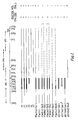
- Clone P1 was constructed by joining cDNA clones D6 and L6 (Azad, et.al., 1985) at a common ApaI site into pUR vectors, thus expressing the major part of VP2 together with VP4 and VP3 (residues 125-1011) fused to ⁇ -galactosidase (see Fig.1).
- Clone PO was constructed in pEX3 vector by extending the P1 insert with the insert of clone G6 (Azad, et.al., 1985) to express essentially the entire IBDV large segment coding region (residues 5-1011) fused to ⁇ -galactosidase.
- clones P2 to P4 the insert from clone PO was excised with SmaI and PstI.
- the PO insert was progressively deleted from the 5' end at unique restriction sites and, after appropriate end filled-in reactions, these variously sized fragments were blunt-end ligated into HpaI-cut pPL vector.
- clone P7 a ScaI - Sca I fragment was excised from clone PO and religated into the SmaI site of the expression vector pEX1. In all these clones the N-terminus of the IBDV polypeptide was fused in-phase to a 7 KD fragment of the N protein.
- Clone pEX SacI-SpeI was constructed by removing a 1kb SacI fragment and religating the plasmid. This kept the IBDV protein in phase with the N-terminal portion of ⁇ -galactosidase but resulted in the deletion of the C-terminal third of the enzyme.
- the amounts of fusion proteins produced ranged from ca . 20% of the total E.coli protein in clones where the IBDV polypeptide was preceded by 110 kD ⁇ -galactosidase, to ca . 5% of the total protein in clones which had a 7 kD N-terminal fusion.
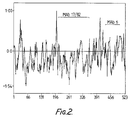
- the amount of unfused protein of the expected size produced in clone D2 (Fig.2) was less than 1% of the total protein.
- the 100 kD ⁇ -galactosidase fusion proteins formed insoluble inclusion bodies which were quantitatively pelleted at 12,000 rpm.
- the 7 kD N-protein fusion polypeptides on the other hand, remained in the supernatant when spun at 12,000 rpm.
- the VP2-encoding region of VP2 was progressively deleted from both the 5' and 3' ends at specific restriction sites (Fig.1) and ligated into E.coli expression vectors ensuring that the IBDV polypeptide was in phase with the N-terminal fusion protein.
- the proteins expressed in E.coli were analyzed under non-denaturing conditions by reaction with different MAbs. Progressive deletions of the VP2-encoding region from the 5' end show that the loss of the sequence 5' to the AccI site does not affect reaction with the virus neutralizing MAbs (Fig.1). A further deletion to the SacI site completely abolishes this reaction.
- the N-terminus of the reactive site lies 3' to the AccI site and 5' to or spanning the SacI site. Similar progressive deletions from the 3' end show that deletions 3' to the SpeI site do not affect reaction with MAb 17/82, but the reaction is abolished by a further deletion to the NaeI site.
- the C-terminus of the reactive peptide is encoded by a sequence that lies 5' to the SpeI site and 3' to or spaning the NaeI site.
- the conformational epitope recognised by the virus neutralizing MAb 17/82 is contained with the 145 amino acid polypeptide encoded by the AccI-SpeI fragment (closed box, Fig.1).
- MAbs (6/1, 9/6, 17/82, 32/3, 33/10 and 39A) neutralised IBDV in vitro , and 17/82 and 39A also passively protected susceptible chickens from infection (others still being tested).
- MAb 44/18 which resembled 9/6 and 33/10 by Western blotting, did not neutralize the virus.
- MAbs 1/1, 6/1 and 17/80 did not neutralize the virus in vitro and 17/80 did not passively protect susceptible chickens.
- MAbs 9/6, 3/1, 32/3, 17/82 and 39A specifically immunoprecipitated native VP2a and VP2b, and almost completely block the ability of immune chicken serum to react with IBDV in the ELISA.
- the additive ELISA showed that MAbs 3/1, 9/6, 17/82, 32/3, 33/10 and 39A react with epitopes on the virus which results in them competing with each other, even sterically, for the same binding sites.
- anti-IBDV MAbs have been used to detect specific chicken antibody in serum and quantitate viral antigen in infected bursae, thereby demonstrating their potential value as diagnostic or quantitative reagents.
- Immune chicken serum can be quantitated in a competitive ELISA using the virus neutralizing MAbs, while these same MAbs can quantitate viral antigen in diagnostic samples and batches of viral or recombinant protein, prior to their formulation as vaccines.
- MAb 6/1, 9/6 and 33/10 have been particularly useful in quantitating the total amount of specific protein in denatured/solubilised preparations of virus or recombinant viral protein. TABLE 2 Specificity and biological activity of monoclonal antibodies to IBDV.
- IBDV Infectious Bursal Disease Virus
- Table 3 shows the response of three 6-week-old SPF chickens to 1mg of protein from clone PO ⁇ XhOI-PstI (Fig.1) emulsified in adjuvant and injected at days 0 and 28.
- Virus neutralising and ELISA responses were determined for the experimental group and a group of control chickens injected similarly with an irrelevant construct.
- Table 4 shows the absence of IBDV antigen in the bursa of Fabricius of the majority of chickens passively protected with IgG or IgM antibody from chicken 7242 (Table 3), following challenge with virulent IBDV.
- Viral antigen in the bursa and residual passive antibody in the paired serum from each chicken was assayed by ELISA, 3 days after the challenge infection.
- Insoluble fusion protein of clone PO ⁇ XhoI-PstI (2mg/ml) expressed in the pEX vector was emulsified in an equal volume of Freunds Complete Adjuvant and injected intramuscularly at several sites into three 6-week-old specific pathogen free (SPF) chickens.
- the chikens were bled from the wing vein at regular intervals and injected with the same amount of fusion protein emulsified in Freunds Incomplete Adjuvant at 10 weeks of age.
- the chickens were again bled and the antibody responses measured by ELISA and by a virus neutralisation assay.
- a group of 3 control chickens were treated in exactly the same manner, but received a fusion protein containing an irrelevant clone.
- Sera from chicken 7642 which had the highest titre of virus neutralising antibody was pooled and separated into 19S and 7S globulins by chromatography on a S300 (Pharmacia) column using 0.01M phosphate buffer, pH7.6. The two fractions were concentrated using an XM100A membrane (Diaflow) and sterile filtered through a 0.22 ⁇ membrane (Millipore).
- Groups of eight 3-day-old chickens were injected intraperitoneally (i.p.) with 1ml of globulin solution and then challenged 24hrs later with 100 chick infectious doses (CID50) of virulent IBDV (strain 002/73).
- CID50 chick infectious doses
- a group of control chickens that received an i.p. injection of phosphate buffered saline (PBS) were similarly challenged.
- the lower titres of residual ELISA antibody in the chickens receiving IgG antibody may account for the susceptibility of the two chickens in this group that did succumb following challenge. Nevertheless a total of 13 of the 16 chickens receiving fractions of serum containing antibodies to recombinant VP2 were protected against the virulent challenge infection.
Landscapes
- Chemical & Material Sciences (AREA)
- Life Sciences & Earth Sciences (AREA)
- Organic Chemistry (AREA)
- Health & Medical Sciences (AREA)
- Virology (AREA)
- Biophysics (AREA)
- General Health & Medical Sciences (AREA)
- Genetics & Genomics (AREA)
- Medicinal Chemistry (AREA)
- Molecular Biology (AREA)
- Proteomics, Peptides & Aminoacids (AREA)
- Biochemistry (AREA)
- Immunology (AREA)
- Gastroenterology & Hepatology (AREA)
- Peptides Or Proteins (AREA)
- Preparation Of Compounds By Using Micro-Organisms (AREA)
- Micro-Organisms Or Cultivation Processes Thereof (AREA)
- Medicines Containing Antibodies Or Antigens For Use As Internal Diagnostic Agents (AREA)
Claims (12)
- Rekombinantes DNA-Molekül, enthaltend eine Nucleotidsequenz, die dem AccI-SpeI-Fragment des das VP₂-Polypeptid kodierenden IBDV-Genomabschnitts entspricht.
- Rekombinantes DNA-Molekül nach Anspruch 1, das eine Nucleotidsequenz enthält, die dem AccI-SpeI-Fragment zusammen mit dem ScaI-XhoI-Fragment des das VP₂-Polypeptid kodierenden IBDV-Genomabschnitts entpricht.
- Rekombinantes DNA-Molekül, enthaltend eine Nucleotidsequenz nach Anspruch 1 oder 2, die operativ an eine Sequenz zur Expressionskontrolle gebunden ist.
- Vehikel oder Vektor zur Klonierung von rekombinanter DNA, das bzw. der die Gesamtmenge oder einen Teil eines Konformationsepitops des strukturellen VP₂-Proteins von IBDV oder eines Polypeptids, das die Antigeneigenschaften davon aufweist, exprimieren kann und eine Nucleotidsequenz nach Anspruch 1 oder Anspruch 2 eingesetzt enthält, die operativ an eine Expressionskontrollsequenz gebunden ist.
- Wirtszelle, enthaltend ein rekombinantes DNA-Molekül nach Anspruch 3 oder ein Vehikel oder einen Vektor zur Klonierung von rekombinanter DNA nach Anspruch 4.
- Synthetisches Peptid oder Polypeptid, das die Antigeneigenschaften eines Polypeptids aufweist, das von dem AccI-SpeI-Fragment des das VP₂-Polypeptid kodierenden IBDV-Genomabschnitts kodiert wird.
- Synthetisches Peptid oder Polypeptid nach Anspruch 6,
dadurch gekennzeichnet,
daß es die Antigeneigenschaften eines Polypeptids aufweist, das von dem AccI-SpeI-Fragment zusammen mit dem ScaI-XhoI-Fragment des das VP₂-Polypeptid kodierenden IBDV-Genomabschnitts kodiert wird. - Fusionspolypeptid, enthaltend eine Polypeptidsequenz, die die Antigeneigenschaften eines Polypeptids aufweist, das von dem Acci-SpeI-Fragment des das VP₂-Polypeptid kodierenden IBDV-Genomabschnitts kodiert wird, als C-terminale Sequenz sowie ein weiteres Polypeptid als damit verknüpfte N-terminale Sequenz.
- Fusionspolypeptid nach Anspruch 8, wobei die Polypeptidsequenz die Antigeneigenschaften eines Polypeptids aufweist, das von dem AccI-SpeI-Fragment zusammen mit dem SCaI-XhoI-Fragment des das VP₂-Polypeptid kodierenden IBDV-Genomabschnitts kodiert wird.
- Verfahren zur Herstellung eines synthetischen Peptids oder Polypeptids nach Anspruch 6 oder 7 oder eines Fusionspolypeptids nach Anspruch 8 oder 9, bei dem die Expression einer Wirtszelle nach Anspruch 5 sowie die Gewinnung des synthetischen Peptids oder Polypeptids oder Fusionspolypeptids durchgeführt werden.
- Zusammensetzung zur Anregung einer Immunantwort gegenüber IBDV, enthaltend mindestens einen Vertreter der aus synthetischen Peptiden und Polypeptiden nach Anspruch 6 oder 7 und Fusionspolypeptdien nach Anspruch 8 oder 9 bestehenden Gruppe zusammen mit einem pharmazeutisch annehmbaren Träger dafür.
- Zusammensetzung nach Anspruch 11, enthaltend ein Adjuvans.
Priority Applications (1)
| Application Number | Priority Date | Filing Date | Title |
|---|---|---|---|
| AT88905593T ATE100859T1 (de) | 1987-06-26 | 1988-06-24 | Durch virusneutralisierende und schuetzende monokonale antikoerper erkanntes ibdv vp2 epitop. |
Applications Claiming Priority (3)
| Application Number | Priority Date | Filing Date | Title |
|---|---|---|---|
| AU2727/87 | 1987-06-26 | ||
| AUPI272787 | 1987-06-26 | ||
| SG117394A SG117394G (en) | 1987-06-26 | 1994-08-17 | IBDV VP2 epitope recognised by virus neutralising and protective monoclonal antibodies |
Publications (3)
| Publication Number | Publication Date |
|---|---|
| EP0366684A1 EP0366684A1 (de) | 1990-05-09 |
| EP0366684A4 EP0366684A4 (de) | 1990-06-27 |
| EP0366684B1 true EP0366684B1 (de) | 1994-01-26 |
Family
ID=25643311
Family Applications (1)
| Application Number | Title | Priority Date | Filing Date |
|---|---|---|---|
| EP88905593A Expired - Lifetime EP0366684B1 (de) | 1987-06-26 | 1988-06-24 | Durch virusneutralisierende und schützende monokonale antikörper erkanntes ibdv vp2 epitop |
Country Status (7)
| Country | Link |
|---|---|
| US (1) | US5350575A (de) |
| EP (1) | EP0366684B1 (de) |
| JP (1) | JPH03500601A (de) |
| DE (1) | DE3887521T2 (de) |
| HK (1) | HK108894A (de) |
| SG (1) | SG117394G (de) |
| WO (1) | WO1988010298A1 (de) |
Families Citing this family (6)
| Publication number | Priority date | Publication date | Assignee | Title |
|---|---|---|---|---|
| DE3650319T2 (de) * | 1985-05-30 | 1996-01-25 | Commw Scient Ind Res Org | Klonierung und expression von wirtsschützenden immunogenen des infektioesen bursavirus (ibdv). |
| US5614409A (en) * | 1989-05-30 | 1997-03-25 | Commonwealth Scientific And Industrial Research Organisation | Production of IBDV VP2 in highly immunogenic form |
| JPH05501064A (ja) * | 1990-05-04 | 1993-03-04 | ユニバーシティ オブ メリーランド アット カレッジ パーク | Ibdvタンパク質に関連する特異的dna配列並びにベクター、宿主およびワクチン |
| US5605792A (en) * | 1993-11-04 | 1997-02-25 | The Ohio State University Research Foundation | Infectious bursal disease virus VP2 fusion protein expressed by baculovirus, use as diagnostic |
| US6468984B1 (en) | 1999-06-08 | 2002-10-22 | Innovo Biotechnologies Ltd. | DNA vaccine for protecting an avian against infectious bursal disease virus |
| US6764684B2 (en) * | 2001-09-28 | 2004-07-20 | Zeon Corporation | Avian herpesvirus-based recombinant infectious bursal disease vaccine |
Family Cites Families (5)
| Publication number | Priority date | Publication date | Assignee | Title |
|---|---|---|---|---|
| AU565768B2 (en) * | 1983-12-13 | 1987-09-24 | Commonwealth Scientific And Industrial Research Organisation | Infectious bursal disease virus vaccine |
| EP0198828A4 (de) * | 1983-12-13 | 1986-11-04 | Commw Scient Ind Res Org | Impfstoff gegen die viren der infektiösen bursal-krankheit. |
| DE3650319T2 (de) * | 1985-05-30 | 1996-01-25 | Commw Scient Ind Res Org | Klonierung und expression von wirtsschützenden immunogenen des infektioesen bursavirus (ibdv). |
| AU587624B2 (en) * | 1985-05-30 | 1989-08-24 | Commonwealth Scientific And Industrial Research Organisation | Expression of host-protective immunogens of ibdv. |
| AU612133B2 (en) * | 1987-02-20 | 1991-07-04 | Natinco Nv | Production of proteins in active forms |
-
1988
- 1988-06-24 DE DE3887521T patent/DE3887521T2/de not_active Expired - Fee Related
- 1988-06-24 JP JP63505656A patent/JPH03500601A/ja active Pending
- 1988-06-24 WO PCT/AU1988/000206 patent/WO1988010298A1/en not_active Ceased
- 1988-06-24 EP EP88905593A patent/EP0366684B1/de not_active Expired - Lifetime
-
1993
- 1993-04-26 US US08/052,289 patent/US5350575A/en not_active Expired - Fee Related
-
1994
- 1994-08-17 SG SG117394A patent/SG117394G/en unknown
- 1994-10-06 HK HK108894A patent/HK108894A/en not_active IP Right Cessation
Non-Patent Citations (3)
| Title |
|---|
| AU, A, 11412/88 (BUNGE (AUSTRALIA) PTY. LTD.) 25 August 1988 * |
| AU,A, 37487/85 (COMMONWEALTH SCIENTIFIC AND INDUSTRIAL RESEARCH ORGANISATION) 20 June 1985 (20.06.85) * |
| AU,A, 59668/86 (COMMONWEALTH SCIENTIFIC AND INDUSTRIAL RESEARCH ORGANISATION) 4 December 1986 (04.12.86) * |
Also Published As
| Publication number | Publication date |
|---|---|
| WO1988010298A1 (en) | 1988-12-29 |
| DE3887521D1 (de) | 1994-03-10 |
| EP0366684A4 (de) | 1990-06-27 |
| HK108894A (en) | 1994-10-14 |
| SG117394G (en) | 1995-03-17 |
| EP0366684A1 (de) | 1990-05-09 |
| DE3887521T2 (de) | 1994-08-18 |
| JPH03500601A (ja) | 1991-02-14 |
| US5350575A (en) | 1994-09-27 |
Similar Documents
| Publication | Publication Date | Title |
|---|---|---|
| Macreadie et al. | Passive protection against infectious bursal disease virus by viral VP2 expressed in yeast | |
| Azad et al. | Deletion mapping and expression in Escherichia coli of the large genomic segment of a birnavirus | |
| AU653387B2 (en) | Antigen-presenting chimaeric protein | |
| Löwenadler et al. | A gene fusion system for generating antibodies against short peptides | |
| Fahey et al. | Virus-neutralizing and passively protective monoclonal antibodies to infectious bursal disease virus of chickens | |
| EP0755259B1 (de) | CHIMÄRE cDNA-KLONE DES VIRUS DER INFEKTIÖSEN BURSAL-KRANKHEIT, EXPRESSIONSPRODUKTE UND DARAUF BASIERENDE IMPFSTOFFE | |
| Azad et al. | Physicochemical and immunological characterization of recombinant host-protective antigen (VP2) of infectious bursal disease virus | |
| Yamaguchi et al. | Epitope mapping of capsid proteins VP2 and VP3 of infectious bursal disease virus | |
| Wang et al. | Development of a multi-mimotope peptide as a vaccine immunogen for infectious bursal disease virus | |
| JPH02238884A (ja) | ネコ科白血病ウイルス抗原をコードする遺伝子を含有するプラスミド及び該プラスミドを含有する宿主 | |
| US6054126A (en) | Cloning and expression of host-protective immunogens of IBDV | |
| EP0481072A1 (de) | Speizifische dns-sequenzen mit bezug zu einem "ibdv"-protein einschliesslich vektoren, wirte und impfstoffe | |
| EP0366684B1 (de) | Durch virusneutralisierende und schützende monokonale antikörper erkanntes ibdv vp2 epitop | |
| AU643216B2 (en) | Production of IBDV VP2 in highly immunogenic form | |
| US5614409A (en) | Production of IBDV VP2 in highly immunogenic form | |
| Mahardika et al. | Mapping of cross-reacting and serotype-specific epitopes on the VP3 structural protein of the infectious bursal disease virus (IBDV) | |
| US5595912A (en) | Specific DNA and RNA sequences associated with US IBDV variants, vector carrying DNA sequences, host carrying cloned vector, deduced amino acid sequences, vaccine and method of vaccination | |
| AU619477B2 (en) | Ibdv vp2 epitope recognised by virus neutralising and protective monoclonal antibodies | |
| CA1339265C (en) | Ibdv vp2 epitope recognised by virus neutralising and protective monoclonal antibodies | |
| CA1292690C (en) | Vaccine comprising an immunogenic protein and, as an adjuvant, a substantially non-immunogenic sequentially homologous peptide | |
| Pitcovski et al. | Failure of viral protein 3 of infectious bursal disease virus produced in prokaryotic and eukaryotic expression systems to protect chickens against the disease | |
| CN1053642A (zh) | 传染性支气管炎病毒疫苗 | |
| JP7747273B2 (ja) | SARS-CoV-2由来のアミノ酸配列およびその利用 | |
| EP0353809A1 (de) | Pseudorabiesvirus-Impfstoff | |
| JP7598538B2 (ja) | SARS-CoV-2由来のアミノ酸配列およびその利用 |
Legal Events
| Date | Code | Title | Description |
|---|---|---|---|
| PUAI | Public reference made under article 153(3) epc to a published international application that has entered the european phase |
Free format text: ORIGINAL CODE: 0009012 |
|
| 17P | Request for examination filed |
Effective date: 19891215 |
|
| AK | Designated contracting states |
Kind code of ref document: A1 Designated state(s): AT BE CH DE FR GB IT LI LU NL SE |
|
| A4 | Supplementary search report drawn up and despatched |
Effective date: 19900627 |
|
| 17Q | First examination report despatched |
Effective date: 19920810 |
|
| GRAA | (expected) grant |
Free format text: ORIGINAL CODE: 0009210 |
|
| AK | Designated contracting states |
Kind code of ref document: B1 Designated state(s): AT BE CH DE FR GB IT LI LU NL SE |
|
| PG25 | Lapsed in a contracting state [announced via postgrant information from national office to epo] |
Ref country code: SE Effective date: 19940126 Ref country code: LI Effective date: 19940126 Ref country code: CH Effective date: 19940126 Ref country code: AT Effective date: 19940126 |
|
| REF | Corresponds to: |
Ref document number: 100859 Country of ref document: AT Date of ref document: 19940215 Kind code of ref document: T |
|
| REF | Corresponds to: |
Ref document number: 3887521 Country of ref document: DE Date of ref document: 19940310 |
|
| ITF | It: translation for a ep patent filed | ||
| ET | Fr: translation filed | ||
| REG | Reference to a national code |
Ref country code: CH Ref legal event code: PL |
|
| RAP2 | Party data changed (patent owner data changed or rights of a patent transferred) |
Owner name: COMMONWEALTH SCIENTIFIC AND INDUSTRIAL RESEARCH OR |
|
| PG25 | Lapsed in a contracting state [announced via postgrant information from national office to epo] |
Ref country code: LU Free format text: LAPSE BECAUSE OF NON-PAYMENT OF DUE FEES Effective date: 19940630 |
|
| NLXE | Nl: other communications concerning ep-patents (part 3 heading xe) |
Free format text: PAT.BUL.12/94 CORR.:CAMPBELL, AUSTRALIE |
|
| PLBE | No opposition filed within time limit |
Free format text: ORIGINAL CODE: 0009261 |
|
| STAA | Information on the status of an ep patent application or granted ep patent |
Free format text: STATUS: NO OPPOSITION FILED WITHIN TIME LIMIT |
|
| 26N | No opposition filed | ||
| PGFP | Annual fee paid to national office [announced via postgrant information from national office to epo] |
Ref country code: FR Payment date: 20000612 Year of fee payment: 13 |
|
| PGFP | Annual fee paid to national office [announced via postgrant information from national office to epo] |
Ref country code: DE Payment date: 20000619 Year of fee payment: 13 |
|
| PGFP | Annual fee paid to national office [announced via postgrant information from national office to epo] |
Ref country code: GB Payment date: 20000621 Year of fee payment: 13 |
|
| PGFP | Annual fee paid to national office [announced via postgrant information from national office to epo] |
Ref country code: NL Payment date: 20000629 Year of fee payment: 13 |
|
| PGFP | Annual fee paid to national office [announced via postgrant information from national office to epo] |
Ref country code: BE Payment date: 20000818 Year of fee payment: 13 |
|
| PG25 | Lapsed in a contracting state [announced via postgrant information from national office to epo] |
Ref country code: GB Free format text: LAPSE BECAUSE OF NON-PAYMENT OF DUE FEES Effective date: 20010624 |
|
| PG25 | Lapsed in a contracting state [announced via postgrant information from national office to epo] |
Ref country code: BE Free format text: LAPSE BECAUSE OF NON-PAYMENT OF DUE FEES Effective date: 20010630 |
|
| BERE | Be: lapsed |
Owner name: COMMONWEALTH SCIENTIFIC AND INDUSTRIAL RESEARCH O Effective date: 20010630 |
|
| PG25 | Lapsed in a contracting state [announced via postgrant information from national office to epo] |
Ref country code: NL Free format text: LAPSE BECAUSE OF NON-PAYMENT OF DUE FEES Effective date: 20020101 |
|
| GBPC | Gb: european patent ceased through non-payment of renewal fee |
Effective date: 20010624 |
|
| PG25 | Lapsed in a contracting state [announced via postgrant information from national office to epo] |
Ref country code: FR Free format text: LAPSE BECAUSE OF NON-PAYMENT OF DUE FEES Effective date: 20020228 |
|
| NLV4 | Nl: lapsed or anulled due to non-payment of the annual fee |
Effective date: 20020101 |
|
| PG25 | Lapsed in a contracting state [announced via postgrant information from national office to epo] |
Ref country code: DE Free format text: LAPSE BECAUSE OF NON-PAYMENT OF DUE FEES Effective date: 20020403 |
|
| PG25 | Lapsed in a contracting state [announced via postgrant information from national office to epo] |
Ref country code: IT Free format text: LAPSE BECAUSE OF NON-PAYMENT OF DUE FEES Effective date: 20050624 |