EP0370774A2 - Système de traduction par machine - Google Patents
Système de traduction par machine Download PDFInfo
- Publication number
- EP0370774A2 EP0370774A2 EP89312089A EP89312089A EP0370774A2 EP 0370774 A2 EP0370774 A2 EP 0370774A2 EP 89312089 A EP89312089 A EP 89312089A EP 89312089 A EP89312089 A EP 89312089A EP 0370774 A2 EP0370774 A2 EP 0370774A2
- Authority
- EP
- European Patent Office
- Prior art keywords
- word
- translated
- text
- designated
- translated word
- Prior art date
- Legal status (The legal status is an assumption and is not a legal conclusion. Google has not performed a legal analysis and makes no representation as to the accuracy of the status listed.)
- Granted
Links
Images




Classifications
-
- G—PHYSICS
- G06—COMPUTING OR CALCULATING; COUNTING
- G06F—ELECTRIC DIGITAL DATA PROCESSING
- G06F40/00—Handling natural language data
- G06F40/20—Natural language analysis
- G06F40/268—Morphological analysis
-
- G—PHYSICS
- G06—COMPUTING OR CALCULATING; COUNTING
- G06F—ELECTRIC DIGITAL DATA PROCESSING
- G06F40/00—Handling natural language data
- G06F40/40—Processing or translation of natural language
- G06F40/42—Data-driven translation
- G06F40/47—Machine-assisted translation, e.g. using translation memory
-
- G—PHYSICS
- G06—COMPUTING OR CALCULATING; COUNTING
- G06F—ELECTRIC DIGITAL DATA PROCESSING
- G06F40/00—Handling natural language data
- G06F40/10—Text processing
- G06F40/166—Editing, e.g. inserting or deleting
-
- G—PHYSICS
- G06—COMPUTING OR CALCULATING; COUNTING
- G06F—ELECTRIC DIGITAL DATA PROCESSING
- G06F40/00—Handling natural language data
- G06F40/20—Natural language analysis
- G06F40/253—Grammatical analysis; Style critique
-
- G—PHYSICS
- G06—COMPUTING OR CALCULATING; COUNTING
- G06F—ELECTRIC DIGITAL DATA PROCESSING
- G06F40/00—Handling natural language data
- G06F40/40—Processing or translation of natural language
- G06F40/55—Rule-based translation
Definitions
- the present invention relates to a machine translation system and, more particularly, to a machine translation system which can obtain a translated sentence in which translated words corresponding to a given original word are consistent.
- a machine translation system as a system for automatically translating an input original text by utilizing a computer has been receiving a great deal of attention.
- the machine translation system performs morphological analysis and/or syntactic analysis of an input original text to divide the text into predetermined translation processing units such as words or phrases, and retrieves a translation dictionary for each translation processing unit to obtain a corresponding translated word.
- the system then links the translated words corresponding to the translation processing units in accordance with a predetermined translation rule to generate translated sentences. In this manner, a translated text corresponding to the original text is obtained.
- the major characteristic feature of the machine translation system is that a translated text consisting of translated sentences using the same translated word corresponding to the same word or phrase in an original text can be obtained upon retrieval of a translation dictionary. For example, assume that a Japanese translated text is to be obtained based on an English original text.
- the machine translation system when a translated word corresponding to a certain word or phrase in an original text is changed, the changed portion of the translated word and a corresponding original word or phrase are extracted, and entry words including the extracted original word or phrase in a word/idiom dictionary are retrieved.
- the translated word portions corresponding to the original word or phrase in the retrieved entry words are replaced with the extracted translated word portion.
- a translated word of a certain word or phrase is changed by registration or by selecting a different translated word candidate
- entry words including the original word or phrase corresponding to the changed portion in the translated word are retrieved in a word/idiom dictionary, and the translated word portions corresponding to the original word or phrase in the retrieved entry words are replaced with the extracted translated word portion.
- a translated text in which translated words corresponding to the same word or phrase are consistent can be obtained. Therefore, an correct translated text which is easy to read can be easily obtained. Since a translated text with consistent translated words can be obtained by only changing a translated word, translation efficiency can be greatly improved as compared to an operation wherein translated words are corrected for consistency while observing a translated text after a translation result is obtained.
- Fig. 1 shows the overall arrangement of an English-Japanese machine translation system according to an embodiment of the present invention.
- This system comprises an input unit 1 having a keyboard, an original text memory 2 for storing an English text input by, e.g., keys, a translated text memory 3 for storing a Japanese translated text as a translated text corresponding to the input English text, a control editor 4 for controlling the entire system, a translation processor 5 for executing translation processing, a translation dictionary 6 storing knowledge information utilized in the translation processing, a display 8 for displaying original and translated texts, a display controller 7 for controlling the display 8, and a printer 9 for outputting the original and translated texts as hard copies.
- Fig. 2 shows a key matrix of the input unit 1.
- the input unit 1 comprises the following keys in addition to character keys CK for inputting English letters or Japanese characters, that is, a translation instruction key 100, edit keys 101 to 106, function keys 110 to 117, cursor keys 130 to 133, and the like.
- Fig. 3 shows a screen layout of the display 8.
- An input original text is displayed on an original display region on the left side of a screen.
- a translated text as a result of translation processing is displayed on a translation display region at the right side of the screen at positions corresponding to, e.g., sentences in the original text.
- An edit region on the upper portion of the screen can be used for displaying information necessary for various edit operations.
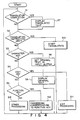
- Fig. 4 is a flow chart showing a flow of interactive translation processing by the control editor 4.
- an operator can input an original text and can edit a corresponding translated text.
- steps S1 to S5 the control editor 4 monitors if there is any key input from the input unit 1 or if a translation completion signal is received from the translation processor 5. If YES in one of steps S1 to S5, the control editor 4 performs processing corresponding to the key input.
- step S5 When the operator operates one of the function keys 110 to 117, the editor 4 detects this in step S5, and performs processing corresponding to the operated function key in step S12.
- step S4 When the operator operates one of the edit keys 101 to 106, the editor 4 detects this in step S4, and performs processing corresponding to the operated edit key in step S11.
- step S13 When the operator operates one of the cursor keys 130 to 133 or another control key, processing for moving a cursor corresponding to the operated key or other processing is performed in step S13 through steps S1 to S5.
- step S3 When the operator inputs an original text by operating character keys, character keys are detected in step S3, and corresponding character codes are then sequentially set in an input buffer (not shown) in the control editor 4 (step S8).
- the input original text is displayed on the original display region of the display 8 through the display controller 7 (step S9).
- step S2 When the operator depresses the translation instruction key 100 at an arbitrary timing, e.g., when input of one sentence of the original text is completed, this key input is detected in step S2, and the control editor 4 supplies the original text in the input buffer to the translation processor 5 to instruct it to start translation processing (step S10).
- the cursor is moved to a desired portion to be edited using the cursor keys 130 to 133, and the edit key, e.g., an insertion key 101, a deletion key 102, or the like is operated to execute the edit operation.
- the edit key e.g., an insertion key 101, a deletion key 102, or the like is operated to execute the edit operation.
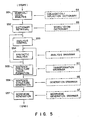
- Fig. 5 shows the flow of translation processing in the translation processor 5.
- a morphological analysis section S51 converts words whose endings or the like are inflected in an input original text into their original forms (fundamental forms) using a conjugation/inflection dictionary 6A in the translation dictionary 6.
- a dictionary retrieval section S52 obtains part-of-speech information and translated word information of words and idioms constituting the original text by retrieving a word/idiom dictionary 6B in the translation dictionary 6.
- An analysis control section S53 executes processing for sending translation candidates to a sentence structure analysis section.
- a syntactic analysis section S54 analyzes a sentence structure of a translation candidate using analysis grammar information 6C in the translation dictionary 6, thus generating an English sentence structure.
- analysis is unsuccessful, the control returns to the analysis control section S53.
- a structure transformation section S55 transforms an English sentence structure into a Japanese sentence structure using transformation grammar information 6D in the translation dictionary 6. When the transformed structure is discarded, the control returns to the sentence structure analysis section S54.
- a sentence structure generation section S56 determines the order of Japanese words based on the Japanese sentence structure in accordance with generation grammar information 6E in the translation dictionary 6 to generate a word string.
- a morpheme generation section S57 inflects the words in accordance with morpheme generation grammar information 6F in the translation dictionary 6, thus completing a translated sentence.
- the above processing sections output a signal to the control editor 4 when they start processing.
- step S7 if the control editor 4 detects the translation completion signal in step S1, the flow advances to step S7, and the editor 4 sends translation candidate and auxiliary information obtained from the translation processor 5 to the display controller 7 to cause the display 8 to display the translated text (step S7).
- the display controller 7 causes the display 8 to display the translation candidate in the translation display region at a position corresponding to the original text (on the left side of the screen). If there is auxiliary information, the corresponding translated word is displayed at high luminance or highlighted, so that the operator can identify it.
- step S11 When one of the edit keys 101 to 106 is depressed in this state, the control editor 4 detects this in step S4, and performs edit processing corresponding to the depressed edit key for a word or phrase indicated by the cursor (step S11). For example, a character is inserted before the cursor position upon operation of the insertion key 101. Upon operation of the deletion key 102, a character string within a range indicated by the cursor is deleted. Upon operation of a movement key 103, a character string within a range indicated by the cursor is moved. Upon operation of a cancel key 104, the effect of the keys 101, 102, and 103 is invalidated. Upon operation of a modification key 105, a translated word candidate by another modification of a word (phrase) indicated by the cursor is displayed using the auxiliary information.
- a translated word display key 110 Upon operation of a translated word display key 110, a translated word for a word in the translated text is displayed. Upon operation of a dictionary display key 111, the content of the dictionary for a word in the original text is displayed. Upon operation of a dictionary registration key 112, a new word or phrase can be registered. Upon operation of a dictionary deletion key 113, a word or phrase registered by the dictionary registration key can be deleted. Upon operation of a partial translation key 114, a partial translation can be displayed when a translation is unsuccessful.
- the cursor keys include cursor move keys 130 for moving a cursor in respective directions, a unit change key 131 for changing a cursor movement unit, an inter-region move key 132 for moving a cursor among the display regions, and an enlargement/reduction key 133 for reducing a cursor size to a character unit or enlarging it to a word unit.
- the operator can interactively obtain a translated text while inputting an original text and performing edit processing of the corresponding translated text.
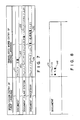
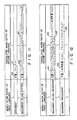
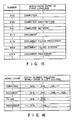
- Figs. 6A and 6B are flow charts showing a flow of the processing. Assume that a translation dictionary shown in Fig. 7 is prepared. In Fig. 7, "/" between translated words in a column of “translated word entry of second language” is a separator. For words or idioms in a column of "word/idiom entry of first language", a space (blank) serves as a separator. A numerical value following a translated word string indicates a correspondence between words/idioms and translated words when they include a separator. Translated word entries of the first language are expressed in Japanese.
- a translated word J11 is "dokyumento ( katakana )"; J12, “bunsho ( kanji )”; J21, “dokyumento/fairingu/shisutemu ( katakana )”; J22, “bunsho ( kanji )/fairingu/shisutemu ( katakana )”; J31, “dokyumento/purosessa ( katakana )”; and J32, "bunsho/shori/souchi ( kanji )".
- Fig. 8 shows a state wherein "document” and its translated words are displayed on the edit region shown in Fig. 3 by the dictionary display key 111. Assume that the user changes the translated word of "document” from J11 “dokyumento” to J12 “bunsho”. In this case, in step T1 in Fig.
- step T2 processing is continued until all the translated words are paired.
- step T3 for one pair of the original word and the translated word, entries including this original word are retrieved in the translation dictionary.
- step T4 it is checked if processing is completed for all the entry words including this original word. Thus, processing is continued for all the entry words.
- step T5 it is checked if the translated word corresponding to the original word "document” in each retrieved word is the same as the translated word "bunsho” paired with the original word. If YES in step T5, the flow returns to step T3.
- step T5 it is checked in step T6 if the head translated word in the retrieved entry is formed upon comparison with another pair. If NO in step T6, it is checked in step T7 if the second and subsequent translated word strings in this entry include the same translated portion corresponding to the original word as the translated word paired with the original word. If YES in step T7, the translated word is moved to the head position.
- a translated word corresponding to "document” in each of the second translated word strings J22 and J32 is a translated word "bunsho” paired with "document”. Therefore, the second translated word strings J22 and J32 are moved to the head position.
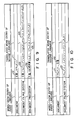
- Fig. 9 shows the translation dictionary after this processing is executed.
- a translation dictionary including no translated word strings in which a translated word of a portion corresponding to "document” is “bunsho” in the entry "document filing system” of the original word is prepared
- the translated word string J22 “bunsho/fairingu/shisutemu” in which a translated word "dokyumento” corresponding to the original word "document” in the head translated words J21 “dokyumento/fairingu/shisutemu” in the entry word is replaced with the translated word "bunsho” in the above pair is generated, and is moved to the head position.
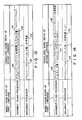
- Fig. 11 shows the translation dictionary after this processing is performed, in step T9.
- Fig. 13 shows the translation dictionary after this processing is performed.
- the second translated word string J42 "dokyumento/fairingu/shorisouchi" in Fig. 12 includes a translated word “dokyumento” corresponding to the original word "document”, they are moved to the head position in step T8, as shown in Fig. 13.
- a marker "*" indicating that the translated word string is moved by the first pair of the original word and translated word (document : dokyumento) is attached to "dokyumento" in J42 "dokyumento/fairingu/shorisouchi”.
- step T10 It is checked in step T10 if the second and subsequent translated word strings include a translated word string in which a translated word corresponding to the original word "document” corresponding to the translated word “dokyumento” with the marker "*" is "dokyumento” and a translated word corresponding to the original word "processor" in the current pair is "purosessa”. If YES in step T10, the translated word string is moved to the head position in step T11. Fig. 14 shows the translation dictionary after the processing in step T11 is performed.
- the marker "*" is attached to the translated word “dokyumento” obtained upon comparison with another pair, so as not to select the translated word string J41 "bunsho/fairingu/purosessa” using the translated word "bunsho” different from this translated word.
- a translated word string in which the translated word of "document is “dokyumento” and the translated word of "processor” is “purosessa” can be set at the head positions in the dictionary. Note that the marker "*" attached to the translated word is deleted when processing is ended in step T2.
- step T10 If it is determined in step T10 that there is no corresponding translated word, a translated word string in which a translated word corresponding to the original word in the current pair in the head translated word string of the entry word is replaced with the translated word paired with the original word is set at the head position, in step T9.
- the same words and idioms have the same translated words, and a translated sentence in which translated words are consistent for the same words and idioms can be obtained.
- the English-Japanese machine translation system has been exemplified.
- the present invention may be applied to another pair of languages, e.g., a Japanese-English machine translation system.
- a blank serves as a separator.
- another separator e.g., "/" may be employed.
- no separator may be used at all.
- a minimum translated word unit is not limited to a word but may be a unit smaller than a phrase or word.
- replacement need not always be performed for all the corresponding entry words in the dictionary. That is, replacement may be performed for some of the corresponding entry words. In this case, only entry words which satisfy predetermined conditions (e.g., the number of words, parts of speech, and a kind of dictionary when a plurality of dictionaries are used) or arbitrary condition may be objects to be replaced. In addition, a translated word which has been replaced in previous replacement may be displayed so that an operator can identify it so as to prevent re-replacement.
- predetermined conditions e.g., the number of words, parts of speech, and a kind of dictionary when a plurality of dictionaries are used
- arbitrary condition may be objects to be replaced.
- a translated word which has been replaced in previous replacement may be displayed so that an operator can identify it so as to prevent re-replacement.
Landscapes
- Engineering & Computer Science (AREA)
- Theoretical Computer Science (AREA)
- Health & Medical Sciences (AREA)
- Artificial Intelligence (AREA)
- Audiology, Speech & Language Pathology (AREA)
- Computational Linguistics (AREA)
- General Health & Medical Sciences (AREA)
- Physics & Mathematics (AREA)
- General Engineering & Computer Science (AREA)
- General Physics & Mathematics (AREA)
- Machine Translation (AREA)
Applications Claiming Priority (2)
| Application Number | Priority Date | Filing Date | Title |
|---|---|---|---|
| JP63293565A JPH02140868A (ja) | 1988-11-22 | 1988-11-22 | 機械翻訳システム |
| JP293565/88 | 1988-11-22 |
Publications (3)
| Publication Number | Publication Date |
|---|---|
| EP0370774A2 true EP0370774A2 (fr) | 1990-05-30 |
| EP0370774A3 EP0370774A3 (fr) | 1992-08-26 |
| EP0370774B1 EP0370774B1 (fr) | 1996-07-17 |
Family
ID=17796392
Family Applications (1)
| Application Number | Title | Priority Date | Filing Date |
|---|---|---|---|
| EP89312089A Expired - Lifetime EP0370774B1 (fr) | 1988-11-22 | 1989-11-21 | Système de traduction par machine |
Country Status (4)
| Country | Link |
|---|---|
| US (1) | US5214583A (fr) |
| EP (1) | EP0370774B1 (fr) |
| JP (1) | JPH02140868A (fr) |
| DE (1) | DE68926845T2 (fr) |
Cited By (4)
| Publication number | Priority date | Publication date | Assignee | Title |
|---|---|---|---|---|
| US5323310A (en) * | 1991-02-14 | 1994-06-21 | The British And Foreign Bible Society | Analyzing textual documents |
| WO1994019755A1 (fr) * | 1993-02-26 | 1994-09-01 | Microsoft Corporation | Procede et systeme de traduction de documents a l'aide de pointeurs de traduction |
| CN1084500C (zh) * | 1993-11-02 | 2002-05-08 | 松下电器产业株式会社 | 汉字变换装置 |
| WO2002065330A1 (fr) * | 2001-02-13 | 2002-08-22 | Justsystem Corporation | Apprentissage fonde sur les modifications et les revisions apportees a un texte par un utilisateur |
Families Citing this family (37)
| Publication number | Priority date | Publication date | Assignee | Title |
|---|---|---|---|---|
| JP2818052B2 (ja) * | 1991-05-21 | 1998-10-30 | シャープ株式会社 | 光学的文字読み取り装置 |
| US5338976A (en) * | 1991-06-20 | 1994-08-16 | Ricoh Company, Ltd. | Interactive language conversion system |
| CA2051135C (fr) * | 1991-09-11 | 1996-05-07 | Kim D. Letkeman | Dictionnaire de langage comprime |
| US5528491A (en) * | 1992-08-31 | 1996-06-18 | Language Engineering Corporation | Apparatus and method for automated natural language translation |
| US6760695B1 (en) | 1992-08-31 | 2004-07-06 | Logovista Corporation | Automated natural language processing |
| US6278967B1 (en) | 1992-08-31 | 2001-08-21 | Logovista Corporation | Automated system for generating natural language translations that are domain-specific, grammar rule-based, and/or based on part-of-speech analysis |
| US5541838A (en) * | 1992-10-26 | 1996-07-30 | Sharp Kabushiki Kaisha | Translation machine having capability of registering idioms |
| JPH06348750A (ja) * | 1993-06-11 | 1994-12-22 | Matsushita Electric Ind Co Ltd | 文書作成支援装置 |
| JPH0736882A (ja) * | 1993-07-19 | 1995-02-07 | Fujitsu Ltd | 辞書検索装置 |
| AU7511794A (en) * | 1993-12-22 | 1995-07-10 | Taligent, Inc. | Input methods framework |
| US5822720A (en) | 1994-02-16 | 1998-10-13 | Sentius Corporation | System amd method for linking streams of multimedia data for reference material for display |
| JP2773652B2 (ja) * | 1994-08-04 | 1998-07-09 | 日本電気株式会社 | 機械翻訳装置 |
| JP3960562B2 (ja) * | 1994-09-30 | 2007-08-15 | 株式会社東芝 | 機械翻訳の学習方法 |
| JPH09251462A (ja) * | 1996-03-18 | 1997-09-22 | Sharp Corp | 機械翻訳装置 |
| JP2987099B2 (ja) * | 1996-03-27 | 1999-12-06 | 株式会社日立国際ビジネス | 文書作成支援システム及び用語辞書 |
| US6470306B1 (en) | 1996-04-23 | 2002-10-22 | Logovista Corporation | Automated translation of annotated text based on the determination of locations for inserting annotation tokens and linked ending, end-of-sentence or language tokens |
| WO1998044433A1 (fr) * | 1997-03-31 | 1998-10-08 | Sanyo Electric Co., Ltd. | Methode d'elaboration de document et appareillage pour traduction machine |
| US6092074A (en) | 1998-02-10 | 2000-07-18 | Connect Innovations, Inc. | Dynamic insertion and updating of hypertext links for internet servers |
| CN1102271C (zh) * | 1998-10-07 | 2003-02-26 | 国际商业机器公司 | 具有习惯用语处理功能的电子词典 |
| US7099876B1 (en) | 1998-12-15 | 2006-08-29 | International Business Machines Corporation | Method, system and computer program product for storing transliteration and/or phonetic spelling information in a text string class |
| US6460015B1 (en) * | 1998-12-15 | 2002-10-01 | International Business Machines Corporation | Method, system and computer program product for automatic character transliteration in a text string object |
| US6496844B1 (en) | 1998-12-15 | 2002-12-17 | International Business Machines Corporation | Method, system and computer program product for providing a user interface with alternative display language choices |
| US6389386B1 (en) | 1998-12-15 | 2002-05-14 | International Business Machines Corporation | Method, system and computer program product for sorting text strings |
| US6848080B1 (en) | 1999-11-05 | 2005-01-25 | Microsoft Corporation | Language input architecture for converting one text form to another text form with tolerance to spelling, typographical, and conversion errors |
| US7403888B1 (en) * | 1999-11-05 | 2008-07-22 | Microsoft Corporation | Language input user interface |
| US7165019B1 (en) | 1999-11-05 | 2007-01-16 | Microsoft Corporation | Language input architecture for converting one text form to another text form with modeless entry |
| US7047493B1 (en) | 2000-03-31 | 2006-05-16 | Brill Eric D | Spell checker with arbitrary length string-to-string transformations to improve noisy channel spelling correction |
| JP2002123467A (ja) * | 2000-10-16 | 2002-04-26 | Oki Electric Ind Co Ltd | 電子掲示板システム |
| US7130861B2 (en) | 2001-08-16 | 2006-10-31 | Sentius International Corporation | Automated creation and delivery of database content |
| US7383542B2 (en) * | 2003-06-20 | 2008-06-03 | Microsoft Corporation | Adaptive machine translation service |
| JP2006276915A (ja) * | 2005-03-25 | 2006-10-12 | Fuji Xerox Co Ltd | 翻訳処理方法、文書翻訳装置およびプログラム |
| US20060282256A1 (en) * | 2005-06-13 | 2006-12-14 | Werner Anna F | Translation method utilizing core ancient roots |
| JP4630163B2 (ja) * | 2005-09-12 | 2011-02-09 | セイコーエプソン株式会社 | テーププリンタの画像編集装置、テーププリンタの画像編集方法、プログラムおよびテーププリンタ |
| JP4481972B2 (ja) * | 2006-09-28 | 2010-06-16 | 株式会社東芝 | 音声翻訳装置、音声翻訳方法及び音声翻訳プログラム |
| WO2008123081A1 (fr) * | 2007-03-27 | 2008-10-16 | Nec Corporation | Procédé de traitement de données de caractère, programme d'ordinateur, et système de traitement de données de caractère |
| US8548791B2 (en) * | 2007-08-29 | 2013-10-01 | Microsoft Corporation | Validation of the consistency of automatic terminology translation |
| CN111666776B (zh) * | 2020-06-23 | 2021-07-23 | 北京字节跳动网络技术有限公司 | 文档翻译方法和装置、存储介质和电子设备 |
Family Cites Families (5)
| Publication number | Priority date | Publication date | Assignee | Title |
|---|---|---|---|---|
| JPH0664585B2 (ja) * | 1984-12-25 | 1994-08-22 | 株式会社東芝 | 翻訳編集装置 |
| JP2848593B2 (ja) * | 1985-05-07 | 1999-01-20 | 株式会社東芝 | 翻訳処理方法 |
| DE3616011A1 (de) * | 1985-05-14 | 1986-11-20 | Sharp K.K., Osaka | Uebersetzungsgeraet |
| JPS62163173A (ja) * | 1986-01-14 | 1987-07-18 | Toshiba Corp | 機械翻訳方法 |
| GB2199170A (en) * | 1986-11-28 | 1988-06-29 | Sharp Kk | Translation apparatus |
-
1988
- 1988-11-22 JP JP63293565A patent/JPH02140868A/ja active Pending
-
1989
- 1989-11-21 EP EP89312089A patent/EP0370774B1/fr not_active Expired - Lifetime
- 1989-11-21 DE DE68926845T patent/DE68926845T2/de not_active Expired - Fee Related
- 1989-11-22 US US07/440,111 patent/US5214583A/en not_active Expired - Lifetime
Cited By (4)
| Publication number | Priority date | Publication date | Assignee | Title |
|---|---|---|---|---|
| US5323310A (en) * | 1991-02-14 | 1994-06-21 | The British And Foreign Bible Society | Analyzing textual documents |
| WO1994019755A1 (fr) * | 1993-02-26 | 1994-09-01 | Microsoft Corporation | Procede et systeme de traduction de documents a l'aide de pointeurs de traduction |
| CN1084500C (zh) * | 1993-11-02 | 2002-05-08 | 松下电器产业株式会社 | 汉字变换装置 |
| WO2002065330A1 (fr) * | 2001-02-13 | 2002-08-22 | Justsystem Corporation | Apprentissage fonde sur les modifications et les revisions apportees a un texte par un utilisateur |
Also Published As
| Publication number | Publication date |
|---|---|
| JPH02140868A (ja) | 1990-05-30 |
| EP0370774B1 (fr) | 1996-07-17 |
| DE68926845D1 (de) | 1996-08-22 |
| EP0370774A3 (fr) | 1992-08-26 |
| US5214583A (en) | 1993-05-25 |
| DE68926845T2 (de) | 1997-01-23 |
Similar Documents
| Publication | Publication Date | Title |
|---|---|---|
| EP0370774B1 (fr) | Système de traduction par machine | |
| US4962452A (en) | Language translator which automatically recognizes, analyzes, translates and reinserts comments in a sentence | |
| US4831529A (en) | Machine translation system | |
| US4821230A (en) | Machine translation system | |
| US5091876A (en) | Machine translation system | |
| US5010486A (en) | System and method for language translation including replacement of a selected word for future translation | |
| JPH05303590A (ja) | 自動翻訳装置 | |
| JPH0442705B2 (fr) | ||
| US5079701A (en) | System for registering new words by using linguistically comparable reference words | |
| JP2848729B2 (ja) | 翻訳方法および翻訳装置 | |
| KR900008402B1 (ko) | 기계번역장치 | |
| JPH0442704B2 (fr) | ||
| JPH08212216A (ja) | 自然言語処理装置および自然言語処理方法 | |
| JPS59100941A (ja) | 仮名漢字変換装置 | |
| JPH06149790A (ja) | 文章作成装置 | |
| JP2924955B2 (ja) | 翻訳方法および翻訳装置 | |
| JPS62200462A (ja) | 機械翻訳システム | |
| JPS62203265A (ja) | 機械翻訳システム | |
| JPS62203267A (ja) | 機械翻訳システム | |
| JPS6244872A (ja) | 機械翻訳装置 | |
| JPH027167A (ja) | 翻訳方法及び装置 | |
| JPH0589163A (ja) | 機械翻訳装置 | |
| JPS63236165A (ja) | 機械翻訳システム | |
| JPH0258163A (ja) | 機械翻訳システム | |
| JPS63271657A (ja) | 機械翻訳システム |
Legal Events
| Date | Code | Title | Description |
|---|---|---|---|
| PUAI | Public reference made under article 153(3) epc to a published international application that has entered the european phase |
Free format text: ORIGINAL CODE: 0009012 |
|
| 17P | Request for examination filed |
Effective date: 19891128 |
|
| AK | Designated contracting states |
Kind code of ref document: A2 Designated state(s): DE FR GB |
|
| PUAL | Search report despatched |
Free format text: ORIGINAL CODE: 0009013 |
|
| AK | Designated contracting states |
Kind code of ref document: A3 Designated state(s): DE FR GB |
|
| 17Q | First examination report despatched |
Effective date: 19940725 |
|
| GRAH | Despatch of communication of intention to grant a patent |
Free format text: ORIGINAL CODE: EPIDOS IGRA |
|
| GRAA | (expected) grant |
Free format text: ORIGINAL CODE: 0009210 |
|
| AK | Designated contracting states |
Kind code of ref document: B1 Designated state(s): DE FR GB |
|
| GRAH | Despatch of communication of intention to grant a patent |
Free format text: ORIGINAL CODE: EPIDOS IGRA |
|
| REF | Corresponds to: |
Ref document number: 68926845 Country of ref document: DE Date of ref document: 19960822 |
|
| ET | Fr: translation filed | ||
| PLBE | No opposition filed within time limit |
Free format text: ORIGINAL CODE: 0009261 |
|
| STAA | Information on the status of an ep patent application or granted ep patent |
Free format text: STATUS: NO OPPOSITION FILED WITHIN TIME LIMIT |
|
| 26N | No opposition filed | ||
| REG | Reference to a national code |
Ref country code: GB Ref legal event code: 746 Effective date: 19980917 |
|
| REG | Reference to a national code |
Ref country code: FR Ref legal event code: D6 |
|
| REG | Reference to a national code |
Ref country code: GB Ref legal event code: IF02 |
|
| PGFP | Annual fee paid to national office [announced via postgrant information from national office to epo] |
Ref country code: FR Payment date: 20061108 Year of fee payment: 18 |
|
| PGFP | Annual fee paid to national office [announced via postgrant information from national office to epo] |
Ref country code: GB Payment date: 20061115 Year of fee payment: 18 |
|
| PGFP | Annual fee paid to national office [announced via postgrant information from national office to epo] |
Ref country code: DE Payment date: 20061116 Year of fee payment: 18 |
|
| GBPC | Gb: european patent ceased through non-payment of renewal fee |
Effective date: 20071121 |
|
| PG25 | Lapsed in a contracting state [announced via postgrant information from national office to epo] |
Ref country code: DE Free format text: LAPSE BECAUSE OF NON-PAYMENT OF DUE FEES Effective date: 20080603 |
|
| REG | Reference to a national code |
Ref country code: FR Ref legal event code: ST Effective date: 20080930 |
|
| PG25 | Lapsed in a contracting state [announced via postgrant information from national office to epo] |
Ref country code: GB Free format text: LAPSE BECAUSE OF NON-PAYMENT OF DUE FEES Effective date: 20071121 |
|
| PG25 | Lapsed in a contracting state [announced via postgrant information from national office to epo] |
Ref country code: FR Free format text: LAPSE BECAUSE OF NON-PAYMENT OF DUE FEES Effective date: 20071130 |