EP0386722B1 - Imidazochinolon-Derivate - Google Patents
Imidazochinolon-Derivate Download PDFInfo
- Publication number
- EP0386722B1 EP0386722B1 EP90104336A EP90104336A EP0386722B1 EP 0386722 B1 EP0386722 B1 EP 0386722B1 EP 90104336 A EP90104336 A EP 90104336A EP 90104336 A EP90104336 A EP 90104336A EP 0386722 B1 EP0386722 B1 EP 0386722B1
- Authority
- EP
- European Patent Office
- Prior art keywords
- compound
- imidazo
- butyl
- quinolin
- hydrogen
- Prior art date
- Legal status (The legal status is an assumption and is not a legal conclusion. Google has not performed a legal analysis and makes no representation as to the accuracy of the status listed.)
- Expired - Lifetime
Links
Classifications
-
- C—CHEMISTRY; METALLURGY
- C07—ORGANIC CHEMISTRY
- C07D—HETEROCYCLIC COMPOUNDS
- C07D471/00—Heterocyclic compounds containing nitrogen atoms as the only ring hetero atoms in the condensed system, at least one ring being a six-membered ring with one nitrogen atom, not provided for by groups C07D451/00 - C07D463/00
- C07D471/02—Heterocyclic compounds containing nitrogen atoms as the only ring hetero atoms in the condensed system, at least one ring being a six-membered ring with one nitrogen atom, not provided for by groups C07D451/00 - C07D463/00 in which the condensed system contains two hetero rings
- C07D471/04—Ortho-condensed systems
Definitions
- the present invention relates to novel imidazoquinolone derivatives having a 1 H, 5H-imidazo[4,5-c]-quinolin-4-oneskeleton and showing broncho-dilatory and antiallergic activities.
- 1 H-imidazo[4,5-c]quinolines useful as a bronchodilator and 1 H-imidazo[4,5-c]quinoline-4-amines useful as an antiviral agent represented by the following formula are disclosed in JP-A-123488/85 [US-A-4698348 and 4689338, and EP-A-145340] wherein R ⁇ represents hydrogen, alkyl, benzyl, phenyl, etc.; R represents hydrogen, alkyl, etc.; and R° represents hydrogen, hydroxyl, alkylamino, etc.
- the object of the present invention is to provide novel imidazoquinolone derivatives which show distinguished bronchodilatory and/or antiallergic effects.
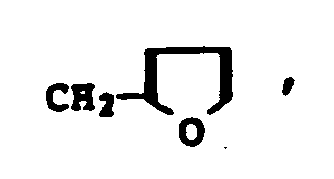
- imidazoquinolone derivatives represented by the formula (I); wherein R 1 represents hydrogen, alkyl, cycloalkyl, alkenyl, aralkyl, aralkenyl, or substituted or unsubstituted aryl; X represents nitrogen or C-R 2 where R 2 is hydrogen, hydroxyl, alkyl, cycloalkyl, alkenyl, aralkyl, aralkenyl, substituted or unsubstituted aryl, thiol, halogen, or substituted or unsubstituted aromatic heterocyclic group, or -(CH 2 ) m C0 2 R 6 where R 6 is hydrogen or lower alkyl and m is an integer of 0 to 3; Y represents oxygen or sulfur; R 3 represents alkyl, cycloalkyl, alkoxyalkyl, alkenyl, aralkyl, aralkenyl, -(CH 2 ) n
- the alkyl or the alkyl moiety of the alkoxyalkyl means alkyls having 1 to 10 carbon atoms and includes, for example, methyl, ethyl, n-propyl, isopropyl, n-butyl, isobutyl, sec-butyl, tert-butyl, n-pentyl, neopentyl, n-hexyl, heptyl, octyl, nonyl, decyl, etc.
- the cycloalkyl includes alicyclic hydrocarbon groups having 3 to 8 carbon atoms such as cyclopropyl, cyclopentyl, cyclohexyl, cyclooctyl, etc.
- the alkenyl includes alkenyls having 2 to 6 carbon atoms such as vinyl, allyl, propenyl, isopropenyl, butenyl, hexenyl, etc.
- the aralkyl includes aralkyls having 7 to 15 carbon atoms such as benzyl, phenetyl, benzhydryl, etc.
- the aralkenyl includes aralkenyls having 8 to 18 carbon atoms, such as styryl, cinnamyl, etc.
- the aryl includes aryls having 6 to 10 carbon atoms such as phenyl, naphthyl, etc.
- the substituent in the substituted aryl includes one or two of the same or different lower alkyl, trifluoromethyl, hydroxyl, lower alkoxyl, lower alkylthio, nitro, halogen, amino, lower alkylamino, lower alkanoylamino, lower alkoxycarbonyl, lower alkanoyl, aroyl, etc.
- the aromatic heterocyclic group includes heterocyclic rings of 5 or 6 members such as thienyl, furyl, pyrazolyl, oxazolyl, imidazolyl, pyridyl, etc. and the substituent in the substituted aromatic heterocyclic group includes one or two of the same or different lower alkyl, lower alkoxyl, halogen, etc.
- the lower alkyl and the alkyl moiety of the lower alkoxyl, lower alkylthio, lower alkylamino and lower alkoxycarbonyl mean a straight or branched alkyl having 1 to 6 carbon atoms and include, for example, methyl, ethyl, n-propyl, isopropyl, n-butyl, isobutyl, sec-butyl, tert-butyl, n-pentyl, neopentyl, n-hexyl, etc.
- the lower alkanoyl and the alkanoyl moiety of the lower alkanoylamino include alkanoyl having 1 to 6 carbon atoms such as formyl, acetyl, propionyl, butyryl, isobutyryl, pivaloyl, valeryl, isovaleryl, etc.
- the aroyl and the aroyl moiety of the aroylamino include, for example, benzoyl, toluyl, propylbenzoyl, naphthoyl, etc.
- the halogen means fluorine, chlorine, bromine and iodine.
- the pharmaceutically acceptable salts of Compound (I) include pharmaceutically acceptable acid addition salts, metal salts, ammonium salts, organic amine addition salts, amino acid addition salts, etc.
- the pharmaceutically acceptable acid addition salts of Compound (I) include inorganic acid salts such as hydrochlorides, sulfates, phosphates, etc., and organic acid salts such as acetates, maleates, fumarates, tartrates, citrates, etc.
- the pharmaceutically acceptable metal salts include alkali metal salts such as sodium salts, potassium salts, etc., alkaline earth metal salts such as magnesium salts, calcium salts, etc., and aluminium salts and zinc salts.
- the pharmaceutically acceptable organic amine addition salts include addition salts of morpholine, piperidine, etc.
- the pharmaceutically acceptable amino acid addition salts include addition salts of lysine, glycine, phenylalanine, etc.
- a Compound (la) which is a Compound (I) wherein X is :;C-R2 is obtained by reacting a Compound (II) represented by the following formula; wherein R 1 , R 2 , R 4 and R 5 have the same meanings as defined above, with a Compound (III) represented by the following formula;
- R 3 has the same meaning as defined above and Z is a leaving group, preferably in the presence of a base.
- the leaving group represented by Z includes, for example, halogen such as chlorine, bromine, iodine, etc., alkylsulfonyloxy such as methanesulfonyloxy, etc., and arylsulfonyloxy such as phenylsulfonyloxy, p-toluenesulfonyloxy, etc.
- halogen such as chlorine, bromine, iodine, etc.
- alkylsulfonyloxy such as methanesulfonyloxy, etc.
- arylsulfonyloxy such as phenylsulfonyloxy, p-toluenesulfonyloxy, etc.
- the starting Compound (II) is synthesized by a known method as described in JP-A-123488/85 [US-A-4698348 and 4689338, and EP-A-145340] or a similar method.
- the base for use in the process includes alkali metal carbonates such as potassium carbonate, sodium carbonate, etc., alkali metal hydrides such as sodium hydride, etc. and alkali metal alkoxides such as sodium methoxide, sodium ethoxide, etc.
- the reaction solvent for use in the process is inert in the reaction and includes, for example, ethers such as tetrahydrofuran, dioxane, etc. amides such as dimethylformamide, etc., alcohols such as methanol, ethanol, etc., dimethylsulfoxide, which is used alone or in combination.
- the reaction proceeds at a temperature of 0 to 180°C for 30 minutes to 24 hours.
- a compound (laa), which is a Compound (la) wherein R 2 is a group other than halogen, hydroxyl or thiol is also obtained from the following steps of reaction.
- R 2a has the same meaning as defined as to R 2 , excluding halogen, hydroxyl or thiol;
- Hal represents halogen and
- R 1 , R 2 , R 3 , R 4 and R 5 have the same meanings as defined above.
- the halogen represented by Hal includes chlorine, bromine, iodine, etc.
- the starting Compound (IV) is synthesized by a known method as described in J. Heterocyclic Chem., 18, 917 (1981) or by a similar method.
- Compound (VI) is obtained by catalytic reduction of Compound (V) in the presence of a catalyst of palladium/carbon or platinum oxide.
- Compound (VII) is obtained by reacting Compound (VI) with carboxylic acid (IX) represented by the following formula:
- the reaction with Compound (IX) is performed in the presence of a condensing agent such as thionyl chloride, N,N'-dicyclohexylcarbodiimide (DDC), polyphosphoric acid, etc.
- a condensing agent such as thionyl chloride, N,N'-dicyclohexylcarbodiimide (DDC), polyphosphoric acid, etc.
- the reactive derivative includes, for example, acid halides such as acid chlorides, acid bromides, etc., acid anhydrides, mixed acid anhydrides such as ethyl chlorocarbonate, isobutyl chlorocarbonate, etc., active esters such as p-nitrophenyl ester, N-hydroxysuccinimide ester, etc., and ortho esters.
- Compound (laa) is obtained by heating Compound (VII) in a reaction solvent at 50 to 250 °C, preferably 100 to 250 °C, if necessary, in the presence of ring-closing agent.
- the ring-closing agent includes polyphosphoric acid, polyphosphoric acid ester, sulfuric acid, acetic acid, phosphorus pentoxide, phosphorus pentachloride, phosphorus oxychloride, phosphorus trichloride, phosphorus tribromide, thionyl chloride, etc.
- the reaction solvent includes hexamethylphosphoramide, diphenyl ether, glycerintriethyl ether, butyl ether, isoamyl ether, diethyleneglycol, triethyleneglycol, Dowtherm A (made by Dow Chemical Group, USA), etc.
- a compound (Ib), which is Compound (I) wherein R 4 and/or R 5 are groups other than hydrogen is obtained by functionalizing, for example, nitrating, halogenizing, alkanoylizing, aroylizing, etc., a Compound (Ic), which is Compound (I) wherein the corresponding group on the benzen ring is hydrogen.
- the nitration reaction proceeds with a nitrating agent such as nitric acid, fuming nitric acid, potassium nitrate, etc. in a solvent or free of a solvent, preferably in the presence of sulfuric acid, acetic anhydride, etc. in a solvent at a reaction temperature of -50 to 100 ° C.
- a nitrating agent such as nitric acid, fuming nitric acid, potassium nitrate, etc. in a solvent or free of a solvent, preferably in the presence of sulfuric acid, acetic anhydride, etc. in a solvent at a reaction temperature of -50 to 100 ° C.
- a solvent those taking no part in the reaction such as organic acids, for example, acetic acid, etc., halogenated hydrocarbons, for example, methylene chloride, chloroform etc. are used.
- the halogenation reaction proceeds with a halogen for example, chlorine, bromine, iodine etc., a halogenating agent, such as copper halide, N-halosuccinimide, etc., preferably in the presence of iron, iodine or peroxides such as perbenzoic acid, etc. or under irradiation of light at a reaction temperature of -50 to 150 ° C.
- a halogen for example, chlorine, bromine, iodine etc.
- a halogenating agent such as copper halide, N-halosuccinimide, etc.
- the alkanoylization reaction and aroylization reaction proceed under the condition of a Friedel-Craft type reaction using an acylating agent such as an acid halide, an acid anhydride, and active ester, etc. of the corresponding carboxylic acid and a Lewis acid catalyst such as aluminium halide, etc. in a solvent at a reaction temperature of -50 to 150 ° C.
- an acylating agent such as an acid halide, an acid anhydride, and active ester, etc. of the corresponding carboxylic acid and a Lewis acid catalyst such as aluminium halide, etc.
- a solvent those taking no part in the reaction such as halogenated hydrocarbons for example, methylene chloride, chloroform etc., carbon disulfide, etc. are used.
- Compound (lab) which is Compound (la) wherein R 2 is hydroxyl or thiol is obtained from Compound (VI) used in process 2 as a starting compound.
- Compounds (lab'), which is Compound (lab) wherein R 2 is hydroxyl, is obtained by reacting Compound (VI) with for example, phosgen, carbonyldiimidazol, urea etc. in a solvent at a reaction temperature of 0 to 150°C.
- a solvent those taking no part in the reaction such as alcohols, for example, methanol, ethanol, etc., ethers for example, tetrahydrofuran, dioxane, etc., halogenated hydrocarbons, for example, chloroform, etc. are used.
- Compounds (lab") which is a Compound (lab) wherein R 2 is thiol is obtained by reacting Compound (VI) with thiophosgen, thiocarbonyldiimidazole, thiourea, etc. in the same manner as in the case of Compound (lab's) wherein R 2 is hydroxyl.
- Compound (Id) which is Compound (I) wherein X is nitrogen, is obtained by reacting Compound (VI), used in process 2, as a starting Compound with, for example, sodium nitrite, in a solvent of alcohol-acid system at a reaction temperature of 0 to 150°C.
- the alcohol as the solvent includes methanol and ethanol
- the acid, as the solvent includes hydrochloric acid, acetic acid, phosphoric acid, etc.
- intermediates and desired compounds are isolated and purified by purification methods conventionally used in the organic synthetic chemistry, for example, filtration, extraction, washing, drying, concentration, recrystallization, various column chromatographies, etc..
- the intermediates can be immediately used in the subsequent reaction, without any particular purification.
- salts of Compound (I) are desired to be obtained, (1) when Compounds (I) are obtained in the form of a salt, compounds (I) are purified as such; (2) when the compounds (I) are obtained in a free form, salts are formed in a conventional manner.
- Compounds (I) and their pharmaceutically acceptable salts may exist in the form of addition products to water or various solvents, and these addition products are included in the present invention.
- Guinea pigs were passively sensitized as follows. Hartley male guinea pigs weighing 350 to 500 g were injected intraperitoneally with rabbit anti-egg albumin (EWA) serum prepared by the method of Eda et al. [Folia pharmacol., Japan 66, 237, (1970)]. After 24 hours, the guinea pigs were stunned and exsanguinated, and then trachea was excised. The zig-zag strips of the tranchea were prepared by the method of Emmerson and Mackay [J. Pharm. Pharmacol., 31, 798, (1979)].
- EWA rabbit anti-egg albumin
- the strips were suspended in Krebs-Henseleit solution at 37°C under aeration of a mixed gas of 95% oxygen and 5% carbon dioxide, and incubated for one hour.
- Antigen (EWA) was then introduced in the solution (final concentration; 1 ⁇ g/ml), and the contraction was measured by isotonic transducer (TD-112s, made by Nihon Kohden K.K., Japan) and recorded on a recorder (Type 3066, made by Yokogawa-Hokushin Denki, K.K., Japan). After the contraction curves reached plateau, the compounds were successively added in order to get cumulative concentration-relaxation curves. Concentration of 50% relaxation rate (IC so ) was calculated from the regression line, which was obtained from cumulative concentration-relaxation curves.
- PCA passive cutaneous anaphylaxis
- Anti-EWA rat serum was prepared by the method of Stotland and Share [Can. J. Physiol. Pharmacol., 52, 1114, (1974)] as follows. That is, 1 mg of EWA, 20 mg of aluminium hydroxide gel and 0.5 mî of mixed vaccine of pertussis, diphtheria and tetanus were mixed, and the mixture was subcutaneously injected in 4 portions into the foot part of the rats. After 14 days, the blood of sensitized rats was collected from carotid artery. The serum was separated by centrifugation from collected blood, and kept at -80 °C. Titer of the 48 hour homologous PCA tests of the serum was 1:32.
- Guinea pigs were passively sensitized as follows. Hartley male guinea pigs weighing 350 to 500g were intraperitoneally injected with 1 mî of rabbit EWA serum prepared by the method of Eda et al. [Folia pharmacol., Japan, 66, 237 (1970)]. The animals were treated with intraperitoneal injection of diphenhydramine (20 mg/kg) and propranolol (5 mg/kg), 30 minutes before administration of test compounds. 17 hours after the sensitization, the test compounds (50 mg/kg) were orally administrated to sensitized animals. After one hour from the administration of the test compounds, the guinea pigs were placed in plastic observation box and were exposed to an aerosal antigen of 1.5% EWA.
- the compounds were orally administrated (po: 300 mg/kg) to male dd-mice weighing 20 to 25g.
- LD 50 was determined by observing the mortality for seven days after the administration.
- compositions are prepared by homogeneously mixing an effective amount of Compound (I) or its pharmaceutically acceptable salt with pharmaceutically acceptable carrier. It is desirable that the pharmaceutical compositions are an appropriative dosable unit for oral administration or injection administration.
- any of useful pharmaceutically acceptable carriers are used.
- liquid preparates such as suspensions and syrups
- saccharides such as sucrose, sorbitol, fructose, etc.
- glycols such as polyethyleneglycol, propyleneglycol, etc.
- oils such as sesame oil, olive oil, soybean oil, etc.
- antiseptics such as p-hydroxybenzoic acid esters, etc.
- flavors such as strawberry flavor, peppermint etc.
- pills, capsules and tablets In the case of powder, pills, capsules and tablets; vehicles such as lactose, glucose, sucrose, mannitol, etc.; disintegrators such as starch, sodium alginate, etc.; lubricants such as magnesium stearate, talc, etc.; binders such as polyvinyl alcohol, hydroxypropyl cellulose, gelatin, etc., surfactants such as fatty acid esters etc., and plasticizers such as glycerine, etc., are used. Tablets and capsules are most useful dosage form for oral administration because of easy administration. In the preparation of tablets and capsules, solid medicament carriers are used.
- Injection solutions are prepared with such a carrier as distilled water, a salt solution, a glucose solution, or a mixture of a salt solution and a glucose solution.
- the effective dose and the number of administrations of Compound (I) or its pharmaceutically acceptable salt depend on modes of administration and ages, body weight, and symptoms, etc. of patients. It is preferable to usually administate 1 to 50 mg/kg of a Compound (I) or its pharmaceutically acceptable salt daily in 3 to 4 portions.
- Compound (I) is administrated by inhalation in the form of aerosol, finely pulverized powders, or spray solution.
- the present compound are dissolved in an appropriately pharmaceutically acceptable solvent, for example, ethyl alcohol or a combination of miscible solvents and then mixed with a pharmaceutically acceptable propellant.
- the aerosol composition is used by filling it in a pressure-withstanding container. It is preferable that the aerosol valve is a metering valve for discharging an effective dosage of aerosol composition as determined in advance.
- Compound 17W was obtained form Compound f obtained in Reference Example 6 in place of Compound e of Example 15 basically according to the method in Example 15.
- Compound 18W was obtained from Compound g obtained in Reference Example 7 in place of Compound e of Example 15 in basically according to the method in Example 15.
- Compound 19W was obtained from Compound obtained in Reference Example 8 in place of Compound e of Example 15 basically according to the method in Example 15.
- Compound 20W was obtained from Compound m obatined in Reference Example 13 basically according to the method in Example 10.
- Compound 22W was obtained from Compound obtained in Reference Example 15 in the same manner as in Example 10.
- Compound 27W was obtained from Compound obtained in Reference Example 21 in the same manner as in Example 10.
- a tablet having the following composition is prepared in a conventional manner.
- Powders having the following composition is prepared in a conventional manner.
- a syrup having the following composition is prepared in a conventional manner.
- a capsule having the following composition is prepared in a conventional manner.
- the composition was mixed and packed in a gelatin capsule.
- Injection having the following composition is prepared in a conventional manner.
Landscapes
- Chemical & Material Sciences (AREA)
- Organic Chemistry (AREA)
- Pharmaceuticals Containing Other Organic And Inorganic Compounds (AREA)
- Nitrogen Condensed Heterocyclic Rings (AREA)
Claims (9)




Applications Claiming Priority (2)
| Application Number | Priority Date | Filing Date | Title |
|---|---|---|---|
| JP54148/89 | 1989-03-07 | ||
| JP5414889 | 1989-03-07 |
Publications (2)
| Publication Number | Publication Date |
|---|---|
| EP0386722A1 EP0386722A1 (de) | 1990-09-12 |
| EP0386722B1 true EP0386722B1 (de) | 1995-07-26 |
Family
ID=12962468
Family Applications (1)
| Application Number | Title | Priority Date | Filing Date |
|---|---|---|---|
| EP90104336A Expired - Lifetime EP0386722B1 (de) | 1989-03-07 | 1990-03-07 | Imidazochinolon-Derivate |
Country Status (5)
| Country | Link |
|---|---|
| US (1) | US4994468A (de) |
| EP (1) | EP0386722B1 (de) |
| AT (1) | ATE125540T1 (de) |
| CA (1) | CA2011504C (de) |
| DE (1) | DE69021101T2 (de) |
Families Citing this family (11)
| Publication number | Priority date | Publication date | Assignee | Title |
|---|---|---|---|---|
| GB8928281D0 (en) * | 1989-12-14 | 1990-02-21 | Smith Kline French Lab | Compounds |
| US5389640A (en) | 1991-03-01 | 1995-02-14 | Minnesota Mining And Manufacturing Company | 1-substituted, 2-substituted 1H-imidazo[4,5-c]quinolin-4-amines |
| CA2124120A1 (en) * | 1991-11-25 | 1993-06-10 | Fumio Suzuki | Imidazonaphthyridine derivatives |
| US5342843A (en) * | 1991-12-12 | 1994-08-30 | Kyowa Hakko Kogyo Co., Ltd. | Thienoimidazoppyridone derivatives |
| US6608201B2 (en) | 1992-08-28 | 2003-08-19 | 3M Innovative Properties Company | Process for preparing 1-substituted, 2-substituted 1H-imidazo[4,5-c]quinolin-4-amines |
| CA2196167A1 (en) * | 1994-07-29 | 1996-02-15 | Hidenori Mochizuki | Imidazoquinoline derivative |
| GB0211649D0 (en) | 2002-05-21 | 2002-07-03 | Novartis Ag | Organic compounds |
| EP2867236B1 (de) | 2012-06-29 | 2017-06-14 | Pfizer Inc | Neue 4-(substituierte amino)-7h-pyrrolo[2,3-d]pyrimidine als lrrk2 hemmer |
| EP3083618B1 (de) | 2013-12-17 | 2018-02-21 | Pfizer Inc | Neuartige 3,4-disubstituierte-1h-pyrrolo[2,3-b]pyridine und 4,5-disubstituierte 7h-pyrrolo[2,3-c]pyridazine als lrrk2-hemmer |
| RU2722149C1 (ru) | 2015-09-14 | 2020-05-27 | Пфайзер Инк. | Новые производные имидазо[4,5-c] хинолинов и имидазо[4,5-c][1,5] нафтиридинов в качестве ингибиторов LRRK2 |
| WO2018163030A1 (en) * | 2017-03-10 | 2018-09-13 | Pfizer Inc. | Cyclic substituted imidazo[4,5-c]quinoline derivatives |
Family Cites Families (3)
| Publication number | Priority date | Publication date | Assignee | Title |
|---|---|---|---|---|
| IL73534A (en) * | 1983-11-18 | 1990-12-23 | Riker Laboratories Inc | 1h-imidazo(4,5-c)quinoline-4-amines,their preparation and pharmaceutical compositions containing certain such compounds |
| ZA848968B (en) * | 1983-11-18 | 1986-06-25 | Riker Laboratories Inc | 1h-imidazo(4,5-c)quinolines and 1h-imidazo(4,5-c)quinolin-4-amines |
| CA1271477A (en) * | 1983-11-18 | 1990-07-10 | John F. Gerster | 1h-imidazo[4,5-c]quinolin-4-amines |
-
1990
- 1990-03-05 CA CA002011504A patent/CA2011504C/en not_active Expired - Fee Related
- 1990-03-05 US US07/489,025 patent/US4994468A/en not_active Expired - Fee Related
- 1990-03-07 DE DE69021101T patent/DE69021101T2/de not_active Expired - Fee Related
- 1990-03-07 EP EP90104336A patent/EP0386722B1/de not_active Expired - Lifetime
- 1990-03-07 AT AT90104336T patent/ATE125540T1/de not_active IP Right Cessation
Also Published As
| Publication number | Publication date |
|---|---|
| DE69021101D1 (de) | 1995-08-31 |
| DE69021101T2 (de) | 1995-12-21 |
| CA2011504A1 (en) | 1990-09-07 |
| US4994468A (en) | 1991-02-19 |
| EP0386722A1 (de) | 1990-09-12 |
| ATE125540T1 (de) | 1995-08-15 |
| CA2011504C (en) | 1998-06-02 |
Similar Documents
| Publication | Publication Date | Title |
|---|---|---|
| EP1319003B1 (de) | Xanthin-phosphodiesteras-v-inhibitoren | |
| KR900005657B1 (ko) | 1H-이미다조[4,5-c]퀴놀린 화합물및 그것의 제조방법 | |
| KR900007780B1 (ko) | 축합된 피롤리논 유도체의 제조방법 | |
| KR0138529B1 (ko) | 카르보스티릴 유도체 | |
| EP0607607B1 (de) | Xanthin Derivate | |
| HU218666B (hu) | Pirazolo-piridin-származékok, eljárás előállításukra és ezeket tartalmazó gyógyszerkészítmények | |
| AU2001291022A1 (en) | Xanthine phosphodiesterase v inhibitors | |
| EP0559893B1 (de) | Xanthinderivate | |
| HUP0001555A2 (hu) | Tetrahidro-imidazo-naftiridin származékok, ezeket tartalmazó gyógyszerkészítmények és eljárás előállításukra | |
| KR20030020450A (ko) | 벤지미다졸 유도체, 그의 제조 방법 및 치료적 용도 | |
| EP0386722B1 (de) | Imidazochinolon-Derivate | |
| MXPA03001337A (es) | Preparacion de risperidona. | |
| EP0459505B1 (de) | Imidazonaphthyridinderivate | |
| PL125321B1 (en) | Process for preparing novel,condensed derivatives of pyrimidines | |
| KR19980064040A (ko) | 피리딘 유도체, 피리딘 유도체의 제조 방법 및 그를 위한 중간체 | |
| EP0215736B1 (de) | Xanthinderivate, Verfahren zu ihrer Herstellung und ihre Verwendung als Medikamente | |
| JPH0649702B2 (ja) | ベンゼン縮合複素環化合物 | |
| CA2141366A1 (en) | Treatment of heart rhythm disorders by administration of 3-phenylsulfonyl-3,7-diazabicyclo[3.3.1]nonane compounds | |
| KR930009355B1 (ko) | 피리도[1, 2-a]피리미딘 유도체의 제조법 | |
| US5010084A (en) | Imidazoquinolone derivatives | |
| US20020133008A1 (en) | Pyrazolopyridopyrimidine inhibitors of cGMP phosphodiesterase | |
| JP2988683B2 (ja) | イミダゾキノロン誘導体 | |
| DK153485B (da) | Analogifremgangsmaade til fremstilling af pyridopyrimidinderivater | |
| KR100282153B1 (ko) | 3-알킬피롤록3,2-씨퀴놀린유도체 | |
| US3974161A (en) | Fused pyrimidin-4(3H)-ones as antiallergy agents |
Legal Events
| Date | Code | Title | Description |
|---|---|---|---|
| PUAI | Public reference made under article 153(3) epc to a published international application that has entered the european phase |
Free format text: ORIGINAL CODE: 0009012 |
|
| AK | Designated contracting states |
Kind code of ref document: A1 Designated state(s): AT BE CH DE DK ES FR GB GR IT LI LU NL SE |
|
| 17P | Request for examination filed |
Effective date: 19901228 |
|
| 17Q | First examination report despatched |
Effective date: 19921126 |
|
| GRAA | (expected) grant |
Free format text: ORIGINAL CODE: 0009210 |
|
| AK | Designated contracting states |
Kind code of ref document: B1 Designated state(s): AT BE CH DE DK ES FR GB GR IT LI LU NL SE |
|
| PG25 | Lapsed in a contracting state [announced via postgrant information from national office to epo] |
Ref country code: NL Free format text: LAPSE BECAUSE OF FAILURE TO SUBMIT A TRANSLATION OF THE DESCRIPTION OR TO PAY THE FEE WITHIN THE PRESCRIBED TIME-LIMIT Effective date: 19950726 Ref country code: LI Effective date: 19950726 Ref country code: GR Free format text: LAPSE BECAUSE OF FAILURE TO SUBMIT A TRANSLATION OF THE DESCRIPTION OR TO PAY THE FEE WITHIN THE PRESCRIBED TIME-LIMIT Effective date: 19950726 Ref country code: ES Free format text: THE PATENT HAS BEEN ANNULLED BY A DECISION OF A NATIONAL AUTHORITY Effective date: 19950726 Ref country code: DK Effective date: 19950726 Ref country code: CH Effective date: 19950726 Ref country code: BE Effective date: 19950726 Ref country code: AT Effective date: 19950726 |
|
| REF | Corresponds to: |
Ref document number: 125540 Country of ref document: AT Date of ref document: 19950815 Kind code of ref document: T |
|
| ET | Fr: translation filed | ||
| ITF | It: translation for a ep patent filed | ||
| REF | Corresponds to: |
Ref document number: 69021101 Country of ref document: DE Date of ref document: 19950831 |
|
| PG25 | Lapsed in a contracting state [announced via postgrant information from national office to epo] |
Ref country code: SE Effective date: 19951026 |
|
| NLV1 | Nl: lapsed or annulled due to failure to fulfill the requirements of art. 29p and 29m of the patents act | ||
| PG25 | Lapsed in a contracting state [announced via postgrant information from national office to epo] |
Ref country code: LU Free format text: LAPSE BECAUSE OF NON-PAYMENT OF DUE FEES Effective date: 19960331 |
|
| PLBE | No opposition filed within time limit |
Free format text: ORIGINAL CODE: 0009261 |
|
| STAA | Information on the status of an ep patent application or granted ep patent |
Free format text: STATUS: NO OPPOSITION FILED WITHIN TIME LIMIT |
|
| 26N | No opposition filed | ||
| PGFP | Annual fee paid to national office [announced via postgrant information from national office to epo] |
Ref country code: DE Payment date: 20010228 Year of fee payment: 12 |
|
| PGFP | Annual fee paid to national office [announced via postgrant information from national office to epo] |
Ref country code: GB Payment date: 20010307 Year of fee payment: 12 |
|
| PGFP | Annual fee paid to national office [announced via postgrant information from national office to epo] |
Ref country code: FR Payment date: 20010313 Year of fee payment: 12 |
|
| REG | Reference to a national code |
Ref country code: GB Ref legal event code: IF02 |
|
| PG25 | Lapsed in a contracting state [announced via postgrant information from national office to epo] |
Ref country code: GB Free format text: LAPSE BECAUSE OF NON-PAYMENT OF DUE FEES Effective date: 20020307 |
|
| PG25 | Lapsed in a contracting state [announced via postgrant information from national office to epo] |
Ref country code: DE Free format text: LAPSE BECAUSE OF NON-PAYMENT OF DUE FEES Effective date: 20021001 |
|
| GBPC | Gb: european patent ceased through non-payment of renewal fee |
Effective date: 20020307 |
|
| PG25 | Lapsed in a contracting state [announced via postgrant information from national office to epo] |
Ref country code: FR Free format text: LAPSE BECAUSE OF NON-PAYMENT OF DUE FEES Effective date: 20021129 |
|
| REG | Reference to a national code |
Ref country code: FR Ref legal event code: ST |
|
| PG25 | Lapsed in a contracting state [announced via postgrant information from national office to epo] |
Ref country code: IT Free format text: LAPSE BECAUSE OF NON-PAYMENT OF DUE FEES;WARNING: LAPSES OF ITALIAN PATENTS WITH EFFECTIVE DATE BEFORE 2007 MAY HAVE OCCURRED AT ANY TIME BEFORE 2007. THE CORRECT EFFECTIVE DATE MAY BE DIFFERENT FROM THE ONE RECORDED. Effective date: 20050307 |