EP0459505B1 - Imidazonaphthyridinderivate - Google Patents
Imidazonaphthyridinderivate Download PDFInfo
- Publication number
- EP0459505B1 EP0459505B1 EP91108908A EP91108908A EP0459505B1 EP 0459505 B1 EP0459505 B1 EP 0459505B1 EP 91108908 A EP91108908 A EP 91108908A EP 91108908 A EP91108908 A EP 91108908A EP 0459505 B1 EP0459505 B1 EP 0459505B1
- Authority
- EP
- European Patent Office
- Prior art keywords
- compound
- formula
- phenyl
- naphthyridin
- imidazo
- Prior art date
- Legal status (The legal status is an assumption and is not a legal conclusion. Google has not performed a legal analysis and makes no representation as to the accuracy of the status listed.)
- Expired - Lifetime
Links
- 0 *N1c(nccc2)c2C(***2)=C2C1=O Chemical compound *N1c(nccc2)c2C(***2)=C2C1=O 0.000 description 11
Classifications
-
- C—CHEMISTRY; METALLURGY
- C07—ORGANIC CHEMISTRY
- C07D—HETEROCYCLIC COMPOUNDS
- C07D471/00—Heterocyclic compounds containing nitrogen atoms as the only ring hetero atoms in the condensed system, at least one ring being a six-membered ring with one nitrogen atom, not provided for by groups C07D451/00 - C07D463/00
- C07D471/12—Heterocyclic compounds containing nitrogen atoms as the only ring hetero atoms in the condensed system, at least one ring being a six-membered ring with one nitrogen atom, not provided for by groups C07D451/00 - C07D463/00 in which the condensed system contains three hetero rings
- C07D471/14—Ortho-condensed systems
-
- A—HUMAN NECESSITIES
- A61—MEDICAL OR VETERINARY SCIENCE; HYGIENE
- A61P—SPECIFIC THERAPEUTIC ACTIVITY OF CHEMICAL COMPOUNDS OR MEDICINAL PREPARATIONS
- A61P11/00—Drugs for disorders of the respiratory system
- A61P11/08—Bronchodilators
-
- A—HUMAN NECESSITIES
- A61—MEDICAL OR VETERINARY SCIENCE; HYGIENE
- A61P—SPECIFIC THERAPEUTIC ACTIVITY OF CHEMICAL COMPOUNDS OR MEDICINAL PREPARATIONS
- A61P29/00—Non-central analgesic, antipyretic or antiinflammatory agents, e.g. antirheumatic agents; Non-steroidal antiinflammatory drugs [NSAID]
-
- A—HUMAN NECESSITIES
- A61—MEDICAL OR VETERINARY SCIENCE; HYGIENE
- A61P—SPECIFIC THERAPEUTIC ACTIVITY OF CHEMICAL COMPOUNDS OR MEDICINAL PREPARATIONS
- A61P37/00—Drugs for immunological or allergic disorders
- A61P37/08—Antiallergic agents
Definitions
- the present invention relates to novel imidazonaphthyridine derivatives having a 1H,5H- or 3H,5H-imidazo[4,5-c][1,8]naphthyridin-4-one skeleton and showing an anti-inflammatory activity, an anti-allergic activity and a broncho-dilative activity.
- Imidazo[4,5-c]quinoline derivatives having a broncho-dilative and antiviral activity are disclosed in Japanese Published Unexamined Patent Application No. 123488/85 (U.S.P. Nos. 4,698,348 and 4,689,338 and EP-A-145340).
- 1H,5H- or 3H,5H-imidazo[4,5-c][1,8]naphthyridin-4-one derivatives and their pharmacological activity are unknown.
- An object of the present invention is to provide novel imidazonaphthyridine derivatives having a potent anti-inflammatory, anti-allergic and broncho-dilative activity.
- R 1 represents lower alkyl or substituted or unsubstituted phenyl or naphthyl
- X-Y-Z represents wherein R 2 represents hydrogen, lower alkyl, alkenyl, styryl or cinnamyl ,or-C(R 5 )H-(CH 2 ) n -R 4 (wherein R 4 represents substituted or unsubstituted phenyl or naphthyl, substituted or unsubstituted pyridyl, substituted or unsubstituted furyl, hydroxy-substituted lower alkyl, lower alkanoyloxy, morpholino, lower alkanoyl, carboxy, lower alkoxycarbonyl, cycloalkyl, hydroxy, lower alkoxy, halogen or NR 6 R 7 wherein R 6 and R 7 independently represents hydrogen or lower alkyl; R
- lower alkyl and the alkyl moiety in the hydroxy-substituted lower alkyl and the lower alkoxy mean a straight-chain or branched alkyl group having 1 to 8 carbon atoms, for example, methyl, ethyl, propyl, isopropyl, butyl, isobutyl, sec-butyl, tert-butyl, pentyl, neopentyl, hexyl, heptyl and octyl.
- Alkenyl means an alkenyl group having 2 to 6 carbon atoms such as vinyl, allyl, propenyl, butenyl and hexenyl.
- Lower alkanoyl and the alkanoyl moiety in the lower alkanoyloxy mean a straight-chain or branched alkanoyl group having 1 to 6 carbon atoms such as formyl, acetyl, propionyl, butyryl, isobutyryl, valeryl, isovaleryl, pivaloyl and hexanoyl.
- cycloalkyl means a cycloalkyl group having 3 to 8 carbon atoms such as cyclopropyl, cyclopentyl, cyclohexyl and cyclooctyl.
- the phenyl, naphthyl, pyridyl and furyl group may be substituted by one to three substituents which are the same or different.
- substituents are lower alkyl, lower alkoxy, nitro, lower alkoxycarbonyl and halogen.
- the definitions of the lower alkyl and the alkyl moiety in the lower alkoxy and the lower alkoxycarbonyl are the same as those of the lower alkyl and the alkyl moiety in the hydroxy-substituted lower alkyl and the lower alkoxy described above.
- the halogen include fluorine, chlorine, bromine and iodine.
- Compounds (I) wherein R 2 is hydrogen are present as Compounds (I-1) and/or (I-2),which are tautomers, but in the following description, they are collectively referred to as Compounds (I-1).
- the pharmaceutically acceptable salts of Compounds (I) include acid addition salts, metal salts, ammonium salts, organic amine addition salts, and amino acid addition salts.
- acid addition salts of Compounds (I) inorganic acid addition salts such as hydrochloride, sulfate and phosphate, and organic acid addition salts such as acetate, maleate, fumarate, tartrate and citrate may be mentioned.
- metal salts alkali metal salts such as sodium salt and potassium salt, alkaline earth metal salts such as magnesium salt and calcium salt, aluminum salt, and zinc salt may be mentioned.
- salts with morpholine and piperidine may be mentioned, and as the pharmaceutically acceptable amino acid addition salts, salts with lysine, glycine and phenylalanine may be mentioned.
- Compound (Ia) [Compound (I) wherein X-Y-Z is can be obtained by the following reaction steps.
- L represents a leaving group
- R 1 , R 2 and R 3 have the same significances as defined above.
- Examples of the leaving group represented by L include a halogen atom such as chlorine, bromine or iodine, alkylsulfonyloxy such as methanesulfonyloxy, and arylsulfonyloxy such as phenylsulfonyloxy or p-toluenesulfonyloxy.
- a halogen atom such as chlorine, bromine or iodine
- alkylsulfonyloxy such as methanesulfonyloxy
- arylsulfonyloxy such as phenylsulfonyloxy or p-toluenesulfonyloxy.
- the starting compound (II) can be synthesized by a known method [J. Heterocyclic Chem., 22 , 193 (1985)] or by the method shown in Reference Example 1.
- Compound (IIIa) [Compound (III) wherein L is sulfonyloxy] can be obtained by allowing Compound (II) to react with sulfonyl chloride in the presence or absence of a base and a solvent.
- alkali metal carbonates such as potassium carbonate and sodium carbonate
- alkali metal hydrides such as sodium hydride
- alkali metal alkoxides such as sodium methoxide and sodium ethoxide
- alkylamines such as triethylamine.
- reaction solvent those which are inert to the reaction, for example, ethers such as tetrahydrofuran and dioxane, amides such as dimethylformamide, alcohols such as methanol and ethanol, hydrocarbons such as xylene, toluene, n-hexane and cyclohexane, haloalkanes such as chloroform and carbon tetrachloride, and dimethylsulfoxide, sulfoxide, may be used alone or in combination.
- ethers such as tetrahydrofuran and dioxane
- amides such as dimethylformamide
- alcohols such as methanol and ethanol
- hydrocarbons such as xylene, toluene, n-hexane and cyclohexane
- haloalkanes such as chloroform and carbon tetrachloride
- dimethylsulfoxide, sulfoxide may be used alone or in combination.
- alkylsulfonyl chloride such as methanesulfonyl chloride, arylsulfonyl chloride such as p-toluenesulfonyl chloride, etc. may be used.
- the reaction may be carried out at 0 to 100°C and completed in 5 minutes to 24 hours.
- Compound (IIIb) [Compound (III) wherein L is halogen] can be obtained by allowing Compound (II) to react with a halogenating agent in the presence or absence of a solvent, if necessary, in the presence of a base.
- halogenating agent thionyl chloride, phosphorus oxychloride, phosphorus pentachloride, phosphorus tribromide, etc. may be used.
- the reaction may be carried out at 0 to 200°C and completed in 5 minutes to 24 hours.
- Compound (IV) can be obtained by allowing Compound (III) to react with amine (VII) [Compound (VII)] in the presence or absence of a solvent, if necessary, in the presence of a base.
- alkali metal carbonates such as potassium carbonate and sodium carbonate
- alkali metal hydrides such as sodium hydride
- alkali metal alkoxides such as sodium methoxide and sodium ethoxide
- alkylamines such as triethylamine.
- reaction solvent those which are inert to the reaction, for example, ethers such as tetrahydrofuran and dioxane, amides such as dimethylformamide, alcohols such as methanol and ethanol, hydrocarbons such as xylene, toluene, n-hexane and cyclohexane, haloalkanes such as chloroform and carbon tetrachloride, and dimethylsulfoxide may be used alone or in combination.
- ethers such as tetrahydrofuran and dioxane
- amides such as dimethylformamide
- alcohols such as methanol and ethanol
- hydrocarbons such as xylene, toluene, n-hexane and cyclohexane
- haloalkanes such as chloroform and carbon tetrachloride
- dimethylsulfoxide dimethylsulfoxide
- the reaction may be carried out at 0 to 100°C and completed in 5 minutes to 24 hours.
- Compound (V) can be obtained by reducing Compound (IV) in a solvent.
- Reduction is carried out, for example, by catalytic reduction using a catalyst such as palladium/carbon or platinum oxide; reduction using a metal such as iron or zinc; and reduction using a metal sulfur derivative such as sodium hydrosulfite.
- a catalyst such as palladium/carbon or platinum oxide
- reduction using a metal such as iron or zinc
- reduction using a metal sulfur derivative such as sodium hydrosulfite.
- reaction solvent those which are inert to the reaction, for example, ethers such as tetrahydrofuran and dioxane, amides such as dimethylformamide, alcohols such as methanol and ethanol, acids such as hydrochloric acid, acetic acid and sulfuric acid, and water, may be used alone or in combination.
- the reaction may be carried out at 0 to 100°C and completed in 5 minutes to 24 hours.
- Compound (VI) can be obtained by allowing Compound (V) to react with carboxylic acid (IX) [Compound (IX)] or a reactive derivative thereof.
- a condensing agent thionyl chloride, N,N'-dicyclohexylcarbodiimide (DCC), polyphosphoric acid, etc.
- the condensing agent thionyl chloride, N,N'-dicyclohexylcarbodiimide (DCC), polyphosphoric acid, etc.
- the reactive derivative are acid halides such as acid chloride and acid bromide, acid anhydrides, mixed acid anhydrides formed with ethyl chlorocarbonate, isobutyl chlorocarbonate, etc., activated esters such as p-nitrophenyl ester and N-oxysuccinimide ester, and ortho esters.
- the reaction may be carried out at -10 to 50°C and completed in 5 minutes to 24 hours.
- Compound (Ia) can be obtained by subjecting Compound (VI) to reaction in the presence or absence of a solvent, if necessary, in the presence of a cyclizing agent.
- reaction solvent examples include hexamethylphosphoramide, diphenyl ether, glycerine triethyl ether, butyl ether, isoamyl ether, diethylene glycol, triethylene glycol, and Dowsam A (Dow Chemical Co., Ltd.).
- cyclizing agent examples include polyphosphoric acid, polyphosphoric acid ester, sulfuric acid, acetic acid, phosphorus pentoxide, phosphorus oxychloride, phosphorus trichloride, phosphorus tribromide, phosphorus pentachloride, and thionyl chloride.
- the reaction may be carried out at 50 to 250°C, preferably 100 to 250°C,and completed in 5 minutes to 24 hours.
- R 2a represents R 2 as defined above with the exception of hydrogen; and R 1 , R 3 and L have the same significances as defined above.
- Compound (Ib) [Compound (I) wherein X-Y-Z is can be prepared by allowing Compound (I-1) to react with Compound (X) in the presence or absence of a solvent, preferably in the presence of a base.
- the reaction may be carried out at 0 to 200°C and completed in 5 minutes to 24 hours.
- Compound (Iba) [Compound (Ib) wherein R 3 is hydroxy or mercapto] can also be obtained from Compound (V) obtained in Process 1 by the following method.
- R 1 , R 2 and R 2a have the same significances as defined above.
- Compound (Iba1) [Compound (Iba) wherein R 3 is hydroxy] can be prepared by allowing Compound (V) to react with a carbonic acid derivative, such as phosgene, carbonyldiimidazole, urea, or the like.
- a carbonic acid derivative such as phosgene, carbonyldiimidazole, urea, or the like.
- reaction solvent those which are inert to the reaction, for example, alcohols such as methanol and ethanol, ethers such as tetrahydrofuran and dioxane, and halogenated hydrocarbons such as chloroform may be used alone or in combination.
- the reaction may be carried out at 0 to 150°C and completed in 30 minutes to 10 hours.
- Compound (Iba2) [Compound (Iba) wherein R 3 is mercapto] can be obtained by allowing Compound (V) to react with a thiocarbonic acid derivative, such as thiophosgene, thiocarbonyldiimidazole, thiourea, or the like.
- a thiocarbonic acid derivative such as thiophosgene, thiocarbonyldiimidazole, thiourea, or the like.
- Compound (Ic) is Compound (I) wherein X-Y-Z represents and R 2 is -C(R 5 )H-(CH 2 ) n -R 4 .
- Compound (Ic2) [Compound (Ic) wherein R 4 is NR 6 R 7 or morpholino] can be obtained by the following reaction step.
- R 1 , R 3 and R 5 have the same significances as defined above;
- R 4b represents halogen in the definition of R 4 ;
- R 4c represents NR 6 R 7 or morpholino in the definition of R 4 .
- Compound (Ic2) can be obtained by allowing Compound (Ic1) to react with Compound (XI) in the presence or absence of a base and a solvent.
- the reaction may be carried out at 0 to 200°C and completed in 5 minutes to 24 hours.
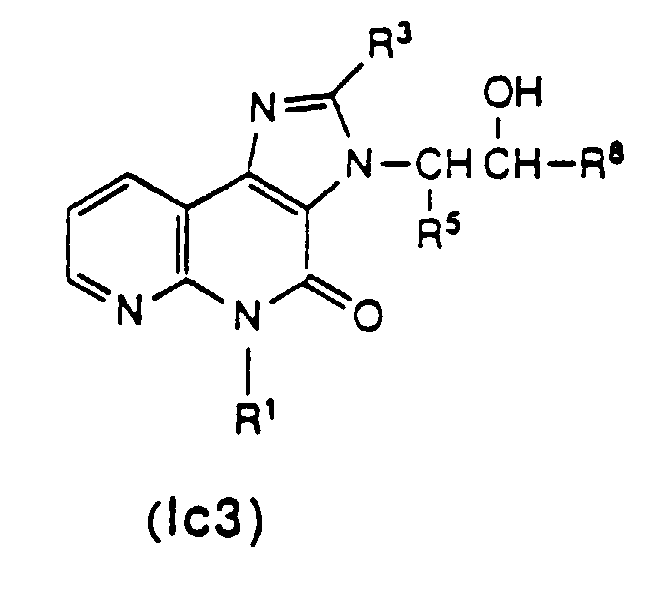
- Compound (Ic3) [Compound (Ic) wherein R 4 is hydroxy] can be obtained by the following reaction step.
- R 1 , R 3 and R 5 have the same significances as defined above; and R 8 is hydrogen or lower alkyl having 1 to 7 carbon atoms.
- Compound (Ic3) can be obtained by allowing Compound (I-1) to react with Compound (XIII) in the presence or absence of a base and a solvent.
- the reaction may be carried out at 0 to 200°C and completed in 5 minutes to 24 hours.
- the intermediates and the desired products in the processes described above can be isolated and purified by purification means conventionally used in organic synthetic chemistry, for example, filtration, extraction, washing, drying, concentration, recrystallization and various kinds of chromatography.
- the intermediates can be subjected to the subsequent reaction without particular purification.
- IgG was purified from rabbit anti-OA serum prepared in advance by the method of Koda et al. [Folia Pharmacol., Japon 66 , 237, (1970)] in the following manner.
- a saturated solution of ammonium sulfate (half volume of the serum) was added to the anti-OA serum, and the mixture was left for one hour at 4°C.
- the precipitate was taken by centrifugation (3,000 rpm, 30 min. 4°C) and dissolved in phosphate buffer of Dulbecco. Then, ammonium sulfate fractionation was carried out three times in the same manner as above, whereby a purified IgG fraction was obtained.
- mice Male Wistar rats weighing 225 - 250 g were pre-bred for several days and fasted overnight prior to the experiment.
- the test compound (100 mg/kg) was orally administered to the animals, and after 30 minutes, a solution of IgG of rabbit anti-OA (0.2 ml, 5 mg protein/ml) was injected into the pleural cavity of the animals from the right side of thorax under anesthesia with ether.
- IgG rabbit anti-OA
- OA albumin egg grade III; Sigma Chemical Co.
- Evans Blue 25 mg/kg was intravenously injected, and four and a half flours after the induction of pleurisy, the animals were killed by bleeding.
- mice Male Hartley guinea pigs weighing 350 to 500 g were passively sensitized by intraperitoneal injection of rabbit anti-OA serum prepared in advance by the method of Koda et al. [Folia Pharmacol., Japon 66 , 237, (1970)]. After 24 hours, the guinea pigs were stunned and exsanguinated, and then tracheae were removed. The zig-zag strips of the tracheae were prepared by the method of Emmerson and Mackay [J. Pharm. Pharmacol., 31 , 798, (1979)].
- the strips were suspended in Krebs-Henseleit solution at 37°C under aeration of a mixed gas of 95% oxygen and 5% carbon dioxide, and equilibrated for one hour. Then, antigen (egg white albumin) was introduced in the solution (final concentration; 1 ⁇ g/ml), and the contraction was measured by isotonictransducer (TD-112s, made by Nihon Kohden K.K., Japan) and recorded on a recorder (Type 3066, made by Yokogawa-Hokushin Denki, K.K. Japan). After the contraction curves reached a plateau, the test compounds were successively added in order to get cumulative concentration-relaxation curves. The concentration of 50% relaxation rate (IC 50 ) was calculated from the regression line, which was obtained from the cumulative concentration-relaxation curves.
- IC 50 concentration of 50% relaxation rate
- the experiment was carried out by a minor modification of a known method [Br. J. Pharmacol., 79 , 595 (1983)].
- Groups each consisting of 10 male dd mice (weighing 28 to 32 g) were used, and 50 or 100 mg/kg of the test compound or a saline (control) was orally administered.
- One hour after the administration of test compound 40 ⁇ g/kg of PAF (manufactured by Avanti Polar Lipids Co., Ltd.) was intravenously administered.
- PAF manufactured by Avanti Polar Lipids Co., Ltd.
- Three hours after PAF injection the mortality of the animals was observed.
- the compound whose mortality was significantly (Fischer's accurate probability tests) lower than control is regarded as having inhibitory effect on PAF-induced mortality, and the results are shown in Table 5 as survival rate.
- test compound was orally and intraperitoneally administered to ddY strain male mice weighing 20 to 25 g.
- MLD Minimum Lethal Dose
- compositions of the present invention can be prepared by uniformly mixing Compound (I) or a pharmaceutically acceptable salt thereof as the active ingredient in an effective amount, with pharmaceutically acceptable carriers. These pharmaceutical compositions are desirably in a single dose unit which is suited for oral or parenteral administration.
- any pharmaceutically acceptable carriers may be used according to the preparation form.
- liquid preparations such as a suspension and a syrup may be prepared using water; sugars such as sucrose, sorbitol and fructose; glycols such as polyethylene glycol and propylene glycol; oils such as sesame oil, olive oil and soybean oil; preservatives such as p-hydroxybenzoic acid esters; flavors such as strawberry flavor and peppermint, etc.
- Powders, pills, capsules and tablets may be prepared using excipients such as lactose, glucose, sucrose and mannitol; disintegrators such as starch and sodium alginate; lubricants such as magnesium stearate and talc; binders such as polyvinyl alcohol, hydroxypropyl cellulose and gelatin; surfactants such as fatty acid esters; plasticizers such as glycerine, etc. Tablets and capsules are the most useful single dose units for oral administration since their administration is easy. In preparing tablets and capsules, solid pharmaceutical carriers are used.
- a solution for parenteral administration may be prepared using carriers such as distilled water, a saline solution, a glucose solution, and a mixture of a saline solution and a glucose solution.
- the effective dose and the administration schedule of Compounds (I) or pharmaceutically acceptable salts thereof vary depending upon mode of administration, age, body weight and conditions of a patient, etc., but it is generally preferred to administer the effective compound in a dose of 1 to 1,000 mg/person/day at one time or in 2 to 4 parts.
- Compounds (I) may be administered by inhalation in the form of aerosol, finely pulverized powders, or spray solution.
- aerosol administration the present compounds are dissolved in an appropriate pharmaceutically acceptable solvent, for example, ethyl alcohol or a combination of miscible solvents, and then mixed with a pharmaceutically acceptable propellant.
- Example 8 -16 the same procedure as in Example 4 was repeated except that the compounds shown in Table 7 were used respectively instead of methyl iodide.
- Example 22 the same procedure as in Example 3 was repeated except that the compounds shown in Table 8 were used respectively instead of Compound c.
- Example 30 -54 the same procedure as in Example 4 was repeated except that the compounds shown in Table 9 were used respectively instead of methyl iodide.
- Example 55 the same procedure as in Example 13 was repeated except that the compounds shown in Table 10 were used respectively instead of Compound 3.
- Example 62 -65 the same procedure as in Example 12 was repeated except that the compounds shown in Table II were used respectively instead of Compound 3.
- Morpholine (30 ml) was added to 2.0 g (4.7 mmol) of Compound 69 obtained in Example 69, and the mixture was stirred at room temperature for one hour. After addition of water, extraction was carried out with chloroform. The organic layer was removed by extraction with 2N hydrochloric acid. The water layer was adjusted to pH 11 with 8N sodium hydroxide, followed by extraction with chloroform. The organic layer was washed with a saturated aqueous solution of sodium chloride and dried over anhydrous sodium sulfate. After filtration, the solvent was evaporated under reduced pressure.
- Tablets each having the following composition, are prepared in a conventional manner.
- Compound 1 100 mg Lactose 60 mg Potato starch 30 mg Polyvinyl alcohol 2 mg Magnesium stearate 1 mg Tar pigment trace
- Powder having the following composition is prepared in a conventional manner.
- Compound 2 100 mg Lactose 30 mg
- Syrup having the following composition is prepared in a conventional manner.
- Compound 1 100 mg Refined sugar 30 g Ethyl p-hydroxybenzoate 40 mg Propyl p-hydroxybenzoate 10 mg Strawberry flavor 0.1 ml
- Water is added to the composition to make the whole volume 100 cc.
- Syrup having the following composition is prepared in a conventional manner.
- Compound 2 100 mg Refined sugar 30 g Ethyl p-hydroxybenzoate 40 mg Propyl p-hydroxybenzoate 10 mg Strawberry flavor 0.1 ml
- Water is added to the composition to make the whole volume 100 ml.
- Phosphorus oxychloride (20 ml, 0.21 mol) was added to 2.0 g (7.6 mmol) of 1-n-butyl-4-hydroxy-3-nitro-1,8-naphthyridin-2(1H)-one [J. Heterocyclic Chem., 22, 193 (1985)], and the mixture was heated to reflux for 30 minutes. After cooling to room temperature, the solvent was distilled off under reduced pressure and ice water was added to the resulting residue. The mixture was neutralized with 4N aqueous solution of sodium hydroxide, followed by extraction with chloroform. The organic layer was dried over anhydrous sodium sulfate, and then filtered. The solvent was distilled off under reduced pressure.
Landscapes
- Health & Medical Sciences (AREA)
- Organic Chemistry (AREA)
- Chemical & Material Sciences (AREA)
- Life Sciences & Earth Sciences (AREA)
- Pharmacology & Pharmacy (AREA)
- Veterinary Medicine (AREA)
- Animal Behavior & Ethology (AREA)
- General Chemical & Material Sciences (AREA)
- Medicinal Chemistry (AREA)
- Nuclear Medicine, Radiotherapy & Molecular Imaging (AREA)
- Public Health (AREA)
- General Health & Medical Sciences (AREA)
- Chemical Kinetics & Catalysis (AREA)
- Engineering & Computer Science (AREA)
- Pulmonology (AREA)
- Bioinformatics & Cheminformatics (AREA)
- Immunology (AREA)
- Pain & Pain Management (AREA)
- Rheumatology (AREA)
- Pharmaceuticals Containing Other Organic And Inorganic Compounds (AREA)
- Luminescent Compositions (AREA)
- Nitrogen Condensed Heterocyclic Rings (AREA)
Claims (15)
- Imidazonaphthyridinderivat, das durch Formel (I) wiedergegeben wird:
 R1 einen C1-C8-Alkylrest oder einen substituierten oder unsubstituierten Phenyl- oder Naphthylrest darstellt; undX-Y-Z einen Restoder ein pharmazeutisch verträgliches Salz davon.
- Verbindung nach Anspruch 1, wobei X-Y-Z einen Rest

- Verbindung nach Anspruch 1, wobei X-Y-Z einen Rest

- Verbindung nach Anspruch 3, wobei R1 einen C1-C8-Alkylrest oder einen Phenylrest darstellt; und R2 ein Wasserstoffatom, einen C1-C8-Alkylrest oder den Rest -CH2-R4 bedeutet (wobei R4 einen Phenyl- oder Naphthylrest, einen Pyridylrest oder einen C1-C6-Alkanoylrest darstellt).
- Verbindung nach Anspruch 1, nämlich5-(n-Butyl)-1-methyl-1H-imidazo[4,5-c][1,8]napthyndin-4(5H)-on,5-Phenyl-3H-imidazo[4,5-c][1,8]napthyridin-4(5H)-on3-Ethyl-5-phenyl-3H-imidazo[4,5-c][1,8]napthyridin-4(5H)-on,5-Phenyl-3-n-propyl-3H-imidazo[4,5-c][1,8]napthyridin-4(5H)-on,3-Benzyl-5-phenyl-3H-imidazo[4,5-c][1,8]napthyridin-4(5H)-on,3-Acetyl-5-phenyl-3H-imidazo[4,5-c][1,8]napthyridin-4(5H)-on,5-n-Butyl-3-n-propyl-3H-imidazo[4,5-c][1,8]napthyridin-4(5H)-on oder5-Phenyl-3-(3-pyridyl)methyl-3H-imidazo[4,5-c][1,8]napthyridin4(5H)-on.
- Verbindung nach einem der Ansprüche 1 bis 4, wobei es sich bei dem Salz um ein Säureadditionssalz, ein Metallsalz, ein Ammoniumsalz, ein Additionssalz mit einem organischen Amin oder um ein Additionsalz mit einer Aminosäure handelt.
- Verfahren zur Herstellung eines durch die Formel (Ia) wiedergegebenen Imidazonaphthyridinderivats,


R2NH2 (VII)
wobei eine Verbindung der Formel (IV) erhalten wird,

R3COOH (IX)
wobei eine Verbindung der Formel (VI) erhalten wird,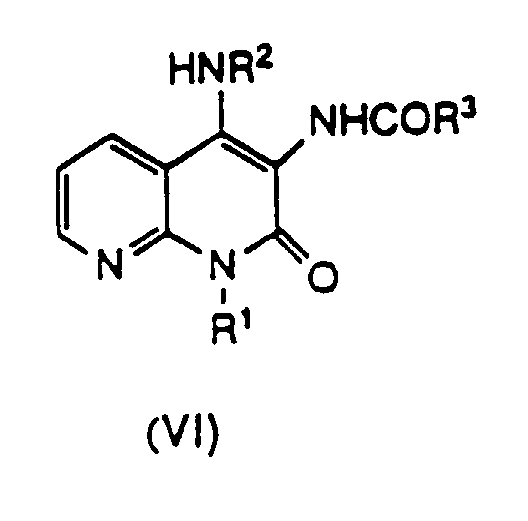
- Verfahren zur Herstellung eines durch die Formel (Ib) wiedergegebenen Imidazonaphthyridinderivats


R2a-L (X)
in der R2a wie vorstehend und L wie in Anspruch 7 definiert sind, wobei die gewünschte Verbindung der Formel (Ib) erhalten wird. - Verfahren zur Herstellung eines Imidazonaphthyridinderivats der Formel (Iba), das durch die Formeln (Ibal) beziehungsweise (Iba2) wiedergegeben wird,

- Verfahren zur Herstellung eines Imidazonaphthyridinderivats der Formel (Ic2),


R4c-H (XI)
in der R4c wie vorstehend definiert ist, wobei die gewünschte Verbindung der Formel (Ic2) erhalten wird. - Verfahren zur Herstellung eines Imidazonaphthyridinderivats der Formel (Ic3),

- Verwendung einer Verbindung der Formel (I), wie sie in einem der Ansprüche 1 bis 6 definiert wurde, zur Herstellung eines Arzneimittels.
- Verwendung nach Anspruch 12, wobei das Mittel eine entzündungshemmende, antiallergische und/oder bronchodilative Wirkung besitzt.
- Arzneimittel, enthaltend eine in einem der Ansprüche 1 bis 6 definierte Verbindung der Formel (I), deren pharmazeutisch verträgliche Salze oder deren physiologisch funktionelle Derivate, die im Körper in diese überführbar sind, und gegebenenfalls einen pharmazeutisch verträglichen Träger und/oder Verdünnungsmittel.
- Mittel nach Anspruch 14, das eine entzündungshemmende, antiallergische und/oder bronchodilative Wirkung aufweist.
Applications Claiming Priority (4)
| Application Number | Priority Date | Filing Date | Title |
|---|---|---|---|
| JP14346090 | 1990-06-01 | ||
| JP143460/90 | 1990-06-01 | ||
| JP334657/90 | 1990-11-30 | ||
| JP33465790 | 1990-11-30 |
Publications (2)
| Publication Number | Publication Date |
|---|---|
| EP0459505A1 EP0459505A1 (de) | 1991-12-04 |
| EP0459505B1 true EP0459505B1 (de) | 1996-10-02 |
Family
ID=26475184
Family Applications (1)
| Application Number | Title | Priority Date | Filing Date |
|---|---|---|---|
| EP91108908A Expired - Lifetime EP0459505B1 (de) | 1990-06-01 | 1991-05-31 | Imidazonaphthyridinderivate |
Country Status (9)
| Country | Link |
|---|---|
| US (3) | US5364859A (de) |
| EP (1) | EP0459505B1 (de) |
| JP (1) | JP3016905B2 (de) |
| AT (1) | ATE143661T1 (de) |
| CA (1) | CA2043715C (de) |
| DE (1) | DE69122427T2 (de) |
| DK (1) | DK0459505T3 (de) |
| ES (1) | ES2094772T3 (de) |
| GR (1) | GR3021971T3 (de) |
Cited By (1)
| Publication number | Priority date | Publication date | Assignee | Title |
|---|---|---|---|---|
| EP4471029A4 (de) * | 2022-01-26 | 2025-05-21 | Suzhou Genhouse Bio Co., Ltd. | Methionin-adenosyltransferase-2a-inhibitor zur behandlung von krebs mit mtap-deletion |
Families Citing this family (16)
| Publication number | Priority date | Publication date | Assignee | Title |
|---|---|---|---|---|
| DE69122427T2 (de) * | 1990-06-01 | 1997-03-06 | Kyowa Hakko Kogyo Kk | Imidazonaphthyridinderivate |
| US5281610A (en) * | 1991-07-31 | 1994-01-25 | Kyowa Hakko Kogyo Co., Ltd. | Condensed naphthyridine derivatives |
| JPH05194515A (ja) * | 1991-07-31 | 1993-08-03 | Kyowa Hakko Kogyo Co Ltd | 縮合ナフチリジン誘導体 |
| WO1993011127A1 (fr) * | 1991-11-25 | 1993-06-10 | Kyowa Hakko Kogyo Co., Ltd. | Derive d'imidazonaphtyridine |
| WO1994002481A1 (fr) * | 1992-07-20 | 1994-02-03 | Kyowa Hakko Kogyo Co., Ltd. | Derive d'imidazonaphtyridine |
| US6365231B2 (en) | 1998-06-26 | 2002-04-02 | Kabushiki Kaisha Toshiba | Ammonium halide eliminator, chemical vapor deposition system and chemical vapor deposition process |
| JP2000119271A (ja) * | 1998-08-12 | 2000-04-25 | Hokuriku Seiyaku Co Ltd | 1h―イミダゾピリジン誘導体 |
| PL200923B1 (pl) | 1999-08-21 | 2009-02-27 | Nycomed Gmbh | Lek zawierający inhibitor PDE w połączeniu z agonistą receptoraß₂ -adrenergicznego oraz zastosowanie połączenia roflumilastu i salmeterolu |
| US6949247B2 (en) | 2000-12-28 | 2005-09-27 | Unilever Home & Personal Care Usa Division Of Conopco, Inc. | Stable skin care compositions containing a retinoid and a retinoid booster system |
| WO2002094321A1 (en) | 2001-05-23 | 2002-11-28 | Tanabe Seiyaku Co., Ltd. | Compositions for promoting healing of bone fracture |
| KR20040007583A (ko) | 2001-05-23 | 2004-01-24 | 다나베 세이야꾸 가부시키가이샤 | 연골 질환의 재생치료용 조성물 |
| US7087631B2 (en) * | 2002-07-18 | 2006-08-08 | Inotek Pharmaceuticals Corporation | Aryltetrazole compounds, and compositions thereof |
| JP2006522151A (ja) | 2003-04-01 | 2006-09-28 | アプライド リサーチ システムズ エーアールエス ホールディング ナームロゼ フェンノートシャップ | 不妊症におけるホスホジエステラーゼ阻害剤 |
| WO2007032466A1 (ja) | 2005-09-15 | 2007-03-22 | Aska Pharmaceutical Co., Ltd. | 複素環化合物、その製造方法並びに用途 |
| ES2550101T3 (es) * | 2008-12-17 | 2015-11-04 | Merck Patent Gmbh | Inhibidores de proteína quinasa de benzonaftiridinona tricíclica modificada con anillo C y su uso |
| WO2022143864A1 (zh) * | 2020-12-31 | 2022-07-07 | 江苏先声药业有限公司 | 三环类化合物及用途 |
Family Cites Families (8)
| Publication number | Priority date | Publication date | Assignee | Title |
|---|---|---|---|---|
| RO66801A (fr) * | 1973-05-25 | 1979-08-15 | Lepetit Spa | Procede pour obtenir des derives des triazoloizoquinolines |
| US4059584A (en) * | 1974-08-07 | 1977-11-22 | Pfizer | 2-Acylamino-3-[3-(dialkylamino)propyl]imidazo[4,5-b]pyridines |
| ZA848968B (en) * | 1983-11-18 | 1986-06-25 | Riker Laboratories Inc | 1h-imidazo(4,5-c)quinolines and 1h-imidazo(4,5-c)quinolin-4-amines |
| CA1271477A (en) * | 1983-11-18 | 1990-07-10 | John F. Gerster | 1h-imidazo[4,5-c]quinolin-4-amines |
| IL73534A (en) * | 1983-11-18 | 1990-12-23 | Riker Laboratories Inc | 1h-imidazo(4,5-c)quinoline-4-amines,their preparation and pharmaceutical compositions containing certain such compounds |
| US4760073A (en) * | 1986-04-11 | 1988-07-26 | Schering Corporation | Aryl-substituted naphthyridine and pyridopyrazine derivatives, useful as anti-allergic agents |
| AU632461B2 (en) * | 1987-07-22 | 1993-01-07 | Schering Corporation | Bicyclic compounds, their use as pharmaceuticals, their preparation, and intermediates useful in their preparation |
| DE69122427T2 (de) * | 1990-06-01 | 1997-03-06 | Kyowa Hakko Kogyo Kk | Imidazonaphthyridinderivate |
-
1991
- 1991-05-31 DE DE69122427T patent/DE69122427T2/de not_active Expired - Fee Related
- 1991-05-31 ES ES91108908T patent/ES2094772T3/es not_active Expired - Lifetime
- 1991-05-31 DK DK91108908.4T patent/DK0459505T3/da active
- 1991-05-31 JP JP3129651A patent/JP3016905B2/ja not_active Expired - Fee Related
- 1991-05-31 AT AT91108908T patent/ATE143661T1/de not_active IP Right Cessation
- 1991-05-31 CA CA002043715A patent/CA2043715C/en not_active Expired - Fee Related
- 1991-05-31 EP EP91108908A patent/EP0459505B1/de not_active Expired - Lifetime
-
1992
- 1992-12-29 US US07/999,658 patent/US5364859A/en not_active Expired - Fee Related
-
1994
- 1994-05-12 US US08/241,631 patent/US5468756A/en not_active Expired - Fee Related
-
1995
- 1995-09-11 US US08/526,323 patent/US5536730A/en not_active Expired - Fee Related
-
1996
- 1996-12-11 GR GR960403401T patent/GR3021971T3/el unknown
Cited By (1)
| Publication number | Priority date | Publication date | Assignee | Title |
|---|---|---|---|---|
| EP4471029A4 (de) * | 2022-01-26 | 2025-05-21 | Suzhou Genhouse Bio Co., Ltd. | Methionin-adenosyltransferase-2a-inhibitor zur behandlung von krebs mit mtap-deletion |
Also Published As
| Publication number | Publication date |
|---|---|
| DK0459505T3 (da) | 1996-11-18 |
| CA2043715C (en) | 1997-01-07 |
| US5364859A (en) | 1994-11-15 |
| EP0459505A1 (de) | 1991-12-04 |
| JP3016905B2 (ja) | 2000-03-06 |
| CA2043715A1 (en) | 1991-12-02 |
| US5468756A (en) | 1995-11-21 |
| DE69122427T2 (de) | 1997-03-06 |
| ES2094772T3 (es) | 1997-02-01 |
| ATE143661T1 (de) | 1996-10-15 |
| US5536730A (en) | 1996-07-16 |
| JPH04226985A (ja) | 1992-08-17 |
| GR3021971T3 (en) | 1997-03-31 |
| DE69122427D1 (de) | 1996-11-07 |
Similar Documents
| Publication | Publication Date | Title |
|---|---|---|
| US5444065A (en) | Fused cycloalkylimidazopyridines as inducer of interferon α biosynthesis | |
| US5648516A (en) | Fused cycloalkylimidazopyridines | |
| US5364859A (en) | Imidazonaphthyridine derivatives | |
| CA1337523C (en) | Pyridonecarboxylic acids and antibacterial agents | |
| EP0452873B1 (de) | 1,8-Naphthyridin-2-on-Derivate | |
| HU218950B (hu) | Kondenzált imidazo-piridin-származékok, az ezeket tartalmazó gyógyszerkészítmények és eljárás előállításukra | |
| WO2000020400A1 (en) | Novel compounds and compositions for treating hepatitis c infections | |
| CZ20023945A3 (cs) | Substituované pyrrolopyridinové deriváty pro použití jako inhibitory fosfodiesterázy | |
| PL193468B1 (pl) | Tetracykliczne analogi kamptotecyn, ich zastosowanie i zawierające je kompozycje farmaceutyczne | |
| KR100523422B1 (ko) | 테트라히드로피리도 화합물 | |
| US4804665A (en) | Azaspiro compounds and their use | |
| US4994468A (en) | Imidazoquinolone derivatives | |
| EP0476544B1 (de) | Pyrazoloquinolinderivate | |
| US4912104A (en) | Tricyclic fused pryimidine derivatives, and their use as pharmaceuticals | |
| EP0553682A1 (de) | Imidazo(4,5-b)Pyridinderivate als Angiotensin-II-Antagonisten | |
| US4942143A (en) | Imidazothiadiazine derivatives, and their use as medicaments | |
| KR950008313B1 (ko) | 복소환 화합물 및 항궤양제 | |
| CA1131226A (en) | Heterocyclic compounds | |
| EP0526840B1 (de) | Kondensierte Naphthyridinderivate | |
| KR930009011B1 (ko) | 9-(치환된 티오)-4H-피리도[1,2-a]피리미딘-4-온 유도체의 제조방법 | |
| US5527908A (en) | Pyrazolothiazolopyrimidine derivatives | |
| KR970005301B1 (ko) | 2-치환 카르보닐이미다조[4,5-c]퀴놀린 | |
| US5484924A (en) | Imidazonaphthyridine derivatives | |
| JPH04356486A (ja) | ピラゾロキノリン誘導体 | |
| EP0462986A1 (de) | Imidazopyrimidine, antiallergische heilmittel. |
Legal Events
| Date | Code | Title | Description |
|---|---|---|---|
| PUAI | Public reference made under article 153(3) epc to a published international application that has entered the european phase |
Free format text: ORIGINAL CODE: 0009012 |
|
| AK | Designated contracting states |
Kind code of ref document: A1 Designated state(s): AT BE CH DE DK ES FR GB GR IT LI LU NL SE |
|
| 17P | Request for examination filed |
Effective date: 19920228 |
|
| 17Q | First examination report despatched |
Effective date: 19940415 |
|
| GRAH | Despatch of communication of intention to grant a patent |
Free format text: ORIGINAL CODE: EPIDOS IGRA |
|
| GRAH | Despatch of communication of intention to grant a patent |
Free format text: ORIGINAL CODE: EPIDOS IGRA |
|
| GRAA | (expected) grant |
Free format text: ORIGINAL CODE: 0009210 |
|
| AK | Designated contracting states |
Kind code of ref document: B1 Designated state(s): AT BE CH DE DK ES FR GB GR IT LI LU NL SE |
|
| REF | Corresponds to: |
Ref document number: 143661 Country of ref document: AT Date of ref document: 19961015 Kind code of ref document: T |
|
| ITF | It: translation for a ep patent filed | ||
| REF | Corresponds to: |
Ref document number: 69122427 Country of ref document: DE Date of ref document: 19961107 |
|
| REG | Reference to a national code |
Ref country code: CH Ref legal event code: NV Representative=s name: BOVARD AG PATENTANWAELTE |
|
| REG | Reference to a national code |
Ref country code: DK Ref legal event code: T3 |
|
| ET | Fr: translation filed |
Free format text: CORRECTIONS |
|
| REG | Reference to a national code |
Ref country code: ES Ref legal event code: FG2A Ref document number: 2094772 Country of ref document: ES Kind code of ref document: T3 |
|
| REG | Reference to a national code |
Ref country code: GR Ref legal event code: FG4A Free format text: 3021971 |
|
| PLBE | No opposition filed within time limit |
Free format text: ORIGINAL CODE: 0009261 |
|
| STAA | Information on the status of an ep patent application or granted ep patent |
Free format text: STATUS: NO OPPOSITION FILED WITHIN TIME LIMIT |
|
| 26N | No opposition filed | ||
| PGFP | Annual fee paid to national office [announced via postgrant information from national office to epo] |
Ref country code: SE Payment date: 20010417 Year of fee payment: 11 |
|
| PGFP | Annual fee paid to national office [announced via postgrant information from national office to epo] |
Ref country code: DK Payment date: 20010514 Year of fee payment: 11 Ref country code: AT Payment date: 20010514 Year of fee payment: 11 |
|
| PGFP | Annual fee paid to national office [announced via postgrant information from national office to epo] |
Ref country code: FR Payment date: 20010518 Year of fee payment: 11 |
|
| PGFP | Annual fee paid to national office [announced via postgrant information from national office to epo] |
Ref country code: DE Payment date: 20010522 Year of fee payment: 11 |
|
| PGFP | Annual fee paid to national office [announced via postgrant information from national office to epo] |
Ref country code: LU Payment date: 20010523 Year of fee payment: 11 |
|
| PGFP | Annual fee paid to national office [announced via postgrant information from national office to epo] |
Ref country code: CH Payment date: 20010529 Year of fee payment: 11 |
|
| PGFP | Annual fee paid to national office [announced via postgrant information from national office to epo] |
Ref country code: GR Payment date: 20010530 Year of fee payment: 11 Ref country code: GB Payment date: 20010530 Year of fee payment: 11 Ref country code: ES Payment date: 20010530 Year of fee payment: 11 |
|
| PGFP | Annual fee paid to national office [announced via postgrant information from national office to epo] |
Ref country code: NL Payment date: 20010531 Year of fee payment: 11 |
|
| PGFP | Annual fee paid to national office [announced via postgrant information from national office to epo] |
Ref country code: BE Payment date: 20010717 Year of fee payment: 11 |
|
| REG | Reference to a national code |
Ref country code: GB Ref legal event code: IF02 |
|
| PG25 | Lapsed in a contracting state [announced via postgrant information from national office to epo] |
Ref country code: LU Free format text: LAPSE BECAUSE OF NON-PAYMENT OF DUE FEES Effective date: 20020531 Ref country code: LI Free format text: LAPSE BECAUSE OF NON-PAYMENT OF DUE FEES Effective date: 20020531 Ref country code: GB Free format text: LAPSE BECAUSE OF NON-PAYMENT OF DUE FEES Effective date: 20020531 Ref country code: DK Free format text: LAPSE BECAUSE OF NON-PAYMENT OF DUE FEES Effective date: 20020531 Ref country code: CH Free format text: LAPSE BECAUSE OF NON-PAYMENT OF DUE FEES Effective date: 20020531 Ref country code: BE Free format text: LAPSE BECAUSE OF NON-PAYMENT OF DUE FEES Effective date: 20020531 Ref country code: AT Free format text: LAPSE BECAUSE OF NON-PAYMENT OF DUE FEES Effective date: 20020531 |
|
| PG25 | Lapsed in a contracting state [announced via postgrant information from national office to epo] |
Ref country code: SE Free format text: LAPSE BECAUSE OF NON-PAYMENT OF DUE FEES Effective date: 20020601 Ref country code: ES Free format text: LAPSE BECAUSE OF NON-PAYMENT OF DUE FEES Effective date: 20020601 |
|
| PG25 | Lapsed in a contracting state [announced via postgrant information from national office to epo] |
Ref country code: NL Free format text: LAPSE BECAUSE OF NON-PAYMENT OF DUE FEES Effective date: 20021201 |
|
| PG25 | Lapsed in a contracting state [announced via postgrant information from national office to epo] |
Ref country code: DE Free format text: LAPSE BECAUSE OF NON-PAYMENT OF DUE FEES Effective date: 20021203 |
|
| PG25 | Lapsed in a contracting state [announced via postgrant information from national office to epo] |
Ref country code: GR Free format text: LAPSE BECAUSE OF NON-PAYMENT OF DUE FEES Effective date: 20021206 |
|
| REG | Reference to a national code |
Ref country code: DK Ref legal event code: EBP |
|
| REG | Reference to a national code |
Ref country code: CH Ref legal event code: PL |
|
| GBPC | Gb: european patent ceased through non-payment of renewal fee |
Effective date: 20020531 |
|
| PG25 | Lapsed in a contracting state [announced via postgrant information from national office to epo] |
Ref country code: FR Free format text: LAPSE BECAUSE OF NON-PAYMENT OF DUE FEES Effective date: 20030131 |
|
| NLV4 | Nl: lapsed or anulled due to non-payment of the annual fee |
Effective date: 20021201 |
|
| EUG | Se: european patent has lapsed | ||
| REG | Reference to a national code |
Ref country code: FR Ref legal event code: ST |
|
| REG | Reference to a national code |
Ref country code: ES Ref legal event code: FD2A Effective date: 20030611 |
|
| PG25 | Lapsed in a contracting state [announced via postgrant information from national office to epo] |
Ref country code: IT Free format text: LAPSE BECAUSE OF NON-PAYMENT OF DUE FEES;WARNING: LAPSES OF ITALIAN PATENTS WITH EFFECTIVE DATE BEFORE 2007 MAY HAVE OCCURRED AT ANY TIME BEFORE 2007. THE CORRECT EFFECTIVE DATE MAY BE DIFFERENT FROM THE ONE RECORDED. Effective date: 20050531 |