EP0399347B1 - Verfahren zur Herstellung eines Syndio-Isoblockpolymeren - Google Patents
Verfahren zur Herstellung eines Syndio-Isoblockpolymeren Download PDFInfo
- Publication number
- EP0399347B1 EP0399347B1 EP90109206A EP90109206A EP0399347B1 EP 0399347 B1 EP0399347 B1 EP 0399347B1 EP 90109206 A EP90109206 A EP 90109206A EP 90109206 A EP90109206 A EP 90109206A EP 0399347 B1 EP0399347 B1 EP 0399347B1
- Authority
- EP
- European Patent Office
- Prior art keywords
- metallocene
- alkyl
- fluorenyl
- eine
- isopropylidene
- Prior art date
- Legal status (The legal status is an assumption and is not a legal conclusion. Google has not performed a legal analysis and makes no representation as to the accuracy of the status listed.)
- Expired - Lifetime
Links
- 238000004519 manufacturing process Methods 0.000 title description 12
- 229920000642 polymer Polymers 0.000 claims description 52
- 238000006116 polymerization reaction Methods 0.000 claims description 31
- 238000000034 method Methods 0.000 claims description 22
- -1 C6-C10-aryloxy Chemical group 0.000 claims description 21
- 150000001875 compounds Chemical class 0.000 claims description 19
- 125000004435 hydrogen atom Chemical group [H]* 0.000 claims description 18
- 125000005843 halogen group Chemical group 0.000 claims description 16
- 125000004432 carbon atom Chemical group C* 0.000 claims description 13
- 125000000008 (C1-C10) alkyl group Chemical group 0.000 claims description 11
- 125000000027 (C1-C10) alkoxy group Chemical group 0.000 claims description 9
- 125000000041 C6-C10 aryl group Chemical group 0.000 claims description 9
- 239000003054 catalyst Substances 0.000 claims description 9
- XUIMIQQOPSSXEZ-UHFFFAOYSA-N Silicon Chemical compound [Si] XUIMIQQOPSSXEZ-UHFFFAOYSA-N 0.000 claims description 8
- 229910052732 germanium Inorganic materials 0.000 claims description 8
- GNPVGFCGXDBREM-UHFFFAOYSA-N germanium atom Chemical compound [Ge] GNPVGFCGXDBREM-UHFFFAOYSA-N 0.000 claims description 8
- 229910052710 silicon Inorganic materials 0.000 claims description 8
- 125000006374 C2-C10 alkenyl group Chemical group 0.000 claims description 7
- QCWXUUIWCKQGHC-UHFFFAOYSA-N Zirconium Chemical compound [Zr] QCWXUUIWCKQGHC-UHFFFAOYSA-N 0.000 claims description 7
- 229910052735 hafnium Inorganic materials 0.000 claims description 7
- VBJZVLUMGGDVMO-UHFFFAOYSA-N hafnium atom Chemical compound [Hf] VBJZVLUMGGDVMO-UHFFFAOYSA-N 0.000 claims description 7
- 125000002496 methyl group Chemical group [H]C([H])([H])* 0.000 claims description 7
- QQONPFPTGQHPMA-UHFFFAOYSA-N propylene Natural products CC=C QQONPFPTGQHPMA-UHFFFAOYSA-N 0.000 claims description 7
- 125000004805 propylene group Chemical group [H]C([H])([H])C([H])([*:1])C([H])([H])[*:2] 0.000 claims description 7
- 229910052726 zirconium Inorganic materials 0.000 claims description 7
- ATJFFYVFTNAWJD-UHFFFAOYSA-N Tin Chemical compound [Sn] ATJFFYVFTNAWJD-UHFFFAOYSA-N 0.000 claims description 6
- RTAQQCXQSZGOHL-UHFFFAOYSA-N Titanium Chemical compound [Ti] RTAQQCXQSZGOHL-UHFFFAOYSA-N 0.000 claims description 6
- 125000004429 atom Chemical group 0.000 claims description 6
- 229910052718 tin Inorganic materials 0.000 claims description 6
- 239000000178 monomer Substances 0.000 claims description 5
- GUCVJGMIXFAOAE-UHFFFAOYSA-N niobium atom Chemical compound [Nb] GUCVJGMIXFAOAE-UHFFFAOYSA-N 0.000 claims description 5
- 239000010703 silicon Substances 0.000 claims description 5
- 239000000725 suspension Substances 0.000 claims description 5
- GUVRBAGPIYLISA-UHFFFAOYSA-N tantalum atom Chemical compound [Ta] GUVRBAGPIYLISA-UHFFFAOYSA-N 0.000 claims description 5
- 239000010936 titanium Substances 0.000 claims description 5
- 229910052719 titanium Inorganic materials 0.000 claims description 5
- 229910052720 vanadium Inorganic materials 0.000 claims description 5
- GPPXJZIENCGNKB-UHFFFAOYSA-N vanadium Chemical compound [V]#[V] GPPXJZIENCGNKB-UHFFFAOYSA-N 0.000 claims description 5
- 239000007789 gas Substances 0.000 claims description 4
- 229910052758 niobium Inorganic materials 0.000 claims description 4
- 239000010955 niobium Substances 0.000 claims description 4
- 229910052715 tantalum Inorganic materials 0.000 claims description 4
- 150000001336 alkenes Chemical class 0.000 claims description 3
- JYQUBMAHVQIEKP-UHFFFAOYSA-L CC(C)=[Zr](Cl)(Cl)(C1C=CC(C)=C1)C1c2ccccc2-c2ccccc12 Chemical compound CC(C)=[Zr](Cl)(Cl)(C1C=CC(C)=C1)C1c2ccccc2-c2ccccc12 JYQUBMAHVQIEKP-UHFFFAOYSA-L 0.000 claims description 2
- ULGSIWQSNDSNIX-UHFFFAOYSA-L [Cl-].[Cl-].C(C)(C)=[Hf+2]C1(C=C(C=C1)C)C1C2=CC=CC=C2C=2C=CC=CC1=2 Chemical compound [Cl-].[Cl-].C(C)(C)=[Hf+2]C1(C=C(C=C1)C)C1C2=CC=CC=C2C=2C=CC=CC1=2 ULGSIWQSNDSNIX-UHFFFAOYSA-L 0.000 claims description 2
- YUHUCVQCKKAEDX-UHFFFAOYSA-L [Cl-].[Cl-].C(C)(C)=[Zr+2]C1(C=C(C=C1)C)C1C2=CC=CC=C2C=2C=CC=CC1=2 Chemical group [Cl-].[Cl-].C(C)(C)=[Zr+2]C1(C=C(C=C1)C)C1C2=CC=CC=C2C=2C=CC=CC1=2 YUHUCVQCKKAEDX-UHFFFAOYSA-L 0.000 claims description 2
- QZJLLGDRMGCCSV-UHFFFAOYSA-L [Cl-].[Cl-].CC(C)=[Hf+2](C1C=C(C=C1)C)C1C2=CC=CC=C2C=2C=CC=CC1=2 Chemical compound [Cl-].[Cl-].CC(C)=[Hf+2](C1C=C(C=C1)C)C1C2=CC=CC=C2C=2C=CC=CC1=2 QZJLLGDRMGCCSV-UHFFFAOYSA-L 0.000 claims description 2
- 238000002360 preparation method Methods 0.000 claims description 2
- 229910052739 hydrogen Inorganic materials 0.000 claims 4
- 239000001257 hydrogen Substances 0.000 claims 4
- 125000003358 C2-C20 alkenyl group Chemical group 0.000 claims 2
- SJBVATGAGKDSPR-UHFFFAOYSA-L [Cl-].[Cl-].C(C)(C)=[Zr+2](C1=CC=CC=2C3=CC=CC=C3CC1=2)C1C=C(C=C1)C Chemical compound [Cl-].[Cl-].C(C)(C)=[Zr+2](C1=CC=CC=2C3=CC=CC=C3CC1=2)C1C=C(C=C1)C SJBVATGAGKDSPR-UHFFFAOYSA-L 0.000 claims 1
- ZYXUDIOEMDPNHB-UHFFFAOYSA-L [Cl-].[Cl-].C(C)(C)=[Zr+2]C1(C(=CC=C1)C)C1=CC=CC=2C3=CC=CC=C3CC1=2 Chemical compound [Cl-].[Cl-].C(C)(C)=[Zr+2]C1(C(=CC=C1)C)C1=CC=CC=2C3=CC=CC=C3CC1=2 ZYXUDIOEMDPNHB-UHFFFAOYSA-L 0.000 claims 1
- JRZJOMJEPLMPRA-UHFFFAOYSA-N olefin Natural products CCCCCCCC=C JRZJOMJEPLMPRA-UHFFFAOYSA-N 0.000 claims 1
- YXFVVABEGXRONW-UHFFFAOYSA-N Toluene Chemical compound CC1=CC=CC=C1 YXFVVABEGXRONW-UHFFFAOYSA-N 0.000 description 24
- 239000004743 Polypropylene Substances 0.000 description 13
- 230000000694 effects Effects 0.000 description 12
- VLKZOEOYAKHREP-UHFFFAOYSA-N n-Hexane Chemical compound CCCCCC VLKZOEOYAKHREP-UHFFFAOYSA-N 0.000 description 12
- 229920001155 polypropylene Polymers 0.000 description 11
- 229910052782 aluminium Inorganic materials 0.000 description 9
- XLYOFNOQVPJJNP-UHFFFAOYSA-N water Substances O XLYOFNOQVPJJNP-UHFFFAOYSA-N 0.000 description 8
- XAGFODPZIPBFFR-UHFFFAOYSA-N aluminium Chemical compound [Al] XAGFODPZIPBFFR-UHFFFAOYSA-N 0.000 description 7
- IMNFDUFMRHMDMM-UHFFFAOYSA-N N-Heptane Chemical compound CCCCCCC IMNFDUFMRHMDMM-UHFFFAOYSA-N 0.000 description 6
- 239000000203 mixture Substances 0.000 description 6
- 239000007788 liquid Substances 0.000 description 5
- VXNZUUAINFGPBY-UHFFFAOYSA-N 1-Butene Chemical compound CCC=C VXNZUUAINFGPBY-UHFFFAOYSA-N 0.000 description 4
- IJGRMHOSHXDMSA-UHFFFAOYSA-N Atomic nitrogen Chemical compound N#N IJGRMHOSHXDMSA-UHFFFAOYSA-N 0.000 description 4
- ZAMOUSCENKQFHK-UHFFFAOYSA-N Chlorine atom Chemical compound [Cl] ZAMOUSCENKQFHK-UHFFFAOYSA-N 0.000 description 4
- MZRVEZGGRBJDDB-UHFFFAOYSA-N N-Butyllithium Chemical compound [Li]CCCC MZRVEZGGRBJDDB-UHFFFAOYSA-N 0.000 description 4
- 125000002877 alkyl aryl group Chemical group 0.000 description 4
- 125000005018 aryl alkenyl group Chemical group 0.000 description 4
- 125000003710 aryl alkyl group Chemical group 0.000 description 4
- 239000002904 solvent Substances 0.000 description 4
- 125000006273 (C1-C3) alkyl group Chemical group 0.000 description 3
- 238000001644 13C nuclear magnetic resonance spectroscopy Methods 0.000 description 3
- 239000004215 Carbon black (E152) Substances 0.000 description 3
- 125000003118 aryl group Chemical group 0.000 description 3
- 239000000460 chlorine Substances 0.000 description 3
- 238000002425 crystallisation Methods 0.000 description 3
- 230000008025 crystallization Effects 0.000 description 3
- 238000005227 gel permeation chromatography Methods 0.000 description 3
- 229930195733 hydrocarbon Natural products 0.000 description 3
- 150000002430 hydrocarbons Chemical class 0.000 description 3
- OFBQJSOFQDEBGM-UHFFFAOYSA-N n-pentane Natural products CCCCC OFBQJSOFQDEBGM-UHFFFAOYSA-N 0.000 description 3
- JLTRXTDYQLMHGR-UHFFFAOYSA-N trimethylaluminium Chemical group C[Al](C)C JLTRXTDYQLMHGR-UHFFFAOYSA-N 0.000 description 3
- 125000006656 (C2-C4) alkenyl group Chemical group 0.000 description 2
- LIKMAJRDDDTEIG-UHFFFAOYSA-N 1-hexene Chemical compound CCCCC=C LIKMAJRDDDTEIG-UHFFFAOYSA-N 0.000 description 2
- KWKAKUADMBZCLK-UHFFFAOYSA-N 1-octene Chemical compound CCCCCCC=C KWKAKUADMBZCLK-UHFFFAOYSA-N 0.000 description 2
- WSSSPWUEQFSQQG-UHFFFAOYSA-N 4-methyl-1-pentene Chemical compound CC(C)CC=C WSSSPWUEQFSQQG-UHFFFAOYSA-N 0.000 description 2
- XJTQEAXBIXXILJ-UHFFFAOYSA-L CC(C)=[Zr](Cl)(Cl)(C1C=CC=C1)C1=CC=CC2=C1CC1=CC=CC=C21 Chemical compound CC(C)=[Zr](Cl)(Cl)(C1C=CC=C1)C1=CC=CC2=C1CC1=CC=CC=C21 XJTQEAXBIXXILJ-UHFFFAOYSA-L 0.000 description 2
- 150000001335 aliphatic alkanes Chemical class 0.000 description 2
- 125000001931 aliphatic group Chemical group 0.000 description 2
- AZDRQVAHHNSJOQ-UHFFFAOYSA-N alumane Chemical class [AlH3] AZDRQVAHHNSJOQ-UHFFFAOYSA-N 0.000 description 2
- 125000004104 aryloxy group Chemical group 0.000 description 2
- 229910052799 carbon Inorganic materials 0.000 description 2
- 229910052801 chlorine Inorganic materials 0.000 description 2
- 230000008030 elimination Effects 0.000 description 2
- 238000003379 elimination reaction Methods 0.000 description 2
- ZSWFCLXCOIISFI-UHFFFAOYSA-N endo-cyclopentadiene Natural products C1C=CC=C1 ZSWFCLXCOIISFI-UHFFFAOYSA-N 0.000 description 2
- 125000001495 ethyl group Chemical group [H]C([H])([H])C([H])([H])* 0.000 description 2
- 230000002349 favourable effect Effects 0.000 description 2
- 125000003709 fluoroalkyl group Chemical group 0.000 description 2
- 125000004407 fluoroaryl group Chemical group 0.000 description 2
- 239000012442 inert solvent Substances 0.000 description 2
- 238000001819 mass spectrum Methods 0.000 description 2
- 229910052751 metal Inorganic materials 0.000 description 2
- 239000002184 metal Substances 0.000 description 2
- CPOFMOWDMVWCLF-UHFFFAOYSA-N methyl(oxo)alumane Chemical compound C[Al]=O CPOFMOWDMVWCLF-UHFFFAOYSA-N 0.000 description 2
- UAEPNZWRGJTJPN-UHFFFAOYSA-N methylcyclohexane Chemical compound CC1CCCCC1 UAEPNZWRGJTJPN-UHFFFAOYSA-N 0.000 description 2
- 229910052757 nitrogen Inorganic materials 0.000 description 2
- JFNLZVQOOSMTJK-KNVOCYPGSA-N norbornene Chemical compound C1[C@@H]2CC[C@H]1C=C2 JFNLZVQOOSMTJK-KNVOCYPGSA-N 0.000 description 2
- 238000006384 oligomerization reaction Methods 0.000 description 2
- 239000012071 phase Substances 0.000 description 2
- 230000037048 polymerization activity Effects 0.000 description 2
- 230000000379 polymerizing effect Effects 0.000 description 2
- 229920000098 polyolefin Polymers 0.000 description 2
- 239000000843 powder Substances 0.000 description 2
- 239000000047 product Substances 0.000 description 2
- 238000000425 proton nuclear magnetic resonance spectrum Methods 0.000 description 2
- 238000003756 stirring Methods 0.000 description 2
- 229910052723 transition metal Inorganic materials 0.000 description 2
- 150000003624 transition metals Chemical class 0.000 description 2
- 125000004169 (C1-C6) alkyl group Chemical group 0.000 description 1
- 0 *C1=C(*)C=CC2C1N[C@@]1c3c(*)c(*)c(*)c(*)c3-c3ccccc3C1*2 Chemical compound *C1=C(*)C=CC2C1N[C@@]1c3c(*)c(*)c(*)c(*)c3-c3ccccc3C1*2 0.000 description 1
- HDHYMLWPVAELKP-UHFFFAOYSA-N 2-methyl-5-propan-2-ylidenecyclopenta-1,3-diene Chemical compound CC(C)=C1C=CC(C)=C1 HDHYMLWPVAELKP-UHFFFAOYSA-N 0.000 description 1
- GDFPSJYZMITVIB-UHFFFAOYSA-N 9-(3-methyl-2-propan-2-ylcyclopenta-1,3-dien-1-yl)-9h-fluorene Chemical compound C1C=C(C)C(C(C)C)=C1C1C2=CC=CC=C2C2=CC=CC=C21 GDFPSJYZMITVIB-UHFFFAOYSA-N 0.000 description 1
- 241001136792 Alle Species 0.000 description 1
- XDTMQSROBMDMFD-UHFFFAOYSA-N Cyclohexane Chemical compound C1CCCCC1 XDTMQSROBMDMFD-UHFFFAOYSA-N 0.000 description 1
- NHTMVDHEPJAVLT-UHFFFAOYSA-N Isooctane Chemical compound CC(C)CC(C)(C)C NHTMVDHEPJAVLT-UHFFFAOYSA-N 0.000 description 1
- 229910007926 ZrCl Inorganic materials 0.000 description 1
- KUNZSLJMPCDOGI-UHFFFAOYSA-L [Cl-].[Cl-].[Hf+2] Chemical compound [Cl-].[Cl-].[Hf+2] KUNZSLJMPCDOGI-UHFFFAOYSA-L 0.000 description 1
- 230000004913 activation Effects 0.000 description 1
- 150000001338 aliphatic hydrocarbons Chemical class 0.000 description 1
- DIZPMCHEQGEION-UHFFFAOYSA-H aluminium sulfate (anhydrous) Chemical compound [Al+3].[Al+3].[O-]S([O-])(=O)=O.[O-]S([O-])(=O)=O.[O-]S([O-])(=O)=O DIZPMCHEQGEION-UHFFFAOYSA-H 0.000 description 1
- TYYRFZAVEXQXSN-UHFFFAOYSA-H aluminium sulfate hexadecahydrate Chemical compound O.O.O.O.O.O.O.O.O.O.O.O.O.O.O.O.[Al+3].[Al+3].[O-]S([O-])(=O)=O.[O-]S([O-])(=O)=O.[O-]S([O-])(=O)=O TYYRFZAVEXQXSN-UHFFFAOYSA-H 0.000 description 1
- AMVQGJHFDJVOOB-UHFFFAOYSA-H aluminium sulfate octadecahydrate Chemical compound O.O.O.O.O.O.O.O.O.O.O.O.O.O.O.O.O.O.[Al+3].[Al+3].[O-]S([O-])(=O)=O.[O-]S([O-])(=O)=O.[O-]S([O-])(=O)=O AMVQGJHFDJVOOB-UHFFFAOYSA-H 0.000 description 1
- 238000004458 analytical method Methods 0.000 description 1
- 150000004945 aromatic hydrocarbons Chemical class 0.000 description 1
- 239000003849 aromatic solvent Substances 0.000 description 1
- 229920001585 atactic polymer Polymers 0.000 description 1
- 125000001797 benzyl group Chemical group [H]C1=C([H])C([H])=C(C([H])=C1[H])C([H])([H])* 0.000 description 1
- 230000015572 biosynthetic process Effects 0.000 description 1
- 238000009835 boiling Methods 0.000 description 1
- 239000001273 butane Substances 0.000 description 1
- 125000000484 butyl group Chemical group [H]C([*])([H])C([H])([H])C([H])([H])C([H])([H])[H] 0.000 description 1
- 238000001460 carbon-13 nuclear magnetic resonance spectrum Methods 0.000 description 1
- 230000003197 catalytic effect Effects 0.000 description 1
- 238000006243 chemical reaction Methods 0.000 description 1
- 238000004140 cleaning Methods 0.000 description 1
- 238000001816 cooling Methods 0.000 description 1
- 229910000365 copper sulfate Inorganic materials 0.000 description 1
- ARUVKPQLZAKDPS-UHFFFAOYSA-L copper(II) sulfate Chemical compound [Cu+2].[O-][S+2]([O-])([O-])[O-] ARUVKPQLZAKDPS-UHFFFAOYSA-L 0.000 description 1
- JZCCFEFSEZPSOG-UHFFFAOYSA-L copper(II) sulfate pentahydrate Chemical compound O.O.O.O.O.[Cu+2].[O-]S([O-])(=O)=O JZCCFEFSEZPSOG-UHFFFAOYSA-L 0.000 description 1
- 239000013078 crystal Substances 0.000 description 1
- 125000004122 cyclic group Chemical group 0.000 description 1
- BUACSMWVFUNQET-UHFFFAOYSA-H dialuminum;trisulfate;hydrate Chemical compound O.[Al+3].[Al+3].[O-]S([O-])(=O)=O.[O-]S([O-])(=O)=O.[O-]S([O-])(=O)=O BUACSMWVFUNQET-UHFFFAOYSA-H 0.000 description 1
- 239000002283 diesel fuel Substances 0.000 description 1
- JVSWJIKNEAIKJW-UHFFFAOYSA-N dimethyl-hexane Natural products CCCCCC(C)C JVSWJIKNEAIKJW-UHFFFAOYSA-N 0.000 description 1
- 238000009826 distribution Methods 0.000 description 1
- 238000000921 elemental analysis Methods 0.000 description 1
- 239000000706 filtrate Substances 0.000 description 1
- RMBPEFMHABBEKP-UHFFFAOYSA-N fluorene Chemical compound C1=CC=C2C3=C[CH]C=CC3=CC2=C1 RMBPEFMHABBEKP-UHFFFAOYSA-N 0.000 description 1
- 238000010528 free radical solution polymerization reaction Methods 0.000 description 1
- 239000011521 glass Substances 0.000 description 1
- 150000002363 hafnium compounds Chemical class 0.000 description 1
- 230000007062 hydrolysis Effects 0.000 description 1
- 238000006460 hydrolysis reaction Methods 0.000 description 1
- 239000011261 inert gas Substances 0.000 description 1
- 125000000959 isobutyl group Chemical group [H]C([H])([H])C([H])(C([H])([H])[H])C([H])([H])* 0.000 description 1
- 229920001580 isotactic polymer Polymers 0.000 description 1
- 239000003446 ligand Substances 0.000 description 1
- 238000002844 melting Methods 0.000 description 1
- 230000008018 melting Effects 0.000 description 1
- 239000012968 metallocene catalyst Substances 0.000 description 1
- 125000000956 methoxy group Chemical group [H]C([H])([H])O* 0.000 description 1
- GYNNXHKOJHMOHS-UHFFFAOYSA-N methyl-cycloheptane Natural products CC1CCCCCC1 GYNNXHKOJHMOHS-UHFFFAOYSA-N 0.000 description 1
- TVMXDCGIABBOFY-UHFFFAOYSA-N n-Octanol Natural products CCCCCCCC TVMXDCGIABBOFY-UHFFFAOYSA-N 0.000 description 1
- IJDNQMDRQITEOD-UHFFFAOYSA-N n-butane Chemical compound CCCC IJDNQMDRQITEOD-UHFFFAOYSA-N 0.000 description 1
- 125000001971 neopentyl group Chemical group [H]C([*])([H])C(C([H])([H])[H])(C([H])([H])[H])C([H])([H])[H] 0.000 description 1
- SJYNFBVQFBRSIB-UHFFFAOYSA-N norbornadiene Chemical compound C1=CC2C=CC1C2 SJYNFBVQFBRSIB-UHFFFAOYSA-N 0.000 description 1
- NIHNNTQXNPWCJQ-UHFFFAOYSA-N o-biphenylenemethane Natural products C1=CC=C2CC3=CC=CC=C3C2=C1 NIHNNTQXNPWCJQ-UHFFFAOYSA-N 0.000 description 1
- 239000003921 oil Substances 0.000 description 1
- 239000012074 organic phase Substances 0.000 description 1
- 125000000538 pentafluorophenyl group Chemical group FC1=C(F)C(F)=C(*)C(F)=C1F 0.000 description 1
- 230000000737 periodic effect Effects 0.000 description 1
- 125000001997 phenyl group Chemical group [H]C1=C([H])C([H])=C(*)C([H])=C1[H] 0.000 description 1
- 150000003254 radicals Chemical class 0.000 description 1
- 239000011541 reaction mixture Substances 0.000 description 1
- 230000035484 reaction time Effects 0.000 description 1
- 150000003839 salts Chemical class 0.000 description 1
- 238000003860 storage Methods 0.000 description 1
- 238000010557 suspension polymerization reaction Methods 0.000 description 1
- 238000003786 synthesis reaction Methods 0.000 description 1
- 230000036962 time dependent Effects 0.000 description 1
- 150000003623 transition metal compounds Chemical class 0.000 description 1
- 238000010792 warming Methods 0.000 description 1
- 150000003755 zirconium compounds Chemical class 0.000 description 1
Images
Classifications
-
- C—CHEMISTRY; METALLURGY
- C08—ORGANIC MACROMOLECULAR COMPOUNDS; THEIR PREPARATION OR CHEMICAL WORKING-UP; COMPOSITIONS BASED THEREON
- C08F—MACROMOLECULAR COMPOUNDS OBTAINED BY REACTIONS ONLY INVOLVING CARBON-TO-CARBON UNSATURATED BONDS
- C08F110/00—Homopolymers of unsaturated aliphatic hydrocarbons having only one carbon-to-carbon double bond
- C08F110/04—Monomers containing three or four carbon atoms
- C08F110/06—Propene
-
- C—CHEMISTRY; METALLURGY
- C07—ORGANIC CHEMISTRY
- C07F—ACYCLIC, CARBOCYCLIC OR HETEROCYCLIC COMPOUNDS CONTAINING ELEMENTS OTHER THAN CARBON, HYDROGEN, HALOGEN, OXYGEN, NITROGEN, SULFUR, SELENIUM OR TELLURIUM
- C07F17/00—Metallocenes
-
- C—CHEMISTRY; METALLURGY
- C08—ORGANIC MACROMOLECULAR COMPOUNDS; THEIR PREPARATION OR CHEMICAL WORKING-UP; COMPOSITIONS BASED THEREON
- C08F—MACROMOLECULAR COMPOUNDS OBTAINED BY REACTIONS ONLY INVOLVING CARBON-TO-CARBON UNSATURATED BONDS
- C08F10/00—Homopolymers and copolymers of unsaturated aliphatic hydrocarbons having only one carbon-to-carbon double bond
-
- C—CHEMISTRY; METALLURGY
- C08—ORGANIC MACROMOLECULAR COMPOUNDS; THEIR PREPARATION OR CHEMICAL WORKING-UP; COMPOSITIONS BASED THEREON
- C08F—MACROMOLECULAR COMPOUNDS OBTAINED BY REACTIONS ONLY INVOLVING CARBON-TO-CARBON UNSATURATED BONDS
- C08F4/00—Polymerisation catalysts
- C08F4/42—Metals; Metal hydrides; Metallo-organic compounds; Use thereof as catalyst precursors
- C08F4/44—Metals; Metal hydrides; Metallo-organic compounds; Use thereof as catalyst precursors selected from light metals, zinc, cadmium, mercury, copper, silver, gold, boron, gallium, indium, thallium, rare earths or actinides
- C08F4/60—Metals; Metal hydrides; Metallo-organic compounds; Use thereof as catalyst precursors selected from light metals, zinc, cadmium, mercury, copper, silver, gold, boron, gallium, indium, thallium, rare earths or actinides together with refractory metals, iron group metals, platinum group metals, manganese, rhenium technetium or compounds thereof
- C08F4/62—Refractory metals or compounds thereof
- C08F4/639—Component covered by group C08F4/62 containing a transition metal-carbon bond
- C08F4/63912—Component covered by group C08F4/62 containing a transition metal-carbon bond in combination with an organoaluminium compound
-
- C—CHEMISTRY; METALLURGY
- C08—ORGANIC MACROMOLECULAR COMPOUNDS; THEIR PREPARATION OR CHEMICAL WORKING-UP; COMPOSITIONS BASED THEREON
- C08F—MACROMOLECULAR COMPOUNDS OBTAINED BY REACTIONS ONLY INVOLVING CARBON-TO-CARBON UNSATURATED BONDS
- C08F4/00—Polymerisation catalysts
- C08F4/42—Metals; Metal hydrides; Metallo-organic compounds; Use thereof as catalyst precursors
- C08F4/44—Metals; Metal hydrides; Metallo-organic compounds; Use thereof as catalyst precursors selected from light metals, zinc, cadmium, mercury, copper, silver, gold, boron, gallium, indium, thallium, rare earths or actinides
- C08F4/60—Metals; Metal hydrides; Metallo-organic compounds; Use thereof as catalyst precursors selected from light metals, zinc, cadmium, mercury, copper, silver, gold, boron, gallium, indium, thallium, rare earths or actinides together with refractory metals, iron group metals, platinum group metals, manganese, rhenium technetium or compounds thereof
- C08F4/62—Refractory metals or compounds thereof
- C08F4/639—Component covered by group C08F4/62 containing a transition metal-carbon bond
- C08F4/6392—Component covered by group C08F4/62 containing a transition metal-carbon bond containing at least one cyclopentadienyl ring, condensed or not, e.g. an indenyl or a fluorenyl ring
- C08F4/63922—Component covered by group C08F4/62 containing a transition metal-carbon bond containing at least one cyclopentadienyl ring, condensed or not, e.g. an indenyl or a fluorenyl ring containing at least two cyclopentadienyl rings, fused or not
- C08F4/63927—Component covered by group C08F4/62 containing a transition metal-carbon bond containing at least one cyclopentadienyl ring, condensed or not, e.g. an indenyl or a fluorenyl ring containing at least two cyclopentadienyl rings, fused or not two cyclopentadienyl rings being mutually bridged
-
- Y—GENERAL TAGGING OF NEW TECHNOLOGICAL DEVELOPMENTS; GENERAL TAGGING OF CROSS-SECTIONAL TECHNOLOGIES SPANNING OVER SEVERAL SECTIONS OF THE IPC; TECHNICAL SUBJECTS COVERED BY FORMER USPC CROSS-REFERENCE ART COLLECTIONS [XRACs] AND DIGESTS
- Y10—TECHNICAL SUBJECTS COVERED BY FORMER USPC
- Y10S—TECHNICAL SUBJECTS COVERED BY FORMER USPC CROSS-REFERENCE ART COLLECTIONS [XRACs] AND DIGESTS
- Y10S526/00—Synthetic resins or natural rubbers -- part of the class 520 series
- Y10S526/943—Polymerization with metallocene catalysts
Definitions
- the invention relates to a method for producing a syndio-isoblock polymer with long isotactic and syndiotactic sequences.
- J. Am. Chem. Soc. 1988, 110, pages 6556-6558 describes the production of syndiotactic polypropylene with a low atactic content in the presence of isopropylidene (fluorenyl) - (cyclopentadienyl) zirconium dichloride or hafnium dichloride.
- EP-A-387 691 discloses the production of highly syndiotactic polyolefins in the presence of fluorenyl-cyclopentadienyl-hafnocenes.
- EP-A-351 392 describes metallocene catalysts, including isopropylidene (fluorenyl) - (cyclopentadienyl) zirconium dichloride for the production of syndiotactic polyolefins.
- a process for the production of isotactic stereoblock polymers is known in which propylene is polymerized with the aid of a metallocene of a metal from group IVb, Vb or VIb of the periodic table (cf. US 4,522,982).
- This metallocene is a mono-, di- or tricyclopentadienyl or substituted cyclopentadienyl metal compound, in particular titanium.
- An aluminoxane serves as the cocatalyst.
- the preferably used titanocenes in dilute solution are not sufficiently thermally stable to be usable in an industrial process.
- products with a longer length of the issotactic sequences are only obtained with this method at a very low temperature (-60 ° C.).
- the cocatalysts must be used in a comparatively high concentration in order to achieve a sufficient contact yield, which means that the catalyst residues contained in the polymer product have to be removed in a separate cleaning step.
- stereoblock polymers of 1-olefins with long isotactic sequences can be obtained at technically favorable polymerization temperatures using a catalyst which consists of a metallocene compound with cyclopentadienyl radicals substituted by chiral groups and an aluminoxane (cf. EP 269987).
- stereoblock polymers of 1-olefins with a broad unimodal or multimodal molecular weight distribution can be obtained if a catalyst is used for the polymerization of the 1-olefins, which consists of a bridging chiral metallocene and an aluminoxane (cf. EP 269986 ).
- the polymers are particularly suitable for the production of transparent films.
- highly isotactic polypropylene can be produced using soluble stereorigid chiral zirconium compounds (cf. EP 185 918).
- a polymerization process was found in which a polymer with a regular molecular structure with a high molecular weight is obtained in high yield at technically favorable process temperatures.
- the catalyst to be used for the process according to the invention consists of an aluminoxane and a metallocene of the formula I.
- Metallocenes which are preferably used are dimethylmethylene (9-fluorenyl) -3-methyl- (cyclopentadienyl) zirconium dichloride, (dimethylmethylene) (9-fluorenyl) -3-methyl- (cyclopentadienyl) hafnium dichloride.
- the cocatalyst is an aluminoxane of the formula II for the linear type and / or formula III for the cyclic type.
- R 15 represents a C 1 -C 6 alkyl group, preferably methyl, ethyl or isobutyl, butyl or neopentyl, or phenyl or benzyl. Methyl is particularly preferred.
- n is an integer from 2 to 50, preferably 5 to 40.
- the exact structure of the aluminoxane is not known.
- the aluminoxane can be made in a number of ways.
- One possibility is the careful addition of water to a dilute solution of an aluminum trialkyl, by adding the solution of the aluminum trialkyl, preferably aluminum trimethyl, and the water in small portions to a larger amount of an inert solvent and waiting for the end of the gas evolution .
- finely powdered copper sulfate pentahydrate is slurried in toluene and so much in a glass flask under inert gas at about -20 ° C
- Aluminum trialkyl added that about 1 mol of CuSO 4 .5H 2 O is available for every 4 Al atoms.
- the reaction mixture is left at room temperature for 24 to 48 hours, cooling being necessary, if necessary, so that the temperature does not rise above 30.degree.
- the aluminoxane dissolved in toluene is then filtered off from the copper sulfate and the solution is concentrated in vacuo. It is believed that in this manufacturing process, the low molecular weight aluminoxanes condense to higher oligomers with the elimination of aluminum trialkyl.
- aluminoxanes are obtained if aluminum trialkyl, preferably aluminum trimethyl, dissolved in an inert aliphatic or aromatic solvent, preferably heptane or toluene, is reacted with aluminum salts, preferably aluminum sulfate, containing water of crystallization at a temperature of -20 to 100.degree.
- the volume ratio between solvent and the aluminum alkyl used is 1: 1 to 50: 1 - preferably 5: 1 - and the reaction time, which can be controlled by splitting off the alkane, is 1 to 200 hours - preferably 10 to 40 hours.
- Aluminum salts containing water of crystallization those which have a high content of water of crystallization are used in particular.
- Aluminum sulfate hydrate is particularly preferred, especially the compounds Al 2 (SO 4 ) 3 .16H 2 O and Al 2 (SO 4 ) 3 .18H 2 O with the particularly high crystal water content of 16 or 18 mol H 2 O / mol Al 2 (SO 4 ) 3 .
- aluminoxanes is preferably aluminum trialkyl Aluminum trimethyl, in the suspension medium in the polymerization vessel, preferably in the liquid monomer, in heptane or toluene, and then to react the aluminum compound with water.
- the transition metal compound is preactivated in solution.
- the metallocene is preferably dissolved in a solution of the aluminoxane in an inert hydrocarbon.
- An aliphatic or aromatic hydrocarbon is suitable as the inert hydrocarbon.
- Toluene is preferably used.
- the concentration of the aluminoxane in the solution is in the range from about 1% by weight to the saturation limit, preferably from 5 to 30% by weight, based in each case on the total solution.
- the metallocene can be used in the same concentration, but it is preferred however, in an amount of 10 -4 - 1 mol per mol of aluminoxane.
- the preactivation time is 5 minutes to 60 hours, preferably 5 to 60 minutes. One works at a temperature of -78 ° C to 100 ° C, preferably 0 to 70 ° C.
- the polymerization is carried out in a known manner in solution, in suspension or in the gas phase, continuously or batchwise, in one or more stages at a temperature of -60 to 200 ° C., preferably -30 to 100 ° C., in particular 0 to 80 ° C. carried out.
- the total pressure in the polymerization system is 0.5 to 100 bar. Polymerization in the technically particularly interesting pressure range from 5 to 60 bar is preferred. Monomers whose boiling point is higher than the polymerization temperature are preferably polymerized without pressure.
- the metallocene compound is used in a concentration, based on the transition metal, of 10 -3 to 10 -7 , preferably 10 -4 to 10 -6 mol, of transition metal per dm 3 of solvent or per dm 3 of reactor volume.
- the aluminoxane is used in a concentration of 10 -5 to 10 -1 mol, preferably 10 -5 to 10 -2 mol per dm 3 solvent or per dm 3 reactor volume. In principle, however, higher concentrations are also possible.
- an inert solvent customary for the Ziegler low-pressure process is used.
- an aliphatic or cycloaliphatic hydrocarbon such as, for example, butane, pentane, hexane, heptane, isooctane, cyclohexane, methylcyclohexane.
- a gasoline or hydrogenated diesel oil fraction can also be used.
- Toluene can also be used.
- Polymerization is preferably carried out in the liquid monomer.
- olefins examples include propylene, 1-butene, 1-hexene, 4-methyl-1-pentene, 1-octene, norbornene, norbornadiene or compounds of the 1,4,5,8-dimethano-1,2,3 type , 4,4a, 5,8,8a-octahydronaphthalene, 2-methyl-1,4,5,8-dimethano-1,2,3,4,4a, 5,8,8a-octahydronaphthalene, 2-ethyl-1 , 4,5,8-dimethano-1,2,3,4,4a, 5,8,8a-octahydronaphthalene or 2,3-dimethyl-1,4,5,8-dimethano-1,2,3,4 , 4a, 5,8,8a-octahydronaphthalene.
- Propylene, 1-butene and norbornene are preferred.
- the duration of the polymerization is arbitrary, since the catalyst system to be used according to the invention shows only a slight time-dependent drop in the polymerization activity.
- the process according to the invention is characterized in that the zirconium and hafnium compounds which are preferably used are very temperature-stable, so that they can also be used at temperatures up to 90.degree.
- those serving as cocatalysts Aluminoxanes are added in a lower concentration than previously.
- the polymer is a propylene polymer.
- the molecular chains of this polymer contain isotactic and syndiotactic sequences.
- the molecular chains preferably consist only of isotactic and syndiotactic sequences.
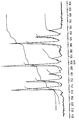
- the polymer is exactly characterized by a 13 C-NMR spectrum according to the figure.
- the syndio-isoblock polymers according to the invention are amorphous or partially crystalline, depending on the molecular weight and syndiotactic or isotactic sequence length. Depending on the crystallinity, the polymers are obtained as granular powders, compact masses or liquids.
- the semi-crystalline syndio-isoblock polymers have a lower melting point than isotactic polymers. Syndio isoblock polymers sometimes have rubber-like properties.
- the solution was then added to the kettle.
- the polymerization system was brought to a temperature of 70 ° C. and then held at this temperature for 3 hours.
- Example 3 The procedure was analogous to Example 3. However, 60 ° C was chosen as the polymerization temperature. The polymerization time was 5 hours. 70 mg of metallocene compound were used.
- mmmm ⁇ 20%, mmmr: ⁇ 13%, rmmr: ⁇ 6%, mmrr: m ⁇ 20% mmrm + rmrr: ⁇ 5%, mrmr: ⁇ 0%, rrrr: ⁇ 21%, mrrr: ⁇ 11% mrrm : ⁇ 6%.
- Example 3 The procedure was analogous to Example 3. However, 50 ° C was chosen as the polymerization temperature. The polymerization time was 4 hours. 51 mg of metallocene compound were used in the corresponding amount of MAO.
- mmmm ⁇ 21%, mmmr: ⁇ 14%, rmmr: ⁇ 7%, mmrr: ⁇ 23% mmrm + rmrr: ⁇ 2%, mrmr: -, rrrr: ⁇ 17%, mrrr: ⁇ 11% mrrm: ⁇ 6 %.
- Example 3 The procedure was analogous to Example 3. However, 40 ° C was chosen as the polymerization temperature. The polymerization time was 6 hours. 50 mg of metallocene compound were used.
- mmmm ⁇ 18%, mmmr: ⁇ 13%, rmmr: ⁇ 6%, mmrr: ⁇ 23% mmrm + rmrr: ⁇ 3%, mrmr: -, rrrr: ⁇ 19%, mrrr: ⁇ 12% mrrm: ⁇ 6 %.
- Example 3 The procedure was analogous to Example 3. However, 10 ° C. was chosen as the polymerization temperature. The polymerization time was 14 hours. 52 mg of metallocene compound were used.
- mmmm - 17%, mmmr: ⁇ 13%, rmmr: ⁇ 5%, mmrr: ⁇ 24% mmrm + rmrr: ⁇ 0.8%, mrmr: -, rrrr: ⁇ 21%, mrrr: ⁇ 13% mrrm: ⁇ 6%.
- the solution was then added to the kettle.
- the polymerization system was brought to a temperature of 70 ° C. and then held at this temperature for 3 hours.
- mmmm ⁇ 17%, mmmr: ⁇ 15%, rmmr: ⁇ 4%, mmrr: ⁇ 21% mmrm + rmrr: ⁇ 6%, mrmr: -, rrrr: ⁇ 17%, mrrr: ⁇ 14% mrrm: ⁇ 6 %.
- Example 8 The procedure was analogous to Example 8. However, 60 ° C was chosen as the polymerization temperature. The polymerization time was 5 hours. 35 mg of metallocene compound were used.
- mmmm ⁇ 21%, mmmr: ⁇ 14%, rmmr: ⁇ 4%, mmrr: ⁇ 20% mmrm + rmrr: ⁇ 5%, mrmr: -, rrrr: ⁇ 20%, mrrr: ⁇ 10% mrrm: ⁇ 8 %.
- Example 8 The procedure was analogous to Example 8. However, 50 ° C was chosen as the polymerization temperature. The polymerization time was 6 hours. 27 mg of metallocene compound were used.
- mmmm ⁇ 20%, mmmr: ⁇ 13%, rmmr: ⁇ 6%, mmrr: ⁇ 24% mmrm + rmrr: ⁇ 2%, mrmr: -, rrrr: ⁇ 18%, mrrr: ⁇ 13% mrrm: ⁇ 4 %.
- Example 8 The procedure was analogous to Example 8. However, 40 ° C was chosen as the polymerization temperature. The polymerization time was 4 hours. 25 mg of metallocene compound were used.
- mmmm ⁇ 16%, mmmr: ⁇ 12%, rmmr: ⁇ 8%, mmrr: ⁇ 25% mmrm + rmrr: ⁇ 2%, mrmr: -, rrrr: ⁇ 20%, mrrr: ⁇ 11% mrrm: ⁇ 6 %.
- Example 8 The procedure was analogous to Example 8. However, 10 ° C. was chosen as the polymerization temperature. The polymerization time was 16 hours. 50 mg of metallocene compound were used.
- mmmm ⁇ 19%, mmmr: ⁇ 14%, rmmr: ⁇ 5%, mmrr: ⁇ 22% mmrm + rmrr: ⁇ 0.8%, mrmr: -, rrrr: ⁇ 20%, mrrr: ⁇ 13.2% mrrm: ⁇ 6%.
Landscapes
- Chemical & Material Sciences (AREA)
- Organic Chemistry (AREA)
- Health & Medical Sciences (AREA)
- Chemical Kinetics & Catalysis (AREA)
- Medicinal Chemistry (AREA)
- Polymers & Plastics (AREA)
- Transition And Organic Metals Composition Catalysts For Addition Polymerization (AREA)
- Graft Or Block Polymers (AREA)
- Addition Polymer Or Copolymer, Post-Treatments, Or Chemical Modifications (AREA)
Description
- Die Erfindung bezieht sich auf ein Verfahren zur Herstellung eines Syndio-Isoblockpolymeren mit langen isotaktischen und syndiotaktischen Sequenzen.
- Es ist bekannt, daß Polypropylen in verschiedenen Strukturisomeren existiert:
- (a) Hochisotaktisches Polypropylen, in dessen Molekülketten fast alle tertiären C-Atome die gleiche Konfiguration aufweisen,
- (b) isotaktisches Stereoblock-PP, in dessen Molekülketten isotaktische Blöcke entgegengesetzter Konfiguration regelmäßig miteinander abwechseln,
- (c) syndiotaktisches Polypropylen, in dessen Molekülketten jedes zweite tertiäre C-Atom die gleiche Konfiguration besitzt,
- (d) ataktisches Polypropylen, in dessen Molekülketten die tertiären C-Atome eine regellose Konfiguration aufweisen
- (e) ataktisch-isotaktisches Stereoblock-PP, in dessen Molekülketten isotaktische und ataktische Blöcke miteinander abwechseln,
- J. Am. Chem. Soc. 1988, 110, Seiten 6556-6558 beschreibt die Herstellung von syndiotaktischem Polypropylen mit geringem ataktischem Anteil, in Gegenwart von Isopropyliden-(fluorenyl)-(cyclopentadienyl)-zirkoniumdichlorid bzw. -hafniumdichlorid.
- Aus EP-A-387 691 ist die Herstellung hochsyndiotaktischer Polyolefine in Gegenwart von Fluorenyl-Cyclopentadienyl-Hafnocenen bekannt.
- EP-A-351 392 beschreibt Metallocen-Katalysatoren, darunter auch Isopropyliden(fluorenyl)-(cyclopentadienyl)-zirkonium dichlorid für die Herstellung von syndiotaktischen Polyolefinen.
- US 3,547,870 beschreibt eine Druckfarbe, die 3% bis 25% randiotaktisches Polypropylen enthält, welches seinerseits 20-30% syndiotaktische Segmente enthält.
- Es ist ein Verfahren zur Herstellung von isotaktischen Stereoblockpolymeren bekannt, bei welchem Propylen mit Hilfe eines Metallocens eines Metalls der Gruppe IVb, Vb oder VIb des periodensystems polymerisiert wird (vgl. US 4,522,982). Dieses Metallocen ist eine Mono-, Di- oder Tricyclopentadienyl- oder substituierte Cyclopentadienyl-Metallverbindung, insbesondere des Titans. Als Cokatalysator dient ein Aluminoxan.
- Allerdings sind die bevorzugt verwendeten Titanocene in verdünnter Lösung nicht ausreichend thermisch stabil, um in einem technischen Verfahren verwendbar zu sein. Außerdem werden bei diesem Verfahren Produkte mit größerer Länge der issotaktischen Sequenzen (n größer 6) nur bei sehr tiefer Temperatur (-60°C) erhalten. Schließlich müssen die Cokatalysatoren in vergleichsweise hoher Konzentration eingesetzt werden, um eine ausreichende Kontaktausbeute zu erreichen, was dazu führt, daß die im Polymerprodukt enthaltenen Katalysatorreste in einem separaten Reinigungsschritt entfernt werden müssen.
- Ferner ist bekannt, daß man Stereoblockpolymere von 1-Olefinen mit langen isotaktischen Sequenzen bei technisch günstigen Polymerisationstemperaturen mittels eines Katalysators erhalten kann, welcher aus einer Metallocenverbindung mit durch chirale Gruppen substituierten Cyclopentadienylresten und einem Aluminoxan besteht (vgl. EP 269987).
- Weiterhin ist bekannt, daß Stereoblockpolymere von 1-Olefinen mit breiter uni- oder multimodaler Molmassenverteilung erhalten werden können, wenn für die Polymerisation der 1-Olefine ein Katalysator verwendet wird, welcher aus einem Brücken enthaltenden chiralen Metallocen und einem Aluminoxan besteht (vgl. EP 269986). Die Polymeren eignen sich besonders gut für die Herstellung transparenter Folien.
- Auch ist bekannt, daß beim Einsatz eines Katalysators auf der Basis von Bis-cyclopentadienylverbindungen des Zirkons und einem Aluminoxan beim Polymerisieren von Propylen nur ataktisches Polymer erhalten wird (vgl. EP 69951).
- Außerdem kann mittels löslicher stereorigider chiraler Zirkonverbindungen hochisotaktisches Polypropylen hergestellt werden (vgl. EP 185 918).
- Schließlich wurden Isoblockpolymere vorgeschlagen.
- Es wurde ein Polymerisationsverfahren gefunden, bei welchem ein Polymer mit regelmäßigem Molekülaufbau mit hoher Molmasse bei technisch günstigen Prozeßtemperaturen in hoher Ausbeute erhalten wird.
- Die Erfindung betrifft somit ein Syndio-Isoblockpolymer eines 1-Olefins mit mindestens 3C-Atomen der Formel RCH=CHR', worin R und R' gleich oder verschieden sind und im Wasserstoffatom oder einen Alkylrest mit 1 bis 14 C-Atomen bedeuten oder R und R' mit den'sie verbindenden C-Atomen einen Ring bilden, mit Molekülketten, in denen syndiotaktische und isotaktische Sequenzen enthalten sind, und mit einer Sequenzlänge von 3 bis 50 Monomereinheiten.
- Weiterhin betrifft die Erfindung ein Verfahren zur Herstellung des vorgenannten Syndio-Isoblockpolymeren durch Polymerisation eines 1-Olefins der Formel RCH = CHR', worin R und R' die vorgenannte Bedeutung haben, bei einer Temperatur von -60 bis 100°C, einem Druck von 0,5 bis 100 bar, in Lösung, in Suspension oder in der Gasphase, in Gegenwart eines Katalysators, welcher aus einem Metallocen und einem Aluminoxan besteht, dadurch gekennzeichnet, daß das Metallocen eine Verbindung der Formel I
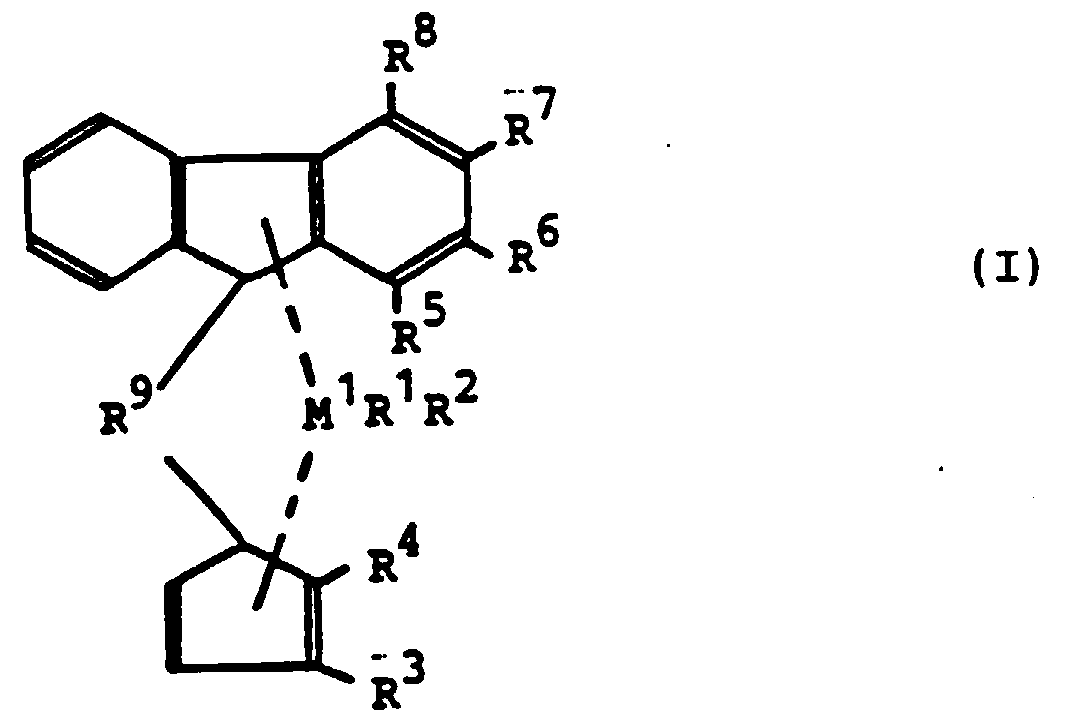
- M1 Titan, Zirkon, Hafnium, Vanadium, Niob oder Tantal ist,
- R1 und R2 gleich oder verschieden sind und ein Wasserstoffatom, ein Halogenatom, eine C1-C10-Alkylgruppe, eine C1-C10-Alkoxygruppe, eine C6-C10-Arylgruppe, eine C6-C10-Aryloxygruppe, eine C2-C10-Alkenylgruppe, eine C7-C40-Arylalkylgruppe, eine C7-C40-Alkylarylgruppe oder eine C8-C40-Arylalkenylgruppe bedeuten,
- R3, R4, R5, R6, R7 und R8 gleich oder verschieden sind und ein Wasserstoffatom, eine C1-C10-Alkylgruppe, eine C1-C10-Alkoxygruppe, eine C6-C10-Arylgruppe, eine C6-C10-Aryloxygruppe, eine C2-C10-Alkenylgruppe, eine C7-C40-Arylalkylgruppe, eine C7-C40-Alkylarylgruppe, eine C8-C40-Arylalkenylgruppe oder ein Halogenatom ist, wobei die Reste R3, R4, R5, R6, R7 und R8 nicht gleichzeitig ein Wasserstoffatom bedeuten,
- R9

- M2 Silizium, Germanium oder Zinn ist.
- Der für das erfindungsgemäße Verfahren zur verwendende Katalysator besteht aus einem Aluminoxan und einem Metallocen der Formel I

- In Formel I ist M1 ein Metall aus der Gruppe Titan, Zirkon, Hafnium, Vanadium, Niob und Tantal, vorzugsweise Zirkon oder Hafnium
- R1 und R2 sind gleich oder verschieden und bedeuten ein Wasserstoffatom, eine C1-C10-, vorzugsweise C1-C3-Alkylgruppe, eine C1-C10-, vorzugsweise C1-C3-Alkoxygruppe, eine C6-C10-, vorzugsweise C6-C8-Arylgruppe, eine C6-C10-, vorzugsweise C6-C8-Aryloxygruppe, eine C2-C10- , vorzugsweise C2-C4-Alkenylgruppe, eine C7-C40-, vorzugsweise C7-C10-Arylalkylgruppe, eine C7-C40-, vorzugsweise C7-C12-Alkylarylgruppe, eine C8-C40-, vorzugsweise C8-C12-Arylalkenylgruppe oder ein Halogenatom, vorzugsweise Chlor.
- R3, R4, R5, R6, R7, R8 sind gleich oder verschieden und bedeuten ein Wasserstoffatom (aber nicht gleichzeitig), eine C1-C10-, vorzugsweise C1-C3-Alkylgruppe, besonders bevorzugt Methyl (für R3) und H (für R4, R5, R6, R7, R8).
- R9 ist eine ein- oder mehrgliedrige Brücke und bedeutet

- M2 ist Silizium, Germanium oder Zinn, bevorzugt Silizium oder Germanium.
- R9 ist vorzugsweise =CR10R11, =SiR10R11, =GeR10R11, -O-, -S-, =SO, =PR10 oder =P(O)R10.
- Die vorstehend beschriebenen Metallocene können nach folgendem allgemeinen Reaktionsschema hergestellt werden:

- Bevorzugt eingesetzte Metallocene sind Dimethylmethylen(9-fluorenyl)-3-methyl-(cyclopentadienyl)-zirkondichlorid, (Dimethylmethylen)(9-fluorenyl)-3-methyl-(cyclopentadienyl) hafniumdichlorid.
- Der Cokatalysator ist ein Aluminoxan der Formel II


- Das Aluminoxan kann auf verschiedene Art und Weise hergestellt werden.
- Eine Möglichkeit ist die vorsichtige Zugabe von Wasser zu einer verdünnten Lösung eines Aluminiumtrialkyls, indem die Lösung des Aluminiumtrialkyls, vorzugsweise Aluminiumtrimethyl, und das Wasser jeweils in kleinen Portionen in eine vorgelegte größere Menge eines inerten Lösemittels eingetragen werden und zwischendurch das Ende der Gasentwicklung jeweils abgewartet wird.
- Bei einem anderen Verfahren wird fein gepulvertes Kupfersulfatpentahydrat in Toluol aufgeschlämmt und in einem Glaskolben unter Inertgas bei etwa -20°C mit soviel Aluminiumtrialkyl versetzt, daß für je 4 Al-Atome etwa 1 mol CuSO4·5H2O zur Verfügung steht. Nach langsamer Hydrolyse unter Alkan-Abspaltung wird die Reaktionsmischung 24 bis 48 Stunden bei Zimmertemperatur belassen, wobei gegebenenfalls gekühlt werden muß, damit die Temperatur nicht über 30°C ansteigt. Anschließend wird das im Toluol gelöste Aluminoxan von dem Kupfersulfat abfiltriert und die Lösung im Vakuum eingeengt. Es wird angenommen, daß bei diesem Herstellungsverfahren die niedermolekularen Aluminoxane unter Abspaltung von Aluminiumtrialkyl zu höheren Oligomeren kondensieren.
- Weiterhin erhält man Aluminoxane, wenn man bei einer Temperatur von -20 bis 100°C in einem inerten aliphatischen oder aromatischen Lösemittel, vorzugsweise Heptan oder Toluol, gelöstes Aluminiumtrialkyl, vorzugsweise Aluminiumtrimethyl, mit kristallwasserhaltigen Aluminiumsalzen, vorzugsweise Aluminiumsulfat, zur Reaktion bringt. Dabei beträgt das Volumenverhältnis zwischen Lösemittel und dem verwendeten Aluminiumalkyl 1 : 1 bis 50 : 1 - vorzugsweise 5 : 1 - und die Reaktionszeit, die durch Abspaltung des Alkans kontrolliert werden kann, 1 bis 200 Stunden - vorzugsweise 10 bis 40 Stunden.
- Von den kristallwasserhaltigen Aluminiumsalzen werden insbesondere jene verwendet, die einen hohen Gehalt an Kristallwasser aufweisen. Besonders bevorzugt ist Aluminiumsulfat-Hydrat, vor allem die Verbindungen Al2(SO4)3·16H2O und Al2(SO4)3·18H2O mit dem besonders hohen Kristallwassergehalt von 16 bzw. 18 mol H2O/mol Al2(SO4)3.
- Eine weitere Variante zur Herstellung von Aluminoxanen besteht darin, Aluminiumtrialkyl, vorzugsweise Aluminiumtrimethyl, in dem im Polymerisationskessel vorgelegten Suspensionsmittel, vorzugsweise im flüssigen Monomeren, in Heptan oder Toluol, zu lösen und dann die Aluminiumverbindung mit Wasser umzusetzen.
- Neben den zuvor geschilderten Verfahren zur Herstellung von Aluminoxanen gibt es weitere, welche brauchbar sind. Unabhängig von der Art der Herstellung ist allen Aluminoxanlösungen ein wechselnder Gehalt an nicht umgesetztem Aluminiumtrialkyl, das in freier Form oder als Addukt vorliegt, gemeinsam. Dieser Gehalt hat einen noch nicht genau geklärten Einfluß auf die katalytische Wirksamkeit, der je nach eingesetzter Metallocenverbindung verschieden ist.
- Es ist möglich, das Metallocen vor dem Einsatz in der Polymerisationsreaktion mit einem Aluminoxan der Formel II und/oder III vorzuaktivieren. Dadurch wird die Polymerisationsaktivität deutlich erhöht und die Kornmorphologie verbessert.
- Die Voraktivierung der Übergangsmetallverbindung wird in Lösung vorgenommen. Bevorzugt wird dabei das Metallocen in einer Lösung des Aluminoxans in einem inerten Kohlenwasserstoff aufgelöst. Als inerter Kohlenwasserstoff eignet sich ein aliphatischer oder aromatischer Kohlenwasserstoff.
Bevorzugt wird Toluol verwendet. - Die Konzentration des Aluminoxans in der Lösung liegt im Bereich von ca. 1 Gew.-% bis zur Sättigungsgrenze, vorzugsweise von 5 bis 30 Gew.-%, jeweils bezogen auf die Gesamtlösung. Das Metallocen kann in der gleichen Konzentration eingesetzt werden, vorzugsweise wird es jedoch in einer Menge von 10-4 - 1 mol pro mol Aluminoxan eingesetzt. Die Voraktivierungszeit beträgt 5 Minuten bis 60 Stunden, vorzugsweise 5 bis 60 Minuten. Man arbeitet bei einer Temperatur von -78°C bis 100°C, vorzugsweise 0 bis 70°C.
- Eine deutlich längere Voraktivierung ist möglich, sie wirkt sich normalerweise jedoch weder aktivitätssteigernd noch aktivitätsmindernd aus, kann jedoch zu Lagerzwecken durchaus sinnvoll sein.
- Die Polymerisation wird in bekannter Weise in Lösung, in Suspension oder in der Gasphase, kontinuierlich oder diskontinuierlich, ein- oder mehrstufig bei einer Temperatur von -60 bis 200°C, vorzugsweise -30 bis 100°C, insbesondere 0 bis 80°C, durchgeführt.
- Der Gesamtdruck im Polymerisationssystem beträgt 0,5 bis 100 bar. Bevorzugt ist die Polymerisation in dem technisch besonders interessanten Druckbereich von 5 bis 60 bar. Monomere, deren Siedepunkt höher ist als die Polymerisationstemperatur, werden bevorzugt drucklos polymerisiert.
- Dabei wird die Metallocenverbindung in einer Konzentration, bezogen auf das Übergangsmetall, von 10-3 bis 10-7, vorzugsweise 10-4 bis 10-6 mol Übergangsmetall pro dm3 Lösemittel bzw. pro dm3 Reaktorvolumen angewendet. Das Aluminoxan wird in einer Konzentration von 10-5 bis 10-1 mol, vorzugsweise 10-5 bis 10-2 mol pro dm3 Lösemittel bzw. pro dm3 Reaktorvolumen verwendet. Prinzipiell sind aber auch höhere Konzentrationen möglich.
- Wenn die Polymerisation als Suspensions- oder Lösungspolymerisation durchgeführt wird, wird ein für das Ziegler-Niederdruckverfahren gebräuchliches inertes Lösemittel verwendet. Beispielsweise arbeitet man in einem aliphatischen oder cycloaliphatischen Kohlenwasserstoff; als solcher sei beispielsweise Butan, Pentan, Hexan, Heptan, Isooctan, Cyclohexan, Methylcyclohexan genannt.
- Weiterhin kann eine Benzin- bzw. hydrierte Dieselölfraktion benutzt werden. Brauchbar ist auch Toluol. Bevorzugt wird im flüssigen Monomeren polymerisiert.
- Polymerisiert bzw. copolymerisiert werden Olefine der Formel RCH = CHR′, worin R und R′ gleich oder verschieden sind und ein Wasserstoffatom oder einen Alkylrest mit 1 bis 14 C-Atomen bedeuten oder R und R′ mit den sie verbindenen C-Atomen einen Ring bilden. Beispiele für solche Olefine sind, Propylen, 1-Buten, 1-Hexen, 4-Methyl-1-penten, 1-Octen, Norbornen, Norbornadien oder Verbindungen des Typs 1,4,5,8-Dimethano-1,2,3,4,4a,5,8,8a-octahydronaphthalin, 2-Methyl-1,4,5,8-dimethano-1,2,3,4,4a,5,8,8a-octahydronaphthalin, 2-Ethyl-1,4,5,8-dimethano-1,2,3,4,4a,5,8,8a-octahydronaphthalin oder 2,3-Dimethyl-1,4,5,8-dimethano-1,2,3,4,4a,5,8,8a-octahydronaphthalin. Bevorzugt werden Propylen, 1-Buten und Norbornen.
- Die Dauer der Polymerisation ist beliebig, da das erfindungsgemäß zu verwendende Katalysatorsystem einen nur geringen zeitabhängigen Abfall der Polymerisationsaktivität zeigt.
- Das erfindungsgemäße Verfahren zeichnet sich dadurch aus, daß die bevorzugt verwendeten Zirkon- und Hafnium-Verbindungen sehr temperaturstabil sind, so daß sie auch bei Temperaturen bis 90°C eingesetzt werden können. Außerdem können die als Cokatalysatoren dienenden Aluminoxane in geringerer Konzentration als bisher zugesetzt werden. Schließlich ist es nunmehr möglich, Syndio-Isoblockpolymere bei technisch interessanten Temperaturen herzustellen.
- Das erfindungsgemäße Syndio-Isoblockpolymer ist ein Polymer eines 1-Olefins der Formel R-CH=CHR′, worin R und R′ die obige Bedeutung haben. Insbesondere ist das Polymer ein Propylenpolymer.
- In den Molekülketten dieses Polymers sind isotaktische und syndiotaktische Sequenzen enthalten. Vorzugsweise bestehen die Molekülketten nur aus isotaktischen und syndiotaktischen Sequenzen.
- Das Polymere wird exakt durch ein 13C-NMR-Spektrum gemäß der Figur charakterisiert.
- Infolge dieses sterischen Aufbaus sind die erfindungsgemäßen Syndio-Isoblockpolymeren je nach Molmasse und syndiotaktischer bzw. isotaktischer Sequenzlänge amorph oder teilkristallin. In Abhängigkeit von der Kristallinität werden die Polymeren als körnige Pulver, kompakte Massen oder Flüssigkeiten erhalten. Die teilkristallinen Syndio-Isoblockpolymeren weisen im Vergleich zu isotaktischen Polymeren einen niedrigeren Schmelzpunkt auf. Syndio-Isoblockpolymere besitzen teilweise kautschukartige Eigenschaften.
- Die nachfolgenden Beispiele sollen die Erfindung erläutern.
- Es bedeuten:
- VZ =
- Viskositätszahl in cm3/g
- Mw =
- Molmassengewichtsmittel in g/mol
- Mw/Mn =
- Polydispersität ermittelt durch Gelpermeationschromatographie (GPC) und
- II =
- Isotaktischer Index, bestimmt durch 13C-NMR-Spektroskopie
- niso =
- Mittlere Länge der isotaktischen Sequenzen
- nsyn =
- Mittlere Länge der syndiotaktischen Sequenzen.
- 6,9 g (41,6 mmol) Fluoren wurden in 30 cm3 THF gelöst und mit 41,6 mmol einer 2,5 molaren Hexan-Lösung von Butyllithium versetzt. Nach 15 min Rühren wurde die Lösung bei 0°C zu einer Lösung von 5,0 g (41,6 mmol) 2,6,6-Trimethylfulven in 30 cm3 THF gegeben und über Nacht gerührt. Nach der Zugabe von 40 cm3 Wasser wurde der Ansatz ausgeethert. Die organische Phase wurde über MgSO4 getrocknet und eingeengt. Bei -35°C kristallisierten in mehreren Fraktionen insgesamt 5,8 g (49 %) Isopropyl-(9-fluorenyl-3-methylcyclopentadien). Korrekte Elementaranalyse. Die 1H-NMR-Spektrum zeigte zwei Isomere (3:1). Das Massenspektrum zeigte M+ = 286.
- 3,79 g (13,3 mmol) des Liganden wurden in 40 cm3 THF bei 0°C mit 17,0 cm3 (26,5 mmol) einer 1,6 molaren Hexan-Lösung von Buthyllithium versetzt. Nach 30 min Rühren bei Raumtemperatur wurde das Lösemittel abgezogen, der rote Rückstand mehrmals mit Hexan gewaschen und lange im Ölpumpenvakuum getrocknet. 4,25 g (13,3 mmol) HfCl4 wurden in 60 cm3 CH2Cl3 suspendiert und bei -78°C mit dem Dilithiosalz versetzt. Nach dem langsamen Aufwärmen auf Raumtemperatur wurde die orange Mischung noch 2 h gerührt und anschließend über eine G4-Fritte filtriert. Das Filtrat wurde eingeengt und bei -35°C der Kristallisation überlassen. Es wurden 3,2 g (45 %) des Hafnium-Komplexes als gelboranges Pulver erhalten. 1H-NMR-SSpektrum (100 MHz, CDCl3): 7,1-8,2 (m, 8, arom.H), 5,91, 5,55, 5,37 (3xdd, 3x1, Cp-H), 2,38, 2,35 (2x5, 2x3, C(CH3)2), 2,11 (s, 3, Cp-CH3). Korrekte Elementaranalysen. Das Massenspektrum zeigte M+ = 534.
- Die Synthese dieser Verbindung wurde analog Beispiel 1 durchgeführt, wobei anstelle des HfCl4 13,3 mmol ZrCl4 eingesetzt wurden.
- Ein Trockener 16 dm3 Kessel wurde mit Stickstoff gespült und mit 10 dm3 flüssigem Propylen befüllt. Dann wurden 30 cm3 toluolische Methylaluminoxanlösung (= MAO, entsprechend 46,7 mmol Al, mittlerer Oligomerisierungsgrad n = 30) zugegeben und der Ansatz bei 30°C 15 Minuten gerührt.
- Parallel dazu wurden 96 mg (0,18 mmol) Fluorenylisopropyliden-2-methyl-cyclopentadienyl-hafniumdichlorid in 15 cm3 MAO-Lösung (= 23,3 mmol Al) gelöst und durch 15 minütiges Stehenlassen voraktiviert.
- Die Lösung wurde dann in den Kessel gegeben. Das Polymerisationssystem wurde auf eine Temperatur von 70°C gebracht und dann 3 Stunden bei dieser Temperatur gehalten.
- Es wurden 0,47 kg Syndio-Isoblockpolymer erhalten. Die Aktivität des Metallocens betrug somit 1,63 kg Polymer/g Metallocen/h.
- Am Polymeren wurden die folgenden analytischen Daten ermittelt:
VZ = 140 cm3/g, Mw = 160 900, Mn = 67 000, Mw/Mn = 2,4 nsyn = 3,6, niso = 3,5. - 13C-NMR-spektroskopisch wurden folgende stereochemische Pentaden-Zusammensetzungen des Polymeren gefunden:
mmmm : ∼ 18 %, mmmr: ∼ 14 %, rmmr: ∼ 5 %, mmrr: ∼ 20 % mmrm+rmrr: ∼ 5 %, mrmr: ∼ 0 %, rrrr: ∼ 19 %, mrrr: ∼ 13 % mrrm: ∼ 7 %. - Es wurde analog Beispiel 3 verfahren. Als Polymerisationstemperatur wurde jedoch 60°C gewählt. Die Polymerisationsdauer betrug 5 Stunden. Es wurden 70 mg Metallocenverbindung eingesetzt.
- 0,39 kg Syndio-Isoblockpolymer wurden erhalten. Die Aktivität des Metallocens betrug somit 0,93 kg Polymer/kg Metallocen/h.
- Am Polymeren wurden die folgenden analytischen Daten ermittelt:
VZ = 266 cm3/g, Mw = 290 000, Mn = 93 000, Mw/Mn = 3,0 nsyn = 3,8, niso = 3,8, - mmmm : ∼ 20 %, mmmr: ∼ 13 %, rmmr: ∼ 6 %, mmrr: m∼ 20 % mmrm+rmrr: ∼ 5 %, mrmr: ∼ 0 %, rrrr: ∼ 21 %, mrrr: ∼ 11 % mrrm: ∼ 6 %.
- Es wurde analog Beispiel 3 verfahren. Als Polymerisationstemperatur wurde jedoch 50°C gewählt. Die Polymerisationsdauer betrug 4 Stunden. 51 mg Metallocenverbindung wurden in der entsprechenden Menge MAO eingesetzt.
- Es wurden 0,17 kg Syndio-Isoblockpolymer erhalten. Die Aktivität des Metallocens betrug somit 0,83 kg Polymer/g Metallocen/h.
- Am Polymeren wurden die folgenden analytischen Daten ermittelt:
VZ = 263 cm3/g, Mw = 330 000, Mn = 110 000, Mw/Mn = 3,0 nsyn = 3,3, niso = 3,7, - mmmm : ∼ 21 %, mmmr: ∼ 14 %, rmmr: ∼ 7 %, mmrr: ∼ 23 % mmrm+rmrr: ∼ 2 %, mrmr: -, rrrr: ∼ 17 %, mrrr: ∼ 11 % mrrm: ∼ 6 %.
- Es wurde analog Beispiel 3 verfahren. Als Polymerisationstemperatur wurde jedoch 40°C gewählt. Die polymerisationsdauer betrug 6 Stunden. Es wurden 50 mg Metallocenverbindung eingesetzt.
- 0,11 kg Syndio-Isoblockpolymer wurden erhalten. Die Aktivität des Metallocens betrug somit 0,36 kg Polymer/kg Metallocen/h.
- Am Polymeren wurden die folgenden analytischen Daten ermittelt:
VZ = 181 cm3/g, Mw = 240 000, Mn = 58 000, Mw/Mn = 4,1 nsyn = 4,0, niso = 3,9, - mmmm : ∼ 18 %, mmmr: ∼ 13 %, rmmr: ∼ 6 %, mmrr: ∼ 23 % mmrm+rmrr: ∼ 3 %, mrmr: -, rrrr: ∼ 19 %, mrrr: ∼ 12 % mrrm: ∼ 6 %.
- Verfahren wurde analog Beispiel 3. Als Polymerisationstemperatur wurde jedoch 10°C gewählt. Die Polymerisationsdauer betrug 14 Stunden. Es wurden 52 mg Metallocenverbindung eingesetzt.
- 0,04 kg Syndio-Isoblockpolymer wurden erhalten. Die Aktivität des Metallocens betrug somit 0,05 kg Polymer/g Metallocen/h.
- VZ = 90 cm3/g, Mw = 97 000, Mn = 32 000, Mw/Mn = 3,0, nsyn = 4,3, niso = 3,6,
- mmmm : - 17 %, mmmr: ∼ 13 %, rmmr: ∼ 5 %, mmrr: ∼ 24 % mmrm+rmrr: ∼ 0,8 %, mrmr: -, rrrr: ∼ 21 %, mrrr: ∼ 13 % mrrm: ∼ 6 %.
- Ein trockener 16 dm3 Kessel wurde mit Stickstoff gespült und mit 10 dm3 flüssigem Propylen befüllt. Dann wurden 30 cm3 toluolische Methylaluminoxanlösung (= MAO, entsprechend 46,7 mmol Al, mittlerer Oligomerisierungsgrad n = 30) zugegeben und der Ansatz bei 30°C 15 Minuten gerührt.
- Parallel dazu wurden 20 mg (0,04 mmol) Fluorenylisopropyliden-2-methyl-cyclopentadienyl-zirkondichlorid in 15 cm3 MAO (= 23,3 mmol Al) gelöst und durch 15 minütiges Stehenlassen voraktiviert.
- Die Lösung wurde dann in den Kessel gegeben. Das Polymerisationssystem wurde auf eine Temperatur von 70°C gebracht und dann 3 Stunden bei dieser Temperatur gehalten.
- Es wurden 0,91 kg Syndio-Isoblockpolymer erhalten. Die Aktivität des Metallocens betrug somit 15,2 kg Polymer/g Metallocen/h.
- Am Polymeren wurden die folgenden analytischen Daten ermittelt:
VZ = 12 cm3/g, Mw = 5 000, Mn = 2 500, Mw/Mn = 2,0, nsyn = 3,7, niso = 3,7. - 13C-NMR-spektroskopisch wurden folgende stereochemischen Pentaden-Zusammensetzungen des Polymeren gefunden:
- mmmm : ∼ 17 %, mmmr: ∼ 15 %, rmmr: ∼ 4 %, mmrr: ∼ 21 % mmrm+rmrr: ∼ 6 %, mrmr: -, rrrr: ∼ 17 %, mrrr: ∼ 14 % mrrm: ∼ 6 %.
- Es wurde analog Beispiel 8 verfahren. Als Polymerisationstemperatur wurde jedoch 60°C gewählt. Die Polymerisationsdauer betrug 5 Stunden. Es wurden 35 mg Metallocenverbindung eingesetzt.
- Es wurden 1,24 kg Syndio-Isoblockpolymer erhalten. Die Aktivität des Metallocens betrug somit 7,03 kg Polymer/g Metallocen/h.
- Am Polymeren wurden die folgenden analytischen Daten ermittelt:
VZ = 54 cm3/g, Mw = 47 250, Mn = 22 500, Mw/Mn = 2,1, nsyn = 4,0, niso = 4,1. - mmmm : ∼ 21 %, mmmr: ∼ 14 %, rmmr: ∼ 4 %, mmrr: ∼ 20 % mmrm+rmrr: ∼ 5 %, mrmr: -, rrrr: ∼ 20 %, mrrr: ∼ 10 % mrrm: ∼ 8 %.
- Es wurde analog Beispiel 8 verfahren. Als Polymerisationstemperatur wurde jedoch 50°C gewählt. Die Polymerisationsdauer betrug 6 Stunden. Es wurden 27 mg Metallocenverbindung eingesetzt.
- Es wurden 0,9 kg Syndio-Isoblockpolymer erhalten. Die Aktivität des Metallocens betrug somit 5,6 kg Polymer/g Metallocen/h.
- Am Polymeren wurden die folgenden analytischen Daten ermittelt:
VZ = 54 cm3/g, Mw = 47 500, Mn = 21 500, Mw/Mn = 2,2, nsyn = 3,7, niso = 4,0, - mmmm : ∼ 20 %, mmmr: ∼ 13 %, rmmr: ∼ 6 %, mmrr: ∼ 24 % mmrm+rmrr: ∼ 2 %, mrmr: -, rrrr: ∼ 18 %, mrrr: ∼ 13 % mrrm: ∼ 4 %.
- Es wurde analog Beispiel 8 verfahren. Als Polymerisationstemperatur wurde jedoch 40°C gewählt. Die polymerisationsdauer betrug 4 Stunden. Es wurden 25 mg Metallocenverbindung eingesetzt.
- 0,45 kg Syndio-Isoblockpolymer wurden erhalten. Die Aktivität des Metallocens betrug somit 4,5 kg Polymer/g Metallocen/h.
- Am Polymeren wurden die folgenden analytischen Daten ermittelt:
VZ = 60 cm3/g, Mw - 54 600, Mn = 21 700, Mw/Mn = 1,9, nsyn = 3,7, niso = 3,7. - mmmm : ∼ 16 %, mmmr: ∼ 12 %, rmmr: ∼ 8 %, mmrr: ∼ 25 % mmrm+rmrr: ∼ 2 %, mrmr: -, rrrr: ∼ 20 %, mrrr: ∼ 11 % mrrm: ∼ 6 %.
- Verfahren wurde analog Beispiel 8. Als Polymerisationstemperatur wurde jedoch 10°C gewählt. Die Polymerisationsdauer betrug 16 Stunden. Es wurden 50 mg Metallocenverbindung eingesetzt.
- 0,4 kg Syndio-Isoblockpolymer wurden erhalten. Die Aktivität des Metallocens betrug somit 0,5 kg Polymer/g Metallocen/h.
- Am Polymeren wurden die folgenden analytischen Daten ermittelt:
VZ = 52 cm3/g, Mw = 44 000, Mn = 17 000, Mw/Mn = 2,6, nsyn = 4,5, niso = 4,4. - mmmm : ∼ 19 %, mmmr: ∼ 14 %, rmmr: ∼ 5 %, mmrr: ∼ 22 % mmrm+rmrr: ∼ 0,8 %, mrmr: -, rrrr: ∼ 20 %, mrrr: ∼ 13,2 % mrrm: ∼ 6 %.
(f) Isoblock-PP, in dessen Molekülketten isotaktische Blöcke enthalten sind, die durch ein tertiäres C-Atom der jeweils anderen Konfiguration im Vergleich zu den isotaktischen Blöcken voneinander getrennt sind.
Claims (10)
- Verfahren zur Herstellung eines Syndio-lsoblockpolymers, mit Molekülketten, in denen syndiotaktische und isotaktische Sequenzen enthalten sind, und mit einer Sequenzlänge von 3 bis 50 Monomereinheiten, durch Polymerisation eines Olefins mit mindestens 3 C-Atomen der Formel RCH = CHR', worin R und R' gleich oder verschieden sind und ein Wasserstoffatom oder einen Alkylrest mit 1 bis 14 C-Atomen bedeuten oder R und R' mit den sie verbindenden C-Atomen einen Ring bilden, bei einer Temperatur von -60 bis 100°C, einem Druck von 0,5 bis 100 bar, in Lösung, in Suspension oder in der Gasphase, in Gegenwart eines Katalysators, welcher aus einem Metallocen und einem Aluminoxan besteht, dadurch gekennzeichnet, daß das Metallocen eine Verbindung der Formel I
 M1 Titan, Zirkon, Hafnium, Vanadium, Niob oder Tantal ist,R1 und R2 gleich oder verschieden sind und ein Wasserstoffatom, ein Halogenatom, eine C1-C10-Alkylgruppe, eine C1-C10-Alkoxygruppe, eine C6-C10-Arylgruppe, eine C6-C10-Aryloxygruppe, eine C2-C10-Alkenylgruppe, eine C7-C40-Arylalkylgruppe, eine C7-C40-Alkylarylgruppe oder eine C8-C40-Arylalkenylgruppe bedeuten,R3, R4, R5, R6, R7 und R8 ein Wasserstoffatom, eine C1-C10-Alkylgruppe, eine C1-C10-Alkoxygruppe, eine C6-C10-Arylgruppe, eine C6-C10-Aryloxygruppe, eine C2-C10-Alkenylgruppe, eine C7-C40-Arylalkylgruppe, eine C7-C40-Alkylarylgruppe, eine C8-C40Arylalkenylgruppe oder ein Halogenatom ist, wobei die Reste R3, R4, R5, R6, R7 und R8 nicht gleichzeitig ein Wasserstoffatom bedeuten,R9
 M2 Silizium, Germanium oder Zinn ist.
 - Verfahren nach Anspruch 1, dadurch gekennzeichnet, daß R3 eine C1-C10-Alkylgruppe bedeutet.
- Verfahren nach Anspruch 1, dadurch gekennzeichnet, daß R3 eine Methylgruppe bedeutet.
- Verfahren nach Anspruch 1, dadurch gekennzeichnet, daß das Metallocen Isopropyliden-(9-fluorenyl-3-methylcyclopentadienyl)-zirkondichlorid, Isopropyliden-(fluorenyl-2-methylcyclopentadienyl)-zirkondichlorid oder Isopropyliden-(9-fluorenyl-3-methylcyclopentadienyl)-hafniumdichlorid ist.
- Verfahren nach einem oder mehreren der Ansprüche 1 bis 4, dadurch gekennzeichnet, daß Propylen polymerisiert ist.
- Verbindung der Formel I
 M1 Titan, Zirkon, Hafnium, Vanadium, Niob oder Tantal ist,R1 und R2 gleich oder verschieden sind und ein Wasserstoffatom, ein Halogenatom, eine C1-C10-Alkylgruppe, eine C1-C10-Alkoxygruppe, eine C6-C10-Arylgruppe, eine C6-C10-Aryloxygruppe, eine C2-C10-Alkenylgruppe, eine C7-C40-Arylalkylgruppe, eine C7-C40-Alkylarylgruppe oder eine C8-C40-Arylalkenylgruppe bedeuten,R3, R4, R5, R6, R7 und R8 ein Wasserstoffatom, eine C1-C10-Alkylgruppe, eine C1-C10-Alkoxygruppe, eine C6-C10-Arylgruppe, eine C6-C10-Aryloxygruppe, eine C2-C10-Alkenylgruppe, eine C7-C40-Arylalkylgruppe, eine C7-C40-Alkylarylgruppe eine C8-C40Arylalkenylgruppe oder ein Halogenatom ist, wobei die Reste R3, R4, R6, R5, R7 und R8 nicht gleichzeitig ein Wasserstoffatom bedeutenR9
 M2 Silizium, Germanium oder Zinn ist.
 - Verbindung gemäß Anspruch 6, dadurch gekennzeichnet, daß R3 eine C1-C10-Alkylgruppe bedeutet.
- Verbindung gemäß Anspruch 6, dadurch gekennzeichnet, daß R3 eine Methylgruppe bedeutet.
- Isopropyliden-(9-fluorenyl)-(3-methylcyclopentadienyl)-zirkondichlorid, Isopropyliden-(fluorenyl)-(2-methylcyclopentadienyl)-zirkondichlorid, Isopropyliden-(9-fluorenyl)-(3-methylcyclopentadienyl)-hafniumdichlorid.
- Katalysator, welcher aus einer Verbindung der Formel I gemäß einem oder mehreren der Ansprüche 6 bis 9 und einem Aluminoxan besteht.
Applications Claiming Priority (2)
| Application Number | Priority Date | Filing Date | Title |
|---|---|---|---|
| DE3916553A DE3916553A1 (de) | 1989-05-20 | 1989-05-20 | Syndio- isoblockpolymer und verfahren zu seiner herstellung |
| DE3916553 | 1989-05-20 |
Publications (3)
| Publication Number | Publication Date |
|---|---|
| EP0399347A2 EP0399347A2 (de) | 1990-11-28 |
| EP0399347A3 EP0399347A3 (de) | 1991-03-13 |
| EP0399347B1 true EP0399347B1 (de) | 1996-08-14 |
Family
ID=6381116
Family Applications (1)
| Application Number | Title | Priority Date | Filing Date |
|---|---|---|---|
| EP90109206A Expired - Lifetime EP0399347B1 (de) | 1989-05-20 | 1990-05-16 | Verfahren zur Herstellung eines Syndio-Isoblockpolymeren |
Country Status (8)
| Country | Link |
|---|---|
| US (2) | US6225425B1 (de) |
| EP (1) | EP0399347B1 (de) |
| JP (1) | JP2988962B2 (de) |
| AU (1) | AU624953B2 (de) |
| CA (1) | CA2017192A1 (de) |
| DE (2) | DE3916553A1 (de) |
| ES (1) | ES2093003T3 (de) |
| ZA (1) | ZA903829B (de) |
Cited By (3)
| Publication number | Priority date | Publication date | Assignee | Title |
|---|---|---|---|---|
| RU2126017C1 (ru) * | 1993-05-25 | 1999-02-10 | Эксон Кемикэл Пейтентс Инк. | Металлоценовые каталитические системы на подложке для полимеризации олефинов, способ их получения, гомо- или сополимеры пропилена и способ их получения |
| RU2130034C1 (ru) * | 1992-12-30 | 1999-05-10 | Монтелл Текнолоджи Компани Б.В. | Аморфный полимер пропилена и способ его получения |
| US6858767B1 (en) | 2000-08-11 | 2005-02-22 | Uniroyal Chemical Company, Inc. | Process for producing liquid polyalphaolefin polymer, metallocene catalyst therefor, the resulting polymer and lubricant containing same |
Families Citing this family (38)
| Publication number | Priority date | Publication date | Assignee | Title |
|---|---|---|---|---|
| US5420217A (en) * | 1989-09-13 | 1995-05-30 | Exxon Chemical Patents Inc. | Process for producing amorphous poly-α-olefins with a monocyclopentadienyl transition metal catalyst system |
| US5036034A (en) * | 1989-10-10 | 1991-07-30 | Fina Technology, Inc. | Catalyst for producing hemiisotactic polypropylene |
| EP0503422B1 (de) * | 1991-03-09 | 1998-06-03 | TARGOR GmbH | Verfahren zur Herstellung chemisch einheitlicher Cycloolefincopolymere |
| US5436305A (en) * | 1991-05-09 | 1995-07-25 | Phillips Petroleum Company | Organometallic fluorenyl compounds, preparation, and use |
| US5191132A (en) * | 1991-05-09 | 1993-03-02 | Phillips Petroleum Company | Cyclopentadiene type compounds and method for making |
| CA2067525C (en) * | 1991-05-09 | 1998-09-15 | Helmut G. Alt | Organometallic fluorenyl compounds, preparation and use |
| US5416228A (en) * | 1991-10-07 | 1995-05-16 | Fina Technology, Inc. | Process and catalyst for producing isotactic polyolefins |
| US6245870B1 (en) * | 1992-03-20 | 2001-06-12 | Fina Technology, Inc. | Process for producing syndiotactic/isotactic block polyolefins |
| EP0578838A1 (de) * | 1992-04-29 | 1994-01-19 | Hoechst Aktiengesellschaft | Katalysator für die Olefinpolymerisation, Verfahren zu seiner Herstellung und seine Verwendung |
| EP0567952B1 (de) * | 1992-04-29 | 1997-12-03 | Hoechst Aktiengesellschaft | Katalysator für die Olefinpolymerisation, Verfahren zu seiner Herstellung und seine Verwendung |
| US5710222A (en) * | 1992-06-22 | 1998-01-20 | Fina Technology, Inc. | Method for controlling the melting points and molecular weights of syndiotactic polyolefins using metallocene catalyst systems |
| US5594080A (en) * | 1994-03-24 | 1997-01-14 | Leland Stanford, Jr. University | Thermoplastic elastomeric olefin polymers, method of production and catalysts therefor |
| IT1273662B (it) | 1994-07-20 | 1997-07-09 | Spherilene Srl | Procedimento per la preparazione di polimeri amorfi del propiline' |
| TW440567B (en) * | 1996-04-04 | 2001-06-16 | Toho Titanium Co Ltd | Propylene homopolymer |
| DE19637669A1 (de) | 1996-09-16 | 1998-03-19 | Hoechst Ag | Verfahren zur Herstellung einer methylenverbrückten Biscyclopentadienylverbindung |
| AT405284B (de) * | 1996-10-31 | 1999-06-25 | Danubia Petrochem Polymere | Verfahren zur kontinuierlichen herstellung von elastischen polypropylenen |
| EP0965603A1 (de) * | 1998-06-19 | 1999-12-22 | Fina Research S.A. | Polyolefinherstellung |
| MXPA00002181A (es) | 1998-07-02 | 2003-04-22 | Montell Technology Company Bv | Procedimiento para la preparacion de polimeros de alfa-olefinas sustancialmente amorfos composiciones que los contienen, y procedimiento para la preparacion de ligandos puenteados. |
| CA2345628C (en) * | 1998-10-23 | 2010-02-16 | Exxonmobil Chemical Patents Inc. | Bridged metallocenes for olefin copolymerization |
| FR2813079B1 (fr) * | 2000-08-18 | 2003-07-25 | Atofina | Ligands avec au moins un substituant fluorosilicone pour la preparation de metallocenes |
| JP2002275282A (ja) * | 2001-03-15 | 2002-09-25 | Grand Polymer Co Ltd | ポリプロピレン二軸延伸フィルム |
| CN100424107C (zh) * | 2002-01-31 | 2008-10-08 | 三菱化学株式会社 | 基于丙烯的软质树脂组合物 |
| TWI311566B (en) | 2002-08-29 | 2009-07-01 | Lg Chemical Ltd | Fulvene, metallocene catalysts and preparation method thereof, and preparation of polyolefines copolymer using the same |
| EP2465879B1 (de) * | 2002-09-27 | 2019-04-24 | Mitsui Chemicals, Inc. | Verbrückte Metallocenverbindung zur Olefinpolymerisierung und Verfahren zur Polymerisierung von Olefin unter Verwendung davon |
| JP4205402B2 (ja) * | 2002-11-15 | 2009-01-07 | 三井化学株式会社 | プロピレン系共重合体の製造方法 |
| EP1650236A1 (de) * | 2004-10-21 | 2006-04-26 | Total Petrochemicals Research Feluy | Aktivierungsmittel zur Verwendung mit Metallocen-Bestandteilen auf Hafnium basierend |
| EP1661921B1 (de) | 2004-11-26 | 2019-07-17 | Mitsui Chemicals, Inc. | Synthetische Schmieröle und Schmierölzusammensetzung deren |
| US7517939B2 (en) | 2006-02-02 | 2009-04-14 | Chevron Phillips Chemical Company, Lp | Polymerization catalysts for producing high molecular weight polymers with low levels of long chain branching |
| US7619047B2 (en) | 2006-02-22 | 2009-11-17 | Chevron Phillips Chemical Company, Lp | Dual metallocene catalysts for polymerization of bimodal polymers |
| US7470759B2 (en) * | 2006-07-31 | 2008-12-30 | Fina Technology, Inc. | Isotactic-atactic polypropylene and methods of making same |
| US8119553B2 (en) | 2007-09-28 | 2012-02-21 | Chevron Phillips Chemical Company Lp | Polymerization catalysts for producing polymers with low melt elasticity |
| WO2010123033A1 (ja) | 2009-04-21 | 2010-10-28 | 三井化学株式会社 | オレフィン重合体の製造方法 |
| US20120135903A1 (en) | 2010-05-11 | 2012-05-31 | Mitsui Chemicals, Inc. | Lubricating oil composition |
| US8895679B2 (en) | 2012-10-25 | 2014-11-25 | Chevron Phillips Chemical Company Lp | Catalyst compositions and methods of making and using same |
| US8937139B2 (en) | 2012-10-25 | 2015-01-20 | Chevron Phillips Chemical Company Lp | Catalyst compositions and methods of making and using same |
| US8877672B2 (en) | 2013-01-29 | 2014-11-04 | Chevron Phillips Chemical Company Lp | Catalyst compositions and methods of making and using same |
| US9034991B2 (en) | 2013-01-29 | 2015-05-19 | Chevron Phillips Chemical Company Lp | Polymer compositions and methods of making and using same |
| CN104968668B (zh) | 2013-02-08 | 2017-11-17 | 三井化学株式会社 | 固体状聚铝氧烷组合物、烯烃聚合用催化剂、烯烃聚合物的制造方法及固体状聚铝氧烷组合物的制造方法 |
Citations (2)
| Publication number | Priority date | Publication date | Assignee | Title |
|---|---|---|---|---|
| US3547870A (en) * | 1967-08-01 | 1970-12-15 | Johnson & Johnson | Printing ink from randiopropylene |
| EP0387691A1 (de) * | 1989-03-11 | 1990-09-19 | Hoechst Aktiengesellschaft | Verfahren zur Herstellung eines syndiotaktischen Polyolefins |
Family Cites Families (30)
| Publication number | Priority date | Publication date | Assignee | Title |
|---|---|---|---|---|
| BE591537A (de) * | 1959-06-06 | |||
| US3305538A (en) | 1961-11-22 | 1967-02-21 | Montedison Spa | Polymerization process |
| US3268627A (en) | 1963-05-16 | 1966-08-23 | Standard Oil Co | Blends of isotactic and syndiotactic polypropylene |
| US3364190A (en) | 1964-04-27 | 1968-01-16 | Standard Oil Co | Process for polymerizing propylene to syndiotactic polypropylene |
| JPS5473842A (en) | 1977-11-25 | 1979-06-13 | Mitsubishi Petrochem Co Ltd | Polyolefin resin composition |
| US4411821A (en) | 1981-02-23 | 1983-10-25 | E. I. Du Pont De Nemours And Company | 1-Olefin polymerization catalyst |
| DE3127133A1 (de) | 1981-07-09 | 1983-01-27 | Hoechst Ag, 6000 Frankfurt | Verfahren zur herstellung von polyolefinen und deren copolymerisaten |
| US4497906A (en) | 1982-02-16 | 1985-02-05 | Sumitomo Chemical Company, Limited | Solid catalyst component for olefin polymerization |
| US4530914A (en) | 1983-06-06 | 1985-07-23 | Exxon Research & Engineering Co. | Process and catalyst for producing polyethylene having a broad molecular weight distribution |
| ZA844157B (en) | 1983-06-06 | 1986-01-29 | Exxon Research Engineering Co | Process and catalyst for polyolefin density and molecular weight control |
| MX167872B (es) | 1983-06-06 | 1993-04-20 | Exxon Research Engineering Co | Proceso y catalizador para producir poliolefinas dmezclas del reactor |
| US4522982A (en) | 1983-06-06 | 1985-06-11 | Exxon Research & Engineering Co. | Isotactic-stereoblock polymers of alpha-olefins and process for producing the same |
| DE3443087A1 (de) | 1984-11-27 | 1986-05-28 | Hoechst Ag, 6230 Frankfurt | Verfahren zur herstellung von polyolefinen |
| EP0227653A1 (de) | 1985-06-24 | 1987-07-08 | BRONSTEIN, Leonard | Kontaktlinse |
| DE3524535A1 (de) | 1985-07-10 | 1987-01-22 | Hoechst Ag | Verfahren zur herstellung von perylen-3,4,9,10-tetracarbonsaeure-n,n'- dimethylimid in hochdeckender pigmentform |
| US4701432A (en) | 1985-11-15 | 1987-10-20 | Exxon Chemical Patents Inc. | Supported polymerization catalyst |
| IL80888A (en) | 1985-12-12 | 1991-12-12 | Exxon Chemical Patents Inc | Olefin polymerization catalysts,their preparation and use thereof |
| US4658078A (en) | 1986-08-15 | 1987-04-14 | Shell Oil Company | Vinylidene olefin process |
| DE3640948A1 (de) * | 1986-11-29 | 1988-06-01 | Hoechst Ag | Verfahren zur herstellung eines 1-olefin-stereoblockpolymers |
| DE3640924A1 (de) * | 1986-11-29 | 1988-06-01 | Hoechst Ag | 1-olefin-stereoblockpolymer und verfahren zu seiner herstellung |
| US4794096A (en) | 1987-04-03 | 1988-12-27 | Fina Technology, Inc. | Hafnium metallocene catalyst for the polymerization of olefins |
| DE3718180A1 (de) | 1987-05-29 | 1988-12-15 | Hoechst Ag | Wasserloesliche monoazo-naphtholcarbonsaeure-verbindungen, verfahren zu ihrer herstellung und ihre verwendung als farbstoffe |
| US5176941A (en) | 1987-11-07 | 1993-01-05 | Hoechst Aktiengesellschaft | Process of producing a ceramic/fiber composite using a molten polysilazone |
| US4931417A (en) | 1987-11-09 | 1990-06-05 | Chisso Corporation | Transition-metal compound having a bis-substituted-cyclopentadienyl ligand of bridged structure |
| IL89525A0 (en) * | 1988-03-21 | 1989-09-10 | Exxon Chemical Patents Inc | Silicon-bridged transition metal compounds |
| US5162278A (en) | 1988-07-15 | 1992-11-10 | Fina Technology, Inc. | Non-bridged syndiospecific metallocene catalysts and polymerization process |
| US4892851A (en) * | 1988-07-15 | 1990-01-09 | Fina Technology, Inc. | Process and catalyst for producing syndiotactic polyolefins |
| DE3826074A1 (de) * | 1988-07-30 | 1990-02-01 | Hoechst Ag | Propylen-isoblockpolymer und verfahren zu seiner herstellung |
| DE3826075A1 (de) * | 1988-07-30 | 1990-02-01 | Hoechst Ag | 1-olefin-isoblockpolymer und verfahren zu seiner herstellung |
| US5036034A (en) * | 1989-10-10 | 1991-07-30 | Fina Technology, Inc. | Catalyst for producing hemiisotactic polypropylene |
-
1989
- 1989-05-20 DE DE3916553A patent/DE3916553A1/de not_active Withdrawn
-
1990
- 1990-05-16 DE DE59010446T patent/DE59010446D1/de not_active Expired - Fee Related
- 1990-05-16 ES ES90109206T patent/ES2093003T3/es not_active Expired - Lifetime
- 1990-05-16 EP EP90109206A patent/EP0399347B1/de not_active Expired - Lifetime
- 1990-05-17 JP JP2125626A patent/JP2988962B2/ja not_active Expired - Fee Related
- 1990-05-18 CA CA002017192A patent/CA2017192A1/en not_active Abandoned
- 1990-05-18 ZA ZA903829A patent/ZA903829B/xx unknown
- 1990-05-23 AU AU55772/90A patent/AU624953B2/en not_active Ceased
-
1993
- 1993-11-01 US US08/147,006 patent/US6225425B1/en not_active Expired - Fee Related
-
1995
- 1995-06-06 US US08/466,456 patent/US6197902B1/en not_active Expired - Fee Related
Patent Citations (2)
| Publication number | Priority date | Publication date | Assignee | Title |
|---|---|---|---|---|
| US3547870A (en) * | 1967-08-01 | 1970-12-15 | Johnson & Johnson | Printing ink from randiopropylene |
| EP0387691A1 (de) * | 1989-03-11 | 1990-09-19 | Hoechst Aktiengesellschaft | Verfahren zur Herstellung eines syndiotaktischen Polyolefins |
Cited By (3)
| Publication number | Priority date | Publication date | Assignee | Title |
|---|---|---|---|---|
| RU2130034C1 (ru) * | 1992-12-30 | 1999-05-10 | Монтелл Текнолоджи Компани Б.В. | Аморфный полимер пропилена и способ его получения |
| RU2126017C1 (ru) * | 1993-05-25 | 1999-02-10 | Эксон Кемикэл Пейтентс Инк. | Металлоценовые каталитические системы на подложке для полимеризации олефинов, способ их получения, гомо- или сополимеры пропилена и способ их получения |
| US6858767B1 (en) | 2000-08-11 | 2005-02-22 | Uniroyal Chemical Company, Inc. | Process for producing liquid polyalphaolefin polymer, metallocene catalyst therefor, the resulting polymer and lubricant containing same |
Also Published As
| Publication number | Publication date |
|---|---|
| DE3916553A1 (de) | 1990-11-22 |
| JPH039913A (ja) | 1991-01-17 |
| CA2017192A1 (en) | 1990-11-20 |
| EP0399347A3 (de) | 1991-03-13 |
| US6225425B1 (en) | 2001-05-01 |
| AU5577290A (en) | 1991-01-10 |
| US6197902B1 (en) | 2001-03-06 |
| AU624953B2 (en) | 1992-06-25 |
| EP0399347A2 (de) | 1990-11-28 |
| ES2093003T3 (es) | 1996-12-16 |
| ZA903829B (en) | 1991-02-27 |
| DE59010446D1 (de) | 1996-09-19 |
| JP2988962B2 (ja) | 1999-12-13 |
Similar Documents
| Publication | Publication Date | Title |
|---|---|---|
| EP0399347A2 (de) | Verfahren zur Herstellung eines Syndio-Isoblockpolymeren | |
| EP0549900B1 (de) | Metallocene mit benzokondensierten Indenylderivaten als Liganden, Verfahren zu ihrer Herstellung und ihre Verwendung als Katalysatoren | |
| EP0321852B1 (de) | 1-Olefinpolymerwachs und Verfahren zu seiner Herstellung | |
| EP0416566B1 (de) | Verfahren zur Herstellung eines Polyolefinwachses | |
| EP0485821B1 (de) | Metallocene mit Liganden aus 2-substituierten Indenylderivaten, Verfahren zu ihrer Herstellung und ihre Verwendung als Katalysatoren | |
| EP0355446B1 (de) | 1-Olefin Isoblockpolymer und Verfahren zu seiner Herstellung | |
| EP0485823B1 (de) | 2-Substituierte Bisindenylmetallocene, Verfahren zu ihrer Herstellung und ihre Verwendung als Katalysatoren bei der Olefinpolymerisation | |
| EP0700937B1 (de) | Verfahren zur Herstellung von Ethylenpolymeren | |
| EP0433986B1 (de) | Verfahren zur Herstellung einer Polypropylen-Formmasse | |
| EP0485822B1 (de) | Verfahren zur Herstellung eines hochmolekularen Olefinpolymers | |
| EP0545303B1 (de) | Verfahren zur Herstellung eines hochmolekularen Olefinpolymers | |
| EP0336128B2 (de) | Verfahren zur Herstellung eines 1-Olefinpolymers | |
| EP0387691B1 (de) | Verfahren zur Herstellung eines syndiotaktischen Polyolefins | |
| EP0387690B1 (de) | Verfahren zur Herstellung eines syndiotaktischen Polyolefins | |
| DE4344688A1 (de) | Metallocenverbindung | |
| EP0576970A1 (de) | Metallocene mit arylsubstituierten Indenylderivaten als Liganden, Verfahren zu ihrer Herstellung und ihre Verwendung als Katalysatoren | |
| DE4344689A1 (de) | Metallocenverbindung | |
| EP0490256A1 (de) | Metallocene mit bicyclischen Cyclopentadienderivaten als Liganden, Verfahren zu ihrer Herstellung und ihre Verwendung als Katalysatoren | |
| EP0582195A1 (de) | Verfahren zur Herstellung eines Olefinpolymers unter Verwendung spezieller Metallocene | |
| EP0459185A2 (de) | Verfahren zur Herstellung eines Polyolefins | |
| EP0336127B2 (de) | Verfahren zur Herstellung von 1-Olefinpolymeren | |
| EP0553757B1 (de) | Katalysator und Verfahren zur Polymerisation und Copolymerisation von Olefinen | |
| EP0421209B1 (de) | Verfahren zur Herstellung eines Polyolefins | |
| EP0355447B1 (de) | Propylen-Isoblockpolymer und Verfahren zu seiner Herstellung | |
| DE4125135A1 (de) | Verfahren zur herstellung eines stereoblockpolymers |
Legal Events
| Date | Code | Title | Description |
|---|---|---|---|
| PUAI | Public reference made under article 153(3) epc to a published international application that has entered the european phase |
Free format text: ORIGINAL CODE: 0009012 |
|
| AK | Designated contracting states |
Kind code of ref document: A2 Designated state(s): BE DE ES FR GB IT NL |
|
| PUAL | Search report despatched |
Free format text: ORIGINAL CODE: 0009013 |
|
| 17P | Request for examination filed |
Effective date: 19901221 |
|
| AK | Designated contracting states |
Kind code of ref document: A3 Designated state(s): BE DE ES FR GB IT NL |
|
| 17Q | First examination report despatched |
Effective date: 19911223 |
|
| GRAH | Despatch of communication of intention to grant a patent |
Free format text: ORIGINAL CODE: EPIDOS IGRA |
|
| GRAA | (expected) grant |
Free format text: ORIGINAL CODE: 0009210 |
|
| GRAH | Despatch of communication of intention to grant a patent |
Free format text: ORIGINAL CODE: EPIDOS IGRA |
|
| AK | Designated contracting states |
Kind code of ref document: B1 Designated state(s): BE DE ES FR GB IT NL |
|
| REF | Corresponds to: |
Ref document number: 59010446 Country of ref document: DE Date of ref document: 19960919 |
|
| ITF | It: translation for a ep patent filed | ||
| GBT | Gb: translation of ep patent filed (gb section 77(6)(a)/1977) |
Effective date: 19961018 |
|
| ET | Fr: translation filed | ||
| REG | Reference to a national code |
Ref country code: ES Ref legal event code: FG2A Ref document number: 2093003 Country of ref document: ES Kind code of ref document: T3 |
|
| PLBE | No opposition filed within time limit |
Free format text: ORIGINAL CODE: 0009261 |
|
| STAA | Information on the status of an ep patent application or granted ep patent |
Free format text: STATUS: NO OPPOSITION FILED WITHIN TIME LIMIT |
|
| 26N | No opposition filed | ||
| PG25 | Lapsed in a contracting state [announced via postgrant information from national office to epo] |
Ref country code: FR Free format text: LAPSE BECAUSE OF NON-PAYMENT OF DUE FEES Effective date: 20010131 |
|
| REG | Reference to a national code |
Ref country code: FR Ref legal event code: ST |
|
| PGFP | Annual fee paid to national office [announced via postgrant information from national office to epo] |
Ref country code: NL Payment date: 20010424 Year of fee payment: 12 |
|
| REG | Reference to a national code |
Ref country code: GB Ref legal event code: IF02 |
|
| PGFP | Annual fee paid to national office [announced via postgrant information from national office to epo] |
Ref country code: FR Payment date: 20020412 Year of fee payment: 13 |
|
| PG25 | Lapsed in a contracting state [announced via postgrant information from national office to epo] |
Ref country code: NL Free format text: LAPSE BECAUSE OF NON-PAYMENT OF DUE FEES Effective date: 20021201 |
|
| NLV4 | Nl: lapsed or anulled due to non-payment of the annual fee |
Effective date: 20021201 |
|
| PGFP | Annual fee paid to national office [announced via postgrant information from national office to epo] |
Ref country code: BE Payment date: 20050606 Year of fee payment: 16 |
|
| REG | Reference to a national code |
Ref country code: GB Ref legal event code: 732E |
|
| PGFP | Annual fee paid to national office [announced via postgrant information from national office to epo] |
Ref country code: ES Payment date: 20060526 Year of fee payment: 17 |
|
| PG25 | Lapsed in a contracting state [announced via postgrant information from national office to epo] |
Ref country code: BE Free format text: LAPSE BECAUSE OF NON-PAYMENT OF DUE FEES Effective date: 20060531 |
|
| BERE | Be: lapsed |
Owner name: *TICONA G.M.B.H. Effective date: 20060531 |
|
| PGFP | Annual fee paid to national office [announced via postgrant information from national office to epo] |
Ref country code: DE Payment date: 20080603 Year of fee payment: 19 |
|
| REG | Reference to a national code |
Ref country code: ES Ref legal event code: FD2A Effective date: 20070517 |
|
| PGFP | Annual fee paid to national office [announced via postgrant information from national office to epo] |
Ref country code: IT Payment date: 20080529 Year of fee payment: 19 |
|
| PG25 | Lapsed in a contracting state [announced via postgrant information from national office to epo] |
Ref country code: ES Free format text: LAPSE BECAUSE OF NON-PAYMENT OF DUE FEES Effective date: 20070517 |
|
| PGFP | Annual fee paid to national office [announced via postgrant information from national office to epo] |
Ref country code: GB Payment date: 20080529 Year of fee payment: 19 |
|
| GBPC | Gb: european patent ceased through non-payment of renewal fee |
Effective date: 20090516 |
|
| PG25 | Lapsed in a contracting state [announced via postgrant information from national office to epo] |
Ref country code: GB Free format text: LAPSE BECAUSE OF NON-PAYMENT OF DUE FEES Effective date: 20090516 |
|
| PG25 | Lapsed in a contracting state [announced via postgrant information from national office to epo] |
Ref country code: DE Free format text: LAPSE BECAUSE OF NON-PAYMENT OF DUE FEES Effective date: 20091201 |
|
| PG25 | Lapsed in a contracting state [announced via postgrant information from national office to epo] |
Ref country code: IT Free format text: LAPSE BECAUSE OF NON-PAYMENT OF DUE FEES Effective date: 20090516 |