EP0401508A2 - Inhibiteurs de protéinase, leur procédé de préparation ainsi que compositions pharmaceutiques les contenant - Google Patents
Inhibiteurs de protéinase, leur procédé de préparation ainsi que compositions pharmaceutiques les contenant Download PDFInfo
- Publication number
- EP0401508A2 EP0401508A2 EP90108284A EP90108284A EP0401508A2 EP 0401508 A2 EP0401508 A2 EP 0401508A2 EP 90108284 A EP90108284 A EP 90108284A EP 90108284 A EP90108284 A EP 90108284A EP 0401508 A2 EP0401508 A2 EP 0401508A2
- Authority
- EP
- European Patent Office
- Prior art keywords
- bikunin
- leu
- amino acid
- sequence
- lys
- Prior art date
- Legal status (The legal status is an assumption and is not a legal conclusion. Google has not performed a legal analysis and makes no representation as to the accuracy of the status listed.)
- Granted
Links
Images







Classifications
-
- C—CHEMISTRY; METALLURGY
- C07—ORGANIC CHEMISTRY
- C07K—PEPTIDES
- C07K14/00—Peptides having more than 20 amino acids; Gastrins; Somatostatins; Melanotropins; Derivatives thereof
- C07K14/81—Protease inhibitors
- C07K14/8107—Endopeptidase (E.C. 3.4.21-99) inhibitors
- C07K14/811—Serine protease (E.C. 3.4.21) inhibitors
- C07K14/8114—Kunitz type inhibitors
-
- A—HUMAN NECESSITIES
- A61—MEDICAL OR VETERINARY SCIENCE; HYGIENE
- A61K—PREPARATIONS FOR MEDICAL, DENTAL OR TOILETRY PURPOSES
- A61K38/00—Medicinal preparations containing peptides
- A61K38/16—Peptides having more than 20 amino acids; Gastrins; Somatostatins; Melanotropins; Derivatives thereof
- A61K38/55—Protease inhibitors
-
- A—HUMAN NECESSITIES
- A61—MEDICAL OR VETERINARY SCIENCE; HYGIENE
- A61P—SPECIFIC THERAPEUTIC ACTIVITY OF CHEMICAL COMPOUNDS OR MEDICINAL PREPARATIONS
- A61P1/00—Drugs for disorders of the alimentary tract or the digestive system
- A61P1/16—Drugs for disorders of the alimentary tract or the digestive system for liver or gallbladder disorders, e.g. hepatoprotective agents, cholagogues, litholytics
-
- A—HUMAN NECESSITIES
- A61—MEDICAL OR VETERINARY SCIENCE; HYGIENE
- A61P—SPECIFIC THERAPEUTIC ACTIVITY OF CHEMICAL COMPOUNDS OR MEDICINAL PREPARATIONS
- A61P11/00—Drugs for disorders of the respiratory system
-
- A—HUMAN NECESSITIES
- A61—MEDICAL OR VETERINARY SCIENCE; HYGIENE
- A61P—SPECIFIC THERAPEUTIC ACTIVITY OF CHEMICAL COMPOUNDS OR MEDICINAL PREPARATIONS
- A61P13/00—Drugs for disorders of the urinary system
- A61P13/02—Drugs for disorders of the urinary system of urine or of the urinary tract, e.g. urine acidifiers
-
- A—HUMAN NECESSITIES
- A61—MEDICAL OR VETERINARY SCIENCE; HYGIENE
- A61P—SPECIFIC THERAPEUTIC ACTIVITY OF CHEMICAL COMPOUNDS OR MEDICINAL PREPARATIONS
- A61P13/00—Drugs for disorders of the urinary system
- A61P13/12—Drugs for disorders of the urinary system of the kidneys
-
- A—HUMAN NECESSITIES
- A61—MEDICAL OR VETERINARY SCIENCE; HYGIENE
- A61P—SPECIFIC THERAPEUTIC ACTIVITY OF CHEMICAL COMPOUNDS OR MEDICINAL PREPARATIONS
- A61P15/00—Drugs for genital or sexual disorders; Contraceptives
-
- A—HUMAN NECESSITIES
- A61—MEDICAL OR VETERINARY SCIENCE; HYGIENE
- A61P—SPECIFIC THERAPEUTIC ACTIVITY OF CHEMICAL COMPOUNDS OR MEDICINAL PREPARATIONS
- A61P17/00—Drugs for dermatological disorders
-
- A—HUMAN NECESSITIES
- A61—MEDICAL OR VETERINARY SCIENCE; HYGIENE
- A61P—SPECIFIC THERAPEUTIC ACTIVITY OF CHEMICAL COMPOUNDS OR MEDICINAL PREPARATIONS
- A61P29/00—Non-central analgesic, antipyretic or antiinflammatory agents, e.g. antirheumatic agents; Non-steroidal antiinflammatory drugs [NSAID]
-
- A—HUMAN NECESSITIES
- A61—MEDICAL OR VETERINARY SCIENCE; HYGIENE
- A61P—SPECIFIC THERAPEUTIC ACTIVITY OF CHEMICAL COMPOUNDS OR MEDICINAL PREPARATIONS
- A61P43/00—Drugs for specific purposes, not provided for in groups A61P1/00-A61P41/00
-
- A—HUMAN NECESSITIES
- A61—MEDICAL OR VETERINARY SCIENCE; HYGIENE
- A61P—SPECIFIC THERAPEUTIC ACTIVITY OF CHEMICAL COMPOUNDS OR MEDICINAL PREPARATIONS
- A61P7/00—Drugs for disorders of the blood or the extracellular fluid
-
- A—HUMAN NECESSITIES
- A61—MEDICAL OR VETERINARY SCIENCE; HYGIENE
- A61P—SPECIFIC THERAPEUTIC ACTIVITY OF CHEMICAL COMPOUNDS OR MEDICINAL PREPARATIONS
- A61P7/00—Drugs for disorders of the blood or the extracellular fluid
- A61P7/02—Antithrombotic agents; Anticoagulants; Platelet aggregation inhibitors
-
- A—HUMAN NECESSITIES
- A61—MEDICAL OR VETERINARY SCIENCE; HYGIENE
- A61P—SPECIFIC THERAPEUTIC ACTIVITY OF CHEMICAL COMPOUNDS OR MEDICINAL PREPARATIONS
- A61P7/00—Drugs for disorders of the blood or the extracellular fluid
- A61P7/04—Antihaemorrhagics; Procoagulants; Haemostatic agents; Antifibrinolytic agents
-
- A—HUMAN NECESSITIES
- A61—MEDICAL OR VETERINARY SCIENCE; HYGIENE
- A61P—SPECIFIC THERAPEUTIC ACTIVITY OF CHEMICAL COMPOUNDS OR MEDICINAL PREPARATIONS
- A61P9/00—Drugs for disorders of the cardiovascular system
-
- C—CHEMISTRY; METALLURGY
- C07—ORGANIC CHEMISTRY
- C07K—PEPTIDES
- C07K14/00—Peptides having more than 20 amino acids; Gastrins; Somatostatins; Melanotropins; Derivatives thereof
-
- C—CHEMISTRY; METALLURGY
- C12—BIOCHEMISTRY; BEER; SPIRITS; WINE; VINEGAR; MICROBIOLOGY; ENZYMOLOGY; MUTATION OR GENETIC ENGINEERING
- C12N—MICROORGANISMS OR ENZYMES; COMPOSITIONS THEREOF; PROPAGATING, PRESERVING, OR MAINTAINING MICROORGANISMS; MUTATION OR GENETIC ENGINEERING; CULTURE MEDIA
- C12N15/00—Mutation or genetic engineering; DNA or RNA concerning genetic engineering, vectors, e.g. plasmids, or their isolation, preparation or purification; Use of hosts therefor
- C12N15/09—Recombinant DNA-technology
- C12N15/11—DNA or RNA fragments; Modified forms thereof; Non-coding nucleic acids having a biological activity
- C12N15/52—Genes encoding for enzymes or proenzymes
-
- A—HUMAN NECESSITIES
- A61—MEDICAL OR VETERINARY SCIENCE; HYGIENE
- A61K—PREPARATIONS FOR MEDICAL, DENTAL OR TOILETRY PURPOSES
- A61K38/00—Medicinal preparations containing peptides
Definitions
- the invention encompasses peptide variants based on the inhibitory domains of human bikunin (ie the inhibitory active component of the inter- ⁇ -trypsin inhibitor, or the acid-stable serum trypsin inhibitor, or the urine trypsin inhibitor), processes using the described peptide variants to produce genetic engineering methods with microorganisms (bacteria, lower eukaryotes), as well as drugs containing these peptide variants.
- the peptide variants are characterized by their ability to serine proteases, e.g. to inhibit pancreatic and granulocytic elastase, cathepsin G or plasma kallikrein.
- proteases when they enter the extracellular space, are quickly intercepted by potent endogenous proteinase inhibitors such as the ⁇ 1 proteinase inhibitor (Travis & Salvesen, Ann. Rev. Biochem. 52, 655, 1983). In certain situations, this protective mechanism can not or at least not sufficiently As a consequence, severe clinical pictures such as emphysema, septic shock, shock lung, ARDS, rheumatoid arthritis, coagulation disorders, kidney and liver failure, etc. can occur. Proteinase inhibitors with a specific effect are of particular interest in this context as potential therapeutic agents. Proteinase inhibitors whose amino acid sequences are similar to natural human inhibitors are of particular interest for use in humans. This applies in particular to long-term therapies such as the treatment of ⁇ 1-proteinase inhibitor deficits (emphysema formation) to avoid toxic or allergic side effects.
- ⁇ 1 proteinase inhibitor emphysema formation
- the ⁇ 1-proteinase inhibitor is the natural antagonist of neutrophil elastase, which is primarily to be inhibited extracellularly in an inflammatory event, it is not optimally suitable for therapeutic use for several reasons. Its relatively high molecular weight of 53,000 d forced the use of unphysiologically high amounts by weight of the inhibitor. Although the required amounts would be accessible by genetic engineering, the reduced biological half-life of a recombinant protein that was not physiologically glycosylated in the circulation (Matheson et al., J. Biol. Chem. 261, 10404, 1986) required the use of even larger amounts of the inhibitor. In any case, the inhibitor is considered to be proteolyzed and oxidizable.
- the aim of the present invention is to develop proteinase inhibitors, for example against human leukocyte elastase, cathepsin G or plasma kallikrein, with a significantly smaller molecular weight for the therapy of human diseases. It was necessary to check whether proteinase inhibitors with a desired range of inhibitors can be tailored by modifying already known human inhibitors. Accordingly, the inhibitory active subunit of the human inter- ⁇ -trypsin inhibitor would be ITI (Schreitmüller et al., Biol. Chem. Hoppe-Seyler, 368, 963, 1987; Gebhard et al., Biol. Chem.
- the acute phase protein bikunin can be present both in complexed form (in ITI or in complex with immunoglobulins) and in non-complexed form, which can then be detected as STI.
- UTI is a renally filtered STI.
- the individual inhibitors differ only in that they are either associated with other proteins or not, or are detected in different body fluids.
- the specific and potent inhibitors e.g. neutrophil elastase, cathepsin G or plasma kallikrein based on the bikunin domains can be obtained by replacing amino acids in position P1 of the reactive center of domain 1 or domain II of the inhibitor.
- the present invention relates generally to variants of synthetic type inhibitors whose inhibition spectra were changed due to the exchange of a natural amino acid residue not only in position P1, but also in the P2'-position of the reactive center by another natural amino acid residue, especially those inhibitors that were obtained on the basis of the individual or linked domains of human bikunin, as far as by replacing the natural amino acid residues in positions P1 and / or P2 'of the reactive centers of individual or both domains by any of the natural amino acids, but especially by amino acids from the group Ala, Gly, Ile, Leu, Arg, Phe, Val, Tyr, Trp, Lys the inhibitory properties of the natural inhibitor or its individual domains have been changed and / or improved.
- the invention also relates to the gene constructions on which the inhibitor variants are based, irrespective of the codon selection made in each case and the linking of regions of natural cDNA to such synthetic DNA.
- the present invention also relates to bikunin variants in which, in addition to exchanges in one or in both P1 positions and in one or in both P2 ′ positions, there are further exchanges in other positions. Such additional exchanges can further improve the desired inhibitory properties, lead to more favorable pharmacokinetic behavior, extend the half-life in vivo or lead to a more economical technical producibility.
- the present invention also encompasses bikunin variants with different types and proportions of N-terminal and C-terminal peptide portions outside the cysteine residues in positions 26 and 76 (inhibitor domain 1) and 82 and 132 (inhibitor domain 2) necessary for the formation of the basic structures. .
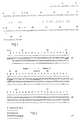
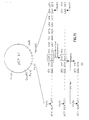
- the originally defined domain boundaries (Lys22 and Arg77 of the inhibitor domain 1 and Thr78 and Asn147 of the inhibitor domain 2) have been defined due to the separation into functional peptides that can be achieved by trypsin and do not correspond exactly with the exon ranges that have now been determined (Vetr et al., FEBS Lett. in press, 1989). Accordingly, the two inhibitor domains would be limited by the amino acid residues Asp24 and Val79 or Ala80 and Asp137 (Fig.1).
- individual gene constructions can code for N- or C-terminal peptide extensions, regardless of whether these are retained in whole or in part in the final inhibitor variant or only temporarily act as part of a precursor protein and whether these extensions are the natural bikunin or a foreign protein are to be assigned.
- the N-terminal sequence Met18-Thr19-Val20-Lys21 which, with the exception of the methionine residue, is identical to the natural amino acid sequence of bikunin, can advantageously be used to obtain a uniform product by cleavage with trypsin which corresponds to the composition of the originally defined domain 1 corresponds.
- Constructions with N-terminal foreign protein content can also be used in this way Bikunin domains can be separated smoothly.
- direct expression without an N-terminal foreign protein component
- C-terminal extensions may be preferred.
- variants of bikunin or fragments of bikunin variants can be successfully carried out using bacterial or eukaryotic systems.
- bacterial systems offer expression in Escherichia coli K 12 strains; either in unfused form in the cytoplasm, as an intracellularly formed fusion protein linked to a suitable fusion partner, e.g. the N-terminal part of the MS2 replicase, or also as an inhibitory product secreted into the periplasm space using suitable signal peptides e.g. the OmpA signal sequence.
- yeast secretion systems in which the expression product is passed through the secretion path through a suitable leader sequence, for example the alpha-factor prepro sequence, and is released into the culture medium as an inhibitory substance.
- yeast expression systems can also be used which lead to intracellular synthesis.
- pro- and eukaryotic expression systems can also be used, for example using Bacillus, Staphyllococcus, Hansenula, Aspergillus or other host strains.
- Non-glycosylated bikunin variants are obtained in prokaryotic expression systems. Yeast expression systems usually lead to a glycosylation deviating from the mammalian glycosylation pattern. Non-glycosylated bikunin variants obtained with yeast expression systems can be produced by using deglycosylating enzymes or by expressing non-glycosylatable variants.
- the present invention comprises pharmaceutical preparations which, in addition to non-toxic, inert, pharmaceutically suitable excipients, comprise one or more compounds according to the invention or consist of one or more active compounds according to the invention, and methods for producing these preparations.
- the present invention also encompasses pharmaceutical preparations in unit doses.
- the preparations are in the form of individual parts, e.g. as tablets, coated tablets, capsules, pills, suppositories and ampoules, the active ingredient content of which corresponds to a fraction or a multiple of an individual dose.
- the dose units can e.g. Contain: one, two, three or four individual doses or one half, one third or one quarter of an individual dose.
- An individual dose preferably contains the amount of active ingredient given in one administration, which is usually the whole, half or a third or a quarter of the daily dose.
- Non-toxic, inert, pharmaceutically suitable excipients are to be understood as: solid, semi-solid or liquid thinners, fillers and formulation aids of all kinds.
- Tablets, coated tablets, capsules, pills, granules, suppositories, solutions, suspensions and emulsions, pastes, ointments, gels, creams, lotions, powders and sprays can be mentioned as preferred pharmaceutical preparations.
- Tablets, coated tablets, capsules, pills and granules can contain the active ingredient or the active ingredients together with conventional excipients, such as (a) fillers and extenders, for example starches, lactose, sucrose, glucose, Mannitol and silicon oxide, (b) binders, for example carboxymethyl cellulose, alginates, gelatin and polyvinylpyrrolidone, (c) wetting agents, for example glycerol, (d) disintegrating agents, for example agar-agar, calcium carbonate and sodium carbonate, (e) dissolving agents, for example paraffin and (f) absorption accelerators, e.g. quaternary ammonium compounds, (g) wetting agents, e.g.
- conventional excipients such as (a) fillers and extenders, for example starches, lactose, sucrose, glucose, Mannitol and silicon oxide, (b) binders, for example carboxymethyl cellulose, alginates, gelatin and polyvinylpyrrol
- cetyl alcohol and glycerol monostearate (h) absorbents, e.g. kaolin and bentonite and (i) lubricants, e.g. talc, calcium and magnesium stearate and solid polyethylene glycols, or mixtures of the ( a) to (i) listed substances.
- absorbents e.g. kaolin and bentonite
- lubricants e.g. talc, calcium and magnesium stearate and solid polyethylene glycols, or mixtures of the ( a) to (i) listed substances.
- the tablets, coated tablets, capsules, pills and granules can be provided with customary coatings and coatings, which may contain opacifiers; they can have a composition such that the release of the active ingredient or the active ingredients takes place only, or preferably, in a certain part of the intestinal tract, optionally in a delayed form, examples of suitable preparations for embedding forming polymeric substances and waxes.
- the active compound or compounds, optionally together with one or more of the above-mentioned excipients, can also be in microencapsulated form.
- suppositories can contain: usual water-soluble or water-insoluble excipients, e.g. Polyethylene glycols, fats, e.g. Cocoa fat and higher esters (e.g. C14 alcohol with C16 fatty acid) or mixtures of these substances.
- water-soluble or water-insoluble excipients e.g. Polyethylene glycols
- fats e.g. Cocoa fat and higher esters (e.g. C14 alcohol with C16 fatty acid) or mixtures of these substances.
- Ointments, pastes, creams and gels can contain conventional excipients in addition to the active ingredient or ingredients, e.g. animal and vegetable fats, waxes, paraffins, starch, tragacanth, cellulose derivatives, polyethylene glycols, silicones, bentonites, silicon dioxide, talc and zinc oxide, or mixtures of these substances.
- powders and sprays can contain conventional excipients, e.g. lactose, talc, silicon dioxide, aluminum hydroxide, calcium silicate and polyamide powder, or mixtures of these substances.
- Sprays can also contain the usual propellants, e.g. Chlorofluorocarbons.
- solutions and emulsions can include customary excipients, such as solvents, solubilizing agents and emulsifiers, for example water, ethyl alcohol, isopropyl alcohol, ethyl carbonate, ethyl acetate, benzyl alcohol, benzyl benzoate, propylene glycol, 1,3-butylene glycol, dimethylformamide, oils, in particular Cottonseed oil, peanut oil, corn oil, olive oil, castor oil and sesame oil, glycerin, glycerin formal, tetrahydrofurfuryl alcohol, polyethylene glycols and fatty acid esters of sorbitan, or mixtures of these substances.
- solvents such as solvents, solubilizing agents and emulsifiers
- solvents such as solvents, solubilizing agents and emulsifiers
- solubilizing agents and emulsifiers for example water, ethyl alcohol, isopropyl alcohol,
- solutions and emulsions can also be in a sterile form that is isotonic with blood.
- Suspensions can contain conventional excipients in addition to the active ingredient or ingredients, such as liquid diluents, e.g. Water, ethyl alcohol or propylene glycol, suspending agents e.g. ethoxylated isostearyl alcohols, polyoxyethylene sorbitol and sorbitan esters, microcrystalline cellulose, aluminum metahydroxide, Bentonic, agar agar and tragacanth, or mixtures of these substances.
- liquid diluents e.g. Water, ethyl alcohol or propylene glycol
- suspending agents e.g. ethoxylated isostearyl alcohols, polyoxyethylene sorbitol and sorbitan esters, microcrystalline cellulose, aluminum metahydroxide, Bentonic, agar agar and tragacanth, or mixtures of these substances.
- the formulation forms mentioned may also contain: dyes, preservatives and additives which improve the smell or taste, e.g. Peppermint oil and eucalyptus oil, and sweeteners, e.g. Saccharin.
- the therapeutically active compounds should be present in the above-mentioned pharmaceutical preparations preferably in a concentration of 0.1 to 99.5% by weight, preferably about 0.5 to 95% by weight, based on the total mixture.
- compositions mentioned above can also contain other active pharmaceutical ingredients in addition to the compounds according to the invention.
- the pharmaceutical preparations mentioned above are prepared in a conventional manner by known processes, e.g. by mixing the active ingredient or ingredients with the excipient or excipients.
- the active substances or the pharmaceutical preparations can be administered locally, orally, parenterally, intraperitoneally and / or rectally, preferably this is done orally or parenterally, such as e.g. intravenously or intramuscularly.
- the active substance or active substances according to the invention in a total amount of from about 0.5 to about 500, preferably from 4 to 100 mg / kg of body weight Give 24 hours, if necessary in the form of several individual administrations, to achieve the best results.
- An individual administration contains the active substance or the active substances according to the invention preferably in amounts of approximately 1 to approximately 250, in particular 3 to 60 mg / kg of body weight.
- oligonucleotides were synthesized at the Pharmacia Gene Assembler TM using established phosphoramidite chemistry ( ⁇ -cyanoethyl-N, N-diisopropylphosphoramidite) and purified by denaturing polyacrylamide gel electrophoresis.
- double-stranded DNA was sequenced directly in both strands using the Chen & Seeburg method (DNA, 4 , 165, 1985).
- Transformants were cultivated in SD medium (0.67% yeast nitrogen base without amino acids, 2% D-glucose) supplemented with threonine, methionine and histidine (20 mg / liter each) at 30 ° C. After reaching a sufficient cell density, the cells were centrifuged off and the trypsin or elastase-inhibiting activity in the culture supernatant was measured.
- Proteins were usually detected using SDS-polyacrylamide gel electrophoresis (Laemmli, Nature 277 , 680, 1970) and staining with Coomassie Brilliant Blue.
- the trypsin activity was determined according to Geiger & Fritz, Methods of Enzymatic Analysis, Vol. V, 3rd ed., Bergmeyer (ed), Verlag Chemie, Weinheim (1984), p.121 with benzoyl-L-arginine-p-nitroanilide as substrate .
- the released p-nitroaniline was measured spectrophotometrically at 405 nm. Enzyme and inhibitor were preincubated for 15 minutes before adding the substrate.
- the individual Bikunin gene variants are based on the one hand on the natural mRNA and on the other hand on synthetic genes of the individual domains or parts thereof.
- the cDNA clones were extracted from suitable cDNA libraries by hybridization with oligonucleotide probes (Kaumeyer et al., Nucleic Acids Res. 14, 7839-7849, 1986) or by screening with antibodies against human inter- ⁇ -trypsin inhibitor (Schreitmüller et al., Biol. Chem. Hoppe-Seyler 368,963-970, 1987).
- the synthetic genes (1st domain) or gene segments (2nd domain) were obtained as follows:
- the design facilitates the handling of the genes in different vector systems and the exchange of the modules for the production of the variants via the internal Asp718 restriction site (Fig. 2).
- Module 1 comprises oligonucleotides 1-6, module 2 oligonucleotides 7-12.
- the construction of Xaa36-Xaa38 variants only requires the exchange of module 1.
- the oligonucleotides 2, 3, 5 and 6 were replaced by oligonucleotide variants where the codon for methionine (ATG ) by those for isoleucine (ATC), leucine (CTG or valine (GTT) or in the opposite strand whose complementary sequence had been replaced.
- ATC isoleucine
- CCG or valine (GTT) valine
- the N-terminal sequence VT-K is part of the natural N-terminal peptide.
- the only foreign amino acid is the start -Methionin, the cleavage of which can be achieved by direct expression of the gene in E. coli in vivo .
- Plasmid pTZ18NCO was prepared by cleavage of pTZ18R (Pharmacia) with EcoRI, treatment with mung bean nuclease, ligation with the palindromic sequence 5'-ACCATGGT-3 'and transformation into E. coli DH5. The construction was verified by sequence analysis.
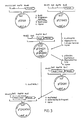
- Plasmid pTZKUN1 was isolated after cleavage of plasmid pTZMOD1 with Asp718 and SalI, ligating the linearized plasmid with the oligonucleotides 7-12 phosphorylated with polynucleotide kinase (module 2, Fig. 2), transformation in E. coli DH5 and colony hybridization with radioactively labeled oligonucleotide 11 and characterized by sequencing the plasmid DNA.
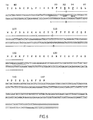
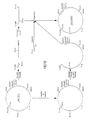
- Bikunin genes of the type of the [ 1-17 ] -met18Xaa36-Xaa38-bikunin are double-headed variants with amino acid exchanges only in the 1st domain. They were obtained by condensing the synthetic gene of the 1st domain or its variants onto a natural gene fragment of the 2nd Received domain. The cloning strategy is described in Fig.4.
- Plasmid pTZBIK was obtained from the cDNA cloned into plasmid pTZ18R from an ⁇ 1-microglobulin-bikunin clone (pTZ18MB1) by cleavage with the restriction nuclease Sau3A. Fragment A (Fig.4) was generated and isolated by gel electrophoresis. The fragment has the almost complete sequence of the bikunin gene without the ⁇ 1-microglobulin coding portion and a small part of the gene section for the N-terminal peptide of bikunin.
- the fragment ends were selectively filled in with dATP and dGTP in the presence of Klenow enzyme, smoothed with mung bean nuclease and cloned into plasmid pTZ19R (Pharmacia) which had been linearized with HindIII and the ends of which had also been smoothed with mung bean nuclease. It was transformed into E. coli DH5. The plasmid DNA of the clones obtained was verified by sequence analysis.
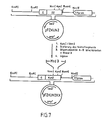
- the gene of the 2nd domain (the [ 1-79 ] -bikunin) was obtained by shortening the bikunin gene (Fig.5). Its variants (the [ 1-79 ] -Xaa92-Xaa94-Bikunin) were obtained by exchanging an ApaI / XmnI restriction fragment of domain 2 (module 3) with suitable combinations of the oligonucleotides AD or their variants (Fig.6) according to Fig. 7 manufactured.
- Plasmid pTZKUN2 (Fig. 5) was ligated from fragment A , which had been generated by treatment of pTZBIK1 DNA with the restriction nucleases HindIII and BspMI and was smoothed at the fragment ends with mung bean nuclease, with XcyI and also with mung bean nuclease treated vector pTZ19R (Pharmacia) obtained after transforming E. coli DH5 cells.
- the plasmid DNA of individual clones was characterized by sequence analysis.
- the vector fragment was isolated from calf intestine after cleavage with the restriction nucleases mentioned and dephosphorylation of the 5 'ends with alkaline phosphatase. After ligation with the oligonucleotides of module 3 phosphorylated with polynucleotide kinase and transformation into E. coli DH5, the Plasmid DNA from individual clones characterized by mapping and finally sequence analysis (Fig.7).
- pTZBIK1XX was cleaved with BspMI and EcoRI, the 5 'ends of the DNA fragments were dephosphorylated with calf intestine using alkaline phosphatase, the vector fragment was isolated and ligated in the presence of the oligonucleotides. After transformation of E. coli DH5, the plasmids pTZKUN1XXc of individual clones were verified by sequence analysis.
- the Bikunin gene variants described could partly be found both in the cloning vector itself and after recloning into different expression vectors such as, for example, pJLA502 (Schauder et al., Gene 52, 279-283, 1987), pEX3 (Stanley & Luzio, EMBO J. 3, 1429- 1434, 1984) and pEX3407 (Kocken et al. FEBS Lett. 236, 132-134, 1988).
- NcoI / SalI or NcoI / EcoRI fragments can be isolated from the plasmids pTZKUN1XX or pTZBIK1XX2XX (Figs.
- fragments can be isolated from the plasmids pTZBIK1XX (EcoI / EcoRI fragment, Fig. 4), pTZBIK1XX2XX (NcoI / EcoRI fragment, Fig. 8), pTZKUN1XX (NcoI / HindIII fragment, Fig. 3), with mung bean Smooth the nuclease and ligate into the vectors pEX3 or pEX3407.
- Fragments of the plasmid pTZKUN2XX can be generated by cleavage with EcoRI, treatment with mung bean nuclease and subsequent cleavage with BamHI and ligated into the pEX vectors.
- DNA of the pEX vectors can either be cut with SalI and treated with mung bean nuclease or, as in the last-mentioned construction, cleaved with PstI, treated with mung bean nuclease and cleaved with BamHI.
- E. coli pop2136 transformants (Vidal-Ingigliardi & Raibaud, Nucleic Acids Res. 13, 1163, 1985) allow temperature-dependent control of gene expression.
- fusion proteins are formed which are linked to the protein to be expressed via an acid-labile Asp-Pro peptide bond.
- inhibitor variants of the type of the [ 1-17 ] -Pro18-bikunin, the [ 1-17.78-147 ] -Pro18-bikunin and the [ 1-78 ] -Pro79-bikunin resulted .
- the splitting of the bikunin part from the fusion partner can also be achieved by using the proteolytically (tryptically) particularly unstable sequence Pro20-Lys21-Lys22. Single-headed variants could be expressed particularly well in secretory expression systems.
- the expression products were detected either by gel electrophoresis (eg for the determination of fusion proteins) or in standard enzyme inhibition tests (after the fusion partner had been split off, the bikunin part had been purified and renatured).
- pCY17 a vector derived from pBR322, containing the MAT-alpha-1 structural gene (Kurjan and Herskowitz, Cell, 30 , 933, 1982) was obtained from Herskowitz, University of California.
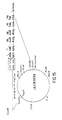
- pMT15 is a yeast E. coli shuttle vector (Fig. 10). He carries Amp R , bla and URA3 gene segments that serve as selectable markers for E. coli and yeast.
- pMT15 also has the ColE1 origin of pBR322 and a segment of the B form of the 2 u plasmid, so that the plasmid can be stably replicated in both E. coli and yeast.
- the 235 bp PstI-HindIII fragment from pMT15 which bears the coding region of the alpha factor pre-pro leader sequence, was cloned into the vector M13mp18 and subjected to a targeted mutagenesis using the mutagenic oligonucleotide 5'-GAA GAA GGG GTA TTG GAT AAA AGA-3 ′.
- the serine codon at position 81 in the alpha factor pre-pro sequence was changed from TCT to AGC, thereby creating a HindIII restriction site.
- the 235 bp PstI-HindIII fragment was replaced in pMT15 with the 213 bp PstI-HindIII fragment thus produced (FIG. 11).
- the plasmid modified in this way was designated pS600; it carries the coding sequence for Lys-Arg instead of Lys-Arg-Glu-Ala-Glu-Ala as the processing site (Fig. 12).
- the DNA fragment was phosphorylated according to standard procedures.
- the DNA fragment thus obtained was inserted together with the mutated bikunin sequence into the 8.2 bp pS600 plasmid digested with HindIII and BamHI.
- the oligomer reconstituted both the 3'-end of the pre-pro-alpha factor sequence and the 5'-end of the bikunin sequence.
- the new plasmid pLLB3638 obtained in this way accordingly contains the coding region for the pre-pro-alpha factor sequence with Lys-Arg as the processing site fused to the Leu-36-Leu-38-bikunin sequence.
- the DNA and the corresponding amino acid sequence at the fusion site of pre-pro-alpha-factor-Leu-36-Leu-38-bikunin in pLLB3638 is shown in Fig. 14.
- the yeast cell line SC 106 (MAT, hom3, gal2, his6, ura3) was transformed with pLLB3638; URA3+ cells were isolated and cultured; the culture supernatant was inhibited to elastase Activity checked. In control experiments, it was demonstrated that SC106 cells transformed with pS600 did not produce any elastase-inhibitory activity in the culture medium.
- SC106 was transformed with pLLB9294; URA3+ cells were isolated and cultured; the culture supernatant was checked for elastase inhibitory activity. In control experiments, it was demonstrated that SC106 cells transformed with pS600 did not produce any elastase-inhibitory activity in the culture medium.
- SC106 was transformed with p4LB; URA3+ cells were isolated and cultured; the culture supernatant was checked for elastase inhibitory activity. In control experiments, it was demonstrated that SC106 cells transformed with pS600 did not produce any elastase-inhibitory activity in the culture medium.
- the DNA fragment was phosphorylated according to standard procedures.
- the DNA fragment thus obtained was inserted together with the mutated bikunin sequence into the 8.2 bp pS600 plasmid digested with HindIII and BamHI.
- the oligomer reconstituted both the 3'-end of the pre-pro-alpha factor sequence and the 5'-end of the bikunin sequence.
- the new plasmid pDLLB-121 obtained in this way accordingly contains the coding region for the pre-pro-alpha factor sequence with Lys-Arg as the processing site fused to the Des (1-21) -Leu-36-Leu-38-bikunin Sequence.
- the DNA and the corresponding amino acid sequence at the fusion site of pre-pro-alpha-factor-Leu-36-Leu-38-bikunin in pDLLB-121 is shown in Fig. 17.
- SC106 was transformed with pDLLB-121; URA3+ cells were isolated and cultured; the culture supernatant was checked for elastase inhibitory activity. In control experiments, it was demonstrated that SC106 cells transformed with pS600 did not produce any elastase-inhibitory activity in the culture medium.
- the results obtained showed that the Des (1-21) -Leu-36-Leu-38-Bikunin gene, expressed in Saccharomyces cerevisiae, led to the formation of a protein in the culture medium with the following properties: (a) Trysine inhibitory, ( b) molecular weight of 17 k and 15 k after electrophoresis in SDS-polyacrylamide gels, (c) the protein showed the N-terminal sequence Lys-Glu-Asp-Ser-Cys of Des (1-21) -bikunin.
Landscapes
- Health & Medical Sciences (AREA)
- Chemical & Material Sciences (AREA)
- Life Sciences & Earth Sciences (AREA)
- Organic Chemistry (AREA)
- General Health & Medical Sciences (AREA)
- Engineering & Computer Science (AREA)
- Medicinal Chemistry (AREA)
- Bioinformatics & Cheminformatics (AREA)
- Veterinary Medicine (AREA)
- Public Health (AREA)
- Animal Behavior & Ethology (AREA)
- Pharmacology & Pharmacy (AREA)
- General Chemical & Material Sciences (AREA)
- Chemical Kinetics & Catalysis (AREA)
- Nuclear Medicine, Radiotherapy & Molecular Imaging (AREA)
- Genetics & Genomics (AREA)
- Molecular Biology (AREA)
- Gastroenterology & Hepatology (AREA)
- Biochemistry (AREA)
- Proteomics, Peptides & Aminoacids (AREA)
- Biophysics (AREA)
- Biomedical Technology (AREA)
- Hematology (AREA)
- Diabetes (AREA)
- Zoology (AREA)
- Urology & Nephrology (AREA)
- Biotechnology (AREA)
- General Engineering & Computer Science (AREA)
- Wood Science & Technology (AREA)
- Pulmonology (AREA)
- Plant Pathology (AREA)
- Dermatology (AREA)
- Immunology (AREA)
- Epidemiology (AREA)
- Endocrinology (AREA)
- Physics & Mathematics (AREA)
- Rheumatology (AREA)
- Pain & Pain Management (AREA)
- Reproductive Health (AREA)
- Microbiology (AREA)
Applications Claiming Priority (4)
| Application Number | Priority Date | Filing Date | Title |
|---|---|---|---|
| DE3915689 | 1989-05-13 | ||
| DE3915689 | 1989-05-13 | ||
| DE4001244 | 1990-01-18 | ||
| DE4001244 | 1990-01-18 |
Publications (3)
| Publication Number | Publication Date |
|---|---|
| EP0401508A2 true EP0401508A2 (fr) | 1990-12-12 |
| EP0401508A3 EP0401508A3 (fr) | 1991-03-27 |
| EP0401508B1 EP0401508B1 (fr) | 1994-11-23 |
Family
ID=25880860
Family Applications (1)
| Application Number | Title | Priority Date | Filing Date |
|---|---|---|---|
| EP90108284A Expired - Lifetime EP0401508B1 (fr) | 1989-05-13 | 1990-05-01 | Inhibiteurs de protéinase, leur procédé de préparation ainsi que compositions pharmaceutiques les contenant |
Country Status (17)
| Country | Link |
|---|---|
| US (1) | US5407915A (fr) |
| EP (1) | EP0401508B1 (fr) |
| JP (2) | JP3126975B2 (fr) |
| KR (1) | KR0156246B1 (fr) |
| AT (1) | ATE114332T1 (fr) |
| AU (1) | AU623769B2 (fr) |
| CA (1) | CA2016627C (fr) |
| DE (1) | DE59007737D1 (fr) |
| DK (1) | DK0401508T3 (fr) |
| ES (1) | ES2066033T3 (fr) |
| GR (1) | GR3015124T3 (fr) |
| HU (1) | HU214985B (fr) |
| IE (1) | IE65710B1 (fr) |
| IL (1) | IL94349A (fr) |
| NZ (1) | NZ233635A (fr) |
| PH (1) | PH27530A (fr) |
| PT (1) | PT94016B (fr) |
Cited By (19)
| Publication number | Priority date | Publication date | Assignee | Title |
|---|---|---|---|---|
| EP0486001A1 (fr) * | 1990-11-13 | 1992-05-20 | Mochida Pharmaceutical Co., Ltd. | Fragments recombinants de l'inhibiteur urinaire de la trypsine et composition pharmaceutique |
| WO1992015605A3 (fr) * | 1991-03-01 | 1992-12-23 | Protein Eng Corp | Inhibiteurs de l'elastase neutrophile et de la cathepsine g chez l'homme |
| EP0543240A1 (fr) * | 1991-11-08 | 1993-05-26 | Mochida Pharmaceutical Co., Ltd. | Fragments recombinants d'un mutant de l'inhibiteur de trypsine d'origine urinaire et compositions pharmaceutiques |
| EP0624644A1 (fr) * | 1993-05-01 | 1994-11-17 | Mochida Pharmaceutical Co., Ltd. | Fragment d'ADN, vecteur contenant ce fragment d'ADN, transformant transformé avec le vecteur et procédé de production de protéine par utilisation du vecteur |
| WO1996026273A1 (fr) * | 1995-02-23 | 1996-08-29 | Adeza Biomedical Corporation | Polypeptides tires de l'urinastatine presentant une activite d'inhibition calcique et leur utilisation pour retarder les accouchements prematures |
| WO1996020278A3 (fr) * | 1994-12-16 | 1996-10-24 | Protein Eng Corp | Domaines de kunitz derives de l'homme obtenus par genie genetique et inhibant l'elastase des neutrophiles chez l'homme |
| EP0643075A4 (fr) * | 1993-02-22 | 1997-02-26 | Nissin Food Products Ltd | Nouveau peptide presentant une activite inhibitrice de l'elastase et son procede de production. |
| US5629176A (en) * | 1992-01-07 | 1997-05-13 | Novo Nordisk A/S | Human Kunitz-type protease inhibitor variants |
| US5650394A (en) * | 1993-11-04 | 1997-07-22 | Adeza Biomedical | Use of urinastatin-like compounds to prevent premature delivery |
| US7078383B2 (en) * | 1988-09-02 | 2006-07-18 | Dyax Corp. | ITI-D1 Kunitz domain mutants as HNE inhibitors |
| EP2055716A1 (fr) * | 1994-01-11 | 2009-05-06 | Dyax Corporation | Protéines de domaine de Kunitz à inhibition de kallicréine et acides nucléiques le codant |
| US7718617B2 (en) | 2002-08-28 | 2010-05-18 | Dyax Corp. | Methods for preserving organs and tissues |
| US8716225B2 (en) | 2004-09-27 | 2014-05-06 | Dyax Corp. | Kallikrein inhibitors and anti-thrombolytic agents and uses thereof |
| US8816055B2 (en) | 2011-01-06 | 2014-08-26 | Dyax Corp. | Plasma kallikrein binding proteins |
| US8822653B2 (en) | 2010-01-06 | 2014-09-02 | Dyax Corp. | Plasma kallikrein binding proteins |
| US9114144B2 (en) | 2002-06-07 | 2015-08-25 | Dyax Corp. | Kallikrein-inhibitor therapies |
| US9480733B2 (en) | 2002-06-07 | 2016-11-01 | Dyax Corp. | Prevention and reduction of blood loss |
| US11286307B2 (en) | 2015-12-11 | 2022-03-29 | Takeda Pharmaceutical Company Limited | Plasma kallikrein inhibitors and uses thereof for treating hereditary angioedema attack |
| US12528880B2 (en) | 2020-01-13 | 2026-01-20 | Takeda Pharmaceutical Company Limited | Plasma kallikrein inhibitors and uses thereof for treating pediatric hereditary angioedema attack |
Families Citing this family (13)
| Publication number | Priority date | Publication date | Assignee | Title |
|---|---|---|---|---|
| US20060134087A1 (en) * | 1988-09-02 | 2006-06-22 | Dyax Corp. | ITI-D1 Kunitz domain mutants as hNE inhibitors |
| ATE529444T1 (de) * | 1994-01-11 | 2011-11-15 | Dyax Corp | Inhibitoren des humanplasmins, die sich von den kunitz domänen ableiten |
| WO1997033996A2 (fr) * | 1996-03-11 | 1997-09-18 | Bayer Corporation | Bikunine humaine |
| US20070140979A1 (en) * | 1998-12-22 | 2007-06-21 | Bayer Aktiengesellschaft | Method for accelerating the rate of mucociliary clearance |
| WO2000037099A2 (fr) * | 1998-12-22 | 2000-06-29 | Bayer Aktiengesellschaft | Technique permettant d'accelerer le debit de clairance mucociliaire en utilisant un inhibiteur de serine protease de type kunitz |
| US6660482B1 (en) * | 2000-02-28 | 2003-12-09 | Rhode Island Hospital | Inter-alpha-trypsin inhibitor as a marker for sepsis |
| KR20040004562A (ko) * | 2001-03-27 | 2004-01-13 | 어웨어, 인크. | 수신기 투과성 q-모드 |
| JP2007524348A (ja) * | 2003-01-07 | 2007-08-30 | ダイアックス、コープ | クニッツドメインライブラリー |
| US6989369B2 (en) * | 2003-02-07 | 2006-01-24 | Dyax Corp. | Kunitz domain peptides |
| US8637454B2 (en) * | 2009-01-06 | 2014-01-28 | Dyax Corp. | Treatment of mucositis with kallikrein inhibitors |
| MA39347B2 (fr) * | 2014-02-24 | 2020-05-29 | Takeda Pharmaceuticals Co | Protéines de fusion d'uti |
| EP3122782A4 (fr) | 2014-03-27 | 2017-09-13 | Dyax Corp. | Compositions et procédés pour le traitement de l'oedème maculaire diabétique |
| BR112022017718A2 (pt) | 2020-03-05 | 2022-11-16 | Diamedica Usa Inc | Polipeptídeos de ulinastatina |
Family Cites Families (5)
| Publication number | Priority date | Publication date | Assignee | Title |
|---|---|---|---|---|
| AU560584B2 (en) * | 1983-07-28 | 1987-04-09 | Bayer Aktiengesellschaft | Homologues of aprotinin |
| US4711848A (en) * | 1984-03-14 | 1987-12-08 | Zymogenetics, Inc. | Site specific mutagenesis in alpha-1-antitrypsin |
| FR2599752B1 (fr) * | 1986-06-10 | 1989-11-03 | Transgene Sa | Variants de l'alpha1- antitrypsine utiles notamment comme inhibiteurs de la kallikreine |
| FR2601033B1 (fr) * | 1986-07-02 | 1990-01-19 | Transgene Sa | Variants de l'alpha-antitryspine humaine glycosylee et procede pour la preparation |
| EP0255011A3 (fr) * | 1986-07-29 | 1988-11-23 | Miles Inc. | Gène humain pour l'inhibiteur d'inter-alpha-trypsine |
-
1990
- 1990-05-01 ES ES90108284T patent/ES2066033T3/es not_active Expired - Lifetime
- 1990-05-01 DK DK90108284.2T patent/DK0401508T3/da active
- 1990-05-01 AT AT90108284T patent/ATE114332T1/de not_active IP Right Cessation
- 1990-05-01 EP EP90108284A patent/EP0401508B1/fr not_active Expired - Lifetime
- 1990-05-01 DE DE59007737T patent/DE59007737D1/de not_active Expired - Fee Related
- 1990-05-02 PH PH40464A patent/PH27530A/en unknown
- 1990-05-10 IL IL94349A patent/IL94349A/en not_active IP Right Cessation
- 1990-05-10 NZ NZ233635A patent/NZ233635A/en unknown
- 1990-05-11 PT PT94016A patent/PT94016B/pt active IP Right Grant
- 1990-05-11 JP JP02120186A patent/JP3126975B2/ja not_active Expired - Fee Related
- 1990-05-11 HU HU903010A patent/HU214985B/hu not_active IP Right Cessation
- 1990-05-11 CA CA002016627A patent/CA2016627C/fr not_active Expired - Fee Related
- 1990-05-11 IE IE171390A patent/IE65710B1/en not_active IP Right Cessation
- 1990-05-11 AU AU54970/90A patent/AU623769B2/en not_active Ceased
- 1990-05-12 KR KR1019900006865A patent/KR0156246B1/ko not_active Expired - Fee Related
-
1993
- 1993-03-05 US US08/027,602 patent/US5407915A/en not_active Expired - Fee Related
-
1995
- 1995-02-22 GR GR940403586T patent/GR3015124T3/el unknown
-
2000
- 2000-09-13 JP JP2000278172A patent/JP2001112492A/ja active Pending
Cited By (37)
| Publication number | Priority date | Publication date | Assignee | Title |
|---|---|---|---|---|
| US5663143A (en) * | 1988-09-02 | 1997-09-02 | Dyax Corp. | Engineered human-derived kunitz domains that inhibit human neutrophil elastase |
| US7078383B2 (en) * | 1988-09-02 | 2006-07-18 | Dyax Corp. | ITI-D1 Kunitz domain mutants as HNE inhibitors |
| EP0486001A1 (fr) * | 1990-11-13 | 1992-05-20 | Mochida Pharmaceutical Co., Ltd. | Fragments recombinants de l'inhibiteur urinaire de la trypsine et composition pharmaceutique |
| US5792629A (en) * | 1990-11-13 | 1998-08-11 | Mochida Pharmaceutical Co., Ltd. | Isolated DNA encoding novel protease inhibitory polypeptide |
| US5409895A (en) * | 1990-11-13 | 1995-04-25 | Mochida Pharmaceutical Co., Ltd. | Protease inhibitory polypeptides derived from urinary trypsin inhibitor and compositions thereof |
| WO1992015605A3 (fr) * | 1991-03-01 | 1992-12-23 | Protein Eng Corp | Inhibiteurs de l'elastase neutrophile et de la cathepsine g chez l'homme |
| US5589360A (en) * | 1991-11-08 | 1996-12-31 | Mochida Pharmaceutical Co., Ltd. | Polypeptide, DNA fragment encoding the same, drug composition containing the same and process for producing the same |
| US5451659A (en) * | 1991-11-08 | 1995-09-19 | Mochida Pharmaceutical Co., Ltd. | Polypeptide, DNA fragment encoding the same, drug composition containing the same and process for producing the same |
| EP0543240A1 (fr) * | 1991-11-08 | 1993-05-26 | Mochida Pharmaceutical Co., Ltd. | Fragments recombinants d'un mutant de l'inhibiteur de trypsine d'origine urinaire et compositions pharmaceutiques |
| US5629176A (en) * | 1992-01-07 | 1997-05-13 | Novo Nordisk A/S | Human Kunitz-type protease inhibitor variants |
| EP0643075A4 (fr) * | 1993-02-22 | 1997-02-26 | Nissin Food Products Ltd | Nouveau peptide presentant une activite inhibitrice de l'elastase et son procede de production. |
| US5840518A (en) * | 1993-05-01 | 1998-11-24 | Mochida Pharmaceutical Co. Ltd. | DNA fragment, vector containing the DNA fragment, transformant transformed with the vector and process for producing protein using the vector |
| EP0624644A1 (fr) * | 1993-05-01 | 1994-11-17 | Mochida Pharmaceutical Co., Ltd. | Fragment d'ADN, vecteur contenant ce fragment d'ADN, transformant transformé avec le vecteur et procédé de production de protéine par utilisation du vecteur |
| US5650394A (en) * | 1993-11-04 | 1997-07-22 | Adeza Biomedical | Use of urinastatin-like compounds to prevent premature delivery |
| EP2055716A1 (fr) * | 1994-01-11 | 2009-05-06 | Dyax Corporation | Protéines de domaine de Kunitz à inhibition de kallicréine et acides nucléiques le codant |
| US7628983B2 (en) | 1994-01-11 | 2009-12-08 | Dyax Corp. | Kallikrein-binding “Kunitz domain” proteins and analogues thereof |
| US8283321B2 (en) | 1994-01-11 | 2012-10-09 | Dyax Corp. | Kallikrein-binding “Kunitz domain” proteins and analogues thereof |
| US8663629B2 (en) | 1994-01-11 | 2014-03-04 | Dyax Corp. | Kallikrein-binding “kunitz domain” proteins and analogues thereof |
| WO1996020278A3 (fr) * | 1994-12-16 | 1996-10-24 | Protein Eng Corp | Domaines de kunitz derives de l'homme obtenus par genie genetique et inhibant l'elastase des neutrophiles chez l'homme |
| WO1996026273A1 (fr) * | 1995-02-23 | 1996-08-29 | Adeza Biomedical Corporation | Polypeptides tires de l'urinastatine presentant une activite d'inhibition calcique et leur utilisation pour retarder les accouchements prematures |
| US9114144B2 (en) | 2002-06-07 | 2015-08-25 | Dyax Corp. | Kallikrein-inhibitor therapies |
| US11344610B2 (en) | 2002-06-07 | 2022-05-31 | Takeda Pharmaceutical Company Limited | Prevention and reduction of blood loss |
| US10245307B2 (en) | 2002-06-07 | 2019-04-02 | Dyax Corp. | Prevention and reduction of blood loss |
| US9480733B2 (en) | 2002-06-07 | 2016-11-01 | Dyax Corp. | Prevention and reduction of blood loss |
| US7718617B2 (en) | 2002-08-28 | 2010-05-18 | Dyax Corp. | Methods for preserving organs and tissues |
| US9757437B2 (en) | 2004-09-27 | 2017-09-12 | Dyax Corp. | Kallikrein inhibitors and anti-thrombolytic agents and uses thereof |
| US8716225B2 (en) | 2004-09-27 | 2014-05-06 | Dyax Corp. | Kallikrein inhibitors and anti-thrombolytic agents and uses thereof |
| US8822653B2 (en) | 2010-01-06 | 2014-09-02 | Dyax Corp. | Plasma kallikrein binding proteins |
| US10336832B2 (en) | 2010-01-06 | 2019-07-02 | Dyax Corp. | Methods of inhibiting plasma kallikrein in edema patient |
| US11505620B2 (en) | 2010-01-06 | 2022-11-22 | Takeda Pharmaceutical Company Limited | Methods of detecting plasma kallikrein |
| US12460016B2 (en) | 2010-01-06 | 2025-11-04 | Takeda Pharmaceutical Company Limited | Plasma kallikrein binding proteins |
| US9266964B2 (en) | 2011-01-06 | 2016-02-23 | Dyax Corp. | Method of treating hereditary angioedema using plasma kallikrein binding antibodies |
| US8816055B2 (en) | 2011-01-06 | 2014-08-26 | Dyax Corp. | Plasma kallikrein binding proteins |
| US10370453B2 (en) | 2011-01-06 | 2019-08-06 | Dyax Corp. | Plasma kallikrein binding proteins |
| US11401346B2 (en) | 2011-01-06 | 2022-08-02 | Takeda Pharmaceutical Company Limited | Nucleic acids encoding plasma kallikrein binding proteins |
| US11286307B2 (en) | 2015-12-11 | 2022-03-29 | Takeda Pharmaceutical Company Limited | Plasma kallikrein inhibitors and uses thereof for treating hereditary angioedema attack |
| US12528880B2 (en) | 2020-01-13 | 2026-01-20 | Takeda Pharmaceutical Company Limited | Plasma kallikrein inhibitors and uses thereof for treating pediatric hereditary angioedema attack |
Also Published As
| Publication number | Publication date |
|---|---|
| IL94349A0 (en) | 1991-03-10 |
| IL94349A (en) | 1998-01-04 |
| DE59007737D1 (de) | 1995-01-05 |
| EP0401508B1 (fr) | 1994-11-23 |
| KR900017607A (ko) | 1990-12-19 |
| PT94016A (pt) | 1991-01-08 |
| KR0156246B1 (ko) | 1998-11-16 |
| DK0401508T3 (da) | 1995-05-15 |
| PT94016B (pt) | 1997-05-28 |
| US5407915A (en) | 1995-04-18 |
| HU214985B (hu) | 1998-08-28 |
| ES2066033T3 (es) | 1995-03-01 |
| IE901713L (en) | 1990-11-13 |
| NZ233635A (en) | 1991-12-23 |
| AU623769B2 (en) | 1992-05-21 |
| ATE114332T1 (de) | 1994-12-15 |
| HU903010D0 (en) | 1990-09-28 |
| CA2016627C (fr) | 2000-08-22 |
| CA2016627A1 (fr) | 1990-11-13 |
| AU5497090A (en) | 1990-11-15 |
| JPH03255099A (ja) | 1991-11-13 |
| JP2001112492A (ja) | 2001-04-24 |
| IE65710B1 (en) | 1995-11-15 |
| EP0401508A3 (fr) | 1991-03-27 |
| PH27530A (en) | 1993-08-18 |
| GR3015124T3 (en) | 1995-05-31 |
| JP3126975B2 (ja) | 2001-01-22 |
Similar Documents
| Publication | Publication Date | Title |
|---|---|---|
| EP0401508B1 (fr) | Inhibiteurs de protéinase, leur procédé de préparation ainsi que compositions pharmaceutiques les contenant | |
| EP0307592B1 (fr) | Analogues de l'inhibiteur de la trypsine pancréatique bovine, leur production et utilisation | |
| EP0238993B1 (fr) | Homologues d'aprotinine produits par génie génétique | |
| DE68914022T2 (de) | Aprotinin-Analoge und Verfahren zu ihrer Herstellung. | |
| EP0278112B1 (fr) | Inhibiteur de trypsine secrété par le pancréas et ses variants produits par génie génétique | |
| DE69024104T2 (de) | Polypeptide und Polypeptidanaloge mit inhibitorischer Aktivität gegenüber menschlicher Elastase | |
| DE3587875T2 (de) | Rekombinantverfahren zur herstellung von serinproteaseinhibitoren, sowie dns-sequenzen dazu. | |
| DD251785A5 (de) | Verfahren zur Herstellung eines menschlichen, physiologisch aktiven Polypeptids mit Tnf-Aktivität | |
| DE3751169T2 (de) | Zusammensetzungen und Verfahren zur Synthese und Analyse von Enkephalinase. | |
| DE69003595T2 (de) | Mikroproteine, Verfahren zur Herstellung derselben und Anwendung dieser Mikroproteine als Arzneimittel. | |
| DE3912638A1 (de) | Gentechnologisch hergestellte homologe des alzheimer protease inhibitors, wirtstaemme sowie expressionsvektoren fuer ihre herstellung und ihre verwendung als arzneimittel | |
| DE69025247T2 (de) | Proteine mit antikoagulierenden Eigenschaften | |
| DE69129809T2 (de) | Aprotininanaloga | |
| EP0419878B1 (fr) | Variants de l'aprotinine et procédé recombinant pour la préparation microbienne de ces variants de forme homogène | |
| DE3850878T2 (de) | Elastase-inhibierungspolypeptide und verfahren zur herstellung durch genetische rekombination. | |
| EP0297362A2 (fr) | Aprotinine humaine dont le reste Lys en 15 est substitué par un autre reste protogène d'amino-acide | |
| EP0821007B1 (fr) | Variant de l'aprotinine ayant des propriétés améliorées | |
| EP0330725A1 (fr) | Préparation et expression de séquences d'ADN codant pour des protéines ayant les propriétés biologiques de la cystatine C | |
| EP0244627A2 (fr) | Vecteurs d'expression pour la production de polypeptides | |
| DE69432975T2 (de) | Tryptase hemmer | |
| DE69427403T2 (de) | Peptide-familie, genannt xenoxine | |
| EP1002083A1 (fr) | Variantes d'aprotinine a proprietes ameliorees et bikunines de variantes d'aprotinine | |
| EP0373335B1 (fr) | Protéines inhibitrices des protéases du type sérine, médicaments les contenant, séquence d'ADN codant pour ces protéines et les procédés de production de ces protéines, médicament et séquences | |
| EP0609242A1 (fr) | Nouvelle proteine inhibitrice de la thrombine provenant de tiques. |
Legal Events
| Date | Code | Title | Description |
|---|---|---|---|
| PUAI | Public reference made under article 153(3) epc to a published international application that has entered the european phase |
Free format text: ORIGINAL CODE: 0009012 |
|
| 17P | Request for examination filed |
Effective date: 19900501 |
|
| AK | Designated contracting states |
Kind code of ref document: A2 Designated state(s): AT BE CH DE DK ES FR GB GR IT LI LU NL SE |
|
| PUAL | Search report despatched |
Free format text: ORIGINAL CODE: 0009013 |
|
| AK | Designated contracting states |
Kind code of ref document: A3 Designated state(s): AT BE CH DE DK ES FR GB GR IT LI LU NL SE |
|
| 17Q | First examination report despatched |
Effective date: 19930616 |
|
| GRAA | (expected) grant |
Free format text: ORIGINAL CODE: 0009210 |
|
| AK | Designated contracting states |
Kind code of ref document: B1 Designated state(s): AT BE CH DE DK ES FR GB GR IT LI LU NL SE |
|
| REF | Corresponds to: |
Ref document number: 114332 Country of ref document: AT Date of ref document: 19941215 Kind code of ref document: T |
|
| GBT | Gb: translation of ep patent filed (gb section 77(6)(a)/1977) |
Effective date: 19941207 |
|
| ITF | It: translation for a ep patent filed | ||
| K2C2 | Correction of patent specification (partial reprint) published |
Effective date: 19941123 |
|
| REF | Corresponds to: |
Ref document number: 59007737 Country of ref document: DE Date of ref document: 19950105 |
|
| ET | Fr: translation filed | ||
| EAL | Se: european patent in force in sweden |
Ref document number: 90108284.2 |
|
| REG | Reference to a national code |
Ref country code: ES Ref legal event code: FG2A Ref document number: 2066033 Country of ref document: ES Kind code of ref document: T3 |
|
| REG | Reference to a national code |
Ref country code: GR Ref legal event code: FG4A Free format text: 3015124 |
|
| REG | Reference to a national code |
Ref country code: DK Ref legal event code: T3 |
|
| PLBE | No opposition filed within time limit |
Free format text: ORIGINAL CODE: 0009261 |
|
| STAA | Information on the status of an ep patent application or granted ep patent |
Free format text: STATUS: NO OPPOSITION FILED WITHIN TIME LIMIT |
|
| 26N | No opposition filed | ||
| PGFP | Annual fee paid to national office [announced via postgrant information from national office to epo] |
Ref country code: SE Payment date: 20010412 Year of fee payment: 12 |
|
| PGFP | Annual fee paid to national office [announced via postgrant information from national office to epo] |
Ref country code: DE Payment date: 20010418 Year of fee payment: 12 |
|
| PGFP | Annual fee paid to national office [announced via postgrant information from national office to epo] |
Ref country code: GR Payment date: 20010420 Year of fee payment: 12 |
|
| PGFP | Annual fee paid to national office [announced via postgrant information from national office to epo] |
Ref country code: FR Payment date: 20010427 Year of fee payment: 12 |
|
| PGFP | Annual fee paid to national office [announced via postgrant information from national office to epo] |
Ref country code: GB Payment date: 20010502 Year of fee payment: 12 |
|
| PGFP | Annual fee paid to national office [announced via postgrant information from national office to epo] |
Ref country code: ES Payment date: 20010509 Year of fee payment: 12 |
|
| PGFP | Annual fee paid to national office [announced via postgrant information from national office to epo] |
Ref country code: LU Payment date: 20010510 Year of fee payment: 12 |
|
| PGFP | Annual fee paid to national office [announced via postgrant information from national office to epo] |
Ref country code: CH Payment date: 20010514 Year of fee payment: 12 |
|
| PGFP | Annual fee paid to national office [announced via postgrant information from national office to epo] |
Ref country code: AT Payment date: 20010517 Year of fee payment: 12 |
|
| PGFP | Annual fee paid to national office [announced via postgrant information from national office to epo] |
Ref country code: BE Payment date: 20010530 Year of fee payment: 12 |
|
| PGFP | Annual fee paid to national office [announced via postgrant information from national office to epo] |
Ref country code: NL Payment date: 20010531 Year of fee payment: 12 Ref country code: DK Payment date: 20010531 Year of fee payment: 12 |
|
| REG | Reference to a national code |
Ref country code: GB Ref legal event code: IF02 |
|
| PG25 | Lapsed in a contracting state [announced via postgrant information from national office to epo] |
Ref country code: LU Free format text: LAPSE BECAUSE OF NON-PAYMENT OF DUE FEES Effective date: 20020501 Ref country code: GB Free format text: LAPSE BECAUSE OF NON-PAYMENT OF DUE FEES Effective date: 20020501 Ref country code: AT Free format text: LAPSE BECAUSE OF NON-PAYMENT OF DUE FEES Effective date: 20020501 |
|
| PG25 | Lapsed in a contracting state [announced via postgrant information from national office to epo] |
Ref country code: SE Free format text: LAPSE BECAUSE OF NON-PAYMENT OF DUE FEES Effective date: 20020502 Ref country code: ES Free format text: LAPSE BECAUSE OF NON-PAYMENT OF DUE FEES Effective date: 20020502 |
|
| PG25 | Lapsed in a contracting state [announced via postgrant information from national office to epo] |
Ref country code: LI Free format text: LAPSE BECAUSE OF NON-PAYMENT OF DUE FEES Effective date: 20020531 Ref country code: DK Free format text: LAPSE BECAUSE OF NON-PAYMENT OF DUE FEES Effective date: 20020531 Ref country code: CH Free format text: LAPSE BECAUSE OF NON-PAYMENT OF DUE FEES Effective date: 20020531 Ref country code: BE Free format text: LAPSE BECAUSE OF NON-PAYMENT OF DUE FEES Effective date: 20020531 |
|
| PG25 | Lapsed in a contracting state [announced via postgrant information from national office to epo] |
Ref country code: NL Free format text: LAPSE BECAUSE OF NON-PAYMENT OF DUE FEES Effective date: 20021201 |
|
| PG25 | Lapsed in a contracting state [announced via postgrant information from national office to epo] |
Ref country code: DE Free format text: LAPSE BECAUSE OF NON-PAYMENT OF DUE FEES Effective date: 20021203 |
|
| PG25 | Lapsed in a contracting state [announced via postgrant information from national office to epo] |
Ref country code: GR Free format text: LAPSE BECAUSE OF NON-PAYMENT OF DUE FEES Effective date: 20021206 |
|
| GBPC | Gb: european patent ceased through non-payment of renewal fee |
Effective date: 20020501 |
|
| REG | Reference to a national code |
Ref country code: DK Ref legal event code: EBP |
|
| EUG | Se: european patent has lapsed | ||
| REG | Reference to a national code |
Ref country code: CH Ref legal event code: PL |
|
| PG25 | Lapsed in a contracting state [announced via postgrant information from national office to epo] |
Ref country code: FR Free format text: LAPSE BECAUSE OF NON-PAYMENT OF DUE FEES Effective date: 20030131 |
|
| NLV4 | Nl: lapsed or anulled due to non-payment of the annual fee |
Effective date: 20021201 |
|
| REG | Reference to a national code |
Ref country code: FR Ref legal event code: ST |
|
| REG | Reference to a national code |
Ref country code: ES Ref legal event code: FD2A Effective date: 20030611 |
|
| PG25 | Lapsed in a contracting state [announced via postgrant information from national office to epo] |
Ref country code: IT Free format text: LAPSE BECAUSE OF NON-PAYMENT OF DUE FEES Effective date: 20050501 |