EP0403139A1 - Systèmes de culture cellulaire et milieux - Google Patents
Systèmes de culture cellulaire et milieux Download PDFInfo
- Publication number
- EP0403139A1 EP0403139A1 EP90306084A EP90306084A EP0403139A1 EP 0403139 A1 EP0403139 A1 EP 0403139A1 EP 90306084 A EP90306084 A EP 90306084A EP 90306084 A EP90306084 A EP 90306084A EP 0403139 A1 EP0403139 A1 EP 0403139A1
- Authority
- EP
- European Patent Office
- Prior art keywords
- cells
- accordance
- medium
- cell
- growth
- Prior art date
- Legal status (The legal status is an assumption and is not a legal conclusion. Google has not performed a legal analysis and makes no representation as to the accuracy of the status listed.)
- Granted
Links
Images
Classifications
-
- C—CHEMISTRY; METALLURGY
- C12—BIOCHEMISTRY; BEER; SPIRITS; WINE; VINEGAR; MICROBIOLOGY; ENZYMOLOGY; MUTATION OR GENETIC ENGINEERING
- C12N—MICROORGANISMS OR ENZYMES; COMPOSITIONS THEREOF; PROPAGATING, PRESERVING, OR MAINTAINING MICROORGANISMS; MUTATION OR GENETIC ENGINEERING; CULTURE MEDIA
- C12N5/00—Undifferentiated human, animal or plant cells, e.g. cell lines; Tissues; Cultivation or maintenance thereof; Culture media therefor
- C12N5/06—Animal cells or tissues; Human cells or tissues
- C12N5/0602—Vertebrate cells
- C12N5/0625—Epidermal cells, skin cells; Cells of the oral mucosa
- C12N5/0629—Keratinocytes; Whole skin
-
- A—HUMAN NECESSITIES
- A61—MEDICAL OR VETERINARY SCIENCE; HYGIENE
- A61L—METHODS OR APPARATUS FOR STERILISING MATERIALS OR OBJECTS IN GENERAL; DISINFECTION, STERILISATION OR DEODORISATION OF AIR; CHEMICAL ASPECTS OF BANDAGES, DRESSINGS, ABSORBENT PADS OR SURGICAL ARTICLES; MATERIALS FOR BANDAGES, DRESSINGS, ABSORBENT PADS OR SURGICAL ARTICLES
- A61L27/00—Materials for grafts or prostheses or for coating grafts or prostheses
- A61L27/50—Materials characterised by their function or physical properties, e.g. injectable or lubricating compositions, shape-memory materials, surface modified materials
- A61L27/60—Materials for use in artificial skin
-
- C—CHEMISTRY; METALLURGY
- C12—BIOCHEMISTRY; BEER; SPIRITS; WINE; VINEGAR; MICROBIOLOGY; ENZYMOLOGY; MUTATION OR GENETIC ENGINEERING
- C12N—MICROORGANISMS OR ENZYMES; COMPOSITIONS THEREOF; PROPAGATING, PRESERVING, OR MAINTAINING MICROORGANISMS; MUTATION OR GENETIC ENGINEERING; CULTURE MEDIA
- C12N5/00—Undifferentiated human, animal or plant cells, e.g. cell lines; Tissues; Cultivation or maintenance thereof; Culture media therefor
- C12N5/0068—General culture methods using substrates
- C12N5/0075—General culture methods using substrates using microcarriers
-
- C—CHEMISTRY; METALLURGY
- C12—BIOCHEMISTRY; BEER; SPIRITS; WINE; VINEGAR; MICROBIOLOGY; ENZYMOLOGY; MUTATION OR GENETIC ENGINEERING
- C12N—MICROORGANISMS OR ENZYMES; COMPOSITIONS THEREOF; PROPAGATING, PRESERVING, OR MAINTAINING MICROORGANISMS; MUTATION OR GENETIC ENGINEERING; CULTURE MEDIA
- C12N2500/00—Specific components of cell culture medium
- C12N2500/05—Inorganic components
- C12N2500/10—Metals; Metal chelators
- C12N2500/12—Light metals, i.e. alkali, alkaline earth, Be, Al, Mg
- C12N2500/14—Calcium; Ca chelators; Calcitonin
-
- C—CHEMISTRY; METALLURGY
- C12—BIOCHEMISTRY; BEER; SPIRITS; WINE; VINEGAR; MICROBIOLOGY; ENZYMOLOGY; MUTATION OR GENETIC ENGINEERING
- C12N—MICROORGANISMS OR ENZYMES; COMPOSITIONS THEREOF; PROPAGATING, PRESERVING, OR MAINTAINING MICROORGANISMS; MUTATION OR GENETIC ENGINEERING; CULTURE MEDIA
- C12N2500/00—Specific components of cell culture medium
- C12N2500/05—Inorganic components
- C12N2500/10—Metals; Metal chelators
- C12N2500/20—Transition metals
- C12N2500/24—Iron; Fe chelators; Transferrin
- C12N2500/25—Insulin-transferrin; Insulin-transferrin-selenium
-
- C—CHEMISTRY; METALLURGY
- C12—BIOCHEMISTRY; BEER; SPIRITS; WINE; VINEGAR; MICROBIOLOGY; ENZYMOLOGY; MUTATION OR GENETIC ENGINEERING
- C12N—MICROORGANISMS OR ENZYMES; COMPOSITIONS THEREOF; PROPAGATING, PRESERVING, OR MAINTAINING MICROORGANISMS; MUTATION OR GENETIC ENGINEERING; CULTURE MEDIA
- C12N2500/00—Specific components of cell culture medium
- C12N2500/90—Serum-free medium, which may still contain naturally-sourced components
-
- C—CHEMISTRY; METALLURGY
- C12—BIOCHEMISTRY; BEER; SPIRITS; WINE; VINEGAR; MICROBIOLOGY; ENZYMOLOGY; MUTATION OR GENETIC ENGINEERING
- C12N—MICROORGANISMS OR ENZYMES; COMPOSITIONS THEREOF; PROPAGATING, PRESERVING, OR MAINTAINING MICROORGANISMS; MUTATION OR GENETIC ENGINEERING; CULTURE MEDIA
- C12N2501/00—Active agents used in cell culture processes, e.g. differentation
- C12N2501/01—Modulators of cAMP or cGMP, e.g. non-hydrolysable analogs, phosphodiesterase inhibitors, cholera toxin
-
- C—CHEMISTRY; METALLURGY
- C12—BIOCHEMISTRY; BEER; SPIRITS; WINE; VINEGAR; MICROBIOLOGY; ENZYMOLOGY; MUTATION OR GENETIC ENGINEERING
- C12N—MICROORGANISMS OR ENZYMES; COMPOSITIONS THEREOF; PROPAGATING, PRESERVING, OR MAINTAINING MICROORGANISMS; MUTATION OR GENETIC ENGINEERING; CULTURE MEDIA
- C12N2501/00—Active agents used in cell culture processes, e.g. differentation
- C12N2501/10—Growth factors
- C12N2501/11—Epidermal growth factor [EGF]
-
- C—CHEMISTRY; METALLURGY
- C12—BIOCHEMISTRY; BEER; SPIRITS; WINE; VINEGAR; MICROBIOLOGY; ENZYMOLOGY; MUTATION OR GENETIC ENGINEERING
- C12N—MICROORGANISMS OR ENZYMES; COMPOSITIONS THEREOF; PROPAGATING, PRESERVING, OR MAINTAINING MICROORGANISMS; MUTATION OR GENETIC ENGINEERING; CULTURE MEDIA
- C12N2501/00—Active agents used in cell culture processes, e.g. differentation
- C12N2501/30—Hormones
- C12N2501/38—Hormones with nuclear receptors
- C12N2501/39—Steroid hormones
-
- C—CHEMISTRY; METALLURGY
- C12—BIOCHEMISTRY; BEER; SPIRITS; WINE; VINEGAR; MICROBIOLOGY; ENZYMOLOGY; MUTATION OR GENETIC ENGINEERING
- C12N—MICROORGANISMS OR ENZYMES; COMPOSITIONS THEREOF; PROPAGATING, PRESERVING, OR MAINTAINING MICROORGANISMS; MUTATION OR GENETIC ENGINEERING; CULTURE MEDIA
- C12N2501/00—Active agents used in cell culture processes, e.g. differentation
- C12N2501/30—Hormones
- C12N2501/38—Hormones with nuclear receptors
- C12N2501/39—Steroid hormones
- C12N2501/392—Sexual steroids
-
- C—CHEMISTRY; METALLURGY
- C12—BIOCHEMISTRY; BEER; SPIRITS; WINE; VINEGAR; MICROBIOLOGY; ENZYMOLOGY; MUTATION OR GENETIC ENGINEERING
- C12N—MICROORGANISMS OR ENZYMES; COMPOSITIONS THEREOF; PROPAGATING, PRESERVING, OR MAINTAINING MICROORGANISMS; MUTATION OR GENETIC ENGINEERING; CULTURE MEDIA
- C12N2501/00—Active agents used in cell culture processes, e.g. differentation
- C12N2501/30—Hormones
- C12N2501/38—Hormones with nuclear receptors
- C12N2501/395—Thyroid hormones
-
- C—CHEMISTRY; METALLURGY
- C12—BIOCHEMISTRY; BEER; SPIRITS; WINE; VINEGAR; MICROBIOLOGY; ENZYMOLOGY; MUTATION OR GENETIC ENGINEERING
- C12N—MICROORGANISMS OR ENZYMES; COMPOSITIONS THEREOF; PROPAGATING, PRESERVING, OR MAINTAINING MICROORGANISMS; MUTATION OR GENETIC ENGINEERING; CULTURE MEDIA
- C12N2533/00—Supports or coatings for cell culture, characterised by material
- C12N2533/50—Proteins
- C12N2533/54—Collagen; Gelatin
Definitions
- This invention relates to media and systems for cell growth and to methods of making and using such media and systems.
- Epithelial cells such as epidermal cells
- Living skin and other tissue equivalents and methods of making and using such tissue equivalents are disclosed in U.S. Patent No. 4,485,096; U. S. Patent No. 4,835,102; U.S. Patent No. 4,837,379; U.S.S.N. 07/505,678, filed April 6, 1990; and U.S.S.N. 07/408,052, filed September 15, 1989; all of which are incorporated herein by reference, and referred to hereinafter as the "Patents.”
- These applications require the growth of large quantities of epidermal cells in culture and presently available media do not meet this need.
- the mammalian epidermis is composed principally of a single cell type, the keratinocyte, in various stages of differentiation.
- the basal layer separated from the fibroblasts of the underlying dermis, contains the dividing keratinocytes. These give rise to progeny, some of which no longer divide but move outward from the basal layer, terminally differentiate to form the stratum corneum, and are eventually shed from the surface.
- it is essential that living skin equivalents include a fully developed keratinocyte layer which requires the differentiation and maturation of the cultured epidermal cells.
- keratinocyte sheets akin to those seen in vivo , presents additional challenges for existing cell growth media and systems.
- the formation of such sheets requires a calcium concentration sufficient to allow differentiation of the epidermal cells and to allow the stratification of older, more mature keratinocytes while still maintaining a proliferative, small basal cell population.
- the culture and maturation of keratinocytes has been attempted by various methods and with varying degrees of success, even when serum or protein supplements have been used. For example, it has been found that the growth requirements of keratinocytes are not met by conventional serum supplementation of chemically defined media. In any event, growth and maturation of keratinocytes is preferably achieved using a chemically defined culture media with little or no added serum or other undefined factors and without the use of feeder cells such as embryonic mouse fibroblasts (3T3 cells).
- Rheinwald and Green reported a method for growing keratinocytes using a 3T3 feeder cell layer which allowed clonal growth and multiple passage (Rheinwald and Green, Cell 6(1975)331-344). This work was considered a breakthrough methodology, because the keratinocyte cells were able to form stratifying, differentiating cultures which still maintained a proliferative or relatively undifferentiated basal cell population capable of further clonal growth when passaged. Notwithstanding the foregoing advantages of the Rheinwald and Green methodology, the use of feeder cells,. e. g., mouse 3T3 cells, is undesirable because of the possibility that undefined proteins from the 3T3 cells, a transformed line, will be present in the cultured cells.
- feeder cells e. g., mouse 3T3 cells
- MCDB 153 The reported usefulness of MCDB 153 is in the areas of keratinocyte cell biology, toxicology, pathology and the growth of cells for epidermal cell grafts (Boyce and Ham 1985, supra ). Although MCDB 153 is a serum free medium which does not require the use of feeder cells, it suffers certain disadvantages. For example, its use is limited in that MCDB 153 is not a very flexible medium, e.g., in the presence of calcium and/or serum.
- the ability to cultivate keratinocytes in MCDB 153 is critically dependent on the calcium concentration of the medium further limiting its flexibility. Proliferative ability in MCDB 153 is maintained by keeping the calcium concentration below about 1.0 mM, about 0.3 mM being optimal (See Boyce and Ham 1983, Fig. 1, p. 35S, supra ). When calcium is added to concentrations of about 1.0 mM or above in MCDB 153 to cause stratification, the cells will no longer divide, will terminally differentiate and will not be capable of further cultivation, i.e., the proliferating basal cell population is lost because the cells cannot withstand high calcium concentrations in this medium. (Boyce and Ham 1983, supra ).
- MCDB 153 is not an appropriate medium to achieve a fully developed keratinocyte layer.
- Pittelkow and Scott Mayo Clin. Proc. 61 (1986) 771-777 report formed sheets of graftable epidermis using cells cultivated in MCDB 153 but found it necessary to return to a DMEM-high serum (10%) medium to achieve stratification and at the same time maintain adequate viability.
- MCDB 153 is further limited in that cells grown in MCDB 153 dramatically lose their ability to be passaged if grown to confluence (Boyce and Ham 1983, supra ). This finding indicates that the great majority of cells continue to differentiate even though the calcium concentration is kept below 1.0 mM and is possibly one reason why the MCDB 153 system is also so intolerant of calcium, since calcium is known to induce the final process of terminal differentiation in committed cells (Rice and Green, Cell , Vol 18, 681-694, November 1979). Furthermore, colony forming efficiencies of 30% and population doubling times of approximately 24 hours are achieved in MCDB 153 only at passages 2-3. These properties are seen to decline beyond passage 3 (Boyce and Ham 1983, supra ).
- Cyclic AMP elevating agents See, e.g., U.S. Patent No. 4,456,687 and the use of bovine neural extract (Gilchrest et al., J. Cell Phys. 120 (1984) 377-383) or placental extract (O'Keefe and Chiu, Soc. Invest. Dermatol. 90 (1988) 2-7) are also of benefit in a number of cell culture systems.
- the 3T3, feeder system requires the use of cAMP elevating agent, typically cholera toxin, in order to achieve optimal growth (Green, Cell 15 (1978) 801-811). This artificial elevation of cAMP levels complicates the study of actual growth factor effects and mechanisms.
- cAMP elevating agent typically cholera toxin
- Cell culture media in accordance with the present invention comprise, insulin or an insulin-like growth factor; ferrous ion; triiodothyronine or thyroxin; at least one of ethanolamine or o-phosphoryl-ethanolamine; calcium; and a nutrient source.
- a preferred medium in accordance with the present invention comprises:
- Cells which are preferably cultured by the practice of the present invention are epithelial cells.
- Preferred epithelial cells include epidermal cells or keratinocytes.
- Cell culture systems of the present invention comprise a cell culture medium as described above and a substrate for the cells comprising plastic, glass, collagen, fibronectin, laminin, heparan sulfate proteoglycan, microcarriers coated with collagen, fibronectin, laminin or heparan sulfate proteoglycan, or a tissue equivalent produced by a method comprising:
- One method of culturing epithelial cells in accordance with the present invention comprises, inoculating a growth substrate as described above with epithelial cells, and maintaining the cell culture system under conditions to promote cell growth.
- Cell growth achieved in such methods is characterized by a population doubling time of from about 16 to about 33 hours.
- cells may be serially cultured to achieve from about 20 to about 50 population doublings.
- the method further comprises adding calcium at a concentration greater than about 1.0mM to enable stratification and differentiation of the cells while maintaining a colony forming efficiency of from about 20 to about 60%. This is important in formation of living skin equivalents and sheets of epidermis for grafting.
- the practice of the present invention also provides for clonal growth of cells, i.e., seeding at a cell density of from about 30 to about 1000 cells.
- the present invention also provides a method of culturing epithelial cells on microcarriers, the method comprising plating epithelial cells onto collagen-coated microcarriers in a cell culture system as described above at a plating efficiency of from about 20 to about 40%, and maintaining the microcarriers and plated cells under conditions to promote cell growth.
- a colony forming efficiency of from about 20 to about 100% is maintained even as cell growth reaches confluence.
- calcium concentration may be increased from 0.08 to about 1.8mM during the rapid proliferative phase when cell growth is approaching confluence to increase adherence of the cells to microcarriers and, thus, reduce cell loss through the shearing forces exerted on the microcarriers.
- Fully epidermalized living tissue equivalents may also be made in accordance with the present invention.
- the method comprises the steps of:
- Media in accordance with the present invention will be conditioned by rapidly proliferating epithelial cells and it is expected that such conditioned media will be useful as growth supplements and in therapeutic applications such as wound healing.
- Chemically defined media in accordance with the present invention provide for culture of cells in the absence of feeder cells, serum or other components which may contribute undefined proteins to the media.
- Some of the advantages of the media of the present invention are: ease of fabrication, flexibility of use, i.e, it can be used with varied calcium concentration, varied serum concentrations, varied growth factor additions and varied extracellular matrix components.
- the media and systems of the present invention provide the cell biologist and others interested in the fabrication and/or study of epithelium in vitro with a system to meet most of their needs:
- One medium in accordance with the present invention comprises: insulin or an insulin-like growth factor; transferrin or ferrous ion; triiodothyronine or thyroxin; ethanolamine and/or o-phosphoryl-ethanolamine; calcium; and a nutrient source.
- Other components may be added to the media, depending upon, e.g., the particular cell being cultured, including but not limited to, epidermal growth factor (EGF), hydrocortisone, strontium, Bovine Hypothalamic Extract, progesterone, selenium and cAMP elevating agents.
- Hydrocortisone is reported to have value in the long term culture of normal human keratinocytes (Rheinwald and Green, supra ) and is, therefore, a preferred component of complete mSBM. When minimal supplementation is desired, however, hydrocortisone is not required, and its absence may then be preferred.
- Insulin is present at a concentration of from about 0.05 to about 500 ug/ml, a preferred range being from about 0.5 to about 50 ug/ml, and a particularly preferred concentration being 5.0 ug/ml.
- Proinsulin, IGF-1 (10 ⁇ 10 to 10 ⁇ 8M) or other insulin-like growth factors may be substituted for insulin, although insulin is presently preferred for reasons of economy.
- Insulin-like growth factor as used herein means compositions which are structurally similar to insulin and stimulate the insulin-like growth factor receptors, e.g., Insulin-like Growth Factors I and II.
- Ferrous ion may be provided by a ferrous salt such as ferrous sulfate at a concentration of from about 5x10 ⁇ 8 to about 5x10 ⁇ 5M, preferably at about 5x10 ⁇ 6M. More preferably, ferrous is supplied by transferrin at a concentration of from about 0.05 to about 50 ug/ml, a preferred concentration being about 5 ug/ml.
- a ferrous salt such as ferrous sulfate at a concentration of from about 5x10 ⁇ 8 to about 5x10 ⁇ 5M, preferably at about 5x10 ⁇ 6M. More preferably, ferrous is supplied by transferrin at a concentration of from about 0.05 to about 50 ug/ml, a preferred concentration being about 5 ug/ml.
- Triiodothyronine is preferred over thyroxin because it has been found to have a more potent effect in the claimed cell culture systems. Triiodothyronine is preferably present at a concentration of from about 2 to about 200pM, more preferably at about 20 pM.
- Ethanolamine and/or o-phosphoryl-ethanolamine may be used in the practice of the present invention. However, it is preferred to use these components in combination. Ethanolamine is present at a concentration of from about 10 ⁇ 6 to about 10 ⁇ 2 M, more preferably about 10 ⁇ 4 M. o-phosphoryl-ethanolamine is present at a concentration of from about 10 ⁇ 6 to about 10 ⁇ 2 M, more preferably 10 ⁇ 4 M.
- the calcium concentration can be varied over a wide range in the media of the present invention while still maintaining an actively proliferating cell culture.
- cells may be grown in the media of the present invention at serum concentrations of 5% and at physiological calcium levels of 1.8 mM, growth and lack of terminal differentiation (i.e., maintenance of the proliferating basaloid cell population) are optimized by reducing the serum to about 0.3% or less, preferably 0%, and having a calcium concentration at from about 0.005 to about 2.0 mM, more preferably from about 0.08 to about 1.0 mM.
- Epidermal Growth Factor is present at from about 1 to about 50 ng/ml, preferably at about 10 ng/ml (mouse EGF), and at about 1 ng/ml (human EGF).
- EGF is preferred, transforming growth factor-alpha, human or mouse, may be substituted for EGF, preferably at about 10 ng/ml (mouse) and about 1 ng/ml (human).
- EGF is an optional ingredient in media in accordance with the present invention, it may be preferred for some applications, e.g., large scale batch cultures.
- Hydrocortisone is preferably at a concentration of from about 0.04 to about 4.0 ug/ml, a particularly preferred concentration being 0.4 ug/ml.
- the medium of the present invention may be supplemented with additional components.
- cholera toxin components which inhibit fibroblast growth, such as cholera toxin.
- Bovine hypothalmic extract at from about 5 to about 200 ug/ml, preferably about 50 ug/ml, may be included to increase plating efficiency and colony formation in primary and in clonal density culture, particularly when initial cell density is less than about 1 x 10³ cells/cm2.
- Members of the fibroblast growth factor family including acidic FGF, keratinocyte growth factor, and basic FGF (at a slightly higher concentration) may be substituted for BHE with similar effects at from about 10 ⁇ 10 g/ml to about 10 ⁇ 6 g/ml, preferably about 10 ⁇ 7 g/ml.
- BHE provides little or no advantage when cells are plated at 1x10³ cells/cm2 or higher.
- adenine from about 0.02 mM to about 2.0 mM
- chelexed serum from 0% to about 2.00%
- progesterone from about 2 x 10 ⁇ 10 to about 2 x 10 ⁇ 8M, preferably 2 x 10 ⁇ 9 M
- selenium from about 1x10 ⁇ 9 to about 1x10 ⁇ 7M.
- Progesterone, selenium, BHE may be added in some instances to achieve optimal growth.
- Cyclic AMP elevating agents, serum and bovine hypothalamic extract are not necessary to establish primary cell cultures and to pass human epidermal cells in the systems of the present invention.
- Previous investigators have shown both the addition of cAMP elevating agents and the presence of bovine pituitary extract to be beneficial, if not essential, for establishing primary cultures of epidermal cells (See Green, 1978, supra. , and Boyce and Ham, 1985, supra ).
- BHE may be slightly beneficial
- the data in Example 9, below show that neither BHE nor cAMP elevating agents are necessary for primary culture and subsequent passage of epidermal cells using the media of the present invention.
- cAMP elevating agents may be used in the practice of the present invention if desired.
- Cyclic AMP elevating agents which may be used in the practice of the present invention include cholera toxin, foreskolin, ⁇ -adrenergic agents such as adrenalin, theophylline, dibutyryl cyclic AMP, methyl isobutyl xanthine, isoproterenol, caffeine and pertussis toxin.
- Preferred agents include cholera toxin and foreskolin.
- Cholera toxin is preferably used at from about 10 ⁇ 8 to about 10 ⁇ 5 M; and foreskolin from about 10 ⁇ 9 to about 10 ⁇ 3 M, preferably from about 10 ⁇ 7 to about 10 ⁇ 5 M, and more preferably at 10 ⁇ 6 M.
- c-AMP elevating agents in the systems and media of the present invention may be remedial in some cases when establishing primary cultures or in reestablishing primary cultures or other cells which have been frozen.
- cells can be readily established without the addition of a cAMP elevating agent or BHE. Such cells can subsequently be passed for multiple passages using the media of the current invention without a cAMP elevating agent.
- Nutrient sources useful in the practice of the present invention provide known essential nutrients for cultured cells, such as: an energy source such as glucose, fructose or galactose; both essential and nonessential amino acids; both water-soluble (B group, biotin, folic acid, nicotinamide, panthothenic acid, pyroxidine, riboflavin and thiamine) and fat-soluble (A, D, E, K, and ubiquinone) vitamins; major inorganic ions such as bicarbonate, calcium, chloride, magnesium, phosphate, potassium and sodium; trace elements such as As, Co, Cr, Cu, F, Fe, Mn, Mo, Ni, Se, Si, Sn, V and Zn; lipids; buffers, e.g., like CO2/HCO3 and HEPES; gases (oxygen and carbon dioxide); and nucleic acid precursors like adenine, cytidine, hypoxanthine, and thymidine.
- an energy source such as glucose,
- nutrient sources which are expected to be useful in the practice of the present invention. These include commerically available nutrient sources which supply inorganic salts, an energy source, amino acids, and B-vitamins, such as Dulbecco's Modified Eagle's Medium (DMEM); Minimum Essential Medium (MEM); M199; RPMI 1640; (all available from Flow Laboratories); and Iscove's Modified Dulbecco's Medium (EDMEM, Gibco Labs). Minimum Essential Medium and M199 require additional supplementation with phospholipid precursors and non-essential amino acids.
- DMEM Dulbecco's Modified Eagle's Medium
- MEM Minimum Essential Medium
- M199 RPMI 1640
- Iscove's Modified Dulbecco's Medium EMEM, Gibco Labs.
- Minimum Essential Medium and M199 require additional supplementation with phospholipid precursors and non-essential amino acids.
- vitamin rich mixtures which supply additional amino acids, nucleic acids, enzyme cofactors, phospholipid precursors, and inorganic salts, include Ham's F12; Ham's F10; NCTC 109; (all available from Flow Laboratories) and NCTC 135 (Irvine Scientific).
- Dulbecco's Modified Eagle's Medium COMPONENT 1X MEM (Modified) Dulbecco's Modification Liquid without L-Glutamine Product No. 12-322 mg/l INORGANIC SALTS Cacl2 Cacl2 ⁇ 2H2O 264 90 Fe(NO3)3 ⁇ 9H2O 0.10 KCl 400 0 MgSO4 MgSO4 ⁇ 7H2O 200 00 NaCl 6400 00 NaHCO3 3700 00 NaH3PO4 ⁇ H2O 125 00 OTHER COMPONENTS Fructose Glucose 4500 0 Lipoic Acid Phenol Red, Na 15 0 Sodium Pyruvate 110 0 Aminopterin Hypoxanthine Thymidine AMINO ACIDS L-arginine ⁇ HCl 84 00 L-cystine 48 00 L-cystine, Na2 L-glutamine Glycine 30
- a preferred nutrient source for use in the present invention comprises Ca++ Free DMEM from about 90 to about 10% and Ham's F 12 from about 10% to about 90%.
- a particularly preferred source comprises Ca++ Free DMEM at about 75% and Ham's F 12 at about 25%.
- the media of the present invention comprises at least about 90% and preferably greater than 95% nutrient source.
- One preferred medium of the present invention comprises: Insulin: 5 ug/ml; Transferrin: 5 ug/ml; Triiodothyronine: 20 pM; Ethanolamine: 1x10 ⁇ 4 M; o-phosphorylethanolamine: 1x10 ⁇ 4 M; Adenine 0.18 mM; Selenium 3x10 ⁇ 8 M; Strontium 1 mM Calcium: 0.08mM; and Nutrient source: Ca++ Free DMEM from about 90 to about 10% and Ham's F 12 from about 10% to about 90%; If desired, hydrocortisone may be added at about 1.1 mM, EGF at 10 ng/ml; progesterone at 2 x 10 ⁇ 9M and either BHE at about 50 ug/ml or cholera toxin at about 9 ng/ml may be added to further enhance growth rate or prolong life span.
- the pH of the medium is typically around neutrality, e.g., about pH 6.8-7.4.
- a significant measure of the effectiveness of a culture medium is the growth rate of a cell type as given by population doublings per day.
- epithelial cells may be cultured in the absence of feeder cells and serum at low density to allow for expansion of primary culture in excess of 50 population doublings at a growth rate comparable to that in a feeder cell system.
- keratinocytes from newborn foreskins rarely drop below 0.5 doublings per day in the media and systems of the present invention, averaging one doubling per day through passage 6, and can reach growth rates of 1.3 to 2.0 doublings per day between passages 2 and 5 (See Table 2, below). Growth rates of such magnitude indicate a population doubling in number every 12-18 hours.
- the culture systems and media of the present invention allow for the addition of calcium in excess of 1.0 mM without loss of a proliferative cell population, and, therefore, allow use of such cells in fabrication of living skin equivalents or in the formation of continuous sheets of epidermal cells suitable for grafting (See Example 6 below).
- the ability to vary calcium concentration without detrimental effects on cell growth now makes it possible to grow epidermal cells in large scale mirocarrier culture (See Example 7 below).
- the calcium level has to be low in order to get cell growth but when the calcium level is low cells do not adhere well to the surface of the microcarrier, a disadvantage when the microcarrier is subjected to shear force.
- the microcarrier would first have to be coated with the 3T3 cells and the epithelial cells then grown on the 3T3 cells.
- the media of the present invention are currently prepared from components which are readily available commercially, including the nutrient source which may conveniently be obtained commercially calcium free. Furthermore, the components of the subject media are prepared and assembled using techniques available to the skilled artisan. In contrast, it is believed, based on culture studies with commercially available equivalents to MCDB 153, that limited success has been achieved in making these equivalents.
- the systems of the present invention are not only comparable to, but in some respects clearly superior to the 3T3 system, one of the most successful systems heretofore known for the culture of epithelial cells.
- the present invention provides cell growth media which is chemically defined and does not depend on serum or feeder cells to provide acceptable growth and expansion of the cultured cells.
- the media and systems of the present invention enable establishment of primary cultures with from about 0.5 to about 2.0 populations doublings (PDL) per 24 hour period.
- Various substrates can be used in the practice of the present invention including collagen, fibronectin, laminin, heparan sulfate proteoglycan and tissue equivalents, as described in the Patents.
- Native Type I collagen from bovine tendon is a preferred collagen substrate.
- growth may be enhanced under certain conditions using either fibronectin or collagen coated substrate (See Example 3).
- It can be advantageous to use, e.g., collagen, in the establishment of primary cultures or when serum is included in the media, at greater than about 1% or to establish cells from frozen stocks. However, when the serum concentration is reduced to about 0.3% or less, the detrimental or differentiation promoting serum effects are lessened to the extent that a matrix component no longer provides such advantages.
- a substrate it must be of high quality because, it was found that poorly coated dishes with either partially degraded fibronectin or uneven collagen could also inhibit cell growth and spreading.
- a substrate e.g., a matrix component appears to allow the cells to establish colonies when conditions are less than optimal or more stringent, e.g., in the presence of serum factors,. low cell density, in establishment of cells from tissue, or, possibly, in application where even greater longevity is required.
- mSBM the basic medium used, designated mSBM, consisted of the following components: Hydrocortisone 1.1uM Insulin 5 ug/ml Transferrin 5 ug/ml Triiodothyronine 20 pM Ethanolamine 1 x 10 ⁇ 4 M o-phosphorylethanolamine 1 x 10 ⁇ 4 M Adenine 0.18 mM Progesterone 2 x 10 ⁇ 9 M Selenium 3 x 10 ⁇ 8 M Cholera Toxin 9 ng/ml Epidermal Growth Factor 10 ng/ml Calcium Free DMEM 75% Ham's F-12 25% Unless otherwise noted, mSBM also included chelexed Fetal Bovine Serum (cFBS) at 0.3%. Although cFBS is not a necessary component of the medium, it was used because it was traditionally used in the cholera toxin supplement to allow prolonged frozen storage without loss of activity of the cholera toxin.
- cFBS Fetal Bovine Serum
- emSBM Triiodothyronine Increased to 1.002 x 10 ⁇ 8 M Cholera Toxin Increased to 100 ng/ml
- Example 8 strontium (Sr) was added to medium in certain instances and in Example 9 below a cAMP elevating agent was not included in the medium in certain instances.
- Cells were grown in accordance with Example 10 without exogenous cAMP elevating agents, progesterone, serum or bovine hypothalmic extract.
- Example 11 cells were grown without EGF and in Example 13 without hydrocortisone.
- the medium described above is typically prepared as set forth below. However, it should be understood that the components of the present invention may be prepared and assembled using conventional methodology compatible with their physical properties.
- Media in accordance with the present invention are sterile. Sterile components are bought or rendered sterile by conventional procedures after preparation. Proper sterile procedures were used throughout the following examples. Stock solutions of all components can be stored at -20 o C, with the exception of nutrient source which can be stored at 4 o C.
- Ethanolamine and o-phosphorylethanolamine are dissolved in water to 500x concentration, filter sterilized.
- Progesterone (Sigma) is dissolved in absolute ethanol and diluted with water.
- Bovine serum albumin (BSA) may be added for prolonged storage to maintain the activity.
- Selenium (Sigma) is prepared as is ethanolamine. Cholera toxin is purchased sterile from Sigma and is dissolved in water. EGF is purchased sterile from Biomedical Technologies, Inc. and is dissolved in PBS. Adenine is difficult to dissolve but may be dissolved by any number of methods known to those skilled in the art.
- Sterile calcium free DMEM is ordered from J. R. Scientific or Hazelton.
- Ham's F-12 is ordered from M. A.
- Bioproducts. BHE Cold Engineering Research, i.e., ECGS
- BSA may be added to prolong the storage life of the EGF stock solution.
- DMEM and F-12 are combined and the individual components are then added to complete the medium.
- the medium can be either used immediately after preparation or, stored at 4 o C. If stored frozen, EGF should not be added until the time of use. The resulting media is sterile.
- the activity of both BHE and EGF are evaluated on a lot by lot basis. Growth achieved in medium lacking BHE or EGF is compared with growth in medium containing these ingredients, from a range of concentrations from about 0 to about 50 ng/ml EGF and from about 0 to about 200 ug/ml BHE in order to determine the concentration which will support maxium growth.
- EXAMPLE 1 Establishment of Primary Cultures.
- PBS phosphate buffered saline
- the components of the collagenease dissociation mix used are as follows: collagenase 55.5 mg/ml; trypsin 2.0 mg/ml; glucose 0.375 mg/ml; fungizone 1 meq/ml; and gentamicin 50 mcg/ml in phosphate buffered saline. Digest supernatant was removed and neutralized and fresh enzyme added to the remaining digested pieces at 30 minute intervals until the tissue was fully dissociated.
- Cell fractions containing a mixed population of dissociated cells were pooled, counted and plated at 2.6x10⁴/cm2 on T75 flasks (collagen coated at 5 ug/cm2) with a total volume of 10 mls of emSBM which does not contain EGF. Primary cultures such as this became confluent in 7-17 days. One day post plating, emSBM was aspirated off and replaced with fresh emSBM containing 10 ng/ml EGF. Media changes were performed on the cells every third day assuming day of plating is day 0 using emSBM containing EGF.
- HEP indicates human epidermal cells
- n indicates neonatal foreskin cells
- NF followed by a number indicates human epidermal cells from a source other than foreskin.
- Keratinocytes cultured in mSBM are highly mobile, forming diffuse colonies; therefore, colony forming efficiency is approximated as plating efficiency.
- Plating efficiencies as determined by cell counts 24 hours post seeding were routinely 30% to 35% at low passage (P:3 or P:4), while 100% plating efficiences or greater were frequently observed at 24 hours (Table 2), perhaps due to a particularly short lag phase at this stage.
- Keratinocytes obtained from newborn human foreskins maintained a population of primarily small round cells (shown by other investigators to represent a rapidly proliferating culture) through passage 6 (greater than 25 population doublings or 6,400 to 333,000 fold increase in cell number). Similarly, keratinocytes from a 2 year old donor were maintained through passage 6 for greater than 24 population doublings or approximately a 4,600 fold increase in cell number.
- Human keratinocytes were cultivated in mSBM (0.08mM calcium) or mSBM plus 1.8 mm Ca++ at both 0.3% and 1.0% serum in accordance with the procedures described above. Addition of calcium to the medium resulted in a change in morphology. When high calcium was present cells grew in tightly packed colonies while still maintaining a high proportion of small, proliferative cells. No appreciable diminution of growth rate was observed if the serum concentration was kept below 1%. Cell yields at confluence are significantly higher in the plus calcium cells due to the stratification allowed by the high calcium.
- % env % ionophore induced envelopes
- % env % ionophore induced envelopes
- Calcium and TGB ⁇ were removed and cells cultivated for an additional 48 hrs in mSBM to show recovery of cells. Note: the differences in % induced envelopes indicating an effect of TGF ⁇ treatment ⁇ Ca++ not related to growth.
- the media contained 0.3% cFBS; 5ng/ml TGF ⁇ was added where indicated ((+) T); 1.8 mM calcium was added where indicated ((+) Ca++).
- HEP Human epidermal cells
- cFBS Fetal Bovine Serum
- Cells may be grown in mSBM and emSBM at various serum concentrations ranging from serum free to serum concentrations of 5% or higher.
- serum is found to promote terminal differentiation or aging of the cell population as evidenced by the distinct loss of cells in the 9-14 nM range even with an increase of serum to only 1%. This is in spite of the fact that calcium has been removed from the serum by chelexing.
- a substrate of either Type I collagen or fibronectin has been found to be beneficial in establishing epidermal cells as primaries and from frozen stocks using either mSBM or emSBM.
- Collagen is routinely used in the cultivation of human epidermal keratinocytes using mSBM.
- a study was carried out to determine actual substrate dependence and the effect of substrate over culture lifespan.
- Frozen stocks of human epidermal keratinocytes developed as primaries in emSBM using a collagen substrate, were plated on dishes, in accordance with procedures described herein above, both with (+CN) and without collagen (-CN) and grown in mSBM.
- both the +CN cells were passed onto dishes with and without collagen (See Table 5A) and the -CN cells were passed onto dishes both with and without collagen (See Table 5B).
- General morphology, 4 hr plating efficiency and cell size distribution were examined at each passage. Plating efficiencies in excess of 100% are indicative of the unusually short lag period before reinitiation of growth that occurs when keratinocytes are passaged in the claimed media.
- a strain of epidermal cells established in high serum (5%) with 3T3 feeder cells (See, e.g., Rheinwald and Green, supra ), were plated at p4 from frozen stocks onto dishes with or without collagen and showed no significant difference in plating efficiency. Furthermore, it was observed that significantly lower plating efficiencies were obtained in this experiment than when using mSBM-grown cells (See Tables 5A and 5B).
- Collagen did not appear to influence the percentage of the cell population falling in the 9-14mm diameter range, i.e., the proliferative cell population through passage 7 (-CN) or passage 8 (+CN) (See Table 5C).
- a Living Skin Equivalent was fabricated using keratinocytes grown in mSBM plated onto a dermal equivalent made according to established procedures (See, e.g, the Patents. The skin equivalent was then allowed to grow in mSBM for 2 days after which Ca++ was added to allow stratification. Continued culture of the skin equivalent in mSBM, 0.3% cFBS and Ca++ yielded a well organized differentiating epidermal layer.
- Sheets of stratified epidermal cells suitable for grafting, etc. have also been fabricated by establishment of cells in mSBM on collagen, increasing the calcium concentration to 1.8 mM at confluence, maintaining 4 days with daily feeding using mSBM with 1.8mm Ca++ followed by removal of the coherent cell sheet using collagenase.
- EXAMPLE 7 Large Scale Cultivation of Keratinocytes Using Collagen-Coated Microcarriers
- Human epidermal keratinocytes have been successfully plated onto collagen coated cross-linked gelatin microcarriers with high efficiency using mSBM medium having a calcium concentration of 0.08mm and BHE at a concentration of 50 ⁇ g/ml.
- mSBM medium having a calcium concentration of 0.08mm and BHE at a concentration of 50 ⁇ g/ml.
- the seeding of 5.1x10⁶ Human Epidermal Keratinocytes (HEPs) was accomplished with high efficiency (>50%) within a small volume of medium (75ml) containing 0.5g of gelibeads.
- the gelibeads were prepared as follows: equilibration with mSBM following coating with approximately 9.5mg of bovine tendon collagen overnight in 100 ml of pure water, and subsequent rinsing first with phosphate buffered saline, followed by calcium free DMEM. After 1 week, confluent beads were harvested with trypsin-EDTA and 2.1x10⁷ cells were yielded. These cells, when plated with standard culture conditions and mSBM into T25 cultured flasks, were found to have a plating efficiency in excess of 100% as determined by harvesting and counting 24 hrs. later.
- HEp 047 a keratinocyte cell strain designated HEp 047 at passage 5.
- Cells were plated at 6 x 10⁶ into each of two spinner flasks containing 0.25 grams of gelibeads (about 1000 cm2 of surface area) in 150 ml of medium.
- the cell yields from the two flasks after 6 days were 6.2 x 10⁷ and 5.8 x 10⁷.
- an average ten fold increase in cell number was achieved.
- a cell strain designated HEp 038 at passage 4 were plated onto spherical collagen coated gelibeads. Irregularly shaped collagen coated gelatin beads were then added to the culture after 4 days. The beads were examined microscopically after 2 additional days. Cells were seen attached to both the spherical gelibeads and the irregularly shaped gelatin beads.
- a strontium dose response was also determined for a different stain of keratinocytes.
- 1 mM Sr was found to increase cell yield from 1.7 x 10⁶ to 2.1 x 10⁶.
- the 9-14 um distribution was increased from 20% to 26%.
- yet another strain showed an improvement in cell yield from 1.45 x 10⁶ to 2.66 x 10⁶ with 1 mM Sr and a doubling time reduction from 33.9 to 28.1 hours.
- the modification consisted of omitting progesterone (which could act to lower cAMP levels) and cAMP elevating agents, and adding strontium which has been shown to have growth promoting effects in mSBM (See Example 8).
- Neonatal foreskin was dissected free of fat and subcutaneous tissue and minced into 1-2 mm2 pieces. Explant cultures were established in the above medium with the addition of bovine hypothalamic extract at (50 ug/ml) (BHE), except where noted.
- BHE bovine hypothalamic extract at (50 ug/ml)
- Table 9B Yields from secondary culture (harvested after approximately 1 week) are shown in Table 9B.
- Table 9A Establishment of Primary Cultures in mSBM using Explant* Outgrowth. Cell Strain Days in Culture Primary Yield (X 106) BO49 13d. 19.0 BO50 13d. 41.0 BO51 13d. 38.0 BO52 14d. 4.7 BO53 14d. 7.0 BO54 13d. 8.2 BO55 14d. 30.0 BO56 14d. 9.7 BO58 14d. 26.0 BO59 14d. 16.0 BO70 11d. 11.0 BO71 11d. 12.0 BO75# 13d. 23.0 BO82# 12d.
- Example 10 Growth of Normal Human Epidermal Cells from Primaries Without Exogenous cAMP Elevating Agents, Serum or Bovine Hypothalamic Extract.
- Human epidermal cells from three different sources were established from outgrowth of skin explants on collagen coated tissue culture dishes in a modification of mSBM base medium lacking progesterone and containing 1 mM SrCl2. Explants were established both with and without cholera toxin, a potent cAMP elevating agent, chelexed newborn calf serum and bovine hypothalamic extract in order to study the effects of these three agents on establishment of primary cultures and subsequent passages.
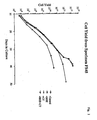
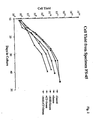
- Figures 1 and 2 represents the yield/passage calculated as the cell number obtained if all cells of a given condition were passaged.
- S represents chelexed serum (0.3%)
- CT represent cholera toxin (9 ng/ml)
- BHE bovine hypothalamic extract
- bovine hypothalamic extract While either bovine hypothalamic extract or cholera toxin used without serum were able to increase the final cell yield, bovine hypothalamic extract was able to improve the cell yield to a greater extent as well as to increase the number of passages during which the population doubling rate remained linear. In addition, bovine hypothalamic extract was shown to counterbalance the negative effects of serum to a much greater extent than cholera toxin. Cholera toxin did not appear to have any beneficial effect if bovine hypothalamic extract was present with or without serum.
- Keratinocytes designated B063 were established and grown in the mSBM formulation of example 9 with BHE and subsequently frozen for storage at the end of passage 2. These cells were thawed and seeded in 60 mm dishes at 1x10⁵/dish in the above medium without BHE. Half the dishes received EGF to 10 ng/ml two hours post seeding. The cells were harvested and counted at the end of passage 3 and those grown without EGF were replated and again grown to confluence. The data (table 11) show that, if desired, keratinocytes can be grown in mSBM without EGF and, in some instances, growth is comparable to that seen with EGF. Table 11 Efect of EGF on cell yield of HEp BO63. PASSAGE NUMBER 3 PASSAGE NUMBER 4 +EGF 1.14x10⁶ +/- 0.26 2.10x10⁶ +/- 0.23 -EGF 1.61X10⁶ +/- 0.21 1.82x10⁶ +/- 1.10
- hydrocortisone is not required, and its absence may then be preferred.
Landscapes
- Health & Medical Sciences (AREA)
- Engineering & Computer Science (AREA)
- Life Sciences & Earth Sciences (AREA)
- Chemical & Material Sciences (AREA)
- Biomedical Technology (AREA)
- Organic Chemistry (AREA)
- Biotechnology (AREA)
- Bioinformatics & Cheminformatics (AREA)
- Genetics & Genomics (AREA)
- Wood Science & Technology (AREA)
- Zoology (AREA)
- General Health & Medical Sciences (AREA)
- Cell Biology (AREA)
- Biochemistry (AREA)
- General Engineering & Computer Science (AREA)
- Microbiology (AREA)
- Dermatology (AREA)
- Transplantation (AREA)
- Oral & Maxillofacial Surgery (AREA)
- Medicinal Chemistry (AREA)
- Epidemiology (AREA)
- Animal Behavior & Ethology (AREA)
- Public Health (AREA)
- Veterinary Medicine (AREA)
- Micro-Organisms Or Cultivation Processes Thereof (AREA)
- Apparatus Associated With Microorganisms And Enzymes (AREA)
Applications Claiming Priority (4)
| Application Number | Priority Date | Filing Date | Title |
|---|---|---|---|
| US532257 | 1983-09-15 | ||
| US36104189A | 1989-06-05 | 1989-06-05 | |
| US361041 | 1989-06-05 | ||
| US53225790A | 1990-06-01 | 1990-06-01 |
Publications (2)
| Publication Number | Publication Date |
|---|---|
| EP0403139A1 true EP0403139A1 (fr) | 1990-12-19 |
| EP0403139B1 EP0403139B1 (fr) | 1998-08-12 |
Family
ID=27001138
Family Applications (1)
| Application Number | Title | Priority Date | Filing Date |
|---|---|---|---|
| EP90306084A Expired - Lifetime EP0403139B1 (fr) | 1989-06-01 | 1990-06-05 | Systèmes de culture cellulaire et milieux |
Country Status (9)
| Country | Link |
|---|---|
| US (1) | US5712163A (fr) |
| EP (1) | EP0403139B1 (fr) |
| JP (1) | JP2577114B2 (fr) |
| AT (1) | ATE169670T1 (fr) |
| CA (1) | CA2018228C (fr) |
| DE (1) | DE69032549T2 (fr) |
| DK (1) | DK0403139T3 (fr) |
| ES (1) | ES2120946T3 (fr) |
| IL (1) | IL94611A (fr) |
Cited By (9)
| Publication number | Priority date | Publication date | Assignee | Title |
|---|---|---|---|---|
| WO1993010217A1 (fr) * | 1991-11-20 | 1993-05-27 | N.V. Innogenetics S.A. | Nouvelles cultures de keratinocytes, leur procede de preparation et leur utilisation comme substances de cicatrisation |
| FR2747395A1 (fr) * | 1996-04-16 | 1997-10-17 | Univ Nantes | Procede de primoculture in vitro de cellules epitheliales gastro-intestinales, composition cellulaire obtenue notamment par la mise en oeuvre du procede et applications de ladite composition en tant que systeme de production |
| WO1997039109A1 (fr) * | 1996-04-16 | 1997-10-23 | Universite De Nantes | Procede et milieu de culture de cellules, composition cellulaire obtenue et ses applications en tant que systeme de production et de modele d'etude |
| US5693085A (en) * | 1994-04-29 | 1997-12-02 | Scimed Life Systems, Inc. | Stent with collagen |
| US5755814A (en) * | 1993-03-17 | 1998-05-26 | Berg; Richard A. | Dermal-epidermal in vitro test system |
| FR2757536A1 (fr) * | 1996-12-24 | 1998-06-26 | Univ Nantes | Procede et milieu de culture de cellules, composition cellul aire obtenue et ses applications en tant que systeme de production et de modele d'etude |
| EP0872180A4 (fr) * | 1995-09-04 | 2001-08-01 | Fuso Pharmaceutical Ind | Composition d'un milieu pour fertilisation externe |
| US6326194B1 (en) | 1993-03-11 | 2001-12-04 | Geoffrey Michael Curtin | Method for providing cell growth |
| US6585969B1 (en) | 1991-11-20 | 2003-07-01 | N. V. Innogenetics S.A. | Non-viable keratinocyte cell composition or lysate for promoting wound healing |
Families Citing this family (71)
| Publication number | Priority date | Publication date | Assignee | Title |
|---|---|---|---|---|
| US5610007A (en) * | 1993-01-21 | 1997-03-11 | Universite Laval | Chimeric sheets of epithelial cells |
| AU687386B2 (en) * | 1993-04-08 | 1998-02-26 | Human Cell Cultures, Inc. | Cell culturing method and medium |
| DE4438015A1 (de) * | 1994-10-25 | 1996-05-02 | Boehringer Mannheim Gmbh | Epithelzellenhaltiges Biomaterial und dessen Verwendung als Transplantat |
| EP1482031B1 (fr) | 1996-08-30 | 2015-10-28 | Life Technologies Corporation | Milieu de culture de cellules de mammifères exempt de sérum et son utilisation |
| US6692961B1 (en) * | 1996-10-11 | 2004-02-17 | Invitrogen Corporation | Defined systems for epithelial cell culture and use thereof |
| US5972332A (en) | 1997-04-16 | 1999-10-26 | The Regents Of The University Of Michigan | Wound treatment with keratinocytes on a solid support enclosed in a porous material |
| AU3077299A (en) | 1998-03-11 | 1999-09-27 | University Of Southern California | Method of promoting production of living tissue equivalents |
| EP2295540A1 (fr) * | 1998-11-19 | 2011-03-16 | Organogenesis, Inc. | Constructions de tissu issues de la bioingénierie et leurs procédés de fabrication et d'utilisation |
| US6248725B1 (en) * | 1999-02-23 | 2001-06-19 | Amgen, Inc. | Combinations and methods for promoting in vivo liver cell proliferation and enhancing in vivo liver-directed gene transduction |
| US7056503B2 (en) * | 1999-08-19 | 2006-06-06 | Regents Of The University Of Michigan | Enclosures housing cell-coated supports for treating tumors |
| WO2001014527A1 (fr) * | 1999-08-23 | 2001-03-01 | Organogenesis Inc. | Compositions et traitements pour soins cutanes |
| FR2812004B1 (fr) * | 2000-07-24 | 2002-12-27 | Ccd Lab | Milieux de culture pour fecondation in vitro, ou pour la culture de follicules, cellules germinales males ou embryons |
| NZ549528A (en) * | 2001-03-02 | 2008-04-30 | Stratatech Corp | Method of making skin equivalents having improved barrier function |
| US6506576B2 (en) | 2001-03-14 | 2003-01-14 | Board Of Trustees Of The University Of Arkansas | Serum-and steroid-free culture media for cerebellar granule neurons |
| JP3728750B2 (ja) * | 2001-11-22 | 2005-12-21 | ニプロ株式会社 | 培養皮膚及びその製造方法 |
| ATE532854T1 (de) | 2001-12-04 | 2011-11-15 | Organogenesis Inc | Kultivierte zellen aus den langerhansschen inseln |
| AU2003219830A1 (en) * | 2002-02-22 | 2003-09-09 | Ebi, L.P. | Methods and compositions for treating bone or cartilage defects |
| US7741116B2 (en) | 2002-03-06 | 2010-06-22 | University Of Cincinnati | Surgical device for skin therapy or testing |
| US6872549B2 (en) * | 2002-03-27 | 2005-03-29 | Immunex Corporation | Methods for increasing polypeptide production |
| EP1499710B1 (fr) * | 2002-03-29 | 2011-08-24 | Singapore Eye Research Institute | Procede de developpement d'equivalents des tissus conjonctivaux humains destines a la recherche, aux transplantations cliniques de la surface oculaire et a l'ingenierie tissulaire |
| SI2000481T1 (sl) | 2003-02-01 | 2016-08-31 | Tanox, Inc. | Anti-humana protitelesa IgE z visoko afiniteto |
| GB0304799D0 (en) * | 2003-03-03 | 2003-04-09 | Glaxosmithkline Biolog Sa | Novel method |
| JP4756816B2 (ja) * | 2003-03-10 | 2011-08-24 | 株式会社アドバンス | 骨再生補綴物の製造方法 |
| JP2006520598A (ja) * | 2003-03-17 | 2006-09-14 | シャイア ラボラトリーズ,インコーポレイテッド | 腸上皮細胞単層のための促進された培養システム |
| US20040185561A1 (en) * | 2003-03-18 | 2004-09-23 | Cascade Biologics, Inc. | Animal product-free cell culture media extracts, supplements and culture media supplement systems |
| EP1475434A1 (fr) * | 2003-05-09 | 2004-11-10 | Oncoscience AG | Procédé de stockage de cellules tumorales |
| CA2528115A1 (fr) * | 2003-06-03 | 2004-12-16 | Nancy L. Parenteau | Selection et propagation de cellules progenitrices |
| KR100567655B1 (ko) * | 2004-04-26 | 2006-04-04 | 사회복지법인 삼성생명공익재단 | 섬유아세포 배양용 배지, 상기 배지를 이용하여 진피대체물을 제조하는 방법 및 그에 의하여 제조되는 진피대체물, 상기 진피 대체물을 이용하여 피부 대체물을제조하는 방법 및 그에 의하여 제조되는 피부 대체물 |
| US8252591B2 (en) | 2004-05-07 | 2012-08-28 | Whitehead Institute For Biomedical Research | Hormone responsive tissue culture system and uses thereof |
| WO2006060709A2 (fr) * | 2004-12-02 | 2006-06-08 | Organ Recovery Systems, Inc. | Voies biologiques dans des cellules progenitrices |
| US20070004036A1 (en) * | 2005-07-01 | 2007-01-04 | Rodolfo Faudoa | Methods and compositions for keratinocyte culture |
| US20070128685A1 (en) * | 2005-07-01 | 2007-06-07 | Rodolfo Faudoa | Methods and compositions for cell culture |
| US20070003541A1 (en) * | 2005-07-01 | 2007-01-04 | Rodolfo Faudoa | Methods and compositions for therapeutics |
| KR100771171B1 (ko) * | 2006-07-05 | 2007-10-29 | 재단법인서울대학교산학협력재단 | 모낭 줄기세포의 분리, 증식 및 분화 방법 및 대머리치료용 조성물 |
| CN106188303A (zh) | 2006-11-02 | 2016-12-07 | 健泰科生物技术公司 | 人源化的抗‑d因子抗体 |
| JP5386364B2 (ja) | 2006-12-18 | 2014-01-15 | ジェネンテック, インコーポレイテッド | 抗Notch3アンタゴニスト抗体とNotch3関連疾患の予防及び治療におけるその使用 |
| TWI570135B (zh) | 2007-04-27 | 2017-02-11 | 建南德克公司 | 高效、穩定且非免疫抑制之抗-cd4抗體 |
| US20110244502A1 (en) * | 2007-08-10 | 2011-10-06 | Whitehead Institute For Biomedical Research | Hormone responsive tissue culture system and uses thereof |
| CN111909273B (zh) * | 2007-08-29 | 2024-03-26 | 塞诺菲-安万特股份有限公司 | 人源化的抗-cxcr5抗体、其衍生物及它们的应用 |
| EP2050764A1 (fr) | 2007-10-15 | 2009-04-22 | sanofi-aventis | Nouveau format d'anticorps bispécifique polyvalent |
| CR20170001A (es) | 2008-04-28 | 2017-08-10 | Genentech Inc | Anticuerpos anti factor d humanizados |
| JP5611210B2 (ja) | 2008-09-07 | 2014-10-22 | グリコネックス インコーポレイテッド | 抗拡張i型スフィンゴ糖脂質抗体、その誘導体および使用 |
| WO2010040699A1 (fr) * | 2008-10-06 | 2010-04-15 | Mc2 Cell Aps | Système de bioréacteur à multiples cultures |
| EP2524034A1 (fr) | 2010-01-14 | 2012-11-21 | Organogenesis, Inc. | Constructions tissulaires obtenues par bio-ingénierie et leurs procédés de fabrication et d'utilisation |
| EP2625264B1 (fr) | 2010-10-08 | 2022-12-07 | Terumo BCT, Inc. | Procédés et systèmes de culture et de récolte de cellules dans un système de bioréacteur à fibres creuses avec conditions de régulation |
| CN103459593A (zh) | 2011-02-25 | 2013-12-18 | 独立行政法人理化学研究所 | 视网膜色素上皮细胞片层的生产方法 |
| US20130344074A1 (en) | 2011-03-16 | 2013-12-26 | Sanofi | Uses of a dual v region antibody-like protein |
| JP6216318B2 (ja) | 2011-09-30 | 2017-10-18 | 株式会社アモーレパシフィックAmorepacific Corporation | 角化細胞に適応したメラニン形成細胞又はその前駆細胞 |
| US9592289B2 (en) | 2012-03-26 | 2017-03-14 | Sanofi | Stable IgG4 based binding agent formulations |
| BR112015003839B1 (pt) | 2012-08-24 | 2021-12-28 | Riken | Método para produzir lâmina de células do epitélio pigmentar da retina |
| JP6633522B2 (ja) | 2013-11-16 | 2020-01-22 | テルモ ビーシーティー、インコーポレーテッド | バイオリアクターにおける細胞増殖 |
| WO2015148704A1 (fr) | 2014-03-25 | 2015-10-01 | Terumo Bct, Inc. | Remplacement passif de milieu |
| US20160090569A1 (en) | 2014-09-26 | 2016-03-31 | Terumo Bct, Inc. | Scheduled Feed |
| US10801009B2 (en) | 2014-11-17 | 2020-10-13 | Biocoz Global Korea Corp. | Cosmetic composition for improving condition of skin, containing cell culture medium, epidermal growth factor and bovine serum albumin |
| WO2017004592A1 (fr) | 2015-07-02 | 2017-01-05 | Terumo Bct, Inc. | Croissance cellulaire à l'aide de stimuli mécaniques |
| US10119117B2 (en) | 2016-01-28 | 2018-11-06 | Nanogen Pharmaceutical Biotechnology Co., Ltd | Universal, glycosylation enhancer, completely chemically defined medium formulation |
| JP7034949B2 (ja) | 2016-05-25 | 2022-03-14 | テルモ ビーシーティー、インコーポレーテッド | 細胞の増殖 |
| US11685883B2 (en) | 2016-06-07 | 2023-06-27 | Terumo Bct, Inc. | Methods and systems for coating a cell growth surface |
| US11104874B2 (en) | 2016-06-07 | 2021-08-31 | Terumo Bct, Inc. | Coating a bioreactor |
| CN117247899A (zh) | 2017-03-31 | 2023-12-19 | 泰尔茂比司特公司 | 细胞扩增 |
| US12234441B2 (en) | 2017-03-31 | 2025-02-25 | Terumo Bct, Inc. | Cell expansion |
| US11624046B2 (en) | 2017-03-31 | 2023-04-11 | Terumo Bct, Inc. | Cell expansion |
| WO2019006127A1 (fr) * | 2017-06-28 | 2019-01-03 | Rutgers, The State University Of New Jersey | Organoïdes dérivés d'une cellule rénale unique |
| JP2021526556A (ja) * | 2018-05-30 | 2021-10-07 | ダイレクト バイオロジクス エルエルシー | 成長因子および細胞外小胞を凍結または粉状にした、間葉系幹細胞(msc)の調製物を含む助剤、ならびにその使用方法 |
| BR112021015549A2 (pt) | 2019-02-07 | 2021-10-26 | Direct Biologics Llc | Método para tratar osteoartrite com uma combinação de exossomos de células tronco mesenquimais, células tronco mesenquimais sinoviais e andaimes |
| US12590310B2 (en) | 2020-04-22 | 2026-03-31 | Direct Biologics, Llc | Methods and compositions for treating inflammatory conditions associated with infectious disease |
| KR102583179B1 (ko) * | 2020-11-27 | 2023-09-26 | (주)엑셀세라퓨틱스 | 칼슘, 상피세포성장인자 및 알부민을 포함하는 각질형성세포 수립 또는 배양용 배지 조성물 |
| GB2619893A (en) | 2021-03-23 | 2023-12-20 | Terumo Bct Inc | Cell capture and expansion |
| US12152699B2 (en) | 2022-02-28 | 2024-11-26 | Terumo Bct, Inc. | Multiple-tube pinch valve assembly |
| USD1099116S1 (en) | 2022-09-01 | 2025-10-21 | Terumo Bct, Inc. | Display screen or portion thereof with a graphical user interface for displaying cell culture process steps and measurements of an associated bioreactor device |
| US12502407B2 (en) | 2024-04-25 | 2025-12-23 | Direct Biologics, Llc | Treatment of fistula with bone marrow mesenchymal stem cell derived extracellular vesicles |
Citations (2)
| Publication number | Priority date | Publication date | Assignee | Title |
|---|---|---|---|---|
| FR2532948A1 (fr) * | 1982-09-15 | 1984-03-16 | Collaborative Res Inc | Supplements et combinaison pour milieux de croissance de cellules, et procede pour leur fabrication |
| US4673649A (en) * | 1983-07-15 | 1987-06-16 | University Patents, Inc. | Process and defined medium for growth of human epidermal keratinocyte cells |
Family Cites Families (13)
| Publication number | Priority date | Publication date | Assignee | Title |
|---|---|---|---|---|
| US4456687A (en) * | 1978-11-16 | 1984-06-26 | President And Fellows Of Harvard College | Agents for promoting growth of epithelial cells |
| US4254226A (en) * | 1979-09-13 | 1981-03-03 | Sloan Kettering Institute For Cancer Research | Process for growing human epidermal cells in tissue culture |
| US4443546A (en) * | 1980-07-07 | 1984-04-17 | The Beth Israel Hospital Association | Process and composition for propagating mammalian cells |
| US4560655A (en) * | 1982-12-16 | 1985-12-24 | Immunex Corporation | Serum-free cell culture medium and process for making same |
| US4769317A (en) * | 1983-06-14 | 1988-09-06 | Hefton John M | Process for growing human epidermis, product thereof |
| US4940666A (en) * | 1983-07-15 | 1990-07-10 | University Patents, Inc. | Process and defined medium for growth of human epidermal keratinocyte cells |
| FR2612938B1 (fr) * | 1987-03-26 | 1989-06-23 | Cird | Procede d'obtention d'un equivalent de peau et equivalent de peau correspondant |
| FR2612939B1 (fr) * | 1987-03-26 | 1989-06-23 | Cird | Equivalent de peau |
| US4885238A (en) * | 1987-10-30 | 1989-12-05 | The United States Of America As Represented By The Department Of Health And Human Services | Immortalized human bronchial epitherial mesothelial cell lines |
| JPS6434282A (en) * | 1987-07-31 | 1989-02-03 | Meguro Kenkyusho Kk | Synthetic culture medium for producing monoclonal antibody |
| JPH0785714B2 (ja) * | 1988-03-30 | 1995-09-20 | トラステイーズ・オブ・タフツ・カレツジ | 生体内及び試験管内におけるメラニン含量の増大法及びメラノサイト増殖の誘導法 |
| AU621972B2 (en) * | 1988-12-14 | 1992-03-26 | United States of America, as represented by the Secretary, U.S. Department of Commerce, The | Cell culture medium for human liver epithelial cell line |
| US5292655A (en) * | 1990-01-29 | 1994-03-08 | Wille Jr John J | Method for the formation of a histologically-complete skin substitute |
-
1990
- 1990-06-04 CA CA002018228A patent/CA2018228C/fr not_active Expired - Lifetime
- 1990-06-04 IL IL9461190A patent/IL94611A/en not_active IP Right Cessation
- 1990-06-05 DK DK90306084T patent/DK0403139T3/da active
- 1990-06-05 ES ES90306084T patent/ES2120946T3/es not_active Expired - Lifetime
- 1990-06-05 DE DE69032549T patent/DE69032549T2/de not_active Expired - Fee Related
- 1990-06-05 JP JP2147191A patent/JP2577114B2/ja not_active Expired - Fee Related
- 1990-06-05 AT AT90306084T patent/ATE169670T1/de not_active IP Right Cessation
- 1990-06-05 EP EP90306084A patent/EP0403139B1/fr not_active Expired - Lifetime
-
1995
- 1995-03-28 US US08/412,982 patent/US5712163A/en not_active Expired - Lifetime
Patent Citations (2)
| Publication number | Priority date | Publication date | Assignee | Title |
|---|---|---|---|---|
| FR2532948A1 (fr) * | 1982-09-15 | 1984-03-16 | Collaborative Res Inc | Supplements et combinaison pour milieux de croissance de cellules, et procede pour leur fabrication |
| US4673649A (en) * | 1983-07-15 | 1987-06-16 | University Patents, Inc. | Process and defined medium for growth of human epidermal keratinocyte cells |
Non-Patent Citations (2)
| Title |
|---|
| JOURNAL OF CELLULAR PHYSIOLOGY, vol. 110, no. 2, 1980, pages 219-229, Alan R. Liss, Inc., New York, US; M.C. TSAO et al.: "Clonal growth of normal human epidermal keratinocytes in a defined medium" * |
| PROCEEDINGS OF THE NATIONAL ACADEMY OF SCIENCES, USA, vol. 79, July 1982, pages 4074-4077, Washington, DC, US; W. IMAGAWA et al.: "Serum-free growth of normal and tumor mouse mammary epithelial cells in primary culture" * |
Cited By (13)
| Publication number | Priority date | Publication date | Assignee | Title |
|---|---|---|---|---|
| US6126935A (en) * | 1991-11-20 | 2000-10-03 | N.V. Innogenetics S.A. | Pellets obtained from cell cultures of keratinocytes and their use in wound healing |
| US5866167A (en) * | 1991-11-20 | 1999-02-02 | N.V Innogentics S.A. | Non-viable total keratinocyte lysate for promoting wound healing |
| WO1993010217A1 (fr) * | 1991-11-20 | 1993-05-27 | N.V. Innogenetics S.A. | Nouvelles cultures de keratinocytes, leur procede de preparation et leur utilisation comme substances de cicatrisation |
| US6585969B1 (en) | 1991-11-20 | 2003-07-01 | N. V. Innogenetics S.A. | Non-viable keratinocyte cell composition or lysate for promoting wound healing |
| US6326194B1 (en) | 1993-03-11 | 2001-12-04 | Geoffrey Michael Curtin | Method for providing cell growth |
| US5755814A (en) * | 1993-03-17 | 1998-05-26 | Berg; Richard A. | Dermal-epidermal in vitro test system |
| US5888248A (en) * | 1993-03-17 | 1999-03-30 | Berg; Richard A. | Dermal-epidermal in vitro test system |
| US5945101A (en) * | 1993-03-17 | 1999-08-31 | Berg; Richard A. | Skin model system |
| US5693085A (en) * | 1994-04-29 | 1997-12-02 | Scimed Life Systems, Inc. | Stent with collagen |
| EP0872180A4 (fr) * | 1995-09-04 | 2001-08-01 | Fuso Pharmaceutical Ind | Composition d'un milieu pour fertilisation externe |
| FR2747395A1 (fr) * | 1996-04-16 | 1997-10-17 | Univ Nantes | Procede de primoculture in vitro de cellules epitheliales gastro-intestinales, composition cellulaire obtenue notamment par la mise en oeuvre du procede et applications de ladite composition en tant que systeme de production |
| WO1997039109A1 (fr) * | 1996-04-16 | 1997-10-23 | Universite De Nantes | Procede et milieu de culture de cellules, composition cellulaire obtenue et ses applications en tant que systeme de production et de modele d'etude |
| FR2757536A1 (fr) * | 1996-12-24 | 1998-06-26 | Univ Nantes | Procede et milieu de culture de cellules, composition cellul aire obtenue et ses applications en tant que systeme de production et de modele d'etude |
Also Published As
| Publication number | Publication date |
|---|---|
| DE69032549T2 (de) | 1999-02-04 |
| IL94611A (en) | 1994-12-29 |
| JPH0387174A (ja) | 1991-04-11 |
| ATE169670T1 (de) | 1998-08-15 |
| IL94611A0 (en) | 1991-04-15 |
| EP0403139B1 (fr) | 1998-08-12 |
| ES2120946T3 (es) | 1998-11-16 |
| US5712163A (en) | 1998-01-27 |
| JP2577114B2 (ja) | 1997-01-29 |
| DE69032549D1 (de) | 1998-09-17 |
| DK0403139T3 (da) | 1999-05-10 |
| CA2018228A1 (fr) | 1990-12-05 |
| CA2018228C (fr) | 1996-02-27 |
Similar Documents
| Publication | Publication Date | Title |
|---|---|---|
| EP0403139A1 (fr) | Systèmes de culture cellulaire et milieux | |
| Lechner et al. | Clonal growth of normal adult human bronchial epithelial cells in a serum-free medium | |
| Peehl et al. | Growth and differentiation of human keratinocytes without a feeder layer or conditioned medium | |
| Peehl et al. | Clonal growth of human keratinocytes with small amounts of dialyzed serum | |
| US6692961B1 (en) | Defined systems for epithelial cell culture and use thereof | |
| EP2183358B1 (fr) | Procédé pour la préparation de tissu de papille dermique employant des cellules souches mésenchymateuses | |
| Hammond et al. | Serum-free growth of human mammary epithelial cells: rapid clonal growth in defined medium and extended serial passage with pituitary extract. | |
| US7462487B2 (en) | Cell culture media | |
| US5324656A (en) | Media for normal human muscle satellite cells | |
| US4673649A (en) | Process and defined medium for growth of human epidermal keratinocyte cells | |
| DE69611894T2 (de) | Unsterbliche humane Hautzell-Linien und serumfreies Medium für ihre Herstellung | |
| Chuman et al. | Continuous growth of proximal tubular kidney epithelial cells in hormone-supplemented serum-free medium. | |
| CA2165335A1 (fr) | Milieu pour le developpement et la proliferation a long terme de cellules | |
| Ham | Dermal fibroblasts | |
| Johnson et al. | Serial cultivation of normal human keratinocytes: a defined system for studying the regulation of growth and differentiation | |
| Gasser et al. | Long-term multiplication of the Chinese hamster ovary (CHO) cell line in a serum-free medium | |
| Hornsby et al. | Serum and growth factor requirements for proliferation of human adrenocortical cells in culture: comparison with bovine adrenocortical cells | |
| US5126261A (en) | High calcium chemically defined culture medium | |
| Price et al. | A new culture medium for human skin epithelial cells | |
| Rikimaru et al. | Growth of the malignant and nonmalignant human squamous cells in a protein-free defined medium | |
| EP0939797A1 (fr) | Systemes definis de culture de cellules epitheliales et utilisation desdits systemes | |
| US5266479A (en) | High calcium chemically defined culture medium | |
| JPH09512171A (ja) | 無血清培地添加物 | |
| Miyazaki et al. | Improved maintenance of adult rat hepatocytes in a new serum-free medium in the presence or absence of barbiturates | |
| Ham | Growth of normal human cells in defined media |
Legal Events
| Date | Code | Title | Description |
|---|---|---|---|
| PUAI | Public reference made under article 153(3) epc to a published international application that has entered the european phase |
Free format text: ORIGINAL CODE: 0009012 |
|
| AK | Designated contracting states |
Kind code of ref document: A1 Designated state(s): AT BE CH DE DK ES FR GB GR IT LI LU NL SE |
|
| 17P | Request for examination filed |
Effective date: 19901228 |
|
| 17Q | First examination report despatched |
Effective date: 19940203 |
|
| RAP1 | Party data changed (applicant data changed or rights of an application transferred) |
Owner name: ORGANOGENESIS INC. |
|
| GRAG | Despatch of communication of intention to grant |
Free format text: ORIGINAL CODE: EPIDOS AGRA |
|
| GRAG | Despatch of communication of intention to grant |
Free format text: ORIGINAL CODE: EPIDOS AGRA |
|
| GRAG | Despatch of communication of intention to grant |
Free format text: ORIGINAL CODE: EPIDOS AGRA |
|
| GRAH | Despatch of communication of intention to grant a patent |
Free format text: ORIGINAL CODE: EPIDOS IGRA |
|
| GRAH | Despatch of communication of intention to grant a patent |
Free format text: ORIGINAL CODE: EPIDOS IGRA |
|
| GRAA | (expected) grant |
Free format text: ORIGINAL CODE: 0009210 |
|
| AK | Designated contracting states |
Kind code of ref document: B1 Designated state(s): AT BE CH DE DK ES FR GB GR IT LI LU NL SE |
|
| REF | Corresponds to: |
Ref document number: 169670 Country of ref document: AT Date of ref document: 19980815 Kind code of ref document: T |
|
| RIN1 | Information on inventor provided before grant (corrected) |
Inventor name: MEUNIER, SUSAN FRANCES Inventor name: JOHNSON, ERIC WILLIAM Inventor name: PARENTEAU, NANCY LOUISE Inventor name: MARESH, JOHN GREGORY |
|
| REG | Reference to a national code |
Ref country code: CH Ref legal event code: NV Representative=s name: NOVARTIS AG Ref country code: CH Ref legal event code: EP |
|
| REF | Corresponds to: |
Ref document number: 69032549 Country of ref document: DE Date of ref document: 19980917 |
|
| ET | Fr: translation filed | ||
| REG | Reference to a national code |
Ref country code: ES Ref legal event code: FG2A Ref document number: 2120946 Country of ref document: ES Kind code of ref document: T3 |
|
| REG | Reference to a national code |
Ref country code: DK Ref legal event code: T3 |
|
| PLBE | No opposition filed within time limit |
Free format text: ORIGINAL CODE: 0009261 |
|
| STAA | Information on the status of an ep patent application or granted ep patent |
Free format text: STATUS: NO OPPOSITION FILED WITHIN TIME LIMIT |
|
| 26N | No opposition filed | ||
| EUG | Se: european patent has lapsed | ||
| REG | Reference to a national code |
Ref country code: GB Ref legal event code: IF02 |
|
| PGFP | Annual fee paid to national office [announced via postgrant information from national office to epo] |
Ref country code: AT Payment date: 20061121 Year of fee payment: 17 Ref country code: NL Payment date: 20061121 Year of fee payment: 17 |
|
| PGFP | Annual fee paid to national office [announced via postgrant information from national office to epo] |
Ref country code: SE Payment date: 20061124 Year of fee payment: 17 |
|
| PGFP | Annual fee paid to national office [announced via postgrant information from national office to epo] |
Ref country code: DK Payment date: 20061128 Year of fee payment: 17 |
|
| PGFP | Annual fee paid to national office [announced via postgrant information from national office to epo] |
Ref country code: GR Payment date: 20061130 Year of fee payment: 17 |
|
| PGFP | Annual fee paid to national office [announced via postgrant information from national office to epo] |
Ref country code: LU Payment date: 20061204 Year of fee payment: 17 |
|
| PGFP | Annual fee paid to national office [announced via postgrant information from national office to epo] |
Ref country code: BE Payment date: 20061220 Year of fee payment: 17 |
|
| BERE | Be: lapsed |
Owner name: *ORGANOGENESIS INC. Effective date: 20070630 |
|
| PGFP | Annual fee paid to national office [announced via postgrant information from national office to epo] |
Ref country code: ES Payment date: 20071026 Year of fee payment: 18 |
|
| REG | Reference to a national code |
Ref country code: DK Ref legal event code: EBP |
|
| EUG | Se: european patent has lapsed | ||
| PG25 | Lapsed in a contracting state [announced via postgrant information from national office to epo] |
Ref country code: AT Free format text: LAPSE BECAUSE OF NON-PAYMENT OF DUE FEES Effective date: 20070605 |
|
| PGFP | Annual fee paid to national office [announced via postgrant information from national office to epo] |
Ref country code: CH Payment date: 20071129 Year of fee payment: 18 Ref country code: IT Payment date: 20071129 Year of fee payment: 18 |
|
| NLV4 | Nl: lapsed or anulled due to non-payment of the annual fee |
Effective date: 20080101 |
|
| PG25 | Lapsed in a contracting state [announced via postgrant information from national office to epo] |
Ref country code: BE Free format text: LAPSE BECAUSE OF NON-PAYMENT OF DUE FEES Effective date: 20070630 |
|
| PG25 | Lapsed in a contracting state [announced via postgrant information from national office to epo] |
Ref country code: NL Free format text: LAPSE BECAUSE OF NON-PAYMENT OF DUE FEES Effective date: 20080101 |
|
| PGFP | Annual fee paid to national office [announced via postgrant information from national office to epo] |
Ref country code: FR Payment date: 20071119 Year of fee payment: 18 Ref country code: GB Payment date: 20071128 Year of fee payment: 18 |
|
| PGFP | Annual fee paid to national office [announced via postgrant information from national office to epo] |
Ref country code: DE Payment date: 20071130 Year of fee payment: 18 |
|
| PG25 | Lapsed in a contracting state [announced via postgrant information from national office to epo] |
Ref country code: SE Free format text: LAPSE BECAUSE OF NON-PAYMENT OF DUE FEES Effective date: 20070606 |
|
| PG25 | Lapsed in a contracting state [announced via postgrant information from national office to epo] |
Ref country code: DK Free format text: LAPSE BECAUSE OF NON-PAYMENT OF DUE FEES Effective date: 20070702 |
|
| PG25 | Lapsed in a contracting state [announced via postgrant information from national office to epo] |
Ref country code: GR Free format text: LAPSE BECAUSE OF NON-PAYMENT OF DUE FEES Effective date: 20080104 |
|
| REG | Reference to a national code |
Ref country code: CH Ref legal event code: PL |
|
| GBPC | Gb: european patent ceased through non-payment of renewal fee |
Effective date: 20080605 |
|
| REG | Reference to a national code |
Ref country code: FR Ref legal event code: ST Effective date: 20090228 |
|
| PG25 | Lapsed in a contracting state [announced via postgrant information from national office to epo] |
Ref country code: DE Free format text: LAPSE BECAUSE OF NON-PAYMENT OF DUE FEES Effective date: 20090101 |
|
| PG25 | Lapsed in a contracting state [announced via postgrant information from national office to epo] |
Ref country code: LI Free format text: LAPSE BECAUSE OF NON-PAYMENT OF DUE FEES Effective date: 20080630 Ref country code: CH Free format text: LAPSE BECAUSE OF NON-PAYMENT OF DUE FEES Effective date: 20080630 Ref country code: GB Free format text: LAPSE BECAUSE OF NON-PAYMENT OF DUE FEES Effective date: 20080605 |
|
| REG | Reference to a national code |
Ref country code: ES Ref legal event code: FD2A Effective date: 20080606 |
|
| PG25 | Lapsed in a contracting state [announced via postgrant information from national office to epo] |
Ref country code: FR Free format text: LAPSE BECAUSE OF NON-PAYMENT OF DUE FEES Effective date: 20080630 Ref country code: LU Free format text: LAPSE BECAUSE OF NON-PAYMENT OF DUE FEES Effective date: 20070605 Ref country code: IT Free format text: LAPSE BECAUSE OF NON-PAYMENT OF DUE FEES Effective date: 20080605 |
|
| PG25 | Lapsed in a contracting state [announced via postgrant information from national office to epo] |
Ref country code: ES Free format text: LAPSE BECAUSE OF NON-PAYMENT OF DUE FEES Effective date: 20080606 |