EP0404116A2 - Poyester und Vefahren zu dessen Herstellung - Google Patents
Poyester und Vefahren zu dessen Herstellung Download PDFInfo
- Publication number
- EP0404116A2 EP0404116A2 EP90111676A EP90111676A EP0404116A2 EP 0404116 A2 EP0404116 A2 EP 0404116A2 EP 90111676 A EP90111676 A EP 90111676A EP 90111676 A EP90111676 A EP 90111676A EP 0404116 A2 EP0404116 A2 EP 0404116A2
- Authority
- EP
- European Patent Office
- Prior art keywords
- polyester
- group
- acid
- carbon atoms
- dicarboxylic acid
- Prior art date
- Legal status (The legal status is an assumption and is not a legal conclusion. Google has not performed a legal analysis and makes no representation as to the accuracy of the status listed.)
- Withdrawn
Links
Images





Classifications
-
- C—CHEMISTRY; METALLURGY
- C08—ORGANIC MACROMOLECULAR COMPOUNDS; THEIR PREPARATION OR CHEMICAL WORKING-UP; COMPOSITIONS BASED THEREON
- C08G—MACROMOLECULAR COMPOUNDS OBTAINED OTHERWISE THAN BY REACTIONS ONLY INVOLVING UNSATURATED CARBON-TO-CARBON BONDS
- C08G63/00—Macromolecular compounds obtained by reactions forming a carboxylic ester link in the main chain of the macromolecule
- C08G63/02—Polyesters derived from hydroxycarboxylic acids or from polycarboxylic acids and polyhydroxy compounds
- C08G63/12—Polyesters derived from hydroxycarboxylic acids or from polycarboxylic acids and polyhydroxy compounds derived from polycarboxylic acids and polyhydroxy compounds
- C08G63/16—Dicarboxylic acids and dihydroxy compounds
-
- C—CHEMISTRY; METALLURGY
- C08—ORGANIC MACROMOLECULAR COMPOUNDS; THEIR PREPARATION OR CHEMICAL WORKING-UP; COMPOSITIONS BASED THEREON
- C08G—MACROMOLECULAR COMPOUNDS OBTAINED OTHERWISE THAN BY REACTIONS ONLY INVOLVING UNSATURATED CARBON-TO-CARBON BONDS
- C08G63/00—Macromolecular compounds obtained by reactions forming a carboxylic ester link in the main chain of the macromolecule
- C08G63/02—Polyesters derived from hydroxycarboxylic acids or from polycarboxylic acids and polyhydroxy compounds
- C08G63/12—Polyesters derived from hydroxycarboxylic acids or from polycarboxylic acids and polyhydroxy compounds derived from polycarboxylic acids and polyhydroxy compounds
- C08G63/40—Polyesters derived from ester-forming derivatives of polycarboxylic acids or of polyhydroxy compounds, other than from esters thereof
- C08G63/42—Cyclic ethers; Cyclic carbonates; Cyclic sulfites; Cyclic orthoesters
Definitions
- This invention relates to a novel polyester, especially a polyester having various side chains, as well as to a process of producing the same, especially to that of using a monoepoxy compound as one comonomer component.
- polyesters for the purpose of improving the fluidity, interfacial adhesiveness or interfacial transferability of polyesters or of improving the compatibility or surface-treating property thereof, it is generally well known to vary the kinds of diols, dicarboxylic acids or derivatives thereof, which are components of constituting polyesters, as well as the constitutive proportions thereof or to introduce various comonomer components into polyesters thereby to attain the intended objects.
- modification of resins by such method results in variation of the structure or sequence of the main chain of the resulting resin. Therefore, the intended modification of resins would often have harmful effects on the resulting resins, for example, the mechanical strength of the resins themselves would be lowered by such modification.
- the substituents on the monoepoxy compound used are in the side chains of the polyester molecule but not in the main chain of the polyester. Therefore, by selecting proper monoepoxy compounds, the intended modification of polyesters can be effected and accordingly, the adhesiveness and compatibility of the polyesters with other resins may thereby be improved.
- This invention provides a polyester, which is composed of a constitutive unit as represented by the following general formula (I) and a constitutive unit as represented by the following general formula (II) in a proportion of (I)/(II) of being from 0.1/99.9 to 99.9/0.1 as a molar ratio and which has a logarithmic viscosity ( ⁇ inh ) of being 0.1 or more: where R0 represents a monovalent fluorine-free organic group having from 1 to 40 carbon atoms; R1, R2 and R3 independently represent a divalent organic group having from 1 to 40 carbon atoms; and n represents 0 or 1.
- This invention also provides a process for producing a polyester, in which (A) a monoepoxy compound as represented by the following general formula (III), (B) a polyester or polyester precursor and (C) a dicarboxylic acid compounds are reacted and polymerized. where R0 and n have the same meanings as defiend above.
- R0 in the formula (II) represents a monovalent fluorine-free organic group having from 1 to 40, preferably from 4 to 30, carbon atoms. Specific examples of the group are as follows:
- a linear or cyclic, saturated or unsaturated hydrocarbon group such as an alkyl, cycloalkyl or aryl group
- an alkyloxy group such as an alkyl, cycloalkyl or aryl group
- an alkenyloxy group or an aryloxy group more preferably an alkyloxy group
- a silicon-containing organic group such as an alkyl, cycloalkyl or aryl group
- those having 4 or more carbon atoms are especially preferred.
- R1 and R3 independently represent a divalent organic group having from 1 to 40, preferably from 4 to 40, carbon atoms and correspond to a residue of a dicarboxylic acid of HOOC-R1-COOH or HOOC-R3-COOH, respectively.
- dicarboxylic acids include, for example, terephthalic acid, methoxyterephthalic acid, ethoxyterephthalic acid, fluoroterephthalic acid, chloroterephthalic acid, methylterephthalic acid, isophthalic acid, phthalic acid, methoxyisophthalic acid, diphenylmethane-4,4′-dicarboxylic acid, diphenylmethane-3,3′-dicarboxylic acid, diphenylether-4,4′-dicarboxylic acid, 2,2′-biphenyldicarboxylic acid, 4,4′-biphenyldicarboxylic acid, naphthalene-2,6-dicarboxylic acid, naphthalene-1,5-dicarboxylic acid, naphthalene-1,4-dicarboxylic acid, 2,5-norbornane-dicarboxylic acid, adipic acid, sebacic acid, azelaic acid
- dimer acids which are usable in this invention, there are mentioned polymer fatty acids obtained by polymerizing unsaturated fatty acids, for example, monobasic fatty acids derived from natural fats and oils or synthetic monobasic fatty acids, which have from 8 to 24 carbon atoms and have one or more double bonds or triple bonds.
- monobasic fatty acids derived from natural fats and oils
- synthetic monobasic fatty acids which have from 8 to 24 carbon atoms and have one or more double bonds or triple bonds.
- dimer fatty acids are generally composed of dimer fatty acids as an essential component and additionally other fatty acids or trimer fatty acids to be derived from the raw materials used for preparing the acids.
- dimer fatty acid content 70% by weight or more, preferably 95% by weight or more, more preferably 98% by weight or more are desirably employed in this invention.
- Commercial polymer fatty acids may be distilled to elevate the dimer fatty acid content in the resulting acids prior to being used in this invention, or as the case may be, they may be hydrogenated to lower the unsaturation degree in the resulting acids for use in this invention.
- R1 is preferably an aromatic dicarboxylic acid residue having from 6 to 15 carbon atoms, or an aliphatic dicarboxylic acid residue having from 1 to 10 carbon atoms
- R3 is preferably an aromatic dicarboxylic acid residue having from 6 to 15 carbon atoms, an aliphatic dicarboxylic acid residue having from 1 to 10 carbon atoms, or a dimer acid residue or a hydrogenated dimer acid residue.
- R1 is a residue of a terephthalic acid, isophthalic acid or naphthalene-dicarboxylic acid
- R3 is a residue of a terephthalic acid, isophthalic acid, phthalic acid, naphthalene-dicarboxylic acid, adipic acid, sebacic acid, dimer acid or hydrogenated dimer acid.
- R1 and R3 may be same as or different from each other.
- R2 represents a divalent organic group having from 1 to 40 carbon atoms, preferably from 2 to 20, more preferably from 2 to 10, carbon atoms and corresponds to a residue of a diol of a general formula HO-R2-OH.
- diols include, for example, ethylene glycol, 1,3-propanediol, 1,2-propanediol, 1,3-butanediol, 1,4-butanediol, neopentyl glycol, 1,6-hexanediol, 1,12-dodecanediol, cyclohexane-1,4-diol, cyclohexane-1,3-diol, cyclohexane-1,2-diol, cyclopentane-1,3-diol, diethylene glycol, polyethylene glycol, hydroquinone, resorcinol, methylhydroquinone, acetylhydro
- ethylene glycol 1,4-butanediol, diethylene glycol, etc.
- the polyester has a logarithmic viscosity ( ⁇ inh ) of 0.1 or more, preferably from 0.3 to 2, as measured in a mixed solvent of phenol/tetrachloroethane (50/50, by weight) in a concentration of 0.5 g/dl, at 30°C.
- the polyester of this invention is obtained by blending (A) an epoxy compound as represented by the formula (III), (B) a polyester or polyester precursor and (C) a dicarboxylic acid compound, reacting them under heat and polymerizing them under reduced pressure.
- epoxy compound of the formula (III) where R0 is an alkyl group having approximately from 1 to 40 carbon atoms, such as alkylglycidyl ethers having approximately from 1 to 40 carbon atoms, such as epoxidated compounds of (poly)alkylene glycol monoalkyl ethers, such as epoxy compounds of the formula (III) where R0 is an alkenyl group having approximately from 1 to 40 carbon atoms, such as epoxy compounds of the formula (III) where R0 is -O-Ar, and Ar is an optionally substituted aromatic group having from approximately 6 to 40 carbon atoms, such as as well as epoxy compounds of the formula (III) where R0 is a silicon- or nitrogen-containing organic group having approximately from 1 to 40 carbon atoms, such as These are used singly or as a mixture of two or more of them.
- polyesters are ones having a repeating unit of a general formula (IV): ( ⁇ - R1 - O - R2O) ⁇ (IV) where R1 and R2 independently represent a divalent organic group having from 1 to 40 carbon atoms.
- Such polyesters can be obtained by condensation reaction of a dicarboxylic acid compound or an ester thereof and a diol compound.
- dicarboxylic acid compounds include malonic acid, succinic acid, glutaric acid, adipic acid, pimelic acid, sebacic acid, azelaic acid, suberic acid, dodecanedicarboxylic acid, 3-methylazelaic acid, cyclohexane- 1,3-dicarboxylic acid, cyclopentane-1,3-dicarboxylic acid, terephthalic acid, methoxyterephthalic acid, ethoxyterephthalic acid, fluoroterephthalic acid, chloroterephthalic acid, methylterephthalic acid, isophthalic acid, phthalic acid, methoxyisophthalic acid, diphenylmethane-4,4′-dicarboxylic acid, diphenylmethane-3,3′-dicarboxylic acid, diphenyl ether-4
- dicarboxylic acids and esters thereof can be used singly or as a mixture of two or more of them.
- diols to give polyesters of the formula (IV) there are mentioned ethylene glycol, diethylene glycol, polyethylene glycol, 1,2-propanediol, 1,3-propanediol, 1,2-butanediol, 1,3-butanediol, 1,4-butanediol, 2,4-dimethyl-2-ethyl-1,3-hexanediol, 2,2,4-trimethyl-1,3-pentanediol, neopentyl glycol, 1,6-hexanediol, 1,12-dodecanediol, cyclohexane-1,4-diol, cyclohexane-1,3-diol, 1,4-cyclohexanedimethanol, p-xylenediol, 4,4′-thiodiphenol, 4,4′-methylenediphenol, 4,4′-dihydroxybiphenyl
- polyester precursors are compounds as represented by the following general formulae (V) to (VII):
- m represents a natural number including 0;
- R1 and R2 independently represent a divalent organic group having from 1 to 40 carbon atoms; and
- R4 represents a hydrogen atom, or an alkyl or aromatic group having from 1 to 15 carbon atoms.
- oligomers of the above-mentioned polyesters bishydroxyethyl terephthalate, bishydroxypropyl terephthalate, bishydroxybutyl terephthalate, etc.
- methyl p-hydroxybenzoate ethyl p-hydroxybenzoate, methyl 3-hydroxybenzoate, ethyl 3-hydroxybenzoate, etc. may also be employed.
- dicarboxylic acid compounds (C) to be used in this invention dicarboxylic acids as well as esters thereof which have been illustrated hereinabove as the above-mentioned polyester-constitutive component can be employed singly or as a mixture of two or more of them.
- aromatic dicarboxylic acids having from 8 to 20 carbon atoms
- aliphatic dicarboxylic acids having from 3 to 15 carbon atoms
- dimer acids and hydrogenated dimer acids are preferred.
- the monoepoxy compound, dicarboxylic acid, and polyester or polyester precursor can be reacted in any desired proportion.
- the proportion of the monoepoxy compound is form 0.1 to 100 parts by weight, especially preferably from 10 to 100 parts by weight, and that of the dicarboxylic acid is from 0.1 to 100 parts by weight, especially preferably from 10 to 100 parts by weight, each to 100 parts by weight of the polyester or polyester precursor.
- the molar ratio of the monoepoxy compound to the dicarboxylic acid is 2, in reacting the reactants.
- a monoepoxy compound (III) is first reacted with a dicarboxylic acid and thereafter reacted with a polyester or polyester precursor.
- a polyester or polyester precursor may be reacted at a time.
- the reaction is effected first at 50 to 300°C, preferably at 120 to 270°C, at normal pressure for 5 minutes to 10 hours, and then further effected at 150 to 350°C, preferably at 170 to 300°C, under reduced pressure to complete the polymerization.
- the molar ratio of the epoxy compound to the dicarboxylic acid is adjusted to be from 1.5/1 to 2.0/1 and the reaction is effected at normal pressure until the acid degree of the reaction mixture has become less than 10% of the acid degree thereof at the initial stage of the reaction and then reduction of the reaction pressure is initiated, whereby a polymer having a relatively high molecular weight can be obtained stably.
- Reduction of the reaction pressure in the said reaction procedure is preferably effected gradually, and more preferably, the time necessary for reduing the pressure from normal pressure to 1 mmHg is 30 minutes or more. Especially preferably, reduction of the pressure from 10 mmHg to 1 mmHg is effected gradually.
- the reaction and polymerization may be effected in the absence of a catalyst, but if desired, a catalyst is added to effect the reaction and polymerization.
- catalysts usable in the reaction or polymerization there are mentioned tertiary amines such as benzyldimethylamine, dimethylaminopyridine, tributylamine, etc.; as well as metal catalysts such as tetrabutoxy titanium, germanium dioxide, antimony trioxide, calcium acetate, magnesium acetate, zinc acetate, etc. These catalysts can be used singly or as a mixture of two or more of them.
- the amount of the catalyst to be used may be within the range of from 1 to 50,000 ppm to the amounts of the raw materials to be used or to the amount of the polymer to be formed.
- addition of a catalyst immediately before initiation of reduction of the reaction pressure is recommended for the purpose of constantly obtaining a polymer having a high molecular weight.
- polyesters of this invention various side chains of any desired kind can be introduced. Therefore, control of the solubility of the resins (polyesters) in solvents, improvement of the compatibility of the resins with other resins, and impartation of interfacial transferability to the resins may be effected with ease.
- the polyesters of this invention can be used as a resin-reinforcing agent, a high polymer plasticizer, a surface-modifying agent, an adhesive, a mould release agent, a compatibilizer for polymer alloys, etc. Additionally, the polyesters of this invention can be shaped into various shaped articles such as films or sheets.
- the polymerizer tube was heated up to 230°C and the reactants were reacted for 3 hours under normal pressure. Next, 1.4g of antimony trioxide-1% ethylene glycol solution was added thereto, and the pressure in the polymerizer was gradually reduced with maintaining the reaction temperature of being 230°C. At last, the internal pressure was kept at 0.5 mmHg. Under such reduced pressure, polymerization was effected for 6 hours. Afterwards, nitrogen was introduced into the polymerizer tube so that the internal pressure was returned back to normal pressure. Then, the product was taken out from the bottom of the polymerizer tube.
- the thus obtained polymer was pale yellow and transparent and had a logarithmic viscosity ( ⁇ inh ) of 0.54 dl/g, in a mixed solvent of phenol/tetrachloroethane (50/50, by weight) in a concentration of 0.5 g/dl, at 30°C.
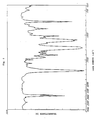
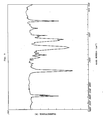
- Fig. 1 and Fig. 2 shows the 1H-NMR spectrum of the polymer obtained and the IR spectrum thereof, respectively.
- the proportion of the constitutive units of the polymer obtained may easily be calculated out from the amounts of the raw materials as fed into the reactor tube but may also be obtained form the 1H-NMR spectrogram of the polymer.
- the polymerizer tube was heated up to 230°C and the reactants were reacted for 3 hours at normal pressure. Next, 1.4g of antimony trioxide-1% ethylene glycol solution was added thereto, and the pressure in the polymerizer was gradually reduced with maintaining the reaction temperature of being 230°C. At last, the internal pressure was kept at 0.5 mmHg. Under such reduced pressure, polymerization was effected for 6 hours and then the pressure was returned back to normal pressure with nitrogen. The polymer thus formed was then taken out from the bottom of the polymerizer tube.
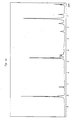
- Fig. 3 shows the 1H-NMR spectrum of the polymer obtained.
- the polymerizer tube was heated up to 230°C and the reactants were reacted for 2.5 hours under normal pressure. Next, 0.1g of tetrabutoxy titanium was added thereto, and the pressure in the polymerizer was gradually reduced with maintaining the polymerization system as it was. At last, the internal pressure was kept at 0.5 mmHg. Under such reduced pressure, polymerization was effected for 5 hours and then the pressure was returned back to normal pressure with nitrogen. The polymer formed was taken out from the bottom of the polymerizer tube.
- Fig. 4 and Fig. 5 show the 1H-NMR spectrum of the polymer obtained and the IR spectrum thereof, respectively.
- the polymerizer tube was heated up to 230°C and the reactants were reacted for 4 hours at normal pressure. Next, 6.0g of antimony trioxide-1% ethylene glycol solution was added thereto, and the pressure in the polymerizer was gradually reduced with maintaining the polymerization system as it was. At last, the internal pressure was kept at 0.5 mmHg. Under such reduced pressure, polymerization was effected for 6 hours and then the pressure was returned back to normal pressure with nitrogen. The polymer formed was taken out from the bottom of the polymerizer tube.
- Fig. 6 shows the 1H-NMR spectrum of the polymer obtained.
- the polymerizer tube was heated up to 230°C and the reactants were reacted for 5 hours at normal pressure. Next, 1.6g of antimony trioxide-1% ethylene glycol solution was added thereto, and the pressure in the polymerizer was gradually reduced with maintaining the polymerization system as it was. At last, the internal pressure was kept at 0.5 mmHg. Under such reduced pressure, polymerization was effected for 8 hours and then the pressure was returned back to normal pressure with nitrogen. The polymer formed was taken out from the bottom of the polymerizer tube.
- the thus obtained polymer was pale yellow and transparent and had a logarithmic viscosity ( ⁇ inh ) of 0.47 dl/g (measured under the same condition as in Example 1).
- Fig. 7 shows the IR spectrum of the polymer obtained.
- the polymerizer tube was heated up to 230°C and the reactants were reacted for 3 hours at normal pressure. Next, 1.5g of antimony trioxide-1% ethylene glycol solution was added thereto, and the pressure in the polymerizer was gradually reduced with maintaining the polymerization system as it was. At last, the internal pressure was kept at 0.5 mmHg. Under such reduced pressure, polymerization was effected for 6 hours and then the pressure was returned back to normal pressure with nitrogen. The polymer formed was taken out from the bottom of the polymerizer tube.
- Fig. 8 shows the 1H-NMR spectrum of the polymer obtained.
- Fig. 9 shows the 1H-NMR spectrum of the polymer obtained.
- the polymerizer tube was heated up to 150°C and the reactants were reacted for 4 hours at normal pressure. Next, the internal pressure was gradually lowered to a reduced pressure of 0.5 mmHg. The reaction temperature was gradually elevated up to 270°C and polymerization was effected for 2 hours. Afterwards, nitrogen was introduced into the polymerizer tube so that the internal pressure was returned back to normal pressure and the polymerization was stopped. The product formed was able to be taken out from the bottom of the polymerizer tube.
- the thus obtained polymer was pale brown and transparent and had a logarithmic viscosity ( ⁇ inh ) of 0.47 gl/g, in a mixed solvent of phenol/tetrachloroethane (50/50, by weight) in a concentration of 0.5 g/dl, at 30°C.
- the polymerizer tube was heated up to 150°C and the reactants were reacted for 3.5 hours at normal pressure. Next, the pressure in the polymerizer tube was gradually reduced to a reduced pressure of 0.5 mmHg. The reaction temperature was gradually elevated up to 270°C and polymerization was effected for 2 hours. Afterwards, nitrogen was introduced into the polymerizer tube so that the internal pressure was returned back to normal pressure and the polymerization was stopped. The product formed was able to be taken out from the bottom of the polymerizer tube. The thus obtained polymer was pale brown and transparent and had a logarithmic viscosity ( ⁇ inh ) of 0.42 dl/g (measured under the same condition as in Example 8).
- the product formed was able to be taken out from the bottom of the polymerizer tube.
- the thus obtained polymer was pale yellow and transparent and had a logarithmic viscosity ( ⁇ inh ) of 0.63 dl/g (measured under the same condition as in Example 8).
- the thus obtained polymer was pale yellow and transparent and had a logarithmic viscosity ( ⁇ inh ) of 0.45 dl/g (measured under the same condition as in Example 8).
- the thus obtained polymer was pale yellow and transparent and had a logarithmic viscosity ( ⁇ inh ) of 0.52 dl/g (measured under the same condition as in Example 8).
- reaction was effected at 230°C for 3 hours and then the acid degree of the reaction mixture was measured by acid-base titration to be 5.6 ⁇ 10 ⁇ 5 mol/g.
- 7.0g of antimony trioxide-1% ethylene glycol solution was added to the reaction mixture, and the internal pressure was gradually lowered with maintaining the temperature to be 230°C. Accordingly, stirring was effected for 6 hours under the reduced pressure. Next, the internal pressure was returned back to normal pressure with nitrogen. The product formed was able to be taken out from the bottom of the polymerizer tube.
- the thus obtained polymer was pale yellow and transparent and had a logarithmic viscosity ( ⁇ inh ) of 0.58 dl/g (measured under the same condition as in Example 8).
- the product formed was able to be taken out from the bottom of the polymerizer tube.
- the thus obtained polymer was pale yellow and transparent and had a logarithmic viscosity ( ⁇ inh ) of 0.62 dl/g (measured under the same condition as in Example 8).
- the product formed was able to be taken out from the bottom of the polymerizer tube.
- the thus obtained polymer was pale yellow and transparent and had a logarithmic viscosity ( ⁇ inh ) of 0.40 dl/g (measured under the same condition as in Example 8).
- Fig. 10 shows the 1H-NMR spectrum of the polymer obtained.
Landscapes
- Chemical & Material Sciences (AREA)
- Health & Medical Sciences (AREA)
- Chemical Kinetics & Catalysis (AREA)
- Medicinal Chemistry (AREA)
- Polymers & Plastics (AREA)
- Organic Chemistry (AREA)
- Polyesters Or Polycarbonates (AREA)
Applications Claiming Priority (6)
| Application Number | Priority Date | Filing Date | Title |
|---|---|---|---|
| JP15995489 | 1989-06-22 | ||
| JP159954/89 | 1989-06-22 | ||
| JP1861290 | 1990-01-29 | ||
| JP18612/90 | 1990-01-29 | ||
| JP1861390 | 1990-01-29 | ||
| JP18613/90 | 1990-07-13 |
Publications (2)
| Publication Number | Publication Date |
|---|---|
| EP0404116A2 true EP0404116A2 (de) | 1990-12-27 |
| EP0404116A3 EP0404116A3 (de) | 1991-11-21 |
Family
ID=27282288
Family Applications (1)
| Application Number | Title | Priority Date | Filing Date |
|---|---|---|---|
| EP19900111676 Withdrawn EP0404116A3 (de) | 1989-06-22 | 1990-06-20 | Poyester und Vefahren zu dessen Herstellung |
Country Status (2)
| Country | Link |
|---|---|
| US (1) | US5102979A (de) |
| EP (1) | EP0404116A3 (de) |
Cited By (2)
| Publication number | Priority date | Publication date | Assignee | Title |
|---|---|---|---|---|
| EP1246678A4 (de) * | 1999-11-03 | 2003-03-05 | Cognis Corp | Träger zur trennung von physiologischen flüssigkeiten mit verbesserter interner migration von therapeutischen substanzen |
| CN106459394A (zh) * | 2014-07-02 | 2017-02-22 | 三菱瓦斯化学株式会社 | 聚酯、聚氨酯、弹性体、聚酯的制造方法和聚氨酯的制造方法 |
Families Citing this family (5)
| Publication number | Priority date | Publication date | Assignee | Title |
|---|---|---|---|---|
| EP0548791B1 (de) * | 1991-12-20 | 1996-03-13 | Hoechst Aktiengesellschaft | Polyarylensulfid-Lösungen, Verfahren zu deren Herstellung und deren Verwendung |
| AUPR005000A0 (en) * | 2000-09-12 | 2000-10-05 | Polymers Australia Pty Limited | Polyster resins with improved properties |
| US20050261398A1 (en) * | 2004-05-21 | 2005-11-24 | General Electric Company | Catalyst for curing epoxy resins, epoxy resin composition, and powder coating composition |
| CN102199280A (zh) * | 2011-04-08 | 2011-09-28 | 浙江大学 | 一种含氟聚酯树脂及其制备方法和应用 |
| US9139505B2 (en) | 2013-11-08 | 2015-09-22 | Eastman Chemical Company | Production of terephthalic acid di-esters using alcohol-amine promoters |
Family Cites Families (12)
| Publication number | Priority date | Publication date | Assignee | Title |
|---|---|---|---|---|
| US3397255A (en) * | 1964-12-29 | 1968-08-13 | Ashland Oil Inc | Alkyd resins prepared by simultaneously reacting (1) a polycarboxylic acid (2) a polyhydric alcohol having at least 3 hydroxyl groups and (3) a monoepoxyalkane having 8-26 carbon atoms |
| US3533974A (en) * | 1967-10-13 | 1970-10-13 | Procter & Gamble | Polyvinyl chloride polyester plasticizers having pendant alkyl groups |
| JPS563338B2 (de) * | 1972-05-23 | 1981-01-24 | ||
| US3954841A (en) * | 1974-06-24 | 1976-05-04 | Celanese Corporation | Curable resin compositions |
| DE2815096A1 (de) * | 1977-04-13 | 1978-10-19 | Daicel Ltd | Verfahren zur herstellung wasserloeslicher alkydharze |
| JPS53131695A (en) * | 1977-04-20 | 1978-11-16 | Ishikawajima Harima Heavy Ind Co Ltd | Ship body support blocks |
| JPS53139696A (en) * | 1977-05-12 | 1978-12-06 | Daikin Ind Ltd | Fluorine-containing polyester copolymer, its production and use |
| JPS564627A (en) * | 1979-06-27 | 1981-01-19 | Teijin Ltd | Preparation of polyester |
| JPS56136856A (en) * | 1980-03-31 | 1981-10-26 | Dainippon Ink & Chem Inc | Powder coating resin composition |
| JPS58162654A (ja) * | 1982-03-19 | 1983-09-27 | Toyobo Co Ltd | ポリエステル型ブロツク共重合体組成物 |
| JPS63145328A (ja) * | 1986-12-08 | 1988-06-17 | Toray Ind Inc | 改質ポリエステルの製造法 |
| JPH0684427B2 (ja) * | 1988-03-17 | 1994-10-26 | 帝人株式会社 | 共重合ポリエステル成形物の製造法 |
-
1990
- 1990-06-04 US US07/532,567 patent/US5102979A/en not_active Expired - Fee Related
- 1990-06-20 EP EP19900111676 patent/EP0404116A3/de not_active Withdrawn
Cited By (3)
| Publication number | Priority date | Publication date | Assignee | Title |
|---|---|---|---|---|
| EP1246678A4 (de) * | 1999-11-03 | 2003-03-05 | Cognis Corp | Träger zur trennung von physiologischen flüssigkeiten mit verbesserter interner migration von therapeutischen substanzen |
| CN106459394A (zh) * | 2014-07-02 | 2017-02-22 | 三菱瓦斯化学株式会社 | 聚酯、聚氨酯、弹性体、聚酯的制造方法和聚氨酯的制造方法 |
| CN106459394B (zh) * | 2014-07-02 | 2019-07-09 | 三菱瓦斯化学株式会社 | 聚酯、聚氨酯、弹性体、聚酯的制造方法和聚氨酯的制造方法 |
Also Published As
| Publication number | Publication date |
|---|---|
| EP0404116A3 (de) | 1991-11-21 |
| US5102979A (en) | 1992-04-07 |
Similar Documents
| Publication | Publication Date | Title |
|---|---|---|
| US3701815A (en) | Thermoplastic siloxane-polyester block copolymers | |
| JP6408981B2 (ja) | ポリエステル樹脂およびその製造方法 | |
| US3169121A (en) | Carbonate-carboxylate copolyesters of dihydric phenols and difunctional carboxylic acids | |
| KR950003146B1 (ko) | 코폴리에스테르카보네이트의 제조방법 | |
| US4260735A (en) | Catalytic process for preparation of polyesters | |
| US3413379A (en) | Process for the preparation of linear thermoplastic mixed polyesters having softening points above 100deg. | |
| Hamb | Copolyesters of glycols and bisphenols: A new preparative process | |
| KR20130136777A (ko) | 폴리에스테르 수지 및 이의 제조 방법 | |
| TW201231497A (en) | Polyester resin composition and preparing method thereof | |
| US6043335A (en) | Phosphate-containing catalyst composition for the preparation of polyesters, and related processes | |
| EP0404116A2 (de) | Poyester und Vefahren zu dessen Herstellung | |
| EP1056795B1 (de) | Zusammensetzungen auf der Basis von 2-Methyl-1,3-propandiol und einer Phthalsäure | |
| EP0217660A2 (de) | Poly-(alpha Hydroxysäure)-copolymere | |
| JPH11189642A (ja) | ポリエステル製造用触媒組成物並びに関連プロセス | |
| KR20090053900A (ko) | 금속 포스폰산 착물 촉매를 사용한 폴리에스테르의 제조 방법 | |
| US3313782A (en) | With a dihydroxy compound | |
| JP2022119158A (ja) | 耐黄変性ポリエステル及びその製造方法 | |
| US4782132A (en) | Process for producing a copolyester | |
| US2709690A (en) | Epoxy resins esterified with drying oil fatty acids and phosphoric acid | |
| US3477974A (en) | Process for the preparation of ester resins | |
| EP1159330B1 (de) | Katalysatormischung für die darstellung von polyestern | |
| US3525715A (en) | Cross-linked copolyesters and process of making them | |
| US3254057A (en) | Polyhalogenous polyester compositions | |
| US3511812A (en) | Preparation of polyesters using cocatulyst of lithium amide an in transesterification reaction | |
| JPH03250020A (ja) | ポリエステルおよびその製造方法 |
Legal Events
| Date | Code | Title | Description |
|---|---|---|---|
| PUAI | Public reference made under article 153(3) epc to a published international application that has entered the european phase |
Free format text: ORIGINAL CODE: 0009012 |
|
| AK | Designated contracting states |
Kind code of ref document: A2 Designated state(s): DE FR GB |
|
| PUAL | Search report despatched |
Free format text: ORIGINAL CODE: 0009013 |
|
| AK | Designated contracting states |
Kind code of ref document: A3 Designated state(s): DE FR GB |
|
| 17P | Request for examination filed |
Effective date: 19911219 |
|
| 17Q | First examination report despatched |
Effective date: 19940328 |
|
| STAA | Information on the status of an ep patent application or granted ep patent |
Free format text: STATUS: THE APPLICATION IS DEEMED TO BE WITHDRAWN |
|
| 18D | Application deemed to be withdrawn |
Effective date: 19940809 |