EP0414083B1 - Stabilisierte Polycarbonate - Google Patents
Stabilisierte Polycarbonate Download PDFInfo
- Publication number
- EP0414083B1 EP0414083B1 EP90115464A EP90115464A EP0414083B1 EP 0414083 B1 EP0414083 B1 EP 0414083B1 EP 90115464 A EP90115464 A EP 90115464A EP 90115464 A EP90115464 A EP 90115464A EP 0414083 B1 EP0414083 B1 EP 0414083B1
- Authority
- EP
- European Patent Office
- Prior art keywords
- mol
- formula
- hydroxyphenyl
- polycarbonates
- diphenols
- Prior art date
- Legal status (The legal status is an assumption and is not a legal conclusion. Google has not performed a legal analysis and makes no representation as to the accuracy of the status listed.)
- Expired - Lifetime
Links
- 229920000515 polycarbonate Polymers 0.000 title claims description 28
- 239000004417 polycarbonate Substances 0.000 title claims description 28
- 125000003118 aryl group Chemical group 0.000 claims description 10
- 125000004429 atom Chemical group 0.000 claims description 8
- 238000000034 method Methods 0.000 claims description 8
- 238000002360 preparation method Methods 0.000 claims description 8
- UFHFLCQGNIYNRP-UHFFFAOYSA-N Hydrogen Chemical compound [H][H] UFHFLCQGNIYNRP-UHFFFAOYSA-N 0.000 claims description 6
- 229910052739 hydrogen Inorganic materials 0.000 claims description 6
- 239000001257 hydrogen Substances 0.000 claims description 6
- 125000000217 alkyl group Chemical group 0.000 claims description 5
- BVKZGUZCCUSVTD-UHFFFAOYSA-L Carbonate Chemical compound [O-]C([O-])=O BVKZGUZCCUSVTD-UHFFFAOYSA-L 0.000 claims description 4
- 229910052799 carbon Inorganic materials 0.000 claims description 4
- 125000004432 carbon atom Chemical group C* 0.000 claims description 4
- 125000004169 (C1-C6) alkyl group Chemical group 0.000 claims description 3
- 125000004209 (C1-C8) alkyl group Chemical group 0.000 claims description 3
- WKBOTKDWSSQWDR-UHFFFAOYSA-N Bromine atom Chemical compound [Br] WKBOTKDWSSQWDR-UHFFFAOYSA-N 0.000 claims description 3
- 125000000041 C6-C10 aryl group Chemical group 0.000 claims description 3
- OKTJSMMVPCPJKN-UHFFFAOYSA-N Carbon Chemical compound [C] OKTJSMMVPCPJKN-UHFFFAOYSA-N 0.000 claims description 3
- ZAMOUSCENKQFHK-UHFFFAOYSA-N Chlorine atom Chemical compound [Cl] ZAMOUSCENKQFHK-UHFFFAOYSA-N 0.000 claims description 3
- 125000001797 benzyl group Chemical group [H]C1=C([H])C([H])=C(C([H])=C1[H])C([H])([H])* 0.000 claims description 3
- 229910052736 halogen Inorganic materials 0.000 claims description 3
- 150000002367 halogens Chemical class 0.000 claims description 3
- 125000001997 phenyl group Chemical group [H]C1=C([H])C([H])=C(*)C([H])=C1[H] 0.000 claims description 3
- 230000001588 bifunctional effect Effects 0.000 claims description 2
- GDTBXPJZTBHREO-UHFFFAOYSA-N bromine Substances BrBr GDTBXPJZTBHREO-UHFFFAOYSA-N 0.000 claims description 2
- 229910052794 bromium Inorganic materials 0.000 claims description 2
- 229910052801 chlorine Inorganic materials 0.000 claims description 2
- 239000000460 chlorine Substances 0.000 claims description 2
- 150000002431 hydrogen Chemical class 0.000 claims description 2
- 125000000753 cycloalkyl group Chemical group 0.000 claims 1
- YMWUJEATGCHHMB-UHFFFAOYSA-N Dichloromethane Chemical compound ClCCl YMWUJEATGCHHMB-UHFFFAOYSA-N 0.000 description 23
- 239000000243 solution Substances 0.000 description 12
- IISBACLAFKSPIT-UHFFFAOYSA-N bisphenol A Chemical compound C=1C=C(O)C=CC=1C(C)(C)C1=CC=C(O)C=C1 IISBACLAFKSPIT-UHFFFAOYSA-N 0.000 description 11
- ISWSIDIOOBJBQZ-UHFFFAOYSA-N Phenol Chemical compound OC1=CC=CC=C1 ISWSIDIOOBJBQZ-UHFFFAOYSA-N 0.000 description 9
- MVPPADPHJFYWMZ-UHFFFAOYSA-N chlorobenzene Chemical compound ClC1=CC=CC=C1 MVPPADPHJFYWMZ-UHFFFAOYSA-N 0.000 description 8
- 150000002576 ketones Chemical class 0.000 description 8
- WFDIJRYMOXRFFG-UHFFFAOYSA-N acetic acid anhydride Natural products CC(=O)OC(C)=O WFDIJRYMOXRFFG-UHFFFAOYSA-N 0.000 description 7
- 230000008569 process Effects 0.000 description 7
- VEXZGXHMUGYJMC-UHFFFAOYSA-N Hydrochloric acid Chemical compound Cl VEXZGXHMUGYJMC-UHFFFAOYSA-N 0.000 description 6
- NBIIXXVUZAFLBC-UHFFFAOYSA-N Phosphoric acid Chemical compound OP(O)(O)=O NBIIXXVUZAFLBC-UHFFFAOYSA-N 0.000 description 6
- 239000006085 branching agent Substances 0.000 description 6
- 150000001875 compounds Chemical class 0.000 description 6
- 239000000203 mixture Substances 0.000 description 6
- 229920001169 thermoplastic Polymers 0.000 description 6
- 239000004416 thermosoftening plastic Substances 0.000 description 6
- POSWICCRDBKBMH-UHFFFAOYSA-N 3,3,5-trimethylcyclohexan-1-one Chemical compound CC1CC(=O)CC(C)(C)C1 POSWICCRDBKBMH-UHFFFAOYSA-N 0.000 description 5
- 239000012074 organic phase Substances 0.000 description 5
- 150000002989 phenols Chemical class 0.000 description 5
- YGYAWVDWMABLBF-UHFFFAOYSA-N Phosgene Chemical compound ClC(Cl)=O YGYAWVDWMABLBF-UHFFFAOYSA-N 0.000 description 4
- 239000003054 catalyst Substances 0.000 description 4
- 238000006243 chemical reaction Methods 0.000 description 4
- 239000007789 gas Substances 0.000 description 4
- IXCSERBJSXMMFS-UHFFFAOYSA-N hydrogen chloride Substances Cl.Cl IXCSERBJSXMMFS-UHFFFAOYSA-N 0.000 description 4
- 229910000041 hydrogen chloride Inorganic materials 0.000 description 4
- 238000004519 manufacturing process Methods 0.000 description 4
- 229920000642 polymer Polymers 0.000 description 4
- 239000002904 solvent Substances 0.000 description 4
- 238000003756 stirring Methods 0.000 description 4
- XLYOFNOQVPJJNP-UHFFFAOYSA-N water Substances O XLYOFNOQVPJJNP-UHFFFAOYSA-N 0.000 description 4
- XKZQKPRCPNGNFR-UHFFFAOYSA-N 2-(3-hydroxyphenyl)phenol Chemical group OC1=CC=CC(C=2C(=CC=CC=2)O)=C1 XKZQKPRCPNGNFR-UHFFFAOYSA-N 0.000 description 3
- WEVYAHXRMPXWCK-UHFFFAOYSA-N Acetonitrile Chemical compound CC#N WEVYAHXRMPXWCK-UHFFFAOYSA-N 0.000 description 3
- UHOVQNZJYSORNB-UHFFFAOYSA-N Benzene Chemical compound C1=CC=CC=C1 UHOVQNZJYSORNB-UHFFFAOYSA-N 0.000 description 3
- 238000012696 Interfacial polycondensation Methods 0.000 description 3
- HEMHJVSKTPXQMS-UHFFFAOYSA-M Sodium hydroxide Chemical compound [OH-].[Na+] HEMHJVSKTPXQMS-UHFFFAOYSA-M 0.000 description 3
- ZMANZCXQSJIPKH-UHFFFAOYSA-N Triethylamine Chemical compound CCN(CC)CC ZMANZCXQSJIPKH-UHFFFAOYSA-N 0.000 description 3
- 229910000147 aluminium phosphate Inorganic materials 0.000 description 3
- 230000000052 comparative effect Effects 0.000 description 3
- 238000009833 condensation Methods 0.000 description 3
- 230000005494 condensation Effects 0.000 description 3
- 239000008187 granular material Substances 0.000 description 3
- 125000002887 hydroxy group Chemical group [H]O* 0.000 description 3
- 125000002496 methyl group Chemical group [H]C([H])([H])* 0.000 description 3
- 230000007935 neutral effect Effects 0.000 description 3
- 239000003960 organic solvent Substances 0.000 description 3
- 239000012071 phase Substances 0.000 description 3
- 230000005501 phase interface Effects 0.000 description 3
- -1 phosphorus halides Chemical class 0.000 description 3
- JEANOXXXGPLTOI-UHFFFAOYSA-N 2,4,4-trimethylcyclohexan-1-one Chemical compound CC1CC(C)(C)CCC1=O JEANOXXXGPLTOI-UHFFFAOYSA-N 0.000 description 2
- UIAFKZKHHVMJGS-UHFFFAOYSA-N 2,4-dihydroxybenzoic acid Chemical compound OC(=O)C1=CC=C(O)C=C1O UIAFKZKHHVMJGS-UHFFFAOYSA-N 0.000 description 2
- NXXYKOUNUYWIHA-UHFFFAOYSA-N 2,6-Dimethylphenol Chemical compound CC1=CC=CC(C)=C1O NXXYKOUNUYWIHA-UHFFFAOYSA-N 0.000 description 2
- NFAOATPOYUWEHM-UHFFFAOYSA-N 2-(6-methylheptyl)phenol Chemical compound CC(C)CCCCCC1=CC=CC=C1O NFAOATPOYUWEHM-UHFFFAOYSA-N 0.000 description 2
- NRGGMCIBEHEAIL-UHFFFAOYSA-N 2-ethylpyridine Chemical compound CCC1=CC=CC=N1 NRGGMCIBEHEAIL-UHFFFAOYSA-N 0.000 description 2
- VEORPZCZECFIRK-UHFFFAOYSA-N 3,3',5,5'-tetrabromobisphenol A Chemical compound C=1C(Br)=C(O)C(Br)=CC=1C(C)(C)C1=CC(Br)=C(O)C(Br)=C1 VEORPZCZECFIRK-UHFFFAOYSA-N 0.000 description 2
- UMPGNGRIGSEMTC-UHFFFAOYSA-N 4-[1-(4-hydroxyphenyl)-3,3,5-trimethylcyclohexyl]phenol Chemical compound C1C(C)CC(C)(C)CC1(C=1C=CC(O)=CC=1)C1=CC=C(O)C=C1 UMPGNGRIGSEMTC-UHFFFAOYSA-N 0.000 description 2
- ODJUOZPKKHIEOZ-UHFFFAOYSA-N 4-[2-(4-hydroxy-3,5-dimethylphenyl)propan-2-yl]-2,6-dimethylphenol Chemical compound CC1=C(O)C(C)=CC(C(C)(C)C=2C=C(C)C(O)=C(C)C=2)=C1 ODJUOZPKKHIEOZ-UHFFFAOYSA-N 0.000 description 2
- QTBSBXVTEAMEQO-UHFFFAOYSA-N Acetic acid Chemical compound CC(O)=O QTBSBXVTEAMEQO-UHFFFAOYSA-N 0.000 description 2
- CSCPPACGZOOCGX-UHFFFAOYSA-N Acetone Chemical compound CC(C)=O CSCPPACGZOOCGX-UHFFFAOYSA-N 0.000 description 2
- 229930185605 Bisphenol Natural products 0.000 description 2
- SDDLEVPIDBLVHC-UHFFFAOYSA-N Bisphenol Z Chemical compound C1=CC(O)=CC=C1C1(C=2C=CC(O)=CC=2)CCCCC1 SDDLEVPIDBLVHC-UHFFFAOYSA-N 0.000 description 2
- VTYYLEPIZMXCLO-UHFFFAOYSA-L Calcium carbonate Chemical compound [Ca+2].[O-]C([O-])=O VTYYLEPIZMXCLO-UHFFFAOYSA-L 0.000 description 2
- RTZKZFJDLAIYFH-UHFFFAOYSA-N Diethyl ether Chemical compound CCOCC RTZKZFJDLAIYFH-UHFFFAOYSA-N 0.000 description 2
- CPELXLSAUQHCOX-UHFFFAOYSA-N Hydrogen bromide Chemical compound Br CPELXLSAUQHCOX-UHFFFAOYSA-N 0.000 description 2
- QIGBRXMKCJKVMJ-UHFFFAOYSA-N Hydroquinone Chemical compound OC1=CC=C(O)C=C1 QIGBRXMKCJKVMJ-UHFFFAOYSA-N 0.000 description 2
- JUJWROOIHBZHMG-UHFFFAOYSA-N Pyridine Chemical compound C1=CC=NC=C1 JUJWROOIHBZHMG-UHFFFAOYSA-N 0.000 description 2
- QAOWNCQODCNURD-UHFFFAOYSA-N Sulfuric acid Chemical compound OS(O)(=O)=O QAOWNCQODCNURD-UHFFFAOYSA-N 0.000 description 2
- KYPYTERUKNKOLP-UHFFFAOYSA-N Tetrachlorobisphenol A Chemical compound C=1C(Cl)=C(O)C(Cl)=CC=1C(C)(C)C1=CC(Cl)=C(O)C(Cl)=C1 KYPYTERUKNKOLP-UHFFFAOYSA-N 0.000 description 2
- 239000002253 acid Substances 0.000 description 2
- 230000002378 acidificating effect Effects 0.000 description 2
- 239000000654 additive Substances 0.000 description 2
- 239000008346 aqueous phase Substances 0.000 description 2
- QMKYBPDZANOJGF-UHFFFAOYSA-N benzene-1,3,5-tricarboxylic acid Chemical compound OC(=O)C1=CC(C(O)=O)=CC(C(O)=O)=C1 QMKYBPDZANOJGF-UHFFFAOYSA-N 0.000 description 2
- WTEOIRVLGSZEPR-UHFFFAOYSA-N boron trifluoride Chemical compound FB(F)F WTEOIRVLGSZEPR-UHFFFAOYSA-N 0.000 description 2
- 239000003795 chemical substances by application Substances 0.000 description 2
- AOGYCOYQMAVAFD-UHFFFAOYSA-N chlorocarbonic acid Chemical class OC(Cl)=O AOGYCOYQMAVAFD-UHFFFAOYSA-N 0.000 description 2
- YWEUIGNSBFLMFL-UHFFFAOYSA-N diphosphonate Chemical compound O=P(=O)OP(=O)=O YWEUIGNSBFLMFL-UHFFFAOYSA-N 0.000 description 2
- 150000002148 esters Chemical class 0.000 description 2
- 239000000945 filler Substances 0.000 description 2
- 125000004464 hydroxyphenyl group Chemical group 0.000 description 2
- 239000011261 inert gas Substances 0.000 description 2
- 238000001746 injection moulding Methods 0.000 description 2
- RLSSMJSEOOYNOY-UHFFFAOYSA-N m-cresol Chemical compound CC1=CC=CC(O)=C1 RLSSMJSEOOYNOY-UHFFFAOYSA-N 0.000 description 2
- 238000005259 measurement Methods 0.000 description 2
- 239000006082 mold release agent Substances 0.000 description 2
- 238000000465 moulding Methods 0.000 description 2
- QWVGKYWNOKOFNN-UHFFFAOYSA-N o-cresol Chemical compound CC1=CC=CC=C1O QWVGKYWNOKOFNN-UHFFFAOYSA-N 0.000 description 2
- 230000020477 pH reduction Effects 0.000 description 2
- DLYUQMMRRRQYAE-UHFFFAOYSA-N phosphorus pentoxide Inorganic materials O1P(O2)(=O)OP3(=O)OP1(=O)OP2(=O)O3 DLYUQMMRRRQYAE-UHFFFAOYSA-N 0.000 description 2
- 238000006068 polycondensation reaction Methods 0.000 description 2
- GHMLBKRAJCXXBS-UHFFFAOYSA-N resorcinol Chemical compound OC1=CC=CC(O)=C1 GHMLBKRAJCXXBS-UHFFFAOYSA-N 0.000 description 2
- JIAARYAFYJHUJI-UHFFFAOYSA-L zinc dichloride Chemical compound [Cl-].[Cl-].[Zn+2] JIAARYAFYJHUJI-UHFFFAOYSA-L 0.000 description 2
- VBICKXHEKHSIBG-UHFFFAOYSA-N 1-monostearoylglycerol Chemical class CCCCCCCCCCCCCCCCCC(=O)OCC(O)CO VBICKXHEKHSIBG-UHFFFAOYSA-N 0.000 description 1
- YIYBRXKMQFDHSM-UHFFFAOYSA-N 2,2'-Dihydroxybenzophenone Chemical class OC1=CC=CC=C1C(=O)C1=CC=CC=C1O YIYBRXKMQFDHSM-UHFFFAOYSA-N 0.000 description 1
- WFQIZSACCHAGQV-UHFFFAOYSA-N 2,3,3,4-tetramethylcyclopentan-1-one Chemical compound CC1CC(=O)C(C)C1(C)C WFQIZSACCHAGQV-UHFFFAOYSA-N 0.000 description 1
- BIQQEOKHAUBBGB-UHFFFAOYSA-N 2,3,3,5-tetramethylcycloheptan-1-one Chemical compound CC1CCC(=O)C(C)C(C)(C)C1 BIQQEOKHAUBBGB-UHFFFAOYSA-N 0.000 description 1
- IWOORFWEZGNMPW-UHFFFAOYSA-N 2,3,3-trimethylcyclohexan-1-one Chemical compound CC1C(=O)CCCC1(C)C IWOORFWEZGNMPW-UHFFFAOYSA-N 0.000 description 1
- RZQRIBYBTHKBPK-UHFFFAOYSA-N 2,3,3-trimethylcyclopentan-1-one Chemical compound CC1C(=O)CCC1(C)C RZQRIBYBTHKBPK-UHFFFAOYSA-N 0.000 description 1
- VGVRPFIJEJYOFN-UHFFFAOYSA-N 2,3,4,6-tetrachlorophenol Chemical class OC1=C(Cl)C=C(Cl)C(Cl)=C1Cl VGVRPFIJEJYOFN-UHFFFAOYSA-N 0.000 description 1
- DSBUDTYUVWSSPD-UHFFFAOYSA-N 2,3,5,5-tetramethylcycloheptan-1-one Chemical compound CC1CC(C)(C)CCC(=O)C1C DSBUDTYUVWSSPD-UHFFFAOYSA-N 0.000 description 1
- XXKHDSGLCLCFSC-UHFFFAOYSA-N 2,3-diphenylphenol Chemical compound C=1C=CC=CC=1C=1C(O)=CC=CC=1C1=CC=CC=C1 XXKHDSGLCLCFSC-UHFFFAOYSA-N 0.000 description 1
- VPVTXVHUJHGOCM-UHFFFAOYSA-N 2,4-bis[2-(4-hydroxyphenyl)propan-2-yl]phenol Chemical compound C=1C=C(O)C(C(C)(C)C=2C=CC(O)=CC=2)=CC=1C(C)(C)C1=CC=C(O)C=C1 VPVTXVHUJHGOCM-UHFFFAOYSA-N 0.000 description 1
- MAQOZOILPAMFSW-UHFFFAOYSA-N 2,6-bis[(2-hydroxy-5-methylphenyl)methyl]-4-methylphenol Chemical compound CC1=CC=C(O)C(CC=2C(=C(CC=3C(=CC=C(C)C=3)O)C=C(C)C=2)O)=C1 MAQOZOILPAMFSW-UHFFFAOYSA-N 0.000 description 1
- HOLHYSJJBXSLMV-UHFFFAOYSA-N 2,6-dichlorophenol Chemical compound OC1=C(Cl)C=CC=C1Cl HOLHYSJJBXSLMV-UHFFFAOYSA-N 0.000 description 1
- MWXYTNVRKXXINS-UHFFFAOYSA-N 2,7,7-trimethylcyclooctan-1-one Chemical compound CC1CCCCC(C)(C)CC1=O MWXYTNVRKXXINS-UHFFFAOYSA-N 0.000 description 1
- VXHYVVAUHMGCEX-UHFFFAOYSA-N 2-(2-hydroxyphenoxy)phenol Chemical compound OC1=CC=CC=C1OC1=CC=CC=C1O VXHYVVAUHMGCEX-UHFFFAOYSA-N 0.000 description 1
- BLDLRWQLBOJPEB-UHFFFAOYSA-N 2-(2-hydroxyphenyl)sulfanylphenol Chemical class OC1=CC=CC=C1SC1=CC=CC=C1O BLDLRWQLBOJPEB-UHFFFAOYSA-N 0.000 description 1
- XSVZEASGNTZBRQ-UHFFFAOYSA-N 2-(2-hydroxyphenyl)sulfinylphenol Chemical class OC1=CC=CC=C1S(=O)C1=CC=CC=C1O XSVZEASGNTZBRQ-UHFFFAOYSA-N 0.000 description 1
- QUWAJPZDCZDTJS-UHFFFAOYSA-N 2-(2-hydroxyphenyl)sulfonylphenol Chemical class OC1=CC=CC=C1S(=O)(=O)C1=CC=CC=C1O QUWAJPZDCZDTJS-UHFFFAOYSA-N 0.000 description 1
- KYGLCUAXJICESS-UHFFFAOYSA-N 2-[2,3-di(propan-2-yl)phenyl]phenol Chemical class CC(C)C1=CC=CC(C=2C(=CC=CC=2)O)=C1C(C)C KYGLCUAXJICESS-UHFFFAOYSA-N 0.000 description 1
- CDMGNVWZXRKJNS-UHFFFAOYSA-N 2-benzylphenol Chemical compound OC1=CC=CC=C1CC1=CC=CC=C1 CDMGNVWZXRKJNS-UHFFFAOYSA-N 0.000 description 1
- NZHZXZREENEERJ-UHFFFAOYSA-N 2-butyl-3,3,4-trimethylcyclohexan-1-one Chemical compound CCCCC1C(=O)CCC(C)C1(C)C NZHZXZREENEERJ-UHFFFAOYSA-N 0.000 description 1
- XWYVLTRWDRKVHU-UHFFFAOYSA-N 2-butyl-3,3,4-trimethylcyclopentan-1-one Chemical compound CCCCC1C(=O)CC(C)C1(C)C XWYVLTRWDRKVHU-UHFFFAOYSA-N 0.000 description 1
- XBQRPFBBTWXIFI-UHFFFAOYSA-N 2-chloro-4-[2-(3-chloro-4-hydroxyphenyl)propan-2-yl]phenol Chemical compound C=1C=C(O)C(Cl)=CC=1C(C)(C)C1=CC=C(O)C(Cl)=C1 XBQRPFBBTWXIFI-UHFFFAOYSA-N 0.000 description 1
- ISPYQTSUDJAMAB-UHFFFAOYSA-N 2-chlorophenol Chemical compound OC1=CC=CC=C1Cl ISPYQTSUDJAMAB-UHFFFAOYSA-N 0.000 description 1
- MVRPPTGLVPEMPI-UHFFFAOYSA-N 2-cyclohexylphenol Chemical compound OC1=CC=CC=C1C1CCCCC1 MVRPPTGLVPEMPI-UHFFFAOYSA-N 0.000 description 1
- DOKDNTOHNOOUAQ-UHFFFAOYSA-N 2-ethyl-3,5,5-trimethylcyclohexan-1-one Chemical compound CCC1C(C)CC(C)(C)CC1=O DOKDNTOHNOOUAQ-UHFFFAOYSA-N 0.000 description 1
- WJQOZHYUIDYNHM-UHFFFAOYSA-N 2-tert-Butylphenol Chemical class CC(C)(C)C1=CC=CC=C1O WJQOZHYUIDYNHM-UHFFFAOYSA-N 0.000 description 1
- YMTYZTXUZLQUSF-UHFFFAOYSA-N 3,3'-Dimethylbisphenol A Chemical compound C1=C(O)C(C)=CC(C(C)(C)C=2C=C(C)C(O)=CC=2)=C1 YMTYZTXUZLQUSF-UHFFFAOYSA-N 0.000 description 1
- UTULSHMCEREFCR-UHFFFAOYSA-N 3,3,4-trimethyl-2-propan-2-ylcyclopentan-1-one Chemical compound CC(C)C1C(=O)CC(C)C1(C)C UTULSHMCEREFCR-UHFFFAOYSA-N 0.000 description 1
- JKONWEHOIIXXRN-UHFFFAOYSA-N 3,3,4-trimethylcyclohexan-1-one Chemical compound CC1CCC(=O)CC1(C)C JKONWEHOIIXXRN-UHFFFAOYSA-N 0.000 description 1
- ANEGGVOMHWVLTN-UHFFFAOYSA-N 3,3,4-trimethylcyclopentan-1-one Chemical compound CC1CC(=O)CC1(C)C ANEGGVOMHWVLTN-UHFFFAOYSA-N 0.000 description 1
- MWGDYVWTNUHIQB-UHFFFAOYSA-N 3,3,5,5-tetramethylcycloheptan-1-one Chemical compound CC1(C)CCC(=O)CC(C)(C)C1 MWGDYVWTNUHIQB-UHFFFAOYSA-N 0.000 description 1
- YDDIDKITLCIFAE-UHFFFAOYSA-N 3,3,5-trimethyl-4-propan-2-ylcyclohexan-1-one Chemical compound CC(C)C1C(C)CC(=O)CC1(C)C YDDIDKITLCIFAE-UHFFFAOYSA-N 0.000 description 1
- ZTCPLLGFBZYAKW-UHFFFAOYSA-N 3,3,5-trimethyl-5-propan-2-ylcyclohexan-1-one Chemical compound CC(C)C1(C)CC(=O)CC(C)(C)C1 ZTCPLLGFBZYAKW-UHFFFAOYSA-N 0.000 description 1
- YJYAWHZIAIPEFU-UHFFFAOYSA-N 3,3,5-trimethyl-5-propylcyclohexan-1-one Chemical compound CCCC1(C)CC(=O)CC(C)(C)C1 YJYAWHZIAIPEFU-UHFFFAOYSA-N 0.000 description 1
- HNZBTZAZHHJOBM-UHFFFAOYSA-N 3,3,5-trimethylcycloheptan-1-one Chemical compound CC1CCC(=O)CC(C)(C)C1 HNZBTZAZHHJOBM-UHFFFAOYSA-N 0.000 description 1
- ZEKCYPANSOJWDH-UHFFFAOYSA-N 3,3-bis(4-hydroxy-3-methylphenyl)-1H-indol-2-one Chemical compound C1=C(O)C(C)=CC(C2(C3=CC=CC=C3NC2=O)C=2C=C(C)C(O)=CC=2)=C1 ZEKCYPANSOJWDH-UHFFFAOYSA-N 0.000 description 1
- RQSOYFCJVXBPSR-UHFFFAOYSA-N 3,3-dimethylcycloheptan-1-one Chemical compound CC1(C)CCCCC(=O)C1 RQSOYFCJVXBPSR-UHFFFAOYSA-N 0.000 description 1
- ZVJQBBYAVPAFLX-UHFFFAOYSA-N 3,3-dimethylcyclohexan-1-one Chemical compound CC1(C)CCCC(=O)C1 ZVJQBBYAVPAFLX-UHFFFAOYSA-N 0.000 description 1
- JSYAQLZSGHPSJD-UHFFFAOYSA-N 3,3-dimethylcyclopentan-1-one Chemical compound CC1(C)CCC(=O)C1 JSYAQLZSGHPSJD-UHFFFAOYSA-N 0.000 description 1
- FPNZOUJIEOSYEB-UHFFFAOYSA-N 3,4,4-trimethylcyclohexan-1-one Chemical compound CC1CC(=O)CCC1(C)C FPNZOUJIEOSYEB-UHFFFAOYSA-N 0.000 description 1
- DIXFJWMIUSSKNT-UHFFFAOYSA-N 3,5,5-trimethylcycloheptan-1-one Chemical compound CC1CC(=O)CCC(C)(C)C1 DIXFJWMIUSSKNT-UHFFFAOYSA-N 0.000 description 1
- HORNXRXVQWOLPJ-UHFFFAOYSA-N 3-chlorophenol Chemical compound OC1=CC=CC(Cl)=C1 HORNXRXVQWOLPJ-UHFFFAOYSA-N 0.000 description 1
- FQCSWWXRWLUNLH-UHFFFAOYSA-N 3-ethyl-3,5,5-trimethylcyclohexan-1-one Chemical compound CCC1(C)CC(=O)CC(C)(C)C1 FQCSWWXRWLUNLH-UHFFFAOYSA-N 0.000 description 1
- SINCOHHNSCMYME-UHFFFAOYSA-N 3-ethyl-3-methyl-4-propan-2-ylcyclohexan-1-one Chemical compound CCC1(C)CC(=O)CCC1C(C)C SINCOHHNSCMYME-UHFFFAOYSA-N 0.000 description 1
- CULUYVDAKOQDJQ-UHFFFAOYSA-N 3-ethyl-3-methyl-4-propan-2-ylcyclopentan-1-one Chemical compound CCC1(C)CC(=O)CC1C(C)C CULUYVDAKOQDJQ-UHFFFAOYSA-N 0.000 description 1
- HPFWICIZVJFFNM-UHFFFAOYSA-N 3-ethyl-3-methylcyclohexan-1-one Chemical compound CCC1(C)CCCC(=O)C1 HPFWICIZVJFFNM-UHFFFAOYSA-N 0.000 description 1
- IUZULRVGAITOOO-UHFFFAOYSA-N 3-ethyl-3-methylcyclopentan-1-one Chemical compound CCC1(C)CCC(=O)C1 IUZULRVGAITOOO-UHFFFAOYSA-N 0.000 description 1
- LOMDULYNXSSXAM-UHFFFAOYSA-N 3-methyl-3-(4-methylpentyl)cyclohexan-1-one Chemical compound CC(C)CCCC1(C)CCCC(=O)C1 LOMDULYNXSSXAM-UHFFFAOYSA-N 0.000 description 1
- VPWNQTHUCYMVMZ-UHFFFAOYSA-N 4,4'-sulfonyldiphenol Chemical class C1=CC(O)=CC=C1S(=O)(=O)C1=CC=C(O)C=C1 VPWNQTHUCYMVMZ-UHFFFAOYSA-N 0.000 description 1
- BYMMLKKZWRAKQV-UHFFFAOYSA-N 4,4-dimethylcycloheptan-1-one Chemical compound CC1(C)CCCC(=O)CC1 BYMMLKKZWRAKQV-UHFFFAOYSA-N 0.000 description 1
- PXQMSTLNSHMSJB-UHFFFAOYSA-N 4,4-dimethylcyclohexan-1-one Chemical compound CC1(C)CCC(=O)CC1 PXQMSTLNSHMSJB-UHFFFAOYSA-N 0.000 description 1
- SUCTVKDVODFXFX-UHFFFAOYSA-N 4-(4-hydroxy-3,5-dimethylphenyl)sulfonyl-2,6-dimethylphenol Chemical compound CC1=C(O)C(C)=CC(S(=O)(=O)C=2C=C(C)C(O)=C(C)C=2)=C1 SUCTVKDVODFXFX-UHFFFAOYSA-N 0.000 description 1
- AZZWZMUXHALBCQ-UHFFFAOYSA-N 4-[(4-hydroxy-3,5-dimethylphenyl)methyl]-2,6-dimethylphenol Chemical compound CC1=C(O)C(C)=CC(CC=2C=C(C)C(O)=C(C)C=2)=C1 AZZWZMUXHALBCQ-UHFFFAOYSA-N 0.000 description 1
- BRPSWMCDEYMRPE-UHFFFAOYSA-N 4-[1,1-bis(4-hydroxyphenyl)ethyl]phenol Chemical compound C=1C=C(O)C=CC=1C(C=1C=CC(O)=CC=1)(C)C1=CC=C(O)C=C1 BRPSWMCDEYMRPE-UHFFFAOYSA-N 0.000 description 1
- BWCAVNWKMVHLFW-UHFFFAOYSA-N 4-[1-(4-hydroxy-3,5-dimethylphenyl)cyclohexyl]-2,6-dimethylphenol Chemical compound CC1=C(O)C(C)=CC(C2(CCCCC2)C=2C=C(C)C(O)=C(C)C=2)=C1 BWCAVNWKMVHLFW-UHFFFAOYSA-N 0.000 description 1
- CIIUIRUKNKELEO-UHFFFAOYSA-N 4-[2,5-di(propan-2-yl)phenyl]-2,6-dimethylphenol Chemical compound CC(C)C1=CC=C(C(C)C)C(C=2C=C(C)C(O)=C(C)C=2)=C1 CIIUIRUKNKELEO-UHFFFAOYSA-N 0.000 description 1
- XJGTVJRTDRARGO-UHFFFAOYSA-N 4-[2-(4-hydroxyphenyl)propan-2-yl]benzene-1,3-diol Chemical compound C=1C=C(O)C=C(O)C=1C(C)(C)C1=CC=C(O)C=C1 XJGTVJRTDRARGO-UHFFFAOYSA-N 0.000 description 1
- RQTDWDATSAVLOR-UHFFFAOYSA-N 4-[3,5-bis(4-hydroxyphenyl)phenyl]phenol Chemical compound C1=CC(O)=CC=C1C1=CC(C=2C=CC(O)=CC=2)=CC(C=2C=CC(O)=CC=2)=C1 RQTDWDATSAVLOR-UHFFFAOYSA-N 0.000 description 1
- OBZFGWBLZXIBII-UHFFFAOYSA-N 4-[3-(4-hydroxy-3,5-dimethylphenyl)-3-methylbutyl]-2,6-dimethylphenol Chemical compound CC1=C(O)C(C)=CC(CCC(C)(C)C=2C=C(C)C(O)=C(C)C=2)=C1 OBZFGWBLZXIBII-UHFFFAOYSA-N 0.000 description 1
- NIRYBKWMEWFDPM-UHFFFAOYSA-N 4-[3-(4-hydroxyphenyl)-3-methylbutyl]phenol Chemical compound C=1C=C(O)C=CC=1C(C)(C)CCC1=CC=C(O)C=C1 NIRYBKWMEWFDPM-UHFFFAOYSA-N 0.000 description 1
- CIEGINNQDIULCT-UHFFFAOYSA-N 4-[4,6-bis(4-hydroxyphenyl)-4,6-dimethylheptan-2-yl]phenol Chemical compound C=1C=C(O)C=CC=1C(C)CC(C)(C=1C=CC(O)=CC=1)CC(C)(C)C1=CC=C(O)C=C1 CIEGINNQDIULCT-UHFFFAOYSA-N 0.000 description 1
- IQNDEQHJTOJHAK-UHFFFAOYSA-N 4-[4-[2-[4,4-bis(4-hydroxyphenyl)cyclohexyl]propan-2-yl]-1-(4-hydroxyphenyl)cyclohexyl]phenol Chemical compound C1CC(C=2C=CC(O)=CC=2)(C=2C=CC(O)=CC=2)CCC1C(C)(C)C(CC1)CCC1(C=1C=CC(O)=CC=1)C1=CC=C(O)C=C1 IQNDEQHJTOJHAK-UHFFFAOYSA-N 0.000 description 1
- LIDWAYDGZUAJEG-UHFFFAOYSA-N 4-[bis(4-hydroxyphenyl)-phenylmethyl]phenol Chemical compound C1=CC(O)=CC=C1C(C=1C=CC(O)=CC=1)(C=1C=CC(O)=CC=1)C1=CC=CC=C1 LIDWAYDGZUAJEG-UHFFFAOYSA-N 0.000 description 1
- BOCLKUCIZOXUEY-UHFFFAOYSA-N 4-[tris(4-hydroxyphenyl)methyl]phenol Chemical compound C1=CC(O)=CC=C1C(C=1C=CC(O)=CC=1)(C=1C=CC(O)=CC=1)C1=CC=C(O)C=C1 BOCLKUCIZOXUEY-UHFFFAOYSA-N 0.000 description 1
- ZAJIOWWOQHDQCI-UHFFFAOYSA-N 4-butan-2-yl-3,3-dimethylcyclopentan-1-one Chemical compound CCC(C)C1CC(=O)CC1(C)C ZAJIOWWOQHDQCI-UHFFFAOYSA-N 0.000 description 1
- WDDUKJWHQDQCLJ-UHFFFAOYSA-N 4-butyl-3,3,5-trimethylcyclohexan-1-one Chemical compound CCCCC1C(C)CC(=O)CC1(C)C WDDUKJWHQDQCLJ-UHFFFAOYSA-N 0.000 description 1
- BEISIWACDYSFJD-UHFFFAOYSA-N 4-ethyl-2,3,4-trimethylcyclopentan-1-one Chemical compound CCC1(C)CC(=O)C(C)C1C BEISIWACDYSFJD-UHFFFAOYSA-N 0.000 description 1
- LOKSUEDSRBXVJV-UHFFFAOYSA-N 4-ethyl-4-methyl-3-propan-2-ylcyclohexan-1-one Chemical compound CCC1(C)CCC(=O)CC1C(C)C LOKSUEDSRBXVJV-UHFFFAOYSA-N 0.000 description 1
- MABKONZEVCZGAJ-UHFFFAOYSA-N 4-ethyl-4-methylcyclohexan-1-one Chemical compound CCC1(C)CCC(=O)CC1 MABKONZEVCZGAJ-UHFFFAOYSA-N 0.000 description 1
- 125000004203 4-hydroxyphenyl group Chemical group [H]OC1=C([H])C([H])=C(*)C([H])=C1[H] 0.000 description 1
- SZUWRIBQCMULKV-UHFFFAOYSA-N 5-ethyl-2,5-dimethylcycloheptan-1-one Chemical compound CCC1(C)CCC(C)C(=O)CC1 SZUWRIBQCMULKV-UHFFFAOYSA-N 0.000 description 1
- XWAGBXRBHWUJMU-UHFFFAOYSA-N 5-ethyl-5-methyl-2,4-di(propan-2-yl)cyclohexan-1-one Chemical compound CCC1(C)CC(=O)C(C(C)C)CC1C(C)C XWAGBXRBHWUJMU-UHFFFAOYSA-N 0.000 description 1
- PNEYBMLMFCGWSK-UHFFFAOYSA-N Alumina Chemical class [O-2].[O-2].[O-2].[Al+3].[Al+3] PNEYBMLMFCGWSK-UHFFFAOYSA-N 0.000 description 1
- 239000005995 Aluminium silicate Substances 0.000 description 1
- 229910015900 BF3 Inorganic materials 0.000 description 1
- GIXXQTYGFOHYPT-UHFFFAOYSA-N Bisphenol P Chemical compound C=1C=C(C(C)(C)C=2C=CC(O)=CC=2)C=CC=1C(C)(C)C1=CC=C(O)C=C1 GIXXQTYGFOHYPT-UHFFFAOYSA-N 0.000 description 1
- RWSOTUBLDIXVET-UHFFFAOYSA-N Dihydrogen sulfide Chemical compound S RWSOTUBLDIXVET-UHFFFAOYSA-N 0.000 description 1
- KRHYYFGTRYWZRS-UHFFFAOYSA-N Fluorane Chemical compound F KRHYYFGTRYWZRS-UHFFFAOYSA-N 0.000 description 1
- VYPSYNLAJGMNEJ-UHFFFAOYSA-N Silicium dioxide Chemical compound O=[Si]=O VYPSYNLAJGMNEJ-UHFFFAOYSA-N 0.000 description 1
- 229910021627 Tin(IV) chloride Inorganic materials 0.000 description 1
- 238000006887 Ullmann reaction Methods 0.000 description 1
- OCKWAZCWKSMKNC-UHFFFAOYSA-N [3-octadecanoyloxy-2,2-bis(octadecanoyloxymethyl)propyl] octadecanoate Chemical compound CCCCCCCCCCCCCCCCCC(=O)OCC(COC(=O)CCCCCCCCCCCCCCCCC)(COC(=O)CCCCCCCCCCCCCCCCC)COC(=O)CCCCCCCCCCCCCCCCC OCKWAZCWKSMKNC-UHFFFAOYSA-N 0.000 description 1
- 150000001335 aliphatic alkanes Chemical class 0.000 description 1
- 150000001338 aliphatic hydrocarbons Chemical class 0.000 description 1
- 235000012211 aluminium silicate Nutrition 0.000 description 1
- VSCWAEJMTAWNJL-UHFFFAOYSA-K aluminium trichloride Chemical compound Cl[Al](Cl)Cl VSCWAEJMTAWNJL-UHFFFAOYSA-K 0.000 description 1
- 239000002216 antistatic agent Substances 0.000 description 1
- 150000004945 aromatic hydrocarbons Chemical class 0.000 description 1
- 229940114055 beta-resorcylic acid Drugs 0.000 description 1
- 230000005540 biological transmission Effects 0.000 description 1
- VCCBEIPGXKNHFW-UHFFFAOYSA-N biphenyl-4,4'-diol Chemical group C1=CC(O)=CC=C1C1=CC=C(O)C=C1 VCCBEIPGXKNHFW-UHFFFAOYSA-N 0.000 description 1
- 229920000402 bisphenol A polycarbonate polymer Polymers 0.000 description 1
- 229910000019 calcium carbonate Inorganic materials 0.000 description 1
- 235000010216 calcium carbonate Nutrition 0.000 description 1
- WUKWITHWXAAZEY-UHFFFAOYSA-L calcium difluoride Chemical compound [F-].[F-].[Ca+2] WUKWITHWXAAZEY-UHFFFAOYSA-L 0.000 description 1
- 229910001634 calcium fluoride Inorganic materials 0.000 description 1
- 239000006229 carbon black Substances 0.000 description 1
- 150000008280 chlorinated hydrocarbons Chemical class 0.000 description 1
- 239000003426 co-catalyst Substances 0.000 description 1
- 230000000295 complement effect Effects 0.000 description 1
- 238000010276 construction Methods 0.000 description 1
- 150000001896 cresols Chemical class 0.000 description 1
- MGNCLNQXLYJVJD-UHFFFAOYSA-N cyanuric chloride Chemical compound ClC1=NC(Cl)=NC(Cl)=N1 MGNCLNQXLYJVJD-UHFFFAOYSA-N 0.000 description 1
- 150000001924 cycloalkanes Chemical class 0.000 description 1
- 239000012024 dehydrating agents Substances 0.000 description 1
- ROORDVPLFPIABK-UHFFFAOYSA-N diphenyl carbonate Chemical compound C=1C=CC=CC=1OC(=O)OC1=CC=CC=C1 ROORDVPLFPIABK-UHFFFAOYSA-N 0.000 description 1
- WNAHIZMDSQCWRP-UHFFFAOYSA-N dodecane-1-thiol Chemical compound CCCCCCCCCCCCS WNAHIZMDSQCWRP-UHFFFAOYSA-N 0.000 description 1
- 239000003792 electrolyte Substances 0.000 description 1
- 230000008020 evaporation Effects 0.000 description 1
- 238000001704 evaporation Methods 0.000 description 1
- 239000003063 flame retardant Substances 0.000 description 1
- 230000008570 general process Effects 0.000 description 1
- 239000003365 glass fiber Substances 0.000 description 1
- 125000005842 heteroatom Chemical group 0.000 description 1
- 229910000042 hydrogen bromide Inorganic materials 0.000 description 1
- 229910000040 hydrogen fluoride Inorganic materials 0.000 description 1
- 229910000037 hydrogen sulfide Inorganic materials 0.000 description 1
- 238000005286 illumination Methods 0.000 description 1
- 239000012442 inert solvent Substances 0.000 description 1
- 239000001023 inorganic pigment Substances 0.000 description 1
- 150000002500 ions Chemical class 0.000 description 1
- NLYAJNPCOHFWQQ-UHFFFAOYSA-N kaolin Chemical compound O.O.O=[Al]O[Si](=O)O[Si](=O)O[Al]=O NLYAJNPCOHFWQQ-UHFFFAOYSA-N 0.000 description 1
- 230000008018 melting Effects 0.000 description 1
- 238000002844 melting Methods 0.000 description 1
- 239000002667 nucleating agent Substances 0.000 description 1
- 125000002347 octyl group Chemical group [H]C([*])([H])C([H])([H])C([H])([H])C([H])([H])C([H])([H])C([H])([H])C([H])([H])C([H])([H])[H] 0.000 description 1
- 239000003208 petroleum Substances 0.000 description 1
- QCDYQQDYXPDABM-UHFFFAOYSA-N phloroglucinol Chemical group OC1=CC(O)=CC(O)=C1 QCDYQQDYXPDABM-UHFFFAOYSA-N 0.000 description 1
- 229960001553 phloroglucinol Drugs 0.000 description 1
- 229910052698 phosphorus Inorganic materials 0.000 description 1
- 239000011574 phosphorus Substances 0.000 description 1
- 239000000049 pigment Substances 0.000 description 1
- 229920000137 polyphosphoric acid Polymers 0.000 description 1
- UMJSCPRVCHMLSP-UHFFFAOYSA-N pyridine Natural products COC1=CC=CN=C1 UMJSCPRVCHMLSP-UHFFFAOYSA-N 0.000 description 1
- 230000035484 reaction time Effects 0.000 description 1
- 238000010992 reflux Methods 0.000 description 1
- 230000001105 regulatory effect Effects 0.000 description 1
- 239000012779 reinforcing material Substances 0.000 description 1
- 238000012552 review Methods 0.000 description 1
- 229920006395 saturated elastomer Polymers 0.000 description 1
- 239000007921 spray Substances 0.000 description 1
- 239000003381 stabilizer Substances 0.000 description 1
- 238000001256 steam distillation Methods 0.000 description 1
- 150000003510 tertiary aliphatic amines Chemical class 0.000 description 1
- 150000003512 tertiary amines Chemical class 0.000 description 1
- 150000003568 thioethers Chemical class 0.000 description 1
- HPGGPRDJHPYFRM-UHFFFAOYSA-J tin(iv) chloride Chemical compound Cl[Sn](Cl)(Cl)Cl HPGGPRDJHPYFRM-UHFFFAOYSA-J 0.000 description 1
- XJDNKRIXUMDJCW-UHFFFAOYSA-J titanium tetrachloride Chemical compound Cl[Ti](Cl)(Cl)Cl XJDNKRIXUMDJCW-UHFFFAOYSA-J 0.000 description 1
- 238000005809 transesterification reaction Methods 0.000 description 1
- IMFACGCPASFAPR-UHFFFAOYSA-N tributylamine Chemical compound CCCCN(CCCC)CCCC IMFACGCPASFAPR-UHFFFAOYSA-N 0.000 description 1
- 238000005406 washing Methods 0.000 description 1
- 150000003739 xylenols Chemical class 0.000 description 1
- 239000010457 zeolite Substances 0.000 description 1
- 239000011592 zinc chloride Substances 0.000 description 1
- 235000005074 zinc chloride Nutrition 0.000 description 1
Classifications
-
- C—CHEMISTRY; METALLURGY
- C08—ORGANIC MACROMOLECULAR COMPOUNDS; THEIR PREPARATION OR CHEMICAL WORKING-UP; COMPOSITIONS BASED THEREON
- C08G—MACROMOLECULAR COMPOUNDS OBTAINED OTHERWISE THAN BY REACTIONS ONLY INVOLVING UNSATURATED CARBON-TO-CARBON BONDS
- C08G64/00—Macromolecular compounds obtained by reactions forming a carbonic ester link in the main chain of the macromolecule
- C08G64/04—Aromatic polycarbonates
- C08G64/06—Aromatic polycarbonates not containing aliphatic unsaturation
Definitions
- the preferred alkyl radical is methyl; the X atoms in the ⁇ -position to the di-phenyl-substituted C atom (C-1) are preferably not dialkyl-substituted, whereas the alkyl disubstitution in the ⁇ -position to C-1 is preferred.
- Diphenols in which the x atom in the ⁇ position is alkyl-disubstituted and the x atom in the ⁇ ′ position is monoalkyl are particularly preferred.
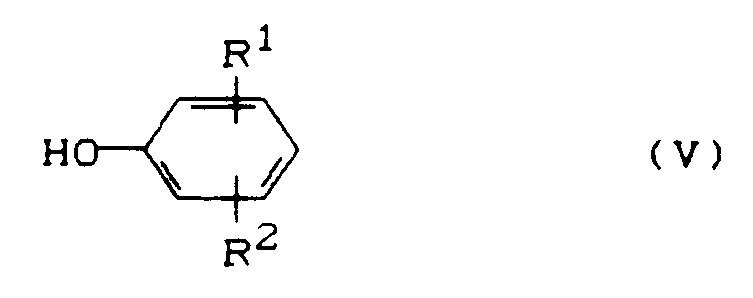
- dihydroxydiphenylcycloalkanes of the formula (I) and processes for their preparation are described in the older DE-A-3 832 396. They can be prepared in a manner known per se by condensing phenols of the formula (V) and ketones of the formula (VI) are prepared, wherein in the formulas (V) and (VI) X, R1, R2, R3, R4 and m have the meaning given for formula (I).
- the phenols of the formula (V) are known or can be obtained by known processes (see, for example, for cresols and xylenols, Ullmanns Encyklopadie der industrial chemistry 4th revised and expanded edition volume 15, pages 61-77, Verlag Chemie-Weinheim-New York 1978; for chlorophenols, Ullmann's Encyclopedia of Industrial Chemistry, 4th edition, Verlag Chemie, 1975, Volume 9, pages 573-582; and for alkylphenols, Ullmann's Encyclopedia of Industrial Chemistry, 4th edition, Verlag Chemie 1979, Volume 18, pages 191- 214).
- Suitable phenols of the formula (V) are: Phenol, o-cresol, m-cresol, 2,6-dimethylphenol, 2-chlorophenol, 3-chlorophenol, 2,6-dichlorophenol, 2-cyclohexylphenol, diphenylphenol and o-benzylphenol.
- ketones of the formula (VI) are known (see, for example) Beilsteins Handbuch der Organischen Chemie, 7th volume, 4th edition, Springer-Verlag, Berlin, 1925 and the corresponding supplementary volumes 1 to 4, and J. Am. Chem. Soc. Vol 79 (1957), pages 1488-1492, U.S. Patent 2,692,289, Allen et al., J. Chem. Soc., (1959), 2186-2192 and J. Org. Chem. Vol. 38, (1973 ), Pages 4431-4435, J. Am. Chem. Soc. 87 , (1965), pages 1353-1364.
- a general process for the preparation of ketones of the formula (VI) is described, for example, in "Organikum, 15th edition, 1977, VEB-Deutscher Verlag dermaschineen, Berlin, for example page 698.
- ketones of the formula (VI) are: 3,3-dimethylcyclopentanone, 3,3-dimethylcyclohexanone, 4,4-dimethylcyclohexanone, 3-ethyl-3-methylcyclopentanone, 2,3,3-trimethylcyclopentanone, 3,3,4-trimethylcyclopentanone, 3,3-dimethylcycloheptanone, 4, 4-dimethylcycloheptanone, 3-ethyl-3-methylcyclohexanone, 4-ethyl-4-methylcyclohexanone, 2,3,3-trimethylcyclohexanone, 2,4,4-trimethylcyclohexanone, 3,3,4-trimethylcyclohexanone, 3,3,5- Trimethylcyclohexanone, 3,4,4-trimethylcyclohexanone, 2,3,3,4-tetramethylcyclopentanone, 3,3,5-trimethylcycloheptanone, 3,5,5-trimethylcycloheptanone, 5-ethyl
- Examples of preferred ketones are Bisphenol preparation generally uses 2 to 10 moles, preferably 2.5 to 6 moles of phenol (V) per mole of ketone (VI). Preferred reaction times are 1 to 100 hours. In general, temperatures from -30 ° C to 300 ° C, preferably from -15 ° C to 150 ° C and at pressures from 1 to 20 bar, preferably from 1 to 10 bar.
- the condensation is generally carried out in the presence of acidic catalysts.
- acidic catalysts examples are hydrogen chloride, hydrogen bromide, hydrogen fluoride, boron trifluoride, aluminum trichloride, zinc dichloride, titanium tetrachloride, Tin tetrachloride, phosphorus halides, phosphorus pentoxide, phosphoric acid, concentrated hydrochloric acid or sulfuric acid and mixtures of acetic acid and acetic anhydride.
- acidic ion exchangers is also possible.
- the reaction can be carried out by adding co-catalysts such as C1-C18 alkyl mercaptans, hydrogen sulfide, thiophenols, thioacids and dialkyl sulfides, preferably in amounts of 0.01-0.4 mol / mol ketone, in particular 0.05-0.2 Mol / mol ketone, are accelerated.
- co-catalysts such as C1-C18 alkyl mercaptans, hydrogen sulfide, thiophenols, thioacids and dialkyl sulfides
- the condensation can be carried out without a solvent or in the presence of an inert solvent (e.g. aliphatic and aromatic hydrocarbon, chlorinated hydrocarbon).
- an inert solvent e.g. aliphatic and aromatic hydrocarbon, chlorinated hydrocarbon.
- Suitable dehydrating agents are, for example, acetic anhydride, zeolites, polyphosphoric acid and phosphorus pentoxide.
- the invention is based on the knowledge that the use of small amounts of the dihydroxydiphenylcycloalkanes of the formula (I) as comonomers in the production of aromatic polycarbonates on diphenols improves the processing stability of the polymers.
- the present invention thus relates to thermoplastic, aromatic polycarbonates with molecular weights M w (weight average) of at least 8,000, preferably from 10,000 to 250,000 and in particular from 16,000 to 90,000, of diphenols of the formula (VII) and 0.01 to 1.99% (based on total diphenols) of those of the formula (I).
- Suitable diphenols of the formula (VII) HO-Z-OH are those in which Z is an aromatic radical having 6 to 30 carbon atoms, which may contain one or more aromatic nuclei, may be substituted and may contain aliphatic radicals or cycloaliphatic radicals other than that of the formula (I) or heteroatoms as bridge members .
- diphenols of the formula (VII) are hydroquinone, Resorcinol, Dihydroxydiphenyls, Bis (hydroxyphenyl) alkanes, Bis (hydroxyphenyl) cycloalkanes, Bis (hydroxyphenyl) sulfides, Bis (hydroxyphenyl) ether, Bis (hydroxyphenyl) ketones, Bis (hydroxyphenyl) sulfones, Bis (hydroxyphenyl) sulfoxides, ⁇ , ⁇ ′-bis (hydroxyphenyl) diisopropylbenzenes as well as their nuclear alkylated and nuclear halogenated compounds.
- diphenols of formula (VII) are e.g. in US Pat. Nos. 3,028,365, 2,999,835, 3,148,172, 3,275,601, 2,991,273, 3,271,367, 3,062,781, 2,970,131 and 2,999,846, in DE-OS 1,570,703, 2 063 050, 2 063 052, 2 211 0956, FR-PS 1 561 518 and in "H. Schnell, Chemistry and Physics of Polycarbonates, Interscience Publishers, New York 1964".
- Preferred other diphenols are, for example: 4,4'-dihydroxydiphenyl, 2,2-bis (4-hydroxyphenyl) propane, 2,4-bis (4-hydroxyphenyl) -2-methylbutane, 1,1-bis (4-hydroxyphenyl) cyclohexane, ⁇ , ⁇ ′-bis- (4-hydroxyphenyl) -p-diisopropylbenzene, 2,2-bis (3-methyl-4-hydroxyphenyl) propane, 2,2-bis (3-chloro-4-hydroxyphenyl) propane, Bis- (3,5-dimethyl-4-hydroxyphenyl) methane, 2,2-bis (3,5-dimethyl-4-hydroxyphenyl) propane, Bis (3,5-dimethyl-4-hydroxyphenyl) sulfone, 2,4-bis (3,5-dimethyl-4-hydroxyphenyl) -2-methylbutane, 1,1-bis (3,5-dimethyl-4-hydroxyphenyl) cyclohexane, ⁇ , ⁇ ′
- diphenols of the formula (VII) are: 2,2-bis (4-hydroxyphenyl) propane, 2,2-bis (3,5-dimethyl-4-hydroxyphenyl) propane, 2,2-bis (3,5-dichloro-4-hydroxyphenyl) propane, 2,2-bis (3,5-dibromo-4-hydroxyphenyl) propane and 1,1-bis (4-hydroxyphenyl) cyclohexane.
- the diphenols of the formula (VII) can be used either individually or in a mixture.
- the molar ratio of dihydroxydiphenylcycloalkanes of the formula (I) to the diphenols of the formula (VII) is 1.99 mol% (I) to 98.01 mol% (VII) to 0.01 mol% (I) 99.99 mol% (VII), preferably 1.8 mol% (I) to 98.2 mol% (VII) to 0.1 mol% (I) to 99.9 mol% (VII) and in particular 1.7 mol% (I) to 98.3 mol% (VII) to 0.2 mol% (I) to 99.5 mol% (VII) and very particularly 1.5 mol% (I) 98.5 mol% (VII) to 0.4 mol% (I) 99.6 mol% (VII).
- the present invention thus relates to thermoplastic, aromatic polycarbonates with molecular weights M w (weight average) of at least 8,000, preferably from 10,000 to 250,000 and in particular from 16,000 to 90,000, the bifunctional structural units of the formula (Ia) wherein X, R1, R2, R3, R4 and m have the meaning given for the formula (I), in amounts of 0.01 mol% to 1.99 mol%, preferably 0.1 mol% to 1.8 Mol%, in particular 0.2 mol% to 1.7 mol% and very particularly 0.4 mol% to 1.5 mol%, based on the total amount of carbonate structural units.
- copolycarbonates according to the invention each contain 100 mol% of complementary amounts of carbonate structural units of the formula (VIIa) where Z has the meaning given above.
- the present invention also relates to the use of the dihydroxydiphenylcycloalkanes of the formula (I) in small amounts in the production of high-molecular thermoplastic, aromatic copolycarbonates with improved processing stability.
- the high molecular weight copolycarbonates from the dihydroxydiphenylcycloalkanes of the formula (I) and diphenols of the formula (VII) can be prepared by the known processes for the preparation of polycarbonates.
- the various diphenol residues can be arranged randomly or in blocks in the polymer.
- the invention thus also relates to a process for the preparation of high molecular weight thermoplastic, aromatic copolycarbonates from diphenols, dihydroxydiphenylcycloalkanes of the formula (I), optionally chain terminators and optionally branching agents in a manner known per se, preferably by phase interface polycondensation, in which dihydroxydiphenylcycloalkanes of the formula (I ) in amounts of 0.01 mol% to 1.99 mol%, preferably from 0.1 mol% to 1.8 mol%, in particular from 0.2 mol% to 1.7 mol% and very particularly from 0.4 mol% to 1.5 mol%, based on the total molar amount of diphenols, are condensed in.
- Suitable compounds are, for example, phenol, tert-butylphenols or other alkyl-C1-C7-substituted phenols.
- Small amounts of phenols of the formula (VIII) are particularly suitable wherein R represents a branched C8 and / or C9 alkyl radical.
- the proportion of protons in CH3 groups is preferably 47 to 89% and the proportion of protons in CH and CH2 groups 53 to 11%; R is preferably in the o and / or p position to the OH group, and the proportion of ortho compounds is particularly preferred at most 20% by weight.
- the chain terminators are generally used in amounts of 0.5 to 10, preferably 1.5 to 8 mol%, based on the total diphenols.
- branching agents with three or more than three phenolic hydroxyl groups are Phloroglucin, 4,6-dimethyl-2,4,6-tri- (4-hydroxyphenyl) -hepten-2, 4,6-dimethyl-2,4,6-tri- (4-hydroxyphenyl) heptane, 1,3,5-tri- (4-hydroxyphenyl) benzene, 1,1,1-tri- (4-hydroxyphenyl) ethane, Tri- (4-hydroxyphenyl) phenylmethane, 2,2-bis (4,4-bis (4-hydroxyphenyl) cyclohexyl) propane, 2,4-bis (4-hydroxyphenyl-isopropyl) phenol, 2,6-bis (2-hydroxy-5'-methyl-benzyl) -4-methylphenol,
- Some of the other three-functional compounds are 2,4-dihydroxybenzoic acid, trimesic acid, cyanuric chloride and 3,3-bis (3-methyl-4-hydroxyphenyl) 2-oxo-2,3-dihydroindole.
- the polycarbonates according to the invention can preferably be prepared by phase interface condensation (cf. H. Schnell, "Chemistry and Physics of Polycarbonates", Polymer Reviews, Vol. IX, page 33 ff., Interscience Publ., 1964) in a manner known per se.
- phase interface condensation cf. H. Schnell, "Chemistry and Physics of Polycarbonates", Polymer Reviews, Vol. IX, page 33 ff., Interscience Publ., 1964
- those of the formula (I) are used in small amounts.
- chain terminators e.g. of formula (VII) are added.
- reaction is carried out with phosgene according to the rules of phase interface polycondensation.
- the reaction temperature is 0 ° C to 40 ° C.
- the 0.05 to 2 mol% branching agents which are optionally used can either be initially charged with the diphenols in the aqueous alkaline phase or added dissolved in the organic solvent before the phosgenation.
- Suitable organic solvents for the chain terminators, optionally the branching agents and the chlorocarbonic acid esters are, for example, methylene chloride, chlorobenzene, acetone, acetonitrile and mixtures therefrom, in particular mixtures of methylene chloride and chlorobenzene. If necessary, the chain terminators and branching agents used can be solved in the same solvent.
- the organic phase for the interfacial polycondensation is, for example, methylene chloride, chlorobenzene and mixtures of methylene chloride and chlorobenzene.
- Aqueous NaOH solution for example, serves as the aqueous alkaline phase.
- the preparation of the polycarbonates according to the invention by interfacial polycondensation can be carried out in a conventional manner e.g. are catalyzed with tertiary amines, especially tertiary aliphatic amines such as tributylamine or triethylamine; the catalysts can be used in amounts of 0.05 to 10 mol%, based on moles of diphenols used.
- the catalysts can be added before the start, during or after the phosgenation.
- thermoplastic, aromatic polycarbonates according to the invention can also be prepared by the known process in homogeneous phase, the so-called "pyridine process” and by the known melt transesterification process using, for example, diphenyl carbonate instead of phosgene.
- pyridine process the so-called "pyridine process”
- melt transesterification process using, for example, diphenyl carbonate instead of phosgene.
- the polycarbonates according to the invention are isolated in a known manner.
- the polycarbonates obtainable according to the invention can be isolated in a known manner by separating the organic phase obtained in the interfacial polycondensation, washing it neutral and free of electrolytes and then isolating the polymer as granules, for example with an evaporation extruder.
- the copolycarbonates according to the invention can be admixed with the usual amounts of additives, such as stabilizers, mold release agents, pigments, flame retardants, antistatic agents, fillers and reinforcing materials, for thermoplastic polycarbonates.
- additives such as stabilizers, mold release agents, pigments, flame retardants, antistatic agents, fillers and reinforcing materials, for thermoplastic polycarbonates.
- carbon black, kieselguhr, kaolin, clays, CaF2, CaCO3, aluminum oxides, glass fibers and inorganic pigments can be added both as fillers and as nucleating agents, and as mold release agents, for example glycerol stearates, pentaerythritol tetrastearate and trimethylolpropentristearate.
- the polycarbonates according to the invention can be processed into moldings by, for example, extruding the polycarbonates isolated in a known manner into granules and processing these granules into various articles in a known manner, if appropriate after addition of the abovementioned additives, by injection molding.
- the polycarbonates according to the invention can be used as moldings wherever the polycarbonates known hitherto have been used, that is to say in the electrical sector and in the construction sector for covers and glazing, specifically when good processability and better intrinsic color are required.
- Bisphenol A polycarbonate with a relative viscosity of 1.28.
- the polycarbonates were used to produce platelets measuring 60 ⁇ 40 ⁇ 4 mm on an injection molding machine at melt temperatures of 360 ° C. and 390 ° C. Transmission measurements were carried out on these platelets with monochromatic sample illumination with the measurement geometry O / d on the Diano Match Scan spectrophotometer according to DIN 5033 for the standard illuminant C / 2.
- the yellowness index according to ASTM D-1925 was calculated from the standard color values X, Y, Z determined in this way. The results are shown in Table 1.
- copolycarbonates according to the invention have a lower yellowness index.
Landscapes
- Chemical & Material Sciences (AREA)
- Health & Medical Sciences (AREA)
- Chemical Kinetics & Catalysis (AREA)
- Medicinal Chemistry (AREA)
- Polymers & Plastics (AREA)
- Organic Chemistry (AREA)
- Polyesters Or Polycarbonates (AREA)
- Compositions Of Macromolecular Compounds (AREA)
Description
- Gegenstand der Erfindung sind Copolycarbonate mit verbesserter Verarbeitungsstabilität. Insbesondere sind Gegenstand der Erfindung Copolycarbonate von bekannten Bisphenolen und kleinen Mengen von Dihydroxydiphenylcycloalkanen der Formel (I)

worin - R¹ und R²
- unabhängig voneinander Wasserstoff, Halogen, bevorzugt Chlor oder Brom, C₁-C₈-Alkyl, C₅-C₆-Cycloalkyl, C₆-C₁₀-Aryl, bevorzugt Phenyl, und C₇-C₁₂-Aralkyl, bevorzugt Phenyl-C₁-C₄-Alkyl, insbesondere Benzyl,
- m
- eine ganze Zahl von 4 bis 7, bevorzugt 4 oder 5,
- R³ und R⁴,
- für jedes X individuell wählbar, unabhängig voneinander Wasserstoff oder C₁-C₆-Alkyl
- X
- Kohlenstoff bedeuten,
mit der Maßgabe, daß an mindestens einem Atom X R³ und R⁴ gleichzeitig Alkyl bedeuten. - Bevorzugt sind an 1 bis 2 Atomen X, insbesondere nur an einem Atom X, R³ und R⁴ gleichzeitig Alkyl. Bevorzugter Alkylrest ist Methyl; die X-Atome in α-Stellung zu dem di-phenyl-substituierten C-Atom (C-1) sind bevorzugt nicht dialkylsubstituiert, dagegen ist die Alkyl-disubstitution in β-Stellung zu C-1 bevorzugt. Insbesondere sind Diphenole bevorzugt, in denen das x-Atom in β-Stellung alkyl-disubstituiert, das x-Atom in β′-Stellung monoalkylsubstituiert ist. Insbesondere sind Gegenstand der Erfindung Dihydroxydiphenylcycloalkane mit 5 und 6 Ring-C-Atomen im cycloaliphatischen Rest (m = 4 oder 5 in Formel (I)) wie beispielsweise die Diphenole der Formeln


Besonders bevorzugt ist 1,1-Bis-(4-hydroxyphenyl)-3,3,5-trimethylcyclohexan (vgl. Formel II). - Die Dihydroxydiphenylcycloalkane der Formel (I) und Verfahren zu ihrer Herstellung sind in der älteren DE-A-3 832 396 beschrieben. Sie können in an sich bekannter Weise durch Kondensation von Phenolen der Formel (V)
und Ketonen der Formel (VI)
hergestellt werden, wobei in den Formeln (V) und (VI) X, R¹, R², R³, R⁴ und m die für Formel (I) angegebene Bedeutung haben. Die Phenole der Formel (V) sind bekannt oder nach bekannten Verfahren erhältlich (siehe beispielsweise für Kresole und Xylenole, Ullmanns Encyklopädie der technischen Chemie 4. neubearbeitete und erweiterte Auflage Band 15, Seiten 61 - 77, Verlag Chemie-Weinheim-New York 1978; für Chlorphenole, Ullmanns Encyklopädie der technischen Chemie, 4. Auflage, Verlag Chemie, 1975, Band 9, Seiten 573-582; und für Alkylphenole, Ullmanns Encyklopädie der technischen Chemie, 4. Auflage, Verlag Chemie 1979, Band 18, Seiten 191-214). - Beispiele für geeignete Phenole der Formel (V) sind:
Phenol, o-Kresol, m-Kresol, 2,6-Dimethylphenol, 2-Chlorphenol, 3-Chlorphenol, 2,6-Dichlorphenol, 2-Cyclohexylphenol, Diphenylphenol und o-Benzylphenol. - Die Ketone der Formel (VI) sind bekannt (siehe beispielsweise) Beilsteins Handbuch der Organischen Chemie, 7. Band, 4. Auflage, Springer-Verlag, Berlin, 1925 und die entsprechenden Ergänzungsbände 1 bis 4, und J. Am. Chem. Soc. Vol 79 (1957), Seiten 1488-1492, US-PS 2 692 289, Allen et al., J. Chem. Soc., (1959), 2186-2192 und J. Org. Chem. Vol. 38, (1973), Seiten 4431-4435, J. Am. Chem. Soc. 87, (1965), Seite 1353-1364. Ein allgemeines Verfahren zur Herstellung von Ketonen der Formel (VI) ist beispielsweise in "Organikum, 15. Auflage, 1977, VEB-Deutscher Verlag der Wissenschaften, Berlin, beispielsweise Seite 698, beschrieben.
- Beispiele für bekannte Ketone der Formel (VI) sind:
3,3-Dimethylcyclopentanon, 3,3-Dimethylcyclohexanon, 4,4-Dimethylcyclohexanon, 3-Ethyl-3-Methylcyclopentanon, 2,3,3-Trimethylcyclopentanon, 3,3,4-Trimethylcyclopentanon, 3,3-Dimethylcycloheptanon, 4,4-Dimethylcycloheptanon, 3-Ethyl-3-methylcyclohexanon, 4-Ethyl-4-methylcyclohexanon, 2,3,3-Trimethylcyclohexanon, 2,4,4-Trimethylcyclohexanon, 3,3,4-Trimethylcyclohexanon, 3,3,5-Trimethylcyclohexanon, 3,4,4-Trimethylcyclohexanon, 2,3,3,4-Tetramethyl-cyclopentanon, 3,3,5-Trimethylcycloheptanon, 3,5,5-Trimethylcycloheptanon, 5-Ethyl-2,5-dimethylcycloheptanon, 2,3,3,5-Tetramethylcycloheptanon, 2,3,5,5-Tetramethylcycloheptanon, 3,3,5,5-Tetramethylcycloheptanon, 4-Ethyl-2,3,4-trimethylcyclopentanon, 2-Ethyl-3,5,5-trimethylcyclohexanon, 3-Ethyl-3,5,5-trimethylcyclohexanon, 3-Ethyl-4-isopropyl-3-methyl-cyclopentanon, 4-sec.-Butyl-3,3-dimethylcyclopentanon, 2-Isopropyl-3,3,4-trimethylcyclopentanon, 3-Ethyl-4-isopropyl-3-methyl-cyclohexanon, 4-Ethyl-3-isopropyl-4-methyl-cyclohexanon, 3-sec.-Butyl-4,4-dimethylcyclohexanon, 3-Isopropyl-3,5,5-trimethylcyclohexanon, 4-Isopropyl-3,5,5-trimethylcyclohexanon, 3,3,5-Trimethyl-5-propylcyclohexanon, 3,5,5-Trimethyl-5-propyl-cyclohexanon, 2-Butyl-3,3,4-trimethylcyclopentanon, 2-Butyl-3,3,4-trimethylcyclohexanon, 4-Butyl-3,3,5-trimethylcyclohexanon, 3-Isohexyl-3-methylcyclohexanon, 5-Ethyl-2,4-diisopropyl-5-methylcyclohexanon und 3,3,8-Trimethylcyclooctanon. - Beispiele für bevorzugte Ketone sind

Zur Bisphenolherstellung werden im allgemeinen 2 bis 10 Mol, vorzugsweise 2,5 bis 6 Mol Phenol (V) pro Mol Keton (VI), verwendet. Bevorzugte Reaktionszeiten betragen 1 bis 100 Stunden. Im allgemeinen arbeitet man bei Temperaturen von -30°C bis 300°C, vorzugsweise von -15°C bis 150°C und bei Drücken von 1 bis 20 bar, vorzugsweise von 1 bis 10 bar. - Die Kondensation wird im allgemeinen in Gegenwart saurer Katalysatoren durchgeführt. Beispiele sind Chlorwasserstoff, Bromwasserstoff, Fluorwasserstoff, Bortrifluorid, Aluminiumtrichlorid, Zinkdichlorid, Titantetrachlorid, Zinntetrachlorid, Phosphorhalogenide, Phosphorpentoxid, Phosphorsäure, konzentrierte Salzsäure oder Schwefelsäure sowie Mischungen aus Essigsäure und Acetanhydrid. Die Verwendung saurer Ionenaustauscher ist ebenfalls möglich.
- Die Umsetzung kann durch Zugabe von Co-Katalysatoren wie C₁-C₁₈-Alkyl-Mercaptanen, Schwefelwasserstoff, Thiophenolen, Thiosäuren und Dialkylsulfiden, bevorzugt in Mengen von 0,01-0,4 Mol/Mol Keton, insbesondere 0,05-0,2 Mol/Mol Keton, beschleunigt werden.
- Die Kondensation kann ohne Lösungsmittel oder in Gegenwart eines inerten Lösungsmittels (z.B. aliphatischer und aromatischer Kohlenwasserstoff, Chlorkohlenwasserstoff) durchgeführt werden.
- Nur wenn der Katalysator nicht gleichzeitig als wasserentziehendes Mittel fungiert, ist es empfehlenswert, zusätzlich wasserentziehende Mittel einzusetzen, um hohe Umsätze zu erzielen.
- Geeignete wasserentziehende Mittel sind beispielsweise Acetanhydrid, Zeolithe, Polyphosphorsäure und Phosphorpentoxid.
- Der Erfindung liegt die Erkenntnis zugrunde, daß die Verwendung kleiner Mengen der Dihydroxydiphenylcycloalkane der Formel (I) als Comonomere bei der Herstellung aromatischer Polycarbonate an Diphenolen die Verarbeitungsstabilität der Polymeren verbessert.
- Gegenstand der vorliegenden Erfindung sind somit thermoplastische, aromatische Polycarbonate mit Molekulargewichten
M w (Gewichtsmittel) von mindestens 8.000, vorzugsweise von 10.000 bis 250.000 und insbesondere von 16.000 bis 90.000, von Diphenolen der Formel (VII) und 0,01 bis 1,99 % (bezogen auf gesamte Diphenole) solchen der Formel (I). - Geeignete Diphenole der Formel (VII)
HO-Z-OH
sind solche, in denen Z ein aromatischer Rest mit 6 bis 30 C-Atomen ist, der einen oder mehrere aromatische Kerne enthalten kann, substituiert sein kann und aliphatische Reste oder andere cycloaliphatische Reste als die der Formel (I) oder Heteroatome als Brückenglieder enthalten kann. - Beispiele für Diphenole der Formel (VII) sind Hydrochinon,
Resorcin,
Dihydroxydiphenyle,
Bis-(hydroxyphenyl)-alkane,
Bis-(hydroxyphenyl)-cycloalkane,
Bis-(hydroxyphenyl)-sulfide,
Bis-(hydroxyphenyl)-ether,
Bis-(hydroxyphenyl)-ketone,
Bis-(hydroxyphenyl)-sulfone,
Bis-(hydroxyphenyl)-sulfoxide,
α,α′-Bis-(hydroxyphenyl)-diisopropylbenzole
sowie deren kernalkylierte und kernhalogenierte Verbindungen. - Diese und weitere geeignete Diphenole der Formel (VII) sind z.B. in den US-PS 3 028 365, 2 999 835, 3 148 172, 3 275 601, 2 991 273, 3 271 367, 3 062 781, 2 970 131 und 2 999 846, in den DE-OS 1 570 703, 2 063 050, 2 063 052, 2 211 0956, der FR-PS 1 561 518 und in "H. Schnell, Chemistry and Physics of Polycarbonates, Interscience Publishers, New York 1964", beschrieben.
- Bevorzugte andere Diphenole sind beispielsweise:
4,4′-Dihydroxydiphenyl,
2,2-Bis-(4-hydroxyphenyl)-propan,
2,4-Bis-(4-hydroxyphenyl)-2-methylbutan,
1,1-Bis-(4-hydroxyphenyl)-cyclohexan,
α,α′-Bis-(4-hydroxyphenyl)-p-diisopropylbenzol,
2,2-Bis-(3-methyl-4-hydroxyphenyl)-propan,
2,2-Bis-(3-chlor-4-hydroxyphenyl)-propan,
Bis-(3,5-dimethyl-4-hydroxyphenyl)-methan,
2,2-Bis-(3,5-dimethyl-4-hydroxyphenyl)-propan,
Bis-(3,5-dimethyl-4-hydroxyphenyl)-sulfon,
2,4-Bis-(3,5-dimethyl-4-hydroxyphenyl)-2-methylbutan,
1,1-Bis-(3,5-dimethyl-4-hydroxyphenyl)-cyclohexan,
α,α′-Bis-(3,5-dimethyl-4-hydroxyphenyl)-p-diisopropylbenzol,
2,2-Bis-(3,5-dichlor-4-hydroxyphenyl)-propan und
2,2-Bis-(3,5-dibrom-4-hydroxyphenyl)-propan. - Besonders bevorzugte Diphenole der Formel (VII) sind:
2,2-Bis-(4-hydroxyphenyl)-propan,
2,2-Bis-(3,5-dimethyl-4-hydroxyphenyl)-propan,
2,2-Bis-(3,5-dichlor-4-hydroxyphenyl)-propan,
2,2-Bis-(3,5-dibrom-4-hydroxyphenyl)-propan und
1,1-Bis-(4-hydroxyphenyl)-cyclohexan. - Insbesondere ist 2,2-Bis-(4-hydroxyphenyl)-propan bevorzugt.
- Die Diphenole der Formel (VII) können sowohl einzeln als auch im Gemisch eingesetzt werden.
- Das molare Verhältnis von Dihydroxydiphenylcycloalkanen der Formel (I) zu den Diphenolen der Formel (VII), ist 1,99 Mol-% (I) zu 98,01 Mol-% (VII) bis 0,01 Mol-% (I) zu 99,99 Mol-% (VII), vorzugsweise 1,8 Mol-% (I) zu 98,2 Mol-% (VII) bis 0,1 Mol-% (I) zu 99,9 Mol-% (VII) und insbesondere 1,7 Mol-% (I) zu 98,3 Mol-% (VII) bis 0,2 Mol-% (I) zu 99,5 Mol-% (VII) und ganz besonders 1,5 Mol-% (I) zu 98,5 Mol-% (VII) bis 0,4 Mol-% (I) zu 99,6 Mol-% (VII).
- Insbesondere sind Gegenstand der vorliegenden Erfindung somit thermoplastische, aromatische Polycarbonate mit Molekulargewichten
M w (Gewichtsmittel) von mindestens 8.000, vorzugsweise von 10.000 bis 250.000 und insbesondere von 16.000 bis 90.000, die bifunktionelle Struktureinheiten der Formel (Ia)
worin
X, R¹, R², R³, R⁴ und m die für die Formel (I) genannte Bedeutung haben, in Mengen von 0,01 Mol-% bis 1,99 Mol-%, vorzugsweise 0,1 Mol-% bis 1,8 Mol-%, insbesondere 0,2 Mol-% bis 1,7 Mol-% und ganz besonders 0,4 Mol-% bis 1,5 Mol-%, bezogen jeweils auf die Gesamtmenge von Carbonatstruktureinheiten enthalten. - Die erfindungsgemäßen Co-Polycarbonate enthalten jeweils zu 100 Mol-% komplementäre Mengen an Carbonatstruktureinheiten der Formel (VIIa)

worin Z die obengenannte Bedeutung hat. - Bevorzugter Gegenstand der Erfindung sind Co-Polycarbonate, in denen in den Struktureinheiten der Formel (Ia) m = 4 oder 5 und ganz besonders solche mit Struktureinheiten der Formel (Ic)

worin
R¹ und R² die für Formel (Ia) genannte Bedeutung haben, besonders bevorzugt aber Wasserstoff sind. - Gegenstand der vorliegenden Erfindung ist auch die Verwendung der Dihydroxydiphenylcycloalkane der Formel (I) in kleinen Mengen bei der Herstellung von hochmolekularen thermoplastischen, aromatischen Co-Polycarbonaten mit verbesserter Verarbeitungsstabilität.
- Die hochmolekularen Co-Polycarbonate aus den Dihydroxydiphenylcycloalkanen der Formel (I) und Diphenolen der Formel (VII) können nach den bekannten Verfahren zur Herstellung von Polycarbonaten hergestellt werden. Dabei können die verschiedenen Diphenolreste statistisch oder blockweise im Polymeren angeordnet sein.
- Gegenstand der Erfindung ist somit auch ein Verfahren zur Herstellung von hochmolekularen thermoplastischen, aromatischen Co-Polycarbonaten aus Diphenolen, Dihydroxydiphenylcycloalkanen der Formel (I), gegebenenfalls Kettenabbrechern und gegebenenfalls Verzweigern in an sich bekannter Weise, vorzugsweise durch Phasengrenzflächenpolykondensation, in welchem Dihydroxydiphenylcycloalkane der Formel (I) in Mengen von 0,01 Mol-% bis 1,99 Mol-%, vorzugsweise von 0,1 Mol-% bis 1,8 Mol-%, insbesondere von 0,2 Mol-% bis 1,7 Mol-% und ganz besonders von 0,4 Mol-% bis 1,5 Mol-%, bezogen auf die Gesamtmolmenge Diphenolen, einkondensiert werden.
- Als Kettenabbrecher zur Regelung des Molekulargewichts können in bekannter Weise monofunktionelle Verbindungen in üblichen Konzentrationen erwünscht werden. Geeignete Verbindungen sind z.B. Phenol, tert.-Butylphenole oder andere Alkyl-C₁-C₇-substituierte Phenole. Insbesondere sind kleine Mengen Phenole der Formel (VIII) geeignet

worin R einen verzweigten C₈- und/oder C₉-Alkylrest darstellt. - Bevorzugt ist im Alkylrest R der Anteil an Protonen in CH₃-Gruppen 47 bis 89 % und der Anteil an Protonen in CH- und CH₂-Gruppen 53 bis 11 %; bevorzugt ist R in o-und/oder p-Stellung zur OH-Gruppe, und besonders bevorzugt ist der Anteil an ortho-Verbindungen höchstens 20 Gew.-%. Die Kettenabbrecher werden im allgemeinen in Mengen von 0,5 bis 10, bevorzugt 1,5 bis 8 Mol-%, bezogen auf gesamte Diphenole, eingesetzt.
- Als Verzweiger können geringe Mengen, vorzugsweise Mengen von 0,05 bis 2,0 Mol-% (bezogen auf eingesetzte Diphenole), drei oder mehr als dreifunktionelle Verbindungen, insbesondere solche mit drei oder mehr als drei phenolischen Hydroxylgruppen, verwendet werden. Einige geeignete Verzweiger mit drei oder mehr als drei phenolischen Hydroxylgruppen sind
Phloroglucin,
4,6-Dimethyl-2,4,6-tri-(4-hydroxyphenyl)-hepten-2,
4,6-Dimethyl-2,4,6-tri-(4-hydroxyphenyl)-heptan,
1,3,5-Tri-(4-hydroxyphenyl)-benzol,
1,1,1-Tri-(4-hydroxyphenyl)-ethan,
Tri-(4-hydroxyphenyl)-phenylmethan,
2,2-Bis-(4,4-bis-(4-hydroxyphenyl)-cyclohexyl)-propan,
2,4-Bis-(4-hydroxyphenyl-isopropyl)-phenol,
2,6-Bis-(2-hydroxy-5′-methyl-benzyl)-4-methylphenol,
2-(4-Hydroxyphenyl)-2-(2,4-dihydroxyphenyl)-propan,
Hexa-(4-(4-hydroxyphenyl-isopropyl)-phenyl)-orthoterephthal-säureester, Tetra-(4-hydroxyphenyl)-methan,
Tetra-(4-(4-hydroxyphenyl-isopropyl)-phenoxy)-methan und
1,4-Bis-((4′-,4˝-dihydroxytriphenyl)-methyl)-benzol. - Einige der sonstigen dreifunktionellen Verbindungen sind 2,4-Dihydroxybenzoesäure, Trimesinsäure, Cyanurchlorid und 3,3-Bis-(3-methyl-4-hydroxyphenyl)2-oxo-2,3-dihydroindol.
- Die erfindungsgemäßen Polycarbonate können vorzugsweise durch Phasengrenzflächenkondensation (vgl. H. Schnell, "Chemistry and Physics of Polycarbonates", Polymer Reviews, Vol. IX, Seite 33 ff., Interscience Publ., 1964) in an sich bekannter Weise hergestellt werden. Hierbei werden erfindungsgemäß neben der Formel (VII), solche der Formel (I) in kleinen Mengen eingesetzt. Zur Regulierung des Molekulargewichtes können Kettenabbrecher z.B. der Formel (VII) zugegeben werden. Dann wird in Gegenwart einer inerten, vorzugsweise Polycarbonat lösenden, organischen Phase mit Phosgen nach den Regeln der Phasengrenzflächenpolykondensation umgesetzt. Die Reaktionstemperatur ist 0° C bis 40° C.
- Die gegebenenfalls mitverwendeten 0,05 bis 2 Mol-% Verzweiger können entweder mit den Diphenolen in der wäßrig alkalischen Phase vorgelegt werden oder in dem organlschen Lösungsmittel gelöst vor der Phosgenierung zugegeben werden.
- Neben den Diphenolen der Formel (I) und denen der Formel (VII) können auch deren Mono- und/oder Bischlorkohlensäureester verwendet werden, wobei diese in organischen Lösungsmitteln gelöst zugegeben werden. Bei Beisatz von Chlorkohlensäureestern kann die Phsogenmenge entsprechend reduziert werden.
- Geeignete organische Lösungsmittel für die Kettenabbrecher, gegebenenfalls die Verzweiger und die Chlorkohlensäureester sind beispielsweise Methylenchlorid, Chlorbenzol, Aceton, Acetonitril sowie Mischungen daraus, insbesondere Mischungen aus Methylenchlorid und Chlorbenzol. Gegebenenfalls können die verwendeten Kettenabbrecher und Verzweiger im gleichen Solvens gelöst werden.
- Als organische Phase für die Phasengrenzflächenpolykondensation dient beispielsweise Methylenchlorid, Chlorbenzol sowie Mischungen aus Methylenchlorid und Chlorbenzol.
- Als wäßrige alkalische Phase dient beispielsweise wäßrige NaOH-Lösung.
- Die Herstellung der erfindungsgemäßen Polycarbonate durch Phasengrenzflächenpolykondensation kann in üblicher Weise z.B. mit tertiären Aminen, insbesondere tertiären aliphatische Aminen wie Tributylamin oder Triethylamin katalysiert werden; die Katalysatoren können in Mengen von 0,05 bis 10 Mol-%, bezogen auf Mole eingesetzte Diphenole verwendet werden. Die Katalysatoren können vor Beginn, während oder auch nach der Phosgenierung zugesetzt werden.
- Die erfindungsgemäßen hochmolekularen, thermoplastischen, aromatischen Polycarbonate können auch nach dem bekannten Verfahren in homogener Phase, dem sogenannten "Pyridinverfahren" sowie nach dem bekannten Schmelzumesterungsverfahren unter Verwendung von beispielsweise Diphenylcarbonat anstelle von Phosgen hergestellt werden. Auch hier werden die erfindungsgemäßen Polycarbonate in bekannter Weise isoliert.
- Die erfindungsgemäß erhältlichen Polycarbonate können in bekannter Weise isoliert werden, indem man die bei der Phasengrenzflächenpolykondensation erhaltenen organischen Phase abgetrennt, neutral und elektrolytfrei wäscht und dann das Polymer beispielsweise mit einem Eindampfextruder als Granulat isoliert.
- Den erfindungsgemäßen Co-Polycarbonaten können vor oder während ihrer Verarbeitung die für thermoplastische Polycarbonate üblichen Additive wie Stabilisatoren, Entformungsmittel, Pigmente, Flammschutzmittel, Antistatika, Füllstoffe und Verstärkungsstoffe in den üblichen Mengen zugsetzt werden.
- Im einzelnen können beispielsweise Ruß, Kieselgur, Kaolin, Tone, CaF₂, CaCO₃, Aluminiumoxide, Glasfasern und anorganische Pigmente sowohl als Füllstoffe als auch als Nucleierungsmittel zugesetzt werden, sowie als Entformungsmittel beispielsweise Glycerinstearate, Pentaerythrittetrastearat und Trimethylolpropentristearat.
- Die erfindungsgemäßen Polycarbonate können zu Formkörpern verarbeitet werden, indem man beispielsweise die in bekannter Weise isolierten Polycarbonate zu Granulat extrudiert und dieses Granulat gegebenenfalls nach Zusatz der obengenannten Additive durch Spritzguß zu verschiedenen Artikeln in bekannter Weise verarbeitet.
- Die erfindungsgemäßen Polycarbonate sind als Formkörper überall dort einsetzbar, wo die bislang bekannten Polycarbonate eingesetzt wurden, also im Elektrosektor sowie im Bausektor für Abdeckungen und Verglasungen, und zwar dann, wenn gute Verarbeitbarkeit und bessere Eigenfarbe gefordert werden.
- In den nachfolgenden Beispielen 2 bis 4 wird die relative Viskosität gemessen an 0,5 Gew.-%igen Lösung des Polycarbonats in CH₂Cl₂.
- In einem 1 l-Rundkolben mit Rührer, Tropftrichter, Thermometer, Rückflußkühler und Gaseinleitungsrohr werden 7,5 Mol (705 g) Phenol und 0,15 Mol (30,3 g) Dodecylthiol vorgelegt und bei 28 bis 30° C mit trockenem HCl-Gas gesättigt. Zu dieser Lösung werden innerhalb von 3 Stunden eine Lösung von 1,5 Mol (210 g) Dihydroisophoron (3,3,5-Trimethyl-cyclohexan-1-on) und 1,5 Mol (151 g) Phenol zugetropft, wobei weiter HCl-Gas durch die Reaktionslösung geleitet wird. Nach beendeter Zugabe leitet man noch 5 Stunden lang HCl-Gas ein. Man läßt 8 Stunden bei Zimmertemperatur nachreagieren. Anschließend wird das überschüssige Phenol durch Wasserdampfdestillation entfernt. Der verbleibende Rückstand wird zweimal mit Petrolether (60-90) und einmal mit Methylenchlorid heiß extrahiert und abfiltriert.
Ausbeute: 370 g
Schmelzpunkt: 205 bis 207° C - 225,72 g (0,99 Mol) Bisphenol A und 3,10 g (0,01 Mol) des Diphenols gemäß Beispiel 1, 336 g (6 Mol) KOH und 5.600 g Wasser werden unter Inertgas unter Rühren gelöst. Dann fügt man eine Lösung von 8,2 g (4 Mol-%) Isooctylphenol in 5.600 g Methylenchlorid zu. In die gut gerührte Lösung wurden bei pH 13 bis 14 und bei 21 bis 25° C 198 g (2 Mol) Phosgen eingeleitet. Danach wird 1 ml Ethylpyridin zugegeben und noch 45 Minuten gerührt. Die bisphenolatfreie wäßrige Phase wird abgetrennt, die organische Phase nach Ansäuern mit Phsophorsäure mit Wasser neutral gewaschen und vom Lösungsmittel befreit. Das Polycarbonat zeigt eine relative Lösungsviskosität von 1,279.
- 223,46 g (0,9801 Mol) Bisphenol A und 6,17 g (0,0199 Mol) des Diphenols gemäß Beispiel 1, 336 g (6 Mol) KOH und 5.600 g Wasser werden unter Inertgas unter Rühren gelöst. Dann fügt man eine Lösung von 8,2 g (4 Mol-%) Isooctylphenol in 5.600 g Methylenchlorid zu. In die gerührte Lösung wurden bei pH 13 bis 14 und bei 21 bis 25° C 198 g (2 Mol) Phosgen eingeleitet. Danach wird 1 ml Ethylpyridin zugegeben und noch 45 Minuten gerührt. Die bisphenolatfreie wäßrige Phase wird abgetrennt, die organische Phase nach Ansäuern mit Phsophorsäure mit Wasser neutral gewaschen und vom Lösungsmittel befreit. Das Polycarbonat hat eine relative Lösungsviskosität von 1,282.
- Polycarbonat aus Bisphenol A mit einer relativen Viskosität von 1,28.
- Aus den Polycarbonaten wurden auf einer Spritzgußmaschine bei Massetemperaturen von 360° C und 390° C Plättchen der Größe 60 x 40 x 4 mm hergestellt. An diesen Plättchen wurden Transmissionsmessungen bei monochromatischer Probenbeleuchtung mit der Meßgeometrie O/d am Diano Match-Scan-Spektralphotometer gemäß DIN 5033 für die Normlichtart C/2 durchgeführt. Aus den so ermittelten Normfarbwerten X,Y,Z wurde der Yellowness-Index nach ASTM D-1925 errechnet. Die Ergebnisse sind in Tabelle 1 aufgeführt.
Probenbezeichnung Verspritztemperatur [°C] Yellowness index Copolycarbonat Beispiel 2 360 0,57 Copolycarbonat Beispiel 2 390 0,75 Copolycarbonat Beispiel 3 360 0,51 Copolycarbonat Beispiel 3 390 0,71 Vergleichsbeispiel 4 360 0,60 Vergleichsbeispiel 4 390 0,77 - Die erfindungsgemäßen Copolycarbonaten haben einen geringeren Yellownessindex.
Claims (7)
- Aromatische Polycarbonate mit Molekulargewichten von mindestens 8.000 aus Diphenolen der Formel (VII)
HO-Z-OH
worin Z ein aromatischer Rest mit 6 bis 30 C-Atomen ist, und 0,01 bis 1,99 Mol-% (bezogen auf gesamte Diphenole) solchen der Formel (I) R¹ und R² unabhängig voneinander Wasserstoff, Halogen, bevorzugt Chlor oder Brom, C₁-C₈-Alkyl, C₅-C₆-Cycloalkyl, C₆-C₁₀-Aryl, bevorzugt Phenyl, und C₇-C₁₂-Aralkyl, bevorzugt Phenyl-C₁-C₄-Alkyl, insbesondere Benzyl,m eine ganze Zahl von 4 bis 7, bevorzugt 4 oder 5,R³ und R⁴, für jedes X individuell wählbar, unabhängig voneinander Wasserstoff oder C₁-C₆-AlkylundX Kohlenstoff bedeuten,
mit der Maßgabe, daß an mindestens einem Atom X R³ und R⁴ gleichzeitig Alkyl bedeuten. - Aromatische Polycarbonate mit Molekulargewichten
M w (Gewichtsmittel) von mindestens 8.000, die bifunktionelle Struktureinheiten der Formel (Ia)
X, R¹, R², R³, R⁴ und m die in Anspruch 1 für die Formel (I) genannte Bedeutung haben, in Mengen von 0,01 Mol-% bis 1,99 Mol-% und 99,99 bis 98,01 Mol-%, Struktureinheiten der Formel (VIIa)
- Polycarbonate gemäß Anspruch 2, enthaltend Struktureinheiten der Formel (Ia) in Mengen von 0,1 Mol-% bis 1,5 Mol-%.
- Polycarbonate gemäß Anspruch 2, in denen m 4 oder 5 ist.
- Polycarbonate gemäß Anspruch 2, enthaltend Struktureinheiten der Formel (Ic)

R¹ und R² die für Formel (Ia) genannte Bedeutung haben.
bezogen auf die Gesamtmenge an difunktionellen Carbonatstruktureinheiten ankondensiert enthalten. - Polycarbonate gemäß Anspruch 5, worin in Formel (Ic) R¹ und R² = Wasserstoff sind.
- Verfahren zur Herstellung von aromatischen Polycarbonaten, dadurch gekennzeichnet, daß man als Diphenole solche der Formel (I) des Anspruchs 1, in Mengen von 0,01 Mol-% bis 1,99 Mol-%, und solche der Formel (VII) des Anspruchs 1 in Mengen von 99,99 Mol-% bis 89,01 Mol-%, bezogen auf gesamte Diphenole, verwendet.
Applications Claiming Priority (2)
| Application Number | Priority Date | Filing Date | Title |
|---|---|---|---|
| DE3928155 | 1989-08-25 | ||
| DE3928155A DE3928155A1 (de) | 1989-08-25 | 1989-08-25 | Stabilisierte polycarbonate |
Publications (3)
| Publication Number | Publication Date |
|---|---|
| EP0414083A2 EP0414083A2 (de) | 1991-02-27 |
| EP0414083A3 EP0414083A3 (en) | 1992-04-08 |
| EP0414083B1 true EP0414083B1 (de) | 1995-01-18 |
Family
ID=6387886
Family Applications (1)
| Application Number | Title | Priority Date | Filing Date |
|---|---|---|---|
| EP90115464A Expired - Lifetime EP0414083B1 (de) | 1989-08-25 | 1990-08-11 | Stabilisierte Polycarbonate |
Country Status (4)
| Country | Link |
|---|---|
| US (1) | US5086159A (de) |
| EP (1) | EP0414083B1 (de) |
| JP (1) | JP2833713B2 (de) |
| DE (2) | DE3928155A1 (de) |
Families Citing this family (11)
| Publication number | Priority date | Publication date | Assignee | Title |
|---|---|---|---|---|
| US5149761A (en) * | 1988-10-12 | 1992-09-22 | Bayer Aktiengesellschaft | Aromatic ether imides |
| DE3917648A1 (de) * | 1989-05-31 | 1990-12-06 | Bayer Ag | Aromatische polyethersulfone |
| US5336751A (en) * | 1992-04-06 | 1994-08-09 | General Electric Company | Preparation of copolycarbonate from resorcinol |
| JP3560976B2 (ja) * | 1994-02-24 | 2004-09-02 | 鐘淵化学工業株式会社 | 液晶用電極基板 |
| US5493060A (en) * | 1994-09-16 | 1996-02-20 | Aristech Chemical Corporation | Method of making 1,1-bis-(4-hydroxyphenyl)-3,3,5-trimethylcyclohexane |
| WO2001005869A1 (de) * | 1999-07-19 | 2001-01-25 | Bayer Aktiengesellschaft | Oligomere bischlorkohlensäureester aus ausgewählten cycloaliphatischen bisphenolen und anderen bisphenolen |
| DE10001036A1 (de) * | 2000-01-13 | 2001-07-19 | Bayer Ag | Polycarbonat-Substrate |
| EP2578635A1 (de) | 2011-10-07 | 2013-04-10 | Bayer MaterialScience AG | Polycarbonatzusammensetzungen mit guter Metallisierbarkeit |
| EP2578390A1 (de) | 2011-10-07 | 2013-04-10 | Bayer MaterialScience AG | Prozess zur Herstellung metallisierter Mehrschichtkörper aus speziellen Polycarbonaten |
| EP2785764B1 (de) | 2011-11-30 | 2016-10-12 | Covestro Deutschland AG | Metallisierter mehrschichtkörper aus speziellen polycarbonaten mit niedrigem wärmeausdehnungskoeffizient |
| TWI693244B (zh) * | 2015-01-20 | 2020-05-11 | 德商科思創德意志股份有限公司 | 藉由轉酯化方法製備高耐熱之[共]聚碳酸酯 |
Family Cites Families (5)
| Publication number | Priority date | Publication date | Assignee | Title |
|---|---|---|---|---|
| US3398212A (en) * | 1963-07-01 | 1968-08-20 | Eastman Kodak Co | Bisphenol polycarbonates and polyesters containing units derived from a thiodiphenol |
| US4520187A (en) * | 1982-12-17 | 1985-05-28 | General Electric Company | Polycarbonates and polyester carbonates exhibiting improved heat resistance |
| US4554309A (en) * | 1982-12-27 | 1985-11-19 | General Electric Company | Polycarbonate from cycloalkylidene tetra alkyl substituted diphenol |
| US4469833A (en) * | 1983-05-27 | 1984-09-04 | General Electric Company | Flame retardant polycarbonate compositions |
| DE3844633A1 (de) * | 1988-08-12 | 1990-04-19 | Bayer Ag | Dihydroxydiphenylcycloalkane, ihre herstellung und ihre verwendung zur herstellung von hochmolekularen polycarbonaten |
-
1989
- 1989-08-25 DE DE3928155A patent/DE3928155A1/de not_active Withdrawn
-
1990
- 1990-08-11 DE DE59008290T patent/DE59008290D1/de not_active Expired - Lifetime
- 1990-08-11 EP EP90115464A patent/EP0414083B1/de not_active Expired - Lifetime
- 1990-08-15 US US07/568,460 patent/US5086159A/en not_active Expired - Lifetime
- 1990-08-21 JP JP2218263A patent/JP2833713B2/ja not_active Expired - Lifetime
Also Published As
| Publication number | Publication date |
|---|---|
| JP2833713B2 (ja) | 1998-12-09 |
| DE59008290D1 (de) | 1995-03-02 |
| EP0414083A3 (en) | 1992-04-08 |
| US5086159A (en) | 1992-02-04 |
| JPH0397729A (ja) | 1991-04-23 |
| EP0414083A2 (de) | 1991-02-27 |
| DE3928155A1 (de) | 1991-02-28 |
Similar Documents
| Publication | Publication Date | Title |
|---|---|---|
| EP0402678B1 (de) | Verwendung von Polycarbonatmischungen in der Optik | |
| DE3844633A1 (de) | Dihydroxydiphenylcycloalkane, ihre herstellung und ihre verwendung zur herstellung von hochmolekularen polycarbonaten | |
| EP0010602B1 (de) | Polycarbonate mit Alkylphenyl-Endgruppen und ihre Herstellung | |
| EP0374635A2 (de) | Polydiorganosiloxan-Polycarbonat-Blockcokondensate auf Basis spezieller Dihydroxydiphenylcycloalkane | |
| EP1609818A2 (de) | Thermostabilisierte Polycarbonat-Zusammensetzungen | |
| EP0000732B1 (de) | Abmischungen von verzweigtem Polyarylsulfon-Polycarbonat sowie ihre Verwendung zur Herstellung von Extrusionsfolien | |
| DE3926719A1 (de) | Polycarbonate aus alkylcyclohexylidenbisphenolen | |
| EP0414083B1 (de) | Stabilisierte Polycarbonate | |
| DE3143252A1 (de) | Verfahren zur herstellung von polycarbonaten mit verbessertem alterungsverhalten | |
| EP0001823A2 (de) | Verwendung von Borsäureestern zum Stabilisieren von phosphitfreien Polycarbonaten und die erhaltenen stabilisierten Polycarbonatformmassen | |
| EP0480237B1 (de) | Spezielle Dihydroxydiphenylbicycloalkane, ihre Herstellung und ihre Verwendung zur Herstellung von hochmolekularen Polycarbonaten | |
| EP0422438A2 (de) | Polycarbonate aus Dihydroxydiphenylcycloalkanen mit Additiven | |
| EP0432580B1 (de) | Zweistufen-Verfahren zur Herstellung von Polycarbonaten auf Basis von speziellen Dihydroxydiphenylalkanen | |
| EP0423562B1 (de) | Polycarbonate mit verbesserter Wärmeformbeständigkeit | |
| EP0416404B1 (de) | UV-Absorberhaltige Polycarbonate | |
| EP0374623B1 (de) | Polycarbonate aus mehrfach substituierten Cyclohexylidenbisphenolen | |
| DE3913114A1 (de) | Waermeformbestaendige polycarbonat-formmassen | |
| DE3927771A1 (de) | Polyester und polyestercarbonate | |
| EP0099990A1 (de) | Verfahren zur Herstellung von Polycarbonaten mit N-Alkyl-perfluoralkylsulfonamid-Endgruppen | |
| DE4236142A1 (de) | Gegen gamma-strahlung bestaendige polycarbonat-zusammensetzungen | |
| EP0000753A1 (de) | Verfahren zur Herstellung von Polycarbonaten und die erhaltenen Polycarbonate | |
| DE3926766A1 (de) | Polycarbonate aus cycloalkylidenbisphenolen | |
| DE3930673A1 (de) | Stabilisierte polycarbonate | |
| DD297654A5 (de) | Verfahren zur herstellung von hochmolekularen thermoplastischen, aromatischen polycarbonaten | |
| EP0040746B1 (de) | Flammwidrige, transparente Polycarbonate |
Legal Events
| Date | Code | Title | Description |
|---|---|---|---|
| PUAI | Public reference made under article 153(3) epc to a published international application that has entered the european phase |
Free format text: ORIGINAL CODE: 0009012 |
|
| 17P | Request for examination filed |
Effective date: 19900811 |
|
| AK | Designated contracting states |
Kind code of ref document: A2 Designated state(s): DE FR GB IT NL |
|
| PUAL | Search report despatched |
Free format text: ORIGINAL CODE: 0009013 |
|
| AK | Designated contracting states |
Kind code of ref document: A3 Designated state(s): DE FR GB IT NL |
|
| 17Q | First examination report despatched |
Effective date: 19940608 |
|
| GRAA | (expected) grant |
Free format text: ORIGINAL CODE: 0009210 |
|
| AK | Designated contracting states |
Kind code of ref document: B1 Designated state(s): DE FR GB IT NL |
|
| ITF | It: translation for a ep patent filed | ||
| REF | Corresponds to: |
Ref document number: 59008290 Country of ref document: DE Date of ref document: 19950302 |
|
| ET | Fr: translation filed | ||
| GBT | Gb: translation of ep patent filed (gb section 77(6)(a)/1977) |
Effective date: 19950427 |
|
| PLBE | No opposition filed within time limit |
Free format text: ORIGINAL CODE: 0009261 |
|
| STAA | Information on the status of an ep patent application or granted ep patent |
Free format text: STATUS: NO OPPOSITION FILED WITHIN TIME LIMIT |
|
| 26N | No opposition filed | ||
| REG | Reference to a national code |
Ref country code: GB Ref legal event code: IF02 |
|
| PGFP | Annual fee paid to national office [announced via postgrant information from national office to epo] |
Ref country code: GB Payment date: 20020807 Year of fee payment: 13 |
|
| PGFP | Annual fee paid to national office [announced via postgrant information from national office to epo] |
Ref country code: FR Payment date: 20020819 Year of fee payment: 13 |
|
| PG25 | Lapsed in a contracting state [announced via postgrant information from national office to epo] |
Ref country code: GB Free format text: LAPSE BECAUSE OF NON-PAYMENT OF DUE FEES Effective date: 20030811 |
|
| GBPC | Gb: european patent ceased through non-payment of renewal fee |
Effective date: 20030811 |
|
| PG25 | Lapsed in a contracting state [announced via postgrant information from national office to epo] |
Ref country code: FR Free format text: LAPSE BECAUSE OF NON-PAYMENT OF DUE FEES Effective date: 20040430 |
|
| REG | Reference to a national code |
Ref country code: FR Ref legal event code: ST |
|
| PG25 | Lapsed in a contracting state [announced via postgrant information from national office to epo] |
Ref country code: IT Free format text: LAPSE BECAUSE OF NON-PAYMENT OF DUE FEES;WARNING: LAPSES OF ITALIAN PATENTS WITH EFFECTIVE DATE BEFORE 2007 MAY HAVE OCCURRED AT ANY TIME BEFORE 2007. THE CORRECT EFFECTIVE DATE MAY BE DIFFERENT FROM THE ONE RECORDED. Effective date: 20050811 |
|
| PGFP | Annual fee paid to national office [announced via postgrant information from national office to epo] |
Ref country code: NL Payment date: 20090803 Year of fee payment: 20 Ref country code: DE Payment date: 20090723 Year of fee payment: 20 |
|
| REG | Reference to a national code |
Ref country code: NL Ref legal event code: V4 Effective date: 20100811 |
|
| PG25 | Lapsed in a contracting state [announced via postgrant information from national office to epo] |
Ref country code: NL Free format text: LAPSE BECAUSE OF EXPIRATION OF PROTECTION Effective date: 20100811 |
|
| PG25 | Lapsed in a contracting state [announced via postgrant information from national office to epo] |
Ref country code: DE Free format text: LAPSE BECAUSE OF EXPIRATION OF PROTECTION Effective date: 20100811 |