EP0419998A2 - Verwendung von Alkylphosphorsäure-Verbindungen zur Bekämpfung von Psoriasis-Erkrankungen - Google Patents
Verwendung von Alkylphosphorsäure-Verbindungen zur Bekämpfung von Psoriasis-Erkrankungen Download PDFInfo
- Publication number
- EP0419998A2 EP0419998A2 EP90117888A EP90117888A EP0419998A2 EP 0419998 A2 EP0419998 A2 EP 0419998A2 EP 90117888 A EP90117888 A EP 90117888A EP 90117888 A EP90117888 A EP 90117888A EP 0419998 A2 EP0419998 A2 EP 0419998A2
- Authority
- EP
- European Patent Office
- Prior art keywords
- alkylamino
- group
- alkyl
- alkyl group
- formula
- Prior art date
- Legal status (The legal status is an assumption and is not a legal conclusion. Google has not performed a legal analysis and makes no representation as to the accuracy of the status listed.)
- Ceased
Links
Classifications
-
- A—HUMAN NECESSITIES
- A61—MEDICAL OR VETERINARY SCIENCE; HYGIENE
- A61K—PREPARATIONS FOR MEDICAL, DENTAL OR TOILETRY PURPOSES
- A61K31/00—Medicinal preparations containing organic active ingredients
- A61K31/66—Phosphorus compounds
- A61K31/683—Diesters of a phosphorus acid with two hydroxy compounds, e.g. phosphatidylinositols
- A61K31/685—Diesters of a phosphorus acid with two hydroxy compounds, e.g. phosphatidylinositols one of the hydroxy compounds having nitrogen atoms, e.g. phosphatidylserine, lecithin
-
- A—HUMAN NECESSITIES
- A61—MEDICAL OR VETERINARY SCIENCE; HYGIENE
- A61K—PREPARATIONS FOR MEDICAL, DENTAL OR TOILETRY PURPOSES
- A61K31/00—Medicinal preparations containing organic active ingredients
- A61K31/66—Phosphorus compounds
-
- A—HUMAN NECESSITIES
- A61—MEDICAL OR VETERINARY SCIENCE; HYGIENE
- A61K—PREPARATIONS FOR MEDICAL, DENTAL OR TOILETRY PURPOSES
- A61K31/00—Medicinal preparations containing organic active ingredients
- A61K31/66—Phosphorus compounds
- A61K31/664—Amides of phosphorus acids
-
- A—HUMAN NECESSITIES
- A61—MEDICAL OR VETERINARY SCIENCE; HYGIENE
- A61K—PREPARATIONS FOR MEDICAL, DENTAL OR TOILETRY PURPOSES
- A61K31/00—Medicinal preparations containing organic active ingredients
- A61K31/66—Phosphorus compounds
- A61K31/683—Diesters of a phosphorus acid with two hydroxy compounds, e.g. phosphatidylinositols
-
- A—HUMAN NECESSITIES
- A61—MEDICAL OR VETERINARY SCIENCE; HYGIENE
- A61K—PREPARATIONS FOR MEDICAL, DENTAL OR TOILETRY PURPOSES
- A61K47/00—Medicinal preparations characterised by the non-active ingredients used, e.g. carriers or inert additives; Targeting or modifying agents chemically bound to the active ingredient
- A61K47/06—Organic compounds, e.g. natural or synthetic hydrocarbons, polyolefins, mineral oil, petrolatum or ozokerite
- A61K47/08—Organic compounds, e.g. natural or synthetic hydrocarbons, polyolefins, mineral oil, petrolatum or ozokerite containing oxygen, e.g. ethers, acetals, ketones, quinones, aldehydes, peroxides
- A61K47/10—Alcohols; Phenols; Salts thereof, e.g. glycerol; Polyethylene glycols [PEG]; Poloxamers; PEG/POE alkyl ethers
-
- A—HUMAN NECESSITIES
- A61—MEDICAL OR VETERINARY SCIENCE; HYGIENE
- A61K—PREPARATIONS FOR MEDICAL, DENTAL OR TOILETRY PURPOSES
- A61K9/00—Medicinal preparations characterised by special physical form
- A61K9/0012—Galenical forms characterised by the site of application
- A61K9/0014—Skin, i.e. galenical aspects of topical compositions
-
- A—HUMAN NECESSITIES
- A61—MEDICAL OR VETERINARY SCIENCE; HYGIENE
- A61P—SPECIFIC THERAPEUTIC ACTIVITY OF CHEMICAL COMPOUNDS OR MEDICINAL PREPARATIONS
- A61P17/00—Drugs for dermatological disorders
-
- A—HUMAN NECESSITIES
- A61—MEDICAL OR VETERINARY SCIENCE; HYGIENE
- A61P—SPECIFIC THERAPEUTIC ACTIVITY OF CHEMICAL COMPOUNDS OR MEDICINAL PREPARATIONS
- A61P17/00—Drugs for dermatological disorders
- A61P17/06—Antipsoriatics
-
- A—HUMAN NECESSITIES
- A61—MEDICAL OR VETERINARY SCIENCE; HYGIENE
- A61P—SPECIFIC THERAPEUTIC ACTIVITY OF CHEMICAL COMPOUNDS OR MEDICINAL PREPARATIONS
- A61P31/00—Antiinfectives, i.e. antibiotics, antiseptics, chemotherapeutics
- A61P31/10—Antimycotics
-
- A—HUMAN NECESSITIES
- A61—MEDICAL OR VETERINARY SCIENCE; HYGIENE
- A61P—SPECIFIC THERAPEUTIC ACTIVITY OF CHEMICAL COMPOUNDS OR MEDICINAL PREPARATIONS
- A61P37/00—Drugs for immunological or allergic disorders
Definitions
- Alkyl phosphoric acid compounds of the formula I are known substances which have anti-tumor activity.
- the invention relates to agents for combating psoriasis diseases such as psoriasis and psoriasis-related diseases.
- psoriasis diseases are understood to mean nautical diseases which are associated with hyperkeratoses, such as, in particular, psoriasis, arthropathia psoriatica and parapsoriasis diseases.
- Corticosteroids are mainly used to treat psoriasis. In severe cases of psoriasis, even cytostatics (e.g. methotrexate) are used. However, all of these substances have strong and serious side effects. In contrast, the compounds of the formula I show no or negligible side effects in the dosages used. For example, the effect of topical therapy using compounds of the formula I is clearly superior to that of the usual dermatics which are used in psoriasis (keratolytics and corticoids).
- component I sum of the individual compounds of formula I
- Compound I is understood in each case to mean the individual substance expressed by the formula I or its physiologically tolerable salt.
- the amount of component I is, for example, between 0.1 mg and 1000 mg, preferably 0.1 to 500 mg.
- the administration can take place, for example, in the form of tablets, capsules, pills, dragées, suppositories, ointments, jellies, creams, powders, dusting powder, aerosols or in liquid form.
- Possible liquid application forms are, for example: oily or alcoholic or aqueous solutions as well as suspensions and emulsions.
- Preferred forms of use are tablets which contain between 10 and 100 mg or solutions which contain between 0.01 and 10 percent by weight of component I.
- 1 to 3 tablets containing 1 to 100 mg component I (i.e. total amount I) 3 times a day or, for example, for intravenous injection 1 to 3 times a day, an ampoule of 1 to 10 ml content containing 1 to 100 mg component I (that is, total amount I) are recommended.
- the minimum daily dose is, for example, 1 mg; the maximum daily dose for oral administration should not exceed 1000 mg.
- the oral single dose of component I is generally between approximately 0.01 and 60 mg / kg body weight; the parenteral dose is approximately between 0.01 and 60 mg / kg body weight.
- the oral single dose of component I is generally between approximately 0.05 and 100 mg / kg; the parenteral single dose approximately between 0.05 and 100 mg / kg body weight.
- the acute toxicity of the compounds I on the mouse is, for example, between 300 when administered orally and 1000 mg / kg.
- the medicaments according to the invention are characterized in that they contain at least one compound of the general formula I as active ingredient according to claim 1 R - Y - PO ⁇ 2nd - X - R1 I or a physiologically acceptable salt thereof, optionally together with customary pharmacological additives and diluents.
- Preferred active substances are: hexadecylphosphocholine, oleylphosphocholine, hexadecylphosphoric acid- (N, N) -bis- (2-chloroethyl) -amide.
- Formula I also includes the possible enantiomers and diastereomers. If the compounds are racemates, they can be cleaved into the optically active isomers in a manner known per se, for example by means of an optically active acid. However, enantiomeric or optionally diastereomeric starting materials are preferably used from the outset, in which case a corresponding pure optically active or diastereomeric compound is then obtained as the end product.
- R is preferably an alkyl group of the specified chain length, which is linked to the oxygen of the glycol residue via a terminal C atom or else via a C atom within the alkyl chain (for example via the C atom 2 or C atom 3 or another medium carbon atom).
- This alkyl chain can be straight-chain or branched.
- the alkyl chain R can contain one, two or three carbon double bonds or triple bonds, which can also be mixed, and / or have halogen substituents.
- Suitable halogen atoms are: fluorine, chlorine or bromine.
- One to three such halogen atoms can be present in the chain R, where these can be located on one or on different C atoms of the radical R.
- Substituents R which contain an alkyl radical having 14 to 20, preferably 15 to 20, in particular 16 to 20 C atoms or a corresponding alkenyl radical having 14 to 20, preferably 15 to 20, in particular 16 to 20, carbon atoms are particularly preferred.
- halogen-substituted radicals R are: Chlorhexadecyl, bromhexadecyl, fluorohexadecyl, 9,10-dibromoctadecyl, 2,3-dibromoctadecyl, 15,16-dibromohexadecyl, bromotetradecyl.
- unsaturated radicals R are: 9-octadecenyl radical (oleyl alcohol radical, in particular in formula IR this means 9-octadecenyl radical), 15-hexadecenyl radical, 9,12-octadecadienyl radical (linoleyl radical).
- saturated and unsubstituted radicals R are: tetradecyl radical, hexadecyl radical, octadecyl radical.
- R preferably means, for example, the group -CH2-CNR3-CH2-Z-R4 when Y and X are oxygen and R1 is a C1-C6 trialkylamino group (especially trimethylamino) which is linked to X via a C2-C3 alkyl chain and wherein the positive charge of the trialkylamine cation is neutralized by the phosphoric acid anion.
- the alkoxy groups R3 and R4 are preferably methoxy groups.
- the C1-C24-alkyl radical R4 preferably consists of 10 to 20, in particular 12 to 18 carbon atoms and is preferably unbranched.
- R1 or R2 represent an unsubstituted alkyl group, this consists for example of 1-6, preferably 1-4 carbon atoms. If R1 or R2 is an unsaturated alkyl group, it consists in particular of 3 to 6 carbon atoms, at least one simple C-C bond must be present between the unsaturated function of such an unsaturated alkyl group and X. In particular, it is C3-C6 alkenyl groups. Examples are: allyl, butenyl, pentenyl hexenyl.
- R1 or R2 are substituted, it is in particular straight-chain alkyl or alkenyl radicals, preferably R1 in this case consists of 2-6 C atoms, the substituents given preferably in the ⁇ -position of the alkyl or alkenyl group R1 or R2 stand; for example, it is the ethyl or straight propyl radical with one of the specified substituents in the ⁇ position (ie in the 2 position with ethyl and the 3 position with propyl).
- R1 is a 2-tert-butyloxycarbonylaminoethyl radical or a 2-tert-butyloxycarbonylethyl radical, it is preferably the D or L form.
- the trialkylammoniumethyl radicals are preferred, especially when X is an oxygen atom, the trialkyl radicals preferably each consisting of one, two or three carbon atoms, preferably methyl groups.
- the trimethylammonium-ethyl radical is therefore particularly preferred.
- the compounds of the formula I are phosphatidylcholine derivatives.
- the 2,3-dihydroxypropyl (1) group is in particular the sn-1,2-dihydroxy-propylamino (3) structure or the sn-2,3-dihydroxy-propylamino (1) structure. -Structure.
- preferred compounds of the formula I are: Oleyl-phospho- (N, N, N-trimethyl) propanolamine, Oleyl-phospho- (N, N, N-trimethyl) butanolamine, Oleyl-phospho- (N, N, N-trimethyl) pentanolamine, Oleyl phosphoserine, oleyl phosphoethanolamine, Oleyl-phosphopropanolamine, oleyl-phosphobutanolamine, oleyl-phosphoglycerol, hexadecyl-phospho- (N, N, N-trimethyl) propanolamine, 1-octadecyl-2-methyl-sn-glycero-3-phosphocholine (for example ET-18-OCH3, see German Patent 26 19 686). 1-hexadecylmercapto-2-methoxymethyl-propanol-3-phosphocholine (ilmofosin)
- salts are inner salts in question (for example when R1 is a trimethylammonio-alkyl group) or salts with physiologically compatible cations.
- the medicaments according to the invention or the compounds I can be present as internal salts for Example when R1 contains an amino group. If there are no internal salts, or the radical R 1 does not contain a basic group, the negative charge of the phosphoric acid group is saturated by a physiologically compatible cation.
- physiologically compatible cations are: alkali cations (Na, K), alkaline earth cations (Mg, Ca) or the cations of organic amines, such as guanidinium, morpholinium, cyclohexylammonium cations, ethylenediammonium cations, piperazonium cations (both in the latter cases - or dibasic) or the cation which is derived from an amine of the formula NR a R b R c , in which the radicals R a to R c are the same or different and are hydrogen, C1-C2-alkyl groups or oxyethyl groups.
- cations which are derived from an amine of the formula NR a R b R c it is preferably the ammonium cation or an ammonium cation substituted with one to three C1-C2-alkyl groups or one with one to three Ammonium cation substituted by 2-hydroxyethyl groups.
- the negative charge of the compounds of formula I is thus saturated, for example, by a basic amino group present in the molecule or a low molecular weight mono-, di- or tri-C1-C6-alkylamino group or by an additional physiologically tolerated cation.
- the preparation of the active compounds according to general formula I is known in principle and can be carried out, for example, by methods known per se or analogously to this.
- the basic structure can easily be obtained by reacting a compound of the formula ROH or a functional derivative thereof with phosphorus oxychloride and triethylamine, reacting the product with a compound HXR 1 and acidic cleavage, where R, R 1 and X have the meaning given above.
- compositions or pharmaceuticals according to the invention contain at least one compound (component) of the formula I as an active ingredient, optionally in a mixture with other pharmacologically or pharmaceutically active substances.
- the pharmaceuticals are produced in a known manner, it being possible to use the known and customary pharmaceutical auxiliaries and other customary excipients and diluents.
- auxiliaries are, for example, those substances which are recommended or indicated in the following references as auxiliaries for pharmacy, cosmetics and related fields: Ullmanns Encyklopadie der Technische Chemie, Volume 4 (1953), pages 1 to 39; Journal of Pharmaceutical Sciences, Volume 52 (1963), page 918 and ff .; HvCzetsch-Lindenwald, auxiliaries for pharmacy and neighboring areas; Pharm. Ind., Issue 2 (1961), page 72 and ff .; Dr. HP Fiedler, Lexicon of auxiliaries for pharmacy, cosmetics and neighboring areas Cantor KG. Aulendorf in practise 1981.
- Examples include gelatin, natural sugars such as cane sugar or milk sugar, lecithin, pectin, starch (for example maize starch), cyclodextrins and cyclodextrin derivatives, polyvinylpyrrolidone, polyvinyl acetate, gelatin, gum arabic, alginic acid, tylose, talc, lycopodium, silica (for example colloidal) , Cellulose, cellulose derivatives (for example cellulose ethers in which the cellulose hydroxyl groups are partially etherified with lower saturated aliphatic alcohols and / or lower saturated aliphatic oxyalcohols, for example methyloxypropyl cellulose, methyl cellulose, hydroxypropyl methyl cellulose, hydroxypropyl methyl cellulose phthalate); Fatty acids as well as magnesium, calcium or aluminum salts of fatty acids with 12 to 22 carbon atoms, especially the saturated (e.g.
- oils and fats especially vegetable (e.g. peanut oil, castor oil, olive oil, sesame oil, cottonseed oil, corn oil , Wheat germ oil, sunflower seed oil, cod liver oil, both also hydrogenated; mono-, di- and triglycerides of saturated fatty acids C12H24O2 to C18H36O2 and their mixtures, pharmaceutically acceptable monohydric or polyhydric alcohols and polyglycols such as polyethylene glycols and derivatives thereof, esters of aliphatic saturated or unsaturated fatty acids (2 to 22 C atoms, in particular 10 - 18 C atoms) with monohydric aliphatic alcohols (1 up to 20 carbon atoms) or polyhydric alcohols such as glycols, glycerol, diethylene glycol, pentaerythritol, sorbitol, mannitol and so on, which may also be etherified, esters of citric acid with primary alcohols, acetic acid
- auxiliaries also include substances which cause disintegration (so-called disintegrants), such as: crosslinked polyvinylpyrrolidone, sodium carboxymethyl starch, sodium carboxymethyl cellulose or microcrystalline cellulose.
- disintegrants such as: crosslinked polyvinylpyrrolidone, sodium carboxymethyl starch, sodium carboxymethyl cellulose or microcrystalline cellulose.
- coating materials can also be used.
- Examples include: polymers and copolymers of acrylic acid and / or methacrylic acid and / or their esters; Copolymers of acrylic and methacrylic acid esters with a low content of ammonium groups (for example Eudragit® RS), copolymers of acrylic and methacrylic acid esters and trimethylammonium methacrylate (for example Eudragit® RL) polyvinyl acetate; Fats, Oils, waxes, fatty alcohols; Hydroxypropyl methyl cellulose phthalate or acetate succinate; Cellulose, starch and polyvinyl acetate phthalate; Carboxymethyl cellulose; Methyl cellulose phthalate, succinate, phthalate succinate and half-phthalate acid; Zein; Ethyl cellulose and succinate; Shellac, gluten; Ethyl carboxyethyl cellulose; Ethacrylate-maleic anhydride copolymer; Maleic anhydride-vinyl methyl ether copolymer
- Citric and tartaric acid esters acetyltriethyl, acetyltributyl, tributyl, triethyl citrate
- Glycerin and glycerol esters glycerol diacetate, triacetate, acetylated monoglycerides, castor oil
- Phthalic acid esters dibutyl, diamyl, diethyl, dimethyl, dipropyl phthalate), D- (2-methoxy or ethoxyethyl) phthalate, ethylphthalyl, butylphthalylethyl and butyl glycolate
- Alcohols propylene glycol, polyethylene glycol of various chain lengths
- adipates diethyl adipate, di (2-methoxy or ethoxyethyl adipate
- benzophenone diethyl and dibutyl sebacate, succinate, tartrate
- tartrate acetyltriethy
- water or physiologically compatible organic solvents such as ethanol, propanol, isopropanol, 1,2-propylene glycol, glycerol-C1-C12-alkyl ether, in particular 1-glycerol-C1-C9-alkyl ether such as, for example, glycerol-1-n-propyl ether, glycerol-1-n-hexyl ether, glycerol-1-n-nonyl ether, polyglycols and their derivatives, dimethyl sulfoxide, fatty alcohols, triglycerides, partial esters of glycerol, paraffins and the like.
- organic solvents such as ethanol, propanol, isopropanol, 1,2-propylene glycol, glycerol-C1-C12-alkyl ether, in particular 1-glycerol-C1-C9-alkyl ether such as, for example, glycerol-1-n-propy
- non-toxic parenterally compatible diluents or solvents such as: water, 1,3-butanediol, ethanol, 1,2-propylene glycol, polyglycols in a mixture with water, Ringer's solution, isotonic saline solution or also hardened oils including synthetic mono- or diglycerides or fatty acids such as oleic acid.
- solubilizing agents and emulsifiers are, for example: polyvinyl pyrrolidone, sorbitan such as sorbitan trioleate, phosphatides such as lecithin, acacia, tragacanth, polyoxyethylated sorbitan monooleate and other ethoxylated fatty acid ester of sorbitan, polyoxyethylated fats, polyoxyethylated oleotriglycerides, linolisiere oleotriglycerides, polyethylene oxide condensation products of fatty alcohols, alkylphenols or Fatty acids or 1-methyl-3- (2-hydroxyethyl) imidazolidone- (2).
- Polyoxyethylated here means that the substances in question contain polyoxyethylene chains, the degree of polymerization of which is generally between 2 and 40 and in particular between 10 and 20.
- Such polyoxyethylated substances can be obtained, for example, by reacting compounds containing hydroxyl groups (for example mono- or diglycerides or unsaturated compounds such as, for example, those which contain oleic acid residues) with ethylene oxide (for example 40 moles of ethylene oxide per mole of glyceride).
- ethylene oxide for example 40 moles of ethylene oxide per mole of glyceride.
- oleotriglycerides are olive oil, peanut oil, castor oil, sesame oil, cottonseed oil, corn oil. See also Dr. HP Fiedler "Lexicon of auxiliaries for pharmacy, cosmetics and related areas" 1971, S. 191-195.
- preservatives for example calcium hydrogen phosphate, colloidal aluminum hydroxide, taste correctives, sweeteners, colorants, antioxidants and complexing agents (for example ethylenediaminotetraacetic acid) and the like is possible.
- buffer substances for example calcium hydrogen phosphate, colloidal aluminum hydroxide, taste correctives, sweeteners, colorants, antioxidants and complexing agents (for example ethylenediaminotetraacetic acid) and the like is possible.
- a pH range of about 3 to 7 should be set. In general, a pH that is as neutral as possible to slightly acidic (up to pH 5) is preferred.
- the substances mentioned above and spreadable or liquid hydrocarbons such as petroleum jelly or paraffin or gels from paraffin hydrocarbons and polyethylene, fats and oils of vegetable or animal origin, which can also be partially hydrogenated, are suitable for the preparation of dermally applicable preparations synthetic fats such as glycerides of fatty acids C8-C18, then beeswax, cetyl palmitate, wool wax, wool wax alcohols; Fatty alcohols such as cetyl alcohol, stearyl alcohol, polyethylene glycols with a molecular weight of 200 to 20,000; liquid waxes such as isopropyl myristate, isopropyl stearate, ethyl oleate; Emulsifiers such as sodium, potassium, ammonium salts of stearic acid or palmitic acid as well as triethanolamine stearate, alkali salts of oleic acid, ricinoleic acid, salts of sulfurized fatty alcohols such as sodium lauryl sulfate,
- the antioxidants used are, for example, sodium metabisulfite, ascorbic acid, gallic acid, gallic acid alkyl ester, butylated hydroxyanisole, nordihydroguajaretic acid, tocopherols and tocopherols + synergists (substances which bind heavy metals through complex formation, for example lecithin, ascorbic acid, phosphoric acid).
- synergists substances which bind heavy metals through complex formation, for example lecithin, ascorbic acid, phosphoric acid.
- the addition of the synergists increases the antioxidant effect of the tocopherols considerably.
- preservatives examples include sorbic acid, p-hydroxybenzoic acid ester (for example lower alkyl ester), benzoic acid, sodium benzoate, trichloroisobutyl alcohol, phenol, cresol, benzethonium chloride and formalin derivatives.
- the pharmaceutical and pharmaceutical handling of the compounds of the formula I is carried out using the customary standard methods.
- active ingredient (s) and auxiliaries or excipients are mixed well by stirring or homogenizing (for example by means of conventional mixing devices), work being carried out generally at temperatures between 20 and 80 ° C., preferably 20 to 50 ° C., in particular at room temperature.
- stirring or homogenizing for example by means of conventional mixing devices
- the application can be on the skin or mucous membrane or inside the body, for example orally, enterally, pulmonally, rectally, nasally, vaginally, lingually, intravenously, intra-arterially, intracardially, intramuscularly, intraperitoneally, intracutaneously, subcutaneously.
- the parenteral preparation forms are, in particular, sterile or sterilized products.
- the concentration of the compound I (component I, that is to say the total amount) in the dosage forms for local application is 0.01 to 12, preferably 0.05 to 10, in particular 0.1 to 8 or else 0.5 to 6% by weight.
- the compounds (component I) are used in particular locally, for example in the form of solutions, tinctures, suspensions, emulsions, ointments, gels, creams, pastes, lotions or shampoos.
- Water-free preparations are preferably used, which enables the simultaneous use of salicylic acid and / or urea.
- Such preparations by the addition of surfactants can also be made washable, are described for example in German Offenlegungsschrift 36 03 859.
- the urea can be present either as a surfactant-urea inclusion compound or in free form. Preparations that contain neither urea nor salicylic acid can of course also be used.
- the use concentrations of the compound I are, for example, 0.1 to 10% (weight / weight), preferably 0.5 to 8%, in particular 1 to 6%.
- the use concentrations of salicylic acid are, for example, 0.1 to 10, preferably 0.2 to 8%, in particular 0.5 to 5%.
- the use concentrations of urea are, for example, 1 to 20%, preferably 3 to 18%, in particular 5 to 15%.
- the compounds I (component I) together with at least one alkylglycerol having 2 to 12 carbon atoms in the alkyl radical, which is bound in the form of an ether group to one of the primary or secondary OH groups of the glycerol may be present.
- alkylglycerols increase or improve the action of the compounds I.
- Alkylglycerols having 3 to 9 carbon atoms are preferably used alone or in a mixture.
- a drug which has particularly favorable effects a) one or more compounds of formula I (component I) and b) an alkylglycerol of the general formula II in which one of the radicals R5 and R6 denotes an alkyl group with 2 to 12 C atoms and the other radical denotes an H atom, and, if appropriate, other customary pharmacological additives and diluents.
- a mixture of water and an alkylglycerol mixture of nonyl- or octylglycerol, hexyl- or pentylglycerol and propyl- or ethylglycerol is preferred.
- a corresponding formulation for topical use contains 1 to 100 mg of compound I (component I, ie total amount I) per ml of alkyl glycerol of the formula II or a corresponding alkyl glycerol mixture with water.
- Such a mixture is also referred to below as a cascade.
- the content of component I in mg / ml cascade is indicated by a subsequent index, such that, for example, a cascade mixture containing 10 mg / ml component I as cascade 10 is a mixture with 60 mg component I per ml cascade as cascade 60 referred to as.
- alkylglycerols are known, for example from DE-OS 33 43 530.8.
- alkylglycerol-water mixtures which contain, for example, nonylglycerol, octylglycerol, hexylglycerol, pentylglycerol, propylglycerol and ethylglycerol are preferred.
- Such aqueous mixtures preferably contain 3 of the glycerol ethers mentioned, namely a lower (ethyl, propyl), a medium (pentyl, hexyl) and a higher (octyl, nonyl), the amount by weight of the lower ether being approximately as large as the sum the amounts by weight of the other glycerol ethers.
- the amount of water is approximately equal to the amount of the lower glycerol ether and is, for example, half of the total amount of the glycerol ethers present.
- glycerol ether-water mixtures examples are listed below: water Glycerol propyl ether Glycerin hexyl ether Glycerin nonyl ether Parts by weight 2: 2: 1 : 1 water Glycerin ethyl ether Glycerol pentyl ether Glycerol octyl ether Parts by weight 2: 2: 1 : 1
- the pharmaceuticals with the alkyl glycerols of the formula II are particularly suitable for topical application.
- the affected skin areas are rubbed in with cascade 10 to cascade 80 two to three times a day. No harmful side effects have been observed to date.
- the way in which the compounds I (component I) are prepared in the form of the cascade is also suitable for the preparation of suppositories for rectal introduction. This is also a good treatment for psoriasis or psoriasis diseases.
- a particularly favorable carrier mixture for component I consists of a mixture of about 4 parts by weight of water, 4 parts by weight of propylglycerol and 2 parts by weight of hexylglycerol and nonylglycerol each.
- the component I is, for example, with 10,000 to 7, in particular 100 to 10, preferably 30 to 16 parts by weight ( based in each case on one part by weight) of at least one glycerol ether of the formula II or a mixture of such glycerol ethers and optionally 7 700 to 0.05, in particular 400 to 2, preferably 20 to 3 parts by weight of water (likewise based on one part by weight of component I, that is in each case Total amount of compounds I) used.
- This mixing with the glycerol ethers can take place at the beginning in the production of the corresponding medicaments, but optionally also at a later production stage.
- the effect was tested on 6 people with psoriasis vulgaris in inpatient treatment.
- the sick people had reddening of the skin, crusting on the skin, dandruff on the skin (all over the body).
- the treatment was carried out topically with a 6% solution of hexadecylphosphocholine in a mixture of water, glycerol propyl ether, glycerol hexyl ether and glycerol nonyl ether, in a ratio of 2: 1: 1: 2 (in parts by weight).
- One ml of the glycerol-ether-water mixture mentioned above thus contained 60 mg of the active ingredient hexadecylphosphochol in (Kascade 60)
- This solution was dripped onto the affected areas of the skin twice a day (morning and evening) for a week and massaged in under light pressure (for example with a finger cot or glove made of polyvinyl chloride (PVC). After a week, it was found that all patients the scaling of the damage (lesions) has improved and the thickness of the lesions has also decreased.
- PVC polyvinyl chloride
- Hexadecylphosphocholine solution is prepared by dissolving hexadecylphosphocholine in a solvent called Cascade 0.
- 1000 g of water, 1000 g of glycerol-1-n-propyl ether, 500 g of glycerol-1-n-hexyl ether and 500 g of glycerol-1-n-nonyl ether are mixed in a suitable container.
- This solution is filtered under aseptic conditions in a sterile storage vessel through a membrane filter with a pore size of 0.2 ⁇ m and filled into 10 ml sterile dropper bottles. 1 ml of the solution contains 60 mg of hexadecylphosphocholine.
- Hexadecylphosphocholine hard gelatin capsules 50 mg 250 g hexadecylphosphocholine, 435.5 g lactose monohydrate DAB 9, 241.5 g microcrystalline cellulose DAB 9, 14 g talcum DAB 9, 7 g highly disperse silicon dioxide DAB 9 and 2 g magnesium stearate DAB 9 are passed through a sieve Given mesh size 0.8 mm and then homogenized in a suitable mixer for 30 minutes. This capsule mass is dosed on a capsule filling machine to 190 mg in size 2 hard gelatin capsules.
- 1 capsule contains 50 mg hexadecylphosphocholine.
- Hexadecylphosphocholine tablets 100 mg 300 g of hexadecylphosphocholine and 600 g of lactose monohydrate DAB 9 are passed through a 0.8 mm sieve, mixed in a fluidized bed granulator and granulated with 180 g of a 10% gelatin solution.
- the fluidized bed granules, 82.8 g of microcrystalline cellulose DAB 9, 120 g of corn starch, 16.8 g of talc and 2.4 g of magnesium stearate are passed through a 0.8 mm machine. This tablet mass is compressed on a suitable tablet press to give tablets of 380 mg in weight and 10 mm in diameter.
- 1 tablet contains 100 mg hexadecylphosphocholine.
Landscapes
- Health & Medical Sciences (AREA)
- Chemical & Material Sciences (AREA)
- General Health & Medical Sciences (AREA)
- Pharmacology & Pharmacy (AREA)
- Animal Behavior & Ethology (AREA)
- Public Health (AREA)
- Medicinal Chemistry (AREA)
- Veterinary Medicine (AREA)
- Life Sciences & Earth Sciences (AREA)
- Epidemiology (AREA)
- General Chemical & Material Sciences (AREA)
- Chemical Kinetics & Catalysis (AREA)
- Engineering & Computer Science (AREA)
- Nuclear Medicine, Radiotherapy & Molecular Imaging (AREA)
- Organic Chemistry (AREA)
- Bioinformatics & Cheminformatics (AREA)
- Dermatology (AREA)
- Oncology (AREA)
- Immunology (AREA)
- Communicable Diseases (AREA)
- Oil, Petroleum & Natural Gas (AREA)
- Pharmaceuticals Containing Other Organic And Inorganic Compounds (AREA)
- Medicinal Preparation (AREA)
- Acyclic And Carbocyclic Compounds In Medicinal Compositions (AREA)
Abstract
R - Y - PO

wobei in der Formel I
R einen gesättigten oder ungesättigten Kohlenwasserstoffrest mit 12 bis 24 C-Atomen bedeutet oder wobei R die Gruppe -CH₂-CHR₃-CH₂-Z-R₄ bedeutet und R₃ eine C₁-C₆-Alkoxygruppe oder ein C₁-C₆-Alkoxymethylgruppe ist,
Z Sauerstoff oder Schwefel bedeutet und R₄ einen C₁-C₂₄-Alkylrest darstellt,
X ein Sauerstoffatom, NH oder NR₂ und Y ein Sauerstoffatom oder NH ist, R₁ eine C₁-C₈-Alkylgruppe ist, oder worin R₁ eine C₂-C₈-Alkylgruppe darstellt, die ungesättigt und/oder mit Halogen, Amino, C₁-C₆-Alkylamino, Di-C₁-C₆-alkylamino, Tri-C₁-C₆-alkylamino, Hydroxy, Carboxy, C₃-C₈-Cycloalkyl oder Phenyl substituiert ist, für die Herstellung eines Arzneimittels zur Bekämpfung von Psoriasis-Erkrankungen.
Description
- Alkylphosphorsäure-Verbindungen der Formel I sind bekannte Substanzen, die Antitumorwirkung besitzen.
- Es wurde nun gefunden, daß solche Verbindungen der Formel I beziehungsweise deren Salze mit physiologisch verträglichen Säuren auch gegen Psoriasis und hiermit verwandte Erkrankungen wirksam sind.
- Die Erfindung betrifft Mittel zur Bekämpfung von Psoriasis-Erkrankungenen wie Psoriasis und psoriasisverwandten Erkrankungen.
Unter Psoriasis-Erkrankungen werden im Sinne der Erfindung Nauterkrankungen verstanden, die mit Hyperkeratosen einhergehen wie insbesondere Psoriasis, Arthropathia psoriatica, Parapsoriasis-Erkrankungen. - Zur Behandlung von Psoriasis werden zur Zeit hauptsächlich Corticosteroide eingesetzt. In schweren Fällen von Psoriasis werden sogar Zytostatika (zum Beispiel Methotrexat) verwendet. Alle diese Substanzen besitzen jedoch starke und schwerwiegende Nebenwirkungen.
Demgegenüber zeigen die Verbindungen der Formel I in den angewendeten Dosierungen keine beziehungsweise zu vernachlässigende Nebenwirkungen. Beispielsweise ist die Wirkung der topischen Therapie unter Verwendung von Verbindungen der Formel I derjenigen der üblichen Dermatika, die bei Psoriasis zur Anwendung kommen (Keratolytika und Kortikoide), deutlich überlegen. - Die pharmazeutischen Zubereitungen für die Anwendung bei Psoriasis-Erkrankungen und hiermit verwandten Erkrankungen enthalten im allgemeinen zwischen 1 bis 1000 vorzugsweise 5 bis 500 mg insbesondere 10 bis 100 mg pro Einzeldosis an Komponente I (Komponente I = Summe der Gewichtsmengen der Einzelverbindungen der Formel I) bei oraler, parenteraler, rektaler, vaginaler oder inhalativer Applikation.
- Falls eine Zubereitung 2 oder mehr Einzelverbindungen der Formel I enthält, gelten solche Zahlen stets für die Gesamtmenge an der Komponente I. Dies gilt analog für die folgenden Mengenangaben, die sich auf die Komponente I (Komponente I = Summe der Einzelverbindungen der Formel I) im Zusammenhang mit Dosierungsangaben und ihrer Gewichtsmenge in den entsprechenden pharmazeutischen Zubereitungen beziehen sowie entsprechende Mengenangaben in den Ansprüchen. Unter Verbindung I wird jeweils die durch die Formel I ausgedrückte Einzelsubstanz oder deren physiologisch verträgliches Salz verstanden.
- Bei Zubereitungen zur lokalen Applikation auf die Haut und Schleimhäute beträgt die Menge an der Komponente I zum Beispiel zwischen 0,1 mg und 1000 mg vorzugsweise 0,1 bis 500 mg.
- Die Verabreichung kann beispielsweise in Form von Tabletten, Kapseln, Pillen, Dragees, Zäpfchen, Salben, Gelees, Cremes, Puder, Stäubepulver, Aerosolen oder in flüssiger Form erfolgen. Als flüssige Anwendungsformen kommen zum Beispiel in Frage: Ölige oder alkoholische beziehungsweise wässrige Lösungen sowie Suspensionen und Emulsionen. Bevorzugte Anwendungsformen sind Tabletten, die zwischen 10 und 100 mg oder Lösungen, die zwischen 0,01 bis 10 Gewichtsprozent der Komponente I enthalten.
- Die Einzeldosis an der Komponente I (das heißt Gesamtmenge an Verbindungen I) kann beispielsweise liegen
- a) bei oralen Arzneiformen zwischen 1 - 1000 mg, vorzugswiese 10 - 500 mg:
- b) bei parenteralen Arzneiformen (zum Beispiel intravenös, intramuskulär) zwischen 1 - 1000 mg, vorzugsweise 10 - 500 mg;
- c) bei Arzneiformen zur Inhalation (Lösungen oder Aerosole) zwischen 1 - 1000 mg; vorzugsweise 10 - 500 mg;
- d) bei Arzneiformen zur rektalen oder vaginalen Applikation zwischen 1 - 1000 mg, vorzugsweise 10 - 500 mg;
- e) bei Arzneiformen zur lokalen Applikation auf die Haut und Schleimhäute (zum Beispiel in Form von Lösungen, Lotionen, Emulsionen, Salben und so weiter) zwischen 0,1 mg - 1000 mg, vorzugsweise 0,1 - 500 mg wobei die Konzentration an der Komponente I (das heißt Gesamtmenge an Verbindungen I) in solchen Zubereitungen zum Beispiel 0,01 bis 12, insbesondere 0,1 - 8 Gewichts% ist.
- Beispielsweise können 3mal täglich 1 bis 3 Tabletten mit einem Gehalt von 1 bis 100 mg Komponente I (das heißt Gesamtmenge I) oder zum Beispiel bei intravenöser Injektion 1 bis 3mal täglich eine Ampulle von 1 bis 10 ml Inhalt mit 1 bis 100 mg Komponente I (das heißt Gesamtmenge I) empfohlen werden. Bei oraler Verabreichung ist die minimale tägliche Dosis beispielsweise 1 mg; die maximale tägliche Dosis bei oraler Verabreichung soll nicht über 1000 mg liegen.
- Für die Behandlung von Hunden und Katzen liegt die orale Einzeldosis der Komponente I im allgemeinen zwischen ungefähr 0,01 und 60 mg/kg Körpergewicht; die parenterale Dosis ungefähr zwischen 0,01 und 60 mg/kg Körpergewicht.
- Für die Behandlung von Pferden und Vieh liegt die orale Einzeldosis der Komponente I im allgemeinen zwischen ungefahr 0,05 und 100 mg/kg; die parenterale Einzeldosis ungefahr zwischen 0,05 und 100 mg/kg Körpergewicht.
- Die akute Toxizität der Verbindungen I an der Maus (ausgedrückt durch die LD 50 mg/kg; Methode nach Miller und Tainter: Proc. Soc. Exper. Biol. a. Med. 57 (1944) 261) liegt beispielsweise bei oraler Applikation zwischen 300 und 1000 mg/kg.
- Die erfindungsgemäßen Arzneimittel sind dadurch gekennzeichnet, daß sie als Wirkstoff wenigstens eine Verbindung der allgemeinen Formel I gemäß dem Anspruch 1
R - Y - PO
oder ein physiologisch verträgliches Salz hiervon, gegebenenfalls zusammen mit üblichen pharmakologischen Zusatz- und Verdünnungsmitteln enhalten. Vorzugsweise kommen als Wirkstoffe in Frage: Hexadecylphosphocholin, Oleylphosphocholin, Hexadecylphosphorsäure-(N,N)-bis-(2-chlorethyl)-amid. - Die Formel I umfaßt auch die möglichen Enantiomere und Diastereomere. Falls die Verbindungen Racemate sind, können diese in an sich bekannter Weise, zum Beispiel mittels einer optisch aktiven Saure, in die optisch aktiven Isomere gespalten werden. Bevorzugt werden jedoch von vornherein enantiomere oder gegebenenfalls diastereomere Ausgangsstoffe eingesetzt, wobei dann als Endprodukt eine entsprechende reine optisch aktive beziehungsweise diastereomere Verbindung erhalten wird.
- Im Rahmen der Erfindung ist R vorzugsweise eine Alkylgruppe der angegebenen Kettenlänge, die mit dem Sauerstoff des Glykolrestes über ein endständiges C-Atom oder auch über ein C-Atom innerhalb der Alkylkette verknüpft ist (zum Beispiel über das C-Atom 2 oder C-Atom 3 oder ein anderes mittleres C-Atom). Diese Alkylkette kann geradkettig oder verzweigt sein. Die Alkylkette R kann eine, zwei oder drei Kohlenstoff-Doppelbindungen oder Dreifachbindungen, die auch gemischt vorliegen können, enthalten und/oder Halogensubstituenten aufweisen. Als Halogenatome kommen in Frage: Fluor, Chlor oder Brom. In der Kette R können ein bis drei solcher Halogenatome vorliegen, wobei diese sich an einem oder an verschiedenen C-Atomen des Restes R befinden können.
- Bevorzugt werden neben den gesättigten geradkettigen Alkylresten solche mit ein oder zwei Kohlenstoffdoppelb ndungen im Molekül. Besonders bevorzugt werden solche Substituenten R, welche einen Alkylrest mit 14 bis 20, vorzugsweise 15 bis 20, insbesondere 16 bis 20 C-Atomen oder einen entsprechenden Alkenylrest mit 14 bis 20, vorzugsweise 15 bis 20, insbesondere 16 bis 20 C-Atomen enthalten.
- Beispiele für halogensubstituierte Reste R sind:
Chlorhexadecyl, Bromhexadecyl, Fluorhexadecyl, 9,10-Dibromoctadecyl, 2,3-Dibromoctadecyl, 15,16-Dibromhexadecyl, Bromtetradecyl. - Beispiele für ungesättigte Reste R sind:
9-Octadecenylrest (Oleylalkoholrest, insbesondere bedeutet in der Formel I R diesen 9-Octadecenylrest), 15-Hexadecenylrest, 9,12-Octadecadienylrest (Linoleylrest). - Falls mehr als eine Doppel- oder Dreifachbindung vorliegt, sind diese konjungiert.
Beispiele für gesättigte und unsubstituierte Reste R sind: Tetradecylrest, Hexadecylrest, Octadecylrest. - R bedeutet zum Beispiel vorzugsweise die Gruppe -CH₂-CNR₃-CH₂-Z-R₄, wenn Y und X Sauerstoff sind und R₁ eine C₁-C₆-Trialkylaminogruppe (insbesondere Trimethylamino) ist, die mit X über eine C₂-C₃-Alkylkette verknüpft ist und wobei die positive Ladung des Trialkylaminkations durch das Phosphorsäureanion neutralisiert wird.
Bei den Alkoxygruppen R₃ und R₄ handelt es sich vorzugsweise um Methoxygruppen. Der C₁-C₂₄-Alkyl rest R₄ besteht vorzugsweise aus 10 bis 20, insbesondere 12 bis 18 C-Atomen und ist vorzugsweise unverzweigt. - Falls R₁ beziehungsweise R₂ eine unsubstituierte Alkylgruppe bedeuten, besteht diese zum Beispiel aus 1 - 6, vorzugsweise 1 - 4 C-Atomen. Falls R₁ beziehungsweise R₂ eine ungesättigte Alkylgruppe bedeutet, besteht sie insbesondere aus 3 bis 6-C-Atomen, wobei zwischen der ungesättigten Funktion einer solchen ungesättigten Alkylgruppe und X mindestens eine einfache C-C-Bindung vorliegen muß. Insbesondere handelt es sich um C₃-C₆-Alkenylgruppen. Beispiele hierfur sind: Allyl, Butenyl, Pentenyl Hexenyl.
- Falls R₁ beziehungsweise R₂ substituiert sind, handelt es sich insbesondere um geradkettige Alkyl- oder Alkenylreste, vorzugsweise besteht R₁ in diesem Fall aus 2 - 6 C-Atomen, wobei die angegebenen Substituenten vorzugsweise in der ω-Stellung der Alkyl- beziehungsweise Alkenylgruppe R₁ beziehungsweise R₂ stehen; beispielsweise handelt es sich um den Ethyl- oder geraden Propylrest mit einem der angegebenen Substituenten in ω-Stellung (das heißt in 2-Stellung bei Ethyl und 3-Stellung bei Propyl).
Falls R₁ ein 2-tert.-Butyloxycarbonylaminoethyl-Rest oder ein 2-tert.-Butyloxycarbonylethyl-Rest ist, handelt es sich vorzugsweise um die D- oder L-Form. - Unter den Substituenten von R₁ werden die Trialkylammoniumethylreste bevorzugt, insbesondere wenn X ein Sauerstoffatom ist, wobei die Trialkylreste vorzugsweise jeweils aus einem, zwei oder drei C-Atomen bestehen, vorzugsweise handelt es sich um Methylgruppen. Besonders bevorzugt ist daher der Trimethylammonium-ethylrest. In dieser besonders bevorzugten Ausführungsform handelt es sich bei den Verbindungen der Formel I um Phosphatidylcholinderivate.
- Im Falle des C₃-C₈-Cycloalkyl-Substituenten besteht dieser insbesondere aus 3 - 6 C-Atomen (zum Beispiel Cyclopropyl bis Cyclohexyl). Bei der 2,3-Dihydroxypropyl-(1)-gruppe handelt es sich insbesondere um die sn-1,2-dihydroxy-propylamino-(3)-Struktur oder um die sn-2,3-dihydroxy-propylamino-(1)-Struktur.
- Weitere Beispiele für bevorzugte Verbindungen der Formel I sind:
Oleyl-phospho-(N,N,N-trimethyl)-propanolamin,
Oleyl-phospho-(N,N,N-trimethyl)-butanolamin,
Oleyl-phospho-(N,N,N-trimethyl)-pentanolamin,
Oleyl-phosphoserin, Oleyl-phosphoethanolamin,
Oleyl-phosphopropanolamin, Oleyl-phosphobutanolamin, Oleyl-phosphoglycerin, Hexadecyl-phospho-(N,N,N-trimethyl)-propanolamin,
1-Octadecyl-2-methyl-sn-glycero-3-phosphocholin (zum Beispiel ET-18-OCH₃, siehe Deutsches Patent 26 19 686). 1-Hexadecylmercapto-2-methoxymethyl-propanol-3-phosphocholin (Ilmofosin) - Als Salze kommen innere Salze in Frage (zum Beispiel wenn R₁ eine Trimethylammonio-Alkylgruppe bedeutet) oder Salze mit physiologisch verträglichen Kationen. Die erfindungsgemäßen Arzneimittel beziehungsweise die Verbindungen I können als innere Salze vorliegen, zum Beispiel wenn R₁ eine Aminogruppe enthält. Falls keine inneren Salze vorliegen, beziehungsweise der Rest R₁ keine basische Gruppe enthält, wird die negative Ladung der Phosphorsäuregruppe durch ein physiologisch verträgliches Kation abgesättigt. Als solche physiologisch verträglichen Kationen kommen zum Beispiel in Frage: Alkalikationen (Na, K), Erdalkalikationen (Mg, Ca) oder die Kationen von organischen Aminen, wie zum Beispiel Guanidinium-, Morpholinium, Cyclohexylammoniumkation, Ethylendiammoniumkation, Piperazoniumkation (in beiden letzteren Fällen ein- oder zweibasisch) oder das Kation, welches sich von einem Amin der Formel NRaRbRc ableitet, worin die Reste Ra bis Rc gleich oder verschieden sind und Wasserstoff, C₁-C₂-Alkylgruppen oder Oxyethylgruppen bedeuten.
Falls es sich um Kationen handelt, welche sich von einem Amin der Formel NRaRbRc ableiten, handelt es sich vorzugsweise um das Ammoniumkation oder um ein mit ein bis drei C₁-C₂-Alkylgruppen substituiertes Ammoniumkation oder um ein mit ein bis drei 2-Hydroxyethylgruppen substituiertes Ammoniumkation. - Die negative Ladung der Verbindungen der Formel I wird also beispielsweise durch ei ne im Molekül vorhandene basische Aminogruppe oder eine niedrigmolekulare Mono-, Di- oder Tri-C₁-C₆-alkylaminogruppe oder durch ein zusätzliches physiologisch verträgliches Kation abgesättigt.
- Die Herstellung der Wirkstoffe gemäß der allgemeinen Formel I ist grundsätzlich bekannt und kann zum Beispiel nach an sich bekannten Methoden beziehungsweise analog hierzu erfolgen. Das Grundgerust läßt sich leicht durch Umsetzung einer Verbindung der Formel ROH oder einem funktionellen Derivat davon mit Phosphoroxychlorid und Triethylamin, Umsetzung des Produktes mit einer Verbindung HXR₁ und saure Spaltung, wobei R, R₁ und X die obige Bedeutung besitzen, erhalten.
- Die erfindungsgemäßen pharmazeutischen Zusammensetzungen beziehungsweise Arzneimittel enthalten als Wirkstoff mindestens eine Verbindung (Komponente) der Formel I gegebenenfalls in Mischung mit anderen pharmakologisch beziehungsweise pharmazeutisch wirksamen Stoffen. Die Herstellung der Arzneimittel erfolgt in bekannter Weise, wobei die bekannten und üblichen pharmazeutischen Hilfsstoffe sowie sonstige übliche Träger- und Verdünnungsmittel verwendet werden können.
- Als derartige Träger- und Hilfsstoffe kommen zum Seispiel solche Stoffe in Frage, die in folgenden Literaturstellen als Hilfsstoffe für Pharmazie, Kosmetik und angrenzende Gebiete empfohlen beziehungsweise angegeben sind: Ullmanns Encyklopädie der technischen Chemie, Band 4 (1953) , Seite 1 bis 39; Journal of Pharmaceutical Sciences, Band 52 (1963) , Seite 918 und ff.; H.v.Czetsch-Lindenwald, Hilfsstoffe für Pharmazie und angrenzende Gebiete; Pharm. Ind., Heft 2 (1961), Seite 72 und ff.; Dr. H. P. Fiedler, Lexikon der Hilfsstoffe für Pharmazie, Kosmetik und angrenzende Gebiete Cantor KG. Aulendorf in Württemberg 1981.
- Beispiele hierfür sind Gelatine, natürliche Zucker wie Rohrzucker oder Milchzucker, Lecithin, Pektin, Stärke (zum Beispiel Maisstärke), Cyclodextrine und Cyclodextrinderivate, Polyvinylpyrrolidon, Polyvinylacetat, Gelatine, Gummi arabicum, Alginsäure, Tylose, Talkum, Lycopodium, Kieselsäure (zum Beispiel kolloidale), Cellulose, Cellulosederivate (zum Beispiel Celluloseether, bei denen die Cellulose-Hydroxygruppen teilweise mit niederen gesättigten aliphatischen Alkoholen und/oder niederen gesättigten aliphatischen Oxyalkoholen verethert sind, zum Beispiel Methyloxypropylcellulose, Methylcellulose, Hydroxypropylmethylcellulose, Hydroxypropylmethylcellulosephthalat); Fettsäuren sowie Magnesium-, Calcium- oder Aluminiumsalze von Fettsäuren mit 12 bis 22 C-Atomen, insbesondere der gesättigten (zum Beispiel Stearate), Emulgatoren, Öle und Fette, insbesondere pflanzliche (zum Beispiel Erdnußöl , Rizinusöl , Olivenöl, Sesamöl, Baumwollsaatöl, Maisöl, Weizenkeimöl, Sonnenblumensamenöl, Kabeljau-Leberöl , jeweils auch hydriert; Mono-, Di - und Triglyceride von gesättigten Fettsäuren C₁₂H₂₄O₂ bis C₁₈H₃₆O₂ und deren Gemische, pharmazeutisch verträgliche ein- oder mehrwertige Alkohole und Polyglykole wie Polyethylenglykole sowie Derivate hiervon, Ester von aliphatischen gesättigten oder ungesättigten Fettsäuren (2 bis 22 C-Atome, insbesondere 10 - 18 C-Atome) mit einwertigen aliphatischen Alkoholen (1 bis 20 C-Atome) oder mehrwertigen Alkoholen wie Glykolen, Glycerin, Diethylenglykol , Pentaerythrit, Sorbit, Mannit und so weiter, die gegebenenfalls auch verethert sein können, Ester der Zitronensäure mit primären Alkoholen, Essigsäure, Benzylbenzoat, Dioxolane, Glyzerinformale, Tetrahydrofurfurylalkohol, Polyglykolether mit C₁-C₁₂-Alkoholen, Dimethylacetamid, Lactamide, Lactate, Ethylcarbonate, Silicone (insbesondere mittelviskose Polydimethylsiloxane), Calciumcarbonat, Natriumcarbonat, Calciumphosphat, Natriumphosphat, Magnesiumcarbonat und ähnliche.
- Als weitere Hilfsstoffe kommen auch Stoffe in Frage, die den Zerfall bewirken (sogenannte Sprengmittel) wie: quervernetztes Polyvinylpyrrolidon, Natriumcarboxymethylstärke, Natriumcarboxymethylcellulose oder mikrokristalline Cellulose. Ebenfalls können bekannte Hüllstoffe verwendet werden. Als solche kommen beispielsweise in Frage: Polymerisate sowie Copolymerisate der Acrylsäure und/oder Methacrylsäure und/oder deren Ester; Copolymerisate aus Acryl- und Methacrylsäureestern mit einem geringen Gehalt an Ammoniumgruppen (zum Beispiel Eudragit® RS) , Copolymerisate aus Acryl- und Methacrylsäureestern und Trimethylammoniummethacrylat (zum Beispiel Eudragit® RL) Polyvinylacetat; Fette, Öle, Wachse, Fettalkohole; Hydroxypropylmethylcellulosephthalat oder -acetatsuccinat; Cellulose-, Stärke- sowie Polyvinylacetatphthalat; Carboxymethylcellulose; Methylcellulose-phthalat, -succinat, -phthalatsuccinat sowie -phthalatsäurehalbester; Zein; Ethylcellulose sowie -succinat; Schellack, Gluten; Ethylcarboxyethylcellulose; Ethacrylat-Maleinsäureanhydrid-Copolymer; Maleinsäureanhydrid-Vinylmethylether-Copolymer; Styrol-Maleinsäure-Copolymerisate; 2-Ethyl-hexylacrylatmaleinsäureanhydrid; Crotonsäure-Vinylacetat-Copolymer; Glutaminsäure/Glutaminsäureester-Copolymer; Carboxymethylethyl-celluloseglycerinmonooctanoat; Celluloseacetatsuccinat; Polyarginin.
- Als Plastifizierungsmittel für Hüllstoffe können in Frage kommen:
Citronen- und Weinsäureester (Acetyltriethyl-, Acetyltributyl -, Tributyl -, Triethyl-citrat);
Glycerin und Glycerinester (Glycerindiacetat, -triacetat, acetylierte Monoglyceride, Rizinusöl); Phthalsäureester (Dibutyl-, Diamyl-, Diethyl-, Dimethyl-, Dipropyl-phthalat) , D-(2-Methoxy- oder ethoxyethyl)-phthalat, Ethylphthalyl-, Butylphthalylethyl- und Butylglycolat; Alkohole (Propylenglycol, Polyethyenglycol verschiedener Kettenlängen), Adipate (Diethyl-adipat, Di(2-Methoxy- oder ethoxyethyladipat) Benzophenon; Diethyl- und Dibutylsebacat, -succinat, -tartrat; Diethylenglycoldipropionat; Ethylenglykoldiacetat, -dibutyrat, -dipropionat; Tributylphosphat, Tributyrin; Polyethylenglykolsorbitanmonooleat (Polysorbate wie Polysorbat 80); Sorbitanmonooleat. - Zur Herstellung von Lösungen oder Suspensionen kommen beispielsweise Wasser oder physiologisch verträgliche organische Lösungsmittel in Frage, wie zum Beispiel Ethanol, Propanol, Isopropanol, 1,2-Propylenglykol, Glycerin-C₁-C₁₂-alkylether, insbesondere 1-Glycerin-C₁-C₉-alkylether wie zum Beispiel Glycerin-1-n-propylether, Glycerin-1-n-hexylether, Glycerin-1-n-nonylether Polyglykole und deren Derivate, Dimethylsulfoxid, Fettalkohole, Triglyceride, Partialester des Glycerins, Paraffine und ähnliche.
Für injizierbare Lösungen oder Suspensionen kommen zum Beispiel nicht-toxische parenteral verträgliche Verdünnungsmittel oder Lösungsmittel in Frage, wie zum Beispiel: Wasser, 1,3-Butandiol, Ethanol, 1,2-Propylenglykol, Polyglykole in Mischung mit Wasser, Ringer's Lösung, isotonische Kochsalzlösung oder auch gehärtete Öle einschließlich synthetischer Mono- oder Diglyceride oder Fettsäuren wie Oleinsäure. - Bei der Herstellung der Zubereitungen können bekannte und übliche Lösungsvermittler, beziehungsweise Emulgatoren, verwendet werden. Als Lösungsvermittler und Emulgatoren kommen beispielsweise in Frage: Polyvinylpyrrolidon, Sorbitanfettsäureester wie Sorbitantrioleat, Phosphatide, wie Lecithin, Acacia, Traganth, polyoxyethyliertes Sorbitanmonooleat und andere ethoxylierte Fettsäureester des Sorbitan, polyoxyethylierte Fette, polyoxyethylierte Oleotriglyceride, linolisierte Oleotriglyceride, Polyethylenoxyd-Kondensationsprodukte von Fettalkoholen, Alkylphenolen oder Fettsäuren oder auch 1-Methyl-3-(2-hydroxyethyl)-imidazolidon-(2). Polyoxyethyliert bedeutet hierbei, daß die betreffenden Stoffe Polyoxyethylenketten enthalten, deren Polymerisationsgrad im allgemeinen zwischen 2 bis 40 und insbesondere zwischen 10 bis 20 liegt. Solche polyoxyethylierten Stoffe können beispielsweise durch Umsetzung von hydroxylgruppenhaltigen Verbindungen (beispielsweise Mono- oder Diglyceride oder ungesättigte Verbindungen wie zum Beispiel solchen, die Ölsäurereste enthalten) mit Ethylenoxyd erhalten werden (zum Beispiel 40 Mol Ethylenoxyd pro Mol Glycerid).
Beispiele für Oleotriglyceride sind Olivenöl , Erdnußöl, Rizinusöl, Sesamöl, Baumwollsaatöl, Maisöl.
Siehe auch Dr. H. P. Fiedler "Lexikon der Hilfsstoffe für Pharmazie, Kosmetik und angrenzende Gebiete" 1971, S. 191-195. - Darüberhinaus ist der Zusatz von Konservierungsmitteln, Stabilisatoren, Puffersubstanzen, zum Beispiel Calciumhydrogenphosphat, kolloidales Aluminiumhydroxyd, Geschmackskorrigentien, Süßmitteln, Farbstoffen, Antioxydantien und Komplexbildnern (zum Beispiel Ethylendiaminotetraessigsäure) und dergleichen möglich. Gegebenenfalls ist zur Stabilisierung des Wirkstoffmoleküls mit physiologisch verträglichen Säuren oder Puffern auf einen pH-Bereich von ca. 3 bis 7 einzustellen. Im allgemeinen wird ein möglichst neutral er bis schwach saurer (bis pH 5) pH-Wert bevorzugt.
- Zur Herstellung von dermal anzuwendenden Zubereitungen kommen in Frage die vorgenannten Substanzen und streichfähige oder flüssige Kohlenwasserstoffe wie Vaselin oder Paraffin oder Gele aus Paraffinkohlenwasserstoffen und Polyethylen, Fette und Öle pflanzlichen oder tierischen Ursprungs, die zum Teil auch hydriert sein können oder synthetische Fette wie Glyceride der Fettsßuren C₈-C₁₈, sodann Bienenwachs, Cetylpalmitat, Wollwachs, Wollwachsalkohole; Fettalkohole wie Cetylalkohol, Stearylalkohol, Polyethylenglykole vom Molekulargewicht 200 bis 20 000; flüssige Wachse wie Isopropylmyristat, Isopropylstearat, Äthyloleat; Emulgatoren wie Natrium-, Kalium-, Ammoniumsalze der Stearinsäure oder Palmitinsäure sowie Triethanolaminstearat, Alkalisalze der Ölsäure, Ricinolsäure, Salze von sulfurierten Fettalkoholen wie Natriumlaurylsulfat, Natriumcetylsulfat, Natriumstearylsulfat, Salze der Gallensäure, Sterole wie Cholesterol, Partialfettsäureester mehrwertiger Alkohole wie Ethylenglykolmonostearat, Glycerolmonostearat, Pentaerythritmonostearat, Partialfettsäureester des Sorbitans, Partialfettsäureester des Polyoxyethyl ensorbitans, Sorbitolether des Polyoxyethylens, Fettsäureester des Polyoxyethylens, Fettalkoholether des Polyoxyethylens, Fettsäureester der Saccharose, Fettsäureester des Polyglycerols, Lecithin.
- Als Antioxydantien kommen beispielsweise Natriummetabisulfit, Ascorbinsäure, Gallussäure, Gallussäure-alkylester, Butylhydroxyanisol, Nordihydroguajaretsäure, Tocopherole sowie Tocopherole + Synergisten (Stoffe, die Schwermetalle durch Komplexbildung binden, beispielsweise Lecithin, Ascorbinsäure, Phosphorsäure) zur Anwendung. Der Zusatz der Synergisten steigert die antioxygene Wirkung der Tocopherole erheblich.
Als Konservierungsmittel kommen beispielsweise Sorbinsäure, p-Hydroxybenzoesäureester (zum Beispiel Niederalkylester), Benzoesäure, Natriumbenzoat, Trichlorisobutylalkohol, Phenol, Kresol, Benzethoniumchlorid und Formalinderivate in Betracht. - Die pharmazeutische und galenische Handhabung der Verbindungen der Formel I erfolgt nach den üblichen Standardmethoden. Beispielsweise werden Wirkstoff(e) und Hilfs- beziehungsweise Trägerstoffe durch Rühren oder Homogenisieren (zum Beispiel mittels üblicher Mischgeräte) gut vermischt, wobei im allgemeinen bei Temperaturen zwischen 20 und 80° C, vorzugsweise 20 bis 50° C, insbesondere bei Raumtemperatur gearbeitet wird. Im übrigen wird auf das folgende Standardwerk verwiesen: Sucker, Fuchs, Speiser, Pharmazeutische Technologie, Thieme-Verlag Stuttgart, 1978.
- Die Applikation kann auf die Haut oder Schleimhaut oder in das Körperinnere erfolgen, beispielsweise oral, enteral, pulmonal, rectal, nasal, vaginal, lingual, intravenös, intraarteriell, intrakardial, intramuskular, intraperitoneal, intracutan, subcutan.
Bei den parenteralen Zubereitungsformen handelt es sich insbesondere um sterile beziehungsweise sterilisierte Erzeugnisse.
Die Konzentration an der Verbindung I (Komponente I, das heißt Gesamtmenge) in den Arzneiformen zur lokalen Applikation beträgt 0,01 bis 12, vorzugsweise 0,05 bis 10, insbesondere 0,1 bis 8 oder auch 0,5 bis 6 Gewichts%. - Zur Behandlung der Psoriasis werden die Verbindungen (Komponente I) insbesondere lokal, zum Beispiel in Form von Lösungen, Tinkturen, Suspensionen, Emulsionen, Salben, Gelen, Cremes, Pasten, Lotionen oder Shampoos eingesetzt. Bevorzugt werden wasser freie Zubereitungen verwendet, wodurch die gleichzeitige Anwendung von Salicylsäure und/oder Harnstoff ermöglicht wird. Derartige Zubereitungen, die durch den Zusatz von Tensiden auch abwaschbar gemacht werden können, sind beispielsweise in der Deutschen Offenlegungsschrift 36 03 859 beschrieben. Der Harnstoff kann entweder als Tensid-Harnstoff-Einschlußverbindung oder auch in freier Form vorliegen. Zubereitungen, die weder Harnstoff noch Salicylsäure enthalten, können selbstverständlich auch Verwendung finden.
- Die Einsatzkonzentrationen an der Verbindung I (jeweils Gesamtmenge) betragen hierbei beispielsweise 0,1 bis 10 % (Gewicht/Gewicht), vorzugsweise 0,5 bis 8 %, insbesondere 1 bis 6 %. Die Einsatzkonzentrationen an Salicylsäure betragen beispielsweise 0,1 bis 10 vorzugsweise 0,2 bis 8 %, insbesondere 0,5 bis 5 %. Die Einsatzkonzentrationen an Harnstoff betragen beispielsweise 1 bis 20 %, vorzugsweise 3 bis 18 %, insbesondere 5 bis 15 %.
- Für die topische Applikation, hat es sich beispielsweise als günstig herausgestellt, die Verbindungen I (Komponente I) zusammen mit wenigstens einem Alkylglycerin mit 2 bis 12 Kohlenstoffatomen im Alkylrest, der in Form einer Ethergruppe an eine der primären oder sekundären OH-Gruppen des Glycerins gebunden vorliegen kann, einzusetzen. Derartige Alkylglycerine steigern beziehungsweise verbessern die Wirkung der Verbindungen I. Bevorzugt werden hierbei Alkylglycerine mit 3 bis 9 C-Atomen allein oder in Mischung verwendet.
- Besonders günstige Wirkungen besitzt daher ein Arzneimittel, welches
a) eine oder mehrere Verbindungen der Formel I (Komponente I) und
b) ein Alkylglycerin der allgemeinen Formel II
sowie gegebenenfalls weitere übliche pharmakologische Zusatz- und Verdünnungsmittel. - Vorzugsweise kommt ein Gemisch aus Wasser und einer Alkylglycerin-Mischung von Nonyl- beziehungsweise Octylglycerin, Hexyl- beziehungsweise Pentylglycerin und Propyl- beziehungsweise Ethylglycerin in Frage. Beispielsweise enthält eine entsprechende Formulierung für die topische Anwendung 1 bis 100 mg Verbindung I (Komponente I, das heißt Gesamtmenge I) pro ml Alkylglycerin der Formel II beziehungsweise einer entsprechenden Alkylglycerin-Mischung mit Wasser.
- Eine derartige Mischung wird im folgenden auch als Kaskade bezeichnet.
Der Gehalt an Komponente I in mg/ml Kaskade wird durch einen nachgesetzten Index bezeichnet, derart, daß zum Beispiel ein Kaskadengemisch, welches 10 mg/ml Komponente I enthält, als Kaskade 10 ein Gemisch mit 60 mg Komponente I pro ml Kaskade als Kaskade 60 bezeichnet wird. - Die Herstellung der Alkylglycerine ist bekannt, beispielsweise aus der DE-OS 33 43 530.8.
Beispielsweise werden Alkylglycerin-Wasser-Mischungen, welche zum Beispiel Nonylglycerin, Octylglycerin, Hexylglycerin, Pentylglycerin, Propylglycerin und Ethylglycerin enthalten, bevorzugt. Vorzugsweise enthalten solche wäßrigen Mischungen 3 der genannten Glycerinether, und zwar einen niederen (Ethyl, Propyl), einen mittleren (Pentyl, Hexyl) und einen höheren (Octyl, Nonyl), wobei die Gewichtsmenge an dem niederen Ether etwa so groß ist wie die Summe der Gewichtsmengen an den bei den anderen Glycerinethern. Die Wassermenge ist etwa gleich der Menge an dem niederen Glycerinether und beträgt beispielsweise die Hälfte der Gesamtmenge an den vorliegenden Glycerinethern. Beispiele für solche Glycerinether-Wasser-Mischungen sind im folgenden angeführt:Wasser Glycerin-Propyl-ether Glycerin-Hexyl-ether Glycerin-Nonyl-ether Gewichtsteile 2 : 2 : 1 : 1 Wasser Glycerin-Ethyl-ether Glycerin-Pentyl-ether Glycerin-Octyl-ether Gewichtsteile 2 : 2 : 1 : 1 - Zur topischen Applikation sind die Arzneimittel mit den Alkylglycerinen der Formel II in besonderem Maße geeignet. Um beispielsweise Psoriasis und hiermit verwandte Erkrankungen zu behandeln, werden die betroffenen Hautbezirke beispielsweise mit Kaskade 10 bis Kaskade 80 zwei- bis dreimal täglich eingerieben. Schädliche Nebenwirkungen konnten bisher nicht beobachtet werden.
- Die Zubereitungsart der Verbindungen I (Komponente I) in Form der Kaskade (zum Beispiel in Form der Lösungen Kaskade 10 bis Kaskade 100, insbesondere Kaskade 40 bis 60) eignet sich auch gut für die Herstellung von Suppositorien für die rektale Einführung. Auch hiermit läßt sich Psoriasis beziehungsweise Psoriasis-Erkrankungen gut behandeln.
- Eine besonders günstige Trägermischung für die Komponente I besteht aus einer Mischung von etwa 4 Gewichtsteilen Wasser, 4 Gewichtsteilen Propylglycerin und je 2 Gewichtsteilen Hexylglycerin und Nonylglycerin.
- Zur Herstellung der Arzneimittel, die die Komponente I in Gegenwart von einem Glycerinether der Formel II oder einer Mischung von solchen Glycerinethern der Formel II enthalten, wird die Komponente I beispielsweise mit 10 000 bis 7, insbesondere 100 bis 10, vorzugsweise 30 bis 16 Gewichtsteilen (bezogen jeweils auf einen Gewichtsteil) von mindestens einem Glycerinether der Formel II oder einem Gemisch solcher Glycerinether sowie gegebenenfalls 7 700 bis 0,05, insbesondere 400 bis 2, vorzugsweise 20 bis 3 Gewichtsteilen Wasser (ebenfalls bezogen auf einen Gewichtsteil Komponente I, das heißt jeweils Gesamtmenge der Verbindungen I) verwendet. Diese Vermischung mit den Glycerinethern kann bei der Herstellung der entsprechenden Arzneimittel am Anfang erfolgen, aber gegebenenfalls auch in einem späteren Herstellungsstadium.
- Die Wirkung wurde an 6 Personen mit Psoriasis vulgaris in stationärer Behandlung geprüft. Die erkrankten Personen hatten Hautrötungen, Verkrustungen auf der Haut, Schuppen auf der Haut (am ganzen Körper). Die Behandlung erfolgte topisch mit einer 6 %igen Lösung von Hexadecylphosphocholin in einem Gemisch aus Wasser, Glycerin-Propylether, Glycerin-Hexylether und Glycerin-Nonylether, im Verhältnis 2 : 1 : 1 : 2 (in Gewichtsteilen). Ein ml des vorstehend erw1hnten Glycerin-Ether-Wassergemisches enthielt also 60 mg des Wirkstoffes Hexadecylphosphochol in (Kascade 60)
- Diese Lösung wurde den Patienten zweimal täglich (morgens und abends) während einer Woche auf die befallenen Hautstellen aufgetropft und unter leichtem Druck einmassiert (zum Beispiel mit einem Fingerling oder Handschuh aus Polyvinylchlorid (PVC). Nach einer Woche zeigte sich, daß sich bei allen Patienten die Schuppung der Schädigungen (Läsionen) gebessert und auch die Dicke der Läsionen abgenommen hat.
- Hexadecylphosphocholin Lösung wird durch Auflösen von Hexadecylphosphocholin in einem als Kaskade 0 bezeichneten Lösungsmittel hergestellt.
- In einem geeigneten Behälter werden 1000 g Wasser, 1000 g Glycerin-1-n-propylether, 500 g Glycerin-1-n-hexylether und 500 g Glycerin-1-n-nonylether gemischt.
- In einem geeigneten Behälter werden ca. 2 Liter Kaskade 0 vorgelegt und 180 g Hexadecylphosphocholin unter Rühren gelöst. Schließlich wird mit Kaskade 0 auf 3 Liter aufgefüllt. Die Dichte der Lösung beträgt 1,003 g/ml bei 26°C.
- Diese Lösung wird unter aseptischen Bedingungen in ein steriles Vorlagegefäß durch ein Membranfilter mit einer Porengröße von 0,2 um filtriert und in sterile Tropfflaschen zu 10 ml abgefüllt. 1 ml der Lösung enthält 60 mg Hexadecylphosphocholin.
- Hexadecylphosphocholin Hartgelatine-Kapseln 50 mg 250 g Hexadecylphosphocholin, 435,5 g Lactosemonohydrat DAB 9, 241,5 g mikrokristalline Cellulose DAB 9, 14 g Talkum DAB 9, 7 g hochdisperses Siliciumdioxid DAB 9 und 2 g Magnesiumstearat DAB 9 werden durch ein Sieb der Maschenweite 0,8 mm gegeben und anschließend in einem geeigneten Mischer 30 Min. homogenisiert.
Diese Kapselmasse wird auf einer Kapselfüllmaschine zu 190 mg in Hartgelatinesteckkapseln der Größe 2 dosiert. - 1 Kapsel enthält 50 mg Hexadecylphosphocholin.
- Hexadecylphosphocholin Tabletten 100 mg
300 g Hexadecylphosphocholin und 600 g Lactosemonohydrat DAB 9 werden durch ein 0,8 mm Sieb gegeben, in einem Wirbelschichtgranuliergerät gemischt und mit 180 g einer 10%igen Gelatinelösung granuliert.
Das Wirbelschichtgranulat, 82,8 g mikrokristalline Cellulose DAB 9, 120 g Maisstärke, 16,8 g Talkum und 2,4 g Magnesiumstearat werden durch ein Sieb 0,8 mm Maschinenweite gegeben. Diese Tablettenmasse wird auf einer geeigneten Tablettenpresse zu Tabletten von 380 mg Gewicht und einem Durchmesser von 10 mm verpreßt. - 1 Tablette enthält 100 mg Hexadecylphosphocholin.
Claims (6)
R - Y - PO

oder einem physiologisch verträglichen Salz hiervon, wobei in der Formel I
R einen gesättigten oder ungesättigten Kohlenwasserstoffrest mit 12 bis 24 C-Atomen bedeutet, der auch halogensubstituiert sein kann, oder wobei R die Gruppe -CH₂-CHR₃-CH₂-Z-R₄ bedeutet und R₃ eine C₁-C₆-Alkoxygruppe oder ein C₁-C₆-Alkoxymethylgruppe ist, Z Sauerstoff oder Schwefel bedeutet und R₄ einen C₁-C₂₄-Alkylrest darstellt,
X ein Sauerstoffatom, NH oder NR₂ und Y ein Sauerstoffatom oder NH ist, R₁ eine C₁-C₈-Alkylgruppe ist, oder worin R₁ eine C₂-C₈-Alkylgruppe darstellt, die ungesättigt und/oder mit Halogen, Amino, C₁-C₆-Alkylamino, Di-C₁-C₆-alkylamino, Tri-C₁-C₆-alkylamino, Hydroxy, Carboxy, C₃-C₈-Cycloalkyl oder Phenyl substituiert ist, und worin R₁ außerdem auch 2-tert.-Butyloxycarbonylaminoethyl , 2-tert.-Butyloxycarbonylethyl, 2,3-Isopropylidendioxy-propyl-(1) , 2,3-Dibenzyloxy-propyl-(1), 1,3-Dibenzyloxy-propyl-(2) oder N-C₁-C₆-Alkylamino-C₂-C₆-alkyl bedeuten kann, wenn X ein Sauerstoffatom ist, und worin R₁ außerdem auch 2,3-Dihydroxypropyl-(1) bedeuten kann, wenn X die NH-Gruppe ist,
und R₂ eine 2,3-Dihydroxypropyl-(1)-gruppe, eine C₁-C₈-Alkylgruppe oder eine C₂-C₈-Alkylgruppe, die ungesättigt und/oder mit Halogen, Amino, C₁-C₆-Alkylamino, Di-C₁-C₆-alkylamino, Tri-C₁-C₆-alkylamino, Hydroxy, Carboxy, C₃-C₈-Cycloalkyl oder Phenyl substituiert ist, darstellt,
für die Herstellung eines Arzneimittels zur Bekämpfung von Psoriasis-Erkrankungen.
R - Y - PO

oder ein physiologisch verträgliches Salz hiervon, wobei in der Formel I
R einen gesättigten oder ungesättigten Kohlenwasserstoffrest mit 12 bis 24 C-Atomen bedeutet, der auch halogensubstituiert sein kann, oder wobei R die Gruppe -CH₂-CHR₃-CH₂-Z-R₄ bedeutet und R₃ eine C₁-C₆-Alkoxygruppe oder ein C₁-C₆-Alkoxymethylgruppe ist, Z Sauerstoff oder Schwefel bedeutet und R₄ einen C₁-C₂₄-Alkylrest darstellt,
X ein Sauerstoffatom, NH oder NR₂ und Y ein Sauerstoffatom oder NH ist, R₁ eine C₁-C₈-Alkylgruppe ist, oder worin R₁ eine C₂-C₈-Alkylgruppe darstellt, die ungesättigt und/oder mit Halogen, Amino, C₁-C₆-Alkylamino, Di-C₁-C₆-alkylamino, Tri-C₁-C₆-alkylamino, Hydroxy, Carboxy, C₃-C₈-Cycloalkyl oder Phenyl substituiert ist, und worin R1 außerdem auch 2-tert.-Butyloxycarbonylaminoethyl, 2-tert.-Butyloxycarbonylethyl, 2,3-Isopropylidendioxy-propyl-(1), 2,3-Dibenzyloxy-propyl-(1) , 1,3-Dibenzyloxy-propyl -(2) oder N-C₁-C₆-Alkylamino-C₂-C₆-alkyl bedeuten kann, wenn X ein Sauerstoffatom ist, und worin R₁ außerdem auch 2,3-Dihydroxypropyl-(1) bedeuten kann, wenn Z die NH-Gruppe ist,
und R₂ eine 2,3-Dihydroxypropyl-(1)-gruppe, eine C₁-C₈-Alkylgruppe oder eine C₂-C₈-Alkylgruppe, die ungesättigt und/oder mit Halogen, Amino, C₁-C₆-Alkylamino, Di-C₁-C₆-alkylamino, Tri-C₁-C₆-alkylamino, Hydroxy, Carboxy, C₃-C₈-Cycloalkyl oder Phenyl substituiert ist, darstellt.
dadurch gekennzeichnet, daß es übliche pharmazeutische Träger-, Hilfs- und/oder Verdünnungsmittel enthält.
daß es als Wirkstoff eine Verbindung gemäß Anspruch 1 sowie ein Alkylglycerin der allgemeinen Formel II
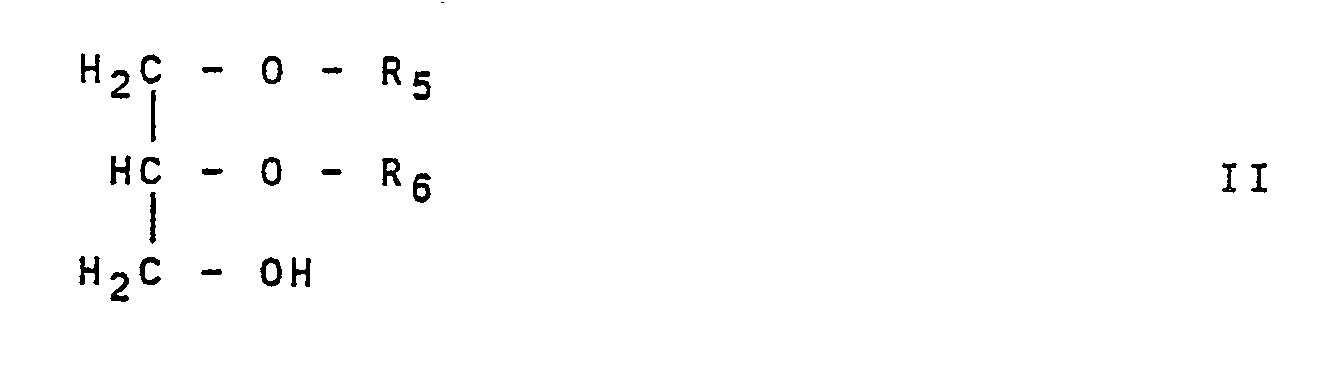
R - Y - PO

oder ein physiologisch verträgliches Salz hiervon, wobei in der Formel I
R einen gesättigten oder ungesättigten Kohlenwasserstoffrest mit 12 bis 24 C-Atomen bedeutet, der auch halogensubstituiert sein kann, oder wobei R die Gruppe -CH₂-CHR₃-CH₂-Z-R₄ bedeutet und R₃ eine C₁-C₆-Alkoxygruppe oder ein C₁-C₆-Alkoxymethylgruppe ist, Z Sauerstoff oder Schwefel bedeutet und R₄ einen C₁-C₂₄-Alkylrest darstellt,
X ein Sauerstoffatom, NH oder NR₂ und Y ein Sauerstoffatom oder NH ist, R₁ eine C₁-C₈-Alkylgruppe ist, oder worin R₁ eine C₂-C₈-Alkylgruppe darstellt, die ungesättigt und/oder mit Halogen, Amino, C₁-C₆-Alkylamino, Di-C₁-C₆-alkylamino, Tri-C₁-C₆-alkylamino, Hydroxy, Carboxy, C₃-C₈-Cycloalkyl oder Phenyl substituiert ist, und worin R₁ außerdem auch 2-tert.-Butyloxycarbonylaminoethyl , 2-tert.-Butyloxycarbonylethyl, 2,3-Isopropylidendioxy-propyl-(1) , 2,3-Dibenzyloxy-propyl-(1), 1,3-Dibenzyloxy-propyl-(2) oder N-C₁-C₆-Alkylamino-C₂-C₆-alkyl bedeuten kann, wenn X ein Sauerstoffatom ist, und worin R₁ außerdem auch 2,3-Dihydroxypropyl-(1) bedeuten kann, wenn X die NH-Gruppe ist,
und R₂ eine 2,3-Dihydroxypropyl-(1)-gruppe, eine C₁-C₈-Alkylgruppe oder eine C₂-C₈-Alkylgruppe, die ungesättigt und/oder mit Halogen, Amino, C₁-C₆-Alkylamino, Di-C₁-C₆-alkylamino, Tri-C₁-C₆-alkylamino, Hydroxy, Carboxy, C₃-C₈-Cycloalkyl oder Phenyl substituiert ist, darstellt,
mit üblichen pharmazeutischen Träger-, Hilfs- und/oder Verdünnungsmitteln zu einem Arzneimittel für die Behandlung von Psoriasis-Erkrankungen verarbeitet wird.
dadurch gekennzeichnet,
daß man bei der Herstellung zusätzlich noch ein Alkylglycerin der Formel II
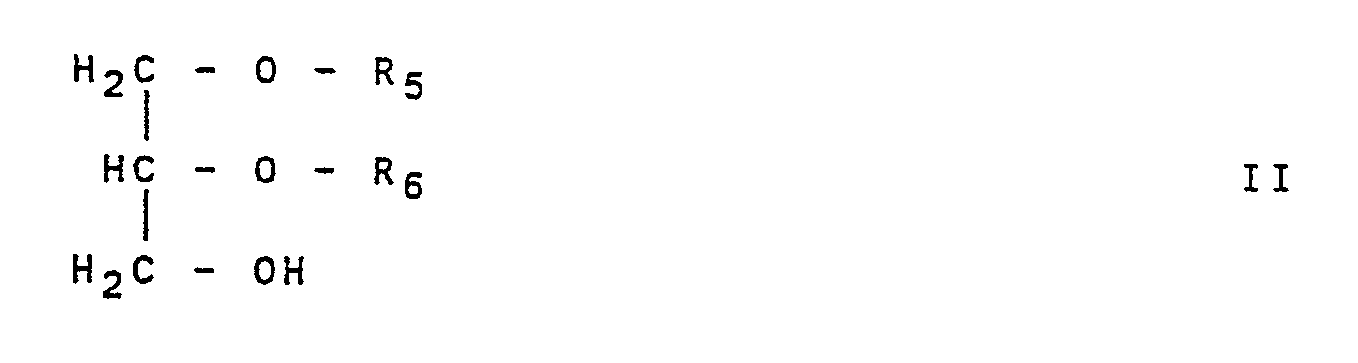
Priority Applications (1)
| Application Number | Priority Date | Filing Date | Title |
|---|---|---|---|
| EP98112091A EP0916343A1 (de) | 1989-09-27 | 1990-09-18 | Verwendung von Alkylphosphorsäure-Verbindungen zur Bekämpfung von Psoriasis-Erkrankungen |
Applications Claiming Priority (2)
| Application Number | Priority Date | Filing Date | Title |
|---|---|---|---|
| DE3932183 | 1989-09-27 | ||
| DE3932183 | 1989-09-27 |
Publications (2)
| Publication Number | Publication Date |
|---|---|
| EP0419998A2 true EP0419998A2 (de) | 1991-04-03 |
| EP0419998A3 EP0419998A3 (en) | 1991-10-23 |
Family
ID=6390272
Family Applications (2)
| Application Number | Title | Priority Date | Filing Date |
|---|---|---|---|
| EP98112091A Withdrawn EP0916343A1 (de) | 1989-09-27 | 1990-09-18 | Verwendung von Alkylphosphorsäure-Verbindungen zur Bekämpfung von Psoriasis-Erkrankungen |
| EP19900117888 Ceased EP0419998A3 (en) | 1989-09-27 | 1990-09-18 | Use of alkylphosphonic acid derivatives for the treatment of psoriasis |
Family Applications Before (1)
| Application Number | Title | Priority Date | Filing Date |
|---|---|---|---|
| EP98112091A Withdrawn EP0916343A1 (de) | 1989-09-27 | 1990-09-18 | Verwendung von Alkylphosphorsäure-Verbindungen zur Bekämpfung von Psoriasis-Erkrankungen |
Country Status (17)
| Country | Link |
|---|---|
| EP (2) | EP0916343A1 (de) |
| JP (1) | JP3176615B2 (de) |
| CA (1) | CA2026278C (de) |
| DD (1) | DD298052A5 (de) |
| DE (1) | DE4029747C2 (de) |
| EG (1) | EG19338A (de) |
| FI (1) | FI904726A7 (de) |
| HU (1) | HU209589B (de) |
| IE (1) | IE903464A1 (de) |
| LT (1) | LT3804B (de) |
| LV (1) | LV10391B (de) |
| MC (1) | MC2150A1 (de) |
| NO (1) | NO904184L (de) |
| PT (1) | PT95422B (de) |
| RU (1) | RU1837877C (de) |
| UA (1) | UA19335A (de) |
| ZA (1) | ZA907702B (de) |
Cited By (3)
| Publication number | Priority date | Publication date | Assignee | Title |
|---|---|---|---|---|
| DE4235911A1 (de) * | 1992-10-23 | 1994-04-28 | Asta Medica Ag | Stabilisierte Hexadecylphosphocholinlösungen in Glycerinalkylethern |
| WO1999037289A1 (en) * | 1998-01-22 | 1999-07-29 | Asta Medica Ag | Solid pharmaceutical compositions containing miltefosine for oral administration in the treatment of leishmaniasis |
| RU2190390C2 (ru) * | 1998-01-22 | 2002-10-10 | Центарис АГ | Твердая фармацевтическая композиция для орального введения при лечении лейшманиоза и способ ее производства, фармацевтическая комбинация для лечения лейшманиоза у млекопитающих и способ лечения (варианты) |
Families Citing this family (5)
| Publication number | Priority date | Publication date | Assignee | Title |
|---|---|---|---|---|
| US5958906A (en) * | 1992-10-01 | 1999-09-28 | Asta-Medica Aktiengesellschaft | Phospholipid derivatives containing higher elements of the fifth main group |
| DE4233044A1 (de) * | 1992-10-01 | 1994-04-07 | Asta Medica Ag | Phospholipidderivate, die höhere Elemente der V. Hauptgruppe enthalten |
| RU2196583C1 (ru) * | 2001-05-29 | 2003-01-20 | Барбинов Вячеслав Викторович | Средство для наружной терапии псориаза и способ его изготовления |
| DE102006004821B4 (de) * | 2006-01-30 | 2020-12-10 | Cuma Kilic | Sammelbehältnis für Abfall und Bauschutt |
| AU2009349348B2 (en) * | 2009-07-09 | 2014-09-11 | Paul Meng | Liquid pharmaceutical form of alkylphosphocholine and method of preparing same |
Family Cites Families (3)
| Publication number | Priority date | Publication date | Assignee | Title |
|---|---|---|---|---|
| US4761404A (en) * | 1985-07-01 | 1988-08-02 | Merck & Co., Inc. | Phospholipid analogs useful as PAF synthesis inhibitors |
| IE59777B1 (en) * | 1985-12-04 | 1994-04-06 | Max Planck Gesellschaft | Medicaments |
| DE3829899C2 (de) * | 1988-09-02 | 1994-12-15 | Reutter Werner | Glyceringlycophosphatide und diese enthaltende pharmazeutische Mittel zur Bekämpfung von Hauterkrankungen |
-
1990
- 1990-09-18 EP EP98112091A patent/EP0916343A1/de not_active Withdrawn
- 1990-09-18 EP EP19900117888 patent/EP0419998A3/de not_active Ceased
- 1990-09-20 DE DE4029747A patent/DE4029747C2/de not_active Expired - Lifetime
- 1990-09-25 DD DD90344186A patent/DD298052A5/de not_active IP Right Cessation
- 1990-09-25 EG EG56690A patent/EG19338A/xx active
- 1990-09-25 MC MC902151A patent/MC2150A1/fr unknown
- 1990-09-26 UA UA4831261A patent/UA19335A/uk unknown
- 1990-09-26 NO NO90904184A patent/NO904184L/no unknown
- 1990-09-26 IE IE346490A patent/IE903464A1/en unknown
- 1990-09-26 CA CA002026278A patent/CA2026278C/en not_active Expired - Lifetime
- 1990-09-26 HU HU906233A patent/HU209589B/hu not_active IP Right Cessation
- 1990-09-26 RU SU904831261A patent/RU1837877C/ru active
- 1990-09-26 PT PT95422A patent/PT95422B/pt not_active IP Right Cessation
- 1990-09-26 FI FI904726A patent/FI904726A7/fi not_active Application Discontinuation
- 1990-09-26 ZA ZA907702A patent/ZA907702B/xx unknown
- 1990-09-27 JP JP25549990A patent/JP3176615B2/ja not_active Expired - Fee Related
-
1992
- 1992-10-27 LV LVP-92-169A patent/LV10391B/lv unknown
-
1993
- 1993-11-25 LT LTIP1488A patent/LT3804B/lt unknown
Cited By (5)
| Publication number | Priority date | Publication date | Assignee | Title |
|---|---|---|---|---|
| DE4235911A1 (de) * | 1992-10-23 | 1994-04-28 | Asta Medica Ag | Stabilisierte Hexadecylphosphocholinlösungen in Glycerinalkylethern |
| US5446033A (en) * | 1992-10-23 | 1995-08-29 | Asta Medica Ag | Stabilized hexadecylphosphocholine solutions in glycerol alkyl ethers |
| WO1999037289A1 (en) * | 1998-01-22 | 1999-07-29 | Asta Medica Ag | Solid pharmaceutical compositions containing miltefosine for oral administration in the treatment of leishmaniasis |
| RU2190390C2 (ru) * | 1998-01-22 | 2002-10-10 | Центарис АГ | Твердая фармацевтическая композиция для орального введения при лечении лейшманиоза и способ ее производства, фармацевтическая комбинация для лечения лейшманиоза у млекопитающих и способ лечения (варианты) |
| US6544551B1 (en) | 1998-01-22 | 2003-04-08 | Zentaris Ag | Solid pharmaceutical compositions containing hexedecylphosphocholine (miltefosine) for oral administration in the treatment of leishmaniasis |
Also Published As
| Publication number | Publication date |
|---|---|
| ZA907702B (en) | 1991-07-31 |
| PT95422A (pt) | 1991-05-22 |
| FI904726A0 (fi) | 1990-09-26 |
| UA19335A (uk) | 1997-12-25 |
| CA2026278C (en) | 1996-04-30 |
| EP0916343A1 (de) | 1999-05-19 |
| NO904184D0 (no) | 1990-09-26 |
| HU906233D0 (en) | 1991-03-28 |
| JPH03130228A (ja) | 1991-06-04 |
| FI904726A7 (fi) | 1991-03-28 |
| NO904184L (no) | 1991-04-02 |
| EG19338A (en) | 1994-12-30 |
| DE4029747C2 (de) | 2003-10-02 |
| CA2026278A1 (en) | 1991-03-28 |
| DD298052A5 (de) | 1992-02-06 |
| LV10391A (lv) | 1995-02-20 |
| JP3176615B2 (ja) | 2001-06-18 |
| LT3804B (en) | 1996-03-25 |
| IE903464A1 (en) | 1991-04-10 |
| HUT55992A (en) | 1991-07-29 |
| DE4029747A1 (de) | 1991-04-11 |
| LV10391B (en) | 1995-10-20 |
| RU1837877C (ru) | 1993-08-30 |
| MC2150A1 (fr) | 1992-03-10 |
| PT95422B (pt) | 1997-07-31 |
| EP0419998A3 (en) | 1991-10-23 |
| LTIP1488A (en) | 1995-06-26 |
| HU209589B (en) | 1994-08-29 |
Similar Documents
| Publication | Publication Date | Title |
|---|---|---|
| EP0467164B1 (de) | Flupirtin in Kombination mit Antiparkinsonika zur Bekämpfung von Muskelverspannungen | |
| DE3336047C2 (de) | Topisch applizierbare pharmazeutische Zusammensetzung mit dem Wirkstoff Diclofenac | |
| EP0248062B1 (de) | Arzeimittel | |
| DE4035442B4 (de) | Arzneimittel enthaltend als Wirkstoff R-α-Liponsäure | |
| EP0241809B1 (de) | Synergistische Kombination von Amantadin und Selegilin | |
| EP0533213B1 (de) | Verwendung des Wirkstoffs Azelastin und Glycerinethern zur Bekämpfung von Psoriasis-Erkrankungen | |
| EP0189788B1 (de) | Synergistische Kombination von Flupirtin und nicht-steroidalen Antiphlogistika | |
| EP0382066A2 (de) | Verwendung von Dihydroliponsäure als Analgetikum, Antiphlogistikum und/oder Zytoprotektivum | |
| DE4218572A1 (de) | Synergistische Kombination von Arzneimitteln enthaltend als Wirkstoff alpha-Liponsäure, Dihydroliponsäure, deren Metaboliten sowie die oxidierten und reduzierten Enantiomere der alpha-Liponsäure wie die R-alpha-Liponsäure oder S-alpha-Liponsäure sowie Metaboliten der alpha-Liponsäure mit den Vitaminen A, B1-6, B12, C und E | |
| EP0193056B1 (de) | Kombination von Flupirtin und anticholinergisch wirkenden Spasmolytika | |
| EP0396069B1 (de) | Salze des Azelastins mit verbesserter Löslichkeit | |
| DE69635670T2 (de) | Threitol-buttersäureester-enthaltende zusammensetzungen und ihre verwendung | |
| EP0419998A2 (de) | Verwendung von Alkylphosphorsäure-Verbindungen zur Bekämpfung von Psoriasis-Erkrankungen | |
| EP1239862B1 (de) | Pharmazeutische zubereitung enthaltend zytostatika und elektronenakzeptoren zur behandlung von krebs | |
| EP0277352A1 (de) | Synergistische Kombination von Azelastin und Theophyllin oder Azelastin und Beta-Mimetika | |
| DE69828390T2 (de) | Antikrebs-zusammensetzung | |
| DE69307197T2 (de) | Verwendung von 24,25-Dihydroxyvitamin-D3 zur Herstellung eines Arzneimittel zur Behandlung der Rachitis | |
| DE4002706A1 (de) | Arzneimittel enthaltend als wirkstoff dihydroliponsaeure | |
| DE4333794A1 (de) | Neue Acetyl-Salicylsäure-Derivate zur Bekämpfung von Entzündungs- und Schmerzzuständen sowie zur Thromboseprophylaxe und -terapie | |
| DE4331168A1 (de) | Kombination von N-Acetyl-p-Aminophenol mit schwefelenthaltenden Carbonsäuren, wie z. B. alpha-Liponsäure und deren Derivate, zur Bekämpfung von Schmerzzuständen | |
| EP0006435A1 (de) | Arzneimittelkombination zur Behandlung von Durchblutungsstörungen und Verfahren zu ihrer Herstellung | |
| DE102005008412A1 (de) | Piperazinsalz des Omeprazols und dessen Enantiomere |
Legal Events
| Date | Code | Title | Description |
|---|---|---|---|
| PUAI | Public reference made under article 153(3) epc to a published international application that has entered the european phase |
Free format text: ORIGINAL CODE: 0009012 |
|
| 17P | Request for examination filed |
Effective date: 19900918 |
|
| AK | Designated contracting states |
Kind code of ref document: A2 Designated state(s): AT BE CH DE DK ES FR GB GR IT LI LU NL SE |
|
| PUAL | Search report despatched |
Free format text: ORIGINAL CODE: 0009013 |
|
| AK | Designated contracting states |
Kind code of ref document: A3 Designated state(s): AT BE CH DE DK ES FR GB GR IT LI LU NL SE |
|
| RAP1 | Party data changed (applicant data changed or rights of an application transferred) |
Owner name: MAX-PLANCK-GESELLSCHAFT ZUR FOERDERUNG DER WISSEN Owner name: ASTA MEDICA AKTIENGESELLSCHAFT |
|
| 17Q | First examination report despatched |
Effective date: 19920730 |
|
| RAP1 | Party data changed (applicant data changed or rights of an application transferred) |
Owner name: MAX-PLANCK-GESELLSCHAFT ZUR FOERDERUNG DER WISSEN Owner name: ASTA MEDICA AKTIENGESELLSCHAFT |
|
| APAB | Appeal dossier modified |
Free format text: ORIGINAL CODE: EPIDOS NOAPE |
|
| STAA | Information on the status of an ep patent application or granted ep patent |
Free format text: STATUS: THE APPLICATION HAS BEEN REFUSED |
|
| 18R | Application refused |
Effective date: 19980701 |
|
| APAF | Appeal reference modified |
Free format text: ORIGINAL CODE: EPIDOSCREFNE |