EP0423224B1 - Leadersequenz zur induzierung einer posttranslationalen modifikation von polypeptiden in bakterien, sowie dafür kodierendes gen - Google Patents
Leadersequenz zur induzierung einer posttranslationalen modifikation von polypeptiden in bakterien, sowie dafür kodierendes gen Download PDFInfo
- Publication number
- EP0423224B1 EP0423224B1 EP89908558A EP89908558A EP0423224B1 EP 0423224 B1 EP0423224 B1 EP 0423224B1 EP 89908558 A EP89908558 A EP 89908558A EP 89908558 A EP89908558 A EP 89908558A EP 0423224 B1 EP0423224 B1 EP 0423224B1
- Authority
- EP
- European Patent Office
- Prior art keywords
- sequence
- gene
- precursor
- leader
- post
- Prior art date
- Legal status (The legal status is an assumption and is not a legal conclusion. Google has not performed a legal analysis and makes no representation as to the accuracy of the status listed.)
- Expired - Lifetime
Links
Images


Classifications
-
- C—CHEMISTRY; METALLURGY
- C12—BIOCHEMISTRY; BEER; SPIRITS; WINE; VINEGAR; MICROBIOLOGY; ENZYMOLOGY; MUTATION OR GENETIC ENGINEERING
- C12N—MICROORGANISMS OR ENZYMES; COMPOSITIONS THEREOF; PROPAGATING, PRESERVING, OR MAINTAINING MICROORGANISMS; MUTATION OR GENETIC ENGINEERING; CULTURE MEDIA
- C12N15/00—Mutation or genetic engineering; DNA or RNA concerning genetic engineering, vectors, e.g. plasmids, or their isolation, preparation or purification; Use of hosts therefor
- C12N15/09—Recombinant DNA-technology
- C12N15/11—DNA or RNA fragments; Modified forms thereof; Non-coding nucleic acids having a biological activity
-
- C—CHEMISTRY; METALLURGY
- C07—ORGANIC CHEMISTRY
- C07K—PEPTIDES
- C07K14/00—Peptides having more than 20 amino acids; Gastrins; Somatostatins; Melanotropins; Derivatives thereof
- C07K14/195—Peptides having more than 20 amino acids; Gastrins; Somatostatins; Melanotropins; Derivatives thereof from bacteria
-
- C—CHEMISTRY; METALLURGY
- C07—ORGANIC CHEMISTRY
- C07K—PEPTIDES
- C07K14/00—Peptides having more than 20 amino acids; Gastrins; Somatostatins; Melanotropins; Derivatives thereof
- C07K14/195—Peptides having more than 20 amino acids; Gastrins; Somatostatins; Melanotropins; Derivatives thereof from bacteria
- C07K14/315—Peptides having more than 20 amino acids; Gastrins; Somatostatins; Melanotropins; Derivatives thereof from bacteria from Streptococcus (G), e.g. Enterococci
-
- C—CHEMISTRY; METALLURGY
- C07—ORGANIC CHEMISTRY
- C07K—PEPTIDES
- C07K14/00—Peptides having more than 20 amino acids; Gastrins; Somatostatins; Melanotropins; Derivatives thereof
- C07K14/195—Peptides having more than 20 amino acids; Gastrins; Somatostatins; Melanotropins; Derivatives thereof from bacteria
- C07K14/32—Peptides having more than 20 amino acids; Gastrins; Somatostatins; Melanotropins; Derivatives thereof from bacteria from Bacillus (G)
-
- C—CHEMISTRY; METALLURGY
- C12—BIOCHEMISTRY; BEER; SPIRITS; WINE; VINEGAR; MICROBIOLOGY; ENZYMOLOGY; MUTATION OR GENETIC ENGINEERING
- C12N—MICROORGANISMS OR ENZYMES; COMPOSITIONS THEREOF; PROPAGATING, PRESERVING, OR MAINTAINING MICROORGANISMS; MUTATION OR GENETIC ENGINEERING; CULTURE MEDIA
- C12N15/00—Mutation or genetic engineering; DNA or RNA concerning genetic engineering, vectors, e.g. plasmids, or their isolation, preparation or purification; Use of hosts therefor
- C12N15/09—Recombinant DNA-technology
- C12N15/10—Processes for the isolation, preparation or purification of DNA or RNA
-
- C—CHEMISTRY; METALLURGY
- C12—BIOCHEMISTRY; BEER; SPIRITS; WINE; VINEGAR; MICROBIOLOGY; ENZYMOLOGY; MUTATION OR GENETIC ENGINEERING
- C12N—MICROORGANISMS OR ENZYMES; COMPOSITIONS THEREOF; PROPAGATING, PRESERVING, OR MAINTAINING MICROORGANISMS; MUTATION OR GENETIC ENGINEERING; CULTURE MEDIA
- C12N15/00—Mutation or genetic engineering; DNA or RNA concerning genetic engineering, vectors, e.g. plasmids, or their isolation, preparation or purification; Use of hosts therefor
- C12N15/09—Recombinant DNA-technology
- C12N15/11—DNA or RNA fragments; Modified forms thereof; Non-coding nucleic acids having a biological activity
- C12N15/62—DNA sequences coding for fusion proteins
- C12N15/625—DNA sequences coding for fusion proteins containing a sequence coding for a signal sequence
-
- C—CHEMISTRY; METALLURGY
- C12—BIOCHEMISTRY; BEER; SPIRITS; WINE; VINEGAR; MICROBIOLOGY; ENZYMOLOGY; MUTATION OR GENETIC ENGINEERING
- C12N—MICROORGANISMS OR ENZYMES; COMPOSITIONS THEREOF; PROPAGATING, PRESERVING, OR MAINTAINING MICROORGANISMS; MUTATION OR GENETIC ENGINEERING; CULTURE MEDIA
- C12N15/00—Mutation or genetic engineering; DNA or RNA concerning genetic engineering, vectors, e.g. plasmids, or their isolation, preparation or purification; Use of hosts therefor
- C12N15/09—Recombinant DNA-technology
- C12N15/63—Introduction of foreign genetic material using vectors; Vectors; Use of hosts therefor; Regulation of expression
- C12N15/67—General methods for enhancing the expression
-
- C—CHEMISTRY; METALLURGY
- C07—ORGANIC CHEMISTRY
- C07K—PEPTIDES
- C07K2319/00—Fusion polypeptide
- C07K2319/01—Fusion polypeptide containing a localisation/targetting motif
- C07K2319/02—Fusion polypeptide containing a localisation/targetting motif containing a signal sequence
-
- C—CHEMISTRY; METALLURGY
- C07—ORGANIC CHEMISTRY
- C07K—PEPTIDES
- C07K2319/00—Fusion polypeptide
- C07K2319/90—Fusion polypeptide containing a motif for post-translational modification
Definitions
- This invention pertains to the expression of proteins which require post-translational modification of their amino acid sequence before a mature form is reached.
- proteins exhibit amino acids other than the 20 common amino acids coded for by the conventional nucleic acids.
- a leader peptide sequence is identified which can induce post-translational modification of specific amino acids when expressed in conjunction with the precursor polypeptide of the antibiotic nisin. Methods of forming improved compositions using this leader sequence are also addressed.
- Polypeptides including those having natural antibiotic activities, have been identified which comprise amino acids other than the 20 common acids specified by the genetic code, as the expression products of bacteria, and other organisms.
- the structure of two of the more important ones, nisin and subtilin are set forth in FIGURE 1 of this application.
- the Applicants have identified a gene leader sequence, which, when coupled with the gene encoding the precursor polypeptide of the antibiotic nisin, induces or participates in the post-translational modification of the precursor to obtain the mature form.
- the structure of the full gene including probable ribosomal binding sites, confirms the post-translational modification model for the manufacture of this peptide.
- FIGURE 2 The gene for the expression of the precursor, and ultimately, the mature protein, of subtilin appears in FIGURE 2.
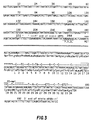
- the leader sequence which can be used to promote post-translational modification of other proteins which contain unusual amino acids, such as nisin and the like, is set forth specifically in FIGURE 3.
- FIGURE 1 is the conformational structure for the small antibiotic proteins nisin and subtilin, as determined by Gross et al. , Protein Cross-linking, pages 131-153 (1977).
- FIGURE 2 is the genetic base pair sequence for the entire digested fragment containing the gene which encodes for the subtilin precursor peptide, including the leader fragment responsible for inducing post-translational modification.
- a putative ribosomal binding site is labeled R.B.S., the leader fragment has astericks above it, and those amino acids of the precursor which undergo modification are set forth in bold face.
- FIGURE 3 is an illustration giving the sequence for the gene coding for nisin, and the precursor polypeptide corresponding thereto bearing the same types of markings and having the same meanings as FIGURE 2.
- Bacillus subtilis ATCC 6633 a subtilin-producing strain, was obtained from the American Type Culture Collection, Rockville, MD. It was cultured in the high-sucrose Medium A of Nishio et al (1983), originally described by Feeney et al (1948).
- subtilin gene probe was designed based on the putative amino acid precursor sequence of subtilin.
- the mature subtilin molecule contains only 32 amino acids, and does not contain any regions of low codon degeneracy. Therefore, instead of preparing a probe mixture which contained all possible sequences encoding a short stretch of amino acids in the subtilin precursor, a single long probe was synthesized according to the strategy of Lathe, Journal of Molecular Biology, 183, pp. 1-12 (1985). Ambiguous positions within codons were chosen by educated guess, according to a codon frequency usage table constructed from the known B. subtilis gene which codes for alpha-amylase Yang et al, Nucleic Acids Research, 11, pp. 237-249 (1983).
- the 96-mer "guessmer” was end-labeled using polynucleotide kinase, purified on disulfide cross-linked BAC gels as described by Hansen et al (1982), and hybridized to EcoRl digests of total ATCC 6633 genomic DNA at 7°C temperature intervals in the range of 37-60°C, using a 6x Standard Saline Citrate (SSC) salt strength. Separate strips were then washed, using temperature increments of 4°C, in 2x SSC.
- SSC Saline Citrate
- hybridization and wash conditions that gave the best combination of signal strength and specificity were chosen for subsequent screening of a partial Mbol library of ATCC 6633 DNA constructed in lambda J1.
- Hybridizations in which probe and target were highly homologous were carried out in the same hybridization buffer as above, but the hybridization temperature was 70°C, washes were done in 0.lx SSC at 52°C.
- DNA sequence analysis was done using the modified T7 polymerase "Sequenase" system suppled by United States Biochemical Corp.
- RNA isolation and S1-mapping Total RNA was isolated using the method of Ulmanen et al (1985). S1-mapping was performed by the method of Davis et al (1986), in which a synthetic oligonucleotide is used to prime second strand sythesis using single-strand M13 DNA which contains the cloned gene as template. Label was incorporated as 32 P from [alpha- 32 P-dATP]. After a short labeling time, an excess of unlabeled dATP was added, and second strand synthesis was continued toward completion.
- RNA and protein analysis were done by electroblotting acrylamide gels of RNA preparations onto Zeta-probe nylon membrane (Bio-Rad). Proteins were analyzed by electrophoresis on the polyacrylamide gel system of Swank and Munkres (1971), and silver-stained using Bio-Rad reagents. Subtilin activity was measured as for nisin, described by Morris et al (1984).
- this sequence includes a portion encoding a precursor polypeptide, which contains serines, threonines and cysteines which undergo modification after translation, to arrive at the mature protein, having the unusual amino acids noted.
- the (-10) region corresponds closely to a consensus prokaryotic promoter (TATAAT) as observed in other bacteria, Siebenlist et al., Cell, 20, pages 269-281 (1980).
- TATAAT consensus prokaryotic promoter
- the putative ribosome binding site is labeled as RBS and encompasses a 12 base pair sequence that is typical of those observed in B. subtilis, as reported by Band et al., DNA, 3, pages 17-21 (1984).
- subtilin precursor peptide leader region which plays a role in the transport of subtilin outside the cell, is unusual in comparison to sequences of other prokaryotic exported proteins.
- Nisin-pcoducing Streptococcus lactis ATCC 11454 was obtained from the American Type Culture Collection (Rockville, MD). Strains were stored at -20°C in ATCC Medium 17 (100 g skim milk powder, 100 g tomato juice, 5 g yeast extract to pH 7.0) containing 25% glycerol. Working stocks were maintained on 1.2% LB agar plates (10 g Bacto-tryptone, 5 g Bacto-yeast extract, 10 g NaCl per liter).
- M17 culture medium consisting of 5 g Bacto-peptone (Difco), 5 g Bacto-soytone (Difco), 2.5 g yeast extract (Difco), 5 g beef extract (Difco), 0.5 g ascorbic acid, 5 g lactose (or glucose) 19 g beta-disodium glycerophosphate (Eastman), and 0.12 g anhydrous MgSO 4 per liter, was used to culture S. lactis for nisin production, genomic library construction, and total RNA isolation. The organism was grown at 32°C without aeration using a 2% inoculum into an appropriate volume of M17 medium.
- Bacillus cereus T spores used in the assay for nisin production were prepared and stored as described in the art. Antibiotic activity assays were performed as previously described using fractions of the S. lactis culture supernatant.
- the solution was dialyzed against a buffer of 50mM Tris-HCl and 4 mM EDTA for 16 hours at 4°C with one buffer change.
- the DNA was ethanol-precipitated two times in the presence of 2.5 M ammonium acetate and finally dissolved in 2 ml 10 mM Tris-HCl, pH 7.6.
- Probe construction, radiolabeling, and hybridization procedures were used to search for the nisin gene in S. lactis ATCC 11454 DNA. Hybridization conditions were optimized as previously described. Two oligomeric probes were prepared by chemical synthesis using a Biosearch Model 8700 DNA synthesizer. One was a 20-mer mixed probe designed against a region of low codon degeneracy within the putative nisin precursor sequence. The second was a single sequence 103-mer oligonuceotide probe designed using the strategy of Lathe. A natural DNA probe was also employed, which was a 1.1 kb restriction fragment containing the subtilin gene that had previously been cloned from Bacillus subtilis ATCC 6633 (2).
- RNA isolation and Northern blot analysis were performed according to the method of Ulmanen et al. RNA fractionation was performed on a denaturing acrylamide gel, electroblotted onto Zeta-probe (Biorad) nylon membrane, and hybridized as described above.
- Protein analysis Proteins were analyzed by electrophoresis on the polyacrylamide gel system of Swank and Munkres, and silver-stained using Bio-Rad reagents. Nisin activity was determined by the method of Morris et al.
- subtilin, nisin, and other proteins containing unusual amino acids not encoded by the genetic code are established.
- Genes coding for the precursor polypeptide, including the leader, can be inserted through conventional technologies into any expression vehicle, which, e.g., for nisin, include Streptococcus lactis as a natural producer, and the expression bacteria set forth, e.g., in U.S. Patent 4,716,115. Similar expression vehicles can be identified for other proteins.
- each leader region reflects an interruption in the hydophilic residues with one hydrophobic residue, at the exact same location in each case.
- the invention herein embraces not only the recognition that modification is accomplished by encoding a leader region which directs or aids in achieving modification in the structural region, but extends to the recognition that the leader region can be generally characterized as having a portion proximal to the strucutral region which is hydrophilic in nature, complemented by a more distal portion wherein hydrophilic and hydrophobic residues alternate to give an overall neutral value.
- the three examples set forth herein all include the presence of a single hydrophobic residue in the hydrophilic portion adjacent the structural region.
- routine experimentation can determine the necessity of such a presence, together with various alternatives, which may improve modification efficiency.
- the available technology also allows the manufacture of a gene encoding a mature protein, from the gene for the structural region only, which in many cases can be determined in a relatively straightforward manner, i.e., prediction based on the amino acid sequence followed by hybridization and sequence analysis.
- the effect of the leader sequence of this invention on specific amino acids also provides a novel means for achieving site-specific mutagenesis without resort to DNA modification.
- deletion or replacement of various residues, such as cysteine may improve biological activity. See, e.g., U.S. Patent 4,518,584.
- novel mutants of naturally-occurring peptides are quite likely to possibly exhibit higher activities, or better specificities for certain biological functions.
- leader fragment can be employed to induce "binding sites”, to develop a covalent bonding "antibody”, to neutralize specific toxins, to select out specific material, etc. All these modifications are well within the skill of the ordinary practitioner and the expanding biotechnology arts, and so represent immediate applications of the discovery of the leader sequence disclosed herein.
- an adhesive can be prepared specific for a given substrate, e.g., carbon fibres, which due to the capability of the unusual amino acids generated by modification to form covalent linkages, can firmly bond to the substrate.
- the availability of amino acids allows the designer to introduce as an adhesive any desired amount of hydrophobicity, hydrophilicity, etc., to overcome problems encountered in currently used adhesives, such as epoxies.
- subtilin precursor exhibits residues in the leader sequence that initially alternate between high hydrophilic and high hydrophobic nature, becoming highly hydrophilic near the structural region, which, in contrast is strongly hydrophobic.
- leader regions for exported proteins of prokaryotes which generally have a quite hydrophobic region, and contain basic residues, not the acidic residues of the invention.
- the post-translational modifications occur at a compartmentalized site, which the unusual leader sequence assists in targeting or directing the precursor too. It is expected that other proteins will participate in the modification mechanisms. Enzymes necessary to effect the essential chemical reactions localized at or near the cell membrane.
Landscapes
- Health & Medical Sciences (AREA)
- Genetics & Genomics (AREA)
- Life Sciences & Earth Sciences (AREA)
- Chemical & Material Sciences (AREA)
- Engineering & Computer Science (AREA)
- Organic Chemistry (AREA)
- Biomedical Technology (AREA)
- Molecular Biology (AREA)
- Wood Science & Technology (AREA)
- Biotechnology (AREA)
- General Engineering & Computer Science (AREA)
- Bioinformatics & Cheminformatics (AREA)
- Zoology (AREA)
- Biophysics (AREA)
- Biochemistry (AREA)
- General Health & Medical Sciences (AREA)
- Microbiology (AREA)
- Plant Pathology (AREA)
- Physics & Mathematics (AREA)
- Medicinal Chemistry (AREA)
- Gastroenterology & Hepatology (AREA)
- Proteomics, Peptides & Aminoacids (AREA)
- Crystallography & Structural Chemistry (AREA)
- Peptides Or Proteins (AREA)
- Preparation Of Compounds By Using Micro-Organisms (AREA)
- Medicines Containing Antibodies Or Antigens For Use As Internal Diagnostic Agents (AREA)
- Micro-Organisms Or Cultivation Processes Thereof (AREA)
- Measuring Or Testing Involving Enzymes Or Micro-Organisms (AREA)
Claims (3)
- Ein Gen-Leader-Fragment welches für eine Peptid-Leader-Sequenz codiert, die eine posttranslationale Modifikation von Aminosäuren induziert, welche ausgwählt sind aus der Gruppe bestehend aus: Cys, Ser, Thr, wobei das Fragment die Sequenz aufweist:

- Ein Polypeptid, welches, wenn es als ein Leader an einen Proteinvorläufer, der einer posttranslationalen Modifikation unterliegt, angehängt ist, bei der Induzierung dieser Modifikation zu helfen, mit der Aminosäuresequenz:

- Ein Vorläuferpeptid welches, wenn es in Bakterien exprimiert wird, nach der Translation in das Protein Nisin umgewandelt wird, wobei der Vorläufer die folgende Sequenz von Resten aufweist:

Applications Claiming Priority (3)
| Application Number | Priority Date | Filing Date | Title |
|---|---|---|---|
| US214959 | 1988-07-05 | ||
| US07/214,959 US5218101A (en) | 1988-07-05 | 1988-07-05 | Leader sequence inducing a post-translational modification of polypeptides in bacteria, and gene therefor |
| PCT/US1989/002820 WO1990000558A1 (en) | 1988-07-05 | 1989-06-30 | Leader sequence inducing a post-translational modification of polypeptides in bacteria, and gene therefor |
Publications (3)
| Publication Number | Publication Date |
|---|---|
| EP0423224A1 EP0423224A1 (de) | 1991-04-24 |
| EP0423224A4 EP0423224A4 (en) | 1991-11-06 |
| EP0423224B1 true EP0423224B1 (de) | 1999-01-07 |
Family
ID=22801074
Family Applications (1)
| Application Number | Title | Priority Date | Filing Date |
|---|---|---|---|
| EP89908558A Expired - Lifetime EP0423224B1 (de) | 1988-07-05 | 1989-06-30 | Leadersequenz zur induzierung einer posttranslationalen modifikation von polypeptiden in bakterien, sowie dafür kodierendes gen |
Country Status (14)
| Country | Link |
|---|---|
| US (1) | US5218101A (de) |
| EP (1) | EP0423224B1 (de) |
| JP (2) | JP3326172B2 (de) |
| KR (1) | KR0137961B1 (de) |
| AT (1) | ATE175417T1 (de) |
| AU (1) | AU640110B2 (de) |
| CA (1) | CA1339414C (de) |
| DE (2) | DE68928899T4 (de) |
| DK (1) | DK191A (de) |
| IL (1) | IL90832A (de) |
| NO (1) | NO309200B1 (de) |
| NZ (1) | NZ229538A (de) |
| WO (1) | WO1990000558A1 (de) |
| ZA (1) | ZA894721B (de) |
Cited By (1)
| Publication number | Priority date | Publication date | Assignee | Title |
|---|---|---|---|---|
| US6861236B2 (en) | 2002-05-24 | 2005-03-01 | Applied Nanosystems B.V. | Export and modification of (poly)peptides in the lantibiotic way |
Families Citing this family (21)
| Publication number | Priority date | Publication date | Assignee | Title |
|---|---|---|---|---|
| US5516682A (en) * | 1988-07-05 | 1996-05-14 | University Of Maryland | Subtilin variant of enhanced stability and activity |
| US5348881A (en) * | 1990-03-13 | 1994-09-20 | Quest International Flavors & Good Ingredients Company, Division Of Indopco, Inc. | Multiple bacteriocin producing lactococcus and compositions |
| NL9000753A (nl) * | 1990-03-30 | 1991-10-16 | Nl Zuivelonderzoek Inst | Dna-fragment, ten minste coderend voor een deel van het extracellulaire eiwit met een schijnbaar molecuulgewicht van 60 kda van lactococcus lactis stammen zoals de lactococcus lactis ssp. lactis stam mg1363, combinaties hiervan met voor homologe of heterologe eiwitten coderende dna-sequenties alsmede de hiermee verkregen homologe en heterologe eiwitten. |
| DK0579730T3 (da) * | 1991-04-11 | 2003-03-31 | Stichting Nl I Voor Zuivelonde | Nisin A-lignende lantibiotika, mælkesyrebakterie der producerer sådanne lantibiotika, fremgangsmåde til konstruktion af sådanne mælkesyrebakterier og fremgangsmåde til konservering . . . |
| US5861376A (en) * | 1991-07-01 | 1999-01-19 | Quest International Flavors & Food Ingredients Company, Division Of Indopco, Inc. | Synthetically derived peptide |
| GB9207267D0 (en) * | 1992-04-02 | 1992-05-13 | Agricultural & Food Res | Nisins |
| EP0700998B1 (de) * | 1994-09-12 | 2003-11-26 | Aventis Pharma Deutschland GmbH | Rekombinantes Mersacidin und Verfahren zu seiner Herstellung |
| US5919695A (en) * | 1997-04-22 | 1999-07-06 | Quest International, B.V. | Method and culture for inhibiting undesired microorganisms with culture of Bacillus subtilis |
| AU8484798A (en) * | 1997-07-18 | 1999-02-10 | University Of Maryland | Sublancin lantibiotic produced by (bacillus subtilis) 168 |
| US6953683B2 (en) * | 1997-07-18 | 2005-10-11 | University Of Maryland | Compositions and methods of inhibiting bacterial spore germination |
| CA2356955A1 (en) * | 1998-12-24 | 2000-07-06 | University Of Maryland | Stable subtilin and methods of manufacture |
| US6846804B2 (en) * | 2000-06-29 | 2005-01-25 | University Of Maryland, College Park Office Of Technology Commercialization | Construction of a structural variant of sublancin to facilitate its isolation and use in bioremediation of environmental contamination by gram-positive spore formers such as bacillus anthrasis |
| US6759205B2 (en) | 2000-06-29 | 2004-07-06 | University Of Maryland | Construction of a strain of Bacillus subtilis 168 that displays the sublancin lantibiotic on the surface of the cell |
| US7033766B2 (en) * | 2000-06-29 | 2006-04-25 | University Of Maryland Office Of Technology Commercialization | Construction and screening of lantibody display libraries |
| WO2003063887A1 (en) * | 2002-01-14 | 2003-08-07 | University Of Maryland, College Park | Compositions and method of inhibiting bacterial spore germination |
| CN101115838B (zh) * | 2004-12-07 | 2015-08-12 | 莫菲西斯公司 | 产生和分泌修饰的肽的方法 |
| KR20080106545A (ko) * | 2006-02-13 | 2008-12-08 | 베링거잉겔하임베트메디카게엠베하 | 란티바이오틱의 제조 방법 |
| US7910695B2 (en) * | 2006-06-29 | 2011-03-22 | The Invention Science Fund I, Llc | Methods for arbitrary peptide synthesis |
| US7879975B2 (en) * | 2006-06-29 | 2011-02-01 | The Invention Science Fund I, Llc | Methods for arbitrary peptide synthesis |
| US7923533B2 (en) * | 2006-06-29 | 2011-04-12 | The Invention Science Fund I, Llc | Methods for arbitrary peptide synthesis |
| US7879974B2 (en) * | 2006-06-29 | 2011-02-01 | The Invention Science Fund I, Llc | Methods for arbitrary peptide synthesis |
Family Cites Families (1)
| Publication number | Priority date | Publication date | Assignee | Title |
|---|---|---|---|---|
| US4716115A (en) * | 1983-09-06 | 1987-12-29 | Microlife Technics, Inc. | Derived nisin producing microorganisms, method of production and use and products obtained thereby |
-
1988
- 1988-07-05 US US07/214,959 patent/US5218101A/en not_active Expired - Fee Related
-
1989
- 1989-06-14 NZ NZ229538A patent/NZ229538A/en unknown
- 1989-06-21 ZA ZA894721A patent/ZA894721B/xx unknown
- 1989-06-30 AU AU39684/89A patent/AU640110B2/en not_active Ceased
- 1989-06-30 DE DE68928899T patent/DE68928899T4/de not_active Expired - Lifetime
- 1989-06-30 IL IL9083289A patent/IL90832A/en not_active IP Right Cessation
- 1989-06-30 AT AT89908558T patent/ATE175417T1/de not_active IP Right Cessation
- 1989-06-30 WO PCT/US1989/002820 patent/WO1990000558A1/en not_active Ceased
- 1989-06-30 DE DE68928899A patent/DE68928899D1/de not_active Expired - Fee Related
- 1989-06-30 KR KR1019900700460A patent/KR0137961B1/ko not_active Expired - Fee Related
- 1989-06-30 EP EP89908558A patent/EP0423224B1/de not_active Expired - Lifetime
- 1989-06-30 JP JP50801189A patent/JP3326172B2/ja not_active Expired - Fee Related
- 1989-07-04 CA CA000604753A patent/CA1339414C/en not_active Expired - Fee Related
-
1990
- 1990-12-28 NO NO905638A patent/NO309200B1/no not_active IP Right Cessation
-
1991
- 1991-01-02 DK DK000191A patent/DK191A/da not_active Application Discontinuation
-
2001
- 2001-11-08 JP JP2001343857A patent/JP3418388B2/ja not_active Expired - Fee Related
Cited By (1)
| Publication number | Priority date | Publication date | Assignee | Title |
|---|---|---|---|---|
| US6861236B2 (en) | 2002-05-24 | 2005-03-01 | Applied Nanosystems B.V. | Export and modification of (poly)peptides in the lantibiotic way |
Also Published As
| Publication number | Publication date |
|---|---|
| DK191D0 (da) | 1991-01-02 |
| DE68928899T2 (de) | 1999-08-12 |
| DE68928899T4 (de) | 1999-11-25 |
| DK191A (da) | 1991-01-02 |
| JPH03505670A (ja) | 1991-12-12 |
| NO309200B1 (no) | 2000-12-27 |
| EP0423224A1 (de) | 1991-04-24 |
| CA1339414C (en) | 1997-09-02 |
| ATE175417T1 (de) | 1999-01-15 |
| US5218101A (en) | 1993-06-08 |
| AU3968489A (en) | 1990-02-05 |
| NZ229538A (en) | 1992-01-29 |
| NO905638L (no) | 1990-12-28 |
| WO1990000558A1 (en) | 1990-01-25 |
| JP2002191383A (ja) | 2002-07-09 |
| JP3418388B2 (ja) | 2003-06-23 |
| KR900701819A (ko) | 1990-12-04 |
| ZA894721B (en) | 1990-03-28 |
| NO905638D0 (no) | 1990-12-28 |
| EP0423224A4 (en) | 1991-11-06 |
| IL90832A0 (en) | 1990-01-18 |
| KR0137961B1 (ko) | 1998-04-30 |
| DE68928899D1 (de) | 1999-02-18 |
| AU640110B2 (en) | 1993-08-19 |
| JP3326172B2 (ja) | 2002-09-17 |
| IL90832A (en) | 1995-06-29 |
Similar Documents
| Publication | Publication Date | Title |
|---|---|---|
| EP0423224B1 (de) | Leadersequenz zur induzierung einer posttranslationalen modifikation von polypeptiden in bakterien, sowie dafür kodierendes gen | |
| US5885811A (en) | Leader sequence inducing a post-translational modification of polypeptides in bacteria gene therefor and subtilin variant of enhanced stability and activity | |
| Buchman et al. | Structure, expression, and evolution of a gene encoding the precursor of nisin, a small protein antibiotic. | |
| KR100530598B1 (ko) | 초내열성 프로테아제 발현계 | |
| US5821088A (en) | Use of gram-positive bacteria to express recombinant proteins | |
| US5652116A (en) | Method for genetically manipulating peptide synthetases | |
| US5232841A (en) | Expression vectors containing a bacillus brevis signal sequence | |
| EP0750634A1 (de) | Die gesteigerte ausscheidung von polypeptiden | |
| Engel et al. | Murein-metabolizing enzymes from Escherichia coli: existence of a second lytic transglycosylase | |
| HU214368B (hu) | Eljárás új hirudinszármazék előállítására | |
| WO1993024631A1 (en) | PRODUCTION OF STREPTAVIDIN FROM $i(BACILLUS SUBTILIS) | |
| US4954618A (en) | Cloned streptococcal genes encoding protein G and their use to construct recombinant microorganisms to produce protein G | |
| US5312901A (en) | Cloned streptococcal genes encoding protein G and their use to construct recombinant microorganisms to produce protein G | |
| US5082773A (en) | Cloned streptococcal genes encoding protein G and their use to construct recombinant microorganisms to produce protein G | |
| WO1987005025A1 (en) | Cloned streptococcal genes encoding protein g and their use to construct recombinant microorganisms to produce protein g | |
| EP0483224B1 (de) | Induzierbare Expressionsvektoren | |
| HU215548B (hu) | Rekombináns eljárás EpiB, EpiC, EpiD, EpiP vagy EpiQ enzimatikus aktivitással rendelkező fehérjék előállítására | |
| EP0342658B1 (de) | Biosynthetisches Verfahren zur Herstellung von chemischen Verbindungen | |
| JPH11178574A (ja) | 新規コラーゲン様タンパク質 | |
| JPH0851982A (ja) | ヒト血清アルブミンをコードする改変された遺伝子 | |
| JPH0853500A (ja) | 融合タンパク質および該タンパク質をコードする遺伝子 | |
| US6632638B1 (en) | Enhanced solubility of recombinant proteins using Uracil DNA glycosylase inhibitor | |
| MXPA96004047A (en) | Increased secretion of polipepti | |
| JPH084511B2 (ja) | 新規蛋白質遺伝子 |
Legal Events
| Date | Code | Title | Description |
|---|---|---|---|
| PUAI | Public reference made under article 153(3) epc to a published international application that has entered the european phase |
Free format text: ORIGINAL CODE: 0009012 |
|
| 17P | Request for examination filed |
Effective date: 19901220 |
|
| AK | Designated contracting states |
Kind code of ref document: A1 Designated state(s): AT BE CH DE FR GB IT LI LU NL SE |
|
| A4 | Supplementary search report drawn up and despatched |
Effective date: 19910913 |
|
| AK | Designated contracting states |
Kind code of ref document: A4 Designated state(s): AT BE CH DE FR GB IT LI LU NL SE |
|
| 17Q | First examination report despatched |
Effective date: 19940307 |
|
| GRAG | Despatch of communication of intention to grant |
Free format text: ORIGINAL CODE: EPIDOS AGRA |
|
| GRAG | Despatch of communication of intention to grant |
Free format text: ORIGINAL CODE: EPIDOS AGRA |
|
| GRAG | Despatch of communication of intention to grant |
Free format text: ORIGINAL CODE: EPIDOS AGRA |
|
| GRAH | Despatch of communication of intention to grant a patent |
Free format text: ORIGINAL CODE: EPIDOS IGRA |
|
| RHK1 | Main classification (correction) |
Ipc: C07H 21/04 |
|
| GRAH | Despatch of communication of intention to grant a patent |
Free format text: ORIGINAL CODE: EPIDOS IGRA |
|
| GRAA | (expected) grant |
Free format text: ORIGINAL CODE: 0009210 |
|
| AK | Designated contracting states |
Kind code of ref document: B1 Designated state(s): AT BE CH DE FR GB IT LI LU NL SE |
|
| REF | Corresponds to: |
Ref document number: 175417 Country of ref document: AT Date of ref document: 19990115 Kind code of ref document: T |
|
| REG | Reference to a national code |
Ref country code: CH Ref legal event code: NV Representative=s name: TROESCH SCHEIDEGGER WERNER AG Ref country code: CH Ref legal event code: EP |
|
| ITF | It: translation for a ep patent filed | ||
| REF | Corresponds to: |
Ref document number: 68928899 Country of ref document: DE Date of ref document: 19990218 |
|
| ET | Fr: translation filed | ||
| PLBE | No opposition filed within time limit |
Free format text: ORIGINAL CODE: 0009261 |
|
| STAA | Information on the status of an ep patent application or granted ep patent |
Free format text: STATUS: NO OPPOSITION FILED WITHIN TIME LIMIT |
|
| 26N | No opposition filed | ||
| REG | Reference to a national code |
Ref country code: GB Ref legal event code: IF02 |
|
| PGFP | Annual fee paid to national office [announced via postgrant information from national office to epo] |
Ref country code: AT Payment date: 20020627 Year of fee payment: 14 |
|
| PGFP | Annual fee paid to national office [announced via postgrant information from national office to epo] |
Ref country code: LU Payment date: 20020717 Year of fee payment: 14 |
|
| PGFP | Annual fee paid to national office [announced via postgrant information from national office to epo] |
Ref country code: FR Payment date: 20030610 Year of fee payment: 15 |
|
| PGFP | Annual fee paid to national office [announced via postgrant information from national office to epo] |
Ref country code: GB Payment date: 20030625 Year of fee payment: 15 |
|
| PGFP | Annual fee paid to national office [announced via postgrant information from national office to epo] |
Ref country code: SE Payment date: 20030626 Year of fee payment: 15 |
|
| PG25 | Lapsed in a contracting state [announced via postgrant information from national office to epo] |
Ref country code: LU Free format text: LAPSE BECAUSE OF NON-PAYMENT OF DUE FEES Effective date: 20030630 Ref country code: AT Free format text: LAPSE BECAUSE OF NON-PAYMENT OF DUE FEES Effective date: 20030630 |
|
| PGFP | Annual fee paid to national office [announced via postgrant information from national office to epo] |
Ref country code: NL Payment date: 20030630 Year of fee payment: 15 |
|
| PGFP | Annual fee paid to national office [announced via postgrant information from national office to epo] |
Ref country code: CH Payment date: 20030702 Year of fee payment: 15 |
|
| PGFP | Annual fee paid to national office [announced via postgrant information from national office to epo] |
Ref country code: DE Payment date: 20030710 Year of fee payment: 15 |
|
| PGFP | Annual fee paid to national office [announced via postgrant information from national office to epo] |
Ref country code: BE Payment date: 20030902 Year of fee payment: 15 |
|
| PG25 | Lapsed in a contracting state [announced via postgrant information from national office to epo] |
Ref country code: LI Free format text: LAPSE BECAUSE OF NON-PAYMENT OF DUE FEES Effective date: 20040630 Ref country code: GB Free format text: LAPSE BECAUSE OF NON-PAYMENT OF DUE FEES Effective date: 20040630 Ref country code: CH Free format text: LAPSE BECAUSE OF NON-PAYMENT OF DUE FEES Effective date: 20040630 Ref country code: BE Free format text: LAPSE BECAUSE OF NON-PAYMENT OF DUE FEES Effective date: 20040630 |
|
| PG25 | Lapsed in a contracting state [announced via postgrant information from national office to epo] |
Ref country code: SE Free format text: LAPSE BECAUSE OF NON-PAYMENT OF DUE FEES Effective date: 20040701 |
|
| BERE | Be: lapsed |
Owner name: *UNIVERSITY OF MARYLAND Effective date: 20040630 |
|
| PG25 | Lapsed in a contracting state [announced via postgrant information from national office to epo] |
Ref country code: NL Free format text: LAPSE BECAUSE OF NON-PAYMENT OF DUE FEES Effective date: 20050101 Ref country code: DE Free format text: LAPSE BECAUSE OF NON-PAYMENT OF DUE FEES Effective date: 20050101 |
|
| REG | Reference to a national code |
Ref country code: CH Ref legal event code: PL |
|
| GBPC | Gb: european patent ceased through non-payment of renewal fee |
Effective date: 20040630 |
|
| PG25 | Lapsed in a contracting state [announced via postgrant information from national office to epo] |
Ref country code: FR Free format text: LAPSE BECAUSE OF NON-PAYMENT OF DUE FEES Effective date: 20050228 |
|
| EUG | Se: european patent has lapsed | ||
| NLV4 | Nl: lapsed or anulled due to non-payment of the annual fee |
Effective date: 20050101 |
|
| REG | Reference to a national code |
Ref country code: FR Ref legal event code: ST |
|
| PG25 | Lapsed in a contracting state [announced via postgrant information from national office to epo] |
Ref country code: IT Free format text: LAPSE BECAUSE OF NON-PAYMENT OF DUE FEES;WARNING: LAPSES OF ITALIAN PATENTS WITH EFFECTIVE DATE BEFORE 2007 MAY HAVE OCCURRED AT ANY TIME BEFORE 2007. THE CORRECT EFFECTIVE DATE MAY BE DIFFERENT FROM THE ONE RECORDED. Effective date: 20050630 |