EP0423632B1 - Substrats pour hydrolases - Google Patents
Substrats pour hydrolases Download PDFInfo
- Publication number
- EP0423632B1 EP0423632B1 EP90119576A EP90119576A EP0423632B1 EP 0423632 B1 EP0423632 B1 EP 0423632B1 EP 90119576 A EP90119576 A EP 90119576A EP 90119576 A EP90119576 A EP 90119576A EP 0423632 B1 EP0423632 B1 EP 0423632B1
- Authority
- EP
- European Patent Office
- Prior art keywords
- hydrolase
- group
- compounds
- formula
- sample
- Prior art date
- Legal status (The legal status is an assumption and is not a legal conclusion. Google has not performed a legal analysis and makes no representation as to the accuracy of the status listed.)
- Expired - Lifetime
Links
- 0 *C1=C(N)N=C(*I)*1 Chemical compound *C1=C(N)N=C(*I)*1 0.000 description 3
Images


Classifications
-
- C—CHEMISTRY; METALLURGY
- C07—ORGANIC CHEMISTRY
- C07D—HETEROCYCLIC COMPOUNDS
- C07D233/00—Heterocyclic compounds containing 1,3-diazole or hydrogenated 1,3-diazole rings, not condensed with other rings
- C07D233/54—Heterocyclic compounds containing 1,3-diazole or hydrogenated 1,3-diazole rings, not condensed with other rings having two double bonds between ring members or between ring members and non-ring members
- C07D233/64—Heterocyclic compounds containing 1,3-diazole or hydrogenated 1,3-diazole rings, not condensed with other rings having two double bonds between ring members or between ring members and non-ring members with substituted hydrocarbon radicals attached to ring carbon atoms, e.g. histidine
-
- C—CHEMISTRY; METALLURGY
- C07—ORGANIC CHEMISTRY
- C07D—HETEROCYCLIC COMPOUNDS
- C07D263/00—Heterocyclic compounds containing 1,3-oxazole or hydrogenated 1,3-oxazole rings
- C07D263/02—Heterocyclic compounds containing 1,3-oxazole or hydrogenated 1,3-oxazole rings not condensed with other rings
- C07D263/30—Heterocyclic compounds containing 1,3-oxazole or hydrogenated 1,3-oxazole rings not condensed with other rings having two or three double bonds between ring members or between ring members and non-ring members
- C07D263/32—Heterocyclic compounds containing 1,3-oxazole or hydrogenated 1,3-oxazole rings not condensed with other rings having two or three double bonds between ring members or between ring members and non-ring members with only hydrogen atoms, hydrocarbon or substituted hydrocarbon radicals, directly attached to ring carbon atoms
-
- C—CHEMISTRY; METALLURGY
- C07—ORGANIC CHEMISTRY
- C07D—HETEROCYCLIC COMPOUNDS
- C07D277/00—Heterocyclic compounds containing 1,3-thiazole or hydrogenated 1,3-thiazole rings
- C07D277/02—Heterocyclic compounds containing 1,3-thiazole or hydrogenated 1,3-thiazole rings not condensed with other rings
- C07D277/20—Heterocyclic compounds containing 1,3-thiazole or hydrogenated 1,3-thiazole rings not condensed with other rings having two or three double bonds between ring members or between ring members and non-ring members
- C07D277/22—Heterocyclic compounds containing 1,3-thiazole or hydrogenated 1,3-thiazole rings not condensed with other rings having two or three double bonds between ring members or between ring members and non-ring members with only hydrogen atoms, hydrocarbon or substituted hydrocarbon radicals, directly attached to ring carbon atoms
- C07D277/24—Radicals substituted by oxygen atoms
-
- C—CHEMISTRY; METALLURGY
- C07—ORGANIC CHEMISTRY
- C07D—HETEROCYCLIC COMPOUNDS
- C07D277/00—Heterocyclic compounds containing 1,3-thiazole or hydrogenated 1,3-thiazole rings
- C07D277/02—Heterocyclic compounds containing 1,3-thiazole or hydrogenated 1,3-thiazole rings not condensed with other rings
- C07D277/20—Heterocyclic compounds containing 1,3-thiazole or hydrogenated 1,3-thiazole rings not condensed with other rings having two or three double bonds between ring members or between ring members and non-ring members
- C07D277/22—Heterocyclic compounds containing 1,3-thiazole or hydrogenated 1,3-thiazole rings not condensed with other rings having two or three double bonds between ring members or between ring members and non-ring members with only hydrogen atoms, hydrocarbon or substituted hydrocarbon radicals, directly attached to ring carbon atoms
- C07D277/28—Radicals substituted by nitrogen atoms
-
- C—CHEMISTRY; METALLURGY
- C07—ORGANIC CHEMISTRY
- C07F—ACYCLIC, CARBOCYCLIC OR HETEROCYCLIC COMPOUNDS CONTAINING ELEMENTS OTHER THAN CARBON, HYDROGEN, HALOGEN, OXYGEN, NITROGEN, SULFUR, SELENIUM OR TELLURIUM
- C07F9/00—Compounds containing elements of Groups 5 or 15 of the Periodic Table
- C07F9/02—Phosphorus compounds
- C07F9/547—Heterocyclic compounds, e.g. containing phosphorus as a ring hetero atom
- C07F9/645—Heterocyclic compounds, e.g. containing phosphorus as a ring hetero atom having two nitrogen atoms as the only ring hetero atoms
- C07F9/6503—Five-membered rings
- C07F9/6506—Five-membered rings having the nitrogen atoms in positions 1 and 3
-
- C—CHEMISTRY; METALLURGY
- C07—ORGANIC CHEMISTRY
- C07F—ACYCLIC, CARBOCYCLIC OR HETEROCYCLIC COMPOUNDS CONTAINING ELEMENTS OTHER THAN CARBON, HYDROGEN, HALOGEN, OXYGEN, NITROGEN, SULFUR, SELENIUM OR TELLURIUM
- C07F9/00—Compounds containing elements of Groups 5 or 15 of the Periodic Table
- C07F9/02—Phosphorus compounds
- C07F9/547—Heterocyclic compounds, e.g. containing phosphorus as a ring hetero atom
- C07F9/6527—Heterocyclic compounds, e.g. containing phosphorus as a ring hetero atom having nitrogen and oxygen atoms as the only ring hetero atoms
- C07F9/653—Five-membered rings
-
- C—CHEMISTRY; METALLURGY
- C07—ORGANIC CHEMISTRY
- C07F—ACYCLIC, CARBOCYCLIC OR HETEROCYCLIC COMPOUNDS CONTAINING ELEMENTS OTHER THAN CARBON, HYDROGEN, HALOGEN, OXYGEN, NITROGEN, SULFUR, SELENIUM OR TELLURIUM
- C07F9/00—Compounds containing elements of Groups 5 or 15 of the Periodic Table
- C07F9/02—Phosphorus compounds
- C07F9/547—Heterocyclic compounds, e.g. containing phosphorus as a ring hetero atom
- C07F9/6536—Heterocyclic compounds, e.g. containing phosphorus as a ring hetero atom having nitrogen and sulfur atoms with or without oxygen atoms, as the only ring hetero atoms
- C07F9/6539—Five-membered rings
-
- C—CHEMISTRY; METALLURGY
- C07—ORGANIC CHEMISTRY
- C07H—SUGARS; DERIVATIVES THEREOF; NUCLEOSIDES; NUCLEOTIDES; NUCLEIC ACIDS
- C07H15/00—Compounds containing hydrocarbon or substituted hydrocarbon radicals directly attached to hetero atoms of saccharide radicals
- C07H15/26—Acyclic or carbocyclic radicals, substituted by hetero rings
-
- C—CHEMISTRY; METALLURGY
- C12—BIOCHEMISTRY; BEER; SPIRITS; WINE; VINEGAR; MICROBIOLOGY; ENZYMOLOGY; MUTATION OR GENETIC ENGINEERING
- C12Q—MEASURING OR TESTING PROCESSES INVOLVING ENZYMES, NUCLEIC ACIDS OR MICROORGANISMS; COMPOSITIONS OR TEST PAPERS THEREFOR; PROCESSES OF PREPARING SUCH COMPOSITIONS; CONDITION-RESPONSIVE CONTROL IN MICROBIOLOGICAL OR ENZYMOLOGICAL PROCESSES
- C12Q1/00—Measuring or testing processes involving enzymes, nucleic acids or microorganisms; Compositions therefor; Processes of preparing such compositions
- C12Q1/34—Measuring or testing processes involving enzymes, nucleic acids or microorganisms; Compositions therefor; Processes of preparing such compositions involving hydrolase
-
- C—CHEMISTRY; METALLURGY
- C12—BIOCHEMISTRY; BEER; SPIRITS; WINE; VINEGAR; MICROBIOLOGY; ENZYMOLOGY; MUTATION OR GENETIC ENGINEERING
- C12Q—MEASURING OR TESTING PROCESSES INVOLVING ENZYMES, NUCLEIC ACIDS OR MICROORGANISMS; COMPOSITIONS OR TEST PAPERS THEREFOR; PROCESSES OF PREPARING SUCH COMPOSITIONS; CONDITION-RESPONSIVE CONTROL IN MICROBIOLOGICAL OR ENZYMOLOGICAL PROCESSES
- C12Q1/00—Measuring or testing processes involving enzymes, nucleic acids or microorganisms; Compositions therefor; Processes of preparing such compositions
- C12Q1/34—Measuring or testing processes involving enzymes, nucleic acids or microorganisms; Compositions therefor; Processes of preparing such compositions involving hydrolase
- C12Q1/42—Measuring or testing processes involving enzymes, nucleic acids or microorganisms; Compositions therefor; Processes of preparing such compositions involving hydrolase involving phosphatase
-
- C—CHEMISTRY; METALLURGY
- C12—BIOCHEMISTRY; BEER; SPIRITS; WINE; VINEGAR; MICROBIOLOGY; ENZYMOLOGY; MUTATION OR GENETIC ENGINEERING
- C12Q—MEASURING OR TESTING PROCESSES INVOLVING ENZYMES, NUCLEIC ACIDS OR MICROORGANISMS; COMPOSITIONS OR TEST PAPERS THEREFOR; PROCESSES OF PREPARING SUCH COMPOSITIONS; CONDITION-RESPONSIVE CONTROL IN MICROBIOLOGICAL OR ENZYMOLOGICAL PROCESSES
- C12Q2334/00—O-linked chromogens for determinations of hydrolase enzymes, e.g. glycosidases, phosphatases, esterases
-
- G—PHYSICS
- G01—MEASURING; TESTING
- G01N—INVESTIGATING OR ANALYSING MATERIALS BY DETERMINING THEIR CHEMICAL OR PHYSICAL PROPERTIES
- G01N2333/00—Assays involving biological materials from specific organisms or of a specific nature
- G01N2333/90—Enzymes; Proenzymes
- G01N2333/914—Hydrolases (3)
- G01N2333/924—Hydrolases (3) acting on glycosyl compounds (3.2)
Definitions
- the invention relates to new hydrolase substrates, processes for their preparation and processes for the detection of substances with hydrolase activity in a sample.
- Hydrolases are enzymes that have recently become very important. On the one hand, they play an important role in the metabolism of plants, animals and also humans. If the concentration of a hydrolase in one of these biological systems deviates from the concentration normally present in it, this can be the cause of a disease. It is therefore a task of clinical diagnostics to determine any deviations from the normal value in the presence of a disease by determining the concentration of a hydrolase in body fluids. This is expediently done by determining the hydrolase activity by means of an indicator reaction. For this purpose, the sample to be examined is mixed with a substrate for the hydrolase in question. The amount of product formed from the substrate is a measure of the hydrolase concentration present.
- hydrolases are increasingly used as enzymes for labeling immunologically active compounds.
- ⁇ -Galactosidase has been particularly widely used for labeling antibodies, for example, in immunological tests (Annals of Clinical Biochemistry 16 , 221 (1979)).
- Tests of this type are used to determine the content of an immunologically active analyte in a sample. They are constructed in such a way that the concentration of the analyte is determined via a suitable immune partner, the marker carries covalently bound ⁇ -galactosidase.
- the test procedure ensures that the concentration of the immune partner is directly dependent on the concentration of the analyte to be determined.
- the concentration of the labeled immune partner is also visualized via an indicator reaction. In the indicator reaction, the immune partner labeled with ⁇ -galactosidase is reacted with a substrate for ⁇ -galactosidase.
- the amount of product formed is proportional to the concentration of the immune partner.
- An unknown analyte concentration in a sample can be determined by comparison with the values of a calibration curve, which is recorded using samples with a known analyte concentration.
- Hydrolases are also used as enzymes for labeling nucleic acids in methods for the detection of nucleic acids.
- Such a method, which uses ⁇ -galactosidase as an enzyme label, is described in DE-A-29 15 082.
- the amount of labeling is determined in an indicator reaction.
- Hydrolases are also used as research reagents. Here, too, it is important to be able to determine the concentration of the enzymes precisely and quickly. In general, methods similar to those used in clinical diagnostics can be used.
- the substrate is usually a chemical compound that is soluble in the sample liquid.
- a product is formed which differs from the substrate in one of its properties, for example a characteristic light absorption, a light emission (fluorescence, etc.) and can thus be detected.
- the detection reaction takes place in a cuvette as is generally used for photometric examinations.
- the indicator reaction is then evaluated by measuring the absorption, emission or radioactivity in a suitable device.
- the reactions occur in one or more nonwovens or films that are part of a test carrier.
- the required reagents are applied to these nonwovens or films.
- the amount of product released by the hydrolase activity from the hydrolase substrate during the indicator reaction can then be determined directly in such a fleece or film.
- Suitable substrates for this are the phenolsulfonphthaleinyl- ⁇ -D-galactosides described in EP-A-01 46 866 and their derivatives, from which phenolsulfonophthalene derivatives are released by reaction with ⁇ -D-galactosidase. While the substrate has a yellow color, the product is colored red. So there is a gradual change in color from yellow to orange to red during the indicator reaction. The color change can only be assessed with the naked eye very imprecisely, so a suitable photometer must be used for the measurement.
- the resorufin- ⁇ -D-glycosides described in EP-A-0 156 347 are also substrates whose reaction with a glycosidase causes a color change from yellow to red. It has been found that in the transition area between yellow and red, especially with low ⁇ -glycosidase activities the visual evaluation leads to subjective results, which is why devices are used for the evaluation. However, these devices are relatively complicated and therefore expensive.
- the resoruf glycosides are not well suited as substrates for use in test carriers, since the resorufin formed from them bleeds out.
- Hydrolase substrates for example methylumbelliferone galactosides, in the hydrolysis of which there is only a change in fluorescence properties, are likewise unsuitable for visual evaluation.
- the methylumbelliferone formed from this also bleeds easily on test strips.
- Hydrolase substrates are used which are converted into colored products when reacted with a hydrolase. In these detection reactions, it is therefore not necessary to assess a change in color, but the development of a color. This can be done in a simple manner by comparing the color intensity with a hue of a color scale. Color-blind people can also evaluate such a test.
- One such substrate is 5-bromo-4-chloro-3-indolyl- ⁇ -galactoside. After cleavage and oxidation, this substrate gives a dye that does not bleed out on test carriers. However, the substrate itself is not very water-soluble. A test based on this is therefore less suitable for quick visual evaluation.
- the mechanism that leads to color formation is the oxidative dimerization of two 5-bromo-4-chloro-indolyl units to an indigo dye derivative. Accordingly, two enzymatic cleavages of substrates are necessary for the formation of a dye molecule. So you only reach half of the theoretically possible sensitivity.
- the released phenols are oxidatively coupled with aminoantipyrine or methylbenzothiazolinone hydrazone (Anal. Biochem. 40, 281 (1971)) or with diazonium salts to form azo dyes (for example histochemistry 37, 89 (1973)).
- azo dyes for example histochemistry 37, 89 (1973)
- Some of these dyes are suitable for use in test carriers because they do not bleed out so easily; however, the use of this coupling reaction is disadvantageous for other reasons.
- all the reagents required for this additional reaction must also be applied to a fleece or introduced into a film.
- Bleeding phenomena which occur on some of the dyes formed on test carriers, have the consequence, for example, that the color intensity is not the same at all points in the fleece or film, which leads to disadvantages in the evaluation.
- the measured values are falsified.
- the object of the present invention was to meet this need.
- the alkyl groups of the radicals R1, R2, R3 and R4 preferably have 1-6 carbon atoms. Alkyl groups with 1 to 4 carbon atoms are particularly preferred, and the methyl radical is very particularly preferred.
- Aralkyl groups having 7 to 11 carbon atoms, and especially the benzyl group, are preferred as the aralkyl group of the radicals R 1, R 2 and R 3.
- An aromatic radical in the meaning of the radicals R1, R2 and R3 can be substituted or unsubstituted and preferably has 6 to 12 carbon atoms.
- the phenyl and naphthyl radical is preferred as the unsubstituted radical.
- Other possible radicals are, for example, heteroaryl radicals, such as, for example, the furyl and pyridyl radicals.
- Substituted aromatic radicals are preferably the phenyl and the naphthyl radical, in which one or more hydrogen atoms are substituted by halogen, a hydroxyl, alkoxy, alkyl, amino, mono- or dialkylamino, carboxyl, carbamoyl, alkoxycarbonyl, alkylcarbonyl -, Formyl- or Sulforest or the group -OX are replaced.
- An aromatic radical can also carry several of these substituents at the same time.
- Halogen preferably chlorine, bromine and iodine, particularly preferably chlorine.
- Alkyl groups of the aromatic radical and alkyl radicals in the individual substituents of the aromatic radical preferably have 1-6, in particular 1-4 carbon atoms and can in turn be substituted or unsubstituted.
- the methyl radical is particularly preferred.
- Halogen or a hydroxyl, alkoxy, carboxy, sulfo, phosphono or morpholino group are preferred as substituents of the alkyl groups.
- the carboxyl, sulfo and phosphono groups can also be esterified, preferably with methanol or ethanol.
- Preferred substitution sites for the aromatic radicals are the meta and para positions.
- Particularly preferred compounds of the formula I are those in which one of the radicals R 1, R 2 and R 3 is a phenyl radical which is substituted by the group -OX and another or both other radicals are aromatic radicals which have one or more electron-donating substituents, for example hydroxyl groups, substituted or have unsubstituted amino groups or alkoxy groups, etc.
- Preferred substitution sites for the electron-donating substituents are the para positions.
- Preferred substituents of the amino groups are alkyl groups with 1-4 carbon atoms, particularly preferred is the methyl and ethyl group, or acyl groups with 1-6 carbon atoms, preferably the acetyl radical. Doubly substituted amino groups are preferred.
- the aromatic radical which bears the group -O-X can also be additionally substituted.
- Preferred substituents are the alkoxy and the alkyl radical. In particular, the methoxy radical is preferred.
- Group X glycosyl residues are mono-, oligo- and polysaccharide residues of the hexose pyranoside series. Monosaccharide residues are preferred, for example the glucosyl and galactosyl residues, but also the glucosamine residue, which, if desired, can be acylated, preferably N-acetylated.
- the binding of the glycoside residue can be ⁇ - or ⁇ -glycosidic.
- Group X acyl radicals preferably have 1 to 20 carbon atoms and can be saturated or unsaturated, straight-chain or branched.
- the acetyl radical is particularly preferred.
- the acyl residues also include the aminoacyl residues.
- Preferred aminoacyl residues are the residues of the naturally occurring ⁇ -L-amino acids bound via the carboxyl function.
- the free polar residues of the amino acids, such as the amino functions, can be protected by suitable protective groups.
- Such an amino acid residue is, for example, the alanyl residue which has a tosyl residue on the amino function.
- the phosphate residue is the rest -PO3H2 and its salts. All positively charged ions can serve as cations in these salts. Alkali, alkaline earth and ammonium ions are preferred; sodium, potassium, magnesium and calcium ions are particularly preferred.
- R1, R2 and R3 can mean an aromatic radical substituted by the group -O-X.
- R 1, R 2 and R 3 represent such an aromatic radical.
- Z is oxygen or sulfur
- compounds of the formula I are particularly preferred in which only one of the radicals R 1 and R 2 is an aromatic radical substituted by the group -OX.
- the two radicals from the group R1, R2 and R3, which then do not represent an aromatic radical substituted by the group -OX preference is given to those which are not aromatic radicals which both have hydroxyl groups or carry unsubstituted amino groups.
- these two groups those are not preferred, one of which is a hydroxyl group, the other is an aromatic group substituted by a substituted amino group.
- the compounds of formula I are new compounds.
- X is a glycosyl radical
- methods can be used, as are known for similar compounds from carbohydrate chemistry.
- compounds of the formula II are reacted with an activated sugar of the formula III.
- Y is a nucleophilic group, for example halogen, in particular chlorine or bromine, or a sulfonyloxy radical, in particular a toluenesulfonyloxy or methanesulfonyloxy radical, have proven particularly suitable. It has proven to be useful, free hydroxy or Keep amino groups protected during the reaction by a suitable protective group. The group -OH, which is to be transferred to the group -OX, may not have a protective group.
- X is an acyl radical
- methods can be used as are generally known for the preparation of esters from alcohols and especially phenols by reaction with organic carboxylic acids.
- Functional groups of the amino acids are expediently masked by a suitable protective group before the esterification. After the reaction, the protective groups can be split off again.
- the reactive group Y is preferably a well-emergent nucleophilic group. Halogen, alcoholate and carboxylate are particularly advantageous here.
- Compounds of the formula III are particularly suitable for the preparation of compounds of the formula I in which X is the phosphate radical, in which X is the radical -POW2 or -PW4, in which W is a good leaving group, in particular alcoholate with 1-4 C- Is atom or chloride, bromide or iodide, and Y is halide, preferably chloride, bromide or iodide, or alcoholate, particularly preferably as a compound of formula XY is phosphorus oxychloride. It is also expedient here to mask free hydroxyl and amino groups, with the exception of the hydroxyl group to be converted into the group -O-X, by protective groups which can be split off after the reaction. Compounds in which X is -POW2 or -PW4 can be converted into the phosphates in a known manner by hydrolysis.
- the salts of the phosphates can be prepared from the free acids in a known manner, for example by ion exchange.
- the compounds of the formula II and III are known compounds or can be prepared analogously to known methods of organic synthesis.
- triarylimidazoles are known from DE-A-27 35 690.
- EP-B-0 161 436 and EP-A-0 167 973 also describe compounds of the formula II. The use extends to the detection of hydroperoxide.
- reactive functional groups which may be present and on which no reaction is to take place can be protected by known protective groups which can later be split off again.
- N-oxides of the formula VII a) can take place, for example, with zinc / acetic acid or catalytically excited hydrogen.
- the new compounds of the formula I according to the present invention are outstandingly suitable as hydrolase substrates. They are water-soluble, colorless and stable as long as they do not come into contact with a hydrolase.
- compounds of the formula I which contain one or more polar radicals, such as, for example, carboxyl, sulfo or phosphono groups.
- solubility of the compounds of the formula I can also be achieved by lowering the polarity of the reaction medium, for example by adding organic solvents, such as alcohols, dimethyl sulfoxide or detergents.
- Particularly suitable hydrolase substrates in the process according to the invention are those compounds of the formula I in which the molecular part X is analogous to a molecular part of the natural substrate of the corresponding hydrolase.
- the compounds of the formula I in which X is a ⁇ -galactosyl radical are particularly suitable as ⁇ -galactosidase substrates
- those in which X is an acyl radical and the compounds of formula I in which X is a phosphate radical are particularly suitable as esterase substrates .
- the invention also relates to a method for detecting substances with hydrolase activity in a sample by mixing the sample with a hydrolase substrate and an oxidizing agent and evaluating the resulting color intensity, characterized in that at least one compound of the formula I is used as the hydrolase substrate.
- Substances with hydrolase activity are substances that can split chemical compounds into two products using water. These include naturally occurring and artificially produced hydrolases of the main enzyme class 3.
- the method according to the invention has proven particularly suitable for the detection of glycosidases, preferably glucosidases and galactosidases, and esterases, preferably lipases and phosphatases, particularly preferably alkaline phosphatase or pig liver esterase.
- substances with hydrolase activity are also understood to mean compounds of these hydrolases with other chemical compounds, for example immunologically active compounds or nucleic acids.
- the immunologically active compounds include, for example, haptens, antigens and antibodies and immune complexes. However, this also includes fragments of antibodies, such as the Fab or F (ab ′) 2 fragment. These compounds of hydrolases with immunologically active compounds are often referred to as hydrolase conjugates.
- the hydrolase serves to label the immunologically active compound.
- the method according to the invention is particularly suitable for the detection of immunologically active compounds with ⁇ -galactosidase, ⁇ -glucosidase and alkaline or acidic phosphatase as a label.
- a compound is referred to as a hydrolase substrate if it is reacted by the substance in question with hydrolase activity.
- Two products are formed from the substrate with the absorption of water.
- the reaction follows the rules known in enzyme kinetics. The prerequisite is that the substrates are at least to a large extent soluble in the solution containing the substance with hydrolase activity.
- a sample is preferably understood to mean a solid or liquid sample.
- a soluble sample is appropriately transferred to a liquid sample for detection:
- An essentially insoluble sample is preferably understood to mean a solid on whose outer or inner surface a substance with hydrolase activity is bound.
- the type of binding is not important for the method according to the invention.
- This bond can, for example, be both covalent and ionic or adsorptive or also biospecific.
- Biospecific bonds are bonds between biological binding partners, such as the bonds between substances and antibodies acting as antigen or hapten, biotin and avidin or streptavidin, complementary nucleic acids etc.
- a liquid sample in which the substances with hydrolase activity are to be detected is understood to be essentially aqueous solutions. These solutions can be, for example, solutions of a hydrolase in water. Additives such as salts, detergents etc. are often added to these solutions, for example to increase the storage stability. The method according to the invention can also be used in such solutions.
- the liquid sample can also be a body fluid or a liquid obtained therefrom by adding or removing components. This includes, for example, blood, blood plasma, serum or urine.
- the liquid sample can preferably also be a liquid as it arises in the course of immunological test procedures. These are, for example, those described in Annals of Clinical Biochemistry 16 , 221 (1979) and their advantageous further developments, which are known to the person skilled in the field of immunoassays. Substances with hydrolase activity can also be detected in such liquids with the method according to the invention. These solutions mostly contain buffer substances, stabilizers, wetting agents, etc., which, however, do not significantly impair the detection.
- the concentration of substances with hydrolase activity can advantageously be determined in a range from 10 ⁇ 6 to 10 ⁇ 15 mol / l, preferably from 10 ⁇ 6 to 10 ⁇ 12 mol / l.
- the method is suitable for sample solutions in which the pH is between 5 and 11, preferably between 6 and 10.
- the optimal pH at which the process is carried out depends on the hydrolase used. For the it is expedient to carry out the method rapidly, to work at or near the pH at which the hydrolase has a maximum activity. Noticeable non-enzymatic hydrolysis or inactivation of the hydrolase can take place outside this range.
- the detection reaction is preferably carried out in an absorbent or swellable carrier.
- Nonwovens are preferred.
- Nonwovens are understood to be a paper-like material composed of fibers. Cellulose, plastics or mixtures thereof are preferably used as the fiber material. Sponge-like and / or porous supports are also suitable.
- the detection reaction can also be carried out in a vessel of any shape, for example a cuvette or on a microtiter plate. If the course of the reaction is to be monitored using an absorption photometer, those compounds of the formula I are particularly suitable in which products are formed which are soluble in the reaction medium.
- One possibility is the use of compounds of the formula I which, depending on the polarity of the reaction medium, have one or more polar groups, for example a carboxyl or sulfo group, and the residues of which have no strongly lipophilic properties.
- Another possibility for the detection of substances with hydrolase activity in solution is the addition of solvents which reduce the polarity of the reaction medium, such as, for example, organic solvents. By accepting the disadvantage of this additional component, the solubility of the hydrolysis products is increased.
- an oxidizing agent is required for the development of a color during the indicator reaction.
- Such substances or substance mixtures whose oxidation potential is above the value can serve as the oxidizing agent for the released compound of formula II.
- Potassium hexacyanoferrate-III, perborate / peroxidase, peroxide / peroxidase, tetrazolium salts or oxygen / bilirubin oxidase have proven to be particularly advantageous.
- the sample is mixed with at least one, preferably one, compound of the formula I as the hydrolase substrate and an oxidizing agent.
- the sample can be mixed with the hydrolase substrate in different ways.
- the sample can be mixed with the hydrolase substrate and the oxidizing agent simultaneously or in succession.
- the hydrolase substrate or the oxidizing agent can be in the form of a solid, for example a powder, a tablet, a lyophilizate and the like. ⁇ ., or added in the form of a solution to the sample.
- the detection reaction takes place in an absorbent or swellable carrier, it has proven particularly expedient to place the sample on a carrier onto which the hydrolase substrate and optionally the oxidizing agent and additives are impregnated. For the impregnation, a solution of the substances mentioned is produced and the substrate is thus impregnated. The impregnated carrier material is then dried.
- the hydrolase substrate and, if appropriate, oxidizing agents and additives are preferably incorporated into the film as soon as it is produced.
- the oxidizing agent is mixed with the sample before or after mixing the sample with the hydrolase substrate.
- the detection reaction takes place in a vessel, it has proven particularly expedient to use the hydrolase substrate in solid form or as a solution, possibly mixed with the oxidizing agent and with additives.
- the oxidizing agent or additives can be added separately.
- a solid sample for example if the substance with hydrolase activity is bound to a carrier material, it is expedient to add the hydrolase substrate and / or the oxidizing agent to the sample in the form of a solution; However, it is also possible, for example, to first mix the components and then add a liquid to prepare a solution.
- the hydrolase substrate can come into contact with the substance with hydrolase activity present in the sample in such a way that the enzyme reaction can proceed.
- a strong color forms during the indicator reaction, which ranges from red to blue depending on the substitution pattern.
- the color intensity can be measured using known methods with the photometers, in particular also reflection photometers.
- light of the wavelength is irradiated, which can absorb the product of the indicator reaction.
- a wavelength between 500 and 700 nm is preferred, particularly preferably between 520 and 680 nm.
- the color intensity is compared with the values of a calibration curve, which is obtained by measuring the values for samples with known concentrations of substances with hydrolase activity, and assigns a specific concentration to each intensity. This comparison is expediently carried out using a computer.
- the method according to the invention can be used for the qualitative but also for the quantitative detection of substances with hydrolase activity.
- qualitative evaluation it is observed whether discoloration has occurred.
- quantitative determination the color is visually compared at a specified point in time with a color scale that assigns a specific concentration to each color.
- hydrolase substrates according to the invention When using hydrolase substrates according to the invention, particularly intensely colored compounds are formed. Depending on the substitution pattern, connections with colors from blue to red can be achieved. The result is a wide range of applications.
- the method according to the invention can be used in particular on test carriers with special advantages. Advantages are, for example, that the method is simple and cheap and yet delivers reliable results.
- the method is simple, for example, in that it can also be evaluated visually; this eliminates expensive devices. It is particularly reliable since it does not lead to bleeding on test carriers. This is a big advantage.
- Test carriers are understood to be means for the detection of substances by carrying out a test. They usually consist mainly of a base plate or film on which the reagents required for the test are usually attached by means of nonwovens or films.
- samples from hydrolase conjugates are also obtained, which are to be examined for their content of substances with hydrolase activity.
- the method according to the invention for detecting a substance with hydrolase activity can therefore find particular use, for example, in immunological methods for detecting an analyte.
- immunological methods for detecting an analyte are known to the person skilled in the field of immunoassays (for example Annals of Clinical Chemistry 16 , 221 (1979)). These methods are modified such that the detection of the hydrolase-labeled immunologically active compounds required therein is carried out by means of the method according to the invention. Examples include:
- analyte is an antibody
- the same principles can be applied, but then an antigen or an antibody directed against the antibody must be used instead of the antibodies in the methods described above.
- the evaluation of the hydrolase conjugate follows the method according to the invention.
- the presence or the quantity of the analyte in the sample originally used can be inferred from the presence or quantitative evaluation of the amount of the hydrolase conjugate detected. This can be done using a calibration curve, for example.
- the method according to the invention for the detection of a substance with hydrolase activity can be used in methods for the detection of nucleic acids.
- Such methods are known to the person skilled in the field of nucleic acid hybridization tests.
- the detection of these hydrolase-labeled nucleic acids is advantageously carried out in accordance with the method according to the invention for the detection of a substance with hydrolase activity.
- Another object of the invention is an agent for the detection of substances with hydrolase activity, which contains at least one compound of formula I.
- Such a means is suitable for the detection of substances with hydrolase activity in a sample to which an oxidizing agent is added in a preceding, simultaneous or subsequent step.
- the agent can contain additives which are not required for the actual detection reaction, but which have an advantageous effect.
- additives which are not required for the actual detection reaction, but which have an advantageous effect.
- These include in particular pH buffer substances, which allow the detection reaction to be carried out at a constant pH.
- wetting agents which bring about a uniform wetting of carrier materials, and detergents.
- the agent according to the invention preferably contains one or more absorbent or swellable carriers.
- Such carriers are, for example, nonwovens or films, preferably nonwovens. Sponge-like or porous supports are also suitable.
- This agent preferably contains one or more absorbent or swellable carriers onto which the hydrolase substrate and the oxidizing agent are impregnated together or separately or are incorporated in the case of films.
- absorbent or swellable carriers onto which the hydrolase substrate and the oxidizing agent are impregnated together or separately or are incorporated in the case of films.
- the agent according to the invention can also contain a solvent, for example.
- the preferred solvent is water.
- the hydrolase substrate and the oxidizing agent can be present together or separately as a solution.
- the agent according to the invention can also be in the form of one or more powders or powder mixtures.
- such an agent can preferably contain customary inert, soluble galenic fillers, such as polyvinylpyrrolidone, polyethylene glycols, etc.
- the powders or powder mixtures can also be pressed into tablets.
- Such an agent is suitable for use in a method for the detection of substances with hydrolase activity.
- Another object of the invention is the use of compounds of formula I in the above-described methods for the detection of substances with hydrolase activity in a sample.
- a solution of 30.4 g (0.2 mol) of 4-hydroxy-3-methoxybenzaldehyde (vanillin) in 400 ml of glacial acetic acid is mixed with 38.24 g (0.2 mol) of 1- (4-dimethylaminophenyl) propanedione-1, 2 and 154 g (2 mol) of ammonium acetate heated under reflux for three hours and then concentrated in ice under cooling in 1.1 l. Ammonia entered.
- the crude product obtained is taken up in ethyl acetate, shaken with water and, after drying over sodium sulfate, the solvent is concentrated in vacuo.
- the base liberated was simultaneously oxidized by potassium hexacyanoferrate (III), K3 [Fe (CN) 6] to the dye and the color formation was assessed visually.
- the rate of hydrolysis was assessed visually at pH 6.0 and at pH 9.0 by spotting a hydrolase solution on a substrate-buffer-oxidizing agent paper.
- the enzyme concentration was approx. 1000 U / ml, the test temperature was room temperature.
- Impregnation An 8 x 30 cm paper fleece (Whatman 3M) was impregnated with 8 ml impregnation solution and dried in a drying cabinet at 50 ° C. for 30 minutes.
- the buffer-oxidizing agent papers impregnated in this way were cut into 8 ⁇ 2 cm strips and re-impregnated with substrate solution.
- Substrate solution / Impregnation solution 5 mg of substrate (or free base) to be tested was dissolved or suspended in 1 ml of methanol and 10 »l of each was metered onto the buffer oxidizing agent papers. The solvent was evaporated off with a hair dryer.
- hCG human chorionic gonadotropin
Landscapes
- Chemical & Material Sciences (AREA)
- Organic Chemistry (AREA)
- Life Sciences & Earth Sciences (AREA)
- Health & Medical Sciences (AREA)
- Molecular Biology (AREA)
- General Health & Medical Sciences (AREA)
- Biochemistry (AREA)
- Engineering & Computer Science (AREA)
- Proteomics, Peptides & Aminoacids (AREA)
- Zoology (AREA)
- Wood Science & Technology (AREA)
- Biotechnology (AREA)
- Genetics & Genomics (AREA)
- Biophysics (AREA)
- Immunology (AREA)
- Microbiology (AREA)
- Analytical Chemistry (AREA)
- Physics & Mathematics (AREA)
- Bioinformatics & Cheminformatics (AREA)
- General Engineering & Computer Science (AREA)
- Measuring Or Testing Involving Enzymes Or Micro-Organisms (AREA)
- Preparation Of Compounds By Using Micro-Organisms (AREA)
- Thiazole And Isothizaole Compounds (AREA)
- Heterocyclic Carbon Compounds Containing A Hetero Ring Having Nitrogen And Oxygen As The Only Ring Hetero Atoms (AREA)
- Saccharide Compounds (AREA)
- Micro-Organisms Or Cultivation Processes Thereof (AREA)
Claims (8)
- Composé de formule I
 Z représente l'oxygène, le soufre ou le groupe N-R⁴R¹, R² et R³ peuvent être identiques ou différents et représentent un atome d'hydrogène, un groupe alkyle ou aralkyle ou un reste aromatique,R⁴ représente un atome d'hydrogène ou un groupe alkyleet dans laquelle un ou plusieurs des restes R¹, R² et R³ représentent un reste aromatique substitué par le groupe
-O-X
oùO représente l'oxygène etX représente un reste glycosyle, phosphate ou acyle. - Moyen pour la détection, dans un échantillon, de substances ayant une activité d'hydrolase, caractérisé en ce qu'il contient au moins un composé selon la revendication 1.
- Moyen selon la revendication 2, caractérisé en ce qu'il contient en outre un agent oxydant.
- Procédé de détection, dans un échantillon, de substances ayant une activité d'hydrolase, consistant à mélanger l'échantillon avec un substrat d'hydrolase et un agent oxydant et à évaluer l'intensité de la coloration formée, caractérisé en ce que, comme substrat d'hydrolase, on utilise au moins un composé selon la revendication 1.
- Procédé selon la revendication 4, caractérisé en ce que l'évaluation est réalisée visuellement.
- Procédé de préparation de composés selon la revendication 1, caractérisé en ce que l'on fait réagir des composés de formule II
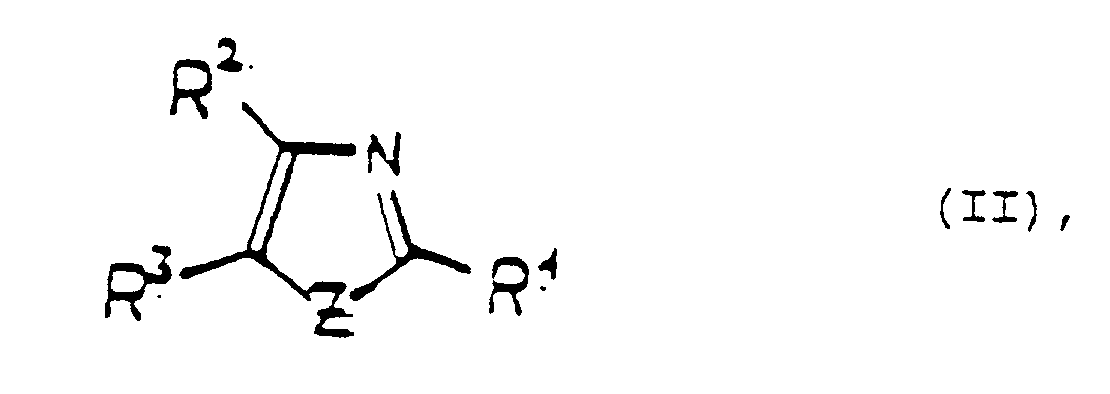 Z représente l'oxygène, le soufre ou le groupe N-R⁴R¹, R² et R³ peuvent être identiques ou différents et représentent un atome d'hydrogène, un groupe alkyle ou aralkyle ou un reste aromatique,R⁴ représente un atome d'hydrogène ou un groupe alkyleet dans laquelle un ou plusieurs des restes R¹, R² et R³ représentent un reste aromatique substitué par le groupe
-O-H
oùO représente l'oxygèneavec des composés de formule III
X-Y (III),
où X a la signification mentionnée ci-dessus et Y représente un groupe réactif. - Utilisation de composés selon la revendication 1, pour la détection de substances ayant une activité d'hydrolase.
- Bandes de test pour la détection d'un analyte, utilisant un composé marqué par une hydrolase et un substrat d'hydrolase, caractérisé en ce que, comme substrat d'hydrolase, on utilise un composé de formule I qui imprègne un support absorbant.
Applications Claiming Priority (2)
| Application Number | Priority Date | Filing Date | Title |
|---|---|---|---|
| US42249689A | 1989-10-17 | 1989-10-17 | |
| US422496 | 1989-10-17 |
Publications (2)
| Publication Number | Publication Date |
|---|---|
| EP0423632A1 EP0423632A1 (fr) | 1991-04-24 |
| EP0423632B1 true EP0423632B1 (fr) | 1995-08-16 |
Family
ID=23675150
Family Applications (1)
| Application Number | Title | Priority Date | Filing Date |
|---|---|---|---|
| EP90119576A Expired - Lifetime EP0423632B1 (fr) | 1989-10-17 | 1990-10-12 | Substrats pour hydrolases |
Country Status (8)
| Country | Link |
|---|---|
| US (1) | US5292669A (fr) |
| EP (1) | EP0423632B1 (fr) |
| JP (1) | JPH0779716B2 (fr) |
| AT (1) | ATE126513T1 (fr) |
| AU (1) | AU621245B2 (fr) |
| CA (1) | CA2027648A1 (fr) |
| DE (1) | DE59009529D1 (fr) |
| ES (1) | ES2078282T3 (fr) |
Families Citing this family (18)
| Publication number | Priority date | Publication date | Assignee | Title |
|---|---|---|---|---|
| GB9020889D0 (en) * | 1990-09-25 | 1990-11-07 | May & Baker Ltd | New compositions of matter |
| CA2074933C (fr) | 1990-11-30 | 2002-12-03 | Masatoshi Chihiro | Derives du thiazole comme inhibiteur actif du radical superoxyde |
| US5633377A (en) | 1990-12-28 | 1997-05-27 | Neurogen Corporation | 4-piperidino- and piperazinomethyl-2-cyclohexyl imidazole derivatives; dopamine receptor subtype specific ligands |
| US5646280A (en) * | 1990-12-28 | 1997-07-08 | Neurogen Corporation | Substituted 4-(alkyl, dialkyl) or cycloaklyl)aminomethyl 2-phenylimidazoes: dopamine receptor subtype specific ligands |
| US5681956A (en) * | 1990-12-28 | 1997-10-28 | Neurogen Corporation | 4-aryl substituted piperazinylmethyl phenylimidazole derivatives; a new class of dopamine receptor subtype specific ligands |
| US5633376A (en) * | 1990-12-28 | 1997-05-27 | Neurogen Corporation | Certain aminomethyl phenylimidazole derivatives; and 4-aryl substituted piperazinyl and piperidinylmethyl phenylimidazole derivatives; a new class of dopamine receptor subtype ligands |
| US5700826A (en) * | 1995-06-07 | 1997-12-23 | Ontogen Corporation | 1,2,4,5-tetra substituted imidazoles as modulators of multi-drug resistance |
| MY128323A (en) | 1996-09-30 | 2007-01-31 | Otsuka Pharma Co Ltd | Thiazole derivatives for inhibition of cytokine production and of cell adhesion |
| BR9810651A (pt) * | 1997-07-03 | 2000-10-03 | Neurogen Corp | Certos derivados de diarilimidazol; uma nova classe de ligantes npy especìficos |
| US6166205A (en) * | 1998-09-02 | 2000-12-26 | Neurogen Corporation | 2-Aryl-4-(1-[4-heteroaryl]piperazin-1-yl)methylimidazoles: dopamine . D.sub4 receptor subtype ligands |
| AU4660800A (en) * | 1999-04-26 | 2000-11-10 | U.S. Army Medical Research And Materiel Command | Immobilized enzymes as biosensors for chemical toxins |
| US6783947B1 (en) | 1999-09-09 | 2004-08-31 | Dade Behring Marburg Gmbh | Protecting groups for biological labeling |
| US7354641B2 (en) | 2004-10-12 | 2008-04-08 | Ppg Industries Ohio, Inc. | Resin compatible yarn binder and uses thereof |
| US20090270590A1 (en) * | 2005-08-23 | 2009-10-29 | Industry-Academic Cooperation Foundation Yonsei University | Surface Modified Inorganic Material and Producing Method Thereof |
| WO2008118122A2 (fr) * | 2006-05-08 | 2008-10-02 | Molecular Neuroimaging, Llc | Composés et sondes amyloïdes de ceux-ci pour des utilisations thérapeutiques et en imagerie |
| AU2008287367B2 (en) * | 2007-08-13 | 2012-02-23 | Synta Pharmaceuticals Corp. | Triazole compounds that modulate HSP90 activity |
| FR2964978B1 (fr) * | 2010-09-21 | 2013-11-15 | J Soufflet Ets | Nouveaux substrats fluorescents, procede d'obtention de ces produits et leur application |
| WO2023191513A1 (fr) * | 2022-03-29 | 2023-10-05 | 주식회사 퓨전바이오텍 | Dérivé d'imidazoline conjugué à un sucre et son utilisation |
Family Cites Families (14)
| Publication number | Priority date | Publication date | Assignee | Title |
|---|---|---|---|---|
| US4089747A (en) * | 1976-08-09 | 1978-05-16 | Eastman Kodak Company | Compositions for the detection of hydrogen peroxide |
| US4279992A (en) * | 1978-03-13 | 1981-07-21 | Miles Laboratories, Inc. | Specific binding assay employing an enzyme-cleavable substrate as label |
| JPS5935597B2 (ja) * | 1980-12-23 | 1984-08-29 | 富士レビオ株式会社 | アンジオテンシン変換酵素の活性測定法 |
| DE3150878A1 (de) * | 1981-12-22 | 1983-06-30 | Boehringer Mannheim Gmbh, 6800 Mannheim | "verfahren und reagenz zur bestimmung von creatinin" |
| DE3323245A1 (de) * | 1983-06-28 | 1985-01-10 | Merck Patent Gmbh, 6100 Darmstadt | Verfahren und reagenz zur bestimmung von (alpha)-amylase |
| DE3411997A1 (de) * | 1984-03-31 | 1985-10-17 | Boehringer Mannheim Gmbh, 6800 Mannheim | Neue redox-indikatoren |
| JPS614960A (ja) * | 1984-06-19 | 1986-01-10 | Fuji Photo Film Co Ltd | 分析試薬および多層化学分析要素 |
| DE3425118A1 (de) * | 1984-07-07 | 1986-01-16 | Boehringer Mannheim Gmbh, 6800 Mannheim | Neue redox-indikatoren |
| US4812399A (en) * | 1986-04-21 | 1989-03-14 | Eastman Kodak Company | Analytical element and method for the determination of creatinine or creatine |
| EP0285095B1 (fr) * | 1987-04-02 | 1994-11-30 | Fuji Photo Film Co., Ltd. | Elément d'analyse du type sec |
| CA1311179C (fr) * | 1987-05-14 | 1992-12-08 | Richard Linn Detwiler | Element et methode pour le dosage de la creatinine ou de la creatine |
| CA1338238C (fr) * | 1988-01-07 | 1996-04-09 | David John Carini | Imidazoles bloquant les recepteurs de l'angiotensine ii et combinaisons de ces imidazoles avec des diuretiques et des anti-inflammatoires non steroidiens |
| JPH0833393B2 (ja) * | 1988-03-14 | 1996-03-29 | 富士写真フイルム株式会社 | 乾式分析要素 |
| US5047318A (en) * | 1988-06-13 | 1991-09-10 | Eastman Kodak Company | Imidazole leuco dye composition containing 4'-hydroxyacetanilide, diagnostic kit and method using same |
-
1990
- 1990-10-10 AU AU63968/90A patent/AU621245B2/en not_active Ceased
- 1990-10-12 AT AT90119576T patent/ATE126513T1/de not_active IP Right Cessation
- 1990-10-12 ES ES90119576T patent/ES2078282T3/es not_active Expired - Lifetime
- 1990-10-12 EP EP90119576A patent/EP0423632B1/fr not_active Expired - Lifetime
- 1990-10-12 DE DE59009529T patent/DE59009529D1/de not_active Expired - Fee Related
- 1990-10-15 CA CA002027648A patent/CA2027648A1/fr not_active Abandoned
- 1990-10-17 JP JP2276586A patent/JPH0779716B2/ja not_active Expired - Lifetime
-
1992
- 1992-08-10 US US07/927,870 patent/US5292669A/en not_active Expired - Fee Related
Also Published As
| Publication number | Publication date |
|---|---|
| ES2078282T3 (es) | 1995-12-16 |
| AU6396890A (en) | 1991-05-30 |
| ATE126513T1 (de) | 1995-09-15 |
| AU621245B2 (en) | 1992-03-05 |
| JPH0779716B2 (ja) | 1995-08-30 |
| CA2027648A1 (fr) | 1991-04-18 |
| DE59009529D1 (de) | 1995-09-21 |
| US5292669A (en) | 1994-03-08 |
| EP0423632A1 (fr) | 1991-04-24 |
| JPH03151397A (ja) | 1991-06-27 |
Similar Documents
| Publication | Publication Date | Title |
|---|---|---|
| EP0423632B1 (fr) | Substrats pour hydrolases | |
| DE3781170T2 (de) | Hydrolysierbare fluoreszierende substrate und deren verwendung zur analytischen bestimmung. | |
| EP0461392B1 (fr) | Support d'essai pour la détermination d'ions | |
| DE69214841T2 (de) | Enzymatische analyse unter verwendung eines substrates, dass einen fluoreszierenden nierderschlag ergibt | |
| DE69028639T2 (de) | Enzymverstärkte lanthanidchelat-lumineszenzbestimmung | |
| DE68928412T2 (de) | Herstellung und verwendung von fluoreszierenden benzothiazolderivaten | |
| DE3851265T2 (de) | Hydrolysierbare Verbindungen, die elektronübertragende Mittel freigeben und ihre analytische Verwendung. | |
| EP0039880B2 (fr) | Réactifs pour la détection des enzymes estérolytiques et/ou protéolytiques, esters d'acides phénoxy-amines ou de phénoxy-peptides appropriés comme substrats pour les enzymes, méthode pour la préparation des substrats et leur utilisation dans la production des réactifs | |
| DE69523116T2 (de) | Verbessertes Verfahren zur kolorimetrischen Bestimmung der Konzentration der weissen Blutzellen in einer biologischen Flüssigkeit | |
| DE69506394T2 (de) | Verfahren zum kalibrieren chemischer tests | |
| EP0161436A1 (fr) | Indicateurs redox | |
| EP0157384B1 (fr) | Substrats pour hydrolases, leur méthode de préparation et leur emploi | |
| EP0274700B1 (fr) | Substrats pour hydrolases | |
| EP0156347B1 (fr) | Glycosides de dérivés de la résofurine, leur méthode de préparation et emploi pour la détermination de l'activité de la glycosidase | |
| EP0399409A2 (fr) | Composés fluorogènes et leur utilisation | |
| DE3345748C2 (fr) | ||
| EP0239931B1 (fr) | Procédé et réactif pour la détermination de substrats ou d'activités enzymatiques | |
| DE3443415C2 (fr) | ||
| DE3942355A1 (de) | N- und o-substituierte aminophenolderivate, zwischenprodukte zu deren herstellung, deren verwendung als hydrolasesubstrate, ein entsprechendes bestimmungsverfahren und hierfuer geeignetes diagnostisches mittel | |
| DE3534927A1 (de) | Phosphate von resorufin-derivaten, verfahren zu deren herstellung sowie deren verwendung zur bestimmung der aktivitaet von phosphatasen | |
| DE69123411T2 (de) | 2-Benzothiazolyl-tetrazolium-Salze als Indikatoren | |
| EP0210559B1 (fr) | Dérivés de N-acyldéhydrorésorufine, procédé pour leur préparation ainsi que leur utilisation pour la détermination de peroxyde d'hydrogène, de composés à activité peroxydatiques ou de peroxydase | |
| EP0350808B1 (fr) | Méthode pour la détection de substances avec activité hydrolase | |
| EP0457182B1 (fr) | Méthode ayant une sensibilité augmentée pour la détermination d'un ion, utilisation de substances appropriées et moyens correspondants pour exécuter cette méthode | |
| EP0457184B1 (fr) | Dérivés naphtoliques, leur procédé de préparation et leur utilisation |
Legal Events
| Date | Code | Title | Description |
|---|---|---|---|
| PUAI | Public reference made under article 153(3) epc to a published international application that has entered the european phase |
Free format text: ORIGINAL CODE: 0009012 |
|
| 17P | Request for examination filed |
Effective date: 19901012 |
|
| AK | Designated contracting states |
Kind code of ref document: A1 Designated state(s): AT BE CH DE DK ES FR GB GR IT LI LU NL SE |
|
| 17Q | First examination report despatched |
Effective date: 19941110 |
|
| GRAA | (expected) grant |
Free format text: ORIGINAL CODE: 0009210 |
|
| AK | Designated contracting states |
Kind code of ref document: B1 Designated state(s): AT BE CH DE DK ES FR GB GR IT LI LU NL SE |
|
| PG25 | Lapsed in a contracting state [announced via postgrant information from national office to epo] |
Ref country code: NL Free format text: LAPSE BECAUSE OF NON-PAYMENT OF DUE FEES Effective date: 19950816 Ref country code: GR Free format text: LAPSE BECAUSE OF FAILURE TO SUBMIT A TRANSLATION OF THE DESCRIPTION OR TO PAY THE FEE WITHIN THE PRESCRIBED TIME-LIMIT Effective date: 19950816 Ref country code: DK Effective date: 19950816 Ref country code: BE Effective date: 19950816 |
|
| REF | Corresponds to: |
Ref document number: 126513 Country of ref document: AT Date of ref document: 19950915 Kind code of ref document: T |
|
| REF | Corresponds to: |
Ref document number: 59009529 Country of ref document: DE Date of ref document: 19950921 |
|
| PG25 | Lapsed in a contracting state [announced via postgrant information from national office to epo] |
Ref country code: LU Free format text: LAPSE BECAUSE OF NON-PAYMENT OF DUE FEES Effective date: 19951031 |
|
| ET | Fr: translation filed | ||
| ITF | It: translation for a ep patent filed | ||
| PG25 | Lapsed in a contracting state [announced via postgrant information from national office to epo] |
Ref country code: SE Effective date: 19951116 |
|
| GBT | Gb: translation of ep patent filed (gb section 77(6)(a)/1977) |
Effective date: 19951024 |
|
| REG | Reference to a national code |
Ref country code: ES Ref legal event code: FG2A Ref document number: 2078282 Country of ref document: ES Kind code of ref document: T3 |
|
| NLV1 | Nl: lapsed or annulled due to failure to fulfill the requirements of art. 29p and 29m of the patents act | ||
| PLBE | No opposition filed within time limit |
Free format text: ORIGINAL CODE: 0009261 |
|
| STAA | Information on the status of an ep patent application or granted ep patent |
Free format text: STATUS: NO OPPOSITION FILED WITHIN TIME LIMIT |
|
| 26N | No opposition filed | ||
| PGFP | Annual fee paid to national office [announced via postgrant information from national office to epo] |
Ref country code: GB Payment date: 19961003 Year of fee payment: 7 |
|
| PGFP | Annual fee paid to national office [announced via postgrant information from national office to epo] |
Ref country code: FR Payment date: 19961009 Year of fee payment: 7 |
|
| PGFP | Annual fee paid to national office [announced via postgrant information from national office to epo] |
Ref country code: AT Payment date: 19961011 Year of fee payment: 7 |
|
| PGFP | Annual fee paid to national office [announced via postgrant information from national office to epo] |
Ref country code: CH Payment date: 19961023 Year of fee payment: 7 |
|
| PGFP | Annual fee paid to national office [announced via postgrant information from national office to epo] |
Ref country code: DE Payment date: 19961024 Year of fee payment: 7 |
|
| PGFP | Annual fee paid to national office [announced via postgrant information from national office to epo] |
Ref country code: ES Payment date: 19961030 Year of fee payment: 7 |
|
| PG25 | Lapsed in a contracting state [announced via postgrant information from national office to epo] |
Ref country code: GB Free format text: LAPSE BECAUSE OF NON-PAYMENT OF DUE FEES Effective date: 19971012 Ref country code: AT Free format text: LAPSE BECAUSE OF NON-PAYMENT OF DUE FEES Effective date: 19971012 |
|
| PG25 | Lapsed in a contracting state [announced via postgrant information from national office to epo] |
Ref country code: ES Free format text: LAPSE BECAUSE OF EXPIRATION OF PROTECTION Effective date: 19971013 |
|
| PG25 | Lapsed in a contracting state [announced via postgrant information from national office to epo] |
Ref country code: LI Free format text: LAPSE BECAUSE OF NON-PAYMENT OF DUE FEES Effective date: 19971031 Ref country code: FR Free format text: THE PATENT HAS BEEN ANNULLED BY A DECISION OF A NATIONAL AUTHORITY Effective date: 19971031 Ref country code: CH Free format text: LAPSE BECAUSE OF NON-PAYMENT OF DUE FEES Effective date: 19971031 |
|
| GBPC | Gb: european patent ceased through non-payment of renewal fee |
Effective date: 19971012 |
|
| REG | Reference to a national code |
Ref country code: CH Ref legal event code: PL |
|
| PG25 | Lapsed in a contracting state [announced via postgrant information from national office to epo] |
Ref country code: DE Free format text: LAPSE BECAUSE OF NON-PAYMENT OF DUE FEES Effective date: 19980701 |
|
| REG | Reference to a national code |
Ref country code: FR Ref legal event code: ST |
|
| REG | Reference to a national code |
Ref country code: ES Ref legal event code: FD2A Effective date: 20010201 |
|
| PG25 | Lapsed in a contracting state [announced via postgrant information from national office to epo] |
Ref country code: IT Free format text: LAPSE BECAUSE OF NON-PAYMENT OF DUE FEES;WARNING: LAPSES OF ITALIAN PATENTS WITH EFFECTIVE DATE BEFORE 2007 MAY HAVE OCCURRED AT ANY TIME BEFORE 2007. THE CORRECT EFFECTIVE DATE MAY BE DIFFERENT FROM THE ONE RECORDED. Effective date: 20051012 |