EP0424317A2 - Pyrimidine - Google Patents
Pyrimidine Download PDFInfo
- Publication number
- EP0424317A2 EP0424317A2 EP90810777A EP90810777A EP0424317A2 EP 0424317 A2 EP0424317 A2 EP 0424317A2 EP 90810777 A EP90810777 A EP 90810777A EP 90810777 A EP90810777 A EP 90810777A EP 0424317 A2 EP0424317 A2 EP 0424317A2
- Authority
- EP
- European Patent Office
- Prior art keywords
- ylmethyl
- pyrimidine
- butyl
- biphenyl
- tetrazol
- Prior art date
- Legal status (The legal status is an assumption and is not a legal conclusion. Google has not performed a legal analysis and makes no representation as to the accuracy of the status listed.)
- Withdrawn
Links
Classifications
-
- C—CHEMISTRY; METALLURGY
- C07—ORGANIC CHEMISTRY
- C07D—HETEROCYCLIC COMPOUNDS
- C07D239/00—Heterocyclic compounds containing 1,3-diazine or hydrogenated 1,3-diazine rings
- C07D239/02—Heterocyclic compounds containing 1,3-diazine or hydrogenated 1,3-diazine rings not condensed with other rings
- C07D239/24—Heterocyclic compounds containing 1,3-diazine or hydrogenated 1,3-diazine rings not condensed with other rings having three or more double bonds between ring members or between ring members and non-ring members
- C07D239/26—Heterocyclic compounds containing 1,3-diazine or hydrogenated 1,3-diazine rings not condensed with other rings having three or more double bonds between ring members or between ring members and non-ring members with only hydrogen atoms, hydrocarbon or substituted hydrocarbon radicals, directly attached to ring carbon atoms
-
- C—CHEMISTRY; METALLURGY
- C07—ORGANIC CHEMISTRY
- C07D—HETEROCYCLIC COMPOUNDS
- C07D403/00—Heterocyclic compounds containing two or more hetero rings, having nitrogen atoms as the only ring hetero atoms, not provided for by group C07D401/00
- C07D403/02—Heterocyclic compounds containing two or more hetero rings, having nitrogen atoms as the only ring hetero atoms, not provided for by group C07D401/00 containing two hetero rings
- C07D403/10—Heterocyclic compounds containing two or more hetero rings, having nitrogen atoms as the only ring hetero atoms, not provided for by group C07D401/00 containing two hetero rings linked by a carbon chain containing aromatic rings
-
- A—HUMAN NECESSITIES
- A61—MEDICAL OR VETERINARY SCIENCE; HYGIENE
- A61P—SPECIFIC THERAPEUTIC ACTIVITY OF CHEMICAL COMPOUNDS OR MEDICINAL PREPARATIONS
- A61P43/00—Drugs for specific purposes, not provided for in groups A61P1/00-A61P41/00
-
- A—HUMAN NECESSITIES
- A61—MEDICAL OR VETERINARY SCIENCE; HYGIENE
- A61P—SPECIFIC THERAPEUTIC ACTIVITY OF CHEMICAL COMPOUNDS OR MEDICINAL PREPARATIONS
- A61P9/00—Drugs for disorders of the cardiovascular system
-
- A—HUMAN NECESSITIES
- A61—MEDICAL OR VETERINARY SCIENCE; HYGIENE
- A61P—SPECIFIC THERAPEUTIC ACTIVITY OF CHEMICAL COMPOUNDS OR MEDICINAL PREPARATIONS
- A61P9/00—Drugs for disorders of the cardiovascular system
- A61P9/12—Antihypertensives
Definitions
- the invention relates to pyrimidine compounds of the formula in which one of the radicals R1, R2 and R3 is an aliphatic hydrocarbon radical which is optionally substituted by halogen or hydroxy or a cycloaliphatic or araliphatic hydrocarbon radical, the second of the radicals R1, R2 and R3 and the radical R4 each independently of one another halogen, acyl, an aromatic hydrocarbon radical, optionally esterified or amidated carboxy, cyano, SO3H, PO2H2, PO3H2, 5-tetrazolyl, optionally substituted sulfamoyl, acylamino or -Z1-R ', where Z1 represents a bond or O, S (O) m or N (R) , R 'is hydrogen or an aliphatic hydrocarbon radical which is optionally interrupted by O or S (O) m and is optionally substituted by halogen, hydroxy, optionally substituted amino or optionally esterified or amidated carboxy, R is hydrogen or
- Some of the compounds I can be present as proton tautomers.
- Means z. B one of the radicals R1, R2 and R3 hydroxy, corresponding compounds in equilibrium with the tautomeric oxo derivatives, d. H. the corresponding pyrimid-4-ones, -5-ones or -6-ones.
- the compounds I above and below may also be understood to mean corresponding tautomers.
- the compounds of the formula I and, if appropriate, their tautomers can be present as, in particular pharmaceutically usable, salts.
- These are, for example, with strong inorganic acids, such as mineral acids, for example sulfuric acid, a phosphoric acid or a hydrohalic acid, with strong organic carboxylic acids, such as optionally substituted, for example by halogen, C1-C4-alkane carboxylic acids, for example acetic acid, such as optionally unsaturated dicarboxylic acids, for example oxalic acid.
- the compounds I with at least one acidic group can form salts with bases.
- Suitable salts with bases are, for example, metal salts, such as alkali metal or alkaline earth metal salts, for example sodium, potassium or magnesium salts, or salts with ammonia or an organic amine, such as Morpholine, thiomorpholine, piperidine, pyrrolidine, a mono-, di- or tri-lower alkylamine, e.g. B.
- salts not suitable for pharmaceutical uses which are used, for example, for the isolation or purification of free compounds I or their pharmaceutically usable salts.
- An aromatic hydrocarbon residue is especially phenyl.
- Acyl means in particular lower alkanoyl.
- Esterified carboxy means, for example, carboxy which is esterified by an aliphatic alcohol which is derived from an aliphatic hydrocarbon radical, such as from lower alkyl, lower alkenyl or secondarily lower alkynyl which is optionally interrupted by O, such as from lower alkoxy-lower alkyl, lower alkenyl or - lower alkynyl.
- an aliphatic alcohol which is derived from an aliphatic hydrocarbon radical, such as from lower alkyl, lower alkenyl or secondarily lower alkynyl which is optionally interrupted by O, such as from lower alkoxy-lower alkyl, lower alkenyl or - lower alkynyl.
- Amidated carboxy is, for example, carbamoyl in which the amino group is optionally mono- or disubstituted independently of one another by an aliphatic or araliphatic hydrocarbon radical, such as lower alkyl, lower alkenyl, lower alkynyl or phenyl-lower alkyl, lower alkenyl or lower alkynyl, or by a divalent aliphatic hydrocarbon radical is interrupted by O, such as lower alkylene or lower alkyleneoxy lower alkylene, is disubstituted.
- an aliphatic or araliphatic hydrocarbon radical such as lower alkyl, lower alkenyl, lower alkynyl or phenyl-lower alkyl, lower alkenyl or lower alkynyl
- a divalent aliphatic hydrocarbon radical is interrupted by O, such as lower alkylene or lower alkyleneoxy lower alkylene, is disubstituted.
- Substituted amino is, for example, an aliphatic or araliphatic hydrocarbon radical, such as lower alkyl, lower alkenyl, lower alkynyl or phenyl-lower alkyl, lower alkenyl or lower alkynyl, independently of one another mono- or disubstituted or by a divalent aliphatic hydrocarbon radical which is optionally interrupted by O, such as lower alkylene or lower alkyleneoxy lower alkylene, disubstituted amino.
- an aliphatic or araliphatic hydrocarbon radical such as lower alkyl, lower alkenyl, lower alkynyl or phenyl-lower alkyl, lower alkenyl or lower alkynyl, independently of one another mono- or disubstituted or by a divalent aliphatic hydrocarbon radical which is optionally interrupted by O, such as lower alkylene or lower alkyleneoxy lower alkylene, disubstituted amino.
- Examples include lower alkyl, lower alkenyl, lower alkynyl, phenyl-lower alkyl, phenyl-lower alkenyl, phenyl-lower alkynyl, di-lower alkyl, N-lower alkyl-N-phenyl-lower alkyl and di (phenyl-lower alkyl) amino.
- An aliphatic hydrocarbon radical is, for example, lower alkyl, lower alkenyl or, secondarily, lower alkynyl.
- An aliphatic hydrocarbon radical which is interrupted by O is in particular lower alkoxy-lower alkyl, lower alkenyl or lower alkynyl or lower alkenyloxy lower alkyl, lower alkenyl or lower alkynyl, while an aliphatic hydrocarbon radical which is interrupted by S (O) m , in particular lower alkylthio- lower alkyl, lower alkenyl or lower alkynyl, lower alkane sulfinyl lower alkyl or sulfonyl lower alkyl, lower alkenyl thione lower alkyl, sulfinyl lower alkyl or sulfonyl lower alkyl or lower alkynyl thione lower alkyl, sulfinyl lower alkyl or sulfonyl lower alkyl.
- An aliphatic hydrocarbon radical substituted by halogen or hydroxy is, for example, halogen-lower alkyl, lower alkenyl or lower alkynyl or hydroxy lower alkyl, lower alkenyl or lower alkynyl.
- An aliphatic hydrocarbon residue substituted by optionally substituted amino or optionally esterified or amidated carboxy, which is optionally interrupted by O or S (O) m , is a corresponding residue indicated above, the esterified carboxy indicated by amino, substituted amino, carboxy, indicated above or substituted amidated carboxy above.
- a cycloaliphatic hydrocarbon radical is, for example, cycloalkyl or secondarily cycloalkenyl.
- Particularly suitable araliphatic hydrocarbon radicals are phenyl-lower alkyl, furthermore phenyl-lower alkenyl and-lower alkynyl.
- Hydroxy etherified with an aliphatic alcohol is, in particular, lower alkoxy or lower alkenyloxy.
- Alkylene is methylene or lower alkylene.
- Substituted sulfamoyl means lower alkyl or di lower alkyl sulfamoyl.
- acyl is derived from an organic carboxylic acid or an organic sulfonic acid.
- examples include acyl lower alkanoyl, optionally substituted benzoyl, lower alkanesulfonyl, halogenated lower alkanesulfonyl or optionally substituted benzenesulfonyl.
- unsaturated aliphatic, cycloaliphatic and araliphatic substituents are primarily not linked to an aromatic radical via a carbon atom from which a multiple bond originates.
- Phenyl means unsubstituted or one or more times, e.g. two or three times, e.g. phenyl substituted by (a) substituent selected from the group consisting of lower alkyl, lower alkoxy, halogen, trifluoromethyl and hydroxy. This applies to phenyl radicals per se and to phenyl in phenyl-containing groups, such as benzoyl or benzenesulfonyl.
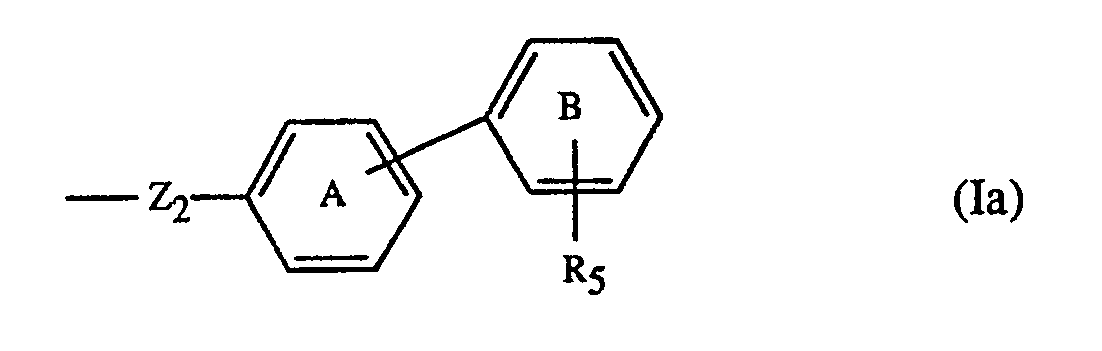
- Rings A and B form a biphenylyl radical, with corresponding 4-biphenylyl being preferred.
- lower means that corresponding groups and compounds each contain in particular up to and with 7, preferably up to and with 4, carbon atoms.
- Lower alkanesulfonyl means in particular C1-C7 alkanesulfonyl and is e.g. Methane, ethane, n-propane or isopropanesulfonyl. C1-C4 alkanesulfonyl is preferred.
- Halogen-lower alkanesulfonyl is halogen-C1-C7-alkanesulfonyl, such as trifluoromethanesulfonyl.
- Lower alkanesulfamoyl is C1-C7 alkanesulfamoyl, such as methane, ethane, n-propane, isopropane, n-butane, sec-butane or tert-butanesulfamoyl.
- C1-C4 alkanesulfamoyl is preferred.
- Diniederalkansulfamoyl means di-C1-C7-alkanesulfamoyl, such as dimethane, Methane-ethane or di- (n-propane) sulfamoyl.
- Di-C1-C4-alkanesulfamoyl is preferred.
- Halogen is especially halogen with an atomic number up to 35, i.e. H. Fluorine, chlorine or bromine, and also includes iodine.
- Haloalkanesulfonylamino means in particular halogen-C1-C7-alkanesulfonylamino and is e.g. Difluoromethane, trifluoromethane, 2-chloroethane, 1,1,2-trifluoroethane, 1,1,2-trichloroethane, pentafluoroethane or heptafluoropropane sulfonylamino. Halogen-C1-C4-alkanesulfonylamino is preferred.
- Lower alkanoyl means in particular C1-C7 alkanoyl and is e.g. Formyl, acetyl, propionyl, butyryl, isobutyryl or pivaloyl. C2-C5 alkanoyl is preferred.
- Lower alkyl is especially C1-C7 alkyl, i.e. H. Methyl, ethyl, n-propyl, isopropyl, n-butyl, isobutyl, sec-butyl, tert-butyl or a corresponding pentyl, hexyl or heptyl radical.
- C1-C4 alkyl is preferred.
- Lower alkenyl means in particular C3-C7 alkenyl and is e.g. Propen-2-yl, allyl or but-1-en-3-yl, -1-en-4-yl, -2-en-1-yl or -2-en-2-yl.
- C3-C5 alkenyl is preferred.
- Lower alkynyl is especially C3-C7alkynyl and preferably means propargyl.
- Lower alkoxy is especially C1-C7 alkoxy d.
- C1-C4 alkoxy is preferred.
- Lower alkoxy lower alkyl means in particular C1-C4-alkoxy-C1-C4-alkyl, such as 2-methoxyethyl, 2-ethoxyethyl, 2- (n-propyloxy) ethyl or ethoxymethyl.
- Lower alkoxy-lower alkenyl or lower alkynyl means in particular C1-C4-alkoxy-C3-C5-alkenyl or -alkynyl.
- Lower alkenyloxy means in particular C3-C7-alkenyloxy and is e.g. Allyloxy, but-2-en-1-yloxy or but-3-en-1-yloxy. C3-C5 alkenyloxy is preferred.
- Halogen lower alkyl means in particular halogen-C1-C4-alkyl, such as trifluoromethyl, 1,1,2-trifluoro-2-chloroethyl, chloromethyl or n-heptafluoropropyl.
- Halogeniederalkenyl means in particular halogen-C3-C5-alkenyl, such as 3-chloroallyl.
- Halogen lower alkynyl is especially halogen-C3-C5-alkynyl, such as 3-chloropropyl.
- Hydroxy-lower alkyl means in particular hydroxy-C1-C4-alkyl, such as hydroxymethyl, 2-hydroxyethyl or 3-hydroxypropyl.
- Hydroxy-lower alkenyl means in particular hydroxy-C3-C5-alkenyl, such as 3-hydroxyallyl.
- Hydroxy-lower alkynyl means in particular hydroxy-C3-C5-alkynyl, such as 3-hydroxypropargyl.
- Phenyl-lower alkyl is especially phenyl-C1-C4-alkyl and is preferably benzyl or 1- or 2-phenethyl, while phenyl-lower alkenyl or phenyl-lower alkynyl is in particular phenyl-C3-C5-alkenyl or -alkynyl, in particular 3-phenylallyl or 3-phenylpropargyl.
- Lower alkylene means in particular C2-C7-alkylene, is straight-chain or branched and means in particular ethylene, 1,3-propylene, 1,4-butylene, 1,2-propylene, 2-methyl-1,3-propylene or 2,2- Dimethyl-1,3-propylene.
- C2-C5 alkylene is preferred.
- Lower alkyleneoxy lower alkylene means in particular C2-C4-alkyleneoxy-C2-C4-alkylene, preferably ethyleneoxyethylene.
- Lower alkylamino means in particular C1-C7-alkylamino and is e.g. Methyl, ethyl, n-propyl or isopropyl amino. C1-C4 alkylamino is preferred.
- Lower alkenylamino is preferably C3-C5 alkenylamino, such as allyl or methallyl amino.
- Lower alkynylamino is preferably C3-C5alkynylamino, such as propargylamino.
- Phenyl-lower alkylamino preferably means phenyl-C1-C4-alkylamino, in particular Benzyl- or 1- or 2-phenylethylamino.
- Phenyl-lower alkenylamino preferably means phenyl-C3-C5-alkenylamino, in particular phenylallylamino or 3-phenylmethallylamino.
- Phenyl-lower alkynylamino is preferably phenyl-C3-C5-alkynylamino, especially phenylpropargylamino.
- Diniederalkylamino means in particular di-C1-C4-alkylamino, such as dimethyl, diethyl, di (n-propyl), methyl propyl, methyl ethyl, methyl butyl or dibutyl amino.
- N-Lower alkyl-N-phenyl-lower alkyl-amino means in particular N-C1-C4-alkyl-N-phenyl-C1-C4-alkyl-amino, preferably methyl-benzyl-amino or ethyl-benzyl-amino.
- Di (phenyl-lower alkyl) amino means in particular di (phenyl-C1-C4-alkyl) amino, preferably dibenzylamino.
- Lower alkenyloxy lower alkyl means in particular C3-C5-alkenyloxy-C1-C4-alkyl, such as 2-allyloxyethyl, and lower alkenyloxy-lower alkenyl or lower alkynyl means in particular C3-C5-alkenyloxy-C3-C5-alkenyl or -alkynyl.
- Lower alkylthio-lower alkenyl or lower alkynyl means in particular C1-C4-alkylthio-C3-C5-alkenyl or -alkynyl.
- Lower alkylthio-lower alkyl means in particular C1-C4-alkylthio-C1-C4-alkyl, such as ethylthiomethyl, 2-ethylthioethyl, 2-methylthioethyl or 2-isopropylthioethyl, while as lower alkane-sulfinyl-lower alkyl or -sulfonyl-lower alkyl in particular corresponding C1-C4-alkane-sulfinyl-C1 -C4-alkyl radicals or -sulfonyl-C1-C4-alkyl radicals come into question.
- Lower alkenylthio-lower alkyl is especially C3-C5-alkenylthio-C1-C4-alkyl, such as 1-allylthioethyl or 3-allylthiopropyl, while lower alkenyl-sulfinyl-lower alkyl or -sulfonyl-lower alkyl is especially C3-C5-alkenyl-sulfinyl-C1-C4-alkyl or -sulfone -C1-C4-alkyl means.
- Lower alkynylthio-lower alkyl is especially C3-C5-alkynylthio-C1-C4-alkyl, such as 2-propargylthioethyl or 3-propargylthiopropyl, while Lower alkynyl-sulfinyl-lower alkyl or -sulfonyl-lower alkyl, in particular C3-C5-alkynyl-sulfinyl-C1-C4-alkyl or -sulfonyl-C1-C4-alkyl means.
- Cycloalkyl is in particular C3-C7-cycloalkyl, i.e. H. Cyclopropyl, cyclobutyl, cyclopentyl, cyclohexyl or cycloheptyl. Cyclopentyl and cyclohexyl are preferred.
- Cycloalkenyl is especially C3-C7-cycloalkenyl and is preferably cyclopent-2-enyl or -3-enyl or cyclohex-2-enyl or -3-enyl.
- angiotensin-II has strong vasoconstrictive properties and also stimulates aldosterone secretion and thus causes a clear sodium / water retention.
- the consequence of angiotensin II activity manifests itself among other things in an increase in blood pressure.
- the importance of angiotensin II antagonists is to suppress the vasoconstrictor and aldosterone secretion stimulating effects caused by angiotensin II by competitive inhibition of the binding of angiotensin II to the receptors.
- the angiotensin II antagonizing properties of the compounds of the formula I and their tautomers and / or their pharmaceutically acceptable salts can be determined in the angiotensin II binding test. Smooth rat muscle cells from homogenized rat aorta are used. The solid centrifugate is suspended in 50 mM Tris buffer (pH 7.4) using peptidase inhibitors. The samples are incubated for 60 minutes at 25 ° C. with 12I I-angiotensin-II (0.175 nM) and a varying concentration of angiotensin-II or test substance. The incubation is then ended by adding sodium chloride buffered with ice-cold phosphate and it is filtered through Whatman GF / F filters. The filters are counted with a gamma counter. The IC50 values are determined from the dose-response curve. For the compounds of formula I and their pharmaceutically usable salts, IC50 values are determined from about 10 nM.
- angiotensin-II-induced vasoconstriction studies on the isolated rabbit aortic ring can be used. This will be done by everyone Breast aortic rings prepared and fixed between 2 parallel clamps at an initial tension of 2 g. The rings are then immersed at 37 ° C in 20 ml of a tissue bath and gassed with a mixture of 95% O2 and 5% CO2. The isometric responses are measured. At 20 minute intervals, the rings are alternately stimulated with 10 nM angiotensin-II (hypertensin-CIBA) and 5 nM noradrenaline chloride. The rings are then incubated with selected concentrations of the test substances before treatment with the agonists.
- angiotensin-II hypertensin-CIBA
- IC50 values are determined from about 5 nM.
- Blood pressure is measured directly in the carotid artery and recorded with an on-line data acquisition system (Buxco).
- the specificity of angiotensin II antagonism is indicated by the selective inhibition of the pressure effect caused by angiotensin II, but not by the norepinephrine effect.
- the compounds of the formula I and their tautomers and / or their pharmaceutically acceptable salts from a dose of about 0.3 mg / kg i.v. an inhibitory effect.
- the antihypertensive activity of the compounds of the formula I and their tautomers and / or their pharmaceutically usable salts can also be manifested in the test model of the renal hypertensive rat.
- hypertension is produced by narrowing a renal artery according to the Goldblatt method.
- Doses of the test substance are administered to the rats by means of a gastric tube.
- Control animals receive an equivalent volume of solvent.
- Blood pressure and heartbeat are measured indirectly in conscious animals using the tail-clamping method of Gerold et al. [ Helv. Physiol. Acta 24 (1966), 58] before the administration of the test substance or the solvent and during the course of the experiments at intervals.
- the pronounced antihypertensive effect can be demonstrated from a dose of about 30 mg / kg po will.
- the compounds of formula I and their tautomers and / or their pharmaceutically acceptable salts e.g. can be used as active ingredients in antihypertensives, which e.g. used to treat high blood pressure and heart failure.
- One object of the invention is therefore the use of the compounds of the formula I and their tautomers and / or their pharmaceutically usable salts for the preparation of corresponding medicaments and for the therapeutic treatment of high blood pressure and heart failure.
- the commercial preparation of the active substances is also included in the manufacture of the pharmaceuticals.
- the invention relates in particular to compounds of the formula I in which one of the radicals R1, R2 and R3 each optionally substituted by halogen or hydroxy-substituted lower alkyl, lower alkenyl or lower alkynyl, in each case 3- to 7-membered cycloalkyl or cycloalkenyl, phenyl-lower alkyl, phenyl-lower alkenyl or phenyl-lower alkynyl, which means second of the radicals R1, R2 and R3 and the radical R4 each independently of the other halogen, lower alkanoyl, optionally substituted phenyl, carboxy, which is optionally esterified by an alcohol derived from lower alkyl, lower alkenyl, lower alkynyl, lower alkoxy lower alkyl, lower alkoxy lower alkenyl or lower alkoxy lower alkynyl, carbamoyl , in which the amino group is optionally mono- or disubstitute
- the invention particularly relates to compounds of the formula I in which R1 is halogen, carboxy, which is optionally esterified by an alcohol which is derived from lower alkyl or lower alkoxy-lower alkyl, carbamoyl, cyano, PO3H2, 5-tetrazolyl, lower alkanesulfamoyl, lower alkanoylamino, lower alkanesulfonylamino or -Z1- R ', in which Z1 represents a bond or O, S (O) m or N (R), R' is hydrogen or in each case optionally by carboxy, lower alkoxycarbonyl, lower alkoxy lower alkoxycarbonyl or hydroxy-substituted lower alkyl or lower alkoxy-lower alkyl means R is hydrogen or lower alkyl and m stands for 0.1 or 2, means R2 stands for the group of formula Ia, in which Z2 stands for methylene, lower alkylene, O, S (O) m or N
- the invention relates in particular to compounds of the formula I in which R 1 is halogen, in particular with an atomic number up to and including 35, such as chlorine, carboxy, lower alkoxy carbonyl, such as methoxy or ethoxy carbonyl, PO 3 H 2, 5-tetrazolyl, lower alkanoylamino, such as acetylamino, lower alkanesulfonylamino, such as methanesulfonylamino , Hydrogen, lower alkyl, such as methyl, lower alkoxy lower alkyl, such as 2-methoxyethyl, carboxy lower alkyl, such as carboxymethyl, lower alkoxycarbonyl lower alkyl, such as ethoxycarbonylmethyl, hydroxy lower alkyl, such as hydroxymethyl, hydroxy lower alkoxy lower alkyl, such as hydroxyethoxymethyl, hydroxy, lower alkoxy, such as methoxy, lower alkoxy loweroxy, 2-alkoxy loweroxy such as carb
- the invention relates primarily to compounds of formula I, wherein R2 for the group of formula stands, and optionally tautomers thereof, each in free form or in salt form.
- the invention relates primarily to compounds of formula I, wherein R1 halogen with an atomic number up to and including 35, such as chlorine, hydroxy, lower alkoxy with up to and with 4 carbon atoms, such as methoxy, lower alkoxy lower alkoxy with up to 4 carbon atoms in each lower alkoxy part, such as 2-methoxyethoxy, hydroxy-lower alkoxy with up to and with 4 C atoms, such as 2-hydroxyethoxy, lower alkylamino with up to and with 4 C atoms, such as methylamino, or di-lower alkylamino with up to and with 4 C atoms in each lower alkyl part, like dimethylamino, means R2 is the group of the formula Ib, in which Z2 is methylene, R5 is carboxy or in particular 5-tetrazolyl and the rings A and B are unsubstituted, R3 is C1-C7-alkyl, in particular C1-C5-alkyl,
- the invention relates primarily to compounds of formula I, in which R1 is hydroxy, R2 is the group of formula Ib, in which Z2 is methylene, R5 is 5-tetrazolyl and the rings A and B are unsubstituted, R3 is C1-C5-alkyl , such as n-propyl or n-butyl, and R4 is lower alkyl with up to and with 4 carbon atoms, such as methyl or n-butyl, and optionally tautomers thereof, in each case in free form or in salt form.
- the invention relates in particular to the new compounds of the formula I mentioned in the examples and, if appropriate, their tautomers, in each case in free form or in salt form.
- Residues X1 which can be converted into the variable R5 are, for example, cyano, mercapto, halogen, the group -N2+A ⁇ , in which A ⁇ is an anion derived from an acid, amino, functional derivatives of COOH, SO3H, PO3H2 and PO2H2 and N- protected 5-tetrazolyl.
- Functionally modified carboxy means, for example, cyano or esterified or amidated carboxy.
- the reactions described above and below in the variants are carried out in a manner known per se, e.g. in the absence or usually in the presence of a suitable solvent or diluent or a mixture thereof, with cooling, at room temperature or under heating, e.g. in a temperature range from about -80 ° C to the boiling point of the reaction medium, preferably from about -10 ° to about + 200 ° C, and, if necessary, in a closed vessel, under pressure, in an inert gas atmosphere and / or under anhydrous conditions is working.
- R5 convertible radicals X1 are, for example, cyano and N-protected 5-tetrazolyl.
- R5 is 5-tetrazolyl
- Preferred azides are, for example, sodium and potassium azide and tri-C1-C4-alkyl, for example triethyl or tributyltin azide, and triphenyltin azide.
- Protecting groups of N-protected 5-tetrazolyl are the protecting groups usually used in tetrazole chemistry, in particular triphenylmethyl, optionally, e.g. with nitro, substituted benzyl, such as 4-nitrobenzyl, lower alkoxymethyl, such as methoxy or ethoxymethyl, lower alkylthiomethyl, such as methylthiomethyl, and 2-cyanoethyl, furthermore lower alkoxy lower alkoxymethyl, such as 2-methoxyethoxymethyl, benzyloxymethyl and phenacyl.
- the protective groups are split off using known methods.
- Triphenylmethyl usually by hydrolysis, especially in the presence of an acid, or hydrogenolysis in the presence of a hydrogenation catalyst, 4-nitrobenzyl e.g. by hydrogenolysis in the presence of a hydrogenation catalyst, methoxy or ethoxy methyl e.g. by treatment with a tri-lower alkyl such as triethyl or tributyl tin bromide, methylthiomethyl e.g. by treatment with trifluoroacetic acid, 2-cyanoethyl e.g. by hydrolysis, e.g. with sodium hydroxide solution, 2-methoxyethoxymethyl e.g. by hydrolysis, e.g. with hydrochloric acid, and benzyloxymethyl and phenacyl e.g. split off by hydrogenolysis in the presence of a hydrogenation catalyst.
- a tri-lower alkyl such as triethyl or tributyl tin bromide
- methylthiomethyl e.
- a transferable in SO3H R5 radical X1 is, for example, the mercapto group.
- Such a group of starting compounds of the formula IIa are oxidized, for example, by oxidation processes known per se to give those compounds of the formula I in which R5 is SO3H.
- oxidizing agents are inorganic peracids, such as peracids from mineral acids, e.g. Periodic acid or persulfuric acid, organic peracids such as percarbonate or persulfonic acids, e.g. Performic, peracetic, trifluoroperacetic or perbenzoic acid or p-toluenesulfonic acid, or mixtures of hydrogen peroxide and acids, e.g.
- oxidation is often carried out in the presence of suitable catalysts, suitable acids, such as optionally substituted carboxylic acids, e.g. Acetic acid or trifluoroacetic acid, or transition metal oxides, such as oxides of elements of VI. Subgroup, e.g. Molybdenum or tungsten oxide are to be mentioned.
- suitable acids such as optionally substituted carboxylic acids, e.g. Acetic acid or trifluoroacetic acid
- transition metal oxides such as oxides of elements of VI.
- Subgroup e.g. Molybdenum or tungsten oxide are to be mentioned.
- the oxidation is carried out under mild conditions, e.g. at temperatures from about -50 ° to about + 100 ° C.
- a group which can be converted into PO3H2 R5 is, for example, a group -N2+ A ⁇ , where A ⁇ is an anion of an acid, such as mineral acid.
- Corresponding diazonium compounds are reacted, for example, in a manner known per se with a P (III) halide, such as PCl3 or PBr3, and worked up hydrolytically, it being possible to obtain compounds of the formula I in which R5 is PO3H2.
- R5 radical X1 As a transferable in haloalkanesulfonylamino R5 radical X1, for example amino.
- R5 is haloalkanesulfonylamino
- appropriate anilines are reacted, for example, with a usually reactively esterified haloalkanesulfonic acid, optionally in the presence of a base.
- the preferred reactive esterified haloalkanesulfonic acid is the corresponding halide, such as chloride or bromide.
- a transferable in COOH R5 X1 represents, for example, functionally modified carboxy, such as cyano, esterified or amidated carboxy, hydroxymethyl or formyl.
- Esterified carboxy is, for example, carboxy esterified with an optionally substituted aliphatic, cycloaliphatic or aromatic alcohol.
- An aliphatic alcohol is, for example, a lower alkanol, such as methanol, ethanol, n-propanol, isopropanol, n-butanol, sec-butanol or tert-butanol, while as a cycloaliphatic alcohol, for example, a 3- to 8-membered cycloalkanol, such as cyclo- pentanol, hexanol or heptanol.
- An aromatic alcohol is, for example, a phenol or a heterocyclic alcohol, which can each be substituted, especially hydroxypyridine, e.g. 2-, 3- or 4-hydroxypyridine.
- Amidated carboxy is, for example, carbamoyl, monosubstituted by hydroxyl, amino or optionally substituted phenyl, mono- or disubstituted by lower alkyl or by 4- to 7-membered alkylene or 3-aza, 3-lower alkylaza, 3-oxa- or 3-thiaalkylene disubstituted carbamoyl.
- Examples are carbamoyl, N-mono- or N, N-diniederalkylcarbamoyl, such as N-methyl-, N-ethyl-, N, N-dimethyl-, N, N-diethyl- and N, N-dipropyl-carbamoyl, pyrrolidino - And piperidinocarbonyl, morpholino, piperazino, 4-methylpiperazino and thiomorpholino-carbonyl, anilinocarbonyl and anilinocarbonyl substituted by lower alkyl, lower alkoxy and / or halogen.
- Preferred functionally modified carboxy is, for example, lower alkoxycarbonyl, such as methoxy or ethoxycarbonyl, and cyano.
- Compounds of the formula I, in which R5 is carboxy can, for example, starting from compounds of the formula IIa, in which X1 is cyano or esterified or amidated carboxy, by hydrolysis, in particular in the presence of a base, or, starting from compounds of the formula IIa, in which X1 is hydroxymethyl or formyl means can be prepared by oxidation.
- the oxidation takes place, for example, in an inert solvent, such as in a lower alkane carboxylic acid, e.g. Acetic acid, a ketone, e.g. Acetone, an ether, e.g. Tetrahydrofuran, a heterocyclic aromatic, e.g.
- oxidizing agents are oxidizing transition metal compounds, in particular those with elements of I., VI. or VII. subgroup, in question. Examples include: silver compounds such as silver nitrate, oxide and picolinate, chromium compounds such as chromium trioxide and potassium dichromate, and manganese compounds such as potassium, tetrabutylammonium and benzyltriethylammonium permanganate.
- Other oxidizing agents are, for example, suitable compounds with elements from main group IV, such as lead dioxide, or halogen-oxygen compounds, such as sodium iodate or potassium periodate.
- Variant a) is preferably suitable for the preparation of compounds of the formula I in which the variables have meanings which are different from unsaturated radicals.
- the starting material of the formula IIa is accessible, for example, by analogy to variant b) of a compound of the formula starts, the production of which in turn takes place in a manner known per se, and implements this with a compound of the formula IIIb. It is possible to carry out further conversions in the starting compounds IIa thus obtained before the conversion of X1 into R5, e.g. B. conversions of a halogen atom R1, in particular a chlorine atom R1, of the type specified below.
- reaction is carried out in the presence of a base.
- bases examples include alkali metal hydroxides, hydrides, amides, alkanolates, carbonates, triphenylmethylides, lower dinalkylamides, aminoalkylamides or lower alkylsilylamides, naphthalene amines, lower alkylamines, basic heterocycles, ammonium hydroxides and carbocyclic amines.
- Examples include sodium hydroxide, hydride, amide, potassium tert-butoxide, carbonate, lithium triphenylmethylide, diisopropylamide, potassium 3- (aminopropyl) amide, bis (trimethylsilyl) amide, dimethylaminonaphthalene, di- or Triethylamine, or ethyl-diisopropylamine, N-methyl-piperidine, pyridine, benzyltrimethyl-ammonium hydroxide, 1,5-diazabicyclo [4.3.0] non-5-ene (DBN) and 1,8-diazabicyclo [5.4.0] undec-7-en (DBU) called.
- DBN non-5-ene
- DBU 1,8-diazabicyclo [5.4.0] undec-7-en
- a compound of the formula I or a tautomer thereof which is obtainable in accordance with the process or in another manner can be converted into another compound of the formula I in a manner known per se.
- a hydroxy-containing compound of formula I can e.g. B. etherified according to known methods.
- the etherification can be carried out, for example, with an alcohol, such as an optionally substituted lower alkanol, or a reactive ester thereof.
- Suitable reactive esters of the desired alcohols are, for example, those with strong inorganic or organic acids, such as corresponding halides, sulfates, lower alkanesulfonates or optionally substituted benzenesulfonates, for example chlorides, bromides, iodides or methane, benzene or p-toluenesulfonates Consider.
- the etherification can, for example, in the presence of a base, for. B.
- an aromatic structural component is substituted by lower alkylthio, this can be oxidized in a conventional manner to corresponding lower alkane sulfinyl or sulfonyl.
- suitable oxidizing agents for the oxidation to the sulfoxide stage are inorganic peracids, such as peracids from mineral acids, e.g. Periodic acid or persulfuric acid, organic peracids such as percarbonate or persulfonic acids, e.g. Performic, peracetic, trifluoroperacetic, perbenzoic or p-toluenesulfonic acid, or mixtures of hydrogen peroxide and acids, e.g. Mixtures of hydrogen peroxide and acetic acid.
- the oxidation is often carried out in the presence of suitable catalysts, suitable acids, such as optionally substituted carboxylic acids, e.g. Acetic acid or trifluoroacetic acid, or transition metal oxides, such as oxides of elements of VI. Subgroup, e.g. Molybdenum or tungsten oxide are to be mentioned.
- suitable acids such as optionally substituted carboxylic acids, e.g. Acetic acid or trifluoroacetic acid, or transition metal oxides, such as oxides of elements of VI. Subgroup, e.g. Molybdenum or tungsten oxide are to be mentioned.
- the oxidation is carried out under mild conditions, e.g. at temperatures from about -50 ° to about + 100 ° C.
- the further oxidation to the sulfone stage can be carried out accordingly with dinitrogen tetroxide as a catalyst in the presence of oxygen at low temperatures, as can the direct oxidation of lower alkylthio to lower alkanesulf
- corresponding compounds I can be N- (ar) alkylated in a manner known per se; carbamoyl or carbamoyl-containing radicals N- (ar) alkyl can also be alkylated.
- the (ar) alkylation is carried out, for example, with an (aryl) C1-C7 alkyl halide, for example bromide or iodide, (aryl) C1-C7 alkanesulfonate, for example with methanesulfonate or p-toluenesulfonate, or a di -C1-C7-alkyl sulfate, for example dimethyl sulfate, preferably under basic conditions, such as in the presence of sodium hydroxide solution or potassium hydroxide solution, and advantageously in the presence of a phase transfer catalyst, such as tetrabutylammonium bromide or benzyltrimethylammonium chloride, but more basic condensing agents,
- Diazomethane convert into an esterified carboxy group.
- the carboxy group is in free form or in salt, such as ammonium or metal, e.g. Alkali metal, such as sodium or potassium salt form, with a C1-C7 alkyl halide, e.g. Methyl or ethyl bromide or iodide, or an organic sulfonic acid ester, such as a corresponding C1-C7 alkyl ester, e.g. Methanesulfonic acid or p-toluenesulfonic acid methyl ester or ethyl ester, treated.
- salt such as ammonium or metal, e.g. Alkali metal, such as sodium or potassium salt form
- a C1-C7 alkyl halide e.g. Methyl or ethyl bromide or iodide
- an organic sulfonic acid ester such as a corresponding C1-
- Compounds of formula I which have an esterified carboxy group as substituents can be obtained by transesterification, e.g. by treatment with an alcohol, usually higher alcohol than that corresponding to the esterified carboxy group in the starting material, in the presence of a suitable transesterification agent such as a basic agent, e.g. an alkali metal C1-C7 alkanoate, -C1-C7 alkanolate or cyanide, such as sodium acetate, methanolate, ethanolate, tert-butanolate or cyanide, or a suitable acidic agent, optionally with removal of the emerging alcohol, e.g. by distillation, convert into other ester compounds of formula I.
- a suitable transesterification agent such as a basic agent, e.g. an alkali metal C1-C7 alkanoate, -C1-C7 alkanolate or cyanide, such as sodium acetate, methanolate, ethanolate, tert-butan
- a reactive derivative such as an anhydride (also a mixed anhydride), an acid halide, for example chloride (for example by treatment with a thionyl halide, for example chloride, an anhydride with a formic acid ester, for example C1-C7 alkyl ester (for example by treating a salt such as an ammonium or alkali metal salt with a halogen such as chloro-formic acid ester such as C1-C7 alkyl ester), or an activated ester, such as cyanomethyl, nitrophenyl, for example 4-nitro-phenyl, or polyhalophenyl, for example pentachlorophenyl ester (for example by treatment with a corresponding hydroxy compound in the presence of a suitable condensing agent, such as of N, N′-dicyclohexylcarbodiimide), and then reacting such a reactive derivative
- an acid halide for example chloride
- an activated ester such as a 4-nitrophenyl ester
- a compound of the formula I with a carboxy group can first be reacted with a 1-unsubstituted imidazole and the resulting 1-imidazolylcarbonyl compound can be reacted with an amine.
- an aromatic ring has a hydrogen atom as a substituent, this can be replaced by a halogen atom using a halogenating agent in a conventional manner, e.g. with bromine, hypobromic acid, an acyl hypobromite or other organic bromine compound, e.g. N-bromosuccinimide, N-bromoacetamide, N-bromophthalimide, pyridinium perbromide, dioxane dibromide, 1,3-dibromo-5,5-dimethylhydantoin or 2,4,4,6-tetrabromo-2,5-cyclohexandien-1-one, by bromine or with elemental chlorine, e.g. in a halogenated hydrocarbon such as chloroform and with cooling e.g. down to about -10 ° C, by chlorine.
- a halogenating agent in a conventional manner, e.g. with bromine, hypobromic acid, an acyl hypobromit
- an aromatic ring contains an amino group
- this can be diazotized in a conventional manner, for example by treatment with a nitrite, for example sodium nitrite, in the presence of a suitable protonic acid, for example a mineral acid, the reaction temperature advantageously being kept below about 5 ° C.
- a nitrite for example sodium nitrite
- a suitable protonic acid for example a mineral acid
- the diazonium group thus obtainable can be substituted by conventional methods, for example as follows: by the hydroxyl group analogous to the phenol boil in the presence of water; by an alkoxy group by treatment with an appropriate alcohol, whereby energy must be supplied; by the fluorine atom analogous to the Schiemann reaction in the thermolysis of corresponding diazonium tetrafluoroborates; or by chlorine, bromine, iodine or the cyano group analogous to the Sandmeyer reaction by reaction with corresponding Cu (I) salts, initially with cooling, for example to below about 5 ° C, and then heating, for example to about 60 ° to about 150 ° C.
- the compounds of the formula I contain unsaturated radicals, such as lower alkenyl or lower alkynyl groups, these can be converted into saturated radicals in a manner known per se.
- unsaturated radicals such as lower alkenyl or lower alkynyl groups
- these can be converted into saturated radicals in a manner known per se.
- the hydrogenation of multiple bonds takes place by catalytic hydrogenation in the presence of hydrogenation catalysts, e.g. Nickel, such as Raney nickel, as well as precious metals or their derivatives, e.g. Oxides are suitable, such as palladium or platinum oxide, which are optionally supported on support materials, e.g. on carbon or calcium carbonate.
- the hydrogenation can preferably be carried out at pressures between about 1 and about 100 at and at temperatures between about -80 ° and about + 200 ° C, especially between room temperature and about 100 ° C.
- the reaction is conveniently carried out in a solvent such as water, a lower alkanol, e.g. Ethanol, isopropanol or n-butanol, an ether, e.g. Dioxane, or a lower alkane carboxylic acid, e.g. Acetic acid.
- a solvent such as water, a lower alkanol, e.g. Ethanol, isopropanol or n-butanol, an ether, e.g. Dioxane, or a lower alkane carboxylic acid, e.g. Acetic acid.
- halogen such as chlorine
- R1, R2, R3 and R4 means halogen by reaction with an optionally substituted amine, an alcohol or mercaptan.
- a metal catalyst such as in the presence of (P (C6H5) 3) 2PdCl2, against corresponding lower alk-1-en-1-yl or lower alk-1-in-1-yl residues, which are then further Reactions are accessible, e.g. B. ozonolysis or reduction, which, for. B. to form the aldehyde function, which in turn can be converted into carboxy, for example, or can lead to the formation of a lower alkyl group.
- the invention particularly relates to the methods described in the examples.
- Salts of compounds of the formula I can be prepared in a manner known per se.
- acid addition salts of compounds of formula I are obtained by treatment with a suitable acid or ion exchanger reagent.
- Salts of compounds I can be converted into the free compounds I in a conventional manner, acid addition salts, for example by treatment with a suitable basic agent or a suitable ion exchange reagent.
- Salts of compounds I can be converted into other salts of compounds I in a manner known per se.
- the compounds I having salt-forming, in particular basic, properties can be obtained in free form or in the form of salts.
- the free compound I or its salts may also be understood to mean the appropriate salts or the free compound I, if appropriate.
- the compounds I including their salts of salt-forming compounds can also be obtained in the form of their hydrates and / or others, for. B. used for crystallization, include solvents.
- the compounds I and their salts can be in the form of one of the possible isomers or as a mixture thereof, e.g. depending on the number, absolute and relative configuration of the asymmetric carbon atoms as pure isomers, such as antipodes and / or diastereomers, or as mixtures of isomers, such as mixtures of enantiomers, e.g. B. racemates, diastereomer mixtures or racemate mixtures are present.
- Diastereomer mixtures and racemate mixtures obtained can be separated into the pure diastereomers or racemates in a known manner on account of the physico-chemical differences in the constituents, for example by fractional crystallization.
- Enantiomer mixtures obtained, such as racemates can be broken down into the optical antipodes by known methods, for example by recrystallization from an optically active solvent, chromatography on chiral adsorbents, with the aid of suitable microorganisms, by cleavage with specific, immobilized enzymes, via the formation of inclusion compounds , for example using chiral crown ethers, with only one enantiomer complexing is, or by conversion into diastereomeric salts, for example by reacting a basic end product racemate with an optically active acid, such as carboxylic acid, for example tartaric or malic acid, or sulfonic acid, for example camphorsulfonic acid, and separating the diastereomer mixture thus obtained, for example on the basis
- the invention also relates to those embodiments of the process according to which one starts from a compound obtainable as an intermediate at any stage of the process and carries out the missing steps or uses a starting material in the form of a derivative or salt and / or its racemates or antipodes or in particular forms under the reaction conditions.
- the compounds of the formula I and their pharmaceutically usable salts can be used, preferably in the form of pharmaceutically usable preparations, in a process for the prophylactic and / or therapeutic treatment of the animal or human body, in particular as antihypertensive agents.
- the invention therefore also relates to pharmaceutical preparations which contain a compound I in free form or in the form of a pharmaceutically usable salt as active ingredient, and to a process for their preparation.
- These pharmaceutical preparations are those for enteral, such as oral, rectal or parenteral administration to warm-blooded animals, the pharmacological active ingredient being contained alone or together with customary pharmaceutical auxiliaries.
- the pharmaceutical preparations contain, for example, from about 0.1% to 100%, preferably from about 1% to about 60%, of the active ingredient.
- Pharmaceutical preparations for enteral or parenteral administration are, for example, those in unit dosage forms, such as pills, tablets, capsules or suppositories, and also ampoules.
- compositions for oral use can be obtained by combining the active ingredient with solid carriers, optionally granulating a mixture obtained, and processing the mixture or granules, if desired or necessary after adding suitable auxiliaries, to tablets or dragée kernels.
- Suitable carriers are in particular fillers such as sugar, e.g. Lactose, sucrose, mannitol or sorbitol, cellulose preparations and / or calcium phosphates, e.g. Tricalcium phosphate or calcium hydrogen phosphate, further binders such as starch paste, using e.g. of corn, wheat, rice or potato starch, gelatin, gum tragacanth, methyl cellulose and / or polyvinylpyrrolidone, and, if desired, disintegrants such as the starches mentioned above, also carboxymethyl starch, crosslinked polyvinylpyrrolidone, agar or alginic acid or a salt thereof, such as sodium alginate .
- fillers such as sugar, e.g. Lactose, sucrose, mannitol or sorbitol, cellulose preparations and / or calcium phosphates, e.g. Tricalcium phosphate or calcium hydrogen phosphate
- further binders such
- Dragée Aids are primarily flow regulators and lubricants, e.g. Silicic acid, talc, stearic acid or salts thereof, such as magnesium or calcium stearate, and / or polyethylene glycol.
- Dragée kernels are provided with suitable, possibly gastric juice-resistant coatings, whereby one of the things Concentrated sugar solutions, which may contain arabic gum, talc, polyvinylpyrrolidone, polyethylene glycol and / or titanium dioxide, lacquer solutions in suitable organic solvents or solvent mixtures or, for the production of gastric juice-resistant coatings, solutions of suitable cellulose preparations, such as acetyl cellulose phthalate or hydroxypropyl methyl cellulose phthalate. Dyes or pigments, e.g. for identification or for labeling different doses of active ingredient.
- compositions are plug-in capsules made of gelatin and soft, closed capsules made of gelatin and a plasticizer, such as glycerol or sorbitol.
- the capsules can contain the active ingredient in the form of granules, e.g. in a mixture with fillers, such as lactose, binders, such as starches, and / or lubricants, such as talc or magnesium stearate, and optionally stabilizers.
- the active ingredient is preferably dissolved or suspended in suitable liquids, such as fatty oils, paraffin oil or liquid polyethylene glycols, stabilizers also being able to be added.
- Suppositories are suitable as rectally applicable pharmaceutical preparations, which consist of a combination of the active ingredient with a suppository base.
- Suitable suppository bases are, for example, natural or synthetic triglycerides, paraffin hydrocarbons, polyethylene glycols and higher alkanols.
- Gelatin rectal capsules can also be used, which contain a combination of the active ingredient with a base material.
- Possible base materials are, for example, liquid triglycerides, polyethylene glycols and paraffin hydrocarbons.
- aqueous solutions of an active ingredient in water-soluble form e.g. a water-soluble salt
- further suspensions of the active ingredient such as corresponding oily injection suspensions
- suitable lipophilic solvents or vehicles such as fatty oils, e.g. Sesame oil, or synthetic fatty acid esters, e.g. Ethyl oleate or triglycerides, or aqueous injection suspensions containing viscosity-increasing substances, e.g. Contain sodium carboxymethyl cellulose, sorbitol and / or dextran, and optionally also stabilizers.
- the dosage of the active ingredient can depend on various factors, such as the mode of administration, warm-blooded species, age and / or individual condition. In normal cases, an approximate daily dose of approximately 10 mg to approximately 250 mg is to be estimated for a patient weighing approximately 75 kg when administered orally.
- 6- (n-butyl) -5- (2'-cyanobiphenyl-4-ylmethyl) -4-hydroxy-2- (n-propyl) pyrimidine and tributyltin azide 6- () is obtained in the manner described in Example 1 n-Butyl) -4-hydroxy-2- (n-propyl) -5- [2 ′ - (1H-tetrazol-5-yl) biphenyl-4-ylmethyl] pyrimidine.
- 6- (n-butyl) -4-chloro-5- (2'-cyanobiphenyl-4-ylmethyl) -2-methyl-pyrimidine and tributyltin azide
- 6- (n-butyl) is obtained in the manner described in Example 1 -4-chloro-2-methyl-5- [2 ′ - (1H-tetrazol-5-yl) biphenyl-4-ylmethyl] pyrimidln as an amorphous solid.
- M.p . 120 ° C-122 ° C.
- the starting material can be produced as follows, for example. a) To 11 ml of POCl3 at 0 ° C with stirring, first N, N-dimethylaniline (1.67 ml, 13.15 mmol) and then 6- (n-butyl) -4-hydroxy-2-methyl-5- (2'- cyanobiphenyl-4-ylmethyl) pyrimidine (4.7 g, 13.15 mmol) was added. The reaction mixture is slowly heated and stirred under reflux for 1.5 hours. The reaction mixture is then poured onto water at a temperature of 20-25 ° C. The mixture is left to stand for 30 minutes and then extracted with diethyl ether.
- 6- (n-butyl) (2'-cyanobiphenyl-4-ylmethyl) -4-methoxy-2-methyl-pyrimidine and tributyltin azide
- 6- (n-butyl) is obtained in the manner described in Example 1 -4-methoxy-2-methyl-5- [2 ′ - (1H-tetrazol-5-yl) biphenyl-4-ylmethyl] pyrimidine.
- the starting material can be produced as follows, for example. a) 6- (n-Butyl) -4-chloro-5- (2'-cyanobiphenyl-4-ylmethyl) -2-methyl becomes a solution of sodium methanolate (355 mg, 6.38 mmol) in absolute methanol (5 ml) -pyrimidine (1.0 g, 2.66 mmol) in absolute methanol (10 ml) was added dropwise. The reaction mixture is stirred for 24 hours at room temperature and then evaporated in vacuo. The residue is partitioned between ethyl acetate and H2O and the organic phase is washed with H2O and saturated NaCl solution, dried (Na2SO4) and evaporated in vacuo.
- 6- () is obtained in the manner described in Example 1 n-Butyl) -4- (2-methoxyethoxy) -2-methyl - 5- [2 ′ - (1H-tetrazol-5-yl) biphenyl-4-ylmethyl] pyrimidine.
- the starting material can be produced, for example, as follows: a) Sodium (122 mg, 5.32 mmol) is dissolved in 10 ml of 2-methoxyethanol at room temperature. A solution of 6- (n-butyl) -4-chloro-5- (2'-cyanobiphenyl-4-ylmethyl) -2-methyl-pyrimidine (1.0 g, 2.66 mmol) in 2-methoxyethanol (5 ml) is then dripped. The reaction mixture is stirred for 24 hours at room temperature and then evaporated in vacuo. The residue is partitioned between ethyl acetate and H2O and the organic phase is washed with H2O and saturated NaCl solution, dried (Na2SO4) and evaporated in vacuo.
- 6- (n-butyl) -5- (2'-cyanobiphenyl-4-ylmethyl) -4-dimethylamino-2-methyl-pyrimidine and tributyltin azide 6- (n-butyl) is obtained in the manner described in Example 1 -4-dimethylamino-2-methyl - 5 [2 ′ - (1H-tetrazol-5-yl) biphenyl-4-ylmethyl] pyrimidine.
- the starting material can be produced, for example, as follows: a) To a solution of 6- (n-butyl) -4-chloro-5- (2'-cyanobiphenyl-4-ylmethyl) -2-methyl-pyrimidine (1.0 g, 2.66 mmol) in ethanol (10 ml) Dimethylamine (33% in ethanol, 1.9 ml) added. The reaction mixture is stirred under reflux for 24 hours and then evaporated in vacuo. The residue is partitioned between ethyl acetate and H2O and the organic phase is washed with H2O and saturated NaCl solution, dried (Na2SO4) and evaporated in vacuo.
- 6- (n-butyl) -5- (2'-cyanobiphenyl-4-ylmethyl) -4-hydroxy-2-isopropyl-pyrimidine and tributyltin azide 6- (n-butyl) is obtained in the manner described in Example 1 -4-hydroxy-2-isopropyl-5- [2 ′ - (1H-tetrazol-5-yl) biphenyl-4-ylmethyl] pyrimidine.
- 6- (n-butyl) -5- (2'-cyanobiphenyl-4-ylmethyl) -2-methyl-4-methylthio-pyrimidine and tributyltin azide 6- (n-butyl) is obtained in the manner described in Example 1 -2-methyl-4-methylthio - 5- [2 ′ - (1H-tetrazol-5-yl) biphenyl-4-ylmethyl] pyrimidine. M.p .: 176-178 ° C (from ethyl acetate; decomposition).
- the starting material can be produced, for example, as follows: a) 6- (n-Butyl) -4-chloro-5- (2'-cyanobiphenyl-4-ylmethyl) -2-methyl-pyrimidine (1.0 g, 2.66 mmol) and sodium methanethiolate (0.21 g , 2.92 mmol) are stirred in 10 ml of 1,3-dimethyl-3,4,5,6-tetrahydro-2 (1H) -pyrimidinone for 6 hours at room temperature. The reaction mixture is poured onto H2O and extracted with ethyl acetate. The organic phase is washed thoroughly with H2O, dried (Na2SO4) and evaporated in vacuo.
- 6- (n-butyl) (2'-cyanobiphenyl-4-ylmethyl) -2-ethyl-4-hydroxy-pyrimidine and tributyltin azide
- 6- (n-butyl) is obtained in the manner described in Example 1 -2-ethyl-4-hydroxy-5- [2 ′ - (1H-tetrazol-5-yl) biphenyl-4-ylmethyl] pyrimidine.
- M.p .: 235-237 ° C from isopropanol; decomposition).
- the starting material can be produced, for example, as follows: a) To a solution of sodium (0.12 g, 5.3 mmol) in 20 ml of ethylene glycol, 6- (n-butyl) -4-chloro-5- (2'-cyanobiphenyl-4-ylmethyl) -2- methyl pyrimidine (1.0 g, 2.6 mmol) added. The reaction mixture is stirred at 100 ° C for 3 hours. After evaporation in vacuo, the residue is partitioned between ethyl acetate and H2O and the organic phase is dried over Na2SO4 and evaporated in vacuo.
- 6- (n-butyl) (2'-cyanobiphenyl-4-ylmethyl) -4-ethoxycarbonylmethoxy-2-methyl-pyrimidine and tributyltin azide
- 6- (n-butyl) is obtained in the manner described in Example 1 -4-ethoxycarbonylmethoxy-2-methyl-5- [2 ′ - (1H-tetrazol-5-yl) biphenyl-4-ylmethyl] pyrimidine as an amorphous solid.
- the starting material can be produced, for example, as follows: a) To a solution of 6- (n-butyl) -5- (2'-cyanobiphenyl-4-ylmethyl) -4-hydroxy-2-methyl-pyrimidine (2.0 g, 5.6 mmol) in 50 ml N, N-Dimethylformamide is added to NaH (0.17 g, 5.6 mmol, 80% in white oil). The reaction mixture is stirred for 30 minutes at room temperature. Ethyl bromoacetate (0.81 ml, 7.3 mmol) is then added. After 3 hours, the mixture is evaporated in vacuo and the residue is partitioned between ethyl acetate and H2O.
- 6- (n-butyl) -5- (2'-cyanobiphenyl-4-ylmethyl) -4-hydroxy-pyrimidine and tributyltin azide 6- (n-butyl) -4-hydroxy is obtained in the manner described in Example 1 -5- [2 ′ - (1H-tetrazol-5-yl) biphenyl-4-ylmethyl] pyrimidine. M.p .: 215-219 ° C (from ethanol, decomposition).
- the starting material can be produced, for example, as follows: By reacting ethyl 2- (2′-cyanobiphenyl-4-ylmethyl) -3-oxo-heptanoate with formamidine hydrochloride and sodium methoxide in methanol in the manner described in Example 1b), 6- (n-butyl) -5- ( 2'-cyanobiphenyl-4-ylmethyl) -4-hydroxy-pyrimidine. M.p .: 169-171 ° C (from ethyl acetate).
- Tablets each containing 50 mg of active ingredient, for example 2,6-di- (n-butyl) -4-hydroxy-5- [2 ′ - (1H-tetrazol-5-yl) biphenyl-4-ylmethyl] pyrimidine, can be produced as follows:
- the active ingredient is mixed with the lactose and 292 g of potato starch, the mixture is moistened with an alcoholic solution of the gelatin and granulated through a sieve. After drying, the rest of the potato starch, the talc, the magnesium stearate and the highly disperse silicon dioxide are mixed in and the mixture is pressed into tablets each having a weight of 145.0 mg and an active substance content of 50.0 mg, which if necessary provide partial notches for finer adjustment of the dosage could be.
- Lacquer tablets each containing 100 mg of active ingredient, for example 2,6-di- (n-butyl) -4-hydroxy-5- [2 '- (1H-tetrazol-5-yl) biphenyl-4-ylmethyl] pyrimidine can be produced as follows:
- the active ingredient, the lactose and 40 g of the corn starch are mixed and moistened with a paste made from 15 g of corn starch and water (with heating) and granulated.
- the granules are dried, the rest of the corn starch, the talc and the calcium stearate are added and mixed with the granules.
- the mixture is pressed into tablets (weight: 280 mg) and these are coated with a solution of hydroxypropylmethylcellulose and shellac in dichloromethane (final weight of the coated tablet: 283 mg).
- tablets and coated tablets containing another compound of the formula I or a tautomer and / or a pharmaceutically acceptable salt of a compound of the formula I are prepared.
Landscapes
- Chemical & Material Sciences (AREA)
- Organic Chemistry (AREA)
- Health & Medical Sciences (AREA)
- Life Sciences & Earth Sciences (AREA)
- Bioinformatics & Cheminformatics (AREA)
- Veterinary Medicine (AREA)
- Chemical Kinetics & Catalysis (AREA)
- General Chemical & Material Sciences (AREA)
- Medicinal Chemistry (AREA)
- Nuclear Medicine, Radiotherapy & Molecular Imaging (AREA)
- Public Health (AREA)
- Pharmacology & Pharmacy (AREA)
- Engineering & Computer Science (AREA)
- Animal Behavior & Ethology (AREA)
- General Health & Medical Sciences (AREA)
- Heart & Thoracic Surgery (AREA)
- Cardiology (AREA)
- Pharmaceuticals Containing Other Organic And Inorganic Compounds (AREA)
- Plural Heterocyclic Compounds (AREA)
Abstract

Description
- Die Erfindung betrifft Pyrimidin-Verbindungen der Formel


- Die Verbindungen I können teilweise als Protonentautomere vorliegen. Bedeutet z. B. einer der Reste R₁, R₂ und R₃ Hydroxy, können entsprechende Verbindungen im Gleichgewicht mit den tautomeren Oxo-Derivaten, d. h. den entsprechenden Pyrimid-4-onen, -5-onen oder -6-onen, stehen. Entsprechend sind unter den Verbindungen I vor- und nachstehend gegebenenfalls auch entsprechende Tautomere zu verstehen.
- Die Verbindungen der Formel I und gegebenenfalls ihre Tautomeren können als, insbesondere pharmazeutisch verwendbare, Salze vorliegen. Weisen die Verbindungen I z. B. mindestens ein basisches Zentrum auf, können sie Säureadditionssalze bilden. Diese werden beispielsweise mit starken anorganischen Säuren, wie Mineralsäuren, z.B. Schwefelsäure, einer Phosphorsäure oder einer Halogenwasserstoffsäure, mit starken organischen Carbonsäuren, wie gegebenenfalls, z.B. durch Halogen, substituierten C₁-C₄-Alkancarbonsäuren, z.B. Essigsäure, wie gegebenenfalls ungesättigten Dicarbonsäuren, z.B. Oxal-, Malon-, Bernstein-, Malein-, Fumar-, Phthal- oder Terephthalsäure, wie Hydroxycarbonsäuren, z.B. Ascorbin-, Glykol-, Milch-, Äpfel-, Wein- oder Zitronensäure, wie Aminosäuren, z.B. Asparagin- oder Glutaminsäure, oder wie Benzoesäure, oder mit organischen Sulfonsäuren, wie gegebenenfalls, z.B. durch Halogen, substituierten C₁-C₄-Alkan- oder Aryl-sulfonsäuren, z.B. Methan- oder p-Toluolsulfonsäure, gebildet. Entsprechende Säureadditionssalze können auch mit einem gegebenenfalls zusätzlich vorhandenen basischen Zentrum gebildet werden. Ferner können die Verbindungen I mit mindestens einer aciden Gruppe (beispielsweise COOH oder 5-Tetrazolyl) Salze mit Basen bilden. Geeignete Salze mit Basen sind beispielsweise Metallsalze, wie Alkali- oder Erdalkalimetallsalze, z.B. Natrium-, Kalium- oder Magnesiumsalze, oder Salze mit Ammoniak oder einem organischen Amin, wie Morpholin, Thiomorpholin, Piperidin, Pyrrolidin, einem Mono-, Di- oder Triniederalkylamin, z. B. Ethyl-, tert.-Butyl-, Diethyl-, Diisopropyl-, Triethyl-, Tributyl- oder Dimethyl-propyl-amin, oder einem Mono-, Di- oder Trihydroxyniederalkylamin, z.B. Mono-, Di- oder Triethanolamin. Weiterhin können entsprechende innere Salze gebildet werden. Umfasst sind ferner für pharmazeutische Verwendungen nicht geeignete Salze, die beispielsweise für die Isolierung bzw. Reinigung von freien Verbindungen I oder deren pharmazeutisch verwendbaren Salzen eingesetzt werden.
- Ein aromatischer Kohlenwasserstoffrest ist insbesondere Phenyl.
- Acyl bedeutet insbesondere Niederalkanoyl.
- Verestertes Carboxy bedeutet beispielsweise Carboxy, welches durch einen aliphatischen Alkohol verestert ist, der sich von einem aliphatischen Kohlenwasserstoffrest ableitet, wie von Niederalkyl, Niederalkenyl oder in zweiter Linie Niederalkinyl, welcher gegebenenfalls durch O unterbrochen ist, wie von Niederalkoxy-niederalkyl, -niederalkenyl oder -niederalkinyl.
- Amidiertes Carboxy ist beispielsweise Carbamoyl, in welchem die Aminogruppe gegebenenfalls durch einen aliphatischen oder araliphatischen Kohlenwasserstoffrest, wie Niederalkyl, Niederalkenyl, Niederalkinyl oder Phenyl-niederalkyl, -niederalkenyl oder -niederalkinyl, unabhängig voneinander mono- oder disubstituiert oder durch einen zweiwertigen aliphatischen Kohlenwasserstoffrest, der gegebenenfalls durch O unterbrochen ist, wie Niederalkylen oder Niederalkylenoxyniederalkylen, disubstituiert ist.
- Substituiertes Amino ist beispielsweise durch einen aliphatischen oder araliphatischen Kohlenwasserstoffrest, wie Niederalkyl, Niederalkenyl, Niederalkinyl oder Phenyl-niederalkyl, -niederalkenyl oder -niederalkinyl, unabhängig voneinander mono- oder disubstituiertes oder durch einen zweiwertigen aliphatischen Kohlenwasserstoffrest, der gegebenenfalls durch O unterbrochen ist, wie Niederalkylen oder Niederalkylenoxyniederalkylen, disubstituiertes Amino. Als Beispiele seien Niederalkyl-, Niederalkenyl-, Niederalkinyl-, Phenylniederalkyl-, Phenylniederalkenyl-, Phenylniederalkinyl-, Diniederalkyl-, N-Niederalkyl-N-phenylniederalkyl- und Di(phenylniederalkyl)amino genannt.
- Ein aliphatischer Kohlenwasserstoffrest ist beispielsweise Niederalkyl, Niederalkenyl oder in zweiter Linie Niederalkinyl.
- Ein aliphatischer Kohlenwasserstoffrest, der durch O unterbrochen ist, ist insbesondere Niederalkoxy-niederalkyl, -niederalkenyl oder -niederalkinyl oder Niederalkenyloxy-niederalkyl, -niederalkenyl oder -niederalkinyl, während ein aliphatischer Kohlenwasserstoffrest, der durch S(O)m unterbrochen ist, insbesondere Niederalkylthio-niederalkyl, -niederalkenyl oder -niederalkinyl, Niederalkan-sulfinylniederalkyl oder -sulfonylniederalkyl, Niederalkenyl-thioniederalkyl, -sulfinylniederalkyl oder -sulfonylniederalkyl oder Niederalkinyl-thioniederalkyl, -sulfinylniederalkyl oder -sulfonylniederalkyl ist.
- Ein durch Halogen oder Hydroxy substituierter aliphatischer Kohlenwasserstoffrest ist beispielsweise Halogen-niederalkyl, -niederalkenyl oder -niederalkinyl oder Hydroxy-niederalkyl, -niederalkenyl oder -niederalkinyl.
- Ein durch Halogen oder Hydroxy substituierter aliphatischer Kohlenwasserstoffrest, der durch O oder S(O)m unterbrochen ist, ist ein entsprechender vorstehend angegebener Rest, der durch Halogen oder Hydroxy substituiert ist.
- Ein durch gegebenenfalls substituiertes Amino oder gegebenenfalls verestertes oder amidiertes Carboxy substituierter aliphatischer Kohlenwasserstoffrest, der gegebenenfalls durch O oder S(O)m unterbrochen ist, ist ein entsprechender vorstehend angegebener Rest, der durch Amino, vorstehend angegebenes substituiertes Amino, Carboxy, vorstehend angegebenes verestertes Carboxy oder vorstehend angegebenes amidiertes Carboxy substituiert ist.
- Ein cycloaliphatischer Kohlenwasserstoffrest ist beispielsweise Cycloalkyl oder in zweiter Linie Cycloalkenyl.
- Als araliphatische Kohlenwasserstoffreste kommen insbesondere Phenylniederalkyl, ferner Phenyl-niederalkenyl und -niederalkinyl in Frage.
- Mit einem aliphatischen Alkohol verethertes Hydroxy ist insbesondere Niederalkoxy oder Niederalkenyloxy.
- Alkylen ist Methylen oder Niederalkylen.
- Substituiertes Sulfamoyl bedeutet Niederalkyl- oder Diniederalkyl-sulfamoyl.
- In Acylamino leitet sich Acyl von einer organischen Carbonsäure oder einer organischen Sulfonsäure ab. Beispielhaft seien als entsprechendes Acyl Niederalkanoyl, gegebenenfalls substituiertes Benzoyl, Niederalkansulfonyl, Halogenniederalkansulfonyl oder gegebenenfalls substituiertes Benzolsulfonyl genannt.
- Vor- und nachstehend sind ungesättigte aliphatische, cycloaliphatische und araliphatische Substituenten in erster Linie nicht über ein C-Atom, von dem eine Mehrfachbindung ausgeht, mit einem aromatischen Rest verknüpft.
- Phenyl bedeutet jeweils unsubstituiertes oder ein- oder mehrfach, z.B. zwei- oder dreifach, z.B. durch (einen) Substituenten ausgewählt aus der Gruppe bestehend aus Niederalkyl, Niederalkoxy, Halogen, Trifluormethyl und Hydroxy, substituiertes Phenyl. Dies gilt für Phenylreste per se und für Phenyl in Phenyl enthaltenden Gruppen, wie Benzoyl oder Benzolsulfonyl.
- Die Ringe A und B bilden einen Biphenylylrest, wobei entsprechendes 4-Biphenylyl bevorzugt ist.
- Die vor- und nachstehend verwendeten Allgemeinbegriffe haben, sofern nicht abweichend definiert, folgende Bedeutungen:
- Der Ausdruck "Nieder" bedeutet, dass entsprechende Gruppen und Verbindungen jeweils insbesondere bis und mit 7, vorzugsweise bis und mit 4, Kohlenstoffatome enthalten.
- Niederalkansulfonyl bedeutet insbesondere C₁-C₇-Alkansulfonyl und ist z.B. Methan-, Ethan-, n-Propan- oder Isopropansulfonyl. Bevorzugt ist C₁-C₄-Alkansulfonyl. Halogenniederalkansulfonyl ist Halogen-C₁-C₇-alkansulfonyl, wie Trifluormethansulfonyl.
- Niederalkansulfamoyl ist C₁-C₇-Alkansulfamoyl, wie Methan-, Ethan-, n-Propan-, Isopropan-, n-Butan-, sek.-Butan- oder tert.-Butansulfamoyl. Bevorzugt ist C₁-C₄-Alkansulfamoyl. Diniederalkansulfamoyl bedeutet Di-C₁-C₇-alkansulfamoyl, wie Dimethan-, Methan-ethan- oder Di-(n-propan)-sulfamoyl. Bevorzugt ist Di-C₁-C₄-alkansulfamoyl.
- Halogen ist insbesondere Halogen mit einer Atomnummer bis und mit 35, d. h. Fluor, Chlor oder Brom, und umfasst ferner Iod.
- Halogenalkansulfonylamino bedeutet insbesondere Halogen-C₁-C₇-alkansulfonylamino und ist z.B. Difluormethan-, Trifluormethan-, 2-Chlorethan-, 1,1,2-Trifluorethan-, 1,1,2-Trichlorethan-, Pentafluorethan- oder Heptafluorpropan-sulfonylamino. Bevorzugt ist Halogen-C₁-C₄-alkansulfonylamino.
- Niederalkanoyl bedeutet insbesondere C₁-C₇-Alkanoyl und ist z.B. Formyl, Acetyl, Propionyl, Butyryl, Isobutyryl oder Pivaloyl. Bevorzugt ist C₂-C₅-Alkanoyl.
- Niederalkyl ist insbesondere C₁-C₇-Alkyl, d. h. Methyl, Ethyl, n-Propyl, Isopropyl, n-Butyl, Isobutyl, sek.-Butyl, tert-Butyl oder ein entsprechender Pentyl-, Hexyl- oder Heptylrest. Bevorzugt ist C₁-C₄-Alkyl.
- Niederalkenyl bedeutet insbesondere C₃-C₇-Alkenyl und ist z.B. Propen-2-yl, Allyl oder But-1-en-3-yl, -1-en-4-yl, -2-en-1-yl oder -2-en-2-yl. Bevorzugt ist C₃-C₅-Alkenyl.
- Niederalkinyl ist insbesondere C₃-C₇-Alkinyl und bedeutet vorzugsweise Propargyl.
- Niederalkoxy ist insbesondere C₁-C₇-Alkoxy d. h. Methoxy, Ethoxy, n-Propyloxy, Isopropyloxy, n-Butyloxy, Isobutyloxy, sek.-Butyloxy, tert.-Butyloxy oder entsprechendes Pentyloxy, Hexyloxy oder Heptyloxy. Bevorzugt ist C₁-C₄-Alkoxy.
- Niederalkoxyniederalkyl bedeutet insbesondere C₁-C₄-Alkoxy-C₁-C₄-alkyl, wie 2-Methoxyethyl, 2-Ethoxyethyl, 2-(n-Propyloxy)ethyl oder Ethoxymethyl.
- Niederalkoxy-niederalkenyl bzw. -niederalkinyl bedeutet insbesondere C₁-C₄-Alkoxy-C₃-C₅-alkenyl bzw. -alkinyl.
- Niederalkenyloxy bedeutet insbesondere C₃-C₇-Alkenyloxy und ist z.B. Allyloxy, But-2-en-1-yloxy oder But-3-en-1-yloxy. Bevorzugt ist C₃-C₅-Alkenyloxy.
- Halogenniederalkyl bedeutet insbesondere Halogen-C₁-C₄-alkyl, wie Trifluormethyl, 1,1,2-Trifluor-2-chlor-ethyl, Chlormethyl oder n-Heptafluorpropyl.
- Halogenniederalkenyl bedeutet insbesondere Halogen-C₃-C₅-alkenyl, wie 3-Chlorallyl.
- Halogenniederalkinyl ist insbesondere Halogen-C₃-C₅-alkinyl, wie 3-Chlorpropargyl.
- Hydroxyniederalkyl bedeutet insbesondere Hydroxy-C₁-C₄-alkyl, wie Hydroxymethyl, 2-Hydroxyethyl oder 3-Hydroxypropyl.
- Hydroxyniederalkenyl bedeutet insbesondere Hydroxy-C₃-C₅-alkenyl, wie 3-Hydroxyallyl.
- Hydroxyniederalkinyl bedeutet insbesondere Hydroxy-C₃-C₅-alkinyl, wie 3-Hydroxypropargyl.
- Phenylniederalkyl ist insbesondere Phenyl-C₁-C₄-alkyl und bedeutet vorzugsweise Benzyl oder 1- oder 2-Phenethyl, während Phenylniederalkenyl bzw. Phenylniederalkinyl insbesondere Phenyl-C₃-C₅-alkenyl bzw. -alkinyl bedeuten, insbesondere 3-Phenylallyl oder 3-Phenylpropargyl.
- Niederalkylen bedeutet insbesondere C₂-C₇-Alkylen, ist geradkettig oder verzweigt und bedeutet insbesondere Ethylen, 1,3-Propylen, 1,4-Butylen, 1,2-Propylen, 2-Methyl-1,3-propylen oder 2,2-Dimethyl- 1,3-propylen. Bevorzugt ist C₂-C₅-Alkylen.
- Niederalkylenoxyniederalkylen bedeutet insbesondere C₂-C₄-Alkylenoxy-C₂-C₄-alkylen, vorzugsweise Ethylenoxyethylen.
- Niederalkylamino bedeutet insbesondere C₁-C₇-Alkylamino und ist z.B. Methyl-, Ethyl-, n-Propyl- oder Isopropyl-amino. Bevorzugt ist C₁-C₄-Alkylamino.
- Niederalkenylamino bedeutet vorzugsweise C₃-C₅-Alkenylamino, wie Allyl- oder Methallyl-amino.
- Niederalkinylamino bedeutet vorzugsweise C₃-C₅-Alkinylamino, wie Propargylamino.
- Phenylniederalkylamino bedeutet vorzugsweise Phenyl-C₁-C₄-alkylamino, insbesondere Benzyl- oder 1- oder 2-Phenylethyl-amino.
- Phenylniederalkenylamino bedeutet vorzugsweise Phenyl-C₃-C₅-alkenylamino, insbesondere Phenylallylamino oder 3-Phenylmethallylamino.
- Phenylniederalkinylamino bedeutet vorzugsweise Phenyl-C₃-C₅-alkinylamino, insbesondere Phenylpropargylamino.
- Diniederalkylamino bedeutet insbesondere Di-C₁-C₄-alkylamino, wie Dimethyl-, Diethyl-, Di(n-propyl)-, Methyl-propyl-, Methyl-ethyl-, Methyl-butyl- oder Dibutyl-amino.
- N-Niederalkyl-N-phenylniederalkyl-amino bedeutet insbesondere N-C₁-C₄-Alkyl-N-phenyl-C₁-C₄-alkyl-amino, vorzugsweise Methyl-benzyl-amino oder Ethyl-benzyl-amino.
- Di(phenylniederalkyl)amino bedeutet insbesondere Di(phenyl-C₁-C₄-alkyl)amino, vorzugsweise Dibenzylamino.
- Niederalkenyloxyniederalkyl bedeutet insbesondere C₃-C₅-Alkenyloxy-C₁-C₄-alkyl, wie 2-Allyloxyethyl, und Niederalkenyloxy-niederalkenyl bzw. -niederalkinyl bedeutet insbesondere C₃-C₅-Alkenyloxy-C₃-C₅-alkenyl bzw. -alkinyl.
- Niederalkylthio-niederalkenyl bzw. -niederalkinyl bedeutet insbesondere C₁-C₄-Alkylthio-C₃-C₅-alkenyl bzw. -alkinyl.
- Niederalkylthioniederalkyl bedeutet insbesondere C₁-C₄-Alkylthio-C₁-C₄-alkyl, wie Ethylthiomethyl, 2-Ethylthioethyl, 2-Methylthioethyl oder 2-Isopropylthioethyl, während als Niederalkan-sulfinylniederalkyl bzw. -sulfonylniederalkyl insbesondere entsprechende C₁-C₄-Alkan-sulfinyl-C₁-C₄-alkylreste bzw. -sulfonyl-C₁-C₄-alkylreste in Frage kommen.
- Niederalkenylthioniederalkyl ist insbesondere C₃-C₅-Alkenylthio-C₁ -C₄-alkyl, wie 1-Allylthioethyl or 3-Allylthiopropyl, waehrend Niederalkenyl-sulfinylniederalkyl bzw. -sulfonylniederalkyl insbesondere C₃-C₅-Alkenyl-sulfinyl-C₁-C₄-alkyl bzw. -sulfonyl-C₁-C₄-alkyl bedeutet.
- Niederalkinylthioniederalkyl ist insbesondere C₃-C₅-Alkinylthio-C₁-C₄-alkyl, wie 2-Propargylthioethyl oder 3-Propargylthiopropyl, während Niederalkinyl-sulfinylniederalkyl bzw. -sulfonylniederalkyl insbesondere C₃-C₅-Alkinyl-sulfinyl-C₁-C₄-alkyl bzw. -sulfonyl-C₁-C₄-alkyl bedeutet.
- Cycloalkyl ist insbesondere C₃-C₇-Cycloalkyl, d. h. Cyclopropyl, Cyclobutyl, Cyclopentyl, Cyclohexyl oder Cycloheptyl. Bevorzugt sind Cyclopentyl und Cyclohexyl.
- Cycloalkenyl ist insbesondere C₃-C₇-Cycloalkenyl und bedeutet vorzugsweise Cyclopent-2-enyl oder -3-enyl oder Cyclohex-2-enyl oder -3-enyl.
- Ausgedehnte pharmakologische Untersuchungen haben ergeben, dass die Verbindungen I und ihre Tautomeren und/oder ihre pharmazeutisch verwendbaren Salze z. B. ausgeprägte Angiotensin-II-antagonisierende Eigenschaften aufweisen.
- Bekanntlich hat Angiotensin-II starke vasokonstriktorische Eigenschaften und stimuliert ausserdem die Aldosteronsekretion und bewirkt somit eine deutliche Natrium/Wasser-Retention. Die Folge der Angiotensin-II-Aktivität manifestiert sich unter anderem in einer Erhöhung des Blutdrucks. Die Bedeutung von Angiotensin-II-Antagonisten besteht darin, durch kompetitive Hemmung der Bindung von Angiotensin-II an die Rezeptoren die durch Angiotensin-II bewirkten vasokonstriktorischen und die Aldosteronsekretionstimulierenden Effekte zu unterdrücken.
- Die Angiotensin-II-antagonisierenden Eigenschaften der Verbindungen der Formel I und ihrer Tautomeren und/oder ihrer pharmazeutisch verwendbaren Salze können im Angiotensin-II-Bindungstest erfasst werden. Dabei werden glatte Muskelzellen der Ratte aus homogenisierter Rattenaorta verwendet. Das feste Zentrifugat wird in 50 mM Tris-Puffer (pH 7,4) unter Einsatz von Peptidaseinhibitoren suspendiert. Die Proben werden 60 Minuten bei 25°C mit ¹²⁵I-Angiotensin-II (0,175 nM) und einer variierenden Konzentration an Angiotensin-II oder an Testsubstanz inkubiert. Die Inkubation wird dann durch Zugabe von mit eiskaltem Phosphat gepuffertem Kochsalz beendet und es wird durch Whatman GF/F Filter filtriert. Die Filter werden mit einem Gamma-Zähler gezählt. Aus der Dosis-Wirkungs-Kurve werden die IC₅₀-Werte bestimmt. Für die Verbindungen der Formel I und ihre pharmazeutisch verwendbaren Salze werden IC₅₀-Werte ab etwa 10 nM ermittelt.
- Zur Bestimmung der Angiotensin-II induzierten Vasokonstriktion können Untersuchungen an dem isolierten Kaninchen-Aortaring herangezogen werden. Hierzu werden von jeder Brust Aortaringe präpariert und zwischen 2 parallelen Klammern bei einer anfänglich bestehenden Spannung von 2 g fixiert. Anschliessend werden die Ringe bei 37°C in 20 ml eines Gewebebades getaucht und mit einem Gemisch aus 95 % O₂ und 5 % CO₂ begast. Die isometrischen Reaktionen werden gemessen. In 20-minütigen Intervallen werden die Ringe abwechselnd mit 10 nM Angiotensin-II (Hypertensin-CIBA) und 5 nM Noradrenalinchlorid stimuliert. Anschliessend werden die Ringe mit ausgewählten Konzentrationen der Testsubstanzen vor der Behandlung mit den Agonisten inkubiert. Die Daten werden mit einem Buxco Digitalcomputer analysiert. Die Konzentrationen, die eine 50%-ige Hemmung der Anfangskontrollwerte bewirken, werden als IC₅₀-Werte angegeben. Für die Verbindungen der Formel I und ihre Tautomeren und/oder ihre pharmazeutisch verwendbaren Salze werden IC₅₀-Werte ab etwa 5 nM bestimmt.
- Dass die Verbindungen der Formel I und ihre Tautomeren und/oder ihre pharmazeutisch verwendbaren Salze durch Angiotensin-II induzierten Bluthochdruck reduzieren können, kann im Testmodell der normotensiven, narkotisierten Ratte verifiziert werden. Nach Kalibration der Präparationen mit jeweils 0,9 % NaCl (1 ml/kg i.v.), Noradrenalin (1 µg/kg i.v.) bzw. Angiotensin-II (0,3 µg/kg i.v.) werden steigende Dosen (3-6) der Testsubstanz durch Bolusinjektion intravenös injiziert, worauf nach jeder Dosis in 5 Minuten-Intervallen Angiotensin-II bzw. Noradrenalin appliziert wird. Der Blutdruck wird direkt in der Halsschlagader gemessen und mit einem on-line Datenerfassungssystem aufgezeichnet (Buxco). Die Spezifität des Angiotensin-II-Antagonismus wird angezeigt durch die selektive Hemmung des von Angiotensin-II, nicht aber des durch Noradrenalin hervorgerufenen Druckeffektes. In diesem Testmodell zeigen die Verbindungen der Formel I und ihre Tautomeren und/oder ihre pharmazeutisch verwendbaren Salze ab einer Dosis von etwa 0,3 mg/kg i.v. einen hemmenden Effekt.
- Auch im Testmodell der renalen hypertensiven Ratte kann die antihypertensive Aktivität der Verbindungen der Formel I und ihrer Tautomeren und/oder ihrer pharmazeutisch verwendbaren Salze manifestiert werden. Bei männlichen Ratten wird durch Verengung einer renalen Arterie gemäss der Goldblatt-Methode Bluthochdruck erzeugt. Den Ratten werden mittels einer Magensonde Dosen der Testsubstanz verabreicht. Kontrolltiere erhalten ein äquivalentes Volumen an Lösungsmittel. Blutdruck und Herzschlag werden indirekt an wachen Tieren nach der Schwanzklemm-Methode von Gerold et al. [Helv. Physiol. Acta 24(1966), 58] vor Verabreichung der Testsubstanz bzw. des Lösungsmittels sowie während des Verlaufs der Experimente in Intervallen gemessen. Der ausgeprägte antihypertensive Effekt kann ab einer Dosis von etwa 30 mg/kg p.o. nachgewiesen werden.
- Dementsprechend können die Verbindungen der Formel I und ihre Tautomeren und/oder ihre pharmazeutisch verwendbaren Salze z.B. als Wirkstoffe in Antihypertensiva verwendet werden, welche z.B. zur Behandlung von Bluthochdruck sowie von Herzinsuffizienz eingesetzt werden. Ein Erfindungsgegenstand ist somit die Verwendung der Verbindungen der Formel I und ihrer Tautomeren und/oder ihrer pharmazeutisch verwendbaren Salze zur Herstellung von entsprechenden Arzneimitteln und zur therapeutischen Behandlung von Bluthochdruck sowie von Herzinsuffizienz. Bei der Herstellung der Arzneimittel ist auch die gewerbsmässige Herrichtung der Wirksubstanzen eingeschlossen.
- Die Erfindung betrifft insbesondere Verbindungen der Formel I, worin einer der Reste R₁, R₂ und R₃ jeweils gegebenenfalls durch Halogen oder Hydroxy substituiertes Niederalkyl, Niederalkenyl oder Niederalkinyl, jeweils 3- bis 7-gliedriges Cycloalkyl oder Cycloalkenyl, Phenylniederalkyl, Phenylniederalkenyl oder Phenylniederalkinyl bedeutet, der zweite der Reste R₁, R₂ und R₃ und der Rest R₄ jeweils unabhängig voneinander Halogen, Niederalkanoyl, gegebenenfalls substituiertes Phenyl, Carboxy, welches gegebenenfalls durch einen Alkohol verestert ist, der sich von Niederalkyl, Niederalkenyl, Niederalkinyl, Niederalkoxyniederalkyl, Niederalkoxyniederalkenyl oder Niederalkoxyniederalkinyl ableitet, Carbamoyl, in welchem die Aminogruppe gegebenenfalls durch Niederalkyl, Niederalkenyl, Niederalkinyl, Phenylniederalkyl, Phenylniederalkenyl oder Phenylniederalkinyl unabhängig voneinander mono- oder disubstituiert oder durch Niederalkylen oder Niederalkylenoxyniederalkylen disubstituiert ist, Cyano, SO₃H, PO₂H₂, PO₃H₂, 5-Tetrazolyl, Sulfamoyl, Niederalkansulfamoyl, Diniederalkansulfamoyl, Niederalkanoylamino, gegebenenfalls substituiertes Benzoylamino, Niederalkansulfonylamino, Halogenniederalkansulfonylamino, gegebenenfalls substituiertes Benzolsulfonylamino oder -Z₁-R′, worin Z₁ für eine Bindung oder für O, S(O)m oder N(R) steht, R′ Wasserstoff oder jeweils gegebenenfalls durch Hydroxy, Halogen, Amino, Niederalkylenamino, Niederalkylenoxyniederalkylenamino, Niederalkylamino, Niederalkenylamino, Niederalkinylamino, Phenylniederalkylamino, Phenylniederalkenylamino, Phenylniederalkinylamino, Diniederalkylamino, N-Niederalkyl-N-phenylniederalkyl-amino, Di(phenylniederalkyl)amino, Carboxy, welches gegebenenfalls durch einen Alkohol verestert ist, der sich von Niederalkyl, Niederalkenyl, Niederalkinyl, Niederalkoxyniederalkyl, Niederalkoxyniederalkenyl oder Niederalkoxyniederalkinyl ableitet, oder Carbamoyl, in welchem die Aminogruppe gegebenenfalls durch Niederalkyl, Niederalkenyl, Niederalkinyl, Phenylniederalkyl, Phenylniederalkenyl oder Phenylniederalkinyl unabhängig voneinander mono- oder di-substituiert oder durch Niederalkylen oder Niederalkylenoxyniederalkylen disubstituiert ist, substituiertes Niederalkyl, Niederalkenyl, Niederalkinyl, Niederalkoxyniederalkyl, Niederalkoxyniederalkenyl, Niederalkoxyniederalkinyl, Niederalkenyloxyniederalkyl, Niederalkenyloxyniederalkenyl, Niederalkenyloxyniederalkinyl, Niederalkylthio-niederalkyl, -niederalkenyl oder -niederalkinyl, Niederalkan-sulfinylniederalkyl oder -sulfonylniederalkyl, Niederalkenyl-thioniederalkyl, -sulfinylniederalkyl oder -sulfonylniederalkyl oder Niederalkinyl-thioniederalkyl, -sulfinylniederalkyl oder -sulfonylniederalkyl bedeutet, R Wasserstoff, Niederalkyl, Niederalkenyl oder Niederalkinyl bedeutet und m für 0, 1 oder 2 steht, bedeuten und der dritte der Reste R₁, R₂ und R₃ für die Gruppe der Formel Ia steht, worin Z₂ für Methylen, Niederalkylen, O, S(O)m oder N(R) steht, R₅ Carboxy, Halogenalkansulfonylamino, SO₃H, PO₂H₂, PO₃H₂ oder 5-Tetrazolyl bedeutet, R Wasserstoff, Niederalkyl, Niederalkenyl oder Niederalkinyl bedeutet, m für 0,1 oder 2 steht und die Ringe A und B unabhängig voneinander gegebenenfalls durch Halogen, durch gegebenenfalls durch Hydroxy oder Halogen substituiertes Niederalkyl, Niederalkenyl, Niederalkinyl, Niederalkoxyniederalkyl, Niederalkoxyniederalkenyl, Niederalkoxyniederalkinyl, Niederalkenyloxyniederalkyl, Niederalkenyloxyniederalkenyl oder Niederalkenyloxyniederalkinyl, durch Hydroxy, durch Niederalkoxy, durch Niederalkenyloxy, durch Carboxy, welches gegebenenfalls durch einen Alkohol verestert ist, der sich von Niederalkyl, Niederalkenyl, Niederalkinyl, Niederalkoxyniederalkyl, Niederalkoxyniederalkenyl oder Niederalkoxyniederalkinyl ableitet, durch Carbamoyl, in welchem die Aminogruppe gegebenenfalls durch Niederalkyl, Niederalkenyl, Niederalkinyl, Phenylniederalkyl, Phenylniederalkenyl oder Phenylniederalkinyl unabhängig voneinander mono- oder di-substituiert oder durch Niederalkylen oder Niederalkylenoxyniederalkylen disubstituiert ist, oder durch 5-Tetrazolyl substituiert sind, wobei die aromatischen Substituenten jeweils gegebenenfalls durch Niederalkyl, Niederalkoxy, Halogen, Trifluormethyl und/oder Hydroxy substituiert sind, und gegebenenfalls Tautomere davon, jeweils in freier Form oder in Salzform.
- Die Erfindung betrifft insbesondere Verbindungen der Formel I, worin R₁ Halogen, Carboxy, welches gegebenenfalls durch einen Alkohol verestert ist, der sich von Niederalkyl oder Niederalkoxyniederalkyl ableitet, Carbamoyl, Cyano, PO₃H₂, 5-Tetrazolyl, Niederalkansulfamoyl, Niederalkanoylamino, Niederalkansulfonylamino oder -Z₁-R′, worin Z₁ für eine Bindung oder für O, S(O)m oder N(R) steht, R′ Wasserstoff oder jeweils gegebenenfalls durch Carboxy, Niederalkoxycarbonyl, Niederalkoxynieder alkoxycarbonyl oder Hydroxy substituiertes Niederalkyl oder Niederalkoxyniederalkyl bedeutet, R Wasserstoff oder Niederalkyl ist und m für 0,1 oder 2 steht, bedeutet, R₂ für die Gruppe der Formel Ia steht, worin Z₂ für Methylen, Niederalkylen, O, S(O)m oder N(R) steht, R Wasserstoff oder Niederalkyl bedeutet, m für 0,1 oder 2 steht, R₅ Carboxy oder 5-Tetrazolyl bedeutet und die Ringe A und B unabhängig voneinander gegebenenfalls durch Halogen, Niederalkyl, Niederalkoxy, Carboxy, Niederalkoxycarbonyl oder 5-Tetrazolyl substituiert sind, R₃ gegebenenfalls durch Hydroxy oder Halogen substituiertes Niederalkyl oder Niederalkenyl bedeutet und R₄ Niederalkyl bedeutet, und gegebenenfalls Tautomere davon, jeweils in freier Form oder in Salzform.
- Die Erfindung betrifft insbesondere Verbindungen der Formel I, worin R₁ Halogen, insbesondere mit einer Atomnummer bis und mit 35, wie Chlor, Carboxy, Niederalkoxycarbonyl, wie Methoxy- oder Ethoxycarbonyl, PO₃H₂, 5-Tetrazolyl, Niederalkanoylamino, wie Acetylamino, Niederalkansulfonylamino, wie Methansulfonylamino, Wasserstoff, Niederalkyl, wie Methyl, Niederalkoxyniederalkyl, wie 2-Methoxyethyl, Carboxyniederalkyl, wie Carboxymethyl, Niederalkoxycarbonylniederalkyl, wie Ethoxycarbonylmethyl, Hydroxyniederalkyl, wie Hydroxymethyl, Hydroxyniederalkoxyniederalkyl, wie Hydroxyethoxymethyl, Hydroxy, Niederalkoxy, wie Methoxy, Niederalkoxyniederalkoxy, wie 2-Methoxyethoxy, Carboxyniederalkoxy, wie Carboxymethoxy, Niederalkoxycarbonylniederalkoxy, wie Ethoxycarbonylmethoxy, Hydroxyniederalkoxy, wie 2-Hydroxyethoxy, Mercapto, Niederalkylthio, wie Methylthio, Niederalkansulfinyl, wie Methansulfinyl, Niederalkansulfonyl, wie Methansulfonyl, Amino, Niederalkylamino, wie Methylamino, oder Diniederalkylamino, wie Dimethylamino, bedeutet, R₂ für die Gruppe der Formel Ia steht, worin Z₂ für Methylen oder Niederalkylen, wie Ethylen, O oder S(O)m steht, m für 0,1 oder 2 steht, R₅ Carboxy oder 5-Tetrazolyl bedeutet und die Ringe A und B unabhängig voneinander gegebenenfalls durch Niederalkyl, wie Methyl, Halogen, insbesondere mit einer Atomnummer bis und mit 35, wie Chlor, oder Niederalkoxy, wie Methoxy, substituiert sind, R₃ C₁-C₇-Alkyl, wie n-Propyl oder n-Butyl, bedeutet und R₄ Niederalkyl, wie Methyl oder n-Butyl, bedeutet, wobei mit "nieder" bezeichnete Teilstrukturen jeweils insbesondere bis und mit 7, vorzugsweise bis und mit 4, C-Atome umfassen, und gegebenenfalls Tautomere davon, jeweils in freier Form oder in Salzform.
- Die Erfindung betrifft in erster Linie Verbindungen der Formel I, worin R₂ für die Gruppe der Formel

- Die Erfindung betrifft in erster Linie Verbindungen der Formel I, worin R₁ Halogen mit einer Atomnummer bis und mit 35, wie Chlor, Hydroxy, Niederalkoxy mit bis und mit 4 C-Atomen, wie Methoxy, Niederalkoxyniederalkoxy mit bis und mit 4 C-Atomen in jedem Niederalkoxyteil, wie 2-Methoxyethoxy, Hydroxyniederalkoxy mit bis und mit 4 C-Atomen, wie 2-Hydroxyethoxy, Niederalkylamino mit bis und mit 4 C-Atomen, wie Methylamino, oder Diniederalkylamino mit bis und mit 4 C-Atomen in jedem Niederalkylteil, wie Dimethylamino, bedeutet, R₂ für die Gruppe der Formel Ib steht, worin Z₂ Methylen bedeutet, R₅ Carboxy oder insbesondere 5-Tetrazolyl bedeutet und die Ringe A und B unsubstituiert sind, R₃ C₁-C₇-Alkyl, insbesondere C₁-C₅-Alkyl, wie n-Propyl oder n-Butyl, bedeutet und R₄ Niederalkyl mit bis und mit 4 C-Atomen, wie Methyl oder n-Butyl, bedeutet, und gegebenenfalls Tautomere davon, jeweils in freier Form oder in Salzform.
- Die Erfindung betrifft in erster Linie Verbindungen der Formel I, worin R₁ Hydroxy bedeutet, R₂ für die Gruppe der Formel Ib steht, worin Z₂ Methylen bedeutet, R₅ 5-Tetrazolyl bedeutet und die Ringe A und B unsubstituiert sind, R₃ C₁-C₅-Alkyl, wie n-Propyl oder n-Butyl, bedeutet und R₄ Niederalkyl mit bis und mit 4 C-Atomen, wie Methyl oder n-Butyl, bedeutet, und gegebenenfalls Tautomere davon, jeweils in freier Form oder in Salzform.
- Die Erfindung betrifft namentlich die in den Beispielen genannten neuen Verbindungen der Formel I und gegebenenfalls deren Tautomere, jeweils in freier Form oder in Salzform.
- Ein weiterer Gegenstand der Erfindung ist ein Verfahren zur Herstellung der Verbindungen der Formel I und gegebenenfalls ihrer Tautomeren, jeweils in freier Form oder in Salzform, z.B. dadurch gekennzeichnet, dass man
- a) in einer Verbindung der Formel

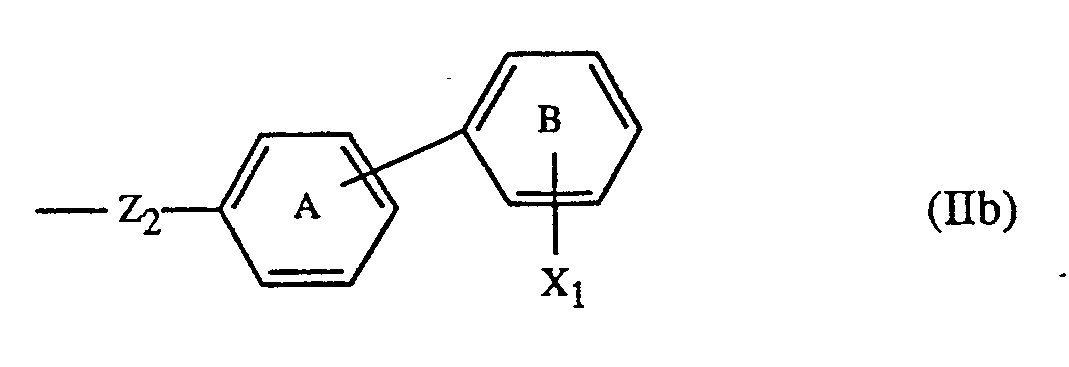
- b) eine Verbindung der Formel


- Für Tautomere bzw. Salze von Ausgangsmaterialien gilt das vorstehend für Tautomere bzw. Salze von Verbindungen I Gesagte in analoger Weise.
- In die Variable R₅ überführbare Reste X₁ sind beispielsweise Cyano, Mercapto, Halogen, die Gruppe -N₂⁺A⁻, in der A⁻ ein von einer Säure abgeleitetes Anion bedeutet, Amino, funktionelle Derivate von COOH, SO₃H, PO₃H₂ und PO₂H₂ und N-geschütztes 5-Tetrazolyl.
- Funktionell abgewandeltes Carboxy bedeutet beispielsweise Cyano oder verestertes oder amidiertes Carboxy.
- Die vor- und nachstehend in den Varianten beschriebenen Umsetzungen werden in an sich bekannter Weise durchgeführt, z.B. in Ab- oder üblicherweise in Anwesenheit eines geeigneten Lösungs- oder Verdünnungsmittels oder eines Gemisches derselben, wobei man je nach Bedarf unter Kühlen, bei Raumtemperatur oder unter Erwärmen, z.B. in einem Temperaturbereich von etwa -80°C bis zur Siedetemperatur des Reaktionsmediums, vorzugsweise von etwa -10° bis etwa +200°C, und, falls erforderlich, in einem geschlossenen Gefäss, unter Druck, in einer Inertgasatmosphäre und/oder unter wasserfreien Bedingungen arbeitet.
- In 5-Tetrazolyl R₅ überführbare Reste X₁ sind beispielsweise Cyano und N-geschütztes 5-Tetrazolyl.
- Zur Herstellung von Verbindungen der Formel I, worin R₅ 5-Tetrazolyl bedeutet, geht man beispielsweise von Ausgangsmaterial der Formel IIa aus, worin X₁ Cyano bedeutet, und setzt dieses mit einem Azid, z. B. mit HN₃ oder insbesondere einem Salz, wie Alkalimetallsalz, davon oder mit einem Organozinnazid, wie Triniederalkyl- oder Triarylzinnazid, um. Bevorzugte Azide sind beispielsweise Natrium- und Kaliumazid sowie Tri-C₁-C₄-alkyl-, z.B. Triethyl- oder Tributyl-zinnazid, und Triphenylzinnazid.
- Als Schutzgruppen von N-geschütztem 5-Tetrazolyl kommen die üblicherweise in der Tetrazolchemie verwendeten Schutzgruppen in Frage, insbesondere Triphenylmethyl, gegebenenfalls, z.B. durch Nitro, substituiertes Benzyl, wie 4-Nitrobenzyl, Niederalkoxymethyl, wie Methoxy- oder Ethoxymethyl, Niederalkylthiomethyl, wie Methylthiomethyl, sowie 2-Cyanoethyl, ferner Niederalkoxyniederalkoxymethyl, wie 2-Methoxyethoxymethyl, Benzyloxymethyl sowie Phenacyl. Die Abspaltung der Schutzgruppen erfolgt in Anlehnung an bekannte Methoden. So wird z.B. Triphenylmethyl üblicherweise durch Hydrolyse, insbesondere in Gegenwart einer Säure, oder Hydrogenolyse in Gegenwart eines Hydrierungskatalysators, 4-Nitrobenzyl z.B. durch Hydrogenolyse in Gegenwart eines Hydrierungskatalysators, Methoxy- oder Ethoxy-methyl z.B. durch Behandeln mit einem Triniederalkyl-, wie Triethyl- oder Tributyl-zinn-bromid, Methylthiomethyl z.B. durch Behandeln mit Trifluoressigsäure, 2-Cyanoethyl z.B. durch Hydrolyse, beispielsweise mit Natronlauge, 2-Methoxyethoxymethyl z.B. durch Hydrolyse, z.B. mit Salzsäure, und Benzyloxymethyl und Phenacyl z.B. durch Hydrogenolyse in Gegenwart eines Hydrierungskatalysators abgespalten.
- Ein in SO₃H R₅ überführbarer Rest X₁ ist beispielsweise die Mercaptogruppe. Eine solche Gruppe aufweisende Ausgangsverbindungen der Formel IIa werden beispielsweise durch an sich bekannte Oxidationsverfahren zu solchen Verbindungen der Formel I oxidiert, worin R₅ SO₃H ist. Als Oxidationsmittel kommen beispielsweise anorganische Persäuren, wie Persäuren von Mineralsäuren, z.B. Periodsäure oder Perschwefelsäure, organische Persäuren, wie Percarbon- oder Persulfon-säuren, z.B. Perameisen-, Peressig-, Trifluorperessig- oder Perbenzoe-säure oder p-Toluolpersulfonsäure, oder Gemische aus Wasserstoffperoxid und Säuren, z.B. Gemische aus Wasserstoffperoxid und Essigsäure, in Betracht. Häufig führt man die Oxidation in Gegenwart von geeigneten Katalysatoren durch, wobei als Katalysatoren geeignete Säuren, wie gegebenenfalls substituierte Carbonsäuren, z.B. Essigsäure oder Trifluoressigsäure, oder Übergangsmetalloxide, wie Oxide von Elementen der VI. Nebengruppe, z.B. Molybdän- oder Wolfram-oxid, zu nennen sind. Die Oxidation wird unter milden Bedingungen, z.B. bei Temperaturen von etwa -50° bis etwa +100°C, durchgeführt.
- Unter einer in PO₃H₂ R₅ überführbaren Gruppe ist beispielsweise eine Gruppe -N₂⁺ A⁻ zu verstehen, wobei A⁻ für ein Anion einer Säure, wie Mineralsäure, steht. Entsprechende Diazoniumverbindungen werden beispielsweise in an sich bekannter Weise mit einem P(III)-Halogenid, wie PCl₃ oder PBr₃, umgesetzt und hydrolytisch aufgearbeitet, wobei solche Verbindungen der Formel I erhältlich sind, worin R₅ PO₃H₂ ist.
- Verbindungen I, worin R₅ PO₂H₂ ist, erhält man z. B. durch in üblicher Weise erfolgende Umwandlung von X₁ in einer Verbindung IIa, worin X₁ ein funktionelles Derivat von PO₂H₂ ist, in PO₂H₂.
- Als in Halogenalkansulfonylamino R₅ überführbarer Rest X₁ kommt beispielsweise Amino in Frage. Zur Herstellung von Verbindungen der Formel I, worin R₅ Halogenalkansulfonylamino bedeutet, setzt man beispielsweise entsprechende Aniline mit einer üblicherweise reaktionsfähig veresterten Halogenalkansulfonsäure um, wobei gegebenenfalls in Gegenwart einer Base gearbeitet wird. Die bevorzugte reaktionsfähig veresterte Halogenalkansulfonsäure ist das entsprechende Halogenid, wie Chlorid oder Bromid.
- Ein in COOH R₅ überführbarer Rest X₁ steht beispielsweise für funktionell abgewandeltes Carboxy, wie Cyano, verestertes oder amidiertes Carboxy, Hydroxymethyl oder Formyl.
- Verestertes Carboxy ist beispielsweise mit einem gegebenenfalls substituierten aliphatischen, cycloaliphatischen oder aromatischen Alkohol verestertes Carboxy. Ein aliphatischer Alkohol ist beispielsweise ein Niederalkanol, wie Methanol, Ethanol, n-Propanol, Isopropanol, n-Butanol, sek.-Butanol oder tert.-Butanol, während als cycloaliphatischer Alkohol beispielsweise ein 3- bis 8-gliedriges Cycloalkanol, wie Cyclo-pentanol, -hexanol oder -heptanol, in Frage kommt. Ein aromatischer Alkohol ist beispielsweise ein Phenol oder ein heterocyclischer Alkohol, welche jeweils substituiert sein können, insbesondere Hydroxypyridin, z.B. 2-, 3- oder 4-Hydroxypyridin.
- Amidiertes Carboxy ist beispielsweise Carbamoyl, durch Hydroxy, Amino oder gegebenenfalls substituiertes Phenyl monosubstituiertes, durch Niederalkyl mono- oder disubstituiertes oder durch 4- bis 7-gliedriges Alkylen oder 3-Aza-, 3-Niederalkylaza-, 3-Oxa- oder 3-Thiaalkylen disubstituiertes Carbamoyl. Als Beispiele sind Carbamoyl, N-Mono- oder N,N-Diniederalkylcarbamoyl, wie N-Methyl-, N-Ethyl-, N,N-Dimethyl-, N,N-Diethyl- und N,N-Dipropyl-carbamoyl, Pyrrolidino- und Piperidinocarbonyl, Morpholino-, Piperazino-, 4-Methylpiperazino- und Thiomorpholino-carbonyl, Anilinocarbonyl und durch Niederalkyl, Niederalkoxy und/oder Halogen substituiertes Anilinocarbonyl zu nennen.
- Bevorzugtes funktionell abgewandeltes Carboxy ist beispielsweise Niederalkoxycarbonyl, wie Methoxy- oder Ethoxycarbonyl, und Cyano.
- Verbindungen der Formel I, worin R₅ Carboxy ist, können beispielsweise ausgehend von Verbindungen der Formel IIa, worin X₁ Cyano oder verestertes oder amidiertes Carboxy bedeutet, durch Hydrolyse, insbesondere in Gegenwart einer Base, oder, ausgehend von Verbindungen der Formel IIa, worin X₁ Hydroxymethyl oder Formyl bedeutet, durch Oxidation hergestellt werden. Die Oxidation erfolgt beispielsweise in einem inerten Lösungsmittel, wie in einer Niederalkancarbonsäure, z.B. Essigsäure, einem Keton, z.B. Aceton, einem Ether, z.B. Tetrahydrofuran, einem heterocyclischen Aromaten, z.B. Pyridin, oder in Wasser, oder in einem Gemisch davon, erforderlichenfalls unter Kühlen oder Erwärmen, z.B. in einem Temperaturbereich von etwa 0° bis etwa +150°C. Als Oxidationsmittel kommen beispielsweise oxidierende Übergangsmetallverbindungen, insbesondere solche mit Elementen der I., VI. oder VII. Nebengruppe, in Frage. Als Beispiele seien genannt: Silberverbindungen, wie Silber-nitrat, -oxid und -picolinat, Chromverbindungen, wie Chromtrioxid und Kaliumdichromat, und Manganverbindungen, wie Kalium-, Tetrabutylammonium- und Benzyltriethylammonium-permanganat. Weitere Oxidationsmittel sind beispielsweise geeignete Verbindungen mit Elementen der IV. Hauptgruppe, wie Bleidioxid, oder Halogen-Sauerstoff-Verbindungen, wie Natriumiodat oder Kaliumperiodat.
- Vorzugsweise eignet sich die Variante a) zur Herstellung solcher Verbindungen der Formel I, worin die Variablen Bedeutungen haben, die von ungesättigten Resten verschieden sind.
- Das Ausgangsmaterial der Formel IIa ist beispielsweise zugänglich, indem man in Analogie zu Variante b) von einer Verbindung der Formel

- Die Umsetzung wird erforderlichenfalls in Gegenwart einer Base durchgeführt.
- Als Basen kommen beispielsweise Alkalimetall-hydroxide, -hydride, -amide, -alkanolate, -carbonate, -triphenylmethylide, -diniederalkylamide, -aminoalkylamide oder -niederalkylsilylamide, Naphthalinamine, Niederalkylamine, basische Heterocyclen, Ammoniumhydroxide, sowie carbocyclische Amine in Frage. Beispielhaft seien Natriumhydroxid, -hydrid, -amid, Kalium-tert-butylat, -carbonat, Lithium-triphenylmethylid, -diisopropylamid, Kalium-3-(aminopropyl)-amid, -bis-(trimethylsilyl)-amid, Dimethylaminonaphthalin, Di- oder Triethylamin, oder Ethyl-diisopropylamin, N-Methyl-piperidin, Pyridin, Benzyltrimethyl-ammoniumhydroxid, 1,5-Diazabicyclo[4.3.0]non-5-en (DBN) sowie 1,8-Diaza-bicyclo[5.4.0]undec-7-en (DBU) genannt.
- Die Herstellung von Verbindungen der Formel IIa kann z.B. analog der vorstehend beschriebenen Herstellungsweise von Verbindungen der Formel IIc erfolgen. Verbindungen der Formel IIIb sind bekannt oder können unter Verwendung an sich bekannter Methoden hergestellt werden.
- Eine verfahrensgemäss oder auf andere Weise erhältliche Verbindung der Formel I oder ein Tautomeres davon kann in an sich bekannter Weise in eine andere Verbindung der Formel I überführt werden.
- Eine Hydroxy aufweisende Verbindung der Formel I kann z. B. nach an sich bekannten Methoden verethert werden. Die Veretherung kann z.B. mit einem Alkohol, wie einem gegebenenfalls substituierten Niederalkanol, oder einem reaktionsfähigen Ester desselben erfolgen. Als reaktionsfähige Ester der gewünschten Alkohole kommen beispielsweise solche mit starken anorganischen oder organischen Säuren in Frage, wie entsprechende Halogenide, Sulfate, Niederalkansulfonate oder gegebenenfalls substituierte Benzolsulfonate, z.B. Chloride, Bromide, Iodide oder Methan-, Benzol- oder p-Toluol-sulfonate, in Betracht. Die Veretherung kann z.B. in Gegenwart einer Base, z. B. eines Alkalimetall-hydrids, -hydroxids oder -carbonats oder eines basischen Amins, erfolgen. Umgekehrt können entsprechende Ether, wie Niederalkoxyverbindungen, z.B. mittels starker Säuren, wie Mineralsäuren, z.B. Brom- oder Iod-wasserstoffsäure, die vorteilhaft in Form von Pyridiniumhalogeniden vorliegen können, oder mittels Lewissäuren, z.B. Halogeniden von Elementen der III. Hauptgruppe oder der entsprechenden Nebengruppen, gespalten werden. Diese Umsetzungen können, falls erforderlich, unter Kühlen oder Erwärmen, z.B. in einem Temperaturbereich von etwa -20° bis etwa +100°C, in An- oder Abwesenheit eines Lösungs- oder Verdünnungsmittels, unter Inertgas und/oder unter Druck und gegebenenfalls in einem geschlossenen Gefäss durchgeführt werden.
- Falls ein aromatischer Strukturbestandteil durch Niederalkylthio substituiert ist, kann man dieses auf übliche Weise zu entsprechendem Niederalkan-sulfinyl oder -sulfonyl oxidieren. Als geeignetes Oxidationsmittel für die Oxidation zur Sulfoxidstufe kommen beispielsweise anorganische Persäuren, wie Persäuren von Mineralsäuren, z.B. Periodsäure oder Perschwefelsäure, organische Persäuren, wie Percarbon- oder Persulfonsäuren, z.B. Perameisen-, Peressig-, Trifluorperessig-, Perbenzoe- oder p-Toluolpersulfon-säure, oder Gemische aus Wasserstoffperoxid und Säuren, z.B. Gemische aus Wasserstoffperoxid und Essigsäure, in Betracht. Häufig führt man die Oxidation in Gegenwart von geeigneten Katalysatoren durch, wobei als Katalysatoren geeignete Säuren, wie gegebenenfalls substituierte Carbonsäuren, z.B. Essigsäure oder Trifluoressigsäure, oder Übergangsmetalloxide, wie Oxide von Elementen der VI. Nebengruppe, z.B. Molybdän- oder Wolfram-oxid, zu nennen sind. Die Oxidation wird unter milden Bedingungen, z.B. bei Temperaturen von etwa -50° bis etwa +100°C, durchgeführt. Die weitere Oxidation zur Sulfonstufe kann man mit Distickstofftetroxid als Katalysator in Gegenwart von Sauerstoff bei tiefen Temperaturen entsprechend durchführen, ebenso wie die direkte Oxidation von Niederalkylthio zu Niederalkansulfonyl. Jedoch setzt man hierbei üblicherweise das Oxidationsmittel im Überschuss ein.
- Weist eine der Variablen Amino auf, können entsprechende Verbindungen I in an sich bekannter Weise N-(ar)alkyliert werden; ebenso können Carbamoyl bzw. Carbamoyl aufweisende Reste N-(ar)alkyliert werden. Die (Ar-)Alkylierung erfolgt z.B. mit einem (Aryl-)C₁-C₇-Alkyl-halogenid, z.B. -bromid oder -iodid, (Aryl-)C₁-C₇-Alkansulfonat, z.B. mit Methansulfonat oder p-Toluolsulfonat, oder einem Di-C₁-C₇-alkylsulfat, z.B. Dimethylsulfat, vorzugsweise unter basischen Bedingungen, wie in Gegenwart von Natronlauge oder Kalilauge, und vorteilhaft in Gegenwart eines Phasentransfer-Katalysators, wie von Tetrabutylammoniumbromid oder Benzyltrimethylammoniumchlorid, wobei indes stärker basische Kondensationsmittel, wie Alkalimetall-amide, -hydride oder -alkoholate, z.B. Natriumamid, Natriumhydrid oder Natriumethanolat, erforderlich sein können.
- In Verbindungen der Formel I, die als Substituenten eine veresterte oder amidierte Carboxygruppe aufweisen, kann man eine solche Gruppe, z.B. mittels Hydrolyse, z.B. in Gegenwart eines basischen Mittels oder eines sauren Mittels, wie einer Mineralsäure, in eine freie Carboxygruppe überführen.
- Ferner kann man in Verbindungen der Formel I, die als Substituenten eine Carboxygruppe aufweisen (insbesondere, sofern R₅ von Carboxy verschieden ist), diese, z.B. durch Behandeln mit einem Alkohol, wie einem Niederalkanol, in Gegenwart eines geeigneten Veresterungsmittels, wie eines sauren Reagens, z.B. einer anorganischen oder organischen Säure oder einer Lewissäure, z.B. von Zinkchlorid, oder eines wasserbindenden Kondensationsmittels, z.B. eines Carbodiimids, wie von N,N′-Dicyclohexylcarbodiimid, oder durch Behandeln mit einem Diazoreagens, wie mit einem Diazoniederalkan, z.B. Diazomethan, in eine veresterte Carboxygruppe überführen. Diese kann man auch erhalten, wenn man Verbindungen der Formel I, worin die Carboxygruppe in freier Form oder in Salz-, wie Ammonium- oder Metall-, z.B. Alkalimetall-, wie Natrium- oder Kalium-salzform vorliegt, mit einem C₁-C₇-Alkylhalogenid, z.B. Methyl- oder Ethyl-bromid oder -iodid, oder einem organischen Sulfonsäureester, wie einem entsprechenden C₁-C₇-Alkylester, z.B. Methansulfonsäure- oder p-Toluolsulfonsäure-methylester oder -ethylester, behandelt.
- Verbindungen der Formel I, die als Substituenten eine veresterte Carboxygruppe aufweisen, kann man durch Umesterung, z.B. durch Behandeln mit einem Alkohol, üblicherwiese mit einem höheren als dem der veresterten Carboxygruppe im Ausgangsmaterial entsprechenden Alkohol, in Gegenwart eines geeigneten Umesterungsmittels, wie eines basischen Mittels, z.B. eines Alkalimetall-C₁-C₇-alkanoats, -C₁-C₇-alkanolats oder -cyanids, wie von Natrium-acetat, -methanolat, -ethanolat, -tert.-butanolat oder -cyanid, oder eines geeigneten sauren Mittels, gegebenenfalls unter Entfernung des entstehenden Alkohols, z.B. durch Destillation, in andere Esterverbindungen der Formel I umwandeln. Man kann auch von entsprechenden, sogenannten aktivierten Estern der Formel I ausgehen, die als Substituenten eine aktivierte veresterte Carboxygruppe aufweisen (siehe unten), und diese durch Behandeln mit einem C₁-C₇-Alkanol in einen anderen Ester umwandeln.
- Man kann in Verbindungen der Formel I, die als Substituenten die Carboxygruppe enthalten, diese auch zuerst in ein reaktionsfähiges Derivat, wie ein Anhydrid (auch ein gemischtes Anhydrid), ein Säure-halogenid, z.B. -chlorid (z.B. durch Behandeln mit einem Thionyl-halogenid, z.B. -chlorid), ein Anhydrid mit einem Ameisensäure-ester, z.B. -C₁-C₇-alkylester (z.B. durch Behandeln eines Salzes, wie eines Ammonium- oder Alkalimetallsalzes, mit einem Halogen-, wie Chlor-ameisensäureester, wie C₁-C₇-Alkylester), oder einen aktivierten Ester, wie Cyanmethyl-, Nitrophenyl-, z.B. 4-Nitro-phenyl-, oder Polyhalogenphenyl-, z.B. Pentachlorphenyl-ester (z.B. durch Behandeln mit einer entsprechenden Hydroxyverbindung in Gegenwart eines geeigneten Kondensationsmittels, wie von N,N′-Dicyclohexylcarbodiimid) überführen, und ein solches reaktionsfähiges Derivat dann mit einem Amin umsetzen und so zu Amidverbindungen der Formel I gelangen, die als Substituenten eine amidierte Carboxygruppe aufweisen. Dabei kann man diese direkt oder über Zwischenverbindungen erhalten; so kann man z.B. einen aktivierten Ester, wie einen 4-Nitrophenylester, einer Verbindung der Formel I mit einer Carboxygruppe zuerst mit einem 1-unsubstituierten Imidazol umsetzen und die so entstandene 1-Imidazolylcarbonylverbindung mit einem Amin in Reaktion bringen. Man kann aber auch andere, nicht-aktivierte Ester, wie C₁-C₇-Alkylester, von Verbindungen der Formel I mit Aminen zur Reaktion bringen.
- Weist ein aromatischer Ring als Substituenten ein Wasserstoffatom auf, so kann dieses mit Hilfe eines Halogenierungsmittels in üblicher Weise durch ein Halogenatom ersetzt werden, z.B. mit Brom, Hypobromsäure, einem Acylhypobromit oder einer anderen organischen Bromverbindung, z.B. N-Bromsuccinimid, N-Bromacetamid, N-Bromphthalimid, Pyridiniumperbromid, Dioxandibromid, 1,3-Dibrom-5,5-dimethylhydantoin oder 2,4,4,6-Tetrabrom-2,5-cyclohexandien-1-on, durch Brom oder mit elementarem Chlor, z.B. in einem halogenierten Kohlenwasserstoff, wie Chloroform, und unter Kühlen, z.B. bis auf etwa -10°C, durch Chlor.
- Enthält ein aromatischer Ring eine Aminogruppe, so kann diese in üblicher Weise diazotiert werden, z.B. durch Behandeln mit einem Nitrit, z.B. Natriumnitrit, in Gegenwart einer geeigneten Protonsäure, z.B. einer Mineralsäure, wobei die Reaktionstemperatur vorteilhaft unter etwa 5°C gehalten wird. Die so erhältliche, in Salzform vorliegende Diazoniumgruppe kann man nach üblichen Verfahren beispielsweise wie folgt substituieren: durch die Hydroxygruppe analog der Phenolverkochung in Gegenwart von Wasser; durch eine Alkoxygruppe durch Behandeln mit einem entsprechenden Alkohol, wobei Energie zugeführt werden muss; durch das Fluoratom analog der Schiemann-Reaktion bei der Thermolyse von entsprechenden Diazoniumtetrafluorboraten; oder durch Chlor, Brom, Iod oder die Cyanogruppe analog der Sandmeyer-Reaktion durch Umsetzung mit entsprechenden Cu(I)-Salzen, zunächst unter Kühlen, z.B. auf unter etwa 5°C, und anschliessendem Erhitzen, z.B. auf etwa 60° bis etwa 150°C.
- Enthalten die Verbindungen der Formel I ungesättigte Reste, wie Niederalkenyl oder Niederalkinylgruppierungen, können diese in an sich bekannter Weise in gesättigte Reste überführt werden. So erfolgt beispielsweise die Hydrierung von Mehrfachbindungen durch katalytische Hydrierung in Gegenwart von Hydrierungskatalysatoren, wobei hierfür z.B. Nickel, wie Raney-Nickel, sowie Edelmetalle oder deren Derivate, z.B. Oxide, geeignet sind, wie Palladium oder Platinoxid, die gegebenenfalls auf Trägermaterialien, z.B. auf Kohle oder Calciumcarbonat, aufgezogen sein können. Die Hydrierung kann vorzugsweise bei Drucken zwischen etwa 1 und etwa 100 at und bei Temperaturen zwischen etwa -80° und etwa +200°C, vor allem zwischen Raumtemperatur und etwa 100°C, durchgeführt werden. Die Reaktion erfolgt zweckmässig in einem Lösungsmittel, wie Wasser, einem Niederalkanol, z.B. Ethanol, Isopropanol oder n-Butanol, einem Ether, z.B. Dioxan, oder einer Niederalkancarbonsäure, z.B. Essigsäure.
- Weiterhin kann in Verbindungen I, worin z.B. einer der Reste R₁, R₂, R₃ und R₄ Halogen, wie Chlor, bedeutet, Halogen durch Umsetzung mit einem gegebenenfalls substituierten Amin, einem Alkohol oder Mercaptan ausgetauscht werden. Ein Halogenatom R₁, insbesondere ein Chloratom R₁, kann auch durch Umsetzung mit einem Reagens der Formel Alk₃SnR₆ (Alk = Niederalkyl; R₆ = gegebenenfalls substituiertes Niederalk-1-en-1-yl oder gegebenenfalls substituiertes Niederalk-1-in-1-yl), z. B. in Gegenwart eines Metallkatalysators, wie in Gegenwart von (P(C₆H₅)₃)₂PdCl₂, gegen entsprechende Niederalk-1-en-1-yl- oder Niederalk-1-in-1-yl-reste ausgetauscht werden, welche dann weiteren Reaktionen zugänglich sind, z. B. der Ozonolyse oder der Reduktion, welche z. B. zur Bildung der Aldehydfunktion, welche ihrerseits zum Beispiel in Carboxy überführt werden kann, oder zur Bildung einer Niederalkylgruppe führen können. Auch kann ein entsprechendes Chloratom R₁, z. B. durch Umsetzung mit CsF, gegen Fluor, welches einer weiteren nucleophilen Substitution, z. B. durch Cyano, leicht zugänglich ist, ausgetauscht werden.
- Die Erfindung betrifft insbesondere die in den Beispielen beschriebenen Verfahren.
- Salze von Verbindungen der Formel I können in an sich bekannter Weise hergestellt werden. So erhält man beispielsweise Säureadditionssalze von Verbindungen der Formel I durch Behandeln mit einer geeigneten Säure oder einem geeigneten Ionenaus tauscherreagens. Salze von Verbindungen I können in üblicher Weise in die freien Verbindungen I überführt werden, Säureadditionssalze z.B. durch Behandeln mit einem geeigneten basischen Mittel oder einem geeigneten Ionenaustauscherreagens.
- Salze von Verbindungen I können in an sich bekannter Weise in andere Salze von Verbindungen I umgewandelt werden.
- Je nach Verfahrensweise bzw. Reaktionsbedingungen können die Verbindungen I mit salzbildenden, insbesondere basischen Eigenschaften, in freier Form oder in Form von Salzen erhalten werden.
- Infolge der engen Beziehung zwischen der Verbindung I in freier Form und in Form ihrer Salze sind im Vorausgegangenen und nachfolgend unter der freien Verbindung I bzw. ihren Salzen sinn- und zweckgemäss gegebenenfalls auch die entsprechenden Salze bzw. die freie Verbindung I zu verstehen.
- Die Verbindungen I einschliesslich ihrer Salze von salzbildenden Verbindungen können auch in Form ihrer Hydrate erhalten werden und/oder andere, z. B. zur Kristallisation verwendete, Lösungsmittel einschliessen.
- Die Verbindungen I und ihre Salze können, je nach der Wahl der Ausgangsstoffe und Arbeitsweisen, in Form eines der möglichen Isomeren oder als Gemisch derselben, z.B. je nach Anzahl, absoluter und relativer Konfiguration der asymmetrischen Kohlenstoffatome als reine Isomere, wie Antipoden und/oder Diastereomere, oder als Isomerengemische, wie Enantiomerengemische, z. B. Racemate, Diastereomerengemische oder Racematgemische, vorliegen.
- Erhaltene Diastereomerengemische und Racematgemische können auf Grund der physikalisch-chemischen Unterschiede der Bestandteile in bekannter Weise in die reinen Diastereomeren oder Racemate aufgetrennt werden, beispielsweise durch fraktionierte Kristallisation. Erhaltene Enantiomerengemische, wie Racemate, lassen sich nach bekannten Methoden in die optischen Antipoden zerlegen, beispielsweise durch Umkristallisation aus einem optisch aktiven Lösungsmittel, Chromatographie an chiralen Adsorbentien, mit Hilfe von geeigneten Mikroorganismen, durch Spaltung mit spezifischen, immobilisierten Enzymen, über die Bildung von Einschlussverbindungen, z.B. unter Verwendung chiraler Kronenether, wobei nur ein Enantiomeres komplexiert wird, oder durch Überführung in diastereomere Salze, z.B. durch Umsetzung eines basischen Endstoffracemats mit einer optisch aktiven Säure, wie Carbonsäure, z.B. Wein- oder Äpfelsäure, oder Sulfonsäure, z.B. Camphersulfonsäure, und Trennung des auf diese Weise erhaltenen Diastereomerengemisches, z.B. auf Grund ihrer verschiedenen Löslichkeiten, in die Diastereomeren, aus denen das gewünschte Enantiomere durch Einwirkung geeigneter Mittel freigesetzt werden kann. Vorteilhaft isoliert man das wirksamere Enantiomere.
- Die Erfindung betrifft auch diejenigen Ausführungsformen des Verfahrens, nach denen man von einer auf irgendeiner Stufe des Verfahrens als Zwischenprodukt erhältlichen Verbindung ausgeht und die fehlenden Schritte durchführt oder einen Ausgangsstoff in Form eines Derivates bzw. Salzes und/oder seiner Racemate bzw. Antipoden verwendet oder insbesondere unter den Reaktionsbedingungen bildet.
- Beim Verfahren der vorliegenden Erfindung werden vorzugsweise solche Ausgangsstoffe und Zwischenprodukte verwendet, welche zu den eingangs als besonders wertvoll geschilderten Verbindungen I führen. Neue Ausgangsstoffe und Zwischenprodukte für die Herstellung der Verbindungen I, ihre Verwendung und ein Verfahren zu ihrer Herstellung bilden ebenfalls einen Gegenstand der Erfindung, wobei die Variablen R₁, R₂, R₃ und R₄ die für die Verbindungen I angegebenen Bedeutungen haben.
- Die Verbindungen der Formel I und ihre pharmazeutisch verwendbaren Salze können, vorzugsweise in Form von pharmazeutisch verwendbaren Zubereitungen, in einem Verfahren zur prophylaktischen und/oder therapeutischen Behandlung des tierischen oder menschlichen Körpers, insbesondere als Antihypertensiva, verwendet werden.
- Die Erfindung betrifft daher gleichfalls pharmazeutische Präparate, die eine Verbindung I in freier Form oder in Form eines pharmazeutisch verwendbaren Salzes als Wirkstoff enthalten, sowie ein Verfahren zu ihrer Herstellung. Bei diesen pharmazeutischen Präparaten handelt es sich um solche zur enteralen, wie oralen, ferner rektalen oder parenteralen Verabreichung an Warmblüter, wobei der pharmakologische Wirkstoff allein oder zusammen mit üblichen pharmazeutischen Hilfsstoffen enthalten ist. Die pharmazeutischen Präparate enthalten z.B. von etwa 0,1 % bis 100 %, vorzugsweise von etwa 1 % bis etwa 60 %, des Wirkstoffs. Pharmazeutische Präparate zur enteralen bzw. parenteralen Verabreichung sind z.B. solche in Dosiseinheitsformen, wie Dragées, Tabletten, Kapseln oder Suppositorien, ferner Ampullen. Diese werden in an sich bekannter Weise, z.B. mittels konventioneller Misch-, Granulier-, Dragier-, Lösungs- oder Lyophilisierungsverfahren, hergestellt. So kann man pharmazeutische Präparate zur oralen Anwendung erhalten, indem man den Wirkstoff mit festen Trägerstoffen kombiniert, ein erhaltenes Gemisch gegebenenfalls granuliert, und das Gemisch bzw. Granulat, wenn erwünscht oder notwendig nach Zugabe von geeigneten Hilfsstoffen, zu Tabletten oder Dragée-Kernen verarbeitet.
- Geeignete Trägerstoffe sind insbesondere Füllstoffe, wie Zucker, z.B. Lactose, Saccharose, Mannit oder Sorbit, Cellulosepräparate und/oder Calciumphosphate, z.B. Tricalciumphosphat oder Calciumhydrogenphosphat, ferner Bindemittel, wie Stärkekleister, unter Verwendung z.B. von Mais-, Weizen-, Reis- oder Kartoffelstärke, Gelatine, Tragantgummi, Methylcellulose und/oder Polyvinylpyrrolidon, und, wenn erwünscht, Sprengmittel, wie die obengenannten Stärken, ferner Carboxymethylstärke, quervernetztes Polyvinylpyrrolidon, Agar oder Alginsäure oder ein Salz davon, wie Natriumalginat. Hilfsmittel sind in erster Linie Fliessregulier- und Schmiermittel, z.B. Kieselsäure, Talk, Stearinsäure oder Salze davon, wie Magnesium- oder Calciumstearat, und/oder Polyethylenglykol. Dragée-Kerne werden mit geeigneten, gegebenenfalls Magensaft-resistenten Überzügen versehen, wobei man u.a. konzentrierte Zuckerlösungen, welche gegebenenfalls arabischen Gummi, Talk, Polyvinylpyrrolidon, Polyethylenglykol und/oder Titandioxid enthalten, Lacklösungen in geeigneten organischen Lösungsmitteln oder Lösungsmittelgemischen oder, zur Herstellung von Magensaft-resistenten Überzügen, Lösungen von geeigneten Cellulosepräparaten, wie Acetylcellulosephthalat oder Hydroxypropylmethylcellulosephthalat, verwendet. Den Tabletten oder Dragée-Überzügen können Farbstoffe oder Pigmente, z.B. zur Identifizierung oder zur Kennzeichnung verschiedener Wirkstoffdosen, beigefügt werden.
- Weitere oral anwendbare pharmazeutische Präparate sind Steckkapseln aus Gelatine sowie weiche, geschlossene Kapseln aus Gelatine und einem Weichmacher, wie Glycerin oder Sorbitol. Die Steckkapseln können den Wirkstoff in Form eines Granulates, z.B. im Gemisch mit Füllstoffen, wie Lactose, Bindemitteln, wie Stärken, und/oder Gleitmitteln, wie Talk oder Magnesiumstearat, und gegebenenfalls Stabilisatoren, enthalten. In weichen Kapseln ist der Wirkstoff vorzugsweise in geeigneten Flüssigkeiten, wie fetten Ölen, Paraffinöl oder flüssigen Polyethylenglykolen, gelöst oder suspendiert, wobei ebenfalls Stabilisatoren zugefügt sein können.
- Als rektal anwendbare pharmazeutische Präparate kommen z.B. Suppositorien in Betracht, welche aus einer Kombination des Wirkstoffs mit einer Suppositoriengrundmasse bestehen. Als Suppositoriengrundmasse eignen sich z.B. natürliche oder synthetische Triglyceride, Paraffinkohlenwasserstoffe, Polyethylenglykole und höhere Alkanole. Ferner können auch Gelatine-Rektalkapseln verwendet werden, die eine Kombination des Wirkstoffs mit einem Grundmassenstoff enthalten. Als Grundmassenstoffe kommen z.B. flüssige Triglyceride, Polyethylenglykole und Paraffinkohlenwasserstoffe in Frage.
- Zur parenteralen Verabreichung eignen sich in erster Linie wässrige Lösungen eines Wirkstoffs in wässerlöslicher Form, z.B. eines wasserlöslichen Salzes, ferner Suspensionen des Wirkstoffs, wie entsprechende ölige Injektionssuspensionen, wobei man geeignete lipophile Lösungsmittel oder Vehikel, wie fette Öle, z.B. Sesamöl, oder synthetische Fettsäureester, z.B. Ethyloleat oder Triglyceride, verwendet, oder wässrige Injektionssuspensionen, welche viskositätserhöhende Stoffe, z.B. Natriumcarboxymethylcellulose, Sorbit und/oder Dextran, und gegebenenfalls auch Stabilisatoren enthalten.
- Die Dosierung des Wirkstoffes kann von verschiedenen Faktoren, wie Applikationsweise, Warmblüter-Spezies, Alter und/oder individuellem Zustand, abhängen. Im Normalfall ist für einen etwa 75 kg schweren Patienten bei oraler Applikation eine ungefähre Tagesdosis von etwa 10 mg bis etwa 250 mg zu veranschlagen.
- Die nachfolgenden Beispiele illustrieren die oben beschriebene Erfindung; sie sollen jedoch diese in ihrem Umfang in keiner Weise einschränken. Temperaturen sind in Grad Celsius angegeben. "THF" steht für "Tetrahydrofuran".
- 6-(n-Butyl)-5-(2′-cyanobiphenyl-4-ylmethyl)-4-hydroxy-2-methyl-pyrimidin (910 mg, 2.54 mmol) und Tributylzinnazid (1.68 g, 5.08 mmol) in o-Xylol (30 ml) werden 24 Stunden unter Rückfluss gerührt. Das Reaktionsgemisch wird im Vakuum eingedampft, der Rückstand mit CH₂Cl₂/CH₃OH/NH₃ (5:3:1,50 ml) versetzt und das Gemisch 30 Minuten gerührt. Nach erneutem Eindampfen im Vakuum wird der Rückstand mittels Flash-Chromatographie (Kieselgel 60,40-63 µm, CH₂Cl₂/CH₃OH/NH₃ = 160:10:1) aufgetrennt. Man erhält so das 6-(n-Butyl)-4-hydroxy-2-methyl-5-[2′-(1H-tetrazol-5-yl)biphenyl-4-ylmethyl]-pyrimidin als amorphen Festkörper, welcher aus Essigester kristallisiert. Smp.: 236°C (Zersetzung).
- Das Ausgangsmaterial kann z. B. wie folgt hergestellt werden:
- a) Zu einer Lösung von 3-Oxoheptansäureethylester (9.5 g, 55.1 mmol) in absolutem THF (100 ml) wird bei Raumtemperatur NaH (80 % in Weissoel, 2.4 g, 55.1 mmol) portionsweise zugegeben. Nach beendeter Zugabe wird 30 Minuten gerührt und anschliessend eine Lösung von 4-Brommethyl-2′-cyano-biphenyl (15.0 g, 55.1 mmol) in absolutem THF (150 ml) zugetropft. Das Reaktionsgemisch wird 12 Stunden bei Raumtemperatur gerührt und anschliessend im Vakuum eingedampft. Der Rückstand wird zwischen Essigester und H₂O verteilt und die organische Phase mit H₂O und gesättigter NaCl-Lösung gewaschen, getrocknet (Na₂SO₄) und im Vakuum eingedampft. Flash-Chromatographie (Kieselgel 60, 40-63 µm, Hexan/Essigester = 9:1) ergibt den 2-(2′-Cyanobiphenyl-4-ylmethyl)-3-oxo-heptansäureethylester als Oel, welches direkt weiterverarbeitet wird.
- b) Zu einer Lösung von Natriummethanolat (3.22 g, 57.8 mmol) in absolutem Methanol (45 ml) wird bei Raumtemperatur Acetamidin-hydrochlorid (3.64 g, 38.5 mmol) zugegeben. Nach 10 Minuten wird eine Lösung von 2-(2′-Cyanobiphenyl-4-ylmethyl)-3-oxo-heptansäureethylester (7.0 g, 19.26 mmol) in absolutem Methanol (30 ml) zugetropft. Die gelbe Suspension wird 24 Stunden bei 50°C gerührt und anschliessend im Vakuum eingedampft. Der Rückstand wird in H₂O suspendiert und die Suspension mit 1N Salzsäure auf pH 5 angesäuert und sodann mit Essigester extrahiert. Die organische Phase wird mit gesättigter NaCl-Lösung gewaschen, getrocknet (Na₂SO₄) und eingedampft. Flash-Chromatographie (Kieselgel 60,40-63 µm, CH₂Cl₂/CH₃OH = 98:2) ergibt 6-(n-Butyl)-5-(2′-cyanobiphenyl-4-ylmethyl)-4-hydroxy-2-methyl-pyrimidin, welches aus Diethylether kristalliert und direkt weiterverarbeitet wird.
- Ausgehend von 5-(2′-Cyanobiphenyl-4-ylmethyl)-4-hydroxy-2-methyl-6-(n-propyl)-pyrimidin und Tributylzinnazid erhält man in der in Beispiel 1 beschriebenen Weise 4-Hydroxy-2-methyl-6-(n-propyl)-5-[2′-(1H-tetrazol-5-yl)biphenyl-4-ylmethyl]pyrimidln. Weisse Kristalle aus Essigester. Smp.: 206°C (Zersetzung).
- Das Ausgangsmaterial kann beispielsweise wie folgt hergestellt werden:
- a) Durch Alkylierung von 3-Oxohexansäureethylester mit 4-Brommethyl-2′-cyano-biphenyl in der in Beispiel 1a) beschriebenen Weise erhält man 2-(2′-Cyanobiphenyl-4-ylmethyl)-3-oxo-hexansäureethylester, welcher durch Flash-Chromatographie (Kieselgel 60, 40-63 µm, Hexan/Essigester = 4:1) gereinigt wird, als Oel. Dieses wird direkt weiterverarbeitet.
- b) Durch Umsetzung von 2-(2′-Cyanobiphenyl-4-ylmethyl)-3-oxo-hexansäureethylester mit Acetamidin-hydrochlorid und Natriummethanolat in Methanol in der in Beispiel 1b) beschriebenen Weise erhält man 5-(2′-Cyanobiphenyl-4-ylmethyl)-4-hydroxy-2-methyl-6-(n-propyl)-pyrimidin. Dieses wird direkt weiterverarbeitet.
- Ausgehend von 6-(n-Butyl)-5-(2′-cyanobiphenyl-4-ylmethyl)-4-hydroxy-2-(n-propyl)-pyrimidin und Tributylzinnazid erhält man in der in Beispiel 1 beschriebenen Weise 6-(n-Butyl)-4-hydroxy-2-(n-propyl)-5-[2′-(1H-tetrazol-5-yl)biphenyl-4-ylmethyl]-pyrimidin. Weisse Kristalle aus Isopropanol/Diethylether. Smp.: 208°C-210°C.
- Das Ausgangsmaterial kann beispielsweise wie folgt hergestellt werden.
a) Durch Umsetzung von 2-(2′-Cyanobiphenyl-4-ylmethyl)-3-oxo-heptansäureethylester mit Butyramidin-hydrochlorid und Natriummethanolat in Methanol in der in Beispiel 1b) beschriebenen Weise erhält man 6-(n-Butyl)-5-(2′-cyanobiphenyl-4-ylmethyl)-4-hydroxy-2-(n-propyl)-pyrimidin, welches durch Flash-Chromatographie (Kieselgel 60, 40-63 µm, CH₂Cl₂/CH₃OH = 98:2) gereinigt wird. Dieses wird direkt weiterverarbeitet. - Ausgehend von 5-(2′-Cyanobiphenyl-4-ylmethyl)-2,6-di-(n-butyl)-4-hydroxypyrimidin und Tributylzinnazid erhält man in der in Beispiel 1 beschriebenen Weise 2,6-Di-(n-butyl)-4-hydroxy-5-[2′-(1H-tetrazol-5-yl)biphenyl-4- ylmethyl]-pyrimidin. Weisse Kristalle aus Essigester. Smp.: 212-213°C.
- Das Ausgangsmaterial kann beispielsweise wie folgt hergestellt werden.
a) Durch Umsetzung von 2-(2′-Cyanobiphenyl-4-ylmethyl)-3-oxo-heptansäureethylester mit Valeramidin-hydrochlorid und Natriummethanolat in Methanol in der in Beispiel 1b) beschriebenen Weise erhält man 5-(2′-Cyanobiphenyl-4-ylmethyl)-2,6-di-(n-butyl)-4-hydroxy-pyrimidin, welches durch Flash-Chromatographie (Kieselgel 60,40-63 µm, CH₂Cl₂/CH₃OH = 98:2) gereinigt wird. Dieses wird direkt weiterverarbeitet. - Ausgehend von 6-(n-Butyl)-4-chlor-5-(2′-cyanobiphenyl-4-ylmethyl)-2-methyl-pyrimidin und Tributylzinnazid erhält man in der in Beispiel 1 beschriebenen Weise 6-(n-Butyl)-4-chlor-2-methyl-5-[2′-( 1H-tetrazol-5-yl)biphenyl-4-ylmethyl]-pyrimidln als amorphen Festkörper. Smp.: 120°C-122°C.
- Das Ausgangsmaterial kann beispielsweise wie folgt hergestellt werden.
a) Zu 11 ml POCl₃ wird bei 0°C unter Rühren zunächst N,N-Dimethylanilin (1.67 ml, 13.15 mmol) und anschliessend 6-(n-Butyl)-4-hydroxy-2-methyl-5-(2′-cyanobiphenyl-4-ylmethyl)-pyrimidin (4.7 g, 13.15 mmol) zudosiert. Das Reaktionsgemisch wird langsam aufgeheizt und 1,5 Stunden unter Rückfluss gerührt. Das Reaktionsgemisch wird sodann auf Wasser mit einer Temperatur von 20-25°C gegossen. Man lässt 30 Minuten stehen und extrahiert dann mit Diethylether. Die organische Phase wird getrocknet (Na₂SO₄) und eingedampft und der Rückstand mittels Flash-Chromatographie (Kieselgel 60,40-63 µm, CH₂Cl₂) gereinigt. Man erhält so 6-(n-Butyl)-4-chlor-5-(2′-cyanobiphenyl-4-ylmethyl)-2-methyl-pyrimidin, welches direkt weiterverarbeitet wird. - Ausgehend von 6-(n-Butyl)-5-(2′-cyanobiphenyl-4-ylmethyl)-4-methoxy-2-methyl-pyrimidin und Tributylzinnazid erhält man in der in Beispiel 1 beschriebenen Weise 6-(n-Butyl)-4-methoxy-2-methyl-5-[2′-( 1H-tetrazol-5-yl)biphenyl-4-ylmethyl]-pyrimidin. Weisse Kristalle aus Essigester/Diethylether. Smp.: 113-115°C.
- Das Ausgangsmaterial kann beispielsweise wie folgt hergestellt werden.
a) Zu einer Lösung von Natriummethanolat (355 mg, 6.38 mmol) in absolutem Methanol (5 ml) wird 6-(n-Butyl)-4-chlor-5-(2′-cyanobiphenyl-4-ylmethyl)-2-methyl-pyrimidin (1.0 g, 2.66 mmol) in absolutem Methanol (10 ml) zugetropft. Das Reaktionsgemisch wird 24 Stunden bei Raumtemperatur gerührt und anschliessend im Vakuum eingedampft. Der Rückstand wird zwischen Essigester und H₂O verteilt und die organische Phase mit H₂O und gesättigter NaCl-Lösung gewaschen, getrocknet (Na₂SO₄) und im Vakuum eingedampft. Das Rohprodukt wird mittels Flash-Chromatographie (Kieselgel 60, 40-63 µm, CH₂Cl₂/CH₃OH = 98:2) gereinigt. Man erhält so 6-(n-Butyl)-5-(2′-cyanobiphenyl-4-ylmethyl)-4-methoxy-2-methyl-pyrimidin welches direkt weiterverarbeitet wird. - Ausgehend von 6-(n-Butyl)-5-(2′-cyanobiphenyl-4-ylmethyl)-4-(2-methoxyethoxy)-2-methyl-pyrimidin und Tributylzinnazid erhält man in der in Beispiel 1 beschriebenen Weise 6-(n-Butyl)-4-(2-methoxyethoxy)-2-methyl--5-[2′-(1H-tetrazol-5-yl)-biphenyl-4-ylmethyl]-pyrimidin. Weisse Kristalle aus Essigester/Hexan. Smp.: 133°C-135°C.
- Das Ausgangsmaterial kann beispielsweise wie folgt hergestellt werden:
a) Natrium (122 mg, 5.32 mmol) wird in 10 ml 2-Methoxyethanol bei Raumtemperatur gelöst. Anschliessend wird eine Lösung von 6-(n-Butyl)-4-chlor-5-(2′-cyanobiphenyl-4-ylmethyl)-2-methyl-pyrimidin (1.0 g, 2.66 mmol) in 2-Methoxyethanol (5 ml) zugetropft. Das Reaktionsgemisch wird 24 Stunden bei Raumtemperatur gerührt und anschliessend im Vakuum eingedampft. Der Rückstand wird zwischen Essigester und H₂O verteilt und die organische Phase mit H₂O und gesättigter NaCl-Lösung gewaschen, getrocknet (Na₂SO₄) und im Vakuum eingedampft. Das Rohprodukt wird mittels Flash-Chromatographie (Kieselgel 60,40-63 µm, CH₂Cl₂/CH₃OH = 98:2) gereinigt. Man erhält so 6-(n-Butyl)-5-(2′-cyanobiphenyl-4-ylmethyl)-4(2-methoxyethoxy)-2-methyl-pyrimidin, welches direkt weiterverarbeitet wird. - Ausgehend von 6-(n-Butyl)-5-(2′-cyanobiphenyl-4-ylmethyl)-4-dimethylamino-2-methyl-pyrimidin und Tributylzinnazid erhält man in der in Beispiel 1 beschriebenen Weise 6-(n-Butyl)-4-dimethylamino-2-methyl--5[2′-(1H-tetrazol-5-yl)biphenyl-4-ylmethyl]-pyrimidin. Weisse Kristalle aus Aceton. Smp.: 195°C-197°C.
- Das Ausgangsmaterial kann beispielsweise wie folgt hergestellt werden:
a) Zu einer Lösung von 6-(n-Butyl)-4-chlor-5-(2′-cyanobiphenyl-4-ylmethyl)-2-methyl-pyrimidin (1.0 g, 2.66 mmol) in Ethanol (10 ml) wird Dimethylamin (33 % in Ethanol, 1.9 ml) zugegeben. Das Reaktionsgemisch wird 24 Stunden unter Rückfluss gerührt und anschliessend im Vakuum eingedampft. Der Rückstand wird zwischen Essigester und H₂O verteilt und die organische Phase mit H₂O und gesättigter NaCl-Lösung gewaschen, getrocknet (Na₂SO₄) und im Vakuum eingedampft. Das Rohprodukt wird mittels Flash-Chromatographie (Kieselgel 60,40-63 µm, CH₂Cl₂/CH₃OH = 98:2) gereinigt. Man erhält so 6-(n-Butyl)-5-(2′-cyanobiphenyl-4-ylmethyl)-4-dimethylamino-2-methyl-pyrimidin, welches direkt weiterverarbeitet wird. - Ausgehend von 6-(n-Butyl)-5-(2′-cyanobiphenyl-4-ylmethyl)-4-hydroxy-2-isopropyl-pyrimidin und Tributylzinnazid erhält man in der in Beispiel 1 beschriebenen Weise 6-(n-Butyl)-4-hydroxy-2-isopropyl-5-[2′-(1H-tetrazol-5-yl)biphenyl-4-ylmethyl]-pyrimidin. Smp.: 234-236°C (aus Isopropanol/Diethylether; Zersetzung).
- Das Ausgangsmaterial kann beispielsweise wie folgt hergestellt werden:
a) Durch Umsetzung von 2-(2′-cyanobiphenyl-4-ylmethyl)-3-oxo-heptansäureethylester mit Isobutyramidin-hydrochlorid und Natriummethanolat in Methanol in der in Beispiel 1b) beschriebenen Weise erhält man 6-(n-Butyl)-5-(2′-cyanobiphenyl-4-ylmethyl)-4-hydroxy-2-isopropyl-pyrimidin, welches durch Flash-Chromatographie (Kieselgel 60,40-63 µm, CH₂Cl₂/CH₃OH = 98:2) gereinigt und direkt weiterverarbeitet wird. - Zu einer Suspension von 2,6-Di-(n-butyl)-4-hydroxy-5-[2′-(1H-tetrazol-5-yl)-biphenyl-4-ylmethyl]-pyrimidin (1,2 g, 2,7 mmol) in 60 ml Ethanol werden 2,7 ml einer 1N Lösung von KOH in Ethanol zugegeben. Die entstandene Lösung wird im Vakuum eingedampft. Nach Zugabe von Isopropanol tritt Kristallisation ein. Die Kristalle werden abfiltriert und bei 100°C im Vakuum getrocknet. Man erhält so das 2,6-Di-(n-butyl)-4-hydroxy-5-[2′-(1H-tetrazol-5-yl)biphenyl-4-ylmethyl]-pyrimidin-Kaliumsalz. Smp. 276-278°C (Zersetzung).
- Ausgehend von 2,6-Di-(n-butyl)-4-hydroxy-5-[2′-(1H-tetrazol-5-yl)biphenyl-4-ylmethyl]-pyrimidin und 1N NaOH in Ethanol erhält man in der in Beispiel 10 beschriebenen Weise das 2,6-Di-(n-butyl)-4-hydroxy-5-[2′-(1H-tetrazol-5-yl)biphenyl-4-ylmethyl]-pyrimidin-Natriumsalz, welches aus Acetonitril kristallisiert wird. Smp. 333-335°C (Zersetzung).
- Ausgehend von 6-(But-1-en-4-yl)-2-(n-butyl)-5-(2′-cyanobiphenyl-4-ylmethyl)-4-hydroxy-pyrimidin und Tributylzinnazid erhält man in der in Beispiel 1 beschriebenen Weise 6-(But-1-en-4-yl)-2-(n-butyl)-4-hydroxy-5-[2′-(1H-tetrazol-5-yl)biphenyl-4-ylmethyl]-pyrimidin. Smp.: 203-205°C (aus Essigsäure/H₂O; Zersetzung).
- Das Ausgangsmaterial kann beispielsweise wie folgt hergestellt werden:
- a) Durch Alkylierung von 3-Oxohept-6-ensäureethylester mit 4-Brommethyl-2′-cyanobiphenyl in der in Beispiel 1a) beschriebenen Weise erhält man den 2-(2′-Cyanobiphenyl-4-ylmethyl)-3-oxohept-6-ensäureethylester, welcher durch Flash-Chromatographie (Kieselgel 60,40-63 µm, Hexan/Essigester= 9:1) gereinigt und direkt weiterverarbeitet wird.
- b) Durch Umsetzung von 2-(2′-Cyanobiphenyl-4-ylmethyl)-3-oxohept-6-ensäureethylester mit Valeramidin-hydrochlorid und Natriummethanolat in Methanol in der in Beispiel 1b) beschriebenen Weise erhält man 6-(But-1-en-4-yl)-2-(n-butyl)-5-(2′-cyanobiphenyl-4-ylmethyl)-4-hydroxy-pyrimidin, welches durch Flash-Chromatographie (Kieselgel 60,40-63 µm, Essigester/Hexan = 1:1) gereinigt und direkt weiterverarbeitet wird.
- Ausgehend von 4-Amino-6-(n-butyl)-5-(2′-cyanobiphenyl-4-ylmethyl)-2-methyl-pyrimidin und Tributylzinnazid erhält man in der in Beispiel 1 beschriebenen Weise 4-Amino-6-(n-butyl)-2-methyl-5-[2′-(1H-tetrazol-5-yl)biphenyl-4-ylmethyl]-pyrimidin. Smp.: 177-179°C (aus Methanol; Zersetzung).
- Das Ausgangsmaterial kann beispielsweise wie folgt hergestellt werden:
a) 6-(n-Butyl)-4-chlor-5-(2′-cyanobiphenyl-4-ylmethyl)-2-methyl-pyrimidin (0,2 g, 0,53 mmol) und 2 ml NH₃ in 10 ml Ethanol werden 4 Tage im Bombenrohr bei 120°C gehalten. Nach dem Eindampfen im Vakuum wird der Rückstand mittels Flash-Chromatographie (Kieselgel 60,40-63 µm, CH₂Cl₂/CH₃OH /= 95:5) gereinigt. Man erhält so 4-Amino-6(n-butyl)-5-(2′-cyanobiphenyl-4-ylmethyl)-2-methyl-pyrimidin, welches direkt weiterverarbeitet wird. - Ausgehend von 6-(n-Butyl)-5-(2′-cyanobiphenyl-4-ylmethyl)-2-methyl-4-methylthio-pyrimidin und Tributylzinnazid erhält man in der in Beispiel 1 beschriebenen Weise 6-(n-Butyl)-2-methyl-4-methylthio--5-[2′-(1H-tetrazol-5-yl)biphenyl-4-ylmethyl]-pyrimidin. Smp.: 176-178°C (aus Essigester; Zersetzung).
- Das Ausgangsmaterial kann beispielsweise wie folgt hergestellt werden:
a) 6-(n-Butyl)-4-chlor-5-(2′-cyanobiphenyl-4-ylmethyl)-2-methyl-pyrimidin (1,0 g, 2,66 mmol) und Natriummethanthiolat (0,21 g, 2,92 mmol) werden in 10 ml 1,3-Dimethyl-3,4,5,6-tetrahydro-2(1H)-pyrimidinon 6 Stunden bei Raumtemperatur gerührt. Das Reaktionsgemisch wird auf H₂O gegossen und mit Essigester extrahiert. Die organische Phase wird mit H₂O gründlich gewaschen, getrocknet (Na₂SO₄) und im Vakuum eingedampft. Flash-Chromatographie (Kieselgel 60,40-63 µm, Hexan/Essigester= 4:1) ergibt 6-(n-Butyl)-5-(2′-cyanobiphenyl-4-ylmethyl)-2-methyl-4-methylthio-pyrimidin, welches direkt weiterverarbeitet wird. - Ausgehend von 6-(n-Butyl)-5-(2′-cyanobiphenyl-4-ylmethyl)-2-ethyl-4-hydroxy-pyrimidin und Tributylzinnazid erhält man in der in Beispiel 1 beschriebenen Weise 6-(n-Butyl)-2-ethyl-4-hydroxy-5-[2′-(1H-tetrazol-5-yl)biphenyl-4-ylmethyl]-pyrimidin. Smp.: 235-237°C (aus Isopropanol; Zersetzung).
- Das Ausgangsmaterial kann beispielsweise wie folgt hergestellt werden:
a) Durch Umsetzung von 2-(2′-Cyanobiphenyl-4-ylmethyl)-3-oxo-heptansäureethylester mit Propionamidin-hydrochlorid und Natriummethanolat in Methanol in der in Beispiel 1b) beschriebenen Weise erhält man 6-(n-Butyl)-5-(2′-cyanobiphenyl-4-ylmethyl)-2-ethyl-4-hydroxy-pyrimidin, welches durch Flash-Chromatographie (Kieselgel 60,40-63 µm, CH₂Cl₂/CH₃OH = 98:2) gereinigt und direkt weiterverarbeitet wird. - Ausgehend von 6-(n-Butyl)5-(2′-cyanobiphenyl-4-ylmethyl)-4-(2-hydroxyethoxy)-2-methyl-pyrimidin und Tributylzinnazid erhält man in der in Beispiel 1 beschriebenen Weise 6-(n-Butyl)-4-(2-hydroxyethoxy)-2-methyl-5-[2′-(1H-tetrazol-5-yl)-biphenyl-4-ylmethyl]-pyrimidin. Smp.: 168-170°C (aus Essigester; Zersetzung).
- Das Ausgangsmaterial kann beispielsweise wie folgt hergestellt werden:
a) Zu einer Lösung von Natrium (0,12 g, 5,3 mmol) in 20 ml Ethylenglykol wird 6-(n-Butyl)-4-chlor-5-(2′-cyanobiphenyl-4-ylmethyl)-2-methyl-pyrimidin (1,0 g, 2,6 mmol) zugegeben. Das Reaktionsgemisch wird 3 Stunden bei 100°C gerührt. Nach dem Eindampfen im Vakuum wird der Rückstand zwischen Essigester und H₂O verteilt und die organische Phase über Na₂SO₄ getrocknet und im Vakuum eingedampft. Flash-Chromatographie (Kieselgel 60,40-63 µm, CH₂Cl₂/CH₃OH = 95:5) ergibt 6-(n-Butyl)-5-(2′-cyanobiphenyl-4-ylmethyl)-4-(2-hydroxyethoxy)-2-methyl-pyrimidin, welches direkt weiterverarbeitet wird. - Ausgehend von 6-(n-Butyl)-5-(2′-cyanobiphenyl-4-ylmethyl)-4-ethoxycarbonylmethoxy-2-methyl-pyrimidin und Tributylzinnazid erhält man in der in Beispiel 1 beschriebenen Weise 6-(n-Butyl)-4-ethoxycarbonylmethoxy-2-methyl-5-[2′-(1H-tetrazol-5-yl)biphenyl-4-ylmethyl]-pyrimidin als amorphen Festkörper.
- Das Ausgangsmaterial kann beispielsweise wie folgt hergestellt werden:
a) Zu einer Lösung von 6-(n-Butyl)-5-(2′-cyanobiphenyl-4-ylmethyl)-4-hydroxy-2-methyl-pyrimidin (2,0 g, 5,6 mmol) in 50 ml N,N-Dimethylformamid wird NaH (0,17 g, 5,6 mmol, 80 % in Weissöl) zugegeben. Das Reaktionsgemisch wird 30 Minuten bei Raumtemperatur gerührt. Anschliessend wird Bromessigsäureethylester (0,81 ml, 7,3 mmol) zugegeben. Nach 3 Stunden wird im Vakuum eingedampft und der Rückstand zwischen Essigester und H₂O verteilt. Die organische Phase wird mit Na₂SO₄ getrocknet und im Vakuum eingedampft. Flash-Chromatographie (Kieselgel 60,40-63 µm, Hexan/Essigester= 4:1) ergibt 6-(n-Butyl)5-(2′-cyanobiphenyl-4-ylmethyl)-4-ethoxycarbonylmethoxy-2-methyl-pyrimidin, welches direkt weiterverarbeitet wird. - Ausgehend von 5-[3-Brom-2′-cyano-biphenyl-4-ylmethyl]-2,6-di-(n-butyl)-4-hydroxy-pyrimidin und Tributylzinnazid erhält man in der in Beispiel 1 beschriebenen Weise 5-[3-Brom-2′-(1H-tetrazol-5-yl)-biphenyl-4-ylmethyl]-2,6-di-(n-butyl)-4-hydroxy-pyrimidin. Smp.: 222-224°C (aus Isopropanol/Diethylether, Zersetzung).
- Das Ausgangsmaterial kann beispielsweise wie folgt hergestellt werden:
- a) Zu einer Suspension von AlCl₃ (21,0 g, 0,157 mol) in Tetrachlorethan wird 4-Methyl-2′-cyano-biphenyl zugegeben. Unter Rühren wird auf 60°C erwärmt. Zur entstandenen Lösung wird eine Lösung von Brom (20,7 g, 0,13 mol) in 100 ml Tetrachlorethan bei 60°C zugetropft und das Reaktionsgemisch 24 Stunden gerührt. Nach Zusatz von weiteren 6,2 g AlCl₃ und Erwärmen auf 70°C lässt sich dünnschichtchromatographisch (Toluol) kein Edukt mehr feststellen. Das Reaktionsgemisch wird sodann unter Eiskühlung mit 200 ml konzentrierter Salzsäure zersetzt und die organische Phase abgetrennt und im Vakuum eingedampft. Der Rückstand wird in Essigester gelöst und die Lösung mit H₂O und Natriumcarbonat-Lösung gewaschen, getrocknet (MgSO₄) und im Vakuum eingedampft. Flash-Chromatographie (Kieselgel 60,40-63 µm, Hexan/Essigester= 4:1) ergibt 3-Brom-2′-cyano-4-methyl-biphenyl, welches aus Cyclohexan umkristallisiert wird. Smp.: 104-106°C.
- b) Zu einer Lösung von 3-Brom-2′-cyano-4-methyl-biphenyl (8,9 g, 0,033 mol) in 900 ml Tetrachlorethan wird nach Zugabe von Benzoylperoxid (0,1 g) unter UV-Bestrahlung bei 100-110°C eine Lösung von Brom (5,6 g, 0,035 mol) in 20 ml Tetrachlorethan zugetropft. Nach 30 Minuten wird das Reaktionsgemisch abgekühlt und im Vakuum eingedampft. Umkristallisation des Rückstands aus Essigester ergibt 3-Brom-4-brommethyl-2′-cyano-biphenyl. Smp.: 152-153°C.
- c) Durch Alkylierung von 3-Oxoheptansäureethylester mit 3-Brom-4-brommethyl-2′-cyano-biphenyl in der in Beispiel 1a) beschriebenen Weise erhält man 2-(3-Brom-2′-cyano-biphenyl-4-ylmethyl)-3-oxo-heptansäureethylester, welcher mittels Flash-Chromatographie (Kieselgel 60,40-63 µm, Hexan/Essigester= 9:1) gereinigt und direkt weiterverarbeitet wird.
- d) Durch Umsetzung von 2-(3-Brom-2′-cyano-biphenyl-4-ylmethyl)-3-oxo-heptansäureethylester mit Valeramidin-hydrochlorid und Natriummethanolat in Methanol in der in Beispiel 1b) beschriebenen Weise erhält man 5-[3-Brom-2′-cyano-biphenyl-4-ylmethyl]-2,6-di-(n-butyl)-4-hydroxy-pyrimidin, welches mittels Flash-Chromatographie (Kieselgel 60,40-63 µm, CH₂Cl₂/CH₃OH= 98:2) gereinigt und direkt weiterverarbeitet wird.
- Ausgehend von 5-(3′-Cyanobiphenyl-4-ylmethyl)-2,6-di-(n-butyl)-4-hydroxy-pyrimidin und Tributylzinnazid erhält man in der in Beispiel 1 beschriebenen Weise 2,6-Di-(n-butyl)-4-hydroxy-5-[3′-(1H-tetrazol-5-yl)biphenyl-4-ylmethyl]-pyrimidln als amorphen Festkörper.
- Das Ausgangsmaterial kann beispielsweise wie folgt hergestellt werden:
- a) 4-Methylphenyl-trimethyl-zinn (5,9 g, 20 mmol), 3-Iodbenzonitril (5,0 g, 22 mmol) und Tetrakis(triphenylphosphan)palladium (1,16 g, 1 mmol) in 60 ml o-Xylol werden 12 Stunden unter Rückfluss gerührt. Nach dem Abkühlen auf Raumtemperatur wird die schwarze Suspension filtriert und das Filtrat im Vakuum eingedampft. Der Rückstand wird in Essigester gelöst und die Lösung mit einer Lösung von Kaliumfluorid in H₂O (10 %) gewaschen, mit Na₂SO₄ getrocknet und im Vakuum eingedampft. Flash-Chromatographie (Kieselgel 60,40-63 µm, Hexan/Essigester = 9:1) ergibt 3′-Cyano-4-methyl-biphenyl, welches direkt weiterverarbeitet wird.
- b) 3′-Cyano-4-methyl-biphenyl (1,8 g, 9,3 mmol), N-Bromsuccinimid (1,66 g, 9,3 mmol) und α,α′-Azoisobutyronitril (20 mg) in 30 ml Tetrachlormethan werden 6 Stunden unter Rückfluss gerührt. Nach dem Eindampfen des Reaktionsgemisches im Vakuum wird der Rückstand in Essigester gelöst und die Lösung mit H₂O gewaschen, getrocknet (Na₂SO₄) und im Vakuum eingedampft. Kristallisation aus Essigester/Hexan ergibt 4-Brommethyl-3′-cyano-biphenyl. Smp.: 106-108°C.
- c) Durch Alkylierung von 3-Oxoheptansäureethylester mit 4-Brommethyl-3′-cyano-biphenyl in der in Beispiel 1a) beschriebenen Weise erhält man 2-(3′-Cyanobiphenyl-4-ylmethyl)-3-oxo-heptansäureethylester, welcher mittels Flash-Chromatographie (Kieselgel 60,40-63 µm, Hexan/Essigester = 9:1) gereinigt und direkt weiterverarbeitet wird.
- d) Durch Umsetzung von 2-(3′-Cyanobiphenyl-4-ylmethyl)-3-oxo-heptansäureethylester mit Valeramidin-hydrochlorid und Natriummethanolat in Methanol in der in Beispiel 1b) beschriebenen Weise erhält man 5-(3′-Cyanobiphenyl-4-ylmethyl)-2,6-di-(n-butyl)-4-hydroxy-pyrimidin, welches mittels Flash-Chromatographie (Kieselgel 60,40-63 µm, CH₂Cl₂/CH₃OH = 98:2) gereinigt und direkt weiterverarbeitet wird.
- Ausgehend von 5-(2′-Cyanobiphenyl-3-ylmethyl)-2,6-di-(n-butyl)-4-hydroxy-pyrimidin und Tributylzinnazid erhält man in der in Beispiel 1 beschriebenen Weise 2,6-Di-(n-butyl)-4-hydroxy-5-[2′-(1H-tetrazol-5-yl)biphenyl-3-ylmethyl]-pyrimidin. Smp.: 185-187°C (aus Isopropanol/Diethylether, Zersetzung).
- Das Ausgangsmaterial kann beispielsweise wie folgt hergestellt werden:
- a) Durch Umsetzung von 3-Methylphenyl-trimethyl-zinn mit 2-Iodbenzonitril in der in Beispiel 19a) beschriebenen Weise erhält man 2′-Cyano-3-methyl-biphenyl, welches mittels Flash-Chromatographie (Kieselgel 60,40-63 µm, Hexan/Essigester= 9:1) gereinigt und direkt weiterverarbeitet wird.
- b) Durch Umsetzung von 2′-Cyano-3-methyl-biphenyl mit N-Bromsuccinimid in der in Beispiel 19b) beschriebenen Weise erhält man 3-Brommethyl-2′-cyano-biphenyl, welches mittels Säulenchromatographie (Kieselgel 60,40-63 µm, Hexan/Essigester= 8:1) gereinigt und direkt weiterverarbeitet wird.
- c) Durch Alkylierung von 3-Oxoheptansäureethylester mit 3-Brommethyl-2′-cyano-biphenyl in der in Beispiel 1a) beschriebenen Weise erhält man 2-(2′-Cyanobiphenyl-3-ylmethyl)-3-oxo-heptansäureethylester, welcher mittels Flash-Chromatographie (Kieselgel 60,40-63 µm, Hexan/Essigester = 9:1) gereinigt und direkt weiterverarbeitet wird.
- d) Durch Umsetzung von 2-(2′-Cyanobiphenyl-3-ylmethyl)-3-oxo-heptansäureethylester mit Valeramidin-hydrochlorid und Natriummethanolat in Methanol in der in Beispiel 1b) beschriebenen Weise erhält man 5-(2′-Cyanobiphenyl-3-ylmethyl)-2,6-di-(n-butyl)-4-hydroxy-pyrimidin, welches mittels Säulenchromatographie (Kieselgel 60,40-63 µm, CH₂Cl₂/CH₃OH = 98:2) gereinigt und direkt weiterverarbeitet wird.
- Ausgehend von 5-[2-(2′-Cyanobiphenyl-4-yl)ethyl]-2,6-di-(n-butyl)-4-hydroxy-pyrimidin und Tributylzinnazid erhält man in der in Beispiel 1 beschriebenen Weise 2,6-Di-(n-butyl)-4-hydroxy-5-[2-(2′-(1H-tetrazol-5-yl)biphenyl-4-yl)ethyl]-pyrimidin. Smp.: 217-218°C (aus Isopropanol/Essigester, Zersetzung).
- Das Ausgangsmaterial kann beispielsweise wie folgt hergestellt werden:
- a) Zu einer Lösung von Methoxymethyl-triphenyl-phosphoniumchlorid (2,57 g, 7,5 mmol) in 25 ml wasserfreiem Tetrahydrofuran wird bei Raumtemperatur eine Lösung von Lithium-bis(trimethylsilyl)-amid in Tetrahydrofuran (1 M, 7,5 ml, 7,5 mmol) zugetropft. Nach 30 Minuten wird unter Eiskühlung eine Lösung von 2′-Cyano-4-formyl-biphenyl (1,04 g, 5 mmol) in 30 ml Tetrahydrofuran zugetropft und das Reaktionsgemisch anschliessend 30 Minuten bei Raumtemperatur gerührt. Das Reaktionsgemisch wird in 150 ml eiskalte gesättigte Ammoniumchlorid-Lösung gegossen und mit Diethylether extrahiert. Die organische Phase wird mit H₂O gewaschen, getrocknet (Na₂SO₄) und im Vakuum eingedampft. Der Rückstand wird mittels Flash-Chromatographie (Kieselgel 60, 40-63 µm, Hexan/Essigester= 4:1) gereinigt. Man erhält so 2′-Cyano-4-(2-methoxyethenyl)-biphenyl, welches direkt weiterverarbeitet wird.
- b) 2′-Cyano-4-(2-methoxyethenyl)-biphenyl (8,2 g, 34,9 mmol) wird in 120 ml Ameisensäure (95 %) suspendiert und die Suspension 30 Minuten bei Raumtemperatur gerührt. Die entstandene Lösung wird mit 1,5l H₂O verdünnt und das Gemisch mit Diethylether extrahiert. Die organische Phase wird mit gesättigter NaHCO₃-Lösung gewaschen, getrocknet (MgSO₄) und im Vakuum eingedampft Der Rückstand wird mittels Flash-Chromatographie (Kieselgel 60,40-63 µm, Hexan/Essigester = 2:1) gereinigt. Man erhält so 2′-Cyano-4-(2-oxoethyl)-biphenyl, welches direkt weiterverarbeitet wird.
- c) Zu einer Lösung von 2′-Cyano-4-(2-oxoethyl)-biphenyl (2,5 g, 11,3 mmol) in 50 ml Methanol wird portionsweise unter Rühren NaBH₄ (0,86 g, 22,62 mmol) unter Eiskühlung zugegeben. Nach 30 Minuten Rühren bei 0°C wird das Reaktionsgemisch im Vakuum eingedampft und der Rückstand zwischen Diethylether und H₂O verteilt. Die organische Phase wird mit H₂O gewaschen, getrocknet (Na₂SO₄) und im Vakuum eingedampft. Nach Flash-Chromatographie (Kieselgel 60,40-63 µm, Hexan/Essigester = 1:1) erhält man 2′-Cyano-4-(2-hydroxyethyl)-biphenyl, welches direkt weiterverarbeitet wird.
- d) Zu einer Lösung von 2′-Cyano-4-(2-hydroxyethyl)-biphenyl (2,23 g, 10 mmol) und Triphenylphosphan (2,9 g, 11 mmol) in 50 ml CH₂Cl₂ wird unter Rühren bei 0°C N-Bromsuccinimid (1,96 g, 11 mmol) zugegeben. Das Reaktionsgemisch wird 12 Stunden bei Raumtemperatur gerührt und anschliessend im Vakuum eingedampft. Nach Flash-Chromatographie (Kieselgel 60,40-63 µm, Hexan/Essigester = 4:1) erhält man 4-(2-Bromethyl)-2′-cyano-biphenyl, welches direkt weiterverarbeitet wird.
- e) Durch Alkylierung von 3-Oxoheptansäureethylester mit 4-(2-Bromethyl)-2′-cyano-biphenyl in der in Beispiel 1a) beschriebenen Weise erhält man 2-[2-(2′-Cyanobiphenyl-4-yl)ethyl]-3-oxo-heptansäureethylester, welcher mittels Flash-Chromatographie (Kieselgel 60,40-63 µm, Hexan/Essigester = 6:1) gereinigt und direkt weiterverarbeitet wird.
- f) Durch Umsetzung von 2-[2-(2′-Cyanobiphenyl-4-yl)ethyl]-3-oxo-heptansäureethylester mit Valeramidin-hydrochlorid und Natriummethanolat in Methanol in der in Beispiel 1b) beschriebenen Weise erhält man 5-[2-(2′-Cyanobiphenyl-4-yl)ethyl]-2,6-di-(n-butyl)-4-hydroxy-pyrimidin, welches mittels Flash-Chromatographie (Kieselgel 60,40-63 µm, CH₂Cl₂/CH₃OH = 95:5) gereinigt wird. Smp.: 166-167°C.
- Ausgehend von 6-(n-Butyl)-5-(2′-cyanobiphenyl-4-ylmethyl)-4-hydroxy-pyrimidin und Tributylzinnazid erhält man in der in Beispiel 1 beschriebenen Weise 6-(n-Butyl)-4-hydroxy-5-[2′-(1H-tetrazol-5-yl)biphenyl-4-ylmethyl]-pyrimidin. Smp.: 215-219°C (aus Ethanol, Zersetzung).
- Das Ausgangsmaterial kann beispielsweise wie folgt hergestellt werden:
Durch Umsetzung von 2-(2′-Cyanobiphenyl-4-ylmethyl)-3-oxo-heptansäureethylester mit Formamidin-hydrochlorid und Natriummethanolat in Methanol in der in Beispiel 1b) beschriebenen Weise erhält man 6-(n-Butyl)-5-(2′-cyanobiphenyl-4-ylmethyl)-4-hydroxy-pyrimidin. Smp.: 169-171°C (aus Essigester). - 6-(n-Butyl)-5-(2′-cyanobiphenyl-4-ylmethyl)-4-methoxycarbonyl-2-methyl-pyrimidin (3,0 g, 7,5 mmol) und Tributylzinnazid (12,46 g, 37,5 mmol) in o-Xylol (75 ml) werden 48 Stunden bei 120°C gerührt. Nach dem Eindampfen des Reaktionsgemisches im Vakuum wird der Rückstand in Diethylether gelöst und in die Lösung Chlorwasserstoff eingeleitet. Der entstandene Niederschlag wird abfiltriert und sodann in 1N Kalilauge gelöst. Die Lösung wird mit Diethylether extrahiert, mit 2N Salzsäure angesäuert und anschliessend mit Essigester extrahiert. Die organische Phase wird mit gesättigter NaCl-Lösung gewaschen, getrocknet (Na₂SO₄) und im Vakuum eingedampft. Flash-Chromatographie (Kieselgel 60,40-63 µm, CH₂Cl₂/CH₃OH/NH₃ = 40:10:1) ergibt 6-(n-Butyl)-4-carboxy-2-methyl-5-[2′-(1H-tetrazol-5-yl)biphenyl-4-ylmethyl]-pyrimidin [Smp.: 120-122° (aus Isopropanol/Wasser)].
- Das Ausgangsmaterial kann beispielsweise wie folgt hergestellt werden:
- a) 6-(n-Butyl)-4-chlor-5-(2′-cyanobiphenyl-4-ylmethyl)-2-methyl-pyrimidin (16,0 g, 42,6 mmol), Tributyl-vinyl-zinn (14,9 ml, 51,1 mmol) und Bis(triphenylphosphan)palladium(II)-dichlorid (0.57 g, 0,82 mmol) in Dimethylformamid (160 ml) werden 2 Stunden bei 90°C gerührt. Nach dem Abkühlen auf Raumtemperatur wird das Reaktionsgemisch mit H₂O verdünnt und mit Diethylether extrahiert. Die organische Phase wird dreimal mit Kaliumfluorid-Lösung (10 %) gewaschen, getrocknet (Na₂SO₄) und im Vakuum eingedampft. Der Rückstand wird mittels Flash-Chromatographie (Kieselgel 60,40-63 µm, Hexan/Essigester=3:1) gereinigt und das Produkt anschliessend aus Diisopropylether/Hexan umkristallisiert. Man erhält so 6-(n-Butyl)-5-(2′-cyanobiphenyl-4-ylmethyl)-2-methyl-4-vinyl-pyrimidin (Smp.: 115-117°).
- b) In eine Lösung von 6-(n-Butyl)-5-(2′-cyanobiphenyl-4-ylmethyl)-2-methyl-4-vinyl-pyrimidin (14,6 g, 39,7 mmol) in CH₂Cl₂ (275 ml) und Methanol (275 ml) wird bei -70°C Ozon eingeleitet, bis eine Blaufärbung bestehen bleibt. Man rührt das Reaktionsgemisch noch 30 Minuten bei -70°C und leitet anschliessend Argon hindurch, bis das Gemisch farblos wird. Anschliessend werden Dimethylsulfid (29 ml, 0,4 mol) und NaHCO₃ (0,5 g) zugegeben. Das Kältebad wird entfernt und das Reaktionsgemisch 12 Stunden bei Raumtemperatur gerührt. Nach dem Eindampfen des Reaktionsgemisches im Vakuum und Flash-Chromatographie des Rückstandes (Kieselgel 60,40-63 µm, Hexan/Essigester = 4:1) erhält man 6-(n-Butyl)-5-(2′-cyanobiphenyl-4-ylmethyl)-4-formyl-2-methyl-pyrimidin [Smp.: 114-115° (aus Diisopropylether)].
- c) Zu einer Lösung von 6-(n-Butyl)5-(2′-cyanobiphenyl-4-ylmethyl)-4-formyl-2-methyl-pyrimidin (8,8 g, 0,024 mol) in Methanol (135 ml) werden Natriumcyanid (5,81 g, 0,12 mol), aktiviertes Mangandioxid (0,474 mol) und Essigsäure (2,4 ml) zugegeben und die entstandene Suspension wird sodann 12 Stunden bei Raumtemperatur gerührt. Nach Filtration des Reaktionsgemisches wird das Filtrat im Vakuum eingedampft und der Rückstand zwischen Essigester und gesättigter NaHCO₃-Lösung verteilt. Die organische Phase wird mit gesättigter NaCl-Lösung gewaschen, getrocknet (Na₂SO₄) und im Vakuum eingedampft. Flash-Chromatographie (Kieselgel 60,40-63 µm, Hexan/Essigester = 2:1) ergibt 6-(n-Butyl)-5-(2′-cyanobiphenyl-4-ylmethyl)-4-methoxycarbonyl-2-methyl-pyrimidin, welches direkt weiterverarbeitet wird.
- In analoger Weise wie in einem der vorstehenden Beispiele beschrieben, kann man herstellen:
6-(n-Butyl)-4-ethyl-2-methyl-5-[2′-(1H-tetrazol-5-yl)biphenyl-4-ylmethyl]-pyrimidin,
6-(n-Butyl)-4-ethoxycarbonyl-2-methyl-5-[2′-(1H-tetrazol-5-yl)biphenyl-4-ylmethyl]-pyrimidin,
6-(n-Butyl)-2-(tert.-butyl)-4-hydroxy-5-[2′-(1H-tetrazol-5-yl)biphenyl-4-ylmethyl]-pyrimidin,
6-(n-Butyl)-4-mercapto-2-methyl-5-[2′-(1H-tetrazol-5-yl)biphenyl-4-ylmethyl]-pyrimidin,
6-(n-Butyl)-4-methansulfonyl-2-methyl-5-[2′-(1H-tetrazol-5-yl)biphenyl-4-ylmethyl]-pyrimidin,
6-(n-Butyl)-2-methyl-5-[2′-(1H-tetrazol-5-yl)biphenyl-4-ylmethyl]-pyrimidin-4-sulfonsäure,
6-(n-Butyl)-2-methyl-4-sulfamoyl-5-[2′-(1H-tetrazol-5-yl)biphenyl-4-ylmethyl]- pyrimidin,
6-(n-Butyl)-2-methyl-4-methylamino-5-[2′-(1H-tetrazol-5-yl)biphenyl-4-ylmethyl]-pyrimidin,
6-(n-Butyl)-4-methansulfonylamino-2-methyl-5-[2′-(1H-tetrazol-5-yl)biphenyl-4-ylmethyl]-pyrimidin,
4-Acetylamino-6-(n-butyl)-2-methyl-5-[2′-(1H-tetrazol-5-yl)biphenyl-4-ylmethyl]-pyrimidin,
6-(n-Butyl)-4-ethoxycarbonylmethyl-2-methyl-5-[2′-(1H-tetrazol-5-yl)biphenyl-4-ylmethyl]-pyrimidin,
6-(n-Butyl)-4-carboxymethyl-2-methyl-5-[2′-(1H-tetrazol-5-yl)biphenyl-4-ylmethyl]-pyrimidin,
6(n-Butyl)-4-hydroxymethyl-2-methyl-5-[2′-(1H-tetrazol-5-yl)biphenyl-4-ylmethyl]-pyrimidin,
6-(n-Butyl)-4-methoxymethyl-2-methyl-5-[2′-(1H-tetrazol-5-yl)biphenyl-4-ylmethyl]-pyrimidin,
6-(n-Butyl)-2,4-dimethyl-5-[2′-( 1H-tetrazol-5-yl)biphenyl-4-ylmethyl]-pyrimidin,
6-(n-Butyl)-2-methyl-5-[2′-(1H-tetrazol-5-yl)biphenyl-4-ylmethyl]-pyrimidin-4-phosphonsäure,
6-(n-Butyl)-2-methyl-4-(1H-tetrazol-5-yl)-5-[2′-(1H-tetrazol-5-yl)biphenyl-4-ylmethyl]-pyrimidin,
4-Hydroxy-2-methyl-5-[2′-(1H-tetrazol-5-yl)biphenyl-4-yloxy]-pyrimidin,
4-Hydroxy-2-methyl-5-[2′-(1H-tetrazol-5-yl)biphenyl-4-ylthio]-pyrimidin,
6-(n-Butyl)-4-carboxymethoxy-2-methyl-5-[2′-(1H-tetrazol-5-yl)biphenyl-4-ylmethyl]-pyrimidin,
6-(n-Butyl)-4-ethoxycarbonylmethylamino-2-methyl-5-[2′-(1H-tetrazol-5-yl)biphenyl-4-ylmethyl]-pyrimidin, und
6-(n-Butyl)-4-carboxymethylamino-2-methyl-5-[2′-(1H-tetrazol-5-yl)biphenyl-4-ylmethyl]-pyrimidin. - Tabletten, enthaltend je 50 mg Wirkstoff, z.B. 2,6-Di-(n-butyl)-4-hydroxy-5-[2′-(1H-tetrazol-5-yl)biphenyl-4-ylmethyl]-pyrimidin, können wie folgt hergestellt werden:

- Der Wirkstoff wird mit der Lactose und 292 g Kartoffelstärke vermischt, die Mischung mit einer alkoholischen Lösung der Gelatine befeuchtet und durch ein Sieb granuliert. Nach dem Trocknen mischt man den Rest der Kartoffelstärke, den Talk, das Magnesiumstearat und das hochdisperse Siliciumdioxid zu und presst das Gemisch zu Tabletten von je 145,0 mg Gewicht und 50,0 mg Wirkstoffgehalt, die gewünschtenfalls mit Teilkerben zur feineren Anpassung der Dosierung versehen sein können.
- Lacktabletten, enthaltend je 100 mg Wirkstoff, z.B. 2,6-Di-(n-butyl)-4-hydroxy-5-[2′-(1H-tetrazol-5-yl)biphenyl-4-ylmethyl]-pyrimidin, können wie folgt hergestellt werden:

- Der Wirkstoff, die Lactose und 40 g der Maisstärke werden gemischt und mit einem Kleister, hergestellt aus 15 g Maisstärke und Wasser (unter Erwärmen), befeuchtet und granuliert. Das Granulat wird getrocknet, der Rest der Maisstärke, der Talk und das Calciumstearat werden zugegeben und mit dem Granulat vermischt. Das Gemisch wird zu Tabletten (Gewicht: 280 mg) verpresst und diese mit einer Lösung der Hydroxypropylmethylcellulose und des Schellacks in Dichlormethan lackiert (Endgewicht der Lacktablette: 283 mg).
- In analoger Weise wie in den Beispielen 25 und 26 beschrieben können auch Tabletten und Lacktabletten, enthaltend eine andere Verbindung der Formel I oder ein Tautomeres und/oder ein pharmazeutisch verwendbares Salz einer Verbindung der Formel I, z.B. gemäss einem der Beispiele 1 bis 24, hergestellt werden.
Claims (29)


6-(n-Butyl)-4-chlor-2-methyl-5-[2′-(1H-tetrazol-5-yl)biphenyl4-ylmethyl]-pyrimidin,
6-(n-Butyl)-4-methoxy-2-methyl-5-[2′-(1H-tetrazol-5-yl)biphenyl-4-ylmethyl]-pyrimidin,
6-(n-Butyl)-4-(2-methoxyethoxy)-2-methyl--5-[2′-(1H-tetrazol-5-yl)biphenyl-4-ylmethyl]-pyrimidin,
6-(n-Butyl)-4-dimethylamino-2-methyl-5-[2′-( 1H-tetrazol-5-yl)biphenyl-4-ylmethyl]-pyrimidin,
4-Amino-6-(n-butyl)-2-methyl-5-[2′-( 1H-tetrazol-5-yl)biphenyl-4-ylmethyl]-pyrimidin,
6-(n-Butyl)-2-methyl-4-methylthio--5-[2′-(1H-tetrazol-5-yl)biphenyl-4-ylmethyl]-pyrimidin,
6-(n-Butyl)-4-(2-hydroxyethoxy)-2-methyl-5-[2′-(1H-tetrazol-5-yl)biphenyl-4-ylmethyl]-pyrimidin,
6-(n-Butyl)-4-ethoxycarbonylmethoxy-2-methyl-5-[2′-(1H-tetrazol-5-yl)biphenyl-4-ylmethyl]-pyrimidin,
6-(n-Butyl)-4-carboxy-2-methyl-5-[2′-( 1H-tetrazol-5-yl)biphenyl-4-ylmethyl]-pyrimidin,
6-(n-Butyl)-4-ethoxycarbonyl-2-methyl-5- [2′-(1H-tetrazol-5-yl)biphenyl-4-ylmethyl]-pyrimidin,
6-(n-Butyl)-2-(tert.-butyl)-4-hydroxy-5-[2′-(1H-tetrazol-5-yl)biphenyl-4-ylmethyl]-pyrimidin,
6-(n-Butyl)-4-mercapto-2-methyl-5-[2′-(1H-tetrazol-5-yl)biphenyl-4-ylmethyl]-pyrimidin,
6-(n-Butyl)-4-methansulfonyl-2-methyl-5-[2′-(1H-tetrazol-5-yl)biphenyl-4-ylmethyl]-pyrimidin,
6-(n-Butyl)-2-methyl-5-[2′-( 1H-tetrazol-5-yl)biphenyl-4-ylmethyl]-pyrimidine-4-sulfonsäure,
6-(n-Butyl)-2-methyl-4-sulfamoyl-5-[2′-(1H-tetrazol-5-yl)biphenyl-4-ylmethyl]-pyrimidin,
6-(n-Butyl)-2-methyl-4-methylamino-5-[2′-(1H-tetrazol-5-yl)biphenyl-4-ylmethyl]-pyrimidin,
6-(n-Butyl)-4-methansulfonylamino-2-methyl-5-[2′-(1H-tetrazol-5-yl)biphenyl-4-ylmethyl]-pyrimidin,
4-Acetylamino-6-(n-butyl)-2-methyl-5-[2′-(1H-tetrazol-5-yl)biphenyl-4-ylmethyl]-pyrimidin,
6-(n-Butyl)-4-ethoxycarbonylmethyl-2-methyl-5-[2′-(1H-tetrazol-5-yl)biphenyl-4-ylmethyl]-pyrimidin,
6-(n-Butyl)-4-carboxymethyl-2-methyl-5-[2′-(1H-tetrazol-5-yl)biphenyl-4-ylmethyl]-pyrimidin,
6-(n-Butyl)-4-hydroxymethyl-2-methyl-5-[2′-(1H-tetrazol-5-yl)biphenyl-4-ylmethyl]-pyrimidin,
6-(n-Butyl)-4-methoxymethyl-2-methyl-5-[2′-(1H-tetrazol-5-yl)biphenyl-4-ylmethyl]-pyrimidin,
6-(n-Butyl)-2,4-dimethyl-5-[2′-(1H-tetrazol-5-yl)biphenyl-4-ylmethyl]-pyrimidin,
6-(n-Butyl)-2-methyl-5-[2′-( 1H-tetrazol-5-yl)biphenyl-4-ylmethyl]-pyrimidine-4-phosphonsäure,
6-(n-Butyl)-2-methyl-4-(1H-tetrazol-5-yl)-5-[2′ -(1H-tetrazol-5-yl)biphenyl-4-ylmethyl]-pyrimidin,
4-Hydroxy-2-methyl-5-[2′-(1H-tetrazol-5-yl)biphenyl-4-yloxy]-pyrimidin,
4-Hydroxy-2-methyl-5-[2′-(1H tetrazol-5-yl)biphenyl-4-ylthio]-pyrimidin,
6-(n-Butyl)-4-carboxymethoxy-2-methyl-5-[2′-(1H tetrazol-5-yl)biphenyl-4-ylmethyl]- pyrimidin,
6-(n-Butyl)-4-ethoxycarbonylmethylamino-2-methyl-5-[2′-(1H-tetrazol-5-yl)biphenyl-4-ylmethyl]-pyrimidin oder
6-(n-Butyl)-4-carboxymethylamino-2-methyl-5-[2′-(1H-tetrazol-5-yl)biphenyl-4-ylmethyl]-pyrimidin, oder jeweils ein Tautomeres und/oder Salz davon.
6-(But-1-en-4-yl)-2-(n-butyl)-4-hydroxy-5-[2′-(1H-tetrazol-5-yl)biphenyl-4-ylmethyl]-pyrimidin,
5-[3-Brom-2′-(1H-tetrazol-5-yl)-biphenyl-4-ylmethyl]-2,6-di-(n-butyl)-4-hydroxy-pyrimidin,
2,6-Di-(n-butyl)-4-hydroxy-5-[3′-(1H-tetrazol-5-yl)biphenyl-4-ylmethyl]-pyrimidin,
2,6-Di-(n-butyl)-4-hydroxy-5-[2′-(1H-tetrazol-5-yl)biphenyl-3-ylmethyl]-pyrimidin oder
2,6-Di-(n-butyl)-4-hydroxy-5-[2-(2′-(1H-tetrazol-5-yl)biphenyl-4-yl)ethyl]-pyrimidin,
oder jeweils ein Tautomeres und/oder Salz davon.


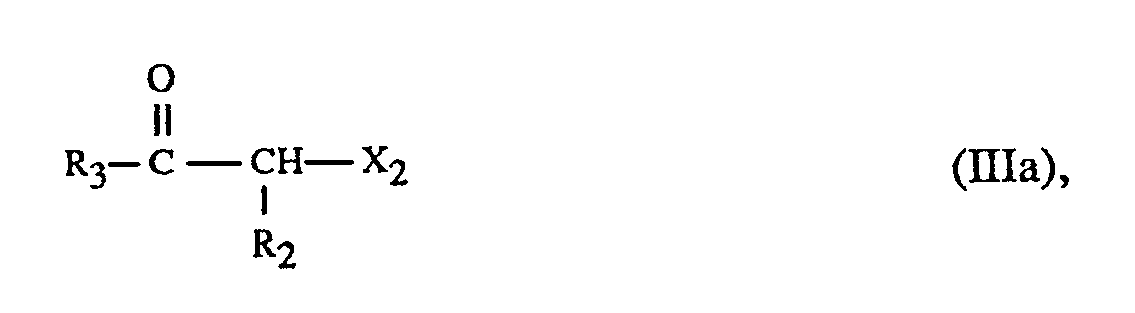

Applications Claiming Priority (2)
| Application Number | Priority Date | Filing Date | Title |
|---|---|---|---|
| CH3799/89 | 1989-10-19 | ||
| CH379989 | 1989-10-19 |
Publications (2)
| Publication Number | Publication Date |
|---|---|
| EP0424317A2 true EP0424317A2 (de) | 1991-04-24 |
| EP0424317A3 EP0424317A3 (en) | 1991-09-25 |
Family
ID=4263704
Family Applications (1)
| Application Number | Title | Priority Date | Filing Date |
|---|---|---|---|
| EP19900810777 Withdrawn EP0424317A3 (en) | 1989-10-19 | 1990-10-10 | Pyrimidines |
Country Status (14)
| Country | Link |
|---|---|
| EP (1) | EP0424317A3 (de) |
| JP (1) | JPH03133964A (de) |
| KR (1) | KR910007889A (de) |
| AU (1) | AU638496B2 (de) |
| CA (1) | CA2027839A1 (de) |
| FI (1) | FI93957C (de) |
| HU (1) | HUT55383A (de) |
| IE (1) | IE903749A1 (de) |
| IL (1) | IL96009A0 (de) |
| MX (1) | MX22877A (de) |
| NO (1) | NO176758C (de) |
| NZ (1) | NZ235726A (de) |
| PT (1) | PT95626A (de) |
| ZA (1) | ZA908344B (de) |
Cited By (29)
| Publication number | Priority date | Publication date | Assignee | Title |
|---|---|---|---|---|
| EP0481448A1 (de) * | 1990-10-16 | 1992-04-22 | E.R. SQUIBB & SONS, INC. | Dihydropyrimidin-Derivate |
| EP0475206A3 (en) * | 1990-09-10 | 1992-08-05 | Abbott Laboratories | Angiotensin ii receptor antagonists |
| EP0487745A4 (en) * | 1990-06-19 | 1993-01-20 | Meiji Seika Kabushiki Kaisha | Pyridine derivative with angiotensin ii antagonism |
| WO1993003018A1 (en) * | 1991-08-02 | 1993-02-18 | Istituto Luso Farmaco D'italia S.P.A. | Compounds having angiotensine ii antagonistic activity |
| EP0542059A1 (de) | 1991-11-12 | 1993-05-19 | Bayer Ag | Substituierte Biphenylpyridone als Angiotensin II Antagonisten |
| EP0522038A4 (en) * | 1990-03-30 | 1993-05-26 | Merck & Co. Inc. | Substituted pyrimidines, pyrimidinones and pyridopyrimidines |
| FR2684672A1 (fr) * | 1991-12-04 | 1993-06-11 | Ici Plc | Derives de pyrimidine, utiles pour le traitement d'etats tels que l'hypertension et l'insuffisance cardiaque, et procede pour leur preparation. |
| US5234936A (en) * | 1991-10-24 | 1993-08-10 | American Home Products Corporation | Pyrimidocycloalkanes as a ii antagonists |
| US5236925A (en) * | 1991-10-24 | 1993-08-17 | American Home Products Corporation | Fused pyrimidines as angiotensin II antagonists |
| WO1993015717A1 (en) * | 1992-02-17 | 1993-08-19 | Ciba-Geigy Ag | Compositions for the treatment of glaucoma |
| US5250548A (en) * | 1990-09-10 | 1993-10-05 | Abbott Laboratories | Angiotensin II receptor antagonists |
| US5256781A (en) * | 1991-10-24 | 1993-10-26 | American Home Products Corporation | Substituted quinazolines as angiotensin II antagonists |
| US5324729A (en) * | 1990-03-30 | 1994-06-28 | Merck & Co., Inc. | Substituted pyrimidines, pyrimidinones and pyridopyrimidines |
| EP0606065A1 (de) * | 1993-01-06 | 1994-07-13 | Hoechst Aktiengesellschaft | Verfahren zur Herstellung von Biphenylderivaten |
| US5472967A (en) * | 1991-02-20 | 1995-12-05 | Synthelabo | 4-pyrimidinone derivatives their preparation and their application in therapy |
| EP0500409B1 (de) * | 1991-02-20 | 1996-03-20 | Synthelabo | 4-Pyrimidinonderivate, ihre Herstellung und ihre Anwendung in der Therapie |
| WO2000027824A1 (en) * | 1998-11-12 | 2000-05-18 | Elan Pharmaceuticals | Substituted pyrimidine compositions and methods of use |
| EP0505893B1 (de) * | 1991-03-27 | 2000-06-21 | MERCK PATENT GmbH | Imidazopyridine |
| EP0516392B1 (de) * | 1991-05-31 | 2001-08-29 | AstraZeneca AB | Naphthyridinderivate als Angiotensin-II-Antagonist-Inhibitoren |
| EP1925303A2 (de) | 1999-08-27 | 2008-05-28 | Sanofi-Aventis Deutschland GmbH | Verwendung von Angiotensin II Typ 1 Rezeptor-Antagonisten zur Prophylaxe von Schlaganfall, Diabetes und kongestivem Herzversagen |
| WO2011069038A2 (en) | 2009-12-03 | 2011-06-09 | Synergy Pharmaceuticals, Inc. | Agonists of guanylate cyclase useful for the treatment of hypercholesterolemia, atherosclerosis, coronary heart disease, gallstone, obesity and other cardiovascular diseases |
| WO2013138352A1 (en) | 2012-03-15 | 2013-09-19 | Synergy Pharmaceuticals Inc. | Formulations of guanylate cyclase c agonists and methods of use |
| WO2014151206A1 (en) | 2013-03-15 | 2014-09-25 | Synergy Pharmaceuticals Inc. | Agonists of guanylate cyclase and their uses |
| WO2014151200A2 (en) | 2013-03-15 | 2014-09-25 | Synergy Pharmaceuticals Inc. | Compositions useful for the treatment of gastrointestinal disorders |
| EP2810951A2 (de) | 2008-06-04 | 2014-12-10 | Synergy Pharmaceuticals Inc. | Für die Behandlung von gastrointestinalen Erkrankungen, Entzündungen, Krebs und anderen Erkrankungen geeignete Agonisten von Guanylatcyclase |
| WO2014197720A2 (en) | 2013-06-05 | 2014-12-11 | Synergy Pharmaceuticals, Inc. | Ultra-pure agonists of guanylate cyclase c, method of making and using same |
| EP2998314A1 (de) | 2007-06-04 | 2016-03-23 | Synergy Pharmaceuticals Inc. | Für die behandlung von gastrointestinalen erkrankungen, entzündungen, krebs und anderen erkrankungen geeignete agonisten von guanylatcyclase |
| EP3241839A1 (de) | 2008-07-16 | 2017-11-08 | Synergy Pharmaceuticals Inc. | Zur behandlung von erkrankungen des magen-darm-trakts, entzündlichen erkrankungen, krebs und anderen erkrankungen geeignete agonisten von guanylatcyclase |
| WO2022057858A1 (zh) * | 2020-09-17 | 2022-03-24 | 浙江海正药业股份有限公司 | 酰胺膦氧类衍生物及其制备方法和用途 |
Families Citing this family (6)
| Publication number | Priority date | Publication date | Assignee | Title |
|---|---|---|---|---|
| US5225408A (en) * | 1991-12-20 | 1993-07-06 | E. R. Squibb & Sons, Inc. | Biphenyl oxadiazinone angiotensin II inhibitors |
| US5378704A (en) * | 1992-04-15 | 1995-01-03 | E. R. Squibb & Sons, Inc. | Non-peptidic angiotensin-II-receptor-antagonists |
| US5236916A (en) * | 1992-05-26 | 1993-08-17 | E. R. Squibb & Sons, Inc. | Oxadiazinone substituted indole and benzimidazole derivatives |
| WO2006038719A1 (ja) * | 2004-10-08 | 2006-04-13 | Kotobuki Pharmaceutical Co., Ltd. | ホスホン酸誘導体及び血中の高リン酸が関与する疾患の治療剤 |
| AU2006235698B2 (en) * | 2005-04-12 | 2012-03-29 | Vicore Pharma Ab | New tricyclic angiotensin II agonists |
| WO2011105099A1 (ja) * | 2010-02-25 | 2011-09-01 | 興和株式会社 | 新規な4-アルコキシピリミジン構造を有する化合物及びこれを含有する医薬 |
Family Cites Families (1)
| Publication number | Priority date | Publication date | Assignee | Title |
|---|---|---|---|---|
| CA1334092C (en) * | 1986-07-11 | 1995-01-24 | David John Carini | Angiotensin ii receptor blocking imidazoles |
-
1990
- 1990-10-10 EP EP19900810777 patent/EP0424317A3/de not_active Withdrawn
- 1990-10-15 IL IL96009A patent/IL96009A0/xx unknown
- 1990-10-16 AU AU64680/90A patent/AU638496B2/en not_active Ceased
- 1990-10-17 MX MX2287790A patent/MX22877A/es unknown
- 1990-10-17 CA CA002027839A patent/CA2027839A1/en not_active Abandoned
- 1990-10-17 NZ NZ235726A patent/NZ235726A/xx unknown
- 1990-10-17 FI FI905124A patent/FI93957C/fi not_active IP Right Cessation
- 1990-10-18 KR KR1019900016590A patent/KR910007889A/ko not_active Withdrawn
- 1990-10-18 ZA ZA908344A patent/ZA908344B/xx unknown
- 1990-10-18 HU HU906501A patent/HUT55383A/hu unknown
- 1990-10-18 PT PT95626A patent/PT95626A/pt not_active Application Discontinuation
- 1990-10-18 NO NO904511A patent/NO176758C/no unknown
- 1990-10-18 IE IE374990A patent/IE903749A1/en unknown
- 1990-10-19 JP JP2279461A patent/JPH03133964A/ja active Pending
Cited By (41)
| Publication number | Priority date | Publication date | Assignee | Title |
|---|---|---|---|---|
| EP0522038A4 (en) * | 1990-03-30 | 1993-05-26 | Merck & Co. Inc. | Substituted pyrimidines, pyrimidinones and pyridopyrimidines |
| US5324729A (en) * | 1990-03-30 | 1994-06-28 | Merck & Co., Inc. | Substituted pyrimidines, pyrimidinones and pyridopyrimidines |
| US5399566A (en) * | 1990-06-19 | 1995-03-21 | Meiji Seika Kabushiki Kaisha | Pyridine derivatives having angiotensin II antagonism |
| EP0487745A4 (en) * | 1990-06-19 | 1993-01-20 | Meiji Seika Kabushiki Kaisha | Pyridine derivative with angiotensin ii antagonism |
| US5250548A (en) * | 1990-09-10 | 1993-10-05 | Abbott Laboratories | Angiotensin II receptor antagonists |
| EP0475206A3 (en) * | 1990-09-10 | 1992-08-05 | Abbott Laboratories | Angiotensin ii receptor antagonists |
| EP0481448A1 (de) * | 1990-10-16 | 1992-04-22 | E.R. SQUIBB & SONS, INC. | Dihydropyrimidin-Derivate |
| CN1034171C (zh) * | 1991-02-20 | 1997-03-05 | 合成实验室公司 | 制备新的取代的4-嘧啶酮衍生物的方法 |
| EP0500409B1 (de) * | 1991-02-20 | 1996-03-20 | Synthelabo | 4-Pyrimidinonderivate, ihre Herstellung und ihre Anwendung in der Therapie |
| US5472967A (en) * | 1991-02-20 | 1995-12-05 | Synthelabo | 4-pyrimidinone derivatives their preparation and their application in therapy |
| EP0505893B1 (de) * | 1991-03-27 | 2000-06-21 | MERCK PATENT GmbH | Imidazopyridine |
| EP0516392B1 (de) * | 1991-05-31 | 2001-08-29 | AstraZeneca AB | Naphthyridinderivate als Angiotensin-II-Antagonist-Inhibitoren |
| WO1993003018A1 (en) * | 1991-08-02 | 1993-02-18 | Istituto Luso Farmaco D'italia S.P.A. | Compounds having angiotensine ii antagonistic activity |
| US5565464A (en) * | 1991-08-02 | 1996-10-15 | Istituto Luso Farmaco D'italia S.P.A. | Compounds having angiotensine II antagonistic activity |
| US5256781A (en) * | 1991-10-24 | 1993-10-26 | American Home Products Corporation | Substituted quinazolines as angiotensin II antagonists |
| US5236925A (en) * | 1991-10-24 | 1993-08-17 | American Home Products Corporation | Fused pyrimidines as angiotensin II antagonists |
| US5234936A (en) * | 1991-10-24 | 1993-08-10 | American Home Products Corporation | Pyrimidocycloalkanes as a ii antagonists |
| EP0542059A1 (de) | 1991-11-12 | 1993-05-19 | Bayer Ag | Substituierte Biphenylpyridone als Angiotensin II Antagonisten |
| BE1005473A3 (fr) * | 1991-12-04 | 1993-08-03 | Ici Plc | Derives heterocycliques. |
| FR2684672A1 (fr) * | 1991-12-04 | 1993-06-11 | Ici Plc | Derives de pyrimidine, utiles pour le traitement d'etats tels que l'hypertension et l'insuffisance cardiaque, et procede pour leur preparation. |
| WO1993015717A1 (en) * | 1992-02-17 | 1993-08-19 | Ciba-Geigy Ag | Compositions for the treatment of glaucoma |
| US5618975A (en) * | 1993-01-06 | 1997-04-08 | Hoechst Aktiengesellschaft | Process for the preparation of biphenyl derivatives |
| US5633400A (en) * | 1993-01-06 | 1997-05-27 | Hoechst Aktiengesellschaft | Process for the preparation of biphenyl derivatives |
| EP0606065A1 (de) * | 1993-01-06 | 1994-07-13 | Hoechst Aktiengesellschaft | Verfahren zur Herstellung von Biphenylderivaten |
| US6518424B1 (en) | 1998-11-12 | 2003-02-11 | Elan Pharmaceuticals, Inc. | Substituted pyrimidine compositions and methods of use |
| WO2000027824A1 (en) * | 1998-11-12 | 2000-05-18 | Elan Pharmaceuticals | Substituted pyrimidine compositions and methods of use |
| EP1925303A2 (de) | 1999-08-27 | 2008-05-28 | Sanofi-Aventis Deutschland GmbH | Verwendung von Angiotensin II Typ 1 Rezeptor-Antagonisten zur Prophylaxe von Schlaganfall, Diabetes und kongestivem Herzversagen |
| EP2277519A2 (de) | 1999-08-27 | 2011-01-26 | Sanofi-Aventis Deutschland GmbH | Verwendung von Angiotensin II Typ 1 Rezeptor-Antagonisten zur Prophylaxe von Schlaganfall, Diabetes und kongestivem Herzversagen |
| EP2998314A1 (de) | 2007-06-04 | 2016-03-23 | Synergy Pharmaceuticals Inc. | Für die behandlung von gastrointestinalen erkrankungen, entzündungen, krebs und anderen erkrankungen geeignete agonisten von guanylatcyclase |
| EP2810951A2 (de) | 2008-06-04 | 2014-12-10 | Synergy Pharmaceuticals Inc. | Für die Behandlung von gastrointestinalen Erkrankungen, Entzündungen, Krebs und anderen Erkrankungen geeignete Agonisten von Guanylatcyclase |
| EP3241839A1 (de) | 2008-07-16 | 2017-11-08 | Synergy Pharmaceuticals Inc. | Zur behandlung von erkrankungen des magen-darm-trakts, entzündlichen erkrankungen, krebs und anderen erkrankungen geeignete agonisten von guanylatcyclase |
| EP2923706A1 (de) | 2009-12-03 | 2015-09-30 | Synergy Pharmaceuticals Inc. | Guanylatcyclaseagonisten zur behandlung von hypercholesterinämie |
| WO2011069038A2 (en) | 2009-12-03 | 2011-06-09 | Synergy Pharmaceuticals, Inc. | Agonists of guanylate cyclase useful for the treatment of hypercholesterolemia, atherosclerosis, coronary heart disease, gallstone, obesity and other cardiovascular diseases |
| WO2013138352A1 (en) | 2012-03-15 | 2013-09-19 | Synergy Pharmaceuticals Inc. | Formulations of guanylate cyclase c agonists and methods of use |
| EP3708179A1 (de) | 2012-03-15 | 2020-09-16 | Bausch Health Ireland Limited | Formulierungen von guanylatcyclase-c-agonisten und verfahren zur verwendung |
| EP4309673A2 (de) | 2012-03-15 | 2024-01-24 | Bausch Health Ireland Limited | Formulierungen von guanylatcyclase-c-agonisten und verfahren zur verwendung |
| WO2014151200A2 (en) | 2013-03-15 | 2014-09-25 | Synergy Pharmaceuticals Inc. | Compositions useful for the treatment of gastrointestinal disorders |
| WO2014151206A1 (en) | 2013-03-15 | 2014-09-25 | Synergy Pharmaceuticals Inc. | Agonists of guanylate cyclase and their uses |
| WO2014197720A2 (en) | 2013-06-05 | 2014-12-11 | Synergy Pharmaceuticals, Inc. | Ultra-pure agonists of guanylate cyclase c, method of making and using same |
| EP4424697A2 (de) | 2013-06-05 | 2024-09-04 | Bausch Health Ireland Limited | Ultrareine agonisten der guanylatcyclase c, verfahren zur herstellung und verwendung davon |
| WO2022057858A1 (zh) * | 2020-09-17 | 2022-03-24 | 浙江海正药业股份有限公司 | 酰胺膦氧类衍生物及其制备方法和用途 |
Also Published As
| Publication number | Publication date |
|---|---|
| MX22877A (es) | 1993-12-01 |
| NO176758C (no) | 1995-05-24 |
| FI93957B (fi) | 1995-03-15 |
| FI905124A0 (fi) | 1990-10-17 |
| FI93957C (fi) | 1995-06-26 |
| AU638496B2 (en) | 1993-07-01 |
| NO904511L (no) | 1991-04-22 |
| NZ235726A (en) | 1993-09-27 |
| AU6468090A (en) | 1991-04-26 |
| CA2027839A1 (en) | 1991-04-20 |
| NO904511D0 (no) | 1990-10-18 |
| HU906501D0 (en) | 1991-04-29 |
| NO176758B (no) | 1995-02-13 |
| IE903749A1 (en) | 1991-04-24 |
| KR910007889A (ko) | 1991-05-30 |
| PT95626A (pt) | 1991-09-13 |
| ZA908344B (en) | 1991-06-26 |
| HUT55383A (en) | 1991-05-28 |
| JPH03133964A (ja) | 1991-06-07 |
| EP0424317A3 (en) | 1991-09-25 |
| IL96009A0 (en) | 1991-07-18 |
Similar Documents
| Publication | Publication Date | Title |
|---|---|---|
| EP0407342A2 (de) | Neue Pyrimidin Derivate | |
| EP0435827A2 (de) | Diazaverbindungen | |
| EP0415886A2 (de) | Aza-Verbindungen | |
| HUT55383A (en) | Process for producing pyrimidine derivatives and pharmaceutical compositions containing them | |
| EP0475898A1 (de) | Azacyclische Verbindungen | |
| EP0443983B1 (de) | Acylverbindungen | |
| DE69123784T2 (de) | Benzimidazolderivate, Verfahren zu deren Herstellung und Anwendung | |
| DE60317198T2 (de) | Proteinkinaseinhibitoren | |
| DE3781845T2 (de) | Benzimidazol-derivate. | |
| EP1280776B1 (de) | Substituierte benzoesäureamide und deren verwendung zur hemmung von angiogenese | |
| EP0528762B1 (de) | N-Acyl-N-Heterocyclyl- oder Naphthylalkyl-Aminosäuren als Angiotensin II Antagonisten | |
| DE69721134T2 (de) | Verfahren zur Herstellung von 4-(2-(2-Pyridyl)Ethoxy)Benzaldehyd-Derivate | |
| DE69219008T2 (de) | Pyrimidinderivate, ihre Verfahren zur Herstellung, die erlangten Zwischenprodukte, ihre Anwendung als Heilmittel und diese enthaltende pharmazeutische Zusammensetzungen | |
| EP0124476B1 (de) | Carboxamide, Verfahren zur Herstellung und pharmazeutische Präparate, die diese enthalten | |
| EP0490820A2 (de) | Biphenylyl-Verbindungen | |
| DE4425143A1 (de) | Substituierte Pyrimidinverbindungen und deren Verwendung | |
| DE68917485T2 (de) | Pyridazinon-Derivate und diese enthaltende pharmazeutische Zubereitungen. | |
| DE4425144A1 (de) | Triazolverbindungen und deren Verwendung | |
| DE3241102A1 (de) | Imidazolylalkylthienyl-tetrahydropyridazine und verfahren zu ihrer herstellung | |
| EP0350448A1 (de) | Biarylverbindungen | |
| EP0122580A1 (de) | Pyrimidinderivate, deren Herstellung und pharmazeutische Präparate | |
| EP0408509A2 (de) | Substituierte Benzonitrile | |
| DE69209113T2 (de) | 4-Pyrimidinonderivate, ihre Herstellung und ihre Anwendung in der Therapie | |
| DD279674A5 (de) | Verfahren zur herstellung von hydrierten 1-benzooxacycloalkyl-pyridincarbonsaeureverbindungen | |
| DE4239440A1 (de) |
Legal Events
| Date | Code | Title | Description |
|---|---|---|---|
| PUAI | Public reference made under article 153(3) epc to a published international application that has entered the european phase |
Free format text: ORIGINAL CODE: 0009012 |
|
| 17P | Request for examination filed |
Effective date: 19901012 |
|
| AK | Designated contracting states |
Kind code of ref document: A2 Designated state(s): AT BE CH DE DK ES FR GB GR IT LI LU NL SE |
|
| PUAL | Search report despatched |
Free format text: ORIGINAL CODE: 0009013 |
|
| AK | Designated contracting states |
Kind code of ref document: A3 Designated state(s): AT BE CH DE DK ES FR GB GR IT LI LU NL SE |
|
| 17Q | First examination report despatched |
Effective date: 19940301 |
|
| STAA | Information on the status of an ep patent application or granted ep patent |
Free format text: STATUS: THE APPLICATION IS DEEMED TO BE WITHDRAWN |
|
| 18D | Application deemed to be withdrawn |
Effective date: 19951005 |