EP0424546B1 - Procede de production de feuilles d'acier au silicium directionnel presentant d'excellentes proprietes magnetiques - Google Patents
Procede de production de feuilles d'acier au silicium directionnel presentant d'excellentes proprietes magnetiques Download PDFInfo
- Publication number
- EP0424546B1 EP0424546B1 EP90907433A EP90907433A EP0424546B1 EP 0424546 B1 EP0424546 B1 EP 0424546B1 EP 90907433 A EP90907433 A EP 90907433A EP 90907433 A EP90907433 A EP 90907433A EP 0424546 B1 EP0424546 B1 EP 0424546B1
- Authority
- EP
- European Patent Office
- Prior art keywords
- rolling
- magnetic properties
- silicon steel
- grain oriented
- oriented silicon
- Prior art date
- Legal status (The legal status is an assumption and is not a legal conclusion. Google has not performed a legal analysis and makes no representation as to the accuracy of the status listed.)
- Expired - Lifetime
Links
Images
Classifications
-
- C—CHEMISTRY; METALLURGY
- C21—METALLURGY OF IRON
- C21D—MODIFYING THE PHYSICAL STRUCTURE OF FERROUS METALS; GENERAL DEVICES FOR HEAT TREATMENT OF FERROUS OR NON-FERROUS METALS OR ALLOYS; MAKING METAL MALLEABLE, e.g. BY DECARBURISATION OR TEMPERING
- C21D8/00—Modifying the physical properties of ferrous metals or ferrous alloys by deformation combined with, or followed by, heat treatment
- C21D8/12—Modifying the physical properties of ferrous metals or ferrous alloys by deformation combined with, or followed by, heat treatment during manufacturing of articles with special electromagnetic properties
- C21D8/1216—Modifying the physical properties of ferrous metals or ferrous alloys by deformation combined with, or followed by, heat treatment during manufacturing of articles with special electromagnetic properties characterised by the working steps
- C21D8/1233—Cold rolling
-
- C—CHEMISTRY; METALLURGY
- C21—METALLURGY OF IRON
- C21D—MODIFYING THE PHYSICAL STRUCTURE OF FERROUS METALS; GENERAL DEVICES FOR HEAT TREATMENT OF FERROUS OR NON-FERROUS METALS OR ALLOYS; MAKING METAL MALLEABLE, e.g. BY DECARBURISATION OR TEMPERING
- C21D8/00—Modifying the physical properties of ferrous metals or ferrous alloys by deformation combined with, or followed by, heat treatment
- C21D8/12—Modifying the physical properties of ferrous metals or ferrous alloys by deformation combined with, or followed by, heat treatment during manufacturing of articles with special electromagnetic properties
-
- C—CHEMISTRY; METALLURGY
- C21—METALLURGY OF IRON
- C21D—MODIFYING THE PHYSICAL STRUCTURE OF FERROUS METALS; GENERAL DEVICES FOR HEAT TREATMENT OF FERROUS OR NON-FERROUS METALS OR ALLOYS; MAKING METAL MALLEABLE, e.g. BY DECARBURISATION OR TEMPERING
- C21D8/00—Modifying the physical properties of ferrous metals or ferrous alloys by deformation combined with, or followed by, heat treatment
- C21D8/12—Modifying the physical properties of ferrous metals or ferrous alloys by deformation combined with, or followed by, heat treatment during manufacturing of articles with special electromagnetic properties
- C21D8/1216—Modifying the physical properties of ferrous metals or ferrous alloys by deformation combined with, or followed by, heat treatment during manufacturing of articles with special electromagnetic properties characterised by the working steps
- C21D8/1227—Warm rolling
-
- C—CHEMISTRY; METALLURGY
- C21—METALLURGY OF IRON
- C21D—MODIFYING THE PHYSICAL STRUCTURE OF FERROUS METALS; GENERAL DEVICES FOR HEAT TREATMENT OF FERROUS OR NON-FERROUS METALS OR ALLOYS; MAKING METAL MALLEABLE, e.g. BY DECARBURISATION OR TEMPERING
- C21D8/00—Modifying the physical properties of ferrous metals or ferrous alloys by deformation combined with, or followed by, heat treatment
- C21D8/12—Modifying the physical properties of ferrous metals or ferrous alloys by deformation combined with, or followed by, heat treatment during manufacturing of articles with special electromagnetic properties
- C21D8/1244—Modifying the physical properties of ferrous metals or ferrous alloys by deformation combined with, or followed by, heat treatment during manufacturing of articles with special electromagnetic properties characterised by the heat treatment
- C21D8/125—Modifying the physical properties of ferrous metals or ferrous alloys by deformation combined with, or followed by, heat treatment during manufacturing of articles with special electromagnetic properties characterised by the heat treatment with application of tension
Definitions
- This invention relates to a process for producing grain oriented silicon steel sheets having excellent magnetic properties.
- the invention is aimed at enhancing productivity and further improving the magnetic properties by modifying a cold rolling step.
- the grain oriented silicon steel sheets are required to have high magnetic flux density and a low iron loss as magnetic properties.
- 0.23 mm thick steel sheets having a magnetic flux density B8 (value at 800 A/m of magnetizing forces) being 1.92 T are obtained, and products having excellent iron loss property W 17/50 (value at the maximum magnetization of 1.7 T under 50 Hz) being 0.90 W/kg can be produced in an industrial scale.
- the materials having such excellent magnetic properties comprise crystalline structure in which ⁇ 001> orientation as an axis of easy magnetization of iron is highly arrayed in a rolling direction of the steel sheet.
- a texture of such a crystalline structure is formed by a phenomenon called secondary recrystallization in which crystalline grains having (110)[001] called Goss orientation preferentially vigorously grow during final finish annealing in the production of the grain oriented silicon steel sheets.
- a finely precipitatable material of MnS, MnSe, AlN or the like is used as an inhibitor. Further, it is common practice that effects of the inhibitor are strengthened by adding a grain boundary segregatable type element such as Sb, Sn or the like together in combination as disclosed in Japanese patent publications Nos. 51-13,469 or 54-32,412.
- This invention is to advantageously solve the above-mentioned problems, and to provide a novel process for producing grain oriented silicon steel sheets, which can stably improve magnetic properties even when productivity is enhanced by using the tandem mill.
- the present inventors have made various investigations. As a result, they found that even when the steel sheet cold rolled by the tandem mill was aged once, the grain oriented steel sheets having excellent magnetic properties can stably be produced.
- the present invention has been accomplished based on the above knowledge.
- the present invention relates to the process for producing grain oriented steel sheets, comprising a series of steps of hot rolling a raw material for the grain oriented steel, cold rolling, once or twice, the resultant cold rolled sheet including intermediate annealing, applying an annealing separator to the cold rolled sheet after decarburization annealing, and subjecting it to a final finish annealing, characterized in that in a final cold rolling, the steel sheet is first cold rolled at a draft of 30-70% by tandem rolling, and is continuously thermally treated in a temperature range of 200 to 400°C under application of tension of not less than 0.2 kg/mm for 10 seconds to 10 minutes, and subsequently cold rolled to a final thickness.
- the temperature in the continuous thermal treatment after the tandem rolling is preferably continuously varied in the coil-longitudinal direction depending upon the difference in quality.
- hot air blast is preferably used as a heating means.
- the draft in the tandem rolling is preferably 35 to 70%.
- the draft in the tandem rolling is preferably 30 to 50%.
- the main inhibitor referred to above means an inhibitor for a second dispersion phase necessary for provoking a secondary recrystallizing phenomenon after the cold rolling step.
- this does not necessarily reject combined use of other secondary dispersion phase or a segregation type auxiliary inhibitor such as Sb, Te, Bi, Si or the like.
- a raw material for a grain oriented steel sheet consisting of 0.065 wt% (hereinafter referred to briefly as "%") of C, 3.25% of SI, 0.068% of Mn, 0.004% of P, 0.025% of S, 0.025% of sol Al, 0.008% of N and the balance being substantially Fe was heated at high temperatures, and was converted to a hot band of 2.2 mm in thickness by ordinary hot rolling. Then, after the pickling, the hot band was cold rolled to an intermediate thickness of 1.5 mm, and subjected to intermediate annealing at 1,100°C for one minute and quenching to precipitate AlN.
- a steel sheet was effected by three time pass rolling with a Sendzimir mill or by rolling with a three stand tandem mill. In each case, the steel sheet was rolled to 0.60 mm, followed by aging and subsequent rolling with the mill.
- a steel sheet was similarly rolled with the Sendzimir mill or the tandem mill, while it was aged on the way at the thicknesses of 1.0 mm and 0.60 mm. The steel sheet was subsequently rolled to a final thickness of 0.23 mm.
- a steel sheet was similarly rolled with the Sendzimir mill or the tandem mill, while it was aged on the way at the thickness of 1.0 mm, 0.60 mm and 0.40 mm. The steel sheet was subsequently rolled to a final thickness of 0.23 mm.
- the thus obtained steel sheet was subjected to decarburization annealing at 840°C for 2 minutes in wet hydrogen, and later the steel sheet was coated with an annealing separator consisting mainly of MgO, and was then finally annealed.
- the steel strip was subjected to decarburization annealing at 840°C for 2 minutes in wet hydrogen, and annealing separator consisting mainly of MgO was applied thereto, followed by final annealing.
- annealing separator consisting mainly of MgO was applied thereto, followed by final annealing.
- the magnetic properties of the products are shown in Table 2.
- the steel strip After a part of the steel strip having undergone the above-mentioned intermediate annealing-quenching treatment was rolled at a draft ranging from 5 to 80% by the tandem mill, the steel strip was aged at 250°C for 3 minutes under application of tension of 0.5 kg/mm, and subsequently finished to a final thickness of 0.23 mm by the Sendzimir mill.
- the steel strip After a part of the steel strip having undergone the above-mentioned intermediate annealing-quenching treatment was rolled to 0.60 mm (draft: 60%) by the tandem mill, the steel strip was thermally treated in a temperature range of 100°C to 500°C for 60 seconds under application of tension of 1.5 kg/mm, and subsequently finished to a final thickness of 0.23 mm by the tandem mill.
- the steel strip was thermally treated at 350°C for a time of 3 seconds to 1 hour under application of tension of 0.3 kg/mm, and finished to a final thickness of 0.23 mm by the tandem mill.
- the sheet was coated with the annealing separator consisting mainly of MgO, and finally annealed.
- the optimum aging conditions in the present invention are the temperature range of 200 to 400°C narrower than the conventional temperature range and a relatively short time period of 10 seconds to 10 minutes, and that fully good magnetic properties can be obtained even by aging only once. Further, it is seen that the steel sheet needs to be rolled at the draft of 35 to 70% in the tandem rolling before the aging treatment.
- the above-mentioned effects are also recognized in the grain oriented steel sheets using MnS and/or MnSe as the main inhibitor.
- the aging conditions are the same as those in the case of using AlN as the main inhibitor. It is confirmed that the optimum draft range in the tandem rolling before the aging treatment is preferably set at a relatively low level of 30 to 50%.
- the grain oriented steel sheets having excellent magnetic properties can be obtained.
- variations in the magnetic properties occurred in a rare case in the longitudinal direction of the steel sheet in the above production process.
- a raw material for the grain oriented steel sheet having a composition of 0.062% of C, 3.15% of Si, 0.080% of Mn, 0.005% of P, 0.026% of S, 0.024% of sol Al, 0.0085% of N ,0.08% of Cu, and the balance being substantially Fe was continuously cast, reheated at high temperatures, and hot rolled to a thickness of 2.2 mm. Then, the hot band was annealed at 1,100°C for 1 minutes, and subsequently quenched to room temperature to precipitate AlN. On the way, the hot band was subjected to interpass thermal treatment, cold rolling, decarburization, and finish annealing in a laboratory. Then, influences of these treatments upon the magnetic properties were examined.
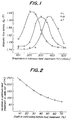
- Fig. 1 shows the relationship between the interpass heat treating temperature and the magnetic flux density B8 when the steel sheets were subjected to cold rolling at a draft of 35%, subsequent one time interpass heat treatment (applied tension: 0.5 kg/mm) at various temperatures, and cold rolling to a thickness of 0.30 mm.
- marks L, M and T correspond to samples taken out from the steel sheets at tips, centers and rear ends, respectively.
- the size of the crystalline grains and the content of C before the cold rolling vary in the longitudinal direction of the coil.
- the reasons are considered as follows: Since decarburization is effected by self annealing following coiling of the hot band, the decarburized amount differs between the outer portion and the inner portion of the coil at that time because of different cooled states thereof, and since the time required from the rough rolling to the finish rolling in the hot rolling step differs between the tip and the rear end of the coil, the crystalline grain size in the succeeding step is influenced by the difference in recrystallizing behavior during the hot rolling. Thus, it is considered that the optimum heat treating temperature varies in the longitudinal direction of the coil owing to combination of these factors.
- the present inventors have investigated concrete means for effecting the thermal treatment.
- Si is preferably in a range of 2.5 to 4.0%.
- the kind of a component to be incorporated as the inhibitor slightly differs depending upon whether it contains Al or not as the main component.
- N When no Al is contained, to decrease the amount of the component to as small as possible is magnetically preferred because Al is an unnecessary component, and not more than 0.005% of Al is desired.
- N As to N, to decrease it is preferred. However, since it takes a great labor to decrease N and N is an element slightly effective for the aging, N is preferably in a range of 0.001 to 0.005%.
- MnS and/or MnSe is mainly cited as the inhibitor.
- the favorable amount of S or Se for finely precipitating MnS or MnSe is around 0.01 to 0.04% when employed singly or in combination.
- Mn is necessary as an inhibitor component as mentioned above, too much Mn makes solid solution treatment impossible.
- Mn is preferably in a range of 0.05 to 0.15%.
- N when Al is contained, N needs to be added in an amount not less than a given level, because Al and N play an important role as the inhibitor. However, if N is too much, it becomes difficult to effect the fine precipitation. Thus, it is preferable that 0.01 ⁇ Al ⁇ 0.15% and 0.0030 ⁇ N ⁇ 0.020%.
- S, Se may be incorporated as an inhibitor-forming element.
- an inhibitor-reinforcing element such as Sb, Cu, Sn, B or Ge may further appropriately be added to improve the magnetic properties.
- the addition amount thereof may be in a known range.
- Mo in order to prevent surface defects caused by hot brittleness, it is preferable to add Mo in a range of 0.005 ⁇ Mo ⁇ 0.020%.
- a known production process may be employed as the process for producing the raw steel material.
- An ingot or slab produced is cleaned and worked in a given shape, if necessary, and cut in a uniform size. Then, it is heated and hot rolled.
- the hot rolled steel strip is cold rolled once, or cold rolled twice bridging an intermediate annealing, thereby attaining a final thickness.
- the draft in the tandem rolling before the aging treatment is 30 to 50% in the case of no Al being contained and 35 to 70% in the case of Al being contained. It is considered that the reason why the favorable range differs between these cases is that the solid solved amount of C differs between them. If the draft in the tandem rolling before the aging treatment falls outside the above range, no sufficient aging effect can be obtained.
- the aging treatment in the temperature range of 200 to 400°C for a short time period of 10 seconds to 10 minutes is advantageous because the continuous heat treatment is better from the standpoint of uniformity of the steel strip in the longitudinal direction after the aging and also from the standpoint of application of tension. When the aging time and temperature fall outside the above respective ranges, the aging effect becomes smaller and good effects cannot be obtained.
- the tension imparted is not less than 0.2 kg/mm (preferably 10 kg/mm).
- the tension should be substantially imparted in the state that the steel strip is at high temperatures.
- the tension is imparted by dancer rolls arranged in an inlet port or an outlet port of the furnace.
- any known technique such as a technique of utilizing the self-weight of the steel strip to impart tension as in a floating furnace may be appropriately adopted.
- the steel strip is continuously rolled to attain the final thickness.
- This rolling may be effected by tandem rolling or the conventional reversing rolling.
- the draft in the final rolling step is preferably 55% to 75% in the case of no Al being contained and preferably 80 to 95% in the case of Al being contained.
- it is desirable that cooling in the annealing before the final rolling is effected by the conventional quenching.
- the present invention is characterized in that aging is effected for a short time on the midway of the final rolling, and that the rolling before the aging is effected by the tandem mill with a plurality of the stands.
- the present invention is greatly different from the conventional techniques in that such an aging treatment is sufficiently effected only once.
- the rolled steel sheet is decarburization annealed by a conventional technique, and after the steel sheet is coated with the annealing separator consisting mainly of MgO, it is coiled and subjected to the final finish annealing. Then, if necessary, the finished steel sheet is coated with an insulating coating. Needless to say, the steel sheet may be subjected to the magnetic domain-dividing treatment by laser, plasma, electron beam or other technique.
- the hot band is ordinarily coiled in a range of 500 to 800°C, and decarburization occurs due to self-annealing at that time. If the cooled state of the coil differs between the inner and outer sides thereof, the content of C varies in the longitudinal direction of the hot band. Although this phenomenon depends upon the weight of the coil and the coiling temperature, the content of C becomes non-uniform for 1 to 2 tons at each of preceding and rear end portions of the coil.
- the heat treating temperature is desirably continuously varied to optimum temperatures for at least the 2-ton area in the preceding end portion (L), the central portion (M), and the central portion and the 2-ton area (T) in the rear end portion, respectively.
- the optimum temperatures of the above portions in the longitudinal direction are influenced by the components of the raw material, the behavior of crystals during the hot rolling, and the decarburized amount of the hot band after coiling, but generally falls in the following ranges. 250°C ⁇ T L ⁇ 400°C (T L -50)°C ⁇ T M ⁇ (T L -50)°C (T L -50)°C ⁇ T T ⁇ (T L -20)°C
- Fig. 1 is a graph showing the influence of the interpass heat treatment temperature upon the magnetic property.
- Fig. 2 is a graph showing the relationship between the draft in the intermediate cold rolling before the interpass heat treatment and the variations in the optimum heat treating temperatures inside the coil.
- a raw material for grain oriented steel sheet consisting essentially of 0.060% of C, 3.25% of Si, 0.075% of Mn, 0.009% of P, 0.009% of S, 0.025% of sol Al, 0.020% of Se, 0.025% of Sb, 0.06% of Cu, 0.013% of Mo, 0.008% of N and the balance being substantially Fe was melted, which was converted to a slab by continuous casting. After heating the slab at 1450°C for 10 minutes, it was converted to a hot rolled coil having a thickness of 2.7 mm by ordinary hot rolling. Further, after the hot rolled coil was annealed at 1,000°C for 1 minute, and pickled, it was rolled to an intermediate thickness of 1.50 mm.
- the intermediate sheet was rolled to 0.6 mm by the tandem mill with three stands. Thereafter, the cold rolled sheet was aged at 350°C for 2 minutes in the continuous furnace under application of tension of 0.5 kg/m, and then the aged sheet was subjected to the reversing rolling by means of Sendzimir mill to attain a final thickness of 0.23 mm.
- a slab having a compositions shown in Table 6 was converted to a hot band having a thickness of 2.2 mm in the same manner as in Example 1. After pickling, the hot band was cold rolled to the thickness of 1.6 mm. Then, after one minute intermediate annealing for 1,050°C for one minute), the annealed sheet was quenched. Next, the steel sheet was rolled to an intermediate thickness of 0.80 mm by the tandem mill with four stands. Thereafter, the rolled sheet was divided binarily.
- One of the divided cold rolled sheets was aged in the continuous furnace at 250°C for 5 minutes under application of tension of 1.5 kg/mm, and rolled to a final thickness of 0.20 mm with use of the above tandem mill (Acceptable Example).
- both of the steel sheets were subjected to decarburization annealing at 840°C for 2 minutes in wet hydrogen. Then, the cold rolled sheet was coated with MgO containing 7% of TiO2, followed by final finish annealing at 1,200°C for 10 hours.
- a slab having a composition given in Table 7 was converted to a 2.2 mm thick hot band in the same manner as in Example 1. After pickling, the hot band was cold rolled to a thickness of 0.65 mm. Then, after the intermediate annealing at 1000°C for one minute, the cold rolled sheet was rolled to an intermediate thickness of 0.35 mm by using the tandem mill with 5 stands. The sheet was divided into two parts.
- One of the divided cold rolled sheets was aged at 300°C for 2 minutes in the continuous furnace under application of tension of 0.3 kg/mm, and subsequently finished to a final thickness of 0.23 mm by the Sendzimir mill as Acceptable Example.
- the remainder was aged at 300°C for 2 minutes in the continuous furnace under application of tension of 0.05 kg/mm, and finished to a final thickness of 0.23 mm by the same Sendzimir mill as Comparative Example.
- a raw material for grain oriented steel sheet consisting essentially of 0.040% of C, 3.42% of Si, 0.068% of Mn, 0.002% of P, 0.02% of S, 0.022% of Se, 0.026% of Sb, 0.011% of Mo and the balance being substantially Fe was melted, which was continuously cast to obtain a slab. After heating the slab at a high temperature of 1,450°C for a short time of 15 minutes, the slab was ordinarily hot rolled to obtain a hot rolled coil having a thickness of 2.0 mm. The coiling temperature was 650°C, and the weight of the coil was 20 tons. When the slab was coiled, slight variations in the quality of the coil occurred in the longitudinal direction.
- the cold rolled sheet was intermediately annealed at 950°C for 1 minute, gradually cooled to 800°C and then quenched to 250°C. Then, the cold rolled sheet was tandem rolled at a draft of 35%, and subjected to interpass heat treatment in a hot blast type aging furnace for 3 minutes under conditions shown in Table 8. The tension applied at that time was 0.5 kg/mm,
- the aged sheet was finished to a final thickness of 0.23 mm, and subjected to decarburization and primary recrystallization annealing at 820°C for 2 minutes. Then, the steel sheet was coated with the annealing separator consisting mainly of MgO, and finally finish annealed at 1,200°C.
- a raw material for grain oriented steel sheet consisting essentially of 0.070% of C, 3.28% of Si, 0.074% of Mn, 0.002% of P, 0.002% of S, 0.021% of Se, 0.026% of Sb, 0.026% of sol Al, 0.07% of Cu, 0.0087% of N, 0.012% of Mo and the balance being substantially Fe was melted, which was continuously cast to obtain a slab. After heating the slab at a high temperature of 1,420°C for a short time of 20 minutes, the slab was ordinarily hot rolled to obtain a hot rolled coil having a thickness of 2.2 mm. The coiling temperature was 550°C, and the weight of the coil was 20 tons. When the slab was coiled, slight variations in the quality of the coil occurred in the longitudinal direction.
- the annealed sheet was gradually cooled to 950°C and then quenched to 200°C or less. Then, the cold rolled sheet was tandem rolled at a draft of 35%, and subjected to interpass heat treatment in the hot blast type aging furnace for 2 minutes under conditions shown in Table 9. The tension applied at that time was 0.8 kg/mm.
- the aged sheet was finished to a final thickness of 0.23 mm, and subjected to decarburization and primary recrystallization annealing at 840°C for 3 minutes. Then, the steel sheet was coated with the annealing separator consisting mainly of MgO, and finally finish annealed at 1,200°C.
- a raw material for grain oriented steel sheet consisting essentially of 0.041% of C, 3.35% of Si, 0.070% of Mn, 0.002% of P, 0.002% of S, 0.021% of Se, 0.025% of Sb, 0.012% of Mo and the balance being substantially Fe was melted, which was continuously cast to obtain a slab. After heating the slab at a high temperature of 1,450°C for a short time of 15 minutes, the slab was ordinarily hot rolled to obtain a hot rolled coil having a thickness of 2.4 mm. The coiling temperature was 650°C, and the unit weight of the coil was 10 tons. When the slab was coiled, great variations in the quality of the coil occurred in the longitudinal direction.
- the hot band was annealed at 1,000°C for 1 minute, cold rolled at a draft of 70% once, and subsequently intermediately annealed at 950°C for 1 minute
- the annealed sheet was gradually cooled to 800°C and then quenched to 250°C.
- the quenched sheet was tandem rolled at a draft of 35%, and subjected to interpass heat treatment in the hot blast type aging furnace for 5 minutes under conditions shown in Table 10.
- the tension applied at that time was 0.5 kg/mm.
- the aged sheet was finished to a final thickness of 0.23 mm, and subjected to decarburization and primary recrystallization annealing at 820°C for 2 minutes. Then, the steel sheet was coated with the annealing separator consisting mainly of MgO, and finally finish annealed at 1,200°C.
- a raw material for grain oriented steel sheet consisting essentially of 0.060% of C, 3.21% of Si, 0.072% of Mn, 0.004% of P, 0.002% of S, 0.025% of sol Al, 0.020% of Se, 0.027% of Sb, 0.07% of Cu, 0.013% of Mo, 0.0085% of N, and the balance being substantially Fe was melted, which was continuously cast to obtain a slab.
- the slab After heating the slab at a high temperature of 1,450°C for a short time of 10 minutes, the slab was ordinarily hot rolled to obtain a hot rolled coil having a thickness of 2.2 mm.
- the coiling temperature was 500°C, and the weight of the coil was 20 tons.
- the annealed band was gradually cooled to 900°C and then quenched to 200°C. Then, the quenched band was tandem rolled at a draft of 45%, and subjected to interpass heat treatment in the hot blast type aging furnace for 5 minutes under conditions shown in Table 11. The tension applied at that time was 0.3 kg/mm.
- the aged sheet was finished to a final thickness of 0.30 mm, and subjected to decarburization and primary recrystallization annealing at 840°C for 3 minutes. Then, the steel sheet was coated with the annealing separator consisting mainly of MgO, and finally finish annealed at 1,200°C for 10 hours.
- the annealing separator consisting mainly of MgO
- a raw material for grain uriented steel sheet containing 0.064% of C, 3.25% of Si, 0.070% of Mn, 0.003% of P, 0.023% of S, 0.026% of sol Al, 0.0088% of N, 0.07% of Cu, 0.05% of Sn, 0.012% of Mo, and the balance being substantially Fe was converted to a hot band in the same manner as in Example 6 (Coiling temperature: 550°C, unit weight of coil: 20 tons). When the slab was coiled, great variations in the quality of the coil occurred in the longitudinal direction.
- the annealed sheet was gradually cooled to 900°C and then quenched to 200°C. Then, the quenched band was tandem rolled at a draft of 40%, and subjected to interpass heat treatment for 3 minutes under conditions shown in Table 12 (In this case, "tip”, “rear end” and “center” are 2 tons in the proceeding end portion, 2 tons in the rear end portion and the central portion, respectively). The tension applied at that time was 0.5 kg/mm.
- the aged sheet was finished to a final thickness of 0.23 mm, and subjected to decarburization and primary recrystallization annealing at 840°C for 2 minutes. Then, the steel sheet was coated with the annealing separator consisting mainly of MgO, and finally finish annealed at 1,200°C for 10 hours.
- Table 12 Slab No. Location of hot band Thermally treating temperature (°C) Magnetic flux density B8 (T) Iron loss W 17/50 (W/kg) Remarks 1 tip 350 1.938 0.88 Acceptable Example center 275 1.936 0.85 rear end 325 1.936 0.85 2 tip 300 1.845 1.20 Reference Example center 300 1.889 1.00 rear end 300 1.890 1.05
- the magnetic properties can be stably improved with increased productivity by effectively combining the tandem rolling with the aging treatment in the final cold rolling step.
- the tandem rolling which is a highly efficient production process, can be applied to the production of grain oriented silicon steel sheets containing Al, the present invention is extremely useful for the production of grain oriented silicon steel sheets having high magnetic flux and density.
Landscapes
- Engineering & Computer Science (AREA)
- Chemical & Material Sciences (AREA)
- Physics & Mathematics (AREA)
- Electromagnetism (AREA)
- Manufacturing & Machinery (AREA)
- Thermal Sciences (AREA)
- Crystallography & Structural Chemistry (AREA)
- Mechanical Engineering (AREA)
- Materials Engineering (AREA)
- Metallurgy (AREA)
- Organic Chemistry (AREA)
- Manufacturing Of Steel Electrode Plates (AREA)
Abstract
Claims (5)
- Procédé pour produire des tôles d'acier au silicium à grains orientés ayant d'excellentes propriétés magnétiques, comprenant les étapes suivantes- laminer à chaud une matière première de l'acier au silicium à grains orientés,- laminer à froid, une ou deux fois, la bande chaude de façon à effectuer un recuit intermédiaire entre deux laminages à froid,- effectuer un recuit de décarburation de la tôle laminée à froid,- appliquer un séparateur de recuit à la tôle, et- effectuer finalement un recuit de finition, dans lequel un laminage à froid est d'abord effectuée selon une réduction de passe de 30 à 70 % par un laminage tandem dans l'étape de laminage à froid final, et dans lequel la tôle laminée à froid subit un traitement thermique continu sur un intervalle de température de 200 à 400°C pendant 10 secondes à 10 minutes, sous application d'une force de pression non inférieure à 0,2 kg/mm, puis subit un laminage à froid pour atteindre une épaisseur finale.
- Procédé pour produire les tôles d'acier au silicium à grains orientés ayant d'excellentes propriétés magnétiques selon la revendication 1, dans lequel, quand on traite la bobine laminée à chaud présentant des variations de qualité dans la direction longitudinale, on fait varier d'une manière continu la température du traitement thermique continue après le laminage tandem en fonction de la différence de la qualité de la bobine dans la direction longitudinale.
- Procédé pour produire les tôles d'acier au silicium à grains orientés ayant d'excellentes propriétés magnétiques selon la revendication 1 ou 2, dans lequel le traitement thermique continu après le laminage tandem est réalisé par utilisation d'un souffle chaud.
- Procédé pour produire les tôles d'acier au silicium à grains orientés ayant d'excellentes propriétés magnétiques selon la revendication 1 ou 2, dans lequel la matière première de la tôle d'acier au silicium à grains orientés contient de l'AlN comme inhibiteur principal, et la réduction de passe lors du laminage tandem est de 35 à 70 %.
- Procédé pour produire les tôles d'acier au silicium à grains orientés ayant d'excellentes propriétés magnétiques selon la revendication 1 ou 2, dans lequel la matière première de l'acier au silicium à grains orientés contient du MnS et/ou du MnSe comme inhibiteur principal, et la réduction de passe lors du laminage tandem est de 30 à 50 %.
Applications Claiming Priority (5)
| Application Number | Priority Date | Filing Date | Title |
|---|---|---|---|
| JP120956/89 | 1989-05-15 | ||
| JP12095689 | 1989-05-15 | ||
| JP15053489 | 1989-06-15 | ||
| JP150534/89 | 1989-06-15 | ||
| PCT/JP1990/000609 WO1990014445A1 (fr) | 1989-05-15 | 1990-05-15 | Procede de production de feuilles d'acier au silicium directionnel presentant d'excellentes proprietes magnetiques |
Publications (3)
| Publication Number | Publication Date |
|---|---|
| EP0424546A1 EP0424546A1 (fr) | 1991-05-02 |
| EP0424546A4 EP0424546A4 (en) | 1994-06-29 |
| EP0424546B1 true EP0424546B1 (fr) | 1996-02-28 |
Family
ID=26458439
Family Applications (1)
| Application Number | Title | Priority Date | Filing Date |
|---|---|---|---|
| EP90907433A Expired - Lifetime EP0424546B1 (fr) | 1989-05-15 | 1990-05-15 | Procede de production de feuilles d'acier au silicium directionnel presentant d'excellentes proprietes magnetiques |
Country Status (6)
| Country | Link |
|---|---|
| US (1) | US5181972A (fr) |
| EP (1) | EP0424546B1 (fr) |
| KR (1) | KR0163158B1 (fr) |
| CA (1) | CA2033059C (fr) |
| DE (1) | DE69025537T2 (fr) |
| WO (1) | WO1990014445A1 (fr) |
Families Citing this family (7)
| Publication number | Priority date | Publication date | Assignee | Title |
|---|---|---|---|---|
| JP3160281B2 (ja) * | 1990-09-10 | 2001-04-25 | 川崎製鉄株式会社 | 磁気特性の優れた方向性けい素鋼板の製造方法 |
| US6200395B1 (en) | 1997-11-17 | 2001-03-13 | University Of Pittsburgh - Of The Commonwealth System Of Higher Education | Free-machining steels containing tin antimony and/or arsenic |
| US6206983B1 (en) * | 1999-05-26 | 2001-03-27 | University Of Pittsburgh - Of The Commonwealth System Of Higher Education | Medium carbon steels and low alloy steels with enhanced machinability |
| JP4621296B2 (ja) * | 2008-02-13 | 2011-01-26 | 新日本製鐵株式会社 | 鋼板の冷間圧延方法及び冷間圧延設備 |
| CN102114493A (zh) * | 2010-10-14 | 2011-07-06 | 新万鑫(福建)精密薄板有限公司 | 一种高磁感、低铁损的取向硅钢生产工艺 |
| CN102139279B (zh) * | 2010-12-15 | 2012-07-25 | 北京科技大学 | 利用定向凝固板坯制备取向高硅钢冷轧薄板的方法 |
| JP5532187B2 (ja) * | 2012-02-23 | 2014-06-25 | Jfeスチール株式会社 | 電磁鋼板の製造方法 |
Family Cites Families (7)
| Publication number | Priority date | Publication date | Assignee | Title |
|---|---|---|---|---|
| JPS5825425A (ja) * | 1981-08-06 | 1983-02-15 | Nippon Steel Corp | 方向性電磁鋼板の製造方法 |
| US4482397A (en) * | 1981-08-24 | 1984-11-13 | Allegheny Ludlum Steel Corporation | Method for improving the magnetic permeability of grain oriented silicon steel |
| JPS61127819A (ja) * | 1984-11-27 | 1986-06-16 | Kawasaki Steel Corp | 方向性けい素鋼板の冷間圧延方法 |
| JPS62202624A (ja) * | 1985-10-18 | 1987-09-07 | Hitachi Ltd | 高速デ−タ受信回路方式 |
| JPS62202024A (ja) * | 1986-02-14 | 1987-09-05 | Nippon Steel Corp | 磁気特性の優れた一方向性電磁鋼板の製造方法 |
| JPS63100127A (ja) * | 1986-10-16 | 1988-05-02 | Nippon Steel Corp | 磁気特性の優れた一方向性電磁鋼板の製造方法 |
| JPH01215925A (ja) * | 1988-02-25 | 1989-08-29 | Nippon Steel Corp | 一方向性電磁鋼板の冷間圧延方法 |
-
1990
- 1990-05-15 DE DE69025537T patent/DE69025537T2/de not_active Expired - Fee Related
- 1990-05-15 CA CA002033059A patent/CA2033059C/fr not_active Expired - Fee Related
- 1990-05-15 WO PCT/JP1990/000609 patent/WO1990014445A1/fr not_active Ceased
- 1990-05-15 EP EP90907433A patent/EP0424546B1/fr not_active Expired - Lifetime
- 1990-05-15 US US07/635,511 patent/US5181972A/en not_active Expired - Fee Related
-
1991
- 1991-01-15 KR KR1019910700056A patent/KR0163158B1/ko not_active Expired - Fee Related
Also Published As
| Publication number | Publication date |
|---|---|
| KR0163158B1 (en) | 1999-01-15 |
| US5181972A (en) | 1993-01-26 |
| DE69025537D1 (de) | 1996-04-04 |
| CA2033059C (fr) | 1998-07-14 |
| EP0424546A1 (fr) | 1991-05-02 |
| DE69025537T2 (de) | 1996-10-31 |
| KR920701492A (ko) | 1992-08-11 |
| EP0424546A4 (en) | 1994-06-29 |
| CA2033059A1 (fr) | 1990-11-16 |
| WO1990014445A1 (fr) | 1990-11-29 |
Similar Documents
| Publication | Publication Date | Title |
|---|---|---|
| US6444051B2 (en) | Method of manufacturing a grain-oriented electromagnetic steel sheet | |
| EP0229846B1 (fr) | Procede de production de toles d'acier au silicium a faible magnetisme | |
| EP0539858B1 (fr) | Procédé pour la fabrication de bandes électriques à grains orientés ayant une perméabilité magnétique | |
| EP0234443B1 (fr) | Procédé de fabrication d'une tôle d'acier électrique à grain orienté possédant des caractéristiques magnétiques améliorées | |
| CN113825847A (zh) | 取向性电磁钢板的制造方法 | |
| CN113710822A (zh) | 取向性电磁钢板的制造方法 | |
| CA1318576C (fr) | Methode de production de tole d'acier au silicium non oriente a proprietes magnetiques superieures | |
| EP0019289B1 (fr) | Procédé de fabrication d'une bande d'acier au silicium à grains orientés | |
| US4888066A (en) | Method for producing grain-oriented electrical steel sheet with very high magnetic flux density | |
| EP0475710B1 (fr) | Procédé de fabrication de tÔles d'aciers au silicium à grains orientés possédant des caractéristiques magnétiques améliorées | |
| KR100449575B1 (ko) | 자기특성이 우수한 전기강판 및 그 제조방법 | |
| US5181972A (en) | Process for producing grain oriented silicon steel sheets having excellent magnetic properties | |
| US5667598A (en) | Production method for grain oriented silicion steel sheet having excellent magnetic characteristics | |
| KR100831756B1 (ko) | 그레인 방향성 전기 강 스트립의 제조시 억제제 분포를조절하는 방법 | |
| US5261971A (en) | Process for preparation of grain-oriented electrical steel sheet having superior magnetic properties | |
| JP2746631B2 (ja) | 鉄損特性の優れた高磁束密度方向性けい素鋼板およびその製造方法 | |
| JPH04301035A (ja) | 長手方向の磁気特性が均一な方向性けい素鋼板の製造方法 | |
| EP0392535A2 (fr) | Procédé pour produire de tôle d'acier électrique à grain orienté possédant des caractéristiques magnétiques améliorées | |
| JP2818290B2 (ja) | 磁気特性の優れた方向性けい素鋼板の製造方法 | |
| JPS5913030A (ja) | 深絞り性の優れたAlキルド冷延鋼板の製造法 | |
| JP3301622B2 (ja) | 板幅方向に均一で優れた磁気特性を有する方向性けい素鋼板の製造方法 | |
| JP2000104119A (ja) | 板厚精度の高い無方向性電磁鋼板の製造方法 | |
| JPH0798976B2 (ja) | 鉄損の低い薄手高磁束密度方向性電磁鋼板の製造方法 | |
| JP3885240B2 (ja) | 一方向性珪素鋼板の製造方法 | |
| JPS6250528B2 (fr) |
Legal Events
| Date | Code | Title | Description |
|---|---|---|---|
| PUAI | Public reference made under article 153(3) epc to a published international application that has entered the european phase |
Free format text: ORIGINAL CODE: 0009012 |
|
| 17P | Request for examination filed |
Effective date: 19910131 |
|
| AK | Designated contracting states |
Kind code of ref document: A1 Designated state(s): DE FR GB IT SE |
|
| A4 | Supplementary search report drawn up and despatched | ||
| AK | Designated contracting states |
Kind code of ref document: A4 Designated state(s): DE FR GB IT SE |
|
| 17Q | First examination report despatched |
Effective date: 19950523 |
|
| GRAA | (expected) grant |
Free format text: ORIGINAL CODE: 0009210 |
|
| AK | Designated contracting states |
Kind code of ref document: B1 Designated state(s): DE FR GB IT SE |
|
| PG25 | Lapsed in a contracting state [announced via postgrant information from national office to epo] |
Ref country code: IT Free format text: LAPSE BECAUSE OF FAILURE TO SUBMIT A TRANSLATION OF THE DESCRIPTION OR TO PAY THE FEE WITHIN THE PRESCRIBED TIME-LIMIT;WARNING: LAPSES OF ITALIAN PATENTS WITH EFFECTIVE DATE BEFORE 2007 MAY HAVE OCCURRED AT ANY TIME BEFORE 2007. THE CORRECT EFFECTIVE DATE MAY BE DIFFERENT FROM THE ONE RECORDED. Effective date: 19960228 |
|
| REF | Corresponds to: |
Ref document number: 69025537 Country of ref document: DE Date of ref document: 19960404 |
|
| ET | Fr: translation filed | ||
| PG25 | Lapsed in a contracting state [announced via postgrant information from national office to epo] |
Ref country code: SE Effective date: 19960531 |
|
| PLBE | No opposition filed within time limit |
Free format text: ORIGINAL CODE: 0009261 |
|
| STAA | Information on the status of an ep patent application or granted ep patent |
Free format text: STATUS: NO OPPOSITION FILED WITHIN TIME LIMIT |
|
| 26N | No opposition filed | ||
| REG | Reference to a national code |
Ref country code: GB Ref legal event code: IF02 |
|
| PGFP | Annual fee paid to national office [announced via postgrant information from national office to epo] |
Ref country code: FR Payment date: 20030508 Year of fee payment: 14 |
|
| PGFP | Annual fee paid to national office [announced via postgrant information from national office to epo] |
Ref country code: GB Payment date: 20030514 Year of fee payment: 14 |
|
| PGFP | Annual fee paid to national office [announced via postgrant information from national office to epo] |
Ref country code: DE Payment date: 20030522 Year of fee payment: 14 |
|
| PG25 | Lapsed in a contracting state [announced via postgrant information from national office to epo] |
Ref country code: GB Free format text: LAPSE BECAUSE OF NON-PAYMENT OF DUE FEES Effective date: 20040515 |
|
| PG25 | Lapsed in a contracting state [announced via postgrant information from national office to epo] |
Ref country code: DE Free format text: LAPSE BECAUSE OF NON-PAYMENT OF DUE FEES Effective date: 20041201 |
|
| GBPC | Gb: european patent ceased through non-payment of renewal fee |
Effective date: 20040515 |
|
| PG25 | Lapsed in a contracting state [announced via postgrant information from national office to epo] |
Ref country code: FR Free format text: LAPSE BECAUSE OF NON-PAYMENT OF DUE FEES Effective date: 20050131 |
|
| REG | Reference to a national code |
Ref country code: FR Ref legal event code: ST |