EP0426395A1 - Kinetische Bestimmungsmethode für Endotoxin unter Verwendung von Limulus-Amoebocyten-Lysat und chromogenem Substrat - Google Patents
Kinetische Bestimmungsmethode für Endotoxin unter Verwendung von Limulus-Amoebocyten-Lysat und chromogenem Substrat Download PDFInfo
- Publication number
- EP0426395A1 EP0426395A1 EP90311771A EP90311771A EP0426395A1 EP 0426395 A1 EP0426395 A1 EP 0426395A1 EP 90311771 A EP90311771 A EP 90311771A EP 90311771 A EP90311771 A EP 90311771A EP 0426395 A1 EP0426395 A1 EP 0426395A1
- Authority
- EP
- European Patent Office
- Prior art keywords
- endotoxin
- chromogenic
- lal
- assay
- sample
- Prior art date
- Legal status (The legal status is an assumption and is not a legal conclusion. Google has not performed a legal analysis and makes no representation as to the accuracy of the status listed.)
- Granted
Links
Images



Classifications
-
- G—PHYSICS
- G01—MEASURING; TESTING
- G01N—INVESTIGATING OR ANALYSING MATERIALS BY DETERMINING THEIR CHEMICAL OR PHYSICAL PROPERTIES
- G01N33/00—Investigating or analysing materials by specific methods not covered by groups G01N1/00 - G01N31/00
- G01N33/48—Biological material, e.g. blood, urine; Haemocytometers
- G01N33/50—Chemical analysis of biological material, e.g. blood, urine; Testing involving biospecific ligand binding methods; Immunological testing
- G01N33/579—Chemical analysis of biological material, e.g. blood, urine; Testing involving biospecific ligand binding methods; Immunological testing involving limulus lysate
-
- C—CHEMISTRY; METALLURGY
- C12—BIOCHEMISTRY; BEER; SPIRITS; WINE; VINEGAR; MICROBIOLOGY; ENZYMOLOGY; MUTATION OR GENETIC ENGINEERING
- C12Q—MEASURING OR TESTING PROCESSES INVOLVING ENZYMES, NUCLEIC ACIDS OR MICROORGANISMS; COMPOSITIONS OR TEST PAPERS THEREFOR; PROCESSES OF PREPARING SUCH COMPOSITIONS; CONDITION-RESPONSIVE CONTROL IN MICROBIOLOGICAL OR ENZYMOLOGICAL PROCESSES
- C12Q1/00—Measuring or testing processes involving enzymes, nucleic acids or microorganisms; Compositions therefor; Processes of preparing such compositions
- C12Q1/34—Measuring or testing processes involving enzymes, nucleic acids or microorganisms; Compositions therefor; Processes of preparing such compositions involving hydrolase
-
- C—CHEMISTRY; METALLURGY
- C12—BIOCHEMISTRY; BEER; SPIRITS; WINE; VINEGAR; MICROBIOLOGY; ENZYMOLOGY; MUTATION OR GENETIC ENGINEERING
- C12Q—MEASURING OR TESTING PROCESSES INVOLVING ENZYMES, NUCLEIC ACIDS OR MICROORGANISMS; COMPOSITIONS OR TEST PAPERS THEREFOR; PROCESSES OF PREPARING SUCH COMPOSITIONS; CONDITION-RESPONSIVE CONTROL IN MICROBIOLOGICAL OR ENZYMOLOGICAL PROCESSES
- C12Q2337/00—N-linked chromogens for determinations of peptidases and proteinases
- C12Q2337/10—Anilides
- C12Q2337/12—Para-Nitroanilides p-NA
-
- G—PHYSICS
- G01—MEASURING; TESTING
- G01N—INVESTIGATING OR ANALYSING MATERIALS BY DETERMINING THEIR CHEMICAL OR PHYSICAL PROPERTIES
- G01N2333/00—Assays involving biological materials from specific organisms or of a specific nature
- G01N2333/90—Enzymes; Proenzymes
- G01N2333/914—Hydrolases (3)
- G01N2333/948—Hydrolases (3) acting on peptide bonds (3.4)
Definitions
- This invention concerns the determination of endotoxin in fluids using a Limulus amebocyte lysate based assay.
- the coagulation phenomena of the pro-clotting enzyme of the amebocyte lysate from the blood of the horseshoe crab by bacterial endotoxin has been known and reported for many years, see, for example Levin, J. and Bangs, F.B., "Clottable Protein in Limulus: Its Localization and Kinetics of its Coagulation by Endotoxin," Thomb. Diath. Heamortz. 19, pg. 186 (1968).
- the clotting mechanism has been subject to in-depth studies such as the study by Nakamura, S.
- the coagulation of Limulus amebocyte lysate involves the endotoxin activation of a pro-clotting enzyme in the presence of divalent cations, e.g. Ca++, Mg++, Sr++ or Mn++, with the resulting activated enzyme cleaving a clotting protein (coagulogen) at the C-carboxyls of contained glycine and arginine units.
- the cleaved units of the coagulogen remain attached by disulfide bridges and undergo polymerization to effect a clot.
- these known components of the amebocyte lysate there are many other proteins and a known inhibitor of a lipoprotein nature. The mechanism of modulation of the coagulation reaction by the inhibitor and other proteins has not yet been determined.
- LAL formulations have become commercially important reagents for use in endotoxin assays for quality control in the manufacture of various fluids of pharmaceutical or medical interest which are normally administered parenterally.
- fluids include water for injection; water for irrigation; lipid emulsions for intravenous feeding; aqueous emulsions of vegetable oil; salt solutions, e.g.
- parenterally administered sodium chloride solutions including sodium chloride for injection USP, sodium chloride for irrigation USP, sodium chloride for inhalation, and lactated Ringer's solution; and blood derivatives, e.g., normal serum albumin, plasma protein fraction and anti-hemophilic factor USP, immune globulin, Rho(D) immune globulin and antihuman globulin serum.
- blood derivatives e.g., normal serum albumin, plasma protein fraction and anti-hemophilic factor USP, immune globulin, Rho(D) immune globulin and antihuman globulin serum.
- LAL assay is the most sensitive and practical endotoxin test that is known.
- the LAL assay can detect, with the formation of a clot, as little as 10 ⁇ 12 grams/ml of endotoxin.
- a Health Industries Association Study [Dabah, et al., "HIMA Collaborative Study for the Pyrogenicity Evaluation of a Reference Endotoxin by the USP Rabbit Test", HIMA Document No. 7, vol. 1 (May, 1979)] showed that the United States Pharmacopeia (USP) rabbit pyrogen assay can detect approximately 10 ⁇ 9 grams/ml of endotoxin.
- the LAL assay is approximately 100 times as sensitive as the USP rabbit pyrogen assay. In addition to its advantage of sensitivity, the LAL assay is simpler to perform and can be completed in approximately one hour as opposed to three hours for the rabbit assay.
- the assay of endotoxin detected by clotting of LAL is essentially a kinetic assay.
- Endotoxin activates the clotting enzyme, the clotting enzyme cleaves the coagulogen, and the cleaved coagulation aggregates to form a gel.
- More endotoxin results in more rapid accumulation of cleaved coagulogen and in faster gel formation, and so the time required to form the gel is less when more endotoxin is present.
- the endotoxin concentration is inversely related to the gelling time in the assay.
- chromogenic substrates have become a means to both study and clinically monitor various enzymes and inhibitors in the complex coagulation processes of man.
- An extensive list of enzyme specific substrates are commercially available for measuring enzymes such as trypsin, thrombin, thromboplastin, plasmin, Kalikrein, Urokinase, and plasminogen.
- These synthetic substrates provide the investigator with an important tool to monitor the hemostatic state of certain aspects of the coagulation process in vitro .
- U.S. 4,510,241 discloses an improved chromogenic peptide substrate for use in LAL-type assays. This improved substrate differs most significantly from the previous substrate in that the gly moiety is replaced in the sequence by ala or cys.
- the pro-clotting enzyme (a serine protease) in the LAL is activated by endotoxin and cleaves the peptide chain on the carboxyl side of arginine so as to release the chromogenic group and form a marker compound which can be easily read by means such as spectrophotometry.
- This invention contemplates an assay method for endotoxin based on activation of the pro-clotting enzyme in LAL by endotoxin and detection of the activated clotting enzyme by cleavage of chromogenic substrates, using a kinetic procedure.
- this invention provides a kinetic assay substrate composition comprising a mixture of a Limulus amebocyte lysate reagent and a chromogenic substrate.
- the detection limit for endotoxin is lowered from one-to-three orders of magnitude, and the range of detectable endotoxin concentrations is increased by at least two orders of magnitude, compared with prior endotoxin assays based on LAL and chromogenic substrates.
- the assay method of this invention does not require further manipulation once the endotoxin-containing sample has been mixed with the kinetic substrate composition, so error introduced by manipulation is substantially reduced.
- the improved endotoxin assay method of this invention is based on the use of a novel substrate composition that provides enhanced sensitivity and a broader assay range as well as decreased potential for operator-induced error during the procedure.
- the novel substrate composition for the kinetic assay procedure of the present invention comprises, as a single reagent, a mixture of: (1) a Limulus amebocyte lysate reagent containing both the lysate extracted from horseshoe crab amebocytes and a surfactant which enhances sensitivity, (2) a chromogenic substrate and (3) optionally other salts and buffers.
- LAL reagent prepared according to U.S. Patent 4,322,217, which is hereby incorporated by reference, provides exceptional results.
- the preferred LAL reagent contains between 1 and 4 mg Limulus amebocyte lysate protein/ml and between 0.01 and 0.05% (w/v) of surfactant capable of inactivating the inhibitor present in Limulus blood, preferably diluted in Tris/MgCl2/NaCl buffer, pH 7.0-7.5.
- a particularly preferred surfactant is ZwittergentTM 3-14 (Calbiochem, Inc.).
- any chromogenic substrate which is cleaved by the clotting enzyme may be used in this invention.
- the chromogenic substrate prepared according to U.S. Patent 4,510,241 which is hereby incorporated by reference, provides exceptional results.
- the most preferred substrate comprises the sequence: acetate-Ile-Glu-Ala-Arg-pNA where pNA represents a para-nitroaniline group.
- concentration and composition of chromogenic substrate solution is within the skill of the art.
- a typical chromogenic substrate solution comprises between 0.5 and 4 mg/ml of chromogenic substrate (equivalent to 1.4 to 11 micromoles/ml) prepared in Tris/MgCl2/NaCl buffer, pH 7.0-7.5.
- Chromogenic substrates with the formula R1-gly-arg-R2 provide adequate changes in absorbance for use in the kinetic assay described below, but they have been observed by the inventor to result in rapidly changing baselines. (This may be the result of autohydrolysis of the substrate at the neutral pH conditions optimum for the kinetic assay, so that clotting enzyme activation and hydrolysis of the chromogenic substrate can occur simultaneously.) Although kinetic assays performed using this chromogenic substrate cover a wider range than the endpoint assays of the prior art, this elevated baseline limits their ability to measure low concentrations of endotoxin. In contrast, kinetic assays run with the preferred substrates (taught in U.S.
- Patent 4,510,241 show much more stable baselines and consequently higher sensitivity, resulting in improved assay performance with samples or dilutions containing very low endotoxin concentrations.
- LAL prepared by the preferred method taught in U.S. Patent 4,322,217, provides additional enhancement in sensitivity of the kinetic assay over other LAL preparations, but kinetic assays run with any of the commercially available LAL preparations show improved range and sensitivity relative to the chromogenic endpoint assays available in the prior art.
- divalent metal salts which are known to promote activation of the pro-clotting enzyme will preferably be present, as well as buffers to avoid extremes of pH that could inactivate the clotting enzyme.
- Any of the buffers and salts which are taught in the art to be compatible with the LAL system, may be used.
- a preferred buffer system comprises the buffer Tris (tris(hydroxy)aminomethane) with the salts MgCl2 and NaCl, and as indicated above, this buffer system may be used to prepare the LAL reagent and to dissolve the chromogenic substrate.
- the LAL reagent and the chromogenic substrate solution may be prepared independently. They may be stored at 2-8°C until finally formulated for use.
- the kinetic assay substrate composition used in the assay is a mixture of the two above solutions. The preferred ratio is 30 parts LAL solution to 70 parts chromogenic substrate solution.
- the amounts of LAL protein and of chromogenic substrate present in the kinetic assay substrate composition will be adjusted to ensure that effective amounts of these two components are present in the reaction or assay mixture after addition of sample.
- the concentration of LAL protein is from about 0.15 to about 0.6 mg/ml, preferably from about 0.3 to about 0.5 mg/ml.
- the concentration of the chromogenic substrate in the assay is from about 0.5 mM to about 3.9 mM, preferably about 1.0 mM.
- the substrate composition containing the LAL reagent and the chromogenic substrate is filled into vials and lyophilized using standard lyophilization procedures well known to those of ordinary skill in the art.
- This lyophilized material is substantially free of water (less than 5%) and may be stored at room temperature but preferably is stored refrigerated (0-4° C).
- the substrate composition is reconstituted immediately prior to use for the assay by adding a volume of sterile, pyrogen-free water into the vial to dissolve the lyophilized material. The volume of water added is such that the concentration of solids whlch was present prior to lyophilization will be attained in the reconstituted composition.
- a reagent kit for use in performing kinetic assays for determination of endotoxin should comprise one or more vials in which the kinetic assay substrate composition comprising the chromogenic substrate and the LAL has been lyophylized.
- the reagent kit could contain vials of other reagents which are useful in the kinetic assay of endotoxin, such as pyrogen-free water for diluting samples and standardized endotoxin solution for the preparation of standard curves.
- the present method utilizes the initial part of the LAL endotoxin reaction to activate an enzyme present in the LAL which in turn releases a colored moiety from a synthetic substrate, producing a detectable color change in the reaction mixture.
- an enzyme present in the LAL which in turn releases a colored moiety from a synthetic substrate, producing a detectable color change in the reaction mixture.
- a sample of the material is mixed with the above described chromogen-LAL substrate composition in a cuvette, microplate or similar vessel for spectrophotometric determination.
- Gram negative bacterial endotoxin catalyzes the activation of a proenzyme in the Limulus Amebocyte Lysate (LAL). The initial rate of activation is determined by the concentration of endotoxin present.
- the activated enzyme catalyzes the splitting of a colored moiety from the colorless substrate, and the reaction is monitored spectrophotometrically over time to record the time-variable appearance of a detectable color change.
- the time required for a color change of any particular magnitude is inversely related to the amount of endotoxin present. That is, in the presence of a large amount of endotoxin the reaction occurs rapidly and thus a given change in color occurs in a shorter time period. In the presence of a smaller amount of endotoxin the reaction time is increased and the color changes more slowly.
- the concentration of endotoxin in unknown samples can be calculated from a standard curve prepared using a series of samples of known endotoxin concentration.
- a log/log correlation between the time required for a certain degree of color to appear (Reaction Time) and the endotoxin concentration is linear from 0.005 to 50 EU/ml.
- the concentration of endotoxin in a sample is calculated from its Reaction Time by comparison to the Reaction Time of solutions containing known amounts of endotoxin standard.
- the endotoxin assay method based on kinetic procedures may be used to determine endotoxin in any fluids of pharmaceutical or medical interest where endotoxin determination is currently performed by any other method.
- parenterally administered sodium chloride solutions including sodium chloride for injection USP, sodium chloride for irrigation USP, sodium chloride for inhalation, and lactated Ringer's solution; and blood derivatives, e.g., normal serum albumin, plasma protein fraction and anti-hemophilic factor USP, immune globulin, Rho(D) immune globufin and antihuman globulin serum.
- This method may also be used to detect endotoxin in biological fluids where the presence of endotoxin may be diagnostic significance including, but not limited to blood, lymph, urine, serum, acites fluid, lung aspirants and the like.
- All materials coming in contact with the specimen or test reagents must be pyrogen-free. Materials may be rendered pyrogen-free by heating at 250°C for 30 minutes. Appropriate precautions should be taken to protect depyrogenated materials from subsequent environmental contamination. It may be necessary to adjust the pH of the sample to within the range 7.0-8.0 using pyrogen-free sodium hydroxide or hydrochloric acid.
- Samples to be tested should be stored in such a way that all bacteriological activity is stopped or the endotoxin level may increase with time. For example, store samples at 2-8° C for less than 24 hours; samples stored longer than 24 hours should be frozen.
- the assay is initiated by mixing an aliquot (sample) of the test fluid with a preset volume of the kinetic assay substrate composition.
- the final volume of the resultant assay mixture will be determined based on the requirements of the specific spectrophotometer used to monitor changes in absorbance over the course of the reaction.
- the ratio of volumes between the sample and the substrate composition can be easily established by those of ordinary skill in the art to provide for convenient pipetting.
- the concentration of the components in the kinetic assay substrate composition will be adjusted to maintain the final concentrations in assay mixture in the operable range as defined above.
- the assay mixture is placed in a spectrophotometer, and the optical density at the wave length characteristic of the chromogenic substrate used is recorded at discrete time points at least until the absorbance change relative to the initial absorbance reading exceeds a predetermined value, where said value is selected to balance the need for sensitivity (large absorbance changes) against the need to complete the assay in order to free the spectrophotometer for subsequent use (small absorbance changes). The balance between these factors will vary depending on the test fluid used, as will be apparent to those of ordinary skill in the art.
- the spectrophotometer is a programmable microplate reader available in the art, and the volume of the mixture will be determined by the size of the wells in the microplate. Multiple samples of various test fluids, as well as the series of endotoxin diiutions making up a standard curve, may be placed in the wells of a microplate. Then a fixed amount of the substrate composition is added to each of the wells, preferably with a multipipetor, and the plate processed by the microplate reader which is programmed to sequentially read the absorbance of each well in repetitive fashion.
- the absorbance is monitored by spectrophotometry.
- the time required for the absorbance to increase by a specific amount, preferably equal to or greater than 0.200 absorbance units, is determined. This time is termed Reaction Time .
- the Reaction Time for each sample of each product corresponds to the endotoxin concentration for that sample.
- the absolute value of endotoxin concentration for the sample is determined by comparison of the Reaction Time for the sample with the Reaction Time for at least one control solution whose endotoxin concentration is known.
- the ratio of Reaction Times (time for absorbance to change by a preset amount) for the unknown relative to the known sample is inversely proportional to the ratio of their concentrations.
- a preferred method of determining endotoxin concentration for an unknown sample is to compare the log of the Reaction Time of the unknown to a standard curve consisting of a plot of the log (Reaction Time) of a series of samples with known endotoxin concentration against the log (endotoxin concentration) for the same samples.
- Endotoxin Concentration Volume of Pyrogen-Free Water Volume of Endotoxin Solution added to Pyrogen-Free Water 5 0.1 ml 0.9 ml of 50 EU/ ml solution 0.5 0.1 ml 0.9 ml of 5 EU/ml solution 0.05 0.1 ml 0.9 ml of 0.5 EU/ml solution 0.005 0.1 ml 0.9 ml of 0.05 EU/ml solution
- a preferred procedure for preparation of control samples comprises:
- Inhibition occurs when substances in the test sample interfere with the LAL reaction. In the method of this invention, such inhibition results in a longer Reaction Time, indicating lower levels of endotoxin than may actually be present in the test sample, either undiluted or at an appropriate dilution.
- test sample or a dilution of test sample
- endotoxin a known amount of endotoxin
- endotoxin spike result in a final endotoxin concentration in the sample equal to the mid-point, on a log basis, between the endotoxin concentration of the highest and lowest standards in the standard curve.
- samples should be spiked to contain a final endotoxin concentration of 0.5 EU/ml.
- the endotoxin spike should result is a final endotoxin concentration of 0.1 EU/ml.
- the spiked solution is assayed in parallel with the unspiked sample and their respective endotoxin concentrations, as well as the endotoxin recovered in the spiked sample are calculated.
- the endotoxin recovered should equal the known concentration of the spike ⁇ 25%.
- test sample (or dilution) is found to be inhibitory to the reaction, the sample may require further dilution until the inhibition is overcome.
- the degree of inhibition or enhancement will be dependent upon the concentration of the test solution. If several concentrations of the same solution are to be assayed, it is necessary to establish performance characteristics for each independently.
- kinetic assay substrate composition Preparation of kinetic assay substrate composition, lyophlllzed in vials.
- Bulk chromogenic substrate is dissolved in chilled (0-4°C), autoclaved, endotoxin-free Tris-MgCl2-NaCl buffer and Sterile Water for Injection, USP.
- the resultant solution is depyrogenated by ultrafiltration and sterilized by aseptic filtration.
- the chromogenic substrate solution is stored refrigerated (0-4° C) until needed.
- Undiluted lysate is removed from refrigeration and formulated to the desired level of activity by adding a chilled (0-4° C) solution of autoclaved endotoxin-free Tris-MgCl2-NaCl buffer, ZwittergentTM 3-14 solution and Sterile Water for Injection USP.
- the resultant diluted bulk lysate is mixed well and refrigerated (0-4°C).
- Bulk diluted lysate is aseptically combined with chromogenic substrate solution by mixing 30 parts bulk diluted lysate with 70 parts chromogenic substrate solution.
- the combined LAL/Substrate reagent is aseptically dispensed (2.6 ⁇ 0.2 ml) in a separate area equipped with laminar flow HEPA filtration. Following dispensing, the final containers are partially stoppered with the appropriate lyophilization stopper, placed in the lyophilizer and lyophilized as described below.
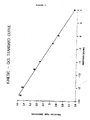
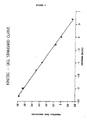
- a standard curve using the kinetically-based endotoxin assay with chromogenic substrate 100 ul of co-lyophilized LAL:substrate reagent prepared in Example 1 was mixed with 100 ul of various dilutions, indicated on Figure 1, of the U.S. reference endotoxin preparation, EC-5, in individual wells of a 96-well microplate. The microplate was incubated at 37°C in the kinetic-QCLTM reader, absorbance values at 405 nm were recorded at 120 second intervals.
- Figures 3,4 and 5 present graphs of the standard curves generated with pilot kinetic assay substrate composition lots. Each data point represents the individual Reaction Time for each replicate of the endotoxin standards. The line represents the linear regression best fit line of the log/log correlation of Reaction Time and endotoxin concentration. Due to the reproducibility of the assay, the variation between replicates is not apparent in these figures.
- a kit for kinetic assay of endotoxin can be assembled containing the following: 8 vials prepared as described in Example 2 2 vials containing E. coli endotoxin standardized against Reference Standard Endotoxin E. coli lot EC-5 (Office of Biologics, U.S. Food and Drug Administration) 3 vials containing Pyrogen Free Water 1 set instructions describing the kinetic assay procedure and standard curve preparation.
Landscapes
- Life Sciences & Earth Sciences (AREA)
- Health & Medical Sciences (AREA)
- Chemical & Material Sciences (AREA)
- Engineering & Computer Science (AREA)
- Immunology (AREA)
- Organic Chemistry (AREA)
- Molecular Biology (AREA)
- Physics & Mathematics (AREA)
- Proteomics, Peptides & Aminoacids (AREA)
- Hematology (AREA)
- Urology & Nephrology (AREA)
- Zoology (AREA)
- Wood Science & Technology (AREA)
- Microbiology (AREA)
- Biotechnology (AREA)
- Analytical Chemistry (AREA)
- Biochemistry (AREA)
- General Health & Medical Sciences (AREA)
- Biomedical Technology (AREA)
- Medicinal Chemistry (AREA)
- Biophysics (AREA)
- Pathology (AREA)
- General Physics & Mathematics (AREA)
- Food Science & Technology (AREA)
- Cell Biology (AREA)
- Bioinformatics & Cheminformatics (AREA)
- General Engineering & Computer Science (AREA)
- Genetics & Genomics (AREA)
- Measuring Or Testing Involving Enzymes Or Micro-Organisms (AREA)
- Investigating Or Analysing Biological Materials (AREA)
- Investigating Or Analysing Materials By The Use Of Chemical Reactions (AREA)
Applications Claiming Priority (2)
| Application Number | Priority Date | Filing Date | Title |
|---|---|---|---|
| US42830089A | 1989-10-30 | 1989-10-30 | |
| US428300 | 2009-04-22 |
Publications (2)
| Publication Number | Publication Date |
|---|---|
| EP0426395A1 true EP0426395A1 (de) | 1991-05-08 |
| EP0426395B1 EP0426395B1 (de) | 1997-01-22 |
Family
ID=23698313
Family Applications (1)
| Application Number | Title | Priority Date | Filing Date |
|---|---|---|---|
| EP90311771A Expired - Lifetime EP0426395B1 (de) | 1989-10-30 | 1990-10-26 | Kinetische Bestimmungsmethode für Endotoxin unter Verwendung von Limulus-Amoebocyten-Lysat und chromogenem Substrat |
Country Status (10)
| Country | Link |
|---|---|
| US (1) | US5310657A (de) |
| EP (1) | EP0426395B1 (de) |
| JP (1) | JP2955345B2 (de) |
| AT (1) | ATE148230T1 (de) |
| AU (1) | AU644109B2 (de) |
| CA (1) | CA2028789C (de) |
| DE (1) | DE69029785T2 (de) |
| DK (1) | DK0426395T3 (de) |
| ES (1) | ES2098256T3 (de) |
| GR (1) | GR3023298T3 (de) |
Cited By (7)
| Publication number | Priority date | Publication date | Assignee | Title |
|---|---|---|---|---|
| EP0613004A1 (de) * | 1993-02-26 | 1994-08-31 | Seikagaku Kogyo Kabushiki Kaisha (Seikagaku Corporation) | Reagens für die Endotoxinbestimmung und Methode zur Endotoxinbestimmung unter Verwendung desselben |
| EP0957366A1 (de) * | 1998-04-10 | 1999-11-17 | Seikagaku Corporation | Neue Methode zur Messung einer Enzym-Reaktion |
| EP1499643A4 (de) * | 2002-04-30 | 2008-04-16 | Biowhittaker Technologies Inc | Automatisierte analysesysteme mit sequentieller injektion zur bestimmung von endotoxingehalten im spurenbereich |
| EP2495322A1 (de) * | 2006-07-07 | 2012-09-05 | Seikagaku Corporation | Gerinnungsförderndes Enzym und Verfahren zur Detektion von (1->3)-ß-D-glucan damit |
| EP2407788A4 (de) * | 2009-03-13 | 2013-04-17 | Kowa Co | Verfahren zur messung von biologisch aktiven biogenen stoffen, programm zur umsetzung des verfahrens sowie vorrichtung zur messung von biologisch aktiven biogenen stoffen |
| US20180038864A1 (en) * | 2016-08-03 | 2018-02-08 | Lonza Walkersville, Inc. | Method of Detecting an Endotoxin Using Limulus Amebocyte Lysate Substantially Free of Coagulogen |
| CN110192110A (zh) * | 2017-01-11 | 2019-08-30 | 隆萨沃克斯维尔股份有限公司 | 无凝固蛋白原的澄清的鲎阿米巴样细胞裂解物 |
Families Citing this family (28)
| Publication number | Priority date | Publication date | Assignee | Title |
|---|---|---|---|---|
| EP0549102B1 (de) * | 1991-12-25 | 1996-07-03 | Maruha Corporation | Reagenzien und Verfahren zur Bestimmung von Beta-Glucanen |
| US6270982B1 (en) | 1997-10-09 | 2001-08-07 | Charles River Laboratories | Methods and compositions for the detection of bacterial endotoxins |
| ATE427068T1 (de) * | 2002-12-20 | 2009-04-15 | Charlotte Mecklenburg Hospital | Wegwerf-handvorrichtung zum auffangen von ausgeatmetem atemkondensat |
| US7828741B2 (en) * | 2002-12-20 | 2010-11-09 | The Charlotte-Mecklenburg Hospital Authority | Utilizing lipopolysaccharide in exhaled breath condensate to diagnose gram negative pneumonia |
| US7547285B2 (en) * | 2003-02-14 | 2009-06-16 | The Charlotte-Mecklenburg Hospital Authority | Device and method for collection of exhaled alveolar breath condensate |
| DE602004024769D1 (de) * | 2003-03-17 | 2010-02-04 | Charles River Lab Inc | Methoden und zusammensetzungen für den nachweis mikrobieller verunreinigungen |
| WO2004094987A2 (en) * | 2003-04-18 | 2004-11-04 | Associates Of Cape Cod, Inc. | Kit for detecting endotoxin in aqueous solutions |
| US20050048655A1 (en) * | 2003-04-18 | 2005-03-03 | Novitsky Thomas J. | Kit for detecting endotoxin |
| US20050124013A1 (en) * | 2003-11-07 | 2005-06-09 | Cambrex Bio Science Walkersville, Inc. | On-line apparatus and method for determining endotoxin levels |
| JP2008522640A (ja) | 2004-12-02 | 2008-07-03 | チャールズ リバー ラボラトリーズ, インコーポレイテッド | グラム陽性菌夾雑物の検出および/または定量化のための方法ならびに組成物 |
| US7479375B2 (en) | 2005-01-13 | 2009-01-20 | Charles River Laboratories, Inc. | Method for classifying a microorganism in a biological sample |
| US20080124248A1 (en) * | 2006-11-29 | 2008-05-29 | Edward Andrew Sobek | Endotoxins and glucans quantification in indoor air |
| US20090286692A1 (en) * | 2008-04-15 | 2009-11-19 | Wainwright Norman R | Cartridge and Method for Sample Analysis |
| JP5489680B2 (ja) * | 2009-12-02 | 2014-05-14 | 興和株式会社 | 生物由来の生理活性物質の測定方法、それを実行するためのプログラム及び、生物由来の生理活性物質の測定装置 |
| CA2766288C (en) | 2009-06-26 | 2020-05-05 | Charles River Laboratories, Inc. | Heat-treated limulus amebocyte lysates |
| GB2477752A (en) * | 2010-02-11 | 2011-08-17 | Arab Biotechnology Company | Detection of bacteria |
| CU24073B1 (es) | 2011-12-27 | 2015-01-29 | Ct De Investigación Y Desarrollo De Medicamentos Cidem | COMPOSICIÓN A PARTIR DE EXTRACTO DE HEMOCITOS DE LANGOSTA PARA LA DETECCIÓN DE LIPOPOLISACÁRIDOS, PEPTIDOGLICANOS Y 1,3-ß-D-GLUCANOS |
| US20130078665A1 (en) * | 2012-07-18 | 2013-03-28 | Deepika Bodapati | Test strip, a test kit and a method for detection of endotoxin in food |
| JP6319590B2 (ja) | 2012-10-08 | 2018-05-09 | ゼネラル・エレクトリック・カンパニイ | マイクロ流体素子を用いるlal反応性物質試験方法及び装置 |
| US10309947B2 (en) | 2013-02-27 | 2019-06-04 | Trace-Ability, Inc. | System and method for radiosynthesis, quality control and dose dispensing |
| US10895563B2 (en) | 2014-02-26 | 2021-01-19 | Trace-Ability, Inc. | Palette-based systems for analyte characterization |
| US11002717B2 (en) | 2014-02-26 | 2021-05-11 | Trace-Ability, Inc. | Systems and methods for characterizing radioactive analytes |
| US20190001330A1 (en) | 2017-06-28 | 2019-01-03 | Lonza Walkersville, Inc. | Cartridge for endotoxin detection |
| US11892397B2 (en) * | 2017-10-17 | 2024-02-06 | Board Of Regents, The University Of Texas System | Endotoxin testing assay and method of same |
| CN109387637A (zh) * | 2018-10-12 | 2019-02-26 | 四川升和药业股份有限公司 | 丹参注射液细菌内毒素检测方法 |
| CN111077307B (zh) * | 2018-10-21 | 2022-08-23 | 厦门鲎试剂生物科技股份有限公司 | 一种用革兰氏阴性细菌感染快速检测脓毒病的新方法 |
| US12158471B2 (en) | 2022-02-11 | 2024-12-03 | Charles River Laboratories, Inc. | Recombinant amebocyte lysate and uses thereof |
| KR20260021702A (ko) | 2023-06-05 | 2026-02-13 | 찰스리버레보레토리스,인코포레이티드 | 재조합 아메보사이트 응고 인자 및 그의 용도 |
Citations (4)
| Publication number | Priority date | Publication date | Assignee | Title |
|---|---|---|---|---|
| DE2740323A1 (de) * | 1977-06-14 | 1978-12-21 | Seikagaku Kogyo Co Ltd | Verfahren zur bestimmung von bakteriellem endotoxin sowie dazu verwendete reagenzien |
| GB2080524A (en) * | 1980-06-27 | 1982-02-03 | Mallinckrodt Inc | Determining endotoxin with a limulus amebocyte lysate reagent |
| EP0074761A1 (de) * | 1981-09-03 | 1983-03-23 | Whittaker Corporation | Peptidartige Substrate zum Gebrauch bei der quantitativen Endotoxinbestimmung |
| EP0180905A2 (de) * | 1984-10-31 | 1986-05-14 | Bernhard Prof. Dr. Urbaschek | Verfahren zur Bestimmung von Endotoxinkonzentrationen |
Family Cites Families (1)
| Publication number | Priority date | Publication date | Assignee | Title |
|---|---|---|---|---|
| US4510241A (en) * | 1981-09-03 | 1985-04-09 | Mallinckrodt, Inc. | Peptide-type substrates useful in the quantitative determination of endotoxin |
-
1990
- 1990-10-26 DK DK90311771.1T patent/DK0426395T3/da active
- 1990-10-26 ES ES90311771T patent/ES2098256T3/es not_active Expired - Lifetime
- 1990-10-26 AT AT90311771T patent/ATE148230T1/de not_active IP Right Cessation
- 1990-10-26 EP EP90311771A patent/EP0426395B1/de not_active Expired - Lifetime
- 1990-10-26 DE DE69029785T patent/DE69029785T2/de not_active Expired - Lifetime
- 1990-10-29 AU AU65556/90A patent/AU644109B2/en not_active Expired
- 1990-10-29 CA CA002028789A patent/CA2028789C/en not_active Expired - Lifetime
- 1990-10-30 JP JP2295164A patent/JP2955345B2/ja not_active Expired - Lifetime
-
1992
- 1992-07-13 US US07/911,375 patent/US5310657A/en not_active Expired - Lifetime
-
1997
- 1997-04-08 GR GR970400118T patent/GR3023298T3/el unknown
Patent Citations (4)
| Publication number | Priority date | Publication date | Assignee | Title |
|---|---|---|---|---|
| DE2740323A1 (de) * | 1977-06-14 | 1978-12-21 | Seikagaku Kogyo Co Ltd | Verfahren zur bestimmung von bakteriellem endotoxin sowie dazu verwendete reagenzien |
| GB2080524A (en) * | 1980-06-27 | 1982-02-03 | Mallinckrodt Inc | Determining endotoxin with a limulus amebocyte lysate reagent |
| EP0074761A1 (de) * | 1981-09-03 | 1983-03-23 | Whittaker Corporation | Peptidartige Substrate zum Gebrauch bei der quantitativen Endotoxinbestimmung |
| EP0180905A2 (de) * | 1984-10-31 | 1986-05-14 | Bernhard Prof. Dr. Urbaschek | Verfahren zur Bestimmung von Endotoxinkonzentrationen |
Non-Patent Citations (1)
| Title |
|---|
| P. FRIBERGER et al.: "Bacterial Endotoxins, Lipopolysaccharides", chapter: "Colorimetric method", H.U. Bergmeyer (ed.) "Methods of enzymatic analysis", 3rd edition, vol. XI, 1986, pages 107-117, VCH Verlagsgesellschaft mbH, Weinheim, DE * |
Cited By (15)
| Publication number | Priority date | Publication date | Assignee | Title |
|---|---|---|---|---|
| EP0613004A1 (de) * | 1993-02-26 | 1994-08-31 | Seikagaku Kogyo Kabushiki Kaisha (Seikagaku Corporation) | Reagens für die Endotoxinbestimmung und Methode zur Endotoxinbestimmung unter Verwendung desselben |
| AU666605B2 (en) * | 1993-02-26 | 1996-02-15 | Seikagaku Kogyo Kabushiki Kaisha | Reagent for endotoxin assay and method for endotoxin assay using the same |
| US5695948A (en) * | 1993-02-26 | 1997-12-09 | Seikagaku Kogyo Kabushiki Kaisha (Seikagaku Corporation) | Reagent for endotoxin assay and method for endotoxin assay using the same |
| US5840510A (en) * | 1993-02-26 | 1998-11-24 | Seikagaku Kogyo Kabushiki Kaisha (Seikagaku Corporation) | Reagent for endotoxin assay and method for endotoxin assay using the same |
| EP0957366A1 (de) * | 1998-04-10 | 1999-11-17 | Seikagaku Corporation | Neue Methode zur Messung einer Enzym-Reaktion |
| US6306577B1 (en) | 1998-04-10 | 2001-10-23 | Seikagaku Corporation | Method for measuring enzyme reaction |
| EP1499643A4 (de) * | 2002-04-30 | 2008-04-16 | Biowhittaker Technologies Inc | Automatisierte analysesysteme mit sequentieller injektion zur bestimmung von endotoxingehalten im spurenbereich |
| EP2495322A1 (de) * | 2006-07-07 | 2012-09-05 | Seikagaku Corporation | Gerinnungsförderndes Enzym und Verfahren zur Detektion von (1->3)-ß-D-glucan damit |
| EP2495321A1 (de) * | 2006-07-07 | 2012-09-05 | Seikagaku Corporation | Gerinnungsförderndes Enzym und Verfahren zur Detektion von Endotoxin damit |
| US9040254B2 (en) | 2006-07-07 | 2015-05-26 | Seikagaku Corporation | Methods for detecting an endotoxin using a horseshoe crab clotting enzyme |
| EP3190185A1 (de) * | 2006-07-07 | 2017-07-12 | Seikagaku Corporation | Pro-clotting enzyme, and method for detection of endotoxin or (1-3)-beta-d-glucan using the same |
| EP2407788A4 (de) * | 2009-03-13 | 2013-04-17 | Kowa Co | Verfahren zur messung von biologisch aktiven biogenen stoffen, programm zur umsetzung des verfahrens sowie vorrichtung zur messung von biologisch aktiven biogenen stoffen |
| US8507282B2 (en) | 2009-03-13 | 2013-08-13 | Kowa Company, Ltd. | Method for measuring physiologically active substance of biological origin, program for implementing the same, and apparatus for measuring physiologically active substance of biological origin |
| US20180038864A1 (en) * | 2016-08-03 | 2018-02-08 | Lonza Walkersville, Inc. | Method of Detecting an Endotoxin Using Limulus Amebocyte Lysate Substantially Free of Coagulogen |
| CN110192110A (zh) * | 2017-01-11 | 2019-08-30 | 隆萨沃克斯维尔股份有限公司 | 无凝固蛋白原的澄清的鲎阿米巴样细胞裂解物 |
Also Published As
| Publication number | Publication date |
|---|---|
| US5310657A (en) | 1994-05-10 |
| ES2098256T3 (es) | 1997-05-01 |
| GR3023298T3 (en) | 1997-07-30 |
| JPH03220456A (ja) | 1991-09-27 |
| CA2028789A1 (en) | 1991-05-01 |
| DE69029785T2 (de) | 1997-05-28 |
| AU6555690A (en) | 1991-05-02 |
| DK0426395T3 (de) | 1997-03-03 |
| DE69029785D1 (de) | 1997-03-06 |
| CA2028789C (en) | 2001-02-06 |
| AU644109B2 (en) | 1993-12-02 |
| ATE148230T1 (de) | 1997-02-15 |
| JP2955345B2 (ja) | 1999-10-04 |
| EP0426395B1 (de) | 1997-01-22 |
Similar Documents
| Publication | Publication Date | Title |
|---|---|---|
| EP0426395B1 (de) | Kinetische Bestimmungsmethode für Endotoxin unter Verwendung von Limulus-Amoebocyten-Lysat und chromogenem Substrat | |
| US12529052B2 (en) | Euglobulin-based method for determining the biological activity of defibrotide | |
| US4692406A (en) | Process and a reagent for the simultaneous determination of fibrinogen and fibrinogen fission products in plasma | |
| Mahmoud et al. | Bioimmunoassay (BIA) of tissue plasminogen activator (t-PA) and its specific inhibitor (t-PA/INH) | |
| EP0927767A2 (de) | Verbesserter Thrombintest für Antithrombin III unter Verwendung von Heparinderivat | |
| Rej et al. | Quality control in clinical chemistry: characterization of reference materials | |
| NL8201987A (nl) | Werkwijze voor het bepalen van de activiteit van plasminogeenactivator van het weefseltype, alsmede voor gebruik bij deze werkwijze geschikte combinatie van het "kit"-type. | |
| AU2002360945B2 (en) | A method for determining the biological activity of defibrotide | |
| US6306577B1 (en) | Method for measuring enzyme reaction | |
| RU2429488C1 (ru) | Способ определения активности тромбина | |
| AU744025B2 (en) | Plasma reference | |
| Maki | Pathophysiology of Plasmin System I. Routine Measuring Method of Plasmin System in This Clinic | |
| JP3554750B2 (ja) | 尿中白血球を検出するための試験紙の品質管理および/または精度管理用組成物、並びに品質管理方法および/または精度管理方法 | |
| RU2766143C2 (ru) | Жидкая композиция дефибротида для лечения и профилактики веноокклюзионной болезни | |
| JPH01503599A (ja) | タンパク質加水分解で活性な成分の測定 | |
| 真木正博 | Pathophysiology of Plasmin System | |
| HK1208503B (en) | Euglobulin-based method for determining the biological activity of defibrotide |
Legal Events
| Date | Code | Title | Description |
|---|---|---|---|
| PUAI | Public reference made under article 153(3) epc to a published international application that has entered the european phase |
Free format text: ORIGINAL CODE: 0009012 |
|
| AK | Designated contracting states |
Kind code of ref document: A1 Designated state(s): AT BE CH DE DK ES FR GB GR IT LI LU NL SE |
|
| 17P | Request for examination filed |
Effective date: 19911026 |
|
| RAP1 | Party data changed (applicant data changed or rights of an application transferred) |
Owner name: BIOWHITTAKER, INC. |
|
| 17Q | First examination report despatched |
Effective date: 19940223 |
|
| GRAG | Despatch of communication of intention to grant |
Free format text: ORIGINAL CODE: EPIDOS AGRA |
|
| GRAH | Despatch of communication of intention to grant a patent |
Free format text: ORIGINAL CODE: EPIDOS IGRA |
|
| GRAH | Despatch of communication of intention to grant a patent |
Free format text: ORIGINAL CODE: EPIDOS IGRA |
|
| GRAA | (expected) grant |
Free format text: ORIGINAL CODE: 0009210 |
|
| AK | Designated contracting states |
Kind code of ref document: B1 Designated state(s): AT BE CH DE DK ES FR GB GR IT LI LU NL SE |
|
| REF | Corresponds to: |
Ref document number: 148230 Country of ref document: AT Date of ref document: 19970215 Kind code of ref document: T |
|
| REG | Reference to a national code |
Ref country code: CH Ref legal event code: EP Ref country code: CH Ref legal event code: NV Representative=s name: AMMANN PATENTANWAELTE AG BERN |
|
| ET | Fr: translation filed | ||
| REG | Reference to a national code |
Ref country code: DK Ref legal event code: T3 |
|
| REF | Corresponds to: |
Ref document number: 69029785 Country of ref document: DE Date of ref document: 19970306 |
|
| ITF | It: translation for a ep patent filed | ||
| REG | Reference to a national code |
Ref country code: ES Ref legal event code: FG2A Ref document number: 2098256 Country of ref document: ES Kind code of ref document: T3 |
|
| REG | Reference to a national code |
Ref country code: GR Ref legal event code: FG4A Free format text: 3023298 |
|
| PLBE | No opposition filed within time limit |
Free format text: ORIGINAL CODE: 0009261 |
|
| 26N | No opposition filed | ||
| REG | Reference to a national code |
Ref country code: GB Ref legal event code: IF02 |
|
| PGFP | Annual fee paid to national office [announced via postgrant information from national office to epo] |
Ref country code: DK Payment date: 20090902 Year of fee payment: 20 |
|
| PGFP | Annual fee paid to national office [announced via postgrant information from national office to epo] |
Ref country code: GB Payment date: 20090827 Year of fee payment: 20 Ref country code: CH Payment date: 20090903 Year of fee payment: 20 Ref country code: LU Payment date: 20090907 Year of fee payment: 20 Ref country code: SE Payment date: 20090828 Year of fee payment: 20 |
|
| PGFP | Annual fee paid to national office [announced via postgrant information from national office to epo] |
Ref country code: ES Payment date: 20091023 Year of fee payment: 20 Ref country code: AT Payment date: 20090901 Year of fee payment: 20 Ref country code: DE Payment date: 20090901 Year of fee payment: 20 |
|
| PGFP | Annual fee paid to national office [announced via postgrant information from national office to epo] |
Ref country code: NL Payment date: 20090901 Year of fee payment: 20 Ref country code: BE Payment date: 20090901 Year of fee payment: 20 |
|
| PGFP | Annual fee paid to national office [announced via postgrant information from national office to epo] |
Ref country code: GR Payment date: 20091029 Year of fee payment: 20 |
|
| BE20 | Be: patent expired |
Owner name: *BIOWHITTAKER INC. Effective date: 20101026 |
|
| REG | Reference to a national code |
Ref country code: NL Ref legal event code: V4 Effective date: 20101026 |
|
| REG | Reference to a national code |
Ref country code: CH Ref legal event code: PL Ref country code: DK Ref legal event code: EUP |
|
| REG | Reference to a national code |
Ref country code: GB Ref legal event code: PE20 Expiry date: 20101025 |
|
| EUG | Se: european patent has lapsed | ||
| PG25 | Lapsed in a contracting state [announced via postgrant information from national office to epo] |
Ref country code: NL Free format text: LAPSE BECAUSE OF EXPIRATION OF PROTECTION Effective date: 20101026 |
|
| REG | Reference to a national code |
Ref country code: ES Ref legal event code: FD2A Effective date: 20110301 |
|
| PG25 | Lapsed in a contracting state [announced via postgrant information from national office to epo] |
Ref country code: IT Free format text: LAPSE BECAUSE OF NON-PAYMENT OF DUE FEES Effective date: 20091026 Ref country code: GB Free format text: LAPSE BECAUSE OF EXPIRATION OF PROTECTION Effective date: 20101025 |
|
| PG25 | Lapsed in a contracting state [announced via postgrant information from national office to epo] |
Ref country code: ES Free format text: LAPSE BECAUSE OF EXPIRATION OF PROTECTION Effective date: 20101027 |
|
| PGFP | Annual fee paid to national office [announced via postgrant information from national office to epo] |
Ref country code: IT Payment date: 20091013 Year of fee payment: 20 |
|
| PGRI | Patent reinstated in contracting state [announced from national office to epo] |
Ref country code: IT Effective date: 20110616 |
|
| PGFP | Annual fee paid to national office [announced via postgrant information from national office to epo] |
Ref country code: FR Payment date: 20090910 Year of fee payment: 20 |
|
| PG25 | Lapsed in a contracting state [announced via postgrant information from national office to epo] |
Ref country code: DE Free format text: LAPSE BECAUSE OF EXPIRATION OF PROTECTION Effective date: 20101026 |