EP0429788A2 - Fragments de somatotropine porcine et anticorps contre ces fragments augmentant l'activité de la somatotropine porcine - Google Patents
Fragments de somatotropine porcine et anticorps contre ces fragments augmentant l'activité de la somatotropine porcine Download PDFInfo
- Publication number
- EP0429788A2 EP0429788A2 EP90118001A EP90118001A EP0429788A2 EP 0429788 A2 EP0429788 A2 EP 0429788A2 EP 90118001 A EP90118001 A EP 90118001A EP 90118001 A EP90118001 A EP 90118001A EP 0429788 A2 EP0429788 A2 EP 0429788A2
- Authority
- EP
- European Patent Office
- Prior art keywords
- pst
- antibodies
- peptide
- leu
- peptides
- Prior art date
- Legal status (The legal status is an assumption and is not a legal conclusion. Google has not performed a legal analysis and makes no representation as to the accuracy of the status listed.)
- Ceased
Links
Images







Classifications
-
- C—CHEMISTRY; METALLURGY
- C07—ORGANIC CHEMISTRY
- C07K—PEPTIDES
- C07K14/00—Peptides having more than 20 amino acids; Gastrins; Somatostatins; Melanotropins; Derivatives thereof
-
- C—CHEMISTRY; METALLURGY
- C07—ORGANIC CHEMISTRY
- C07K—PEPTIDES
- C07K16/00—Immunoglobulins [IG], e.g. monoclonal or polyclonal antibodies
- C07K16/18—Immunoglobulins [IG], e.g. monoclonal or polyclonal antibodies against material from animals or humans
- C07K16/26—Immunoglobulins [IG], e.g. monoclonal or polyclonal antibodies against material from animals or humans against hormones ; against hormone releasing or inhibiting factors
-
- C—CHEMISTRY; METALLURGY
- C07—ORGANIC CHEMISTRY
- C07K—PEPTIDES
- C07K14/00—Peptides having more than 20 amino acids; Gastrins; Somatostatins; Melanotropins; Derivatives thereof
- C07K14/435—Peptides having more than 20 amino acids; Gastrins; Somatostatins; Melanotropins; Derivatives thereof from animals; from humans
- C07K14/575—Hormones
- C07K14/61—Growth hormone [GH], i.e. somatotropin
-
- A—HUMAN NECESSITIES
- A61—MEDICAL OR VETERINARY SCIENCE; HYGIENE
- A61K—PREPARATIONS FOR MEDICAL, DENTAL OR TOILETRY PURPOSES
- A61K38/00—Medicinal preparations containing peptides
-
- C—CHEMISTRY; METALLURGY
- C07—ORGANIC CHEMISTRY
- C07K—PEPTIDES
- C07K2317/00—Immunoglobulins specific features
- C07K2317/30—Immunoglobulins specific features characterized by aspects of specificity or valency
- C07K2317/34—Identification of a linear epitope shorter than 20 amino acid residues or of a conformational epitope defined by amino acid residues
Definitions
- This invention relates to the identification of three peptide fragments of porcine somatotropin (pST) that may be used to generate anti-pST antibodies. When these antibodies are administered together with pST, animal growth is improved beyond that achieved with the administration of pST alone.
- pST porcine somatotropin
- the growth hormone pST is native to swine and accounts for maturation of the animal, including increasing the growth rate and the lean to fat ratio. Endogenous amounts of pST are small; therefore, efforts have focused on the preparation of exogenous pST for use in large-scale agriculture.
- pST is a single chain polypeptide of 191 amino acids with two cystine bridges linking residues 53-164 and 181-189, respectively (Abdel-Meguid, S.S., et al., Proc. Natl. Acad. Sci. , 84 , 6434-6437 (1987)).
- Efforts have also been directed to the identification of peptides which consist of small portions of the amino acid sequence of somatotropin of various species with a view to enhancing the activity of these growth hormones.
- Published European Patent Application 137,234 describes the cleavage of a 7 kd fragment from the C-terminal end of human growth hormone (hGH). Mice were injected with the fragment; the mice then generated antibodies to the fragment. Those antibodies were adminstered to mice in combination with hGH. It was found that mice receiving hGH plus antibodies to the hGH fragment exhibited greater growth than those receiving hGH alone.
- pST fragments of pST which, when administered to warm-blooded animals, generate antibodies to pST.
- pSt fragments include peptides having amino acid sequences homologous to the following portions of pST: 98-110, 110-118 and 155-163.
- Such antibodies may be polyclonal or monoclonal.
- pST may have either a native or modified amino acid sequence, so long as its growth enhancing function is present.
- the invention is also directed to amino acid sequences which are the antigenic equivalents of these pST fragments, as well as to antibodies therefrom.
- This invention is directed to the identification of antigenic epitopes of pST, in the form of peptide fragments which are capable of inducing immunologic responses in warm-blooded animals through the generation of epitope-specific anti-pST antibodies. Such antibodies are then administered together with pST to animals to enhance their growth performance. Alternatively, these antibodies are administered to animals which are thereafter treated with pST.
- the three pST peptides of this invention are designated by numbers and their amino acid sequences (aa) are as follows: #8 (aa 98-110): Thr-Asn-Ser-Leu-Val-Phe-Gly-Thr-Ser-Asp-Arg-Val-Tyr #9 (aa 110-118): Tyr-Glu-Lys-Leu-Sys-Asp-Leu-Glu-Glu #11 (aa 155-163): Leu-Leu-Lys-Asn-Tyr-Gly-Leu-Leu-Ser.
- This invention is also directed to peptides having amino acid sequences which are antigenically equivalent to those just described for peptides # 8, 9 and 11.
- Such peptides may be said to be antigenically equivalent to peptides having amino acid sequences homologous to the corresponding portions of pST if their amino acid sequences differ only by minor deletions from or conservative substitutions to the pST sequences so that the tertiary configurations of the peptides are substantially unchanged from those of the pST portions and antibodies can be generated to those peptides.
- peptides may be constructed by techniques known in the art including, but not limited to, chemical synthesis, use of a solid phase peptide synthesizer and expression by a DNA nucleotide sequence in an appropriate host.
- the peptides are then purified by suitable means such as gel filtration chromatography and preparative reverse-phase high performance liquid chromatography (HPLC). The purity of the peptides is demonstrated by amino acid composition analysis.
- a peptide of this invention preferably is linked to a macromolecule which functions as a carrier for the peptide.
- the peptide may be conjugated to a protein such as keyhole limpet haemocyanin (KLH).
- KLH keyhole limpet haemocyanin
- Other carriers within the scope of this invention include those known in the art such as human and bovine serum albumins, myoglobins, ⁇ -galactosidase, penicillanase and bacterial toxoids.
- the carriers may also be synthetic molecules such as multi-poly-DL-alanyl-poly-L-lysine and poly-L-lysine.
- polyclonal antibodies to these peptides are generated and purified from immunized warm-blooded animals such as swine and rabbits.
- monoclonal antibodies to these peptides may be prepared using conventional techniques.
- Polyclonal antibodies are generated by immunizing animals with the peptides of this invention, either alone or in conjugated form.
- the peptides may be administered by conventional routes such as subcutaneous injection, intramuscular injection and intravenous flow, as well as transdermal and oral administration. It is preferred to administer the peptides (or their conjugates) in association with a carrier containing an adjuvant, such as Freund's complete adjuvant. It is particularly preferred to use a dosage regimen where an initial administration of the peptides is followed by one or more booster administration of the same peptides at regular time intervals.
- Polyclonal antibodies are recovered by first obtaining a blood sample from an immunized animal after a time sufficient from administration of the peptide for antibodies to be formed.
- the serum (which contains the antibodies) is isolated by conventional means such as centrifugation. Serum is separated into fractions containing immunoglobulin (Ig) and lacking immunoglobulin (non-Ig) by means such as fast protein liquid chromatography (FPLC). Only the Ig fraction contains antibodies to the peptides.
- the antibodies are then isolated from the Ig fraction by SDS-PAGE. The purity of the antibodies so isolated is greater than 98% as determined by SDS-PAGE.
- the antibody titer level is assayed using enzyme-linked immunosorbent assay (ELISA) according to conventional procedures.
- ELISA enzyme-linked immunosorbent assay
- Monoclonal antibodies are prepared by immunizing mice with one of the three novel pST peptides, removing the spleens of the mice, preparing suspensions of lymphocytes, fusing these lymphocytes to mouse myeloma cells, culturing the cells and collecting supernatants of surviving hybridomas for antibody screening by solid-phase ELISA. Those hybridomas which produce desired antibodies are further subcloned and injected in mice. Ascites are then collected from the mice and Ig is purified by ammonium sulfate precipitation or a protein A affinity column on FPLC. Samples of Ig so purified are assayed against antigens using ELISA to identify the antibodies formed.
- antibodies may be used in two ways to potentiate and enhance the growth-promoting activity of pST.
- an antibody is administered to a warm-blooded animal together with pST.
- the animal is treated with one or more doses of an anti-pST antibody and is subsequently treated with pST. In either procedure, more than one antibody may be used.
- the invention also contemplates the administration of combinations of anti-pST antibodies #8, 9 and 11 or their antigenic equivalents.
- hypox-rats are growth-deficient as a result of surgical removal of their pituitary glands. Hypox-rats serve as a useful model for studying the effect of somatotropin on growth (Groesbeck, M. D. and Parlow, A. F., Endocrinology , 120 , 2582-2590 (1987).
- the pST used may be isolated from natural sources or may be prepared using recombinant techniques such as those described in published European patent applications 104,920 or 111,389. The sources of and the method of isolation/preparation of pST itself forms no part of this invention.
- the antibodies may also be used together with recombinant pST in which the amino acid sequence of native pST has been modified using a technique such as site-directed mutagenesis, so long as the growth enhancing function of pST is present. See, for example, published European patent application 303,972.
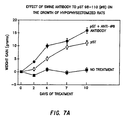
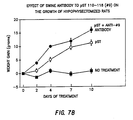
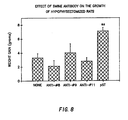
- the growth-promoting swine antibodies include those responding to pST amino acid sequences of 35-52, 98-110, 110-118 and 155-163. Each of these antibodies is not active when employed in the absence of pST; they require pST for enhancement of activity. Their action is rather rapid and also exhibits a bi-phasic dose response curve.
- the mechanisms may be as follows: 1) prolongation of the half-life time of somatotropin in circulation, 2) improvement of somatotropin delivery to liver cells, 3) increase of somatotropin uptake efficiency by polymerization on target cell surface, 4) lengthening the somatotropin interaction with receptors by retardation of internalization process (endocytosis), 5) restriction of somatotropin effects towards somatogenesis, and 6) alteration of somatotropin configuration better suitable for interacting with growth-related receptors.
- This application presents an approach to improve growth performance in the animal production industry.
- These antibodies amplify the somatogenic activity of endogenous or exogenous somatotropin.
- these novel peptides and antibodies can also be used to induce anti-idiotypic antibodies by means of conventional techniques. Such anti-idiotypic antibodies may prove useful as potential vaccines.
- Peptides are synthesized manually or by a Biosearch 9600 (Miligen Biosearch, Burlington, MA) solid phase peptide synthesizer.
- Amino acids linked to an N-t-butyloxycarbonyl (Boc) protecting group namely, Boc-Ala, Boc-Gly, Boc-Val, Boc-Leu, Boc-Pro, Boc-Ser (OBzl), Boc-Thr (OBzl), Boc-Asp (OBzl).
- Boc-Tyr (2-BrZ), Boc-Arg (Tos), Boc-Lys (2-Clz), Boc-Asn (Xan), Boc-Gln (Xan), and Boc-Cys (4-MeBzl) are purchased from Advanced Chemtech, Louisville, KY, and employed for synthesis.
- a Merrifield resin 1% cross-linked divinyl benzene-styrene, Bachem Bioscience Inc., Philadelphia, PA
- the assembled peptide is cleaved from the resin using 95% hydrofluoric acid and 5% anisole at 0 o C for one hour.
- peptides are purified by a filtration column with G-25 gel (Pharmacia, Piscataway, New Jersey) and preparative reverse-phase HPLC (C18 column, acetonitrile/water containing 0.1% TFA, using a gradient of 0% to 90% acetonitrile over 45 minutes).
- Peptides are dissolved in phosphate buffered saline (PBS) (GIBCO, Grand Island, NY) and mixed with KLH (Sigma Chemical Co., St. Louis, MO) at an approximate molar ratio of 25 to 1.
- PBS phosphate buffered saline
- KLH Sigma Chemical Co., St. Louis, MO
- Glutaraldhyde 0.5%) is added as coupling agent and the mixture is incubated at room temperature for 15 to 60 minutes.
- NaBH4 is subsequently added and the conjugation mixture is dialyzed extensively against PBS.
- the aggregates are removed by high speed centrifugation (10,000g) and the concentration is determined by a UV spectrophotometer at a wavelength of 280 nm.
- Conjugates of pST peptide-KLH (1 mg) are emulsified with an equal volume of Freund's complete adjuvant (CFA, GIBCO) prior to administration to swine and rabbits.
- CFA Freund's complete adjuvant
- Female crossbred swine Duroc x Yorkshire x Hampshire
- 3-5 months of age, weighing 30-50 kg are obtained from the breeding colony of American Cyanamid Company, Princeton, N.J.
- Swine are injected subcutaneously with 0.5 mg of peptide-KLH conjugates at two different sites in the neck area behind the ears.
- Female and male New Zealand white rabbits, 10-15 weeks of age, weighing 2-3 kg, are obtained from the Skippack Farm, Skippack, PA. Rabbits are similarly immunized by injecting the conjugates into both hind limbs. All animals are provided repeatedly with booster injections containing the same antigens every four weeks.
- the Ig fraction generally contributes approximately 30% of total serum protein.
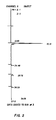
- the purity of the Ig fraction is greater than 98% as determined by SDS-PAGE ( Figure 3A) as follows.
- Ig samples are loaded onto a 10% SDS-PAGE slab gel and electrophoresis is performed at 8mA overnight.
- the gel is stained with Coomassie blue and protein bands are analyzed by a gel scanner following de-staining.
- Molecular weight markers include phosphorylase B (97.4 kd), bovine serum albumin (68 kd), ovalbumin (43 kd) and ⁇ -chymotrypsinogen (25.7 kd). Following extensive dialysis against PBS, the antibody is aliquoted and stored at -20 o C until use.
- Antigen is prepared in PBS and one ⁇ g in 100 ⁇ l is added to each well of a 96-well flat bottom polystyrene plate. After being incubated for one hour, the plate is washed three times with PBS containing 0.05% Tween-20 by an automatic plate washer (Dynatech Wash II, Chantilly, VA) and each well is dispensed with 200 ⁇ l of 2% BSA (Sigma). The plate is incubated again for another hour. Serum samples are added and tested at a final concentration of 5% in the wells.
- the plate is incubated for 30 minutes, washed six times with PBS, and added with 100 ⁇ l of alkaline phosphatase-conjugated rabbit anti-porcine IgG or goat anti-rabbit IgG F(ab′)2 (Zymed Laboratories, South San Francisco, CA) at a dilution of 1/1000.
- the plate is washed again after a 30 minutes incubation and 100 ⁇ l of p-nitrophenyl phosphate (1 mg/ml, Sigma) in 0.1M diethanolamine, pH 10.3, is added as substrate for color development. Finally, the colorimetric response is recorded as optical density (OD) by an ELISA plate reader at a wavelength of 405 nm. Incubation procedure is always performed at 37 o C.
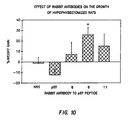
- Antibodies to pST peptides are generated in swine and rabbits and the immunoreactivity of these antibodies is examined using pST and all seven peptides as target antigens.
- the bioassay for immunoreactivity is carried out with hypox-rats (female Sprague-Dawley rats, 21 days of age, weighing 50-64 grams each, obtained from the Taconic Farm, Germantown, N.Y.). After being delivered, these rats are kept for observation for 7-10 days to ensure complete hypophysectomy.
- hypox-rats female Sprague-Dawley rats, 21 days of age, weighing 50-64 grams each, obtained from the Taconic Farm, Germantown, N.Y.
- mice are randomly allocated to eight rats per group. Two groups of controls are always included in all experiments. The first group consists of untreated hypox-rats which serve as negative controls.
- the other control group consists of hypox-rats which receive a minimal effective dose of pST (5 ⁇ g) by daily injection and thus serve as positive controls.
- Antibody 0.5 to 1 mg
- All rats are injected with 0.2 ml test materials subcutaneously at the neck region. The growth of these animals is monitored and recorded as weight gain during the course of the experiment.
- Antibodies from peptide #6-immunized rabbits weakly cross-react with peptide #2.
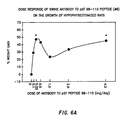
- a dose response study is carried out by treating hypox-rats with various doses of anti-peptide #8 antibody together with 5 ⁇ g of pST for four days.
- Data in Figure 6A demonstrate that the peak effect of anti-peptide #8 antibody to enhance pST activity is 0.25 mg/day. It declines at the doses of 0.5 to 2 mg/day, but the maximum effect re-appears at 4 mg/day.
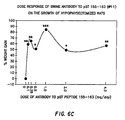
- the bi-phasic dose response curve is also observed with antibody to anti-peptides # 9 and 11.
- the optimal doses are 0.5 and 2 mg/day for anti-peptide #9 and are 0.25 and 1 mg/day for anti-peptide #11 ( Figures 6B and 6C, respectively).
- mice 6 to 10 weeks of age, are purchased from Charles River Breeding Laboratories, Wilmington, MA. These mice are immunized with 100 ⁇ g KLH conjugated with one of peptides #8, 9 or 11, prepared in accordance with the procedure of Example 1, in the presence of Freund's complete adjuvant. The animals are boostered with 50 ⁇ g of the same peptide every three weeks thereafter. Their spleens are removed three days after the last boosting and single cell suspensions of lymphocytes are prepared.
- lymphocytes are fused with PS2/0 mouse myeloma cells lacking hypoxanthine phosphoribosyl transferase (HPRT- negative) with 50% polyethylene glycol, suspended in Dulbecco's minimum essential medium containing 20% fetal calf serum, 0.175 mg/ml aminopterin, 13.6 mg/ml hypoxanthine, 3.88 mg/ml thymidine and 50 mg/ml gentamicin, and finally dispensed in 96-well culture plates. After culturing for 10-14 days, supernatants of the hybridomas who survive due to the HPRT-positive phenotype of the lymphocytes are collected for antibody screening in a solid-phase ELISA.
- Those determined to produce appropriate antibodies are further subcloned by a limited dilution procedure.
- the clones so selected are injected intraperitoneally into Balb/C mice which are primed with pristane for the production of the antibody-containing ascites.
- Ig is purified by 50% ammonium sulfate precipitation technique.
- samples are diluted to 50% with binding buffer (3M NaCl, 1.5M glycine, pH 8.9) and loaded onto a preparative Protein A Superose HR 16/5 column on a FPLC system (Pharmacia, Piscataway, N.J.).
- the non-Ig fraction is eluted from the column with the binding buffer.
- the bound Ig is subsequently collected by rinsing the column with 0.1M citric acid, pH 3.
- the bound Ig is immediately neutralized to pH 7-8 with 2M Tris buffer, pH 8.2.
- Antibody prepared by both procedures is extensively dialyzed against phosphate buffered saline (PBS), concentrated by ultrafiltration (Amicon, Danvers, MA), aliquoted, and finally stored at -20 o C until use.
- PBS phosphate buffered saline
- MA ultrafiltration
- the monoclonal antibody titer level is assayed using the ELISA procedure described in Example 1.
Landscapes
- Health & Medical Sciences (AREA)
- Chemical & Material Sciences (AREA)
- Organic Chemistry (AREA)
- Life Sciences & Earth Sciences (AREA)
- Endocrinology (AREA)
- Molecular Biology (AREA)
- Biophysics (AREA)
- General Health & Medical Sciences (AREA)
- Genetics & Genomics (AREA)
- Medicinal Chemistry (AREA)
- Biochemistry (AREA)
- Proteomics, Peptides & Aminoacids (AREA)
- Gastroenterology & Hepatology (AREA)
- Toxicology (AREA)
- Zoology (AREA)
- Immunology (AREA)
- Peptides Or Proteins (AREA)
- Medicines Containing Antibodies Or Antigens For Use As Internal Diagnostic Agents (AREA)
- Preparation Of Compounds By Using Micro-Organisms (AREA)
- Micro-Organisms Or Cultivation Processes Thereof (AREA)
- Medicines That Contain Protein Lipid Enzymes And Other Medicines (AREA)
Applications Claiming Priority (2)
| Application Number | Priority Date | Filing Date | Title |
|---|---|---|---|
| US07/427,669 US5210180A (en) | 1989-10-27 | 1989-10-27 | Enhancement of porcine somatotropin activity |
| US427669 | 1989-10-27 |
Publications (2)
| Publication Number | Publication Date |
|---|---|
| EP0429788A2 true EP0429788A2 (fr) | 1991-06-05 |
| EP0429788A3 EP0429788A3 (en) | 1991-08-07 |
Family
ID=23695762
Family Applications (1)
| Application Number | Title | Priority Date | Filing Date |
|---|---|---|---|
| EP19900118001 Ceased EP0429788A3 (en) | 1989-10-27 | 1990-09-19 | Fragments of porcine somatotropin and antibodies thereto enhancing porcine somatotropin activity |
Country Status (13)
| Country | Link |
|---|---|
| US (1) | US5210180A (fr) |
| EP (1) | EP0429788A3 (fr) |
| JP (1) | JPH0418098A (fr) |
| KR (1) | KR910007963A (fr) |
| AU (1) | AU647755B2 (fr) |
| CA (1) | CA2028517A1 (fr) |
| FI (1) | FI905290A7 (fr) |
| IE (1) | IE903863A1 (fr) |
| IL (1) | IL95767A0 (fr) |
| NO (1) | NO177858C (fr) |
| NZ (1) | NZ235774A (fr) |
| PT (1) | PT95687A (fr) |
| ZA (1) | ZA908612B (fr) |
Cited By (3)
| Publication number | Priority date | Publication date | Assignee | Title |
|---|---|---|---|---|
| EP0502416A1 (fr) * | 1991-03-04 | 1992-09-09 | American Cyanamid Company | Stimulation de la croissance par des anticorps anti-idiotypiques dirigés contre un anticorps contre un polypeptide augmentant la croissance |
| EP0593857A1 (fr) * | 1992-07-29 | 1994-04-27 | American Cyanamid Company | Polypeptides, biologiquement actifs de la somatotropine porcine et méthodes d'usage du même |
| WO1996005311A1 (fr) * | 1994-08-15 | 1996-02-22 | American Cyanamid Company | Polypeptide biologiquement actif du type somatotrophine porcine et ses procedes d'utilisation |
Families Citing this family (2)
| Publication number | Priority date | Publication date | Assignee | Title |
|---|---|---|---|---|
| US5686268A (en) * | 1992-06-19 | 1997-11-11 | Pfizer Inc. | Fused proteins |
| JP2013515081A (ja) * | 2009-12-21 | 2013-05-02 | アンブルックス,インコーポレイテッド | 修飾されているブタのソマトトロピンポリペプチドおよびそれらの使用 |
Family Cites Families (9)
| Publication number | Priority date | Publication date | Assignee | Title |
|---|---|---|---|---|
| CA1341012C (fr) * | 1982-09-27 | 2000-06-06 | Biogen, Inc. | Sequences d'adn, molecules d'adn recombinant, ainsi que des procedes de synthese de polypeptides aux proprietes analogues a l'hormone de croissance porcine |
| AU2092983A (en) * | 1982-11-08 | 1984-05-17 | Genentech Inc. | Porcine growth hormone produced by recombinant dna technology |
| US4452775A (en) * | 1982-12-03 | 1984-06-05 | Syntex (U.S.A.) Inc. | Cholesterol matrix delivery system for sustained release of macromolecules |
| CA1259923A (fr) * | 1983-08-17 | 1989-09-26 | Roger Aston | Compositions a activite physiologique |
| US4857637A (en) * | 1986-05-07 | 1989-08-15 | Genentech, Inc. | Methods and compositions for immunologically modulating growth hormone receptor activity |
| GB8707398D0 (en) * | 1987-03-27 | 1987-04-29 | Coopers Animal Health | Biologically active molecules |
| AU630591B2 (en) * | 1987-07-06 | 1992-11-05 | Peptide Technology Limited | Growth hormone related peptide |
| GB8718937D0 (en) * | 1987-08-11 | 1987-09-16 | Coopers Animal Health | Biologically active molecules |
| NZ225760A (en) * | 1987-08-14 | 1991-02-26 | Bio Technology General Corp | Expression plasmids containing the deo promoter and bacterial hosts containing these plasmids |
-
1989
- 1989-10-27 US US07/427,669 patent/US5210180A/en not_active Expired - Fee Related
-
1990
- 1990-09-19 EP EP19900118001 patent/EP0429788A3/en not_active Ceased
- 1990-09-24 IL IL95767A patent/IL95767A0/xx unknown
- 1990-10-23 NZ NZ235774A patent/NZ235774A/xx unknown
- 1990-10-23 JP JP2283608A patent/JPH0418098A/ja active Pending
- 1990-10-25 CA CA002028517A patent/CA2028517A1/fr not_active Abandoned
- 1990-10-25 PT PT95687A patent/PT95687A/pt not_active Application Discontinuation
- 1990-10-26 AU AU65576/90A patent/AU647755B2/en not_active Ceased
- 1990-10-26 IE IE386390A patent/IE903863A1/en unknown
- 1990-10-26 KR KR1019900017258A patent/KR910007963A/ko not_active Ceased
- 1990-10-26 ZA ZA908612A patent/ZA908612B/xx unknown
- 1990-10-26 FI FI905290A patent/FI905290A7/fi not_active IP Right Cessation
- 1990-10-26 NO NO904655A patent/NO177858C/no unknown
Cited By (4)
| Publication number | Priority date | Publication date | Assignee | Title |
|---|---|---|---|---|
| EP0502416A1 (fr) * | 1991-03-04 | 1992-09-09 | American Cyanamid Company | Stimulation de la croissance par des anticorps anti-idiotypiques dirigés contre un anticorps contre un polypeptide augmentant la croissance |
| EP0593857A1 (fr) * | 1992-07-29 | 1994-04-27 | American Cyanamid Company | Polypeptides, biologiquement actifs de la somatotropine porcine et méthodes d'usage du même |
| US5912325A (en) * | 1992-07-29 | 1999-06-15 | American Cyanamid Company | Biologically active porcine somatotropin polypeptides and methods of using the same |
| WO1996005311A1 (fr) * | 1994-08-15 | 1996-02-22 | American Cyanamid Company | Polypeptide biologiquement actif du type somatotrophine porcine et ses procedes d'utilisation |
Also Published As
| Publication number | Publication date |
|---|---|
| IE903863A1 (en) | 1991-05-08 |
| JPH0418098A (ja) | 1992-01-22 |
| FI905290A7 (fi) | 1991-04-28 |
| IL95767A0 (en) | 1991-06-30 |
| ZA908612B (en) | 1991-08-28 |
| NZ235774A (en) | 1993-01-27 |
| US5210180A (en) | 1993-05-11 |
| NO177858C (no) | 1995-12-06 |
| NO177858B (no) | 1995-08-28 |
| NO904655D0 (no) | 1990-10-26 |
| AU6557690A (en) | 1991-05-02 |
| FI905290A0 (fi) | 1990-10-26 |
| KR910007963A (ko) | 1991-05-30 |
| PT95687A (pt) | 1991-09-30 |
| CA2028517A1 (fr) | 1991-04-28 |
| AU647755B2 (en) | 1994-03-31 |
| NO904655L (no) | 1991-04-29 |
| EP0429788A3 (en) | 1991-08-07 |
Similar Documents
| Publication | Publication Date | Title |
|---|---|---|
| US4864019A (en) | Antibodies to inhibin and conjugates produced therefrom | |
| US4652629A (en) | Synthetic peptide-based anti-rabies compositions and methods | |
| EP0284406B1 (fr) | Molécules biologiquement actives | |
| Bidart et al. | Antigenic determinants on human choriogonadotropin alpha-subunit. I. Characterization of topographic sites recognized by monoclonal antibodies. | |
| US5210180A (en) | Enhancement of porcine somatotropin activity | |
| AU2002339227B2 (en) | Triple polypeptide complexes | |
| EP0303488B1 (fr) | Molécules biologiquement actives | |
| Delmas et al. | Epitopes of the 44–68 human parathyroid hormone fragments: the importance of specific hydrophilic peptide sequences | |
| EP0502416B1 (fr) | Stimulation de la croissance par des anticorps anti-idiotypiques dirigés contre un anticorps contre somatotropine porcine | |
| US5401829A (en) | Biologically active molecules | |
| US4707356A (en) | Synthetic peptide-based anti-rabies compositions and methods | |
| EP0458072B1 (fr) | Augmentation immunologique de l'effet somatogène de la somatotropine avec un anticorps | |
| US5066593A (en) | Synthetic peptide-based anti-rabies compositions and methods | |
| JPH11502844A (ja) | 成長促進特性を持つペプチド |
Legal Events
| Date | Code | Title | Description |
|---|---|---|---|
| PUAI | Public reference made under article 153(3) epc to a published international application that has entered the european phase |
Free format text: ORIGINAL CODE: 0009012 |
|
| AK | Designated contracting states |
Kind code of ref document: A2 Designated state(s): AT BE CH DE DK ES FR GB GR IT LI LU NL SE |
|
| PUAL | Search report despatched |
Free format text: ORIGINAL CODE: 0009013 |
|
| AK | Designated contracting states |
Kind code of ref document: A3 Designated state(s): AT BE CH DE DK ES FR GB GR IT LI LU NL SE |
|
| 17P | Request for examination filed |
Effective date: 19920122 |
|
| RAP1 | Party data changed (applicant data changed or rights of an application transferred) |
Owner name: AMERICAN CYANAMID COMPANY |
|
| 17Q | First examination report despatched |
Effective date: 19940811 |
|
| GRAG | Despatch of communication of intention to grant |
Free format text: ORIGINAL CODE: EPIDOS AGRA |
|
| STAA | Information on the status of an ep patent application or granted ep patent |
Free format text: STATUS: THE APPLICATION HAS BEEN REFUSED |
|
| 18R | Application refused |
Effective date: 19971127 |