EP0593857A1 - Polypeptides, biologiquement actifs de la somatotropine porcine et méthodes d'usage du même - Google Patents
Polypeptides, biologiquement actifs de la somatotropine porcine et méthodes d'usage du même Download PDFInfo
- Publication number
- EP0593857A1 EP0593857A1 EP93111365A EP93111365A EP0593857A1 EP 0593857 A1 EP0593857 A1 EP 0593857A1 EP 93111365 A EP93111365 A EP 93111365A EP 93111365 A EP93111365 A EP 93111365A EP 0593857 A1 EP0593857 A1 EP 0593857A1
- Authority
- EP
- European Patent Office
- Prior art keywords
- pst
- amino acid
- polypeptide
- composition
- animal
- Prior art date
- Legal status (The legal status is an assumption and is not a legal conclusion. Google has not performed a legal analysis and makes no representation as to the accuracy of the status listed.)
- Ceased
Links
Images



Classifications
-
- C—CHEMISTRY; METALLURGY
- C07—ORGANIC CHEMISTRY
- C07K—PEPTIDES
- C07K14/00—Peptides having more than 20 amino acids; Gastrins; Somatostatins; Melanotropins; Derivatives thereof
- C07K14/435—Peptides having more than 20 amino acids; Gastrins; Somatostatins; Melanotropins; Derivatives thereof from animals; from humans
- C07K14/575—Hormones
- C07K14/61—Growth hormone [GH], i.e. somatotropin
-
- A—HUMAN NECESSITIES
- A61—MEDICAL OR VETERINARY SCIENCE; HYGIENE
- A61P—SPECIFIC THERAPEUTIC ACTIVITY OF CHEMICAL COMPOUNDS OR MEDICINAL PREPARATIONS
- A61P3/00—Drugs for disorders of the metabolism
-
- A—HUMAN NECESSITIES
- A61—MEDICAL OR VETERINARY SCIENCE; HYGIENE
- A61K—PREPARATIONS FOR MEDICAL, DENTAL OR TOILETRY PURPOSES
- A61K38/00—Medicinal preparations containing peptides
Definitions
- Somatotropin is a polypeptide secreted by the anterior pituitary in warm-blooded animals and acts through specific cell surface receptors located primarily in the liver (Hughes, J.P. and Friesen, H. G., Ann. Rev. Physiol. , 47, 469-482 (1985)).
- Somatotropin i.e., growth hormone
- bovine bovine
- porcine pigs, "pST”
- caprin goat
- avian chicken, turkey, geese, etc.
- rabbit among others.
- Somatotropin is also useful to enhance the growth of other vertebrates, such as fish.
- the growth hormone PST is native to swine and accounts for maturation of the animal, including increasing the growth rate and the lean to fat ratio. It has been found that pST is a single chain polypeptide of 191 amino acids with two cystine bridges linking residues 53-164 and 181-189, respectively (Abdel-Meguid, S.S., et al., Proc. Nat. Acad. Sci. , 84 6434-6437 (1987).
- compositions containing this polypeptide are provided by this invention and compositions containing this polypeptide.
- This invention also provides methods of enhancing the growth of an animal by administering to the animal this polypeptide.
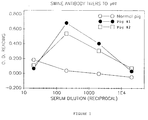
- Figure 1 shows the results of the following ELISA assay.
- An ELISA plate is coated with pST and serum samples from two pigs, both which are immunized with pST (54-95), and added in the plate to determine anti-pST antibody titers. Serum from pooled untreated normal pigs is similarly tested as control.
- Figure 2 shows the results of the following ELISA assay.
- ELISA plate is coated with peptide pST (54-95) and serum samples from two pigs, both which are immunized with pST (54-95), are added in the plate to determine anti-pST antibody titers. Serum from pooled untreated normal pigs is similarly tested as control.
- Figure 3 shows the biological activity of antibody to pST (54-95). Hypox rats are injected subcutaneously with pST (5 ug/day) with or without antibody (2 mg/day) for 5 consecutive days and the net weight gain is recorded. Immune antibodies are prepared from two pigs that had been immunized with pST (54-95) and the control antibody is prepared from a pooled sera of non-immunized pigs. *,p ⁇ 0.05; **,p ⁇ 0.01.
- Figure 4 shows the biological activity of antibody to pST (54-95). In a study similar to that shown in Figure 3, except antibody is injected at a dose of 0.5 mg/day and for a longer period of time. *,p ⁇ 0.05; **,p ⁇ 0.01; ***,p ⁇ 0.001.
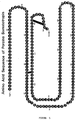
- Figure 5 shows the amino acid sequence of porcine somatotropin. Also shown as sequence I.D. No. 1.
- Figure 6 is the mass spectrometric analysis of purified pST.
- This invention provides an isolated polypeptide corresponding to the epitope for porcine somatotropin (pST). More specifically, this epitope is the binding region reactive with monoclonal antibody PS-7.6.
- Monoclonal antibody PS-7.6 is deposited with the American Type Culture Collection (ATCC), 12301 Parklawn Drive, Rockville, Maryland 20852 U.S.A., under the provisions of the Budapest Treaty on the International Recognition of the Deposit of Microorganisms for the Purposes of Patent Procedure and is allocated ATCC Designation HB 10416.
- polypeptide encompasses any naturally occurring allelic variant thereof as well as man-made recombinant forms, i.e., non-naturally occurring forms of the polypeptide which are sufficiently identical to naturally occurring polypeptide to allow possession of similar biological activity - such as derivatives and analogues. Any of these polypeptides are made by recombinant systems or a vector engineered to produce these polypeptides as well as made by chemical synthesis.
- an epitope is that portion of the antigen molecule, in this case porcine somatotropin polypeptide, that is responsible for the specificity of the antigen in an antigen-antibody binding site to which it is complementary.
- the isolated somatotropin polypeptide has the amino acid sequence shown in Figure 5 from about amino acid number 50 to amino acid number 105.
- the isolated somatotropin polypeptide has the amino acid sequence shown in Figure 5 from about amino acid number 54 to about amino acid number 95.
- the polypeptide has the amino acid sequence shown in Figure 5 from about amino acid 80 to about amino acid 90.
- Sufficiently identical polypeptides includes polypeptides that have an amino acid sequence that is substantially the same as native PST but for small nucleic acid changes that alter the primary structure of the polypeptide.
- the nucleic acids that encode these polypeptides are able to hybridize to the nucleic acid that encodes native pST under conditions of moderate to high stringency. Methods of hybridization are well known to those of skill in the art.
- the resultant polypeptide, although altered, is still able to bind to antibody PS-7.6.
- This isolated somatotropin polypeptide is isolated from porcine (pigs).
- nucleic acid molecules which encode the polypeptides described hereinabove.
- nucleic acid encompasses RNA as well as single and double-stranded DNA and cDNA. Examples of such nucleic acids are the nucleic acids which encode the polypeptide having the sequence shown in Figure 5 from amino acid number 54 to amino acid number 105. Nucleic acid molecules which differ from that of the above-identified molecules but which encode polypeptides that produce the same biological effect are encompassed by this invention. And this invention encompasses nucleic acid molecules characterized by changes in non-coding regions that do not alter the phenotype of the polypeptide produced therefrom when compared to the nucleic acid molecules described hereinabove. These nucleic acids are isolated from natural sources or chemically synthesized.
- Suitable vectors include, but are not limited to a plasmid, viral or cosmid vector. These vectors comprise the nucleic acids of this invention operatively linked to a promoter of RNA transcription, as well as other regulatory sequences.
- operatively linked means positioned in such a manner that the promoter directs the transcription of RNA off of the nucleic acid molecule. Examples of such promoters are SP6, T4 and T7. Vectors which contain both a promoter and a cloning site into which an inserted piece of nucleic acid is operatively linked to that promoter are well known in the art.
- these vectors are capable of transcribing RNA in vivo or in vitro .
- These vectors are inserted into a host cell for the production of the polypeptides.
- a suitable host is, but is not limited to, a eucaryotic cell, e.g., a mammalian cell or yeast cell, or an insect cell for baculovirus expression, or a procaryotic cell such as a bacteria cell, for example E . coli .
- the polypeptide is biosynthetically produced and is isolated by methods well known to those of skill in the art. This invention also encompasses these polypeptides.
- compositions comprising the isolated somatotropin polypeptides of this invention and a pharmaceutically acceptable carrier is provided by this invention.
- pharmaceutically acceptable carrier encompasses any of the standard pharmaceutical carriers, such as phosphate buffered saline solution, water, emulsions, such as oil/water emulsions, and various types of wetting agents.
- the preferred compositions of this invention contain porcine somatotropin polypeptides.
- compositions are particularly useful to enhance the biological activity of growth hormone in an animal.
- the composition is administered to the animal in an effective biological enhancing amount, the precise amount depending on the size of animal being treated. Methods of determining the amount are well known to those of skill in the art.
- compositions also are useful to induce anti-growth hormone antibodies in an animal by administering to the animal an effective immunizing amount of these compositions.
- amount administered depends on the size and species of animal being treated, nevertheless, methods of determining the amount are well known to those of skill in the art. These amounts range, for example, from about 1 ug to about 10 mg of pST. However, in the preferred embodiment of this invention, the amount is in the range of about 3 ug to about 5 mg pST.
- the growth of an animal also is enhanced by administering to the animal an effective growth-enhancing amount of these compositions.
- the precise amount to be administered is determined by one of skill in the art by well known methods. These amounts range, for example, from about 1 ug to about 10 mg. However, in the preferred embodiment of this invention, the amount is in the range of about 3 ug to about 5 mg of the composition.
- Animals which are treated by the above methods include, but are not limited to cattle, pigs, goats, chickens, turkeys, geese, rabbits and vertebrates, such as fish.
- administration means administration orally, intravenously or intrperitoneally.
- hypophysectomized female Sprague-Dawley rats 21 days of age and weighing 50-64 g, are obtained from Taconic Farm, Germantown, NY and used to assay for Growth Hormone (GH).
- Female crossbred swine Duroc x Yorkshire x Hampshire
- a peptide with the sequence of is synthesized by a Milligen-Bioserch 9600 Automatic Peptide Synthesizer (Millipore, Bedford, MA) using 9-fluoroenylmethyloxycarbonyl ("Fmoc”)-amino acid with Benzotriazol-1-yloxytri(dimethylamino)phosphonium hexafluorophosphate (“BOP”), 1-hydroxybenzotriazole (“HOBT”) as coupling reagents and 4-hydroxymethyl-phenoxy-resin as carrier.
- Fmoc 9-fluoroenylmethyloxycarbonyl
- BOP Benzotriazol-1-yloxytri(dimethylamino)phosphonium hexafluorophosphate
- HOBT 1-hydroxybenzotriazole
- Fmoc-amino acid derivatives For side chain protection, the following Fmoc-amino acid derivatives are used: Fmoc-Ser(t-Bu), Fmoc-Thr(t-Bu), Fmoc-Arg(Pmc), Fmco-Lys(Boc), Fmoc-Gln-oPfp and Fmoc-Asp(O-t-Bu).
- the crude peptide is then purified by preparative HPLC C18 column (Rainin, Woburn, MA) using water-acetonitrile gradient (30-80%) in 25 min; flow rate at 22 ml/min.
- the purity of this peptide may be determined by standard amino acid analysis and FAB mass spectrometry (see Figure 6).
- the peptide identified above is conjugated to ovalbumin using 2% glutaldehyde at room temperature (approximately 25°C)and followed by reduction with NaBH4.
- the excess NaBH4 is quenched by acetic acid and the conjugate is purified by sizing column chromatography. It is lyophilized and stored at -20°C until use.
- the peptide-ovalbumin conjugates are emulsified with complete Freund's adjuvant and injected subcutaneously into the neck area behind the ears of pigs. All animals are boosted at least twice with the same antigens every 4 weeks, and blood samples were taken 7-14 days after the last boosting. Serum is obtained after clotting and immunoglobulin (Ig) is purified by a preparative Protein A Sepherose HR 16/5 column on a fast protein liquid chromatography (FPLC) system (Pharmacia) or ammonium sulfate precipitation. The antibodies are stored in aliquots at -80°C until used.
- FPLC fast protein liquid chromatography
- antigen is prepared in phosphate-buffered saline (PBS) and 1 ug in 100 ul is added to each well of a 96-well-flat-bottom polystyrene plate. After being incubated for 1 hour, the plate is washed three times with PBS containing 0.05% (v/v) Tween-20 by an automatic plate washer (Dynatech Wash II, Chantilly, VA, U.S.A.) and each well is dispensed with 200 ul of 2% (w/v) bovine serum albumin (Sigma). The plate is incubated again for another hour. Serum samples are added. These are tested at a final concentration of 5% in the wells.
- PBS phosphate-buffered saline
- the plate is incubated for 30 min, washed six times with PBS, and 100 ul of alkaline phosphatase-conjugated goat anti-rabbit IgG F(ab')2(Zymed Laboratories, South San Francisco, CA, U.S.A.) is added.
- the plate is washed again after a 30 minute incubation and 100 ul p-nitrophenyl phosphate (Sigma) in 0.1 M diethanolamine (pH 10.3) is added as substrate for color development.
- the colorimetric response is recorded as optical density (OD) by an ELISA plate reader at a wavelength of 405nm.
- the incubation procedure is always performed at 37°C.
- This method is used to detect analogues of pST of native pST shown in Figure 5. Using this method, samples of polypeptides are prepared in PBS and aliquoted onto 96-well plates. Native pST (54-95) is used as the control.
- hypophysectomized rats are randomly allocated to groups of eight. Antibody mixed with 5 ug pST at room temperature for 1 hour is administered subcutaneously in the neck region of experimental rats. All animals are treated daily for various periods of time and their growth is recorded as net weight gain. Statistical evaluation is carried out by comparing with pST treatment alone using the least-squares analysis of variance for randomized design using the General Linear Models procedure of the Statistical Analysis System.
- the peptide pGH(54-95) (also Sequence I.D. No. 1) is chemically conjugated to ovalbumin.
- the conjugates are mixed with Freund's adjuvant and injected into two pigs.
- Sera from these pigs are obtained after two antigen boostings and tested for antibody titers in ELISA.
- sera from these pigs contain antibodies immunoreactive with pST. Normal pooled pig serum is found to be inactive. All these serum samples are similarly tested against pST (54-95) peptide as target and found that both immunized pigs generate anti-peptide antibody, whereas untreated normal pigs show very little, if there is any, titer ( Figure 2).
- hypox rats The growth enhancing effect of these antibodies are evaluated in hypox rats.
- Hypox rats are injected subcutaneously with pST (5 ug) with or without antibody for 5 consecutive days (day 0 to 4). Net weight gains are recorded.
- Two different sources of experimental antibodies are prepared from two pigs that are immunized with pST (54-95), and the control antibody prepared from a pooled sera of non-immunized pigs. Results in Figure 3 indicate that at a 2 mg dose, all antibodies including non-immune antibody increase the activity of pST in promoting hypox rats to grow. However, the effect of non-immune antibody is short-lived, whereas in the two pigs, antibodies manifest an apparently longer effect.
- the nucleotide sequence coding for the pST polypeptide is inserted into an appropriate expression vector, i.e,, a vector that contains the necessary elements for the transcription and translation of the inserted protein-coding sequence.
- the coding sequence may be extended at either the 5' or 3' terminus or both termini to extend biosynthetically the polypeptide while retaining the epitope.
- the extension may provide an arm for linking, e.g., to a label, to a carrier or surface.
- a variety of host-vector systems are utilized to express the pST sequence. These include, but are not limited to, mammalian cell cultures such as Chinese hamster ovary cell host cultures (CHO); mammalian systems infected with virus (e.g., vaccinia virus, adenovirus); insect cell systems infected with virus (e.g., baculovirus); microorganisms such as yeast containing yeast vectors or bacteria transformed with bacteriophage DNA, plasmid DNA or cosmid DNA.
- mammalian cell cultures such as Chinese hamster ovary cell host cultures (CHO); mammalian systems infected with virus (e.g., vaccinia virus, adenovirus); insect cell systems infected with virus (e.g., baculovirus); microorganisms such as yeast containing yeast vectors or bacteria transformed with bacteriophage DNA, plasmid DNA or cosmid DNA.
- mammalian cell cultures such as Chinese hamster ovary
- promoters isolated from the genome of mammalian cells are used.
- promoters are produced by recombinant DNA or synthetic techniques to provide for transcription of the inserted sequence.
- Specific initiation signals are provided for efficient translation of inserted nucleotides. These signals include the ATG initiation codon and adjacent sequences, and are inserted in phase with the reading frame of the pST sequence to ensure translation of the entire insert. These exogenous translational control signals and initiation codons are from a variety of origins, both natural and synthetic.
- the pST nucleotides are inserted into the vectors by in vitro recombinant techniques and by in vivo recombination.
- Expression vectors containing the pST sequences are identified, for example, by three general approaches: 1) DNA-DNA hybridization, 2) presence or absence of marker gene functions and 3) expression of the inserted pST sequences.
- first approach the presence of inserted pST sequences in an expression vector are detected by DNA-DNA hybridization using probes comprising sequences that are homologous to the pST nucleotides.
- second approach the recombinant vector/host system is identified and selected based upon the presence or absence of certain "marker" gene functions (e.g., thymidine kinase activity, resistance to antibiotics, transformation phenotype) caused by the insertion of the foreign genes in the vector.
- third approach recombinant expression vectors are identified by assaying the foreign gene product expressed by the recombinant, for example, by assaying for the reactivity of the nucleotide product with antibody PS-7.6.
- the host cell strain may be chosen that modulated the expression of the inserted pST sequences.
- Expression from certain promoters is elevated in the presence of certain inducers, (e.g., zinc and cadmium ions for metallothionine promoters).
- a self-replicating unit a plasmid, a virus, a cell
- Recombinants that lack the self-replicating unit are integrated into a molecule having such a unit so that it is propagated.
- certain plasmid expression vectors upon introduction into a host cell need to be integrated into the cellular chromosome to ensure propagation and stable expression of the recombinant gene.
- recombinant expression vectors are propagated and prepared in quantity.
- E. coli plasmids are known and have been used to express foreign genes. For economic reasons, it is highly preferable to be able to obtain a high level of expression.
- One way to obtain large amounts of a given gene product is to clone a gene on a plasmid that has a very high copy number within the bacterial cell. By increasing the number of copies of a particular gene, mRNA levels would normally also increase, which in turn leads to increased production of the desired protein.
- Vaccinia virus may be used as a cloning and expression vector.
- the virus contains a linear double-stranded DNA genome of approximately 187 kb pairs and replicates within the cytoplasm of infected cells.
- These viruses contain a complete transcriptional enzyme system (including capping, methylating and polyadenylating enzymes) within the virus core. This system is necessary for virus infectivity because vaccinia virus transcriptional regulatory sequences (promoters) allow for initiation of transcription by vaccinia RNA polymerase, but not by cellular RNA polymerase.
- Plasmid vectors also called insertion vectors, are used to insert the chimeric gene into vaccinia virus.
- One type of insertion vector comprises: 1) a vaccinia virus promoter including the transcriptional initiation site; 2) several unique restriction endonuclease cloning sites downstream from the transcriptional start site for insertion of foreign DNA fragments; 3) nonessential vaccinia virus DNA (such as the thymidine kinase gene) flanking the promoter and cloning sites that direct insertion of the chimeric gene into the homologous nonessential region of the virus genome; and 4) a bacterial origin of replication and antibiotic resistance marker for replication and selection in E. coli .
- Recombinant viruses are produce by transfection of recombinant bacterial insertion vectors containing the foreign gene into cells infected with vaccinia virus. Homologous recombination takes place within the infected cells and results in the insertion of the foreign gene into the viral genome. See for example, U.S. Patent No. 4,603,112, the contents of which are hereby incorporated by reference into the present disclosure. Immunological techniques, DNA plaque hybridization or genetic selection, for example, is used to identify and isolate the desired recombinant virus. These vaccinia virus retain the functions essential for infectivity and are constructed to accommodate up to approximately 35 db of foreign DNA.
- a baculovirus such as Autographica californica nuclear polyhedris virus (AcNPV) is used as a cloning or expression vector.
- the infectious form of AcNPV is normally found in a viral occlusion.
- This structure is largely composed of polyhedron polypeptide in which virus particles are embedded.
- Polyhedron gene expression occurs very late in the infection cycle, after mature virus particles are formed. Therefore, polyhedron gene expression is a dispensable function, i.e., non-occluded virus particles produced in the absence of polyhedron gene expression are fully active and are capable of infecting cells in culture.
- a recombinant baculovirus can be prepared in two steps.
- baculovirus DNA is cleaved to produce a fragment comprising a polyhedron gene or a portion thereof, which is then inserted into a cloning vehicle.
- the gene to be expressed is also inserted into the cloning vehicle, and it is so inserted so that it is under control of the polyhedron promoter.
- This recombinant molecule may be termed the recombinant transfer vector.
- the recombinant transfer vector is amplified in appropriate host cells.
- the recombinant transfer vector is mixed with baculovirus helper DNA and used to transfect insect cells in culture to effect recombination and incorporation of the cloned gene at the polyhedron gene locus of the baculovirus genome.
- the resultant recombinant baculovirus is used to infect susceptible insects or cultured insect cells.
Landscapes
- Health & Medical Sciences (AREA)
- Chemical & Material Sciences (AREA)
- Life Sciences & Earth Sciences (AREA)
- Organic Chemistry (AREA)
- Endocrinology (AREA)
- General Health & Medical Sciences (AREA)
- Medicinal Chemistry (AREA)
- Gastroenterology & Hepatology (AREA)
- Biochemistry (AREA)
- Biophysics (AREA)
- Zoology (AREA)
- Genetics & Genomics (AREA)
- Molecular Biology (AREA)
- Proteomics, Peptides & Aminoacids (AREA)
- Toxicology (AREA)
- Bioinformatics & Cheminformatics (AREA)
- Animal Behavior & Ethology (AREA)
- Diabetes (AREA)
- Hematology (AREA)
- Obesity (AREA)
- Chemical Kinetics & Catalysis (AREA)
- General Chemical & Material Sciences (AREA)
- Nuclear Medicine, Radiotherapy & Molecular Imaging (AREA)
- Pharmacology & Pharmacy (AREA)
- Engineering & Computer Science (AREA)
- Public Health (AREA)
- Veterinary Medicine (AREA)
- Peptides Or Proteins (AREA)
- Medicines That Contain Protein Lipid Enzymes And Other Medicines (AREA)
- Pharmaceuticals Containing Other Organic And Inorganic Compounds (AREA)
- Medicines Containing Antibodies Or Antigens For Use As Internal Diagnostic Agents (AREA)
- Fodder In General (AREA)
- Preparation Of Compounds By Using Micro-Organisms (AREA)
Applications Claiming Priority (2)
| Application Number | Priority Date | Filing Date | Title |
|---|---|---|---|
| US07/922,523 US5338836A (en) | 1992-07-29 | 1992-07-29 | Biologically active porcine somatotropin polypeptides and methods of using the same |
| US922523 | 1992-07-29 |
Publications (1)
| Publication Number | Publication Date |
|---|---|
| EP0593857A1 true EP0593857A1 (fr) | 1994-04-27 |
Family
ID=25447159
Family Applications (1)
| Application Number | Title | Priority Date | Filing Date |
|---|---|---|---|
| EP93111365A Ceased EP0593857A1 (fr) | 1992-07-29 | 1993-07-15 | Polypeptides, biologiquement actifs de la somatotropine porcine et méthodes d'usage du même |
Country Status (8)
| Country | Link |
|---|---|
| US (2) | US5338836A (fr) |
| EP (1) | EP0593857A1 (fr) |
| JP (1) | JPH06206899A (fr) |
| KR (1) | KR940005665A (fr) |
| AU (1) | AU674858B2 (fr) |
| CA (1) | CA2101348A1 (fr) |
| NZ (1) | NZ248239A (fr) |
| ZA (1) | ZA935441B (fr) |
Cited By (3)
| Publication number | Priority date | Publication date | Assignee | Title |
|---|---|---|---|---|
| WO1996005311A1 (fr) * | 1994-08-15 | 1996-02-22 | American Cyanamid Company | Polypeptide biologiquement actif du type somatotrophine porcine et ses procedes d'utilisation |
| WO1996030405A1 (fr) * | 1995-03-31 | 1996-10-03 | American Cyanamid Company | Peptides avec des proprietes favorisant la croissance |
| US5912325A (en) * | 1992-07-29 | 1999-06-15 | American Cyanamid Company | Biologically active porcine somatotropin polypeptides and methods of using the same |
Families Citing this family (3)
| Publication number | Priority date | Publication date | Assignee | Title |
|---|---|---|---|---|
| US5686268A (en) * | 1992-06-19 | 1997-11-11 | Pfizer Inc. | Fused proteins |
| TW586934B (en) * | 1997-05-19 | 2004-05-11 | Sumitomo Pharma | Immunopotentiating composition |
| CN1434703A (zh) * | 2000-08-24 | 2003-08-06 | 利统股份有限公司 | 延迟释放组合物及组合 |
Citations (4)
| Publication number | Priority date | Publication date | Assignee | Title |
|---|---|---|---|---|
| EP0280407A2 (fr) * | 1987-01-28 | 1988-08-31 | Southern Cross Biotech Pty.Ltd. | Procédé de production de polypeptides recombinants ayant l'activité de l'hormone de croissance porcine |
| EP0284406A1 (fr) * | 1987-03-27 | 1988-09-28 | Pitman-Moore Limited | Molécules biologiquement actives |
| WO1989000166A2 (fr) * | 1987-07-06 | 1989-01-12 | Peptide Technology Ltd | Peptides relatifs a l'hormone de croissance |
| EP0429788A2 (fr) * | 1989-10-27 | 1991-06-05 | American Cyanamid Company | Fragments de somatotropine porcine et anticorps contre ces fragments augmentant l'activité de la somatotropine porcine |
Family Cites Families (4)
| Publication number | Priority date | Publication date | Assignee | Title |
|---|---|---|---|---|
| US5104806A (en) * | 1987-03-12 | 1992-04-14 | Amgen, Inc. | Porcine growth hormone analogs encoding dna |
| US5338836A (en) * | 1992-07-29 | 1994-08-16 | American Cyanamid Company | Biologically active porcine somatotropin polypeptides and methods of using the same |
| FR2694885B1 (fr) * | 1992-08-20 | 1994-10-07 | Rhone Merieux | Procédé pour améliorer la croissance et la qualité des carcasses des animaux domestiques producteurs de viande, ensemble de vaccination et vaccins. |
| AU674881B2 (en) * | 1992-09-07 | 1997-01-16 | Biotechnology And Biological Sciences Research Council, The | Growth hormone potentiating molecules |
-
1992
- 1992-07-29 US US07/922,523 patent/US5338836A/en not_active Expired - Fee Related
-
1993
- 1993-07-15 EP EP93111365A patent/EP0593857A1/fr not_active Ceased
- 1993-07-23 NZ NZ248239A patent/NZ248239A/en unknown
- 1993-07-26 JP JP5202527A patent/JPH06206899A/ja active Pending
- 1993-07-27 CA CA002101348A patent/CA2101348A1/fr not_active Abandoned
- 1993-07-28 KR KR1019930014445A patent/KR940005665A/ko not_active Withdrawn
- 1993-07-28 ZA ZA935441A patent/ZA935441B/xx unknown
- 1993-07-29 AU AU44318/93A patent/AU674858B2/en not_active Ceased
-
1994
- 1994-04-05 US US08/222,987 patent/US5912325A/en not_active Expired - Fee Related
Patent Citations (4)
| Publication number | Priority date | Publication date | Assignee | Title |
|---|---|---|---|---|
| EP0280407A2 (fr) * | 1987-01-28 | 1988-08-31 | Southern Cross Biotech Pty.Ltd. | Procédé de production de polypeptides recombinants ayant l'activité de l'hormone de croissance porcine |
| EP0284406A1 (fr) * | 1987-03-27 | 1988-09-28 | Pitman-Moore Limited | Molécules biologiquement actives |
| WO1989000166A2 (fr) * | 1987-07-06 | 1989-01-12 | Peptide Technology Ltd | Peptides relatifs a l'hormone de croissance |
| EP0429788A2 (fr) * | 1989-10-27 | 1991-06-05 | American Cyanamid Company | Fragments de somatotropine porcine et anticorps contre ces fragments augmentant l'activité de la somatotropine porcine |
Cited By (3)
| Publication number | Priority date | Publication date | Assignee | Title |
|---|---|---|---|---|
| US5912325A (en) * | 1992-07-29 | 1999-06-15 | American Cyanamid Company | Biologically active porcine somatotropin polypeptides and methods of using the same |
| WO1996005311A1 (fr) * | 1994-08-15 | 1996-02-22 | American Cyanamid Company | Polypeptide biologiquement actif du type somatotrophine porcine et ses procedes d'utilisation |
| WO1996030405A1 (fr) * | 1995-03-31 | 1996-10-03 | American Cyanamid Company | Peptides avec des proprietes favorisant la croissance |
Also Published As
| Publication number | Publication date |
|---|---|
| ZA935441B (en) | 1994-03-10 |
| US5338836A (en) | 1994-08-16 |
| AU4431893A (en) | 1994-02-03 |
| JPH06206899A (ja) | 1994-07-26 |
| KR940005665A (ko) | 1994-03-22 |
| CA2101348A1 (fr) | 1994-01-30 |
| NZ248239A (en) | 1996-07-26 |
| US5912325A (en) | 1999-06-15 |
| AU674858B2 (en) | 1997-01-16 |
Similar Documents
| Publication | Publication Date | Title |
|---|---|---|
| Nabi et al. | Identification of B16-F1 melanoma autocrine motility-like factor receptor | |
| JP3017962B2 (ja) | ヘマトクリット値を上昇させるための医薬組成物の製造方法 | |
| SK284391B6 (sk) | Mutantné proteíny ľudského interleukínu-4 ako antagonisty alebo parciálne agonisty ľudského interleukínu-4, liečivá, ktoré ich obsahujú, a použitie | |
| CA2348026C (fr) | Anticorps anti-semp1, methodes de production et utilisations connexes | |
| JPH037594A (ja) | 組換えコクシジウム症ワクチン類 | |
| CZ168296A3 (en) | Spermatic antigen corresponding to auto-antigenic epitope of spermatic bond protein | |
| JP3215692B2 (ja) | 組み換えコクシジウム症ワクチン | |
| US5338836A (en) | Biologically active porcine somatotropin polypeptides and methods of using the same | |
| CZ216792A3 (en) | Immunogenic polypeptide | |
| US5536497A (en) | Fimbrial polypeptides useful in the prevention of periodontitis | |
| AU2638295A (en) | Compositions of transactivating proteins of human immunodeficiency virus | |
| JP3519096B2 (ja) | モノクローナル抗体、ハイブリドーマおよびそれらの用途 | |
| AU633377B2 (en) | Novel polypeptides having growth factor activity and nucleic acid sequences encoding the polypeptides | |
| WO1996005311A1 (fr) | Polypeptide biologiquement actif du type somatotrophine porcine et ses procedes d'utilisation | |
| NO177858B (no) | Peptid | |
| CA2329755A1 (fr) | Immunogenes synthetiques a base de somatostatine servant a stimuler la croissance chez des animaux d'elevage | |
| JP2002518995A (ja) | マレク病(mdv)感染細胞で発現される宿主コード化タンパク質、及びそれに対する抗体 | |
| US7078514B1 (en) | Chicken growth hormone releasing hormone receptor | |
| AU5422596A (en) | Peptides with growth promotion properties | |
| KR100189699B1 (ko) | Hbv 항원단백질을 발현하는 키메라 폴리오바이러스백신벡터를 이용한 면역화 방법 | |
| WO1995021255A9 (fr) | Compositions utiles pour traiter la maladie de marek | |
| WO1995021255A1 (fr) | Compositions utiles pour traiter la maladie de marek | |
| JPH05500206A (ja) | Grfペプチド | |
| WO2000076455A2 (fr) | Recepteur de l'hormone de liberation de l'hormone de croissance de poulet | |
| MXPA00011752A (en) | Synthetic somatostatin immunogen for growth promotion in farm animals |
Legal Events
| Date | Code | Title | Description |
|---|---|---|---|
| PUAI | Public reference made under article 153(3) epc to a published international application that has entered the european phase |
Free format text: ORIGINAL CODE: 0009012 |
|
| AK | Designated contracting states |
Kind code of ref document: A1 Designated state(s): AT BE CH DE DK ES FR GB GR IE IT LI LU NL PT SE |
|
| RAP1 | Party data changed (applicant data changed or rights of an application transferred) |
Owner name: AMERICAN CYANAMID COMPANY |
|
| 17P | Request for examination filed |
Effective date: 19940628 |
|
| 17Q | First examination report despatched |
Effective date: 19940915 |
|
| GRAG | Despatch of communication of intention to grant |
Free format text: ORIGINAL CODE: EPIDOS AGRA |
|
| STAA | Information on the status of an ep patent application or granted ep patent |
Free format text: STATUS: THE APPLICATION HAS BEEN REFUSED |
|
| 18R | Application refused |
Effective date: 19970720 |