EP0434616A1 - Méthode et appareil pour la transformation génÀ©tique de cellules - Google Patents
Méthode et appareil pour la transformation génÀ©tique de cellules Download PDFInfo
- Publication number
- EP0434616A1 EP0434616A1 EP90810970A EP90810970A EP0434616A1 EP 0434616 A1 EP0434616 A1 EP 0434616A1 EP 90810970 A EP90810970 A EP 90810970A EP 90810970 A EP90810970 A EP 90810970A EP 0434616 A1 EP0434616 A1 EP 0434616A1
- Authority
- EP
- European Patent Office
- Prior art keywords
- cells
- restriction
- dna
- cell
- cannula
- Prior art date
- Legal status (The legal status is an assumption and is not a legal conclusion. Google has not performed a legal analysis and makes no representation as to the accuracy of the status listed.)
- Granted
Links
Images
Classifications
-
- C—CHEMISTRY; METALLURGY
- C12—BIOCHEMISTRY; BEER; SPIRITS; WINE; VINEGAR; MICROBIOLOGY; ENZYMOLOGY; MUTATION OR GENETIC ENGINEERING
- C12N—MICROORGANISMS OR ENZYMES; COMPOSITIONS THEREOF; PROPAGATING, PRESERVING, OR MAINTAINING MICROORGANISMS; MUTATION OR GENETIC ENGINEERING; CULTURE MEDIA
- C12N15/00—Mutation or genetic engineering; DNA or RNA concerning genetic engineering, vectors, e.g. plasmids, or their isolation, preparation or purification; Use of hosts therefor
- C12N15/09—Recombinant DNA-technology
- C12N15/87—Introduction of foreign genetic material using processes not otherwise provided for, e.g. co-transformation
- C12N15/89—Introduction of foreign genetic material using processes not otherwise provided for, e.g. co-transformation using microinjection
-
- C—CHEMISTRY; METALLURGY
- C12—BIOCHEMISTRY; BEER; SPIRITS; WINE; VINEGAR; MICROBIOLOGY; ENZYMOLOGY; MUTATION OR GENETIC ENGINEERING
- C12M—APPARATUS FOR ENZYMOLOGY OR MICROBIOLOGY; APPARATUS FOR CULTURING MICROORGANISMS FOR PRODUCING BIOMASS, FOR GROWING CELLS OR FOR OBTAINING FERMENTATION OR METABOLIC PRODUCTS, i.e. BIOREACTORS OR FERMENTERS
- C12M35/00—Means for application of stress for stimulating the growth of microorganisms or the generation of fermentation or metabolic products; Means for electroporation or cell fusion
-
- C—CHEMISTRY; METALLURGY
- C12—BIOCHEMISTRY; BEER; SPIRITS; WINE; VINEGAR; MICROBIOLOGY; ENZYMOLOGY; MUTATION OR GENETIC ENGINEERING
- C12M—APPARATUS FOR ENZYMOLOGY OR MICROBIOLOGY; APPARATUS FOR CULTURING MICROORGANISMS FOR PRODUCING BIOMASS, FOR GROWING CELLS OR FOR OBTAINING FERMENTATION OR METABOLIC PRODUCTS, i.e. BIOREACTORS OR FERMENTERS
- C12M35/00—Means for application of stress for stimulating the growth of microorganisms or the generation of fermentation or metabolic products; Means for electroporation or cell fusion
- C12M35/04—Mechanical means, e.g. sonic waves, stretching forces, pressure or shear stimuli
-
- C—CHEMISTRY; METALLURGY
- C12—BIOCHEMISTRY; BEER; SPIRITS; WINE; VINEGAR; MICROBIOLOGY; ENZYMOLOGY; MUTATION OR GENETIC ENGINEERING
- C12N—MICROORGANISMS OR ENZYMES; COMPOSITIONS THEREOF; PROPAGATING, PRESERVING, OR MAINTAINING MICROORGANISMS; MUTATION OR GENETIC ENGINEERING; CULTURE MEDIA
- C12N15/00—Mutation or genetic engineering; DNA or RNA concerning genetic engineering, vectors, e.g. plasmids, or their isolation, preparation or purification; Use of hosts therefor
- C12N15/09—Recombinant DNA-technology
- C12N15/63—Introduction of foreign genetic material using vectors; Vectors; Use of hosts therefor; Regulation of expression
- C12N15/79—Vectors or expression systems specially adapted for eukaryotic hosts
- C12N15/82—Vectors or expression systems specially adapted for eukaryotic hosts for plant cells, e.g. plant artificial chromosomes (PACs)
- C12N15/8201—Methods for introducing genetic material into plant cells, e.g. DNA, RNA, stable or transient incorporation, tissue culture methods adapted for transformation
- C12N15/8206—Methods for introducing genetic material into plant cells, e.g. DNA, RNA, stable or transient incorporation, tissue culture methods adapted for transformation by physical or chemical, i.e. non-biological, means, e.g. electroporation, PEG mediated
- C12N15/8207—Methods for introducing genetic material into plant cells, e.g. DNA, RNA, stable or transient incorporation, tissue culture methods adapted for transformation by physical or chemical, i.e. non-biological, means, e.g. electroporation, PEG mediated by mechanical means, e.g. microinjection, particle bombardment, silicon whiskers
-
- C—CHEMISTRY; METALLURGY
- C12—BIOCHEMISTRY; BEER; SPIRITS; WINE; VINEGAR; MICROBIOLOGY; ENZYMOLOGY; MUTATION OR GENETIC ENGINEERING
- C12N—MICROORGANISMS OR ENZYMES; COMPOSITIONS THEREOF; PROPAGATING, PRESERVING, OR MAINTAINING MICROORGANISMS; MUTATION OR GENETIC ENGINEERING; CULTURE MEDIA
- C12N15/00—Mutation or genetic engineering; DNA or RNA concerning genetic engineering, vectors, e.g. plasmids, or their isolation, preparation or purification; Use of hosts therefor
- C12N15/09—Recombinant DNA-technology
- C12N15/87—Introduction of foreign genetic material using processes not otherwise provided for, e.g. co-transformation
Definitions
- the invention relates to a method for the genetic transformation of cells, in particular plant cells according to the preamble of claim 1 and a device suitable for carrying out this method for introducing particles into cells according to the preamble of claim 14.
- a method and a corresponding device are for example in EP-A-0 270 356.
- the present invention relates to the use of the method according to the invention for the production of transgenic plants and to the transgenic plants themselves and their progeny obtainable with the aid of this method.
- the Agrobacterium transformation system is undoubtedly one of the best studied and most frequently used methods.
- Agrobacterium cells have a large DNA fragment on their Ti plasmid, the so-called T-DNA region, which is integrated into the plant genome during the natural transformation of plant cells.
- this natural gene transfer system can be used as a gene vector system for the targeted transformation of plants [Chilton, MD, 1983].
- the Agrobacterium transformation system has the decisive disadvantage that the host range of the agrobacteria on certain dicotyledonous plants and on a few representatives of the monocotyledons (Hernalsteens et al, 1984; Hookas-Van-Slogteren et al., 1984), but from an agricultural economic point of view are insignificant, is limited. This means that the most important crop plants are not accessible for an effective gene transfer.
- agrobacteria used are pathogens that trigger characteristic disease symptoms in the form of cancerous tissue growths in their host plants and can therefore only be handled in the laboratory while adhering to strict safety requirements.
- the first approaches in this direction have been various transformation processes that have only recently been developed and are based on the introduction of DNA into plant cells that are present within a more highly organized unit, e.g. an intact tissue association, an embryo or an entire, already fully developed plant.
- An alternative method which also aims to transform plant cells within a more highly organized unit, is based on bombarding these cells with particles that are associated with the DNA to be transformed. As a result of the impact of these highly accelerated particles, holes are made in the cell walls of the cells hit, through which the particles, including the DNA associated with them, enter the cell.
- microprojectiles have already been used for gene transfer in the past (Klein et al. 1988; Christou st al., 1988; EP-A-0 270 356) and have proven themselves for certain questions.
- the commercially available ballistic devices are not very suitable. Since the metal particles are shot dry using ballistic methods, aggregates consisting of several to many particles are almost always shot that tear deep wounds on the sample. The tendency to aggregate is further promoted by the binding of the DNA on the particles.
- the generally very high particle speed of the ballistic processes requires a large working distance, which leads to a large scattering of the particles.
- the particle velocity can only be influenced in large steps in the known ballistic methods.
- the strong scatter of the particles can therefore hardly be improved.
- small tissues with small cells require a dense covering of the sample with as individual, evenly distributed particles as possible on a narrowly defined target field.
- the momentum of the particles should be as similar as possible, i.e. Speed and mass, the particle density on the sample and the particle speed should be able to be regulated as finely as possible in order to remain adaptable to different tissues.
- microprojectiles in the form of particles are atomized into a fine mist in suspension with a DNA solution using a pressure surge.
- the droplets of the nebula contain the particles and the DNA and are only slightly larger than the particles themselves.
- the mist is then pressed through a fine pore or capillary with the same pressure surge and thereby accelerated.
- the particles punch holes in the cell walls and the Plasma membrane through which the DNA in the entrained droplet can enter the cells.
- On a target area smaller than 1 mm in diameter the particle density on the sample and the speed of the particles can be finely regulated within wide limits.
- the device according to the invention is technically very simple and relatively inexpensive to manufacture and works reliably.
- tissue associations are particularly suitable and therefore preferred for use in the transformation process according to the invention.
- meristematic tissue associations such as those e.g. present in the shoot meristems of plants, in proembryos and embryos or in embryogenic cell cultures.
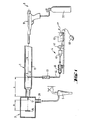
- the device comprises an elongated, essentially cylindrical or tubular pressure chamber 1, a sample chamber 2 adjoining it, a device 3 for generating a pressure surge in the pressure chamber, dosing means 4 for supplying suspension into the pressure chamber and one to the sample chamber connectable suction source e.g. in the form of a water jet vacuum pump 5.
- the device 3 for generating a pressure surge comprises a C0 2 gun 31 connected to the rear end (not shown) and a C02 storage bottle 32 connected to it.
- a compressed air gun could also be used instead a compressed air supply bottle can be provided for the CO2 supply bottle 32.
- the C0 2 pistol can also be designed to be operable with cartridges, in which case the storage bottle 32 can then be omitted. It is only essential that the device is capable of producing very uniform pressure surges of a defined size in the pressure chamber in the range from approximately a few bar to approximately a few hundred bar or possibly even higher.
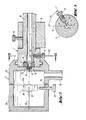
- the structure of the pressure chamber 1 can be seen in detail in FIG. 2. It essentially consists of a relatively thick-walled, pressure-resistant steel tube 11 of about 50 mm in length and about 3 mm in inner diameter, which is clamped in a stationary bearing block 6 essentially horizontally and is rotatable about its longitudinal axis A. A locking screw 61 fixes the tube 11 in its respective position.
- the mouth of the C0 2 gun 31 is directly connected in a suitable manner (not shown).
- a taper ring 12 is inserted in the front end of the tube 11 and sealed by means of an O-ring 13.
- the tapered ring reduces the inner diameter of the steel tube approximately conically in the direction of the tube end to approximately half.
- an essentially cup-shaped base part 21 of the sample chamber 2 which as a whole is essentially cylindrical, is sealingly and detachably fastened by means of a bayonet catch or the like.
- the base part 21 is provided with a cylindrical recess 22, which receives a capillary holder 14 and presses it sealingly against the outer end face of the tapering ring 12 with the interposition of a further O-ring 15.
- a capillary 17 is sealed in the capillary holder 14 and is exactly aligned with the longitudinal axis A of the pressure chamber 1.
- the capillary 17 thus connects the interior of the pressure chamber 1 to the interior of the sample chamber 2.
- the pressure chamber 1 opens into one through the capillary 17 formed restriction.
- a restriction in the form of a flow orifice or generally a pore can also be provided, as will be explained in more detail below.
- the sample chamber 2 consists of the base part 21 already mentioned, which is detachably fastened on the Stalrohr 11, and a further, also essentially cup-shaped wall part 23, which is detachably connected to the base part 21, a further O-ring 24 for the necessary sealing of the both parts.
- the cell support 25 can be adjusted by means of two set screws 27, which are arranged in the removable wall part 23 of the sample chamber 2 two mutually perpendicular directions transverse to the longitudinal axis A of the pressure chamber 1 are adjusted and thus adjusted relative to the restriction or capillary 17.
- the second set screw is perpendicular to the drawing plane.
- the base part 21 of the sample chamber 2 connected to the steel tube 11 is provided with a connecting piece 28 for the water jet pump 5 or another suitable suction source or evacuation device.
- the connection between the base part 21 and the removable wall part 23 is essentially free of play, so that the position of the cell carrier 25 relative to the restriction 17 cannot change when the wall part 23 is removed and put back on.
- a hollow nipple 41 is screwed into the jacket of the steel tube 1, through which a steel cannula 42 leads radially into the interior of the steel tube 11.
- a metal bead 42b formed on the cannula and a sealing ring 42c made of PTFE ("Teflon") are provided for fixing and sealing the steel cannula (outside diameter about 0.75 mm, inside diameter about 0.5 mm).
- the mouth 42a of the steel cannula 42 lies just in front of the longitudinal axis A of the pressure chamber 1, so that a liquid drop T (FIG. 1) emerging from the cannula 42 lies exactly in the longitudinal axis A.
- the hollow nipple 41 and the steel cannula 42 are shown in FIG. 2 vertically opening into the steel tube 11 from below.
- the cannula 42 opens into the pressure chamber 1 obliquely from above at an angle a to the vertical V, as is shown in FIG. 3.
- the angle a can be adjusted according to the requirements by rotating the steel tube 11 in the bearing block 6 (fixation by the locking screw 61).
- the steel cannula 42 is connected via a check valve 43 and a flexible line 44 to a metering unit which consists of a metering syringe 45, a spindle gear (micrometer screw) 46, a stepper motor 47 and an electrical control 49 which can be set in motion via a foot switch 48.
- the metering unit which is conventional per se and therefore requires no further explanation, is capable of reproducibly feeding liquid quantities (suspension) in the microliter range through the cannula 42 into the pressure chamber 1 within wide, adjustable limits, the liquid (suspension) at the cannula mouth 42a emerges drop by drop.
- the sample chamber2 is (partially) evacuated.
- the friction of the mist droplets moving from the restriction 17 onto the cell carrier 25 is reduced, the droplet size is minimized and the directional scatter is kept small.
- the (partial) vacuum tensions the cell walls so that they can penetrate better through the impacting particles.
- Usual water jet pump vacuum about 500 mmHg is normally sufficient, for special applications (e.g. in the case of more resistant cell walls) a higher vacuum (lower pressure) is also possible.
- the cannula 42 ends just before the longitudinal axis A of the pressure chamber 1, so that the suspension drop generated at the cannula mouth 42a comes to lie exactly in the longitudinal axis A. In this way, a droplet cloud symmetrical to the longitudinal axis is achieved, which in turn has a favorable influence on the target accuracy and the distribution of the particles in the impact area.
- the distance a (FIG. 1) between the mouth 42a of the cannula 42 and the inlet opening of the capillary 17 or the diaphragm or pore is relatively critical. If this distance is too small, then the fog, i.e. individual mist droplets, pressed through the restriction, but a closed liquid thread emerges as a jet from the restriction into the sample chamber. Such a beam leads to massive destruction of the cells to be bombarded and must therefore be avoided under all circumstances. In practice, the distance a must therefore be at least about 5-10 mm, this minimum value also being dependent on the dimensions of the other parts of the device and each having to be determined empirically.
- the working distance b (Fig. 1) between the exit end of the capillary 17 or restriction in general and the cell carrier 25, i.e. the distance that the fog droplets travel in free flight in a vacuum is less critical. Practical values are 5 mm to 5 cm, depending on the type of tissue and the type of restriction. The working distance influences the particle speed via the friction (reduced by the partial vacuum) and the effective target surface diameter via the scatter. A value of approx. 10 mm has proven to be favorable.
- both a capillary and a flow orifice or generally pore can be used as a restriction.
- the opening caliber of the diaphragm may, for example from 20 microns to 500 Il m or even be mm to 1. Diameters in the range of approximately 70-300 ⁇ m are preferred. In the case of capillaries, these can consist of glass or metal (eg steel). The same values apply for the inner diameter as for the orifices.
- the length of the capillaries can be approximately 0.1-20 mm, values in the range of approximately 1.0-10 mm are preferred.
- the ratio of the inside diameter to the length of the capillary determines the flow resistance. Longer capillaries therefore usually require larger inner diameters. The longer the capillary, the greater the acceleration distance for the mist droplets and the greater their final speed when entering the sample chamber.
- the angle a at which the cannula 42 opens into the pressure chamber 1 at an angle to the vertical V (FIG. 3), can be adjusted by rotating the tube 1 in the bearing block 6. Since the approximately 1.2 ⁇ m to 1.5 ⁇ m large gold particles suspended in the DNA solution sediment (sink) without stirring, the angle ⁇ should advantageously be set so that with each volume metering essentially the same number of gold particles in the drops on the Exit the cannula 42 mouth. At an unfavorable angle a, the gold particles are otherwise predominantly concentrated in the first drops (a too small) or in the last drops (a too large) of a series. The optimal angle depends on the particle size and the viscosity of the solution and must be determined by trying it out.
- check valve 43 located in the cannula 42 (or possibly a feed line to it). It consists of a valve seat made of quartz and a valve ball made of sapphire and is preferably oriented vertically.
- the check valve 43 like the other parts of the metering device 4, is filled with liquid paraffin (brand 7174 from MERCK, Darmstadt, Germany) without air bubbles.
- the metering unit 45-49 can be implemented as desired, provided that it is able to pump a volume of approximately 1 ⁇ l to 10 ⁇ l over a maximum period of approximately 20 seconds. In a practical version A volume of 1 ⁇ l to a maximum of 4 ⁇ l is metered in pumping steps of approximately 1 nl to approximately 50 nl.
- a 3-way valve is preferably provided, via which a 1 ml syringe can be activated so that the paraffin can be conveniently refilled and the volume can be adjusted.
- the suspension containing the gold particles is filled into the cannula 42.
- the cannula is temporarily removed from the pressure chamber 1.
- the suspension is conveyed indirectly by displacement by the metered pumped liquid paraffin.
- the filling volume of the cannula 42 with suspension is, for example, approximately 3-4 ⁇ l.
- the atomizing effect i.e. the size of the mist droplets depends on the size of the pressure surge in the pressure chamber 1.
- the size of the pressure surge also determines the gas velocity in the restriction and thus the particle velocity or its impulse.
- the pressure surge can be between about a few bar and a few thousand bar, practical values are a few ten bar to a few hundred bar, in particular a value of about 50 bar.
- the particle size has a linear influence on the momentum of the particles via the mass. In principle, small particles are cheaper for the survival of the hit cells. On the other hand, larger particles can penetrate the cells better.
- the optimal particle size must therefore be determined experimentally for each cell type. Practical particle sizes are in the range of 20 nm to 5 ⁇ m, in particular in the range of about 1-2 ⁇ m, especially about 1.2-1.5 ⁇ m.
- the particle material is secondary in itself. However, a high specific density and high inertia in chemical reactions (inert material) are favorable. It is also expedient if the particles are within a narrow size range, that is to say all the particles are essentially of the same size. In practice, it is also advantageous if particles are used which are easy to produce in a wide range of sizes with good reproducibility and a narrow range of sizes. Gold is therefore preferably used as the material for the particles. Gold particles of uniform size can be produced reproducibly from carbon tetrachloride by reduction with photographic developers. By diluting the starting solutions, particles between 5 ⁇ m in diameter down to the colloidal range (less than 0.5 ⁇ m in diameter) can be produced. It is critical to stop the development process with a fixative for easily reproducible gold particle sizes and for easily water-soluble reaction products that have to be removed by centrifugation and washing with water. The finished gold suspensions are autoclaved.
- a relatively critical size is the particle density in the suspension. Stagnant suspensions cannot be handled. Heavily diluted suspensions give too many empty droplets and too few hits in the cells. In between is an optimum that must be determined for the corresponding cell types. The aim is to hit as many cells as possible with just a single particle, since further particles drastically reduce the chances of survival of the cells hit. A practical value is 10 10 particles / ml.
- the suspension volume that is possible per "shot”, i.e. the volume of the drop provided should be as large as possible. However, if the suspension volume presented per shot is too high, there is a build-up of liquid in the restriction and a closed liquid thread escapes, which severely injures the cells.
- a practical value for a restriction inner diameter of around 100 ⁇ m is e.g. about 0.1 ⁇ l, with diameters around 300 ⁇ m a drop volume of about 0.2 ⁇ l is favorable. In this case, a value of 0.5 ⁇ l has proven to be too high.
- drop volumes between 10 nl and 500 nl can be used.
- a droplet volume between 50 nl and 150 nl is particularly preferred.
- the DNA concentration in the suspension can be chosen within wide limits from saturation down to extreme dilutions.
- the plasmids pBI221 and pHP 23 for example, values around 0.3 ⁇ g / ⁇ l are suitable.
- the plasmids can be either in linearized or supercoiled form. Basically, a higher transformation rate can be expected from a higher DNA concentration.
- the size of the mist droplets has a minimum for a suspension drop volume of 0.2 .mu.l with an inner diameter of about 70 gm of the aperture.
- Small droplets are essential because of the friction during flight and because of the braking effect on the particles on impact and because of the risk of injury at the point of impact. The latter of course also applies to restrictions in the form of a capillary.
- the size of the mist droplets also depends on the volume of the suspension drop and can therefore also be influenced by it.
- the DNA to be introduced into the cells is usually freely dissolved in the liquid phase of the suspension. In certain cases, however, it may also be advantageous to mount the plasmids on the gold particles e.g. with the help of spermidine or lactoferin.
- the size of the target area ie the area in which more than 80% of the particles hit, depends on the size and type of restriction (inner diameter, capillary length, etc.), the working distance b and the vacuum.
- an extremely small target surface diameter of at most 0.7 mm can be achieved with the device described above.
- the effective area in which cells are hit and the gold particles enter the cells is even smaller. It also depends on the resistance (cohesion) of the cell walls.
- the particle density on the target surface is a function of the working distance, vacuum (scattering), suspension density of the template, internal restriction diameter and capillary length.
- the particle density on the target surface should be set so that as many cells as possible are hit by exactly 1 particle. The other parameters must be adjusted accordingly.
- a secure mounting of the cells on the cell carrier is essential.
- 2% agarose on Thermanox (LAB-TEK Division, Miles Laboratories, Naperville IL 60540, USA) can be used for this purpose.
- the agarose is poured out 1 mm thick and contains 10 mM CaC1 2 .
- the cells are glued to the agarose with 4% alginate.
- the alginate hardens in the presence of Ca 2+ at room temperature.
- the polymerization is complete for 1 hour. Cells assembled in this way are not blown away by the gas flow. This type of assembly can be carried out easily sterile and is quick to use and ensures an adequate water supply for the cells until they are transplanted back to the medium.
- the method according to the invention is carried out under sterile conditions.
- Gold particles, DNA solution and all solutions or device parts with which the cells come into contact are kept sterile by autoclaving, sterile filtration or wiping or rinsing with 70% ethanol.
- the whole device is under a sterile bench. Pressure chamber and aperture or capillary are also flushed from time to time (with frequent use 1 to 2 times a day) with 70% ethanol.
- the suspension cannula is also occasionally autoclaved. In principle, no further precautions regarding sterility are required.
- the wall part 23 of the sample chamber 2 together with the cell carrier 25 and the set screws 27 can be removed.
- the adjustment of the cells to be bombarded relative to the reduction or to the longitudinal axis A is very simple.
- a test shot in 2% agar marks the target area.
- the wall part 23 of the sample chamber is then removed and oriented in a defined manner and positioned on a cross table under a stereomicroscope. Now the cross table is adjusted so that the target spot lies centrally in the crosshair of the eyepiece.
- the cells can now be aligned with the 2 setscrews on the crosshairs and thus on the target area.
- the adjustment can also be made in a different way.
- the advantages of the method and device according to the invention are evident: an even distribution of individual particles on an extremely small target area is achieved.
- the particle density on the target surface or the bombarded cells, the momentum of the particles and the diameter of the target surface can be finely adjusted within wide limits.
- DNA although possible, does not have to be coupled to the particles or precipitated onto the particles.
- the device is very easy to use and structurally inexpensive.
- the method according to the invention is universally applicable to cells of all plants, regardless of their taxonomic position.
- Particularly suitable and therefore preferred within the scope of this invention is the use of cells in tissues, in particular in small-cell tissue associations, but preferably meristematic tissue associations, such as those e.g. present in the shoot meristems of the plants, in proembryons and embryos or in embryogenic cell cultures.
- any other suitable plant material can also be used in the process according to the invention, such as Single cells, zygotes, cell aggregates, plant organs, tissues, callus, etc.
- the method according to the invention is also applicable to other eukaryotic cells such as animal cells or cells of fungi, which can either be isolated or be part of a higher organized unit, furthermore cells from algae or from unicellular protozoa, etc.
- eukaryotic cells such as animal cells or cells of fungi, which can either be isolated or be part of a higher organized unit, furthermore cells from algae or from unicellular protozoa, etc.
- Bacterial cells are preferably selected from the group consisting of enterobacterial cells, in particular E. coli and Serratia cells, Agrobacterium cells, Bacillus cells, in particular Bacillus thuringiensis and Bacillus cereus cells, Streptomycete cells, Pseudomonas cells, etc.
- These are preferably recombinant DNA molecules which contain one or more gene sequences, which encode a useful and desirable property and which are under the regulatory control of expression signals active in plants, so that expression of said gene sequences is ensured in the transformed plant cell .
- genes which are expressed in the plant cell and which impart a useful and / or desired property to the plant such as e.g. increased resistance to pathogens (e.g. phytophathogenic fungi, bacteria, viruses etc.), resistance to chemicals [e.g. herbicides (e.g. triazines, sulfonylureas, imidazolinones, triazole pyrimidines, bialaphos, glyphosates, etc.), insecticides or other biocides] ; Resistance to adverse (endaphic or atmospheric) environmental influences (e.g.
- Desirable substances that can be produced by transgenic plants include, for example, proteins, starches, sugars, amino acids, alkaloids, fragrances, colors, fats, etc.
- genes can be used in the method according to the invention which contain pharmaceutically acceptable active substances, e.g. Encode alkaloids, steroids, hormones, immunomodulators, and other physiologically active substances.
- pharmaceutically acceptable active substances e.g. Encode alkaloids, steroids, hormones, immunomodulators, and other physiologically active substances.
- Resistance to cytotoxins can be achieved by transferring a gene that encodes and expresses an enzyme in the plant cell that detoxifies the cytotoxin, e.g. the type 11 neomycin phosphotransferase or the type IV aminoglycoside phosphotransferase, which contribute to detoxification of kanamycin, hygromycin and other aminoglycoside antibiotics, or a glutathione-S-transferase, cytochrome P-450 or other catabolically active enzymes known to be triazines, sulfonylsulfonines or detoxify other herbicides.
- an enzyme in the plant cell that detoxifies the cytotoxin
- the type 11 neomycin phosphotransferase or the type IV aminoglycoside phosphotransferase which contribute to detoxification of kanamycin, hygromycin and other aminoglycoside antibiotics
- glutathione-S-transferase cytochrome P
- Resistance to cytotoxins can also be mediated by a gene that expresses in a plant a certain form of a 'target enzyme' (target of the cytotoxin effect) that is resistant to the activity of the cytotoxin, e.g. a variant of acetohydroxy acid synthase which is insensitive to the inhibitory effect of sulfonylureas, imidazolinones or other herbicides which interact with this specific metabolic step; or a variant of EPSP synthase, which proves to be insensitive to the inhibitory effects of glyphosate. It may prove advantageous to express these altered target enzymes in a form that will transport them to the correct cellular compartment, e.g. in the chloroplasts allowed in the above case.
- a 'target enzyme' target of the cytotoxin effect
- a variant of acetohydroxy acid synthase which is insensitive to the inhibitory effect of sulfonylureas, imidazolinones or
- the gene products may also be advantageous to direct the gene products into the mitochondria, the vacuoles, the endoplasmic reticulum or into other cell regions, possibly even into the intercellular spaces (apoplasts).
- Resistance to certain classes of fungi can be achieved, for example, by introducing a gene that expresses chitinase in the plant tissues.
- Numerous phytopathogenic fungi contain chitin as an integral part of their hyphae and spore structures, e.g. the Basidiomycetes (smut and rust fungi), Ascomycetes and Fungi Imperfecti (including Altemaria and Bipolaris, Exerophilum turcicum, Colletotricum, Gleocercospora and Cercospora).
- Chitinase is able to inhibit the mycelium growth of certain pathogens in vitro.
- a plant leaf or a root that expresses chitinase constitutively or in response to the invasion of a pathogen is protected against the attack of a large number of different fungi.
- constitutive expression can be advantageous compared to inducible expression, which occurs in numerous plants as a normal reaction to a pathogen attack, since the chitinase is immediately present in high concentration without having to wait for a lag phase for the new synthesis .
- Resistance to insects can be transmitted, for example, by a gene encoding a polypeptide that is toxic to insects and / or their larvae, e.g. the crystalline protein of Bacillus thuringiensis.
- a second class of proteins that confer insect resistance are the protease inhibitors.
- Protease inhibitors are a common part of plant storage structures. It has been demonstrated that a Bowman-Birk protease inhibitor isolated and purified from soybeans inhibits the intestinal protease of Tenebrio larvae [Birk et al (1963)]. The gene encoding the trypsin inhibitor from the cow pea is described in Hilder et al (1987).
- Suitable for use in the method according to the invention are therefore primarily all those genes which lead to a protective effect in the transformed plant cells and the tissues developing therefrom and in particular in the plants, such as, for example, increased resistance to pathogens (for example to phytopathogenic) Fungi, bacteria, viruses, etc.); resistance to chemicals [for example herbicides (such as triazines, sulfonylureas, imida zolinones, triazole pyrimidines, bialaphos, glyphosate, etc,), insecticides or other biocides]; a resistance to adverse (endaphic or atmospheric) environmental influences (e.g. heat, cold, wind, unfavorable soil conditions, moisture, dryness, etc.).
- Genes which can be used in the context of the present invention also include, for example, those which lead to an increased formation of reserve or storage substances in leaves, seeds, tubers, roots, stems, etc.
- Desirable substances that can be produced by transgenic plants include, for example, proteins, starches, sugars, amino acids, vitamins, alkaloids, flavins, fragrances and colors, fats, etc.
- Structural genes can also be associated with the regulatory DNA sequence according to the invention, which pharmaceutically acceptable active substances, such as e.g. encode certain alkaloids, steroids, hormones, immunomodulators and other physiologically active substances.
- pharmaceutically acceptable active substances such as e.g. encode certain alkaloids, steroids, hormones, immunomodulators and other physiologically active substances.
- genes that can be considered in the context of this invention therefore include, but are not limited to, known genes, for example plant-specific genes such as maize cell, oat avenue, rice gluten gene, etc., mammals -specific genes such as insulin gene, somatostatin gene, interleucing genes, the t-PA gene, etc., or genes of microbial origin such as the NPT II gene, etc., and synthetic genes such as insulin gene, etc.
- genes which have been specifically modified beforehand with the aid of chemical or genetic engineering methods can also be used in the context of this invention.
- the broad concept of the present invention also includes genes which are produced entirely by chemical synthesis. Both homologous and heterologous gene (s) or DNA and synthetic gene (s) or DNA are thus suitable as genes or DNA sequences which can be used in the context of the present invention. Insulin gene should be mentioned here as an example of a synthetic gene.
- so-called 'anti-sense' DNA can also be used in the context of the present invention which, in operable linkage with expression signals active in plant cells, leads to the production of an RNA molecule which is complementary to at least part of an mRNA encoded by a 'sense' DNA and is therefore able to bind them.
- RNA molecule which is complementary to at least part of an mRNA encoded by a 'sense' DNA and is therefore able to bind them.
- the DNA sequence which can be used in the context of the present invention can be constructed exclusively from genomic, from cDNA or synthetic DNA. Another possibility is to construct a hybrid DNA sequence consisting of both cDNA and genomic DNA and / or synthetic DNA.
- the cDNA can come from the same gene as the genomic DNA or else, both the cDNA and the genomic DNA can come from different genes. In any case, however, both the genomic DNA and / or the cDNA, each individually, can be produced from the same or from different genes.
- DNA sequence contains portions of more than one gene
- these genes can either be from one and the same organism, from several organisms belonging to different strains or varieties of the same species or different species of the same genus, or from organisms which have more than one Belonging to the same or another taxonomic unit (Reich).
- the coding gene sequences are first operably linked to expression sequences which are functional in plant cells.
- Any promoter and terminator capable of inducing expression of a coding DNA sequence can be used as part of the hybrid gene sequence.
- Expression signals which originate from genes of plants or plant viruses are particularly suitable. Examples of suitable promoters and terminators are e.g. those of the Cauliflower Mosaic Virus Genes (CaMV) or homologous DNA sequences that still have the characteristic properties of the expression signals mentioned.
- Bacterial expression signals are also suitable, but especially the expression signals of the nopaline synthase genes (nos) or the octopine synthase genes (ocs) from the Ti plasmids of Agrobacterium tumefaciens.
- homologs of the 35S and 19S expression signals are understood to mean sequences which, despite small sequence differences, are essentially homologous to the starting sequences and which continue to perform the same function as these.
- the starting material for the 35S transcription control sequences can be e.g. the Scal fragment of the CaMV strain "S", which comprises nucleotides 6808-7632 of the gene map [Frank G et al (1980)].
- the 19S promoter and 5 'untranslated region is located on a genome fragment between the Pstl site (position 5386) and the Hindlll site (position 5850) of the CaMV gene map [Hohn et al (1982)].
- the corresponding terminator and 3 'untranslated region lies on an EcoRV / BglII fragment between positions 7342 and 7643 of the CaMV genome.
- Another effective representative of a plant promoter that can be used is an over-producing plant promoter.
- This type of promoter provided that it is operably linked to the gene sequence encoding a desired gene product, should be able to mediate the expression of said gene sequence.
- Overproducing plant promoters that can be used in the context of the present invention include the promoter of the small subunit (ss) of ribulose-1,5-bis-phosphate carboxylase from soybeans and the promoter of chlorophyll-a / b- Binding protein. These two promoters are known to be induced by light in eukaryotic plant cells [see e.g. Genetic Engineering of Plants, an Agricultural Perspective, Cashmore A (1983)].
- chimeric genes include, for example, those sequences which are able to regulate the transcription of an associated DNA sequence in plant tissues in the sense of induction or repression.
- ABS abscissic acid
- G3 gibberellic acid
- glucanase and chitinase in bean leaves can be markedly increased by treatment with the stress hormone ethylene.
- this induction effect is controlled via the chitinase gene promoter, which could be shown by reporter gene experiments using a promoter from the chitinase gene of beans (Phaseolus vulgaris).
- soybean protein genes sensitive to heat shock has been studied in detail. Treating the plants for several hours at a temperature of 40 ° C results in the de novo synthesis of so-called heat shock proteins. Many of these genes have now been isolated and their regulation analyzed in detail. The expression of these genes is primarily controlled at the level of transcription. If, for example, the promoter of the hps70 gene is fused to the neomycin phosphotransferase 11 (NPT II) gene, the chimeric gene which is produced in this way can be induced by heat shock (Spena et al, 1985).
- NPT II neomycin phosphotransferase 11
- Another class of plant-inducible genes includes the light-regulated genes, particularly the nuclear-encoded gene of the small subunit of ribulose-1,5-bisphosphate carboxylase (RUBISCO).
- RUBISCO ribulose-1,5-bisphosphate carboxylase
- the alcohol dehydrogenase (adh) genes in maize have been the subject of intensive research.
- the maize adh1-s gene was isolated and it was demonstrated that part of the 5'-flanking DNA was capable of expressing a chimeric reporter gene. (e.g. chloramphenicol acetyl transferase; CAT) when the temporarily transformed tissue has been exposed to anaerobic conditions [Howard et al (1987)].
- CAT chloramphenicol acetyl transferase
- regulatable DNA sequences relate to chemically regulatable sequences, e.g. are present in the PR ("pathogenesis related proteins") protein genes of tobacco and can be induced with the help of chemical regulators.
- PR pathogenesis related proteins
- the regulatable DNA sequences mentioned above by way of example can be both natural and syn be of theoretical origin or consist of a mixture of natural and synthetic DNA sequences.
- the various sequence sections can be linked to one another to form a complete coding DNA sequence with the aid of methods known per se. Suitable methods include, for example, the in vivo recombination of DNA sequences which have homologous sections and the in vitro linkage of restriction fragments.
- Hybrid gene constructions can be amplified very quickly and easily by splicing them into a suitable cloning vector and then transforming a suitable host cell.
- Plasmid or virus (bacteriophage) vectors with replication and control sequences derived from species that are compatible with the host cell are generally used as cloning vectors.
- the cloning vector usually has an origin of replication, as well as specific genes which lead to phenotypic selection features in the transformed host cell, in particular to resistance to antibiotics or to certain herbicides.
- the transformed vectors can be selected on the basis of these phenotypic markers after transformation in a host cell.
- Selectable phenotypic markers which can be used in the context of this invention include, for example, resistance to ampicillin, tetracycline, hygromycin, kanamycin, methotrexate, G418 and neomycin, without this exemplary list being a limitation of the subject matter of the invention.
- Prokaryotes including bacterial hosts, such as e.g. A.tumefaciens, E. coli, S. typhimurium and Serratia marcescens, as well as cyanobacteria.
- bacterial hosts such as e.g. A.tumefaciens, E. coli, S. typhimurium and Serratia marcescens, as well as cyanobacteria.
- eukaryotic hosts such as yeasts, mycelium-forming fungi and plant cells can also be used in the context of this invention.
- hybrid gene construction is spliced into a suitable cloning vector using standard methods such as in Maniatis et al (1982).
- Suitable restriction enzymes are e.g. those that provide blunt-ended fragments, such as Smal, Hpal and EcoRV, or enzymes that form cohesive ends, e.g. EcoRI, Sacl and BamHl.
- Both fragments with smooth ends as well as those with cohesive ends that are complementary to one another can be linked again with the aid of suitable DNA ligases to form a uniform, continuous DNA molecule.
- Blunt ends can also be made by treating DNA fragments that have overhanging cohesive ends with the Klenow fragment of E. coli DNA polymerase by filling in the gaps with the corresponding complementary nucleotides.
- cohesive ends can also be produced artificially, e.g. by adding complementary homopolymer tails to the ends of a desired DNA sequence and the cut vector molecule using a terminal deoxynucleotide transferase or by adding synthetic oligonucleotide sequences (linkers) which carry a restriction site and then cutting with the corresponding enzyme.
- the cloning vector and the host cell transformed with this vector are typically used to increase the copy number of the vector. With an increased number of copies it is possible to isolate the vector carrying the hybrid gene construction and e.g. prepare for the introduction of the chimeric gene sequence into the plant cell.
- these plasmids are used to introduce the structural genes encoding a desired gene product or non-coding DNA sequences with a regulatory function, such as 'anti-sense' DNA, into the plant cell and, if necessary, integrating them into the plant genome.
- Another object of the present invention therefore relates to the production of plant recipient cells which contain said structural gene or other desirable genes or gene fragments or other useful DNA sequences built into their genome.
- transgenic plants but in particular transgenic fertile plants which have been transformed with the aid of the method according to the invention described above, and their asexual and / or sexual offspring, which are still the new ones caused by the transformation of the mother plant (s) and desirable property (s).
- asexual and / or sexual progeny of transgenic plants by definition also includes all mutants and variants within the scope of this invention which can be obtained with the aid of known methods, such as cell fusions or mutant selection, and which still have the characteristic properties of the transformed starting plant , as well as all crosses tion and fusion products with the transformed plant material.
- Another object of this invention relates to the propagation material of transgenic plants.
- propagation material of transgenic plants should be understood to mean any plant material which can be reproduced sexually or asexually or in vivo or in vitro.
- Protoplasts, cells, calli are particularly preferred in the context of this invention , Tissues, organs, seeds, embryos, pollen, egg cells, zygotes, as well as any other propagation material that can be obtained from transgenic plants.
- Parts of plants e.g. Flowers, stems, fruits, leaves, roots, which originate from transgenic plants or their progeny, which have previously been transformed with the aid of the method according to the invention and which are thus at least partially constructed from transgenic cells, are also the subject of this invention.
- the method according to the invention is suitable for the transformation of all plants, in particular those of the systematic groups angiospermae and gymnospermae.
- Gymnospermae are the plants of the Coniferae class.
- angiosperms in addition to deciduous trees and shrubs of particular interest plants of the families Solanaceae, Cruciferae, Compositae, Liliaceae, Vitaceae, Chenopodiaceae, Rutaceae, Alliaceae, Amaryllidaceae, Asparagaceae, Orchidaceae, Palmae, Bromeliaceae, Rubiaceae, Theaceae, Musaceae, Malvaceae or Gramineae and the order Leguminosae and especially the family Papilionaceae.
- Representatives of the Solanaceae, Cruciferae and Gramineae families are preferred.
- the target cultures within the scope of the present invention also include, for example, those selected from the series: Fragaria, Lotus, Medicago, Onobrychis, Trifolium, Trigonella, Vigna, Citrus, Linum, Geranium, Manihot, Daucus, Arabidopsis, Brassica, Raphanus, Sinapis, Atropa, Capsicum, Datura, Hyoscyamus, Lycopersion, Nicotiana, Solanum, Petunia, Digitalis, Majorana, Cichorium, Helianthus, Lactuca, Bromus, Gossypium, Asparagus, Antirrhinum, Hemerocallis, Nemesia, Pelargonium, Panicum, Pennisigecis, Ranunc Cucumis, Browallia, Glycine, Lolium, Zea, Triticum, Sorghum, Ipomoea, Passiflora, Cyclamen, Malus, Prunus, Rosa, Rubus, Populus, Santa
- embryonic and / or meristematic structures which can either be isolated or in association with the whole plant. Since regeneration of entire plants based on embryonic and / or meristematic structures is now also possible for a large number of monocotyledonous plants, the following plants can also be used in the context of the present invention: Lolium, Zea, Triticum, Sorghum, Saccharum, Bromus, Oryzae, Avena, Hordeum, Secale and Setaria.
- the mature plants grown from transformed plant cells are crossed with themselves to produce seeds.
- Some of the seeds contain the genes that code for a useful and desirable trait in a ratio that obeys the established laws of inheritance. These seeds can be used to produce transgenic plants.
- Homozygous lines can be obtained by repeated self-pollination and inbred lines. These inbred lines can then be used to develop hybrids. In this method, an inbred line that contains said foreign gene is crossed with another inbred line for production.
- the plasmid pB1221 which expresses a ⁇ -glucuronidase enzyme, is used in the following transformation experiments.
- This plasmid is available from CLONTECH, Palo Acto CA, USA and from GENOFIT in Geneva. Detailed information on its construction and composition can be found in a publication by Jefferson et al. (1986) included.
- the plasmid pB1221 is used in a 'super-coiled' configuration, namely in a concentration of approximately 1.25 ⁇ g DNA / ⁇ l H 2 O. Die DNA solution is stored at -20 ° C and thawed just before use.
- the suspension is then centrifuged for 5 minutes at 2.2 kxg [swing-out rotor, eg Christ Labofuge, HERAEUS], the supernatant is discarded and the remaining residue is resuspended in 1.5 ml H 2 0 and transferred to an Eppendorf tube.
- the remaining fixing salt is washed out with a second centrifugation (3 minutes at 10 kg, Eppendorf centrifuge, fixed-angle rotor).
- the residue is resuspended in 1.1 ml H 2 0 and then autoclaved in two aliquots at 1 bar and 120 ° C.
- the autoclaved suspension contains 0.5 ( ⁇ 0.1) x 10 9 gold particles / ml.
- the mean particle diameter is 1.6 ⁇ m ⁇ 0.01 ⁇ m (standard error of the mean) with a maximum particle diameter of 2.5 ⁇ m (a particle of approx. 50).
- the autoclaved suspension is stored in the refrigerator and resuspended only shortly before use.
- the embryos are prepared shortly before maturity from still unripe corn kernels and on a medium according to Murashige and Skoog (1962) [cf. Table 1] placed in small petri dishes.
- 2% agarose with 10 mM CaCl 2 is poured onto sterile Thermanox plates [22 x 60 mm, Miles Laboratories, Naperville, USA] in such a way that a uniform, approx. 1 mm thick agarose layer is formed.
- the embryos are then removed using a drop ( ⁇ 10 ⁇ l) 4% alginate [eg filter-sterilized sodium alginate, Fluka No. 71238] mounted on the agarose, taking care that the scutellum is directed upwards.
- the alginate is hardened in a moist chamber for about 2-3 hours before bombardment.
- the embryos can be assembled in different ways.
- a method is preferred in which the embryos are removed from their nutrient solution with the aid of a wire loop and, after eliminating the excess liquid with the aid of a filter paper, are stuck onto the agarose base under the stereomicroscope.
- the excess alginate is suctioned off with a sterile filter paper.
- the alginate is then left to harden in a moist chamber for 2-3 hours. In this way, up to 40 embryos and more can be mounted side by side on an agarose pad.
- the agarose base is cut with a slapper so that each embryo together with the agarose base can be placed individually on a sterile slide. This is then introduced into the sample chamber instead of the device 23 of the apparatus described in detail above. By applying a water-jet pump vacuum, the slide with the embryo attached is sucked onto the apparatus, but remains displaceable.
- a fixed crosshair marks the extension of the firing axis.
- the embryo is brought into the firing axis by aiming from the crosshair onto the muzzle and moving the slide.
- the paraffin [MERCK No. 7174], which acts as a displacement liquid in the dosing unit 45-49, is advanced until the meniscus appears at the cannula opening.
- An approx. 1 ⁇ l drop of the finished suspension is placed with the pipette and drawn into the cannula with the aid of the 45-49 metering unit.
- the cannula holds 2 ⁇ l to 3 ⁇ l suspension.
- the embryo After bombardment with the suspension containing DNA / particles, the embryo is detached from the alginate and cultured in a medium according to Murashige and Skoog (see Table 1). 5 to 7 embryos are placed on 0.5 ml medium in wells of tissue culture plates (with lid) [Costar plates with 24 wells (diameter: 16 mm); COSTAR, Cambridge, USA].
- tissue culture plates with lid
- the inner wells are filled with embryos
- the outer wells are filled with 1 ml H 2 0, so that the entire system serves as a moist chamber.
- the embryos are supported for 48 hours at room temperature and daylight [supported by artificial light: OSRAM L36W / 77 Fluora at a distance of 15 cm].
- a transient expression of the ⁇ -gucuronidase gene is detected using a modification of the method described in Mendel et al (1989).
- Substrate solution consisting of: 5 mg 5-bromo-4-chloro-indol-3-yl-ß-D-glucuronic acid [Clontech Laboratories, Palo Alto, USA] dissolved in 50 ⁇ l dimethylformamide. This substrate solution is always freshly prepared.
- the nutrient solution surrounding the embryos is first removed from the wells of the tissue culture plates using a pipette and replaced with 0.5 ml solution (c) (sufficient for 5 to 7 embryos).
- the closed culture plate is then incubated for 24 hours at 37 ° C. in the incubator.
- Escherichia coli cells of the strain JM101 [Yanisch-Perron et al (1985)] are in one of the commonly used media, e.g. an LM medium [Miller JH (1977)], cultivated on nitrocellulose filters.
- the filters are cut into squares of approx. 0.5 cm and a piece of agarose [2%] of the same size is placed on top.
- the DNA concentration and the concentration of the particles in the suspension, furthermore the size of the particles and the working distance are varied according to the information in Table 1 in the course of the experiment.
- the samples are incubated for 1 hour in a liquid medium [LM medium] in order to detach the bacteria from the filters.
- LM medium liquid medium
- the bacterial suspension on a solid LM selection medium plated out, which is enriched with 100 ⁇ g / ml ampicillin and 1.5% agar.
- the colonies are counted [see Table 1. A selection of positive colonies is examined for its plasmid content
- Plasmid DNA is isolated from the bacteria and separated on a gel. The size of the DNA is determined using a molecular weight marker [BRL; Bethseda Research Laboratories Life Technologies; # 5615 SAISB] and a standard plasmid [pUC18 cut with BamHl; 2.7 Kbp]. All positive colonies tested received the correct pUC18 plasmid.
- the controls are bombarded only with the particles, but without DNA, or they are incubated in an excess of DNA without bombarding them beforehand. All controls were negative.
- the diameter of the bacteria is smaller than the particle size, it is unlikely that a cell into which such a particle penetrates will be able to survive. It can therefore be assumed that in the event of a transgenic event of the particles, the cell wall and the existing membranes have only been injured to such an extent that the DNA molecules can enter the cell through small, reversible openings, while the gold particle itself outside the cell remains.
- Tobacco callus is transformed with the neomycin phosphotransferase gene in analogy to the methods described in Examples 1 to 5.
- the stable integration of the gene into the plant genome could be verified using Southern blot data.
Landscapes
- Health & Medical Sciences (AREA)
- Life Sciences & Earth Sciences (AREA)
- Engineering & Computer Science (AREA)
- Genetics & Genomics (AREA)
- Biotechnology (AREA)
- Chemical & Material Sciences (AREA)
- Organic Chemistry (AREA)
- Biomedical Technology (AREA)
- Bioinformatics & Cheminformatics (AREA)
- Zoology (AREA)
- Wood Science & Technology (AREA)
- General Engineering & Computer Science (AREA)
- Microbiology (AREA)
- Biochemistry (AREA)
- General Health & Medical Sciences (AREA)
- Molecular Biology (AREA)
- Biophysics (AREA)
- Physics & Mathematics (AREA)
- Cell Biology (AREA)
- Plant Pathology (AREA)
- Sustainable Development (AREA)
- Mechanical Engineering (AREA)
- Apparatus Associated With Microorganisms And Enzymes (AREA)
- Preparation Of Compounds By Using Micro-Organisms (AREA)
- Micro-Organisms Or Cultivation Processes Thereof (AREA)
- Breeding Of Plants And Reproduction By Means Of Culturing (AREA)
- Immobilizing And Processing Of Enzymes And Microorganisms (AREA)
Applications Claiming Priority (2)
| Application Number | Priority Date | Filing Date | Title |
|---|---|---|---|
| CH4562/89 | 1989-12-19 | ||
| CH456289 | 1989-12-19 |
Publications (2)
| Publication Number | Publication Date |
|---|---|
| EP0434616A1 true EP0434616A1 (fr) | 1991-06-26 |
| EP0434616B1 EP0434616B1 (fr) | 1995-11-15 |
Family
ID=4278390
Family Applications (1)
| Application Number | Title | Priority Date | Filing Date |
|---|---|---|---|
| EP90810970A Expired - Lifetime EP0434616B1 (fr) | 1989-12-19 | 1990-12-11 | Méthode et appareil pour la transformation génétique de cellules |
Country Status (12)
| Country | Link |
|---|---|
| US (2) | US5976880A (fr) |
| EP (1) | EP0434616B1 (fr) |
| JP (1) | JPH0568575A (fr) |
| AT (1) | ATE130371T1 (fr) |
| AU (1) | AU636422B2 (fr) |
| CA (1) | CA2032443A1 (fr) |
| DE (1) | DE59009881D1 (fr) |
| ES (1) | ES2079467T3 (fr) |
| HU (1) | HUT56141A (fr) |
| IE (1) | IE904582A1 (fr) |
| IL (1) | IL96689A0 (fr) |
| NZ (1) | NZ236486A (fr) |
Cited By (31)
| Publication number | Priority date | Publication date | Assignee | Title |
|---|---|---|---|---|
| WO1993007256A1 (fr) * | 1991-10-07 | 1993-04-15 | Ciba-Geigy Ag | Canon a particules pour introduire de l'adn dans des cellules intactes |
| US6093557A (en) * | 1997-06-12 | 2000-07-25 | Regents Of The University Of Minnesota | Electrospraying apparatus and method for introducing material into cells |
| WO2001059140A1 (fr) | 2000-02-09 | 2001-08-16 | The University Of York | Cellules transgeniques exprimant des acides nucleiques de glucosyltransferase |
| WO2001038514A3 (fr) * | 1999-11-29 | 2002-01-31 | Midwest Oilseeds Inc | Procedes et compositions d'introduction de molecules dans des cellules |
| US6498011B2 (en) | 1998-07-24 | 2002-12-24 | Novartis Ag | Method for transformation of animal cells |
| WO2002044391A3 (fr) * | 2000-11-28 | 2003-01-23 | Midwest Oilseeds Inc | Procedes et compositions pour l'introduction de molecules dans des cellules |
| US6764720B2 (en) | 2000-05-16 | 2004-07-20 | Regents Of The University Of Minnesota | High mass throughput particle generation using multiple nozzle spraying |
| US7247338B2 (en) | 2001-05-16 | 2007-07-24 | Regents Of The University Of Minnesota | Coating medical devices |
| EP1818399A1 (fr) * | 2006-01-23 | 2007-08-15 | National Yang-Ming University | Procédés pour libérer une cible extracellulaire dans des cellules |
| US7314969B2 (en) | 1999-11-29 | 2008-01-01 | Midwest Oilseeds, Inc. | Methods and compositions for the introduction of molecules into cells |
| WO2008142364A2 (fr) | 2007-05-22 | 2008-11-27 | Plant Bioscience Limited | Composition et methode de modulation du developpement du chevelu racinaire de plantes |
| EP2036984A2 (fr) | 2002-07-26 | 2009-03-18 | BASF Plant Science GmbH | Reversion de l'effet sélectif négatif d'un protéin de marquage comme procédure de sélection |
| WO2010061187A2 (fr) | 2008-11-25 | 2010-06-03 | Algentech Sas | Procédé de transformation de mitochondries de plante |
| WO2010061186A2 (fr) | 2008-11-25 | 2010-06-03 | Algentech Sas | Procédé de transformation de plastide de plante |
| WO2010084331A2 (fr) | 2009-01-26 | 2010-07-29 | Algentech Sas | Ciblage de gène dans des plantes |
| WO2010146359A1 (fr) | 2009-06-15 | 2010-12-23 | Plant Bioscience Limited | Production de capsides virales |
| WO2011017288A1 (fr) | 2009-08-05 | 2011-02-10 | Chromocell Corporation | Plantes, microbes et organismes enrichis |
| US7951428B2 (en) | 2006-01-31 | 2011-05-31 | Regents Of The University Of Minnesota | Electrospray coating of objects |
| EP2357239A1 (fr) | 2009-10-29 | 2011-08-17 | Universität zu Köln | Procédés et moyens pour un système marqueur sélectionnable dans les plantes |
| WO2011148135A1 (fr) | 2010-05-25 | 2011-12-01 | The University Court Of The University Of Aberdeen | Translocation à travers des membranes cellulaires eucaryotes en fonction de motifs de séquences de protéines d'oomycète |
| US8153863B2 (en) | 2007-03-23 | 2012-04-10 | New York University | Transgenic plants expressing GLK1 and CCA1 having increased nitrogen assimilation capacity |
| WO2014070646A1 (fr) | 2012-10-31 | 2014-05-08 | Pioneer Hi-Bred International, Inc. | Plantes transformées présentant des taux de bêta-carotène accrus, une demi-vie et une biodisponibilité accrues et leurs procédés de production |
| US8790928B2 (en) | 2003-07-31 | 2014-07-29 | Greenovation Biotech Gmbh | Utilisation of constructs comprising recombination sequence motifs for enhancing gene expression in moss |
| WO2015067943A1 (fr) | 2013-11-11 | 2015-05-14 | Plant Bioscience Limited | Procédés de modulation de la taille des semences et des organes chez les plantes |
| US9040816B2 (en) | 2006-12-08 | 2015-05-26 | Nanocopoeia, Inc. | Methods and apparatus for forming photovoltaic cells using electrospray |
| US9108217B2 (en) | 2006-01-31 | 2015-08-18 | Nanocopoeia, Inc. | Nanoparticle coating of surfaces |
| US9248217B2 (en) | 2006-01-31 | 2016-02-02 | Nanocopocia, LLC | Nanoparticle coating of surfaces |
| US9822376B2 (en) | 2002-07-19 | 2017-11-21 | University Of South Carolina | Compositions and methods for the modulation of gene expression in plants |
| EP3260542A1 (fr) | 2016-06-20 | 2017-12-27 | Algentech | Production de protéine dans des cellules végétales |
| EP3470420A1 (fr) | 2013-08-14 | 2019-04-17 | Institute Of Genetics And Developmental Biology | Procédé de modulation de la taille des graines et des organes dans des plantes |
| WO2019185129A1 (fr) | 2018-03-27 | 2019-10-03 | The University Court Of The University Of Glasgow | Résistance dérivée d'un pathogène bactérien chez les plantes |
Families Citing this family (55)
| Publication number | Priority date | Publication date | Assignee | Title |
|---|---|---|---|---|
| US5550318A (en) * | 1990-04-17 | 1996-08-27 | Dekalb Genetics Corporation | Methods and compositions for the production of stably transformed, fertile monocot plants and cells thereof |
| US7705215B1 (en) | 1990-04-17 | 2010-04-27 | Dekalb Genetics Corporation | Methods and compositions for the production of stably transformed, fertile monocot plants and cells thereof |
| US6803499B1 (en) | 1989-08-09 | 2004-10-12 | Dekalb Genetics Corporation | Methods and compositions for the production of stably transformed, fertile monocot plants and cells thereof |
| JPH0376568A (ja) * | 1989-08-16 | 1991-04-02 | Minoru Igari | 細胞処理用噴射装置及び同装置のピストン |
| US6946587B1 (en) * | 1990-01-22 | 2005-09-20 | Dekalb Genetics Corporation | Method for preparing fertile transgenic corn plants |
| US6025545A (en) | 1990-01-22 | 2000-02-15 | Dekalb Genetics Corporation | Methods and compositions for the production of stably transformed, fertile monocot plants and cells thereof |
| US6329574B1 (en) | 1990-01-22 | 2001-12-11 | Dekalb Genetics Corporation | High lysine fertile transgenic corn plants |
| JP3209744B2 (ja) | 1990-01-22 | 2001-09-17 | デカルブ・ジェネティクス・コーポレーション | 結実能力のある遺伝子変換コーン |
| US6777589B1 (en) | 1990-01-22 | 2004-08-17 | Dekalb Genetics Corporation | Methods and compositions for the production of stably transformed, fertile monocot plants and cells thereof |
| US6395966B1 (en) | 1990-08-09 | 2002-05-28 | Dekalb Genetics Corp. | Fertile transgenic maize plants containing a gene encoding the pat protein |
| US6326527B1 (en) | 1993-08-25 | 2001-12-04 | Dekalb Genetics Corporation | Method for altering the nutritional content of plant seed |
| US6118047A (en) | 1993-08-25 | 2000-09-12 | Dekalb Genetic Corporation | Anthranilate synthase gene and method of use thereof for conferring tryptophan overproduction |
| US6586661B1 (en) | 1997-06-12 | 2003-07-01 | North Carolina State University | Regulation of quinolate phosphoribosyl transferase expression by transformation with a tobacco quinolate phosphoribosyl transferase nucleic acid |
| US6284345B1 (en) | 1997-12-08 | 2001-09-04 | Washington University | Designer particles of micron and submicron dimension |
| US6153811A (en) * | 1997-12-22 | 2000-11-28 | Dekalb Genetics Corporation | Method for reduction of transgene copy number |
| US6307123B1 (en) | 1998-05-18 | 2001-10-23 | Dekalb Genetics Corporation | Methods and compositions for transgene identification |
| DE19926216A1 (de) * | 1999-06-09 | 2001-02-22 | Metallgesellschaft Ag | Verfahren zur Herstellung von Bariumsulfat, Bariumsulfat und Verwendung des Bariumsulfats |
| GB0008494D0 (en) | 2000-04-07 | 2000-05-24 | Secr Defence | Microprojectile delivery system |
| WO2002018607A2 (fr) | 2000-08-30 | 2002-03-07 | North Carolina State University | Plantes transgeniques contenant des leurres moleculaires qui modifient la teneur en proteines |
| EP1368467B1 (fr) | 2000-11-07 | 2007-04-25 | North Carolina State University | Promoteur de la putrescine-n-m thyltransf rase |
| SG135907A1 (en) | 2001-03-15 | 2007-10-29 | Sumitomo Chemical Co | Analysis of agonist-activity and antagonist-activity to cytokinin receptor |
| SG132542A1 (en) * | 2001-06-08 | 2007-06-28 | Vector Tobacco Ltd | Modifying nicotine and nitrosamine levels in tobacco |
| US20060157072A1 (en) * | 2001-06-08 | 2006-07-20 | Anthony Albino | Method of reducing the harmful effects of orally or transdermally delivered nicotine |
| KR101291006B1 (ko) | 2001-10-19 | 2013-07-30 | 스미또모 가가꾸 가부시키가이샤 | 잡초 방제제 대사 단백질, 그의 유전자 및 그의 용도 |
| CA2481167A1 (fr) * | 2002-04-09 | 2003-10-23 | Vector Tobacco Ltd. | Tabac presentant une teneur en nicotine et en nitrosamines reduite |
| US20060005282A1 (en) * | 2002-04-23 | 2006-01-05 | Activx Biosciences, Inc | Production and use of salt tolerant and culture density tolerant organisms |
| DE602004027403D1 (de) | 2003-11-10 | 2010-07-08 | Icon Genetics Ag | Von rna-virus abgeleitetes pflanzenexpressionssystem |
| EP1616959A1 (fr) | 2004-07-07 | 2006-01-18 | Icon Genetics AG | Procédé d'expression transitoire de protéines dans les plantes biologiquement sur |
| US7957507B2 (en) | 2005-02-28 | 2011-06-07 | Cadman Patrick F | Method and apparatus for modulating a radiation beam |
| US8232535B2 (en) | 2005-05-10 | 2012-07-31 | Tomotherapy Incorporated | System and method of treating a patient with radiation therapy |
| US7773788B2 (en) | 2005-07-22 | 2010-08-10 | Tomotherapy Incorporated | Method and system for evaluating quality assurance criteria in delivery of a treatment plan |
| JP2009506800A (ja) | 2005-07-22 | 2009-02-19 | トモセラピー・インコーポレーテッド | 線量デリバリを予測する方法およびシステム |
| US20070195922A1 (en) * | 2005-07-22 | 2007-08-23 | Mackie Thomas R | System and method of monitoring the operation of a medical device |
| WO2007014091A2 (fr) | 2005-07-22 | 2007-02-01 | Tomotherapy Incorporated | Systeme et procede de generation de structures de contour mettant en oeuvre un histogramme de volume de dosage |
| US7567694B2 (en) * | 2005-07-22 | 2009-07-28 | Tomotherapy Incorporated | Method of placing constraints on a deformation map and system for implementing same |
| JP5060476B2 (ja) * | 2005-07-22 | 2012-10-31 | トモセラピー・インコーポレーテッド | 放射線療法を受けている患者の呼吸位相を検出するシステムおよび方法 |
| US7639854B2 (en) * | 2005-07-22 | 2009-12-29 | Tomotherapy Incorporated | Method and system for processing data relating to a radiation therapy treatment plan |
| CN101268474A (zh) * | 2005-07-22 | 2008-09-17 | 断层放疗公司 | 用于估算实施剂量的方法和系统 |
| US7839972B2 (en) * | 2005-07-22 | 2010-11-23 | Tomotherapy Incorporated | System and method of evaluating dose delivered by a radiation therapy system |
| WO2007014106A2 (fr) * | 2005-07-22 | 2007-02-01 | Tomotherapy Incorporated | Systeme et methode pour administrer un traitement de radiotherapie a une zone mobile cible |
| US7574251B2 (en) * | 2005-07-22 | 2009-08-11 | Tomotherapy Incorporated | Method and system for adapting a radiation therapy treatment plan based on a biological model |
| US8442287B2 (en) | 2005-07-22 | 2013-05-14 | Tomotherapy Incorporated | Method and system for evaluating quality assurance criteria in delivery of a treatment plan |
| EP3175886B1 (fr) | 2005-07-23 | 2018-06-27 | TomoTherapy, Inc. | Imagerie de radiothérapie et administration de radiothérapie par déplacement coordonné du portique et de la table |
| US20070164133A1 (en) * | 2006-01-18 | 2007-07-19 | Hao-Jan Lin | Low pressure gas accelerated gene gun |
| US8491670B2 (en) * | 2007-06-21 | 2013-07-23 | Suntava, Llc | Anthocyanin pigment/dye compositions and method of providing composition through extraction from corn |
| US8945653B2 (en) * | 2007-06-21 | 2015-02-03 | Suntava, Llc | Extracted whole corn kernels and improved processed and processable corn produced thereby |
| WO2012095841A1 (fr) | 2011-01-10 | 2012-07-19 | State Of Israel, Ministry Of Agriculture And Rural Development, A.R.O. - Volcani Center | Plants de tomate améliorés |
| HUE068220T2 (hu) | 2012-02-29 | 2024-12-28 | Syngenta Crop Protection Ag | Magéleterõ modulálása |
| CN105027227B (zh) | 2013-02-26 | 2017-09-08 | 安科锐公司 | 电磁致动的多叶准直器 |
| EP2976428B1 (fr) | 2013-03-22 | 2019-11-27 | Fraunhofer Gesellschaft zur Förderung der Angewand | Kits comprenant des vecteurs viraux arn simple brin positif signifiant et procédés de production de polypeptides utilisant les kits |
| CN107206015A (zh) | 2014-10-24 | 2017-09-26 | 阿维塔斯有限公司 | 透细胞质膜的传递 |
| EP3397760A2 (fr) | 2015-12-30 | 2018-11-07 | Avectas Limited | Administration sans vecteur de protéines et de compositions d'édition de gènes dans des cellules et des tissus |
| KR20250021598A (ko) * | 2017-12-20 | 2025-02-13 | 에스큐지 바이오테크놀로지스 컴퍼니 | 페이로드를 세포 내로 전달하기 위한 시스템 |
| US12398360B2 (en) * | 2018-06-01 | 2025-08-26 | Avectas Limited | Cell engineering platform |
| EP4158039A4 (fr) * | 2020-05-26 | 2024-11-13 | Transcytos, LLC | Dispositifs et procédés de transfection |
Citations (2)
| Publication number | Priority date | Publication date | Assignee | Title |
|---|---|---|---|---|
| EP0301749A2 (fr) * | 1987-07-29 | 1989-02-01 | Agracetus, Inc. | Transformation de plantes et lignées de soja à l'aide de particules |
| WO1991000915A1 (fr) * | 1989-07-11 | 1991-01-24 | Biotechnology Research & Development Corporation | Micro-injecteur a faisceau aerosol |
Family Cites Families (5)
| Publication number | Priority date | Publication date | Assignee | Title |
|---|---|---|---|---|
| US4945050A (en) * | 1984-11-13 | 1990-07-31 | Cornell Research Foundation, Inc. | Method for transporting substances into living cells and tissues and apparatus therefor |
| IL84459A (en) * | 1986-12-05 | 1993-07-08 | Agracetus | Apparatus and method for the injection of carrier particles carrying genetic material into living cells |
| US5141131A (en) * | 1989-06-30 | 1992-08-25 | Dowelanco | Method and apparatus for the acceleration of a propellable matter |
| US5240842A (en) * | 1989-07-11 | 1993-08-31 | Biotechnology Research And Development Corporation | Aerosol beam microinjector |
| JPH0376568A (ja) * | 1989-08-16 | 1991-04-02 | Minoru Igari | 細胞処理用噴射装置及び同装置のピストン |
-
1990
- 1990-12-11 AT AT90810970T patent/ATE130371T1/de not_active IP Right Cessation
- 1990-12-11 EP EP90810970A patent/EP0434616B1/fr not_active Expired - Lifetime
- 1990-12-11 DE DE59009881T patent/DE59009881D1/de not_active Expired - Fee Related
- 1990-12-11 ES ES90810970T patent/ES2079467T3/es not_active Expired - Lifetime
- 1990-12-17 CA CA002032443A patent/CA2032443A1/fr not_active Abandoned
- 1990-12-17 NZ NZ236486A patent/NZ236486A/en unknown
- 1990-12-17 AU AU68182/90A patent/AU636422B2/en not_active Ceased
- 1990-12-17 IL IL96689A patent/IL96689A0/xx not_active IP Right Cessation
- 1990-12-18 HU HU908323A patent/HUT56141A/hu unknown
- 1990-12-18 US US07/629,689 patent/US5976880A/en not_active Expired - Fee Related
- 1990-12-18 IE IE458290A patent/IE904582A1/en unknown
- 1990-12-19 JP JP2412223A patent/JPH0568575A/ja active Pending
-
1995
- 1995-06-07 US US08/478,389 patent/US5877023A/en not_active Expired - Fee Related
Patent Citations (2)
| Publication number | Priority date | Publication date | Assignee | Title |
|---|---|---|---|---|
| EP0301749A2 (fr) * | 1987-07-29 | 1989-02-01 | Agracetus, Inc. | Transformation de plantes et lignées de soja à l'aide de particules |
| WO1991000915A1 (fr) * | 1989-07-11 | 1991-01-24 | Biotechnology Research & Development Corporation | Micro-injecteur a faisceau aerosol |
Non-Patent Citations (4)
| Title |
|---|
| BIOTECHNOLOGY, Band 6, Nr. 5, Mai 1988, Seiten 559-563, New York, US; T.M. KLEIN et al.: "Factors influencing gene delivery into zea mays cells by high-velocity microprojectiles" * |
| NATURE, Band 327, Nr. 6117. 7. - 13. Mai 1987, Seiten 70-73, London, GB; T.M. KLEIN et al.: "High-velocity miroprojectiles for delivering nucleic acids into living cells" * |
| PROCEEDINGS OF THE NATIONAL ACADEMY OF SCIENCES OF THE USA, Band 86, Nr. 19, Oktober 1989, Seiten 7500-7504, Washington, DC, US; P. CHRISTOU et al.: "Inheritance and expression of foreign genes in transgenic soybean plants" * |
| TRENDS IN BIOTECHNOLOGY, Band 6, Nr. 12, Dezember 1988, Seiten 299-302, Elsevier Science Publishers Ltd, GB; J.C. SANFORD: "The biolistic process" * |
Cited By (51)
| Publication number | Priority date | Publication date | Assignee | Title |
|---|---|---|---|---|
| WO1993007256A1 (fr) * | 1991-10-07 | 1993-04-15 | Ciba-Geigy Ag | Canon a particules pour introduire de l'adn dans des cellules intactes |
| US7279322B2 (en) | 1997-06-12 | 2007-10-09 | Regents Of The University Of Minnesota | Electrospraying apparatus and method for coating particles |
| US6093557A (en) * | 1997-06-12 | 2000-07-25 | Regents Of The University Of Minnesota | Electrospraying apparatus and method for introducing material into cells |
| US6399362B1 (en) | 1997-06-12 | 2002-06-04 | Regents Of The University Of Minnesota | Electrospraying apparatus and method for introducing material into cells |
| US7972661B2 (en) | 1997-06-12 | 2011-07-05 | Regents Of The University Of Minnesota | Electrospraying method with conductivity control |
| US6746869B2 (en) | 1997-06-12 | 2004-06-08 | Regents Of The University Of Minnesota | Electrospraying apparatus and method for coating particles |
| US6498011B2 (en) | 1998-07-24 | 2002-12-24 | Novartis Ag | Method for transformation of animal cells |
| WO2001038514A3 (fr) * | 1999-11-29 | 2002-01-31 | Midwest Oilseeds Inc | Procedes et compositions d'introduction de molecules dans des cellules |
| US7638115B2 (en) | 1999-11-29 | 2009-12-29 | Midwest Oilseeds, Inc. | Methods and compositions for the introduction of molecules into cells |
| US6809232B1 (en) | 1999-11-29 | 2004-10-26 | Midwest Oilseeds, Inc. | Methods and compositions for the introduction of molecules into cells |
| US7314969B2 (en) | 1999-11-29 | 2008-01-01 | Midwest Oilseeds, Inc. | Methods and compositions for the introduction of molecules into cells |
| WO2001059140A1 (fr) | 2000-02-09 | 2001-08-16 | The University Of York | Cellules transgeniques exprimant des acides nucleiques de glucosyltransferase |
| US7498063B2 (en) | 2000-05-16 | 2009-03-03 | Regents Of The University Of Minnesota | High mass throughput particle generation using multiple nozzle spraying |
| US6764720B2 (en) | 2000-05-16 | 2004-07-20 | Regents Of The University Of Minnesota | High mass throughput particle generation using multiple nozzle spraying |
| US9050611B2 (en) | 2000-05-16 | 2015-06-09 | Regents Of The University Of Minnesota | High mass throughput particle generation using multiple nozzle spraying |
| WO2002044391A3 (fr) * | 2000-11-28 | 2003-01-23 | Midwest Oilseeds Inc | Procedes et compositions pour l'introduction de molecules dans des cellules |
| US7247338B2 (en) | 2001-05-16 | 2007-07-24 | Regents Of The University Of Minnesota | Coating medical devices |
| US8028646B2 (en) | 2001-05-16 | 2011-10-04 | Regents Of The University Of Minnesota | Coating medical devices |
| US9822376B2 (en) | 2002-07-19 | 2017-11-21 | University Of South Carolina | Compositions and methods for the modulation of gene expression in plants |
| EP2036984A2 (fr) | 2002-07-26 | 2009-03-18 | BASF Plant Science GmbH | Reversion de l'effet sélectif négatif d'un protéin de marquage comme procédure de sélection |
| US8790928B2 (en) | 2003-07-31 | 2014-07-29 | Greenovation Biotech Gmbh | Utilisation of constructs comprising recombination sequence motifs for enhancing gene expression in moss |
| EP1818399A1 (fr) * | 2006-01-23 | 2007-08-15 | National Yang-Ming University | Procédés pour libérer une cible extracellulaire dans des cellules |
| US7951428B2 (en) | 2006-01-31 | 2011-05-31 | Regents Of The University Of Minnesota | Electrospray coating of objects |
| US10252289B2 (en) | 2006-01-31 | 2019-04-09 | Nanocopoeia, Inc. | Nanoparticle coating of surfaces |
| US9642694B2 (en) | 2006-01-31 | 2017-05-09 | Regents Of The University Of Minnesota | Device with electrospray coating to deliver active ingredients |
| US9248217B2 (en) | 2006-01-31 | 2016-02-02 | Nanocopocia, LLC | Nanoparticle coating of surfaces |
| US9108217B2 (en) | 2006-01-31 | 2015-08-18 | Nanocopoeia, Inc. | Nanoparticle coating of surfaces |
| US9040816B2 (en) | 2006-12-08 | 2015-05-26 | Nanocopoeia, Inc. | Methods and apparatus for forming photovoltaic cells using electrospray |
| US9464296B2 (en) | 2007-03-23 | 2016-10-11 | New York University | Methods of affecting nitrogen assimilation in plants |
| US8153863B2 (en) | 2007-03-23 | 2012-04-10 | New York University | Transgenic plants expressing GLK1 and CCA1 having increased nitrogen assimilation capacity |
| EP2471931A2 (fr) | 2007-05-22 | 2012-07-04 | Plant Bioscience Limited | Composition et procédé de modulation du dévelopment du chevelu racinaire de plantes |
| EP2471934A2 (fr) | 2007-05-22 | 2012-07-04 | Plant Bioscience Limited | Composition et procédé de modulation du dévelopment du chevelu racinaire de plantes |
| EP2471932A2 (fr) | 2007-05-22 | 2012-07-04 | Plant Bioscience Limited | Composition et procédé de modulation du dévelopment du chevelu racinaire de plantes |
| EP2471933A2 (fr) | 2007-05-22 | 2012-07-04 | Plant Bioscience Limited | Composition et procédé de modulation du dévelopment du chevelu racinaire de plantes |
| EP2471935A2 (fr) | 2007-05-22 | 2012-07-04 | Plant Bioscience Limited | Composition et procédé de modulation du dévelopment du chevelu racinaire de plantes |
| WO2008142364A2 (fr) | 2007-05-22 | 2008-11-27 | Plant Bioscience Limited | Composition et methode de modulation du developpement du chevelu racinaire de plantes |
| WO2010061186A2 (fr) | 2008-11-25 | 2010-06-03 | Algentech Sas | Procédé de transformation de plastide de plante |
| WO2010061187A2 (fr) | 2008-11-25 | 2010-06-03 | Algentech Sas | Procédé de transformation de mitochondries de plante |
| WO2010084331A2 (fr) | 2009-01-26 | 2010-07-29 | Algentech Sas | Ciblage de gène dans des plantes |
| WO2010146359A1 (fr) | 2009-06-15 | 2010-12-23 | Plant Bioscience Limited | Production de capsides virales |
| WO2011017288A1 (fr) | 2009-08-05 | 2011-02-10 | Chromocell Corporation | Plantes, microbes et organismes enrichis |
| EP2357239A1 (fr) | 2009-10-29 | 2011-08-17 | Universität zu Köln | Procédés et moyens pour un système marqueur sélectionnable dans les plantes |
| WO2011148135A1 (fr) | 2010-05-25 | 2011-12-01 | The University Court Of The University Of Aberdeen | Translocation à travers des membranes cellulaires eucaryotes en fonction de motifs de séquences de protéines d'oomycète |
| WO2014070646A1 (fr) | 2012-10-31 | 2014-05-08 | Pioneer Hi-Bred International, Inc. | Plantes transformées présentant des taux de bêta-carotène accrus, une demi-vie et une biodisponibilité accrues et leurs procédés de production |
| EP3470420A1 (fr) | 2013-08-14 | 2019-04-17 | Institute Of Genetics And Developmental Biology | Procédé de modulation de la taille des graines et des organes dans des plantes |
| EP4667564A2 (fr) | 2013-08-14 | 2025-12-24 | Institute Of Genetics And Developmental Biology, Chinese Academy of Sciences | Procédé de modulation de la taille des graines et des organes dans des plantes |
| WO2015067943A1 (fr) | 2013-11-11 | 2015-05-14 | Plant Bioscience Limited | Procédés de modulation de la taille des semences et des organes chez les plantes |
| EP4269600A2 (fr) | 2013-11-11 | 2023-11-01 | Plant Bioscience Limited | Procédés de modulation de la taille des semences et des organes chez les plantes |
| EP3260542A1 (fr) | 2016-06-20 | 2017-12-27 | Algentech | Production de protéine dans des cellules végétales |
| WO2017220539A1 (fr) | 2016-06-20 | 2017-12-28 | Algentech | Production de protéines dans des cellules végétales |
| WO2019185129A1 (fr) | 2018-03-27 | 2019-10-03 | The University Court Of The University Of Glasgow | Résistance dérivée d'un pathogène bactérien chez les plantes |
Also Published As
| Publication number | Publication date |
|---|---|
| DE59009881D1 (de) | 1995-12-21 |
| HUT56141A (en) | 1991-07-29 |
| JPH0568575A (ja) | 1993-03-23 |
| NZ236486A (en) | 1992-04-28 |
| CA2032443A1 (fr) | 1991-06-20 |
| US5976880A (en) | 1999-11-02 |
| US5877023A (en) | 1999-03-02 |
| AU6818290A (en) | 1991-06-27 |
| IE904582A1 (en) | 1991-06-19 |
| AU636422B2 (en) | 1993-04-29 |
| IL96689A0 (en) | 1991-09-16 |
| ES2079467T3 (es) | 1996-01-16 |
| EP0434616B1 (fr) | 1995-11-15 |
| ATE130371T1 (de) | 1995-12-15 |
Similar Documents
| Publication | Publication Date | Title |
|---|---|---|
| EP0434616B1 (fr) | Méthode et appareil pour la transformation génétique de cellules | |
| US7067716B2 (en) | Methods and compositions for the introduction of molecules into cells | |
| US5994624A (en) | In planta method for the production of transgenic plants | |
| DE69325389T3 (de) | Verfahren zur stabilen Transformation von Weizen | |
| DE69429012T2 (de) | Transformation von musa-arten durch verwendung von agrobacterium tumefaciens | |
| DD283646A5 (de) | Verfahren zur herstellung transgener pflanzen | |
| DE69824832T2 (de) | Verfahren zur verbesserung der transformationseffizienz. | |
| DE69729489T2 (de) | Herstellung von transgenen leguminosen die exogene sna enthalten | |
| EP0400553A1 (fr) | Méthode pour la production de plantes transgéniques | |
| DE69018139T2 (de) | Methode und Apparat, um Material in biologische Zellen einzufügen. | |
| Mikuła et al. | Ultrastructural changes in zygotic embryos of Gentiana punctata L. during callus formation and somatic embryogenesis | |
| US7314969B2 (en) | Methods and compositions for the introduction of molecules into cells | |
| AU2002239343B2 (en) | Methods and compositions for the introduction of molecules into cells | |
| AU2002239343A1 (en) | Methods and compositions for the introduction of molecules into cells | |
| KAYA et al. | GENE TRANSFER METHODS IN AGRICULTURAL PRODUCTION |
Legal Events
| Date | Code | Title | Description |
|---|---|---|---|
| PUAI | Public reference made under article 153(3) epc to a published international application that has entered the european phase |
Free format text: ORIGINAL CODE: 0009012 |
|
| 17P | Request for examination filed |
Effective date: 19901213 |
|
| AK | Designated contracting states |
Kind code of ref document: A1 Designated state(s): AT BE CH DE DK ES FR GB GR IT LI LU NL SE |
|
| 17Q | First examination report despatched |
Effective date: 19940623 |
|
| RBV | Designated contracting states (corrected) |
Designated state(s): AT BE CH DE ES FR GB LI |
|
| GRAA | (expected) grant |
Free format text: ORIGINAL CODE: 0009210 |
|
| AK | Designated contracting states |
Kind code of ref document: B1 Designated state(s): AT BE CH DE ES FR GB LI |
|
| REF | Corresponds to: |
Ref document number: 130371 Country of ref document: AT Date of ref document: 19951215 Kind code of ref document: T |
|
| ET | Fr: translation filed | ||
| REF | Corresponds to: |
Ref document number: 59009881 Country of ref document: DE Date of ref document: 19951221 |
|
| REG | Reference to a national code |
Ref country code: ES Ref legal event code: FG2A Ref document number: 2079467 Country of ref document: ES Kind code of ref document: T3 |
|
| REG | Reference to a national code |
Ref country code: CH Ref legal event code: NV Representative=s name: CIBA-GEIGY AG |
|
| GBT | Gb: translation of ep patent filed (gb section 77(6)(a)/1977) |
Effective date: 19960216 |
|
| PLBE | No opposition filed within time limit |
Free format text: ORIGINAL CODE: 0009261 |
|
| STAA | Information on the status of an ep patent application or granted ep patent |
Free format text: STATUS: NO OPPOSITION FILED WITHIN TIME LIMIT |
|
| 26N | No opposition filed | ||
| REG | Reference to a national code |
Ref country code: CH Ref legal event code: PFA Free format text: CIBA-GEIGY AG;SCHWEIZERISCHE EIDGENOSSENSCHAFT EIDGENOESSISCHE TECHNISCHE HOCHSCHULE (ETH) TRANSFER- SCHWEIZERISCHE EIDGENOSSENSCHAFT EIDGENOESSISCHE TECHNISCHE HOCHSCHULE (ETH);NOVARTIS AG |
|
| REG | Reference to a national code |
Ref country code: CH Ref legal event code: NV Representative=s name: NOVARTIS AG |
|
| REG | Reference to a national code |
Ref country code: GB Ref legal event code: 732E |
|
| REG | Reference to a national code |
Ref country code: FR Ref legal event code: TP |
|
| REG | Reference to a national code |
Ref country code: ES Ref legal event code: PC2A |
|
| REG | Reference to a national code |
Ref country code: GB Ref legal event code: IF02 |
|
| REG | Reference to a national code |
Ref country code: ES Ref legal event code: PC2A |
|
| PGFP | Annual fee paid to national office [announced via postgrant information from national office to epo] |
Ref country code: GB Payment date: 20051207 Year of fee payment: 16 |
|
| PGFP | Annual fee paid to national office [announced via postgrant information from national office to epo] |
Ref country code: FR Payment date: 20051208 Year of fee payment: 16 |
|
| PGFP | Annual fee paid to national office [announced via postgrant information from national office to epo] |
Ref country code: DE Payment date: 20051209 Year of fee payment: 16 |
|
| PGFP | Annual fee paid to national office [announced via postgrant information from national office to epo] |
Ref country code: AT Payment date: 20051213 Year of fee payment: 16 |
|
| PGFP | Annual fee paid to national office [announced via postgrant information from national office to epo] |
Ref country code: CH Payment date: 20051215 Year of fee payment: 16 |
|
| PGFP | Annual fee paid to national office [announced via postgrant information from national office to epo] |
Ref country code: ES Payment date: 20060118 Year of fee payment: 16 |
|
| PGFP | Annual fee paid to national office [announced via postgrant information from national office to epo] |
Ref country code: BE Payment date: 20060216 Year of fee payment: 16 |
|
| PG25 | Lapsed in a contracting state [announced via postgrant information from national office to epo] |
Ref country code: CH Free format text: LAPSE BECAUSE OF NON-PAYMENT OF DUE FEES Effective date: 20061231 Ref country code: LI Free format text: LAPSE BECAUSE OF NON-PAYMENT OF DUE FEES Effective date: 20061231 Ref country code: BE Free format text: LAPSE BECAUSE OF NON-PAYMENT OF DUE FEES Effective date: 20061231 |
|
| PG25 | Lapsed in a contracting state [announced via postgrant information from national office to epo] |
Ref country code: DE Free format text: LAPSE BECAUSE OF NON-PAYMENT OF DUE FEES Effective date: 20070703 |
|
| REG | Reference to a national code |
Ref country code: CH Ref legal event code: PL |
|
| GBPC | Gb: european patent ceased through non-payment of renewal fee |
Effective date: 20061211 |
|
| REG | Reference to a national code |
Ref country code: FR Ref legal event code: ST Effective date: 20070831 |
|
| PG25 | Lapsed in a contracting state [announced via postgrant information from national office to epo] |
Ref country code: AT Free format text: LAPSE BECAUSE OF NON-PAYMENT OF DUE FEES Effective date: 20061211 Ref country code: GB Free format text: LAPSE BECAUSE OF NON-PAYMENT OF DUE FEES Effective date: 20061211 |
|
| BERE | Be: lapsed |
Owner name: *NOVARTIS A.G. Effective date: 20061231 Owner name: SCHWEIZERISCHE EIDGENOSSENSCHAFT EIDGENOSSISCHE TE Effective date: 20061231 |
|
| REG | Reference to a national code |
Ref country code: ES Ref legal event code: FD2A Effective date: 20061212 |
|
| PG25 | Lapsed in a contracting state [announced via postgrant information from national office to epo] |
Ref country code: FR Free format text: LAPSE BECAUSE OF NON-PAYMENT OF DUE FEES Effective date: 20070102 Ref country code: ES Free format text: LAPSE BECAUSE OF NON-PAYMENT OF DUE FEES Effective date: 20061212 |