EP0434879A1 - Verfahren zur Herstellung von faktorabhÀ¤ngigen menschlichen B-Zellinien - Google Patents
Verfahren zur Herstellung von faktorabhÀ¤ngigen menschlichen B-Zellinien Download PDFInfo
- Publication number
- EP0434879A1 EP0434879A1 EP19890403491 EP89403491A EP0434879A1 EP 0434879 A1 EP0434879 A1 EP 0434879A1 EP 19890403491 EP19890403491 EP 19890403491 EP 89403491 A EP89403491 A EP 89403491A EP 0434879 A1 EP0434879 A1 EP 0434879A1
- Authority
- EP
- European Patent Office
- Prior art keywords
- cells
- cell
- mab
- human
- monoclonal antibody
- Prior art date
- Legal status (The legal status is an assumption and is not a legal conclusion. Google has not performed a legal analysis and makes no representation as to the accuracy of the status listed.)
- Withdrawn
Links
Images

Classifications
-
- C—CHEMISTRY; METALLURGY
- C12—BIOCHEMISTRY; BEER; SPIRITS; WINE; VINEGAR; MICROBIOLOGY; ENZYMOLOGY; MUTATION OR GENETIC ENGINEERING
- C12N—MICROORGANISMS OR ENZYMES; COMPOSITIONS THEREOF; PROPAGATING, PRESERVING, OR MAINTAINING MICROORGANISMS; MUTATION OR GENETIC ENGINEERING; CULTURE MEDIA
- C12N5/00—Undifferentiated human, animal or plant cells, e.g. cell lines; Tissues; Cultivation or maintenance thereof; Culture media therefor
- C12N5/06—Animal cells or tissues; Human cells or tissues
- C12N5/0602—Vertebrate cells
- C12N5/0634—Cells from the blood or the immune system
- C12N5/0635—B lymphocytes
-
- C—CHEMISTRY; METALLURGY
- C12—BIOCHEMISTRY; BEER; SPIRITS; WINE; VINEGAR; MICROBIOLOGY; ENZYMOLOGY; MUTATION OR GENETIC ENGINEERING
- C12N—MICROORGANISMS OR ENZYMES; COMPOSITIONS THEREOF; PROPAGATING, PRESERVING, OR MAINTAINING MICROORGANISMS; MUTATION OR GENETIC ENGINEERING; CULTURE MEDIA
- C12N2501/00—Active agents used in cell culture processes, e.g. differentation
- C12N2501/20—Cytokines; Chemokines
- C12N2501/23—Interleukins [IL]
-
- C—CHEMISTRY; METALLURGY
- C12—BIOCHEMISTRY; BEER; SPIRITS; WINE; VINEGAR; MICROBIOLOGY; ENZYMOLOGY; MUTATION OR GENETIC ENGINEERING
- C12N—MICROORGANISMS OR ENZYMES; COMPOSITIONS THEREOF; PROPAGATING, PRESERVING, OR MAINTAINING MICROORGANISMS; MUTATION OR GENETIC ENGINEERING; CULTURE MEDIA
- C12N2501/00—Active agents used in cell culture processes, e.g. differentation
- C12N2501/20—Cytokines; Chemokines
- C12N2501/24—Interferons [IFN]
-
- C—CHEMISTRY; METALLURGY
- C12—BIOCHEMISTRY; BEER; SPIRITS; WINE; VINEGAR; MICROBIOLOGY; ENZYMOLOGY; MUTATION OR GENETIC ENGINEERING
- C12N—MICROORGANISMS OR ENZYMES; COMPOSITIONS THEREOF; PROPAGATING, PRESERVING, OR MAINTAINING MICROORGANISMS; MUTATION OR GENETIC ENGINEERING; CULTURE MEDIA
- C12N2501/00—Active agents used in cell culture processes, e.g. differentation
- C12N2501/50—Cell markers; Cell surface determinants
- C12N2501/52—CD40, CD40-ligand (CD154)
-
- C—CHEMISTRY; METALLURGY
- C12—BIOCHEMISTRY; BEER; SPIRITS; WINE; VINEGAR; MICROBIOLOGY; ENZYMOLOGY; MUTATION OR GENETIC ENGINEERING
- C12N—MICROORGANISMS OR ENZYMES; COMPOSITIONS THEREOF; PROPAGATING, PRESERVING, OR MAINTAINING MICROORGANISMS; MUTATION OR GENETIC ENGINEERING; CULTURE MEDIA
- C12N2502/00—Coculture with; Conditioned medium produced by
- C12N2502/11—Coculture with; Conditioned medium produced by blood or immune system cells
Definitions
- the invention relates generally to the field of immunology, and more particularly, to methods of establishing longterm cultures of human lymphoid B cells capable of producing antibodies.
- hybridomas producing human monoclonal antibodies would give rise to valuable pharmaceutical and diagnostic compositions. Areas where human mnoclonal antibodies may prove directly useful include passive immunization against viral and bacterial diseases, elimination of drugs and toxins, diagnostic imaging of neoplasms, targeting of drugs to tumors, and modulation of autoimmune disorders.
- Indirect utility of human monoclonal antibody-producing hybridomas lies with their use as a source of messager RNA for making genetically engineered monoclonal antibodies in bacteria, or other non-human expression Systems, e.g. Skerra et al, Science, Vol. 240, pgs. 1038-1041 (1988); and Moore et al, U.S. patent 4,642,334.
- the invention is directed to a method of establishing factor-dependent human B cell lines and antigen-specific subpopulations.
- the method includes the steps of isolating resting B cells or antigen-specific subpopulation carrying immunoglobulin of a desired specificity, and culturing the B cell or antigen-specific subpopulation in the presence of an agent capable of cross-linking its CD40 antigens.
- the cross-linking agent is an immobilized monoclonal antibody specific for CD40. More preferably, the monoclonal antibody is immobilized on a solid phase or non-aqueous phase liquid substrate, such as microspheres, liposomes, or cellular membranes.
- the anti-CD40 monoclonal antibody is immobilized by culturing the B cell or antigen-specific subpopulation with non-replicating mammalian cells expressing the surface molecule, CDw32, also known as Fc ⁇ RII, whenever the CD40-specific monoclonal antibody is of the IgG isotype.
- immobilization is achieved by the binding of the Fc portion of the antibody molecules with the Fc ⁇ receptor.
- IL-2 interleukin-2
- IL-4 interleukin-4
- IL-6 interleukin-6
- INF- ⁇ interferon- ⁇
- the invention also includes a method for producing Epstein-Barr virus (EBV)-transformed B cell lines wherein transformation takes place in the presence of a CD40 cross linking agent.
- EBV Epstein-Barr virus
- An important feature of the invention is the use of resting B cells as a starting material. These cells, as opposed to activated B cells, retain their surface-bound immunoglobulin, thereby rendering them amenable to antigen-specific selection.
- Resting B cells for use in the invention can be obtained from a variety or sources by a variety of means, e.g. DiSabato et al. eds., Meth. in Enzymol., Vol. 108 (1984), and James et al (cited above).
- B cells are obtained from peripheral blood, spleen, or tonsils.
- B cells are obtained from tonsils using the following technique: Tonsils are dissociated with wire mesh in phosphate buffered saline, pH 7.2, to obtain single cell suspensions. Mononuclear cells are separated by the standard Ficoll-Hypaque gradient method.
- T cells are removed from the mononuclear cells by twice rosetting with 2-aminoethylisothiouronium bromide treated sheep erythrocytes.
- Adherent cells are removed from the T cell-depleted mononuclear cells by incubating T cell-depleted mononuclear cells (in batches of approximately 2.5 x 10⁸ cells) in plastic flasks containing 25 ml RPMI 1640 with 10% fetal calf serum for 1 hour at 37°C. As determined by fluorescent activated cell sorting analysis the resulting preparation contains > 98% B cells, ⁇ 1% T cells, and ⁇ 1% monocytes.
- Resting B cells are obtained from this preparation by using a discontinuous gradient of Percoll (Pharmacia, Uppsala, Sweden) consisting of four solutions with densities of 1.075, 1.070, 1.060, and 1.055 g/ml. Resting B cells are recovered in the pellet, below the solution of Percoll of the highest density.
- Percoll Pulcoa, Uppsala, Sweden
- Monoclonal antibodies specific for CD40 are obtained by standard methods.
- monoclonal antibodies G28-5 or Mab 89 are used as cross-linking agents.
- G28-5 is described by Ledbetter et al, J. Immunol., Vol. 138, pgs. 788-794 (1987) and in United Kingdom patent application N° 8713650, and the hybridoma cell line producing monoclonal antibodies G28-5 is deposited at the American Type Culture Collection (ATCC) (Rockville, MD) under accession number HB 9110.
- ATCC American Type Culture Collection
- Mab 89 is described in Valle et al. Eur. J. Immunol., Vol. 19, pgs.
- Mab 89 is deposited with the European Collection of Animal Cell Cultures, PHLS Centre for Applied Microbiology and Research, Porton Down, Salisbury, Wilts. SP4 OJG, U.K. under accession number 89091401. Briefly, Mab 89 was obtained as follows. Eight week old BALB/c mice were injected i.p. four times at 3 week intervals with 5.0 x 10⁶ anti-IgM antibody activated tonsillar B cells. Three days after the last injection, spleen cells were collected and fused with NS1 myeloma cells (ratio 5:1) with the use of polyethylene glycol 1000 (Merck).
- mammalian cell lines capable of stable expression of the Fc ⁇ R are produced by co-transfecting a host mammalian cell with a vector carrying a selectable marker and a vector carrying a host-compatible promoter and a cDNA insert capable of encoding Fc ⁇ RII.
- a cDNA clone carrying such an insert, pcD-hFc ⁇ -16.2, is available from the ATCC under accession number 67565, and is described in Stuart et al, J.Exp. Med., Vol.
- the vector is similar to the pcD shuttle vector described by Okayama and Berg, Mol. Cell. Biol., Vol. 2, pgs. 161-170 (1982), and Vol. 3, pgs. 280-289 (1983), except that the SV40 promoter has been modified to improve expression by the down stream insertion of a portion of the long terminal repeat from a HTLV(I) retrovirus, as described by Takebe et al, Mol. Cell. Biol., Vol. 8, pgs. 466-472 (1988).
- the vector is conveniently propagated in E. coli K12 strain MC1061, described in J. Mol. Biol., Vol. 138, pg. 179 (1980).
- hosts include Chinese hamster ovary cells and mouse L cells, such as a thymidine kinase deficient mutant (tk ⁇ ) L cell available from the American Type Culture Collection under accession number CCL 1.3.
- the selectable marker allows one to select host cells which have a high probability of containing the Fc ⁇ R gene fully integrated into the host genome.
- the ratio of pcD-hFc ⁇ R-16.2 to the marker containing vector in the transfection solution is about 10:1.
- the marker gene is integrated into the host genome, it is very likely that pcD-hFc ⁇ R-16.2 will also be integrated by virtue of its higher concentration.
- the selectable marker also provides a means of preventing the cultures of desired transformants from being overgrown by revertant cells.
- tk ⁇ mouse L cells were cotransfected with pcD-hFc ⁇ R-16.2 and pSV2tk, a pSV2 plasmid carrying a thymidine kinase gene under control of the SV40 early promoter.
- the pSV2 is described in Mulligan et al., Science, Vol. 209, pgs. 1422-1427 (1980); Subramani et al. Mol. Cell. Biol., Vol. 1, pgs. 854-864 (1981); and is available from the American Type Culture Collection under accession number 37146. Both plasmids are amplified in E.
- coli e.g. strain HB101 available from the ATCC under accession number 33694, and purified by cesium chloride equilibrium centrifugation.
- a suspension of about 1 x 10⁵ of tk ⁇ L cells in 10 ml of Dulbecco's Modified Eagle medium (DME) with 10% fetal bovine serum is placed in a Falcon 3003 dish and cultured at 37°C for 20 hours in a 5% carbon dioxide gas incubator, after which the medium is replaced by 10 ml of fresh DME with 10% fetal bovine serum. The culture is incubated for an additional 4 hours.
- DME Dulbecco's Modified Eagle medium
- soluble A 50 mM Hepes, 280 mM NaCl, 1.5 mM sodium phosphate buffer, pH 7.22
- solution B 2M CaCl2, 10 mg pcD-Fc ⁇ R-16.2, 1 mg pSV2tk
- HAT e.g. Sigma Chemical Co., St. Louis, MO
- IL-2, IL-4, IL-6, or INF- ⁇ either alone or in combination is added to the B cell culture at a concentration of about 1 nanomolar.
- concentration of IL-4 may be expressed in terms of units/ml, where units are defined as in Yokota et al, Proc. Natl. Acad. Sci., Vol. 83, pgs. 5894-5898 (1986).
- There a unit of IL-4 is defined as the amount of IL-4 required to cause half-maximal stimulation of tritiated thymidine uptake by 5 x 10³/200 ⁇ l T cells which were preactivated for 3 days with phytohemagglutinin and then extensively washed.
- B cell cultures include about 100 U/ml of IL-4.
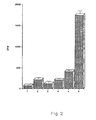
- Curve 1 of Fig. 1A illustrates the growth of B cells cultured on CDw32 L cells without Mab 89 and without IL-4.
- Curve 2 illustrates the growth of B cells cultured initially with 1 ⁇ g/ml Mab 89, then at day 5 the culture was split and half of the cells was transferred to another well with 2.5x10⁴ irradiated CDw32 L cells with 1 ⁇ g/ml Mab 89.
- Curve 3 illustrates the growth of B cells cultured initially with 1 ⁇ g/ml Mab 89, then at day 5 the culture was split and half of the cells was transferred to another well with 2.5x10⁴ irradiated CDw32 L cells without Mab 89.
- Curve 4 illustrates the growth of B cells cultured initially with 1 ⁇ g/ml Mab 89 and 100 U/ml IL-4, then at day 5 the culture was divided and half of the cells was transferred to another well with 2.5x10⁴ irradiated CDw32 L cells and 1 ⁇ g/ml Mab 89 and 100 U/ml IL-4.
- Curve 5 illustrates the growth of B cells cultured initially with 1 ⁇ g/ml Mab 89 and 100 U/ml IL-4, then at day 5 the culture was divided and half of the cells was transferred to another well with 2.5x10⁴ irradiated CDw32 L cells but without either Mab 89 or IL-4. The enhancing effect of CD40 cross linking in the presence of IL-4 is clearly seen.
- 5x10³ purified tonsillar B cells were cultured on 5x10³ irradiated CDw32 L cells with 1 ⁇ g/ml Mab 89 in conical microwells.
- Tritiated thymidine uptake (after a 16 h pulse with 1 ⁇ Ci) was assayed at the time points indicated in the table below. Each value in the table is a means of triplicate determinations.
- Cytokine concentrations were 25 U/ml IL-4; 2.5 IU/ml IL-1; 20 IU/ml IL-2; 50 U/ml IL-6; and 1000 IU/ml IFN- ⁇ .
- 2.5x10⁵ purified B cells were cultured with or without 2.5x10⁴ irradiated CDw32 L cells, with or without 0.5 ⁇ g/ml Mab 89, and with or without 100 U/ml IL-4. Supernatants were harvested at day 8 and immunoglobulin concentrations were determined by ELISA. The results for the various isotypes are shown in Table II.
- Example 4 Stimulation of B cell growth by irradiated hybridoma 89 cells
- the growth-inducing effect of a hybridoma expressing surface anti-CD40 antibody was tested.
- Six experimental conditions were examined: a control consisting of microtiter plate wells seeded with 105 purified B cells; a control consisting of microtiter plate wells seeded with 105 purified B cells and 1 ⁇ g/ml Mab 89; a control consisting of microtiter plate wells seeded with 104 irradiated hybridoma 89.1.4 cells (this is a derivative of hybridoma 89 which expresses antibody on its surface); a control consisting of microtiter plate wells seeded with 105 purified B cells and 104 cells of an irradiated and unrelated hybridoma; a control consisting of microtiter plate wells seeded with 105 purified B cells and 104 irradiated hybridoma 89.1.4 cells; and a control consisting of microtiter plate wells seeded with 105 purified B
- Epstein Barr virus e.g. James, Scand. J. Immunol., Vol. 29, pg. 257 (1989).
- EBV Epstein Barr virus
- the infection procedure is very inefficient, e.g. Stein et al. Cell. Immunol., Vol. 79, pg. 309 (1983).
- CD40 cross-linking agent increases the efficiency of B cell infection. Infection efficiency was measured as a function of initial B cell numbers and the presence or absence of Mab 89, IL-4, or IL-6.
- the Mab 89/L cell System also affects antibody production by the EBV infected B cells.
- 105 resting B cells were cultured on 2.5x10⁴ irradiated L cells expressing CDw32 and 1 ⁇ g/ml Mab 89 and EBV. Cells were enumerated at day 8 and immunoglobulin levels were measured by ELISA. Table IV lists the results and shows that the cells produce very high levels of IgE under these conditions.
- anti-Rh antibodies An important clinical use of anti-Rh antibodies is their injection into Rh-negative women shortly after the delivery of an Rh-positive infant to prevent the development of indigenious anti-Rh antibodies by the women which could be harmful to infants of subsequent pregnancies, e.g. Crookston, pgs. 601-608, in Rose et al, eds., Manual of Clinical Laboratory Immunology, 3rd Ed. (American Society for Microbiology, Washington, D.C., 1986). Besides the cost and difficulty of obtaining suitable donors for the anti-Rh immunoglobulin, a frequent danger associated with such injections is the transmission of blood-borne diseases such hepatitis, AIDS, and the like. In view of this problem, an in vitro source of anti-Rh antibodies would be highly desirable.
- Resting B lymphocytes are isolated from an Rh-negative donor having serum containing anti-Rh antibody.
- a subpopulation of resting B cells carrying anti-Rh surface immunoglobulin may be isolated by repeated panning of the isolated B lymphocytes by the technique described by Mage (cited above), modified in the following manner: Instead of using a tissue culture dish coated with antibody specific for the anti-Rh antibody, the tissue culture dish is coated with anti-biotin antibody, and prior to addition to the tissue culture dish the isolated B lymphocytes are incubated with biotinylated Rh antigen. Cells binding the biotinylated Rh antigen are then isolated by panning as described by Mage (cited above).
- the resting B lymphocytes are isolated by fluorescent-activated cell sorting (FACS) using fluorescently labeled Rh antigen, or by rosetting following standard procedures, e.g. Elliott et al, Meth. Enzymol., Vol. 108, pgs 49-64 (1984).
- FACS fluorescent-activated cell sorting
- the isolated anti-Rh resting B cells are then distributed among the wells (about 105 B cells per well) of a microtiter plate, each well having previously been seeded with about 104 CDw32-transfected, irradiated L cells, and each well containing 0.4 ml of medium (RPMI 1640 with 10% fetal calf serum, and 2 mM glutamine) further containing 0.5 mg/ml of Mab 89 and 100 U/ml of IL-4. Cultures are expanded into larger containers and harvested for anti-Rh antibody after several weeks.
- medium RPMI 1640 with 10% fetal calf serum, and 2 mM glutamine
Landscapes
- Health & Medical Sciences (AREA)
- Engineering & Computer Science (AREA)
- Biomedical Technology (AREA)
- Life Sciences & Earth Sciences (AREA)
- Zoology (AREA)
- Immunology (AREA)
- Organic Chemistry (AREA)
- Biotechnology (AREA)
- Bioinformatics & Cheminformatics (AREA)
- Genetics & Genomics (AREA)
- Chemical & Material Sciences (AREA)
- Wood Science & Technology (AREA)
- Biochemistry (AREA)
- Cell Biology (AREA)
- General Engineering & Computer Science (AREA)
- General Health & Medical Sciences (AREA)
- Hematology (AREA)
- Microbiology (AREA)
- Preparation Of Compounds By Using Micro-Organisms (AREA)
- Micro-Organisms Or Cultivation Processes Thereof (AREA)
- Control Of El Displays (AREA)
- Photosensitive Polymer And Photoresist Processing (AREA)
- Peptides Or Proteins (AREA)
- Materials For Medical Uses (AREA)
- Curing Cements, Concrete, And Artificial Stone (AREA)
- Silicon Polymers (AREA)
- Medicines Containing Antibodies Or Antigens For Use As Internal Diagnostic Agents (AREA)
- Addition Polymer Or Copolymer, Post-Treatments, Or Chemical Modifications (AREA)
- Light Receiving Elements (AREA)
Priority Applications (17)
| Application Number | Priority Date | Filing Date | Title |
|---|---|---|---|
| EP19890403491 EP0434879A1 (de) | 1989-12-14 | 1989-12-14 | Verfahren zur Herstellung von faktorabhÀ¤ngigen menschlichen B-Zellinien |
| ZA909778A ZA909778B (en) | 1989-12-14 | 1990-12-05 | Method of making factor dependent human b cell lines |
| NZ236425A NZ236425A (en) | 1989-12-14 | 1990-12-11 | Human lymphoid b cell cultures |
| MYPI90002163A MY106561A (en) | 1989-12-14 | 1990-12-11 | Method of making factor-dependent human b cell lines |
| IL96639A IL96639A0 (en) | 1989-12-14 | 1990-12-12 | Method of making factor-dependent human b cell lines |
| FI922655A FI922655A0 (fi) | 1989-12-14 | 1990-12-13 | Foerfarande foer framstaellning av av faktor beroende human b-cell-linjer. |
| ES91900209T ES2084146T3 (es) | 1989-12-14 | 1990-12-13 | Metodo para preparar lineas de celulas b humanas dependientes de factor. |
| DE69025772T DE69025772T2 (de) | 1989-12-14 | 1990-12-13 | Verfahren zur herstellung von faktorabhängigen menschlichen b-zellinien |
| CA002071886A CA2071886A1 (en) | 1989-12-14 | 1990-12-13 | Method of making factor-dependent human b cell lines |
| PCT/EP1990/002195 WO1991009115A1 (en) | 1989-12-14 | 1990-12-13 | Method of making factor-dependent human b cell lines |
| AU69017/91A AU655759B2 (en) | 1989-12-14 | 1990-12-13 | Method of making factor-dependent human B cell lines |
| AT91900209T ATE135041T1 (de) | 1989-12-14 | 1990-12-13 | Verfahren zur herstellung von faktorabhängigen menschlichen b-zellinien |
| EP91900209A EP0505397B1 (de) | 1989-12-14 | 1990-12-13 | Verfahren zur herstellung von faktorabhängigen menschlichen b-zellinien |
| JP3500964A JPH0789910B2 (ja) | 1989-12-14 | 1990-12-13 | 因子依存性ヒトb細胞系統の作製法 |
| IE449890A IE904498A1 (en) | 1989-12-14 | 1990-12-13 | Improvements in or relating to method of making¹factor-dependant human b cell lines |
| OA60226A OA09701A (en) | 1989-12-14 | 1992-06-04 | Method of making factor-dependent human B cell lines. |
| NO922332A NO922332D0 (no) | 1989-12-14 | 1992-06-12 | Fremgangsmaate for fremstilling av faktoravhengige, humaneb-cellelinjer |
Applications Claiming Priority (1)
| Application Number | Priority Date | Filing Date | Title |
|---|---|---|---|
| EP19890403491 EP0434879A1 (de) | 1989-12-14 | 1989-12-14 | Verfahren zur Herstellung von faktorabhÀ¤ngigen menschlichen B-Zellinien |
Publications (1)
| Publication Number | Publication Date |
|---|---|
| EP0434879A1 true EP0434879A1 (de) | 1991-07-03 |
Family
ID=8203014
Family Applications (2)
| Application Number | Title | Priority Date | Filing Date |
|---|---|---|---|
| EP19890403491 Withdrawn EP0434879A1 (de) | 1989-12-14 | 1989-12-14 | Verfahren zur Herstellung von faktorabhÀ¤ngigen menschlichen B-Zellinien |
| EP91900209A Expired - Lifetime EP0505397B1 (de) | 1989-12-14 | 1990-12-13 | Verfahren zur herstellung von faktorabhängigen menschlichen b-zellinien |
Family Applications After (1)
| Application Number | Title | Priority Date | Filing Date |
|---|---|---|---|
| EP91900209A Expired - Lifetime EP0505397B1 (de) | 1989-12-14 | 1990-12-13 | Verfahren zur herstellung von faktorabhängigen menschlichen b-zellinien |
Country Status (16)
| Country | Link |
|---|---|
| EP (2) | EP0434879A1 (de) |
| JP (1) | JPH0789910B2 (de) |
| AT (1) | ATE135041T1 (de) |
| AU (1) | AU655759B2 (de) |
| CA (1) | CA2071886A1 (de) |
| DE (1) | DE69025772T2 (de) |
| ES (1) | ES2084146T3 (de) |
| FI (1) | FI922655A0 (de) |
| IE (1) | IE904498A1 (de) |
| IL (1) | IL96639A0 (de) |
| MY (1) | MY106561A (de) |
| NO (1) | NO922332D0 (de) |
| NZ (1) | NZ236425A (de) |
| OA (1) | OA09701A (de) |
| WO (1) | WO1991009115A1 (de) |
| ZA (1) | ZA909778B (de) |
Cited By (12)
| Publication number | Priority date | Publication date | Assignee | Title |
|---|---|---|---|---|
| WO1994004570A1 (en) * | 1992-08-21 | 1994-03-03 | Schering Corporation | Cd40 ligand, anti cd40 antibodies, and soluble cd40 |
| EP0619323A1 (de) * | 1993-04-09 | 1994-10-12 | Schering-Plough | Menschliche monoklonale Antikörper und Verfahren und Material zu deren Herstellung |
| WO1995014780A3 (en) * | 1993-11-23 | 1995-06-22 | Schering Corp | Human monoclonal antibodies against human cytokines and methods of making and using such antibodies |
| US5677165A (en) * | 1992-07-09 | 1997-10-14 | Chiron Corporation | Anti-CD40 monoclonal antibodies capable of blocking B-cell activation |
| US5874082A (en) * | 1992-07-09 | 1999-02-23 | Chiron Corporation | Humanized anti-CD40 monoclonal antibodies and fragments capable of blocking B cell proliferation |
| US5959085A (en) * | 1993-11-23 | 1999-09-28 | Schering Corporation | Human monoclonal antibodies against human cytokines and methods of making and using such antibodies |
| US6297052B1 (en) | 1994-04-28 | 2001-10-02 | Boehringer Ingelheim Pharmaceuticals, Inc. | B cell culture system comprising high density membrane bound CD40 ligand |
| US6465251B1 (en) * | 1996-11-13 | 2002-10-15 | Dana-Farber Cancer Institute, Inc. | Method of promoting b-cell proliferation and activation with CD40 ligand and cyclosporin |
| EP1033406A4 (de) * | 1997-10-27 | 2005-03-09 | Sumitomo Electric Industries | Induktor zur herstellung eines antigen-spezifischen antikörpers, expressionsvektor enthaltend ein hierfür entsprechendes gen, sowie verfahren zur induktion der herstellung eines antigen-spezifischen antikörpers |
| US7288252B2 (en) | 2000-10-02 | 2007-10-30 | Novartis Vaccines And Diagnostics, Inc. | Methods of therapy for B-cell malignancies using antagonist anti-CD40 antibodies |
| WO2011050985A1 (en) * | 2009-10-30 | 2011-05-05 | Biontech Ag | Clonal expansion of b cells |
| US9290786B2 (en) | 2003-02-26 | 2016-03-22 | Institute For Research In Biomedicine | Monoclonal antibody production by EBV transformation of B cells |
Families Citing this family (7)
| Publication number | Priority date | Publication date | Assignee | Title |
|---|---|---|---|---|
| US7063845B2 (en) | 2000-04-28 | 2006-06-20 | Gemini Science, Inc. | Human anti-CD40 antibodies |
| EP2011802A3 (de) | 2001-04-27 | 2009-04-15 | Kyowa Hakko Kirin Co., Ltd. | Monoklonaler Antikörper gegen CD40 |
| AU2004215125B2 (en) | 2003-02-26 | 2011-01-06 | Institute For Research In Biomedicine | Monoclonal antibody production by EBV transformation of B cells |
| CN101253409A (zh) | 2005-08-02 | 2008-08-27 | 埃克斯生物科技公司 | 使用IL-1α自身抗体诊断、治疗和预防血管疾病 |
| DK2464664T3 (da) | 2009-08-13 | 2016-01-18 | Crucell Holland Bv | Antistoffer mod humant respiratorisk syncytialvirus (rsv) og fremgangsmåder til anvendelse deraf |
| EP2591000B1 (de) | 2010-07-09 | 2017-05-17 | Janssen Vaccines & Prevention B.V. | Antikörper gegen humanes respiratorisches syncytialvirus (rsv) und ihre verwendung |
| WO2013000982A1 (en) | 2011-06-27 | 2013-01-03 | Vivalis | Method for screening cells |
-
1989
- 1989-12-14 EP EP19890403491 patent/EP0434879A1/de not_active Withdrawn
-
1990
- 1990-12-05 ZA ZA909778A patent/ZA909778B/xx unknown
- 1990-12-11 MY MYPI90002163A patent/MY106561A/en unknown
- 1990-12-11 NZ NZ236425A patent/NZ236425A/xx unknown
- 1990-12-12 IL IL96639A patent/IL96639A0/xx unknown
- 1990-12-13 JP JP3500964A patent/JPH0789910B2/ja not_active Expired - Lifetime
- 1990-12-13 IE IE449890A patent/IE904498A1/en unknown
- 1990-12-13 EP EP91900209A patent/EP0505397B1/de not_active Expired - Lifetime
- 1990-12-13 AU AU69017/91A patent/AU655759B2/en not_active Ceased
- 1990-12-13 AT AT91900209T patent/ATE135041T1/de not_active IP Right Cessation
- 1990-12-13 CA CA002071886A patent/CA2071886A1/en not_active Abandoned
- 1990-12-13 DE DE69025772T patent/DE69025772T2/de not_active Expired - Fee Related
- 1990-12-13 ES ES91900209T patent/ES2084146T3/es not_active Expired - Lifetime
- 1990-12-13 WO PCT/EP1990/002195 patent/WO1991009115A1/en not_active Ceased
- 1990-12-13 FI FI922655A patent/FI922655A0/fi not_active Application Discontinuation
-
1992
- 1992-06-04 OA OA60226A patent/OA09701A/en unknown
- 1992-06-12 NO NO922332A patent/NO922332D0/no unknown
Non-Patent Citations (3)
| Title |
|---|
| BIOLOGICAL ABSTRACTS, vol. 79, no. 11, 1985, abstract no. 95695, Philadelphia, PA, US; R. FRADE et al.: "Enhancement of human B cell proliferation by an antibody to the complement C3d receptor, the glycoprotein gpl 40 molecule", & EUR. J. IMMUNOL. 15(1): 73-76. 1985 * |
| BIOLOGICAL ABSTRACTS, vol. 87, no. 12, 1989, abstract no. 127968, Philadelphia, PA, US; J.L. LASKY et al.: "Characterization and growth factor reguirements of SJL lymphomas: II. Interleukin 4 dependence of the in vitro cell line, cRCS-X, and influence of other cytokines", & EUR. J. IMMUNOL. 19(2): 365-372. 1989 * |
| THE JOURNAL OF IMMUNOLOGY, vol. 142, no. 5, 1st March 1989, pages 1569-1575, The American Association of Immunologists, US; J.B. SPLAWSKI et al.: "Immunomodulatory role of IL-4 on the secretion of Ig by human B cells" * |
Cited By (27)
| Publication number | Priority date | Publication date | Assignee | Title |
|---|---|---|---|---|
| US6056959A (en) * | 1992-07-09 | 2000-05-02 | Chiron Corporation | CD40 antigen antibody complex |
| US6315998B1 (en) | 1992-07-09 | 2001-11-13 | Chiron Corporation | Methods of blocking B-cell activation using anti-CD40 monoclonal antibodies |
| US6899879B2 (en) | 1992-07-09 | 2005-05-31 | Chiron Corporation | Method for treating an IgE-mediated disease in a patient using anti-CD40 monoclonal antibodies |
| US7790166B2 (en) | 1992-07-09 | 2010-09-07 | Novartis Vaccines And Diagnostics, Inc. | Anti-CD40 antibodies capable of blocking B-cell activation |
| US5677165A (en) * | 1992-07-09 | 1997-10-14 | Chiron Corporation | Anti-CD40 monoclonal antibodies capable of blocking B-cell activation |
| US5874082A (en) * | 1992-07-09 | 1999-02-23 | Chiron Corporation | Humanized anti-CD40 monoclonal antibodies and fragments capable of blocking B cell proliferation |
| US7361345B2 (en) | 1992-07-09 | 2008-04-22 | Novartis Vaccines And Diagnostics, Inc. | Anti-CD40 antibodies capable of blocking B-cell activation |
| US6004552A (en) * | 1992-07-09 | 1999-12-21 | Chiron Corporation | Methods of blocking B cell proliferation using anti-CD40 monoclonal antibodies |
| WO1994004570A1 (en) * | 1992-08-21 | 1994-03-03 | Schering Corporation | Cd40 ligand, anti cd40 antibodies, and soluble cd40 |
| WO1994024164A3 (en) * | 1993-04-09 | 1995-01-05 | Schering Corp | Human monoclonal antibodies and processes and materials for making such antibodies |
| EP0619323A1 (de) * | 1993-04-09 | 1994-10-12 | Schering-Plough | Menschliche monoklonale Antikörper und Verfahren und Material zu deren Herstellung |
| US5959085A (en) * | 1993-11-23 | 1999-09-28 | Schering Corporation | Human monoclonal antibodies against human cytokines and methods of making and using such antibodies |
| EP0659766A1 (de) * | 1993-11-23 | 1995-06-28 | Schering-Plough | Menschliche Monoklonalantikörper gegen menschliche Cytokine und Verfahren zur Herstellung dieser Antikörper |
| WO1995014780A3 (en) * | 1993-11-23 | 1995-06-22 | Schering Corp | Human monoclonal antibodies against human cytokines and methods of making and using such antibodies |
| US6297052B1 (en) | 1994-04-28 | 2001-10-02 | Boehringer Ingelheim Pharmaceuticals, Inc. | B cell culture system comprising high density membrane bound CD40 ligand |
| US6465251B1 (en) * | 1996-11-13 | 2002-10-15 | Dana-Farber Cancer Institute, Inc. | Method of promoting b-cell proliferation and activation with CD40 ligand and cyclosporin |
| US7195758B2 (en) | 1996-11-13 | 2007-03-27 | Dana-Farber Cancer Institute, Inc. | Methods of inducing a T cell mediated immune response by administering antigen presenting B cells |
| EP1033406A4 (de) * | 1997-10-27 | 2005-03-09 | Sumitomo Electric Industries | Induktor zur herstellung eines antigen-spezifischen antikörpers, expressionsvektor enthaltend ein hierfür entsprechendes gen, sowie verfahren zur induktion der herstellung eines antigen-spezifischen antikörpers |
| US7288252B2 (en) | 2000-10-02 | 2007-10-30 | Novartis Vaccines And Diagnostics, Inc. | Methods of therapy for B-cell malignancies using antagonist anti-CD40 antibodies |
| US7445780B2 (en) | 2000-10-02 | 2008-11-04 | Novartis Vaccines And Diagnostics, Inc. | Antagonistic anti-CD40 antibodies |
| US7611708B2 (en) | 2000-10-02 | 2009-11-03 | Novartis Vaccines And Diagnostics, Inc. | Methods of therapy for B-cell malignancies using antagonist anti-CD40 antibodies |
| US7820170B2 (en) | 2000-10-02 | 2010-10-26 | Novartis Vaccines And Diagnostics, Inc. | Methods of therapy for B-cell malignancies using antagonist anti-CD40 antibodies |
| US8088383B2 (en) | 2000-10-02 | 2012-01-03 | Novartis Vaccines And Diagnostics, Inc. | Methods of therapy for B-cell malignancies using antagonist anti-CD40 antibodies |
| US9290786B2 (en) | 2003-02-26 | 2016-03-22 | Institute For Research In Biomedicine | Monoclonal antibody production by EBV transformation of B cells |
| WO2011050985A1 (en) * | 2009-10-30 | 2011-05-05 | Biontech Ag | Clonal expansion of b cells |
| US8945923B2 (en) | 2009-10-30 | 2015-02-03 | Biontech Ag | Antigen-specific clonal expansion of B cells |
| US9139639B2 (en) | 2009-10-30 | 2015-09-22 | Biontech Ag | Polynucleotides encoding an intracellular segment of CD40 and a constant region of an immunoglobulin heavy chain |
Also Published As
| Publication number | Publication date |
|---|---|
| WO1991009115A1 (en) | 1991-06-27 |
| FI922655A7 (fi) | 1992-06-09 |
| NO922332L (no) | 1992-06-12 |
| JPH05503214A (ja) | 1993-06-03 |
| ES2084146T3 (es) | 1996-05-01 |
| IL96639A0 (en) | 1991-09-16 |
| JPH0789910B2 (ja) | 1995-10-04 |
| FI922655A0 (fi) | 1992-06-09 |
| CA2071886A1 (en) | 1991-06-15 |
| DE69025772D1 (de) | 1996-04-11 |
| EP0505397B1 (de) | 1996-03-06 |
| MY106561A (en) | 1995-06-30 |
| AU655759B2 (en) | 1995-01-12 |
| AU6901791A (en) | 1991-07-18 |
| IE904498A1 (en) | 1991-06-19 |
| EP0505397A1 (de) | 1992-09-30 |
| DE69025772T2 (de) | 1997-02-06 |
| ZA909778B (en) | 1991-10-30 |
| OA09701A (en) | 1993-08-30 |
| ATE135041T1 (de) | 1996-03-15 |
| NO922332D0 (no) | 1992-06-12 |
| NZ236425A (en) | 1993-02-25 |
Similar Documents
| Publication | Publication Date | Title |
|---|---|---|
| EP0505397B1 (de) | Verfahren zur herstellung von faktorabhängigen menschlichen b-zellinien | |
| US20230399396A1 (en) | Cd40l expressing mammalian cells and their use | |
| EP0488470B1 (de) | Verfahren zur Herstellung von Antikörpern | |
| Gascan et al. | Human B cell clones can be induced to proliferate and to switch to IgE and IgG4 synthesis by interleukin 4 and a signal provided by activated CD4+ T cell clones. | |
| EP0904350B1 (de) | Modifizierte schnellvermehrungsmethode ('modified-rem') zur in vitro vermehrung von t-lymphozyten | |
| Whitlock et al. | In vitro analysis of murine B-cell development. | |
| Crotty | Follicular helper CD4 T cells (Tfh) | |
| Fayette et al. | Dendritic cells enhance the differentiation of naive B cells into plasma cells in vitro | |
| US20040247594A1 (en) | Use of cd28-specific monoclonal antibodies for stimulating blood cells that lack cd28 | |
| US8815543B2 (en) | Methods of producing antigen-specific B cell populations in the presence of CD40:CD40L, BAFF:BAFF receptor and Fas:FasL stimulation | |
| RU2536978C2 (ru) | Способы получения гибридных/химерных клеток и их применение | |
| Melchers et al. | Cellular stages and molecular steps of murine B-cell development | |
| CN111518765B (zh) | 一种b淋巴细胞体外培养体系及应用 | |
| Armitage et al. | Regulation of interleukin 4 receptors on human T cells | |
| Quint et al. | Functional and phenotypic analysis of human T-cell clones which stimulate IgE production in vitro | |
| Zola et al. | Expression of IL-2 receptor p55 and p75 chains by human B lymphocytes: effects of activation and differentiation | |
| Matthes et al. | Cytokine expression and regulation of human plasma cells: disappearance of interleukin‐10 and persistence of transforming growth factor‐β1 | |
| EP1227822A2 (de) | Methoden zur wiederherstellung oder verstärkung der immunüberwachung durch t-zellen nach natürlicher oder künstlich induzierter immunsuppression | |
| US5348878A (en) | Class I MHC-restricted T-T hybridomas, and a CD8-transfected BW5147, fusion partner therefor | |
| James | Human monoclonal antibody technology | |
| Altman et al. | Production of antigen-nonspecific immunoregulatory lymphokines by T cell hybridomas | |
| Hunter | A system for the production of human monoclonal antibodies | |
| CA2176114A1 (en) | Cytokines from natural killer or t cells | |
| Kanki et al. | Immortalization of plasma cells by plasmid DNA and its hybridoma | |
| Ortaldo | Human B Cell Activation by Autologous NK |
Legal Events
| Date | Code | Title | Description |
|---|---|---|---|
| PUAI | Public reference made under article 153(3) epc to a published international application that has entered the european phase |
Free format text: ORIGINAL CODE: 0009012 |
|
| AK | Designated contracting states |
Kind code of ref document: A1 Designated state(s): FR |
|
| 17P | Request for examination filed |
Effective date: 19910801 |
|
| RAP3 | Party data changed (applicant data changed or rights of an application transferred) |
Owner name: SCHERING-PLOUGH |
|
| 17Q | First examination report despatched |
Effective date: 19930518 |
|
| STAA | Information on the status of an ep patent application or granted ep patent |
Free format text: STATUS: THE APPLICATION IS DEEMED TO BE WITHDRAWN |
|
| 18D | Application deemed to be withdrawn |
Effective date: 19931210 |