EP0437914A2 - Rétroviseur de sécurité électro-optique, anti-buée protégé de la lumière ultraviolette - Google Patents
Rétroviseur de sécurité électro-optique, anti-buée protégé de la lumière ultraviolette Download PDFInfo
- Publication number
- EP0437914A2 EP0437914A2 EP90301050A EP90301050A EP0437914A2 EP 0437914 A2 EP0437914 A2 EP 0437914A2 EP 90301050 A EP90301050 A EP 90301050A EP 90301050 A EP90301050 A EP 90301050A EP 0437914 A2 EP0437914 A2 EP 0437914A2
- Authority
- EP
- European Patent Office
- Prior art keywords
- glass
- electro
- mirror assembly
- assembly
- optic
- Prior art date
- Legal status (The legal status is an assumption and is not a legal conclusion. Google has not performed a legal analysis and makes no representation as to the accuracy of the status listed.)
- Granted
Links
Images








Classifications
-
- B—PERFORMING OPERATIONS; TRANSPORTING
- B32—LAYERED PRODUCTS
- B32B—LAYERED PRODUCTS, i.e. PRODUCTS BUILT-UP OF STRATA OF FLAT OR NON-FLAT, e.g. CELLULAR OR HONEYCOMB, FORM
- B32B17/00—Layered products essentially comprising sheet glass, or glass, slag, or like fibres
- B32B17/06—Layered products essentially comprising sheet glass, or glass, slag, or like fibres comprising glass as the main or only constituent of a layer, next to another layer of a specific material
- B32B17/10—Layered products essentially comprising sheet glass, or glass, slag, or like fibres comprising glass as the main or only constituent of a layer, next to another layer of a specific material of synthetic resin
- B32B17/10005—Layered products essentially comprising sheet glass, or glass, slag, or like fibres comprising glass as the main or only constituent of a layer, next to another layer of a specific material of synthetic resin laminated safety glass or glazing
- B32B17/10009—Layered products essentially comprising sheet glass, or glass, slag, or like fibres comprising glass as the main or only constituent of a layer, next to another layer of a specific material of synthetic resin laminated safety glass or glazing characterized by the number, the constitution or treatment of glass sheets
- B32B17/10064—Layered products essentially comprising sheet glass, or glass, slag, or like fibres comprising glass as the main or only constituent of a layer, next to another layer of a specific material of synthetic resin laminated safety glass or glazing characterized by the number, the constitution or treatment of glass sheets comprising at least two glass sheets, only one of which being an outer layer
-
- B—PERFORMING OPERATIONS; TRANSPORTING
- B32—LAYERED PRODUCTS
- B32B—LAYERED PRODUCTS, i.e. PRODUCTS BUILT-UP OF STRATA OF FLAT OR NON-FLAT, e.g. CELLULAR OR HONEYCOMB, FORM
- B32B7/00—Layered products characterised by the relation between layers; Layered products characterised by the relative orientation of features between layers, or by the relative values of a measurable parameter between layers, i.e. products comprising layers having different physical, chemical or physicochemical properties; Layered products characterised by the interconnection of layers
- B32B7/04—Interconnection of layers
- B32B7/12—Interconnection of layers using interposed adhesives or interposed materials with bonding properties
-
- B—PERFORMING OPERATIONS; TRANSPORTING
- B32—LAYERED PRODUCTS
- B32B—LAYERED PRODUCTS, i.e. PRODUCTS BUILT-UP OF STRATA OF FLAT OR NON-FLAT, e.g. CELLULAR OR HONEYCOMB, FORM
- B32B17/00—Layered products essentially comprising sheet glass, or glass, slag, or like fibres
- B32B17/06—Layered products essentially comprising sheet glass, or glass, slag, or like fibres comprising glass as the main or only constituent of a layer, next to another layer of a specific material
- B32B17/10—Layered products essentially comprising sheet glass, or glass, slag, or like fibres comprising glass as the main or only constituent of a layer, next to another layer of a specific material of synthetic resin
- B32B17/10005—Layered products essentially comprising sheet glass, or glass, slag, or like fibres comprising glass as the main or only constituent of a layer, next to another layer of a specific material of synthetic resin laminated safety glass or glazing
- B32B17/10165—Functional features of the laminated safety glass or glazing
- B32B17/10174—Coatings of a metallic or dielectric material on a constituent layer of glass or polymer
-
- B—PERFORMING OPERATIONS; TRANSPORTING
- B32—LAYERED PRODUCTS
- B32B—LAYERED PRODUCTS, i.e. PRODUCTS BUILT-UP OF STRATA OF FLAT OR NON-FLAT, e.g. CELLULAR OR HONEYCOMB, FORM
- B32B17/00—Layered products essentially comprising sheet glass, or glass, slag, or like fibres
- B32B17/06—Layered products essentially comprising sheet glass, or glass, slag, or like fibres comprising glass as the main or only constituent of a layer, next to another layer of a specific material
- B32B17/10—Layered products essentially comprising sheet glass, or glass, slag, or like fibres comprising glass as the main or only constituent of a layer, next to another layer of a specific material of synthetic resin
- B32B17/10005—Layered products essentially comprising sheet glass, or glass, slag, or like fibres comprising glass as the main or only constituent of a layer, next to another layer of a specific material of synthetic resin laminated safety glass or glazing
- B32B17/10165—Functional features of the laminated safety glass or glazing
- B32B17/10293—Edge features, e.g. inserts or holes
- B32B17/10302—Edge sealing
-
- B—PERFORMING OPERATIONS; TRANSPORTING
- B32—LAYERED PRODUCTS
- B32B—LAYERED PRODUCTS, i.e. PRODUCTS BUILT-UP OF STRATA OF FLAT OR NON-FLAT, e.g. CELLULAR OR HONEYCOMB, FORM
- B32B17/00—Layered products essentially comprising sheet glass, or glass, slag, or like fibres
- B32B17/06—Layered products essentially comprising sheet glass, or glass, slag, or like fibres comprising glass as the main or only constituent of a layer, next to another layer of a specific material
- B32B17/10—Layered products essentially comprising sheet glass, or glass, slag, or like fibres comprising glass as the main or only constituent of a layer, next to another layer of a specific material of synthetic resin
- B32B17/10005—Layered products essentially comprising sheet glass, or glass, slag, or like fibres comprising glass as the main or only constituent of a layer, next to another layer of a specific material of synthetic resin laminated safety glass or glazing
- B32B17/10165—Functional features of the laminated safety glass or glazing
- B32B17/1033—Laminated safety glass or glazing containing temporary protective coatings or layers
-
- B—PERFORMING OPERATIONS; TRANSPORTING
- B32—LAYERED PRODUCTS
- B32B—LAYERED PRODUCTS, i.e. PRODUCTS BUILT-UP OF STRATA OF FLAT OR NON-FLAT, e.g. CELLULAR OR HONEYCOMB, FORM
- B32B17/00—Layered products essentially comprising sheet glass, or glass, slag, or like fibres
- B32B17/06—Layered products essentially comprising sheet glass, or glass, slag, or like fibres comprising glass as the main or only constituent of a layer, next to another layer of a specific material
- B32B17/10—Layered products essentially comprising sheet glass, or glass, slag, or like fibres comprising glass as the main or only constituent of a layer, next to another layer of a specific material of synthetic resin
- B32B17/10005—Layered products essentially comprising sheet glass, or glass, slag, or like fibres comprising glass as the main or only constituent of a layer, next to another layer of a specific material of synthetic resin laminated safety glass or glazing
- B32B17/10165—Functional features of the laminated safety glass or glazing
- B32B17/10431—Specific parts for the modulation of light incorporated into the laminated safety glass or glazing
- B32B17/10467—Variable transmission
- B32B17/10495—Variable transmission optoelectronic, i.e. optical valve
- B32B17/10513—Electrochromic layer
-
- B—PERFORMING OPERATIONS; TRANSPORTING
- B32—LAYERED PRODUCTS
- B32B—LAYERED PRODUCTS, i.e. PRODUCTS BUILT-UP OF STRATA OF FLAT OR NON-FLAT, e.g. CELLULAR OR HONEYCOMB, FORM
- B32B27/00—Layered products comprising a layer of synthetic resin
- B32B27/06—Layered products comprising a layer of synthetic resin as the main or only constituent of a layer, which is next to another layer of the same or of a different material
- B32B27/08—Layered products comprising a layer of synthetic resin as the main or only constituent of a layer, which is next to another layer of the same or of a different material of synthetic resin
-
- B—PERFORMING OPERATIONS; TRANSPORTING
- B32—LAYERED PRODUCTS
- B32B—LAYERED PRODUCTS, i.e. PRODUCTS BUILT-UP OF STRATA OF FLAT OR NON-FLAT, e.g. CELLULAR OR HONEYCOMB, FORM
- B32B27/00—Layered products comprising a layer of synthetic resin
- B32B27/18—Layered products comprising a layer of synthetic resin characterised by the use of special additives
- B32B27/20—Layered products comprising a layer of synthetic resin characterised by the use of special additives using fillers, pigments, thixotroping agents
-
- B—PERFORMING OPERATIONS; TRANSPORTING
- B60—VEHICLES IN GENERAL
- B60J—WINDOWS, WINDSCREENS, NON-FIXED ROOFS, DOORS, OR SIMILAR DEVICES FOR VEHICLES; REMOVABLE EXTERNAL PROTECTIVE COVERINGS SPECIALLY ADAPTED FOR VEHICLES
- B60J3/00—Antiglare equipment associated with windows or windscreens; Sun visors for vehicles
- B60J3/04—Antiglare equipment associated with windows or windscreens; Sun visors for vehicles adjustable in transparency
-
- B—PERFORMING OPERATIONS; TRANSPORTING
- B60—VEHICLES IN GENERAL
- B60R—VEHICLES, VEHICLE FITTINGS, OR VEHICLE PARTS, NOT OTHERWISE PROVIDED FOR
- B60R1/00—Optical viewing arrangements; Real-time viewing arrangements for drivers or passengers using optical image capturing systems, e.g. cameras or video systems specially adapted for use in or on vehicles
- B60R1/02—Rear-view mirror arrangements
- B60R1/08—Rear-view mirror arrangements involving special optical features, e.g. avoiding blind spots, e.g. convex mirrors; Side-by-side associations of rear-view and other mirrors
- B60R1/083—Anti-glare mirrors, e.g. "day-night" mirrors
- B60R1/088—Anti-glare mirrors, e.g. "day-night" mirrors using a cell of electrically changeable optical characteristic, e.g. liquid-crystal or electrochromic mirrors
-
- G—PHYSICS
- G02—OPTICS
- G02F—OPTICAL DEVICES OR ARRANGEMENTS FOR THE CONTROL OF LIGHT BY MODIFICATION OF THE OPTICAL PROPERTIES OF THE MEDIA OF THE ELEMENTS INVOLVED THEREIN; NON-LINEAR OPTICS; FREQUENCY-CHANGING OF LIGHT; OPTICAL LOGIC ELEMENTS; OPTICAL ANALOGUE/DIGITAL CONVERTERS
- G02F1/00—Devices or arrangements for the control of the intensity, colour, phase, polarisation or direction of light arriving from an independent light source, e.g. switching, gating or modulating; Non-linear optics
- G02F1/01—Devices or arrangements for the control of the intensity, colour, phase, polarisation or direction of light arriving from an independent light source, e.g. switching, gating or modulating; Non-linear optics for the control of the intensity, phase, polarisation or colour
- G02F1/13—Devices or arrangements for the control of the intensity, colour, phase, polarisation or direction of light arriving from an independent light source, e.g. switching, gating or modulating; Non-linear optics for the control of the intensity, phase, polarisation or colour based on liquid crystals, e.g. single liquid crystal display cells
- G02F1/133—Constructional arrangements; Operation of liquid crystal cells; Circuit arrangements
- G02F1/1333—Constructional arrangements; Manufacturing methods
-
- G—PHYSICS
- G02—OPTICS
- G02F—OPTICAL DEVICES OR ARRANGEMENTS FOR THE CONTROL OF LIGHT BY MODIFICATION OF THE OPTICAL PROPERTIES OF THE MEDIA OF THE ELEMENTS INVOLVED THEREIN; NON-LINEAR OPTICS; FREQUENCY-CHANGING OF LIGHT; OPTICAL LOGIC ELEMENTS; OPTICAL ANALOGUE/DIGITAL CONVERTERS
- G02F1/00—Devices or arrangements for the control of the intensity, colour, phase, polarisation or direction of light arriving from an independent light source, e.g. switching, gating or modulating; Non-linear optics
- G02F1/01—Devices or arrangements for the control of the intensity, colour, phase, polarisation or direction of light arriving from an independent light source, e.g. switching, gating or modulating; Non-linear optics for the control of the intensity, phase, polarisation or colour
- G02F1/15—Devices or arrangements for the control of the intensity, colour, phase, polarisation or direction of light arriving from an independent light source, e.g. switching, gating or modulating; Non-linear optics for the control of the intensity, phase, polarisation or colour based on an electrochromic effect
- G02F1/1503—Devices or arrangements for the control of the intensity, colour, phase, polarisation or direction of light arriving from an independent light source, e.g. switching, gating or modulating; Non-linear optics for the control of the intensity, phase, polarisation or colour based on an electrochromic effect caused by oxidation-reduction reactions in organic liquid solutions, e.g. viologen solutions
-
- G—PHYSICS
- G02—OPTICS
- G02F—OPTICAL DEVICES OR ARRANGEMENTS FOR THE CONTROL OF LIGHT BY MODIFICATION OF THE OPTICAL PROPERTIES OF THE MEDIA OF THE ELEMENTS INVOLVED THEREIN; NON-LINEAR OPTICS; FREQUENCY-CHANGING OF LIGHT; OPTICAL LOGIC ELEMENTS; OPTICAL ANALOGUE/DIGITAL CONVERTERS
- G02F1/00—Devices or arrangements for the control of the intensity, colour, phase, polarisation or direction of light arriving from an independent light source, e.g. switching, gating or modulating; Non-linear optics
- G02F1/01—Devices or arrangements for the control of the intensity, colour, phase, polarisation or direction of light arriving from an independent light source, e.g. switching, gating or modulating; Non-linear optics for the control of the intensity, phase, polarisation or colour
- G02F1/15—Devices or arrangements for the control of the intensity, colour, phase, polarisation or direction of light arriving from an independent light source, e.g. switching, gating or modulating; Non-linear optics for the control of the intensity, phase, polarisation or colour based on an electrochromic effect
- G02F1/153—Constructional details
- G02F1/1533—Constructional details structural features not otherwise provided for
-
- B—PERFORMING OPERATIONS; TRANSPORTING
- B32—LAYERED PRODUCTS
- B32B—LAYERED PRODUCTS, i.e. PRODUCTS BUILT-UP OF STRATA OF FLAT OR NON-FLAT, e.g. CELLULAR OR HONEYCOMB, FORM
- B32B2551/00—Optical elements
- B32B2551/08—Mirrors
-
- G—PHYSICS
- G02—OPTICS
- G02F—OPTICAL DEVICES OR ARRANGEMENTS FOR THE CONTROL OF LIGHT BY MODIFICATION OF THE OPTICAL PROPERTIES OF THE MEDIA OF THE ELEMENTS INVOLVED THEREIN; NON-LINEAR OPTICS; FREQUENCY-CHANGING OF LIGHT; OPTICAL LOGIC ELEMENTS; OPTICAL ANALOGUE/DIGITAL CONVERTERS
- G02F1/00—Devices or arrangements for the control of the intensity, colour, phase, polarisation or direction of light arriving from an independent light source, e.g. switching, gating or modulating; Non-linear optics
- G02F1/01—Devices or arrangements for the control of the intensity, colour, phase, polarisation or direction of light arriving from an independent light source, e.g. switching, gating or modulating; Non-linear optics for the control of the intensity, phase, polarisation or colour
- G02F1/15—Devices or arrangements for the control of the intensity, colour, phase, polarisation or direction of light arriving from an independent light source, e.g. switching, gating or modulating; Non-linear optics for the control of the intensity, phase, polarisation or colour based on an electrochromic effect
- G02F1/153—Constructional details
- G02F1/157—Structural association of cells with optical devices, e.g. reflectors or illuminating devices
-
- G—PHYSICS
- G02—OPTICS
- G02F—OPTICAL DEVICES OR ARRANGEMENTS FOR THE CONTROL OF LIGHT BY MODIFICATION OF THE OPTICAL PROPERTIES OF THE MEDIA OF THE ELEMENTS INVOLVED THEREIN; NON-LINEAR OPTICS; FREQUENCY-CHANGING OF LIGHT; OPTICAL LOGIC ELEMENTS; OPTICAL ANALOGUE/DIGITAL CONVERTERS
- G02F1/00—Devices or arrangements for the control of the intensity, colour, phase, polarisation or direction of light arriving from an independent light source, e.g. switching, gating or modulating; Non-linear optics
- G02F1/01—Devices or arrangements for the control of the intensity, colour, phase, polarisation or direction of light arriving from an independent light source, e.g. switching, gating or modulating; Non-linear optics for the control of the intensity, phase, polarisation or colour
- G02F1/15—Devices or arrangements for the control of the intensity, colour, phase, polarisation or direction of light arriving from an independent light source, e.g. switching, gating or modulating; Non-linear optics for the control of the intensity, phase, polarisation or colour based on an electrochromic effect
- G02F1/153—Constructional details
- G02F1/1533—Constructional details structural features not otherwise provided for
- G02F2001/1536—Constructional details structural features not otherwise provided for additional, e.g. protective, layer inside the cell
Definitions
- This invention relates to rearview mirrors for vehicles and, more particularly, to an enhanced vehicular rearview mirror incorporating an electro-optic medium allowing variation in the light reflected by the rearview mirror in response to application of an electric field to the electro-optic medium.
- the invention is a variable reflectance, electro-optic mirror including protection against laceration injuries and scattering of glass or other fragments if broken or damaged, against degradation from ultraviolet radiation, and against fogging and misting in high humidity conditions.
- the glass typically used as the substrate in vehicular rearview mirrors poses potential hazards to the driver or other vehicle occupants. Since glass easily shatters into sharp, irregular fragments, there is a high likelihood of facial or other injury, typically lacerative in nature, in any collision. For this reason, prior known interior and exterior vehicular rearview mirrors, which typically consist of a single glass piece coated with reflective material, are conventionally protected by applying a tape or a plastisol-type plastic adhesive to the back surface of the glass piece. Accordingly, if impacted or broken in an accident, and shattered, glass fragments are retained by the tape or plastisol-type plastic adhesive.
- electro-optical mirrors which are fabricated using two pieces of glass separated by a gap or space which contains an electro-optic medium allowing variation in the light reflected by the assembly.
- the space between the transparent front and reflective coated rear glass pieces is filled with a semi-viscous liquid crystal material.
- the gap or space contains a liquid, thickened liquid, gel or semi-solid material.
- UV radiation from the sun which penetrates the earth's atmosphere has a wavelength in the range between 290 and 400 nanometers (nm) and can cause breakdown in the operational characteristics of the electro-optical medium including chain scission, cross-linking and stimulation of chemical changes in the chemicals used to formulate the electro-optical medium.
- the medium will often discolor taking on a yellowish tint visible in light reflected therethrough and drastically affect the usefulness of the rearview mirror.
- UV radiation absorbing materials In order to overcome ultraviolet radiation degradation in such electro-optic rearview mirrors, it is possible to add UV radiation absorbing materials to the electro-optic medium.
- UV absorbing additives especially in higher concentrations and with broad UV absorbance, themselves impart a yellowish tint to the materials to which they are added. Such yellow tint is also visible in light reflected therethrough. Yellow is aesthetically displeasing in many applications, and is particularly displeasing when used in rearview mirrors. Consumer acceptance of rearview mirrors having a yellowish tint or cast in the reflected light has been poor.
- yellow mirrors are efficient reflectors of headlamp glare which itself is yellow. Consequently, prolonged exposure to sunlight and UV radiation, or reducing UV degradation in electro-optic mirrors with UV absorbing additives can create negative consumer reaction and acceptance.
- Another objective in the use of rearview mirrors is the matching of human sight sensitivity in various light conditions during the use of such mirrors to the glare sources and ambient lighting present. It is known that the spectral sensitivity of the human eye depends on its light adaptation. Thus, daylight and night driving conditions create differing human eye sensitivities. Further, nearly all night driving is affected by the reflection of light from the headlights of the driver's own vehicle on the road.
- the electro-optic mirror assemblies of this invention should, therefore, optimally be constructed to correspond as much as possible with the eye sensitivities in both day and night driving conditions.
- the electro-optic media commonly used in electro-optic mirrors are often constituted of materials and chemicals of a potential toxic or otherwise hazardous nature. Should the mirror glass break in an accident, there is a possibility of automobile occupants contacting the electro-optic media, either directly or by contact with glass particles to which these potentially hazardous media are still adhering. Such contact presents a hazard to the occupants through toxic effects, and through skin irritation such as to eyes and facial areas.
- the anti-lacerative layers and laminate interlayers of this invention offer a barrier that ensures that contact with chemicals used within the mirror is minimized should the glass shatter in an accident.
- Yet another problem is unwanted misting or fogging of the rearview mirror surface when the vehicle encounters high humidity conditions.
- water droplets may tend to condense on the rearview mirror surface thereby obscuring vision in the mirror. Not only does such condensation prevent effective use of the mirror, but also requires frequent wiping by the vehicle driver which distracts his attention from driving.
- a need is apparent for a laminate electro-optic vehicular rearview mirror which can be effectively scatterproofed to retain glass fragments from both glass pieces in the mirror, protected against lacerative-type injuries, protected against ultraviolet radiation damage throughout its life, and protected against annoying fogging and misting of the mirror surface in high humidity conditions.
- electro-optic rearview mirror assemblies which provide reflected light of a commercially and consumer acceptable color or tint and which match human sight sensitivity in both day and night conditions to the glare sources and ambient lighting present.
- the invention provides an electro-optic rearview mirror as defined in the appended claims.
- the present invention overcomes the above problems by providing a laminate electro-optic vehicular rearview mirror which is protected against scattering of glass or other mirror element fragments if broken or damaged in a collision while reducing the risk of laceration from contact with the front glass or other element.
- the assembly is protected against degradation by ultraviolet radiation.
- the ultraviolet radiation reduction may be incorporated together with the scatterproofing, anti-lacerative protection.
- the assembly may incorporate anti-fogging/anti-misting materials which prevent or reduce condensation and fogging in high humidity conditions.
- the invention is an anti-lacerative, scatter protected, laminate, electro-optic rearview mirror assembly including first and second spaced optically transparent elements mounted in a mirror case.
- the elements each have front and rear surfaces defining a space between the rear surface of the first element and the front surface of the second element.
- An electro-optic medium is included in the space and has a light transmittance variable upon application of an electric field. Means are provided for applying an electric field to the electro-optic medium to cause variation in the light transmittance thereof.
- a reflective coating is included on one surface of the second element and is adapted to reflect light incident thereon through the first element and the electro-optic medium.
- a layer of optically transparent, tear/perforation resistant material is adhered to the front surface of the first element for retaining and preventing scattering of fragments from that element in the event of damage or breakage and for reducing risk of laceration from contact with the first element if damaged or broken.
- the optical elements may be glass or plastic.
- the anti-lacerative, anti-scattering layer preferably is a sheet of polymer material such as reticulated polyurethane.
- the polymer may be a combination of polyvinylbutyral and polyester which has ultraviolet radiation reducing properties.
- the anti-lacerative layer may incorporate ultraviolet radiation absorbing, blocking or screening additives selected from the group including benzophenones, cinnamic acid derivatives, esters of benzoin acids, salicylic acid, terephthalic and isophthalic acids with resorcinol and phenols, pentamethyl piperidine derivatives, salicylates, benzotriazoles, cyanoacrylates, benzilidenes, malonates and oxalanilides which may also be combined with nickel chelates and hindered amines. These additives also stabilize the anti-lacerative layer itself against ultraviolet degradation.
- ultraviolet radiation absorbing, blocking or screening additives selected from the group including benzophenones, cinnamic acid derivatives, esters of benzoin acids, salicylic acid, terephthalic and isophthalic acids with resorcinol and phenols, pentamethyl piperidine derivatives, salicylates, benzotriazoles, cyanoacrylates, benzil
- UV radiation reducing alternative is the use of a clear, transparent UV transmission reducing coating preferably applied to the front surface of the front glass element followed by the anti-lacerative, scatterproofing polymer layer.
- a laminated glass assembly for the front element, such assembly including a pair of glass panels adhered to one another with a sheet of polyvinylbutyral or sheet polarizer which have ultraviolet radiation reducing qualities.
- An anti-lacerative layer may be applied to the front surface of the first of the two glass panels in such a laminate.
- a second form of the invention is a reduced ultraviolet radiation transmitting laminate electro-optic rearview mirror assembly which also includes first and second spaced optically transparent elements, an electro-optic medium therebetween, means for applying an electric field to the electro-optic medium and a reflective coating on one surface of the second element.
- ultraviolet radiation reducing means are incorporated in the assembly for reducing transmission of ultraviolet radiation into the electro-optic medium and the assembly.
- such ultraviolet radiation reducing means may include glass having an increased iron oxide or cerium oxide content or other specialized glasses such as blue or green tinted glass which are highly transmitting in the visible portion of the electromagnetic spectrum but have greatly reduced transmission in the ultraviolet portion of the electromagnetic spectrum.
- Anti-lacerative layers may be adhered to the front surface of such UV reducing glass to both strengthen the glass and provide anti-lacerative, scatterproofing properties. When such anti-lacerative layers are used, similar UV absorbers, blockers and screening materials may be incorporated in such layer. Alternately, sheet polarizers, transparent, UV reducing coatings, and UV radiation dichroic reflective filter materials may be used or added. Anti-fogging additives may also be included.
- the ultraviolet radiation reducing means may include a laminated assembly incorporated as the front or first element of the mirror assembly and include absorbing/filtering means for absorbing or filtering out substantially more light in the yellow/orange/red regions of the visible spectrum than in other regions of the visible spectrum.
- absorbing/filtering means may include blue or green tinted specialized glass or blue or blue/green tinted polymeric interlayers adhering the panels of the laminate front element together.
- coatings or layers of UV radiation reducing paint/lacquer or polymeric films may be included on the interior, facing surfaces of the laminate.
- the panels of the laminate first element assembly may be adhered via a moderate to low modulus of elasticity adhesive layer which is preferably poured between the panels, cured with ultraviolet radiation, and which preferably includes an index of refraction similar to that of the glass panels to reduce distortion.
- UV radiation reducing additives can be incorporated directly in the clear plastic when such plastic is used to form the first optical element.
- UV reducing additives can be added to the electro-optic medium for UV stabilization.
- the present invention recognizes and applies novel protective concepts to laminate, electro-optic vehicular rearview mirrors not previously obtained.
- the invention solves three difficult problems encountered in prior commercialization of laminate electrochromic mirrors, namely, scatter protecting the front glass element, reducing lifetime ultraviolet degradation problems arising from the UV instability of the typical electro-optical medium sealed between the glass elements, and reducing fogging or misting caused by condensation in high humidity conditions.
- the invention enhances the aesthetic appearance and customer acceptance of UV stabilized, electro-optic rearview mirror assemblies which would otherwise reflect light with a yellow tint by absorbing light in the yellow/orange/red regions of the visible spectrum to produce a commercially acceptable silvery or silvery-blue reflection.
- the invention matches human sight sensitivity in both day and night conditions for either inside or outside mirrors to the glare sources and ambient lighting present by incorporating means causing light reflection in the blue region of the visible spectrum and thus well-suiting the mesopic human vision range.
- these results are obtained in an economical manner easily incorporated in existing rearview mirror cases requiring no specialized supports or surrounding apparatus in the vehicle.
- Fig. 1 illustrates a laminate, electro-optic rearview mirror assembly 10 having a front element 12 which is scatter and anti-lacerative protected with a resinous, polymeric or other coated or applied layer 14 on its first or front surface 11.
- Element 12 is preferably formed from a generally planar sheet of conventional soda lime window glass as is second glass element 16 which is spaced slightly rearwardly from front glass piece 12 to define a gap or space 18 for receiving an electro-optic medium 20 as explained below.
- elements 12, 16 may also be resinous, polymeric sheets to further prevent fragment scattering and lacerative injuries if broken and to reduce weight.
- Space 18 is formed between the generally parallel rear surface 13 of front glass element 12 and forward facing surface 17 of rear glass element 16.
- each of the front and rear surfaces 13, 17 is coated with a layer of indium tin oxide (ITO) which is substantially transparent to incident visible light yet is sufficiently electrically conductive to enable application of an electric field or voltage across space 18 between ITO layers 13a, 17a.
- ITO indium tin oxide
- Electrical energy is provided by wire leads 22, 24 secured in conventional manner to the upper portions of ITO coatings 13a, 17a as shown in Fig. 1.
- the rear surface 25 of rear glass element 16 is coated with a reflective layer 26 preferably of metallic material such as aluminum, or a combination of silver and copper as is conventionally known.
- a reflective layer 26 preferably of metallic material such as aluminum, or a combination of silver and copper as is conventionally known.
- Such layer provides a highly specular surface which reflects approximately 80-90% of the light incident thereon through layer 14, front and rear glass elements 12, 16 and electro-optic medium 20 in space 18.
- a layer 28 of tape or a plastisol-type plastic adhesive typically about 0.1 millimeters thick, is applied to the rear surface of reflective coating 26.
- Anti-scattering layer 28 may be opaque, translucent or transparent since it is behind reflective coating 26 and need not transmit or reflect any light.
- a peripheral seal 29, formed from an epoxy material which adheres well to the ITO coatings 13a, 17a on glass surfaces 13, 17 is applied adjacent the periphery of glass elements 12, 16.
- a suitable epoxy sealing material is EPON 828TM from Shell Chemical Company of Houston, Texas cured by polyamide based curing agents such as V-40TM from Miller Stephenson Company of Danbury, Connecticut.
- the epoxy is preferably silk screened onto the inner surface of the front glass element 12 or the back glass element 16 or onto both glass elements.
- the corresponding glass element is then placed face to face with the still tacky epoxy.
- Seal 29 is then fully cured, typically by placing the assembly into an oven at 110 C. for three hours.
- Gap 18 can then be filled by a variety of means such as simple injection of electro-optically active material using a syringe or by vacuum backfilling using a technique well established for manufacture of liquid crystal devices.
- Assembly 10 is preferably incorporated in a molded thermoplastic or other mirror case 30 of conventional form and supported within a vehicle in a conventionally known manner through an articulated support from the inside windshield surface or a header mounted support arm.
- glass elements 12, 16 will each be two millimeters in thickness while ITO coatings 13a, 17a will have a typical thickness of 1,500 angstroms.
- Reflective coating 26 may have a thickness within the range of between about 500 and 1,000 angstroms.
- a suitable liquid crystal material in which molecules are oriented to block the passage of light therethrough when an electric field is applied is a guest host dye such as D5TM produced by BDH Co. of Dorset, England dissolved in n-type nematic liquid crystal such as n-(p-methoxybenzilidene)-p-butylaniline.
- cell gap 18 is typically 8 to 12 microns.
- the gap may contain a liquid, thickened liquid, gel or semi-solid material such as formulations described in U.S. Patent No. 3,506,229 to Schoot.
- a material such as poly-AMPSTM available from Lubrizol Corp. of Wickliffe, Ohio may be used.
- a liquid, thickened liquid, gel or semi-solid material may be used as is conventionally known.
- Cell gap or space 18 is typically 50 to 100 microns in these electrochromic or electrochemichromic devices. With the latter materials, application of an electric field will cause the media 20 to color to successively darker colors or shades as larger voltages are applied. When voltage is turned off or reversed, the coloring is bleached allowing full transmittance of light and, hence, full reflectivity from reflective layer 26.
- the electro-optic media 20 such as those described above are typically of relatively low viscosity and have little or no capability of retaining or holding solid elements thereto, the scatter and anti-lacerative protection conventionally available through the use of tape or plastisol layers such as those at 28 on rear glass element 16 has been unavailable for use with the front glass element 12 because transmission of light through the glass element must be unimpeded.
- the present invention overcomes that problem by providing scatterproofing, anti-lacerative layer 14 which retains fragments should glass element 12 be shattered. Layer 14 also provides enhanced anti-lacerative protection since it remains intact upon collision, is tear and perforation resistant and thus reduces or avoids laceration injury to the skin of any person contacting the shattered or broken mirror.
- a specific example of a material found useful for layer 14 is reticulated polyurethane having a thickness within the range of about 0.01 to about 0.25 inches and marketed under the trade name SECURIFLEXTM by Saint-Gobain Vitrage of Paris, France.
- SECURIFLEXTM has excellent adhesion to glass surface 11 for retaining glass fragments during and after shattering in a collision. It also has high deformation capacity to resist tearing while continuing to form a protective screen which protects the skin of any person impacting the mirror and preventing contact with broken, jagged edges of the glass. It also has excellent optical quality, clarity and transparency so as not to detract from the rear vision capability of the rearview mirror. Further, it is abrasion and scratch resistant so that high quality clear images can be obtained in the mirror throughout its life. It is also relatively inert and resistant to environmental variation such as high and low temperatures, high and low humidity conditions.
- an anti-lacerative layer 14 also affords another advantage. It is known that several electro-optic mirror devices developed in recent years have generally poor ultraviolet radiation stability. When exposed to prolonged ultraviolet radiation from sunlight, such electro-optic assemblies may suffer substantial degradation of their electro-optic media resulting in poor electrical coloration responsiveness including increased response time and/or failure to properly bleach when electric voltage is switched off. Permanent discoloration of the medium may also occur. This can cause substantial vision problems.
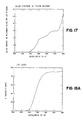
- An example of the ultraviolet region of the solar spectrum incident at a desert location such as Arlington, Arizona is shown in Fig. 17. Such solar spectrum must typically pass through a glass front panel of an electro-optic rearview mirror assembly to irradiate the electro-optic solution in an electro-optic rearview mirror assembly such as that shown in Fig.
- Fig. 17 shows that there is little or no incoming solar radiation below about 295 nm.
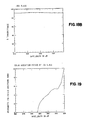
- the light transmission of a 1.6 mm thick panel of standard, clear, soda lime glass is shown in Figs. 18a and 18b while the solar energy spectrum transmitted into any electro-optic medium behind such a front glass piece is the combination of the graphs in Figs. 17 and 18 as shown in Fig. 19.
- the 0.063 inch (1.6 mm) soda lime glass panel passes about 63% of the incoming UV solar energy in the 250-350 nm region and about 90% in the 350-400 nm region.
- a 1.6 mm soda lime glass sheet passes about 83% of the incident solar energy in the 250-400 nm region.
- a substantial portion of the incoming solar UV radiation is unattenuated by the glass front panel.
- Electrochemichromic (ECC) materials are particularly susceptible to degradation by UV radiation. This is caused by their absorption of UV radiation with consequent disruption of electronic states.
- ECC Electrochemichromic
- the cathodically coloring ECC species most commonly used in prior art literature such as methylviologen (MV), ethylviologen (EV), benzylviologen (BV), and heptylviologen (HV)
- MV methylviologen
- EV ethylviologen
- BV benzylviologen
- HV heptylviologen
- anodic compounds such as dimethyldihydrophenazine (DMPA), diethyldihydrophenazine (DEPA), tetramethylphenylenediamine (TMPD), and tetratetramethylbenzidine (TMBZ) as well as thiafulvalene have substantial UV radiation absorbance in the 250-400 nm region.
- DMPA dimethyldihydrophenazine
- DEPA diethyldihydrophenazine
- TMPD tetramethylphenylenediamine
- TMBZ tetratetramethylbenzidine
- the present invention recognizes that use of ultraviolet radiation absorbing, blocking or screening materials, either incorporated in the anti-lacerative layer or in layers in addition to such layer, will reduce ultraviolet radiation impinging on the mirror assembly and the electro-optic medium and significantly prolong its lifetime.
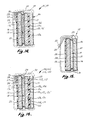
- assembly 35 is similar to the mirror assembly 10 of Fig. 1 but includes a different scatter protecting, anti-lacerative, UV radiation reducing layer 36 on the front surface of glass element 12.
- Layer 36 is preferably of two-ply construction comprising a laminate of polyvinylbutyral and polyester commercially available from E. I. Dupont de Nemours and Company under Product No. Dupont BE1028D and also has the same qualities as described for polyurethane layer 14.
- the outer ply or layer 40 is abrasion resistant, weather resistant, polyester while the inner ply or layer 38 is resilient, tear resistant polyvinylbutyral.
- Composite layer 36 has a thickness preferably between about 0.005 and 0.25 inches, and provides a solution to two problems found during commercialization of prior known laminate electro-optic, and especially electrochromic mirrors, i.e., difficulty in scatter protecting the front glass element 12 and protection against degradation of the electro-optic or electrochromic media 20 in space 18 throughout the lifetime of the assembly due to inherent ultraviolet radiation instability and sensitivity.
- the polyester/polyvinylbutyral composite layer 36 is a particularly good filter for ultraviolet radiation as shown in Figs. 3 and 4.
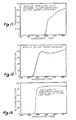
- Fig. 3 is a graph of the percent transmission of electromagnetic radiation through a two millimeter thick element of conventional soda lime window glass coated with a layer of indium tin oxide (ITO) on one surface and a layer of Dupont BE1028D polyvinylbutyral/polyester composite on the opposite surface.
- the graph shows the transmission over the wavelength spectrum between 230 and 500 nanometers (nm) and illustrates that below about 350-360 nm, wavelength transmission is cut off or stopped.
- Ultraviolet radiation which penetrates the earth's atmosphere from the sun typically ranges in wavelength over a wide band of between about 290 and 400 nanometers (nm). In contrast, light sensitive to the human eye ranges from about 400 nm to about 700 nm.
- the composite polyvinylbutyral/ polyester layer 36 substantially eliminates ultraviolet radiation below about 350 nm while simultaneously scatter protecting and protecting against laceration when applied to the mirror glass surface.
- Fig. 4 illustrates a two millimeter glass element coated only on one surface with indium tin oxide and not including a polyvinylbutyral/polyester layer.
- ITO coated glass transmits light in the visible wavelength spectrum above about 400 nanometers but also allows transmission of ultraviolet wavelengths down to about 295 nm which is substantially farther into the UV region than with the coated glass having the two-ply composite layer 36 thereon as shown in Fig. 3.
- reduction of UV radiation intensity passing through front glass 12 of such laminate mirrors as in assembly 35 substantially increases the useful lifetime of the mirror assembly.
- a specific example of an assembly such as that shown at 35 comprising a laminate electrochromic mirror and providing the anti-lacerative, anti-scatter, UV radiation reducing advantages of the present invention was fabricated consisting of two plates of ITO coated, conventional soda lime window glass separated by a gap of 50 microns. The space between the two glass elements was filled with an electrochromic solution consisting of N,N,N′,N′ tetramethyl-1,4-phenylenediamine 0.025M, 1,1′-diheptyl-4,4′-bipyridinium dibromide 0.025M and tetrabutylammonium fluoroborate 0.5M dissolved in propylene carbonate.
- the nonmirrored front glass piece was anti-lacerative protected with a DuPont BE1028D two-ply, anti-lacerative layer consisting of an outer abrasion resistant layer of polyester and an inner layer of polyvinylbutyral as described above in connection with Fig. 2.
- Reflective coated, rear glass plate 16 was scatter protected on its rear surface using conventional tape. The assembly was shattered by dropping a one kg weight over a distance of one meter to impinge on the front nonmirrored glass element, the anti-lacerative layer retained glass fragments from the front glass and remained unperforated such that it would have provided anti-lacerative protection if struck by a person in an accident.
- the anti-scattering, anti-lacerative layer 14 of assembly 10 in Fig. 1 provides some ultraviolet radiation reduction protection, and is itself ultraviolet radiation stable
- the polyvinylbutyral/polyester composite is preferred since the polyvinylbutyral ply or layer has significantly higher UV radiation reduction capability as well as inherent UV stability than does polyurethane.
- UV radiation does not absorb UV radiation uniformly over the entire UV range.
- the chromophores which do absorb UV radiation can be conjugated structures, carbonyl groups, aromatic repeat units and heterocyclic repeat units.
- polymers are used as UV screeners, they themselves must be stabilized against UV radiation since UV absorption generates free radicals which lead to chain scission and cross-linking and creation of other structures in these polymers.
- UV radiation itself degrades the polymer material which is intended to provide a UV absorber, block or screen by making the polymer brittle and even imparting color in the visible region.
- UV stabilizing additives drawn from benzophenones, cinnamic acid derivatives, esters of benzoin acids, salicylic acid, terephthalic and isophthalic acids with resorcinol and phenols, pentamethyl piperidine derivatives, salicylates, benzotriazoles, cyanoacrylates, benzilidenes, malonates and oxalanilides are effective to block UV radiation and stabilize the polymer layer when impregnated in such layer, included in separate coatings in addition to such layer or incorporated directly in front element 12 such as when it is cast from plastic.
- Other additives may be combined with the above materials such as nickel chelates and/or hindered amines.
- UV stabilizers/blockers/filters/absorbers are incorporated directly into the polymer anti-lacerative layer(s) 14, 36 in a variety of ways.
- UV blocking additives are compounded with the PVB resin.
- the UV blockers are dissolved in plasticizers which are then used to plasticize the PVB.
- PVB can also be dissolved in a suitable solvent, with UV stabilizers next added to the PVB solution and a UV stabilized PVB film/sheet can be cast from this solution.
- UV blockers can also be incorporated into polyester either through compounding or by solvent casting.
- Polyurethane anti-lacerative sheeting is a thermoset usually formed from reaction of isocyanate and polyols.
- UV blockers/stabilizers/filters/absorbers can be added to either the isocyanate component or the polyol component or to both. Concentrations of the various additives for combination with the various polymers are conventionally known such as are disclosed in U.S. Patent No. 4,657,769 to Musil et al.
- CyasorbTM UV5411 is a benzotriazole while CyasorbTM UV1084 is an organo-nickel complex or nickel chelate.
- the solution so constituted can then be cast, spun, sprayed, brushed, painted or dipped onto, for instance, the outer surface of front glass element 12 followed by application of anti-lacerative layer 14 or 36 either with or without UV reducing additives as described above.
- a 2.5% weight/volume casting solution was prepared by dissolving commercial acrylic sheeting in a 50:50 mixture of acetone and toluene. To 100 mls of this acrylic solution, 1.6 g of CyasorbTM UV1084 and 1.89 g of CyasorbTM UV5411 were added. When cast onto a piece of one mm thick ITO coated glass in a thickness of about eight microns, the acrylic was UV stabilized and yielded the transmission spectrum shown in Fig. 11. Transmission through such coated glass in the region from about 280 nm to about 350 nm was markedly reduced compared to similar transmission spectra generated when only a 2.5% non-UV stabilized acrylic solution was cast onto ITO coated glass (Fig. 12) or when no acrylic was cast and a spectrum of ITO coated glass itself was generated (Fig. 4). In spite of low UV transmission, the UV stabilized cast acrylic coating was highly transparent in the visible portion of the electromagnetic spectrum.
- UV stabilizers/blockers/filters/ absorbers can be incorporated into the polysiloxane solutions, such as Dow Corning ARCTM coatings, available from Dow Corning Inc. of Midland, Michigan. These are commonly available to impart a transparent anti-abrasion coating onto optical plastics which can be used for front element 12 to further reduce fragment scattering and laceration-type injuries.
- UV stabilizers/absorbers/blockers/filters can be added to thermosetting optical plastics such as CR-39TM (allyl diglycol carbonate) or optical nylons or polysulfones. With thermosetting materials such as CR-39TM optical plastic, available from PPG Industries, Inc. of Pittsburgh, Pennsylvania, the UV absorbing, blocking or screening additive is incorporated in the initial plastic components and cast onto the front surface of front element 12 prior to assembly followed by suitable curing in the conventionally known manner.
- a UV absorbing/blocking/screening material such as CR-39TM above is cast as a separate sheet, it may then be mounted on and adhered to front surface 11 of a clear plastic front element 12 with an adhesive bonding substance such as VersilokTM acrylics available from Lord Corporation of Erie, Pennsylvania.
- an adhesive bonding substance such as VersilokTM acrylics available from Lord Corporation of Erie, Pennsylvania.
- a UV reducing additive such as benzotriazoles or hindered amines can also be incorporated directly in the adhesive bonding agent.
- the sheet may be press laminated to the surface under increased pressure and modest heat.
- a laminate, electro-optic rearview mirror assembly 45 has front glass 12 replaced with a laminate glass assembly comprised of a front glass element 12a having parallel front and rear surfaces adhered to an intermediate glass element 12b also having parallel surfaces by an interlayer 12c of polyvinylbutyral (PVB).
- Layer 12c is adhered to the rear surface of glass element 12a and the front surface of glass element 12b by heat and pressure lamination such as with the conventionally known autoclave method or the like.
- Glass elements 12a, 12b may be conventional soda lime window glass.
- the rear surface of glass element 12b is coated with indium tin oxide layer 13 which is, in turn, sealed with the front ITO coated surface of rear glass element 16 by seal 29 to provide the space 18.
- a scatter preventing, anti-lacerative, ultraviolet radiation reducing layer such as that shown above at 14 or 36 may be adhered to the front surface of front glass element 12a by suitable adhesives, heat, pressure or curing to provide the additional advantages noted above.
- the laminate glass assembly of assembly 45 inherently affords extra safety advantages by contributing to the reduction of ultraviolet radiation transmission into the assembly and providing greater shatter resistant strength for the assembly while providing scatter protection due to the use of the PVB layer 12c together with the anti-lacerative protection of layers 14 or 36.
- a laminate electro-optic rearview mirror assembly 50 includes a layer of light polarizing sheet material 52 applied to the front surface 11 of front glass element 12 prior to adherence of the anti-scatter, anti-lacerative layer 14 or 36 mentioned above.
- a suitable H-sheet polarizer material is that sold under Product No. HN-38 by Polaroid Corporation of Cambridge, Massachusetts. Such sheet polarizers act to block and screen out ultraviolet radiation below wavelengths of about 380 nm.
- mirror assembly 60 includes a front glass element 62 formed from one of several types of specialized glass rather than conventional soda lime window glass.
- front glass element 62 may have a higher iron oxide content of within the range of about 0.2% to 0.9% by weight thereby increasing the ultraviolet radiation absorption, blockage and/or screening effect. Similar improvement can be obtained using higher cerium oxide content of 0.2% to 0.9% by weight concentration.
- Other specialized glasses which have high visible transmission but are strong absorbers in the ultraviolet electromagnetic region can be used including NOVIOL glasses as described in "Spectral-Transmissive Properties and Use of Eye-Protecting Glasses" by R. Stair in National Bureau of Standards Circular 471 (1948).
- a two millimeter thick sheet of NOVIOL 0 CG306 (National Bureau of Standards Circular, 471 (1948)) transmits only about 12% of the incident ultraviolet radiation at 380 nanometers in contrast to transmission of approximately 70% of the incident ultraviolet radiation at 360 nanometers with a conventional soda lime window glass sheet. This is true even when such NOVIOL glass is coated with indium tin oxide as an electrical conductor. Conventional soda lime glass begins to screen out significant amounts of ultraviolet radiation only below about 300 nm.
- UV-36TM glass available from Hoya Corporation of Tokyo, Japan having an average transition wavelength of about 360 nm such that it cuts off ultraviolet radiation below that wavelength. Transition wavelength is the wavelength at the midpoint of the transition interval where glass goes from being highly transmitting to visible radiation to being highly absorbing for UV radiation.
- Other glasses which can be used include L-1BTM also available from Hoya Corporation having an average transition wavelength of 420 nm.
- Other examples include CS0501, No. 0-51 available from Corning Glass Works, Corning, New York having a transmittance less than 0.5% at 334 nm and lower at shorter wavelengths but being highly transmitting in the visible electromagnetic region and FG-62TM available from Ohara Optical Glass Manufacturing Company, Ltd.
- Such ultraviolet radiation reducing glasses may be used either with or without scatter preventing, anti-lacerative, UV reducing layers 14 or 36 or the UV reducing coatings mentioned above.
- the scatter preventing, anti-lacerative layers have the added advantage of significantly strengthening such glass which, in many instances, are mechanically weaker than conventional window glass.
- speciality glasses may be used in the laminate assemblies substituted for front element 12 as described with Figs. 5 and 7.
- elements 12, 16 may also be cut or cast from clear plastic sheet material such as acrylic or polycarbonate and used in place of front element 62 of Fig. 8.
- Additives such as benzothiazoles and benzophenones may be incorporated in the plastic to reduce UV radiation transmission.
- Other UV reducing layers or coatings as described herein, including polymer layers 14, 36, may also be used in combination with the plastic elements.
- ultraviolet radiation blocking paints or lacquers can be applied to the element surfaces provided such paints or lacquers are transparent to visible light.
- a suitable material for layer 70 is a lacquer supplied as ZLI-2456 transparent UV protecting lacquer by E. M. Industries of Hawthorne, New York. Such lacquer substantially reduces UV radiation transmitted into the assembly and is preferably applied to front surface 11 of element 12 to avoid dissolving in medium 20.
- the above UV protecting lacquer ZLI-2456 was coated on a one mm thick sheet of ITO conductive glass to a thickness of about 30 microns.
- the transmission spectrum of such coated glass is shown in Fig. 3. It has a sharp transmission cutoff below about 400 nm and greatly reduces UV radiation in the 290-400 nm region as compared to that normally transmitted by ITO coated glass (see Fig. 4).
- Thin film coatings or UV reducing paint or lacquer layers 67, 70 may be used with conventional soda lime window glass as front glass element 12, or with specialized UV radiation reducing or higher iron oxide containing glass, or other UV reducing elements 62 such as the plastic elements mentioned above.
- a further embodiment 75 of the laminate electro-optic rearview mirror assembly including a scatter preventing, anti-lacerative layer 77 similar to the polyvinylbutyral/polyester composite layer 36 described above in connection with Fig. 2 but also including silicone moieties chemically incorporated in the anti-lacerative composite.
- Polymer layer 77 including the silicone additive prevents condensation and/or beading up of condensed water on the coated front surface 11 of front mirror element 12, 62 in high humidity conditions thereby providing an anti-fogging, anti-misting result.
- a material found useful as anti-lacerative, anti-fogging layer 77 is silicone impregnated polyurethane supplied under the trade name CLARIFLEXTM by Saint-Gobain Vitrage of Paris, France.
- UV reducing additives such as those described above in connection with Fig. 2 may also be incorporated in the anti-lacerative, anti-fogging layer to increase the lifetime of the assembly.
- front glass element 12, 62 may be fashioned from conventional soda lime glass, UV reducing specialized glasses, or polymer plastics. It is also possible to utilize thin film coatings or UV reducing paints or lacquers 67, 70 on at least one surface of front element 12, 62 when the anti-lacerative, anti-fogging layer is incorporated.
- UV radiation reducing or absorbing stabilizers may be dissolved directly in the medium, e.g., an electrochemichromic liquid.
- the UV absorbers are selected to be compatible with the ingredients of the medium 20, such that they do not affect the electrical performance and function of the medium or oxidize or reduce in the assembly.
- a laminate electrochemichromic mirror was fabricated as described in the above example in connection with Fig. 2 except that no anti-lacerative layer was used over front glass element 12.
- UV stabilizers CyasorbTM UV1086 and CyasorbTM UV5411 were added to the electrochemichromic active solution prior to filling into the gap 20 between front glass 12 and back glass 16. Concentration for the UV1084 was 0.6% by volume and the UV5411 was 0.6% by volume g/cc.
- another embodiment 85 of the laminate, electro-optic rearview mirror assembly also includes a laminate glass assembly substituted for the front glass as is the case in embodiments 45 and 55 in Figs. 5 and 7 above.
- the front or first, laminate assembly 86 includes a front or first glass panel 12d having parallel front and rear surfaces adhered to an intermediate glass panel 12e also having parallel surfaces by an interlayer 12c of polyvinylbutyral (PVB) or another interlayer as described below.
- layer 12c is adhered to the rear surface of glass panel 12d and to the front surface of glass panel 12e by heat and pressure lamination such as with the conventionally known autoclave method or the like.
- glass panel 12d is formed from a blue tinted specialized glass which significantly reduces UV radiation transmission while maintaining high visible light transmission.
- the rear surface 13 of glass panel 12e is coated with an indium tin oxide layer 13a which is, in turn, sealed with the front ITO coated surface 17 of rear glass element 16 by seal 29 to provide electro-optic media receiving space 18 as in the above embodiments.
- the above specialized glasses may also be used for second glass panel 12e or both panels 12d and 12e. Whether or not to use such specialized glass in both panels 12d and 12e is dictated by the degree of UV radiation protection desired, and by the degree of attenuation allowable in visible transmission of light that is concurrent with use of even thicker panes or multiple panes of blue tinted or similar light filtering panels.
- UV radiation stabilizers may be added to enhance the UV radiation stability of an electrochemichromic solution used in a rearview mirror assembly.
- Broad UV radiation stabilizers such as Cyasorb 24TM from American Cyanamid Company of Wayne, New Jersey, Uvinul D-50TM from BASF Wyandotte Corporation, Parsippany, New Jersey, or Tinuvin 327TM from Ciba Geigy, Hawthorne, New York, impart a yellow color to electrochromic or electrochemichromic solutions or materials, especially when they are added in high concentrations where they are most effective in protecting UV vulnerable materials. Yellow is aesthetically displeasing in many applications and is particularly displeasing when used in rearview mirrors.
- the marked yellow tint makes use of high concentrations of broad UV radiation absorbers commercially disadvantageous. Yet, such high concentrations of UV absorbers have the advantage of affording greater UV protection and, therefore, prolong the commercial life of electrochemichromic rearview mirror devices, particularly when used on the outside of a vehicle.
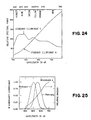
- Fig. 24 illustrates the relative spectral power output versus wavelength of a CIE Standard Illuminant A and for CIE Standard Illuminant C.
- Illuminant A is a Planckian radiator at 2856K and, thus, is similar to an automobile headlamp.
- Illuminant C provides light similar to average daylight.
- Also included on Fig. 24 are the wavelengths of light which form the main bands of color in the visible spectrum. By day, rearview mirror illumination is natural daylight (similar to Illuminant C).
- embodiment 85 which includes the specialized tinted glass panel or panels, is efficient in absorbing or filtering out substantially more light in the yellow/orange/red regions of the visible spectrum than in other regions of the visible spectrum.
- SunglasTM Green from Ford Glass, Detroit, Michigan could be used for either or both of glass elements 12d and 12e in embodiment 85.
- such glass in a 3 mm thickness, is highly light transmitting in the visible spectrum, i.e., 82% transmission overall with Standard Illuminant C and a photopic detector. It is also slightly green tinted and cuts off UV radiation transmission below about 330 nm as shown in Fig. 26a. This glass in such thickness transmits only about 6% of the incident solar energy in the 250-350 nm region, and about 60% in the 350-400 nm region.
- a preferred material for the interlayer 12c of embodiment 85 is commercially available polyvinylbutyral (PVB) sheeting such as SaflexTM SR#11 PVB mentioned above.
- PVB polyvinylbutyral
- Such commercially available PVB sheeting is commonly used in automotive and architectural products and is formed by combining PVB resin with added UV absorbers, as described earlier.
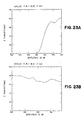
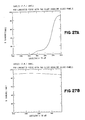
- Figs. 27a and 27b illustrate the ultraviolet and visible spectral transmission of a sheet of SaflexTM SR#11 PVB adhered between two 1.6 mm conventional, clear, soda lime glass panels.
- Such a laminated assembly, using clear glass and SaflexTM SR#11 transmits only about 8% of the incident solar energy in the 250-350 nm region and about 54% of such energy in the 350-400 nm region.
- SaflexTM SR#11 is water clear in light transmission.
- SaflexTM polyvinylbutyral sheeting interlayers are acceptable for use in this invention as UV reducing interlayers.
- These include Saflex SRTM, Saflex TGTM and Saflex TLTM sheeting in thickness ranges between about 0.015 and 0.060 inch.
- Thicker PVB interlayers provide better UV radiation shielding but may cause visible distortion.
- thicker sheeting is acceptable if due care is taken during lamination.
- such SaflexTM sheeting is preferably shipped and stored in a refrigerated or cold condition to prevent the sheeting from sticking to itself while easing handling and use.
- Other commercially available clear PVB sheeting can be used. For instance, ButaciteTM 14 NC-10 clear PVB sheeting from E. I.
- ButaciteTM 14 NC-10 clear PVB sheeting transmits less than 0.1% of the incident solar energy in the 250-350 nm region and only about 25% in the 350-400 nm region.
- ButaciteTM 140 NC-10 or ButaciteTM 14 UV clear PVB sheeting can be used.
- ButaciteTM Cobalt Blue also provides the advantage of masking yellowness in the mirror to provide a commercially acceptable silvery or silver-blue reflection from assembly 85′, while reducing headlamp glare and also matching existing blue exterior rearview mirrors commonly used in many vehicles.
- ButaciteTM Cobalt Blue could be used alone or in combination with one or both panels 12d, 12e of embodiment 85 being specialized blue or green tinted glass.
- Other suitable blue tinted polymeric sheeting interlayers include ButaciteTM Automotive Blue Green 0377800, ButaciteTM Automotive Green Blue 1107800 and ButaciteTM Light Blue Green 0377300 also available from E. I. Dupont in Wilmington, Delaware.
- Saflex TR Blue Green 377300 available from Monsanto Company of St. Louis, Missouri may be used.
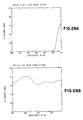
- the ultraviolet and visible spectral transmission of SaflexTM Blue Green 377300 is shown in Figs. 29a and 29b. Alternately, SaflexTM Cool Blue 637600 or SaflexTM Solar Blue 755800 could also be used.
- panel 97 could be a panel of specialized blue or green tinted safety glass that has been tempered and/or toughened by conventional means which include thermal tempering, contact tempering and chemical tempering.
- Fig. 30 The ultraviolet spectral transmission of an approximately 32 microns thick coating of PC-60 lacquer when applied to one surface of a 1.6 mm thick single panel of conventional, clear, soda lime glass is illustrated in Fig. 30.
- PC-60 When applied as a coating, PC-60 is highly visibly transmitting, i.e., about 89% overall transmission with Illuminant C and a photopic detector, has a slight yellow tint, and absorbs sharply in the UV radiation region below about 390 nm. Between 250 and 350 nm, such a coating of PC-60 transmits essentially none of the solar energy incident in that region. For incident solar energy between 350 nm and 400 nm, PC-60 transmits only about 5%. Overall, such a coating of PC-60 transmits only about 3% of the incoming solar energy in the 250-400 nm region.
- An alternate UV absorbing lacquer is ZLI-2456 mentioned above in layer 70 and useful to form embodiment 100′ (Fig. 16).
- a 12 microns thick coating of ZLI-2456 transmits only about 2% of the incident solar energy in the 250-350 nm region, and only about 9% of the solar energy normally incident between 350 and 400 nm.
- ZLI-2456 is slightly more yellowish in color and transmission than is PC-60.
- UV absorbing paint/lacquer coatings such as those described above may be used with UV absorbing/filtering interlayers 12c or 12c′ as described above, or when either of glass panels 12a, 12d or 12b, 12e are formed from blue or green tinted specialized glass as described above.
- the SaflexTM SR#11 laminating interlayer securely retained all shards of glass such that they did not fly away and such that they remained securely held to the laminate interlayer. Also, the SaflexTM SR#11 laminate interlayer did not fracture nor tear and was effective in ensuring that contact with chemicals used within the electrochemichromic mirror assembly is minimized should the mirror glass break in an accident.
- an alternate embodiment 110 substitutes different layers for paint/lacquer layers 102, 104 preferably in the form of a polymeric film such as clear ScotchtintTM SH2CLX available from 3M Corporation, St. Paul, Minnesota.
- ScotchtintTM film may be adhered as layers 112, 114 to one or both of the inner facing surfaces of glass panels 12a, 12b or specialized glass panels 12d, 12e as described above, said placement on inner surfaces having the added advantage of protecting the potentially scratchable polymeric film behind glass panels 12a, 12d.
- Film layers 112, 114 (Fig. 16) provide assembly 110 with similar UV reducing advantages while maintaining strength and scatter preventing advantages due to the laminate front assembly as in embodiments 100 and 100′.
- Norland 65 also adheres well to glass, is of relatively low viscosity (1,200 centipoise) such that it easily pours and spreads between two glass panels to allow lamination once cured. It also has a relatively low modulus of elasticity (20,000 psi). Its ability to be cured with UV radiation is well-suited to manufacturing processing.
- Fig. 33 illustrates the ultraviolet spectral transmission of a 35 microns thick coating of cured Norland 65 on a 1.6 mm conventional, clear, soda lime glass panel. Ultraviolet radiation transmission is cut off below about 310 nm while only about 19% of the incident solar energy in the 250-350 nm region is transmitted while about 62% of the incident solar energy in the 350-400 nm region is transmitted.
- clear plasticizers or clear low molecular weight epoxies can be added to the UV curing adhesives so that they are less brittle after curing, and such that they have even better lamination safety performance.
- cyclohexanedimethanol diglycidyl ether such as Heloxy MK107TM from Wilmington Chemical Corporation of Wilmington, Delaware can also be added to NOA61, NOA65 or NOA68 in quantities up to 30% wt/wt or more (i.e., % grams of MK107 added to grams of NOA61, etc.) to plasticize them.
- Heloxy MK107TM has a refractive index close to 1.48 which is also well-matched to that of clear soda lime glass.
- the UV cured NOA61, NOA65 or NOA68 materials are quite flexible and somewhat elastic such that they are well-suited for use as anti-lacerative layers and as laminate interlayers.
- thermally or catalytically cured adhesives can also be used to retain glass panels 12a, 12b and 12d, 12e together while simultaneously acting as a UV radiation reducing agent.
- the thermally or catalytically cured adhesives are preferably water clear, highly transparent to visible light, closely matched to the index of refraction of glass, while being of moderate modulus of elasticity when cured so as not to be overly brittle nor to fracture upon impact and thus impair retention of any glass fragments or shards.
- a suitable system includes a modified epoxy adhesive formed from 15% wt/wt EPON 828TM epoxy resin, mentioned above in embodiment 10, 35% wt/wt Heloxy MK107TM, and 50% wt/wt Capcure 3-800TM mercaptan curing agent available from Diamond Shamrock Chemicals Company, Morristown, New Jersey. These ingredients are mixed together in a container and subsequently spun in a centrifuge at approximately 4,500 rpm for about ten minutes to remove entrained air. The resultant viscous mixture is clear and is applied between panels 12a, 12b or 12d, 12e. The resultant assembly so formed is fired at about 110 C. for about one hour followed by firing at 140 C. for a further hour.
- UV absorbing materials such as Uvinul D-50TM, Uvinul D-49TM, Uvinul 400TM, Tinuvin PTM, Tinuvin 327TM, Tinuvin 328TM, or Cyasorb 24TM to the liquid adhesives prior to their cure.
- the UV, thermally, or catalytically cured adhesives can also be optionally dyed so that they have a slight bluish tint and provide the desirable properties for the electro-optic mirror assemblies including specialized blue tinted glass panels or blue tinted interlayers.
- specialized blue tinted glass panels or blue tinted interlayers For example, taking the specific adhesive mixture of EPON 828TM/Heloxy MK107TM/Capcure 3800TM described above, such mixture can be dyed blue using Neozapon BlueTM 807, a phthalocyanine dye available from BASF Wyandotte Corporation, Parsippany, New Jersey, added in about 0.5% to 1% by weight.
- any of the glass panels of the assemblies could be formed from safety glass that has been tempered and/or toughened by conventional means including thermal, contact and chemical tempering. Also, such tempered, safety glass can be blue or green tinted to provide the advantages described above.
Landscapes
- Physics & Mathematics (AREA)
- Nonlinear Science (AREA)
- General Physics & Mathematics (AREA)
- Chemical & Material Sciences (AREA)
- Engineering & Computer Science (AREA)
- Optics & Photonics (AREA)
- Mechanical Engineering (AREA)
- Crystallography & Structural Chemistry (AREA)
- Multimedia (AREA)
- Chemical Kinetics & Catalysis (AREA)
- Mathematical Physics (AREA)
- Joining Of Glass To Other Materials (AREA)
- Laminated Bodies (AREA)
- Optical Elements Other Than Lenses (AREA)
- Liquid Crystal (AREA)
- Electrochromic Elements, Electrophoresis, Or Variable Reflection Or Absorption Elements (AREA)
- Optical Filters (AREA)
Priority Applications (1)
| Application Number | Priority Date | Filing Date | Title |
|---|---|---|---|
| EP95108688A EP0671294B1 (fr) | 1990-01-16 | 1990-02-01 | Rétroviseur pour véhicules |
Applications Claiming Priority (2)
| Application Number | Priority Date | Filing Date | Title |
|---|---|---|---|
| US464888 | 1990-01-16 | ||
| US07/464,888 US5115346A (en) | 1988-02-12 | 1990-01-16 | Anti-scatter, ultraviolet protected, anti-misting, electro-optical rearview mirror |
Related Child Applications (2)
| Application Number | Title | Priority Date | Filing Date |
|---|---|---|---|
| EP95108688A Division EP0671294B1 (fr) | 1990-01-16 | 1990-02-01 | Rétroviseur pour véhicules |
| EP95108688.3 Division-Into | 1990-02-01 |
Publications (3)
| Publication Number | Publication Date |
|---|---|
| EP0437914A2 true EP0437914A2 (fr) | 1991-07-24 |
| EP0437914A3 EP0437914A3 (en) | 1992-10-14 |
| EP0437914B1 EP0437914B1 (fr) | 1996-01-24 |
Family
ID=23845661
Family Applications (2)
| Application Number | Title | Priority Date | Filing Date |
|---|---|---|---|
| EP90301050A Expired - Lifetime EP0437914B1 (fr) | 1990-01-16 | 1990-02-01 | Rétroviseur de sécurité électro-optique, anti-buée protégé de la lumière ultraviolette |
| EP95108688A Expired - Lifetime EP0671294B1 (fr) | 1990-01-16 | 1990-02-01 | Rétroviseur pour véhicules |
Family Applications After (1)
| Application Number | Title | Priority Date | Filing Date |
|---|---|---|---|
| EP95108688A Expired - Lifetime EP0671294B1 (fr) | 1990-01-16 | 1990-02-01 | Rétroviseur pour véhicules |
Country Status (5)
| Country | Link |
|---|---|
| US (1) | US5115346A (fr) |
| EP (2) | EP0437914B1 (fr) |
| JP (1) | JPH03216601A (fr) |
| DE (2) | DE69025051T2 (fr) |
| ES (1) | ES2085328T3 (fr) |
Cited By (5)
| Publication number | Priority date | Publication date | Assignee | Title |
|---|---|---|---|---|
| EP0552012A3 (en) * | 1992-01-13 | 1993-09-29 | Gentex Corporation | Tinted solution-phase electrochromic devices |
| FR2691550A1 (fr) * | 1992-05-21 | 1993-11-26 | Saint Gobain Vitrage Int | Vitrage électrochrome architectural. |
| WO1994015785A1 (fr) * | 1993-01-18 | 1994-07-21 | Polymage S.A.R.L. | Structure composite feuilletee a changement de couleurs |
| CN108136881A (zh) * | 2015-10-07 | 2018-06-08 | 金泰克斯公司 | 采用光电元件的天窗 |
| CN109661611A (zh) * | 2016-10-10 | 2019-04-19 | 金泰克斯公司 | 偏振窗组合件 |
Families Citing this family (208)
| Publication number | Priority date | Publication date | Assignee | Title |
|---|---|---|---|---|
| US5355245A (en) * | 1988-02-12 | 1994-10-11 | Donnelly Corporation | Ultraviolet protected electrochemichromic rearview mirror |
| US5233461A (en) * | 1991-09-06 | 1993-08-03 | Donnelly Corporation | Methods for sealing electrochromic devices and devices manufactured thereby |
| US5576687A (en) * | 1991-12-20 | 1996-11-19 | Donnelly Corporation | Vehicle information display |
| US5278693A (en) * | 1992-01-13 | 1994-01-11 | Gentex Corporation | Tinted solution-phase electrochromic devices |
| GB9303807D0 (en) * | 1993-02-25 | 1993-04-14 | Glaverbel | Rear-view assembly for a vehicle and an adaptor therefor |
| US5910854A (en) | 1993-02-26 | 1999-06-08 | Donnelly Corporation | Electrochromic polymeric solid films, manufacturing electrochromic devices using such solid films, and processes for making such solid films and devices |
| EP0612826B1 (fr) * | 1993-02-26 | 2000-10-04 | Donnelly Corporation | Films électrochromes polymères solides, fabrication de dispositifs électrochromiques utilisant de tels films solides et procédé de fabrication de tels films solides et dispositifs |
| US5668663A (en) * | 1994-05-05 | 1997-09-16 | Donnelly Corporation | Electrochromic mirrors and devices |
| US5521760A (en) * | 1994-07-11 | 1996-05-28 | Donnelly Corporation | Energy absorbing rearview mirror assembly |
| US5930047A (en) * | 1995-04-21 | 1999-07-27 | Xelux Holding Ag | Anti-glare device |
| US6891563B2 (en) | 1996-05-22 | 2005-05-10 | Donnelly Corporation | Vehicular vision system |
| US5601756A (en) * | 1995-08-23 | 1997-02-11 | Swearengin; John V. | Liquid ultraviolet stabilizer and method |
| FR2752570B1 (fr) * | 1996-08-22 | 1998-10-02 | Saint Gobain Vitrage | Vitrage a proprietes optiques et/ou energetiques variables |
| US6166848A (en) * | 1997-04-02 | 2000-12-26 | Gentex Corporation | Electrochromic rearview mirror incorporating a third surface metal reflector and a display/signal light |
| US5818625A (en) * | 1997-04-02 | 1998-10-06 | Gentex Corporation | Electrochromic rearview mirror incorporating a third surface metal reflector |
| US6356376B1 (en) | 1997-04-02 | 2002-03-12 | Gentex Corporation | Electrochromic rearview mirror incorporating a third surface metal reflector and a display/signal light |
| US6700692B2 (en) | 1997-04-02 | 2004-03-02 | Gentex Corporation | Electrochromic rearview mirror assembly incorporating a display/signal light |
| US6111684A (en) * | 1997-04-02 | 2000-08-29 | Gentex Corporation | Electrochromic rearview mirror incorporating a third surface metal reflector and a display/signal light |
| US8294975B2 (en) | 1997-08-25 | 2012-10-23 | Donnelly Corporation | Automotive rearview mirror assembly |
| US6172613B1 (en) | 1998-02-18 | 2001-01-09 | Donnelly Corporation | Rearview mirror assembly incorporating vehicle information display |
| US6326613B1 (en) | 1998-01-07 | 2001-12-04 | Donnelly Corporation | Vehicle interior mirror assembly adapted for containing a rain sensor |
| US6124886A (en) | 1997-08-25 | 2000-09-26 | Donnelly Corporation | Modular rearview mirror assembly |
| US8288711B2 (en) | 1998-01-07 | 2012-10-16 | Donnelly Corporation | Interior rearview mirror system with forwardly-viewing camera and a control |
| US6445287B1 (en) | 2000-02-28 | 2002-09-03 | Donnelly Corporation | Tire inflation assistance monitoring system |
| US6693517B2 (en) | 2000-04-21 | 2004-02-17 | Donnelly Corporation | Vehicle mirror assembly communicating wirelessly with vehicle accessories and occupants |
| US6553308B1 (en) | 1999-04-29 | 2003-04-22 | Donnelly Corporation | Vehicle-based navigation system with smart map filtering, portable unit home-base registration and multiple navigation system preferential use |
| US6477464B2 (en) | 2000-03-09 | 2002-11-05 | Donnelly Corporation | Complete mirror-based global-positioning system (GPS) navigation solution |
| US6329925B1 (en) | 1999-11-24 | 2001-12-11 | Donnelly Corporation | Rearview mirror assembly with added feature modular display |
| US6239898B1 (en) * | 1998-11-30 | 2001-05-29 | Gentex Corporation | Electrochromic structures |
| DE19905797A1 (de) * | 1999-02-12 | 2000-08-17 | Bayer Ag | Elektrochrome Vorrichtung mit Nanoteilchen und UV-Absorber in der Schutzschicht |
| US7009751B2 (en) * | 1999-05-14 | 2006-03-07 | Gentex Corporation | Electrochromic rearview mirror incorporating a third surface partially transmissive reflector |
| US7064882B2 (en) * | 2002-09-30 | 2006-06-20 | Gentex Corporation | Electrochromic devices having no positional offset between substrates |
| US7324261B2 (en) * | 1999-07-09 | 2008-01-29 | Gentex Corporation | Electrochromic devices with thin bezel-covered edge |
| US7370983B2 (en) | 2000-03-02 | 2008-05-13 | Donnelly Corporation | Interior mirror assembly with display |
| AU2001243285A1 (en) | 2000-03-02 | 2001-09-12 | Donnelly Corporation | Video mirror systems incorporating an accessory module |
| US7167796B2 (en) | 2000-03-09 | 2007-01-23 | Donnelly Corporation | Vehicle navigation system for use with a telematics system |
| US6396408B2 (en) | 2000-03-31 | 2002-05-28 | Donnelly Corporation | Digital electrochromic circuit with a vehicle network |
| US6643050B2 (en) | 2000-06-13 | 2003-11-04 | Ppg Industries Ohio, Inc. | Colored electrochromic transparent window assemblies |
| US7581859B2 (en) | 2005-09-14 | 2009-09-01 | Donnelly Corp. | Display device for exterior rearview mirror |
| WO2002062623A2 (fr) | 2001-01-23 | 2002-08-15 | Donnelly Corporation | Systeme d'eclairage ameliore destine a un vehicule |
| US7255451B2 (en) * | 2002-09-20 | 2007-08-14 | Donnelly Corporation | Electro-optic mirror cell |
| WO2003005118A1 (fr) | 2001-07-02 | 2003-01-16 | Loctite Corporation | Composition epoxydique |
| US6918674B2 (en) | 2002-05-03 | 2005-07-19 | Donnelly Corporation | Vehicle rearview mirror system |
| US7329013B2 (en) | 2002-06-06 | 2008-02-12 | Donnelly Corporation | Interior rearview mirror system with compass |
| AU2003237424A1 (en) | 2002-06-06 | 2003-12-22 | Donnelly Corporation | Interior rearview mirror system with compass |
| AU2003278863A1 (en) * | 2002-09-20 | 2004-04-08 | Donnelly Corporation | Mirror reflective element assembly |
| US7184190B2 (en) * | 2002-09-20 | 2007-02-27 | Donnelly Corporation | Electro-optic reflective element assembly |
| US7310177B2 (en) | 2002-09-20 | 2007-12-18 | Donnelly Corporation | Electro-optic reflective element assembly |
| WO2004103772A2 (fr) | 2003-05-19 | 2004-12-02 | Donnelly Corporation | Assemblage de retroviseur pour vehicule |
| US7360932B2 (en) * | 2004-06-01 | 2008-04-22 | Donnelly Corporation | Mirror assembly for vehicle |
| US7081278B2 (en) * | 2002-09-25 | 2006-07-25 | Asml Holdings N.V. | Method for protection of adhesives used to secure optics from ultra-violet light |
| US8004741B2 (en) | 2004-02-27 | 2011-08-23 | Gentex Corporation | Vehicular rearview mirror elements and assemblies incorporating these elements |
| US8169684B2 (en) | 2002-09-30 | 2012-05-01 | Gentex Corporation | Vehicular rearview mirror elements and assemblies incorporating these elements |
| US9134585B2 (en) | 2002-09-30 | 2015-09-15 | Gentex Corporation | Automotive rearview mirror with capacitive switches |
| US7477439B2 (en) * | 2002-09-30 | 2009-01-13 | Gentex Corporation | Vehicular rear view mirror elements and assemblies incorporating these elements |
| US7372611B2 (en) * | 2002-09-30 | 2008-05-13 | Gentex Corporation | Vehicular rearview mirror elements and assemblies incorporating these elements |
| US9346402B2 (en) | 2002-09-30 | 2016-05-24 | Gentex Corporation | Vehicular rearview mirror elements and assemblies incorporating these elements |
| AU2003290791A1 (en) | 2002-11-14 | 2004-06-15 | Donnelly Corporation | Imaging system for vehicle |
| US6958495B2 (en) * | 2003-03-20 | 2005-10-25 | Gentex Corporation | Mirror assembly with multi-color illumination |
| US7420756B2 (en) | 2003-05-20 | 2008-09-02 | Donnelly Corporation | Mirror reflective element |
| US7446924B2 (en) | 2003-10-02 | 2008-11-04 | Donnelly Corporation | Mirror reflective element assembly including electronic component |
| US7308341B2 (en) | 2003-10-14 | 2007-12-11 | Donnelly Corporation | Vehicle communication system |
| US7338177B2 (en) * | 2003-11-26 | 2008-03-04 | Donnelly Corporation | Mirror reflective element for a vehicle |
| US7008091B2 (en) | 2003-12-18 | 2006-03-07 | K.W. Muth Company, Inc. | Electromagnetic radiation assembly |
| TWI236985B (en) * | 2004-01-19 | 2005-08-01 | Exon Science Inc | Rearview mirror |
| KR100903415B1 (ko) | 2004-02-27 | 2009-06-18 | 젠텍스 코포레이션 | 차량의 후사경 요소들 및 이들 요소들을 포함하는 어셈블리 |
| US6876479B1 (en) | 2004-05-21 | 2005-04-05 | Gentex Corporation | Tristate electrochromic device |
| US7835059B2 (en) * | 2004-05-21 | 2010-11-16 | Gentex Corporation | Tristate electrochromic device |
| US7864398B2 (en) | 2004-06-08 | 2011-01-04 | Gentex Corporation | Electro-optical element including metallic films and methods for applying the same |
| KR100664318B1 (ko) * | 2005-01-07 | 2007-01-04 | 삼성전자주식회사 | 프로젝션 tv |
| US7400435B2 (en) * | 2005-01-19 | 2008-07-15 | Donnelly Corporation | Mirror assembly with heater element |
| US7241037B2 (en) * | 2005-03-23 | 2007-07-10 | K.W. Muth Company | Signaling assembly |
| ATE517368T1 (de) | 2005-05-16 | 2011-08-15 | Donnelly Corp | Fahrzeugspiegelanordnung mit zeichen am reflektierenden teil |
| US7327321B2 (en) * | 2005-06-27 | 2008-02-05 | K.W. Muth Company, Inc. | Electromagnetic radiation assembly |
| US11242009B2 (en) | 2005-07-06 | 2022-02-08 | Donnelly Corporation | Vehicular exterior mirror system with blind spot indicator |
| WO2008051910A2 (fr) | 2006-10-24 | 2008-05-02 | Donnelly Corporation | Dispositif d'affichage pour un rétroviseur |
| US11498487B2 (en) | 2005-07-06 | 2022-11-15 | Magna Mirrors Of America, Inc. | Vehicular exterior mirror system with blind spot indicator |
| US8736805B2 (en) * | 2005-09-21 | 2014-05-27 | Alphamirror Inc. | Liquid crystal mirror adapted to filter light in the mesopic wavelength region |
| WO2007053404A2 (fr) * | 2005-10-28 | 2007-05-10 | Donnelly Corporation | Module d'appareil de prise de vues pour système de vision de véhicule |
| CN101535087B (zh) | 2005-11-01 | 2013-05-15 | 唐纳利公司 | 具有显示装置的内部后视镜 |
| US7746534B2 (en) * | 2006-12-07 | 2010-06-29 | Gentex Corporation | Thin-film coatings, electro-optic elements and assemblies incorporating these elements |
| US8368992B2 (en) * | 2006-03-03 | 2013-02-05 | Gentex Corporation | Electro-optical element including IMI coatings |
| US8169681B2 (en) | 2006-03-03 | 2012-05-01 | Gentex Corporation | Thin-film coatings, electro-optic elements and assemblies incorporating these elements |
| EP2426552A1 (fr) * | 2006-03-03 | 2012-03-07 | Gentex Corporation | Éléments électro-optiques incorporant des revêtements améliorés à couche mince |
| US8274729B2 (en) * | 2006-03-03 | 2012-09-25 | Gentex Corporation | Thin-film coatings, electro-optic elements and assemblies incorporating these elements |
| US7688495B2 (en) * | 2006-03-03 | 2010-03-30 | Gentex Corporation | Thin-film coatings, electro-optic elements and assemblies incorporating these elements |
| DE102006059129A1 (de) * | 2006-07-31 | 2008-02-07 | Osram Opto Semiconductors Gmbh | Strahlungsemittierendes Bauelement |
| US11890991B2 (en) | 2006-10-24 | 2024-02-06 | Magna Mirrors Of America, Inc. | Vehicular exterior rearview mirror assembly with blind spot indicator element |
| US7944371B2 (en) | 2007-11-05 | 2011-05-17 | Magna Mirrors Of America, Inc. | Exterior mirror with indicator |
| US8079722B2 (en) * | 2006-12-31 | 2011-12-20 | Honda Motor Co., Ltd. | Mirror assembly |
| US8317343B2 (en) * | 2006-12-31 | 2012-11-27 | Honda Motor Co., Ltd. | Interior or exterior rearview mirror assembly |
| US9274394B2 (en) | 2007-03-05 | 2016-03-01 | Gentex Corporation | Multi-zone mirrors |
| US8649083B2 (en) | 2007-03-05 | 2014-02-11 | Gentex Corporation | Multi-zone mirrors |
| US10017847B2 (en) | 2007-03-05 | 2018-07-10 | Gentex Corporation | Method and apparatus for ion milling |
| US8035881B2 (en) * | 2007-03-05 | 2011-10-11 | Gentex Corporation | Multi-zone mirrors |
| US7748856B2 (en) | 2007-05-23 | 2010-07-06 | Donnelly Corporation | Exterior mirror element with integral wide angle portion |
| US7884995B2 (en) * | 2007-06-27 | 2011-02-08 | Gentex Corporation | Electrochromic device having an improved fill port plug |
| US8345345B2 (en) * | 2007-06-27 | 2013-01-01 | Gentex Corporation | Electrochromic device having an improved fill port plug |
| ES2324807B1 (es) * | 2008-01-31 | 2010-05-31 | Fundacion Cidetec | Composiciones electrocromicas basadas en viologenos formulables y aplicables a temperatura ambiente. |
| US8154418B2 (en) | 2008-03-31 | 2012-04-10 | Magna Mirrors Of America, Inc. | Interior rearview mirror system |
| US7813023B2 (en) | 2008-06-09 | 2010-10-12 | Magna Mirrors Of America, Inc. | Electro-optic mirror |
| US8491137B2 (en) | 2008-09-19 | 2013-07-23 | Magna Mirrors Of America, Inc. | Vehicle mirror assembly with wide angle element |
| US9487144B2 (en) | 2008-10-16 | 2016-11-08 | Magna Mirrors Of America, Inc. | Interior mirror assembly with display |
| US8482664B2 (en) | 2008-10-16 | 2013-07-09 | Magna Electronics Inc. | Compact camera and cable system for vehicular applications |
| US8866907B2 (en) | 2009-02-06 | 2014-10-21 | Magna Electronics Inc. | Camera for mounting on a vehicle |
| WO2010099416A1 (fr) | 2009-02-27 | 2010-09-02 | Magna Electronics | Système d'alerte pour véhicule |
| US12328491B1 (en) | 2009-03-25 | 2025-06-10 | Magna Electronics Inc. | Vehicular camera and lens assembly |
| US8542451B2 (en) | 2009-03-25 | 2013-09-24 | Magna Electronics Inc. | Vehicular camera and lens assembly |
| WO2010114825A1 (fr) | 2009-03-30 | 2010-10-07 | Magna Mirrors Of America, Inc. | Ensemble rétroviseur électro-optique pour véhicule |
| US11325533B2 (en) | 2009-04-23 | 2022-05-10 | Magna Mirrors Of America, Inc. | Frameless interior rearview mirror assembly |
| EP2422227B1 (fr) | 2009-04-23 | 2014-05-14 | Magna Mirrors Of America, Inc. | Ensemble miroir pour véhicule |
| EP3396445B1 (fr) * | 2009-06-11 | 2020-12-30 | Switch Materials, Inc. | Filtre optique à transmission variable et ses utilisations |
| US11498486B2 (en) | 2009-10-07 | 2022-11-15 | Magna Mirrors Of America, Inc. | Vehicular exterior rearview mirror assembly |
| US9346403B2 (en) | 2009-10-07 | 2016-05-24 | Magna Mirrors Of America, Inc. | Rearview mirror assembly |
| CN102648113B (zh) | 2009-10-07 | 2015-05-27 | 麦格纳镜片美国有限公司 | 无框内部后视镜组件 |
| US10261648B2 (en) | 2009-10-07 | 2019-04-16 | Magna Mirrors Of America, Inc. | Exterior rearview mirror assembly |
| US8851690B2 (en) | 2009-10-27 | 2014-10-07 | Magna Mirrors Of America, Inc. | Mounting assembly for vehicle interior mirror |
| US9205780B2 (en) | 2010-02-04 | 2015-12-08 | Magna Mirrors Of America, Inc. | Electro-optic rearview mirror assembly for vehicle |
| US8890955B2 (en) | 2010-02-10 | 2014-11-18 | Magna Mirrors Of America, Inc. | Adaptable wireless vehicle vision system based on wireless communication error |
| US9481304B2 (en) | 2010-05-24 | 2016-11-01 | Magna Mirrors Of America, Inc. | Automotive exterior mirror heater control |
| US9056584B2 (en) | 2010-07-08 | 2015-06-16 | Gentex Corporation | Rearview assembly for a vehicle |
| US8228590B2 (en) | 2010-08-09 | 2012-07-24 | Gentex Corporation | Electro-optic system configured to reduce a perceived color change |
| US8964278B2 (en) | 2010-08-09 | 2015-02-24 | Gentex Corporation | Electro-optic system configured to reduce a perceived color change |
| US9566765B2 (en) * | 2010-10-08 | 2017-02-14 | Guardian Industries Corp. | Radiation curable adhesives for reflective laminated solar panels, laminated solar panels including radiation curable adhesives, and/or associated methods |
| DE112011103834B4 (de) | 2010-11-19 | 2026-03-26 | Magna Electronics, Inc. | Spurhalteassistent und Spurzentrierung |
| US9380219B2 (en) | 2011-04-20 | 2016-06-28 | Magna Electronics Inc. | Angular filter for vehicle mounted cameras |
| US8988755B2 (en) | 2011-05-13 | 2015-03-24 | Magna Mirrors Of America, Inc. | Mirror reflective element |
| US9871971B2 (en) | 2011-08-02 | 2018-01-16 | Magma Electronics Inc. | Vehicle vision system with light baffling system |
| WO2013019795A1 (fr) | 2011-08-02 | 2013-02-07 | Magna Electronics Inc. | Système de caméra véhiculaire |
| US8736940B2 (en) | 2011-09-30 | 2014-05-27 | Magna Mirrors Of America, Inc. | Exterior mirror with integral spotter mirror and method of making same |
| US8801245B2 (en) | 2011-11-14 | 2014-08-12 | Magna Mirrors Of America, Inc. | Illumination module for vehicle |
| US9316347B2 (en) | 2012-01-24 | 2016-04-19 | Gentex Corporation | Rearview assembly with interchangeable rearward viewing device |
| EP2810108B1 (fr) | 2012-01-31 | 2018-01-10 | Alphamicron Incorporated | Dispositif optique à intensité réglable électroniquement |
| US8694224B2 (en) | 2012-03-01 | 2014-04-08 | Magna Electronics Inc. | Vehicle yaw rate correction |
| US8879139B2 (en) | 2012-04-24 | 2014-11-04 | Gentex Corporation | Display mirror assembly |
| WO2013177676A1 (fr) | 2012-05-29 | 2013-12-05 | Switch Materials Inc. | Filtre optique comprenant une couche à transmittance variable |
| US9340227B2 (en) | 2012-08-14 | 2016-05-17 | Magna Electronics Inc. | Vehicle lane keep assist system |
| WO2014032042A1 (fr) | 2012-08-24 | 2014-02-27 | Gentex Corporation | Ensemble de rétroviseur spécifiquement formé |
| DE102013217430B4 (de) | 2012-09-04 | 2026-02-26 | Magna Electronics, Inc. | Fahrerassistenzsystem für ein Kraftfahrzeug |
| US9352691B2 (en) | 2012-11-05 | 2016-05-31 | Magna Mirrors Of America, Inc. | Interior rearview mirror assembly |
| US9090234B2 (en) | 2012-11-19 | 2015-07-28 | Magna Electronics Inc. | Braking control system for vehicle |
| US9327648B2 (en) | 2013-01-04 | 2016-05-03 | Gentex Corporation | Rearview assembly with exposed carrier plate |
| US9488892B2 (en) | 2013-01-09 | 2016-11-08 | Gentex Corporation | Printed appliqué and method thereof |
| US9092986B2 (en) | 2013-02-04 | 2015-07-28 | Magna Electronics Inc. | Vehicular vision system |
| US9216691B2 (en) | 2013-02-25 | 2015-12-22 | Magna Mirrors Of America, Inc. | Exterior mirror with spotter mirror |
| US9057925B2 (en) | 2013-03-15 | 2015-06-16 | Gentex Corporation | Fill port plugs for electrochromic devices |
| US9327693B2 (en) | 2013-04-10 | 2016-05-03 | Magna Electronics Inc. | Rear collision avoidance system for vehicle |
| US9174578B2 (en) | 2013-04-22 | 2015-11-03 | Magna Mirrors Of America, Inc. | Interior rearview mirror assembly |
| US9260095B2 (en) | 2013-06-19 | 2016-02-16 | Magna Electronics Inc. | Vehicle vision system with collision mitigation |
| US20140375476A1 (en) | 2013-06-24 | 2014-12-25 | Magna Electronics Inc. | Vehicle alert system |
| US9575315B2 (en) | 2013-09-24 | 2017-02-21 | Gentex Corporation | Display mirror assembly |
| WO2015059029A1 (fr) | 2013-10-22 | 2015-04-30 | Vlyte Innovations Limited | Dispositif électrophorétique à plage de température de fonctionnement large |
| US9451138B2 (en) | 2013-11-07 | 2016-09-20 | Magna Electronics Inc. | Camera for vehicle vision system |
| US9454054B2 (en) | 2013-11-18 | 2016-09-27 | Magna Mirrors Of America, Inc. | Electro-optic mirror element and process of making same |
| US9749509B2 (en) | 2014-03-13 | 2017-08-29 | Magna Electronics Inc. | Camera with lens for vehicle vision system |
| US11634078B2 (en) | 2014-05-15 | 2023-04-25 | Magna Mirrors Of America, Inc. | Vehicular rearview mirror control system |
| US10967796B2 (en) | 2014-05-15 | 2021-04-06 | Magna Mirrors Of America, Inc. | Interior rearview mirror assembly with low profile mirror |
| US9761144B2 (en) | 2014-09-11 | 2017-09-12 | Magna Mirrors Of America, Inc. | Exterior mirror with blind zone indicator |
| WO2016044746A1 (fr) | 2014-09-19 | 2016-03-24 | Gentex Corporation | Ensemble rétroviseur |
| WO2016073848A1 (fr) | 2014-11-07 | 2016-05-12 | Gentex Corporation | Actionneur de miroir d'affichage plein écran |
| US10071689B2 (en) | 2014-11-13 | 2018-09-11 | Gentex Corporation | Rearview mirror system with a display |
| CN107107825B (zh) | 2014-12-03 | 2020-08-21 | 金泰克斯公司 | 用于车辆的显示镜组件 |
| USD746744S1 (en) | 2014-12-05 | 2016-01-05 | Gentex Corporation | Rearview device |
| CH710658A1 (de) * | 2015-01-29 | 2016-07-29 | Glas Trösch Holding AG | lsolierglas mit tragenden Eigenschaften. |
| US9776569B2 (en) | 2015-01-30 | 2017-10-03 | Magna Mirrors Of America, Inc. | Exterior mirror with heater pad |
| US10466563B2 (en) | 2015-02-24 | 2019-11-05 | Magna Mirrors Of America, Inc. | Mirror assembly with spring-loaded electrical connectors |
| US9878669B2 (en) | 2015-02-24 | 2018-01-30 | Magna Mirrors Of America, Inc. | Mirror assembly with spring-loaded electrical connectors |
| JP2018513810A (ja) | 2015-04-20 | 2018-05-31 | ジェンテックス コーポレイション | 装飾を備えた後方視認アセンブリ |
| EP3297870B1 (fr) | 2015-05-18 | 2020-02-05 | Gentex Corporation | Dispositif de rétroviseur plein affichage |
| US9855827B1 (en) | 2015-07-27 | 2018-01-02 | Joseph Zambito | Motor vehicle window visibility system and method |
| DE102015216925B4 (de) * | 2015-09-03 | 2019-07-04 | Magna Mirrors Holding Gmbh | Anordnung mit einer Flüssigkristallanordnung mit elektrisch steuerbarer Lichtdurchlässigkeit und Rückblickspiegel mit einem elektrisch abblendbaren Rückspiegelglas |
| CN108136962B (zh) | 2015-09-30 | 2021-06-29 | 金泰克斯公司 | 全显示镜 |
| WO2017075473A1 (fr) | 2015-10-30 | 2017-05-04 | Gentex Corporation | Rétroviseur |
| WO2017075420A1 (fr) | 2015-10-30 | 2017-05-04 | Gentex Corporation | Manette à bascule |
| JP6807391B2 (ja) | 2015-12-04 | 2021-01-06 | ジェンテックス コーポレイション | ベゼルとガラスが緊密に嵌合したミラーアセンブリ |
| USD845851S1 (en) | 2016-03-31 | 2019-04-16 | Gentex Corporation | Rearview device |
| USD817238S1 (en) | 2016-04-29 | 2018-05-08 | Gentex Corporation | Rearview device |
| ES2834890T3 (es) | 2016-05-02 | 2021-06-21 | Magna Mirrors Of America Inc | Conjunto de espejo retrovisor sin carcasa |
| US12140849B2 (en) | 2016-05-02 | 2024-11-12 | Magna Mirrors Of America, Inc. | Multifunctional rearward viewing camera system |
| US10543785B2 (en) | 2016-06-03 | 2020-01-28 | Magna Mirrors Of America, Inc. | Rearview mirror assembly with rounded front substrate |
| US10025138B2 (en) | 2016-06-06 | 2018-07-17 | Gentex Corporation | Illuminating display with light gathering structure |
| USD809984S1 (en) | 2016-12-07 | 2018-02-13 | Gentex Corporation | Rearview assembly |
| USD854473S1 (en) | 2016-12-16 | 2019-07-23 | Gentex Corporation | Rearview assembly |
| FR3064529A1 (fr) * | 2017-03-29 | 2018-10-05 | Saint-Gobain Glass France | Procede de fabrication d'un miroir feuillete colore. |
| US10850667B2 (en) | 2017-05-04 | 2020-12-01 | Magna Mirrors Of America | Interior rearview mirror assembly |
| US11015384B2 (en) | 2017-06-08 | 2021-05-25 | Apple Inc. | Light transmitting panel with active components |
| EP3639087B1 (fr) | 2017-06-16 | 2022-11-02 | E Ink Corporation | Dispositifs électrophorétiques à transmission variable |
| WO2018232099A1 (fr) | 2017-06-16 | 2018-12-20 | E Ink Corporation | Milieux électro-optiques comprenant des pigments encapsulés dans un liant de gélatine |
| US10538203B2 (en) | 2017-10-10 | 2020-01-21 | Magna Mirrors Of America, Inc. | Interior rearview mirror assembly with indicator |
| JP7160091B2 (ja) * | 2018-04-19 | 2022-10-25 | Agc株式会社 | 車両用フロントガラス |
| US11292388B2 (en) | 2018-07-17 | 2022-04-05 | Magna Mirrors Of America, Inc. | Electro-optic drive system for vehicular mirror |
| US11341671B2 (en) | 2018-11-01 | 2022-05-24 | Magna Electronics Inc. | Vehicular driver monitoring system |
| GB201914105D0 (en) | 2019-09-30 | 2019-11-13 | Vlyte Innovations Ltd | A see-through electrophoretic device having a visible grid |
| TWI737010B (zh) | 2019-10-21 | 2021-08-21 | 欣興電子股份有限公司 | 電致變色鏡片模組 |
| US11505127B2 (en) | 2019-11-14 | 2022-11-22 | Magna Mirrors Of America, Inc. | System for automatically dispensing spacer beads for spacing substrates of a mirror reflective element |
| US12049168B2 (en) | 2020-01-20 | 2024-07-30 | Magna Mirrors Of America, Inc. | Rearview mirror assembly with flexible glass substrate |
| US11433814B2 (en) | 2020-02-24 | 2022-09-06 | Magna Mirrors Of America, Inc. | Process for manufacturing a plurality of EC mirror cells using glass sheet for multiple front substrates |
| WO2021197731A1 (fr) | 2020-03-31 | 2021-10-07 | Saint-Gobain Glass France | Procédé de production d'une unité de vitrage de sécurité trempé pour véhicule et unité de vitrage de sécurité trempé pour véhicule |
| US11485289B2 (en) | 2020-04-08 | 2022-11-01 | Magna Mirrors Of America, Inc. | Vehicular rearview mirror assembly |
| US11465561B2 (en) | 2020-04-17 | 2022-10-11 | Magna Mirrors Of America, Inc. | Interior rearview mirror assembly with driver monitoring system |
| US11780372B2 (en) | 2021-03-01 | 2023-10-10 | Magna Mirrors Of America, Inc. | Vehicular driver monitoring system with driver monitoring camera and near IR light emitter at interior rearview mirror assembly |
| US12447899B2 (en) | 2021-03-01 | 2025-10-21 | Magna Mirror of America, Inc. | Vehicular cabin monitoring system with camera and near IR light emitter at interior rearview mirror assembly |
| US11639134B1 (en) | 2021-03-01 | 2023-05-02 | Magna Mirrors Of America, Inc. | Interior rearview mirror assembly with driver monitoring system |
| WO2022241423A1 (fr) | 2021-05-12 | 2022-11-17 | Magna Mirrors Of America, Inc. | Système de surveillance de conducteur de véhicule avec caméra de surveillance de conducteur et émetteur de lumière infrarouge proche à l'intérieur d'un ensemble rétroviseur intérieur |
| KR102687782B1 (ko) * | 2021-12-23 | 2024-07-23 | 삼성전자주식회사 | 혈압 추정 장치 및 방법과 혈압 추정을 위한 센서 |
| US12333770B2 (en) | 2022-05-13 | 2025-06-17 | Magna Electronics Inc. | Vehicular camera with polarization filter |
| US12134358B2 (en) | 2022-05-16 | 2024-11-05 | Magna Mirrors Of America, Inc. | Vehicular driver monitoring system |
| US12545183B2 (en) | 2022-05-17 | 2026-02-10 | Magna Mirrors Of America, Inc. | Vehicular electrochromic rearview mirror assembly |
Family Cites Families (45)
| Publication number | Priority date | Publication date | Assignee | Title |
|---|---|---|---|---|
| US3280701A (en) * | 1961-09-05 | 1966-10-25 | Donnelly Mirrors Inc | Optically variable one-way mirror |
| US3443859A (en) * | 1964-03-09 | 1969-05-13 | Polaroid Corp | Variable light-filtering device |
| NL166053C (nl) * | 1970-06-27 | 1981-06-15 | Philips Nv | Beeldweergeefinrichting. |
| US3867175A (en) * | 1970-11-04 | 1975-02-18 | Esb Inc | Non-fogging material |
| DE2228299C3 (de) * | 1972-06-09 | 1985-11-14 | Saint-Gobain Industries, Neuilly-sur-Seine | Sicherheitsglasscheibe |
| US3933407A (en) * | 1972-06-29 | 1976-01-20 | Tu Robert S | Articles coated with synergistic anti-fog coatings based on hydrophillic polymers and organosiloxane- oxyalkylene block copolymers |
| US3900673A (en) * | 1972-08-28 | 1975-08-19 | Libbey Owens Ford Co | Automotive glazing structure |
| JPS5444783B2 (fr) * | 1973-01-11 | 1979-12-27 | ||
| US4022628A (en) * | 1975-09-05 | 1977-05-10 | American Optical Corporation | Ion exchange-strengthened silicate glass filter for ultraviolet light |
| US4218500A (en) * | 1976-02-12 | 1980-08-19 | Saint-Gobain Industries | Safety glazing containing support for attachment of labels |
| US4153526A (en) * | 1976-05-03 | 1979-05-08 | Ppg Industries, Inc. | Laminated windshield with improved innerlayer |
| DE2732727A1 (de) * | 1976-08-24 | 1978-03-02 | Ford Werke Ag | Spiegel, insbesondere abblendbarer rueckblickspiegel fuer kraftfahrzeuge |
| DE2806497C2 (de) * | 1978-02-16 | 1982-02-18 | Basf Farben + Fasern Ag, 2000 Hamburg | Mehrschichtlackierung mit einem Klarlacküberzug als Schlußschicht |
| JPS5662229A (en) * | 1979-10-25 | 1981-05-28 | Asahi Glass Co Ltd | Electro-optical dimming panel |
| JPS56109847A (en) * | 1980-01-29 | 1981-08-31 | Kanegafuchi Chem Ind Co Ltd | Primer composition |
| EP0038165B1 (fr) * | 1980-04-15 | 1984-07-25 | Asahi Glass Company Ltd. | Dispositif électro-optique et dispositif de contrôle de lumière électro-optique |
| DE3019311A1 (de) * | 1980-05-21 | 1981-11-26 | Vdo Adolf Schindling Ag, 6000 Frankfurt | Entspiegelte elektrooptische anzeige |
| JPS602650B2 (ja) * | 1980-06-26 | 1985-01-23 | シャープ株式会社 | 液晶セル |
| US4565424A (en) * | 1980-12-12 | 1986-01-21 | Minnesota Mining And Manufacturing Company | Asymmetric dichroic dye molecules having poly(arylazo) linking groups, a bis-substituted aryl thiazyl end group, and another end group |
| FR2513198A1 (fr) * | 1981-09-21 | 1983-03-25 | Herrmann Henri | Retroviseur anti-eblouissant |
| DE3137518C2 (de) * | 1981-09-21 | 1985-11-07 | Siemens AG, 1000 Berlin und 8000 München | Reflexionsarme Flüssigkristallanzeige |
| GB2107894A (en) * | 1981-10-19 | 1983-05-05 | Glaverbel | Electrochromic display devices |
| US4556288A (en) * | 1981-10-27 | 1985-12-03 | Canon Kabushiki Kaisha | Liquid crystal device with anti-reflection function in dielectric layer |
| DE3144143A1 (de) * | 1981-11-06 | 1983-05-19 | Bosch Gmbh Robert | Abblendbarer rueckspiegel |
| DE3205055A1 (de) * | 1982-02-12 | 1983-08-18 | Ver Glaswerke Gmbh | Spiegel, insbesondere fuer fahrzeuge |
| JPS58146202A (ja) * | 1982-02-23 | 1983-08-31 | 株式会社クボタ | 作業車 |
| JPS59111102A (ja) * | 1982-12-16 | 1984-06-27 | Nippon Denso Co Ltd | 防眩型反射鏡 |
| DE3302630C2 (de) * | 1983-01-27 | 1987-02-26 | Daimler-Benz Ag, 7000 Stuttgart | Elektrisch abblendbarer Rückspiegel für Kraftfahrzeuge |
| DE3303156A1 (de) * | 1983-01-31 | 1984-08-02 | Hoechst Ag, 6230 Frankfurt | Weichmacherhaltige polyvinylbutyralfolien mit reduziertem haftvermoegen an glas |
| DE3324691A1 (de) * | 1983-07-08 | 1985-01-17 | Merck Patent Gmbh, 6100 Darmstadt | Elektrooptisches anzeigeelement |
| EP0146672B1 (fr) * | 1983-11-14 | 1988-10-19 | Nippondenso Co., Ltd. | Appareil de commande pour un miroir à cristal liquide anti-éblouissant |
| JPS60115441A (ja) * | 1983-11-29 | 1985-06-21 | 旭硝子株式会社 | 積層安全ガラス |
| JPS60203917A (ja) * | 1984-03-28 | 1985-10-15 | Nippon Denso Co Ltd | 防眩型反射鏡 |
| US4549894A (en) * | 1984-06-06 | 1985-10-29 | Corning Glass Works | Ultraviolet absorbing photochromic glass of low silver content |
| JPS617803A (ja) * | 1984-06-21 | 1986-01-14 | Nippon Denso Co Ltd | 防眩型反射鏡 |
| US4671619A (en) * | 1984-07-24 | 1987-06-09 | Asahi Glass Company, Ltd. | Electro-optic device |
| US4543283A (en) * | 1984-09-04 | 1985-09-24 | Libbey-Owens-Ford Company | Encapsulated glazing product |
| JPS6194819A (ja) * | 1984-10-15 | 1986-05-13 | Yanmar Diesel Engine Co Ltd | 農用トラクタ−のミツシヨン構造 |
| FR2574396B1 (fr) * | 1984-12-06 | 1987-01-02 | Saint Gobain Vitrages Sa | Couche de revetement ayant des proprietes d'autocicatrisation pour des vitrages notamment ceux exposes aux agents atmospheriques |
| US4761061A (en) * | 1985-09-19 | 1988-08-02 | Asahi Glass Company Ltd. | Method for fabrication of electrochromic device and the same fabricated by the method |
| US4749261A (en) * | 1986-01-17 | 1988-06-07 | Taliq Corporation | Shatter-proof liquid crystal panel with infrared filtering properties |
| US4902108A (en) * | 1986-03-31 | 1990-02-20 | Gentex Corporation | Single-compartment, self-erasing, solution-phase electrochromic devices, solutions for use therein, and uses thereof |
| JPS63188636U (fr) * | 1987-05-28 | 1988-12-02 | ||
| US4852979A (en) * | 1987-07-30 | 1989-08-01 | Donnelly Corporation | Encapsulated electrochromic mirror and method of making same |
| US4793669A (en) * | 1987-09-11 | 1988-12-27 | Coherent, Inc. | Multilayer optical filter for producing colored reflected light and neutral transmission |
-
1990
- 1990-01-16 US US07/464,888 patent/US5115346A/en not_active Expired - Lifetime
- 1990-02-01 ES ES90301050T patent/ES2085328T3/es not_active Expired - Lifetime
- 1990-02-01 EP EP90301050A patent/EP0437914B1/fr not_active Expired - Lifetime
- 1990-02-01 DE DE69025051T patent/DE69025051T2/de not_active Expired - Fee Related
- 1990-02-01 EP EP95108688A patent/EP0671294B1/fr not_active Expired - Lifetime
- 1990-02-01 DE DE69033370T patent/DE69033370D1/de not_active Expired - Lifetime
- 1990-11-01 JP JP2293794A patent/JPH03216601A/ja active Pending
Cited By (9)
| Publication number | Priority date | Publication date | Assignee | Title |
|---|---|---|---|---|
| EP0552012A3 (en) * | 1992-01-13 | 1993-09-29 | Gentex Corporation | Tinted solution-phase electrochromic devices |
| FR2691550A1 (fr) * | 1992-05-21 | 1993-11-26 | Saint Gobain Vitrage Int | Vitrage électrochrome architectural. |
| EP0575207A1 (fr) * | 1992-05-21 | 1993-12-22 | Saint-Gobain Vitrage International | Vitrage électrochrome architectural |
| US5657149A (en) * | 1992-05-21 | 1997-08-12 | Saint-Gobain Recherche | Architectural electrochromic pane |
| US5889608A (en) * | 1992-05-21 | 1999-03-30 | Saint-Gobain Recherche | Architectural electrochromic pane |
| EP0818600A3 (fr) * | 1992-05-21 | 2000-09-20 | Saint-Gobain Vitrage | Vitrage électrochrome |
| WO1994015785A1 (fr) * | 1993-01-18 | 1994-07-21 | Polymage S.A.R.L. | Structure composite feuilletee a changement de couleurs |
| CN108136881A (zh) * | 2015-10-07 | 2018-06-08 | 金泰克斯公司 | 采用光电元件的天窗 |
| CN109661611A (zh) * | 2016-10-10 | 2019-04-19 | 金泰克斯公司 | 偏振窗组合件 |
Also Published As
| Publication number | Publication date |
|---|---|
| EP0437914B1 (fr) | 1996-01-24 |
| DE69033370D1 (de) | 1999-12-30 |
| EP0671294A1 (fr) | 1995-09-13 |
| DE69025051D1 (de) | 1996-03-07 |
| US5115346A (en) | 1992-05-19 |
| ES2085328T3 (es) | 1996-06-01 |
| EP0437914A3 (en) | 1992-10-14 |
| JPH03216601A (ja) | 1991-09-24 |
| EP0671294B1 (fr) | 1999-11-24 |
| DE69025051T2 (de) | 1996-11-14 |
Similar Documents
| Publication | Publication Date | Title |
|---|---|---|
| EP0671294B1 (fr) | Rétroviseur pour véhicules | |
| US5864419A (en) | Near-infrared reflecting, ultraviolet protected, safety protected, electrochromic vehicular glazing | |
| US5239406A (en) | Near-infrared reflecting, ultraviolet protected, safety protected, electrochromic vehicular glazing | |
| US5073012A (en) | Anti-scatter, ultraviolet protected, anti-misting, electro-optical assemblies | |
| Lynam | Automotive applications of chromogenic materials | |
| US5076674A (en) | Reduced first surface reflectivity electrochromic/electrochemichromic rearview mirror assembly | |
| US6420036B1 (en) | Electrochromic polymeric solid films, manufacturing electrochromic devices using such solid films, and processes for making such solid films and devices | |
| US6154306A (en) | Electrochromic polymeric solid films, manufacturing electrochromic devices using such solid films, and processes for making such solid films and devices | |
| US5189537A (en) | Indicia display for electro-optic devices wherein the indicia comprises a dielectric material extending at least partially into the electro-optic medium | |
| KR100889905B1 (ko) | 창유리 유닛 및 창유리 유닛이 장착된 자동차 | |
| US7871169B2 (en) | Vehicular signal mirror | |
| US6536828B2 (en) | Solar windshield system | |
| EP0729864A1 (fr) | Rétroviseur pour véhicules | |
| US20100110523A1 (en) | Automotive rearview mirror assembly | |
| EA036300B1 (ru) | Многослойное стекло |
Legal Events
| Date | Code | Title | Description |
|---|---|---|---|
| PUAI | Public reference made under article 153(3) epc to a published international application that has entered the european phase |
Free format text: ORIGINAL CODE: 0009012 |
|
| AK | Designated contracting states |
Kind code of ref document: A2 Designated state(s): DE ES FR GB IT SE |
|
| PUAL | Search report despatched |
Free format text: ORIGINAL CODE: 0009013 |
|
| AK | Designated contracting states |
Kind code of ref document: A3 Designated state(s): DE ES FR GB IT SE |
|
| 17P | Request for examination filed |
Effective date: 19930319 |
|
| 17Q | First examination report despatched |
Effective date: 19940811 |
|
| GRAA | (expected) grant |
Free format text: ORIGINAL CODE: 0009210 |
|
| XX | Miscellaneous (additional remarks) |
Free format text: TEILANMELDUNG 95108688.3. |
|
| AK | Designated contracting states |
Kind code of ref document: B1 Designated state(s): DE ES FR GB IT SE |
|
| XX | Miscellaneous (additional remarks) |
Free format text: TEILANMELDUNG 95108688.3. |
|
| REF | Corresponds to: |
Ref document number: 69025051 Country of ref document: DE Date of ref document: 19960307 |
|
| ITF | It: translation for a ep patent filed | ||
| ET | Fr: translation filed | ||
| REG | Reference to a national code |
Ref country code: ES Ref legal event code: FG2A Ref document number: 2085328 Country of ref document: ES Kind code of ref document: T3 |
|
| PLBE | No opposition filed within time limit |
Free format text: ORIGINAL CODE: 0009261 |
|
| STAA | Information on the status of an ep patent application or granted ep patent |
Free format text: STATUS: NO OPPOSITION FILED WITHIN TIME LIMIT |
|
| 26N | No opposition filed | ||
| PGFP | Annual fee paid to national office [announced via postgrant information from national office to epo] |
Ref country code: GB Payment date: 20010104 Year of fee payment: 12 |
|
| PGFP | Annual fee paid to national office [announced via postgrant information from national office to epo] |
Ref country code: SE Payment date: 20010201 Year of fee payment: 12 Ref country code: FR Payment date: 20010201 Year of fee payment: 12 |
|
| PGFP | Annual fee paid to national office [announced via postgrant information from national office to epo] |
Ref country code: ES Payment date: 20010216 Year of fee payment: 12 |
|
| REG | Reference to a national code |
Ref country code: GB Ref legal event code: IF02 |
|
| PG25 | Lapsed in a contracting state [announced via postgrant information from national office to epo] |
Ref country code: GB Free format text: LAPSE BECAUSE OF NON-PAYMENT OF DUE FEES Effective date: 20020201 |
|
| PG25 | Lapsed in a contracting state [announced via postgrant information from national office to epo] |
Ref country code: SE Free format text: LAPSE BECAUSE OF NON-PAYMENT OF DUE FEES Effective date: 20020202 Ref country code: ES Free format text: LAPSE BECAUSE OF NON-PAYMENT OF DUE FEES Effective date: 20020202 |
|
| GBPC | Gb: european patent ceased through non-payment of renewal fee |
Effective date: 20020201 |
|
| EUG | Se: european patent has lapsed |
Ref document number: 90301050.2 |
|
| PG25 | Lapsed in a contracting state [announced via postgrant information from national office to epo] |
Ref country code: FR Free format text: LAPSE BECAUSE OF NON-PAYMENT OF DUE FEES Effective date: 20021031 |
|
| REG | Reference to a national code |
Ref country code: FR Ref legal event code: ST |
|
| REG | Reference to a national code |
Ref country code: ES Ref legal event code: FD2A Effective date: 20031022 |
|
| PG25 | Lapsed in a contracting state [announced via postgrant information from national office to epo] |
Ref country code: IT Free format text: LAPSE BECAUSE OF NON-PAYMENT OF DUE FEES Effective date: 20050201 |
|
| PGFP | Annual fee paid to national office [announced via postgrant information from national office to epo] |
Ref country code: DE Payment date: 20080124 Year of fee payment: 19 |
|
| PG25 | Lapsed in a contracting state [announced via postgrant information from national office to epo] |
Ref country code: DE Free format text: LAPSE BECAUSE OF NON-PAYMENT OF DUE FEES Effective date: 20090901 |