EP0440095A2 - Procédé pour produire des films minces et filtres colorés - Google Patents
Procédé pour produire des films minces et filtres colorés Download PDFInfo
- Publication number
- EP0440095A2 EP0440095A2 EP91100934A EP91100934A EP0440095A2 EP 0440095 A2 EP0440095 A2 EP 0440095A2 EP 91100934 A EP91100934 A EP 91100934A EP 91100934 A EP91100934 A EP 91100934A EP 0440095 A2 EP0440095 A2 EP 0440095A2
- Authority
- EP
- European Patent Office
- Prior art keywords
- substrate
- substance
- semiconductive
- dispersion
- surfactant
- Prior art date
- Legal status (The legal status is an assumption and is not a legal conclusion. Google has not performed a legal analysis and makes no representation as to the accuracy of the status listed.)
- Withdrawn
Links
Images


Classifications
-
- H—ELECTRICITY
- H10—SEMICONDUCTOR DEVICES; ELECTRIC SOLID-STATE DEVICES NOT OTHERWISE PROVIDED FOR
- H10F—INORGANIC SEMICONDUCTOR DEVICES SENSITIVE TO INFRARED RADIATION, LIGHT, ELECTROMAGNETIC RADIATION OF SHORTER WAVELENGTH OR CORPUSCULAR RADIATION
- H10F77/00—Constructional details of devices covered by this subclass
- H10F77/30—Coatings
- H10F77/306—Coatings for devices having potential barriers
- H10F77/331—Coatings for devices having potential barriers for filtering or shielding light, e.g. multicolour filters for photodetectors
-
- G—PHYSICS
- G02—OPTICS
- G02B—OPTICAL ELEMENTS, SYSTEMS OR APPARATUS
- G02B5/00—Optical elements other than lenses
- G02B5/20—Filters
- G02B5/201—Filters in the form of arrays
-
- G—PHYSICS
- G02—OPTICS
- G02B—OPTICAL ELEMENTS, SYSTEMS OR APPARATUS
- G02B5/00—Optical elements other than lenses
- G02B5/20—Filters
- G02B5/22—Absorbing filters
- G02B5/223—Absorbing filters containing organic substances, e.g. dyes, inks or pigments
Definitions
- the present invention relates to a process for producing thin films and color filters. More specifically, it is concerned with a process for producing thin films of various materials in prescribed positions on substrates accurately by means of merely irradiating lights with or without application of electric potentials; and a process for producing color filters whereby color filters can be efficiently formed by utilizing the above process for producing thin films.
- the vacuum deposition method, sputtering, and the plasma CVD method have been used, but these methods are poor in productivity or profitability since they require vacuum systems as well as large scale of equipments.
- the casting method and the dipping method require organic solvents, and are difficult in process control, and the resulting thin films are insufficient in homogeneity or smoothness in surface.
- Micellar Disruption Method moreover, it is able to form films in atmosphere, and thin films having excellent properties can be obtained, but, etching of ITO (mixed oxide of indium oxide and tin oxide) electrode and others are required for patterning, so further simplification is desired.
- ITO mixed oxide of indium oxide and tin oxide
- the above object can be attained by putting a semiconductive substrate or a photoconductive substrate into electrolyte to be used for the Micellar Disruption Method, and irradiating lights on it.
- the present invention has been accomplished basing upon such a finding.
- the present invention provides a process for producing a thin film, which comprises putting a semiconductive substrate or a photoconductive substrate into a micellar solution or dispersion obtained by dispersing or dissolving an inorganic or hydrophobic organic substance, in an aqueous medium, in the presence of a surfactant having HLB (hydrophile - lipophile balance) value of 10 to 20; and irradiating lights on the surface of the substrate contacting with said micellar solution or dispersion to form thin films of said inorganic substance or hydrophobic organic substance on said substrate.
- HLB hydrophile - lipophile balance
- the present invention also provides a process for producing color filters, which comprises dispersing or dissolving a pigment or a dye having spectral characteristics of RGB (Red, Green and Blue) primary colors, each in aqueous medium, in the presence of a surfactant with HLB value of 10 to 20, to prepare a micellar solution or dispersion in each color; putting a semiconductive or photoconductive substrate successively into the micellar solution or dispersion in each color; and irradiating a light of prescribed patterns on the surface of the substrate contacting with said micellar solution or dispersion in each color while applying an electric potential of 1.0 to 3.0 V to said substrate, to form color separation filter on said substrate.
- RGB Red, Green and Blue
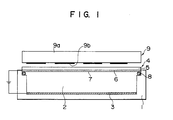
- Fig. 1 is a cross-sectional view illustrating the structure of the equipment for carrying out the process of the present invention
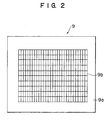
- Fig. 2 is the front view illustrating an example of the mask to be used in producing color filters.
- Figs. 3 (a) to (m) are explanatory views showing, in the order of the procedures, steps of the process for forming the black stripe obtained by the present invention.
- Fig. 4 is an explanatory view of the equipment used in Examples 1 to 6, and Fig. 5 shows the visible absorption spectrums of the thin film formed in Examples 1 to 3.
- the materials of the thin film to be used in the present invention are various and they are divided into the inorganic substances and the hydrophobic organic substances.
- the hydrophobic organic substances various ones can be mentioned.
- coloring matters for optical memory examples include coloring matters for optical memory and organic coloring matters such as phthalocyanine, metal complexes of phthalocyanine, derivatives thereof, naphthalocyanine, metal complexes of naphthalocyanine, derivatives thereof, porphyrin, metal complexes of porphyrin and derivatives thereof, perylene, derivatiues thereof, quinacridone, viologen, and Sudan; electrochromic materials such as 1,1'-diheptyl-4,4'-bipyridinium dibromide, and 1,1'-didodecyl-4,4'-bipyridinium dibromide; lightsensitive materials (photochromic materials) and light sensor materials such as 6-nitro-1,3,3-trimethylspiro-(2'H-1'-benzopyran-2,2'-indoline) (commonly called spiropyran); liquid crystal display coloring matters such as p-azoxyanisole.
- organic coloring matters such as phthalocyanine
- electrically conductive organic materials and gas sensor materials such as the 1:1 complex of 7,7,8,8-tetracyanoquinonedimethane (TCNQ) and tetrathiafulvalene (TTF), light curing paints such as pentaerythritol diacrylate, insulating materials such as stearic acid, diazo-type light-sensitive materials and paints such as 1-phenylazo-2-naphthol.
- water-insoluble polymers for example, general purpose polymers such as polycarbonate, polystyrene, polyethylene, polypropylene, polyamide, polyphenylene sulfide (PPS), polyphenylene oxide (PPO), polyacrylonitrile (PAN) and the like, polyphenylene, polypyrrole, polyaniline, polythiophene, acetyl cellulose, poly(vinyl acetate), poly(vinyl butyral), and various polymers (poly(vinyl pyridine) and the like) or copolymers (a copolymer of methyl methacrylate and methacrylic acid).
- general purpose polymers such as polycarbonate, polystyrene, polyethylene, polypropylene, polyamide, polyphenylene sulfide (PPS), polyphenylene oxide (PPO), polyacrylonitrile (PAN) and the like, polyphenylene, polypyrrole, polyaniline, polythiophene, acetyl cellulose
- the inorganic substances include vavious ones including inorganic oxides and inorganic sulfides such as TiO2, C, CdS, Fe2O3, Y2O3-ZrO2, ZrO2, Al2O3, CuS, ZnS, TeO2, LiNbO3, Si3N4, SrCeO3, WO3, PLZT (mixed oxide of Pb, La, Zr and Ti) and various kinds of superconductive oxides.
- inorganic oxides and inorganic sulfides such as TiO2, C, CdS, Fe2O3, Y2O3-ZrO2, ZrO2, Al2O3, CuS, ZnS, TeO2, LiNbO3, Si3N4, SrCeO3, WO3, PLZT (mixed oxide of Pb, La, Zr and Ti) and various kinds of superconductive oxides.
- pigments or dyes having a spectral property of the three primary colors of RGB that is, hydrophobic coloring matters of red, green and blue can be used.
- red coloring matters there may be mentioned a perylene type pigment, a lake pigment, an azo type pigment, a quinacridone type pigment, an anthraquinone type pigment, an anthracene type pigment, etc.
- a perylene pigment a lake pigment (Ca, Ba, Sr and Mn), quinacridone, naphthol AS, a shikomin pigment, anthraquinone (Sudan I, II, III, R), disazo, benzopyrane, a cadmium sulfide type pigment, a Fe (III) oxide type pigmnet, etc. and among them, the perylene pigment and the lake pigment are preferred.
- the green coloring matters there may be mentioned a halogen-poly-substituted phthalocyanine type pigment, a halogen-poly-substituted copper phthalocyanine type pigment or a triphenylmethane type basic dye, etc.
- a copper phthalocyanine type pigment an indanthrone type pigment, an indophenol type pigment or a cyanine type pigment, etc.
- phthalocyanine metal complexes such as chlorocopperphthalocyanine, chloroaluminumphthalocyanine, phthalocyanine vanadate, magnesium phthalocyanine, zinc phthalocyanine, iron phthalocyanine, cobalt phthalocyanine, etc; phthalocyanine, merocyanine, inodophenole blue, etc.
- the shape and size of these inorganic substances or hydrophobic organic substances are not limited, but powder with a particle size of not more than 10 ⁇ m is preferably used.
- aqueous medium used for formation of thin film various media such as water, a mixture of water and alcohol, a mixture of water and acetone and so on can be mentioned.
- the surfactant to be used in the present invention is that having HLB (hydrophile-liophile balance) of 10 to 20, more preferably 12 to 18.
- HLB hydrophile-liophile balance
- those generally used may be mentioned, but those comprising forrocene derivatives are preferable.
- the ferrocene derivatives can include various ones, but for example, there may be mentioned the following seven kinds of (1) to (7).
- ferrocene derivartives examples include, (1) ferrocene derivatives in which a ferrocene compound (ferrocene or ferrocene derivative having a suitable substituent (e.g., an alkyl group, and an acetyl group)) is bonded to a cationic surfactant of the ammonium type (preferably the quaternary ammonium type) having a main chain with 4 to 16 carbon atoms (preferably 8 to 14). If the number of carbon atoms in the main chain is too small, no micelle is formed, and if it is too large, the resulting ferrocene derivatives are not soluble in water.
- the ferrocene compound is bonded to the surfactant in various embodiments.
- Type (A) is an embodiment in which the ferrocene compound is bonded to the terminal of the main chain of the surfactant
- type (B) is an embodiment in which the ferrocene compound is bonded to an intermediate point of the main chain, directly or through an alkyl group
- type (C) is an embodiment in which the ferrocene compound is incorporated in the main chain.
- Ferrocene derivatives of this ammonium type are represented by the general formula: wherein R1 and R2 are each a hydrogen or an alkyl group having 1 to 4 carbon atoms (but not exceeding m as described hereinafter), Z and Z' are each a hydrogen or a substituent (methyl group, ethyl group, methoxy group or carbomethoxy group), X is a halogen, and m and n are integers satisfying the requirements: m ⁇ 0, n ⁇ 0, and 4 ⁇ m+n ⁇ 16, the general formula: wherein R1, R2, X, Z and Z' are the same as described above (provided that the number of carbon atoms of R1 and R2 does not exceed h as described hereinafter), and h, j and k are integers satisfying the requirements: h ⁇ 0, j ⁇ 0, k ⁇ 1 and 3 ⁇ h+j+K ⁇ 15 and p is an integer satisfying the requirement: 0 ⁇ p ⁇ k-1, the general formula: wherein R1, R2,
- ferrocene derivatives of ether type represented by the general formula:
- a is an integer of 2 to 18, and b is a real number of 2.0 to 100.0.
- a is an integer of 2 to 18 as described above, an alkylene group having 2 to 18 carbon atoms such as an ethylene group, a propylene group, etc. is interposed between the carbon atoms in the ring and Y.
- b is not only an integer of 2.0 to 100.0, but also a real number containing these, and represents an average value of of recurring numbers of the oxyethylene group (-CH2CH2O-) constituting the ferrocene derivative.
- Y in the above general formula represents an oxygen (-O-) or an oxycarbonyl group and Z and Z' are each a hydrogen or substituent as described above.
- ferrocene derivatives of ether type can be prepared according to the method and the like described in the specification of International Patent Application WO 89/01939.
- ferrocene derivatives of other type there may be mentioned ferrocene derivatives of pyridinium type represented by the general formula:
- R3 is an alkyl group having 1 to 4 carbon atom, an alkoxy group having 1 to 4 carbon atoms, a carboalkoxy group having 1 to 5 carbon atoms, a hydroxyl group, carboxyl group, or sulfonic acid group.
- C e H 2e represnts a straight or a branched alkylene group having 1 to 16 carbon atoms.
- C4H 2e are a straight alkylene group including a polymethylene group (CH2) e such as a tetramentylene group, a pentamethylene group, an octamethylene group, an undecamethylene group, a dodecamethylene group, a hexadecamethylene group, etc. or a branched alkylene group such as 2-methylundecamethylene group, 4-ethylundecamethylene group, etc.
- CH2e polymethylene group
- e polymethylene group
- e such as a tetramentylene group, a pentamethylene group, an octamethylene group, an undecamethylene group, a dodecamethylene group, a hexadecamethylene group, etc.
- a branched alkylene group such as 2-methylundecamethylene group, 4-ethylundecamethylene group, etc.
- ferrocene derivatives of pyridinium type can be prepared according to the methods and the like described in Japanese Patent Application Laid-Open No. 226894/1989.
- R4 and R5 are each a straight chain or a branched chain alkylene group having 1 to 14 carbon atoms
- X1 and X2 are each -O- or A1 and A2 are each (R' is a hydrogen or a methyl group, and q is a real number of 2 to 70)
- z1 and z2 are each a hydrogen, a methyl group, a methoxyl group, an amino group, a dimethylamino group, a hydroxyl group, an acetylamino group, a carboxyl group, a methoxycarbonyl group, an acetoxyl group, an aldehyde group or a halogen
- c and d are each an integer of 1 to 4.
- ferrocene derivatives can be produced according to the process described in the specification of Japanese Patent Application Laid-Open No. 83387/1990, for instance.
- ferrocene derivatives (5) are represented by the general formula: wherein and Z indicates G indicates a hydrogen, a methyl group or an ethyl group, R1 and R2 are each H, NH2, H(CH3)2, CH3, CH3O, OH or a halogen, and R3 is a hydrogen or a methyl group, n is an integer of 0 to 10, r is a real number of 2 to 70, a and b are each an integer of 1 to 4.
- These ferrocene derivatives can be produced according to the process described in the specification of Japanese Patent Application Laid-Open No. 45370/1989.
- Still another type of ferrocene derivatives (6) are represented by the general formula: wherein Z1 and Z2 are each H, CH3, CH3O, NHCOCH3, N(CH3)2, COCH3, COOCH3 or a halogen, (r is an integer of 0 to 3), Y is -O- or and R is a hydrogen or a methyl group; k is a real number of 2 to 70, h is an integer of 2 to 18, m is an integer of 0 to 4, n indicates 1 or 2, and a and b are each an integer of 1 to 4.
- ferrocene derivatives can be produced according to the process described in the specification of Japanese Patent application Laid-Open No. 96585/1990.
- R1 and R2 are each a hydrogen, a methyl group, a methoxyl group, an amino group, a dimethylamino group, a hydroxyl group or a halogen, or here, M is an alkali metal or an alkali earth metal, a is an integer of 1 to 4, b is an integer of 1 to 5, k is an integer of 1 to 18 and m is an integer of 0 to 4.
- ferrocene derivatives can be produced according to the process described in the specification of Japanese Patent Application Laid-Open No. 250892/1990.
- At least one compound of the above ferrocene derivatives appropriately as a surfactant.
- other surfactants can be used with these ferrocene derivatives or in place of these derivatives.
- These surfactants includes various ones, but those whose HLB value is in the range of 10 to 20 (when used with ferrocene derivatives, average of both HLB values is in the range of 10 to 20) should be used.
- these surfactants are nonionic surfactants such as polyoxyethylenealkylether, polyoxyethylene fatty acid ester, polyoxyethylenealkylphenylether, polyoxyethylenepolyoxypropylene alkylether.
- cationic or anionic surfactant such as alkyl sulfate, polyoxyethylenalkylether sulfate, alkyltrimethylammonium chloride, fatty acid diethylaminoethylamide.
- the above surfactants and inorganic substances and/or hydrophobic organic substances are first placed in an aqueous medium and thoroughly stirred by the use of mechanical homogenizer, supersonic homogenizer, pearl mill, sand mill, stirrer, or three rolls mill.
- Inorganic substances or hydrophobic organic substances can be dispersed or solubilized with the surfactant, to be a dispersion or a solution.
- the concentration of the surfactant in that process is not critical, but the surfactant including the above ferrocene derivative may be usually a threshold micelle concentration or higher, preferably in the range of 10 ⁇ M to 0.1 M, preferably 0.5 mM to 5 mM.
- the supporting salt (supporting electrolyte) is added, if necessary, in order to control the electrical conductance of the aqueous medium.
- the amount of the supporting salt added is not critical as long as it does not inhibit the deposition of the coloring matters dissolved or dispersed in the solution, but usually about 0 to 300 times and preferably about 50 to 200 times that of the above micelle forming agent. Said supporting salt is not necessarily inevitable to electrotreatment. Without it, a thin film of high purity containing no supporting salt can be obtained.
- the type of supporting salt is not critical as long as it is able to control the electric conductance for the aqueous medium without inhibiting the deposition of the above coloring matters onto the electrode.
- Preferred examples of the supporting salts therein are specifically, sulfuric acid salts (salts of lithium, potassium, sodium, rubidium, aluminum and the like), acetic acid salts (salts of lithium, potassium, sodium, rubidium, beryllium, magnesium, calcium, strontium, barium, aluminum and the like), salts of halide (salts of lithium, potassium, sodium, rubidium, calcium, magnesium, aluminum and the like), salts of water soluble oxides (salts of lithium, potassium, sodium, rubidium, calcium, magnesium, aluminum and the like) which are generally and widely used as supporting salts.
- a semiconductive (photosemiconductive) substrate or photoconductive substrate into the micelle solution or dispersion thus prepared.
- Said semiconductive substrate or photoconductive substrate can be dipped in the course of preparing the above-mentioned micelle solution or dispersion, but usually it can be dipped after preparation.
- the semiconductive substrate or photoconductive substrate to be dipped may be either of n-type or p-type, but preferred is n-type.
- the substrate is provided with a layer of a substance which can be the blocking joint between said substrate and the solution.
- These semiconductive or photoconductive substances of n-type include various ones, preferred examples of which are specifically, TiO2, ZnO, CdS, SnO2, SiC, a-Si (amorphous), CdSe, GaP, GaAs, Si and Ge, and also sensitizers such as cyanine, hydroquinone, piperidine, Rose Bengal, eosine, rhodamine B, and fluorescein can be added or laminated.
- Semiconductive or photoconductive substances of p-type are not limited particularly, but inorganic semiconductive substances such as Si, SiC, InP, GaSb, and GaP are preferable. Further, as the substances to be the blocking joint of said semiconductive or photoconductive substance of p-type, the substances having smaller work function than those of said semiconductive or photoconductive substance of p-type, such as ITO (mixed oxide of indium oxide and tin oxide) can be mentioned.
- ITO mixed oxide of indium oxide and tin oxide
- the principle of the process of the present invention is not necessarily clear, but is assumed as follows.
- the blocking (rectification) contact generated on the interface of the semiconductive or photoconductive substance of n-type and the solution is utilized.
- the proton absorbed in the depletio layer by irradiation of light forms a pair of electron and positive hole. It is considered that the resulting electrons transfer to the electrode in ohmic contact with the semiconductive substance and the like by the bending in energy band, while the positive hole having a high oxidizing ability oxidize the surfactant in the solution.
- the blocking contact of the p-type semiconductive or photoconductive substance with the electrode is utilized.
- the electromotive voltage by irradiation of light is generated mainly on the interface of the electrode and the semiconductive substance.
- the positive hole generated by light irradiation is considered to pass through the semiconductive bulk, to oxidize the surfactant in the solution.
- the process of the present invention after the semiconductive or photoconductive substrate is dipped in the above-mentioned micelle solution or dispersion, a light irradiation onto the contact face of said micelle solution or dispersion and said substrate (usually the surface of the substrate in contact) is required.
- the light to be irradiated is visible light, ultraviolet light and the like.
- the source and energy of light for example, a light energy of 20 to 5000 mJ/cm2 is irradiated for 1 to 150 minutes by the use of a high-pressure mercury-vapor lump of 2 kW.
- a thin film of approximately 0.6 ⁇ m in thickness is formed.
- the thickness of the thin film to be formed is generally proportional to potential (electric potential) and to period of light irradiation, and the potential and the period of irradiation can be appropriately determined according to the desired film thickness.
- the semiconductive or photoconductive substrate to be used in the process of the present invention can be prepared by forming a transparent electrode on a transparent substrate, and then forming a layer of semiconductive or photoconductive substance on the transparent electrode.
- the substrate is preferably glass substrate made of blue plate glass, white glate glass, alkali-free glass (e.g., 7059, produced by Corning Glass Works, NA45 produced by HOYA Co., Ltd.), low-expansion glass, or quarts glass.
- the material of the transparent electrode is sufficient if it is a metal more noble than the oxidation-reduction potential (+0.15 to 0.30 V against saturated calomel electrode) of the ferrocene derivative or an electroconductive substance. Specific example of them are ITO (mixed oxide of indium oxide and tin oxide), tin dioxide, and electroconductive polymer film.
- an electric potential of 1.0 to 3.0 V, preferably 1.0 to 1.8 V (against saturated calomel electrode (SCE)) is applied to the substrate.
- an electric potential of -0.2 to 1.0 V against SCE is preferably applied.
- hydrophobic coloring matters of the primary colors which constitute the color filter
- either one of red, green and blue of hydrophobic coloring matters is added in aqueous medium, to form thin films of desired color tone in a desired pattern according to the above procedure, and then the above procedures are repeated with other kinds of hydrophobic coloring matters.
- hydrophobic coloring matters of the primary colors red, green, blue
- thin film of the other color can be formed on each transparent electrode. If hydrophobic coloring matters of red, green, and blue are simultaneously present in aqueous medium, and the Micellar Disruption Method is carried out, then the color display material or the color filter of the present invention can be also produced.
- 1 is a cell, which contains micelle solution or dispersion 2, and provided with an counter electrode 3 on the bottom.
- the semiconductive or photoconductive substrate 4 is produced by forming transparent electrode 6 such as ITO on said transparent substrate 5 composed of glass and the like, and further on it, by forming thin film 7 of said semiconductive or photoconductive substance.
- the above-mentioned semiconductive or photoconductive substrate 4 can be produced by the ordinary procedure.
- an transparent electrode made of ITO for instance, is formed by means of vacuum deposition method, sputtering method, or pyrosol method, and further on it, thin film of semiconductive or photoconductive substance such as TiO2 thin film is formed by the vacuum deposition method, sputtering method, Ti-oxidizing method, or dip-sintering method.
- Said semiconductive or photoconductive substrate 4 is fixed interposing O-ring 8 to cell 1 containing micelle solution or dispersion 2 containing the desired coloring matters, so that the thin film 7 of semiconductive or photoconductive substance may contact the solution. Therein, it should be noted that any bubble may not go into the inside.
- Mask 9 shown in Fig. 2 is made by forming dot pattern 9b of 310 ⁇ m in length, 90 ⁇ m in width, having gaps of 20 ⁇ m (the black stripe portion in the drawing) on the quartz glass substrate 9a.
- the black stripe part of the figure shows the part for transmitting and the rest shows the mask part in black.
- TiO2 and the like is insulator. Accordingly, if electric potential is applied previously, there passes no electric current so that no film can be formed in that condition. It is only when light irradiation is conducted that electric current passes and films corresponding to the pattern of the mask are formed.
- the substrate 4, with which films have been formed as above is fixed to the cell containing micelle solution or dispersion containing another coloring matter, an the position of mask 9 is changed to the prescribed position and films are formed by applying electric potential and light irradiation in the same way as the above.
- desired thin films having been patterned accurately can be formed optionally, and etching and the like are not required. Since no electric treatment is required, the operation and equipment are very simple, and pattern design is not limited because taken-out part of electrode is not necessary.
- desired thin film having been precisely patterned, and particularly, thin films of various materials can be optionally formed at desired position.
- Said thin films of various materials can be formed by repeating the procedures for forming films by use of various materials for thin films.
- the process of etching can be omitted, and island-type color filter (e.g., mosaic) which has been regarded as difficult by electrodeposition, can be formed.
- heat resistance of thin film is not required, either.
- the thin film possesses electric conductivity as in the Micellar Disruption Method, so driving of liquid crystal is free from any load.
- BM can be formed in the same way, so smooth color filter can be obtained.
- color filters to be produced by the process of the present invention can be utilized, for example, for various displaying devices such as liquid crystal display devices, electrochromic display devices, latitude display devices, plasma displaying panels, spectroscopic devices, solid-state photographing devices, and dimmers and also for filters. More specifically, they are utilized effectively in the field of lap top-type personal computers, word processors, work stations, aurora visions, liquid crystal projectors, liquid crystal color TVs, liquid crystal color filters, color tone glasses, overhead projectors (OHP), internal panel loaded on cars and machinery monitors.
- various displaying devices such as liquid crystal display devices, electrochromic display devices, latitude display devices, plasma displaying panels, spectroscopic devices, solid-state photographing devices, and dimmers and also for filters. More specifically, they are utilized effectively in the field of lap top-type personal computers, word processors, work stations, aurora visions, liquid crystal projectors, liquid crystal color TVs, liquid crystal color filters, color tone glasses, overhead projectors (OHP), internal panel loaded on cars and machinery monitor
- substrate 10 on which black stripes are to be formed is prepared.
- various substances can be used depending on the purpose of the products on which black stripes have been formed, but generally, glasses such as white plate glass, blue plate glass, alkali-free glass, and borosilicate are used.
- the thickness of substrate 10 can be selected optionally.
- ITO mixed oxide of indium oxide and tin oxide
- Said ITO thin film 11 may be formed by conventional methods including those for vacuum deposition films, sputtering films, sol-gel films, EB films, and Pyrosol ITO films.
- the film thickness is usually 500 to 2000 ⁇ , and may have a surface resistance of 10 to 200 ⁇ / ⁇ .
- Metal mask layer 12 is formed on said ITO thin film 11.
- Said metal mask layer 12 is formed of chrome, nickel or the like in the thickness of several ⁇ m, which can be made by ordinary vacuum deposition methods.
- resisting agent 13 is applied.
- resisting agent 4 cyclorubber-based resisting agent, acryl-based resisting agent and the like of either negative-type or positive-type can be used.
- the substrate is subjected to exposure by the use of a mask with the prescribed stripe pattern formed on it.
- Said exposure can be effected by one-shot exposure, step exposure, or exposure by a stepper, with the use of usual light source.
- etching is effected, that is, metal mask layer 12 and ITO layer 11 are simultaneously subjected to etching.
- etching solution a mixture of HCl, HNO3, Ce(NO3)4, and FeCl3, in the blending ratio of 1:0 to 1:1 to 2:1 to 2, respectively can be used.
- the treatment can be conducted at room temperature to 60°C, for 10 to 50 minutes.
- reisting agent 13 is removed.
- the resiting agent 13 can be removed with aqueous solution of sodium hydroxide, for instance.
- thin film 15 of beforementioned p- or n-type semiconductive or p- or n-type photoconductive substance is formed.
- the examples of the methods for forming thin film 15 of the semicondutive or photoconductive substance are the vacuum deposition method, sputtering, sol-gel film method, EB film method, and Pyrosol ITO film method.
- a dopant can be doped.
- Nb can be doped in TiO2.
- the film thickness varies depending on the kinds of films. In TiO2 film, for instance, it is preferable 100 to 5000 ⁇ . Either of steps (1) to (9) heretofore can be perfomed according to the conventional methods.
- the substrate composed of semiconductive or photoconductive substance obtained as above is dipped into the dispersion or micelle solution 16 in which blackening pigment has been dispersed or dissolved, and subjected to light irradiation, to form black stripe 17 by the photomicelle method.
- the reuslting substrate with black stripes is washed and dried. This step is effected as, for example, the substrate is washed with pure water, and washed with ultrasonic wave, and then drained by a spin drier, and dried at 70 to 80°C for 2 hours.
- the substrate with black stripes after washed and dried is subjected to lift-off-etching, and thus the etching of metal mask layer 12 and thin film 15 of semiconductive or photoconductive substance is effected.
- the etching solution to be used there the same solution as in Fig. 3 (g) can be used. In this way, black stripes having no conductivity and having a thickness as small as 0.6 to 0.9 ⁇ m can be formed.
- black stripes can be formed by self-alignment. Black stripes can be formed before formation of RGB film.
- a container 16 shown in Fig. 4 50 cc of water and a compound (FPEG) represented by the formula: were added, to make the concentration of 1 mM.
- a compound (FPEG) represented by the formula: 50 cc of water and a compound (FPEG) represented by the formula: were added, to make the concentration of 1 mM.
- a compound (FPEG) represented by the formula: 50 cc of water and a compound (FPEG) represented by the formula: were added, to make the concentration of 1 mM.
- FPEG a compound represented by the formula:
- n-type semiconductive transparent substrate which was produced previously by vacuum deposition of TiO2 layer 20 of 5000 ⁇ on ITO substrate (thin film) 19 of 20 ⁇ , was dipped in the resulting solution, and then a voltage of 0.5 V (against SCE) was applied to the ITO, ultraviolet ray 24 was condensed with lens by the use of a high-pressure mercury-vapor light of 500 W, and then the condensed light was irradiated on the substrate for 60 seconds from the side of photomask 22. Therein, the upper part of ITO was covered with semiconductor such as TiO2, so micelle disruption was not caused, but only the portion which had received the light irradiation was formed to film.
- Example 2 The procedure of Example 1 was repeated except that zinc complex of tetraphenylporphyrin (ZnTPP) was used in place of phthalocyanine.
- ZnTPP zinc complex of tetraphenylporphyrin
- Example 2 The procedure of Example 2 was repeated except that the period of light irradiation was 120 seconds instead of 60 seconds.
- the visible ray absorption spectrum of the thin film is shown in Fig. 5.
- Example 1 The procedure of Example 1 was repeated except that Brij 35 (produced by KAO Co., Ltd.) of 2 mM was used in place of FPEG, and that the period of irradiation was 40 minutes instead of 60 seconds. In this manner, a patterned thin film as in Example 1 was obtained.
- Example 1 The procedure of Example 1 was repeated except that copper phthalocyanine was used in place of phthalocyanine, that the concentration of FPEG was 2 mM instead of 1 mM, that the period of irradiation was 15 minutes instead of 60 seconds, and that no supporting electrolyte was used. In this way, a patterned thin film as in Example 1 was obtained.
- Example 1 The procedure of Example 1 was repeated except that phthalocyanine green was used in place of phthalocyanine, that the period of irradiation was 40 minutes instead of 60 seconds, that no supporting electrolyte was used, and that the potential to apply was 0 V instead of 0.5 V against SCE.
- Example 1 a patterned thin film as in Example 1 was obtained.
- Example 1 The procedure of Example 1 was repeated except that ZnO was used in place of TiO2. In this way, a patterned thin film as in Example 1 was obtained.
- TiO2 thin film was formed by the vacuum deposition method.
- TiO2 used in vacuum deposition was crystalline rutile with purity of 99.9% (produced by Wako Junyaku Industry Co., Ltd.), and the heat board made of tangsten was heated to 2000°C.
- the film thickness was measured by a quartz vibration-type film-thickness meter (CRTIA: produced by ULVAC Co., Ltd.), to be 5000 ⁇ . In this way, TiO2/ITO substrate was obtained.
- FPEG produced by Dozin Chemical Co., Ltd.
- Cromophtal A2B produced by Ciba Geigy Co., Ltd.
- Said micelle dispersion was put in a cell of the same shape as shown in Fig. 1, and above-mentioned TiO2/ITO substrate was fixed to the cell so that any bubble comes into it.
- taken-out electrodes were set previously, and a voltage of 1.5 V against SCE was applied.
- the substrate was detatched from the cell, and washed, drained by a spin drier, and baked for one hour in an oven at 180°C.
- a B (blue) film was formed in the same manner as in the film formation of G, except that Heliogen-K-7080 (produced by BASF Co.) in a concentration of 9 g/liter was used in place of Heliogen Green L 9361 in a concentration of 15 g/liter, to obtain a pattered thin film of RGB coloring matters.
- BM mask open part:310 ⁇ m x 90 ⁇ m, band width:20 ⁇ m
- BM black matrix
- RGB color filters with black matrix were obtained.
- TiO2 thin film was formed by the vacuum deposition method.
- TiO2 used in vacuum deposition was crystalline anatase with a purity of 99.9% (produced by Wako Junyaku Industry, Co.), and the heat board was made of tangsten and was heated to 1500°C.
- the film thickness was measured by a film thickness gauge by rock crystal oscilator (CRTIA; produced by ULVAC Co.) to be 1000 A.
- CRTIA rock crystal oscilator
- TiO2 thin film was formed by vacuum deposition method.
- TiO2 used in vacuum deposition was crystalline rutile with a purity of 99.9% (produced by Wako Junyaku Industry, Co.).
- the heat board made of tangsten was heated to 2000°C.
- the film thickness was measured by quartz vibration-type film-thickness meter (CRTIA: produced by ULVAC Co.) to be 8000 ⁇ .
- CTIA quartz vibration-type film-thickness meter
- TiO2 thin film was formed by the vacuum deposition method.
- TiO2 used in vacuum deposition was crystalline anatase of a purity of 99.9% (produced by Wako Junyaku Industry, Co.), and the heat board of tangsten was heated to 1800°C.
- the film thickness was measured by quartz vibration-type film-thickness meter (CRTIA: produced by ULVAC Co.), to be 3500 ⁇ .
- the procedure of Example 8 was repeated except that TiO2/ITO substrate thus obtained was used, to obtain RGB color filter with black matrix.
- ⁇ -Si thin film was formed by the vacuum deposition method.
- ⁇ -Si used in vacuum deposition was ⁇ -Si ingot with a purity of 99.9995% (produced by Taiyo Yuden Co.), and the heat board was made of tangsten and was heated to 1500°C.
- the film thickness was measured by a quartz vibration-type film-thickness meter (CRTIA: produced by ULVAC Co.), to be 1000 ⁇ .
- CRTIA quartz vibration-type film-thickness meter
- ⁇ -Si thin film was formed by the vacuum deposition method.
- CdS used in vacuum deposition was CdS with a purity of 99.5% (produced by Wako Junyaku Industry, Co.). Heating was effected by the use of electron beam (EB).
- EB electron beam
- the film thickness was measured by quartz vibration-type film-thickness meter (CRTIA: produced by ULVAC Co.), to be 1000 ⁇ .
- CdS/Al substrate was used, to obtain RGB color filter with black matrix.
- Example 8 The procedure of Example 8 was repeated except that a micelle forming agent (FEST9) represented by the formula: was used as a micelle forming agent of ferrocene derivative, to obtain a RGB color filter with black matrix.
- FEST9 a micelle forming agent represented by the formula:
- Example 8 The procedure of Example 8 was repeated except that 10 mM of micelle forming agent (FTMA) represented by the formula: was used as a micelle forming agent of ferrocene derivative, to obtain a RGB color filter with black matrix.
- FTMA micelle forming agent
- Example 8 The procedure of Example 8 was repeated except that 10 mM of Brij 35 (nonionic surfactant, produced by KAO Co., Ltd.) was used as a surfactant, to obtain a RGB color filter with black matrix.
- 10 mM of Brij 35 nonionic surfactant, produced by KAO Co., Ltd.
- Example 8 The procedure of Example 8 was repeated except that 12 mM of CTAC (cetyltrimethylammonium chloride) (cationic surfactant, produced by KAO Co., Ltd.) was used as a surfactant, and a RGB color filter with black matrix was obtained.
- CTAC cetyltrimethylammonium chloride
- Transmittance was determined by a spectrophotometer (MCPD-1100, produced by Otsuka electronics Co.), on the bases of the transmittance of a glass substrate.
- the transmittance value of each RGB was based on 450 nm, 545 nm, and 610 nm.
- the black matrix (BM) was evaluated similarly by use of a spectrophotometer, and the minumum value of each wavelength (450 nm to 650 nm) was taken as the absorbance of the BM (BMOD). The larger the value is, is the higher the light shielding property, that is, the performance as BM is higher.
- the border of BM and the color filter was polaroided in 200 magnifications by an optical microscope, to measure, on the border, the width of the border where the border comes to be in the same optical density as each bulk of BM and the color filter. The smaller said width is, the higher the definition (contrast) becomes.
- the uniformity of the color filter thin films was determined by an electromicroscope.
- the maximum value of unevenness on the surface of the film was taken from a tomography of 3000 magnefication, and regulated with the average film thickness.
- the defects were indicated by the number in all picture-elements.
- the contrast was determined by the following order. First, to each color filter formed in Examples 7 to 16, 100 ml of acryl-epoxy top coating agent (JSR, 7265A) was applied as the top coating agent, and unified by a spin coater at a revolution number of 1800 rpm. Then, the coating was hardened for 1 hour at 210°C, and polymer of poly ammic acid was spin-coated on the surface. Then the polymer of poly ammic acid was hardened at 250°C for 1 hours to be polyimide resin, and subjected to rubbing and oriented.
- JSR, 7265A acryl-epoxy top coating agent
- the counter electrode polymer of poly ammic acid was spin coated on a glass substrate provided with TFT, hardened at 250°C for 1 hour to be polyimide resin and subjected to rubbing, and glass beads, TN (twist nematic) liquid crystal was put in orderly between the counter electrode and the above-mentioned color filter substrate, to be sealed by an adhesive agent.
- TN ist nematic liquid crystal
- Example 8 The same procedure for forming R in Example 8 was repeated except that the electric potential to be applied on TiO2/ITO was changed to -0.5 to 6.0 V, and a thin film of R only was formed. The resulting film was determined for definition in the same manner as above. The results are shown in Table 2.
Landscapes
- Physics & Mathematics (AREA)
- General Physics & Mathematics (AREA)
- Optics & Photonics (AREA)
- Optical Filters (AREA)
- Application Of Or Painting With Fluid Materials (AREA)
Applications Claiming Priority (2)
| Application Number | Priority Date | Filing Date | Title |
|---|---|---|---|
| JP17714/90 | 1990-01-30 | ||
| JP2017714A JPH0832320B2 (ja) | 1990-01-30 | 1990-01-30 | 薄膜の製造方法 |
Publications (2)
| Publication Number | Publication Date |
|---|---|
| EP0440095A2 true EP0440095A2 (fr) | 1991-08-07 |
| EP0440095A3 EP0440095A3 (en) | 1992-06-10 |
Family
ID=11951421
Family Applications (1)
| Application Number | Title | Priority Date | Filing Date |
|---|---|---|---|
| EP19910100934 Withdrawn EP0440095A3 (en) | 1990-01-30 | 1991-01-25 | Process for producing thin films and color filters |
Country Status (4)
| Country | Link |
|---|---|
| US (1) | US5169672A (fr) |
| EP (1) | EP0440095A3 (fr) |
| JP (1) | JPH0832320B2 (fr) |
| CA (1) | CA2034976A1 (fr) |
Cited By (2)
| Publication number | Priority date | Publication date | Assignee | Title |
|---|---|---|---|---|
| AU645122B2 (en) * | 1990-09-13 | 1994-01-06 | Alcatel N.V. | An ATM load distribution arrangement |
| EP0689066A3 (fr) * | 1994-06-24 | 1997-01-02 | Canon Kk | Filtre couleur, procédé de production, et dispositif d'affichage à cristaux liquides l'utilisant |
Families Citing this family (12)
| Publication number | Priority date | Publication date | Assignee | Title |
|---|---|---|---|---|
| US5764209A (en) * | 1992-03-16 | 1998-06-09 | Photon Dynamics, Inc. | Flat panel display inspection system |
| US5320780A (en) * | 1993-01-11 | 1994-06-14 | Tech Spray, Inc. | Composition and process for preventing electrostatic discharge |
| US6309782B1 (en) | 1997-10-29 | 2001-10-30 | Fuji Xerox Co., Ltd. | Color filter and method for manufacturing the same |
| US6268697B1 (en) * | 1997-12-16 | 2001-07-31 | Fuji Photo Film Co., Ltd. | Flash discharge tube having exterior trigger electrode |
| US6255025B1 (en) * | 1998-07-13 | 2001-07-03 | Fuji Xerox Co., Ltd. | Filter and process for producing same |
| JP3237668B2 (ja) * | 1999-11-12 | 2001-12-10 | 富士ゼロックス株式会社 | 光触媒を用いるtft一体型のカラーフィルターの製造方法、カラーフィルター、および液晶表示装置 |
| TW552434B (en) * | 2001-06-04 | 2003-09-11 | Toray Industries | Color filter and liquid display element |
| US20060110585A1 (en) * | 2002-08-06 | 2006-05-25 | Seimei Shiratori | Films having multilayer heterostructure, process for producing the same and optical devices using the same |
| US7208401B2 (en) * | 2004-03-12 | 2007-04-24 | Hewlett-Packard Development Company, L.P. | Method for forming a thin film |
| KR100761160B1 (ko) * | 2005-04-19 | 2007-09-21 | 엘지전자 주식회사 | 플라즈마 표시 장치용 필터 및 그의 제조방법, 이를포함하는 플라즈마 표시 장치 |
| JP4911253B1 (ja) * | 2011-04-28 | 2012-04-04 | 大日本印刷株式会社 | 染料分散液、カラーフィルター用感光性樹脂組成物、カラーフィルター、液晶表示装置及び、有機発光表示装置 |
| DE102013110666B4 (de) * | 2013-09-26 | 2023-05-17 | Pictiva Displays International Limited | Strahlungsemittierende Vorrichtung und Verfahren zur Herstellung derselben |
Family Cites Families (4)
| Publication number | Priority date | Publication date | Assignee | Title |
|---|---|---|---|---|
| US3989731A (en) * | 1968-09-13 | 1976-11-02 | Syntex Corporation | Production of dimers of dicyclopentadienyl iron compounds |
| EP0340968A3 (fr) * | 1988-04-30 | 1992-05-06 | Seiko Epson Corporation | Dispositif à couches minces et procédé de fabrication |
| US5122247A (en) * | 1988-12-17 | 1992-06-16 | Idemitsu Kosan Co., Ltd. | Process for producing thin films |
| EP0407947A3 (en) * | 1989-07-12 | 1991-10-23 | Seiko Epson Corporation | Color filter and process for preparing the same |
-
1990
- 1990-01-30 JP JP2017714A patent/JPH0832320B2/ja not_active Expired - Fee Related
-
1991
- 1991-01-22 US US07/643,779 patent/US5169672A/en not_active Expired - Fee Related
- 1991-01-25 CA CA002034976A patent/CA2034976A1/fr not_active Abandoned
- 1991-01-25 EP EP19910100934 patent/EP0440095A3/en not_active Withdrawn
Cited By (3)
| Publication number | Priority date | Publication date | Assignee | Title |
|---|---|---|---|---|
| AU645122B2 (en) * | 1990-09-13 | 1994-01-06 | Alcatel N.V. | An ATM load distribution arrangement |
| EP0689066A3 (fr) * | 1994-06-24 | 1997-01-02 | Canon Kk | Filtre couleur, procédé de production, et dispositif d'affichage à cristaux liquides l'utilisant |
| US5712064A (en) * | 1994-06-24 | 1998-01-27 | Canon Kabushiki Kaisha | Process for producing a color filter and a liquid crystal display device |
Also Published As
| Publication number | Publication date |
|---|---|
| JPH0832320B2 (ja) | 1996-03-29 |
| US5169672A (en) | 1992-12-08 |
| CA2034976A1 (fr) | 1991-07-31 |
| EP0440095A3 (en) | 1992-06-10 |
| JPH03224661A (ja) | 1991-10-03 |
Similar Documents
| Publication | Publication Date | Title |
|---|---|---|
| US5169672A (en) | Process for producing thin films and color filters | |
| US5395678A (en) | Thin film color filter for liquid crystal display | |
| US5705302A (en) | Color filter for liquid crystal display device and method for producing the color filter | |
| DE69106628T2 (de) | Flüssigkristallvorrichtung. | |
| JP3073769B2 (ja) | カラーフィルタ、その製造方法及び該カラーフィルタを使用した液晶プロジェクター | |
| US5248576A (en) | Method of producing color filter using a micellar disruption method | |
| GB2155023A (en) | Electrically conductive high molecular resin composition for electrodeposition coating | |
| JP3237667B2 (ja) | 光触媒を用いた新規な着膜方法およびこの方法を使用するカラーフィルターの製造方法、それに使用する電解液、ならびに製造装置 | |
| US5185074A (en) | Process for producing color filter | |
| JP2825424B2 (ja) | 薄膜及びその製造方法並びにその薄膜を用いる機能素子 | |
| Zhang et al. | A new type of organic-inorganic multilayer: fabrication and photoelectric properties | |
| US5242558A (en) | Method for forming a thin film device | |
| US5240797A (en) | Thin film device and method of manufacture | |
| JP3219052B2 (ja) | カラーフィルター用カラーペーストおよびその製造方法並びにカラーフィルター | |
| JP4411697B2 (ja) | 樹脂ブラックマトリックスの製造方法、樹脂ブラックマトリックス、カラーフィルターおよび液晶表示装置 | |
| JPH04104101A (ja) | 薄膜およびカラーフィルタの製造方法 | |
| JP3090521B2 (ja) | 薄膜の製造方法 | |
| JPS63155105A (ja) | カラ−フイルター | |
| JP3086361B2 (ja) | 薄膜およびカラーフィルタの製造方法 | |
| JP2002040227A (ja) | 薄膜トランジスタ一体型高誘電率カラーフィルターの製造方法、カラーフィルターおよび液晶表示装置 | |
| JP2634977B2 (ja) | 薄膜およびカラーフィルターの製造方法 | |
| JPH0578899A (ja) | 薄膜およびカラーフイルタの製造方法 | |
| JP3151046B2 (ja) | カラーフィルタおよびその製造方法 | |
| JPS61209272A (ja) | カラーフィルター用高誘電性高分子電着組成物 | |
| JPH095514A (ja) | 液晶ディスプレイ用カラーフィルタ |
Legal Events
| Date | Code | Title | Description |
|---|---|---|---|
| PUAI | Public reference made under article 153(3) epc to a published international application that has entered the european phase |
Free format text: ORIGINAL CODE: 0009012 |
|
| AK | Designated contracting states |
Kind code of ref document: A2 Designated state(s): CH DE FR GB LI NL |
|
| PUAL | Search report despatched |
Free format text: ORIGINAL CODE: 0009013 |
|
| AK | Designated contracting states |
Kind code of ref document: A3 Designated state(s): CH DE FR GB LI NL |
|
| 17P | Request for examination filed |
Effective date: 19921202 |
|
| 17Q | First examination report despatched |
Effective date: 19940713 |
|
| STAA | Information on the status of an ep patent application or granted ep patent |
Free format text: STATUS: THE APPLICATION IS DEEMED TO BE WITHDRAWN |
|
| 18D | Application deemed to be withdrawn |
Effective date: 19941124 |