EP0443748B1 - Caractérisation de type d'antigène de leucocytes humains - Google Patents
Caractérisation de type d'antigène de leucocytes humains Download PDFInfo
- Publication number
- EP0443748B1 EP0443748B1 EP91300965A EP91300965A EP0443748B1 EP 0443748 B1 EP0443748 B1 EP 0443748B1 EP 91300965 A EP91300965 A EP 91300965A EP 91300965 A EP91300965 A EP 91300965A EP 0443748 B1 EP0443748 B1 EP 0443748B1
- Authority
- EP
- European Patent Office
- Prior art keywords
- dna
- hla
- pcr
- amplification
- lane
- Prior art date
- Legal status (The legal status is an assumption and is not a legal conclusion. Google has not performed a legal analysis and makes no representation as to the accuracy of the status listed.)
- Expired - Lifetime
Links
Images


Classifications
-
- C—CHEMISTRY; METALLURGY
- C12—BIOCHEMISTRY; BEER; SPIRITS; WINE; VINEGAR; MICROBIOLOGY; ENZYMOLOGY; MUTATION OR GENETIC ENGINEERING
- C12Q—MEASURING OR TESTING PROCESSES INVOLVING ENZYMES, NUCLEIC ACIDS OR MICROORGANISMS; COMPOSITIONS OR TEST PAPERS THEREFOR; PROCESSES OF PREPARING SUCH COMPOSITIONS; CONDITION-RESPONSIVE CONTROL IN MICROBIOLOGICAL OR ENZYMOLOGICAL PROCESSES
- C12Q1/00—Measuring or testing processes involving enzymes, nucleic acids or microorganisms; Compositions therefor; Processes of preparing such compositions
- C12Q1/68—Measuring or testing processes involving enzymes, nucleic acids or microorganisms; Compositions therefor; Processes of preparing such compositions involving nucleic acids
- C12Q1/6844—Nucleic acid amplification reactions
- C12Q1/6858—Allele-specific amplification
-
- C—CHEMISTRY; METALLURGY
- C12—BIOCHEMISTRY; BEER; SPIRITS; WINE; VINEGAR; MICROBIOLOGY; ENZYMOLOGY; MUTATION OR GENETIC ENGINEERING
- C12Q—MEASURING OR TESTING PROCESSES INVOLVING ENZYMES, NUCLEIC ACIDS OR MICROORGANISMS; COMPOSITIONS OR TEST PAPERS THEREFOR; PROCESSES OF PREPARING SUCH COMPOSITIONS; CONDITION-RESPONSIVE CONTROL IN MICROBIOLOGICAL OR ENZYMOLOGICAL PROCESSES
- C12Q1/00—Measuring or testing processes involving enzymes, nucleic acids or microorganisms; Compositions therefor; Processes of preparing such compositions
- C12Q1/68—Measuring or testing processes involving enzymes, nucleic acids or microorganisms; Compositions therefor; Processes of preparing such compositions involving nucleic acids
- C12Q1/6876—Nucleic acid products used in the analysis of nucleic acids, e.g. primers or probes
- C12Q1/6881—Nucleic acid products used in the analysis of nucleic acids, e.g. primers or probes for tissue or cell typing, e.g. human leukocyte antigen [HLA] probes
-
- C—CHEMISTRY; METALLURGY
- C12—BIOCHEMISTRY; BEER; SPIRITS; WINE; VINEGAR; MICROBIOLOGY; ENZYMOLOGY; MUTATION OR GENETIC ENGINEERING
- C12Q—MEASURING OR TESTING PROCESSES INVOLVING ENZYMES, NUCLEIC ACIDS OR MICROORGANISMS; COMPOSITIONS OR TEST PAPERS THEREFOR; PROCESSES OF PREPARING SUCH COMPOSITIONS; CONDITION-RESPONSIVE CONTROL IN MICROBIOLOGICAL OR ENZYMOLOGICAL PROCESSES
- C12Q2600/00—Oligonucleotides characterized by their use
- C12Q2600/156—Polymorphic or mutational markers
-
- C—CHEMISTRY; METALLURGY
- C12—BIOCHEMISTRY; BEER; SPIRITS; WINE; VINEGAR; MICROBIOLOGY; ENZYMOLOGY; MUTATION OR GENETIC ENGINEERING
- C12Q—MEASURING OR TESTING PROCESSES INVOLVING ENZYMES, NUCLEIC ACIDS OR MICROORGANISMS; COMPOSITIONS OR TEST PAPERS THEREFOR; PROCESSES OF PREPARING SUCH COMPOSITIONS; CONDITION-RESPONSIVE CONTROL IN MICROBIOLOGICAL OR ENZYMOLOGICAL PROCESSES
- C12Q2600/00—Oligonucleotides characterized by their use
- C12Q2600/172—Haplotypes
-
- Y—GENERAL TAGGING OF NEW TECHNOLOGICAL DEVELOPMENTS; GENERAL TAGGING OF CROSS-SECTIONAL TECHNOLOGIES SPANNING OVER SEVERAL SECTIONS OF THE IPC; TECHNICAL SUBJECTS COVERED BY FORMER USPC CROSS-REFERENCE ART COLLECTIONS [XRACs] AND DIGESTS
- Y10—TECHNICAL SUBJECTS COVERED BY FORMER USPC
- Y10S—TECHNICAL SUBJECTS COVERED BY FORMER USPC CROSS-REFERENCE ART COLLECTIONS [XRACs] AND DIGESTS
- Y10S435/00—Chemistry: molecular biology and microbiology
- Y10S435/81—Packaged device or kit
Definitions
- the present invention relates to matching human leukocyte antigens.
- HLA human leukocyte antigen
- MHC human major histocompatibility complex
- HLA class II loci At least six HLA class II loci have been defined, three of which (HLA-DR, DQ and DP) are known to express functional products. Pairs of A (formerly alpha) and B (formerly beta) genes within these three loci encode heterodimeric protein products which are multi-allelic and alloreactive. In addition, combinations of epitopes on DR and/or DQ molecules are recognised by alloreactive T cells. This reactivity has been used to define "Dw" types by cellular assays based upon the mixed lymphocyte reaction (MLR).
- MLR mixed lymphocyte reaction
- HLA-DR and DQ matching is now generally undertaken as a clinical prerequisite for renal and bone marrow transplantation.
- HLA-DR Extensive molecular genetic analysis of the HLA class II region has recently enabled the definition of HLA-DR, DQ and DP alleles at the DNA level. It is now recognised that many polymorphisms detected at the DNA level could not previously be defined serologically. However, the polymorphisms revealed by DNA probes are slowly being confirmed as functional since new alloantisera are being reported which can now define serological "splits". It therefore appears that the polymorphisms detected at the DNA level might well reflect functional epitopes. Therefore, DNA typing is becoming more widely used as an adjunct, or alternative, to serological tests.
- RFLP restriction fragment length polymorphism
- EP-A-237,362 describes a process for detecting specific nucleotide variations and genetic polymorphisms present in nucleic acids and kits therefor.
- WO89/04875 describes DNA sequences from the HLA class II ⁇ -region of the human genome associated with water-immune diseases.
- EP-A-317,239 describes a method and device for improved restriction fragment length polymorphism analysis.
- the present invention provides a method of human HLA-DR and/or Dw allotype matching, which method comprises:
- the method is founded on PCR amplification of HLA-DRB gene exon 2 sequences with defined PCR primers to generate characteristic allele-specific PCR products (PCR fingerprints). It differs from other established DNA typing methods since there is no requirement for post-amplification enzyme digestion, chemical treatments, DNA immobilization, target-probe hybridizations, or for the use of multiple combinations of PCR oligonucleotide primers. Both HLA-DR and Dw PCR fingerprints can easily be identified in DR/Dw homozygous or heterozygous individuals within 8 hours.
- the present method of direct visual comparison between PCR fingerprints of panels of individuals can be adapted for HLA-DR/Dw allotype matching for example in the selection of HLA-DR/Dw-matched living related or unrelated volunteer donors for bone marrow transplantation.
- the present method is carried out on a first sample of DNA.
- a sample of DNA is obtained from an individual or any object whose HLA-DR and/or Dw allotypes it is wished to study.
- Individual includes a foetus.
- HLA DNA can be extracted from all nucleated cells. Typically, HLA DNA is obtained from peripheral blood cells for convenience.
- Foetal HLA DNA can be obtained from placental cells or amniotic fluid. Other sources of DNA include hair follicles, mummified bodies, etc.
- the DNA is isolated under conditions which preclude degradation.
- Cells are digested with a protease under such conditions that there is likely to be little or no DNAase activity.
- the digest is extracted with a DNA solvent.
- the extracted DNA may be purified by, for example, dialysis or chromatography. Suitable DNA isolation techniques are described by Kan et al in N. Eng. J. Ned. 297 , 1080-1084, 1977 and Nature 251 , 392-393, 1974 and by Kan and Dozy, Proc. Natl. Acad. Sci. USA 75 , 5631-5635, 1978.
- Exon 2 nucleotide sequences of the HLA-DRB gene of the sample DNA are then amplified by PCR.
- the flanking sequences of exon 2 are highly conserved between DRB alleles.
- To the HLA DNA are added two oligonucleotide primers for annealing to complementary sequences at either end of exon 2, a heat-stable DNA polymerase such as TaqI, dATP, dCTP, dGTP and dTTP.
- the DNA is denatured, the oligonucleotide primers anneal to their complementary sequences with the 3' ends pointing towards each other and the DNA polymerase results in extension of the annealed primers and amplification of the segment of DNA defined by the 5' ends of the primers.
- the cycle of DNA denaturation, primer annealing and synthesis of the DNA segment defined by the 5' ends of the primers is repeated as many times as is necessary to amplify the HLA-DRB DNA until sufficient is available for step (ii) of the present method.
- Amplification may proceed for from 20 to 40 cycles, for example from 25 to 35 cycles.
- oligonucleotide primers may be employed.
- the primers may be suitable for amplification of multiple HLA-DR and/or Dw alleles or for amplification of specific such alleles.
- Preferred primers for multi-allelic amplification are: GH46 (left) : CCGGATCCTTCGTGTCCCCAGACCACG GH50 (right) : CTCCCCAACCCCGTAGTTGTGTCTGCA
- GH50 may be used as the right primer and, for the left primer: PL8/12: TTCTTGGAGTACTCTACGGG
- the primers may be labelled for facilitating analysis in step (iii) of the present method.
- the primers can be labelled with a directly detectable tag, for example a radionuclide such as 32P, 35S, 14C or 125I, a fluorescent compound such as fluorescein or rhodamine derivatives, an enzyme such as a peroxidase or alkaline phosphatase) avidin or biotin.
- a directly detectable tag for example a radionuclide such as 32P, 35S, 14C or 125I, a fluorescent compound such as fluorescein or rhodamine derivatives, an enzyme such as a peroxidase or alkaline phosphatase) avidin or biotin.
- the two primers may have the same or different labels.
- the fragments of amplified DNA i.e. the product of amplification of the exon 2 nucleotide sequence of the HLA-DRB gene of the sample DNA as defined by the PCR primers, are then separated according to size. This may be achieved by electrophoresis or by high pressure liquid chromatography. The separation is effected on a substrate. For electrophoresis, this typically is a gel which does not denature the DNA, such as polyacrylamide gel.
- the amplified DNA is separated on the gel according to the size of each fragment. Electrophoresis is conducted under conditions which effect a desired degree of resolution of fragments. A degree of resolution that separates fragments that differ in size by as little as about 10 bp is usually sufficient. Size markers may also be run on the gel to permit estimation of the size of fragments.
- the size distribution, i.e. the resolution pattern, of the amplified DNA fragments will be allele-specific.
- This resolution pattern or PCR fingerprint can next be visualised. Where a PCR primer has been labelled, this label may be revealed. A substrate carrying the separated labelled DNA fragments is contacted with a reagent which detects the presence of the label. Where the PCR primers were not labelled, the substrate bearing the PCR fingerprint may be contacted with ethidium bromide and the DNA fragments visualised under ultraviolet light.
- the length polymorphism of the DNA fragments is thus determined. This is compared with the length polymorphism of DNA fragments resulting from PCR amplification of the HLA-DRB exon 2 nucleotide sequence of a second sample of DNA. In this way, correspondence between the HLA-DR and/or Dw allotypes of the DNA samples may be obtained. It may be ascertained whether the length polymorphism of the DNA fragments obtained, and therefore whether the allotypes of the two samples are the same or not. If the allotype of the second DNA sample is known, the allotype of the first DNA sample may be identified if the allotypes are the same.
- the length polymorphism in respect of the second sample of DNA may be obtained using the same conditions as are employed to obtain the length polymorphism in respect of the first DNA sample. Typically the same primers are used. PCR amplification need not necessarily be for the same number of cycles or under identical reaction conditions, though. Similarly, separation of the resulting DNA fragments need not be carried out in an identical fashion provided it is possible to assess the relative correspondence of the length polymorphisms of the DNA fragments resulting from amplification of each DNA sample.
- the second sample of DNA may be analysed according to the present method simultaneously with or at a different time to analysis of the first DNA sample. Indeed, a multiplicity of DNA samples may be analysed. Typically the or each sample is a selected sample. Samples from selected individuals can be analysed. The length polymorphism determined for each sample may be held in a computer.
- a computer database may therefore be generated containing the size distribution patterns for different samples, for different DR and/or Dw specificities or, indeed, for all DR and Dw specificities.
- the different molecular sizes of the PCR generated fragments for samples and/or for the different DR and/or Dw specificities determined for known samples could be keyed into a computer. Any unknown DR and/or Dw types could therefore be determined ("typed") by comparing the sizes of the fragments generated after PCR of DNA of the unknown sample with the reference database.
- step (iv) of the present method therefore, the length polymorphism in respect of the first sample of DNA may be compared with a length polymorphism held on a computer database in respect of a second sample of DNA.
- the PCR fingerprint may be compared with another PCR fingerprint to determine whether the individuals, whose DNA has been tested to obtain the two fingerprints, have matching HLA-DR and Dw allotypes.
- the present method can therefore be applied to DNA samples from two or more individuals.
- a PCR fingerprint may be compared with a standard fingerprint previously obtained. Correspondence between fingerprints can therefore be determined.
- the present method can be used to determine whether a donor of a transplant or transfusion and a receipient or proposed recipient of the transplant or transfusion have matching HLA-DR and Dw allotypes. PCR fingerprints from the donor and the recipient or proposed recipient can be compared.
- the transplant may be a tissue transplant such as a heart, lung, liver or kidney transplant or a bone marrow transplant.
- the transfusion may be a blood transfusion. HLA-DR/Dw matching of living related or unrelated donors for allogenic transplantation may therefore be achieved.
- the present method can be used in determining paternity of an individual. By comparing PCR fingerprints obtained for the individual, the individual's mother and the suspected father of the individual, this determination can be made. Also, the present method can be used in determining whether a individual is susceptible to or has a disease associated with HLA-DR and/or Dw allotypes. Such diseases are reviewed in Immunol. Rev. 70 , 1-218, 1983.
- the invention also provides the use of two oligonucleotide primers capable of annealing to complementary sequences at respective ends of exon 2 of a HLA-DRB gene to produce a test kit for a method of human HLA-DR and/or Dw allotype matching in accordance with the invention.
- the test kit may comprise:
- the primers may be labelled as above.
- the control DNA and control PCR amplification products are also typically labelled.
- the kit may further comprise onr or more of the following:
- the kit may also comprise:
- the length polymorphisms stored in the database may be those of DNA samples of known DR and/or Dw specificity.
- the database may therefore comprise the PCR fingerprints for known DR and/or Dw allotypes, indeed for all such allotypes available.
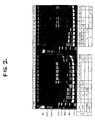
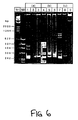
- the length polymorphisms as reported in Figures 2, 3 and 5 for DR or Dw allotypes or as reported in Figure 4 for the possible combinations of these allotypes may therefore be provided in the database.
- HLA-DR/Dw heterozygous cells were characterized by, and obtained from, Mrs. E. Bidwell (United Kingdom Transplant Service, Bristol, GB). HLA-DR and Dw allotypes were confirmed by RFLP typing of TaqI-digested genomic DNA, using short DRB, DQB and DQA cDNA probes, as previously described (Bidwell, Immunol. Today 9 , 18-23, 1988; Bidwell et al , Transplantation 45 , 640-646, 1988).
- Reaction mixtures contained 1 ⁇ g (for BLCLs) or 2 ⁇ g (for HLA-DR/Dw heterozygous cells) of genomic DNA, prepared as described (Bidwell et al , 1988), 10mM Tris-HCl, pH 8.3, 1.5mM MgC12, 0.01% (w/v) gelatin, 0.2mM each of dATP, dCTP, dGTP and dTTP, and 1 ⁇ M each of HLA-DRB gene second exon 5' (left) and 3' (right) oligonucleotide primers.
- the primers used were (a) for multi-allelic amplification, GH46 (left, nucleotide sequence 5'CCGGATCCTTCGTGTCCCCAGACCACG3') (Scharf et al , Human. Immunol. 22 , 61-69, 1988) plus GH50 (right, nucleotide sequence 5' CTCCCCAACCCCGTAGTTGTGTCTGCA3') (Scharf et al , Human Immunol. 22 , 61-69, 1988); (b) for specific amplification of HLA-DRw8 and DRw5(w12), PL8/12 (left, nucleotide sequence 5'TTCTTGGAGTACTCTACGGG3') plus GH50 (right).
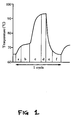
- Amplification cycle parameters were: 60 secs at 94°C (Fig 1(d)), 90 secs cooling ramp (Fig 1(e)), 120 secs at 65°C (Fig 1(f)), 70 secs heating ramp (Fig 1(a)), 120 secs at 72°C (Fig 1(b)) and 160 secs heating ramp (Fig 1(c)). After 35 cycles of amplification, the 72°C heating step was extended by 10 mins.
- the dimensions of the formed gel were 82mm(w) x 72mm (h) x 0.75mm(d), containing 15 sample slots of dimensions 3mm(w) x 10mm(h) x 0.75mm(d).
- gels were immersed for 30 mins in 1 x TBE containing ethidium bromide (0.5 ⁇ g/ml) and DNA was visualized using a 302nm ultraviolet transilluminator.
- DNA was excised from the polyacrylamide gels and purified by isotachophoresis and ethanol precipitation. Aliquots were reamplified using the same conditions described above.
- PCR amplification technique To establish an easy and reproducible molecular method for the determination of HLA-DR and Dw allotypes, we employed the PCR amplification technique to amplify allele-specific sequences.
- HLA-DRB gene exon 2-specific GH46 and GH50 primers were used to amplify DNA from a series of HLA-DR/Dw homozygous BLCLs, allele-specific patterns of polymorphic PCR products (PCR fingerprints) could be established that were associated with individual HLA-DR serotypes (Fig 2).
- splits of HLA-DR specificities defined by both alloreactive T cells (Dw allotypes) and by DNA-RFLP typing produced further allele-specific PCR fingerprints.
- each group revealed identical PCR fingerprints (not shown).
- the PCR fingerprints consisted of a primary product (271bp as predicted from a series of HLA-DRB gene exon 2 nucleotide sequences) together with multiple higher molecular weight products (hereafter designated satellite DNAs).
- satellite DNAs multiple higher molecular weight products
- HLA-DRw8 homozygous BLCLs see below
- allele-specific multiple satellite DNAs ranging from 290bp to 1000bp were observed.
- One cluster of satellite DNAs appeared to correlate with the supertypic HLA-Drw53 serologic specificity, associated with HLA-DR4, DR7 and DR9 (Fig 2, lanes 7-11, 19-21 and 24).
- PCR fingerprints of HLA-DRw8 homozygous BLCLs revealed a primary (271bp) product, but no detectable satellite DNAs (Fig 2, lanes 22 and 23) and thus represented a potential difficulty in identification of the HLA-DRw8 allele in HLA-DR/Dw heterozygous individuals.
- This primer, PL8/12 (see Materials and Methods) is complementary only to HLA-DRw8 and DRw5(w12) DRB1 gene exon 2 5'-sequences.
- satellite DNA bands might consist of a nested set of sequences, each containing part or all of the P sequence.
- PCR fingerprints consist of a principal (leading) DNA band and a series of satellite (trailing) DNA bands.
- the principal band represents homoduplexed HLA-DRB gene second exon PCR products.
- the number of individual homoduplexes present in this band corresponds to the number of different DRB genes which contain amplifiable second exon sequences and which are present on both haplotypes of an individual.
- Satellite DNA bands are heteroduplexes formed by heterologous association of different HLA-DRB gene products during the last annealing stage of the PCR. These heteroduplexes contain variable regions of nucleotide sequence mismatches, depending upon the combination of DRB alleles within both haplotypes.
- the extent of nucleotide sequence mismatches between alleles is haplotype specific: thus, the number and gel mobilities of heteroduplexes is haplotype specific. This permits the discrimination between haplotypes using PCR fingerprinting. For HLA-DR/Dw heterozygotes, additional heteroduplexes are observed when compared to the superimposed PCR fingerprints of the corresponding homozygous typing cells, since trans association generates new heteroduplex conformations.
- This technique was developed as a further application of PCR fingerprinting. It permits (a) resolution between similar PCR fingerprints shown by cells of different HLA-DR/Dw allotypes, and (b) the assignment of HLA-DR/Dw allotypes.
- PCR fingerprints appear to be unique for each combination of DR haplotypes so far examined, those from certain unrelated DR haplotypes may demonstrate marked similarities.
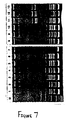
- the PCR fingerprints of HLA DR2(w15)-Dw2 and DRw6(W13)-Dw18 homozygous cells are very similar (Fig 7a, lanes 1 and 2 respectively).
- Fig 7a lanes 1 and 2 respectively.
- DRw8 haplotype contains only one amplifiable DRB gene second exon, which differs in sequence from all other alleles
- mixed amplification of genomic DNA from a DRw8-homozygous cell with that from other DR specificities resulted in the formation of new heteroduplexes.
- the conformations of these new heteroduplexes allowed discrimination between otherwise similar PCR fingerprints.
- spiking of DR2(w15)-Dw2 and DRw6(w13)-Dw18 genomic DNAs with DRw8 genomic DNA before amplification gave rise to new and easily distinguishable PCR fingerprints (lanes 3 and 4, respectively).
- This technique may also be applied with equal effect (not shown) by mixing respective PCR products after amplification, denaturing, and allowing mixtures to reanneal.
Landscapes
- Chemical & Material Sciences (AREA)
- Life Sciences & Earth Sciences (AREA)
- Organic Chemistry (AREA)
- Health & Medical Sciences (AREA)
- Proteomics, Peptides & Aminoacids (AREA)
- Zoology (AREA)
- Wood Science & Technology (AREA)
- Engineering & Computer Science (AREA)
- Immunology (AREA)
- Analytical Chemistry (AREA)
- Molecular Biology (AREA)
- Bioinformatics & Cheminformatics (AREA)
- Biotechnology (AREA)
- Biophysics (AREA)
- Physics & Mathematics (AREA)
- Genetics & Genomics (AREA)
- Biochemistry (AREA)
- Microbiology (AREA)
- General Engineering & Computer Science (AREA)
- General Health & Medical Sciences (AREA)
- Cell Biology (AREA)
- Chemical Kinetics & Catalysis (AREA)
- Measuring Or Testing Involving Enzymes Or Micro-Organisms (AREA)
- Medicines Containing Material From Animals Or Micro-Organisms (AREA)
- Medicines Containing Antibodies Or Antigens For Use As Internal Diagnostic Agents (AREA)
- Compounds Of Unknown Constitution (AREA)
Claims (11)
- Méthode de recherche de compatibilité d'allotype HLA-DR et/ou Dw humain, méthode qui comprend :(i) effectuer une amplification par réaction de polymérisation en chaîne (PCR) d'une séquence nucléotidique de l'exon 2 du gène HLA-DRB d'un premier échantillon d'ADN :(ii) séparer dans des conditions non dénaturantes pour l'ADN, selon leur taille, les fragments d'ADN résultant de ladite amplification ;(iii) observer la taille des fragments d'ADN ainsi séparés pour déterminer une empreinte PCR ; et(iv) comparer l'empreinte ainsi déterminée avec l'empreinte résultant de l'amplification par PCR de ladite séquence nucléotidique de l'exon 2 du gène HLA-DRB d'un second échantillon d'ADN.
- Méthode selon la revendication 1, dans laquelle on effectue l'étape (i) avec deux amorces oligonucléotidiques portant chacune un marqueur de type radionuclide, substance fluorescente, enzyme, avidine ou biotine.
- Méthode selon la revendication 1 ou 2, dans laquelle on utilise dans l'étape (i) deux amorces oligonucléotidiques ayant les séquences nucléotidiques suivantes:
5' CCG GAT CCTT CGT GTC CCC AGAC CACG 3' (SEQ ID n°1) ; et
5' CTC CCCAA CCCC GTAG TTG TGT CTG CA 3' (SEQ ID n°2). - Méthode selon l'une quelconque des revendications précédentes, dans laquelle l'amplification par PCR est effectuée à l'étape (i) à raison de 25 à 35 cycles.
- Méthode selon l'une quelconque des revendications précédentes, dans laquelle l'étape (ii) est effectuée par électrophorèse ou par chromatographie liquide à haute pression.
- Méthode selon la revendication 5, dans laquelle l'étape (ii) est effectuée par électrophorèse des fragments d'ADN sur un gel de polyacrylamide non dénaturant pour l'ADN.
- Méthode selon l'une quelconque des revendications précédentes, dans laquelle on effectue les étapes (i) à (iii) sur un échantillon d'ADN d'un donneur de transplant ou de transfusion et un échantillon d'ADN d'un receveur ou d'un receveur proposé du transplant ou de la transfusion et on compare les polymorphismes de longueur ainsi déterminés à l'étape (iv) pour déterminer si le donneur et le receveur ont des allotypes HLA-DR et Dw compatibles.
- Utilisation de deux amorces oligonucléotidiques capables de s'apparie aux extrémités respectives des séquences complémentaires de l'exon 2 d'un gène HLA-DRB pour produire un nécessaire de test pour une méthode de recherche de compatibilité d'allotype HLA-DR et/ou DW humain telle que définie à la revendication 1.
- Utilisation selon la revendication 8, dans laquelle les amorces portent chacune un marqueur radionuclide, substance fluorescente, enzyme, avidine ou biotine.
- Utilisation selon la revendication 8 ou 9, dans laquelle le test comprend en outre une ADN-polymérase thermostable et/ou dATP, dCTP, dGTP et dTTP.
- Utilisation selon l'une quelconque des revendications 8 à 10,dans laquelle le nécessaire comprend :(1) Ensemble d'amorces oligonucléotidiques pour l'amplification des séquences du second exon du gène HLA-DRB ;(2) des tampons pour l'amplification par PCR et pour le dépôt sur gel ; et(3) un ensemble d'ADN génomiques provenant d'un ensemble de cellules homozygotes de types HLA-Dr/Dw connus.
Applications Claiming Priority (2)
| Application Number | Priority Date | Filing Date | Title |
|---|---|---|---|
| GB9002625 | 1990-02-06 | ||
| GB909002625A GB9002625D0 (en) | 1990-02-06 | 1990-02-06 | Human leukocyte antigen typing |
Publications (3)
| Publication Number | Publication Date |
|---|---|
| EP0443748A2 EP0443748A2 (fr) | 1991-08-28 |
| EP0443748A3 EP0443748A3 (en) | 1991-09-11 |
| EP0443748B1 true EP0443748B1 (fr) | 1995-11-08 |
Family
ID=10670500
Family Applications (1)
| Application Number | Title | Priority Date | Filing Date |
|---|---|---|---|
| EP91300965A Expired - Lifetime EP0443748B1 (fr) | 1990-02-06 | 1991-02-06 | Caractérisation de type d'antigène de leucocytes humains |
Country Status (7)
| Country | Link |
|---|---|
| US (1) | US5552275A (fr) |
| EP (1) | EP0443748B1 (fr) |
| AT (1) | ATE130047T1 (fr) |
| AU (1) | AU646655B2 (fr) |
| CA (1) | CA2035813A1 (fr) |
| DE (1) | DE69114323T2 (fr) |
| GB (1) | GB9002625D0 (fr) |
Cited By (1)
| Publication number | Priority date | Publication date | Assignee | Title |
|---|---|---|---|---|
| US8426129B2 (en) | 1998-04-20 | 2013-04-23 | Innogenetics N.V. | Method for typing HLA alleles |
Families Citing this family (13)
| Publication number | Priority date | Publication date | Assignee | Title |
|---|---|---|---|---|
| WO1992010589A1 (fr) * | 1990-12-06 | 1992-06-25 | F. Hoffmann-La Roche Ag | Procedes et reactifs pour typer l'adn de hla drbeta |
| EP0577708A4 (en) * | 1991-03-06 | 1998-02-04 | Univ Minnesota | Dna sequence-based hla typing method |
| US5976789A (en) * | 1991-07-17 | 1999-11-02 | Bio Merieux | System of probes enabling HLA-DR typing to be performed, and typing method using said probes |
| FR2679252B1 (fr) * | 1991-07-17 | 1993-12-10 | Bio Merieux | Systeme de sondes permettant d'effectuer le typage hla dr, et procede de typage utilisant lesdites sondes. |
| GB9206567D0 (en) * | 1992-03-25 | 1992-05-06 | Univ Bristol | Dna analysis |
| ES2123775T5 (es) * | 1993-03-18 | 2005-10-01 | N.V. Innogenetics S.A. | Procedimiento para la tipificacion de hla-b por medio de iniciadores especificos y conjuntos de sondas. |
| WO1995001453A1 (fr) * | 1993-07-01 | 1995-01-12 | The Board Of Trustees Of The Leland Stanford Junior University | Essai de mobilite des heteroduplex pour l'analyse de la diversite de sequences d'acide nucleique |
| AU6223098A (en) * | 1997-02-14 | 1998-09-08 | Medical Research Council | Method of determining susceptibility to late-onset alzheimer's disease and dementia with lewy bodies |
| EP2186911B1 (fr) * | 1997-06-26 | 2015-01-21 | BIO-Rad Medical Diagnostics GmbH | Méthode de determination de locus d'antigene d' histocompatibilite classe II |
| EP0887423A1 (fr) * | 1997-06-26 | 1998-12-30 | Biotest Ag | Méthode de détermination de l'antigène du locus d'histocompatibilité classe II |
| EP1002133A2 (fr) * | 1997-08-06 | 2000-05-24 | Max-Planck-Gesellschaft zur Förderung der Wissenschaften e.V. | Utilisation d'amorces dans l'analyse d'empreintes |
| EP1536021A1 (fr) * | 2003-11-27 | 2005-06-01 | Consortium National de Recherche en Genomique (CNRG) | Méthode pour le typage de HLA |
| EP2082062A4 (fr) * | 2006-10-17 | 2010-07-07 | Life Technologies Corp | Procédés de typage allélique |
Citations (1)
| Publication number | Priority date | Publication date | Assignee | Title |
|---|---|---|---|---|
| WO1990013668A1 (fr) * | 1989-05-05 | 1990-11-15 | Lifecodes Corporation | Methode pour l'analyse genetique d'un echantillon d'acide nucleique |
Family Cites Families (13)
| Publication number | Priority date | Publication date | Assignee | Title |
|---|---|---|---|---|
| US4582788A (en) * | 1982-01-22 | 1986-04-15 | Cetus Corporation | HLA typing method and cDNA probes used therein |
| DK105582A (da) * | 1982-03-11 | 1983-09-12 | Nordisk Insulinlab | Fremgangsmaade til bestemmelse af humane hla-d(r) vaevstyper og gensonde til brug ved fremgangsmaaden |
| CA1254114A (fr) * | 1984-05-07 | 1989-05-16 | Allied Corporation | Epreuve de deplacement de polynucleotides utilisant une proteine de recombinaison et une trousse de diagnostic |
| ES8706823A1 (es) * | 1985-03-28 | 1987-06-16 | Cetus Corp | Un procedimiento para detectar la presencia o ausencia de al menos una secuencia especifica de acidos nucleicos en una muestra |
| US5310893A (en) * | 1986-03-31 | 1994-05-10 | Hoffmann-La Roche Inc. | Method for HLA DP typing |
| CA1284931C (fr) * | 1986-03-13 | 1991-06-18 | Henry A. Erlich | Procede de detection de variations specifiques de nucleotides et de polymorphismes genetiques dans les acides nucleiques |
| US6194561B1 (en) * | 1986-03-13 | 2001-02-27 | Roche Molecular Systems, Inc. | Characterization and detection of sequences associated with autoimmune diseases |
| WO1989001050A1 (fr) * | 1987-07-31 | 1989-02-09 | The Board Of Trustees Of The Leland Stanford Junior University | Accroissement selectif de sequences de polynucleotides cibles |
| JP2634208B2 (ja) * | 1987-11-13 | 1997-07-23 | パイオニア・ハイ―ブレツド・インターナシヨナル・インコーポレイテツド | 制限断片長多型性分析方法及びその装置 |
| WO1989007149A1 (fr) * | 1988-01-28 | 1989-08-10 | Mayo Foundation For Medical Education And Research | Amplification genomique avec mise en sequence directe |
| JP2897959B2 (ja) * | 1988-05-20 | 1999-05-31 | エフ.ホフマン―ラ ロシュ アクチェンゲゼルシャフト | 固定化された配列特異的プローブ |
| WO1990004648A1 (fr) * | 1988-10-20 | 1990-05-03 | Alexander Alan Morley | Methode pour le diagnostic de la monoclonalite dans la leucemie et le lymphome |
| DE3909354A1 (de) * | 1989-03-22 | 1990-09-27 | Hoechst Ag | Ferroelektrische fluessigkristallsysteme mit hoher spontaner polarisation und guten orientierungseigenschaften |
-
1990
- 1990-02-06 GB GB909002625A patent/GB9002625D0/en active Pending
-
1991
- 1991-02-06 CA CA002035813A patent/CA2035813A1/fr not_active Abandoned
- 1991-02-06 DE DE69114323T patent/DE69114323T2/de not_active Expired - Fee Related
- 1991-02-06 EP EP91300965A patent/EP0443748B1/fr not_active Expired - Lifetime
- 1991-02-06 AU AU70276/91A patent/AU646655B2/en not_active Ceased
- 1991-02-06 AT AT91300965T patent/ATE130047T1/de not_active IP Right Cessation
-
1994
- 1994-02-23 US US08/200,949 patent/US5552275A/en not_active Expired - Fee Related
Patent Citations (1)
| Publication number | Priority date | Publication date | Assignee | Title |
|---|---|---|---|---|
| WO1990013668A1 (fr) * | 1989-05-05 | 1990-11-15 | Lifecodes Corporation | Methode pour l'analyse genetique d'un echantillon d'acide nucleique |
Cited By (1)
| Publication number | Priority date | Publication date | Assignee | Title |
|---|---|---|---|---|
| US8426129B2 (en) | 1998-04-20 | 2013-04-23 | Innogenetics N.V. | Method for typing HLA alleles |
Also Published As
| Publication number | Publication date |
|---|---|
| GB9002625D0 (en) | 1990-04-04 |
| DE69114323T2 (de) | 1996-04-18 |
| AU646655B2 (en) | 1994-03-03 |
| AU7027691A (en) | 1991-08-08 |
| CA2035813A1 (fr) | 1991-08-07 |
| DE69114323D1 (de) | 1995-12-14 |
| EP0443748A3 (en) | 1991-09-11 |
| ATE130047T1 (de) | 1995-11-15 |
| US5552275A (en) | 1996-09-03 |
| EP0443748A2 (fr) | 1991-08-28 |
Similar Documents
| Publication | Publication Date | Title |
|---|---|---|
| US5593830A (en) | DNA sequence-based HLA class I typing method | |
| US6194147B1 (en) | Method for HLA typing | |
| Bunce et al. | Rapid DNA typing for HLA‐C using sequence‐specific primers (PCR‐SSP): identification of serological and non‐serologically defined HLA‐C alleles including several new alleles | |
| US5834189A (en) | Method for evaluation of polymorphic genetic sequences, and the use thereof in identification of HLA types | |
| Glowatzki‐Mullis et al. | Microsatellite‐based parentage control in cattle | |
| EP0443748B1 (fr) | Caractérisation de type d'antigène de leucocytes humains | |
| US6670124B1 (en) | High throughput methods of HLA typing | |
| US5759771A (en) | Method of determining a genotype by comparing the nucleotide sequence of members of a gene family and kit therefor | |
| WO1989011547A1 (fr) | Procede de determination de type de hla dp | |
| JPWO2001092572A1 (ja) | Hlaタイプを決定するためのキット及び方法 | |
| Miltiadou et al. | Establishment of a sequence‐based typing system for BoLA‐DRB3 exon 2 | |
| Sensabaugh et al. | The polymerase chain reaction: application to the analysis of biological evidence | |
| Bunce et al. | Molecular HLA typing-the brave new world | |
| WO1997020197A2 (fr) | Procede d'identification d'un allele inconnu | |
| US6503707B1 (en) | Method for genetic typing | |
| Aldridge et al. | Denaturing gradient gel electrophoresis: a rapid method for differentiating BoLA‐DRB3 alleles | |
| US5883238A (en) | Process for typing HLA-B using specific primers and probes sets | |
| US5545526A (en) | Method for HLA Typing | |
| EP0672179B1 (fr) | Analyse d'acide nucleique | |
| JPH03292898A (ja) | ヒト白血球抗原型決定法 | |
| Dyer et al. | Hlaallele Detection Using Molecular Techniques | |
| Lee et al. | AN APPARENT FUNCTIONAL CORRELATION BETWEEN VARIATIONS IN AMINO ACID RESIDUES IN HLA‐DR 4.1 AND 4.2 SEROLOGICAL SUBTYPES AND OLIGONUCLEOTIDE CHARACTERIZATION | |
| Horton et al. | HLA typing for DR3 and DR4 using artificial restriction fragment length polymorphism PCR from archival DNA. | |
| Bignon et al. | Combined use of RFLP and PCR‐ASO typing for HLA‐DR‐Dw and DQw typing | |
| Ivanova et al. | Low/Medium‐Resolution HLA Typing |
Legal Events
| Date | Code | Title | Description |
|---|---|---|---|
| PUAI | Public reference made under article 153(3) epc to a published international application that has entered the european phase |
Free format text: ORIGINAL CODE: 0009012 |
|
| PUAL | Search report despatched |
Free format text: ORIGINAL CODE: 0009013 |
|
| AK | Designated contracting states |
Kind code of ref document: A2 Designated state(s): AT BE CH DE DK ES FR GB GR IT LI LU NL SE |
|
| AK | Designated contracting states |
Kind code of ref document: A3 Designated state(s): AT BE CH DE DK ES FR GB GR IT LI LU NL SE |
|
| 17P | Request for examination filed |
Effective date: 19911007 |
|
| 17Q | First examination report despatched |
Effective date: 19931213 |
|
| GRAA | (expected) grant |
Free format text: ORIGINAL CODE: 0009210 |
|
| AK | Designated contracting states |
Kind code of ref document: B1 Designated state(s): AT BE CH DE DK ES FR GB GR IT LI LU NL SE |
|
| PG25 | Lapsed in a contracting state [announced via postgrant information from national office to epo] |
Ref country code: NL Free format text: LAPSE BECAUSE OF FAILURE TO SUBMIT A TRANSLATION OF THE DESCRIPTION OR TO PAY THE FEE WITHIN THE PRESCRIBED TIME-LIMIT Effective date: 19951108 Ref country code: GR Free format text: LAPSE BECAUSE OF FAILURE TO SUBMIT A TRANSLATION OF THE DESCRIPTION OR TO PAY THE FEE WITHIN THE PRESCRIBED TIME-LIMIT Effective date: 19951108 Ref country code: ES Free format text: THE PATENT HAS BEEN ANNULLED BY A DECISION OF A NATIONAL AUTHORITY Effective date: 19951108 Ref country code: DK Effective date: 19951108 Ref country code: BE Effective date: 19951108 Ref country code: AT Effective date: 19951108 |
|
| REF | Corresponds to: |
Ref document number: 130047 Country of ref document: AT Date of ref document: 19951115 Kind code of ref document: T |
|
| REF | Corresponds to: |
Ref document number: 69114323 Country of ref document: DE Date of ref document: 19951214 |
|
| PGFP | Annual fee paid to national office [announced via postgrant information from national office to epo] |
Ref country code: FR Payment date: 19960125 Year of fee payment: 6 |
|
| ITF | It: translation for a ep patent filed | ||
| PG25 | Lapsed in a contracting state [announced via postgrant information from national office to epo] |
Ref country code: SE Effective date: 19960208 |
|
| PGFP | Annual fee paid to national office [announced via postgrant information from national office to epo] |
Ref country code: DE Payment date: 19960215 Year of fee payment: 6 |
|
| REG | Reference to a national code |
Ref country code: CH Ref legal event code: NV Representative=s name: SCHAAD, BALASS & PARTNER AG |
|
| PG25 | Lapsed in a contracting state [announced via postgrant information from national office to epo] |
Ref country code: LU Free format text: LAPSE BECAUSE OF NON-PAYMENT OF DUE FEES Effective date: 19960229 |
|
| PGFP | Annual fee paid to national office [announced via postgrant information from national office to epo] |
Ref country code: CH Payment date: 19960306 Year of fee payment: 6 |
|
| ET | Fr: translation filed | ||
| NLV1 | Nl: lapsed or annulled due to failure to fulfill the requirements of art. 29p and 29m of the patents act | ||
| PLBE | No opposition filed within time limit |
Free format text: ORIGINAL CODE: 0009261 |
|
| STAA | Information on the status of an ep patent application or granted ep patent |
Free format text: STATUS: NO OPPOSITION FILED WITHIN TIME LIMIT |
|
| 26N | No opposition filed | ||
| PG25 | Lapsed in a contracting state [announced via postgrant information from national office to epo] |
Ref country code: LI Effective date: 19970228 Ref country code: CH Effective date: 19970228 |
|
| REG | Reference to a national code |
Ref country code: CH Ref legal event code: PL |
|
| PG25 | Lapsed in a contracting state [announced via postgrant information from national office to epo] |
Ref country code: FR Effective date: 19971030 |
|
| PG25 | Lapsed in a contracting state [announced via postgrant information from national office to epo] |
Ref country code: DE Effective date: 19971101 |
|
| REG | Reference to a national code |
Ref country code: FR Ref legal event code: ST |
|
| REG | Reference to a national code |
Ref country code: GB Ref legal event code: 732E |
|
| PGFP | Annual fee paid to national office [announced via postgrant information from national office to epo] |
Ref country code: GB Payment date: 19990211 Year of fee payment: 9 |
|
| PG25 | Lapsed in a contracting state [announced via postgrant information from national office to epo] |
Ref country code: GB Free format text: LAPSE BECAUSE OF NON-PAYMENT OF DUE FEES Effective date: 20000206 |
|
| GBPC | Gb: european patent ceased through non-payment of renewal fee |
Effective date: 20000206 |
|
| PG25 | Lapsed in a contracting state [announced via postgrant information from national office to epo] |
Ref country code: IT Free format text: LAPSE BECAUSE OF NON-PAYMENT OF DUE FEES;WARNING: LAPSES OF ITALIAN PATENTS WITH EFFECTIVE DATE BEFORE 2007 MAY HAVE OCCURRED AT ANY TIME BEFORE 2007. THE CORRECT EFFECTIVE DATE MAY BE DIFFERENT FROM THE ONE RECORDED. Effective date: 20050206 |