EP0444295A1 - Leichtfliessende Polyamid Formmassen - Google Patents
Leichtfliessende Polyamid Formmassen Download PDFInfo
- Publication number
- EP0444295A1 EP0444295A1 EP90124868A EP90124868A EP0444295A1 EP 0444295 A1 EP0444295 A1 EP 0444295A1 EP 90124868 A EP90124868 A EP 90124868A EP 90124868 A EP90124868 A EP 90124868A EP 0444295 A1 EP0444295 A1 EP 0444295A1
- Authority
- EP
- European Patent Office
- Prior art keywords
- acid
- amino
- polyamide
- additives
- dihydroxynaphthalene
- Prior art date
- Legal status (The legal status is an assumption and is not a legal conclusion. Google has not performed a legal analysis and makes no representation as to the accuracy of the status listed.)
- Withdrawn
Links
- 239000004952 Polyamide Substances 0.000 title claims abstract description 85
- 229920002647 polyamide Polymers 0.000 title claims abstract description 85
- 238000000465 moulding Methods 0.000 title claims abstract description 35
- 239000000203 mixture Substances 0.000 claims abstract description 45
- 150000001875 compounds Chemical class 0.000 claims abstract description 20
- 239000000654 additive Substances 0.000 claims description 44
- -1 ester amide Chemical class 0.000 claims description 44
- 239000000956 alloy Substances 0.000 claims description 37
- 229910045601 alloy Inorganic materials 0.000 claims description 37
- QQVIHTHCMHWDBS-UHFFFAOYSA-N isophthalic acid Chemical compound OC(=O)C1=CC=CC(C(O)=O)=C1 QQVIHTHCMHWDBS-UHFFFAOYSA-N 0.000 claims description 26
- 125000004432 carbon atom Chemical group C* 0.000 claims description 22
- KKEYFWRCBNTPAC-UHFFFAOYSA-N Terephthalic acid Chemical compound OC(=O)C1=CC=C(C(O)=O)C=C1 KKEYFWRCBNTPAC-UHFFFAOYSA-N 0.000 claims description 16
- JBKVHLHDHHXQEQ-UHFFFAOYSA-N epsilon-caprolactam Chemical compound O=C1CCCCCN1 JBKVHLHDHHXQEQ-UHFFFAOYSA-N 0.000 claims description 16
- QIGBRXMKCJKVMJ-UHFFFAOYSA-N Hydroquinone Chemical compound OC1=CC=C(O)C=C1 QIGBRXMKCJKVMJ-UHFFFAOYSA-N 0.000 claims description 15
- 229920000642 polymer Polymers 0.000 claims description 15
- FJKROLUGYXJWQN-UHFFFAOYSA-N 4-hydroxybenzoic acid Chemical compound OC(=O)C1=CC=C(O)C=C1 FJKROLUGYXJWQN-UHFFFAOYSA-N 0.000 claims description 12
- MUBZPKHOEPUJKR-UHFFFAOYSA-N Oxalic acid Chemical compound OC(=O)C(O)=O MUBZPKHOEPUJKR-UHFFFAOYSA-N 0.000 claims description 12
- 238000004519 manufacturing process Methods 0.000 claims description 12
- 238000000034 method Methods 0.000 claims description 12
- 125000003118 aryl group Chemical group 0.000 claims description 11
- 230000000996 additive effect Effects 0.000 claims description 10
- 229920001577 copolymer Polymers 0.000 claims description 10
- CXMXRPHRNRROMY-UHFFFAOYSA-N sebacic acid Chemical compound OC(=O)CCCCCCCCC(O)=O CXMXRPHRNRROMY-UHFFFAOYSA-N 0.000 claims description 10
- IJFXRHURBJZNAO-UHFFFAOYSA-N 3-hydroxybenzoic acid Chemical compound OC(=O)C1=CC=CC(O)=C1 IJFXRHURBJZNAO-UHFFFAOYSA-N 0.000 claims description 8
- PLIKAWJENQZMHA-UHFFFAOYSA-N 4-aminophenol Chemical compound NC1=CC=C(O)C=C1 PLIKAWJENQZMHA-UHFFFAOYSA-N 0.000 claims description 8
- WNLRTRBMVRJNCN-UHFFFAOYSA-N adipic acid Chemical compound OC(=O)CCCCC(O)=O WNLRTRBMVRJNCN-UHFFFAOYSA-N 0.000 claims description 8
- WPYMKLBDIGXBTP-UHFFFAOYSA-N benzoic acid Chemical compound OC(=O)C1=CC=CC=C1 WPYMKLBDIGXBTP-UHFFFAOYSA-N 0.000 claims description 8
- ZUOUZKKEUPVFJK-UHFFFAOYSA-N phenylbenzene Natural products C1=CC=CC=C1C1=CC=CC=C1 ZUOUZKKEUPVFJK-UHFFFAOYSA-N 0.000 claims description 8
- 239000012779 reinforcing material Substances 0.000 claims description 8
- 229920002292 Nylon 6 Polymers 0.000 claims description 7
- 239000004305 biphenyl Substances 0.000 claims description 7
- 239000006085 branching agent Substances 0.000 claims description 7
- 229920001971 elastomer Polymers 0.000 claims description 7
- 150000002148 esters Chemical class 0.000 claims description 7
- 239000000155 melt Substances 0.000 claims description 7
- 229920003986 novolac Polymers 0.000 claims description 7
- ALYNCZNDIQEVRV-UHFFFAOYSA-N 4-aminobenzoic acid Chemical compound NC1=CC=C(C(O)=O)C=C1 ALYNCZNDIQEVRV-UHFFFAOYSA-N 0.000 claims description 6
- 229940090248 4-hydroxybenzoic acid Drugs 0.000 claims description 6
- QMKYBPDZANOJGF-UHFFFAOYSA-N benzene-1,3,5-tricarboxylic acid Chemical compound OC(=O)C1=CC(C(O)=O)=CC(C(O)=O)=C1 QMKYBPDZANOJGF-UHFFFAOYSA-N 0.000 claims description 6
- 235000010290 biphenyl Nutrition 0.000 claims description 6
- 125000000524 functional group Chemical group 0.000 claims description 6
- 239000003365 glass fiber Substances 0.000 claims description 6
- BDJRBEYXGGNYIS-UHFFFAOYSA-N nonanedioic acid Chemical compound OC(=O)CCCCCCCC(O)=O BDJRBEYXGGNYIS-UHFFFAOYSA-N 0.000 claims description 6
- 229920001568 phenolic resin Polymers 0.000 claims description 6
- 229920000728 polyester Polymers 0.000 claims description 6
- 239000005060 rubber Substances 0.000 claims description 6
- 239000003381 stabilizer Substances 0.000 claims description 6
- SLXKOJJOQWFEFD-UHFFFAOYSA-N 6-aminohexanoic acid Chemical compound NCCCCCC(O)=O SLXKOJJOQWFEFD-UHFFFAOYSA-N 0.000 claims description 5
- 239000004721 Polyphenylene oxide Substances 0.000 claims description 5
- 229960002684 aminocaproic acid Drugs 0.000 claims description 5
- 239000002131 composite material Substances 0.000 claims description 5
- SLGWESQGEUXWJQ-UHFFFAOYSA-N formaldehyde;phenol Chemical compound O=C.OC1=CC=CC=C1 SLGWESQGEUXWJQ-UHFFFAOYSA-N 0.000 claims description 5
- 238000002360 preparation method Methods 0.000 claims description 5
- PBLZLIFKVPJDCO-UHFFFAOYSA-N 12-aminododecanoic acid Chemical compound NCCCCCCCCCCCC(O)=O PBLZLIFKVPJDCO-UHFFFAOYSA-N 0.000 claims description 4
- XCZKKZXWDBOGPA-UHFFFAOYSA-N 2-phenylbenzene-1,4-diol Chemical compound OC1=CC=C(O)C(C=2C=CC=CC=2)=C1 XCZKKZXWDBOGPA-UHFFFAOYSA-N 0.000 claims description 4
- UYEMGAFJOZZIFP-UHFFFAOYSA-N 3,5-dihydroxybenzoic acid Chemical compound OC(=O)C1=CC(O)=CC(O)=C1 UYEMGAFJOZZIFP-UHFFFAOYSA-N 0.000 claims description 4
- CWLKGDAVCFYWJK-UHFFFAOYSA-N 3-aminophenol Chemical compound NC1=CC=CC(O)=C1 CWLKGDAVCFYWJK-UHFFFAOYSA-N 0.000 claims description 4
- 229940018563 3-aminophenol Drugs 0.000 claims description 4
- LTFHNKUKQYVHDX-UHFFFAOYSA-N 4-hydroxy-3-methylbenzoic acid Chemical compound CC1=CC(C(O)=O)=CC=C1O LTFHNKUKQYVHDX-UHFFFAOYSA-N 0.000 claims description 4
- ZEYHEAKUIGZSGI-UHFFFAOYSA-N 4-methoxybenzoic acid Chemical compound COC1=CC=C(C(O)=O)C=C1 ZEYHEAKUIGZSGI-UHFFFAOYSA-N 0.000 claims description 4
- QNVNLUSHGRBCLO-UHFFFAOYSA-N 5-hydroxybenzene-1,3-dicarboxylic acid Chemical compound OC(=O)C1=CC(O)=CC(C(O)=O)=C1 QNVNLUSHGRBCLO-UHFFFAOYSA-N 0.000 claims description 4
- KAUQJMHLAFIZDU-UHFFFAOYSA-N 6-Hydroxy-2-naphthoic acid Chemical compound C1=C(O)C=CC2=CC(C(=O)O)=CC=C21 KAUQJMHLAFIZDU-UHFFFAOYSA-N 0.000 claims description 4
- NZTPZUIIYNYZKT-UHFFFAOYSA-N 6-aminonaphthalene-2-carboxylic acid Chemical compound C1=C(C(O)=O)C=CC2=CC(N)=CC=C21 NZTPZUIIYNYZKT-UHFFFAOYSA-N 0.000 claims description 4
- 239000005711 Benzoic acid Substances 0.000 claims description 4
- VGGSQFUCUMXWEO-UHFFFAOYSA-N Ethene Chemical compound C=C VGGSQFUCUMXWEO-UHFFFAOYSA-N 0.000 claims description 4
- 239000005977 Ethylene Substances 0.000 claims description 4
- VYPSYNLAJGMNEJ-UHFFFAOYSA-N Silicium dioxide Chemical compound O=[Si]=O VYPSYNLAJGMNEJ-UHFFFAOYSA-N 0.000 claims description 4
- 239000001361 adipic acid Substances 0.000 claims description 4
- 235000011037 adipic acid Nutrition 0.000 claims description 4
- 235000010233 benzoic acid Nutrition 0.000 claims description 4
- VCCBEIPGXKNHFW-UHFFFAOYSA-N biphenyl-4,4'-diol Chemical group C1=CC(O)=CC=C1C1=CC=C(O)C=C1 VCCBEIPGXKNHFW-UHFFFAOYSA-N 0.000 claims description 4
- 239000012141 concentrate Substances 0.000 claims description 4
- 235000014113 dietary fatty acids Nutrition 0.000 claims description 4
- 239000000194 fatty acid Substances 0.000 claims description 4
- 229930195729 fatty acid Natural products 0.000 claims description 4
- 239000000835 fiber Substances 0.000 claims description 4
- 235000006408 oxalic acid Nutrition 0.000 claims description 4
- LPNBBFKOUUSUDB-UHFFFAOYSA-N p-toluic acid Chemical compound CC1=CC=C(C(O)=O)C=C1 LPNBBFKOUUSUDB-UHFFFAOYSA-N 0.000 claims description 4
- ISWSIDIOOBJBQZ-UHFFFAOYSA-N phenol group Chemical group C1(=CC=CC=C1)O ISWSIDIOOBJBQZ-UHFFFAOYSA-N 0.000 claims description 4
- 229920006380 polyphenylene oxide Polymers 0.000 claims description 4
- WQGWDDDVZFFDIG-UHFFFAOYSA-N pyrogallol Chemical compound OC1=CC=CC(O)=C1O WQGWDDDVZFFDIG-UHFFFAOYSA-N 0.000 claims description 4
- GHMLBKRAJCXXBS-UHFFFAOYSA-N resorcinol Chemical compound OC1=CC=CC(O)=C1 GHMLBKRAJCXXBS-UHFFFAOYSA-N 0.000 claims description 4
- TYFQFVWCELRYAO-UHFFFAOYSA-N suberic acid Chemical compound OC(=O)CCCCCCC(O)=O TYFQFVWCELRYAO-UHFFFAOYSA-N 0.000 claims description 4
- CNHDIAIOKMXOLK-UHFFFAOYSA-N toluquinol Chemical compound CC1=CC(O)=CC=C1O CNHDIAIOKMXOLK-UHFFFAOYSA-N 0.000 claims description 4
- ARCGXLSVLAOJQL-UHFFFAOYSA-N trimellitic acid Chemical compound OC(=O)C1=CC=C(C(O)=O)C(C(O)=O)=C1 ARCGXLSVLAOJQL-UHFFFAOYSA-N 0.000 claims description 4
- PXGZQGDTEZPERC-UHFFFAOYSA-N 1,4-cyclohexanedicarboxylic acid Chemical compound OC(=O)C1CCC(C(O)=O)CC1 PXGZQGDTEZPERC-UHFFFAOYSA-N 0.000 claims description 3
- KITBENRDILPWSD-UHFFFAOYSA-N 1-(4-aminophenyl)cyclohexa-2,4-dien-1-ol Chemical group C1=CC(N)=CC=C1C1(O)C=CC=CC1 KITBENRDILPWSD-UHFFFAOYSA-N 0.000 claims description 3
- VILCJCGEZXAXTO-UHFFFAOYSA-N 2,2,2-tetramine Chemical compound NCCNCCNCCN VILCJCGEZXAXTO-UHFFFAOYSA-N 0.000 claims description 3
- RNLHGQLZWXBQNY-UHFFFAOYSA-N 3-(aminomethyl)-3,5,5-trimethylcyclohexan-1-amine Chemical compound CC1(C)CC(N)CC(C)(CN)C1 RNLHGQLZWXBQNY-UHFFFAOYSA-N 0.000 claims description 3
- NNJMFJSKMRYHSR-UHFFFAOYSA-N 4-phenylbenzoic acid Chemical compound C1=CC(C(=O)O)=CC=C1C1=CC=CC=C1 NNJMFJSKMRYHSR-UHFFFAOYSA-N 0.000 claims description 3
- NIXOWILDQLNWCW-UHFFFAOYSA-M Acrylate Chemical compound [O-]C(=O)C=C NIXOWILDQLNWCW-UHFFFAOYSA-M 0.000 claims description 3
- RPNUMPOLZDHAAY-UHFFFAOYSA-N Diethylenetriamine Chemical compound NCCNCCN RPNUMPOLZDHAAY-UHFFFAOYSA-N 0.000 claims description 3
- JHWNWJKBPDFINM-UHFFFAOYSA-N Laurolactam Chemical compound O=C1CCCCCCCCCCCN1 JHWNWJKBPDFINM-UHFFFAOYSA-N 0.000 claims description 3
- 229920001665 Poly-4-vinylphenol Polymers 0.000 claims description 3
- 239000004793 Polystyrene Substances 0.000 claims description 3
- 150000001412 amines Chemical class 0.000 claims description 3
- 229960004050 aminobenzoic acid Drugs 0.000 claims description 3
- 150000004649 carbonic acid derivatives Chemical class 0.000 claims description 3
- 150000001735 carboxylic acids Chemical class 0.000 claims description 3
- RTZKZFJDLAIYFH-UHFFFAOYSA-N ether Substances CCOCC RTZKZFJDLAIYFH-UHFFFAOYSA-N 0.000 claims description 3
- 239000011521 glass Substances 0.000 claims description 3
- 239000004014 plasticizer Substances 0.000 claims description 3
- 239000004417 polycarbonate Substances 0.000 claims description 3
- 229920000515 polycarbonate Polymers 0.000 claims description 3
- 229920006393 polyether sulfone Polymers 0.000 claims description 3
- 229920002223 polystyrene Polymers 0.000 claims description 3
- 239000011265 semifinished product Substances 0.000 claims description 3
- KDYFGRWQOYBRFD-UHFFFAOYSA-N succinic acid Chemical compound OC(=O)CCC(O)=O KDYFGRWQOYBRFD-UHFFFAOYSA-N 0.000 claims description 3
- MRERMGPPCLQIPD-NBVRZTHBSA-N (3beta,5alpha,9alpha,22E,24R)-3,5,9-Trihydroxy-23-methylergosta-7,22-dien-6-one Chemical compound C1C(O)CCC2(C)C(CCC3(C(C(C)/C=C(\C)C(C)C(C)C)CCC33)C)(O)C3=CC(=O)C21O MRERMGPPCLQIPD-NBVRZTHBSA-N 0.000 claims description 2
- FRASJONUBLZVQX-UHFFFAOYSA-N 1,4-dioxonaphthalene Natural products C1=CC=C2C(=O)C=CC(=O)C2=C1 FRASJONUBLZVQX-UHFFFAOYSA-N 0.000 claims description 2
- BOKGTLAJQHTOKE-UHFFFAOYSA-N 1,5-dihydroxynaphthalene Chemical compound C1=CC=C2C(O)=CC=CC2=C1O BOKGTLAJQHTOKE-UHFFFAOYSA-N 0.000 claims description 2
- GBURUDXSBYGPBL-UHFFFAOYSA-N 2,2,3-trimethylhexanedioic acid Chemical compound OC(=O)C(C)(C)C(C)CCC(O)=O GBURUDXSBYGPBL-UHFFFAOYSA-N 0.000 claims description 2
- KVTSBLMKMAZMLD-UHFFFAOYSA-N 2,5-dichloronaphthalene-1,6-diol Chemical compound OC1=C(Cl)C=CC2=C(Cl)C(O)=CC=C21 KVTSBLMKMAZMLD-UHFFFAOYSA-N 0.000 claims description 2
- ZPXGNBIFHQKREO-UHFFFAOYSA-N 2-chloroterephthalic acid Chemical compound OC(=O)C1=CC=C(C(O)=O)C(Cl)=C1 ZPXGNBIFHQKREO-UHFFFAOYSA-N 0.000 claims description 2
- VQBBXLZPRXHYBO-UHFFFAOYSA-N 2-methoxyterephthalic acid Chemical compound COC1=CC(C(O)=O)=CC=C1C(O)=O VQBBXLZPRXHYBO-UHFFFAOYSA-N 0.000 claims description 2
- UFMBOFGKHIXOTA-UHFFFAOYSA-N 2-methylterephthalic acid Chemical compound CC1=CC(C(O)=O)=CC=C1C(O)=O UFMBOFGKHIXOTA-UHFFFAOYSA-N 0.000 claims description 2
- KHZYMPDILLAIQY-UHFFFAOYSA-N 3-(3-carboxyphenyl)benzoic acid Chemical compound OC(=O)C1=CC=CC(C=2C=C(C=CC=2)C(O)=O)=C1 KHZYMPDILLAIQY-UHFFFAOYSA-N 0.000 claims description 2
- GSYIVQLTSZFJRV-UHFFFAOYSA-N 3-(4-carboxyphenyl)benzoic acid Chemical compound C1=CC(C(=O)O)=CC=C1C1=CC=CC(C(O)=O)=C1 GSYIVQLTSZFJRV-UHFFFAOYSA-N 0.000 claims description 2
- BWBGEYQWIHXDKY-UHFFFAOYSA-N 3-(4-hydroxyphenyl)phenol Chemical group C1=CC(O)=CC=C1C1=CC=CC(O)=C1 BWBGEYQWIHXDKY-UHFFFAOYSA-N 0.000 claims description 2
- FLROJJGKUKLCAE-UHFFFAOYSA-N 3-amino-2-methylphenol Chemical compound CC1=C(N)C=CC=C1O FLROJJGKUKLCAE-UHFFFAOYSA-N 0.000 claims description 2
- NUNAWQZKZVVELQ-UHFFFAOYSA-N 3-amino-4-methylphenol Chemical compound CC1=CC=C(O)C=C1N NUNAWQZKZVVELQ-UHFFFAOYSA-N 0.000 claims description 2
- VPWNQTHUCYMVMZ-UHFFFAOYSA-N 4,4'-sulfonyldiphenol Chemical class C1=CC(O)=CC=C1S(=O)(=O)C1=CC=C(O)C=C1 VPWNQTHUCYMVMZ-UHFFFAOYSA-N 0.000 claims description 2
- NEQFBGHQPUXOFH-UHFFFAOYSA-N 4-(4-carboxyphenyl)benzoic acid Chemical compound C1=CC(C(=O)O)=CC=C1C1=CC=C(C(O)=O)C=C1 NEQFBGHQPUXOFH-UHFFFAOYSA-N 0.000 claims description 2
- NZGQHKSLKRFZFL-UHFFFAOYSA-N 4-(4-hydroxyphenoxy)phenol Chemical compound C1=CC(O)=CC=C1OC1=CC=C(O)C=C1 NZGQHKSLKRFZFL-UHFFFAOYSA-N 0.000 claims description 2
- DRNGLYHKYPNTEA-UHFFFAOYSA-N 4-azaniumylcyclohexane-1-carboxylate Chemical compound NC1CCC(C(O)=O)CC1 DRNGLYHKYPNTEA-UHFFFAOYSA-N 0.000 claims description 2
- JQVAPEJNIZULEK-UHFFFAOYSA-N 4-chlorobenzene-1,3-diol Chemical compound OC1=CC=C(Cl)C(O)=C1 JQVAPEJNIZULEK-UHFFFAOYSA-N 0.000 claims description 2
- QWECJFWYQXZPCG-UHFFFAOYSA-N 4-chloronaphthalene-2,7-dicarboxylic acid Chemical compound ClC1=CC(C(O)=O)=CC2=CC(C(=O)O)=CC=C21 QWECJFWYQXZPCG-UHFFFAOYSA-N 0.000 claims description 2
- LJPJVUTUJCHWQT-UHFFFAOYSA-N 4-ethoxybenzene-1,3-diol Chemical compound CCOC1=CC=C(O)C=C1O LJPJVUTUJCHWQT-UHFFFAOYSA-N 0.000 claims description 2
- SNMLYOWFTPEOOF-UHFFFAOYSA-N 4-methoxynaphthalene-2,6-diol Chemical compound C1=C(O)C=C2C(OC)=CC(O)=CC2=C1 SNMLYOWFTPEOOF-UHFFFAOYSA-N 0.000 claims description 2
- LMYHGMGIJNUHDA-UHFFFAOYSA-N 4-methoxynaphthalene-2,7-diol Chemical compound OC1=CC=C2C(OC)=CC(O)=CC2=C1 LMYHGMGIJNUHDA-UHFFFAOYSA-N 0.000 claims description 2
- PNWSHHILERSSLF-UHFFFAOYSA-N 4-methylbenzene-1,3-dicarboxylic acid Chemical compound CC1=CC=C(C(O)=O)C=C1C(O)=O PNWSHHILERSSLF-UHFFFAOYSA-N 0.000 claims description 2
- LYXCJGJSIWFKHZ-UHFFFAOYSA-N 4-phenylbenzene-1,3-diol Chemical compound OC1=CC(O)=CC=C1C1=CC=CC=C1 LYXCJGJSIWFKHZ-UHFFFAOYSA-N 0.000 claims description 2
- ZBIBQNVRTVLOHQ-UHFFFAOYSA-N 5-aminonaphthalen-1-ol Chemical compound C1=CC=C2C(N)=CC=CC2=C1O ZBIBQNVRTVLOHQ-UHFFFAOYSA-N 0.000 claims description 2
- FSBRKZMSECKELY-UHFFFAOYSA-N 5-aminonaphthalen-2-ol Chemical compound OC1=CC=C2C(N)=CC=CC2=C1 FSBRKZMSECKELY-UHFFFAOYSA-N 0.000 claims description 2
- PMZBHPUNQNKBOA-UHFFFAOYSA-N 5-methylbenzene-1,3-dicarboxylic acid Chemical compound CC1=CC(C(O)=O)=CC(C(O)=O)=C1 PMZBHPUNQNKBOA-UHFFFAOYSA-N 0.000 claims description 2
- QYFYIOWLBSPSDM-UHFFFAOYSA-N 6-aminonaphthalen-1-ol Chemical compound OC1=CC=CC2=CC(N)=CC=C21 QYFYIOWLBSPSDM-UHFFFAOYSA-N 0.000 claims description 2
- SERBLGFKBWPCJD-UHFFFAOYSA-N 6-aminonaphthalen-2-ol Chemical compound C1=C(O)C=CC2=CC(N)=CC=C21 SERBLGFKBWPCJD-UHFFFAOYSA-N 0.000 claims description 2
- WSUYONLKFXZZRV-UHFFFAOYSA-N 7-aminonaphthalen-2-ol Chemical compound C1=CC(O)=CC2=CC(N)=CC=C21 WSUYONLKFXZZRV-UHFFFAOYSA-N 0.000 claims description 2
- KVHHMYZBFBSVDI-UHFFFAOYSA-N 8-aminonaphthalen-2-ol Chemical compound C1=C(O)C=C2C(N)=CC=CC2=C1 KVHHMYZBFBSVDI-UHFFFAOYSA-N 0.000 claims description 2
- 239000005995 Aluminium silicate Substances 0.000 claims description 2
- 229930185605 Bisphenol Natural products 0.000 claims description 2
- 229920000049 Carbon (fiber) Polymers 0.000 claims description 2
- 239000004696 Poly ether ether ketone Substances 0.000 claims description 2
- 239000004962 Polyamide-imide Substances 0.000 claims description 2
- 239000004698 Polyethylene Substances 0.000 claims description 2
- 239000004642 Polyimide Substances 0.000 claims description 2
- 229920002125 Sokalan® Polymers 0.000 claims description 2
- 150000001298 alcohols Chemical class 0.000 claims description 2
- 125000000217 alkyl group Chemical group 0.000 claims description 2
- 235000012211 aluminium silicate Nutrition 0.000 claims description 2
- 239000003963 antioxidant agent Substances 0.000 claims description 2
- 239000004760 aramid Substances 0.000 claims description 2
- 229920006231 aramid fiber Polymers 0.000 claims description 2
- 125000006267 biphenyl group Chemical group 0.000 claims description 2
- 239000004917 carbon fiber Substances 0.000 claims description 2
- 229910052681 coesite Inorganic materials 0.000 claims description 2
- 229910052906 cristobalite Inorganic materials 0.000 claims description 2
- 229920003244 diene elastomer Polymers 0.000 claims description 2
- 239000000539 dimer Substances 0.000 claims description 2
- 239000000975 dye Substances 0.000 claims description 2
- 150000004665 fatty acids Chemical class 0.000 claims description 2
- 239000003063 flame retardant Substances 0.000 claims description 2
- NWVVVBRKAWDGAB-UHFFFAOYSA-N hydroquinone methyl ether Natural products COC1=CC=C(O)C=C1 NWVVVBRKAWDGAB-UHFFFAOYSA-N 0.000 claims description 2
- NLYAJNPCOHFWQQ-UHFFFAOYSA-N kaolin Chemical compound O.O.O=[Al]O[Si](=O)O[Si](=O)O[Al]=O NLYAJNPCOHFWQQ-UHFFFAOYSA-N 0.000 claims description 2
- 239000010445 mica Substances 0.000 claims description 2
- 229910052618 mica group Inorganic materials 0.000 claims description 2
- 239000006082 mold release agent Substances 0.000 claims description 2
- ABMFBCRYHDZLRD-UHFFFAOYSA-N naphthalene-1,4-dicarboxylic acid Chemical compound C1=CC=C2C(C(=O)O)=CC=C(C(O)=O)C2=C1 ABMFBCRYHDZLRD-UHFFFAOYSA-N 0.000 claims description 2
- PCILLCXFKWDRMK-UHFFFAOYSA-N naphthalene-1,4-diol Chemical compound C1=CC=C2C(O)=CC=C(O)C2=C1 PCILLCXFKWDRMK-UHFFFAOYSA-N 0.000 claims description 2
- DFFZOPXDTCDZDP-UHFFFAOYSA-N naphthalene-1,5-dicarboxylic acid Chemical compound C1=CC=C2C(C(=O)O)=CC=CC2=C1C(O)=O DFFZOPXDTCDZDP-UHFFFAOYSA-N 0.000 claims description 2
- FZZQNEVOYIYFPF-UHFFFAOYSA-N naphthalene-1,6-diol Chemical compound OC1=CC=CC2=CC(O)=CC=C21 FZZQNEVOYIYFPF-UHFFFAOYSA-N 0.000 claims description 2
- ZUVBIBLYOCVYJU-UHFFFAOYSA-N naphthalene-1,7-diol Chemical compound C1=CC=C(O)C2=CC(O)=CC=C21 ZUVBIBLYOCVYJU-UHFFFAOYSA-N 0.000 claims description 2
- RXOHFPCZGPKIRD-UHFFFAOYSA-N naphthalene-2,6-dicarboxylic acid Chemical compound C1=C(C(O)=O)C=CC2=CC(C(=O)O)=CC=C21 RXOHFPCZGPKIRD-UHFFFAOYSA-N 0.000 claims description 2
- MNZMMCVIXORAQL-UHFFFAOYSA-N naphthalene-2,6-diol Chemical compound C1=C(O)C=CC2=CC(O)=CC=C21 MNZMMCVIXORAQL-UHFFFAOYSA-N 0.000 claims description 2
- WPUMVKJOWWJPRK-UHFFFAOYSA-N naphthalene-2,7-dicarboxylic acid Chemical compound C1=CC(C(O)=O)=CC2=CC(C(=O)O)=CC=C21 WPUMVKJOWWJPRK-UHFFFAOYSA-N 0.000 claims description 2
- DFQICHCWIIJABH-UHFFFAOYSA-N naphthalene-2,7-diol Chemical compound C1=CC(O)=CC2=CC(O)=CC=C21 DFQICHCWIIJABH-UHFFFAOYSA-N 0.000 claims description 2
- 239000002667 nucleating agent Substances 0.000 claims description 2
- QCDYQQDYXPDABM-UHFFFAOYSA-N phloroglucinol Chemical compound OC1=CC(O)=CC(O)=C1 QCDYQQDYXPDABM-UHFFFAOYSA-N 0.000 claims description 2
- 229960001553 phloroglucinol Drugs 0.000 claims description 2
- 239000000049 pigment Substances 0.000 claims description 2
- 229920003055 poly(ester-imide) Polymers 0.000 claims description 2
- 229920001643 poly(ether ketone) Polymers 0.000 claims description 2
- 229920002492 poly(sulfone) Polymers 0.000 claims description 2
- 229920002312 polyamide-imide Polymers 0.000 claims description 2
- 229920000412 polyarylene Polymers 0.000 claims description 2
- 229920002530 polyetherether ketone Polymers 0.000 claims description 2
- 229920001601 polyetherimide Polymers 0.000 claims description 2
- 229920000573 polyethylene Polymers 0.000 claims description 2
- 229920000139 polyethylene terephthalate Polymers 0.000 claims description 2
- 239000005020 polyethylene terephthalate Substances 0.000 claims description 2
- 229920001721 polyimide Polymers 0.000 claims description 2
- 229940079877 pyrogallol Drugs 0.000 claims description 2
- 239000000377 silicon dioxide Substances 0.000 claims description 2
- 235000012239 silicon dioxide Nutrition 0.000 claims description 2
- 229910052682 stishovite Inorganic materials 0.000 claims description 2
- 239000000454 talc Substances 0.000 claims description 2
- 229910052623 talc Inorganic materials 0.000 claims description 2
- 229920001897 terpolymer Polymers 0.000 claims description 2
- 150000003568 thioethers Chemical class 0.000 claims description 2
- 229910052905 tridymite Inorganic materials 0.000 claims description 2
- WKOLLVMJNQIZCI-UHFFFAOYSA-N vanillic acid Chemical compound COC1=CC(C(O)=O)=CC=C1O WKOLLVMJNQIZCI-UHFFFAOYSA-N 0.000 claims description 2
- TUUBOHWZSQXCSW-UHFFFAOYSA-N vanillic acid Natural products COC1=CC(O)=CC(C(O)=O)=C1 TUUBOHWZSQXCSW-UHFFFAOYSA-N 0.000 claims description 2
- PPBRXRYQALVLMV-UHFFFAOYSA-N Styrene Chemical compound C=CC1=CC=CC=C1 PPBRXRYQALVLMV-UHFFFAOYSA-N 0.000 claims 4
- KAKZBPTYRLMSJV-UHFFFAOYSA-N Butadiene Chemical compound C=CC=C KAKZBPTYRLMSJV-UHFFFAOYSA-N 0.000 claims 2
- GWEVSGVZZGPLCZ-UHFFFAOYSA-N Titan oxide Chemical compound O=[Ti]=O GWEVSGVZZGPLCZ-UHFFFAOYSA-N 0.000 claims 2
- HIXDQWDOVZUNNA-UHFFFAOYSA-N 2-(3,4-dimethoxyphenyl)-5-hydroxy-7-methoxychromen-4-one Chemical compound C=1C(OC)=CC(O)=C(C(C=2)=O)C=1OC=2C1=CC=C(OC)C(OC)=C1 HIXDQWDOVZUNNA-UHFFFAOYSA-N 0.000 claims 1
- WVDRSXGPQWNUBN-UHFFFAOYSA-N 4-(4-carboxyphenoxy)benzoic acid Chemical compound C1=CC(C(=O)O)=CC=C1OC1=CC=C(C(O)=O)C=C1 WVDRSXGPQWNUBN-UHFFFAOYSA-N 0.000 claims 1
- ALYNCZNDIQEVRV-PZFLKRBQSA-N 4-amino-3,5-ditritiobenzoic acid Chemical compound [3H]c1cc(cc([3H])c1N)C(O)=O ALYNCZNDIQEVRV-PZFLKRBQSA-N 0.000 claims 1
- NLHHRLWOUZZQLW-UHFFFAOYSA-N Acrylonitrile Chemical compound C=CC#N NLHHRLWOUZZQLW-UHFFFAOYSA-N 0.000 claims 1
- 229920002302 Nylon 6,6 Polymers 0.000 claims 1
- 150000001491 aromatic compounds Chemical class 0.000 claims 1
- 239000010408 film Substances 0.000 claims 1
- 239000001384 succinic acid Substances 0.000 claims 1
- 125000003178 carboxy group Chemical group [H]OC(*)=O 0.000 description 9
- 229920001169 thermoplastic Polymers 0.000 description 9
- 239000004416 thermosoftening plastic Substances 0.000 description 9
- 125000004178 (C1-C4) alkyl group Chemical group 0.000 description 7
- 125000000229 (C1-C4)alkoxy group Chemical group 0.000 description 7
- WKBOTKDWSSQWDR-UHFFFAOYSA-N Bromine atom Chemical compound [Br] WKBOTKDWSSQWDR-UHFFFAOYSA-N 0.000 description 7
- ZAMOUSCENKQFHK-UHFFFAOYSA-N Chlorine atom Chemical compound [Cl] ZAMOUSCENKQFHK-UHFFFAOYSA-N 0.000 description 7
- WFDIJRYMOXRFFG-UHFFFAOYSA-N Acetic anhydride Chemical compound CC(=O)OC(C)=O WFDIJRYMOXRFFG-UHFFFAOYSA-N 0.000 description 6
- 239000000463 material Substances 0.000 description 6
- 238000002156 mixing Methods 0.000 description 6
- 239000000047 product Substances 0.000 description 6
- XLYOFNOQVPJJNP-UHFFFAOYSA-N water Substances O XLYOFNOQVPJJNP-UHFFFAOYSA-N 0.000 description 6
- NINIDFKCEFEMDL-UHFFFAOYSA-N Sulfur Chemical compound [S] NINIDFKCEFEMDL-UHFFFAOYSA-N 0.000 description 5
- 125000002915 carbonyl group Chemical group [*:2]C([*:1])=O 0.000 description 5
- 229910052736 halogen Inorganic materials 0.000 description 5
- 239000007788 liquid Substances 0.000 description 5
- 229910052760 oxygen Inorganic materials 0.000 description 5
- 239000001301 oxygen Substances 0.000 description 5
- 125000001997 phenyl group Chemical group [H]C1=C([H])C([H])=C(*)C([H])=C1[H] 0.000 description 5
- 125000000472 sulfonyl group Chemical group *S(*)(=O)=O 0.000 description 5
- 125000001140 1,4-phenylene group Chemical group [H]C1=C([H])C([*:2])=C([H])C([H])=C1[*:1] 0.000 description 4
- CNPURSDMOWDNOQ-UHFFFAOYSA-N 4-methoxy-7h-pyrrolo[2,3-d]pyrimidin-2-amine Chemical compound COC1=NC(N)=NC2=C1C=CN2 CNPURSDMOWDNOQ-UHFFFAOYSA-N 0.000 description 4
- WSFSSNUMVMOOMR-UHFFFAOYSA-N Formaldehyde Chemical compound O=C WSFSSNUMVMOOMR-UHFFFAOYSA-N 0.000 description 4
- 229920000106 Liquid crystal polymer Polymers 0.000 description 4
- 238000010521 absorption reaction Methods 0.000 description 4
- GDTBXPJZTBHREO-UHFFFAOYSA-N bromine Substances BrBr GDTBXPJZTBHREO-UHFFFAOYSA-N 0.000 description 4
- 229910052794 bromium Inorganic materials 0.000 description 4
- 239000000460 chlorine Substances 0.000 description 4
- 229910052801 chlorine Inorganic materials 0.000 description 4
- 238000002425 crystallisation Methods 0.000 description 4
- 230000008025 crystallization Effects 0.000 description 4
- CYIDZMCFTVVTJO-UHFFFAOYSA-N pyromellitic acid Chemical compound OC(=O)C1=CC(C(O)=O)=C(C(O)=O)C=C1C(O)=O CYIDZMCFTVVTJO-UHFFFAOYSA-N 0.000 description 4
- 238000005809 transesterification reaction Methods 0.000 description 4
- 125000004959 2,6-naphthylene group Chemical group [H]C1=C([H])C2=C([H])C([*:1])=C([H])C([H])=C2C([H])=C1[*:2] 0.000 description 3
- 125000001931 aliphatic group Chemical group 0.000 description 3
- 125000001118 alkylidene group Chemical group 0.000 description 3
- QVGXLLKOCUKJST-UHFFFAOYSA-N atomic oxygen Chemical compound [O] QVGXLLKOCUKJST-UHFFFAOYSA-N 0.000 description 3
- 125000004956 cyclohexylene group Chemical group 0.000 description 3
- 239000011888 foil Substances 0.000 description 3
- NAQMVNRVTILPCV-UHFFFAOYSA-N hexane-1,6-diamine Chemical compound NCCCCCCN NAQMVNRVTILPCV-UHFFFAOYSA-N 0.000 description 3
- 125000002887 hydroxy group Chemical group [H]O* 0.000 description 3
- 238000002844 melting Methods 0.000 description 3
- 230000008018 melting Effects 0.000 description 3
- 239000003607 modifier Substances 0.000 description 3
- 229920006114 semi-crystalline semi-aromatic polyamide Polymers 0.000 description 3
- 229910052717 sulfur Inorganic materials 0.000 description 3
- 239000011593 sulfur Substances 0.000 description 3
- 125000001989 1,3-phenylene group Chemical group [H]C1=C([H])C([*:1])=C([H])C([*:2])=C1[H] 0.000 description 2
- DPQHRXRAZHNGRU-UHFFFAOYSA-N 2,4,4-trimethylhexane-1,6-diamine Chemical compound NCC(C)CC(C)(C)CCN DPQHRXRAZHNGRU-UHFFFAOYSA-N 0.000 description 2
- SMZOUWXMTYCWNB-UHFFFAOYSA-N 2-(2-methoxy-5-methylphenyl)ethanamine Chemical compound COC1=CC=C(C)C=C1CCN SMZOUWXMTYCWNB-UHFFFAOYSA-N 0.000 description 2
- NIXOWILDQLNWCW-UHFFFAOYSA-N 2-Propenoic acid Natural products OC(=O)C=C NIXOWILDQLNWCW-UHFFFAOYSA-N 0.000 description 2
- FZZMTSNZRBFGGU-UHFFFAOYSA-N 2-chloro-7-fluoroquinazolin-4-amine Chemical compound FC1=CC=C2C(N)=NC(Cl)=NC2=C1 FZZMTSNZRBFGGU-UHFFFAOYSA-N 0.000 description 2
- DZIHTWJGPDVSGE-UHFFFAOYSA-N 4-[(4-aminocyclohexyl)methyl]cyclohexan-1-amine Chemical compound C1CC(N)CCC1CC1CCC(N)CC1 DZIHTWJGPDVSGE-UHFFFAOYSA-N 0.000 description 2
- QTBSBXVTEAMEQO-UHFFFAOYSA-M Acetate Chemical compound CC([O-])=O QTBSBXVTEAMEQO-UHFFFAOYSA-M 0.000 description 2
- 125000000041 C6-C10 aryl group Chemical group 0.000 description 2
- MYMOFIZGZYHOMD-UHFFFAOYSA-N Dioxygen Chemical compound O=O MYMOFIZGZYHOMD-UHFFFAOYSA-N 0.000 description 2
- 229920002943 EPDM rubber Polymers 0.000 description 2
- FYYHWMGAXLPEAU-UHFFFAOYSA-N Magnesium Chemical compound [Mg] FYYHWMGAXLPEAU-UHFFFAOYSA-N 0.000 description 2
- 239000006057 Non-nutritive feed additive Substances 0.000 description 2
- 229910001125 Pa alloy Inorganic materials 0.000 description 2
- 239000002253 acid Substances 0.000 description 2
- 238000005275 alloying Methods 0.000 description 2
- 229920006020 amorphous polyamide Polymers 0.000 description 2
- 125000001797 benzyl group Chemical group [H]C1=C([H])C([H])=C(C([H])=C1[H])C([H])([H])* 0.000 description 2
- 230000008878 coupling Effects 0.000 description 2
- 238000010168 coupling process Methods 0.000 description 2
- 238000005859 coupling reaction Methods 0.000 description 2
- 230000007423 decrease Effects 0.000 description 2
- 150000001991 dicarboxylic acids Chemical class 0.000 description 2
- USIUVYZYUHIAEV-UHFFFAOYSA-N diphenyl ether Chemical compound C=1C=CC=CC=1OC1=CC=CC=C1 USIUVYZYUHIAEV-UHFFFAOYSA-N 0.000 description 2
- 238000004821 distillation Methods 0.000 description 2
- 238000009826 distribution Methods 0.000 description 2
- 125000001495 ethyl group Chemical group [H]C([H])([H])C([H])([H])* 0.000 description 2
- 238000001125 extrusion Methods 0.000 description 2
- 235000019256 formaldehyde Nutrition 0.000 description 2
- 150000002367 halogens Chemical class 0.000 description 2
- 238000001746 injection moulding Methods 0.000 description 2
- FPYJFEHAWHCUMM-UHFFFAOYSA-N maleic anhydride Chemical compound O=C1OC(=O)C=C1 FPYJFEHAWHCUMM-UHFFFAOYSA-N 0.000 description 2
- 125000002496 methyl group Chemical group [H]C([H])([H])* 0.000 description 2
- 125000005186 naphthyloxy group Chemical group C1(=CC=CC2=CC=CC=C12)O* 0.000 description 2
- 229920000768 polyamine Polymers 0.000 description 2
- 235000013824 polyphenols Nutrition 0.000 description 2
- 125000002924 primary amino group Chemical group [H]N([H])* 0.000 description 2
- 230000003014 reinforcing effect Effects 0.000 description 2
- 238000003756 stirring Methods 0.000 description 2
- 238000006467 substitution reaction Methods 0.000 description 2
- 229960001124 trientine Drugs 0.000 description 2
- 125000004958 1,4-naphthylene group Chemical group 0.000 description 1
- CDAWCLOXVUBKRW-UHFFFAOYSA-N 2-aminophenol Chemical class NC1=CC=CC=C1O CDAWCLOXVUBKRW-UHFFFAOYSA-N 0.000 description 1
- 239000004953 Aliphatic polyamide Substances 0.000 description 1
- YAAQEISEHDUIFO-UHFFFAOYSA-N C=CC#N.OC(=O)C=CC=CC1=CC=CC=C1 Chemical compound C=CC#N.OC(=O)C=CC=CC1=CC=CC=C1 YAAQEISEHDUIFO-UHFFFAOYSA-N 0.000 description 1
- 239000004831 Hot glue Substances 0.000 description 1
- UFHFLCQGNIYNRP-UHFFFAOYSA-N Hydrogen Chemical compound [H][H] UFHFLCQGNIYNRP-UHFFFAOYSA-N 0.000 description 1
- 239000004609 Impact Modifier Substances 0.000 description 1
- 229920002614 Polyether block amide Polymers 0.000 description 1
- 239000004743 Polypropylene Substances 0.000 description 1
- 150000007513 acids Chemical class 0.000 description 1
- 229920003231 aliphatic polyamide Polymers 0.000 description 1
- 125000002947 alkylene group Chemical group 0.000 description 1
- 125000003277 amino group Chemical group 0.000 description 1
- 125000004104 aryloxy group Chemical group 0.000 description 1
- 125000004429 atom Chemical group 0.000 description 1
- LLEMOWNGBBNAJR-UHFFFAOYSA-N biphenyl-2-ol Chemical group OC1=CC=CC=C1C1=CC=CC=C1 LLEMOWNGBBNAJR-UHFFFAOYSA-N 0.000 description 1
- 125000002529 biphenylenyl group Chemical group C1(=CC=CC=2C3=CC=CC=C3C12)* 0.000 description 1
- HPZJFXBVGMNKKR-UHFFFAOYSA-N buta-1,3-diene;prop-2-enenitrile;prop-1-en-2-ylbenzene Chemical compound C=CC=C.C=CC#N.CC(=C)C1=CC=CC=C1 HPZJFXBVGMNKKR-UHFFFAOYSA-N 0.000 description 1
- KDYFGRWQOYBRFD-NUQCWPJISA-N butanedioic acid Chemical compound O[14C](=O)CC[14C](O)=O KDYFGRWQOYBRFD-NUQCWPJISA-N 0.000 description 1
- MMCOUVMKNAHQOY-UHFFFAOYSA-N carbonoperoxoic acid Chemical class OOC(O)=O MMCOUVMKNAHQOY-UHFFFAOYSA-N 0.000 description 1
- 125000002843 carboxylic acid group Chemical group 0.000 description 1
- 239000003795 chemical substances by application Substances 0.000 description 1
- 230000000052 comparative effect Effects 0.000 description 1
- 239000000306 component Substances 0.000 description 1
- 238000001816 cooling Methods 0.000 description 1
- 239000011258 core-shell material Substances 0.000 description 1
- 239000013078 crystal Substances 0.000 description 1
- 230000003247 decreasing effect Effects 0.000 description 1
- 230000007547 defect Effects 0.000 description 1
- 230000006735 deficit Effects 0.000 description 1
- 150000001993 dienes Chemical class 0.000 description 1
- 125000005442 diisocyanate group Chemical group 0.000 description 1
- 230000000694 effects Effects 0.000 description 1
- 239000000806 elastomer Substances 0.000 description 1
- 125000003700 epoxy group Chemical group 0.000 description 1
- 230000032050 esterification Effects 0.000 description 1
- 238000005886 esterification reaction Methods 0.000 description 1
- 229920006242 ethylene acrylic acid copolymer Polymers 0.000 description 1
- 239000000945 filler Substances 0.000 description 1
- 230000009477 glass transition Effects 0.000 description 1
- 229920001519 homopolymer Polymers 0.000 description 1
- 229910052739 hydrogen Inorganic materials 0.000 description 1
- 239000001257 hydrogen Substances 0.000 description 1
- 125000004435 hydrogen atom Chemical class [H]* 0.000 description 1
- 125000000687 hydroquinonyl group Chemical group C1(O)=C(C=C(O)C=C1)* 0.000 description 1
- 238000011065 in-situ storage Methods 0.000 description 1
- 238000010348 incorporation Methods 0.000 description 1
- 229910052500 inorganic mineral Inorganic materials 0.000 description 1
- 238000009434 installation Methods 0.000 description 1
- 150000003951 lactams Chemical class 0.000 description 1
- 239000011707 mineral Substances 0.000 description 1
- 239000012764 mineral filler Substances 0.000 description 1
- 150000002762 monocarboxylic acid derivatives Chemical class 0.000 description 1
- 150000002763 monocarboxylic acids Chemical class 0.000 description 1
- LSHROXHEILXKHM-UHFFFAOYSA-N n'-[2-[2-[2-(2-aminoethylamino)ethylamino]ethylamino]ethyl]ethane-1,2-diamine Chemical compound NCCNCCNCCNCCNCCN LSHROXHEILXKHM-UHFFFAOYSA-N 0.000 description 1
- 125000004957 naphthylene group Chemical group 0.000 description 1
- 230000003287 optical effect Effects 0.000 description 1
- 239000005011 phenolic resin Substances 0.000 description 1
- 125000000843 phenylene group Chemical group C1(=C(C=CC=C1)*)* 0.000 description 1
- 229920003023 plastic Polymers 0.000 description 1
- 239000004033 plastic Substances 0.000 description 1
- 230000010287 polarization Effects 0.000 description 1
- 229920001200 poly(ethylene-vinyl acetate) Polymers 0.000 description 1
- 229920003229 poly(methyl methacrylate) Polymers 0.000 description 1
- 229920006146 polyetheresteramide block copolymer Polymers 0.000 description 1
- 229920006123 polyhexamethylene isophthalamide Polymers 0.000 description 1
- 239000004926 polymethyl methacrylate Substances 0.000 description 1
- 150000008442 polyphenolic compounds Chemical class 0.000 description 1
- 229920001155 polypropylene Polymers 0.000 description 1
- 230000008092 positive effect Effects 0.000 description 1
- QQONPFPTGQHPMA-UHFFFAOYSA-N propylene Natural products CC=C QQONPFPTGQHPMA-UHFFFAOYSA-N 0.000 description 1
- 125000004805 propylene group Chemical group [H]C([H])([H])C([H])([*:1])C([H])([H])[*:2] 0.000 description 1
- 230000002787 reinforcement Effects 0.000 description 1
- 230000036633 rest Effects 0.000 description 1
- 239000000126 substance Substances 0.000 description 1
- 150000000000 tetracarboxylic acids Chemical class 0.000 description 1
- 230000007704 transition Effects 0.000 description 1
- 150000003628 tricarboxylic acids Chemical class 0.000 description 1
Classifications
-
- C—CHEMISTRY; METALLURGY
- C08—ORGANIC MACROMOLECULAR COMPOUNDS; THEIR PREPARATION OR CHEMICAL WORKING-UP; COMPOSITIONS BASED THEREON
- C08L—COMPOSITIONS OF MACROMOLECULAR COMPOUNDS
- C08L77/00—Compositions of polyamides obtained by reactions forming a carboxylic amide link in the main chain; Compositions of derivatives of such polymers
Definitions
- the invention relates to easy-flowing polyamide molding compositions, characterized by a content of special, new, liquid-crystalline compounds with a branched structure, and these new, branched liquid-crystalline compounds.
- polyamides have been a class of polymers that have been tried and tested for a large number of practical applications, which can be produced by various processes, which can be synthesized from very different polyamide-forming building blocks and which, in special applications, alone or in combination with processing aids, polymerize Alloy partners or mineral reinforcement materials (such as fillers or glass fibers), can be equipped to materials with specially set combinations of properties.
- Alloy partners or mineral reinforcement materials such as fillers or glass fibers
- a very large part of the various polyamide molding compounds is processed by injection molding, i.e. the polyamide is melted and pressed under pressure into a mold in which it solidifies on cooling.
- fluidity plays a crucial role; the easier a polyamide mass flows, the better the mold can be filled. This is extremely important, especially for very thin-walled parts.
- amorphous polyamides In contrast to the semi-crystalline, aliphatic polyamides, amorphous polyamides, particularly when their glass transition temperatures are above approximately 150 ° C., have very high melt viscosities and correspondingly low flowability even at relatively low molecular weights. Processability is also difficult here.
- the partially crystalline polyamides absorb different amounts of water, depending on the structure. This leads to an increase in toughness, but a decrease in rigidity since the water acts as a plasticizer.
- polyamides have therefore long been reinforced with inorganic reinforcing materials, e.g. Glass fibers or mineral fillers.
- the reduced flowability means that, especially for large-area moldings, more and more gates are required to fill the mold, i.e. the tools are becoming more and more complex. This also results in a large number of undesirable flow seams, which can impair the optical and mechanical properties of the molded parts. Furthermore, it becomes very difficult to produce flawless surface qualities and thin-walled molded parts.
- polyamide alloys Depending on the type of polymeric alloy partner, polyamide alloys have different properties compared to the pure PA component and are therefore particularly valuable materials.
- Well-known alloys represent e.g. are the impact-modified polyamides. These are two-phase polymer alloys which contain special elastomeric partners to increase the impact or notched impact strength of polyamides in the freshly molded state or even at low temperatures. Examples of such alloy partners are e.g. Diene and acrylate rubbers, EPDM, ethylene-acrylic acid copolymers and others as described in large numbers in the prior art.
- reinforcing materials can be present in addition to the elastomer modifier; In such alloys, both toughness and rigidity are increased compared to unmodified polyamides.
- polyamide alloys contains e.g. amorphous thermoplastics with higher glass temperature and stiffness than standard polyamides.
- alloying partners of this type are polystyrene, ABS, polycarbonate, aromatic polyester (carbonates), Polyphenylene oxides, polymethyl methacrylate, polyether sulfones and others. These alloys can also contain impact modifiers.
- these PA alloys also generally have a greatly reduced flowability compared to the pure PA component and their processability is therefore difficult. This applies in particular if the alloys also contain reinforcing materials.
- the invention also relates to the new LC additives according to 2).
- Preferred aromatic hydroxycarboxylic acids are 4-hydroxy-3-methylbenzoic acid, 4-hydroxy-3-methoxybenzoic acid, 4-hydroxybenzoic acid, 3-hydroxybenzoic acid, 6-hydroxy-2-naphthoic acid. 4-Hydroxybenzoic acid, 3-hydroxybenzoic acid and 6-hydroxy-2-naphthoic acid are particularly preferred.
- the aromatic hydroxycarboxylic acids preferably have the OH group symmetrical (1,4-phenylene or 2,6-naphthylene or 4,4'-diphenyl positions) to the carboxyl group.
- Preferred diphenols are, for example, hydroquinone, 4,4'-dihydroxydiphenyl, 4,4'-dihydroxydiphenyl ether, 4,4'-dihydroxydiphenylethane, 4,4'-dihydroxydiphenoxyethane, 3,5'-dihydroxydiphenyl, 3,5'-dihydroxydiphenyl ether, 1, 5-dihydroxynaphthalene, 2,6-dihydroxynaphthalene, 1,4-dihydroxynaphthalene, methylhydroquinone, phenylhydroquinone, 2,2'-dimethyl-4,4'-dihydroxydiphenyl, 3,3 ', 5,5'-tetramethyl-4,4' -dihydroxydiphenyl, 1,2- (2-chloro-4-hydroxyphenoxy) ethane, 4-methoxy-2,6-dihydroxynaphthalene, resorcinol, 3,4'-dihydroxydiphenyl, 1,6-dihydroxyn
- Particularly preferred diphenols are hydroquinone and 4,4'-dihydroxydiphenyl.
- the following (cyclo) aliphatic dicarboxylic acids are preferred: oxalic acid, succinic acid, adipic acid, suberic acid, Azelaic acid, trimethyladipic acid, sebacic acid, dodecanedioic acid, dimer fatty acids and 1,4-cyclohexanedicarboxylic acid.
- Oxalic acid, adipic acid, sebacic acid and dimer fatty acids are particularly preferably used.
- Preferred aromatic dicarboxylic acids are those based on the following bivalent radicals: 1,4-phenylene, 1,4-naphthylene or 4,4'-biphenylene, in which the two bonds extend coaxially in opposite directions, or 1,5- Naphthylene residues, 2,6-naphthylene residues or 3,5'-biphenylene residues, in which the two bonds pointing in opposite directions are shifted parallel to one another, and 1,3-phenylene residues, 1,3-, 1, 6-, 1,7- or 2,7-naphthylene residues or 3,4'-biphenylene residues, in which the two bonds are not located on adjacent atoms and do not extend coaxially or parallel shifted in opposite directions.
- Preferred aromatic dicarboxylic acids are 1,4-naphthalenedicarboxylic acid, 1,5-naphthalenedicarboxylic acid, 2,6-naphthalenedicarboxylic acid, biphenyl-4,4'-dicarboxylic acid, biphenyl-3,3'-dicarboxylic acid, diphenoxyethane-4,4'-dicarboxylic acid, diphenyl ether -4,4'-dicarboxylic acid, methyl terephthalic acid, methoxy terephthalic acid, chloroterephthalic acid, 4-chloronaphthalene-2,7-dicarboxylic acid, 2,6- or 2,7-naphthalenedicarboxylic acid, biphenyl-3,4'-dicarboxylic acid, 4-methylisophthalic acid, 5-methylisophthalic acid, diphenyl ether-4,4'-dichloro-3,3'-dicarboxylic acid, iso- and terephthalic acid.
- Isophthalic acid and terephthalic acid are particularly preferred.
- the corresponding lactams e.g. Caprolactam can be used instead of ⁇ -aminocaproic acid.
- Preferred (cyclo) aliphatic aminocarboxylic acids are ⁇ -aminocaproic acid or caprolactam, ⁇ -aminoundecanoic acid, ⁇ -aminododecanoic acid or laurolactam, 4-aminocyclohexylcarboxylic acid; preferred aromatic amino carboxylic acids are 4-aminobenzoic acid or 6-amino-2-naphthoic acid.
- ⁇ -Aminocaproic acid or caprolactam 4-aminobenzoic acid and 6-amino-2-naphthoic acid are particularly preferred.
- Preferred aminophenols are, for example: 3-aminophenol, 4-aminophenol, 3-amino-2-methylphenol, 3-amino-4-methylphenol, 5-amino-1-naphthol, 6-amino-1-naphthol, 5-amino-2-naphthol, 7- Amino-2-naphthol, 8-amino-2-naphthol, 6-amino-2-naphthol and 4'-amino-1-hydroxybiphenyl, 4-aminophenol and 3-aminophenol and 4'-amino-1- are particularly preferred hydroxy biphenyl.
- branching agents are tricarboxylic acids such as, for example, benzene-1,3,5-tricarboxylic acid and benzene-1,2,4-tricarboxylic acid, and tetracarboxylic acids such as, for example, pyromellitic acid (benzene-1,2,4,5-tetracarboxylic acid).
- tricarboxylic acids such as, for example, benzene-1,3,5-tricarboxylic acid and benzene-1,2,4-tricarboxylic acid
- tetracarboxylic acids such as, for example, pyromellitic acid (benzene-1,2,4,5-tetracarboxylic acid).
- carboxylic acids trisphenols such as pyrogallol or phloroglucin, polyphenols such as phenol-formaldehyde condensates (preferably novolaks, ie with a deficit) Formaldehyde acid catalyzed low molecular weight phenolic resins), polyvinylphenols, dihydroxycarboxylic acids such as 3,5-dihydroxybenzoic acid, hydroxydicarboxylic acids such as 5-hydroxyisophthalic acid, polyamines such as diethylenetriamine, triethylene tetramine, pentaethylene hexamine and others, if appropriate in a mixture, are suitable.
- trisphenols such as pyrogallol or phloroglucin
- polyphenols such as phenol-formaldehyde condensates (preferably novolaks, ie with a deficit) Formaldehyde acid catalyzed low molecular weight phenolic resins)
- Branches are preferably used which carry the functional groups in the side chains along a main chain, so that ideally a comb-like structure of the additives with liquid-crystalline side chains of the formula (I) results.
- Such preferred branching agents are, for example, novolaks, oligo- or polyvinylphenols or copolymers and oligo- or polyacrylic acids or copolymers.
- aliphatic polyamines especially diethylenetriamine, triethylenetetramine and the higher homologues, are preferred as such branching agents.
- Preferred additives 2 are those which contain on average 3 to 25, particularly preferably 4 to 20, in particular 4 to 12 aromatic substructures per side branch (an aromatic substructure is defined as -Ar) and can be single or multi-core). They have molecular weights ( M n ) from approximately 500 to 8,000, preferably 800 to 6,000 and particularly preferably 800-5,000.
- thermotropic LC polymers direct esterification process [EP-A 00 88 546], acetate process [EP-A 01 02 719, 134 204] Melt transesterification of carboxylic acid phenyl esters with diphenols (diphenyl ester process) [EP-A 072 540, 070 539, 024 499, 45 499, DE-OS 20 25 971, EP 070 539 and EP 132 637]).
- the compounds 2) according to the invention are particularly preferably prepared by the acetate and / or by the diphenyl ester process, preferably in the presence of chain terminators (for example monocarboxylic acids such as benzoic acid, 4-methylbenzoic acid, 4-methoxybenzoic acid, 4-biphenylcarboxylic acid or monophenols). They therefore generally contain both their structural units mentioned and their molecular weight in a statistical distribution and have liquid-crystalline properties. They are used as LC additives 2) in the amounts specified for the production of the new polyamide molding compositions, the liquid-crystalline compounds free of aliphatic building blocks being preferred, in particular in the statistical distribution of the components.
- chain terminators for example monocarboxylic acids such as benzoic acid, 4-methylbenzoic acid, 4-methoxybenzoic acid, 4-biphenylcarboxylic acid or monophenols. They therefore generally contain both their structural units mentioned and their molecular weight in a statistical distribution and have liquid-crystalline properties. They are used as LC additives 2)
- the functional groups are preferably largely reacted, however, if necessary, the stoichiometry of the building blocks can also be adjusted so that phenolic end groups result, for example by using building blocks with phenolic groups such as hydroquinone in excess over those with carboxyl groups.
- 0.1-15, preferably 0.3-8 and particularly preferably 0.5-5% by weight of the new, branched, liquid-crystalline additives 2) are used in the preparation of the polyamide molding compositions according to the invention. They can be used individually or in any mixture.
- the invention also relates to the new, oligomeric, liquid-crystalline additives 2).
- the invention furthermore relates to the use of the polyamide molding compositions according to the invention for the production of moldings, foils, fibers, composite materials, semi-finished products and other objects, and to moldings, foils, fibers, composite materials, semi-finished products and other objects made from the new polyamide molding compositions and alloys.
- Polyamides according to 1) which can be used according to the invention include partially crystalline and amorphous polyamides. They can be used individually or in any mixture.
- Examples of polyamides for the purposes of the invention are PA 6, 11, 12, 46, 66, 69, 610, 612, 1010, 1212, 6/66 copolyamides, 6/12 copolyamides, 6/11 copolyamides, 66/11 -Copolyamides, 66/12 copolyamides, 6/610 copolyamides, 66/610 copolyamides, 6/66/610 terpolyamides, 6I6 copolyamides, 6T6- or 6T / 6 copolyamides, 6IT copolyamides, PA 6I, copolyamides from 1,4-cyclohexanedicarboxylic acid, 2,2,4- and 2,4,4-trimethylhexamethylene diamine, copolyamides from terephthalic acid, 2,2,4- and 2,4,4-trimethylhex
- Polyamides which can be prepared from dicarboxylic acids and diisocyanates are also suitable.
- Preferred polyamides are PA 6, 66, 610, 46, 11, 12, 1212, 6I, 6T6, 6T / 6, 6/66 copolyamides and copolyamides from caprolactam, isophthalic acid and isophoronediamine.
- Polyamides 6 and 66 or mixtures of these polyamides or copolyamides based on this are very particularly preferably used.
- Possible polymeric alloy partners are, for example: diene rubbers, acrylate rubbers, polyethylenes, polypropylenes, ethylene-propylene-diene terpolymers, Ethylene and / or propylene-acrylic acid / acrylic ester copolymers, ethylene-vinyl acetate copolymers, polyoctenylenes, ( ⁇ -methyl) stryrene (meth) acrylonitrile copolymers, (meth) acrylonitrile-butadiene ( ⁇ -methyl) styrene polymers (ABS), impact-resistant polystyrenes, polycarbonates, aromatic polyesters (carbonates), polyesters such as polyethylene terephthalate, polysulfones, Polyphenylene oxides, polyether ketones, polyarylene sulfides, polyether ether ketones, polyamide
- the polymeric alloy partners should, if necessary at least partially, be chemically modified such that a partial coupling of the two phases, e.g. via carboxylic acid groups.
- This can e.g. by using a copolymer of ethylene and / or propylene and small amounts of acrylic acid, or an ethylene-propylene-diene polymer grafted with small amounts of maleic anhydride or a polyphenylene oxide grafted with small amounts of maleic anhydride, alone or in a mixture with unmodified alloy partners .
- Coupling can also take place via ester or epoxy groups. It can also e.g. by the fact that suitable low molecular weight and / or polymeric compatibilizers are present; e.g.
- alloys can be used in alloys with ABS an acrylonitrile-styrene-acrylic acid terpolymer as a compatibilizer.
- the alloy partners can also have reactive end groups which can react with the polyamide, e.g. Amino or carboxyl-terminated polydiene rubbers.
- the rubbers can also be grafted into a core-shell structure.
- the polymeric alloy partners can be mixed beforehand with polyamides or mixtures of polyamides to form polyamide alloys (before), or are preferably used as one of the additives corresponding to 3).
- at least one polyamide, at least one polymeric alloy partner 3 at least one LC additive 2) and optionally other conventional additives 3) such as glass fibers or stabilizers are mixed in the melt (preferably in extruders) .
- At least one additive according to 3 is always present in the finished polyamide alloy.
- the invention also relates to the use of the new branched liquid-crystalline, oligomeric esters and / or ester amides (LC flow improver additive 2)) in amounts of 0.1 to 15% by weight (or the abovementioned preferred amounts) in the preparation of Polyamide molding compounds.
- the invention further relates to a process for the production of the new easy-flowing polyamide molding compositions by mixing at least one polyamide 1), at least one LC flow improver 2) and, if appropriate, the additives according to 3) in the melt, where appropriate the additives according to 3) also in a separate one Step may have previously been introduced into the polyamide 1), so that a correspondingly modified polyamide is then used under 1) becomes.
- the new polyamide molding compositions and alloys are preferably produced in extruders or kneaders.
- thermoplastics The addition of liquid-crystalline polymers to thermoplastics is known (see, for example, EP-OS 0 030 417).
- a disadvantage is generally the insufficient compatibility of the thermoplastics with the liquid-crystalline polymers.
- whisker-like poly (p-oxybenzoate) crystals are described in U.S. Patent 4,673,724 as a reinforcing component. However, because of their very high melting or softening points, these are very difficult to produce and are particularly incompatible with other polymers.
- the mixing partners have very different melt viscosities under processing conditions, so that only a limited number of suitable polymers are available for the production of such composites.
- thermoplastics such as aromatic polyesters or liquid-crystalline polymers which are difficult to process in thermoplastics, and are condensed into the polymer chain by transesterification at higher temperatures (see US Pat. No. 4,650,836).
- aromatic, liquid-crystalline esters are described as processing aids for conventional thermoplastics, such as aromatic polyesters or liquid-crystalline polymers which are difficult to process in thermoplastics, and are condensed into the polymer chain by transesterification at higher temperatures (see US Pat. No. 4,650,836).
- the incorporation of the aromatic, liquid-crystalline esters into the polymer chain leads to a chemical change in the thermoplastics. This has the disadvantage that, depending on the processing conditions, different installation conditions and thus poorly reproducible properties result.
- the surprising effect of the mixture according to the invention is no longer present in such copolymers.
- the easy-flowing polyamide molding compositions according to the invention can be produced by any of the methods customary in thermoplastic processing for blending, with conditions (residence times / temperatures) preferably being maintained such that no or only a slight transesterification takes place and preferably the liquid-crystalline additives are essentially unreacted.
- the polyamide component (s) 1), the LC flow improver 2) and any additives 3) to be used can be mixed with one another in the melt.
- the polyamide molding compositions and alloys according to the invention are preferably produced by mixing all starting components in conventional screw machines.
- the liquid-crystalline LC flow improver 2) can initially be metered into the extruder together with the polyamide component 1) or can only be added to the materials to be extruded at a later point in time during the extrusion.
- the LC flow improvers 2) can therefore be used at any time in the production of the molding compositions according to the invention. It is also possible to add it immediately before processing polyamide molding compounds.
- the LC additives 2) can be added as such or also in the form of concentrates in a (preferably equally high or low melting point) polymer.
- the polyamides 1) may already have the additives according to 3) mixed in beforehand. However, these components 3) are preferably mixed together with the liquid-crystalline components 2) and the polyamides 1) in one operation.
- the easily flowing PA molding compositions modified according to the invention with LC flow improvers 2) can also contain other customary additives 3) in the amount of 0.001 to 150% by weight, preferably 0.01 to 100% by weight, based on the total the weights of 1) and 2).
- reinforcing materials glass fibers, aramid fibers, carbon fibers, glass balls, SiO2, chalk, talc, kaolin, mica etc.
- plasticizers antioxidants, pigments, dyes, weathering stabilizers (or stabilizer combinations), flow aids, mold release agents, nucleating agents, water absorption reducing additives (eg monophenols, bisphenols, (alkyl) phenol-formaldehyde condensates (novolaks), etc.), flame retardants and others in question, such as are known and proposed in principle for corresponding polyamide compositions.
- additives according to 3) can be used independently or in the form of a concentrate. However, they can also be contained in whole or in part in the polyamides 1).
- the polyamide molding compositions according to the invention can be processed, for example, by the methods of injection molding and extrusion to give moldings and other objects. Due to their drastically improved flowability, they are particularly suitable for large-area and complicated molded parts, which otherwise can only be produced with great technical effort during processing, often with surface defects, or often not at all.
- the PA molding compositions according to the invention are notable for a significantly increased flowability and, if appropriate, also for improved mechanical properties and heat resistance. They can also be characterized by reduced water absorption as well as higher crystallization speed and degree of crystallization. They are therefore a valuable addition to the state of the art.
- the compound has a liquid crystalline phase in the polarization microscope from 160 ° C to 300 ° C.
- the compound has a liquid crystalline phase in the polarizing microscope between 130 ° C and 300 ° C.
- the product was poured onto a dish and allowed to cool. Yield: 371 g.
- the product still contains approx. 0.7% carboxyl groups.
- Liquid crystalline range (polarizing microscope): 190-330 ° C.
- the 30% GF-PA6 was compounded in the same way without the LC additive according to the invention (Table 1).
- a polymer alloy based on polyamide 6 and an ABS polymer (KU 2-2600, a product of Bayer AG) was made with 1% each of the LC compounds of Examples 1 and 3 or compounded without additive at about 290 to 300 ° C and worked up in the usual way.
- melt viscosities and the MFI values can be significantly improved with good mechanical properties, an amount of 1% being sufficient.
Landscapes
- Chemical & Material Sciences (AREA)
- Health & Medical Sciences (AREA)
- Chemical Kinetics & Catalysis (AREA)
- Medicinal Chemistry (AREA)
- Polymers & Plastics (AREA)
- Organic Chemistry (AREA)
- Compositions Of Macromolecular Compounds (AREA)
- Polyamides (AREA)
- Polyesters Or Polycarbonates (AREA)
- Artificial Filaments (AREA)
Abstract
Die Erfindung betrifft leichtfließende Polyamidformmassen, gekennzeichnet durch einen Gehalt an speziellen, neuen, flüssigkristallinen Verbindungen mit verzweigtem Aufbau, sowie diese neuen, verzweigten flüssigkristallinen Verbindungen.
Description
- Die Erfindung betrifft leichtfließende Polyamidformmassen, gekennzeichnet durch einen Gehalt an speziellen, neuen, flüssigkristallinen Verbindungen mit verzweigtem Aufbau, sowie diese neuen, verzweigten flüssigkristallinen Verbindungen.
- Polyamide sind eine seit vielen Jahren für ein Vielzahl praktischer Anwendungen bewährte Klasse von Polymeren, die nach verschiedenen Verfahren hergestellt werden können, die aus sehr unterschiedlichen Polyamid-bildenden Bausteinen synthetisiert werden können und die im speziellen Anwendungsfall, allein oder auch in Kombination mit Verarbeitungshilfsmitteln, polymeren Legierungspartnern oder auch mineralischen Verstärkungsmaterialien (wie z.B. Füllstoffe oder Glasfasern), zu Werkstoffen mit speziell eingestellten Eigenschaftskombinationen ausgerüstet werden können. So werden Polyamide in großen Mengen zur Herstellung von Fasern, Kunststoff-Formteilen und Folien, aber auch z.B. als Schmelzkleber und Hilfsmittel in einer Vielzahl von Anwendungen technisch eingesetzt.
- Ein sehr großer Teil der verschiedenen Polyamid-Formmassen wird im Spritzguß verarbeitet, d.h. das Polyamid wird aufgeschmolzen und unter Druck in eine Form gepreßt, in der es beim Abkühlen erstarrt. Hier spielt die Fließfähigkeit eine entscheidende Rolle; je leichter eine Polyamid-Masse fließt, desto besser kann die Form gefüllt werden. Dies ist insbesondere bei sehr dünnwandigen Teilen von größter Bedeutung.
- Während die teilkristallinen Polyamide mittleren Molekulargewichts eine gute Fließfähigkeit besitzen, sinkt diese infolge der mit steigendem Molekulargewicht stark wachsenden Schmelzviskosität beim Übergang zu höhermolekularen Polyamiden schnell ab. In Anbetracht der Tatsache, daß die mechanischen Eigenschaften von Polyamiden mit steigendem Molekulargewicht noch besser werden, insbesondere die Schlagzähigkeit, stellt dies eine drastische Beschränkung ihres Einsatzbereiches dar.
- Im Gegensatz zu den teilkristallinen, aliphatischen Polyamiden weisen amorphe Polyamide, insbesondere dann, wenn ihre Glastemperaturen oberhalb von ca. 150°C liegen, schon bei relativ niedrigen Molekulargewichten sehr hohe Schmelzviskositäten und entsprechend geringe Fließfähigkeit auf. Auch hier ist die Verarbeitbarkeit also erschwert.
- Bekanntlicherweise nehmen die teilkristallinen Polyamide, je nach Struktur, unterschiedliche Mengen Wasser auf. Dies führt zu einer Erhöhung der Zähigkeit, jedoch zu einer Verringerung der Steifigkeit, da das Wasser als Weichmacher wirkt.
- Zur Erhöhung der Steifigkeit werden Polyamide daher seit langem mit anorganischen Verstärkungsstoffen, z.B. Glasfasern oder mineralischen Füllstoffen, ausgerüstet.
- Die durch die anorganischen Verstärkungsstoffe erzielte Erhöhung von Steifigkeit, Härte, Wärmeformbeständigkeit und Dimensionsstabilität wird jedoch in aller Regel durch Nachteile erkauft, insbesondere durch eine verminderte Fließfähigkeit - besonders bei faserförmigen Verstärkungsstoffen - wodurch die Verarbeitbarkeit erschwert wird.
- Die verringerte Fließfähigkeit hat zur Folge, daß, insbesondere für großflächige Formteile, zum Füllen der Form immer mehr Angußstellen benötigt werden, d.h. die Werkzeuge werden immer aufwendiger. Dadurch bedingt tritt auch eine größere Zahl unerwünschter Fließnähte auf, die die optischen und mechanischen Gebrauchseigenschaften der Formteile beeinträchtigen können. Weiterhin wird es sehr schwierig, einwandfreie Oberflächenqualitäten und dünnwandige Formteile herzustellen.
- Es wäre daher von großer technologischer Bedeutung, wenn die Fließfähigkeit o.g. Polyamidtypen drastisch verbessert werden könnte.
- Polyamid-Legierungen weisen je nach Art des polymeren Legierungspartners unterschiedliche Eigenschaften im Vergleich zur reinen PA-Komponente auf und sind somit besonders wertvolle Werkstoffe.
- Wohlbekannte Legierungen stellen z.B. die schlagzäh modifizierten Polyamide dar. Hier handelt es sich um zweiphasige Polymerlegierungen, welche zur Erhöhung der Schlag- bzw. Kerbschlagzähigkeit von Polyamiden im spritzfrischen Zustand oder auch bei tiefen Temperaturen spezielle elastomere Partner enthalten. Beispiele für solche Legierungspartner sind z.B. Dien- und Acrylatkautschuke, EPDM, Ethylen-Acrylsäure-Copolymere und andere, wie sie im Stand der Technik in großer Zahl beschrieben sind.
- Zusätzlich zu dem Elastomermodifikator können Verstärkungsstoffe anwesend sein; in solchen Legierungen sind dann sowohl Zähigkeit als auch Steifigkeit gegenüber nicht modifizierten Polyamiden erhöht.
- Eine weitere große Gruppe von Polyamid-Legierungen enthält z.B. amorphe Thermoplasten mit gegenüber Standardpolyamiden erhöhter Glastemperatur und Steifigkeit.
- Dadurch wird die Wasseraufnahme der Polyamide verringert und die Wärmeformbeständigkeit (gemessen z.B. durch die Heat-distortion-Temperatur (HDT)) sowie die Steifigkeit erhöht. Beispiele für Legierungspartner dieser Art sind Polystyrol, ABS, Polycarbonat, aromatische Polyester-(Carbonate), Polyphenylenoxide, Polymethylmethacrylat, Polyethersulfone und andere mehr. Diese Legierungen können auch zusätzlich noch Schlagzähmodifikatoren enthalten.
- Auch Legierungen von Polyamiden mit teilkristallinen Thermoplasten sind bekannt.
- Von Nachteil ist allerdings, daß auch diese PA-Legierungen i.a. eine gegenüber der reinen PA-Komponente stark verringerte Fließfähigkeit besitzen und ihre Verarbeitbarkeit daher erschwert ist. Dies gilt insbesondere dann, wenn die Legierungen zusätzlich noch Verstärkungsstoffe enthalten.
- Daher wäre es auch für diese Werkstoffe von großer technologischer Bedeutung, die Fließfähigkeit deutlich erhöhen zu können und somit ihre Verarbeitbarkeit zu hochwertigen Formteilen zu erleichtern. Dadurch könnte auch die Verarbeitungstemperatur gesenkt werden, was eine geringere Materialbelastung bedeutet. Dies wirkt sich besonders bei Legierungen mit Kautschukmodifikatoren positiv aus.
- Überraschend wurde nun gefunden, daß spezielle verzweigte, flüssigkristalline, oligomere Additive, schon in sehr geringen Mengen den Polyamiden zugesetzt, eine drastische Erhöhung der Fließfähigkeit von Polyamidformmassen bewirken. Darüber hinaus kann durch diese Maßnahme gegebenenfalls auch eine Reihe mechanischer Eigenschaften sowie u.U. die Wärmeformbeständigkeit verbessert werden. Weiterhin kann durch diese Maßnahme auch gegebenenfalls die Wasseraufnahme der Polyamide verringert sowie die Kristallisationsgeschwindigkeit und der Kristallisationsgrad erhöht werden, was sich durch verbesserte Dimensionsstabilität von Formteilen und längere Verarbeitbarkeit geöffneter Gebinde, sowie u.U. geringere Zykluszeiten äußern kann.
- Gegenstand der Erfindung sind daher neue, leichtfließende Polyamid-Formmassen, dadurch gekennzeichnet, daß sie durch Vermischen von
- 1) 85-99,9 Gew.-% an sich bekannter Polyamide mit
- 2) 0,1 bis 15 Gew.-%, bevorzugt 0,3 bis 8 Gew.-%, besonders bevorzugt 0,5 bis 5 Gew.-%, oligomerer, flüssigkristalliner Ester- und/oder Esteramid-Oligomerer mit verzweigtem Aufbau, wobei die Seitenäste, sowie gegebenenfalls ein Teil der Hauptkette, eine Struktur nach Formel (I),

- Ara
- ein bivalenter, gegebenenfalls substituierter, ein- oder mehrkerniger aromatischer Rest mit 6-24 C-Atomen ist, wobei der mehrkernige Rest direkt verknüpft oder auch anelliert sein kann,
- Arb
- einen bivalenten, gegebenenfalls substituierten, ein- oder mehrkernigen aromatischen Rest mit 6-30 C-Atomen darstellt, wobei der mehrkernige Rest unterschiedlich verknüpft sein kann,
- R⁴ bzw. R⁵
- für einen Alkylrest mit 0-40 (R⁴) bzw. 3-40 (R⁵) C-Atomen stehen oder beide auch für einen cycloaliphatischen Rest mit 5-15 C-Atomen stehen können oder die Bedeutung eines gegebenenfalls substituierten bivalenten, ein- oder mehrkernigen aromatischen Restes mit 6-24 C-Atomen haben, wobei der mehrkernige Rest unterschiedlich über eine Bindung oder auch anelliert verknüpft sein kann,
- Y'
- für -O-,


- b =
- Null bis 10, vorzugsweise bis 8, insbesondere bis 4,
- c =
- 1 bis 9, vorzugsweise bis 7, insbesondere 1 bis 4,
- d =
- Null bis 9, vorzugsweise bis 7, insbesondere bis 3,
- e =
- Null bis 3, vorzugsweise bis 2, ist, aufweisen,
dadurch gekennzeichnet, daß als Verzweiger Carbonsäuren und/oder Alkohole und/oder Amine bzw. Verbindungen mit mehr als einer dieser unterschiedlichen funktionellen Gruppen im Molekül mit einer Gesamtfunktionalität von mindestens 3 eingesetzt werden in einer Menge von 0,001- ungefähr 30 Gew.-%, bevorzugt 0,05-20 Gew.-%, bezogen auf die Summe der Gewichte der Bausteine mit einer Funktionalität von 2 und weniger und wobei bevor zugt zusätzlich monofunktionelle Bausteine (Monocarbonsäure, Monophenole etc.) als Kettenabbrecher eingesetzt werden, wobei die Länge der Seitenäste in etwa gleich oder auch z.B. ein Ast deutlich länger als die anderen sein kann, und wobei die Additive ein Molekulargewicht (M n) von ungefähr 500 bis ungefähr 8000, bevorzugt 800 bis 6000 und ganz gesonders bevorzugt 800-5000, aufweisen,
sowie gegebenenfalls - 3) 0,001-150 Gew.-%, bezogen auf die Summe der Gewichte der Komponenten 1) und 2), an üblichen Zusatzstoffen, wobei die Zusatzstoffe wahlweise auch ganz oder teilweise schon in den unter 1) genannten Polyamiden enthalten sein können,
- Gegenstand der Erfindung sind auch die neuen LC-Additive gemäß 2).
- Als bivalente aromatische Reste (Ara) in der Formel (I) kommen solche in Betracht, die den aromatischen Hydroxycarbonsäuren der Formeln

zugrundeliegen, worin - R⁶ bis R⁹
- C₁-C₄-Alkyl (vorzugsweise Methyl, Ethyl), C₁-C₄-Alkoxy (vorzugsweise Methoxy, Ethoxy), C₆-C₁₀-Aryl oder -Aryloxy (vorzugsweise Phenyl, Phenyloxy, Naphthyl, Naphthyloxy, Biphenyl, Biphenyloxy, Tolyl, Tolyloxy), C₇-C₁₂-Alkylaryl (vorzugsweise Benzyl), Halogen (vorzugsweise Chlor und Brom) oder Wasserstoff bedeuten, und die Valenzen zwischen Kern und Hydroxylgruppe, sowie zwischen Kern und Carboxylgruppe einen Winkel von 45 bis 180° bilden.
- Bevorzugte aromatische Hydroxycarbonsäuren sind 4-Hydroxy-3-methylbenzoesäure, 4-Hydroxy-3-methoxybenzoesäure, 4-Hydroxybenzoesäure, 3-Hydroxybenzoesäure, 6-Hydroxy-2-naphthoesäure. Besonders bevorzugt sind 4-Hydroxybenzoesäure, 3-Hydroxybenzoesäure und 6-Hydroxy-2-naphthoesäure.
- Die aromatischen Hydroxycarbonsäuren haben die OH-Gruppe vorzugsweise symmetrisch (1,4-Phenylen- oder 2,6-Naphthylen- oder 4,4'-diphenyl-Positionen) zur Carboxylgruppe.
- Als bivalente aromatische Reste (Arb) der Formel (I) kommen solche in Betracht, die den Diphenolen der Formel (IV)
HO-Z-OH (IV) zugrundeliegen,
worin - Z
- einen zweiwertigen ein- oder mehrkernigen aromatischen Rest mit 6 bis 30 C-Atomen bedeutet, wobei Z derart gebaut ist, daß die beiden OH-Gruppen direkt an je ein C-Atom eines aromatischen Systems gebunden sind und die beiden Valenzen einen Winkel von 45 bis 180° bilden.
- Die aromatischen Reste können durch 1 bis 4 C₁-C₄-Alkyl-, C₁-C₄-Alkoxy-, Phenyl-, Phenoxy-, Benzyl- oder Halogenreste (vorzugsweise Chlor und Brom) substituiert sein und umfassen neben m/p-Phenylen-, 2,6- oder 1,5-Naphthylen- und 4,4'-Biphenylen-Resten auch durch Sauerstoff, Schwefel, Carbonyl, Sulfonyl, oder Azomethin, C₁-C₁₈-, vorzugsweise C₁-C₄-Alkylen oder -Alkyliden, (alkylsubstituiertes) Cyclohexylen oder -hexyliden oder -O(CH₂)nO-mit n = 2 bis 4 verbundene Phenylenreste.
- Bevorzugte Diphenole sind z.B. Hydrochinon, 4,4'-Dihydroxydiphenyl, 4,4'-Dihydroxydiphenylether, 4,4'-Dihydroxydiphenylethan, 4,4'-Dihydroxydiphenoxyethan, 3,5'-Dihydroxydiphenyl, 3,5'-Dihydroxydiphenylether, 1,5-Dihydroxynaphthalin, 2,6-Dihydroxynaphthalin, 1,4-Dihydroxynaphthalin, Methylhydrochinon, Phenylhydrochinon, 2,2'-Dimethyl-4,4'-dihydroxydiphenyl, 3,3',5,5'-Tetramethyl-4,4'-dihydroxydiphenyl, 1,2-(2-Chlor-4-hydroxyphenoxy)-ethan, 4-Methoxy-2,6-dihydroxynaphthalin, Resorcin, 3,4'-Dihydroxydiphenyl, 1,6-Dihydroxynaphthalin, 1,7-Dihydroxynaphthalin, 2,7-Dihydroxynaphthalin, 4-Chlorresorcin, 4-Phenylresorcin, 4-Ethoxyresorcin, 2,5-Dichlor-1,6-dihydroxynaphthalin und 4-Methoxy-2,7-dihydroxynaphthalin.
- Besonders bevorzugte Diphenole sind Hydrochinon und 4,4'-Dihydroxydiphenyl.
- Als bivalente Reste (R⁴) der Formel (I) kommen solche in Betracht, die den Dicarbonsäuren der Formel (V)
HOOC-R⁴-COOH (V) zugrundeliegen,
worin - R⁴
- für CmH₂m mit m = 0-40, bevorzugt von 0-20 und von 30-38, oder auch für einen cycloaliphatischen Rest mit 5-15 C-Atomen steht, oder bevorzugt
- Bevorzugt sind folgende (cyclo)aliphatische Dicarbonsäuren: Oxalsäure, Bernsteinsäure, Adipinsäure, Korksäure, Azelainsäure, Trimethyladipinsäure, Sebacinsäure, Dodecandisäure, Dimerfettsäuren und 1,4-Cyclohexandicarbonsäure.
- Besonders bevorzugt werden Oxalsäure, Adipinsäure, Sebazinsäure und Dimerfettsäuren eingesetzt.
- Bevorzugte aromatische Dicarbonsäuren sind solche, die folgenden bivalenten Resten zugrundeliegen: 1,4-Phenylen-, 1,4-Naphthylen- oder 4,4'-Biphenylen-, worin die beiden Bindungen sich koaxial in entgegengesetzte Richtungen erstrecken, oder 1,5-Naphthylen-Reste, 2,6-Naphthylen-Reste oder 3,5'-Biphenylen-Reste, worin die beiden in entgegengesetzte Richtungen zeigenden Bindungen parallel zueinander verschoben sind, sowie 1,3-Phenylen-Reste, 1,3-, 1,6-, 1,7- oder 2,7-Naphthylen-Reste oder 3,4'-Biphenylen-Reste, worin die beiden Bindungen nicht an benachbarten Atomen lokalisiert sind und sich nicht koaxial oder parallel verschoben in entgegengesetzte Richtungen erstrecken.
- Bevorzugte aromatische Dicarbonsäuren sind 1,4-Naphthalindicarbonsäure, 1,5-Naphthalindicarbonsäure, 2,6-Naphthalindicarbonsäure, Biphenyl-4,4'-dicarbonsäure, Biphenyl-3,3'-dicarbonsäure, Diphenoxyethan-4,4'-dicarbonsäure, Diphenylether-4,4'-dicarbonsäure, Methylterephthalsäure, Methoxyterephthalsäure, Chlorterephthalsäure, 4-Chlornaphthalin-2,7-dicarbonsäure, 2,6-oder 2,7-Naphthalindicarbonsäure, Biphenyl-3,4'-dicarbonsäure, 4-Methylisophthalsäure, 5-Methylisophthalsäure, Diphenylether-4,4'-dichlor-3,3'-dicarbonsäure, Iso- und Terephthalsäure.
- Besonders bevorzugt sind Iso- und Terephthalsäure.
- Es können sowohl ausschließlich aliphatische oder aromatische Dicarbonsäuren als auch Mischungen von beiden eingesetzt werden.
- Als bivalente Reste (R⁵) der Formel (I) kommen solche in Betracht, die den Aminoverbindungen der Formel (VI)
H₂N-R⁵-Y (VI) zugrundeliegen,
worin - R⁵
- für CmH2m mit m = 3 bis 40, bevorzugt 4 bis 12, und einen cycloaliphatischen Rest mit 5 bis 15 C-Atomen (5-6 Ring-C-Atomen), und
- Y
- für OH, COOH oder NH₂ stehen, oder worin R⁵
- Anstelle der aliphatischen Aminocarbonsäuren können auch die entsprechenden Lactame, z.B. Caprolactam anstatt von ε-Aminocapronsäure, eingesetzt werden.
- Bevorzugte (cyclo)aliphatische Aminocarbonsäuren sind ε-Aminocapronsäure bzw. Caprolactam, ω-Aminoundecansaure, ω-Aminododecansäure bzw. Laurinlactam, 4-Aminocyclohexyl-carbonsäure; bevorzugte aromatische Aminocarbonsäuren sind 4-Aminobenzoesäure oder 6-Amino-2-naphthoesäure.
- Besonders bevorzugt sind ε-Aminocapronsäure bzw. Caprolactam, 4-Aminobenzoesäure und 6-Amino-2-naphthoesäure.
- Bevorzugte Aminophenole sind z.B.:
3-Aminophenol, 4-Aminophenol, 3-Amino-2-methylphenol, 3-Amino-4-methylphenol, 5-Amino-1-naphthol, 6-Amino-1-naphthol, 5-Amino-2-naphthol, 7-Amino-2-naphthol, 8-Amino-2-naphthol, 6-Amino-2-naphthol und 4'-Amino-1-hydroxybiphenyl, besonders bevorzugt sind 4-Aminophenol und 3-Aminophenol, sowie 4'-Amino-1-hydroxy-biphenyl. - Als Verzweiger sind z.B. Tricarbonsäuren wie beispielsweise Benzol-1,3,5-tricarbonsäure und Benzol-1,2,4-tricarbonsäure, Tetracarbonsäuren wie beispielsweise Pyromellithsäure (Benzol-1,2,4,5-tetracarbonsäure) und Benzophenon-2,2',3,3'-tetracarbonsäure, oder Acrylsäurehomo- und Copolymerisate bzw. geeignete Derivate dieser Carbonsäuren, Trisphenole wie z.B. Pyrogallol oder Phloroglucin, Polyphenole wie z.B. Phenol-Formaldehyd-Kondensate (bevorzugt Novolake, d.h. bei Unterschuß an Formaldehyd sauer katalysiert hergestellte niedermolekulare Phenolharze), Polyvinylphenole, Dihydroxycarbonsäuren wie z.B. 3,5-Dihydroxybenzoesäure, Hydroxydicarbonsäuren wie z.B. 5-Hydroxyisophthalsäure, Polyamine wie z.B. Diethylentriamin, Triethylentetramin, Pentaethylenhexamin u.a., gegebenenfalls im Gemisch, geeignet.
- Bevorzugt werden Verzweiger eingesetzt, die entlang einer Hauptkette die funktionellen Gruppen in den Seitenketten tragen, so daß idealisiert ein kammartiger Aufbau der Additive mit flüssigkristallinen Seitenketten nach Formel (I) resultiert.
- Solche bevorzugt einzusetzenden Verzweiger sind beispielsweise Novolake, Oligo- oder Polyvinylphenole bzw. Copolymere und Oligo- oder Polyacrylsäuren bzw. Copolymere.
- Weiterhin sind als solche Verzweiger die aliphatischen Polyamine, speziell Diethylentriamin, Triethylentetramin sowie die höheren Homologen, bevorzugt.
- Bevorzugte Additive 2) sind solche, die pro Seitenast durchschnittlich 3 bis 25, besonders bevorzugt 4 bis 20, insbesondere 4 bis 12 aromatische Teilstrukturen enthalten (eine aromatische Teilstruktur ist als -Ardefiniert und kann ein- oder mehrkernig sein). Sie weisen Molekulargewichte (
M n) von ungefähr 500 bis 8.000, bevorzugt 800 bis 6.000 und besonders bevorzugt 800-5.000, auf. - Die Herstellung der oben beschriebenen neuen Additive erfolgt bevorzugt nach bekannten Schmelz- und Umesterungsverfahren, die auch zur Herstellung von thermotropen LC-Polymeren herangezogen werden (Direktveresterungsverfahren [EP-A 00 88 546], Acetatverfahren [EP-A 01 02 719, 134 204], Schmelzumesterung von Carbonsäurephenylestern mit Diphenolen (Diphenylesterverfahren) [EP-A 072 540, 070 539, 024 499, 45 499, DE-OS 20 25 971, EP 070 539 und EP 132 637]).
- Die erfindungsgemäßen Verbindungen 2) werden besonders bevorzugt nach dem Acetat- und/oder nach dem Diphenylesterverfahren hergestellt, bevorzugt bei Anwesenheit von Kettenabbrechern (z.B. Monocarbonsäuren, wie Benzoesäure, 4-Methylbenzoesäure, 4-Methoxybenzoesäure, 4-Biphenylcarbonsäure, oder Monophenolen). Sie enthalten daher i.a. sowohl ihre genannten Struktureinheiten wie auch ihr Molekulargewicht in statistischer Verteilung und besitzen flüssigkristalline Eigenschaften. Sie werden als LC-Additive 2) in den angegebenen Mengen zur Herstellung der neuen Polyamid- Formmassen eingesetzt, wobei die flüssigkristallinen, von aliphatischen Bausteinen freien Verbindungen bevorzugt sind, insbesondere in statistischer Verteilung der Komponenten. Bevorzugt sind die funktionellen Gruppen weitestgehend abreagiert, jedoch kann die Stöchiometrie der Bausteine bei Bedarf auch so eingestellt werden, daß phenolische Endgruppen resultieren, z.B. dadurch, daß Bausteine mit phenolischen Gruppen wie z.B. Hydrochinon im Überschuß gegenüber solchen mit Carboxylgruppen eingesetzt werden.
- Die neuen, verzweigten, flüssigkristallinen Additive 2) werden zu 0,1-15, bevorzugt 0,3-8 und besonders bevorzugt 0,5-5 Gew.-% bei der Herstellung der erfindungsgemäßen Polyamid-Formmassen eingesetzt. Sie können einzeln oder in einem beliebigen Gemisch eingesetzt werden.
- Gegenstand der Erfindung sind auch die neuen, oligomeren, flüssigkristallinen Additive 2).
- Gegenstände der Erfindung sind weiterhin die Verwendung der erfindungsgemäßen Polyamid-Formmassen zur Herstellung von Formkörpern, Folien, Fasern, Verbundwerkstoffen, Halbzeugen und anderen Gegenständen sowie Formkörper, Folien, Fasern, Verbundwerkstoffe, Halbzeuge und andere Gegenstände aus den neuen Polyamid-Formmassen und -Legierungen.
- Polyamide gemäß 1), welche erfindungsgemäß eingesetzt werden können, umfassen teilkristalline und amorphe Polyamide. Sie können einzeln oder in einem beliebigen Gemisch eingesetzt werden. Beispiele für Polyamide im Sinne der Erfindung sind PA 6, 11, 12, 46, 66, 69, 610, 612, 1010, 1212, 6/66-Copolyamide, 6/12-Copolyamide, 6/11-Copolyamide, 66/11-Copolyamide, 66/12-Copolyamide, 6/610-Copolyamide, 66/610-Copolyamide, 6/66/610-Terpolyamide, 6I6-Copolyamide, 6T6- bzw. 6T/6 Copolyamide, 6IT-Copolyamide, PA 6I, Copolyamide aus 1,4-Cyclohexandicarbonsäure, 2,2,4-und 2,4,4-Trimethylhexamethylendiamin, Copolyamide aus Terephthalsäure, 2,2,4- und 2,4,4-Trimethylhexamethylendiamin, Copolyamide aus Isophthalsäure, Laurinlactam und 3,5'-Dimethyl-4,4'-diamino-dicyclohexylmethan, Copolyamide aus Isophthalsäure, Azelainsäure und/oder Sebacinsäure und 4,4'-Diaminodicyclohexylmethan (bzw. Isomerengemische), Copolyamide aus Caprolactam, Isophthalsäure (+ ggf. Terephthalsäure) und 4,4'-Diaminodicyclohexylmethan (bzw. Isomerengemische), Copolyamide aus Caprolactam, Isophthalsäure (+ ggf. Terephthalsäure) und Isophorondiamin, Copolyamide aus Isophthalsäure (+ ggf. Terephthalsäure) und/oder anderen aromatischen oder aliphatischen Dicarbonsäuren, Hexamethylendiamin und/oder ggf. alkylsubstituierten Hexamethylendiaminen und in Nachbarschaft zu den Aminogruppen alkyl-substituierten 4,4'-Diaminodicyclohexylaminen, sowie andere Copolyamide oder Gemische verschiedener Polyamide aus Komponenten, wie sie üblicherweise zur Herstellung von Polyamide bekannt sind. Auch Polyamid-Blockpolymere wie Polyether- und Polyetheresteramide können eingesetzt werden.
- Auch Polyamide, welche aus Dicarbonsäuren und Diisocyanaten herstellbar sind, sind geeignet.
- Bevorzugte Polyamide, einzeln oder in einem beliebigen Gemisch, sind PA 6, 66, 610, 46, 11, 12, 1212, 6I, 6T6, 6T/6, 6/66-Copolyamide und Copolyamide aus Caprolactam, Isophthalsäure und Isophorondiamin.
- Ganz besonders bevorzugt werden Polyamid 6 und 66 eingesetzt bzw. Gemische dieser Polyamide oder Copolyamide auf dieser Basis.
- Als polymere Legierungspartner (einer der möglichen Zusatzstoffe gemäß 3)) zur Herstellung der neuen, leichtfließenden Polyamid-Formmassen kommen, allein oder im Gemisch, z.B. in Betracht: Dienkautschuke, Acrylat-Kautschuke, Polyethylene, Polypropylene, Ethylen-Propylen-Dien-Terpolymere, Ethylen- und/oder Propylen-Acrylsäure/AcrylesterCopolymere, Ethylen-Vinylacetat-Copolymere, Polyoctenylene, (α-Methyl)Stryrol-(Meth)acrylnitrilcopolymere, (Meth)Acrylnitril-Butadien-(α-Methyl)Styrol-Polymere (ABS), schlagzähe Polystyrole, Polycarbonate, aromatische Polyester(carbonate), Polyester wie z.B. Polyethylenterephthalat, Polysulfone, Polyphenylenoxide, Polyetherketone, Polyarylensulfide, Polyetheretherketone, Polyamidimide, Polyethersulfone, Polyetherimide, Polyesterimide und Polyimide, wie sie im Stand der Technik als Legierungspartner bzw. Modifikatoren bekannt sind.
- Die polymeren Legierungspartner sollten, gegebenenfalls zumindest teilweise, chemisch so modifiziert sein, daß eine partielle Ankopplung der beiden Phasen, z.B. über Carbonsäuregruppen, erfolgt. Dies kann z.B. dadurch geschehen, daß ein Copolymer aus Ethylen und/oder Propylen und geringen Mengen Acrylsäure, oder ein mit geringen Mengen Maleinsäureanhydrid gepfropftes Ethylen-Propylen-Dien-Polymer oder ein mit geringen Mengen Maleinsäureanhydrid gepfropftes Polyphenylenoxid, allein oder im Gemisch mit unmodifizierten Legierungspartnern, eingesetzt werden. Ankopplung kann auch über Ester- oder Epoxidgruppen erfolgen. Es kann weiter z.B. dadurch geschehen, daß geeignete niedermolekulare und/oder polymere Verträglichkeitsvermittler anwesend sind; z.B. kann in Legierungen mit ABS ein Acrylnitril-Styrol-Acrylsäure-Terpolymer als Verträglichkeitsvermittler eingesetzt werdend Die Legierungspartner können auch reaktive Endgruppen aufweisen, welche mit dem Polyamid reagieren können, z.B. Amino-oder Carboxyl-terminierte Polydien-Kautschuke.
- Die Kautschuke können auch in einer Kern-Mantel-Struktur gepfropft sein.
- Die polymeren Legierungspartner können bereits vorab mit Polyamiden oder Mischungen von Polyamiden zu Polyamid-Legierungen (vor)vermischt werden, oder werden bevorzugt als einer der Zusatzstoffe entsprechend 3) eingesetzt. Dabei werden zur Herstellung von PA-Legierungen insbesondere mindestens ein Polyamid, mindestens ein polymerer Legierungspartner 3), mindestens ein LC-Additiv 2) sowie gegebenenfalls weitere, übliche Zusatzstoffe 3) wie Glasfasern oder auch Stabilisatoren, in der Schmelze (vorzugsweise in Extrudern) vermischt.
- Im Fall von Polyamid-Legierungen ist also neben den Polyamiden gemäß 1) und den LC-Fließverbesserern gemäß 2) immer mindestens ein Zusatzstoff gemäß 3), nämlich der polymere Legierungspartner, anwesend in der fertigen Polyamid-Legierung.
- Gegenstand der Erfindung ist auch die Verwendung der neuen verzweigten flüssigkristallinen, oligomeren Ester und/oder Esteramide (LC-Fließverbesserungsmittel-Zusatz 2)) in Mengen von 0,1 bis 15 Gew.-% (oder den obengenannten bevorzugten Mengen) bei der Herstellung von Polyamid-Formmassen. Weiterhin ist Erfindungsgegenstand ein Verfahren zur Herstellung der neuen leichtfließenden Polyamid-Formmassen durch Vermischen mindestens eines Polyamids 1), mindestens eines LC-Fließverbesserers 2) sowie gegebenenfalls der Zusatzstoffe gemäß 3) in der Schmelze, wobei gegebenenfalls die Zusatzstoffe gemäß 3) auch in einem gesonderten Schritt vorher in das Polyamid 1) eingebracht worden sein können, so daß dann unter 1) ein entsprechend modifiziertes Polyamid eingesetzt wird. Bevorzugt geschieht die Herstellung der neuen Polyamid-Formmassen und -Legierungen in Extrudern oder Knetern.
- Der Zusatz von flüssig-kristallinen Polymeren zu Thermoplasten ist bekannt (siehe beispielsweise EP-OS 0 030 417). Ein Nachteil ist jedoch im allgemeinen die ungenügende Verträglichkeit der Thermoplasten mit den flüssig-kristallinen Polymeren.
- Unschmelzbare, whiskerartige Poly-(p-oxybenzoat)-kristalle werden in der US-Patentschrift 4 673 724 als Verstärkungskomponente beschrieben. Diese sind wegen ihrer sehr hohen Schmelz- bzw. Erweichungspunkte jedoch sehr schwer herstellbar und mit anderen Polymeren besonders unverträglich.
- In situ erzeugte Mischungen aus flüssig-kristallinen Polymeren und amorphen Thermoplasten sind ebenfalls bekannt. (Siehe beispielsweise G. Kiss, Polymer Engineering & Science, 27, Seiten 410-423 (1987)). Derartige Mischungen haben jedoch den Nachteil, daß die erreichbaren Verstärkungseffekte in starkem Maß von den Mischungsbedingungen abhängen und die Reproduzierbarkeit der Verarbeitungsbedingungen oft problematisch einzuhalten sind.
- Hinzu kommt, daß bei der Herstellung derartiger Composites die Mischungspartner sehr unterschiedliche Schmelzviskositäten unter Verarbeitungsbedingungen besitzen, so daß zur Herstellung von solchen Composites nur eine beschränkte Zahl von geeigneten Polymeren bereitsteht.
- Als Verarbeitungshilfsmittel für konventionelle Thermoplaste wie aromatische Polyester oder thermoplastisch schwer verarbeitbare, flüssigkristalline Polymere werden chemisch reaktive, flüssig-kristalline, aromatische Ester beschrieben, die durch Umesterung bei höherer Temperatur in die Polymerkette einkondensieren (Siehe US-Patent 4 650 836). Der Einbau der aromatischen, flüssig-kristallinen Ester in die Polymerkette führt jedoch zu einer chemischen Veränderung der Thermoplasten. Dies hat den Nachteil, daß in Abhängigkeit der Verarbeitungsbedingungen unterschiedliche Einbauverhältnisse und damit schlecht reproduzierbare Eigenschaften resultieren. Der überraschende Effekt der erfindungsgemüßen Mischung ist bei solchen Copolymerisaten jedoch nicht mehr vorhanden.
- Die Herstellung der erfindungsgemßen, leichtfließenden Polyamid-Formmassen kann nach allen in der Thermoplast-Verarbeitung zur Abmischung üblichen Verfahren geschehen, wobei bevorzugt solche Bedingungen (Verweilzeiten/ Temperaturen) eingehalten werden sollten, daß keine bzw. nur eine geringe Umesterung erfolgt und bevorzugt die flüssigkristallinen Additive im wesentlichen unreagiert vorliegen.
- Zur Herstellung der erfindungsgemäßen, LC-Fließverbesserer 2) enthaltenden, leicht fließenden Polyamid-Formmassen können beispielsweise die Polyamidkomponente(n) 1), die LC-Fließverbesserer 2) sowie die gegebenenfalls einzusetzenden Zusatzstoffe 3) (z.B. Legierungskomponenten, Verstärkungsstoffe, Stabilisatoren u.a.) in der Schmelze miteinander vermischt werden. Vorzugsweise werden die erf indungsgemäßen Polyamid-Formmassen und -Legierungen durch Mischen aller Ausgangskomponenten in üblichen Schneckenmaschinen hergestellt. Der flüssigkristalline LC-Fließverbesserer 2) kann dabei anfangs mit der Polyamid-Komponente 1) schon gemeinsam in den Extruder eindosiert oder erst zu einem späteren Zeitpunkt während der Extrusion den zu extrudierenden Massen zugesetzt werden.
- Die LC-Fließverbesserer 2) können also zu jedem Zeitpunkt bei der Herstellung der erfindungsgemäßen Formmassen eingesetzt werden. Auch ein Zusatz unmittelbar vor der Verarbeitung von Polyamid-Formmassen ist möglich.
- Die LC-Additive 2) können als solche oder auch in Form von Konzentraten in einem (vorzugsweise gleich hoch oder niedrigerschmelzenden) Polymeren zugegeben werden.
- Die Polyamide 1) können die Zusatzstoffe gemäß 3) bereits vorher eingemischt enthalten. Bevorzugt werden aber diese Komponenten 3) zusammen mit den flüssigkristallinen Komponenten 2) und den Polyamiden 1) in einem Arbeitsgang vermischt.
- Die erfindungsgemäß mit LC-Fließverbesserern 2) modifizierten, leicht fließenden PA-Formmassen können noch weitere, übliche Zusatzstoffe 3) in der Menge von 0,001 bis 150 Gew.-%, bevorzugt 0,01 bis 100 Gew.-%, bezogen auf die Summe der Gewichte von 1) und 2), enthalten. Hier kommen neben polymeren Legierungspartnern Verstärkungsmaterialien (Glasfasern, Aramidfasern, Kohlenstoffasern, Glaskugeln, SiO₂, Kreide, Talkum, Kaolin, Glimmer u.a.), Weichmacher, Antioxidantien, Pigmente, Farbstoffe, Bewitterungsstabilisatoren (bzw. Stabilisatorkombinationen), Fließhilfsmittel, Entformungsmittel, Nukleierungsmittel, die Wasseraufnahme verringernde Zusätze (z.B. Monophenole, Bisphenole, (Alkyl)phenol-Formaldehyd-Kondensate (Novolake) u.a.), Flammschutzmittel und andere in Frage, wie sie für entsprechende Polyamidmassen grundsätzlich bekannt und vorgeschlagen sind. Die Zusatzstoffe gemäß 3) können unabhängig voneinander für sich oder in Form eines Konzentrats eingesetzt werden. Sie können aber auch schon ganz oder teilweise in den Polyamiden 1) enthalten sein.
- Die erfindungsgemäßen Polyamid-Formmassen können z.B. nach den Verfahren des Spritzgießens und dar Extrusion zu Formkörpern und anderen Gegenständen verarbeitet werden. Sie eignen sich aufgrund ihrer drastisch verbesserten Fließfähigkeit insbesondere für großflächige und komplizierte Formteile, die sonst nur mit hohem technischem Aufwand bei der Verarbeitung, oft mit Oberflächenstörungen, oder häufig auch gar nicht, hergestellt werden können.
- Vorzugsweise eignen sie sich für Anwendungen im Automobilbau.
- Die erfindungsgemäßen PA-Formmassen zeichnen sich schon bei einer geringen Einsatzmenge an LC-Additiv 2) durch eine deutlich erhöhte Fließfähigkeit sowie gegebenenfalls auch durch verbesserte mechanische Eigenschaften und Wärmeformbeständigkeiten aus. Sie können sich weiterhin durch verringerte Wasseraufnahme sowie höhere Kristallisationsgeschwindigkeit und Kristallisationsgrad auszeichnen. Sie sind somit eine wertvolle Bereicherung des Standes der Technik.
- Die folgenden Beispiele dienen zur Erläuterung der Erfindung, ohne sie darauf einzuschränken.
- Herstellungsbeispiel für eine der erfindungsgemäßen flüssigkristallinen Verbindungen
207 g p-Hydroxybenzoesäure, 163,4 g Hydrochinon, 166,1 g Isophthalsäure, 3,1 g eines Phenol-Formaldehyd-Kondensats (Novolak; Phenol: CH₂O~ 1:0,78), 122,1 g Benzoesäure und 468,2 g Acetanhydrid wurden zusammen mit 600 ppm Magnesium-Pulver unter Rühren aufgeheizt auf 160° C, 1,5 h lang bei dieser Temperatur belassen und schrittweise innerhalb von 4,5 h auf 260° C aufgeheizt, entsprechend der Destillationsgeschwindigkeit. Beim Erreichen dieser Endtemperatur wurde dann Vakuum angelegt, das innerhalb von ca. 1 h allmählich auf 2 mbar abgesenkt wurde, Insgesamt wurde 1,25 h lang bei 260° C gehalten. Das Produkt wurde in eine Schale gegossen und erkalten lassen. Ausbeute: 546 g. Das Produkt enthält noch 0,78 % Carboxylgruppen. - Die Verbindung weist im Polarisationsmikroskop von 160° C bis 300° C eine flüssigkristalline Phase auf.
- Prinzipiell analog zu Beispiel 1, mit dem Unterschied, daß der Hydrochinonanteil auf 156,8 g gesenkt und der Novolakanteil auf 15,6 g erhöht wurde, wurde eine der erfindungsgemäßen flüssigkristallinen Verbindungen hergestellt. Ausbeute: 92 %. Das Produkt enthält noch 1,3 % Carboxylgruppen.
- Die Verbindung weist im Polarisationsmikroskop zwischen 130° C und 300° C eine flüssigkristalline Phase auf.
- 193,4 g p-Hydroxybenzoesäure, 154,2 g Hydrochinon, 149,4 g Isophthalsäure, 437,4 g Acetanhydrid, 500 ppm Magnesiumpulver, 42 g 1,3,5-Benzoltricarbonsäure und 48,8 g Benzoesäure wurden unter Rühren auf 170° C aufgeheizt und 45 min lang dort gehalten. Mit sinkender Destillationsgeschwindigkeit wurde dann innerhalb von 3,25 h stufenweise auf 340° C aufgeheizt. Nach ca. 1,5 h wurde Vakuum angelegt, welches schrittweise bis auf 66 mbar erniedrigt wurde, insgesamt für 45 min.
- Das Produkt wurde auf eine Schale gegossen und erkalten lassen. Ausbeute: 371 g. Das Produkt enthält noch ca. 0,7 % Carboxylgruppen.
- Flüssigkristalliner Bereich (Polarisationsmikroskop): 190-330° C.
- Je 1 und 3 Gew.-% (bezogen auf Compound) der Verbindungen nach den Beispielen 1 und 2 wurden mit einem 30 % Glasfaser verstärkten PA6 (ηrel) ~ 2,9) bei 240° C und einem Durchsatz von 30 kg h-¹ über einen ZSK 53 Doppelwellenextruder compoundiert.
- Die Daten für die Arbeitsaufnahme des Extruders (Maß für die Fließfähigkeit) sind in Tabelle 1 zusammengestellt.
- In der selben Weise wurde das 30 % GF-PA6 ohne erfindungsgemäßes LC-Additiv compoundiert (Tabelle 1).

- Eine Polymerlegierung auf Basis von Polyamid 6 und einem ABS-Polymerisat (KU 2-2600, ein Produkt der Bayer AG) wurde mit je 1 % der LC-Verbindungen der Beispiele 1 und 3 bzw. ohne Additiv bei ca. 290 bis 300° C compoundiert und in üblicher Weise aufgearbeitet.
- Kerbschlagzähigkeiten, Schmelzviskositäten sowie MFI-Werte sind in Tabelle 2 zusammengestellt.
- Man sieht, daß sowohl die Schmelzviskositäten als auch die MFI-Werte bei guten mechanischen Eigenschaften deutlich verbessert werden können, wobei schon eine Menge von 1 % ausreichend ist.

hergestellt werden.
einen bivalenten aromatischen Rest mit 6 bis 24 C-Atomen, vorzugsweise mit 6 bis 16 C-Atomen bedeutet, wobei die beiden Valenzen einen Winkel von 45 bis 180° bilden. Die bivalenten aromatischen Reste können durch 1 bis 4 C₁-C₄-Alkyl-, C₁-C₄-Alkoxy-, Phenyl-, Phenoxy-, Benzyl- oder Halogenreste (vorzugsweise Chlor und Brom) substituiert sein und umfassen neben 1,4-Phenylen-Resten, 1,5- oder 2,6-Naphthylen-Resten und 4,4'- oder 3,5'-Biphenylen-Resten auch durch Sauerstoff, Schwefel, Carbonyl, Sulfonyl, C₁-C₄-Alkylen oder -Alkyliden, Cyclohexylen oder -hexyliden oder -O(CH₂)nO- mit n = 1 bis 4 verbundene Phenylenreste, vorzugsweise in symmetrischer Substitution ("para-Stellung").
einen bivalenten aromatischen Rest mit 6 bis 24 C-Atomen, vorzugsweise mit 6 bis 16 C-Atomen bedeutet, wobei die beiden Valenzen einen Winkel von 45 bis 180° bilden. Die bivalenten aromatischen Reste können durch 1 bis 4 C₁-C₄-Alkyl-, C₁-C₄-Alkoxy-, Phenyl-, Phenoxy-, Benzyl- oder Halogenreste (vorzugsweise Chlor und Brom) substituiert sein und umfassen neben Phenylen-, Naphthylen- und Biphenylen-Resten auch durch Sauerstoff, Schwefel, Carbonyl, Sulfonyl, C₁-C₄-Alkylen oder -Alkyliden, Cyclohexylen oder -hexyliden oder -O(CH₂)nO-mit n = 1 bis 4 verbundene Phenylenreste.
Claims (10)
- Leichtfließende Polyamid-Formmassen, dadurch gekennzeichnet, daß sie durch Vermischen von1) 85-99,9 Gew.-% an sich bekannter Polyamide mit2) 0,1 bis 15 Gew.-%, bevorzugt 0,3 bis 8 Gew.-%, besonders bevorzugt 0,5 bis 5 Gew.-% oligomerer, flüssigkristalliner Ester- und/oder Esteramid-Oligomerer mit verzweigtem Aufbau, wobei die Seitenäste sowie gegebenenfalls ein Teil der Hauptkette eine Struktur nach Formel (I),
 Ara ein bivalenter, gegebenenfalls substituierter, ein- oder mehrkerniger aromatischer Rest mit 6-24 C-Atomen ist, wobei der mehrkernige Rest direkt verknüpft oder auch anelliert sein kann,Arb einen bivalenten, gegebenenfalls substituierten, ein- oder mehrkernigen aromatischen Rest mit 6-30 C-Atomen darstellt, wobei der mehrkernige Rest unterschiedlich verknüpft sein kann,R⁴ bzw. R⁵ für einen Alkylrest mit 0-40 (R⁴) bzw. 3-40 (R⁵) C-Atomen stehen oder beide auch für einen cycloaliphatischen Rest mit 5-15 C-Atomen stehen können oder die Bedeutung eines gegebenenfalls substituierten bivalenten, ein- oder mehrkernigen aromatischen Restes mit 6-24 C-Atomen haben, wobei der mehrkernige Rest unterschiedlich über eine Bindung oder auch anelliert verknüpft sein kann,Y' für -O-,
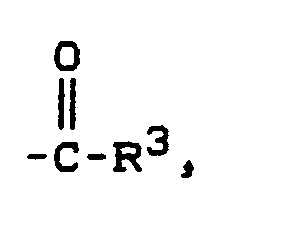
 b = Null bis 10, vorzugsweise bis 8, insbesondere bis 4,c = 1 bis 9, vorzugsweise bis 7, insbesondere 1 bis 4,d = Null bis 9, vorzugsweise bis 7, insbesonder bis 3,e = Null bis 3, vorzugsweise bis 2, ist, aufweisen,
dadurch gekennzeichnet, daß als Verzweiger Carbonsäuren und/oder Alkohole und/oder Amine bzw. Verbindungen mit mehr als einer dieser unterschiedlichen funktionellen Gruppen im Molekül mit einer Gesamtfunktionalität von mindestens 3 eingesetzt werden in einer Menge von 0,001- ungefähr 30 Gew.-%, bevorzugt 0,05-20 Gew.-%, bezogen auf die Summe der Gewichte der Bausteine mit einer Funktionalität von 2 und weniger und wobei bevorzugt zusätzlich monofunktionelle Bausteine als Kettenabbrecher eingesetzt werden, wobei die Länge der Seitenäste in etwa gleich oder auch z.B. ein Ast deutlich länger als die anderen sein kann, und wobei die Additive ein Molekulargewicht (M n) von ungefähr 500 bis ungefähr 8000, bevorzugt 800 bis 6000 und besonders bevorzugt 800 bis 5000, aufweisen,
sowie gegebenenfalls3) 0,001-150 Gew.-%, bezogen auf die Summe der Gewichte der Komponenten 1) und 2), an üblichen Zusatzstoffen, wobei die Zusatzstoffe wahlweise auch ganz oder teilweise schon in den unter 1) genannten Polyamiden enthalten sein können,
hergestellt werden. - Leichtfließende Polyamid-Formmassen nach Anspruch 1, dadurch gekennzeichnet, daß als Bausteine für die Seitenäste bzw. Hauptkette der Formel (I) der Additive 2) bevorzugt 4-Hydroxy-3-methylbenzoesäure, 4-Hydroxy-3-methoxybenzoesäure, 4-Hydroxybenzoesäure, 3-Hydroxybenzoesäure, 6-Hydroxy-2-naphthoesäure, Hydrochinon, 4,4'-Dihydroxydiphenyl, 4,4'-Dihydroxydiphenylether, 4,4'-Dihydroxydiphenylethan, 4,4'-Dihydroxydiphenoxyethan, 3,5'-Dihydroxydiphenyl, 3,5'-Dihydroxydiphenylether, 1,5-Dihydroxynaphthalin, 2,6-Dihydroxynaphthalin, 1,4-Dihydroxynaphthalin, Methylhydrochinon, Phenylhydrochinon, 2,2'-Dimethyl-4,4'-dihydroxydiphenyl, 3,3',5,5'-Tetramethyl-4,4'-dihydroxydiphenyl, 1,2-(2-Chlor-4-hydroxyphenoxy)-ethan, 4-Methoxy-2,6-dihydroxynaphthalin, Resorcin, 3,4'-Dihydroxydiphenyl, 1,6-Dihydroxynaphthalin, 1,7-Dihydroxynaphthalin, 2,7-Dihydroxynaphthalin, 4-Chlorresorcin, 4-Phenylresorcin, 4-Ethoxyresorcin, 2,5-Dichlor-1,6-di-hydroxynaphthalin und 4-Methoxy-2,7-dihydroxynaphthalin, 1,4-Naphthalindicarbonsäure, 1,5-Naphthalindicarbonsäure, 2,6-Naphthalindicarbonsäure, Biphenyl-4,4'-dicarbonsäure, Biphenyl3,3'-dicarbonsäure, Diphenoxyethan-4,4'-dicarbonsäure, Diphenylether-4,4'-dicarbonsäure, Methylterephthalsäure, Methoxyterephthalsäure, Chlorterephthalsäure, 4-Chlornaphthalin-2,7-dicarbonsäure, 2,6-oder 2,7-Naphthalindicarbonsäure, Biphenyl-3,4'-dicarbonsäure, 4-Methylisophthalsäure, 5-Methylisophthalsäure, Diphenylether-4,4'-dichlor-3,3'-dicarbonsäure, Iso- und Terephthalsäure, ε-Aminocapronsäure bzw. Caprolactam, ω-Aminoundecansäure, ω-Aminododecansäure bzw. Laurinlactam, 4-Aminocyclohexyl-carbonsäure, 4-Aminobenzoesäure, 6-Amino-2-naphthoesäure, 3-Aminophenol, 4-Aminophenol, 3-Amino-2-methylphenol, 3-Amino-4-methylphenol, 5-Amino-1-naphthol, 6-Amino-1-naphthol, 5-Amino-2-naphthol, 7-Amino-2-naphthol, 8-Amino-2-naphthol, 6-Amino-2-naphthol und 4'-Amino-1-hydroxybiphenyl, Oxalsäure, Bernsteinsäure, Adipinsäure, Korksäure, Azelainsäure, Trimethyladipinsäure, Sebacinsäure, Dodecandisäure, Dimerfettsäuren, 1,4-Cyclohexandicarbonsäure, Benzoesäure, 4-Methylbenzoesäure, 4-Methoxybenzoesäure und 4-Biphenylcarbonsäure,
und besonders bevorzugt Hydrochinon, 4,4'-Dihydroxybiphenyl, 4-Aminophenol, 3-Aminophenol, 4'-Amino-1-hydroxybiphenyl, 4-Hydroxybenzoesäure, 3-Hydroxybenzoesäure, 6-Hydroxy-2-naphthoesäure, Isophthalsäure, Terephthalsäure, Oxalsäure, Adipinsäure, Sebazinsäure und Dimerfettsäuren, 4-Aminobenzoesäure und 6-Amino-2-naphthoesäure, ε-Aminocapronsäure bzw. Caprolactam, Benzoesäure, 4-Methylbenzoesäure und 4-Biphenylcarbonsäure verwendet werden, und wobei die Additive 2) durchschnittlich bevorzugt 3-25 und besonders bevorzugt 4-20, insbesondere 4-12, aromatische Teilstrukturen pro Seitenast enthalten. - Leichtfließende Polyamidformmassen nach mindestens einem der Ansprüche 1 und 2, dadurch gekennzeichnet, daß als Verzweiger für die Additive 2) bevorzugt einerseits Verbindungen, die entlang einer Hauptkette die funktionellen Gruppen in der Seitenkette tragen, so daß idealisiert ein Kamm entsteht, wie beispielsweise Phenol-Formaldehyd-Kondensate (Novolake), Oligo- bzw. Polyvinylphenole, Oligo-bzw. Polyacrylsäuren, Diethylentriamin, Triethylentetramin und höhere Homologe, gegebenenfalls alle im Gemisch, und andererseits trifunktionelle aromatische Verbindungen wie Benzol-1,3,5-tricarbonsäure, Benzol-1,2,4-tricarbonsäure, Phloroglucin, Pyrogallol, 5-Hydroxyisophthalsäure, 3,5-Dihydroxybenzoesäure u.a.m., eingesetzt werden.
- Leichtfließende Polyamid-Formmassen nach mindestens einem der Ansprüche 1 bis 3, dadurch gekennzeichnet, daß als Polyamid-Komponenten 1), einzeln oder im Gemisch, bevorzugt Polyamid 6, 66, 46, 610, 11, 12, 1212, 6I, 6T6, 6T/6, 6/66-Copolyamide und Copolyamide aus Caprolactam, Isophthalsäure und Isophorondiamin und besonders bevorzugt Polyamid 6 und 66 bzw. Copolyamid auf Basis dieser eingesetzt werden.
- Leichtfließende Polyamid-Formmassen nach mindestens einem der Ansprüche 1 bis 4, dadurch gekennzeichnet, daß als polymere Legierungspartner 3) u.a. Dienkautschuke, Acrylat-Kautschuke, Polyethylen, Polypropylen, Ethylen/Propylen-Dien-Terpolymere, Ethylen- und/oder Propylen-Acrylsäure(ester)-Copolymere, Ethylen/Vinylacetat-Copolymere, Polyoctenylene, (α-Methyl)styrol/-(Meth)acrylnitrilcopolymere, (Meth)Acrylnitril/-Butadien/(α-Methyl)styrol-Polymere (ABS), schlagzähe Polystyrole, Polycarbonate, aromatische Polyester(carbonate), Polyester wie z.B. Polyethylenterephthalat, Polysulfone, Polyphenylenoxide, Polyarylensulfide, Polyetherketone, Polyethersulfone, Polyetheretherketone, Polyetherimide, Polyesterimide, Polyamidimide und Polyimide eingesetzt werden, und gegebenenfalls niedermolekulare und/oder polymere Verträglichkeitsvermittler anwesend sind.
- Leichtfließende Polyamid-Formmassen nach Anspruch 1, dadurch gekennzeichnet, daß als Zusatzstoffe gemäß 3) Verstärkungsmaterialien (Glasfasern, Aramidfasern, Kohlenstoffasern, Glaskugeln, SiO₂, Kreide, Talkum, Kaolin, Glimmer, TiO₂ u.a.), Weichmacher, Antioxidantien, Pigmente, Farbstoffe, Bewitterungsstabilisatoren (bzw. Stabilisatorkombinationen), Fließhilfsmittel, Entformungsmittel, Nukleierungsmittel, die Wasseraufnahme verringernde Zusätze (bevorzugt Monophenole, Bisphenole und (Alkyl)phenol-Formaldehyd-Kondensate (Novolake)), Flammschutzmittel, polymere Legierungspartner u.a.m. eingesetzt werden können, wobei zur Herstellung von Polyamid-Legierungen immer mindestens ein polymerer Legierungspartner nach Anspruch 5 als Zusatzstoff gemäß 3) eingesetzt werden muß, und wobei die Zusatzstoffe gemäß 3) unabhängig voneinander für sich oder in Form eines Konzentrats zudosiert werden oder auch nach Vorvermischung mit dem Polyamid als in diesem enthalten zudosiert werden können.
- Verfahren zur Herstellung der Polyamid-Formmassen nach Anspruch 1, dadurch gekennzeichnet, daß mindestens ein Polyamid gemäß 1), mindestens ein flüssigkristallines Additiv gemäß 2) sowie gegebenenfalls die weiteren Zusatzstoffe gemäß 3), wobei zur Herstellung von Polyamid-Legierungen immer mindestens ein polymerer Legierungspartner als Zusatzstoff gemäß 3) eingesetzt wird, und wobei die gegebenenfalls miteinzusetzenden Zusatzstoffe 3), auch polymere Legierungspartner, unabhängig voneinander für sich oder als Konzentrat eingesetzt werden können, oder auch schon in den Polyamiden 1) enthalten sein können, in der Schmelze, bevorzugt in Extrudern, vermischt werden, und die Schmelze in bekannter Weise aufgearbeitet wird.
- Formkörper, Folien, Fasern, Halbzeuge, Verbundwerkstoffe und andere Gegenstände aus Polyamid-Formmassen nach mindestens einem der Ansprüche 1 bis 6.
- Verzweigte, flüssigkristalline Additive gemäß 2) nach Anspruch 1, mit bevorzugten Verzweigern nach Anspruch 3 und bevorzugten bzw. besonders bevorzugten Bausteinen der Seitenäste bzw. der Hauptkette gemäß Formel (I) nach Anspruch 2, bevorzugt mit weitestgehend abreagierten funktionellen Gruppen oder mit phenolischen Endgruppen.
- Verwendung von verzweigten, oligomeren, flüssigkristallinen Estern und/oder Esteramiden 2) nach Anspruch 9 als flüssigkristalline Fließverbesserer für Polyamide in Mengen von 0,1 bis 15 Gew.-%, bezogen auf die Summe der Gewichte von 1) und 2), zur Herstellung von leichtfließenden Polyamid-Formmassen.
Applications Claiming Priority (2)
| Application Number | Priority Date | Filing Date | Title |
|---|---|---|---|
| DE4006403 | 1990-03-01 | ||
| DE19904006403 DE4006403A1 (de) | 1990-03-01 | 1990-03-01 | Leichtfliessende polyamid-formmassen |
Publications (1)
| Publication Number | Publication Date |
|---|---|
| EP0444295A1 true EP0444295A1 (de) | 1991-09-04 |
Family
ID=6401187
Family Applications (1)
| Application Number | Title | Priority Date | Filing Date |
|---|---|---|---|
| EP90124868A Withdrawn EP0444295A1 (de) | 1990-03-01 | 1990-12-20 | Leichtfliessende Polyamid Formmassen |
Country Status (3)
| Country | Link |
|---|---|
| EP (1) | EP0444295A1 (de) |
| JP (1) | JPH04227657A (de) |
| DE (1) | DE4006403A1 (de) |
Cited By (9)
| Publication number | Priority date | Publication date | Assignee | Title |
|---|---|---|---|---|
| WO1993024570A1 (en) * | 1992-05-29 | 1993-12-09 | Akzo Nobel N.V. | Blend of flexible coil polymer and thermotropic liquid crystalline oligomer |
| EP0668882A4 (de) * | 1992-11-09 | 1995-10-04 | ||
| NL1012234C2 (nl) * | 1999-06-04 | 2000-12-06 | Dsm Nv | Hoog-moleculaire polyamide samenstelling met verbeterd vloeigedrag. |
| WO2010102271A3 (en) * | 2009-03-06 | 2011-01-13 | Honeywell International Inc. | Low viscosity polyamides |
| EP2003158A4 (de) * | 2006-03-30 | 2014-07-02 | Toray Industries | Dendritischer polyester, herstellungsverfahren dafür und thermoplastharzzusammensetzung |
| CN113637156A (zh) * | 2020-04-27 | 2021-11-12 | 财团法人纺织产业综合研究所 | 改质聚酰胺、其制作方法及单组分纤维 |
| CN113897053A (zh) * | 2021-10-19 | 2022-01-07 | 重庆沃特智成新材料科技有限公司 | 改性聚酰胺薄膜材料及其制备方法、包装袋 |
| CN114573812A (zh) * | 2020-12-29 | 2022-06-03 | 深圳市研一新材料有限责任公司 | 一种锂离子电池用粘结剂及其制备方法 |
| CN115746564A (zh) * | 2022-12-07 | 2023-03-07 | 广东优巨先进新材料股份有限公司 | 一种聚砜复合材料及其制备方法和应用 |
Families Citing this family (6)
| Publication number | Priority date | Publication date | Assignee | Title |
|---|---|---|---|---|
| JP2011080092A (ja) * | 2006-03-30 | 2011-04-21 | Toray Ind Inc | 樹状ポリエステル、その製造方法および熱可塑性樹脂組成物 |
| JP5098461B2 (ja) * | 2006-06-27 | 2012-12-12 | 東レ株式会社 | 熱可塑性樹脂組成物およびその成形品 |
| JP5532533B2 (ja) * | 2006-10-25 | 2014-06-25 | 東レ株式会社 | ポリアミド樹脂組成物およびその成形品 |
| JP5320698B2 (ja) * | 2006-10-25 | 2013-10-23 | 東レ株式会社 | ポリアミド樹脂組成物およびその成形品 |
| JP5286753B2 (ja) * | 2006-11-30 | 2013-09-11 | 東レ株式会社 | 熱可塑性樹脂組成物およびその成形品 |
| US9340647B2 (en) | 2012-01-31 | 2016-05-17 | Jx Nippon Oil & Energy Corporation | Liquid crystal polyester amide, liquid crystal polyester amide resin composition, and molded article |
Citations (2)
| Publication number | Priority date | Publication date | Assignee | Title |
|---|---|---|---|---|
| FR2208934A1 (de) * | 1972-12-02 | 1974-06-28 | Bayer Ag | |
| FR2386582A1 (fr) * | 1977-04-09 | 1978-11-03 | Huels Chemische Werke Ag | Masses a mouler thermoplastiques a base de polyamides tirees d'acides o-aminocarboxyliques ou de lactames a plus de 10 atomes de carbone et ayant une flexiblite amelioree et une resistance amelioree au choc a froid |
-
1990
- 1990-03-01 DE DE19904006403 patent/DE4006403A1/de not_active Withdrawn
- 1990-12-20 EP EP90124868A patent/EP0444295A1/de not_active Withdrawn
-
1991
- 1991-02-26 JP JP5326491A patent/JPH04227657A/ja active Pending
Patent Citations (2)
| Publication number | Priority date | Publication date | Assignee | Title |
|---|---|---|---|---|
| FR2208934A1 (de) * | 1972-12-02 | 1974-06-28 | Bayer Ag | |
| FR2386582A1 (fr) * | 1977-04-09 | 1978-11-03 | Huels Chemische Werke Ag | Masses a mouler thermoplastiques a base de polyamides tirees d'acides o-aminocarboxyliques ou de lactames a plus de 10 atomes de carbone et ayant une flexiblite amelioree et une resistance amelioree au choc a froid |
Cited By (15)
| Publication number | Priority date | Publication date | Assignee | Title |
|---|---|---|---|---|
| WO1993024570A1 (en) * | 1992-05-29 | 1993-12-09 | Akzo Nobel N.V. | Blend of flexible coil polymer and thermotropic liquid crystalline oligomer |
| EP0668882A4 (de) * | 1992-11-09 | 1995-10-04 | ||
| NL1012234C2 (nl) * | 1999-06-04 | 2000-12-06 | Dsm Nv | Hoog-moleculaire polyamide samenstelling met verbeterd vloeigedrag. |
| WO2000075233A1 (en) * | 1999-06-04 | 2000-12-14 | Dsm N.V. | High-molecular polyamide composition with improved flow behaviour |
| US6548591B2 (en) | 1999-06-04 | 2003-04-15 | Dsm N.V. | High-molecular polyamide composition with improved flow behavior |
| EP2003158A4 (de) * | 2006-03-30 | 2014-07-02 | Toray Industries | Dendritischer polyester, herstellungsverfahren dafür und thermoplastharzzusammensetzung |
| WO2010102271A3 (en) * | 2009-03-06 | 2011-01-13 | Honeywell International Inc. | Low viscosity polyamides |
| CN113637156A (zh) * | 2020-04-27 | 2021-11-12 | 财团法人纺织产业综合研究所 | 改质聚酰胺、其制作方法及单组分纤维 |
| CN113637156B (zh) * | 2020-04-27 | 2024-04-12 | 财团法人纺织产业综合研究所 | 单组分纤维及其制作方法 |
| CN114573812A (zh) * | 2020-12-29 | 2022-06-03 | 深圳市研一新材料有限责任公司 | 一种锂离子电池用粘结剂及其制备方法 |
| CN114573812B (zh) * | 2020-12-29 | 2023-06-09 | 深圳市研一新材料有限责任公司 | 一种锂离子电池用粘结剂及其制备方法 |
| CN113897053A (zh) * | 2021-10-19 | 2022-01-07 | 重庆沃特智成新材料科技有限公司 | 改性聚酰胺薄膜材料及其制备方法、包装袋 |
| CN113897053B (zh) * | 2021-10-19 | 2023-12-12 | 重庆沃特智成新材料科技有限公司 | 改性聚酰胺薄膜材料及其制备方法、包装袋 |
| CN115746564A (zh) * | 2022-12-07 | 2023-03-07 | 广东优巨先进新材料股份有限公司 | 一种聚砜复合材料及其制备方法和应用 |
| CN115746564B (zh) * | 2022-12-07 | 2024-06-04 | 广东优巨先进新材料股份有限公司 | 一种聚砜复合材料及其制备方法和应用 |
Also Published As
| Publication number | Publication date |
|---|---|
| DE4006403A1 (de) | 1991-09-05 |
| JPH04227657A (ja) | 1992-08-17 |
Similar Documents
| Publication | Publication Date | Title |
|---|---|---|
| EP0359037A2 (de) | Leichtfliessende Polyamid-Formmassen und -Legierungen | |
| EP0444292A2 (de) | Leichtfliessende Polyamid-Formmassen | |
| US5288799A (en) | Thermoplastic molding compositions which are mixtures of amorphous and semi-crystalline polyamides, a method of preparation thereof and products made therefrom | |
| US5098940A (en) | Crystalline polyphthalamide composition having improved properties | |
| DE3750485T2 (de) | Harzzusammensetzung mit anisotropischen Schmelzeigenschaften. | |
| EP0543953B1 (de) | Selbstverstärkter verbundwerkstoff aus thermotropen flüssigkristallinen polymeren | |
| DE4006403A1 (de) | Leichtfliessende polyamid-formmassen | |
| EP0259670B1 (de) | Vollaromatische thermotrope Polyester und Polyesteramide | |
| DE3629211A1 (de) | Vollaromatische thermotrope polyester | |
| EP0398052A2 (de) | Leichtfliessende Polyarylensulfid-Formmassen | |
| JPS6361040A (ja) | 熱可塑変形可能な耐衝撃性ポリアミドアロイ | |
| DE4017685A1 (de) | Leichtfliessende polycarbonat-, polyestercarbonat und polyesterformmassen | |
| DE3629208A1 (de) | Vollaromatische thermotrope polyester | |
| US5128401A (en) | Polyamide molding compounds | |
| EP0257598B1 (de) | Vollaromatische thermotrope Polyester und Polyesteramide | |
| DE69021255T2 (de) | Zusammensetzung von kristallinem Polyphtalamid mit verbesserter Wärmebeständigkeit. | |
| JP2505195B2 (ja) | ポリアミド成形材料 | |
| US5212224A (en) | Free flowing moulding materials based on polyamides containing bisphenols | |
| JPH09124926A (ja) | 改善された溶融強度を示すポリ(フェニレンエーテル)樹脂とポリアミド樹脂の強化組成物 | |
| US5071896A (en) | Polyamide moulding compounds with improved processibility | |
| EP0595082A2 (de) | Thermoplastisch verarbeitbare thermotrope Massen | |
| JPH02189360A (ja) | 重合体組成物及び該組成物を適用して得られた物品 | |
| DE69327332T2 (de) | Pseudo-netzwerk kondensationspolymere | |
| DE4100590A1 (de) | Thermoplastische polyamid-formmassen mit verbesserten eigenschaften | |
| JPH0254384B2 (de) |
Legal Events
| Date | Code | Title | Description |
|---|---|---|---|
| PUAI | Public reference made under article 153(3) epc to a published international application that has entered the european phase |
Free format text: ORIGINAL CODE: 0009012 |
|
| 17P | Request for examination filed |
Effective date: 19901220 |
|
| AK | Designated contracting states |
Kind code of ref document: A1 Designated state(s): DE FR GB IT |
|
| 17Q | First examination report despatched |
Effective date: 19921127 |
|
| STAA | Information on the status of an ep patent application or granted ep patent |
Free format text: STATUS: THE APPLICATION HAS BEEN WITHDRAWN |
|
| 18W | Application withdrawn |
Withdrawal date: 19930506 |