EP0444560A1 - Anticorps contre le récepteur du facteur de nécrose tumorale - Google Patents
Anticorps contre le récepteur du facteur de nécrose tumorale Download PDFInfo
- Publication number
- EP0444560A1 EP0444560A1 EP91102711A EP91102711A EP0444560A1 EP 0444560 A1 EP0444560 A1 EP 0444560A1 EP 91102711 A EP91102711 A EP 91102711A EP 91102711 A EP91102711 A EP 91102711A EP 0444560 A1 EP0444560 A1 EP 0444560A1
- Authority
- EP
- European Patent Office
- Prior art keywords
- tnf
- cells
- monoclonal antibody
- protein
- antibody
- Prior art date
- Legal status (The legal status is an assumption and is not a legal conclusion. Google has not performed a legal analysis and makes no representation as to the accuracy of the status listed.)
- Withdrawn
Links
Images


Classifications
-
- C—CHEMISTRY; METALLURGY
- C07—ORGANIC CHEMISTRY
- C07K—PEPTIDES
- C07K16/00—Immunoglobulins [IG], e.g. monoclonal or polyclonal antibodies
- C07K16/18—Immunoglobulins [IG], e.g. monoclonal or polyclonal antibodies against material from animals or humans
- C07K16/28—Immunoglobulins [IG], e.g. monoclonal or polyclonal antibodies against material from animals or humans against receptors, cell surface antigens or cell surface determinants
- C07K16/2866—Immunoglobulins [IG], e.g. monoclonal or polyclonal antibodies against material from animals or humans against receptors, cell surface antigens or cell surface determinants against receptors for cytokines, lymphokines, interferons
-
- A—HUMAN NECESSITIES
- A61—MEDICAL OR VETERINARY SCIENCE; HYGIENE
- A61P—SPECIFIC THERAPEUTIC ACTIVITY OF CHEMICAL COMPOUNDS OR MEDICINAL PREPARATIONS
- A61P29/00—Non-central analgesic, antipyretic or antiinflammatory agents, e.g. antirheumatic agents; Non-steroidal antiinflammatory drugs [NSAID]
-
- A—HUMAN NECESSITIES
- A61—MEDICAL OR VETERINARY SCIENCE; HYGIENE
- A61P—SPECIFIC THERAPEUTIC ACTIVITY OF CHEMICAL COMPOUNDS OR MEDICINAL PREPARATIONS
- A61P31/00—Antiinfectives, i.e. antibiotics, antiseptics, chemotherapeutics
- A61P31/12—Antivirals
-
- A—HUMAN NECESSITIES
- A61—MEDICAL OR VETERINARY SCIENCE; HYGIENE
- A61P—SPECIFIC THERAPEUTIC ACTIVITY OF CHEMICAL COMPOUNDS OR MEDICINAL PREPARATIONS
- A61P31/00—Antiinfectives, i.e. antibiotics, antiseptics, chemotherapeutics
- A61P31/12—Antivirals
- A61P31/14—Antivirals for RNA viruses
- A61P31/18—Antivirals for RNA viruses for HIV
-
- A—HUMAN NECESSITIES
- A61—MEDICAL OR VETERINARY SCIENCE; HYGIENE
- A61P—SPECIFIC THERAPEUTIC ACTIVITY OF CHEMICAL COMPOUNDS OR MEDICINAL PREPARATIONS
- A61P35/00—Antineoplastic agents
-
- A—HUMAN NECESSITIES
- A61—MEDICAL OR VETERINARY SCIENCE; HYGIENE
- A61P—SPECIFIC THERAPEUTIC ACTIVITY OF CHEMICAL COMPOUNDS OR MEDICINAL PREPARATIONS
- A61P37/00—Drugs for immunological or allergic disorders
-
- A—HUMAN NECESSITIES
- A61—MEDICAL OR VETERINARY SCIENCE; HYGIENE
- A61K—PREPARATIONS FOR MEDICAL, DENTAL OR TOILETRY PURPOSES
- A61K38/00—Medicinal preparations containing peptides
-
- Y—GENERAL TAGGING OF NEW TECHNOLOGICAL DEVELOPMENTS; GENERAL TAGGING OF CROSS-SECTIONAL TECHNOLOGIES SPANNING OVER SEVERAL SECTIONS OF THE IPC; TECHNICAL SUBJECTS COVERED BY FORMER USPC CROSS-REFERENCE ART COLLECTIONS [XRACs] AND DIGESTS
- Y10—TECHNICAL SUBJECTS COVERED BY FORMER USPC
- Y10S—TECHNICAL SUBJECTS COVERED BY FORMER USPC CROSS-REFERENCE ART COLLECTIONS [XRACs] AND DIGESTS
- Y10S424/00—Drug, bio-affecting and body treating compositions
- Y10S424/809—Drug, bio-affecting and body treating compositions involving immunoglobulin or antibody fragment, e.g. fab', fv, fc, heavy chain or light chain
-
- Y—GENERAL TAGGING OF NEW TECHNOLOGICAL DEVELOPMENTS; GENERAL TAGGING OF CROSS-SECTIONAL TECHNOLOGIES SPANNING OVER SEVERAL SECTIONS OF THE IPC; TECHNICAL SUBJECTS COVERED BY FORMER USPC CROSS-REFERENCE ART COLLECTIONS [XRACs] AND DIGESTS
- Y10—TECHNICAL SUBJECTS COVERED BY FORMER USPC
- Y10S—TECHNICAL SUBJECTS COVERED BY FORMER USPC CROSS-REFERENCE ART COLLECTIONS [XRACs] AND DIGESTS
- Y10S530/00—Chemistry: natural resins or derivatives; peptides or proteins; lignins or reaction products thereof
- Y10S530/866—Chemistry: natural resins or derivatives; peptides or proteins; lignins or reaction products thereof involving immunoglobulin or antibody fragment, e.g. fab', fab, fv, fc, heavy chain or light chain
Definitions
- Tumor necrosis factor ⁇ (TNF ⁇ , cachectin) and tumor necrosis factor ⁇ (TNF ⁇ , lymphotoxin) belong to the cytokine family, a group of polypeptide mediators that transmit signals from one cell to another.
- the cytokines play a key role in the molecular understanding of inflammatory and immune responses in the body, which forms a complex network of signals that coordinate the body's defense responses.
- the tumor necrosis factor is released at a very early stage in an inflammatory or immune reaction and then in turn stimulates the immune cells to form many other polypeptides.
- Human TNF ⁇ is secreted as a protein with 157 AS length, which contains an N-terminal propeptide sequence of 76 AS, so that pure TNF ⁇ has a relative molecular weight of 17 kD (Beutler and Cerami, Nature 320 (1986), 584-588). Human TNF ⁇ differs structurally from TNF ⁇ by the presence of strong glycosylation and the lack of an internal disulfide bridge, but has 28% homology at the amino acid level to TNF ⁇ . Although the synthesis of both cytokines takes place on the basis of relatively different stimuli, they have a strongly matching spectrum of biological activities and bind to a common receptor (Aggarwal et al., Nature 318 (1985), 665-667).
- TNF ⁇ and TNF ⁇ are found both in humans (Nedwin et al., Nucleic Acids Res. 13 (1985), 6361-6373) and in the mouse (Nedospasov et al., Nucleic Acids Res. 14 (1986), 7713-7725) in very close proximity on a chromosome.
- TNF receptors are found on all somatic cells in the body, with the exception of erythrocytes. The number of receptors ranges from a few 100 copies on certain cells to over 20,000 on others. In most cases, however, the number of receptors is not related to the sensitivity of the cells. In some cases, e.g. in T lymphocytes, the receptor is not present (or in an inactive form) in resting cells, but can be induced by primary activation (Scheurich et al., J. Immunol. 138 (1987), 1786-1790). The receptor has high affinity for its ligand with a dissociation constant of approximately 1x10¹⁰M01 (Scheurich et al., Int. J. Cancer (1986) 38, 127-133).
- the TNF receptor appears to be a complex of several different proteins with a relative molecular weight of approximately 300 kD (Smith et al., J. Biol. Chem. 261 (1986), 14871-14874).
- the dominant ligand-binding subunit of the receptor appears to have a MW of approx. 80 to 90 kD, while in cells of epithelial origin there is additionally an immunologically non-cross-reacting subunit of approx. 60 kD (Hohmann et al., J. Biol. Chem. 264 (1989), 14927-14934). Therefore, at least two different types of TNF receptors appear to exist. The exact nature of the signal transmission after binding of TNF to the receptor has not yet been elucidated, but it has been found that the response to this signal is very different in different tissues.
- TNF can protect the organism from bacterial infections and high radiation doses. Treatment with TNF can also cause tumors to die, causing bleeding in the tumors, which then dry out and die. Furthermore, TNF is apparently crucially involved in mediating the body's response to a bacterial infection, such as fever, and helps the body overcome the infection. Thus TNF - alone and in combination with other cytokines - has a very significant therapeutic potential.
- TNF can also cause a number of pathological conditions, e.g. Cachexia, tissue damage, gram-negative septic shock from bacterial endotoxins and brain inflammation in malaria. Furthermore, a cytotoxic effect of TNF was found in cells that were infected with HIV (Matsuyama et al., J. Virol. 63 (1989), 2504-2509). It is even found that on a molar basis the toxicity of TNF in some species is about 100,000 times higher than that of cyanide (Beutler and Cerami, Nature 320 (1986), 584-588).
- TNF concentration in the organism is obviously decisive for the effect of TNF.
- an active substance can become extremely toxic if it is released in large quantities or in the wrong place.
- This high toxicity of TNF in turn brings with it great problems with its possible use as a therapeutic agent, for example in tumor diseases. It was therefore the object of the present invention to develop an agent which, in the presence of unphysiologically high TNF levels in the body, either caused by an excessive endogenous production of TNF or by a treatment with TNF - especially if a local Use with high doses is required - can reduce or eliminate the pathological symptoms of TNF, particularly the occurrence of tissue damage and shock.
- the object according to the invention is achieved by a monoclonal antibody against a membrane protein on human cells which, when bound to human cells which have a TNF receptor, at least largely neutralizes the known effects of TNF ⁇ and / or TNF ⁇ .
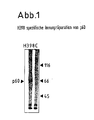
- the antibody according to the invention is directed against a surface protein of the human cell with 60 kD, which apparently is a component of the TNF-receptor complex.
- Competition studies show that the antibody according to the invention interferes differently with the binding of TNF to its receptor in different cell lines (Table 1).
- binding of the antibody according to the invention results in a complete inhibition of the cellular response to TNF in all examined cell lines of different tissue origins (lymphoid, myeloid, epithelial and fibroblast cells) regardless of the extent of the competition with the TNF binding. From this finding it can be assumed that the antibody according to the invention may recognize and functionally block a receptor protein which is essential for the signaling of very different TNF responses.
- An antibody according to the invention can preferably even completely neutralize the observed cytostatic / cytotoxic effect of TNF on human cells in tissue culture (Pfizenmaier et al., Blut, 55, 1-10 (1987a).
- the antagonistic activity of the antibody according to the invention was investigated on three different human cell lines. In all systems, the cytotoxic or cytostatic effect of TNF ⁇ was additionally enhanced by the presence of interferon gamma or protein synthesis inhibitors (eg cycloheximide), with IFN gamma or protein synthesis inhibitors alone having no influence on the under the conditions used have measured cellular responses. It was found that binding of the antibody according to the invention completely neutralized the cytotoxic / cytostatic effect of TNF on all three examined human cell lines. In a similar way, an antibody according to the invention also neutralizes the action of TNF ⁇ and murine TNF ⁇ , which is equally effective on human cells.
- interferon gamma or protein synthesis inhibitors eg cycloheximide
- an antibody according to the invention also acts as an antagonist of the TNF-induced expression of HLA genes.
- the TNF-induced modulation of HLA genes was investigated in a human cell line of myeloid origin (K562) and an epithelial carcinoma cell line (Colo 205).
- co-stimulation of TNF ⁇ was also carried out together with interferon gamma in order to trigger the respective reaction (Pfizenmaier et al., J. Immunol. 138, 975-980 (1987b).
- it can be used for both systems come to complete inhibition of the TNF effect.
- an antibody according to the invention also acts as an antagonist of the immune stimulation mediated by TNF.
- TNF immune stimulation mediated by TNF.
- the stimulation of interleukin-2 receptor expression on T lymphocytes and on so-called natural killer cells (NK cells) (Scheurich et al., (1987) supra) can be completely inhibited by binding an antibody according to the invention.
- a particularly preferred object of the present invention is a special antibody H398 with the ability to completely neutralize the known TNF effects, which is an immunoglobulin of the IgG2a isotype and which is derived from the Budapestoma-based hybridoma cell line ECACC 90021617 ( or H398.6.1) is expressed.
- the present invention furthermore also relates to a protein with antibody properties which has the same binding specificity as the monoclonal antibody according to the invention.
- a protein with antibody properties is particularly preferred which has essentially the same antigen binding site as the monoclonal antibody H398 according to the invention.
- protein with antibody properties means antibodies modified by means of recombinant DNA technology. In order to at least largely neutralize the effect of TNF, it is necessary that such modified proteins have the same binding specificity as the monoclonal antibody according to the invention, ie they have to bind to a 60 kD membrane protein on human cells which is a component of the TNF-receptor complex, and they must be able to at least largely neutralize the known effects of TNF ⁇ or / and TNF ⁇ in a therapeutically acceptable concentration range. In order to meet these criteria, the modified protein with antibody properties must have an antigen binding site that is essentially the same as the monoclonal antibody according to the invention.
- the binding specificity is characterized by very specific regions of the antibody, namely the hypervariable regions.
- the invention also includes modified proteins such as partial antibody fragments (eg F (ab) 2), single-chain antibodies or chimerized, in particular humanized antibodies (replacement of the antibody regions not involved in the binding by sequences of a human antibody).
- modified proteins such as partial antibody fragments (eg F (ab) 2), single-chain antibodies or chimerized, in particular humanized antibodies (replacement of the antibody regions not involved in the binding by sequences of a human antibody).
- partial antibody fragments eg F (ab) 2
- single-chain antibodies or chimerized replacement of the antibody regions not involved in the binding by sequences of a human antibody.
- humanized antibodies replacement of the antibody regions not involved in the binding by sequences of a human antibody.
- the present invention furthermore relates to a process for obtaining a monoclonal antibody according to the invention, in which myeloma cells are fused in the usual way with spleen cells or T-lymphocytes of a mouse which have previously been treated with affinity-purified TNF receptor material from human P60 antigen-positive Cells, e.g. HL-60 (ATCC No. CCL 240) was hyperimmunized.
- myeloma cells are fused in the usual way with spleen cells or T-lymphocytes of a mouse which have previously been treated with affinity-purified TNF receptor material from human P60 antigen-positive Cells, e.g. HL-60 (ATCC No. CCL 240) was hyperimmunized.
- cell membranes are first prepared, then solubilized and purified using a TNF affinity column.
- the cell membranes are prepared by homogenization in a glass / glass homogenizer, pretreatment in a hypotonic medium if appropriate.
- the cell nuclei and the cells that are still intact are then separated, followed by pelleting of the cell membranes by centrifugation.
- the TNF receptor protein is solubilized with a buffer which contains a nonionic detergent, preferably about 1% Triton X-100.
- the solubilization buffer can also contain leupeptin, aprotinin and the protease inhibitor di-isopropyl fluorophosphate (DFP).
- the TNF affinity column is produced by coupling TNF, preferably recombinant human TNF ⁇ , to a suitable carrier material, preferably Affigel -15.
- TNF preferably recombinant human TNF ⁇
- a suitable carrier material preferably Affigel -15.
- the bound receptor is eluted in the acidic range at pH 3.0.
- Another cleaning step, an acetone precipitation, can then take place.
- about 3 parts of acetone are added to the sample and stored for a sufficient time at a sufficiently low temperature, preferably 14 hours at -80 ° C.
- the resulting precipitate which contains the receptor protein, is centrifuged off and taken up again in a suitable buffer.
- the hyperimmunization of a mouse with the receptor material obtained in this way preferably takes place in three steps.
- 1 ⁇ g receptor protein with complete Freund's adjuvant is administered intraperitoneally
- 1 ⁇ g receptor protein, mixed with incomplete Freund's adjuvant is administered intraperitoneally
- 2 ⁇ g receptor protein are administered without adjuvant.
- the spleen is preferably removed on the 58th day under sterile conditions.
- Hybridoma cell lines are produced according to usual procedures.
- the immunization of a mouse to generate a sufficiently high antibody level against the TNF receptor is, however, also possible by means of other suitable immunization protocols which are known to the person skilled in the art.
- the spleen cells of a mouse hyperimmunized with the TNF receptor protein can be fused in the usual way.
- the resulting hybridoma clones were tested for modulation of TNF binding ability on the TNF receptor positive human leukemia cell line HL-60 (ATCC No. CCL 240).
- hybridoma cell line could be obtained from 413 hybridoma clones which secreted an antibody according to the invention.
- the invention furthermore relates to a medicament which contains a monoclonal antibody according to the invention and / or a protein according to the invention with antibody properties as an active ingredient, optionally with customary carriers, auxiliaries and / or fillers.
- the antibody according to the invention can therefore be used diagnostically to detect cellular TNF receptors and to identify potential TNF-reactive cells in different tissues / organs.
- the above-mentioned antibody is suitable for the detection of secreted receptor fragments in serum and other body fluids.
- antibodies according to the invention lies in their property of at least largely inhibiting known biological effects of TNF ⁇ and TNF ⁇ .
- TNF ⁇ TNF ⁇
- TNF ⁇ TNF neutralizing effect in vitro
- an antibody according to the invention could be used in all the diseases which are associated with increased, pathological TNF ⁇ / TNF ⁇ levels in serum and / or other body fluids and in which TNF ⁇ / TNF ⁇ has been recognized or suspected as a pathogenic principle (Old, Nature 326 ( 1987), 330-331; Warren et al., Mod. Pathol. 1 (1988), 242-247; Beutler & Cerami, Ann. Rev. Biochem. 57 (1989), 505-518; Grau et al., Immunol Rev. 112, 49-70 (1989)).
- autoimmune diseases such as rheumatoid arthritis and cancer, which are associated with deregulated TNF ⁇ / TNF ⁇ production of the malignant cell itself (e.g. myeloma) or the immune system (e.g. CD4+ cells in chronic B-lymphatic leukemia; B-CLL) accompanied.
- therapeutic use of an antibody according to the invention in TNF-mediated, acutely life-threatening course of the disease should be considered, for example in the case of septic shock from bacterial infections (meningococcal sepsis), and in cerebral malaria.
- the course of the disease can be influenced favorably after short-term treatment with the antibodies.
- therapy with one would be Antibodies according to the invention, or the modified antibody (for example by replacing the constant regions of the mouse with constant regions of humans) possible.
- Another potential area of application of the antibody is in the co-treatment of AIDS. Since the multiplication of HIV, the causative agent of AIDS, is stimulated by TNF and TNF is thus regarded as one of the progression factors from the latent to the acute clinical picture (Matsuyama et al., J. Virol. (1989), 2504-2509), the antibody could H398 can be used as an antiviral active principle in those AIDS patients in whom either already constitutively increased TNF levels are found (Lahdevirta et al., Am. J. Med.
- TNF production could be induced (Matsuyama et al., (1989) supra). Since the antibody H398 according to the invention also has an inhibitory effect in vitro on the TNF-stimulated activity of the HIV promoter which controls the transcription of the retroviral genes, the use of an antibody according to the invention could counteract TNF-induced virus transcription and thus an increase in infectious viruses.
- the dosage of the antibody according to the invention for antagonizing undesirable side effects of TNF is of course dependent on the individual case, in particular when TNF is administered, but is preferably between 0.1 and 100 mg per person.
- H398 An important immunoregulatory function of TNF is the stimulation of interleukin-2 receptor expression on T lymphocytes and on so-called natural killer cells (NK cells) (Scheurich et al., J. Immunol. 138 (1987), 1786-1790).
- NK cells natural killer cells
- H398 also has an antagonistic effect in this system. 5x10⁵ cells of the NK cell line YT were cultivated in 2 ml of culture medium for 24 hours in the presence of 1 and 10 ng / ml TNF and serial dilutions of H398. The evaluation was carried out cytofluorographically with the help of anti-interleukin-2 receptor antibodies (anti Tac). The results shown in Table 1 demonstrate the complete inhibition of this TNF response by H398 as well.
Landscapes
- Health & Medical Sciences (AREA)
- Chemical & Material Sciences (AREA)
- Life Sciences & Earth Sciences (AREA)
- Organic Chemistry (AREA)
- Medicinal Chemistry (AREA)
- General Health & Medical Sciences (AREA)
- Animal Behavior & Ethology (AREA)
- General Chemical & Material Sciences (AREA)
- Chemical Kinetics & Catalysis (AREA)
- Nuclear Medicine, Radiotherapy & Molecular Imaging (AREA)
- Pharmacology & Pharmacy (AREA)
- Immunology (AREA)
- Public Health (AREA)
- Veterinary Medicine (AREA)
- Molecular Biology (AREA)
- Virology (AREA)
- Biochemistry (AREA)
- Communicable Diseases (AREA)
- Proteomics, Peptides & Aminoacids (AREA)
- Genetics & Genomics (AREA)
- Biophysics (AREA)
- Oncology (AREA)
- Tropical Medicine & Parasitology (AREA)
- Rheumatology (AREA)
- Pain & Pain Management (AREA)
- Bioinformatics & Cheminformatics (AREA)
- AIDS & HIV (AREA)
- Engineering & Computer Science (AREA)
- Medicines Containing Antibodies Or Antigens For Use As Internal Diagnostic Agents (AREA)
- Preparation Of Compounds By Using Micro-Organisms (AREA)
- Peptides Or Proteins (AREA)
- Micro-Organisms Or Cultivation Processes Thereof (AREA)
Applications Claiming Priority (2)
| Application Number | Priority Date | Filing Date | Title |
|---|---|---|---|
| DE4006269 | 1990-02-28 | ||
| DE4006269A DE4006269A1 (de) | 1990-02-28 | 1990-02-28 | Antikoerper gegen den tumor-nekrosefaktor-rezeptor |
Publications (1)
| Publication Number | Publication Date |
|---|---|
| EP0444560A1 true EP0444560A1 (fr) | 1991-09-04 |
Family
ID=6401127
Family Applications (1)
| Application Number | Title | Priority Date | Filing Date |
|---|---|---|---|
| EP91102711A Withdrawn EP0444560A1 (fr) | 1990-02-28 | 1991-02-25 | Anticorps contre le récepteur du facteur de nécrose tumorale |
Country Status (6)
| Country | Link |
|---|---|
| US (1) | US5736138A (fr) |
| EP (1) | EP0444560A1 (fr) |
| JP (1) | JPH04211392A (fr) |
| DE (1) | DE4006269A1 (fr) |
| FI (1) | FI910973A7 (fr) |
| PT (1) | PT96910A (fr) |
Cited By (6)
| Publication number | Priority date | Publication date | Assignee | Title |
|---|---|---|---|---|
| WO1992022666A1 (fr) * | 1991-06-19 | 1992-12-23 | Boehringer Ingelheim International Gmbh | Anticorps monoclonaux contre la proteine i de liaison du facteur de necrose tumorale humain (p i de liaison du tnf) |
| WO1994026924A3 (fr) * | 1993-05-14 | 1994-11-24 | Mini Ricerca Scient Tecnolog | ANTICORPS MONOCLONAUX DIRIGES CONTRE LE RECEPTEUR DE TYPE I DE L'α-TNF, LEUR PROCEDE DE PRODUCTION ET LEUR UTILISATION |
| EP0568925A3 (fr) * | 1992-05-03 | 1995-03-15 | Yeda Res & Dev | Modulation de l'activité du récepteur de TNF. |
| EP0585939A3 (fr) * | 1992-09-03 | 1995-04-05 | Yeda Res & Dev | Ligands du TNF. |
| EP1542722A4 (fr) * | 2002-08-01 | 2006-02-01 | Wyeth Corp | Methodes et reactifs relatifs a l'inflammation et a l'apoptose |
| EP1972637A1 (fr) * | 2007-03-19 | 2008-09-24 | Universität Stuttgart | Antagonistes sélectifs huTNFR1 |
Families Citing this family (17)
| Publication number | Priority date | Publication date | Assignee | Title |
|---|---|---|---|---|
| US6270766B1 (en) | 1992-10-08 | 2001-08-07 | The Kennedy Institute Of Rheumatology | Anti-TNF antibodies and methotrexate in the treatment of arthritis and crohn's disease |
| US6620382B1 (en) * | 1998-05-22 | 2003-09-16 | Biopheresis Technologies, Llc. | Method and compositions for treatment of cancers |
| US8197430B1 (en) | 1998-05-22 | 2012-06-12 | Biopheresis Technologies, Inc. | Method and system to remove cytokine inhibitor in patients |
| AU2002306651B2 (en) * | 2001-03-02 | 2007-12-13 | Medimmune, Llc | Methods of preventing or treating inflammatory or autoimmune disorders by administering integrin alphav Beta3 antagonists |
| JP2005535572A (ja) * | 2002-04-12 | 2005-11-24 | メディミューン,インコーポレーテッド | 組換え抗インターロイキン−9抗体 |
| US9028822B2 (en) | 2002-06-28 | 2015-05-12 | Domantis Limited | Antagonists against TNFR1 and methods of use therefor |
| KR20110094361A (ko) | 2003-04-11 | 2011-08-23 | 메디뮨 엘엘씨 | 재조합 il9 항체 및 그의 용도 |
| US7351739B2 (en) * | 2004-04-30 | 2008-04-01 | Wellgen, Inc. | Bioactive compounds and methods of uses thereof |
| JP2008511340A (ja) * | 2004-04-30 | 2008-04-17 | バイオフェレシス テクノロジーズ, インコーポレイテッド | 患者において可溶性tnfr1、可溶性tnfr2、および可溶性il2を除去する方法およびシステム |
| WO2006047639A2 (fr) | 2004-10-27 | 2006-05-04 | Medimmune, Inc. | Modulation d'une specificite d'anticorps par adaptation sur mesure de son affinite a un antigene apparente |
| GB0506708D0 (en) * | 2005-04-01 | 2005-05-11 | Queen Mary & Westfield College | Use of calcitonin as combined treatment therapy for the management of inflammatory disease conditions |
| CA2657581A1 (fr) | 2006-07-11 | 2008-01-17 | Roy C. Levitt | Prevention de la rhinosinusite et therapie avec des inhibiteurs de cytokine proinflammatoires |
| US8940683B2 (en) | 2006-08-10 | 2015-01-27 | Roy C. Levitt | Localized therapy of lower airways inflammatory disorders with proinflammatory cytokine inhibitors |
| EP2703011A3 (fr) | 2007-05-07 | 2014-03-26 | MedImmune, LLC | Anticorps anti-ICOS et leur utilisation dans le traitement de l'oncologie, la transplantation et les maladies auto-immunes |
| JP5933975B2 (ja) | 2008-11-12 | 2016-06-15 | メディミューン,エルエルシー | 抗体製剤 |
| CN103249742B (zh) * | 2010-09-16 | 2017-04-12 | 巴利奥医药股份公司 | 抗人肿瘤坏死因子1型受体抗体 |
| EP3717068A1 (fr) | 2017-11-27 | 2020-10-07 | Baliopharm AG | Thérapie anti-hutnfr1 de la stéatohépatite non alcoolique |
Citations (3)
| Publication number | Priority date | Publication date | Assignee | Title |
|---|---|---|---|---|
| EP0230574A2 (fr) * | 1986-01-31 | 1987-08-05 | Yale University | Compositions pharmaceutiques contre les infections dues au virus LAV/HTLV-III et leur application |
| US4770995A (en) * | 1985-08-29 | 1988-09-13 | New York Blood Center, Inc | Detection of the sensitivity of cells to the effects of tumor necrosis factor and lymphotoxin |
| EP0334165B1 (fr) * | 1988-03-17 | 1995-12-27 | F. Hoffmann-La Roche Ag | Anticorps monoclonaux |
-
1990
- 1990-02-28 DE DE4006269A patent/DE4006269A1/de not_active Withdrawn
-
1991
- 1991-02-12 US US07/654,257 patent/US5736138A/en not_active Expired - Lifetime
- 1991-02-25 EP EP91102711A patent/EP0444560A1/fr not_active Withdrawn
- 1991-02-27 FI FI910973A patent/FI910973A7/fi not_active Application Discontinuation
- 1991-02-27 JP JP3031181A patent/JPH04211392A/ja active Pending
- 1991-02-28 PT PT96910A patent/PT96910A/pt not_active Application Discontinuation
Patent Citations (3)
| Publication number | Priority date | Publication date | Assignee | Title |
|---|---|---|---|---|
| US4770995A (en) * | 1985-08-29 | 1988-09-13 | New York Blood Center, Inc | Detection of the sensitivity of cells to the effects of tumor necrosis factor and lymphotoxin |
| EP0230574A2 (fr) * | 1986-01-31 | 1987-08-05 | Yale University | Compositions pharmaceutiques contre les infections dues au virus LAV/HTLV-III et leur application |
| EP0334165B1 (fr) * | 1988-03-17 | 1995-12-27 | F. Hoffmann-La Roche Ag | Anticorps monoclonaux |
Non-Patent Citations (4)
| Title |
|---|
| J. Exp. Med., Band 171, Nr. 2, 1. Februar 1990, Seiten 415-426, The Rockefeller University Press, New York, US; T. ESPEVIK et al.: "Characterization of binding and biological effects of monoclonal antibodies against a human tumor necrosis factor receptor", Zusammenfassung. * |
| J. Exp. Med., Band 172, Nr. 4, 1. Oktober 1990, Seiten 1019-1023, The Rockefeller University Press, New York, US; B. THOMA et al.: "Identification of a 60-kD tumor necrosis factor (TNF) receptor as the major signal transducing component in TNF responses", der ganze Artikel. * |
| The Journal of Biological Chemistry, Band 264, Nr. 25, 5. September 1989, Seiten 14927-14934, The American Society for Biochemistry and Molecular Biology, Inc., Baltimore, US; H.-P. HOHMANN et al.: "Two different cell types have different major receptors for human tumor necrosis factor (TNFalpha)", Figur 4. * |
| The Journal of Biological Chemistry, Band 265, Nr. 3, 25. Januar 1990, Seiten 1531-1536, The American Society for Biochemistry and Molecular Biology, Inc., Baltimore US; H. ENGELMANN et al.: "Two tumor necrosis factor-binding proteins purified from human urine", Seite 1534, rechte Spalte, Zeilen 1-25; Seite 1535, rechte Spalte, Zeilen 4-21; Figur 6. * |
Cited By (14)
| Publication number | Priority date | Publication date | Assignee | Title |
|---|---|---|---|---|
| WO1992022666A1 (fr) * | 1991-06-19 | 1992-12-23 | Boehringer Ingelheim International Gmbh | Anticorps monoclonaux contre la proteine i de liaison du facteur de necrose tumorale humain (p i de liaison du tnf) |
| US7056505B2 (en) | 1992-05-03 | 2006-06-06 | Yeda Research And Development Co., Ltd. | TNF receptor action modulation |
| US7728111B2 (en) | 1992-05-03 | 2010-06-01 | Yeda Research And Development Co., Ltd. | Anti-p55 TNF receptor antibody |
| EP0568925A3 (fr) * | 1992-05-03 | 1995-03-15 | Yeda Res & Dev | Modulation de l'activité du récepteur de TNF. |
| US7429379B2 (en) | 1992-05-03 | 2008-09-30 | Yeda Research And Development Co., Ltd. | TNF receptor action modulation |
| EP1512697A1 (fr) * | 1992-05-03 | 2005-03-09 | Yeda Research And Development Co. Ltd. | Modulation de l'activité du récepteur de TNF |
| EP0585939A3 (fr) * | 1992-09-03 | 1995-04-05 | Yeda Res & Dev | Ligands du TNF. |
| AU678369B2 (en) * | 1992-09-03 | 1997-05-29 | Yeda Research And Development Co. Ltd. | TNF ligands |
| WO1994026924A3 (fr) * | 1993-05-14 | 1994-11-24 | Mini Ricerca Scient Tecnolog | ANTICORPS MONOCLONAUX DIRIGES CONTRE LE RECEPTEUR DE TYPE I DE L'α-TNF, LEUR PROCEDE DE PRODUCTION ET LEUR UTILISATION |
| EP1542722A4 (fr) * | 2002-08-01 | 2006-02-01 | Wyeth Corp | Methodes et reactifs relatifs a l'inflammation et a l'apoptose |
| EP1972637A1 (fr) * | 2007-03-19 | 2008-09-24 | Universität Stuttgart | Antagonistes sélectifs huTNFR1 |
| WO2008113515A3 (fr) * | 2007-03-19 | 2008-11-13 | Univ Stuttgart | Antagonistes sélectifs de hutnfr1 |
| US8404238B2 (en) | 2007-03-19 | 2013-03-26 | Universitaet Stuttgart | huTNFR1 selective antagonists |
| US9045535B2 (en) | 2007-03-19 | 2015-06-02 | Universitaet Stuttgart | huTNFR1 selective antagonists |
Also Published As
| Publication number | Publication date |
|---|---|
| JPH04211392A (ja) | 1992-08-03 |
| DE4006269A1 (de) | 1991-08-29 |
| FI910973L (fi) | 1991-08-29 |
| FI910973A0 (fi) | 1991-02-27 |
| FI910973A7 (fi) | 1991-08-29 |
| US5736138A (en) | 1998-04-07 |
| PT96910A (pt) | 1991-10-31 |
Similar Documents
| Publication | Publication Date | Title |
|---|---|---|
| DE4006269A1 (de) | Antikoerper gegen den tumor-nekrosefaktor-rezeptor | |
| DE69132629T2 (de) | Oberflächenkomplexbildung von lymphotoxin | |
| DE69332997T2 (de) | Monoklonale antikörper gegen den interferonrezeptor, mit neutralisierender aktivität gegen typ i-interferon | |
| DE69028671T2 (de) | Löslisches extrazellulares Fragment des menschlischen IFN-beta 2/IL-6-Rezeptors, seine Herstellung und diesen Fragment enthaltende pharmazeutische Mischung | |
| DE69017753T3 (de) | Tumor-Nekrosefaktor-Bindungsprotein II, seine Reinigung und spezifische Antikörper | |
| DE69014474T2 (de) | Antikörper gegen TNF-Bindungsprotein I und deren F(ab)-Fragmente. | |
| DE69635480T2 (de) | Apoptosis induzierendes cytokin | |
| DE69223641T2 (de) | Stabilisierte antikörper | |
| DE69100768T2 (de) | CD25-bindende Moleküle. | |
| DE69427928T2 (de) | Humane monoklonale anti-TNF alpha Antikörper | |
| DE69433422T2 (de) | Monoklonaler anti-hiv antikörper | |
| DE68928641T2 (de) | Menschliches IFN-beta2/IL-6, dessen Reinigung und Verwendungen | |
| DE3750342T2 (de) | Menschliches gamma-interferon-spezifisches Rezeptorprotein, Antikörper gegen dieses Protein, Verfahren zur Herstellung dieses Proteins und dieses Antikörpers und dieses Protein und diesen Antikörper enthaltende Zusammensetzungen. | |
| DE68914244T2 (de) | Monoklonaler Antikörper. | |
| DE69329558T2 (de) | Verfahren zur Behandlung von Multiplesklerose | |
| DE3889062T2 (de) | Monoklonaler Antikörper gegen humanen BCDF. | |
| EP0538754A2 (fr) | Utilisation de préparations contenant des anticorps pour l'immunosuppression | |
| DE69528325T2 (de) | Interleukin-6 Inhibitor aus Mensch | |
| EP0350690A2 (fr) | Neutralisation des propriétés toxiques in vitro et in vivo du TNF-alfa par anticorps monoclonaux et fragments dérivés | |
| DE69028095T2 (de) | M-csf-monoklonale antikörper, die ein neutralisierendes konformationales epitop erkennen | |
| EP0340604B1 (fr) | Anticorps monoclonal et son utilisation | |
| DE68924464T2 (de) | Interferon-gamma bindende Proteine. | |
| EP0430193A1 (fr) | Anticorps monoclonaux et leur utilisation | |
| DE3306060A1 (de) | Neue immunglobulin-produzierende hybridzellinien, deren verwendung und verfahren zu deren herstellung | |
| DE69226448T2 (de) | Glykoprotein komplexe und glykoproteine |
Legal Events
| Date | Code | Title | Description |
|---|---|---|---|
| PUAI | Public reference made under article 153(3) epc to a published international application that has entered the european phase |
Free format text: ORIGINAL CODE: 0009012 |
|
| AK | Designated contracting states |
Kind code of ref document: A1 Designated state(s): AT BE CH DE DK ES FR GB GR IT LI LU NL SE |
|
| 17P | Request for examination filed |
Effective date: 19920131 |
|
| 17Q | First examination report despatched |
Effective date: 19931229 |
|
| STAA | Information on the status of an ep patent application or granted ep patent |
Free format text: STATUS: THE APPLICATION IS DEEMED TO BE WITHDRAWN |
|
| 18D | Application deemed to be withdrawn |
Effective date: 19960130 |