EP0444798B1 - Procédé pour la préparation du bioxyde de titane - Google Patents
Procédé pour la préparation du bioxyde de titane Download PDFInfo
- Publication number
- EP0444798B1 EP0444798B1 EP91301183A EP91301183A EP0444798B1 EP 0444798 B1 EP0444798 B1 EP 0444798B1 EP 91301183 A EP91301183 A EP 91301183A EP 91301183 A EP91301183 A EP 91301183A EP 0444798 B1 EP0444798 B1 EP 0444798B1
- Authority
- EP
- European Patent Office
- Prior art keywords
- stage
- titanium dioxide
- slurry
- hydrochloric acid
- temperature
- Prior art date
- Legal status (The legal status is an assumption and is not a legal conclusion. Google has not performed a legal analysis and makes no representation as to the accuracy of the status listed.)
- Expired - Lifetime
Links
Images

Classifications
-
- B—PERFORMING OPERATIONS; TRANSPORTING
- B82—NANOTECHNOLOGY
- B82Y—SPECIFIC USES OR APPLICATIONS OF NANOSTRUCTURES; MEASUREMENT OR ANALYSIS OF NANOSTRUCTURES; MANUFACTURE OR TREATMENT OF NANOSTRUCTURES
- B82Y30/00—Nanotechnology for materials or surface science, e.g. nanocomposites
-
- C—CHEMISTRY; METALLURGY
- C01—INORGANIC CHEMISTRY
- C01G—COMPOUNDS CONTAINING METALS NOT COVERED BY SUBCLASSES C01D OR C01F
- C01G23/00—Compounds of titanium
- C01G23/04—Oxides; Hydroxides
- C01G23/047—Titanium dioxide
-
- C—CHEMISTRY; METALLURGY
- C09—DYES; PAINTS; POLISHES; NATURAL RESINS; ADHESIVES; COMPOSITIONS NOT OTHERWISE PROVIDED FOR; APPLICATIONS OF MATERIALS NOT OTHERWISE PROVIDED FOR
- C09C—TREATMENT OF INORGANIC MATERIALS, OTHER THAN FIBROUS FILLERS, TO ENHANCE THEIR PIGMENTING OR FILLING PROPERTIES ; PREPARATION OF CARBON BLACK ; PREPARATION OF INORGANIC MATERIALS WHICH ARE NO SINGLE CHEMICAL COMPOUNDS AND WHICH ARE MAINLY USED AS PIGMENTS OR FILLERS
- C09C1/00—Treatment of specific inorganic materials other than fibrous fillers; Preparation of carbon black
- C09C1/36—Compounds of titanium
- C09C1/3607—Titanium dioxide
- C09C1/3653—Treatment with inorganic compounds
-
- C—CHEMISTRY; METALLURGY
- C09—DYES; PAINTS; POLISHES; NATURAL RESINS; ADHESIVES; COMPOSITIONS NOT OTHERWISE PROVIDED FOR; APPLICATIONS OF MATERIALS NOT OTHERWISE PROVIDED FOR
- C09C—TREATMENT OF INORGANIC MATERIALS, OTHER THAN FIBROUS FILLERS, TO ENHANCE THEIR PIGMENTING OR FILLING PROPERTIES ; PREPARATION OF CARBON BLACK ; PREPARATION OF INORGANIC MATERIALS WHICH ARE NO SINGLE CHEMICAL COMPOUNDS AND WHICH ARE MAINLY USED AS PIGMENTS OR FILLERS
- C09C1/00—Treatment of specific inorganic materials other than fibrous fillers; Preparation of carbon black
- C09C1/36—Compounds of titanium
- C09C1/3692—Combinations of treatments provided for in groups C09C1/3615 - C09C1/3684
-
- C—CHEMISTRY; METALLURGY
- C09—DYES; PAINTS; POLISHES; NATURAL RESINS; ADHESIVES; COMPOSITIONS NOT OTHERWISE PROVIDED FOR; APPLICATIONS OF MATERIALS NOT OTHERWISE PROVIDED FOR
- C09C—TREATMENT OF INORGANIC MATERIALS, OTHER THAN FIBROUS FILLERS, TO ENHANCE THEIR PIGMENTING OR FILLING PROPERTIES ; PREPARATION OF CARBON BLACK ; PREPARATION OF INORGANIC MATERIALS WHICH ARE NO SINGLE CHEMICAL COMPOUNDS AND WHICH ARE MAINLY USED AS PIGMENTS OR FILLERS
- C09C3/00—Treatment in general of inorganic materials, other than fibrous fillers, to enhance their pigmenting or filling properties
- C09C3/04—Physical treatment, e.g. grinding or treatment with ultrasonic vibrations
- C09C3/043—Drying, calcination
-
- C—CHEMISTRY; METALLURGY
- C09—DYES; PAINTS; POLISHES; NATURAL RESINS; ADHESIVES; COMPOSITIONS NOT OTHERWISE PROVIDED FOR; APPLICATIONS OF MATERIALS NOT OTHERWISE PROVIDED FOR
- C09C—TREATMENT OF INORGANIC MATERIALS, OTHER THAN FIBROUS FILLERS, TO ENHANCE THEIR PIGMENTING OR FILLING PROPERTIES ; PREPARATION OF CARBON BLACK ; PREPARATION OF INORGANIC MATERIALS WHICH ARE NO SINGLE CHEMICAL COMPOUNDS AND WHICH ARE MAINLY USED AS PIGMENTS OR FILLERS
- C09C3/00—Treatment in general of inorganic materials, other than fibrous fillers, to enhance their pigmenting or filling properties
- C09C3/06—Treatment with inorganic compounds
-
- C—CHEMISTRY; METALLURGY
- C09—DYES; PAINTS; POLISHES; NATURAL RESINS; ADHESIVES; COMPOSITIONS NOT OTHERWISE PROVIDED FOR; APPLICATIONS OF MATERIALS NOT OTHERWISE PROVIDED FOR
- C09C—TREATMENT OF INORGANIC MATERIALS, OTHER THAN FIBROUS FILLERS, TO ENHANCE THEIR PIGMENTING OR FILLING PROPERTIES ; PREPARATION OF CARBON BLACK ; PREPARATION OF INORGANIC MATERIALS WHICH ARE NO SINGLE CHEMICAL COMPOUNDS AND WHICH ARE MAINLY USED AS PIGMENTS OR FILLERS
- C09C3/00—Treatment in general of inorganic materials, other than fibrous fillers, to enhance their pigmenting or filling properties
- C09C3/06—Treatment with inorganic compounds
- C09C3/063—Coating
-
- C—CHEMISTRY; METALLURGY
- C09—DYES; PAINTS; POLISHES; NATURAL RESINS; ADHESIVES; COMPOSITIONS NOT OTHERWISE PROVIDED FOR; APPLICATIONS OF MATERIALS NOT OTHERWISE PROVIDED FOR
- C09C—TREATMENT OF INORGANIC MATERIALS, OTHER THAN FIBROUS FILLERS, TO ENHANCE THEIR PIGMENTING OR FILLING PROPERTIES ; PREPARATION OF CARBON BLACK ; PREPARATION OF INORGANIC MATERIALS WHICH ARE NO SINGLE CHEMICAL COMPOUNDS AND WHICH ARE MAINLY USED AS PIGMENTS OR FILLERS
- C09C3/00—Treatment in general of inorganic materials, other than fibrous fillers, to enhance their pigmenting or filling properties
- C09C3/08—Treatment with low-molecular-weight non-polymer organic compounds
-
- C—CHEMISTRY; METALLURGY
- C01—INORGANIC CHEMISTRY
- C01P—INDEXING SCHEME RELATING TO STRUCTURAL AND PHYSICAL ASPECTS OF SOLID INORGANIC COMPOUNDS
- C01P2002/00—Crystal-structural characteristics
- C01P2002/80—Crystal-structural characteristics defined by measured data other than those specified in group C01P2002/70
- C01P2002/84—Crystal-structural characteristics defined by measured data other than those specified in group C01P2002/70 by UV- or VIS- data
-
- C—CHEMISTRY; METALLURGY
- C01—INORGANIC CHEMISTRY
- C01P—INDEXING SCHEME RELATING TO STRUCTURAL AND PHYSICAL ASPECTS OF SOLID INORGANIC COMPOUNDS
- C01P2004/00—Particle morphology
- C01P2004/51—Particles with a specific particle size distribution
- C01P2004/52—Particles with a specific particle size distribution highly monodisperse size distribution
-
- C—CHEMISTRY; METALLURGY
- C01—INORGANIC CHEMISTRY
- C01P—INDEXING SCHEME RELATING TO STRUCTURAL AND PHYSICAL ASPECTS OF SOLID INORGANIC COMPOUNDS
- C01P2004/00—Particle morphology
- C01P2004/60—Particles characterised by their size
- C01P2004/64—Nanometer sized, i.e. from 1-100 nanometer
Definitions
- the invention relates to a new method of preparing microcrystalline titanium dioxide, having the average crystal size ⁇ 100nm, in which
- the properties of the microcrystalline titanium dioxide differ from the properties of the usual titanium dioxide known as white pigment.
- the differences are due to the dissimilarities in the crystal size, for the crystal size of the microcrystalline titanium dioxide (10-100nm) is about 5 to 10 times smaller than the crystal size of the normal titanium dioxide (160 to 250nm).
- the crystal size becoming smaller the coverage of titanium dioxide in the range of visible light disappears and the pigment becomes transparent.
- the permeability of UV-light decreases. Accordingly, the microcrystalline titanium dioxide is suitable for a UV-protective agent. Thanks to the small crystal size and the great specific surface area titanium dioxide can be used as an effect pigment among other things in catalysts, ceramics and paints.
- microcrystalline titanium dioxide needs a process of its own in which the difficulty lies in the creation, controlling and retaining of the small particle size throughout the process.
- the control of the purity and the crystal size distribution are important factors when assessing the various methods of preparation.
- the preparation processes must be economically profitable and ecologically beneficial.
- Different crystal forms can be achieved by different methods. Rutile is known as a durable crystal form and its permeability to UV-light is less than that of anatase.
- microcrystalline titanium dioxide by many different methods either by gas phase or by precipitating technique.
- the titanium source or the titanium containing material can be e.g. titanium tetrachloride, titanium alcoxide or titanium hydrate prepared from ilmenite.
- titanium tetrachloride titanium alcoxide or titanium hydrate prepared from ilmenite.
- rutile precipitation methods have been patented.
- JP patent 86/049250 a method of preparing microcrystalline titanium dioxide, after-treated with aluminum and/or silicon dioxide, from titanium hydrate prepared from ilmenite and ammonia has been briefly presented. By using ammonia the bringing of foreign metal cations into the pigment is avoided but, on the other hand, you are compelled to handle troublesome ammonia reagent.
- the crystal form of the product is not mentioned in the patent specification, but it is not necessarily rutile.
- Rutile is prepared in the same patent with a recipe starting from titanium tetrachloride.
- the neutralization is carried out with NaOH and water additions.
- the precipitation concentration is 30g/liter TiO2.
- a drawback of the method is hereby for many purposes e.g. that the pigment is not calcinated, whereby the crystals would become rounder and the crystal size could be regulated.
- a further drawback of this known method is that the hydrochloric acid amount which is added to create the rutile crystals is dependent on the titanium dioxide concentration.
- the JP publication 62/235215 suggests solving the filtration and drying problem by means of a filtration film of 100 ⁇ and freezing drying.
- the method is troublesome, apt to disturbancies and unnecessarily expensive.
- An aim of the present invention is to prepare microcrystalline titanium dioxide particles in rutile crystal form, form a crystal size and crystal size distribution of the product as advantageous as possible, use as cheap and easily handled chemicals and devices as possible and to save as much process chemicals as possible.
- the above-mentioned aims have been reached in the present invention by means of the three-stage method mentioned, which is mainly characterized in that the base treatment of the stage a) is carried out to an alcalic pH-value and to the final hydrochloric acid content is adjusted 8 to 25g/liter for the precipitation of the rutile-formed titanium dioxide.
- the invention differs at least in two points from the prior art.
- rutile crystals are produced in a solution in which the measured HCl-concentration is about 8 to 25 g/liter independent of the concentration of the titanium dioxide. Accordingly, microcrystalline titanium dioxide having a more preferable crystal form is produced when a lower hydrochloric acid concentration than usual is used. Neither is a precise knowledge of the titanium dioxide concentration necessary any more, nor must the acid addition be increased as a function of the titanium dioxide concentration. At the same time chemicals are saved because greater consistencies thus also become possible.
- the pH-value of the final neutralization taking place in stage c) has a decisive effect on the filtrability of the precipitation mass and to its washing off of salts.
- the optimal pH-values of the final neutralization varying between about 4.0 to 6.0 were found and are thus lower than previously.
- the hydrochloric acid used in the precipitation is neutralized in the very final neutralization stage mentioned it can be seen that also synergy occurs between the two steps mentioned as far as the quality of the product and the saving of chemicals are concerned. Accordingly, the invention is decisively helpful in the technical realization of the microcrystalline titanium dioxide and is very inexpensive.
- the titanium-containing substance is in aqueous medium brought into contact with a base.
- the titanium-containing substance can be any titanium compound of a commercial process which is capable of precipitation and recrystallization. According to a preferred embodiment it is a washed titanium dioxide hydrate precipitate obtained from a sulfate process, whereby it has been prepared by
- the method is preferably carried out in the following manner:
- the solid titanium dioxide hydrate is treated with the base, preferably with an aqueous solution of sodium hydroxide at an elevated temperature, after which the obtained titanium mass treated in base is washed, preferably hot, filtered and elutriated again. Then the temperature of the slurry is raised to about 60°C.
- the pH is adjusted by hydrochloric acid to the value of about 1.5 to 2.0, and preferably to the value about 1.8. Finally, the concentration of the hydrochloric acid is adjusted to the mentioned final hydrochloric acid content of the stage b) for the precipitation of the microcrystalline titanium dioxide.
- the base treatment i.e. the stage a) is carried out at the temperature of about 95°C.
- the base treatment of the stage a) is preferably carried out so that the base concentration corresponds to about 300 to 350g NaOH/liter of H2O.
- the concentration of the stage b) is in the beginning preferably about 95 to 180g/liter. As has been stated above about 8 to 25g/liter has been adjusted as the final hydrochloric acid content of the stage b). It is more preferable to adjust the content to the value 8 to 15g/liter and most preferable to adjust it to the value 8 to 12g/liter i.e. about 10g/liter.
- the composition is preferably still heated before the neutralization of the stage c).
- the heating preferably comprises a slow heating to the boiling point and cooking for about two hours.
- the precipitate to be treated is at the stage b) in the form of slurry, the content of which is at least 70g/liter, preferably 70 to 180g/liter.
- the neutralization of the composition obtained from the stage b) is carried out in stage c).
- the neutralization is carried out by raising the pH to the value above about 4.0, but below about 6.0 and preferably to the value about 4.4 to 5.0.
- the neutralization is preferably carried out with sodium hydroxide or sodium carbonate.
- stage c) After the neutralization of the stage c) the reaction composition is optionally treated further in stage d). After the stage c) a filtration and wash of the microcrystalline titanium dioxide precipitate is almost always carried out.
- the neutralization is carried out cautiously to the pH-value below 6 and still more preferably below 5, the filtration and wash succeeds particularly well and almost all sodium and chloride ions affecting detrimentally the further treatment of the product can be removed from the precipitate.
- the further treatment stage d) preferably comprises at least the calcination of the purified neutralized composition, preferably at the temperature 350 to 800°C.
- the crystal size of the microcrystalline titanium dioxide can be readily and precisely regulated by the calcination parameters of salt-free, rutile-formed titanium dioxide mass.
- the crystals of the calcinated pigment are ellipsoidal in form (oval).
- the further treatment d) of the method according to the invention can also comprise stages which are similar to the aftertreatment stages of the usual titanium dioxide pigment.
- stages which are similar to the aftertreatment stages of the usual titanium dioxide pigment are achieved as with titanium dioxide pigment.
- the product obtained from the calcination can be rough-ground e.g. with a hammer grinder and finely ground e.g. by sand grinder.
- the microcrystalline titanium dioxide is treated with treatment recipes of titanium dioxide pigment in use so that the surface of titanium dioxide is coated with aluminum, silicon and/or zirconium oxide hydrate or oxide.
- treatment recipes of titanium dioxide pigment in use so that the surface of titanium dioxide is coated with aluminum, silicon and/or zirconium oxide hydrate or oxide.
- On the surface of the pigment there might be from 0 to 10% of aluminum oxide, from 0 to 10% of silicon dioxide and zirconium oxide calculated as zirconium from 0 to 5% (all percentages in the patent are by weight).
- the treated pigment is dried, before which it is treated with an organic auxiliary agent, such as e.g. trimethylolethane or silicon (see FI patent specification 57124).
- the microcrystalline TiO2-pigment can finally be ground with an efficient mill.
- the finely-ground microcrystalline TiO2-pigment treated with various coatings is suitable for use as effect pigments e.g. in car paints, as UVA- and UVB-protective agent in cosmetic, as UV-protective agent in timber protection or in packing plastics for foodstuffs to protect a UV-light sensitive foodstuff.
- the preparation of titanium dioxide by sulfate method is began by the ilmenite concentration reaction together with sulphuric acid.
- the created solid reaction cake is dissolved by means of water and waste acids.
- the impurities are removed and the iron sulfate is crystallized away.
- the titanium containing solution is concentrated and the titanium dioxide hydrate is precipitated by hydrolyzation. This precipitation mass is washed in several stages so as to become free of salts. 1400g of this washed filtration cake is elutriated with 1200ml of distilled water.
- the slurry is made strongly basic by adding at 60°C 1070ml of NaOH-solution (700g/liter).
- the temperature of the slurry is raised to 95°C and the slurry is agitated for two hours at this temperature. After this the sulfate ions are removed from the titanium hydroxide mass by washing the slurry for so long with hot distilled water that no sulphates are found in the filtrates measured by the barium chloride precipitation test.
- the filtrate cake which is free from sulfates is elutriated into distilled water so that the concentration of the dispersion expressed as titanium dioxide is about 180g/liter.
- the pH of the slurry is set to 1.8 by adding 37% hydrochloric acid to the slurry.
- Continuously agitating the temperature of the slurry is raised to 60°C. In this temperature the slurry is agitated for 30 minutes, after which acid content of the slurry is set to 10g HCl/liter by an addition of 37% hydrochloric acid for the formation of rutile formed crystals.
- the temperature of this dispersion is raised slowly under constant agitation to 90°C.
- the slurry is cooked under agitation at this temperature for 120 minutes.
- the slurry is neutralized with sodium carbonate or sodium hydroxide so that the pH settles at 4.7 to 4.8. If the neutralization result is more basic the washing off of the sodium ions becomes more difficult and if the neutralization result is more acidic the washing off of the chloride ions becomes more difficult.
- the neutralized slurry is filtered and washed with (4 liters of) distilled water. The dry content of the filtrate cake is about 30%. An X-ray diffraction diagram was taken of the dried filtrate cake and the microcrystalline titanium dioxide is found to be of rutile crystal form.
- the titanium dioxide filtrate cake is calcinated at a temperature of 500°C for one hour.
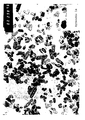
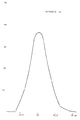
- the average crystal size is measured about 25nm from the electron microscope picture of the calcinated rutile-formed product the distribution being from 10 to 50 nanometres.
- the sodium content of the calcinated product is below 0.1% and the chloride content below 0.05%.
- the electron microscope picture of the created product is presented in the attachment 1 together with a crystal size distribution diagram.
- the titanium dioxide free of salts is elutriated by means of dispersing agent into distilled water as a thick slurry.
- the grinding is carried out in a sand mill.
- the crystals ground apart from each other are after-treated according to the planned use with an aluminum, silicon and/or zirconium compound.
- recipe known recipes for the treatment of titanium dioxide pigments, such as e.g. FI patent specification 62130.
- the treated microcrystalline TiO2 is dried. Before drying an organic agent, such as trimethylolethane (TME) or silicone (see FI patent specification 57124) is added. The dried microcrystalline TiO2 is spray-ground into finely-divided powder having the particle size below 200nm.
- TME trimethylolethane
- silicone silicone
- Microcrystalline titanium dioxide was precipitated and calcinated as in example 1, and the crystal size obtained was 25nm.
- the water dispersion of the calcinated microcrystalline titanium dioxide was ground in a sand mill as in example 1.
- the pigment slurry was diluted to a TiO2-content of 225g/liter and heated to the temperature 40°C.
- An amount corresponding to 0.5% of Al2O3 calculated on the TiO2 of the slurry of acidic aluminum sulfate solution was added to the slurry. During this addition the pH of the slurry sank to the value 2.5.
- the slurry was neutralized with sodium carbonate solution to the value 6.4. After the neutralization the treated titanium dioxide pigment was recovered by filtering.
- the filtrate cake was washed with water from which the salts had been removed by means of an ion exchanger. 4% of dimethylpolysiloxane calculated on the TiO2 was added to the washed filtrate cake.
- the pigment was washed and ground in a spray mill. The particle size of the dried and spray-ground pigment was below 200nm.
- LDPEplastic films were prepared, to which different amounts of microcrystalline titanium dioxide was added. The thickness of the films was 25»m and the contents of microcrystalline titanium dioxide were 0, 0.5, 1.0, and 2.0%. The light and UV-radiation permeabilities of these films were measured. Appendix 2.
- the temperature of the slurry was raised to 60°C under constant agitation.
- the acid content of the slurry was set by an addition of 37% hydrochloric acid to 10g HCl/liter.
- the temperature of this dispersion is raised slowly under constant agitation to 90°C.
- the slurry is cooked at this temperature for 120 minutes.
- the slurry is neutralized, filtered and washed as in example 1.
- the titanium dioxide filtrate cake is calcinated at the temperature of 500°C for one hour.
- the product produced is on the basis of an X-ray diffraction diagram rutile-formed microcrystalline titanium dioxide.
- 0.05% of sodium has remained in the titanium dioxide on the basis of atom absorption spectrophotometric determinations and below 0.15% of chloride on the basis of X-ray fluorescense determinations.
- the filtrate cake free from sulfates prepared according to example 1 is elutriated into distilled water so that the concentration of the slurry expressed in titanium dioxide is about 95 to 100g/liter.
- the pH of the slurry is set to 1.8 by adding 37% hydrochloric acid to the slurry.
- the temperature of the dispersion is raised to 60°C.
- the solution is agitated for 30 minutes, after which the acid content of the slurry is set by a 37% hydrochloric acid addition to 9g HCl/liter so as to produce rutile-formed crystals.
- the temperature of this slurry is raised slowly under constant agitation to 90°C.
- the slurry is cooked under agitation at this temperature for 120 minutes.
- the slurry is neutralized as in example 1 to the pH-value 4.7 to 4.8 and washed as in example 1.
- the crystal form of the precipitated and dried product was checked by an X-ray diffraction method. It was found to be of rutile form. The crystal size is regulated by calcination parameters.
- the filtrate cake free from sulfates prepared according to example 1 is elutriated into distilled water so that the concentration of the slurry expressed in titanium dioxide is about 140g/liter.
- the pH of the slurry is set to 1.8 by adding 37% hydrochloric acid to the slurry.
- the temperature of the slurry is raised to 60°C.
- the slurry is agitated for 30 minutes, after which the acid content of the slurry is set by a 37% hydrochloric acid addition to 10g HCl/liter so as to produce rutile-formed crystals.
- the temperature of this slurry is raised slowly under constant agitation to 90°C.
- the slurry is cooked under agitation at this temperature for 120 minutes.
- the slurry is neutralized as in example 1 to the pH-value 4.7 to 4.8 and washed as in example 1.
- the crystal form of the precipitated and dried product was checked by an X-ray diffraction method. It was found to be of rutile form.
- the filtrate cake free from sulfates prepared according to example 1 is elutriated into distilled water so that the concentration of the dispersion expressed in titanium dioxide is about 120g/liter.
- the pH of the slurry is set to 1.8 by adding 37% hydrochloric acid to the slurry.
- the temperature of the slurry is raised to 60°C.
- the slurry is agitated for 30 minutes, after which the acid content of the slurry is set by a 37% hydrochloric acid addition to 6g HCl/liter.
- the temperature of this slurry is raised slowly under constant agitation to 90°C.
- the slurry is cooked under agitation at this temperature for 120 minutes.
- the slurry is neutralized as in example 1 to the pH-value 4.7 to 4.8 and washed as in example 1.
- the crystal form of the precipitated and dried product was checked by an X-ray diffraction method. It was found to be of anatase form.
- the titanium dioxide filtrate cake is calcinated at the temperature of 500°C for one hour. In the calcination the product does not turn to rutile.
- Precipitated and washed rutile-formed titanium dioxide is calcinated according to example 1 in various temperatures for one hour.
- the crystal size can be handily regulated by changing the calcination conditions, as appears from the electron microscope pictures.
- Table Temperature Crystal size Top Size distribution 400°C 24nm 25nm (39%) 10-50nm 500°C 26nm 25nm (37%) 10-50nm 550°C 30nm 27nm (33%) 10-50nm 600°C 35nm 31nm (36%) 10-60nm 650°C 45nm 40nm (25%) 10-70nm
Landscapes
- Chemical & Material Sciences (AREA)
- Organic Chemistry (AREA)
- Engineering & Computer Science (AREA)
- Nanotechnology (AREA)
- Crystallography & Structural Chemistry (AREA)
- Condensed Matter Physics & Semiconductors (AREA)
- General Physics & Mathematics (AREA)
- Materials Engineering (AREA)
- Composite Materials (AREA)
- Physics & Mathematics (AREA)
- Life Sciences & Earth Sciences (AREA)
- Environmental & Geological Engineering (AREA)
- General Life Sciences & Earth Sciences (AREA)
- Geology (AREA)
- Inorganic Chemistry (AREA)
- Inorganic Compounds Of Heavy Metals (AREA)
- Cosmetics (AREA)
Claims (19)
- Procédé de préparation du dioxyde de titane microcristallin ayant une taille de cristaux < 100 nm dans lequel :a) l'hydrate de dioxyde de titane solide est traité par une baseb) le précipité traité par la base est traité par de l'acide chlorhydriquec) le précipité traité par la base et par l'acide chlorhydrique est neutralisécaractérisé en ce que le traitement, par une base de l'étape a), est effectué jusqu'à une valeur de pH alcaline et en ce que la teneur finale en acide chlorhydrique est ajustée de 8 à 25 g/litre en vue de la précipitation de dioxyde de titane microcristallin.
- Procédé selon la revendication 1°, caractérisé en ce que la neutralisation de l'étape c) est effectuée jusqu'à une valeur de pH d'environ 4,0 à 6,0.
- Procédé selon la revendication 1° ou la revendication 2° caractérisé en ce que l'hydrate de dioxyde de titane est préparé à partir de dioxyde de titane non purifié en tant que matière premières par un procédé au sulfate, c'est-à-dire à l'aide d'un traitement par l'acide sulfurique, dissolution, séparation et précipitation hydrolytique.
- Procédé selon l'une quelconque des revendications 1, 2 ou 3° caractérisé en ce que le produit de précipitation traité par une base est, à l'étape b), sous la forme d'une bouillie ayant une teneur d'au moins 70 g/litre, de préférence 70 à 180 g/litre.
- Procédé selon l'une quelconque des revendications précédentes caractérisé en ce que le traitement de l'étape a) est effectué de sorte que la concentration d'une base corresponde à environ 300 à 350 g de NaOH par litre d'H₂O.
- Procédé selon l'une quelconque des revendications précédentes caractérisé en ce que le traitement de l'étape a) est effectué avec une solution d'une base d'hydroxyde de sodium à une température élevé.
- Procédé selon la revendication 6° caractérisé en ce que l'étape a) est effectuée en ajoutant la solution de base à une température d'environ 60°C, puis en élevant la température pendant environ 2 heures jusqu'à environ 95°C, et en lavant avec de l'eau chaude.
- Procédé selon l'une quelconque des revendications précédentes caractérisé en ce que l'étape b) est effectuée en précipitant le produit solide obtenu à partir de l'étape a) dans l'eau pour former une bouillie, en élevant la température de la bouillie jusqu'à environ 60°C et, ensuite, en ajustant la concentration de l'acide chlorhydrique jusqu'à la teneur finale mentionnée en acide chlorhydrique de l'étape b).
- Procédé selon la revendication 8°, caractérisé en ce que la concentration de la bouillie préparée au début de l'étape b) est d'environ 95 à 180 g/litre.
- Procédé selon la revendication 8° ou la revendication 9° caractérisé en ce qu'avant d'élever la température de la bouillie jusqu'à environ 60°C, le pH de la bouillie est fixé à l'aide d'acide chlorhydrique à une valeur d'environ 1,5 à 2,0.
- Procédé selon les revendications 8, 9 ou 10° caractérisé en ce que la valeur du pH de la bouillie, mentionné, est fixée à environ 1,8.
- Procédé selon l'une quelconque des revendications précédentes caractérisé en ce que dans l'étape b), on emploie de l'acide chlorhydrique à 37%.
- Procédé selon l'une quelconque des revendications précédentes caractérisé en ce que la teneur finale en acide chlorhydrique de l'étape b) est ajustée à environ 8 à 12 g/litre, de préférence à environ 10 g/litre.
- Procédé selon l'une quelconque des revendications précédentes caractérisé en ce qu'après que la teneur finale en acide chlorhydrique de l'étape b) ait été atteinte, la température est élevée à au moins 90°C et la bouillie est mise à cuire pendant environ 120 minutes.
- Procédé selon l'une quelconque des revendications précédentes caractérisé en ce que la neutralisation de l'étape c) est effectuée avec du carbonate de sodium ou de l'hydroxyde de sodium, après quoi, le produit obtenu est filtré et lavé.
- Procédé selon l'une quelconque des revendications précédentes caractérisé en ce qu'il comprend aussi une étape d) dans laquelle, le produit solide de l'étape c) est calciné, par exemple, à une température allant de 350 à 800°C.
- Procédé selon la revendication 16° caractérisé en ce que la taille des cristaux du dioxyde de titane microcristallin est ajustée au moyen de la température de calcination.
- Procédé selon l'une quelconque des revendications précédentes caractérisé en ce que l'étape supplémentaire de traitement d) comprend au moins un stade parmi les suivants :- broyage- traitement avec un dérivé de l'aluminium et/ou du zirconium- traitement avec des composés minéraux contenant du silicium- traitement avec l'acide sulfurique- traitement avec des additifs organiques
- Utilisation du procédé selon l'une quelconque des revendications précédentes pour la préparation de dioxyde de titane microcristallin formé à partir de rutile.
Applications Claiming Priority (2)
| Application Number | Priority Date | Filing Date | Title |
|---|---|---|---|
| FI901053A FI89900C (fi) | 1990-03-01 | 1990-03-01 | Nytt framstaellningsfoerfarande av titandioxid |
| FI901053 | 1990-03-01 |
Publications (3)
| Publication Number | Publication Date |
|---|---|
| EP0444798A2 EP0444798A2 (fr) | 1991-09-04 |
| EP0444798A3 EP0444798A3 (en) | 1992-02-26 |
| EP0444798B1 true EP0444798B1 (fr) | 1995-05-10 |
Family
ID=8529973
Family Applications (1)
| Application Number | Title | Priority Date | Filing Date |
|---|---|---|---|
| EP91301183A Expired - Lifetime EP0444798B1 (fr) | 1990-03-01 | 1991-02-13 | Procédé pour la préparation du bioxyde de titane |
Country Status (8)
| Country | Link |
|---|---|
| US (1) | US5443811A (fr) |
| EP (1) | EP0444798B1 (fr) |
| JP (1) | JPH0676215B2 (fr) |
| AU (1) | AU632663B2 (fr) |
| DE (1) | DE69109519T2 (fr) |
| ES (1) | ES2071911T3 (fr) |
| FI (1) | FI89900C (fr) |
| NO (1) | NO303906B1 (fr) |
Cited By (4)
| Publication number | Priority date | Publication date | Assignee | Title |
|---|---|---|---|---|
| EP1052224B1 (fr) * | 1996-08-30 | 2004-03-31 | Showa Denko Kabushiki Kaisha | Particules, dispersion aqueuse et film d'oxyde de titane et sa preparation |
| US7521039B2 (en) | 2002-11-08 | 2009-04-21 | Millennium Inorganic Chemicals, Inc. | Photocatalytic rutile titanium dioxide |
| US8840814B2 (en) | 2008-11-04 | 2014-09-23 | Sachtleben Pigments Oy | Process of preparing alkali metal titanates |
| WO2019076790A1 (fr) | 2017-10-17 | 2019-04-25 | Venator P&A Finland Oy | Procédé de fabrication de particules de dioxyde de titane enrobées, particules de dioxyde de titane enrobées et produits comprenant lesdites particules |
Families Citing this family (34)
| Publication number | Priority date | Publication date | Assignee | Title |
|---|---|---|---|---|
| JP3053667B2 (ja) * | 1991-06-10 | 2000-06-19 | 株式会社資生堂 | ホトクロミック性紫外線遮蔽粉体及びその製造方法、皮膚外用剤 |
| DE4222905A1 (de) * | 1992-07-11 | 1994-01-13 | Kronos Titan Gmbh | Subpigmentäres Titandioxid mit verbesserter Photostabilität |
| AU675000B2 (en) * | 1993-10-22 | 1997-01-16 | Ishihara Sangyo Kaisha Ltd. | Dendrite or asteroidal titanium dioxide micro-particles and process for producing the same |
| US5332433A (en) * | 1993-11-24 | 1994-07-26 | Kerr-Mcgee Chemical Corporation | Titanium dioxide dispersibility |
| WO1997015526A1 (fr) * | 1995-10-27 | 1997-05-01 | E.I. Du Pont De Nemours And Company | Procede hydrothermal de fabrication de poudres ultrafines d'oxydes metalliques |
| DE19543204C2 (de) * | 1995-11-20 | 1997-09-18 | Bayer Ag | Verfahren zur Herstellung von nanodispersem Titandioxid und seine Verwendung |
| US7384680B2 (en) | 1997-07-21 | 2008-06-10 | Nanogram Corporation | Nanoparticle-based power coatings and corresponding structures |
| US7226966B2 (en) | 2001-08-03 | 2007-06-05 | Nanogram Corporation | Structures incorporating polymer-inorganic particle blends |
| US6290735B1 (en) * | 1997-10-31 | 2001-09-18 | Nanogram Corporation | Abrasive particles for surface polishing |
| US6099798A (en) * | 1997-10-31 | 2000-08-08 | Nanogram Corp. | Ultraviolet light block and photocatalytic materials |
| US6387531B1 (en) | 1998-07-27 | 2002-05-14 | Nanogram Corporation | Metal (silicon) oxide/carbon composite particles |
| AUPP355798A0 (en) * | 1998-05-15 | 1998-06-11 | University Of Western Australia, The | Process for the production of ultrafine powders |
| KR100277164B1 (ko) * | 1998-07-16 | 2001-01-15 | 장인순 | 저온균질침전법을이용한사염화티타늄수용액으로부터의결정성tio₂초미립분말의제조방법 |
| KR100577037B1 (ko) * | 1998-07-17 | 2006-05-08 | 다이낑 고오교 가부시키가이샤 | 가교성 엘라스토머 조성물, 이 조성물로 제조되는 실재 및그것에 사용하는 필러 |
| US6528568B2 (en) | 2001-02-23 | 2003-03-04 | Millennium Inorganic Chemicals, Inc. | Method for manufacturing high opacity, durable pigment |
| CA2478430C (fr) * | 2002-03-06 | 2009-04-28 | F. Hoffmann-La Roche Ag | Nanoparticules oxydiques modifiees pourvues d'inclusions hydrophobes, procedes de production et d'utilisation desdites particules |
| WO2006023644A2 (fr) * | 2004-08-20 | 2006-03-02 | 3M Innovative Properties Company | Dispositif d'administration de medicament transdermique avec film protecteur translucide |
| KR100977349B1 (ko) | 2005-09-30 | 2010-08-20 | 사까이가가꾸고오교가부시끼가이샤 | 루틸형 미립자 산화티탄의 제조 방법 |
| EP1959914B1 (fr) | 2005-12-09 | 2014-05-21 | DSM IP Assets B.V. | Nouvelles compositions cosmetiques ou dermatologiques comprenant des particules de dioxyde de titane modifiées |
| US7972691B2 (en) * | 2006-12-22 | 2011-07-05 | Nanogram Corporation | Composites of polymers and metal/metalloid oxide nanoparticles and methods for forming these composites |
| WO2008100568A1 (fr) * | 2007-02-17 | 2008-08-21 | Nanogram Corporation | Composites fonctionnels, encres fonctionnelles et applications associées |
| FI124294B (fi) * | 2007-08-16 | 2014-06-13 | Sachtleben Pigments Oy | Menetelmä hyvin dispergoituvan mikrokiteisen titaanidioksidituotteen valmistamiseksi, tuote ja sen käyttö |
| EP2123606A1 (fr) | 2008-05-19 | 2009-11-25 | Kemira Pigments Oy | Nanoparticules de dioxyde de titane ultrafin et dispersions associées |
| FI122244B (fi) | 2008-07-07 | 2011-10-31 | Sachtleben Pigments Oy | Menetelmä pienikiteisen rutiilimuotoisen titaanioksidin valmistamiseksi ja menetelmällä valmistettu tuote |
| US9212066B2 (en) | 2008-11-04 | 2015-12-15 | Sachtleben Pigments Oy | Process of preparing titanates |
| JP5688032B2 (ja) * | 2009-01-08 | 2015-03-25 | ナノグラム・コーポレイションNanoGram Corporation | ポリシロキサンポリエステル及び無機ナノ粒子の複合体 |
| SI23218A (sl) * | 2009-11-04 | 2011-05-31 | CINKARNA Metalurško kemična industrija Celje, d.d. | Nanodelci rutila in postopek sinteze za pridobivanje nanodelcev rutila |
| JP5782650B2 (ja) | 2009-11-18 | 2015-09-24 | ディーエスエム アイピー アセッツ ビー.ブイ. | 局所用組成物 |
| SI23501A (sl) * | 2010-10-25 | 2012-04-30 | CINKARNA Metalurško kemiÄŤna industrija Celje, d.d. | Postopek za pridobivanje nanodelcev anatasa visoke specifične površine in sferične morfologije |
| CN104549204B (zh) * | 2014-12-23 | 2017-02-22 | 中国科学院宁波材料技术与工程研究所 | 一种二氧化钛/碳纳微米球粉体的制备方法及其应用 |
| US10703913B2 (en) | 2015-12-25 | 2020-07-07 | Shiseido Company, Ltd. | Titanium dioxide powder and cosmetic formulated therewith |
| TW201805370A (zh) | 2016-03-29 | 2018-02-16 | 亨茲曼P&A芬蘭股份有限公司 | 處理二氧化鈦顆粒之方法、二氧化鈦顆粒及其用途 |
| CN108002435B (zh) * | 2017-12-14 | 2019-12-06 | 四川龙蟒钛业股份有限公司 | 一种提高硫酸法钛白粉生产质量的方法 |
| CN117303439B (zh) * | 2023-09-21 | 2026-04-21 | 宜宾天原海丰和泰有限公司 | 一种利用氯化法钛白粉副产盐酸制备纳米二氧化钛的方法 |
Family Cites Families (10)
| Publication number | Priority date | Publication date | Assignee | Title |
|---|---|---|---|---|
| DE381790C (de) * | 1923-09-24 | Westinghouse Electric & Mfg Co | Triebgehaeuse | |
| US2494492A (en) * | 1942-01-31 | 1950-01-10 | American Cyanamid Co | Production of rutile titanium dioxide |
| US2480869A (en) * | 1943-12-30 | 1949-09-06 | Max J Mayer | Seed for production of titanium dioxide and process of making same |
| US2448683A (en) * | 1944-02-09 | 1948-09-07 | Du Pont | Titanium oxide production |
| CA962142A (en) * | 1971-06-07 | 1975-02-04 | Canadian Titanium Pigments Limited | Ultra-violet screener |
| US4166147A (en) * | 1973-04-16 | 1979-08-28 | Minnesota Mining And Manufacturing Company | Shaped and fired articles of tio2 |
| DE2817551C2 (de) * | 1978-04-21 | 1984-07-19 | Kronos Titan-Gesellschaft Mbh, 5090 Leverkusen | Titandioxidhydrat mit besonderer Struktur sowie seine Herstellung |
| FI62130C (fi) * | 1980-07-18 | 1982-11-10 | Kemira Oy | Ytbelagt titandioxidpigment och foerfarande foer framstaellning daerav |
| US4605631A (en) * | 1984-03-19 | 1986-08-12 | Norton Company | Advanced preparation of ceramic powders |
| GB8712752D0 (en) * | 1987-05-30 | 1987-07-01 | Tioxide Group Plc | Particulate material |
-
1990
- 1990-03-01 FI FI901053A patent/FI89900C/fi active IP Right Grant
-
1991
- 1991-02-13 ES ES91301183T patent/ES2071911T3/es not_active Expired - Lifetime
- 1991-02-13 EP EP91301183A patent/EP0444798B1/fr not_active Expired - Lifetime
- 1991-02-13 DE DE69109519T patent/DE69109519T2/de not_active Expired - Lifetime
- 1991-02-13 AU AU71015/91A patent/AU632663B2/en not_active Expired
- 1991-02-27 NO NO910766A patent/NO303906B1/no unknown
- 1991-02-28 JP JP3059364A patent/JPH0676215B2/ja not_active Expired - Lifetime
-
1993
- 1993-05-24 US US08/066,915 patent/US5443811A/en not_active Expired - Lifetime
Cited By (5)
| Publication number | Priority date | Publication date | Assignee | Title |
|---|---|---|---|---|
| EP1052224B1 (fr) * | 1996-08-30 | 2004-03-31 | Showa Denko Kabushiki Kaisha | Particules, dispersion aqueuse et film d'oxyde de titane et sa preparation |
| US7368183B2 (en) | 1996-08-30 | 2008-05-06 | Showa Denko K.K. | Particles, aqueous dispersion and film of titanium oxide, and preparation thereof |
| US7521039B2 (en) | 2002-11-08 | 2009-04-21 | Millennium Inorganic Chemicals, Inc. | Photocatalytic rutile titanium dioxide |
| US8840814B2 (en) | 2008-11-04 | 2014-09-23 | Sachtleben Pigments Oy | Process of preparing alkali metal titanates |
| WO2019076790A1 (fr) | 2017-10-17 | 2019-04-25 | Venator P&A Finland Oy | Procédé de fabrication de particules de dioxyde de titane enrobées, particules de dioxyde de titane enrobées et produits comprenant lesdites particules |
Also Published As
| Publication number | Publication date |
|---|---|
| EP0444798A3 (en) | 1992-02-26 |
| US5443811A (en) | 1995-08-22 |
| FI89900B (fi) | 1993-08-31 |
| DE69109519D1 (de) | 1995-06-14 |
| AU632663B2 (en) | 1993-01-07 |
| DE69109519T2 (de) | 1995-09-21 |
| NO910766L (no) | 1991-09-02 |
| NO303906B1 (no) | 1998-09-21 |
| AU7101591A (en) | 1991-09-05 |
| ES2071911T3 (es) | 1995-07-01 |
| JPH04214030A (ja) | 1992-08-05 |
| FI901053L (fi) | 1991-09-02 |
| FI901053A0 (fi) | 1990-03-01 |
| FI89900C (fi) | 1993-12-10 |
| JPH0676215B2 (ja) | 1994-09-28 |
| NO910766D0 (no) | 1991-02-27 |
| EP0444798A2 (fr) | 1991-09-04 |
Similar Documents
| Publication | Publication Date | Title |
|---|---|---|
| EP0444798B1 (fr) | Procédé pour la préparation du bioxyde de titane | |
| EP2178798B1 (fr) | Procédé de préparation d'un produit de dioxyde de titane microcristallin bien dispersable, le produit obtenu et son utilisation | |
| US5215580A (en) | Process for the production of a fine particle titanium dioxide | |
| JP2781433B2 (ja) | 二酸化チタンの水性分散系及びその製法 | |
| AU2001255328B2 (en) | Methods for producing titanium dioxide having improved gloss at low temperatures | |
| JPH032914B2 (fr) | ||
| AU2001255328A1 (en) | Methods for producing titanium dioxide having improved gloss at low temperatures | |
| JPH09278442A (ja) | ルチル二酸化チタンの製法 | |
| JPH07315838A (ja) | 耐久性のある顔料の二酸化チタン及びその製造方法 | |
| US6656261B2 (en) | Titanium dioxide pigments with improved gloss and/or durability | |
| EP2297041B1 (fr) | Méthode de production d oxyde de titane microcristallin | |
| AU2002252114A1 (en) | Titanium dioxide pigments with improved gloss and/or durability | |
| AU661582B2 (en) | Composite pigmentary material | |
| US5792250A (en) | Process for the production of inorganically coated pigments and fillers | |
| US4014977A (en) | Process for the hydrolysis of titanium sulphate solutions | |
| JPS6345123A (ja) | 微粉末二酸化チタン組成物 | |
| JPS6149250B2 (fr) | ||
| JP3806790B2 (ja) | 紡錘状二酸化チタンの製造方法 | |
| US2516604A (en) | Method of preparing nucleating agent and use of same in hydrolyzing titanium salt solutions in production of titanium oxide product | |
| SU947165A1 (ru) | Способ обработки пигментной двуокиси титана |
Legal Events
| Date | Code | Title | Description |
|---|---|---|---|
| PUAI | Public reference made under article 153(3) epc to a published international application that has entered the european phase |
Free format text: ORIGINAL CODE: 0009012 |
|
| AK | Designated contracting states |
Kind code of ref document: A2 Designated state(s): BE DE ES FR GB IT NL |
|
| PUAL | Search report despatched |
Free format text: ORIGINAL CODE: 0009013 |
|
| AK | Designated contracting states |
Kind code of ref document: A3 Designated state(s): BE DE ES FR GB IT NL |
|
| 17P | Request for examination filed |
Effective date: 19920814 |
|
| 17Q | First examination report despatched |
Effective date: 19931019 |
|
| GRAA | (expected) grant |
Free format text: ORIGINAL CODE: 0009210 |
|
| AK | Designated contracting states |
Kind code of ref document: B1 Designated state(s): BE DE ES FR GB IT NL |
|
| ITF | It: translation for a ep patent filed | ||
| REF | Corresponds to: |
Ref document number: 69109519 Country of ref document: DE Date of ref document: 19950614 |
|
| REG | Reference to a national code |
Ref country code: ES Ref legal event code: FG2A Ref document number: 2071911 Country of ref document: ES Kind code of ref document: T3 |
|
| ET | Fr: translation filed | ||
| PLBE | No opposition filed within time limit |
Free format text: ORIGINAL CODE: 0009261 |
|
| STAA | Information on the status of an ep patent application or granted ep patent |
Free format text: STATUS: NO OPPOSITION FILED WITHIN TIME LIMIT |
|
| 26N | No opposition filed | ||
| REG | Reference to a national code |
Ref country code: GB Ref legal event code: IF02 |
|
| PGFP | Annual fee paid to national office [announced via postgrant information from national office to epo] |
Ref country code: ES Payment date: 20100224 Year of fee payment: 20 |
|
| PGFP | Annual fee paid to national office [announced via postgrant information from national office to epo] |
Ref country code: IT Payment date: 20100225 Year of fee payment: 20 Ref country code: FR Payment date: 20100226 Year of fee payment: 20 |
|
| PGFP | Annual fee paid to national office [announced via postgrant information from national office to epo] |
Ref country code: DE Payment date: 20100219 Year of fee payment: 20 Ref country code: GB Payment date: 20100218 Year of fee payment: 20 |
|
| PGFP | Annual fee paid to national office [announced via postgrant information from national office to epo] |
Ref country code: NL Payment date: 20100215 Year of fee payment: 20 |
|
| PGFP | Annual fee paid to national office [announced via postgrant information from national office to epo] |
Ref country code: BE Payment date: 20100401 Year of fee payment: 20 |
|
| REG | Reference to a national code |
Ref country code: DE Ref legal event code: R071 Ref document number: 69109519 Country of ref document: DE |
|
| REG | Reference to a national code |
Ref country code: NL Ref legal event code: V4 Effective date: 20110213 |
|
| BE20 | Be: patent expired |
Owner name: *KEMIRA OY Effective date: 20110213 |
|
| REG | Reference to a national code |
Ref country code: GB Ref legal event code: PE20 Expiry date: 20110212 |
|
| PG25 | Lapsed in a contracting state [announced via postgrant information from national office to epo] |
Ref country code: NL Free format text: LAPSE BECAUSE OF EXPIRATION OF PROTECTION Effective date: 20110213 |
|
| PG25 | Lapsed in a contracting state [announced via postgrant information from national office to epo] |
Ref country code: GB Free format text: LAPSE BECAUSE OF EXPIRATION OF PROTECTION Effective date: 20110212 |
|
| PG25 | Lapsed in a contracting state [announced via postgrant information from national office to epo] |
Ref country code: DE Free format text: LAPSE BECAUSE OF EXPIRATION OF PROTECTION Effective date: 20110213 |
|
| PG25 | Lapsed in a contracting state [announced via postgrant information from national office to epo] |
Ref country code: ES Free format text: LAPSE BECAUSE OF EXPIRATION OF PROTECTION Effective date: 20110214 |