EP0445749B1 - N-Monosubstituierte Cyclopentenylamine, ein Verfahren zu ihrer Herstellung, und ihre Verwendung als Medikament - Google Patents
N-Monosubstituierte Cyclopentenylamine, ein Verfahren zu ihrer Herstellung, und ihre Verwendung als Medikament Download PDFInfo
- Publication number
- EP0445749B1 EP0445749B1 EP91103350A EP91103350A EP0445749B1 EP 0445749 B1 EP0445749 B1 EP 0445749B1 EP 91103350 A EP91103350 A EP 91103350A EP 91103350 A EP91103350 A EP 91103350A EP 0445749 B1 EP0445749 B1 EP 0445749B1
- Authority
- EP
- European Patent Office
- Prior art keywords
- compound
- alkyl
- diphenyl
- butyl
- mixture
- Prior art date
- Legal status (The legal status is an assumption and is not a legal conclusion. Google has not performed a legal analysis and makes no representation as to the accuracy of the status listed.)
- Expired - Lifetime
Links
- ZXKBVCUVSLFOSC-UHFFFAOYSA-N C1C2C1COC2 Chemical compound C1C2C1COC2 ZXKBVCUVSLFOSC-UHFFFAOYSA-N 0.000 description 1
Classifications
-
- C—CHEMISTRY; METALLURGY
- C07—ORGANIC CHEMISTRY
- C07D—HETEROCYCLIC COMPOUNDS
- C07D295/00—Heterocyclic compounds containing polymethylene-imine rings with at least five ring members, 3-azabicyclo [3.2.2] nonane, piperazine, morpholine or thiomorpholine rings, having only hydrogen atoms directly attached to the ring carbon atoms
- C07D295/02—Heterocyclic compounds containing polymethylene-imine rings with at least five ring members, 3-azabicyclo [3.2.2] nonane, piperazine, morpholine or thiomorpholine rings, having only hydrogen atoms directly attached to the ring carbon atoms containing only hydrogen and carbon atoms in addition to the ring hetero elements
- C07D295/027—Heterocyclic compounds containing polymethylene-imine rings with at least five ring members, 3-azabicyclo [3.2.2] nonane, piperazine, morpholine or thiomorpholine rings, having only hydrogen atoms directly attached to the ring carbon atoms containing only hydrogen and carbon atoms in addition to the ring hetero elements containing only one hetero ring
- C07D295/033—Heterocyclic compounds containing polymethylene-imine rings with at least five ring members, 3-azabicyclo [3.2.2] nonane, piperazine, morpholine or thiomorpholine rings, having only hydrogen atoms directly attached to the ring carbon atoms containing only hydrogen and carbon atoms in addition to the ring hetero elements containing only one hetero ring with the ring nitrogen atoms directly attached to carbocyclic rings
-
- C—CHEMISTRY; METALLURGY
- C07—ORGANIC CHEMISTRY
- C07C—ACYCLIC OR CARBOCYCLIC COMPOUNDS
- C07C309/00—Sulfonic acids; Halides, esters, or anhydrides thereof
- C07C309/01—Sulfonic acids
- C07C309/25—Sulfonic acids having sulfo groups bound to carbon atoms of rings other than six-membered aromatic rings of a carbon skeleton
- C07C309/26—Sulfonic acids having sulfo groups bound to carbon atoms of rings other than six-membered aromatic rings of a carbon skeleton containing nitrogen atoms, not being part of nitro or nitroso groups, bound to the carbon skeleton
-
- A—HUMAN NECESSITIES
- A61—MEDICAL OR VETERINARY SCIENCE; HYGIENE
- A61P—SPECIFIC THERAPEUTIC ACTIVITY OF CHEMICAL COMPOUNDS OR MEDICINAL PREPARATIONS
- A61P11/00—Drugs for disorders of the respiratory system
-
- A—HUMAN NECESSITIES
- A61—MEDICAL OR VETERINARY SCIENCE; HYGIENE
- A61P—SPECIFIC THERAPEUTIC ACTIVITY OF CHEMICAL COMPOUNDS OR MEDICINAL PREPARATIONS
- A61P13/00—Drugs for disorders of the urinary system
- A61P13/02—Drugs for disorders of the urinary system of urine or of the urinary tract, e.g. urine acidifiers
-
- A—HUMAN NECESSITIES
- A61—MEDICAL OR VETERINARY SCIENCE; HYGIENE
- A61P—SPECIFIC THERAPEUTIC ACTIVITY OF CHEMICAL COMPOUNDS OR MEDICINAL PREPARATIONS
- A61P15/00—Drugs for genital or sexual disorders; Contraceptives
-
- A—HUMAN NECESSITIES
- A61—MEDICAL OR VETERINARY SCIENCE; HYGIENE
- A61P—SPECIFIC THERAPEUTIC ACTIVITY OF CHEMICAL COMPOUNDS OR MEDICINAL PREPARATIONS
- A61P21/00—Drugs for disorders of the muscular or neuromuscular system
-
- A—HUMAN NECESSITIES
- A61—MEDICAL OR VETERINARY SCIENCE; HYGIENE
- A61P—SPECIFIC THERAPEUTIC ACTIVITY OF CHEMICAL COMPOUNDS OR MEDICINAL PREPARATIONS
- A61P25/00—Drugs for disorders of the nervous system
-
- A—HUMAN NECESSITIES
- A61—MEDICAL OR VETERINARY SCIENCE; HYGIENE
- A61P—SPECIFIC THERAPEUTIC ACTIVITY OF CHEMICAL COMPOUNDS OR MEDICINAL PREPARATIONS
- A61P25/00—Drugs for disorders of the nervous system
- A61P25/02—Drugs for disorders of the nervous system for peripheral neuropathies
-
- A—HUMAN NECESSITIES
- A61—MEDICAL OR VETERINARY SCIENCE; HYGIENE
- A61P—SPECIFIC THERAPEUTIC ACTIVITY OF CHEMICAL COMPOUNDS OR MEDICINAL PREPARATIONS
- A61P25/00—Drugs for disorders of the nervous system
- A61P25/04—Centrally acting analgesics, e.g. opioids
-
- A—HUMAN NECESSITIES
- A61—MEDICAL OR VETERINARY SCIENCE; HYGIENE
- A61P—SPECIFIC THERAPEUTIC ACTIVITY OF CHEMICAL COMPOUNDS OR MEDICINAL PREPARATIONS
- A61P9/00—Drugs for disorders of the cardiovascular system
-
- A—HUMAN NECESSITIES
- A61—MEDICAL OR VETERINARY SCIENCE; HYGIENE
- A61P—SPECIFIC THERAPEUTIC ACTIVITY OF CHEMICAL COMPOUNDS OR MEDICINAL PREPARATIONS
- A61P9/00—Drugs for disorders of the cardiovascular system
- A61P9/06—Antiarrhythmics
-
- A—HUMAN NECESSITIES
- A61—MEDICAL OR VETERINARY SCIENCE; HYGIENE
- A61P—SPECIFIC THERAPEUTIC ACTIVITY OF CHEMICAL COMPOUNDS OR MEDICINAL PREPARATIONS
- A61P9/00—Drugs for disorders of the cardiovascular system
- A61P9/08—Vasodilators for multiple indications
-
- A—HUMAN NECESSITIES
- A61—MEDICAL OR VETERINARY SCIENCE; HYGIENE
- A61P—SPECIFIC THERAPEUTIC ACTIVITY OF CHEMICAL COMPOUNDS OR MEDICINAL PREPARATIONS
- A61P9/00—Drugs for disorders of the cardiovascular system
- A61P9/10—Drugs for disorders of the cardiovascular system for treating ischaemic or atherosclerotic diseases, e.g. antianginal drugs, coronary vasodilators, drugs for myocardial infarction, retinopathy, cerebrovascula insufficiency, renal arteriosclerosis
-
- C—CHEMISTRY; METALLURGY
- C07—ORGANIC CHEMISTRY
- C07C—ACYCLIC OR CARBOCYCLIC COMPOUNDS
- C07C211/00—Compounds containing amino groups bound to a carbon skeleton
- C07C211/33—Compounds containing amino groups bound to a carbon skeleton having amino groups bound to carbon atoms of rings other than six-membered aromatic rings
- C07C211/39—Compounds containing amino groups bound to a carbon skeleton having amino groups bound to carbon atoms of rings other than six-membered aromatic rings of an unsaturated carbon skeleton
- C07C211/40—Compounds containing amino groups bound to a carbon skeleton having amino groups bound to carbon atoms of rings other than six-membered aromatic rings of an unsaturated carbon skeleton containing only non-condensed rings
-
- C—CHEMISTRY; METALLURGY
- C07—ORGANIC CHEMISTRY
- C07C—ACYCLIC OR CARBOCYCLIC COMPOUNDS
- C07C215/00—Compounds containing amino and hydroxy groups bound to the same carbon skeleton
- C07C215/02—Compounds containing amino and hydroxy groups bound to the same carbon skeleton having hydroxy groups and amino groups bound to acyclic carbon atoms of the same carbon skeleton
- C07C215/04—Compounds containing amino and hydroxy groups bound to the same carbon skeleton having hydroxy groups and amino groups bound to acyclic carbon atoms of the same carbon skeleton the carbon skeleton being saturated
- C07C215/06—Compounds containing amino and hydroxy groups bound to the same carbon skeleton having hydroxy groups and amino groups bound to acyclic carbon atoms of the same carbon skeleton the carbon skeleton being saturated and acyclic
- C07C215/08—Compounds containing amino and hydroxy groups bound to the same carbon skeleton having hydroxy groups and amino groups bound to acyclic carbon atoms of the same carbon skeleton the carbon skeleton being saturated and acyclic with only one hydroxy group and one amino group bound to the carbon skeleton
-
- C—CHEMISTRY; METALLURGY
- C07—ORGANIC CHEMISTRY
- C07C—ACYCLIC OR CARBOCYCLIC COMPOUNDS
- C07C215/00—Compounds containing amino and hydroxy groups bound to the same carbon skeleton
- C07C215/42—Compounds containing amino and hydroxy groups bound to the same carbon skeleton having amino groups or hydroxy groups bound to carbon atoms of rings other than six-membered aromatic rings of the same carbon skeleton
-
- C—CHEMISTRY; METALLURGY
- C07—ORGANIC CHEMISTRY
- C07C—ACYCLIC OR CARBOCYCLIC COMPOUNDS
- C07C2601/00—Systems containing only non-condensed rings
- C07C2601/02—Systems containing only non-condensed rings with a three-membered ring
-
- C—CHEMISTRY; METALLURGY
- C07—ORGANIC CHEMISTRY
- C07C—ACYCLIC OR CARBOCYCLIC COMPOUNDS
- C07C2601/00—Systems containing only non-condensed rings
- C07C2601/04—Systems containing only non-condensed rings with a four-membered ring
-
- C—CHEMISTRY; METALLURGY
- C07—ORGANIC CHEMISTRY
- C07C—ACYCLIC OR CARBOCYCLIC COMPOUNDS
- C07C2601/00—Systems containing only non-condensed rings
- C07C2601/06—Systems containing only non-condensed rings with a five-membered ring
- C07C2601/08—Systems containing only non-condensed rings with a five-membered ring the ring being saturated
-
- C—CHEMISTRY; METALLURGY
- C07—ORGANIC CHEMISTRY
- C07C—ACYCLIC OR CARBOCYCLIC COMPOUNDS
- C07C2601/00—Systems containing only non-condensed rings
- C07C2601/06—Systems containing only non-condensed rings with a five-membered ring
- C07C2601/10—Systems containing only non-condensed rings with a five-membered ring the ring being unsaturated
-
- C—CHEMISTRY; METALLURGY
- C07—ORGANIC CHEMISTRY
- C07C—ACYCLIC OR CARBOCYCLIC COMPOUNDS
- C07C2601/00—Systems containing only non-condensed rings
- C07C2601/12—Systems containing only non-condensed rings with a six-membered ring
- C07C2601/14—The ring being saturated
-
- C—CHEMISTRY; METALLURGY
- C07—ORGANIC CHEMISTRY
- C07C—ACYCLIC OR CARBOCYCLIC COMPOUNDS
- C07C2601/00—Systems containing only non-condensed rings
- C07C2601/12—Systems containing only non-condensed rings with a six-membered ring
- C07C2601/16—Systems containing only non-condensed rings with a six-membered ring the ring being unsaturated
Definitions
- This invention relates to a novel substituted-amine compound and a pharmaceutically acceptable salt thereof.
- a novel substituted-amine compound and a pharmaceutically acceptable salt thereof which have anticholinergic activity and sodium channel blocking activity, and are useful for the prevention and/or treatment of dysuria such as pollakiuria and urinary incontinence in case of nervous pollakiuria, neurogenic bladder dysfunction, nocturia, unstable bladder, cystospasm, chronic cystitis and chronic prostatitis; and for the prevention and/or treatment of spasm and/or hyperkinesia in case of gastric ulcer, duodenal ulcer, gastroxynsis, esophagospasm, gastritis, enteritis, irritable colon syndrome, enteralgia, cholecystitis, cholangitis, pylorospasm, pancreatitis, pain in case of pancreatitis, biliary dyskinesia, aftereffect after cholecystectomy, urinary calculus, cystitis, dysmenorrhea, hidrosis
- dysuria such
- One object of this invention is to provide a novel substituted-amine compound and a pharmaceutically acceptable salt thereof which are useful for the prevention and/or treatment of aforesaid diseases.
- Another object of this invention is to provide a process for the preparation of said substituted-amine compound or a salt thereof.
- a further object of this invention is to provide a pharmaceutical composition
- a pharmaceutical composition comprising, as an active ingredient, said substituted-amine compound or a pharmaceutically acceptable salt thereof, which is useful as an agent for the prevention and/or treatment of aforesaid diseases.
- US-A 3,376,312 describes 4,4-diphenyl-cyclohexylamines and derivatives thereof as therapeutic agents particularly for effecting spasmolytic or cholinolytic activities.
- the compound 4,4-diphenylcyclohexyl-t-butylamine is mentioned.
- AT 273,065 describes a process for the preparation of new acid addition salts of 4,4-diphenyl-cyclohexylamines.
- the compounds can be used in pharmaceutical compositions and effect spasmolytic and cholinolytic activities.
- DE-A 22 27 844 describes 4,4-diphenylcyclohexylamines as antidepressive agents.
- the compound (+)-4,4-diphenyl-cyclohex-2-enylamin is mentioned.
- DE-A 17 93 611 discloses 4,4-diphenylcyclohexylamines, their acid addition salts and their quarternary ammonium salts.
- US-A 3,479,352 discloses trichloromethyl-tertiary-amino substituted cycloalkenes and their preparation by reacting cyclic dieneamines with trichloroacetic acid in an aromatic hydrocarbon medium.
- the object substituted-amine compound (I) of the present invention is shown by the following formula (I) : wherein a group of the formula : is cyclopentenyl,
- the object substituted-amine compound (I) of the present invention can be prepared by the processes as illustrated in the following reaction schemes. wherein a group of the formula :
- R 1 a and R 2 a are each C 1 -C 6 alkyl, cyclo(C 3 -C 6 )alkyl or phenyl which may have 1 to 3 C 1 -C 6 alkyl, R 8 is acyloxy, R 9 is halogen, X is as defined above, a group of the formula : is as defined above.
- starting compound (IV) are novel and can be prepared according to the methods disclosed in Preparations mentioned later in the present specification or the similar manners thereto.
- the compound (I) can include the stereo isomers due to the asymmetric carbon atom(s).
- Suitable pharmaceutically acceptable salts of the object compound (I) are conventional non-toxic mono or di salts and include an organic acid addition salt [e.g. formate, acetate, trifluoroacetate, maleate, tartrate, methanesulfonate, benzenesulfonate and toluenesulfonate], an inorganic acid addition salt [e.g. hydrochloride, hydrobromide, hydroiodide, sulfate and phosphate] and a salt with an amino acid [e.g. arginine salt, aspartic acid salt and glutamic acid salt].
- an organic acid addition salt e.g. formate, acetate, trifluoroacetate, maleate, tartrate, methanesulfonate, benzenesulfonate and toluenesulfonate
- an inorganic acid addition salt e.g. hydrochloride, hydrobromide, hydroiodide, sulfate and phosphat
- C 1 -C 6 is intended to mean 1 to 6 carbon atom(s).
- Suitable "cyclo(C 3 -C 6 )alkyl” may include cyclopropyl, cyclobutyl, cyclopentyl and cyclohexyl.
- Said "cyclo(C 3 -C 6 )alkyl” may have 1 to 3 C 1 -C 6 alkyl (e.g. methyl, ethyl, propyl, isopropyl, butyl, t-butyl, pentyl and hexyl).
- Suitable "C 1 -C 6 alkyl” may include the straight or branched ones such as methyl, ethyl, propyl, isopropyl, butyl, t-butyl, pentyl and hexyl, in which the preferred one may be (C 1 -C 4 )alkyl and the more preferred one may be methyl, ethyl, isopropyl, butyl and t-butyl.
- C 1 -C 6 alkyl may have 1 to 3 suitable substituent(s) such as hydroxy; phenyl; and N-(C 1 -C 6 )alkyl-N-phenyl(C 1 -C 6 )alkylamino, in which suitable "C 1 -C 6 alkyl” moiety can be referred to aforesaid “C 1 -C 6 alkyl", and suitable "phenyl(C 1 -C 6 )alkyl” moiety can be referred to the ones as exemplified below for "phenyl(C 1 -C 6 )alkyl"; and the concrete examples of said "N-(C 1 -C 6 )alkyl-N-phenyl(C 1 -C 6 ) alkylamino" may be N-methyl-N-benzylamino, N-ethyl-N-benzylamino and N-propyl-N-phenethylamino, in which the preferred one may be
- Suitable "C 2 -C 6 alkynyl” may include straight or branched ones such as ethynyl, 2-propynyl, 1-propynyl, 2-butynyl, 2-methyl-3-butynyl, 3-pentynyl, 1,1-dimethyl-2-butynyl and 5-hexynyl, in which the preferred one may be (C 4 -C 6 )alkynyl and the more preferred one may be 1,1-dimethyl-2-butynyl.
- Said "C 2 -C 6 alkynyl” may have 1 to 3 N,N-di(C 1 -C 6 )alkylamino; in which suitable "C 1 -C 6 alkyl” moiety can be referred to aforesaid "C 1 -C 6 alkyl”; and the concrete examples of said N,N-di(C 1 -C 6 )alkylamino may be N,N-dimethylamino, N-methyl-N-ethylamino, N,N-diethylamino, N,N-dipropylamino, N-isopropyl-N-butylamino, N,N-dipentylamino and N,N-dihexylamino, in which the preferred one may be N,N-di(C 1 -C 4 )alkylamino and the more preferred one may be N,N-diethylamino.
- Said "phenyl” may have 1 to 3 suitable substituent(s) such as aforesaid C 1 -C 6 alkyl.
- Suitable "phenyl(C 1 -C 6 )alkyl” may include mono-(or di- or tri-)phenyl(C 1 -C 6 )alkyl such as benzyl, phenethyl, benzhydryl and trityl; in which the preferred one may be phenyl(C 1 -C 4 )alkyl, and the more preferred one may be benzyl.
- 1-Piperazinyl and morpholino which are formed in case R 3 and R 4 are linked together may have 1 to 3 C 1 -C 6 alkanoyl (e.g. formyl, acetyl, propionyl, butyryl, pentanoyl and hexanoyl).
- alkanoyl e.g. formyl, acetyl, propionyl, butyryl, pentanoyl and hexanoyl.
- Suitable “a leaving group” may include halogen (e.g. chloro, fluoro, bromo, iodo); and acyloxy such as C 1 -C 6 alkanoyloxy (e.g. acetoxy, propionyloxy, butyryloxy, pentanoyloxy and hexanoyloxy) and sulfonyloxy (e.g. mesyloxy, ethylsulfonyloxy and tosyloxy).
- halogen e.g. chloro, fluoro, bromo, iodo
- acyloxy such as C 1 -C 6 alkanoyloxy (e.g. acetoxy, propionyloxy, butyryloxy, pentanoyloxy and hexanoyloxy)
- sulfonyloxy e.g. mesyloxy, ethylsulfonyloxy and tosyloxy
- one of very preferred compound can be shown by the following formula (I-1) : wherein R 1 , R 2 , R 3 and R 4 are each as defined above, in which the preferred R 1 and R 2 may be each phenyl which may have 1 to 3 C 1 -C 6 alkyl, and the more preferred ones may be each phenyl; and the preferred R 3 may be ethyl or t-butyl which may have one N-(C 1 -C 6 )alkyl-N-phenyl-(C 1 -C 6 )alkylamino, the more preferred one may be ethyl or t-butyl and the most preferred one may be t-butyl.
- the object compound (I) or a salt thereof can be prepared by reacting the compound (II) with the compound (III) or a salt thereof.
- Suitable salt of the compound (III) can be referred to the ones as exemplified for the compound (I).
- the present reaction may be carried out in a solvent such as water, phosphate buffer, acetone, chloroform, acetonitrile, nitrobenzene, methylene chloride, ethylene chloride, formamide, N,N-dimethylformamide, methanol, ethanol, diethyl ether, tetrahydrofuran, dimethyl sulfoxide, or any other organic solvent which does not adversely affect the reaction, preferably in ones having strong polarities.
- a solvent such as water, phosphate buffer, acetone, chloroform, acetonitrile, nitrobenzene, methylene chloride, ethylene chloride, formamide, N,N-dimethylformamide, methanol, ethanol, diethyl ether, tetrahydrofuran, dimethyl sulfoxide, or any other organic solvent which does not adversely affect the reaction, preferably in ones having strong polarities.
- hydrophilic solvents may be used in a mixture with water.
- the reaction is preferably conducted in the presence of a base, for example, inorganic base such as alkali metal hydroxide, alkali metal carbonate and alkali metal bicarbonate, and organic base such as trialkylamine.
- a base for example, inorganic base such as alkali metal hydroxide, alkali metal carbonate and alkali metal bicarbonate, and organic base such as trialkylamine.
- the reaction temperature is not critical, and the reaction is usually carried out at room temperature, under warming or under heating.
- the present reaction is preferably carried out in the presence of alkali metal halide [e.g. sodium iodide and potassium iodide] or alkali metal thiocyanate [e.g. sodium thiocyanate and potassium thiocyanate].
- alkali metal halide e.g. sodium iodide and potassium iodide
- alkali metal thiocyanate e.g. sodium thiocyanate and potassium thiocyanate
- the compound (II) may be converted from the corresponding alcohol compound by the conventional method (e.g. reaction with methanesulfonyl chloride) during the reaction.
- the leaving group X is located at the allyl position of the double bond as illustrated by the following formula : there may be the case the compound (III) reacts at position 3 instead of position 1, and this case is also included within the scope of the present invention.
- the object compound (I) or a salt thereof can be prepared by reacting the compound (IV) with the compound (III) or a salt thereof and then subjecting the resultant intermediate compound to reduction.
- This reaction can be carried out without isolation of the intermediate compound.
- the reaction is usually carried out in a solvent such as diethyl ether, chloroform, methylene chloride, tetrahydrofuran, benzene, toluene, alcohol (e.g. methanol and ethanol) or any other solvent which does not adversely influence the reaction.
- a solvent such as diethyl ether, chloroform, methylene chloride, tetrahydrofuran, benzene, toluene, alcohol (e.g. methanol and ethanol) or any other solvent which does not adversely influence the reaction.
- the reaction temperature is not critical and the reaction can be carried out under cooling, at room temperature or under warming.
- the object compound (Ib) or a salt thereof can be prepared by subjecting the compound (Ia) or a salt thereof to elimination reaction of diol.
- the elimination reaction of this process can be carried out by reacting the compound (Ia) or a salt thereof with aldehyde compound (e.g. benzaldehyde), tri(C 1 -C 6 )alkyl orthoformate (e.g. trimethyl orthoformate), and then a base such as lower alkyl lithium (e.g. methyl lithium and n-butyl lithium), lithium di(C 1 -C 6 )alkylamide (e.g. lithium diisopropylamide), alkali metal hydroxide (e.g. sodium hydroxide); or an acid such as lower alkanoic acid (e.g. acetic acid and propionic acid) and sulfonic acid (e.g. p-toluenesulfonic acid).
- aldehyde compound e.g. benzaldehyde
- tri(C 1 -C 6 )alkyl orthoformate e.g. trimethyl orthoformate
- a base such as lower
- This reaction is usually carried out in a solvent such as n-hexane, diethyl ether, tetrahydrofuran, methylene chloride, toluene, xylene, or any other solvent which does not adversely influence the reaction.
- a solvent such as n-hexane, diethyl ether, tetrahydrofuran, methylene chloride, toluene, xylene, or any other solvent which does not adversely influence the reaction.
- the reaction temperature is not critical and the reaction can be carried out at room temperature, under warming to heating.
- the compound (VI) can be prepared by subjecting the compound (V) to reduction.
- the compound (IIa) can be prepared by subjecting the compound (VI) to acylation.
- the acylation of this step can be carried out by reacting the compound (VI) with an acid corresponding to acyl group to be introduced or its reactive derivative or a salt thereof.
- reaction can be carried out in a conventional manner in this field of the art, for example, by the method disclosed in Preparation of the present specification.
- the compound (IIb) can be prepared by subjecting the compound (VI) to halogenation.
- the halogenation of this step can be carried out by reacting the compound (VI) with carbon tetrahalide (e.g. carbon tetrachloride and carbon tetrabromide) or thionyl halide (e.g. thionyl chloride).
- carbon tetrahalide e.g. carbon tetrachloride and carbon tetrabromide
- thionyl halide e.g. thionyl chloride
- reaction can be carried out in a conventional manner in this field of the art, for example, by the method disclosed in Preparation of the present specification.
- the object compound (I) and a pharmaceutically acceptable salt thereof of this invention have anticholinergic activity and sodium channel blocking activity and are useful for the treatment of dysuria or other diseases as mentioned before in human being and animals.
- Hyperactive urinary bladder hyperactive contractions of the detrusor muscle
- the balloon in the bladder was filled with water of a volume which caused a resting pressure of about 13.33 hPa (10 mmHg).
- Systemic blood pressure and heart rate were monitored from the common carotid artery.
- test compounds were administered intravenously.
- Corneal reflexes were elicited by pressing a flexible monofilament (rabbit whisker) against the cornea. 1.0% Test compound solution in saline was applied to one eye (50 ⁇ l drops) and the contralateral eye received as a control. Corneal blink responses were scored at 5, and 15 minutes after test compound application.
- the pharmaceutical composition of this invention can be used in the form of a pharmaceutical preparation, for example, in solid, semisolid or liquid form, which contains the object compound (I) or a pharmaceutically acceptable salt thereof, as an active ingredient in admixture with an organic or inorganic carrier or excipient suitable for rectal, pulmonary (nasal or buccal inhalation), nasal, ocular, external (topical), oral or parenteral (including subcutaneous, intravenous and intramuscular) administrations or insufflation or intravesical administration.
- a pharmaceutical preparation for example, in solid, semisolid or liquid form, which contains the object compound (I) or a pharmaceutically acceptable salt thereof, as an active ingredient in admixture with an organic or inorganic carrier or excipient suitable for rectal, pulmonary (nasal or buccal inhalation), nasal, ocular, external (topical), oral or parenteral (including subcutaneous, intravenous and intramuscular) administrations or insufflation or intravesical administration.
- the active ingredient may be compounded, for example, with the usual non-toxic, pharmaceutically acceptable carrier for tablets, pellets, troches, capsules, suppositories, creams, ointments, aerosols, powders for insufflation, solutions, emulsions, suspensions, and any other form suitable for use. And, if necessary, in addition, auxiliary, stabilizing, thickening and coloring agents and perfumes may be used.
- the object compound (I) or a pharmaceutical acceptable salt thereof is/are included in the pharmaceutical composition in an amount sufficient to produce the desired effect upon the process or condition of diseases.
- the composition for applying the composition to human being or animal, it is preferable to apply it by intravenous, intramuscular, pulmonary, or oral administration, or insufflation.
- a daily dose of 0.01 - 20 mg of the object compound (I) per kg weight of human being or animal in the case of intramuscular administration, a daily dose of 0.1 - 20 mg of the object compound (I) per kg weight of human being or animal, in case of oral administration, a daily dose of 0.5 - 50 mg of the object compound (I) per kg weight of human being or animal is generally given for treating or preventing the aforesaid diseases.
- N-t-Butyl-4,4-diphenyl-2-cyclopentenylamine methanesulfonate was obtained according to a conventional manner from the corresponding free amine compound of Example 1.
- (+)-7-t-Butyl-4,4-diphenyl-2-cyclopentenylamine methanesulfonate was obtained according to a similar manner to that of Example 6 .
- IR (Nujol) 3400, 1600 cm -1
- N-t-Butyl-4,4-dimethyl-2-cyclopentenylamine hydrochloride was obtained according to a similar manner to that of Example 16 .
- triphenylphosphine (0.33 g) at room temperature and refluxed for 21 hours. After being cooled, the solvent was removed under reduced pressure and a solution of sodium borohydride (0.22 g), in methanol (3 ml) was added thereto. After being stirred for 20 minutes, brine and ethyl acetate were added. The organic layer was separated, washed with brine, dried over magnesium sulfate and evaporated in vacuo.
- 1-(4,4-Diphenyl-2-cyclopentenyl)piperazine dihydrochloride was obtained by reacting 5,5-diphenyl-2-cyclopenten-1-ol and 1-formylpiperazine according to a similar manner to that of Example 9 to give 1-(4,4-diphenyl-2-cyclopentenyl)-4-formylpiperazine, then eliminating formyl group thereof in a conventional manner.
- This amine was suspended in a mixture of isopropyl alcohol (0.4 ml) and water (0.2 ml). To the suspension was added conc. hydrochloric acid (0.065 ml) in an ice bath, and the mixture was stirred for 5 hours. The resulting precipitates were collected by filtration, washed with 30% aqueous isopropyl alcohol (0.4 ml), and dried to give (-)-N-t-butyl-4,4-diphenyl-2-cyclopentenylamine hydrochloride (89 mg).
- (+)-N-t-Butyl-4,4-diphenyl-2-cyclopentenylamine hydrochloride was obtained according to a similar manner to that of Example 35 .
- IR Nujol
- ⁇ 3400, 2750, 2700, 1600, 780, 770, 700 cm -1
Landscapes
- Chemical & Material Sciences (AREA)
- Organic Chemistry (AREA)
- Health & Medical Sciences (AREA)
- Engineering & Computer Science (AREA)
- Bioinformatics & Cheminformatics (AREA)
- Veterinary Medicine (AREA)
- Public Health (AREA)
- General Chemical & Material Sciences (AREA)
- Medicinal Chemistry (AREA)
- Nuclear Medicine, Radiotherapy & Molecular Imaging (AREA)
- Chemical Kinetics & Catalysis (AREA)
- Pharmacology & Pharmacy (AREA)
- Life Sciences & Earth Sciences (AREA)
- Animal Behavior & Ethology (AREA)
- General Health & Medical Sciences (AREA)
- Neurology (AREA)
- Cardiology (AREA)
- Heart & Thoracic Surgery (AREA)
- Neurosurgery (AREA)
- Biomedical Technology (AREA)
- Urology & Nephrology (AREA)
- Orthopedic Medicine & Surgery (AREA)
- Pain & Pain Management (AREA)
- Pulmonology (AREA)
- Vascular Medicine (AREA)
- Physical Education & Sports Medicine (AREA)
- Endocrinology (AREA)
- Reproductive Health (AREA)
- Organic Low-Molecular-Weight Compounds And Preparation Thereof (AREA)
- Acyclic And Carbocyclic Compounds In Medicinal Compositions (AREA)
- Pharmaceuticals Containing Other Organic And Inorganic Compounds (AREA)
- Hydrogenated Pyridines (AREA)
- Diaphragms For Electromechanical Transducers (AREA)
- External Artificial Organs (AREA)
Claims (10)
- Eine substituierte Amin-Verbindung der folgenden Formel:

 R1 und R2 je Wasserstoff, C1-C6 Alkyl, Cyclo(C3-C6)alkyl oder Phenyl sind, welche 1 bis 3 C1-C6 Alkyle haben können,R3 ist Ethyl oder t-Butyl, welche ein N-(C1-C6)Alkyl-N-phenyl(C1-C6)alkylamino haben können;
C2-C6 Alkynyl, welches 1 bis 3 N,N-di(C1-C6) Alkylamino haben kann; oder
Cyclo(C3-C6)alkyl, welches 1 bis 3 C1-C6 Alkyle haben kann,R4 ist Wasserstoff,
wobeiR3 und R4 verbunden sein können, um 1-Piperazinyl oder Morpholino zu bilden, von welchen jedes 1 bis 3 C1-C6 Alkanoyle haben kann, undR5 und R6 sind je Wasserstoff oder Hydroxy,mit der Massgabe, daß
(i) R3 t-Butyl ist, wenn R1, R2, R5 und R6 je Wasserstoff sind,
und ein pharmazeutisch annehmbares Salz davon. - Eine Verbindung von Anspruch 1, wobei
R5 und R6 je Wasserstoff sind. - Eine Verbindung von Anspruch 2, wobeiR1 und R2 je Phenyl sind, welche 1 bis 3 C1-C6 Alkyle haben können,R3 ist Ethyl oder t-Butyl, welche ein N-(C1-C6)Alkyl-N-phenyl(C1-C6)alkylamino haben können.
- Eine Verbindung von Anspruch 3, wobeiR1 und R2 je Phenyl sind, undR3 ist Ethyl oder t-Butyl.
- Eine Verbindung von Anspruch 4, welche ist (-)-N-t-Butyl-4,4-diphenyl-2-cyclopentenylamin oder sein Hydrochlorid.
- Ein Verfahren zur Herstellung einer substituierten Amin-Verbindung der folgenden Formel:

 R1 und R2 je Wasserstoff, C1-C6 Alkyl, Cyclo(C3-C6)alkyl oder Phenyl sind, welche 1 bis 3 C1-C6 Alkyle haben können,R3 ist Ethyl oder t-Butyl, welche ein N-(C1-C6)Alkyl-N-phenyl(C1-C6)alkylamino haben können;
C2-C6 Alkynyl, welches 1 bis 3 N,N-di(C1-C6) Alkylamino haben kann; oder
Cyclo(C3-C6)alkyl, welches 1 bis 3 C1-C6 Alkyle haben kann,R4 ist Wasserstoff,
wobeiR3 und R4 verbunden sein können, um 1-Piperazinyl oder Morpholino zu bilden, von welchen jedes 1 bis 3 C1-C6 Alkanoyle haben kann, undR5 und R6 sind je Wasserstoff oder Hydroxy,mit der Massgabe, daß
(i) R3 t-Butyl ist, wenn R1, R2, R5 und R6 je Wasserstoff sind,
oder ein Salz davon, welches enthält(i) Reagieren einer Verbindung der Formel:

 (ii) Reagieren einer Verbindung der Formel:


 (iii) Unterwerfen einer Verbindung der Formel:


oder ein Salz davon, zur Eliminierungsreaktion von Diol, um eine Verbindung der Formel zu erhalten:
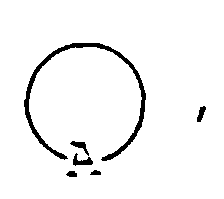
oder ein Salz davon. - Eine pharmazeutische Zusammensetzung, welche als aktiven Bestandteil eine Verbindung von Anspruch 1 oder ein pharmazeutisch annehmbares Salz davon in Beimischung mit pharmazeutischen Trägern und/oder Excipienten enthält.
- Verwendung der Verbindung von Anspruch 1 oder einem Salz davon zur Herstellung von einem Medikament.
- Verwendung der Verbindung von Anspruch 1 bis 5 oder einem Salz davon zur Herstellung von einem Medikament zur Vorbeugung und/oder Behandlung von Dysurie, Spasmus, Hyperkinese, Arrhythmie und Stauungsherzinsuffizienz bei Menschen oder Tieren.
- Eine Verbindung von Anspruch 1 oder ein pharmazeutisch annehmbares Salz davon zum Gebrauch als Medikament.
Applications Claiming Priority (4)
| Application Number | Priority Date | Filing Date | Title |
|---|---|---|---|
| GB9005247 | 1990-03-08 | ||
| GB909005247A GB9005247D0 (en) | 1990-03-08 | 1990-03-08 | A novel substituted-amine compound and a process for the preparation thereof |
| GB9021806 | 1990-10-08 | ||
| GB909021806A GB9021806D0 (en) | 1990-10-08 | 1990-10-08 | A novel substituted-amine compound and a process for the preparation thereof |
Publications (2)
| Publication Number | Publication Date |
|---|---|
| EP0445749A1 EP0445749A1 (de) | 1991-09-11 |
| EP0445749B1 true EP0445749B1 (de) | 1996-07-10 |
Family
ID=26296763
Family Applications (1)
| Application Number | Title | Priority Date | Filing Date |
|---|---|---|---|
| EP91103350A Expired - Lifetime EP0445749B1 (de) | 1990-03-08 | 1991-03-06 | N-Monosubstituierte Cyclopentenylamine, ein Verfahren zu ihrer Herstellung, und ihre Verwendung als Medikament |
Country Status (14)
| Country | Link |
|---|---|
| US (1) | US5256824A (de) |
| EP (1) | EP0445749B1 (de) |
| JP (1) | JPH0819058B2 (de) |
| KR (1) | KR910016691A (de) |
| CN (1) | CN1054586A (de) |
| AT (1) | ATE140213T1 (de) |
| AU (1) | AU645062B2 (de) |
| CA (1) | CA2037721A1 (de) |
| DE (1) | DE69120699T2 (de) |
| FI (1) | FI911138A7 (de) |
| HU (2) | HUT60710A (de) |
| IE (1) | IE910752A1 (de) |
| NO (1) | NO175679C (de) |
| PT (1) | PT96967A (de) |
Families Citing this family (10)
| Publication number | Priority date | Publication date | Assignee | Title |
|---|---|---|---|---|
| DE4028046A1 (de) * | 1990-09-05 | 1992-03-12 | Bayer Ag | Arzneimittel enthaltend substituierte 2-cyclohexen-1-yl-amin-derivate und ihre verwendung zur bekaempfung von krankheiten |
| CA2204355C (en) * | 1994-11-02 | 2001-01-16 | Gail Mandel | Peripheral nervous system specific sodium channels, dna encoding therefor, crystallization, x-ray diffraction, computer molecular modeling, rational drug design, drug screening, and methods of making and using thereof |
| EP0927034A1 (de) * | 1996-09-19 | 1999-07-07 | American Home Products Corporation | Verfahren zur behandlung von harninkontinenz |
| WO2000000459A1 (en) * | 1998-06-29 | 2000-01-06 | Mitsubishi-Tokyo Pharmaceuticals, Inc. | Process for the preparation of optically active trans-cyclohexylamine compounds |
| DE19955190A1 (de) * | 1999-11-16 | 2001-06-21 | Sanol Arznei Schwarz Gmbh | Stabile Salze neuartiger Derivate von 3,3-Diphenylpropylaminen |
| DE10332486A1 (de) * | 2003-07-16 | 2005-02-10 | Boehringer Ingelheim Pharma Gmbh & Co. Kg | Ambroxol für die Behandlung akuter Schmerzen |
| WO2007073792A1 (de) * | 2005-12-19 | 2007-07-05 | Bayer Schering Pharma Aktiengesellschaft | Verfahren zur herstellung von 4,4-diphenylcyclohexanol |
| DE102012106955B4 (de) * | 2012-07-31 | 2014-04-03 | Netzsch-Gerätebau GmbH | Vorrichtung und Verfahren zur photothermischen Untersuchung einer Probe |
| JP2022522534A (ja) | 2019-04-02 | 2022-04-19 | アリゴス セラピューティクス インコーポレイテッド | Prmt5を標的にする化合物 |
| CN110963877B (zh) * | 2019-12-18 | 2022-10-04 | 河北旭阳能源有限公司 | 1-氯-1-氯乙酰基环丙烷的制备方法 |
Family Cites Families (11)
| Publication number | Priority date | Publication date | Assignee | Title |
|---|---|---|---|---|
| US3285960A (en) * | 1964-01-14 | 1966-11-15 | Cutter Lab | 4, 4-diphenylcyclohexylamine derivatives |
| GB1102428A (en) * | 1964-10-26 | 1968-02-07 | Ciba Ltd | Cycloaliphatic amines and process for their manufacture |
| AT273065B (de) * | 1964-12-15 | 1969-07-25 | Merck Ag E | Verfahren zur Herstellung neuer Säureadditionssalze von 4,4-Diphenyl-cyclohexylaminen |
| DE1793611B2 (de) * | 1964-12-15 | 1973-06-07 | Merck Patent Gmbh, 6100 Darmstadt | 4,4-diphenylcyclohexylamine, ihre saeureadditionssalze und quartaeren ammoniumsalze |
| GB1051280A (de) * | 1964-12-15 | |||
| US3479352A (en) * | 1966-05-23 | 1969-11-18 | Monsanto Co | Trichloromethyl-tertiary amino substituted cycloalkenes and their preparation |
| US4141993A (en) * | 1971-06-11 | 1979-02-27 | Astra Lakemedel Aktiebolaget | Compounds of diphenylcyclopentylamine type and methods for their preparation |
| DE2227844A1 (de) * | 1971-06-11 | 1973-01-18 | Astra Laekemedel Ab | Antidepressive verbindungen und verfahren zu deren herstellung |
| JPS608606B2 (ja) * | 1975-07-02 | 1985-03-04 | 富士写真フイルム株式会社 | 強磁性粉末の製法 |
| JPS57144247A (en) * | 1981-03-02 | 1982-09-06 | Lion Corp | Preparation of n-substituted amino-alcohol compound |
| JPS6354351A (ja) * | 1986-08-25 | 1988-03-08 | Kanegafuchi Chem Ind Co Ltd | 光学活性1−メチル−3−フエニルプロピルアジド及びその化合物を用いる光学活性アミンの製造法 |
-
1991
- 1991-03-06 EP EP91103350A patent/EP0445749B1/de not_active Expired - Lifetime
- 1991-03-06 DE DE69120699T patent/DE69120699T2/de not_active Expired - Fee Related
- 1991-03-06 AT AT91103350T patent/ATE140213T1/de not_active IP Right Cessation
- 1991-03-06 IE IE075291A patent/IE910752A1/en unknown
- 1991-03-07 US US07/665,669 patent/US5256824A/en not_active Expired - Fee Related
- 1991-03-07 KR KR1019910003622A patent/KR910016691A/ko not_active Withdrawn
- 1991-03-07 JP JP3154155A patent/JPH0819058B2/ja not_active Expired - Lifetime
- 1991-03-07 FI FI911138A patent/FI911138A7/fi not_active Application Discontinuation
- 1991-03-07 CA CA002037721A patent/CA2037721A1/en not_active Abandoned
- 1991-03-07 AU AU72662/91A patent/AU645062B2/en not_active Ceased
- 1991-03-07 HU HU91748A patent/HUT60710A/hu unknown
- 1991-03-07 NO NO910904A patent/NO175679C/no unknown
- 1991-03-07 PT PT96967A patent/PT96967A/pt not_active Application Discontinuation
- 1991-03-07 CN CN91101218A patent/CN1054586A/zh active Pending
-
1995
- 1995-06-22 HU HU95P/P00345P patent/HU211519A9/hu unknown
Also Published As
| Publication number | Publication date |
|---|---|
| JPH04234832A (ja) | 1992-08-24 |
| CN1054586A (zh) | 1991-09-18 |
| HU910748D0 (en) | 1991-09-30 |
| NO910904D0 (no) | 1991-03-07 |
| CA2037721A1 (en) | 1991-09-09 |
| ATE140213T1 (de) | 1996-07-15 |
| EP0445749A1 (de) | 1991-09-11 |
| NO175679C (no) | 1994-11-16 |
| DE69120699D1 (de) | 1996-08-14 |
| KR910016691A (ko) | 1991-11-05 |
| AU7266291A (en) | 1991-09-12 |
| FI911138A0 (fi) | 1991-03-07 |
| AU645062B2 (en) | 1994-01-06 |
| PT96967A (pt) | 1991-10-31 |
| NO910904L (no) | 1991-09-09 |
| US5256824A (en) | 1993-10-26 |
| HUT60710A (en) | 1992-10-28 |
| IE910752A1 (en) | 1991-09-11 |
| DE69120699T2 (de) | 1997-01-09 |
| NO175679B (no) | 1994-08-08 |
| FI911138A7 (fi) | 1991-09-09 |
| HU211519A9 (en) | 1995-11-28 |
| JPH0819058B2 (ja) | 1996-02-28 |
Similar Documents
| Publication | Publication Date | Title |
|---|---|---|
| DK175083B1 (da) | Aminderivater, som kan anvendes til fremstilling af phenethanolaminforbindelser | |
| US6136803A (en) | Antidepressants | |
| JP3981357B2 (ja) | 第4級アンモニウム化合物および抗ムスカリン剤としてのそれらの使用 | |
| BG66162B1 (bg) | Хинуклидинови производни и медицински състави, които ги съдържат | |
| US5468767A (en) | Antidepressant 3-(aminocycloalkenyl)-indole-5-nitrile derivatives | |
| EP0787716B1 (de) | Isoprenderivate | |
| AU645062B2 (en) | A novel substituted-amine compound and a process for the preparation thereof | |
| CN101830896A (zh) | 戊乙奎醚光学异构体的有机酸盐 | |
| JPH03133946A (ja) | フェンエタノールアミン化合物 | |
| TW201240973A (en) | Heterocyclic compound | |
| US6420566B2 (en) | Pharmaceutical compositions containing a 4, 5-dihydro-1, 3-thiazol-2-ylamine derivative, novel derivatives and preparation thereof | |
| EP0230020B1 (de) | 1,2,3,4,4a,9b-Hexahydro-4a-aminoalkyldibenzofurane, Verfahren zu ihrer Herstellung und ihre Verwendung als Arzneimittel | |
| US5149714A (en) | Antidepressants | |
| US7119121B2 (en) | 3,3-diphenylpropylamines useful in therapy | |
| US8158676B2 (en) | Substituted cyclopentanes having prostaglandin activity | |
| NL8602575A (nl) | Dichloroanilinederivaten. | |
| NO309475B1 (no) | Tiazolidinonforbindelser og terapeutisk eller forhindrende middel mot angina pectoris omfattende forbindelsene som aktiv bestanddel | |
| JP4781362B2 (ja) | 4級アンモニウム基を有するキヌクリジン化合物とその調製方法、およびアセチルコリン遮断剤としての用途 | |
| US7884244B2 (en) | Therapeutic fluoroethylcyano guanidines | |
| JP2003286266A (ja) | イミダゾール化合物 | |
| US5561152A (en) | Antidepressants | |
| JP3888397B2 (ja) | イソプレン誘導体 | |
| NL9100960A (nl) | Dichlooranilineverbinding. | |
| WO1999009001A1 (fr) | Derives de phenylethanolaminotetraline et bronchodilatateurs | |
| RU1831481C (ru) | (S)(+)-2-этокси-4- @ N-[1-(2-пиперидино-фенил)-3-метил-1-бутил]-аминокарбонилметил @ -бензойна кислота или ее гидрат, или фармацевтически переносима соль, обладающие гипогликемическим действием |
Legal Events
| Date | Code | Title | Description |
|---|---|---|---|
| PUAI | Public reference made under article 153(3) epc to a published international application that has entered the european phase |
Free format text: ORIGINAL CODE: 0009012 |
|
| AK | Designated contracting states |
Kind code of ref document: A1 Designated state(s): AT BE CH DE DK ES FR GB GR IT LI LU NL SE |
|
| 17P | Request for examination filed |
Effective date: 19920310 |
|
| 17Q | First examination report despatched |
Effective date: 19930805 |
|
| GRAH | Despatch of communication of intention to grant a patent |
Free format text: ORIGINAL CODE: EPIDOS IGRA |
|
| GRAA | (expected) grant |
Free format text: ORIGINAL CODE: 0009210 |
|
| AK | Designated contracting states |
Kind code of ref document: B1 Designated state(s): AT BE CH DE DK ES FR GB GR IT LI LU NL SE |
|
| PG25 | Lapsed in a contracting state [announced via postgrant information from national office to epo] |
Ref country code: NL Free format text: LAPSE BECAUSE OF FAILURE TO SUBMIT A TRANSLATION OF THE DESCRIPTION OR TO PAY THE FEE WITHIN THE PRESCRIBED TIME-LIMIT Effective date: 19960710 Ref country code: GR Free format text: LAPSE BECAUSE OF FAILURE TO SUBMIT A TRANSLATION OF THE DESCRIPTION OR TO PAY THE FEE WITHIN THE PRESCRIBED TIME-LIMIT Effective date: 19960710 Ref country code: ES Free format text: THE PATENT HAS BEEN ANNULLED BY A DECISION OF A NATIONAL AUTHORITY Effective date: 19960710 Ref country code: DK Effective date: 19960710 Ref country code: BE Effective date: 19960710 Ref country code: AT Effective date: 19960710 |
|
| REF | Corresponds to: |
Ref document number: 140213 Country of ref document: AT Date of ref document: 19960715 Kind code of ref document: T |
|
| REG | Reference to a national code |
Ref country code: CH Ref legal event code: NV Representative=s name: A. BRAUN, BRAUN, HERITIER, ESCHMANN AG PATENTANWAE |
|
| GRAH | Despatch of communication of intention to grant a patent |
Free format text: ORIGINAL CODE: EPIDOS IGRA |
|
| REF | Corresponds to: |
Ref document number: 69120699 Country of ref document: DE Date of ref document: 19960814 |
|
| ET | Fr: translation filed | ||
| ITF | It: translation for a ep patent filed | ||
| PG25 | Lapsed in a contracting state [announced via postgrant information from national office to epo] |
Ref country code: SE Effective date: 19961010 |
|
| NLV1 | Nl: lapsed or annulled due to failure to fulfill the requirements of art. 29p and 29m of the patents act | ||
| PGFP | Annual fee paid to national office [announced via postgrant information from national office to epo] |
Ref country code: GB Payment date: 19970225 Year of fee payment: 7 |
|
| PGFP | Annual fee paid to national office [announced via postgrant information from national office to epo] |
Ref country code: CH Payment date: 19970311 Year of fee payment: 7 |
|
| PGFP | Annual fee paid to national office [announced via postgrant information from national office to epo] |
Ref country code: FR Payment date: 19970313 Year of fee payment: 7 |
|
| PGFP | Annual fee paid to national office [announced via postgrant information from national office to epo] |
Ref country code: DE Payment date: 19970314 Year of fee payment: 7 |
|
| PG25 | Lapsed in a contracting state [announced via postgrant information from national office to epo] |
Ref country code: LU Free format text: LAPSE BECAUSE OF NON-PAYMENT OF DUE FEES Effective date: 19970331 |
|
| PLBE | No opposition filed within time limit |
Free format text: ORIGINAL CODE: 0009261 |
|
| STAA | Information on the status of an ep patent application or granted ep patent |
Free format text: STATUS: NO OPPOSITION FILED WITHIN TIME LIMIT |
|
| 26N | No opposition filed | ||
| PG25 | Lapsed in a contracting state [announced via postgrant information from national office to epo] |
Ref country code: GB Free format text: LAPSE BECAUSE OF NON-PAYMENT OF DUE FEES Effective date: 19980306 |
|
| PG25 | Lapsed in a contracting state [announced via postgrant information from national office to epo] |
Ref country code: LI Free format text: LAPSE BECAUSE OF NON-PAYMENT OF DUE FEES Effective date: 19980331 Ref country code: FR Free format text: THE PATENT HAS BEEN ANNULLED BY A DECISION OF A NATIONAL AUTHORITY Effective date: 19980331 Ref country code: CH Free format text: LAPSE BECAUSE OF NON-PAYMENT OF DUE FEES Effective date: 19980331 |
|
| GBPC | Gb: european patent ceased through non-payment of renewal fee |
Effective date: 19980306 |
|
| REG | Reference to a national code |
Ref country code: CH Ref legal event code: PL |
|
| PG25 | Lapsed in a contracting state [announced via postgrant information from national office to epo] |
Ref country code: DE Free format text: LAPSE BECAUSE OF NON-PAYMENT OF DUE FEES Effective date: 19981201 |
|
| REG | Reference to a national code |
Ref country code: FR Ref legal event code: ST |
|
| PG25 | Lapsed in a contracting state [announced via postgrant information from national office to epo] |
Ref country code: IT Free format text: LAPSE BECAUSE OF NON-PAYMENT OF DUE FEES;WARNING: LAPSES OF ITALIAN PATENTS WITH EFFECTIVE DATE BEFORE 2007 MAY HAVE OCCURRED AT ANY TIME BEFORE 2007. THE CORRECT EFFECTIVE DATE MAY BE DIFFERENT FROM THE ONE RECORDED. Effective date: 20050306 |