EP0446593A1 - Production d'argon de l'air à faible teneur d'oxygène - Google Patents
Production d'argon de l'air à faible teneur d'oxygène Download PDFInfo
- Publication number
- EP0446593A1 EP0446593A1 EP91101288A EP91101288A EP0446593A1 EP 0446593 A1 EP0446593 A1 EP 0446593A1 EP 91101288 A EP91101288 A EP 91101288A EP 91101288 A EP91101288 A EP 91101288A EP 0446593 A1 EP0446593 A1 EP 0446593A1
- Authority
- EP
- European Patent Office
- Prior art keywords
- argon
- column
- crude
- oxygen
- liquid oxygen
- Prior art date
- Legal status (The legal status is an assumption and is not a legal conclusion. Google has not performed a legal analysis and makes no representation as to the accuracy of the status listed.)
- Granted
Links
- XKRFYHLGVUSROY-UHFFFAOYSA-N Argon Chemical compound [Ar] XKRFYHLGVUSROY-UHFFFAOYSA-N 0.000 title claims abstract description 669
- 229910052786 argon Inorganic materials 0.000 title claims abstract description 336
- 238000004519 manufacturing process Methods 0.000 title claims abstract description 17
- MYMOFIZGZYHOMD-UHFFFAOYSA-N Dioxygen Chemical compound O=O MYMOFIZGZYHOMD-UHFFFAOYSA-N 0.000 claims abstract description 80
- 239000001301 oxygen Substances 0.000 claims abstract description 76
- 229910052760 oxygen Inorganic materials 0.000 claims abstract description 76
- QVGXLLKOCUKJST-UHFFFAOYSA-N atomic oxygen Chemical compound [O] QVGXLLKOCUKJST-UHFFFAOYSA-N 0.000 claims abstract description 75
- 238000011084 recovery Methods 0.000 claims abstract description 62
- 238000012856 packing Methods 0.000 claims abstract description 46
- 238000000034 method Methods 0.000 claims abstract description 43
- 238000000926 separation method Methods 0.000 claims abstract description 24
- 239000007791 liquid phase Substances 0.000 claims abstract description 16
- 239000012808 vapor phase Substances 0.000 claims abstract description 16
- 230000006872 improvement Effects 0.000 claims abstract description 12
- 238000004821 distillation Methods 0.000 claims description 60
- 230000008569 process Effects 0.000 claims description 39
- 238000010992 reflux Methods 0.000 claims description 14
- 238000005057 refrigeration Methods 0.000 claims description 10
- VVTSZOCINPYFDP-UHFFFAOYSA-N [O].[Ar] Chemical compound [O].[Ar] VVTSZOCINPYFDP-UHFFFAOYSA-N 0.000 claims description 5
- 230000009467 reduction Effects 0.000 claims description 4
- 230000003247 decreasing effect Effects 0.000 abstract description 6
- -1 <0.5% oxygen Chemical compound 0.000 abstract 1
- IJGRMHOSHXDMSA-UHFFFAOYSA-N Atomic nitrogen Chemical compound N#N IJGRMHOSHXDMSA-UHFFFAOYSA-N 0.000 description 38
- 239000000047 product Substances 0.000 description 28
- 229910052757 nitrogen Inorganic materials 0.000 description 19
- 239000007788 liquid Substances 0.000 description 18
- 238000004088 simulation Methods 0.000 description 10
- 230000007423 decrease Effects 0.000 description 8
- 230000000694 effects Effects 0.000 description 8
- 239000012530 fluid Substances 0.000 description 8
- 238000009835 boiling Methods 0.000 description 6
- 239000002699 waste material Substances 0.000 description 5
- CURLTUGMZLYLDI-UHFFFAOYSA-N Carbon dioxide Chemical compound O=C=O CURLTUGMZLYLDI-UHFFFAOYSA-N 0.000 description 4
- 150000001485 argon Chemical class 0.000 description 3
- 238000005194 fractionation Methods 0.000 description 3
- 239000007789 gas Substances 0.000 description 3
- UFHFLCQGNIYNRP-UHFFFAOYSA-N Hydrogen Chemical compound [H][H] UFHFLCQGNIYNRP-UHFFFAOYSA-N 0.000 description 2
- 230000002411 adverse Effects 0.000 description 2
- 229910002092 carbon dioxide Inorganic materials 0.000 description 2
- 238000010586 diagram Methods 0.000 description 2
- 239000001257 hydrogen Substances 0.000 description 2
- 229910052739 hydrogen Inorganic materials 0.000 description 2
- 238000002156 mixing Methods 0.000 description 2
- 238000005457 optimization Methods 0.000 description 2
- XLYOFNOQVPJJNP-UHFFFAOYSA-N water Substances O XLYOFNOQVPJJNP-UHFFFAOYSA-N 0.000 description 2
- 238000010521 absorption reaction Methods 0.000 description 1
- 239000003463 adsorbent Substances 0.000 description 1
- 230000009286 beneficial effect Effects 0.000 description 1
- 238000004364 calculation method Methods 0.000 description 1
- 239000001569 carbon dioxide Substances 0.000 description 1
- 230000003197 catalytic effect Effects 0.000 description 1
- 238000006555 catalytic reaction Methods 0.000 description 1
- 230000008859 change Effects 0.000 description 1
- 238000003889 chemical engineering Methods 0.000 description 1
- 230000000052 comparative effect Effects 0.000 description 1
- 230000006835 compression Effects 0.000 description 1
- 238000007906 compression Methods 0.000 description 1
- 238000009833 condensation Methods 0.000 description 1
- 230000005494 condensation Effects 0.000 description 1
- 239000000498 cooling water Substances 0.000 description 1
- 239000012043 crude product Substances 0.000 description 1
- 238000011143 downstream manufacturing Methods 0.000 description 1
- 238000005265 energy consumption Methods 0.000 description 1
- 238000001704 evaporation Methods 0.000 description 1
- 239000012467 final product Substances 0.000 description 1
- 230000005484 gravity Effects 0.000 description 1
- 230000010354 integration Effects 0.000 description 1
- 239000012263 liquid product Substances 0.000 description 1
- VUZPPFZMUPKLLV-UHFFFAOYSA-N methane;hydrate Chemical compound C.O VUZPPFZMUPKLLV-UHFFFAOYSA-N 0.000 description 1
- 150000002926 oxygen Chemical class 0.000 description 1
- 238000010926 purge Methods 0.000 description 1
- 238000000746 purification Methods 0.000 description 1
- 230000000630 rising effect Effects 0.000 description 1
- 238000001179 sorption measurement Methods 0.000 description 1
- 239000000126 substance Substances 0.000 description 1
- 238000009834 vaporization Methods 0.000 description 1
- 230000008016 vaporization Effects 0.000 description 1
Images




Classifications
-
- F—MECHANICAL ENGINEERING; LIGHTING; HEATING; WEAPONS; BLASTING
- F25—REFRIGERATION OR COOLING; COMBINED HEATING AND REFRIGERATION SYSTEMS; HEAT PUMP SYSTEMS; MANUFACTURE OR STORAGE OF ICE; LIQUEFACTION SOLIDIFICATION OF GASES
- F25J—LIQUEFACTION, SOLIDIFICATION OR SEPARATION OF GASES OR GASEOUS OR LIQUEFIED GASEOUS MIXTURES BY PRESSURE AND COLD TREATMENT OR BY BRINGING THEM INTO THE SUPERCRITICAL STATE
- F25J3/00—Processes or apparatus for separating the constituents of gaseous or liquefied gaseous mixtures involving the use of liquefaction or solidification
- F25J3/02—Processes or apparatus for separating the constituents of gaseous or liquefied gaseous mixtures involving the use of liquefaction or solidification by rectification, i.e. by continuous interchange of heat and material between a vapour stream and a liquid stream
- F25J3/04—Processes or apparatus for separating the constituents of gaseous or liquefied gaseous mixtures involving the use of liquefaction or solidification by rectification, i.e. by continuous interchange of heat and material between a vapour stream and a liquid stream for air
- F25J3/04763—Start-up or control of the process; Details of the apparatus used
- F25J3/04866—Construction and layout of air fractionation equipments, e.g. valves, machines
- F25J3/04896—Details of columns, e.g. internals, inlet/outlet devices
- F25J3/04915—Combinations of different material exchange elements, e.g. within different columns
- F25J3/04921—Combinations of different material exchange elements, e.g. within different columns within the same column
-
- C—CHEMISTRY; METALLURGY
- C01—INORGANIC CHEMISTRY
- C01B—NON-METALLIC ELEMENTS; COMPOUNDS THEREOF; METALLOIDS OR COMPOUNDS THEREOF NOT COVERED BY SUBCLASS C01C
- C01B23/00—Noble gases; Compounds thereof
-
- F—MECHANICAL ENGINEERING; LIGHTING; HEATING; WEAPONS; BLASTING
- F25—REFRIGERATION OR COOLING; COMBINED HEATING AND REFRIGERATION SYSTEMS; HEAT PUMP SYSTEMS; MANUFACTURE OR STORAGE OF ICE; LIQUEFACTION SOLIDIFICATION OF GASES
- F25J—LIQUEFACTION, SOLIDIFICATION OR SEPARATION OF GASES OR GASEOUS OR LIQUEFIED GASEOUS MIXTURES BY PRESSURE AND COLD TREATMENT OR BY BRINGING THEM INTO THE SUPERCRITICAL STATE
- F25J3/00—Processes or apparatus for separating the constituents of gaseous or liquefied gaseous mixtures involving the use of liquefaction or solidification
- F25J3/02—Processes or apparatus for separating the constituents of gaseous or liquefied gaseous mixtures involving the use of liquefaction or solidification by rectification, i.e. by continuous interchange of heat and material between a vapour stream and a liquid stream
- F25J3/04—Processes or apparatus for separating the constituents of gaseous or liquefied gaseous mixtures involving the use of liquefaction or solidification by rectification, i.e. by continuous interchange of heat and material between a vapour stream and a liquid stream for air
- F25J3/04248—Generation of cold for compensating heat leaks or liquid production, e.g. by Joule-Thompson expansion
- F25J3/04284—Generation of cold for compensating heat leaks or liquid production, e.g. by Joule-Thompson expansion using internal refrigeration by open-loop gas work expansion, e.g. of intermediate or oxygen enriched (waste-)streams
- F25J3/0429—Generation of cold for compensating heat leaks or liquid production, e.g. by Joule-Thompson expansion using internal refrigeration by open-loop gas work expansion, e.g. of intermediate or oxygen enriched (waste-)streams of feed air, e.g. used as waste or product air or expanded into an auxiliary column
- F25J3/04303—Lachmann expansion, i.e. expanded into oxygen producing or low pressure column
-
- F—MECHANICAL ENGINEERING; LIGHTING; HEATING; WEAPONS; BLASTING
- F25—REFRIGERATION OR COOLING; COMBINED HEATING AND REFRIGERATION SYSTEMS; HEAT PUMP SYSTEMS; MANUFACTURE OR STORAGE OF ICE; LIQUEFACTION SOLIDIFICATION OF GASES
- F25J—LIQUEFACTION, SOLIDIFICATION OR SEPARATION OF GASES OR GASEOUS OR LIQUEFIED GASEOUS MIXTURES BY PRESSURE AND COLD TREATMENT OR BY BRINGING THEM INTO THE SUPERCRITICAL STATE
- F25J3/00—Processes or apparatus for separating the constituents of gaseous or liquefied gaseous mixtures involving the use of liquefaction or solidification
- F25J3/02—Processes or apparatus for separating the constituents of gaseous or liquefied gaseous mixtures involving the use of liquefaction or solidification by rectification, i.e. by continuous interchange of heat and material between a vapour stream and a liquid stream
- F25J3/04—Processes or apparatus for separating the constituents of gaseous or liquefied gaseous mixtures involving the use of liquefaction or solidification by rectification, i.e. by continuous interchange of heat and material between a vapour stream and a liquid stream for air
- F25J3/04248—Generation of cold for compensating heat leaks or liquid production, e.g. by Joule-Thompson expansion
- F25J3/04333—Generation of cold for compensating heat leaks or liquid production, e.g. by Joule-Thompson expansion using quasi-closed loop internal vapor compression refrigeration cycles, e.g. of intermediate or oxygen enriched (waste-)streams
- F25J3/04369—Generation of cold for compensating heat leaks or liquid production, e.g. by Joule-Thompson expansion using quasi-closed loop internal vapor compression refrigeration cycles, e.g. of intermediate or oxygen enriched (waste-)streams of argon or argon enriched stream
-
- F—MECHANICAL ENGINEERING; LIGHTING; HEATING; WEAPONS; BLASTING
- F25—REFRIGERATION OR COOLING; COMBINED HEATING AND REFRIGERATION SYSTEMS; HEAT PUMP SYSTEMS; MANUFACTURE OR STORAGE OF ICE; LIQUEFACTION SOLIDIFICATION OF GASES
- F25J—LIQUEFACTION, SOLIDIFICATION OR SEPARATION OF GASES OR GASEOUS OR LIQUEFIED GASEOUS MIXTURES BY PRESSURE AND COLD TREATMENT OR BY BRINGING THEM INTO THE SUPERCRITICAL STATE
- F25J3/00—Processes or apparatus for separating the constituents of gaseous or liquefied gaseous mixtures involving the use of liquefaction or solidification
- F25J3/02—Processes or apparatus for separating the constituents of gaseous or liquefied gaseous mixtures involving the use of liquefaction or solidification by rectification, i.e. by continuous interchange of heat and material between a vapour stream and a liquid stream
- F25J3/04—Processes or apparatus for separating the constituents of gaseous or liquefied gaseous mixtures involving the use of liquefaction or solidification by rectification, i.e. by continuous interchange of heat and material between a vapour stream and a liquid stream for air
- F25J3/04406—Processes or apparatus for separating the constituents of gaseous or liquefied gaseous mixtures involving the use of liquefaction or solidification by rectification, i.e. by continuous interchange of heat and material between a vapour stream and a liquid stream for air using a dual pressure main column system
- F25J3/04412—Processes or apparatus for separating the constituents of gaseous or liquefied gaseous mixtures involving the use of liquefaction or solidification by rectification, i.e. by continuous interchange of heat and material between a vapour stream and a liquid stream for air using a dual pressure main column system in a classical double column flowsheet, i.e. with thermal coupling by a main reboiler-condenser in the bottom of low pressure respectively top of high pressure column
-
- F—MECHANICAL ENGINEERING; LIGHTING; HEATING; WEAPONS; BLASTING
- F25—REFRIGERATION OR COOLING; COMBINED HEATING AND REFRIGERATION SYSTEMS; HEAT PUMP SYSTEMS; MANUFACTURE OR STORAGE OF ICE; LIQUEFACTION SOLIDIFICATION OF GASES
- F25J—LIQUEFACTION, SOLIDIFICATION OR SEPARATION OF GASES OR GASEOUS OR LIQUEFIED GASEOUS MIXTURES BY PRESSURE AND COLD TREATMENT OR BY BRINGING THEM INTO THE SUPERCRITICAL STATE
- F25J3/00—Processes or apparatus for separating the constituents of gaseous or liquefied gaseous mixtures involving the use of liquefaction or solidification
- F25J3/02—Processes or apparatus for separating the constituents of gaseous or liquefied gaseous mixtures involving the use of liquefaction or solidification by rectification, i.e. by continuous interchange of heat and material between a vapour stream and a liquid stream
- F25J3/04—Processes or apparatus for separating the constituents of gaseous or liquefied gaseous mixtures involving the use of liquefaction or solidification by rectification, i.e. by continuous interchange of heat and material between a vapour stream and a liquid stream for air
- F25J3/04642—Recovering noble gases from air
- F25J3/04648—Recovering noble gases from air argon
- F25J3/04654—Producing crude argon in a crude argon column
- F25J3/04666—Producing crude argon in a crude argon column as a parallel working rectification column of the low pressure column in a dual pressure main column system
- F25J3/04672—Producing crude argon in a crude argon column as a parallel working rectification column of the low pressure column in a dual pressure main column system having a top condenser
- F25J3/04678—Producing crude argon in a crude argon column as a parallel working rectification column of the low pressure column in a dual pressure main column system having a top condenser cooled by oxygen enriched liquid from high pressure column bottoms
-
- F—MECHANICAL ENGINEERING; LIGHTING; HEATING; WEAPONS; BLASTING
- F25—REFRIGERATION OR COOLING; COMBINED HEATING AND REFRIGERATION SYSTEMS; HEAT PUMP SYSTEMS; MANUFACTURE OR STORAGE OF ICE; LIQUEFACTION SOLIDIFICATION OF GASES
- F25J—LIQUEFACTION, SOLIDIFICATION OR SEPARATION OF GASES OR GASEOUS OR LIQUEFIED GASEOUS MIXTURES BY PRESSURE AND COLD TREATMENT OR BY BRINGING THEM INTO THE SUPERCRITICAL STATE
- F25J3/00—Processes or apparatus for separating the constituents of gaseous or liquefied gaseous mixtures involving the use of liquefaction or solidification
- F25J3/02—Processes or apparatus for separating the constituents of gaseous or liquefied gaseous mixtures involving the use of liquefaction or solidification by rectification, i.e. by continuous interchange of heat and material between a vapour stream and a liquid stream
- F25J3/04—Processes or apparatus for separating the constituents of gaseous or liquefied gaseous mixtures involving the use of liquefaction or solidification by rectification, i.e. by continuous interchange of heat and material between a vapour stream and a liquid stream for air
- F25J3/04642—Recovering noble gases from air
- F25J3/04648—Recovering noble gases from air argon
- F25J3/04654—Producing crude argon in a crude argon column
- F25J3/04709—Producing crude argon in a crude argon column as an auxiliary column system in at least a dual pressure main column system
-
- F—MECHANICAL ENGINEERING; LIGHTING; HEATING; WEAPONS; BLASTING
- F25—REFRIGERATION OR COOLING; COMBINED HEATING AND REFRIGERATION SYSTEMS; HEAT PUMP SYSTEMS; MANUFACTURE OR STORAGE OF ICE; LIQUEFACTION SOLIDIFICATION OF GASES
- F25J—LIQUEFACTION, SOLIDIFICATION OR SEPARATION OF GASES OR GASEOUS OR LIQUEFIED GASEOUS MIXTURES BY PRESSURE AND COLD TREATMENT OR BY BRINGING THEM INTO THE SUPERCRITICAL STATE
- F25J2205/00—Processes or apparatus using other separation and/or other processing means
- F25J2205/02—Processes or apparatus using other separation and/or other processing means using simple phase separation in a vessel or drum
-
- F—MECHANICAL ENGINEERING; LIGHTING; HEATING; WEAPONS; BLASTING
- F25—REFRIGERATION OR COOLING; COMBINED HEATING AND REFRIGERATION SYSTEMS; HEAT PUMP SYSTEMS; MANUFACTURE OR STORAGE OF ICE; LIQUEFACTION SOLIDIFICATION OF GASES
- F25J—LIQUEFACTION, SOLIDIFICATION OR SEPARATION OF GASES OR GASEOUS OR LIQUEFIED GASEOUS MIXTURES BY PRESSURE AND COLD TREATMENT OR BY BRINGING THEM INTO THE SUPERCRITICAL STATE
- F25J2230/00—Processes or apparatus involving steps for increasing the pressure of gaseous process streams
- F25J2230/58—Processes or apparatus involving steps for increasing the pressure of gaseous process streams the fluid being argon or crude argon
-
- F—MECHANICAL ENGINEERING; LIGHTING; HEATING; WEAPONS; BLASTING
- F25—REFRIGERATION OR COOLING; COMBINED HEATING AND REFRIGERATION SYSTEMS; HEAT PUMP SYSTEMS; MANUFACTURE OR STORAGE OF ICE; LIQUEFACTION SOLIDIFICATION OF GASES
- F25J—LIQUEFACTION, SOLIDIFICATION OR SEPARATION OF GASES OR GASEOUS OR LIQUEFIED GASEOUS MIXTURES BY PRESSURE AND COLD TREATMENT OR BY BRINGING THEM INTO THE SUPERCRITICAL STATE
- F25J2240/00—Processes or apparatus involving steps for expanding of process streams
- F25J2240/40—Expansion without extracting work, i.e. isenthalpic throttling, e.g. JT valve, regulating valve or venturi, or isentropic nozzle, e.g. Laval
-
- F—MECHANICAL ENGINEERING; LIGHTING; HEATING; WEAPONS; BLASTING
- F25—REFRIGERATION OR COOLING; COMBINED HEATING AND REFRIGERATION SYSTEMS; HEAT PUMP SYSTEMS; MANUFACTURE OR STORAGE OF ICE; LIQUEFACTION SOLIDIFICATION OF GASES
- F25J—LIQUEFACTION, SOLIDIFICATION OR SEPARATION OF GASES OR GASEOUS OR LIQUEFIED GASEOUS MIXTURES BY PRESSURE AND COLD TREATMENT OR BY BRINGING THEM INTO THE SUPERCRITICAL STATE
- F25J2290/00—Other details not covered by groups F25J2200/00 - F25J2280/00
- F25J2290/10—Mathematical formulae, modeling, plot or curves; Design methods
-
- Y—GENERAL TAGGING OF NEW TECHNOLOGICAL DEVELOPMENTS; GENERAL TAGGING OF CROSS-SECTIONAL TECHNOLOGIES SPANNING OVER SEVERAL SECTIONS OF THE IPC; TECHNICAL SUBJECTS COVERED BY FORMER USPC CROSS-REFERENCE ART COLLECTIONS [XRACs] AND DIGESTS
- Y10—TECHNICAL SUBJECTS COVERED BY FORMER USPC
- Y10S—TECHNICAL SUBJECTS COVERED BY FORMER USPC CROSS-REFERENCE ART COLLECTIONS [XRACs] AND DIGESTS
- Y10S62/00—Refrigeration
- Y10S62/902—Apparatus
- Y10S62/905—Column
- Y10S62/906—Packing
-
- Y—GENERAL TAGGING OF NEW TECHNOLOGICAL DEVELOPMENTS; GENERAL TAGGING OF CROSS-SECTIONAL TECHNOLOGIES SPANNING OVER SEVERAL SECTIONS OF THE IPC; TECHNICAL SUBJECTS COVERED BY FORMER USPC CROSS-REFERENCE ART COLLECTIONS [XRACs] AND DIGESTS
- Y10—TECHNICAL SUBJECTS COVERED BY FORMER USPC
- Y10S—TECHNICAL SUBJECTS COVERED BY FORMER USPC CROSS-REFERENCE ART COLLECTIONS [XRACs] AND DIGESTS
- Y10S62/00—Refrigeration
- Y10S62/923—Inert gas
- Y10S62/924—Argon
-
- Y—GENERAL TAGGING OF NEW TECHNOLOGICAL DEVELOPMENTS; GENERAL TAGGING OF CROSS-SECTIONAL TECHNOLOGIES SPANNING OVER SEVERAL SECTIONS OF THE IPC; TECHNICAL SUBJECTS COVERED BY FORMER USPC CROSS-REFERENCE ART COLLECTIONS [XRACs] AND DIGESTS
- Y10—TECHNICAL SUBJECTS COVERED BY FORMER USPC
- Y10S—TECHNICAL SUBJECTS COVERED BY FORMER USPC CROSS-REFERENCE ART COLLECTIONS [XRACs] AND DIGESTS
- Y10S62/00—Refrigeration
- Y10S62/939—Partial feed stream expansion, air
Definitions
- the present invention relates to a process for the separation of air into its constitutent components by means of cryogenic distillation. More specifically, the present invention relates, to a process for the production of crude argon directly from the cold box of the cryogenic distillation unit.
- Argon is recoverable from sources such as air and NH3 purge gas.
- Most argon is produced as a crude product from cryogenic air separation units because it is comparatively economical.
- the typical concentration of oxygen in crude argon produced by cryogenic air separation unit is 2-5%, whereas most of the argon uses require nearly oxygen-free argon. This leads to expensive downstream processing of crude argon to reduce its oxygen content. It is desirable to directly produce an argon stream from a cryogenic air separation unit in high recoveries with decreased oxygen content so that either it could be directly used by the users or minimize the processing required to further purify it.
- the other fraction is vaporized in the overhead reboiler/condenser of argon sidearm column and is fed to the low pressure column a few trays below where the crude liquid oxygen is fed in.
- the low pressure column produces gaseous nitrogen product, oxygen product and a waste nitrogen stream.
- An argon-rich (7-12% argon) vapor stream is withdrawn from the low pressure column, many trays below the vaporized crude oxygen feed point and is fed into the bottom of crude argon distillation column with a reboiler/condenser at the top.
- the nitrogen concentration of this argon-rich stream is typically very low (0.01 to 0.1% nitrogen).
- the argon available from the air is drawn as crude argon containing 2-5% oxygen from the top of the argon sidearm column.
- argon is a valuable product, its recovery is often maximized by optimizing the number of theoretical stages in each section of the low pressure and argon sidearm columns and also the flowrates of various streams.
- the optimization of these theoretical stages goes hand-in-hand with the fact that since early 1930's sieve trays have been the trays of choice for cryogenic air separation unit. These sieve trays have certain contact efficiency and pressure drop per tray.
- the ratio of these parameters is the pressure drop ( ⁇ P) per theoretical stage (or equilibrium stage).
- the total pressure drop available for operation of the argon sidearm column limits the number of theoretical stages which can be used in it.
- the relative volatility of the argon with respect to oxygen ( ⁇ ) is about 1.5 at the bottom of argon sidearm column but is only about 1.1 at the top of this column. This low value of ⁇ at the top of the column makes it difficult to produce crude argon with low concentrations of oxygen in high recoveries.
- This oxygen-containing argon (crude argon) is then further purified in a catalytic reaction unit.
- crude argon is mixed with hydrogen and passed through a catalytic unit to react the oxygen to form water.
- the present invention is an improvement to a process for the separation of air by cryogenic distillation to produce a crude argon product.
- the separation is carried out in a multiple distillation column system containing a high pressure column, a low pressure column and an argon sidearm column; a crude argon product is produced at the top of the argon sidearm column; at least a portion of crude liquid oxygen produced at the bottom of the high pressure column is fed to a reboiler/condenser located at the top of the argon sidearm column to provide refrigeration for condensing at least a portion of the crude argon thereby providing reflux for the argon sidearm column; a gaseous argon-oxygen containing side stream is removed from an intermediate location of the low pressure column and fed to the bottom of the argon sidearm column for rectification; and the argon sidearm column a liquid phase and a vapor phase are intimately contacted to effectuate mass transfer to and from the liquid and vapor phases.
- the improvement for the production of low oxygen content argon having an oxygen concentration of less than or equal to 0.5 mol percent directly from the argon side arm column while maximizing argon recovery comprises three steps.
- First, an argon sidearm column is used which has an effective number of theoretical stages so as to produce a particular crude argon product purity without sacrificing argon recovery.
- Second, the crude liquid oxygen is fed from the bottom of the high pressure column to the reboiler condenser located in the top of the argon side arm column at a rate in the range from about 1.04 to about 1.36 times the theoretical minimum flow of crude liquid oxygen necessary to completely vaporize that minimum flow of crude liquid oxygen to its dew point.
- the argon sidearm column is operated so as to achieve a pressure at the top of the argon side arm column such that the flow of crude liquid oxygen to the reboiler/condenser located in the top of the side arm column falls within the range from about 1.04 to about 1.36 times the theoretical minimum flow of crude liquid oxygen necessary to completely vaporize that minimum flow of crude liquid oxygen to its dew point.
- This third step can be accomplished in two ways.
- the preferred method is to effectuate the intimate contact between the vapor and liquid phases in the argon side arm column by use of a combination of conventional sieve trays and low pressure drop, structured packing so that pressure drop across the combination results in a pressure at the top of the argon side arm column such that the flow of crude liquid oxygen to the reboiler/condenser located in the top of the side arm column falls within the range from about 1.04 to about 1.36 times the theoretical minimum flow of crude liquid oxygen necessary to completely vaporize that minimum flow of crude liquid oxygen to its dew point.
- An alternative method is to effectuate the intimate contact between the vapor and liquid phases in the argon side arm column by use of low pressure, structured packing and reducing the pressure of the argon/oxygen side stream fed to the argon sidearm column so that the combination of the pressure drop across the low pressure, structured packing and the reduction of pressure of the argon/oxygen side stream fed to the argon sidearm column result in a pressure at the top of the argon side arm column such that the flow of crude liquid oxygen to the reboiler/condenser located in the top of the side arm column falls within the range from about 1.04 to about 1.36 times the theoretical minimum flow of crude liquid oxygen necessary to completely vaporize that minimum flow of crude liquid oxygen to its dew point.
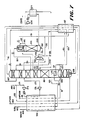
- Figure 1 is a schematic diagram of a cryogenic air separation process for the production of a crude argon product.
- FIG 2 is a schematic diagram of the cryogenic air separation process shown in Figure 1 with the packing section of the argon sidearm column highlighted.
- Figure 3 is a plot showing the effect of the pressure at the top of the argon sidearm column on argon recovery.
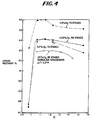
- Figure 4 is a plot showing the effect of crude liquid oxygen flow to the reboiler/condenser at the top of the argon sidearm column on argon recovery.
- Figure 5 is a plot of the effect on the number of theoretical stages in the argon sidearm column on argon purity.
- Figure 6 is a schematic of an alternate process for the production of low oxygen content argon.
- Figure 7 is a schematic of a variation on the alternate process for the production of low oxygen content argon shown in Figure 6.
- the present invention is an improvement to a process for the cryogenic distillation of air to produce nitrogen, oxygen and argon products.
- these processes use a cryogenic distillation system which comprise three distillation columns: a high pressure column, a low pressure column and an argon sidearm column, which utilize conventional trays to effectuate intimate contact between the vapor and liquid phases in the columns.
- FIG. 1 a typical process for the cryogenic separation of air to produce nitrogen, oxygen and argon products using a three column system is illustrated in Figure 1.
- a clean, pressurized air stream is introduced into the process, via line 101.
- This clean, pressurized air stream is then divided into two portions, lines 103 and 171, respectively.
- the first portion is cooled in heat exchanger 105 and fed to high pressure distillation column 107, via line 103, wherein it is rectified into a nitrogen-rich overhead and a crude liquid oxygen bottoms.
- the nitrogen-rich overhead is removed from high pressure distillation column 107, via line 109, and split into two substreams, lines 111 and 113, respectively.
- the first substream in line 111 is warmed in heat exchanger 105 and removed from the process as high pressure nitrogen product, via line 112.
- the second portion, in line 113 is condensed in reboiler/condenser 115, which is located in the bottoms liquid sump of low pressure distillation column 119, and removed from reboiler/condenser 115, via line 121, and further split into two parts.
- the first part is returned to the top of high pressure distillation column 107, via line 123, to provide reflux; the second part, in line 125, is subcooled in heat exchanger 127, reduced in pressure and fed to top of low pressure distillation column 119 as reflux.
- the crude liquid oxygen bottoms from high pressure distillation column 107 is removed, via line 129, subcooled in heat exchanger 127, and split into two sections, lines 130 and 131, respectively.
- the first section in line 130 is reduced in pressure and fed to an upper-intermediate location of low pressure distillation column 119 as crude liquid oxygen reflux for fractionation.
- the second section in line 131 is reduced in pressure, heat exchanged with crude argon vapor overhead from argon sidearm distillation column 135 wherein it is partially vaporized.
- the vaporized portion is reduced in pressure and fed to an intermediate location of low pressure distillation column 119, via line 137 for fractionation.
- the liquid portion is fed, via line 139, to an intermediate location of low pressure distillation column 119 for fractionation.
- An argon-oxygen-containing side stream is removed from a lower-intermediate location of low pressure distillation column 119 and fed, via line 141, to argon sidearm distillation column 135 for rectification into a crude argon overhead stream and a bottoms liquid which is recycled, via line 143, to low pressure distillation column 119.
- the crude argon overhead stream is removed from argon sidearm distillation column 135, via line 145; has a crude gaseous argon product stream removed, via line 147, and is then fed to reboiler/condenser 133, where it is condensed against the second section of the subcooled, high pressure distillation column, crude liquid oxygen bottoms.
- the condensed crude argon is returned to argon sidearm distillation column 135, via line 144, to provide reflux.
- crude liquid argon could be removed as a portion of line 144.
- the second portion of the feed air, in line 171, is compressed in compressor 173, cooled in heat exchanger 105, expanded in expander 175 to provide refrigeration and fed, via line 177, to low pressure distillation column 119 at an upper-intermediate location.
- a side stream is removed from an intermediate location of high pressure distillation column 107, via line 151, cooled in heat exchanger 127, reduced in pressure and fed to an upper location of low pressure distillation column 119 as added reflux.
- a low pressure nitrogen-rich overhead is removed, via line 161, from the top of low pressure distillation column 119, warmed to recover refrigeration in heat exchangers 127 and 105, and removed from the process as low pressure nitrogen product, via line 163.
- An oxygen-enriched vapor stream is removed, via line 165, from the vapor space in low pressure distillation column 119 above reboiler/condenser 115, warmed in heat exchanger 105 to recover refrigeration and removed, via line 167, from the process as gaseous oxygen product.
- an upper vapor stream is removed from low pressure distillation column 119, via line 167, warmed to recover refrigeration in heat exchangers 127 and 105 and then vented from the process as waste, via line 169.
- the improvement for the production of low oxygen content argon directly from the argon side arm column while maximizing argon recovery comprises the following steps: First, a argon sidearm column is used which has an effective number of theoretical stages so as to produce argon with an oxygen concentration of less than or equal to 0.5 mol% without sacrificing argon recovery. This effective number of theoretical stages is higher than the number conventionally used; the conventional number of stages typically used in an argon sidearm column is 30 to 50.
- crude liquid oxygen is fed from the bottom of the high pressure column to the reboiler/condenser located in the top of the argon side arm column at a rate in the range from about 1.04 to about 1.36 times the theoretical minimum flow of crude liquid oxygen.
- This theoretical minimum flow of crude liquid oxygen is defined as the flow of crude liquid oxygen to the reboiler/condenser at the top of the argon sidearm column such that it is completely vaporized by the condensing argon stream and leaves the reboiler/condenser as a vapor stream at its dew point.
- This feed rate of crude liquid oxygen to the reboiler/condenser optimizes that fraction of crude liquid oxygen bottoms from the high pressure distillation column which is fed directly to an upper-intermediate location of the low pressure distillation column.
- This direct feed to the low pressure distillation column acts as a impure reflux and increases argon recovery from the low pressure distillation column to the argon sidearm column without sacrificing argon recovery in the argon sidearm column.
- the argon sidearm column is operated so as to achieve a pressure at the top of the argon sidearm column such that the flow of crude liquid oxygen to the reboiler/condenser located in the top of the side arm column falls within the range from about 1.04 to about 1.36 times the theoretical minimum flow of crude liquid oxygen necessary to completely vaporize that minimum flow of crude liquid oxygen to its dew point.
- This third step can be achieved in two ways.
- the preferable way is to effectuate the intimate contact between the vapor and liquid phases in the argon side arm column by the use of a combination of conventional sieve trays and low pressure drop, structured packings so that the pressure drop across this combination results in a pressure at the top of the argon side arm column such that the flow of crude liquid oxygen to the reboiler/condenser located in the top of the side arm column falls within the range from about 1.04 to about 1.36 times the theoretical minimum flow of crude liquid oxygen necessary to completely vaporize that minimum flow of crude liquid oxygen to its dew point.
- An alternative way is to effectuate the intimate contact of the vapor and liquid phases in the argon sidearm column using a low pressure, structured packing in the entire argon sidearm column and reducing the pressure of the feed to the argon sidearm column so that the combination of the pressure drop across the packing and the reduction in pressure of the column feed results in a pressure at the top of the argon side arm column such that the flow of crude liquid oxygen to the reboiler/condenser located in the top of the side arm column falls within the range from about 1.04 to about 1.36 times the theoretical minimum flow of crude liquid oxygen necessary to completely vaporize that minimum flow of crude liquid oxygen to its dew point.
- low pressure drop, structured packing means a packing which will promote liquid and/or vapor mixing in a direction perpendicular to the primary flow direction and in doing so will have a small pressure drop across per unit length in the flow direction.
- structured packings are well known in the art. It should be noted that it is not the intention of the present invention to prefer one structured packing over another.
- a portion of the feed air is compressed in a booster driven by the turbine would be used to provide refrigeration to the cold box, cooled with cooling water and then fed to the main heat exchangers in the cold box.
- This boosted air is expanded in an turbine would provide the needed refrigeration and then be fed to the low pressure column.
- this technique is known to improve argon recovery as compared to the conventional process where expanded air is not boosted prior to expansion.
- a typical number of theoretical stages were used in all the three distillation columns.
- the amount of crude liquid oxygen fed to the reboiler/condenser at the top of the argon sidearm column was chosen so that the minimum temperature difference ( ⁇ T) between the boiling fluid and the condensing stream was 2.7°F.
- Example 1 Further simulations were made for the case in Example 1 to produce a crude argon stream with half the concentration of oxygen.
- the number of theoretical stages in the form of sieve trays were kept same in all the three distillation columns as in Example 1.
- Example 1 the amount of crude liquid oxygen fed to the reboiler/condenser at the top of the argon sidearm column is now much higher (51.2 moles vs. 33 moles in Example 1). This increase is due to the fact that the pressure of the condensing fluid is 14.7 psia which is lower than 16.84 psia of Example 1. In both these examples, pressure at the bottom of the argon sidearm column is same (21.4 psia) but the larger number of sieve trays in this example leads to a much reduced pressure at the top of this column.
- the lower pressure of the condensing fluid requires that the temperature of the boiling fluid in the reboiler/condenser also be lower; this requirement is met by increasing the flow of crude liquid oxygen to the boiling side of the reboiler/condenser.
- the liquid fraction exiting the reboiler/condenser increases with crude liquid oxygen feed to this reboiler/condenser thereby causing a lower boiling temperature.
- Example 3 The simulation of Example 3 was repeated with all the sieve trays in the argon sidearm column being replaced with a low pressure drop structured packing; see Figure 2. Thus, all the 148% theoretical stages are now structured packing (65 actual number of theoretical stages as packing). Since structured packing has low pressure drop, a reasonable pressure drop was taken across a valve in the line feeding argon containing vapor from the low pressure column to the argon sidearm column such that pressure at the top of the argon sidearm column was 16.4 psia. The simulations showed that the a crude gaseous argon product containing 0.5% oxygen can be produced at an argon recovery of 92.1%; this is the same as in Example 1. Thus, the conventional wisdom that one has to sacrifice argon recovery substantially in order to reduce oxygen concentration in crude argon product is incorrect.
- the lowest pressure at the top of the argon sidearm column is the ambient pressure.
- this limit was reached in Example 3 with 148% theoretical stages. Therefore for the current cases of higher number of theoretical stages, at least some packing will have to be used in the argon sidearm column.
- Example 3 Even if vacuum could be tolerated at the top of the argon sidearm column, Examples 3, 4 and 5 clearly demonstrate that it would be beneficial to use some packing and thus keep the pressure at the top of the argon sidearm column at some reasonable value. Furthermore, in Example 3 almost all the crude liquid oxygen from the bottom of the high pressure column was fed to the reboiler/condenser at the top of the crude arm column to meet the required temperature difference between the condensing and boiling fluids; any further decrease in the temperature of the condensing fluid (due to an even lower pressure) will make it nearly impossible to meet the desired temperature difference. These difficulties are easily overcome by using structured packing in the argon sidearm column.
- the argon sidearm column taller.
- This column could still be arranged next to the low pressure column so that the liquid leaving this column is fed to the low pressure column by gravity. This will make cold box taller.
- the argon sidearm column could be lowered so as not to increase the height of the cold box; the liquid leaving the bottom of this column could then be pumped back to the low pressure column.
- the booster could be a cold compressor and therefore, the argon containing stream from the low pressure column could be cold compressed. This would eliminate the need for a heat exchanger to warm and then recool this stream.
- the cold compression will particularly be more attractive when the concentration of oxygen in the argon product stream from the argon sidearm column does not have to be decreased to extremely low values. This will reduce the number of additional trays in this column. Therefore, only a small increase in pressure across the cold compressor to overcome the pressure drop of additional sieve trays will be required. In this case, small consumption of energy in the cold compressor should not affect the performance of the overall plant.
- sieve trays were used in low pressure and high pressure columns.
- the invention is also applicable to cases where either one or both of these columns are at least partially packed with the lower pressure drop packing.
- any one or more sections of the low pressure column could be packed with structured packing.
- the most optimum section in the low pressure column to use sieve trays will be the section between the feed from the reboiler/condenser at the top of the argon sidearm column and the side draw for feeding the argon sidearm column; and the rest of the section in the low pressure column could be packed with structured packing.
- One of the advantages of the present invention is that it produces argon with extremely low or negligible concentrations of oxygen. This allows the integration of this system with those oxygen removal processes which were not feasible with the traditional argon production system, such as cryogenic adsorption, chemical absorption, getters and the like.
- the number of sieve trays in a argon sidearm column is limited by the minimum pressure which can be realized at the top of the argon sidearm column.
- An increase in number of sieve trays can lead to vacuum at the top of the argon sidearm column, lower than practical temperature difference between the condensing fluid and evaporating crude liquid oxygen in the top reboiler/condenser of the argon sidearm column and to the possibility of argon freeze-up in this reboiler/condenser. All these three effects are undesirable and limit the maximum number of sieve trays which can be used in the argon sidearm column to recover oxygen-lean crude argon.
- the number of sieve trays in the argon sidearm column could be increased by increasing the number of sieve trays in the low pressure column argon section to cause higher pressures at the top of the argon sidearm column. This would lead to higher pressures in the bottom of the low pressure column, which would have an adverse effect on oxygen/argon separation in the bottom of low pressure column, contributing to lower argon recoveries. (Furthermore, this also increases pressure of high pressure column which can have negative effect on the amount and purity of high pressure liquid nitrogen available for reflux to low pressure column. This will again impact argon recovery.) For these reasons, once again an optimum in the number of sieve trays exists, and attempts to increase the number of sieve trays to decrease the oxygen content of crude argon leads to a substantial drop in recovery.
Landscapes
- Engineering & Computer Science (AREA)
- Physics & Mathematics (AREA)
- Mechanical Engineering (AREA)
- Thermal Sciences (AREA)
- General Engineering & Computer Science (AREA)
- Chemical & Material Sciences (AREA)
- Organic Chemistry (AREA)
- Inorganic Chemistry (AREA)
- Separation By Low-Temperature Treatments (AREA)
- Cleaning Or Drying Semiconductors (AREA)
Applications Claiming Priority (2)
| Application Number | Priority Date | Filing Date | Title |
|---|---|---|---|
| US07/474,431 US4994098A (en) | 1990-02-02 | 1990-02-02 | Production of oxygen-lean argon from air |
| US474431 | 1990-02-02 |
Publications (2)
| Publication Number | Publication Date |
|---|---|
| EP0446593A1 true EP0446593A1 (fr) | 1991-09-18 |
| EP0446593B1 EP0446593B1 (fr) | 1995-07-12 |
Family
ID=23883504
Family Applications (1)
| Application Number | Title | Priority Date | Filing Date |
|---|---|---|---|
| EP91101288A Expired - Lifetime EP0446593B1 (fr) | 1990-02-02 | 1991-01-31 | Production d'argon de l'air à faible teneur d'oxygène |
Country Status (7)
| Country | Link |
|---|---|
| US (1) | US4994098A (fr) |
| EP (1) | EP0446593B1 (fr) |
| JP (1) | JP2597521B2 (fr) |
| KR (1) | KR930001208B1 (fr) |
| CA (1) | CA2035050C (fr) |
| DE (1) | DE69111099T2 (fr) |
| ES (1) | ES2077085T3 (fr) |
Cited By (3)
| Publication number | Priority date | Publication date | Assignee | Title |
|---|---|---|---|---|
| JPH05132305A (ja) * | 1991-05-14 | 1993-05-28 | Air Prod And Chem Inc | 高純度アルゴン製造方法 |
| FR2716816A1 (fr) * | 1994-03-02 | 1995-09-08 | Air Liquide | Procédé de redémarrage d'une colonne auxiliaire de séparation argon/oxygène par distillation, et installation correspondante. |
| US5682767A (en) * | 1996-11-18 | 1997-11-04 | Air Liquide Process And Construction | Argon production |
Families Citing this family (15)
| Publication number | Priority date | Publication date | Assignee | Title |
|---|---|---|---|---|
| US5133790A (en) * | 1991-06-24 | 1992-07-28 | Union Carbide Industrial Gases Technology Corporation | Cryogenic rectification method for producing refined argon |
| US5197296A (en) * | 1992-01-21 | 1993-03-30 | Praxair Technology, Inc. | Cryogenic rectification system for producing elevated pressure product |
| US5351492A (en) * | 1992-09-23 | 1994-10-04 | Air Products And Chemicals, Inc. | Distillation strategies for the production of carbon monoxide-free nitrogen |
| US5365741A (en) * | 1993-05-13 | 1994-11-22 | Praxair Technology, Inc. | Cryogenic rectification system with liquid oxygen boiler |
| US5396772A (en) * | 1994-03-11 | 1995-03-14 | The Boc Group, Inc. | Atmospheric gas separation method |
| FR2718518B1 (fr) * | 1994-04-12 | 1996-05-03 | Air Liquide | Procédé et installation pour la production de l'oxygène par distillation de l'air. |
| US5557951A (en) * | 1995-03-24 | 1996-09-24 | Praxair Technology, Inc. | Process and apparatus for recovery and purification of argon from a cryogenic air separation unit |
| US5799508A (en) * | 1996-03-21 | 1998-09-01 | Praxair Technology, Inc. | Cryogenic air separation system with split kettle liquid |
| US5847249A (en) * | 1997-07-28 | 1998-12-08 | Catalytic Distillation Technologies | Apparatus and process for catalytic distillations |
| US20060106421A1 (en) * | 2004-11-16 | 2006-05-18 | Clifford Teoh | Expansible neck bridge |
| US8479535B2 (en) * | 2008-09-22 | 2013-07-09 | Praxair Technology, Inc. | Method and apparatus for producing high purity oxygen |
| US20130019634A1 (en) * | 2011-07-18 | 2013-01-24 | Henry Edward Howard | Air separation method and apparatus |
| EP3299086A1 (fr) | 2016-09-26 | 2018-03-28 | Air Products And Chemicals, Inc. | Colonne d'échange avec emballage structuré ondulé et procédé d'utilisation correspondant |
| US20180087835A1 (en) | 2016-09-26 | 2018-03-29 | Air Products And Chemicals, Inc. | Exchange Column With Corrugated Structured Packing And Method For Use Thereof |
| FR3102548B1 (fr) * | 2019-10-24 | 2023-03-10 | Air Liquide | Procédé et appareil de séparation d’air par distillation cryogénique |
Citations (2)
| Publication number | Priority date | Publication date | Assignee | Title |
|---|---|---|---|---|
| US4137056A (en) * | 1974-04-26 | 1979-01-30 | Golovko Georgy A | Process for low-temperature separation of air |
| EP0377117B1 (fr) * | 1988-12-01 | 1992-03-25 | Linde Aktiengesellschaft | Procédé et dispositif de séparation de l'air |
Family Cites Families (7)
| Publication number | Priority date | Publication date | Assignee | Title |
|---|---|---|---|---|
| US3127260A (en) * | 1964-03-31 | Separation of air into nitrogen | ||
| US3079759A (en) * | 1961-03-22 | 1963-03-05 | Air Prod & Chem | Separation of gaseous mixtures |
| FR2041701B1 (fr) * | 1969-05-05 | 1974-02-01 | Air Liquide | |
| JPS6239529U (fr) * | 1985-08-28 | 1987-03-09 | ||
| SU1416820A1 (ru) * | 1986-12-12 | 1988-08-15 | Предприятие П/Я А-3605 | Способ получени чистого аргона |
| JPS63249506A (ja) * | 1987-04-03 | 1988-10-17 | 大前 敏文 | 噴水式歯ブラシ |
| US4871382A (en) * | 1987-12-14 | 1989-10-03 | Air Products And Chemicals, Inc. | Air separation process using packed columns for oxygen and argon recovery |
-
1990
- 1990-02-02 US US07/474,431 patent/US4994098A/en not_active Expired - Fee Related
-
1991
- 1991-01-28 CA CA002035050A patent/CA2035050C/fr not_active Expired - Fee Related
- 1991-01-29 JP JP3075926A patent/JP2597521B2/ja not_active Expired - Fee Related
- 1991-01-31 DE DE69111099T patent/DE69111099T2/de not_active Expired - Fee Related
- 1991-01-31 EP EP91101288A patent/EP0446593B1/fr not_active Expired - Lifetime
- 1991-01-31 ES ES91101288T patent/ES2077085T3/es not_active Expired - Lifetime
- 1991-02-02 KR KR1019910001927A patent/KR930001208B1/ko not_active Expired - Fee Related
Patent Citations (2)
| Publication number | Priority date | Publication date | Assignee | Title |
|---|---|---|---|---|
| US4137056A (en) * | 1974-04-26 | 1979-01-30 | Golovko Georgy A | Process for low-temperature separation of air |
| EP0377117B1 (fr) * | 1988-12-01 | 1992-03-25 | Linde Aktiengesellschaft | Procédé et dispositif de séparation de l'air |
Non-Patent Citations (1)
| Title |
|---|
| DATABASE WPIL, No. 89-067254, Derwent Publications Ltd, London, GB; & SU-A-1 416 820 (V.P. BELYAKOV) * |
Cited By (4)
| Publication number | Priority date | Publication date | Assignee | Title |
|---|---|---|---|---|
| JPH05132305A (ja) * | 1991-05-14 | 1993-05-28 | Air Prod And Chem Inc | 高純度アルゴン製造方法 |
| FR2716816A1 (fr) * | 1994-03-02 | 1995-09-08 | Air Liquide | Procédé de redémarrage d'une colonne auxiliaire de séparation argon/oxygène par distillation, et installation correspondante. |
| US5505051A (en) * | 1994-03-02 | 1996-04-09 | L'air Liquide, Societe Anonyme Pour L'etude Et L'exploitation Des Procedes Georges Claude | Process for restarting an auxilliary column for argon/oxygen separation by distillation and corresponding installation |
| US5682767A (en) * | 1996-11-18 | 1997-11-04 | Air Liquide Process And Construction | Argon production |
Also Published As
| Publication number | Publication date |
|---|---|
| EP0446593B1 (fr) | 1995-07-12 |
| DE69111099T2 (de) | 1995-12-21 |
| CA2035050A1 (fr) | 1991-08-03 |
| US4994098A (en) | 1991-02-19 |
| CA2035050C (fr) | 1994-04-19 |
| JP2597521B2 (ja) | 1997-04-09 |
| JPH04222380A (ja) | 1992-08-12 |
| DE69111099D1 (de) | 1995-08-17 |
| KR910015493A (ko) | 1991-09-30 |
| KR930001208B1 (ko) | 1993-02-22 |
| ES2077085T3 (es) | 1995-11-16 |
Similar Documents
| Publication | Publication Date | Title |
|---|---|---|
| US4994098A (en) | Production of oxygen-lean argon from air | |
| US5577394A (en) | Air separation | |
| EP0191098B1 (fr) | Oxygene et argon de grande purete et a energie reduite | |
| US5351492A (en) | Distillation strategies for the production of carbon monoxide-free nitrogen | |
| US6257019B1 (en) | Production of nitrogen | |
| US5485729A (en) | Air separation | |
| EP0733869B1 (fr) | Séparation d'air | |
| EP0962732B1 (fr) | Générateur d'azote à colonnes multiples avec coproduction d'oxygène | |
| US5582031A (en) | Air separation | |
| EP0881446B1 (fr) | Procédé cryogénique avec double colonne et condenseur-reboilleur externe pour liquide riche | |
| US5893276A (en) | Air separation | |
| EP0577349A1 (fr) | Séparation d'air | |
| US5692396A (en) | Air separation | |
| EP0752565B1 (fr) | Production d'argon | |
| US6141989A (en) | Air separation | |
| US5077978A (en) | Cryogenic process for the separation of air to produce moderate pressure nitrogen | |
| US6082137A (en) | Separation of air | |
| EP0722074B1 (fr) | Séparation d'air | |
| EP0831285A2 (fr) | Séparation d'air | |
| US5862680A (en) | Air separation | |
| EP0831284B1 (fr) | Séparation d'air |
Legal Events
| Date | Code | Title | Description |
|---|---|---|---|
| PUAI | Public reference made under article 153(3) epc to a published international application that has entered the european phase |
Free format text: ORIGINAL CODE: 0009012 |
|
| AK | Designated contracting states |
Kind code of ref document: A1 Designated state(s): BE DE ES FR GB IT NL |
|
| 17P | Request for examination filed |
Effective date: 19920113 |
|
| 17Q | First examination report despatched |
Effective date: 19920717 |
|
| GRAA | (expected) grant |
Free format text: ORIGINAL CODE: 0009210 |
|
| AK | Designated contracting states |
Kind code of ref document: B1 Designated state(s): BE DE ES FR GB IT NL |
|
| REF | Corresponds to: |
Ref document number: 69111099 Country of ref document: DE Date of ref document: 19950817 |
|
| ITF | It: translation for a ep patent filed | ||
| ET | Fr: translation filed | ||
| REG | Reference to a national code |
Ref country code: ES Ref legal event code: FG2A Ref document number: 2077085 Country of ref document: ES Kind code of ref document: T3 |
|
| PLBE | No opposition filed within time limit |
Free format text: ORIGINAL CODE: 0009261 |
|
| STAA | Information on the status of an ep patent application or granted ep patent |
Free format text: STATUS: NO OPPOSITION FILED WITHIN TIME LIMIT |
|
| 26N | No opposition filed | ||
| PGFP | Annual fee paid to national office [announced via postgrant information from national office to epo] |
Ref country code: NL Payment date: 19971231 Year of fee payment: 8 |
|
| PGFP | Annual fee paid to national office [announced via postgrant information from national office to epo] |
Ref country code: ES Payment date: 19980121 Year of fee payment: 8 |
|
| PGFP | Annual fee paid to national office [announced via postgrant information from national office to epo] |
Ref country code: BE Payment date: 19980209 Year of fee payment: 8 |
|
| PG25 | Lapsed in a contracting state [announced via postgrant information from national office to epo] |
Ref country code: BE Free format text: LAPSE BECAUSE OF NON-PAYMENT OF DUE FEES Effective date: 19990131 |
|
| PG25 | Lapsed in a contracting state [announced via postgrant information from national office to epo] |
Ref country code: ES Free format text: LAPSE BECAUSE OF NON-PAYMENT OF DUE FEES Effective date: 19990201 |
|
| BERE | Be: lapsed |
Owner name: AIR PRODUCTS AND CHEMICALS INC. Effective date: 19990131 |
|
| PG25 | Lapsed in a contracting state [announced via postgrant information from national office to epo] |
Ref country code: NL Free format text: LAPSE BECAUSE OF NON-PAYMENT OF DUE FEES Effective date: 19990801 |
|
| REG | Reference to a national code |
Ref country code: ES Ref legal event code: FD2A Effective date: 20010503 |
|
| PGFP | Annual fee paid to national office [announced via postgrant information from national office to epo] |
Ref country code: GB Payment date: 20011214 Year of fee payment: 12 |
|
| REG | Reference to a national code |
Ref country code: GB Ref legal event code: IF02 |
|
| PGFP | Annual fee paid to national office [announced via postgrant information from national office to epo] |
Ref country code: FR Payment date: 20020104 Year of fee payment: 12 |
|
| PGFP | Annual fee paid to national office [announced via postgrant information from national office to epo] |
Ref country code: DE Payment date: 20020131 Year of fee payment: 12 |
|
| PG25 | Lapsed in a contracting state [announced via postgrant information from national office to epo] |
Ref country code: GB Free format text: LAPSE BECAUSE OF NON-PAYMENT OF DUE FEES Effective date: 20030131 |
|
| PG25 | Lapsed in a contracting state [announced via postgrant information from national office to epo] |
Ref country code: DE Free format text: LAPSE BECAUSE OF NON-PAYMENT OF DUE FEES Effective date: 20030801 |
|
| GBPC | Gb: european patent ceased through non-payment of renewal fee | ||
| PG25 | Lapsed in a contracting state [announced via postgrant information from national office to epo] |
Ref country code: FR Free format text: LAPSE BECAUSE OF NON-PAYMENT OF DUE FEES Effective date: 20030930 |
|
| REG | Reference to a national code |
Ref country code: FR Ref legal event code: ST |
|
| PG25 | Lapsed in a contracting state [announced via postgrant information from national office to epo] |
Ref country code: IT Free format text: LAPSE BECAUSE OF NON-PAYMENT OF DUE FEES;WARNING: LAPSES OF ITALIAN PATENTS WITH EFFECTIVE DATE BEFORE 2007 MAY HAVE OCCURRED AT ANY TIME BEFORE 2007. THE CORRECT EFFECTIVE DATE MAY BE DIFFERENT FROM THE ONE RECORDED. Effective date: 20050131 |