EP0451654B1 - Utilisation d'esters d'acides de 1,4-dihydropyridine carboxyliques N-alkylés comme médicaments, composés nouveaux et leur procédé de préparation - Google Patents
Utilisation d'esters d'acides de 1,4-dihydropyridine carboxyliques N-alkylés comme médicaments, composés nouveaux et leur procédé de préparation Download PDFInfo
- Publication number
- EP0451654B1 EP0451654B1 EP91105115A EP91105115A EP0451654B1 EP 0451654 B1 EP0451654 B1 EP 0451654B1 EP 91105115 A EP91105115 A EP 91105115A EP 91105115 A EP91105115 A EP 91105115A EP 0451654 B1 EP0451654 B1 EP 0451654B1
- Authority
- EP
- European Patent Office
- Prior art keywords
- dihydropyridine
- dicarboxylate
- dimethyl
- trifluoromethylphenyl
- cyclopropyl
- Prior art date
- Legal status (The legal status is an assumption and is not a legal conclusion. Google has not performed a legal analysis and makes no representation as to the accuracy of the status listed.)
- Expired - Lifetime
Links
- 0 *c1c(*=*)c(*I)ccc1C=O Chemical compound *c1c(*=*)c(*I)ccc1C=O 0.000 description 2
- ONEBHSNTVWATOM-UHFFFAOYSA-N Nc(ccc(NO)c1N)c1N Chemical compound Nc(ccc(NO)c1N)c1N ONEBHSNTVWATOM-UHFFFAOYSA-N 0.000 description 1
Classifications
-
- A—HUMAN NECESSITIES
- A61—MEDICAL OR VETERINARY SCIENCE; HYGIENE
- A61K—PREPARATIONS FOR MEDICAL, DENTAL OR TOILETRY PURPOSES
- A61K31/00—Medicinal preparations containing organic active ingredients
- A61K31/33—Heterocyclic compounds
- A61K31/395—Heterocyclic compounds having nitrogen as a ring hetero atom, e.g. guanethidine or rifamycins
- A61K31/435—Heterocyclic compounds having nitrogen as a ring hetero atom, e.g. guanethidine or rifamycins having six-membered rings with one nitrogen as the only ring hetero atom
- A61K31/44—Non condensed pyridines; Hydrogenated derivatives thereof
-
- C—CHEMISTRY; METALLURGY
- C07—ORGANIC CHEMISTRY
- C07D—HETEROCYCLIC COMPOUNDS
- C07D211/00—Heterocyclic compounds containing hydrogenated pyridine rings, not condensed with other rings
- C07D211/04—Heterocyclic compounds containing hydrogenated pyridine rings, not condensed with other rings with only hydrogen or carbon atoms directly attached to the ring nitrogen atom
- C07D211/80—Heterocyclic compounds containing hydrogenated pyridine rings, not condensed with other rings with only hydrogen or carbon atoms directly attached to the ring nitrogen atom having two double bonds between ring members or between ring members and non-ring members
- C07D211/84—Heterocyclic compounds containing hydrogenated pyridine rings, not condensed with other rings with only hydrogen or carbon atoms directly attached to the ring nitrogen atom having two double bonds between ring members or between ring members and non-ring members with hetero atoms or with carbon atoms having three bonds to hetero atoms, with at the most one bond to halogen directly attached to ring carbon atoms
- C07D211/90—Carbon atoms having three bonds to hetero atoms with at the most one bond to halogen
-
- A—HUMAN NECESSITIES
- A61—MEDICAL OR VETERINARY SCIENCE; HYGIENE
- A61P—SPECIFIC THERAPEUTIC ACTIVITY OF CHEMICAL COMPOUNDS OR MEDICINAL PREPARATIONS
- A61P9/00—Drugs for disorders of the cardiovascular system
- A61P9/08—Vasodilators for multiple indications
-
- A—HUMAN NECESSITIES
- A61—MEDICAL OR VETERINARY SCIENCE; HYGIENE
- A61P—SPECIFIC THERAPEUTIC ACTIVITY OF CHEMICAL COMPOUNDS OR MEDICINAL PREPARATIONS
- A61P9/00—Drugs for disorders of the cardiovascular system
- A61P9/10—Drugs for disorders of the cardiovascular system for treating ischaemic or atherosclerotic diseases, e.g. antianginal drugs, coronary vasodilators, drugs for myocardial infarction, retinopathy, cerebrovascula insufficiency, renal arteriosclerosis
Definitions
- the present invention relates to the use of partially known N-alkylated 1,4-dihydropyridinedicarboxylic acid esters as a hemorheological medicament, new active substances and processes for their preparation, in particular their use as medicaments for acute and chronic ischemic diseases which are associated with microcirculation disorders. This effect can occur in both the peripheral and cerebral vasculature.
- 1,4-dihydropyridinedicarboxylic acid esters have a calcium-antagonistic or calcium-agonistic effect and can therefore be used as agents which influence the circulation [cf. DOS 25 06 987; DE 22 10 667].
- EP 240 828 describes 1,4-dihydropyridines which lower blood pressure and have hemorheological properties.
- the compounds according to the invention show an unforeseeable, valuable spectrum of pharmacological activity.
- Blood pressure neutrality is determined on the following models typical of dihydropyridines: In SH rats after po administration by measurement on the tail artery (Riva Rocci method) and on anesthetized Wistar rats after iv administration (bloody via catheter in carotid artery). Compounds that reduce blood pressure up to a maximum of 20% of the initial value in both test models with the specified dose are referred to as blood pressure neutral.
- the distance between the therapeutic dose and the onset of blood pressure is at least a factor of 10, usually a factor of ⁇ 30, in particular ⁇ 100.
- ischemic diseases such as intermittent claudication, myocardial infarction, brain infarction, as well as reperfusion damage and shock.
- the invention also relates to new 1,4-dihydropyridinedicarboxylic acid esters, which are listed below: 1,2,6-Trimethyl-4- (1-naphthyl) -1,4-dihydro-pyridine-3,5-dicarboxylic acid dibutyl ester 1,2,6-Trimethyl-4- (4-fluorophenyl) -1,4-dihydro-pyridine-3,5-dicarboxylic acid diethyl ester 1,2,6-Trimethyl-4- (2-cyanophenyl) -1,4-dihydropyridine-3,5-dicarboxylic acid dipropyl ester 1,2,6-Trimethyl-4- (4-nitrophenyl) -1,4-dihydro-pyridine-3,5-dicarboxylic acid dibutyl ester 1,2,6-Trimethyl-4- (4-trifluoromethylphenyl) -1,4-dihydropyridine-3,5-dicarboxylic acid dimethyl ester 1,2,6
- Particularly preferred compounds are the 1,4-dihydropyridinedicarboxylic acid esters, the phenyl ring of which is simply substituted in the para position by fluorine, bromine or by the CF3 group.
- Some of the compounds according to the invention exist in stereoisomeric forms which either behave like image and mirror image (enantiomers) or do not behave like image and mirror image (diastereomers).
- the invention relates to both the antipodes and the racemic forms as well as the diastereomer mixtures.
- the racemic forms, like the diastereomers, can be separated into the stereoisomerically uniform constituents in a known manner (cf. E.L. Eliel, Stereochemistry of Carbon Compounds, McGraw Hill, 1962).
- Suitable solvents are water or organic solvents that do not change under the reaction conditions. These preferably include alcohols such as methanol, ethanol, propanol, isopropanol, ethers such as diethyl ether, dioxane, tetrahydrofuran, glycol monomethyl ether or glycol dimethyl ether, or amides such as dimethylformamide, dimethylacetamide or hexamethylphosphoric acid triamide, or glacial acetic acid, dimethyl sulfoxide, acetonitrile or pyridine.
- alcohols such as methanol, ethanol, propanol, isopropanol
- ethers such as diethyl ether, dioxane, tetrahydrofuran, glycol monomethyl ether or glycol dimethyl ether
- amides such as dimethylformamide, dimethylacetamide or hexamethylphosphoric acid triamide, or glacial acetic acid, dimethyl sulfoxide,
- reaction temperatures can be varied over a wide range. In general, one works between + 10 ° C and + 150 ° C, preferably between + 20 ° C and + 100 ° C, especially at the boiling point of the respective solvent.
- the reaction can be carried out under normal pressure, but also under increased or reduced pressure. Generally one works at normal pressure.
- the ratio of the substances involved in the reaction is arbitrary. In general, however, one works with molar amounts of the reactants.
- the substances according to the invention are preferably isolated and purified in such a way that the solvent is distilled off in vacuo and the residue, which is optionally obtained in crystalline form only after ice cooling, from a suitable solvent recrystallized. In some cases it may be necessary to purify the compounds of the invention by chromatography.
- aldehydes of the general formula (IV) used as starting materials are known or can be prepared by known methods [DOS 21 65 260; 24 01 665; TD Harris, GP Roth, J. Org. Chem. 44 , 2004 (1979); WJ Dale, HE Hennis, J. Am. Chem. Soc. 78: 2543 (1956); Chem. Abstr. 59 , 13929 (1963)].
- ⁇ -ketocarboxylic acid esters of the general formulas (V) and (Va) used as starting materials are known or can be prepared by known methods [D. Borrmann in Houben Weyl's "Methods of Organic Chemistry” Vol. VII / 4, 230 (1968); Y. Oikawa, K. Sugano, O. Yonemitsu, J. Org. Chem. 43 , 2087 (1978)].
- ⁇ -aminocrotonic acid esters of the general formulas (III) and (IIIa) used as starting materials are known or can be prepared by known methods [DOS 2 228 377; FA Glickman, AC Cope, J. Am. Chem. Soc. 67 , 1017 (1945)].
- reactive acid derivatives are: activated esters, hydroxysuccinimide esters, acid imidazolides, acid halides, mixed anhydrides or the reaction in the presence of cyclohexylcarbodiimide.
- alkylating agents in the process for example (C1-C8) alkyl halides, sulfonic acid esters or substituted or unsubstituted (C1-C6) dialkyl sulfates, preferably methyl iodide, p-toluenesulfonic acid ester or dimethyl sulfate can be used.
- the alkylation is carried out in the solvents listed above at temperatures from 0 ° C. to + 150 ° C., preferably at room temperature to + 100 ° C. under normal pressure.
- carbodiimides such as cyclohexylcarbodiimide or 1-cyclohexyl-3- [2- (N-methyl-morpholino) ethyl] carbodiimide-p as activating reagents for the preparation of the reactive acid derivatives include toluenesulfonate or N-hydroxyphthalimide or N-hydroxybenztriazole in the presence of dicyclohexylcarbodiimide mentioned as examples.
- the separation of the diastereomer pairs is carried out according to known methods such as column chromatography, fractional crystallization or Craig distribution [for Craig distribution see, for example, "Distribution method in the laboratory", E. Hecher, Verlag Chemie GmbH, Weinheim, Bergstr. (1955)].
- the new and the known compounds according to the invention show an unforeseeable, valuable pharmacological spectrum of action.
- Filtration of erythrocytes through 5 ⁇ m sieve pores is an established method for determining the deformability of erythrocytes.
- the cells are sheared in normal buffer for 30 min so that the calcium concentration increases intracellularly and the flexibility is reduced.
- the biophysical interactions of erythrocytes relevant for blood circulation can be examined in glass capillaries (diameter 20-30 ⁇ m).
- the resulting viscosity depends on the condition of the cells. When calcium is loaded, the viscosity increases.
- the percentage improvement in viscosity based on damaged but untreated control is given at 0.7 Pa.
- the test dose is 10 ⁇ 8 g / ml.
- the microcirculation can be observed directly in the model of the hamster cheek pouch. Measured variables are the Leukocyte adhesion as well as vessel diameter and erythrocyte speed. Adhesion was quantified under ischemic and non-ischemic test conditions. Adhesion is quantified in the area of small venules under non-ischemic conditions, in small arterioles under ischemic conditions (10 min circulation stop). The results of the control tests are given at 100%. 0.1 mg / kg iv is chosen as the test dose, the results are a decrease in% of the control.
- the table shows that compared to model II, the distance between therapeutic and blood pressure effects (i.v.) is at least 100.
- the new active ingredients can be converted in a known manner into the customary formulations, such as tablets, dragées, pills, granules, aerosols, syrups, emulsions, suspensions and solutions, using inert, non-toxic, pharmaceutically suitable excipients or solvents.
- the therapeutically active compound should in each case be present in a concentration of about 0.5 to 90% by weight of the total mixture be, ie in amounts that are sufficient to achieve the specified dosage range.
- the formulations are prepared, for example, by stretching the active ingredients with solvents and / or carriers, optionally using emulsifiers and / or dispersants, e.g. in the case of the use of water as a diluent, organic solvents can optionally be used as auxiliary solvents.
- the application is carried out in the usual way, preferably orally or parenterally, in particular perlingually or intravenously.
- solutions of the active ingredients can be used using suitable liquid carrier materials.
Landscapes
- Health & Medical Sciences (AREA)
- Chemical & Material Sciences (AREA)
- Organic Chemistry (AREA)
- Veterinary Medicine (AREA)
- Bioinformatics & Cheminformatics (AREA)
- Engineering & Computer Science (AREA)
- Public Health (AREA)
- General Health & Medical Sciences (AREA)
- Animal Behavior & Ethology (AREA)
- Life Sciences & Earth Sciences (AREA)
- Medicinal Chemistry (AREA)
- Pharmacology & Pharmacy (AREA)
- General Chemical & Material Sciences (AREA)
- Heart & Thoracic Surgery (AREA)
- Nuclear Medicine, Radiotherapy & Molecular Imaging (AREA)
- Chemical Kinetics & Catalysis (AREA)
- Cardiology (AREA)
- Epidemiology (AREA)
- Urology & Nephrology (AREA)
- Vascular Medicine (AREA)
- Hydrogenated Pyridines (AREA)
- Pharmaceuticals Containing Other Organic And Inorganic Compounds (AREA)
- Organic Low-Molecular-Weight Compounds And Preparation Thereof (AREA)
- Acyclic And Carbocyclic Compounds In Medicinal Compositions (AREA)
- Lubricants (AREA)
- Addition Polymer Or Copolymer, Post-Treatments, Or Chemical Modifications (AREA)
Claims (8)
- Utilisation de 1,4-dihydropyridines N-alkylées de formule générale (I)
 R¹ représente de l'hydrogène, un groupe nitro, trifluorométhyle, trifluorométhoxy, cyano, du fluor, du chlore, du brome ou un groupe méthyle,R² est de l'hydrogène, du fluor, du chlore, du brome, un groupe nitro, hydroxy, trifluorométhyle ou méthyle,R³ est de l'hydrogène ou un groupe cyano, ou bienR² et R³ forment conjointement un noyau benzénique condensé,R⁴ et R⁵ sont identiques ou différents et représentent un groupe alkyle à chaîne droite ou ramifié ayant jusqu'à 6 atomes de carbone, qui est éventuellement substitué par un radical méthoxy, etR⁶ est un groupe alkyle à chaîne droite ou ramifiée ayant jusqu'à 8 atomes de carbone ou un groupe cyclopropyle,pour la préparation d'un médicament hémorhéologique destiné au traitement de troubles ischémiques aigus et chroniques par amélioration de la viscosité sanguine sous l'influence exercée sur les érythrocytes et les leucocytes sans effet simultané d'abaissement de la pression sanguine.
 - Utilisation de 1,4-dihydropyridines N-alkylées de formule générale (I), dans laquelleR¹ représente du fluor, du brome ou un groupe trifluorométhyle,R² et R³ sont chacun de l'hydrogène,R⁴ et R⁵ sont identiques ou différents et représentent un groupe alkyle à chaîne droite ou ramifié ayant jusqu'à 6 atomes de carbone, qui est substitué le cas échéant par un radical méthoxy, etR⁶ est un groupe alkyle à chaîne droite ou ramifié ayant jusqu'à 8 atomes de carbone ou un groupe cyclopropyle,pour la préparation d'un médicament hémorhéologique suivant la revendication 1.
- Utilisation de composés de formule générale I suivant la revendication 1 pour la préparation d'un médicament hémorhéologique destiné au traitement de troubles ischémiques, dont la dose abaissant la pression sanguine est supérieure au moins d'un facteur 10 à la dose à effet hémorhéologique.
- Utilisation de 1,4-dihydropyridines N-alkylées de formule générale (I) suivant la revendication 1 pour la préparation d'un médicament à action hémorhéologique destiné au traitement de la claudication intermittente, de l'infarctus du myocarde, de l'infarctus cérébral et des accidents de reperfusion.
- 1,4-dihydropyridines N-alkylées du groupe des composés suivants :
ester diéthylique d'acide 1,2,6-triméthyl-4-(4-fluorophényl)-1,4-dihydropyridine-3,5-dicarboxylique
ester diméthylique d'acide 1,2,6-triméthyl-4-(4-trifluorométhylphényl)-1,4-dihydropyridine-3,5-dicarboxylique
ester de méthyle et de propyle d'acide 1,2,6-triméthyl-4-(4-trifluorométhylphényl)-1,4-dihydropyridine-3,5-dicarboxylique
ester de méthyle et de 1,2-diméthylpropyle d'acide 1,2,6-triméthyl-4-(4-trifluorométhylphényl)-1,4-dihydropyridine-3,5-dicarboxylique
ester de méthyle et de 2-méthoxyéthyle d'acide 1,2,6-triméthyl-4-(4-triflourométhylphényl)-1,4-dihydropyridine-3,5-dicarboxylique
ester diméthylique d'acide 1,2,6-triméthyl-4-(4-bromophényl)-1,4-dihydropyridine-3,5-dicarboxylique
ester dipropylique d'acide 1,2,6-triméthyl-4-(4-bromophényl)-1,4-dihydropyridine-3,5-dicarboxylique
ester dibutylique d'acide 1,2,6-triméthyl-4-(4-bromophényl)-1,4-dihydropyridine-3,5-dicarboxylique
ester diéthylique d'acide 1-cyclopropyl-2,6-diméthyl-4-(3-trifluorométhylphényl)-1,4-dihydropyridine-3,5-dicarboxylique
ester diméthylique d'acide 1-éthyl-2,6-diméthyl-4-(4-trifluorométhylphényl)-1,4-dihydropyridine-3,5-dicarboxylique
ester diméthylique d'acide 1-cyclopropyl-2,6-diméthyl-4-(4-trifluorométhylphényl)-1,4-dihydropyridine-3,5-dicarboxylique
ester diéthylique d'acide 1-cyclopropyl-2,6-diméthyl-4-(4-trifluorométhylphényl)-1,4-dihydropyridine-3,5-dicarboxylique
ester diisopropylique d'acide 1,2,6-triméthyl-4-(4-trifluorométhylphényl)-1,4-dihydropyridine-3,5-dicarboxylique
ester diméthylique d'acide 1-cyclopropyl-2,6-diméthyl-4-(4-trifluorométhoxyphényl)-1,4-dihydropyridine-3,5-dicarboxylique
ester diéthylique d'acide 1-cyclopropyl-2,6-diméthyl-4-(4-trifluorométhoxyphényl)-1,4-dihydropyridine-3,5-dicarboxylique
ester d'isopropyle et de 2-méthoxyéthyle d'acide 1,2,6-triméthyl-4-(4-trifluorométhylphényl)-1,4-dihydropyridine-3,5-dicarboxylique
ester diéthylique d'acide 1,2,6-triméthyl-4-(4-trifluorométhylphényl)-1,4-dihydropyridine-3,5-dicarboxylique
ester de méthyle et d'éthyle d'acide 1-cyclopropyl-2,6-diméthyl-4-(4-trifluorométhylphényl)-1,4-dihydropyridine-3,5-dicarboxylique
ester de propyle et de 2-méthoxyéthyle d'acide 1-cyclopropyl-2, 6-diméthyl-4-(4-trifluorométhylphényl)-1,4-dihydropyridine-3,5-dicarboxylique
ester d'isopropyle et de 2-méthoxyéthyle d'acide 1-cyclopropyl-2,6-diméthyl-4-(4-trifluorométhylphényl)-1,4-dihydropyridine-3,5-dicarboxylique
ester diéthylique d'acide 1-cyclopropyl-2,6-diméthyl-4-(4-fluorophényl)-1,4-dihydropyridine-3,5-dicarboxylique
ester diméthylique d'acide 1-cyclopropyl-2,6-diméthyl-4-(4-fluorophényl)-1,4-dihydropyridine-3,5-dicarboxylique
ester de propyle et de butyle d'acide 1-cyclopropyl-2,6-diméthyl-4-(4-trifluorophényl)-1,4-dihydropyridine-3,5-dicarboxylique
ester de butyle et de méthyle d'acide 1-cyclopropyl-2,6-diméthyl-4-(4-trifluorométhylphényl)-1,4-dihydropyridine-3,5-dicarboxylique
ester d'éthyle et de propyle d'acide 1-cyclopropyl-2,6-diméthyl-4-(4-trifluorométhylphényl)-1,4-dihydropyridine-3,5-dicarboxylique
ester de butyle et d'éthyle d'acide 1-cyclopropyl-2,6-diméthyl-4-(4-trifluorométhylphényl)-1,4-dihydropyridine-3,5-dicarboxylique
ester d'éthyle et d'isopropyle d'acide 1-cyclopropyl-2,6-diméthyl-4-(4-trifluorométhylphényl)-1,4-dihydropyridine-3,5-dicarboxylique. - Procédé de production de composés nouveaux de dihydropyridine suivant la revendication 5, caractérisé en ce que :[A] on fait réagir des composés benzylidéniques de formule générale II
 R1', R2', R3' et R4' ont la définition indiquée ci-dessus pour R¹, R², R³ et R⁴ et englobent en outre les limites de définition de chacun des composés nouveaux indiqués dans la revendication 5, tout d'abord avec des esters d'acide β-aminocrotonique de formule générale (III)
dans des solvants inertes et on alkyle dans une dernière étape la fonction -NH par un procédé classique, ou bien on fait réagir directement les composés de formule générale (II), le cas échéant en présence d'acides de Lewis tels que le tétrachlorure de titane, avec des composés de formule générale (IIIa) R5' a la définition indiquée ci-dessus,R6' a la définition indiquée dans la revendication 5 pour R⁶ et comprend en outre les limites de définition des composés nouveaux indiqués dans cette revendication, ou bien[B] on fait réagir des aldéhydes de formule générale (IV)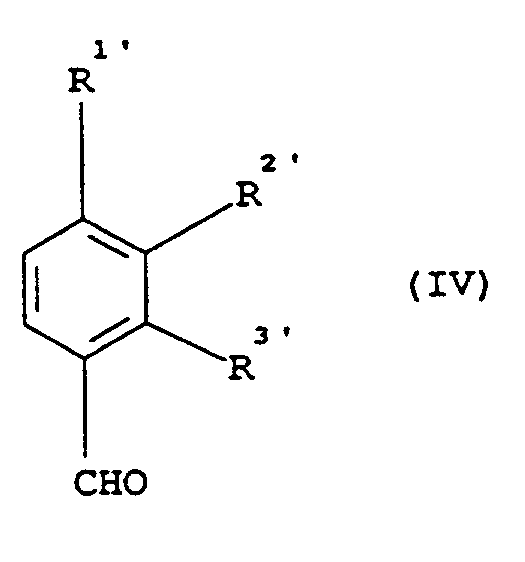
R1', R2', R3' ont la définition indiquée pour le procédé [A], tout d'abord avec des esters d'acides β-cétocarboxyliques de formules générales (V) et (Va) R4' et R5' ont également la définition indiquée pour le procédé [A], puis on fait réagir directement le produit avec des amines ou les chlorhydrates d'amines correspondants de formule générale (VI)
H₂N―R6' (VI)
dans laquelle R6' a la définition indiquée ci-dessus pour le procédé [A], ou bien on le cyclise tout d'abord avec de l'ammoniac dans des solvants organiques éventuellement inertes, par un procédé classique, et on l'alkyle dans la dernière étape par le procédé indiqué ci-dessus, et dans le cas des esters de pureté énantiomérique, on prépare tout d'abord les acides carboxyliques de pureté énantiomérique et on les estérifie par un procédé classique avec les alcools correspondants, en passant éventuellement par un dérivé d'acide réactif. - Médicament contenant au moins un composé de dihydropyridine suivant la revendication 5.
- Procédé de préparation de médicaments, caractérisé en ce qu'on fait prendre une forme administrable appropriée à au moins l'un des composés de dihydropyridine mentionnés dans la revendication 1, éventuellement avec des substances auxiliaires et des supports classiques.
Applications Claiming Priority (2)
| Application Number | Priority Date | Filing Date | Title |
|---|---|---|---|
| DE4011695 | 1990-04-11 | ||
| DE4011695A DE4011695A1 (de) | 1990-04-11 | 1990-04-11 | Verwendung von n-alkylierten 1,4-dihydropyridindicarbonsaeureestern als arzneimittel, neue verbindungen und verfahren zu ihrer herstellung |
Publications (3)
| Publication Number | Publication Date |
|---|---|
| EP0451654A2 EP0451654A2 (fr) | 1991-10-16 |
| EP0451654A3 EP0451654A3 (en) | 1992-07-08 |
| EP0451654B1 true EP0451654B1 (fr) | 1994-09-07 |
Family
ID=6404197
Family Applications (1)
| Application Number | Title | Priority Date | Filing Date |
|---|---|---|---|
| EP91105115A Expired - Lifetime EP0451654B1 (fr) | 1990-04-11 | 1991-03-30 | Utilisation d'esters d'acides de 1,4-dihydropyridine carboxyliques N-alkylés comme médicaments, composés nouveaux et leur procédé de préparation |
Country Status (18)
| Country | Link |
|---|---|
| US (2) | US5234935A (fr) |
| EP (1) | EP0451654B1 (fr) |
| JP (1) | JP3012352B2 (fr) |
| KR (1) | KR0180741B1 (fr) |
| AT (1) | ATE111079T1 (fr) |
| AU (1) | AU642992B2 (fr) |
| CA (1) | CA2040062A1 (fr) |
| DE (2) | DE4011695A1 (fr) |
| DK (1) | DK0451654T3 (fr) |
| ES (1) | ES2063998T3 (fr) |
| FI (1) | FI101377B1 (fr) |
| HU (2) | HUT59905A (fr) |
| IE (1) | IE64452B1 (fr) |
| IL (1) | IL97796A (fr) |
| NZ (1) | NZ237722A (fr) |
| PT (1) | PT97300B (fr) |
| TW (1) | TW197423B (fr) |
| ZA (1) | ZA912652B (fr) |
Families Citing this family (18)
| Publication number | Priority date | Publication date | Assignee | Title |
|---|---|---|---|---|
| DE4342196A1 (de) * | 1993-12-10 | 1995-06-14 | Bayer Ag | Neue 4-Phenyl-substituierte 1,4-Dihydropyridine |
| DE4125271A1 (de) * | 1991-07-31 | 1993-02-11 | Bayer Ag | Neue n-alkylierte 1,4-dihydropyridindicarbonsaeureester |
| US5310917A (en) * | 1991-09-13 | 1994-05-10 | Merck & Co., Inc. | Process for the preparation of 4-substituted-1,4-dihydropydrines |
| WO1993006082A1 (fr) * | 1991-09-13 | 1993-04-01 | Merck & Co., Inc. | Procede de preparation de 1,4-dihyropyridines-4-substitues |
| DE4133257A1 (de) * | 1991-10-08 | 1993-04-15 | Bayer Ag | N-methyl-nimodipin, verfahren zu seiner herstellung und seine verwendung als zerebraltherapeutikum |
| DE4200714A1 (de) * | 1992-01-14 | 1993-07-15 | Bayer Ag | Spezieller 1,4-dihydropyridin-3,5-dicarbonsaeureester, verfahren zu seiner herstellung und seine pharmazeutische verwendung |
| DE4223867A1 (de) * | 1992-07-20 | 1994-01-27 | Bayer Ag | Spezieller 1,4-Dihydropyridin-3,5-dicarbonsäureester, Verfahren zu seiner Herstellung und seine pharmazeutische Verwendung |
| DE4313691A1 (de) * | 1993-04-27 | 1994-11-03 | Bayer Ag | 2,6-Disubstituierte 4-Chinolyl-dihydropyridine |
| DE4313692A1 (de) * | 1993-04-27 | 1994-11-03 | Bayer Ag | 3-Chinolyl substituierte Dihydropyridine, Verfahren zu ihrer Herstellung und ihre Verwendung in Arzneimitteln |
| DE4313697A1 (de) * | 1993-04-27 | 1994-11-03 | Bayer Ag | Chinolyl-dihydropyridinester, Verfahren zu ihrer Herstellung und ihre Verwendung in Arzneimitteln |
| DE4328884A1 (de) * | 1993-08-27 | 1995-03-02 | Bayer Ag | Verwendung von N-alkylierten 1,4-Dihydropyridincarbonsäureestern als Arzneimittel |
| EP0657432B1 (fr) * | 1993-12-10 | 2003-03-12 | Bayer Ag | 1,4-Dihydropyridines substitués par un groupement phényle avec une activité cérébrale |
| EE03192B1 (et) * | 1993-12-10 | 1999-06-15 | Bayer Aktiengesellschaft | Isopropüül-(2-metoksüetüül)-4-(2-kloro-3-tsüanofenüül)-1,4-dihüdro-2,6-dimetüülpüri diin-3,5-dikarboksülaat, selle enantiomeerid ja vaheühend, meetodid nimetatud ühendite valmistamiseks ja kasutamine |
| DE4430094A1 (de) | 1994-08-25 | 1996-02-29 | Bayer Ag | Verwendung von 3,5-Dicarbonsäureester-1,4-Dihydropyridinen als Arzneimittel |
| DE19638570A1 (de) * | 1996-09-20 | 1998-03-26 | Bayer Ag | Wirkstoffhaltige thermoplastische Polyurethane |
| DE60214428T2 (de) * | 2001-12-20 | 2007-09-20 | Bayer Healthcare Ag | 1, 4-dihydro-1, 4-diphenylpyridin-derivate |
| US8420790B2 (en) * | 2009-10-30 | 2013-04-16 | Reliable Biopharmaceutical Corporation | Efficient and scalable process for the manufacture of Fondaparinux sodium |
| CN103998038A (zh) * | 2011-11-24 | 2014-08-20 | 里皮达特发展研究及咨询公司 | 具有hsp调节活性的1,4-二氢吡啶衍生物 |
Family Cites Families (16)
| Publication number | Priority date | Publication date | Assignee | Title |
|---|---|---|---|---|
| DE1813436C3 (de) * | 1968-12-07 | 1979-01-11 | Bayer Ag, 5090 Leverkusen | N-Substituierte 2,6-Dimethyl-l,4dihydropyridine |
| DE1923990C3 (de) * | 1969-05-10 | 1978-11-23 | Bayer Ag | Verfahren zur Herstellung von N-substituierten M-Dihydropyridin-S.S-dicarbonsäureestern |
| US3883543A (en) * | 1969-05-10 | 1975-05-13 | Bayer Ag | N-alkyl-1,4-dihydropyridines |
| DE1963188A1 (de) * | 1969-12-17 | 1971-06-24 | Bayer Ag | Neue Cyanphenyl-1,4-dihydropyridinderivate |
| CH550189A (de) * | 1971-01-08 | 1974-06-14 | Ciba Geigy Ag | Verfahren zur herstellung von neuen dibenzo (b,f) thiepincarbonsaeuren. |
| DE2210672C3 (de) * | 1972-03-06 | 1980-03-20 | Bayer Ag, 5090 Leverkusen | N-substituierte unsymmetrische 1 ^-Dihydropyridin-S^-dicarbonsäureester, Verfahren zu ihrer Herstellung sowie ihre Verwendung als Arzneimittel |
| DE2210667A1 (de) * | 1972-03-06 | 1973-09-20 | Bayer Ag | Kondensiert aromatisch substituierte 1,4-dihydropyridine, verfahren zu ihrer herstellung sowie ihre verwendung als arzneimittel |
| DE2228377A1 (de) * | 1972-06-10 | 1974-01-03 | Bayer Ag | Dihydropyridin-carbonsaeureamide, verfahren zu ihrer herstellung sowie ihre verwendung als arzneimittel |
| CH569043A5 (fr) * | 1973-01-23 | 1975-11-14 | Ciba Geigy Ag | |
| US3956341A (en) * | 1974-02-21 | 1976-05-11 | Smithkline Corporation | 1,3,5-Tricarbo-1,4-dihydropyridines |
| SU798099A1 (ru) * | 1978-03-06 | 1981-01-23 | Ордена Трудового Красного Знамениинститут Органического Синтезаан Латвийской Ccp | 1-Бензил-2,6-диметил-4-о-или-M-НиТРОфЕНил-3,5-диэТОКСиКАРбОНил- 1,4-дигидРОпиРидиНы, пРО Вл ющиЕКОРОНАРОдилАТиРующую АКТиВНОСТь |
| DE3587851D1 (de) * | 1984-09-28 | 1994-07-21 | Byk Gulden Lomberg Chem Fab | Neue Diarylverbindungen. |
| US4975440A (en) * | 1984-09-28 | 1990-12-04 | Byk Gulden Lomberg Chemische Fabrik Gmbh | Optically-active 1,4-dihydropyridine |
| US4780538A (en) * | 1986-02-12 | 1988-10-25 | Merck & Co., Inc. | Process for 1,4-dihydropyridine compounds using a titanamine catalyst |
| GB8616047D0 (en) * | 1986-07-01 | 1986-08-06 | Sandoz Ltd | A 1 4-dihydropyridine derivatives |
| GR1002248B (en) * | 1988-03-08 | 1996-04-23 | Egyt Gyogyszervegyeszeti Gyar | 1,4-dihydropyridine derivatives preparation method |
-
1990
- 1990-04-11 DE DE4011695A patent/DE4011695A1/de not_active Withdrawn
-
1991
- 1991-03-30 EP EP91105115A patent/EP0451654B1/fr not_active Expired - Lifetime
- 1991-03-30 ES ES91105115T patent/ES2063998T3/es not_active Expired - Lifetime
- 1991-03-30 DK DK91105115.9T patent/DK0451654T3/da active
- 1991-03-30 DE DE59102788T patent/DE59102788D1/de not_active Expired - Fee Related
- 1991-03-30 AT AT91105115T patent/ATE111079T1/de active
- 1991-04-04 US US07/680,454 patent/US5234935A/en not_active Expired - Fee Related
- 1991-04-08 CA CA002040062A patent/CA2040062A1/fr not_active Abandoned
- 1991-04-08 JP JP3101762A patent/JP3012352B2/ja not_active Expired - Lifetime
- 1991-04-08 IL IL9779691A patent/IL97796A/en not_active IP Right Cessation
- 1991-04-08 NZ NZ237722A patent/NZ237722A/en unknown
- 1991-04-09 PT PT97300A patent/PT97300B/pt not_active IP Right Cessation
- 1991-04-09 AU AU74253/91A patent/AU642992B2/en not_active Ceased
- 1991-04-09 FI FI911700A patent/FI101377B1/fi active
- 1991-04-10 ZA ZA912652A patent/ZA912652B/xx unknown
- 1991-04-10 TW TW080102712A patent/TW197423B/zh active
- 1991-04-10 KR KR1019910005710A patent/KR0180741B1/ko not_active Expired - Fee Related
- 1991-04-10 IE IE120091A patent/IE64452B1/en not_active IP Right Cessation
- 1991-04-11 HU HU911184A patent/HUT59905A/hu unknown
-
1993
- 1993-05-21 US US08/065,503 patent/US5432185A/en not_active Expired - Fee Related
-
1995
- 1995-06-22 HU HU95P/P00334P patent/HU211313A9/hu unknown
Also Published As
| Publication number | Publication date |
|---|---|
| HU911184D0 (en) | 1991-10-28 |
| ZA912652B (en) | 1992-01-29 |
| DE59102788D1 (de) | 1994-10-13 |
| EP0451654A3 (en) | 1992-07-08 |
| AU7425391A (en) | 1991-10-17 |
| IL97796A0 (en) | 1992-06-21 |
| PT97300B (pt) | 1998-10-30 |
| NZ237722A (en) | 1995-10-26 |
| PT97300A (pt) | 1992-01-31 |
| ES2063998T3 (es) | 1995-01-16 |
| FI911700A7 (fi) | 1991-10-12 |
| IE911200A1 (en) | 1991-10-23 |
| DK0451654T3 (da) | 1995-02-13 |
| FI911700A0 (fi) | 1991-04-09 |
| DE4011695A1 (de) | 1991-10-17 |
| IL97796A (en) | 1995-03-15 |
| FI101377B (fi) | 1998-06-15 |
| KR0180741B1 (ko) | 1999-03-20 |
| JPH04234847A (ja) | 1992-08-24 |
| HUT59905A (en) | 1992-07-28 |
| US5432185A (en) | 1995-07-11 |
| KR910018025A (ko) | 1991-11-30 |
| CA2040062A1 (fr) | 1991-10-12 |
| TW197423B (fr) | 1993-01-01 |
| ATE111079T1 (de) | 1994-09-15 |
| US5234935A (en) | 1993-08-10 |
| IE64452B1 (en) | 1995-08-09 |
| FI101377B1 (fi) | 1998-06-15 |
| AU642992B2 (en) | 1993-11-04 |
| EP0451654A2 (fr) | 1991-10-16 |
| HU211313A9 (en) | 1995-11-28 |
| JP3012352B2 (ja) | 2000-02-21 |
Similar Documents
| Publication | Publication Date | Title |
|---|---|---|
| EP0451654B1 (fr) | Utilisation d'esters d'acides de 1,4-dihydropyridine carboxyliques N-alkylés comme médicaments, composés nouveaux et leur procédé de préparation | |
| EP0088274B1 (fr) | 1,4-Dihydropyridines, leur procédé de préparation et leur application comme médicaments | |
| EP0002208B1 (fr) | Nitro dihydro-1,4 pyridines, médicaments les contenant et leur procédé de préparation | |
| EP0026317B1 (fr) | 1,4-Dihydropyridines optiquement actifs, procédés pour leur préparation et leur utilisation comme médicaments | |
| EP0103796A2 (fr) | Dihydropyrimidines, leur procédé de préparation et leur emploi dans des médicaments | |
| EP0114270B1 (fr) | Dérivés acyliques de dianhydro-1,4:3,6 hexitols, procédé pour leur préparation et leur application comme médicaments | |
| DE2841667A1 (de) | Fluorhaltige 1,4-dihydropyridine, verfahren zu ihrer herstellung sowie ihre verwendung als arzneimittel | |
| DE3209274A1 (de) | Pyridincarbonsaeureester, verfahren zu ihrer herstellung sowie ihre verwendung als arzneimittel | |
| EP0288758B1 (fr) | Dihydropyridinamides, procédé pour leur préparation et leur utilisation comme médicaments | |
| EP0110259A1 (fr) | 1,4-Dihydropyridines, leurs procédés de préparation ainsi que leur application comme médicaments | |
| EP0525568B1 (fr) | Esters d'acides de 1,4-dihydropyridine carboxyliques N-alkylés | |
| DE3412947A1 (de) | Tetrahydothienopyridine, verfahren zu ihrer herstellung sowie ihre verwendung als arzneimittel | |
| EP0551663A1 (fr) | 2,6-diméthyl-1-n-propyl-4-(4-trifluorométhylphényl)-1,4-dihydro-pyridine-3,5-dicarboxylate de diméthyle, son procédé de production et son utilisation pharmaceutique | |
| DE3833892A1 (de) | Basische 4-aryl-dhp-amide, verfahren zu ihrer herstellung und ihre verwendung in arzneimitteln | |
| EP0362635A1 (fr) | Application de nitrophényl-dihydropyridinecarboxamides comme médicaments, composés et procédés pour leur préparation en utilisant des produits intermédiaires | |
| EP0538690A1 (fr) | Dérivés 1,4-dihydropyridine-dicarboxyliques aryl-quinoline substitués, procédé de préparation et utilisation en tant que médicaments | |
| EP0225574B1 (fr) | Dihydro-1,4 pyridines fluorées, procédé pour leur préparation et leur application comme médicaments | |
| EP0581079A1 (fr) | Ester d'acide 1,4-dihydropyridine-3,5-dicarboxylique spécifique, procédé pour sa préparation et son utilisation pharmaceutique | |
| EP0657432A1 (fr) | 1,4-Dihydropyridines substitués par un groupement phényle avec une activité cérébrale | |
| AT360539B (de) | Verfahren zur herstellung neuer 1,4-dihydro- pyridinderivate | |
| AT360531B (de) | Verfahren zur herstellung von neuen 1,4- -dihydropyridinderivaten | |
| EP0493782A2 (fr) | Nouveaux amides de la dihydropyridine, procédés pour leur préparation et compositions pharmaceutiques les contenants | |
| EP0704434A1 (fr) | Dérivés de 6-amino-1,4-dihydropyridine utilisés comme activateurs canaux potassiques | |
| DD292451A5 (de) | Verfahren zur herstellung von basischen nitro-phenyl-dihydropyridinamiden |
Legal Events
| Date | Code | Title | Description |
|---|---|---|---|
| PUAI | Public reference made under article 153(3) epc to a published international application that has entered the european phase |
Free format text: ORIGINAL CODE: 0009012 |
|
| AK | Designated contracting states |
Kind code of ref document: A2 Designated state(s): AT BE CH DE DK ES FR GB GR IT LI LU NL SE |
|
| PUAL | Search report despatched |
Free format text: ORIGINAL CODE: 0009013 |
|
| AK | Designated contracting states |
Kind code of ref document: A3 Designated state(s): AT BE CH DE DK ES FR GB GR IT LI LU NL SE |
|
| 17P | Request for examination filed |
Effective date: 19920731 |
|
| 17Q | First examination report despatched |
Effective date: 19930305 |
|
| GRAA | (expected) grant |
Free format text: ORIGINAL CODE: 0009210 |
|
| AK | Designated contracting states |
Kind code of ref document: B1 Designated state(s): AT BE CH DE DK ES FR GB GR IT LI LU NL SE |
|
| REF | Corresponds to: |
Ref document number: 111079 Country of ref document: AT Date of ref document: 19940915 Kind code of ref document: T |
|
| REF | Corresponds to: |
Ref document number: 59102788 Country of ref document: DE Date of ref document: 19941013 |
|
| GBT | Gb: translation of ep patent filed (gb section 77(6)(a)/1977) |
Effective date: 19940920 |
|
| ITF | It: translation for a ep patent filed | ||
| ET | Fr: translation filed | ||
| REG | Reference to a national code |
Ref country code: GR Ref legal event code: FG4A Free format text: 3013394 |
|
| REG | Reference to a national code |
Ref country code: ES Ref legal event code: FG2A Ref document number: 2063998 Country of ref document: ES Kind code of ref document: T3 |
|
| EAL | Se: european patent in force in sweden |
Ref document number: 91105115.9 |
|
| REG | Reference to a national code |
Ref country code: DK Ref legal event code: T3 |
|
| PLBE | No opposition filed within time limit |
Free format text: ORIGINAL CODE: 0009261 |
|
| STAA | Information on the status of an ep patent application or granted ep patent |
Free format text: STATUS: NO OPPOSITION FILED WITHIN TIME LIMIT |
|
| 26N | No opposition filed | ||
| PGFP | Annual fee paid to national office [announced via postgrant information from national office to epo] |
Ref country code: DE Payment date: 20010214 Year of fee payment: 11 |
|
| PGFP | Annual fee paid to national office [announced via postgrant information from national office to epo] |
Ref country code: SE Payment date: 20010215 Year of fee payment: 11 |
|
| PGFP | Annual fee paid to national office [announced via postgrant information from national office to epo] |
Ref country code: FR Payment date: 20010220 Year of fee payment: 11 |
|
| PGFP | Annual fee paid to national office [announced via postgrant information from national office to epo] |
Ref country code: GR Payment date: 20010227 Year of fee payment: 11 Ref country code: CH Payment date: 20010227 Year of fee payment: 11 |
|
| PGFP | Annual fee paid to national office [announced via postgrant information from national office to epo] |
Ref country code: AT Payment date: 20010315 Year of fee payment: 11 |
|
| PGFP | Annual fee paid to national office [announced via postgrant information from national office to epo] |
Ref country code: ES Payment date: 20010320 Year of fee payment: 11 |
|
| PGFP | Annual fee paid to national office [announced via postgrant information from national office to epo] |
Ref country code: LU Payment date: 20010326 Year of fee payment: 11 |
|
| PGFP | Annual fee paid to national office [announced via postgrant information from national office to epo] |
Ref country code: GB Payment date: 20010328 Year of fee payment: 11 Ref country code: BE Payment date: 20010328 Year of fee payment: 11 |
|
| PGFP | Annual fee paid to national office [announced via postgrant information from national office to epo] |
Ref country code: DK Payment date: 20010330 Year of fee payment: 11 |
|
| REG | Reference to a national code |
Ref country code: GB Ref legal event code: IF02 |
|
| PG25 | Lapsed in a contracting state [announced via postgrant information from national office to epo] |
Ref country code: LU Free format text: LAPSE BECAUSE OF NON-PAYMENT OF DUE FEES Effective date: 20020330 Ref country code: GB Free format text: LAPSE BECAUSE OF NON-PAYMENT OF DUE FEES Effective date: 20020330 Ref country code: AT Free format text: LAPSE BECAUSE OF NON-PAYMENT OF DUE FEES Effective date: 20020330 |
|
| PG25 | Lapsed in a contracting state [announced via postgrant information from national office to epo] |
Ref country code: SE Free format text: LAPSE BECAUSE OF NON-PAYMENT OF DUE FEES Effective date: 20020331 Ref country code: LI Free format text: LAPSE BECAUSE OF NON-PAYMENT OF DUE FEES Effective date: 20020331 Ref country code: ES Free format text: LAPSE BECAUSE OF NON-PAYMENT OF DUE FEES Effective date: 20020331 Ref country code: CH Free format text: LAPSE BECAUSE OF NON-PAYMENT OF DUE FEES Effective date: 20020331 Ref country code: BE Free format text: LAPSE BECAUSE OF NON-PAYMENT OF DUE FEES Effective date: 20020331 |
|
| PGFP | Annual fee paid to national office [announced via postgrant information from national office to epo] |
Ref country code: NL Payment date: 20020331 Year of fee payment: 12 |
|
| PG25 | Lapsed in a contracting state [announced via postgrant information from national office to epo] |
Ref country code: DK Free format text: LAPSE BECAUSE OF NON-PAYMENT OF DUE FEES Effective date: 20020402 |
|
| BERE | Be: lapsed |
Owner name: *BAYER A.G. Effective date: 20020331 |
|
| PG25 | Lapsed in a contracting state [announced via postgrant information from national office to epo] |
Ref country code: NL Free format text: LAPSE BECAUSE OF NON-PAYMENT OF DUE FEES Effective date: 20021001 Ref country code: DE Free format text: LAPSE BECAUSE OF NON-PAYMENT OF DUE FEES Effective date: 20021001 |
|
| PG25 | Lapsed in a contracting state [announced via postgrant information from national office to epo] |
Ref country code: GR Free format text: LAPSE BECAUSE OF NON-PAYMENT OF DUE FEES Effective date: 20021007 |
|
| EUG | Se: european patent has lapsed |
Ref document number: 91105115.9 |
|
| REG | Reference to a national code |
Ref country code: CH Ref legal event code: PL |
|
| GBPC | Gb: european patent ceased through non-payment of renewal fee |
Effective date: 20020330 |
|
| REG | Reference to a national code |
Ref country code: DK Ref legal event code: EBP |
|
| PG25 | Lapsed in a contracting state [announced via postgrant information from national office to epo] |
Ref country code: FR Free format text: LAPSE BECAUSE OF NON-PAYMENT OF DUE FEES Effective date: 20021129 |
|
| NLV4 | Nl: lapsed or anulled due to non-payment of the annual fee |
Effective date: 20021001 |
|
| REG | Reference to a national code |
Ref country code: FR Ref legal event code: ST |
|
| REG | Reference to a national code |
Ref country code: ES Ref legal event code: FD2A Effective date: 20030410 |
|
| PG25 | Lapsed in a contracting state [announced via postgrant information from national office to epo] |
Ref country code: IT Free format text: LAPSE BECAUSE OF NON-PAYMENT OF DUE FEES Effective date: 20050330 |