EP0454397B1 - Verfahren zur Herstellung von e-Caprolacton - Google Patents
Verfahren zur Herstellung von e-Caprolacton Download PDFInfo
- Publication number
- EP0454397B1 EP0454397B1 EP91303594A EP91303594A EP0454397B1 EP 0454397 B1 EP0454397 B1 EP 0454397B1 EP 91303594 A EP91303594 A EP 91303594A EP 91303594 A EP91303594 A EP 91303594A EP 0454397 B1 EP0454397 B1 EP 0454397B1
- Authority
- EP
- European Patent Office
- Prior art keywords
- acid
- cyclohexanone
- caprolactone
- mole
- percarboxylic
- Prior art date
- Legal status (The legal status is an assumption and is not a legal conclusion. Google has not performed a legal analysis and makes no representation as to the accuracy of the status listed.)
- Expired - Lifetime
Links
Images
Classifications
-
- C—CHEMISTRY; METALLURGY
- C07—ORGANIC CHEMISTRY
- C07D—HETEROCYCLIC COMPOUNDS
- C07D315/00—Heterocyclic compounds containing rings having one oxygen atom as the only ring hetero atom according to more than one of groups C07D303/00 - C07D313/00
-
- C—CHEMISTRY; METALLURGY
- C07—ORGANIC CHEMISTRY
- C07C—ACYCLIC OR CARBOCYCLIC COMPOUNDS
- C07C407/00—Preparation of peroxy compounds
-
- C—CHEMISTRY; METALLURGY
- C07—ORGANIC CHEMISTRY
- C07C—ACYCLIC OR CARBOCYCLIC COMPOUNDS
- C07C407/00—Preparation of peroxy compounds
- C07C407/003—Separation; Purification; Stabilisation; Use of additives
- C07C407/006—Stabilisation; Use of additives
Definitions
- This invention relates to a process for forming ⁇ -caprolactone effectively (with high yield) while substantially inhibiting formation of by-products by supplying a percarboxylic acid solution obtained by oxidizing organic carboxylic acids in an organic solvent in the presence of hydrogen peroxide and a boric acid catalyst, and cyclohexanone in a reaction system so that the rates of hydrogen peroxide and the boric acid catalyst formulated are smaller, and effecting an oxidation reaction of cyclohexanone with percarboxylic acid in the reaction system.
- ⁇ -caprolactone having high purity can be obtained easily by a conventional purification process such as a distillation process.
- ⁇ -caprolactone is prepared by reacting cyclohexanone with a percarboxylic acid such as peracetic acid and perpropionic acid (Baeyer-Villiger oxidation reaction).
- a percarboxylic acid such as peracetic acid and perpropionic acid
- An object of the present invention is to provide an industrial process which can prepare ⁇ -caprolactone with high yield without forming by-products (impurities) which are difficult to be separated by purification such as distillation.
- the present invention relates to a process for preparing ⁇ -caprolactone comprising using a percarboxylic acid solution obtained by oxidizing organic carboxylic acid in an organic solvent in the presence of hydrogen peroxide and a boric acid catalyst, and cyclohexanone, supplying 1 to 1.5 mole of percarboxylic acid, 0.012 mole or less of hydrogen peroxide and 0.04 mole or less of the boric acid catalyst per mole of cyclohexanone in a reaction system, and reacting said cyclohexanone with said percarboxylic acid in the reaction system to form ⁇ -caprolactone.
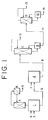
- Fig. 1 shows one example of a preparation flow comprising a step for preparing a percarboxylic acid solution, a step for forming ⁇ -caprolactone (a step for preparing a crude ⁇ -caprolactone solution) and a step for purifying a crude ⁇ -caprolactone solution, which can be used for practicing the present invention, wherein 1 is a glass reactor, 2 is a reactor, 9 is a reboiler, 12 is a reboiler, A is a distillation column, B is a reflux condenser with a settler, C is a distillation column and D is a distillation column.
- the percarboxylic acid solution and cyclohexanone described above are used and supplied in an "oxidation reaction system of cyclohexanone" so that
- the by-products are increased. Further, if the used amount of hydrogen peroxide and a boric acid catalyst exceeds the above-defined amount, the by-products are also increased.
- a small amount of a stabilizer such as a phosphate, a phosphate ester, picolinic acid, dipicolinic acid and pyridine derivatives including picoline and lutidine which can inhibit loss caused by decomposition of percarboxylic acid due to a minute amount of metal is preferably contained.
- percarboxylic acid solution to be used in the preparation process of the present invention is a solution of percarboxylic acid such as peracetic acid, perpropionic acid and perbutyric acid obtained by oxidizing organic carboxylic acid in an organic solvent in the presence of hydrogen peroxide and a boric acid catalyst.
- the rate of percarboxylic acid formed by oxidizing organic carboxylic acid such as acetic acid, propionic acid and butyric acid contained is 5 to 40 % by weight, particularly 10 to 30 % by weight
- the rate of hydrogen peroxide contained is as low as about 0.01 mole or less, particularly about 0.001 to 0.008 mole per mole of the above percarboxylic acid
- the rate of a boric acid catalyst contained (calculated on orthoboric acid) is as low as 0.03 mole or less, particularly about 0.005 to 0.02 mole per mole of the above percarboxylic acid.
- the respective components can be mixed at the mixing rates described above, and therefore a mixture to be used for an oxidation reaction of cyclohexanone can be prepared easily.
- 10 to 70 % by weight, particularly 20 to 65 % by weight of organic carboxylic acid may be contained, and further 5 to 60 % by weight, particularly 10 to 55 % by weight of an organic solvent may be contained.
- organic carboxylic acid preferred is aliphatic carboxylic acid, and most preferred is propionic acid from which perpropionic acid to be suitably used for oxidation of cyclohexanone can be obtained.
- organic solvent there may be mentioned aliphatic carboxylic acid lower alkyl ester derived from saturated aliphatic monovalent alcohol having 1 to 5 carbon atoms such as methanol, ethanol, 1-propanol, iso-propanol, 1-butanol, iso-butanol and 1-pentanol, and aliphatic carboxylic acid such as acetic acid, propionic acid and butyric acid, particularly preferably propionic acid lower alkyl ester (e.g. ethyl propionate) derived from lower alcohol having 1 to 3 carbon atoms and propionic acid.
- aliphatic carboxylic acid lower alkyl ester derived from saturated aliphatic monovalent alcohol having 1 to 5 carbon atoms
- aliphatic carboxylic acid such as acetic acid, propionic acid and butyric acid, particularly preferably propionic acid lower alkyl ester (e.g. ethyl propionate) derived from lower alcohol having 1 to 3 carbon
- boric acid catalyst there may be mentioned orthoboric acid and metaboric acid.
- an industrial process for preparing the "percarboxylic acid solution having the above composition” in which an organic carboxylic acid such as propionic acid, and hydrogen peroxide are reacted in an organic solvent such as propionic acid lower alkyl ester which can form a heterogeneous azeotrope together with water, in the presence of a boric acid catalyst such as orthoboric acid and metaboric acid at a temperature of 30 to 100 °C, particularly 50 to 80 °C, and percarboxylic acid such as perpropionic acid is formed while removing water introduced together with hydrogen peroxide during progress of the reaction and reaction water formed during the reaction continuously by azeotropic distillation using an azeotropic distillation column equipped with a condenser and a decanter.
- an organic carboxylic acid such as propionic acid
- hydrogen peroxide are reacted in an organic solvent such as propionic acid lower alkyl ester which can form a heterogeneous azeotrope together with water
- the "percarboxylic acid solution containing small amounts of hydrogen peroxide and boric acid" which can be suitably used in the preparation process of the present invention can be obtained easily, and a reaction mixture containing perpropionic acid can be used such as for the next oxidation reaction of cyclohexanone without purifying the percarboxylic acid solution.
- hydrogen peroxide is preferably supplied in the form of an aqueous solution comprising 30 to 70 % by weight of hydrogen peroxide.
- the molar ratio of the organic carboxylic acid to hydrogen peroxide to be used is not particularly limited, but for reacting hydrogen peroxide effectively, the molar ratio of the organic carboxylic acid to hydrogen peroxide (organic carboxyic acid/hydrogen peroxide) used in the first place is desirably 1.4 to 6, particularly 1.5 to 5.
- the amount of the catalyst to be added is desirably 0.03 mole or less, particularly about 0.005 to 0.02 mole per mole of hydrogen peroxide supplied in the reaction system in the first place.
- the amount of the organic solvent such as carboxylic acid alkyl ester to be used is desirably 0.3 to 15 times in terms of weight based on the total amount of water introduced together with hydrogen peroxide and water formed during the reaction for effective azeotropic distillation of water existing in the reaction system.
- a process for removing water formed during the reaction there may be mentioned, for example, a process in which the above organic solvent and water are distilled azeotropically in an azeotropic distillation column equipped with a condenser and a decanter, a distillate condensed by a condenser is introduced into a decanter and separated by decantation into an organic phase and an aqueous phase, only the organic phase is refluxed to an azeotropic distillation column and the aqueous phase is drawn continuously, and azeotropic dehydration is continued until the above distillate introduced into a decanter will not substantially be separated into an organic phase and an aqueous phase.
- the reaction pressure can be varied depending on a composition of the reaction system and a temperature selected, but preferably a reduced pressure of 10 to 300 mmHg.
- ⁇ -caprolactone is prepared effectively by using the mixture for an oxidation reaction of cyclohexanone prepared as described above, and oxidizing cyclohexanone in the mixture with the above percarboxylic acid at a reaction temperature of 30 to 80 °C, particularly preferably in the range of 40 to 70 °C and for a reaction time of 1 to 8 hours, particularly preferably in the range of 2 to 5 hours to form ⁇ -caprolactone.
- ⁇ -caprolactone can be prepared with good reproducibility and with high yield, i.e. with a conversion of 97 % or more based on cyclohexanone used in an oxidation reaction, a selectivity of 99 % or more based on cyclohexanone consumed and a selectivity of 99.5 % or more based on percarboxylic acid consumed, and ⁇ -caprolactone containing extremely small amounts of by-products (impurities) formed can be obtained.
- the purification step for isolating ⁇ -caprolactone from an oxidation reaction mixture obtained by the preparation process of the present invention can be carried out by using a "crude ⁇ -caprolactone solution (oxidation reaction mixture)" obtained in the above "step for oxidizing cyclohexanone" according to a conventional distillation process.
- the above distillation process can be performed by, for example, removing a process in which low boiling point components such as percarboxylic acid, carboxylic acid and carboxylic acid alkyl ester, and then distilling ⁇ -caprolactone out by a second distillation column.
- this process is preferably performed under a reduced pressure of about 1 to 100 mmHg.
- a distillation device there may be desirably used a device of a type which is suitable for distillating a substance sensitive to heat, such as a thin layer evaporator and a falling film evaporator.
- the oxidation reaction mixture obtained by the preparation process of the present invention contains extremely small amounts of by-products in oxidation reaction, ⁇ -caprolactone having high purity can be obtained easily by purifying the oxidation reaction mixture by the above distillation method under reduced pressure substantially without causing decomposition by distillation.
- ⁇ -caprolactone can be prepared either continuously or batchwise.
- the concentrations of hydrogen peroxide and perpropionic acid were determined according "cerium sulfate titration" and “thiosulfate titration", respectively, and the amounts of ⁇ -caprolactone, propionic acid and ethyl propionate were quantitated by gas chromatography.
- the reactor 1 was immersed in an oil bath and heated to 100 °C whereby this solution was heated up to a boiling point while refluxing under a reduced pressure of 60 mmHg and stirring, and 60 % by weight of hydrogen peroxide was added over 30 minutes from a supply line 4 in a total amount of 107.4 g.
- the temperature of the reactor 1 was about 65 °C, and an organic phase in which hetero azeotropic substances were condensed was recirculated from the reflux condenser B with a settler to maintain generation of reflux.
- an aqueous phase condensed was drawn continuously from a draw line 5 of the reflux condenser B with a settler.
- the perpropionic acid solution obtained from a bottom of the reactor 1 had the following composition (% by weight). Ethyl propionate 18.4 % Propionic acid 57.7 % Perpropionic acid 23.5 % Hydrogen peroxide 0.05 % Orthoboric acid 0.23 %
- the conversion of hydrogen peroxide was 99.5 %, and the selectivity to perpropionic acid was 95.0 %.
- the perpropionic acid solution in this reactor 2 was heated to 50 °C while stirring, and a total amount of 138.7 g (1.414 mole) of cyclohexanone was added over 30 minutes from a supply line 7. After the mixture was reacted as such for 3 hours from the starting point of the addition of cyclohexanone while maintaining its temperature at 50 °C, the mixture was cooled to room temperature to prepare 786.3 g of a crude ⁇ -caprolactone solution.
- the crude ⁇ -caprolactone solution obtained had the following composition (% by weight). Ethyl propionate 15.1 % Propionic acid 60.7 % ⁇ -Caprolactone 20.1 % Perpropionic acid 3.5 % Hydrogen peroxide 0.01 % Cyclohexanone 0.33 % Orthoboric acid 0.16 %
- the conversion of cyclohexanone was 98.1 %, and the selectivity to ⁇ -caprolactone was 99.8 %.
- the conversion of perpropionic acid was 82.1 %, and the selectivity to ⁇ -caprolactone was 99.5 %.
- ⁇ -caprolactone was drawn continuously at a rate of 72.0 g/hour from a draw line 13 while refluxing at a reflux rate of 0.2, and high boiling point components were drawn from a draw line 14 at a lower part of the reboiler 12.
- the purity of the ⁇ -caprolactone obtained by this operation was 99.9 % by weight (total amount of the low boiling point components such as ⁇ -valerolactone and oxycaproic acid: 0.04 % by weight or less, total amount of the high boiling point components such as 5-hexenoic acid, ethyl propionoxy caproate and ethyl oxycaproate: 0.05 % by weight or less), which was a satisfactory product purity.
- 670.4 g of a perpropionic acid solution was prepared in the same manner as in Example 1 except for changing the amount of orthoboric acid used from 1.6 g to 6.4 g.
- the reaction required 2.5 hours from the starting point of addition of hydrogen peroxide.
- the perpropionic acid solution obtained had the following composition (% by weight). Ethyl propionate 19.8 % Propionic acid 54.7 % Perpropionic acid 24.2 % Hydrogen peroxide 0.10 % Orthoboric acid 0.95 %
- the conversion of hydrogen peroxide was 99.0 %, and the selectivity to perpropionic acid was 96.0 %.
- a crude ⁇ -caprolactone solution was prepared in the same manner as in Example 1 except for using 632.8 g of the percarboxylic acid solution obtained (perpropionic acid: 1.70 mole) and 139.0 g (1.417 mole) of cyclohexanone.
- the weight of the crude ⁇ -caprolactone solution obtained was 767.1 g, and had the following composition (% by weight).
- the conversion of cyclohexanone was 98.0 %, and the selectivity to ⁇ -caprolactone was 94.6 %.
- the conversion of perpropionic acid was 81.8 %, and the selectivity to ⁇ -caprolactone was 94.2 %.
- the purity of the ⁇ -caprolactone was 99.6 % by weight (the low boiling point components: about 0.08 % by weight, the high boiling point components: about 0.25 % by weight), which was not a satisfactory product purity.
- 680.1 g of a perpropionic acid solution was prepared in the same manner as in Example 1 except for changing the reaction time in preparation of the perpropionic acid solution to 3 hours and 15 minutes. At the time of terminating the above reaction, in the reflux condenser B with a settler, an aqueous phase was still separated slightly from the draw line 5.
- the perpropionic acid solution obtained from the bottom of the reactor 1 had the following composition (% by weight). Ethyl propionate 18.4 % Propionic acid 57.7 % Perpropionic acid 22.8 % Hydrogen peroxide 0.43 % Orthoboric acid 0.24 %
- the conversion of hydrogen peroxide was 95.5 %, and the selectivity to perpropionic acid was 95.3 %.
- a crude ⁇ -caprolactone solution was prepared in the same manner as in Example 1 except for using 651.9 g of the above percarboxylic acid solution (perpropionic acid: 1.65 mole) and 134.9 g (1.375 mole) of cyclohexanone.
- the weight of the crude ⁇ -caprolactone solution obtained was 783.3 g, and had the following composition (% by weight).
- Ethyl propionate 16.4 % Propionic acid 58.6 % ⁇ -Caprolactone 18.9 % Perpropionic acid 4.5 % Hydrogen peroxide 0.03 % Cyclohexanone 0.17 % Orthoboric acid 0.19 %
- this crude ⁇ -caprolactone solution was purified in the same manner as in Example 1 to obtain ⁇ -caprolactone.
- the purity of the ⁇ -caprolactone was 99.2 % by weight (the low boiling point components: 0.35 % by weight, the high boiling point components: about 0.35 % by weight), which was not a satisfactory product purity.
- the preparation process of the present invention is an excellent industrial process for preparing ⁇ -caprolactone with high yield while inhibiting formation of by-products (impurities) which become a problem in purification, by limiting the rate of percarboxylic acid to be mixed based on cyclohexanone within a specific range, preparing a mixture for reaction by mixing cyclohexanone and a percarboxylic acid solution by controlling so that the rate of hydrogen peroxide and the rate of a boric acid catalyst mixed based on cyclohexanone are smaller, and reacting cyclohexanone with percarboxylic acid in the mixture, and from the oxidation reaction mixture obtained as a result, ⁇ -caprolactone having a purity of at least 99.8 % by weight can be obtained easily.
Landscapes
- Chemical & Material Sciences (AREA)
- Organic Chemistry (AREA)
- Pyrane Compounds (AREA)
- Organic Low-Molecular-Weight Compounds And Preparation Thereof (AREA)
- Low-Molecular Organic Synthesis Reactions Using Catalysts (AREA)
- Nitrogen And Oxygen Or Sulfur-Condensed Heterocyclic Ring Systems (AREA)
Claims (18)
- Verfahren zur Herstellung von ε-Caprolacton, bei welchem eine Percarboxylsäure-Lösung verwendet wird, die durch ein Oxidieren einer organischen Carboxylsäure in einem organischen Lösungsmittel in der Gegenwart von Wasserstoffperoxid und einem Borsäure-Katalysator erhalten ist, sowie Cyclohexanon, wobei 1 bis 1.5 Mol der Percarboxylsäure, 0.012 Mol oder weniger Wasserstoffperoxid und 0.04 Mol oder weniger des Borsäure-Katalysators je Mol des Cyclohexanons in ein Reaktionssystem angeliefert werden und Cyclohexanon mit der Percarboxylsäure zur Bildung von ε-Caprolacton reagiert wird.
- Verfahren nach Anspruch 1, bei welchem die verwendete Menge der Percarboxylsäure etwa 1.05 bis 1.4 Mol je Mol des Cyclohexanons beträgt.
- Verfahren nach Anspruch 2, bei welchem die verwendete Menge der Percarboxylsäure etwa 1.1 bis 1.3 Mol je Mol des Cyclohexanons beträgt.
- Verfahren nach Anspruch 1, bei welchem die verwendete Menge der Wasserstoffperoxids 0.001 bis 0.01 Mol des Cyclohexanons beträgt.
- Verfahren nach Anspruch 1, bei welchem die verwendete Menge des Borsäure-Katalysators 0.001 bis 0.03 Mol je Mol des Cyclohexanons beträgt.
- Verfahren nach Anspruch 5, bei welchem die verwendete Menge des Borsäure-Katalysators 0.005 bis 0.018 Mol je Mol des Cyclohexanons beträgt.
- Verfahren nach Anspruch 1, bei welchem die Reaktionstemperatur in dem Bereich von 30 bis 80°C liegt.
- Verfahren nach Anspruch 7, bei welchem die Reaktionstemperatur in dem Bereich von 40 bis 70°C liegt.
- Verfahren nach Anspruch 1, bei welchem die Reaktionszeit in dem Bereich von 1 bis 8 Stunden liegt.
- Verfahren nach Anspruch 9, bei welchem die Reaktionszeit in dem Bereich von 2 bis 5 Stunden liegt.
- Verfahren nach Anspruch 1, bei welchem der Reaktionsdruck in dem Bereich von 1 bis 100 mmHg liegt.
- Verfahren nach Anspruch 1, bei welchem die Percarboxylsäure Perpropionsäure ist.
- Verfahren nach Anspruch 1, bei welchem die Percarboxylsäure weiterhin ein organisches Lösungsmittel enthält.
- Verfahren nach Anspruch 13, bei welchem das organische Lösungsmittel ein niedriger Alkylester einer aliphatischen Carboxylsäure ist.
- Verfahren nach Anspruch 14, bei welchem das organische Lösungsmittel ein niedriger Alkylester der Propionsäure ist.
- Verfahren nach Anspruch 15, bei welchem das organische Lösungsmittel Ethylpropionat ist.
- Verfahren nach Anspruch 1, bei welchem die Reaktion weiterhin einen Stabilisator enthält.
- Verfahren nach Anspruch 17, bei welchem der Stabilisator wenigstens eine Verbindung ist, ausgewählt von der Gruppe, bestehend aus einem Phosphat, einem Phosphatester, Picolinsäure, Dipicolinsäure, Picolin und Lutidin.
Applications Claiming Priority (2)
| Application Number | Priority Date | Filing Date | Title |
|---|---|---|---|
| JP107674/90 | 1990-04-25 | ||
| JP2107674A JPH0798816B2 (ja) | 1990-04-25 | 1990-04-25 | ε―カプロラクトンの製造法 |
Publications (2)
| Publication Number | Publication Date |
|---|---|
| EP0454397A1 EP0454397A1 (de) | 1991-10-30 |
| EP0454397B1 true EP0454397B1 (de) | 1995-04-05 |
Family
ID=14465118
Family Applications (1)
| Application Number | Title | Priority Date | Filing Date |
|---|---|---|---|
| EP91303594A Expired - Lifetime EP0454397B1 (de) | 1990-04-25 | 1991-04-22 | Verfahren zur Herstellung von e-Caprolacton |
Country Status (7)
| Country | Link |
|---|---|
| US (1) | US5250707A (de) |
| EP (1) | EP0454397B1 (de) |
| JP (1) | JPH0798816B2 (de) |
| CN (1) | CN1035379C (de) |
| AT (1) | ATE120742T1 (de) |
| CA (1) | CA2040270A1 (de) |
| DE (1) | DE69108600T2 (de) |
Families Citing this family (30)
| Publication number | Priority date | Publication date | Assignee | Title |
|---|---|---|---|---|
| WO1999014190A1 (fr) * | 1997-09-16 | 1999-03-25 | Daicel Chemical Industries, Ltd. | Procede de preparation de peroxyacide d'equilibre et procede de production de lactone |
| JP2004143047A (ja) * | 2002-10-22 | 2004-05-20 | Daicel Chem Ind Ltd | ε−カプロラクトンの製造方法 |
| JP2005139110A (ja) * | 2003-11-06 | 2005-06-02 | Ecology Maximum Co Ltd | ε−カプロラクトンの製造方法、並びに、ε−カプロラクトンを用いたポリカプロラクトンの製造方法 |
| JP4297152B2 (ja) | 2006-10-06 | 2009-07-15 | トヨタ自動車株式会社 | 車両前部構造 |
| US8809392B2 (en) | 2008-03-28 | 2014-08-19 | Ecolab Usa Inc. | Sulfoperoxycarboxylic acids, their preparation and methods of use as bleaching and antimicrobial agents |
| CA2715175C (en) | 2008-03-28 | 2017-11-21 | Ecolab Inc. | Sulfoperoxycarboxylic acids, their preparation and methods of use as bleaching and antimicrobial agents |
| US12203056B2 (en) | 2008-03-28 | 2025-01-21 | Ecolab Usa Inc. | Sulfoperoxycarboxylic acids, their preparation and methods of use as bleaching and antimicrobial agents |
| US8871807B2 (en) | 2008-03-28 | 2014-10-28 | Ecolab Usa Inc. | Detergents capable of cleaning, bleaching, sanitizing and/or disinfecting textiles including sulfoperoxycarboxylic acids |
| CN102584775B (zh) * | 2011-01-12 | 2015-04-22 | 中国石油化工集团公司 | 制备ε-己内酯的方法 |
| CN102584776A (zh) * | 2011-01-12 | 2012-07-18 | 中国石油化工集团公司 | 一种制备ε-己内酯的方法 |
| CN102304117A (zh) * | 2011-09-19 | 2012-01-04 | 武汉理工大学 | 一种合成ε-己内酯的方法 |
| US9321664B2 (en) | 2011-12-20 | 2016-04-26 | Ecolab Usa Inc. | Stable percarboxylic acid compositions and uses thereof |
| CN106396037B (zh) | 2012-03-30 | 2019-10-15 | 艺康美国股份有限公司 | 过乙酸/过氧化氢和过氧化物还原剂用于处理钻井液、压裂液、回流水和排放水的用途 |
| US20140256811A1 (en) | 2013-03-05 | 2014-09-11 | Ecolab Usa Inc. | Efficient stabilizer in controlling self accelerated decomposition temperature of peroxycarboxylic acid compositions with mineral acids |
| US10165774B2 (en) | 2013-03-05 | 2019-01-01 | Ecolab Usa Inc. | Defoamer useful in a peracid composition with anionic surfactants |
| CN104003972A (zh) * | 2014-04-28 | 2014-08-27 | 安徽红太阳新材料有限公司 | 一种制备己内酯的方法 |
| CN104130234A (zh) * | 2014-07-25 | 2014-11-05 | 南京红太阳新材料有限公司 | 一种制备己内酯的方法 |
| US10172351B2 (en) | 2015-09-04 | 2019-01-08 | Ecolab Usa Inc. | Performic acid on-site generator and formulator |
| CN105315442A (zh) * | 2015-12-01 | 2016-02-10 | 仇颖超 | 一种淀粉改性聚己内酯塑料材料的制备方法 |
| GB2548138A (en) * | 2016-03-09 | 2017-09-13 | Perstorp Ab | Production equipment (II) for production of a caprolactone |
| GB2548137A (en) * | 2016-03-09 | 2017-09-13 | Perstorp Ab | Production equipment (I) for production of a caprolactone |
| CN107163018A (zh) * | 2017-06-23 | 2017-09-15 | 中山大学惠州研究院 | 一种分离ε‑己内酯的精馏方法 |
| AU2019325568B2 (en) | 2018-08-22 | 2022-03-10 | Ecolab Usa Inc. | Hydrogen peroxide and peracid stabilization with molecules based on a pyridine carboxylic acid at C-3, -4 or -5 |
| US11185893B2 (en) | 2019-05-31 | 2021-11-30 | Ecolab Usa Inc. | Peracid compositions with conductivity monitoring capability |
| WO2021026410A1 (en) | 2019-08-07 | 2021-02-11 | Ecolab Usa Inc. | Polymeric and solid-supported chelators for stabilization of peracid-containing compositions |
| CN111763192B (zh) * | 2020-07-14 | 2023-09-12 | 湖南瑞源石化股份有限公司 | 一种ε-己内酯的制备方法及其装置 |
| CN115490623B (zh) * | 2021-06-18 | 2024-08-30 | 中国石油化工股份有限公司 | 合成无水过氧有机酸的方法和合成ε-己内酯的方法 |
| CN114835669A (zh) * | 2022-03-23 | 2022-08-02 | 华东理工大学 | 高纯度ε-己内酯的微流控合成方法 |
| CN115812713B (zh) * | 2022-11-29 | 2024-03-29 | 湖南聚仁新材料股份公司 | 消毒剂和己内酯生产过程中联产过氧羧酸消毒剂的方法 |
| CN119588424B (zh) * | 2023-09-11 | 2026-03-24 | 中国石油化工股份有限公司 | 一种催化剂组合物以及制备过氧酸的方法 |
Family Cites Families (19)
| Publication number | Priority date | Publication date | Assignee | Title |
|---|---|---|---|---|
| US3064008A (en) * | 1962-11-13 | I i i i i i | ||
| US2914556A (en) * | 1956-04-13 | 1959-11-24 | Union Carbide Corp | Preparation of lactone adducts |
| US3189619A (en) * | 1962-09-25 | 1965-06-15 | Exxon Research Engineering Co | Synthesis of carpolactone |
| US3317563A (en) * | 1963-12-26 | 1967-05-02 | Celanese Corp | Preparation of epsilon-caprolactone |
| FR1474098A (fr) * | 1966-01-25 | 1967-03-24 | Electro Chimie Soc D | Procédé de préparation d'epsilon-caprolactone |
| FR1474903A (fr) * | 1966-02-12 | 1967-03-31 | Electrochimie Soc | Procédé de préparation d'epsiloncaprolactone |
| GB1140184A (en) * | 1967-06-13 | 1969-01-15 | Chisso Corp | Process for manufacturing e-caprolactone |
| US3624258A (en) * | 1969-03-22 | 1971-11-30 | Teijin Ltd | Process for the preparation of {68 -caprolactone |
| DE2038455A1 (de) * | 1970-08-01 | 1972-02-10 | Bayer Ag | Verfahren zur Herstellung von epsilon-Caprolacton |
| US3781350A (en) * | 1971-07-09 | 1973-12-25 | Teijin Ltd | Process for preparation of omega-hydroxy saturated aliphatic monocarboxylic acids |
| US3825570A (en) * | 1971-11-02 | 1974-07-23 | Teijin Ltd | Process for the preparation of epsilon-caprolactone |
| US4183863A (en) * | 1978-04-18 | 1980-01-15 | Union Carbide Corporation | Conversion of cyclohexanol to ε-caprolactone |
| DE2920436A1 (de) * | 1979-05-19 | 1980-12-04 | Bayer Ag | Verfahren zur herstellung von epsilon -caprolacton |
| DE2934659A1 (de) * | 1979-08-28 | 1981-03-19 | Bayer Ag, 5090 Leverkusen | Verfahren zur herstellung von sehr reinem epsilon -caprolacton |
| FR2500453A1 (fr) * | 1981-02-20 | 1982-08-27 | Ugine Kuhlmann | Procede d'obtention de l'epsilon-caprolactone |
| FR2519985A1 (fr) * | 1982-01-15 | 1983-07-22 | Ugine Kuhlmann | Procede perfectionne de fabrication de l'e-caprolactone |
| JPH0237919B2 (ja) * | 1983-05-04 | 1990-08-28 | Mitsubishi Chem Ind | Kapurorakutonnoseizohoho |
| JPS61200120A (ja) * | 1985-03-01 | 1986-09-04 | Nippon Shokubai Kagaku Kogyo Co Ltd | ラクトン変性化合物の製造方法 |
| DE3823213A1 (de) * | 1988-07-08 | 1990-01-11 | Basf Ag | Verfahren zur herstellung von caprolacton |
-
1990
- 1990-04-25 JP JP2107674A patent/JPH0798816B2/ja not_active Expired - Fee Related
-
1991
- 1991-04-22 EP EP91303594A patent/EP0454397B1/de not_active Expired - Lifetime
- 1991-04-22 AT AT91303594T patent/ATE120742T1/de not_active IP Right Cessation
- 1991-04-22 US US07/689,151 patent/US5250707A/en not_active Expired - Fee Related
- 1991-04-22 DE DE69108600T patent/DE69108600T2/de not_active Expired - Fee Related
- 1991-04-24 CA CA002040270A patent/CA2040270A1/en not_active Abandoned
- 1991-10-25 CN CN91109988A patent/CN1035379C/zh not_active Expired - Fee Related
Also Published As
| Publication number | Publication date |
|---|---|
| ATE120742T1 (de) | 1995-04-15 |
| DE69108600D1 (de) | 1995-05-11 |
| JPH0798816B2 (ja) | 1995-10-25 |
| JPH049378A (ja) | 1992-01-14 |
| EP0454397A1 (de) | 1991-10-30 |
| CN1035379C (zh) | 1997-07-09 |
| DE69108600T2 (de) | 1996-01-11 |
| US5250707A (en) | 1993-10-05 |
| CA2040270A1 (en) | 1991-10-26 |
| CN1071923A (zh) | 1993-05-12 |
Similar Documents
| Publication | Publication Date | Title |
|---|---|---|
| US5250707A (en) | Process for preparing ε-caprolactone | |
| US7420088B2 (en) | Method for the production of formic acid | |
| US2814641A (en) | Process for producing peracids from aliphatic carboxylic acids | |
| CA2171228A1 (en) | Process for purifying acetic acid | |
| US3428656A (en) | Method for producing the derivatives of 6-hydroxycaproic acids | |
| US4994583A (en) | Process for the preparation of epsilon-caprolactone | |
| EP0711747A1 (de) | Veresterungsverfahren | |
| US4338260A (en) | Preparation of percarboxylic acids | |
| CA1090375A (en) | Process for liquid-phase oxidation of m- diisopropylbenzene | |
| US5237092A (en) | Process for concurrently producing aryl formate and aromatic carboxylic acid | |
| US4740603A (en) | Process for the preparation of ε-caprolactone | |
| US4918194A (en) | Process for the synthesis of a N,N-dialkyl-hydroxylamine | |
| KR0175309B1 (ko) | ε-카프로락톤의 제조방법 | |
| IE72147B1 (en) | Process for preparing epsilon-caprolactone | |
| US4080387A (en) | Process for concentration of cyclohexane oxidate | |
| US4115410A (en) | Process for making peroxycarboxylic acid | |
| KR870000547B1 (ko) | 과카르복실산의 제조방법 | |
| WO1999014190A1 (fr) | Procede de preparation de peroxyacide d'equilibre et procede de production de lactone | |
| US4002646A (en) | Process for making tetrahydrofurans | |
| JP2544745B2 (ja) | α−メチルスチレンの製造方法 | |
| US5278321A (en) | Process for simultaneously producing lactone and aromatic carboxylic acid | |
| US5670661A (en) | Process for producing lactones and lactones obtained with this process | |
| US3954815A (en) | Glycidol and glycerol process | |
| US4330485A (en) | Preparation of percarboxylic acids | |
| US4082777A (en) | Glycidol process |
Legal Events
| Date | Code | Title | Description |
|---|---|---|---|
| PUAI | Public reference made under article 153(3) epc to a published international application that has entered the european phase |
Free format text: ORIGINAL CODE: 0009012 |
|
| AK | Designated contracting states |
Kind code of ref document: A1 Designated state(s): AT BE CH DE DK ES FR GB GR IT LI LU NL SE |
|
| 17P | Request for examination filed |
Effective date: 19920305 |
|
| RAP1 | Party data changed (applicant data changed or rights of an application transferred) |
Owner name: ELF ATOCHEM S.A. Owner name: UBE INDUSTRIES, LTD. |
|
| 17Q | First examination report despatched |
Effective date: 19940803 |
|
| GRAA | (expected) grant |
Free format text: ORIGINAL CODE: 0009210 |
|
| AK | Designated contracting states |
Kind code of ref document: B1 Designated state(s): AT BE CH DE DK ES FR GB GR IT LI LU NL SE |
|
| PG25 | Lapsed in a contracting state [announced via postgrant information from national office to epo] |
Ref country code: LI Effective date: 19950405 Ref country code: GR Free format text: LAPSE BECAUSE OF FAILURE TO SUBMIT A TRANSLATION OF THE DESCRIPTION OR TO PAY THE FEE WITHIN THE PRESCRIBED TIME-LIMIT Effective date: 19950405 Ref country code: ES Free format text: THE PATENT HAS BEEN ANNULLED BY A DECISION OF A NATIONAL AUTHORITY Effective date: 19950405 Ref country code: DK Effective date: 19950405 Ref country code: CH Effective date: 19950405 Ref country code: AT Effective date: 19950405 |
|
| REF | Corresponds to: |
Ref document number: 120742 Country of ref document: AT Date of ref document: 19950415 Kind code of ref document: T |
|
| PG25 | Lapsed in a contracting state [announced via postgrant information from national office to epo] |
Ref country code: LU Free format text: LAPSE BECAUSE OF NON-PAYMENT OF DUE FEES Effective date: 19950430 |
|
| REF | Corresponds to: |
Ref document number: 69108600 Country of ref document: DE Date of ref document: 19950511 |
|
| ET | Fr: translation filed | ||
| ITF | It: translation for a ep patent filed | ||
| PG25 | Lapsed in a contracting state [announced via postgrant information from national office to epo] |
Ref country code: SE Effective date: 19950705 |
|
| REG | Reference to a national code |
Ref country code: CH Ref legal event code: PL |
|
| NLT2 | Nl: modifications (of names), taken from the european patent patent bulletin |
Owner name: ELF ATOCHEM S.A. |
|
| PLBE | No opposition filed within time limit |
Free format text: ORIGINAL CODE: 0009261 |
|
| STAA | Information on the status of an ep patent application or granted ep patent |
Free format text: STATUS: NO OPPOSITION FILED WITHIN TIME LIMIT |
|
| 26N | No opposition filed | ||
| PGFP | Annual fee paid to national office [announced via postgrant information from national office to epo] |
Ref country code: GB Payment date: 19980402 Year of fee payment: 8 |
|
| PGFP | Annual fee paid to national office [announced via postgrant information from national office to epo] |
Ref country code: DE Payment date: 19980630 Year of fee payment: 8 |
|
| PG25 | Lapsed in a contracting state [announced via postgrant information from national office to epo] |
Ref country code: GB Free format text: LAPSE BECAUSE OF NON-PAYMENT OF DUE FEES Effective date: 19990422 |
|
| GBPC | Gb: european patent ceased through non-payment of renewal fee |
Effective date: 19990422 |
|
| PG25 | Lapsed in a contracting state [announced via postgrant information from national office to epo] |
Ref country code: DE Free format text: LAPSE BECAUSE OF NON-PAYMENT OF DUE FEES Effective date: 20000201 |
|
| PGFP | Annual fee paid to national office [announced via postgrant information from national office to epo] |
Ref country code: FR Payment date: 20010326 Year of fee payment: 11 |
|
| PGFP | Annual fee paid to national office [announced via postgrant information from national office to epo] |
Ref country code: BE Payment date: 20010329 Year of fee payment: 11 |
|
| PGFP | Annual fee paid to national office [announced via postgrant information from national office to epo] |
Ref country code: NL Payment date: 20010427 Year of fee payment: 11 |
|
| PG25 | Lapsed in a contracting state [announced via postgrant information from national office to epo] |
Ref country code: BE Free format text: LAPSE BECAUSE OF NON-PAYMENT OF DUE FEES Effective date: 20020430 |
|
| PG25 | Lapsed in a contracting state [announced via postgrant information from national office to epo] |
Ref country code: NL Free format text: LAPSE BECAUSE OF NON-PAYMENT OF DUE FEES Effective date: 20021101 |
|
| PG25 | Lapsed in a contracting state [announced via postgrant information from national office to epo] |
Ref country code: FR Free format text: LAPSE BECAUSE OF NON-PAYMENT OF DUE FEES Effective date: 20021231 |
|
| NLV4 | Nl: lapsed or anulled due to non-payment of the annual fee |
Effective date: 20021101 |
|
| REG | Reference to a national code |
Ref country code: FR Ref legal event code: ST |
|
| PG25 | Lapsed in a contracting state [announced via postgrant information from national office to epo] |
Ref country code: IT Free format text: LAPSE BECAUSE OF NON-PAYMENT OF DUE FEES Effective date: 20050422 |