EP0456047A1 - Verfahren zur Detektion und quantitativen Bestimmung von Nitrosomonas-Stämmen in Abwässern oder Boden - Google Patents
Verfahren zur Detektion und quantitativen Bestimmung von Nitrosomonas-Stämmen in Abwässern oder Boden Download PDFInfo
- Publication number
- EP0456047A1 EP0456047A1 EP91106742A EP91106742A EP0456047A1 EP 0456047 A1 EP0456047 A1 EP 0456047A1 EP 91106742 A EP91106742 A EP 91106742A EP 91106742 A EP91106742 A EP 91106742A EP 0456047 A1 EP0456047 A1 EP 0456047A1
- Authority
- EP
- European Patent Office
- Prior art keywords
- gene
- gene probe
- nitrosomonas
- soil
- dna
- Prior art date
- Legal status (The legal status is an assumption and is not a legal conclusion. Google has not performed a legal analysis and makes no representation as to the accuracy of the status listed.)
- Granted
Links
- 241000605122 Nitrosomonas Species 0.000 title claims abstract description 46
- 238000001514 detection method Methods 0.000 title claims abstract description 24
- 239000002689 soil Substances 0.000 title claims abstract description 19
- 239000002351 wastewater Substances 0.000 title claims abstract description 15
- 238000000034 method Methods 0.000 title claims description 15
- 108090000623 proteins and genes Proteins 0.000 claims abstract description 107
- 239000000523 sample Substances 0.000 claims abstract description 105
- 238000009396 hybridization Methods 0.000 claims abstract description 20
- 108020004707 nucleic acids Proteins 0.000 claims abstract description 14
- 150000007523 nucleic acids Chemical class 0.000 claims abstract description 14
- 102000039446 nucleic acids Human genes 0.000 claims abstract description 14
- 241000894006 Bacteria Species 0.000 claims abstract description 11
- 230000000295 complement effect Effects 0.000 claims abstract description 4
- 239000012634 fragment Substances 0.000 claims description 13
- 108091034117 Oligonucleotide Proteins 0.000 claims description 11
- JLCPHMBAVCMARE-UHFFFAOYSA-N [3-[[3-[[3-[[3-[[3-[[3-[[3-[[3-[[3-[[3-[[3-[[5-(2-amino-6-oxo-1H-purin-9-yl)-3-[[3-[[3-[[3-[[3-[[3-[[5-(2-amino-6-oxo-1H-purin-9-yl)-3-[[5-(2-amino-6-oxo-1H-purin-9-yl)-3-hydroxyoxolan-2-yl]methoxy-hydroxyphosphoryl]oxyoxolan-2-yl]methoxy-hydroxyphosphoryl]oxy-5-(5-methyl-2,4-dioxopyrimidin-1-yl)oxolan-2-yl]methoxy-hydroxyphosphoryl]oxy-5-(6-aminopurin-9-yl)oxolan-2-yl]methoxy-hydroxyphosphoryl]oxy-5-(6-aminopurin-9-yl)oxolan-2-yl]methoxy-hydroxyphosphoryl]oxy-5-(6-aminopurin-9-yl)oxolan-2-yl]methoxy-hydroxyphosphoryl]oxy-5-(6-aminopurin-9-yl)oxolan-2-yl]methoxy-hydroxyphosphoryl]oxyoxolan-2-yl]methoxy-hydroxyphosphoryl]oxy-5-(5-methyl-2,4-dioxopyrimidin-1-yl)oxolan-2-yl]methoxy-hydroxyphosphoryl]oxy-5-(4-amino-2-oxopyrimidin-1-yl)oxolan-2-yl]methoxy-hydroxyphosphoryl]oxy-5-(5-methyl-2,4-dioxopyrimidin-1-yl)oxolan-2-yl]methoxy-hydroxyphosphoryl]oxy-5-(5-methyl-2,4-dioxopyrimidin-1-yl)oxolan-2-yl]methoxy-hydroxyphosphoryl]oxy-5-(6-aminopurin-9-yl)oxolan-2-yl]methoxy-hydroxyphosphoryl]oxy-5-(6-aminopurin-9-yl)oxolan-2-yl]methoxy-hydroxyphosphoryl]oxy-5-(4-amino-2-oxopyrimidin-1-yl)oxolan-2-yl]methoxy-hydroxyphosphoryl]oxy-5-(4-amino-2-oxopyrimidin-1-yl)oxolan-2-yl]methoxy-hydroxyphosphoryl]oxy-5-(4-amino-2-oxopyrimidin-1-yl)oxolan-2-yl]methoxy-hydroxyphosphoryl]oxy-5-(6-aminopurin-9-yl)oxolan-2-yl]methoxy-hydroxyphosphoryl]oxy-5-(4-amino-2-oxopyrimidin-1-yl)oxolan-2-yl]methyl [5-(6-aminopurin-9-yl)-2-(hydroxymethyl)oxolan-3-yl] hydrogen phosphate Polymers Cc1cn(C2CC(OP(O)(=O)OCC3OC(CC3OP(O)(=O)OCC3OC(CC3O)n3cnc4c3nc(N)[nH]c4=O)n3cnc4c3nc(N)[nH]c4=O)C(COP(O)(=O)OC3CC(OC3COP(O)(=O)OC3CC(OC3COP(O)(=O)OC3CC(OC3COP(O)(=O)OC3CC(OC3COP(O)(=O)OC3CC(OC3COP(O)(=O)OC3CC(OC3COP(O)(=O)OC3CC(OC3COP(O)(=O)OC3CC(OC3COP(O)(=O)OC3CC(OC3COP(O)(=O)OC3CC(OC3COP(O)(=O)OC3CC(OC3COP(O)(=O)OC3CC(OC3COP(O)(=O)OC3CC(OC3COP(O)(=O)OC3CC(OC3COP(O)(=O)OC3CC(OC3COP(O)(=O)OC3CC(OC3COP(O)(=O)OC3CC(OC3CO)n3cnc4c(N)ncnc34)n3ccc(N)nc3=O)n3cnc4c(N)ncnc34)n3ccc(N)nc3=O)n3ccc(N)nc3=O)n3ccc(N)nc3=O)n3cnc4c(N)ncnc34)n3cnc4c(N)ncnc34)n3cc(C)c(=O)[nH]c3=O)n3cc(C)c(=O)[nH]c3=O)n3ccc(N)nc3=O)n3cc(C)c(=O)[nH]c3=O)n3cnc4c3nc(N)[nH]c4=O)n3cnc4c(N)ncnc34)n3cnc4c(N)ncnc34)n3cnc4c(N)ncnc34)n3cnc4c(N)ncnc34)O2)c(=O)[nH]c1=O JLCPHMBAVCMARE-UHFFFAOYSA-N 0.000 claims description 5
- 239000002773 nucleotide Substances 0.000 claims description 5
- 125000003729 nucleotide group Chemical group 0.000 claims description 5
- 239000003550 marker Substances 0.000 claims 1
- 108020004414 DNA Proteins 0.000 description 36
- 239000000872 buffer Substances 0.000 description 19
- FAPWRFPIFSIZLT-UHFFFAOYSA-M Sodium chloride Chemical compound [Na+].[Cl-] FAPWRFPIFSIZLT-UHFFFAOYSA-M 0.000 description 18
- 238000012360 testing method Methods 0.000 description 17
- 239000011780 sodium chloride Substances 0.000 description 10
- KCXVZYZYPLLWCC-UHFFFAOYSA-N EDTA Chemical compound OC(=O)CN(CC(O)=O)CCN(CC(O)=O)CC(O)=O KCXVZYZYPLLWCC-UHFFFAOYSA-N 0.000 description 9
- 239000000020 Nitrocellulose Substances 0.000 description 9
- 229920001220 nitrocellulos Polymers 0.000 description 9
- 108091008146 restriction endonucleases Proteins 0.000 description 9
- IJGRMHOSHXDMSA-UHFFFAOYSA-N Atomic nitrogen Chemical compound N#N IJGRMHOSHXDMSA-UHFFFAOYSA-N 0.000 description 8
- 239000004677 Nylon Substances 0.000 description 8
- 229920001778 nylon Polymers 0.000 description 8
- 239000000243 solution Substances 0.000 description 8
- XLYOFNOQVPJJNP-UHFFFAOYSA-N water Substances O XLYOFNOQVPJJNP-UHFFFAOYSA-N 0.000 description 8
- DBMJMQXJHONAFJ-UHFFFAOYSA-M Sodium laurylsulphate Chemical compound [Na+].CCCCCCCCCCCCOS([O-])(=O)=O DBMJMQXJHONAFJ-UHFFFAOYSA-M 0.000 description 7
- 239000007983 Tris buffer Substances 0.000 description 7
- 238000006243 chemical reaction Methods 0.000 description 7
- 239000012528 membrane Substances 0.000 description 7
- LENZDBCJOHFCAS-UHFFFAOYSA-N tris Chemical compound OCC(N)(CO)CO LENZDBCJOHFCAS-UHFFFAOYSA-N 0.000 description 7
- YBJHBAHKTGYVGT-ZKWXMUAHSA-N (+)-Biotin Chemical compound N1C(=O)N[C@@H]2[C@H](CCCCC(=O)O)SC[C@@H]21 YBJHBAHKTGYVGT-ZKWXMUAHSA-N 0.000 description 6
- QGZKDVFQNNGYKY-UHFFFAOYSA-N Ammonia Chemical compound N QGZKDVFQNNGYKY-UHFFFAOYSA-N 0.000 description 6
- SHIBSTMRCDJXLN-UHFFFAOYSA-N Digoxigenin Natural products C1CC(C2C(C3(C)CCC(O)CC3CC2)CC2O)(O)C2(C)C1C1=CC(=O)OC1 SHIBSTMRCDJXLN-UHFFFAOYSA-N 0.000 description 6
- LFQSCWFLJHTTHZ-UHFFFAOYSA-N Ethanol Chemical compound CCO LFQSCWFLJHTTHZ-UHFFFAOYSA-N 0.000 description 6
- 238000003776 cleavage reaction Methods 0.000 description 6
- QONQRTHLHBTMGP-UHFFFAOYSA-N digitoxigenin Natural products CC12CCC(C3(CCC(O)CC3CC3)C)C3C11OC1CC2C1=CC(=O)OC1 QONQRTHLHBTMGP-UHFFFAOYSA-N 0.000 description 6
- SHIBSTMRCDJXLN-KCZCNTNESA-N digoxigenin Chemical compound C1([C@@H]2[C@@]3([C@@](CC2)(O)[C@H]2[C@@H]([C@@]4(C)CC[C@H](O)C[C@H]4CC2)C[C@H]3O)C)=CC(=O)OC1 SHIBSTMRCDJXLN-KCZCNTNESA-N 0.000 description 6
- 238000001502 gel electrophoresis Methods 0.000 description 6
- 238000002372 labelling Methods 0.000 description 6
- 230000007017 scission Effects 0.000 description 6
- 108090000790 Enzymes Proteins 0.000 description 5
- 102000004190 Enzymes Human genes 0.000 description 5
- ISWSIDIOOBJBQZ-UHFFFAOYSA-N Phenol Chemical compound OC1=CC=CC=C1 ISWSIDIOOBJBQZ-UHFFFAOYSA-N 0.000 description 5
- 229940088598 enzyme Drugs 0.000 description 5
- 238000000605 extraction Methods 0.000 description 5
- 238000011002 quantification Methods 0.000 description 5
- 230000035945 sensitivity Effects 0.000 description 5
- RTZKZFJDLAIYFH-UHFFFAOYSA-N Diethyl ether Chemical compound CCOCC RTZKZFJDLAIYFH-UHFFFAOYSA-N 0.000 description 4
- TWRXJAOTZQYOKJ-UHFFFAOYSA-L Magnesium chloride Chemical compound [Mg+2].[Cl-].[Cl-] TWRXJAOTZQYOKJ-UHFFFAOYSA-L 0.000 description 4
- 239000011543 agarose gel Substances 0.000 description 4
- 230000001580 bacterial effect Effects 0.000 description 4
- 238000002474 experimental method Methods 0.000 description 4
- 239000000284 extract Substances 0.000 description 4
- 229940127121 immunoconjugate Drugs 0.000 description 4
- 238000002955 isolation Methods 0.000 description 4
- 239000006166 lysate Substances 0.000 description 4
- 239000000203 mixture Substances 0.000 description 4
- 229910052757 nitrogen Inorganic materials 0.000 description 4
- 239000013612 plasmid Substances 0.000 description 4
- 238000003786 synthesis reaction Methods 0.000 description 4
- 239000013598 vector Substances 0.000 description 4
- QGZKDVFQNNGYKY-UHFFFAOYSA-O Ammonium Chemical compound [NH4+] QGZKDVFQNNGYKY-UHFFFAOYSA-O 0.000 description 3
- 239000002028 Biomass Substances 0.000 description 3
- OKTJSMMVPCPJKN-UHFFFAOYSA-N Carbon Chemical compound [C] OKTJSMMVPCPJKN-UHFFFAOYSA-N 0.000 description 3
- 241000588724 Escherichia coli Species 0.000 description 3
- IOVCWXUNBOPUCH-UHFFFAOYSA-M Nitrite anion Chemical compound [O-]N=O IOVCWXUNBOPUCH-UHFFFAOYSA-M 0.000 description 3
- 229910021529 ammonia Inorganic materials 0.000 description 3
- 230000015572 biosynthetic process Effects 0.000 description 3
- 229960002685 biotin Drugs 0.000 description 3
- 235000020958 biotin Nutrition 0.000 description 3
- 239000011616 biotin Substances 0.000 description 3
- 230000000903 blocking effect Effects 0.000 description 3
- 229910052799 carbon Inorganic materials 0.000 description 3
- 230000008030 elimination Effects 0.000 description 3
- 238000003379 elimination reaction Methods 0.000 description 3
- 239000013600 plasmid vector Substances 0.000 description 3
- 238000012163 sequencing technique Methods 0.000 description 3
- 238000001228 spectrum Methods 0.000 description 3
- 239000000126 substance Substances 0.000 description 3
- KFZMGEQAYNKOFK-UHFFFAOYSA-N Isopropanol Chemical compound CC(C)O KFZMGEQAYNKOFK-UHFFFAOYSA-N 0.000 description 2
- 102000016943 Muramidase Human genes 0.000 description 2
- 108010014251 Muramidase Proteins 0.000 description 2
- 108010062010 N-Acetylmuramoyl-L-alanine Amidase Proteins 0.000 description 2
- 229910002651 NO3 Inorganic materials 0.000 description 2
- NHNBFGGVMKEFGY-UHFFFAOYSA-N Nitrate Chemical compound [O-][N+]([O-])=O NHNBFGGVMKEFGY-UHFFFAOYSA-N 0.000 description 2
- 241001453382 Nitrosomonadales Species 0.000 description 2
- 238000002105 Southern blotting Methods 0.000 description 2
- 239000007984 Tris EDTA buffer Substances 0.000 description 2
- -1 alkyl sulfonic acids Chemical class 0.000 description 2
- 230000003321 amplification Effects 0.000 description 2
- 238000005119 centrifugation Methods 0.000 description 2
- 239000003153 chemical reaction reagent Substances 0.000 description 2
- 238000001816 cooling Methods 0.000 description 2
- 238000011161 development Methods 0.000 description 2
- 238000001914 filtration Methods 0.000 description 2
- 238000010353 genetic engineering Methods 0.000 description 2
- 230000012010 growth Effects 0.000 description 2
- 238000010438 heat treatment Methods 0.000 description 2
- KWGKDLIKAYFUFQ-UHFFFAOYSA-M lithium chloride Chemical compound [Li+].[Cl-] KWGKDLIKAYFUFQ-UHFFFAOYSA-M 0.000 description 2
- 229960000274 lysozyme Drugs 0.000 description 2
- 239000004325 lysozyme Substances 0.000 description 2
- 235000010335 lysozyme Nutrition 0.000 description 2
- 229910001629 magnesium chloride Inorganic materials 0.000 description 2
- 230000001546 nitrifying effect Effects 0.000 description 2
- 238000003199 nucleic acid amplification method Methods 0.000 description 2
- 239000007800 oxidant agent Substances 0.000 description 2
- 239000008188 pellet Substances 0.000 description 2
- 150000002989 phenols Chemical class 0.000 description 2
- 239000004033 plastic Substances 0.000 description 2
- 239000002244 precipitate Substances 0.000 description 2
- 239000010865 sewage Substances 0.000 description 2
- FQENQNTWSFEDLI-UHFFFAOYSA-J sodium diphosphate Chemical compound [Na+].[Na+].[Na+].[Na+].[O-]P([O-])(=O)OP([O-])([O-])=O FQENQNTWSFEDLI-UHFFFAOYSA-J 0.000 description 2
- QRXMUCSWCMTJGU-UHFFFAOYSA-L (5-bromo-4-chloro-1h-indol-3-yl) phosphate Chemical compound C1=C(Br)C(Cl)=C2C(OP([O-])(=O)[O-])=CNC2=C1 QRXMUCSWCMTJGU-UHFFFAOYSA-L 0.000 description 1
- 101150084750 1 gene Proteins 0.000 description 1
- 101150076401 16 gene Proteins 0.000 description 1
- QKNYBSVHEMOAJP-UHFFFAOYSA-N 2-amino-2-(hydroxymethyl)propane-1,3-diol;hydron;chloride Chemical compound Cl.OCC(N)(CO)CO QKNYBSVHEMOAJP-UHFFFAOYSA-N 0.000 description 1
- 241000251468 Actinopterygii Species 0.000 description 1
- 229920000936 Agarose Polymers 0.000 description 1
- 108020000946 Bacterial DNA Proteins 0.000 description 1
- KRKNYBCHXYNGOX-UHFFFAOYSA-K Citrate Chemical compound [O-]C(=O)CC(O)(CC([O-])=O)C([O-])=O KRKNYBCHXYNGOX-UHFFFAOYSA-K 0.000 description 1
- 230000007023 DNA restriction-modification system Effects 0.000 description 1
- 238000001712 DNA sequencing Methods 0.000 description 1
- 241000192125 Firmicutes Species 0.000 description 1
- BACYUWVYYTXETD-UHFFFAOYSA-N N-Lauroylsarcosine Chemical compound CCCCCCCCCCCC(=O)N(C)CC(O)=O BACYUWVYYTXETD-UHFFFAOYSA-N 0.000 description 1
- 241000319465 Nitrosomonas europaea ATCC 19718 Species 0.000 description 1
- 229910019142 PO4 Inorganic materials 0.000 description 1
- 102000004160 Phosphoric Monoester Hydrolases Human genes 0.000 description 1
- 108090000608 Phosphoric Monoester Hydrolases Proteins 0.000 description 1
- 108010059712 Pronase Proteins 0.000 description 1
- 102000006382 Ribonucleases Human genes 0.000 description 1
- 108010083644 Ribonucleases Proteins 0.000 description 1
- 239000004098 Tetracycline Substances 0.000 description 1
- 150000001412 amines Chemical class 0.000 description 1
- AVKUERGKIZMTKX-NJBDSQKTSA-N ampicillin Chemical compound C1([C@@H](N)C(=O)N[C@H]2[C@H]3SC([C@@H](N3C2=O)C(O)=O)(C)C)=CC=CC=C1 AVKUERGKIZMTKX-NJBDSQKTSA-N 0.000 description 1
- 229960000723 ampicillin Drugs 0.000 description 1
- QVGXLLKOCUKJST-UHFFFAOYSA-N atomic oxygen Chemical compound [O] QVGXLLKOCUKJST-UHFFFAOYSA-N 0.000 description 1
- 230000001651 autotrophic effect Effects 0.000 description 1
- 239000011324 bead Substances 0.000 description 1
- 230000031018 biological processes and functions Effects 0.000 description 1
- 230000010261 cell growth Effects 0.000 description 1
- 230000019522 cellular metabolic process Effects 0.000 description 1
- 239000003795 chemical substances by application Substances 0.000 description 1
- 238000005352 clarification Methods 0.000 description 1
- 238000010367 cloning Methods 0.000 description 1
- 238000004132 cross linking Methods 0.000 description 1
- 230000000694 effects Effects 0.000 description 1
- 238000012869 ethanol precipitation Methods 0.000 description 1
- 238000012851 eutrophication Methods 0.000 description 1
- 239000000706 filtrate Substances 0.000 description 1
- 239000000499 gel Substances 0.000 description 1
- 229910052736 halogen Inorganic materials 0.000 description 1
- 150000002367 halogens Chemical class 0.000 description 1
- 238000012872 hydroxylapatite chromatography Methods 0.000 description 1
- 230000001900 immune effect Effects 0.000 description 1
- 238000011534 incubation Methods 0.000 description 1
- 239000003112 inhibitor Substances 0.000 description 1
- 239000000543 intermediate Substances 0.000 description 1
- 238000004255 ion exchange chromatography Methods 0.000 description 1
- 150000002540 isothiocyanates Chemical class 0.000 description 1
- 230000000813 microbial effect Effects 0.000 description 1
- 238000009629 microbiological culture Methods 0.000 description 1
- 238000010369 molecular cloning Methods 0.000 description 1
- 238000012544 monitoring process Methods 0.000 description 1
- JPXMTWWFLBLUCD-UHFFFAOYSA-N nitro blue tetrazolium(2+) Chemical compound COC1=CC(C=2C=C(OC)C(=CC=2)[N+]=2N(N=C(N=2)C=2C=CC=CC=2)C=2C=CC(=CC=2)[N+]([O-])=O)=CC=C1[N+]1=NC(C=2C=CC=CC=2)=NN1C1=CC=C([N+]([O-])=O)C=C1 JPXMTWWFLBLUCD-UHFFFAOYSA-N 0.000 description 1
- 125000000449 nitro group Chemical group [O-][N+](*)=O 0.000 description 1
- 238000005457 optimization Methods 0.000 description 1
- 150000002894 organic compounds Chemical class 0.000 description 1
- 230000003647 oxidation Effects 0.000 description 1
- 238000007254 oxidation reaction Methods 0.000 description 1
- 229910052760 oxygen Inorganic materials 0.000 description 1
- 239000001301 oxygen Substances 0.000 description 1
- 239000010452 phosphate Substances 0.000 description 1
- 150000008300 phosphoramidites Chemical class 0.000 description 1
- 238000003752 polymerase chain reaction Methods 0.000 description 1
- 125000002924 primary amino group Chemical group [H]N([H])* 0.000 description 1
- 238000000746 purification Methods 0.000 description 1
- 238000000163 radioactive labelling Methods 0.000 description 1
- 150000003839 salts Chemical class 0.000 description 1
- 108700004121 sarkosyl Proteins 0.000 description 1
- 239000010801 sewage sludge Substances 0.000 description 1
- 239000011734 sodium Substances 0.000 description 1
- RPACBEVZENYWOL-XFULWGLBSA-M sodium;(2r)-2-[6-(4-chlorophenoxy)hexyl]oxirane-2-carboxylate Chemical compound [Na+].C=1C=C(Cl)C=CC=1OCCCCCC[C@]1(C(=O)[O-])CO1 RPACBEVZENYWOL-XFULWGLBSA-M 0.000 description 1
- 230000008961 swelling Effects 0.000 description 1
- 229960002180 tetracycline Drugs 0.000 description 1
- 229930101283 tetracycline Natural products 0.000 description 1
- 235000019364 tetracycline Nutrition 0.000 description 1
- 150000003522 tetracyclines Chemical class 0.000 description 1
- 230000001988 toxicity Effects 0.000 description 1
- 231100000419 toxicity Toxicity 0.000 description 1
- 238000005406 washing Methods 0.000 description 1
Images


Classifications
-
- C—CHEMISTRY; METALLURGY
- C12—BIOCHEMISTRY; BEER; SPIRITS; WINE; VINEGAR; MICROBIOLOGY; ENZYMOLOGY; MUTATION OR GENETIC ENGINEERING
- C12Q—MEASURING OR TESTING PROCESSES INVOLVING ENZYMES, NUCLEIC ACIDS OR MICROORGANISMS; COMPOSITIONS OR TEST PAPERS THEREFOR; PROCESSES OF PREPARING SUCH COMPOSITIONS; CONDITION-RESPONSIVE CONTROL IN MICROBIOLOGICAL OR ENZYMOLOGICAL PROCESSES
- C12Q1/00—Measuring or testing processes involving enzymes, nucleic acids or microorganisms; Compositions therefor; Processes of preparing such compositions
- C12Q1/68—Measuring or testing processes involving enzymes, nucleic acids or microorganisms; Compositions therefor; Processes of preparing such compositions involving nucleic acids
- C12Q1/6876—Nucleic acid products used in the analysis of nucleic acids, e.g. primers or probes
- C12Q1/6888—Nucleic acid products used in the analysis of nucleic acids, e.g. primers or probes for detection or identification of organisms
- C12Q1/689—Nucleic acid products used in the analysis of nucleic acids, e.g. primers or probes for detection or identification of organisms for bacteria
Definitions
- ammonium is a substance that should be removed as completely as possible from waste water. While numerous technical processes exist for high ammonium concentrations, the removal of ammonium in the ppm range can only be achieved economically by biological processes. This is done by two specialized groups of bacteria that gain the energy necessary for cell metabolism from the oxidation of ammonia to nitrite (ammonia oxidizer) and further to nitrate (nitrite oxidizer). As a carbon source, the ammonia oxidizers only use CO2, nitrite oxidizers also use other carbon sources. The resulting nitrate can be reduced to nitrogen by a variety of heterotrophic bacteria at low oxygen concentrations and thus completely removed (see e.g. (1)).
- this problem could be solved by designing gene probes for these ammonia-oxidizing bacteria.
- gene probes for these ammonia-oxidizing bacteria.
- the gene probe test results in a specific duplex formation of the gene probe and complementary target DNA from nitrificants (hybridization).
- the gene probe is produced on the basis of the sequence described below either synthetically (up to 100 oligonucleotides) or biologically and is provided with a label (radioactivity, dye, enzyme). They are added to any sample material that contains nitrifying agents, e.g.
- Nucleic acid lysates from sewage sludge or soil hybridization occurs due to the complementary sequences of the gene probe and nitrifying DNA.
- This hybridization reaction can be carried out in solution or with carrier-fixed nucleic acids (nitrocellulose, nylon membranes, beads).
- the hybridized nucleic acid is evaluated quantitatively via the labeling of the gene probe and thus gives a direct measure of the nitrificant content of the biomass of the waste water or soil.
- the present invention also extends to gene probes which have been isolated using the same method and to modified variants of the gene probes described in the invention which have the features and properties which are essential for carrying out the invention.
- the main areas of application for the new gene probes are the checking and monitoring of the nitrifier concentration in biological nitrogen elimination in sewage treatment plants.
- the detection limit for the detection of nitrificants with the new gene probes is in the range of 105 to 106 bacteria.
- Detection sensitivity can be determined by amplification methods such as the PCR method (polymerase chain reaction) can be significantly improved. With the amplification on the basis of the sequences of the gene probes described in the invention, a detection of 10 to 100 bacteria can be achieved.
- the genomic nucleic acid from the strain Nitrosomas europaea ATCC 19718 was isolated using a preparative lysozyme / SDS / nucleic acid isolation method.
- genomic DNA with the restriction enzyme BamHI was cleaved into DNA fragments of 1-15 kb in size and linked with BamHI linearized pBR322 plasmid vector and transformed into competent E. coli cells AG1.
- Ampicillin-resistant clones were isolated the next day and recombinant clones containing DNA from Nitrosomonas were identified by the tetracycline sensitivity of the plasmid vector. The cloning experiments were carried out using the gene technique described by Maniatis (2).
- the plasmid DNA was isolated from the recombinant clones and the size of the built-in Nitrosomonas DNA was determined by gel electrophoretic separation. The exact size of clones with built-in Nitrosomonas DNA in the range of 1-15 kb was exactly determined by cleavage of the plasmids with the restriction enzyme BamHI and gel electrophoretic separation of the linearized plasmids. Table 1 lists clones with the exact insert sizes of Nitrosomonas DNA.
- Reverse phase hybridization was used to check which of the isolated Nitrosomonas gene probes has the broadest detection spectrum for Nitrosomonas.
- the individual gene probes were separated by gel electrophoresis in the agarose gel and then the gene probe DNA was transferred from the gel to the nitrocellulose filter and fixed.
- the genomic Nitrosomonas DNA was provided with a suitable label (P32-ATP, biotin, digoxigenin, enzyme) and used as a gene probe in the Southern blot with the gene probes fixed on nitrocellulose filters.
- a 6 kb gene probe SPN 323.13 was identified, which gave a very strong hybridization signal in the Southern blot hybridization test.
- This gene probe was analyzed for its Nitrosomonas specificity by a DOT blot hybridization test. The experiments showed that the gene probe SPN 323.13 is specific for Nitrosomonas and of all gene probes had the broadest detection spectrum for Nitrosomonas. This gene probe was used for the further development of shorter gene probes and chemically synthesized oligonucleotide gene probes.
- the gene probe was first characterized in terms of molecular biology by cleavage with various restriction enzymes.
- the linear restriction map of the gene probe is shown in Figure 2 in both orientations.
- the 1.4 kb ClaI fragment, the 1.7 kb ClaI-HindIII fragment and the 2.5 kb SalI-BamHI fragment were subcloned into the vectors pBR322 and pSK Bluescript from Stratagene.
- this gene probe was first characterized in terms of molecular biology by cleavage with restriction enzymes.
- the linear restriction map of the 1.7 kb gene probe SPN 366.1 is shown in Figure 3.
- the 0.2 kb, 0.3 kb, 0.5 kb and 0.7 kb gene probes were isolated from the corresponding constructs after cleavage with restriction enzymes and gel electrophoretic separation in an agarose gel by electroelution.
- the gene probes were provided with a label (P32ATP, biotin, digoxigenin-UTP, enzyme) according to the random prime labeling method and then examined for their specificity and sensitivity in the gene probe test.
- the sequencing of the 1.7 kb gene probe was carried out on the basis of the gene probe SPN 366.1 (1.7 kb) and the 0.2 kb, 0.3 kb, 0.5 kb and 0.7 kb gene probes.
- oligonucleotide gene probes were carried out on the basis of the present sequence of the 1.7 kb gene probe SPN 366.1 according to the amidite method of S.L. Beaucage and M.H. Caruthers performed (6).
- the gene probes were labeled with digoxigenin-UTP according to the random prime method of Feinberg and Vogelstein (3). Before the random prime mark the gene probes were cut out of the corresponding recombinant plasmids with restriction enzymes. The linearized gene probes were separated from the linearized plasmid vector by gel electrophoresis in a 0.8% agarose gel. The gene probe DNA was cut out of the agarose gel and the gene probe was isolated from the agarose block by electroelution. The gene probe DNA was then further purified by phenol extraction and ethanol precipitation. Before labeling with digoxigenin-UTP, the gene probe DNA was denatured by heating it in a water bath at 100 ° C.
- the DNA precipitate was centrifuged off at 12,000 g and washed with cold ethanol, 70%, dried in vacuo and dissolved in 50 ⁇ l Tris-HCl 10 mmol / l, EDTA 1 mmol / l pH 8 .
- the nucleic acid extracts from the biomass of waste water or soil containing nitrosomonas DNA were first denatured into the single DNA strands by heating to 100 ° C. for 10 minutes and rapid cooling on ice / NaCl.
- Nylon membranes were used without pretreatment.
- the denatured nucleic acid extracts were applied to the nitrocellulose or nylon membranes using a Minifold II filtration device from Schleicher and Schüll and then fixed by baking at 80 ° C. in vacuo for 1 hour or by UV crosslinking with a UV transilluminator (nylon membrane) for 5 minutes.
- the nylon / nitrocellulose filters were sealed in a plastic bag with 20 ml hybridization solution (5x SSC; blocking reagent 0.5%; N-lauroylsarcosine, Na salt 0.1%; SDS 0.02%) and at 1 hour 68 ° C prehybridized.
- the pre-hybridization solution was then replaced by 2.5 ml hybridization solution (same composition) containing freshly denatured gene probe DNA (100 ng).
- the hybridization mixture was incubated at 68 ° C. for 2 hours.
- the filters were then 2x5 min at room temperature with 50 ml 2x SSC; SDS 0.1% and then washed again 2x15 min at 68 ° C with 0.1x SSC 0.1% SDS.
- the filters were used directly for the detection of the hybridized DNA or kept air-dried for later detection.
- the nitrocellulose / nylon filters were washed in buffer 1 for 1 min and then incubated with 100 ml of buffer 2 for 30 min and washed again with buffer 1.
- the antibody conjugate was diluted 1: 5000 in buffer 1 and the filters were incubated for 30 min with approx. 20 ml of the diluted antibody conjugate solution. Unbound Antibody conjugate was removed by washing 2x15 min with 100 ml buffer 1 and the filter was then equilibrated with 20 ml buffer 3 for 2 min.
- the filters were then incubated with 20 ml of color solution in a sealed plastic bag in the dark. The color intensity of the individual slot blots was determined densitometrically in comparison to that with a Nitrosomonas DNA standard applied.
- the specificity of the gene probes was analyzed using the gene probe test described. To this end, characterized gram-negative and gram-positive bacteria, among others, also bacteria that degrade halogen aromatics, nitro aromatics, amino aromatics, alkyl sulfonic acids and aryl sulfonic acids and extract the nucleic acid from various nitrosomonas isolates and check in a dot blot hybridization test with the gene probes described which bacterial lysates led to a positive hybridization signal (Table 2).
- Nitrosomonas gene probes for the detection and quantification of Nitrosomonas in water / waste water
- the total nucleic acid was first isolated from the centrifuged water / wastewater samples.
- 50 mg of wet biomass were distilled with 150 ⁇ l 0.5 M EDTA and 150 ⁇ l bidist. H2O and 3 ⁇ l SDS 20% and then incubated for 60 seconds in a water bath at 100 ° C, then immediately placed in an ice / salt bath for 1 minute and then mixed with 600 ⁇ l tris-saturated phenol for the first phenol extraction, mixed and 5 Centrifuged at 5000 g for minutes. The phenol extraction was repeated with the upper aqueous DNA phase. Phenol residues were removed by subsequent ether extraction.
- the ether phase was drawn off and the DNA was then precipitated with isopropanol and centrifuged at 5000 g in the table centrifuge.
- the DNA pellet was washed with 70% ethanol.
- the DNA pellet was then taken up in 220 .mu.l TE buffer and fixed on nitrocellulose or nylon membranes as described when performing the gene probe test and then hybridized with the gene probes described.
- Nitrosomonas DNA standard was applied in concentrations of 250 ng to 3.5 ng corresponding to the cell numbers from 2.5x10⁶ to 3.5x10⁴ Nitrosomonas cells.
- the positive hybridization reaction was measured on the basis of the color intensity of the 5-bromo-4-chloro-3-indolyl-nitro blue tetrazolium complex in a Shimadzu CS930 densitometer and the concentration of the nitrosomonas-specific DNA in comparison with the slot blots of the Nitrosomonas DNA standard or the Nitrosomonas cell number in the sample material.
- the detection limit with the described detection method was 105-106 Nitrosomonas bacteria.
- Nitrosomonas gene probes for the detection and quantification of Strains of Nitrosomonas in soil
- the nucleic acid of the bacteria contained in the soil was isolated using the method of Torsvik and Marmur (4). 10 g of soil were mixed with 100 ml of TE buffer (Tris / HCl 10 mmol / l, EDTA 1 mmol / l pH 8), the sample was mixed well and then the soil was separated from the bacterial extract by filtration. The bacteria were separated from the filtrate by centrifugation at 5000 g.
- TE buffer Tris / HCl 10 mmol / l, EDTA 1 mmol / l pH 8.
- the bacterial fraction was washed once with 100 ml 0.1 M Na4P2O7 (pH7) and once with 100 ml 0.15 M NaCl, 10 mM EDTA (saline EDTA) and resuspended in 25 ml saline EDTA after centrifugation at 5000 g .
- the bacteria were lysed with sodium dodecyl sulfate (SDS) at a final concentration of 1% by adding 1 mg / ml lysozyme followed by 30 minutes incubation at 37 ° C.
- SDS sodium dodecyl sulfate
- further purification by ion exchange chromatography can be carried out and hydroxylapatite chromatography or pronase, RNase treatment and phenol extraction.
- the DNA was fixed to nitrocellulose or nylon membranes as described when the gene probe test was carried out and the hybridization reaction was carried out using the Boehringer, Mannheim digoxigenin test kit.
- the nitrosomonas specific DNA concentration or cell number was evaluated quantitatively via the color intensity of the 5-bromo-4-chloro-3-indolyl-nitro blue tetrazolium complex of the slot blots.
- the genomic DNA was isolated from the strain Nitrosomonas europaea ATCC 19718 and cloned.
- the 6 kb gene probe from 258/29 was cloned in both orientations into the vectors pSPT19 and pSK Bluescript.
Landscapes
- Chemical & Material Sciences (AREA)
- Life Sciences & Earth Sciences (AREA)
- Analytical Chemistry (AREA)
- Proteomics, Peptides & Aminoacids (AREA)
- Organic Chemistry (AREA)
- Zoology (AREA)
- Wood Science & Technology (AREA)
- Health & Medical Sciences (AREA)
- Engineering & Computer Science (AREA)
- Microbiology (AREA)
- Immunology (AREA)
- Molecular Biology (AREA)
- Biotechnology (AREA)
- Biophysics (AREA)
- Physics & Mathematics (AREA)
- Biochemistry (AREA)
- Bioinformatics & Cheminformatics (AREA)
- General Engineering & Computer Science (AREA)
- General Health & Medical Sciences (AREA)
- Genetics & Genomics (AREA)
- Measuring Or Testing Involving Enzymes Or Micro-Organisms (AREA)
- Processing Of Solid Wastes (AREA)
Abstract
Description
- Ammonium ist aufgrund seiner Fischtoxizität, insbesondere jedoch wegen seiner die Eutrophierung von Gewässern fördernden Eigenschaft ein Stoff, der möglichst vollständig aus Abwasser entfernt werden soll. Während für hohe Ammonium-Konzentrationen zahlreiche technische Verfahren existieren, ist die Entfernung von Ammonium im ppm-Bereich wirtschaftlich nur durch biologische Verfahren zu erreichen. Dies geschieht durch zwei spezialisierte Gruppen von Bakterien, die aus der Oxidation von Ammoniak zu Nitrit (Ammoniakoxidierer) und weiter zu Nitrat (Nitritoxidierer) ihre für den Zellstoffwechsel nötige Energie gewinnen. Als Kohlenstoffquelle verwenden die Ammoniakoxidierer ausschließlich CO₂, Nitritoxidierer verwerten zusätzlich auch andere Kohlenstoffquellen. Das entstandene Nitrat kann durch eine Vielzahl heterotropher Bakterien bei niedriger Sauerstoffkonzentration zu Stickstoff reduziert und damit vollständig entfernt werden (siehe z.B. (1)).
- Nachteile bei der mikrobiellen Stickstoffeliminierung sind jedoch die geringen Wachstumsraten der Nitrifikanten. Als Kohlerstoffquelle wird ausschließlich CO₂ verwertet, was einen nur geringen Zellzuwachs bedingt. Zahlreiche organische Verbindungen wie Isothiocyanate, Amine, Phenole und stickstoffhaltige Heterocyclen hemmen darüber hinaus das Wachstum der Ammoniak oxidierenden Bakterien. Dies führt zu einer starken Einschränkung der biologischen Stickstoffelimination in industriellen Kläranlagen.
- Da eine schnelle und quantitative Bestimmung von Nitrifikanten mit mikrobiologischen Kulturmethoden nicht möglich ist, ergaben sich bisher auch keine Möglichkeiten Veränderungen in der Nitrifikantenmenge von Abwasserpopulationen zu erkennen und durch entsprechende Steuerungsmaßnahmen eine optimale Klärleistung zu erreichen.
- Dieses Problem konnte erfindungsgemäß dadurch gelöst werden, daß Gensonden für diese Ammoniak oxidierenden Bakterien konstruiert wurden. Mit diesen Gensonden ist es möglich, in komplexen Biomassen, wie sie in Abwässern und Böden vorliegen, eine quantitative Bestimmung dieser Nitrifikanten auf der Basis der Nukleinsäurekonzentration vorzunehmen. Bei dem Gensonden-Test kommt es zu einer spezifischen Duplexbildung von Gensonde und komplementärer Target-DNA aus Nitrifikanten (Hybridisierung). Die Gensonde wird auf der Basis der nachfolgend beschriebenen Sequenz entweder synthetisch (bis 100 Oligonukleotide) oder biologisch hergestellt und mit einer Markierung (Radioaktivität, Farbstoff, Enzym) versehen. Gibt man sie zu einem beliebigen Probenmaterial, das Nitrifikanten enthält, z.B. Nukleinsäurelysate aus Klärschlamm oder Böden, so kommt es aufgrund der komplementären Sequenzen von Gensonde und Nitrifikanten-DNA zur Hybridisierung. Diese Hybridisierungsreaktion kann in Lösung oder mit trägerfixierten Nukleinsäuren (Nitrozellulose-, Nylonmembranen, Beads) durchgeführt werden. Die hybridisierte Nukleinsäure wird über die Markierung der Gensonde quantitativ ausgewertet und gibt so ein direktes Maß für den Nitrifikantengehalt der Biomasse des Abwassers oder Bodens.
- Die vorliegende Erfindung erstreckt sich auch auf Gensonden, die mit der gleichen Methode isoliert wurden und auf modifizierte Varianten der in der Erfindung beschriebenen Gensonden, welche die für die Ausführung der Erfindung wesentlichen Merkmale und Eigenschaften aufweisen.
- Hauptanwendungsgebiete für die neuen Gensonden sind die Überprüfung und Überwachung der Nitrifikantenkonzentration bei der biologischen Stickstoffeliminierung in Kläranlagen.
- Die Nachweisgrenze für die Detektion von Nitrifikanten mit den neuen Gensonden liegt im Bereich von 10⁵ bis 10⁶-Bakterien.
- Die Nachweisempfindlichkeit kann durch Amplifikationsmethoden wie z.B. der PCR-Methode (Polymerase Chain Reaction) noch deutlich verbessert werden. Mit der Amplifikation auf der Basis der in der Erfindung beschriebenen Sequenzen der Gensonden kann so eine Detektion von 10 bis 100 Bakterien erreicht werden.
- Im folgenden wird die Erfindung anhand von Ausführungsbeispielen näher erläutert.
- Die genomische Nukleinsäure aus dem Stamm Nitrosomas europaea ATCC 19718 wurde nach einem präparativen Lysozym/SDS/-Nukleinsäure-Isolierungsverfahren isoliert.
- Zur Konstruktion von Gensonden wurde die genomische DNA mit dem Restriktionsenzym BamHI in 1-15 kb große DNA-Fragmente gespalten und mit BamHI linearisiertem pBR322 Plasmidvektor gentechnologisch verknüpft und in kompetente E.coli-Zellen AG1 transformiert.
- Ampicillinresistente Klone wurden am nächsten Tag isoliert und rekombinante Klone, die DNA von Nitrosomonas enthielten, über die Tetrazyklinsensitivität des Plasmidvektors identifiziert Die Klonierungsexperimente wurden mit der von Maniatis (2) beschriebenen Gen-Technik durchgeführt.
- Nach einem analytischen Nukleinsäureisolierungsverfahren wurde die Plasmid-DNA aus den rekombinanten Klonen isoliert und durch gelelektrophoretische Auftrennung die Größe der eingebauten Nitrosomonas-DNA bestimmt. Die genaue Größe von Klonen mit eingebauter Nitrosomonas-DNA im Bereich von 1-15 kb wurde durch Spaltung der Plasmide mit dem Restriktionsenzym BamHI und gelelektrophoretischer Auftrennung der linearisierten Plasmide genau bestimmt. In der Tabelle 1 sind Klone mit den genauen Insertgrößen an Nitrosomonas-DNA aufgelistet.
- Durch Reversed Phase Hybridisierung wurde überprüft, welche der isolierten Nitrosomonas-Gensonden das breiteste Detektionsspektrum für Nitrosomonas aufweist. Dazu wurden die einzelnen Gensonden gelelektrophoretisch im Agarosegel aufgetrennt und anschließend die Gensonden-DNA vom Gel auf Nitrocellulose-Filter übertragen und fixiert. Die genomische Nitrosomonas-DNA wurde mit einer geeigneten Markierung (P³²-ATP, Biotin, Digoxigenin, Enzym) versehen und als Gensonde in dem Southern Blot mit den auf Nitrocellulose-Filter fixierten Gensonden eingesetzt.
- Es wurde eine 6 kb große Gensonde SPN 323.13 identifiziert, die im Southern Blot-Hybridisierungstest ein sehr starkes Hybridisierungssignal ergab. Diese Gensonde wurde auf ihre Nitrosomonas-Spezifität durch einen DOT Blot-Hybridisierungstest analysiert. Die Experimente ergaben, daß die Gensonde SPN 323.13 spezifisch für Nitrosomonas ist und von allen Gensonden das breiteste Detektionsspektrum für Nitrosomonas aufwies. Diese Gensonde wurde für die weitere Entwicklung von kürzeren Gensonden und chemisch synthetisierten Oligonukleotid-Gensonden eingesetzt.
- Auf der Basis der 6 kb großen Gensonde SPN 323.13 wurden weitere verkürzte Gensonden konstruiert (Abb. 1).
- Die Gensonde wurde zunächst durch Spaltung mit verschiedenen Restriktionsenzymen molekularbiologisch charakterisiert. Die lineare Restriktionskarte der Gensonde ist in beiden Orientierungen in Abbildung 2 dargestellt.
- Das 1,4 kb große ClaI-Fragment, das 1,7 kb große ClaI-HindIII-Fragment und das 2,5 kb große SalI-BamHI-Fragment wurden in die Vektoren pBR322 und pSK Bluescript von Stratagene subkloniert.
- Rekombinante Klone mit den einzelnen Genfragmenten wurden isoliert und molekularbiologisch charakterisiert. Die einzelnen Genfragmente wurden nach Spaltung mit den entsprechenden Restriktionsenzymen und gelelektrophoretischer Auftrennung durch Elektroelution isoliert. Diese Gensonden wurden dann mit den üblichen Markierungssubstanzen (P32-ATP, Biotin, Digoxigenin, Enzyme) markiert und im Gensonden-Test die Spezifität der Gensonden überprüft.
- Aufgrund der hohen Spezifität für Nitrosomonas-Stamme und dem dennoch sehr breiten Detektionsspektrum für Nitrosomonas wurde die 1,7 kb große Gensonde SPN 366.1 als besonders geeignet für die Nitrosomonas-Detektion identifiziert.
- Diese Gensonde wurde zur weiteren Optimierung und Synthese von Oligonukleotid-Gensonden zunächst molekularbiologisch durch Spaltung mit Restriktionsenzymen charakterisiert. Die lineare Restriktionskarte der 1,7 kb-Gensonde SPN 366.1 ist in Abbildung 3 dargestellt.
- Zur Verkürzung der 1,7 kb großen Gensonde SPN 366.1 wurden die 0,2 kb, 0,3 kb, 0,5 kb und 0,7 kb großen Genfragmente, die durch Spaltung mit den Restriktionsenzymen HindIII, AccI, PstI und ClaI entstehen, in den Vektor pSK Bluescript von der Firma Stratagene subkloniert
- Die 0,2 kb, 0,3 kb, 0,5 kb und 0,7 kb großen Gensonden wurden aus den entsprechenden Konstrukten nach Spaltung mit Restriktionsenzymen und gelelektrophoretischer Auftrennung im Agarosegel durch Elektroelution isoliert. Die Gensonden wurden mit einer Markierung (P³²ATP, Biotin, Digoxigenin-UTP, Enzym) versehen nach der Methode des Random Prime Labelling und anschließend im Gensonden-Test auf ihre Spezifität und Empfindlichkeit untersucht. Es wurde festgestellt, daß die Gensonden SPN 391.7 (0,2 kb), SPN 397.1 (0,3 kb), SPN 391.3 (0,5 kb) und SPN 391.16 (0,7 kb) keine signifikanten Unterschiede in Bezug auf die Spezifität und Sensitivität der Nitrosomonas-Detektion zeigten und alle gleichermaßen geeignet für den Einsatz als Gensonden sind. In Tabelle 2 sind die Gensondentests mit den Gensonden SPN 391.7, 397.1, 391.3 und 391.16 im Vergleich mit der 1,7 kb-Gensonde SPN 366.1 dargestellt.
- Auf der Basis der Gensonde SPN 366.1 (1,7 kb) und den 0,2 kb, 0,3 kb, 0,5 kb und 0,7 kb großen Gensonden wurde die Sequenzierung der 1,7 kb-Gensonde durchgeführt.
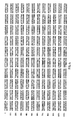
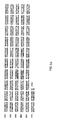
- Die Sequenzierung wurde nach der Dideoxykettenabbruchmethode von Sanger (5) vorgenommen. Die Nukleotidsequenz der 1,7 kb-Gensonde SPN 366.1 ist in Abbildung 4 dargestellt.
- Die chemische Synthese von Oligonukleotid-Gensonden wurde auf der Basis der vorliegenden Sequenz der 1,7 kb-Gensonde SPN 366.1 nach der Amidit-Methode von S.L. Beaucage und M.H. Caruthers durchgeführt (6).
- Durch Gensonden-Teste mit verschiedenen Oligonukleotiden aus dem Bereich der 1,7 kb-Gensequenz der Gensonde 366.1 wurde festgestellt, daß 15mer-100mer Oligonukleotid-Gensonden aus beliebigen Bereichen der 1,7 kb-Gensonde für den Gensonden-Test eingesetzt werden können.
- Folgende Oligonukleotid-Gensonden erwiesen sich im Gensonden-Test als besonders geeignet:

- Zur Überprüfung der Spezifität und Sensitivität der Gensonden wurde ein Gensonden-Test mit dem Digoxigenin-Test-Kit der Firma Boehringer, Mannheim mit Digoxigenin-UTP-markierten Gensonden durchgeführt.
- Die Gensonden wurden nach der Random-Prime-Methode von Feinberg und Vogelstein (3) mit Digoxigenin-UTP markiert. Vor der Random-Prime-Markierung wurden die Gensonden aus den entsprechenden rekombinanten Plasmiden mit Restriktionsenzymen herausgeschnitten. Die linearisierten Gensonden wurden gelelektrophoretisch im 0,8 %igen Agarosegel von dem linearisierten Plasmidvektor abgetrennt. Die Gensonden-DNA wurde aus dem Agarosegel herausgeschnitten und die Gensonde aus dem Agaroseblock durch Elektroelution isoliert. Die Gensonden-DNA wurde anschließend durch Phenolextraktion und Ethanolfällung weiter gereinigt. Vor der Markierung mit Digoxigenin-UTP wurde die Gensonden-DNA durch 10 min Erhitzen im Wasserbad auf 100°C und schnellem Abkühlen auf Eis/NaCl denaturiert Zur Markierung wurden 1 µg denaturierte Gensonden-DNA, 2 µl Hexanukleotid-Gemisch, 2 µl dNTB-Markierungsgermisch zusammengegeben, mit sterilem bidest. Wasser auf 19 µl aufgefüllt und 1 µl Klenow-Enzym zugegeben. Die Markierung mit Digoxigenin-UTP wurde 60 min bei 37°C durchgeführt. Anschließend wurde die Reaktion durch Zugabe von 2 µl EDTA-Lösung 0,2 Mol/l pH 8 abgestoppt, die markierte DNA mit 2,5 µl LiCl 4 Mol/l und 75 µl vorgekühltem Ethanol (-20°C) präzipitiert. Nach 30 min bei -70°C wurde der DNA-Niederschlag bei 12 000g abzentrifugiert und mit kaltem Ethanol, 70 %, gewaschen, im Vakuum getrocknet und in 50 µl Tris-HCl 10 mmol/l, EDTA 1 mmol/l pH 8 gelöst.
- Für die Hybridisierungsexperimente wurden die Nitrosomonas-DNA enthaltenden Nukleinsäureextrakte aus der Biomasse von Abwässern oder Böden zunächst durch 10 min Erhitzen auf 100°C und schnellem Abkühlen auf Eis/NaCl in die DNA-Einzelstränge denaturiert. Nitrozellulosemembranen wurden durch Quellen in Wasser und 20x SSC (NaCl 3 Mol/l, Na-Citrat 0,3 Mol/l pH = 7) vorbehandelt und anschließend getrocknet. Nylonmembranen wurden ohne Vorbehandlung eingesetzt. Die denaturierten Nukleinsäureextrakte wurden mit einem Filtrationsgerät Minifold II der Firma Schleicher und Schüll, auf die Nitrozellulose oder Nylonmembranen aufgetragen und anschließend durch 1 h Backen bei 80°C im Vakuum oder durch 5 min UV-Vernetzung mit einem UV-Transilluminator (Nylonmembran) fixiert.
- Die Nylon/Nitrozellulose-Filter wurden in einem Plastikbeutel mit 20 ml Hybridisierungs-Lösung (5x SSC; Blocking Reagens 0,5 %; N-Lauroylsarkosin, Na-Salz 0,1 %; SDS 0,02 %) verschweißt und 1 Stunde bei 68°C prähybridisiert. Die Prähybridisierungslösung wurde dann durch 2,5 ml Hybridisierungslösung (gleiche Zusammensetzung) ersetzt, die frisch denaturierte Gensonden-DNA (100 ng) enthielt. Der Hybridisierungsansatz wurde 2 Stunden bei 68°C inkubiert. Die Filter wurden anschließend 2x5 min bei Raumtemperatur mit jeweils 50 ml 2x SSC; SDS 0,1 % und dann nochmals 2x15 min bei 68°C mit 0,1x SSC 0,1 % SDS gewaschen. Die Filter wurden für die Detektion der hybridisierten DNA direkt verwendet oder luftgetrocknet für den späteren Nachweis aufbewahrt.
- Zur quantitativen Detektion der hybridisierten Nitrosomonas-DNA wurde eine immunologische Nachweisreaktion durchgeführt. Verwendet wurde ein Antikörperkonjugat mit gekoppelter alk. Phosphatase, das an die hybridisierte Digoxigenin-markierte DNA bindet. Die Farbreaktion wurde bei alkalischem pH durch Zugabe des farblosen 5-Brom-4-chlor-3-indolylphosphat und Nitroblautetrazolium gestartet. Der sich entwickelnde blaue Niederschlag wurde nach 2-12 Stunden quantitativ mit einem Densitometer der Firma Shimadzu CS430 ausgewertet. Für die Nachweisreaktion wurden folgende Puffer eingesetzt:
- Puffer 1:
- Tris/HCl 100 mmol/l; NaCl 150 mmol/l pH 7,5
- Puffer 2:
- Blocking Reagens 0,5 % in Puffer 1 lösen
- Puffer 3:
- Tris/HCl 100 mmol/l; NaCl 100 mmol/l, MgCl₂ 50 mmol/l pH 9,5
- Puffer 4:
- Tris/HCl 10 mmol/l, EDTA 1 mmol/l pH 8
Farblösung (frisch zubereitet) 45 µl NBT und 35 µl X-Phosphat wurden zu 10 ml Puffer 3 zugegeben. - Die Nitrozellulose/Nylonfilter wurden 1 min in Puffer 1 gewaschen und dann 30 min mit 100 ml Puffer 2 inkubiert und nochmals mit Puffer 1 gewaschen. Das Antikörperkonjugat wurde 1:5000 in Puffer 1 verdünnt und die Filter 30 min mit ca. 20 ml der verdünnten Antikörper-Konjugatlösung inkubiert. Ungebundenes Antikörper-Konjugat wurde durch 2x15 min Waschen mit 100 ml Puffer 1 entfernt und die Filter anschließend 2 min mit 20 ml Puffer 3 äquilibriert. Die Filter wurden dann mit 20 ml Farblösung in einem verschlossenen Plastikbeutel im Dunkeln inkubiert Die Farbintensität der einzelnen Slot Blots wurde im Vergleich zu einem mit aufgetragenen Nitrosomonas-DNA-Standard densitometrisch bestimmt.
- Die Spezifität der Gensonden wurde mit dem beschriebenen Gensonden-Test analysiert. Dazu wurden aus charakterisierten gramnegativen und grampositiven Bakterien u.a. auch Bakterien, die Halogenaromaten, Nitroaromaten, Aminoaromaten, Alkylsulfonsäuren und Arylsulfonsäuren abbauen und verschiedenen Nitrosomonas-Isolaten die Nuklieinsäure extrahiert und im Dot Blot-Hybridisierungstest mit den beschriebenen Gensonden überprüft, welche Bakterienlysate zu einem positiven Hybridisierungssignal führten (Tabelle 2).
- Es zeigte sich bei den durchgeführten Experimenten, daß die entwickelten Nitrosomonas-Gensonden ganz spezifisch mit allen Nitrosomonas-Lysaten hybridisierten und keine Hybridisierungssignale mit anderen Bakterienlysaten ergaben.
- Zum Nachweis und zur Quantifizierung von Nitrosomonas-Stämmen in Gewässern/Abwässern wurde zunächst die Gesamtnukleinsäure aus den abzentrifugierten Gewässer/Abwässer-Proben isoliert 50 mg Feuchtbiomasse wurden dazu mit 150 µl 0,5 M EDTA und 150 µl bidest. H₂O und 3 µl SDS 20 %ig versetzt und dann 60 Sekunden im Wasserbad bei 100°C inkubiert, anschließend sofort 1 Minute in ein Eis/Salz-Bad gestellt und dann für die 1. Phenolextraktion mit 600 µl trisgesättigtem Phenol versetzt, gemischt und 5 Minuten bei 5000 g zentrifugiert. Mit der oberen wäßrigen DNA-Phase wurde die Phenolextraktion wiederholt. Phenolreste wurden durch eine anschließende Etherextraktion entfernt.
- Die Etherphase wurde abgezogen und dann mit Isopropanol die DNA gefällt und in der Tischzentrifuge bei 5000 g abzentrifugiert. Das DNA-Pellet wurde mit 70 %igem Ethanol gewaschen. Das DNA-Pellet wurde anschließend in 220 µl TE Puffer aufgenommen und wie bei der Durchführung des Gensonden-Tests beschrieben auf Nitrozellulose- oder Nylon-Membranen fixiert und dann mit den beschriebenen Gensonden hybridisiert.
- Zur Quantifizierung wurde Nitrosomonas-DNA-Standard in Konzentrationen von 250 ng bis 3,5 ng entsprechend den Zellzahlen von 2,5x10⁶ bis 3,5x10⁴ Nitrosomonas-Zellen aufgetragen. Die positive Hybridisierungsreaktion wurde anhand der Farbintensität des 5-Brom-4-chlor-3-indolyl-Nitroblautetrazolium-Komplexes in einem Shimadzu CS930-Densitometer ausgemessen und im Vergleich mit den Slot Blots des Nitrosomonas-DNA-Standards die Konzentration der Nitrosomonas-spezifischen DNA bzw. der Nitrosomonas-Zellzahl in dem Probermaterial bestimmt. Die Nachweisgrenze mit der beschriebenen Detektionsmethode lag bei 10⁵-10⁶ Nitrosomonas-Bakterien.
- Zum Nachweis und zur Quantifizierung von Nitrosomonas-Bakterien in Böden wurde die Nukleinsäure der im Boden enthaltenen Bakterien nach der Methode von Torsvik und Marmur (4) isoliert. 10 g Boden wurden dazu mit 100 ml TE-Puffer (Tris/HCl 10 mmol/l, EDTA 1 mmol/l pH 8) versetzt, die Probe wurde gut durchmischt und anschließend der Boden vom Bakterienextrakt durch Filtration getrennt. Aus dem Filtrat wurden die Bakterien durch Zentrifugation bei 5000 g abgetrennt. Die Bakterienfraktion wurde einmal mit 100 ml 0,1 M Na₄P₂O₇ (pH7) und einmal, mit 100 ml 0,15 M NaCl, 10 mM EDTA (Saline-EDTA) gewaschen und nach der Zentrifugation bei 5000 g in 25 ml Saline-EDTA resuspendiert. Durch Zugabe von 1 mg/ml Lysozym mit anschließender 30-minütiger Inkubation bei 37°C wurden die Bakterien mit Natriumdodecylsulfat (SDS) in einer Endkonzentration von 1 % lysiert. Um die noch vorhandenen Huminstoffe aus dem Boden weitgehend abzutrennen kann eine weitere Aufreinigung durch Ionenaustauschchromatographie und Hydroxylapatitchromatogrphie oder Pronase-, RNase-Behandlung und Phenolextraktion erreicht werden.
- Die DNA wurde wie bei der Durchführung des Gensonden-Tests beschrieben auf Nitrocellulose- oder Nylon-Membranen fixiert und mit dem Digoxigenin-Testkit der Firma Boehringer, Mannheim, die Hybridisierungsreaktion durchgeführt. Die Nitrosomonas spezifische DNA-Konzentration bzw. Zellzahl wurde über die Farbintensität des 5-Brom-4-chlor-3-indolyl-Nitroblautetrazolium-Komplexes der Slot Blots quantitativ ausgewertet.

- Nitrosomonas-DNA kloniert als BamHI-Fragmente in dem E.coli-Vektor pBR 322 in E.coli 5K oder AG1. Die genomische DNA wurde aus dem Stamm Nitrosomonas europaea ATCC 19718 isoliert und kloniert. Die 6 kb-Gensonde aus 258/29 wurde in beiden Orientierungen in die Vektoren pSPT19 und pSK Bluescript umkloniert.

-
- 1) Autotrophic Nitrification in Bacteria J.I. Prosser, Adv. in Microbiol. Physiol. 30,125-177(1989)
- 2) Molecular Cloning, A Laboratory Manual. J. Sambrook, E.F. Fritsch, T. Maniatis Cold Spring Harbor Laboratory Press (1989) A Technique for Radiolabeling DNA Restriction Endonuklease Fragments to High Specific Activity
- 3) A.P. Feinberg und B. Vogelstein Anal. Biochem. 132,6(1983)
- 4) Isolation of Bacterial DNA from Soil V.L. Torsvik, Soil Biol. Biochem. 12, 10-21(1980) DNA Sequencing with chain-terminating inhibitors
- 5) F. Sanger, S. Nichlen, A.R. Coulson P.N.A.S 7 x, 5463(1977)
- 6) Deoxynucleoside Phosphoramidites; A new class of key intermediates for Deoxypolynucleotide Synthesis C.L. Beaucage and M.H. Caruthers Tetrahedron letters 22,1859-1862(1981)
Claims (9)
- Verfahren zur Detektion und quantitativen Bestimmung von Nitrosomonas-Stämmen in Abwässern und Böden, dadurch gekennzeichnet, daß eine Gensonde verwendet wird, die aufgrund ihrer komplementären Sequenzen nur mit Teilen des Genoms von Nitrosomonas Stämmen aus Abwasser oder Bodenproben hybridisiert und kein positives Hybridisierungssignal mit Teilen des Genoms von anderen Bakterien ergibt und bei dem die hybridisierte Nukleinsäure mit Hilfe einer bekannten Markierung der Gensonde quantitativ bestimmt wird und damit ein direktes Maß für den Gehalt an Nitrosomonas-Stämmen in der Abwasser- oder Bodenprobe liefert.
- Gensonde zur Durchführung des Verfahrens nach Anspruch 1, gekennzeichnet durch 6 kb Genfragmente gemäß Abbildung 2.
- Gensonde nach Anspruch 2, die Genfragmente umfaßt mit 1,4 kb nach Abbildung 2.
- Gensonde nach Anspruch 2, die Genfragmente umfaßt mit 1,7 kb nach Abbildung 2 und Abbildung 3.
- Gensonde nach Anspruch 2, die Genfragmente umfaßt mit 2,5 kb nach Abbildung 2.
- Gensonde nach Anspruch 4, die die Nukleotidsequenz enthält nach Abbildung 4.
- Gensonde nach Anspruch 4, die die Oligonukleotide 1-53 der Nukleotidsequenz von Abbildung 4 enthält.
- Gensonde nach Anspruch 4, die die Oligonukleotide 1315-1365 der Nukleotidsequenz von Abbildung 4 enthält.
- Gensonde nach Anspruch 4, die die Oligonukleotide 1610-1663 der Nukleotidsequenz von Abbildung 4 enthält.
Applications Claiming Priority (2)
| Application Number | Priority Date | Filing Date | Title |
|---|---|---|---|
| DE4014845 | 1990-05-09 | ||
| DE4014845A DE4014845A1 (de) | 1990-05-09 | 1990-05-09 | Verfahren zur detektion und quantitativen bestimmung von nitrosomonas-staemmen in abwaessern oder boeden |
Publications (2)
| Publication Number | Publication Date |
|---|---|
| EP0456047A1 true EP0456047A1 (de) | 1991-11-13 |
| EP0456047B1 EP0456047B1 (de) | 1996-01-17 |
Family
ID=6406013
Family Applications (1)
| Application Number | Title | Priority Date | Filing Date |
|---|---|---|---|
| EP91106742A Expired - Lifetime EP0456047B1 (de) | 1990-05-09 | 1991-04-26 | Verfahren zur Detektion und quantitativen Bestimmung von Nitrosomonas-Stämmen in Abwässern oder Boden |
Country Status (8)
| Country | Link |
|---|---|
| US (1) | US5462855A (de) |
| EP (1) | EP0456047B1 (de) |
| JP (1) | JPH0787996A (de) |
| AT (1) | ATE133209T1 (de) |
| CA (1) | CA2041889A1 (de) |
| DE (2) | DE4014845A1 (de) |
| DK (1) | DK0456047T3 (de) |
| ES (1) | ES2082881T3 (de) |
Cited By (3)
| Publication number | Priority date | Publication date | Assignee | Title |
|---|---|---|---|---|
| AT401270B (de) * | 1994-09-26 | 1996-07-25 | Immuno Ag | Verfahren zur quantifizierung von genomischer dna |
| EP0688873A3 (de) * | 1994-06-23 | 1999-02-24 | Bayer Ag | Ein DNA-Schnelltest zum Nachweis von chinolonresistenten Staphylococcus aureus Erregern in klinischem Probenmaterial |
| WO2022147868A1 (en) * | 2021-01-08 | 2022-07-14 | The University Of Hong Kong | Sewage surveillance for sars-cov-2 |
Families Citing this family (6)
| Publication number | Priority date | Publication date | Assignee | Title |
|---|---|---|---|---|
| AU5716098A (en) * | 1996-12-23 | 1998-07-17 | University Of Chicago, The | Customized oligonucleotide microchips as multiple biosensors |
| US6458584B1 (en) * | 1996-12-23 | 2002-10-01 | University Of Chicago | Customized oligonucleotide microchips that convert multiple genetic information to simple patterns, are portable and reusable |
| US6124094A (en) * | 1997-10-17 | 2000-09-26 | Eastman Chemical Company | Zoogloeal and hyphomicrobium spp. nucleic acids |
| EP1032648A4 (de) | 1997-12-22 | 2004-03-17 | Aquaria Inc | Bakterieller mitritoxidierer und methoden zu dessen verwendung |
| JP4046588B2 (ja) * | 2002-10-10 | 2008-02-13 | Necエレクトロニクス株式会社 | キャパシタの製造方法 |
| US7544501B2 (en) | 2003-10-09 | 2009-06-09 | Aquaria, Inc. | Nitrite-oxidizing bacteria and methods of using and detecting the same |
Family Cites Families (1)
| Publication number | Priority date | Publication date | Assignee | Title |
|---|---|---|---|---|
| DE3486488T2 (de) * | 1983-01-10 | 2003-04-03 | Gen-Probe Inc., San Diego | Verfahren zum Nachweis, Identifizieren und Quantifizieren von Organismen und Viren |
-
1990
- 1990-05-09 DE DE4014845A patent/DE4014845A1/de not_active Withdrawn
-
1991
- 1991-04-26 DK DK91106742.9T patent/DK0456047T3/da active
- 1991-04-26 ES ES91106742T patent/ES2082881T3/es not_active Expired - Lifetime
- 1991-04-26 EP EP91106742A patent/EP0456047B1/de not_active Expired - Lifetime
- 1991-04-26 DE DE59107264T patent/DE59107264D1/de not_active Expired - Fee Related
- 1991-04-26 AT AT91106742T patent/ATE133209T1/de not_active IP Right Cessation
- 1991-05-06 CA CA002041889A patent/CA2041889A1/en not_active Abandoned
- 1991-05-07 JP JP3130292A patent/JPH0787996A/ja active Pending
-
1993
- 1993-04-30 US US08/055,945 patent/US5462855A/en not_active Expired - Fee Related
Non-Patent Citations (3)
| Title |
|---|
| CANADIAN JOURNAL OF MICROBIOLOGY, Band 34, Nr. 10, Oktober 1988, Seiten 1122-1128, CA; R.D. JONES et al.: "A new marine ammonium-oxidizing bacterium, Nitrosomonas crytolerans sp. nov." * |
| HAKKOKOGAKU KAISHI, Band 66, Nr. 2, 1988, Seiten 103-107; T. TOKUYAMA et al.: "Cloning and expression of the hydroxylamine oxidase gene of Nitrosomonas europaea in Pseudomonas putida" * |
| INTERNATIONAL JOURNAL OF SYSTEMATIC BACTERIOLOGY, Band 33, Nr. 3, July 1983, Seiten 521-524, International Union of Microbiological Societies; M.S. DODSON et al.: "Comparison of deoxyribonucleic acid homologies of six strains of ammonia-oxidizing bacteria" * |
Cited By (5)
| Publication number | Priority date | Publication date | Assignee | Title |
|---|---|---|---|---|
| EP0688873A3 (de) * | 1994-06-23 | 1999-02-24 | Bayer Ag | Ein DNA-Schnelltest zum Nachweis von chinolonresistenten Staphylococcus aureus Erregern in klinischem Probenmaterial |
| US6015666A (en) * | 1994-06-23 | 2000-01-18 | Bayer Aktiengesellschaft | Rapid DNA test for detecting quinolone-resistant Staphylococcus aureus pathogens in clinical material |
| AT401270B (de) * | 1994-09-26 | 1996-07-25 | Immuno Ag | Verfahren zur quantifizierung von genomischer dna |
| WO2022147868A1 (en) * | 2021-01-08 | 2022-07-14 | The University Of Hong Kong | Sewage surveillance for sars-cov-2 |
| CN114755376A (zh) * | 2021-01-08 | 2022-07-15 | 香港大学 | 关于sars-cov-2的污水监测 |
Also Published As
| Publication number | Publication date |
|---|---|
| DE4014845A1 (de) | 1991-11-14 |
| DK0456047T3 (da) | 1996-05-20 |
| EP0456047B1 (de) | 1996-01-17 |
| ATE133209T1 (de) | 1996-02-15 |
| JPH0787996A (ja) | 1995-04-04 |
| US5462855A (en) | 1995-10-31 |
| CA2041889A1 (en) | 1991-11-10 |
| DE59107264D1 (de) | 1996-02-29 |
| ES2082881T3 (es) | 1996-04-01 |
Similar Documents
| Publication | Publication Date | Title |
|---|---|---|
| DE69410291T2 (de) | Schutz von nukleinsäuren und verfahren zur analyse | |
| DE3486467T2 (de) | Verfahren zum Nachweis, Identifizieren und Quantifizieren von Organismen und Viren | |
| DE69836012T2 (de) | Zwei-schritt hybridisierung und einfang von einem polynukleotid | |
| US5124444A (en) | Lactam-containing compositions and methods useful for the extraction of nucleic acids | |
| EP0688873A2 (de) | Ein DNA-Schnelltest zum Nachweis von chinolonresistenten Staphylococcus aureus Erregern in klinischem Probenmaterial | |
| DE3586659T2 (de) | Hybridizierungstest fuer nukleinsaeure. | |
| DE69316801T2 (de) | Spezies-Spezifische Oligonukleotide gegen Bifidobakterien und Verfahren zum Nachweis unter Verwendung derselben | |
| EP0608737B1 (de) | Sulfocumarinhaltige Nukleotide und deren Verwendung in Nachweisverfahren für Nukleinsäuren | |
| DE68923665T2 (de) | Nachweis von Campylobacter. | |
| EP0456047B1 (de) | Verfahren zur Detektion und quantitativen Bestimmung von Nitrosomonas-Stämmen in Abwässern oder Boden | |
| DE19515891C2 (de) | Gattungs- und speziesspezifische Identifizierung von Legionellen | |
| DE69514883T2 (de) | Spezies-spezifischer Nachweis von Mycobacterium Kansasii | |
| DE69019393T2 (de) | Nukleinsäure-Sonde zum Nachweis von humanen Salmonella Pathogenen. | |
| EP0595167A1 (de) | Spezifische Gensonden und Verfahren zur Diagnostik von Candida albicans | |
| DE68923608T2 (de) | Verfahren zur Vorbereitung von Nukleotid-Sonden unter Verwendung eines hybridizierbaren Komplementärelements. | |
| DE69933755T2 (de) | Ef-tu mrna als marker für lebensfähige bakterien | |
| DE69318072T2 (de) | Genomische DNS-Fragmente von Streptococcus Pneumoniae, Hybridationssonden, Amplifikationsprimern und Verfahren für dessen Nachweis | |
| DE60028758T2 (de) | Polynukleotidsonden zur detektion und quantifizierung von actinomycetes | |
| EP0658630B1 (de) | Oligonukleotide für den Nachweis von Enterobacteriaceae | |
| EP1390541B1 (de) | Verfahren zum nachweis von gram-positiven bakterien | |
| DE68929112T2 (de) | Nachweis von Yersinia Intermedia | |
| DE10154290B4 (de) | Verfahren zum Nachweis Parodontitis und Karies assoziierter Bakterien | |
| US6582952B1 (en) | Method for eliminating a nitrogenated heterocyclic, or aromatic, compound in an effluent | |
| Padayachee et al. | Elucidation of the Microbial Community Structure Within a Laboratory Scale Activated Sludge Process Using Molecular Techniques | |
| Goldstein | Digestion of ribonucleic acid by an alkylated ribonuclease |
Legal Events
| Date | Code | Title | Description |
|---|---|---|---|
| PUAI | Public reference made under article 153(3) epc to a published international application that has entered the european phase |
Free format text: ORIGINAL CODE: 0009012 |
|
| AK | Designated contracting states |
Kind code of ref document: A1 Designated state(s): AT BE CH DE DK ES FR GB IT LI NL SE |
|
| 17P | Request for examination filed |
Effective date: 19911216 |
|
| 17Q | First examination report despatched |
Effective date: 19940223 |
|
| GRAA | (expected) grant |
Free format text: ORIGINAL CODE: 0009210 |
|
| AK | Designated contracting states |
Kind code of ref document: B1 Designated state(s): AT BE CH DE DK ES FR GB IT LI NL SE |
|
| REF | Corresponds to: |
Ref document number: 133209 Country of ref document: AT Date of ref document: 19960215 Kind code of ref document: T |
|
| REF | Corresponds to: |
Ref document number: 59107264 Country of ref document: DE Date of ref document: 19960229 |
|
| PGFP | Annual fee paid to national office [announced via postgrant information from national office to epo] |
Ref country code: SE Payment date: 19960312 Year of fee payment: 6 |
|
| REG | Reference to a national code |
Ref country code: CH Ref legal event code: NV Representative=s name: E. BLUM & CO. PATENTANWAELTE |
|
| GBT | Gb: translation of ep patent filed (gb section 77(6)(a)/1977) |
Effective date: 19960220 |
|
| ITF | It: translation for a ep patent filed | ||
| REG | Reference to a national code |
Ref country code: ES Ref legal event code: FG2A Ref document number: 2082881 Country of ref document: ES Kind code of ref document: T3 |
|
| PGFP | Annual fee paid to national office [announced via postgrant information from national office to epo] |
Ref country code: ES Payment date: 19960409 Year of fee payment: 6 |
|
| PGFP | Annual fee paid to national office [announced via postgrant information from national office to epo] |
Ref country code: DK Payment date: 19960417 Year of fee payment: 6 |
|
| PGFP | Annual fee paid to national office [announced via postgrant information from national office to epo] |
Ref country code: AT Payment date: 19960423 Year of fee payment: 6 |
|
| PGFP | Annual fee paid to national office [announced via postgrant information from national office to epo] |
Ref country code: BE Payment date: 19960508 Year of fee payment: 6 |
|
| ET | Fr: translation filed | ||
| REG | Reference to a national code |
Ref country code: DK Ref legal event code: T3 |
|
| PLBE | No opposition filed within time limit |
Free format text: ORIGINAL CODE: 0009261 |
|
| STAA | Information on the status of an ep patent application or granted ep patent |
Free format text: STATUS: NO OPPOSITION FILED WITHIN TIME LIMIT |
|
| 26N | No opposition filed | ||
| PG25 | Lapsed in a contracting state [announced via postgrant information from national office to epo] |
Ref country code: DK Effective date: 19970426 Ref country code: AT Effective date: 19970426 |
|
| REG | Reference to a national code |
Ref country code: DK Ref legal event code: EBP |
|
| PG25 | Lapsed in a contracting state [announced via postgrant information from national office to epo] |
Ref country code: SE Effective date: 19970427 |
|
| PG25 | Lapsed in a contracting state [announced via postgrant information from national office to epo] |
Ref country code: ES Free format text: LAPSE BECAUSE OF NON-PAYMENT OF DUE FEES Effective date: 19970428 |
|
| PG25 | Lapsed in a contracting state [announced via postgrant information from national office to epo] |
Ref country code: BE Effective date: 19970430 |
|
| BERE | Be: lapsed |
Owner name: BAYER A.G. Effective date: 19970430 |
|
| EUG | Se: european patent has lapsed |
Ref document number: 91106742.9 |
|
| PGFP | Annual fee paid to national office [announced via postgrant information from national office to epo] |
Ref country code: DE Payment date: 19980316 Year of fee payment: 8 |
|
| PGFP | Annual fee paid to national office [announced via postgrant information from national office to epo] |
Ref country code: CH Payment date: 19980415 Year of fee payment: 8 |
|
| PGFP | Annual fee paid to national office [announced via postgrant information from national office to epo] |
Ref country code: FR Payment date: 19980416 Year of fee payment: 8 |
|
| PGFP | Annual fee paid to national office [announced via postgrant information from national office to epo] |
Ref country code: GB Payment date: 19980417 Year of fee payment: 8 |
|
| PGFP | Annual fee paid to national office [announced via postgrant information from national office to epo] |
Ref country code: NL Payment date: 19980430 Year of fee payment: 8 |
|
| PG25 | Lapsed in a contracting state [announced via postgrant information from national office to epo] |
Ref country code: GB Free format text: LAPSE BECAUSE OF NON-PAYMENT OF DUE FEES Effective date: 19990426 |
|
| PG25 | Lapsed in a contracting state [announced via postgrant information from national office to epo] |
Ref country code: LI Free format text: LAPSE BECAUSE OF NON-PAYMENT OF DUE FEES Effective date: 19990430 Ref country code: CH Free format text: LAPSE BECAUSE OF NON-PAYMENT OF DUE FEES Effective date: 19990430 |
|
| REG | Reference to a national code |
Ref country code: ES Ref legal event code: FD2A Effective date: 19990503 |
|
| PG25 | Lapsed in a contracting state [announced via postgrant information from national office to epo] |
Ref country code: NL Free format text: LAPSE BECAUSE OF NON-PAYMENT OF DUE FEES Effective date: 19991101 |
|
| GBPC | Gb: european patent ceased through non-payment of renewal fee |
Effective date: 19990426 |
|
| REG | Reference to a national code |
Ref country code: CH Ref legal event code: PL |
|
| PG25 | Lapsed in a contracting state [announced via postgrant information from national office to epo] |
Ref country code: FR Free format text: LAPSE BECAUSE OF NON-PAYMENT OF DUE FEES Effective date: 19991231 |
|
| NLV4 | Nl: lapsed or anulled due to non-payment of the annual fee |
Effective date: 19991101 |
|
| REG | Reference to a national code |
Ref country code: FR Ref legal event code: ST |
|
| PG25 | Lapsed in a contracting state [announced via postgrant information from national office to epo] |
Ref country code: DE Free format text: LAPSE BECAUSE OF NON-PAYMENT OF DUE FEES Effective date: 20000201 |
|
| PG25 | Lapsed in a contracting state [announced via postgrant information from national office to epo] |
Ref country code: IT Free format text: LAPSE BECAUSE OF NON-PAYMENT OF DUE FEES;WARNING: LAPSES OF ITALIAN PATENTS WITH EFFECTIVE DATE BEFORE 2007 MAY HAVE OCCURRED AT ANY TIME BEFORE 2007. THE CORRECT EFFECTIVE DATE MAY BE DIFFERENT FROM THE ONE RECORDED. Effective date: 20050426 |