EP0456047A1 - Méthode pour déceler et déterminer quantitativement des souches de nitrosomonas dans les eaux résiduaires ou dans le terrain - Google Patents
Méthode pour déceler et déterminer quantitativement des souches de nitrosomonas dans les eaux résiduaires ou dans le terrain Download PDFInfo
- Publication number
- EP0456047A1 EP0456047A1 EP91106742A EP91106742A EP0456047A1 EP 0456047 A1 EP0456047 A1 EP 0456047A1 EP 91106742 A EP91106742 A EP 91106742A EP 91106742 A EP91106742 A EP 91106742A EP 0456047 A1 EP0456047 A1 EP 0456047A1
- Authority
- EP
- European Patent Office
- Prior art keywords
- gene
- gene probe
- nitrosomonas
- soil
- dna
- Prior art date
- Legal status (The legal status is an assumption and is not a legal conclusion. Google has not performed a legal analysis and makes no representation as to the accuracy of the status listed.)
- Granted
Links
- 241000605122 Nitrosomonas Species 0.000 title claims abstract description 46
- 238000001514 detection method Methods 0.000 title claims abstract description 24
- 239000002689 soil Substances 0.000 title claims abstract description 19
- 239000002351 wastewater Substances 0.000 title claims abstract description 15
- 238000000034 method Methods 0.000 title claims description 15
- 108090000623 proteins and genes Proteins 0.000 claims abstract description 107
- 239000000523 sample Substances 0.000 claims abstract description 105
- 238000009396 hybridization Methods 0.000 claims abstract description 20
- 108020004707 nucleic acids Proteins 0.000 claims abstract description 14
- 150000007523 nucleic acids Chemical class 0.000 claims abstract description 14
- 102000039446 nucleic acids Human genes 0.000 claims abstract description 14
- 241000894006 Bacteria Species 0.000 claims abstract description 11
- 230000000295 complement effect Effects 0.000 claims abstract description 4
- 239000012634 fragment Substances 0.000 claims description 13
- 108091034117 Oligonucleotide Proteins 0.000 claims description 11
- JLCPHMBAVCMARE-UHFFFAOYSA-N [3-[[3-[[3-[[3-[[3-[[3-[[3-[[3-[[3-[[3-[[3-[[5-(2-amino-6-oxo-1H-purin-9-yl)-3-[[3-[[3-[[3-[[3-[[3-[[5-(2-amino-6-oxo-1H-purin-9-yl)-3-[[5-(2-amino-6-oxo-1H-purin-9-yl)-3-hydroxyoxolan-2-yl]methoxy-hydroxyphosphoryl]oxyoxolan-2-yl]methoxy-hydroxyphosphoryl]oxy-5-(5-methyl-2,4-dioxopyrimidin-1-yl)oxolan-2-yl]methoxy-hydroxyphosphoryl]oxy-5-(6-aminopurin-9-yl)oxolan-2-yl]methoxy-hydroxyphosphoryl]oxy-5-(6-aminopurin-9-yl)oxolan-2-yl]methoxy-hydroxyphosphoryl]oxy-5-(6-aminopurin-9-yl)oxolan-2-yl]methoxy-hydroxyphosphoryl]oxy-5-(6-aminopurin-9-yl)oxolan-2-yl]methoxy-hydroxyphosphoryl]oxyoxolan-2-yl]methoxy-hydroxyphosphoryl]oxy-5-(5-methyl-2,4-dioxopyrimidin-1-yl)oxolan-2-yl]methoxy-hydroxyphosphoryl]oxy-5-(4-amino-2-oxopyrimidin-1-yl)oxolan-2-yl]methoxy-hydroxyphosphoryl]oxy-5-(5-methyl-2,4-dioxopyrimidin-1-yl)oxolan-2-yl]methoxy-hydroxyphosphoryl]oxy-5-(5-methyl-2,4-dioxopyrimidin-1-yl)oxolan-2-yl]methoxy-hydroxyphosphoryl]oxy-5-(6-aminopurin-9-yl)oxolan-2-yl]methoxy-hydroxyphosphoryl]oxy-5-(6-aminopurin-9-yl)oxolan-2-yl]methoxy-hydroxyphosphoryl]oxy-5-(4-amino-2-oxopyrimidin-1-yl)oxolan-2-yl]methoxy-hydroxyphosphoryl]oxy-5-(4-amino-2-oxopyrimidin-1-yl)oxolan-2-yl]methoxy-hydroxyphosphoryl]oxy-5-(4-amino-2-oxopyrimidin-1-yl)oxolan-2-yl]methoxy-hydroxyphosphoryl]oxy-5-(6-aminopurin-9-yl)oxolan-2-yl]methoxy-hydroxyphosphoryl]oxy-5-(4-amino-2-oxopyrimidin-1-yl)oxolan-2-yl]methyl [5-(6-aminopurin-9-yl)-2-(hydroxymethyl)oxolan-3-yl] hydrogen phosphate Polymers Cc1cn(C2CC(OP(O)(=O)OCC3OC(CC3OP(O)(=O)OCC3OC(CC3O)n3cnc4c3nc(N)[nH]c4=O)n3cnc4c3nc(N)[nH]c4=O)C(COP(O)(=O)OC3CC(OC3COP(O)(=O)OC3CC(OC3COP(O)(=O)OC3CC(OC3COP(O)(=O)OC3CC(OC3COP(O)(=O)OC3CC(OC3COP(O)(=O)OC3CC(OC3COP(O)(=O)OC3CC(OC3COP(O)(=O)OC3CC(OC3COP(O)(=O)OC3CC(OC3COP(O)(=O)OC3CC(OC3COP(O)(=O)OC3CC(OC3COP(O)(=O)OC3CC(OC3COP(O)(=O)OC3CC(OC3COP(O)(=O)OC3CC(OC3COP(O)(=O)OC3CC(OC3COP(O)(=O)OC3CC(OC3COP(O)(=O)OC3CC(OC3CO)n3cnc4c(N)ncnc34)n3ccc(N)nc3=O)n3cnc4c(N)ncnc34)n3ccc(N)nc3=O)n3ccc(N)nc3=O)n3ccc(N)nc3=O)n3cnc4c(N)ncnc34)n3cnc4c(N)ncnc34)n3cc(C)c(=O)[nH]c3=O)n3cc(C)c(=O)[nH]c3=O)n3ccc(N)nc3=O)n3cc(C)c(=O)[nH]c3=O)n3cnc4c3nc(N)[nH]c4=O)n3cnc4c(N)ncnc34)n3cnc4c(N)ncnc34)n3cnc4c(N)ncnc34)n3cnc4c(N)ncnc34)O2)c(=O)[nH]c1=O JLCPHMBAVCMARE-UHFFFAOYSA-N 0.000 claims description 5
- 239000002773 nucleotide Substances 0.000 claims description 5
- 125000003729 nucleotide group Chemical group 0.000 claims description 5
- 239000003550 marker Substances 0.000 claims 1
- 108020004414 DNA Proteins 0.000 description 36
- 239000000872 buffer Substances 0.000 description 19
- FAPWRFPIFSIZLT-UHFFFAOYSA-M Sodium chloride Chemical compound [Na+].[Cl-] FAPWRFPIFSIZLT-UHFFFAOYSA-M 0.000 description 18
- 238000012360 testing method Methods 0.000 description 17
- 239000011780 sodium chloride Substances 0.000 description 10
- KCXVZYZYPLLWCC-UHFFFAOYSA-N EDTA Chemical compound OC(=O)CN(CC(O)=O)CCN(CC(O)=O)CC(O)=O KCXVZYZYPLLWCC-UHFFFAOYSA-N 0.000 description 9
- 239000000020 Nitrocellulose Substances 0.000 description 9
- 229920001220 nitrocellulos Polymers 0.000 description 9
- 108091008146 restriction endonucleases Proteins 0.000 description 9
- IJGRMHOSHXDMSA-UHFFFAOYSA-N Atomic nitrogen Chemical compound N#N IJGRMHOSHXDMSA-UHFFFAOYSA-N 0.000 description 8
- 239000004677 Nylon Substances 0.000 description 8
- 229920001778 nylon Polymers 0.000 description 8
- 239000000243 solution Substances 0.000 description 8
- XLYOFNOQVPJJNP-UHFFFAOYSA-N water Substances O XLYOFNOQVPJJNP-UHFFFAOYSA-N 0.000 description 8
- DBMJMQXJHONAFJ-UHFFFAOYSA-M Sodium laurylsulphate Chemical compound [Na+].CCCCCCCCCCCCOS([O-])(=O)=O DBMJMQXJHONAFJ-UHFFFAOYSA-M 0.000 description 7
- 239000007983 Tris buffer Substances 0.000 description 7
- 238000006243 chemical reaction Methods 0.000 description 7
- 239000012528 membrane Substances 0.000 description 7
- LENZDBCJOHFCAS-UHFFFAOYSA-N tris Chemical compound OCC(N)(CO)CO LENZDBCJOHFCAS-UHFFFAOYSA-N 0.000 description 7
- YBJHBAHKTGYVGT-ZKWXMUAHSA-N (+)-Biotin Chemical compound N1C(=O)N[C@@H]2[C@H](CCCCC(=O)O)SC[C@@H]21 YBJHBAHKTGYVGT-ZKWXMUAHSA-N 0.000 description 6
- QGZKDVFQNNGYKY-UHFFFAOYSA-N Ammonia Chemical compound N QGZKDVFQNNGYKY-UHFFFAOYSA-N 0.000 description 6
- SHIBSTMRCDJXLN-UHFFFAOYSA-N Digoxigenin Natural products C1CC(C2C(C3(C)CCC(O)CC3CC2)CC2O)(O)C2(C)C1C1=CC(=O)OC1 SHIBSTMRCDJXLN-UHFFFAOYSA-N 0.000 description 6
- LFQSCWFLJHTTHZ-UHFFFAOYSA-N Ethanol Chemical compound CCO LFQSCWFLJHTTHZ-UHFFFAOYSA-N 0.000 description 6
- 238000003776 cleavage reaction Methods 0.000 description 6
- QONQRTHLHBTMGP-UHFFFAOYSA-N digitoxigenin Natural products CC12CCC(C3(CCC(O)CC3CC3)C)C3C11OC1CC2C1=CC(=O)OC1 QONQRTHLHBTMGP-UHFFFAOYSA-N 0.000 description 6
- SHIBSTMRCDJXLN-KCZCNTNESA-N digoxigenin Chemical compound C1([C@@H]2[C@@]3([C@@](CC2)(O)[C@H]2[C@@H]([C@@]4(C)CC[C@H](O)C[C@H]4CC2)C[C@H]3O)C)=CC(=O)OC1 SHIBSTMRCDJXLN-KCZCNTNESA-N 0.000 description 6
- 238000001502 gel electrophoresis Methods 0.000 description 6
- 238000002372 labelling Methods 0.000 description 6
- 230000007017 scission Effects 0.000 description 6
- 108090000790 Enzymes Proteins 0.000 description 5
- 102000004190 Enzymes Human genes 0.000 description 5
- ISWSIDIOOBJBQZ-UHFFFAOYSA-N Phenol Chemical compound OC1=CC=CC=C1 ISWSIDIOOBJBQZ-UHFFFAOYSA-N 0.000 description 5
- 229940088598 enzyme Drugs 0.000 description 5
- 238000000605 extraction Methods 0.000 description 5
- 238000011002 quantification Methods 0.000 description 5
- 230000035945 sensitivity Effects 0.000 description 5
- RTZKZFJDLAIYFH-UHFFFAOYSA-N Diethyl ether Chemical compound CCOCC RTZKZFJDLAIYFH-UHFFFAOYSA-N 0.000 description 4
- TWRXJAOTZQYOKJ-UHFFFAOYSA-L Magnesium chloride Chemical compound [Mg+2].[Cl-].[Cl-] TWRXJAOTZQYOKJ-UHFFFAOYSA-L 0.000 description 4
- 239000011543 agarose gel Substances 0.000 description 4
- 230000001580 bacterial effect Effects 0.000 description 4
- 238000002474 experimental method Methods 0.000 description 4
- 239000000284 extract Substances 0.000 description 4
- 229940127121 immunoconjugate Drugs 0.000 description 4
- 238000002955 isolation Methods 0.000 description 4
- 239000006166 lysate Substances 0.000 description 4
- 239000000203 mixture Substances 0.000 description 4
- 229910052757 nitrogen Inorganic materials 0.000 description 4
- 239000013612 plasmid Substances 0.000 description 4
- 238000003786 synthesis reaction Methods 0.000 description 4
- 239000013598 vector Substances 0.000 description 4
- QGZKDVFQNNGYKY-UHFFFAOYSA-O Ammonium Chemical compound [NH4+] QGZKDVFQNNGYKY-UHFFFAOYSA-O 0.000 description 3
- 239000002028 Biomass Substances 0.000 description 3
- OKTJSMMVPCPJKN-UHFFFAOYSA-N Carbon Chemical compound [C] OKTJSMMVPCPJKN-UHFFFAOYSA-N 0.000 description 3
- 241000588724 Escherichia coli Species 0.000 description 3
- IOVCWXUNBOPUCH-UHFFFAOYSA-M Nitrite anion Chemical compound [O-]N=O IOVCWXUNBOPUCH-UHFFFAOYSA-M 0.000 description 3
- 229910021529 ammonia Inorganic materials 0.000 description 3
- 230000015572 biosynthetic process Effects 0.000 description 3
- 229960002685 biotin Drugs 0.000 description 3
- 235000020958 biotin Nutrition 0.000 description 3
- 239000011616 biotin Substances 0.000 description 3
- 230000000903 blocking effect Effects 0.000 description 3
- 229910052799 carbon Inorganic materials 0.000 description 3
- 230000008030 elimination Effects 0.000 description 3
- 238000003379 elimination reaction Methods 0.000 description 3
- 239000013600 plasmid vector Substances 0.000 description 3
- 238000012163 sequencing technique Methods 0.000 description 3
- 238000001228 spectrum Methods 0.000 description 3
- 239000000126 substance Substances 0.000 description 3
- KFZMGEQAYNKOFK-UHFFFAOYSA-N Isopropanol Chemical compound CC(C)O KFZMGEQAYNKOFK-UHFFFAOYSA-N 0.000 description 2
- 102000016943 Muramidase Human genes 0.000 description 2
- 108010014251 Muramidase Proteins 0.000 description 2
- 108010062010 N-Acetylmuramoyl-L-alanine Amidase Proteins 0.000 description 2
- 229910002651 NO3 Inorganic materials 0.000 description 2
- NHNBFGGVMKEFGY-UHFFFAOYSA-N Nitrate Chemical compound [O-][N+]([O-])=O NHNBFGGVMKEFGY-UHFFFAOYSA-N 0.000 description 2
- 241001453382 Nitrosomonadales Species 0.000 description 2
- 238000002105 Southern blotting Methods 0.000 description 2
- 239000007984 Tris EDTA buffer Substances 0.000 description 2
- -1 alkyl sulfonic acids Chemical class 0.000 description 2
- 230000003321 amplification Effects 0.000 description 2
- 238000005119 centrifugation Methods 0.000 description 2
- 239000003153 chemical reaction reagent Substances 0.000 description 2
- 238000001816 cooling Methods 0.000 description 2
- 238000011161 development Methods 0.000 description 2
- 238000001914 filtration Methods 0.000 description 2
- 238000010353 genetic engineering Methods 0.000 description 2
- 230000012010 growth Effects 0.000 description 2
- 238000010438 heat treatment Methods 0.000 description 2
- KWGKDLIKAYFUFQ-UHFFFAOYSA-M lithium chloride Chemical compound [Li+].[Cl-] KWGKDLIKAYFUFQ-UHFFFAOYSA-M 0.000 description 2
- 229960000274 lysozyme Drugs 0.000 description 2
- 239000004325 lysozyme Substances 0.000 description 2
- 235000010335 lysozyme Nutrition 0.000 description 2
- 229910001629 magnesium chloride Inorganic materials 0.000 description 2
- 230000001546 nitrifying effect Effects 0.000 description 2
- 238000003199 nucleic acid amplification method Methods 0.000 description 2
- 239000007800 oxidant agent Substances 0.000 description 2
- 239000008188 pellet Substances 0.000 description 2
- 150000002989 phenols Chemical class 0.000 description 2
- 239000004033 plastic Substances 0.000 description 2
- 239000002244 precipitate Substances 0.000 description 2
- 239000010865 sewage Substances 0.000 description 2
- FQENQNTWSFEDLI-UHFFFAOYSA-J sodium diphosphate Chemical compound [Na+].[Na+].[Na+].[Na+].[O-]P([O-])(=O)OP([O-])([O-])=O FQENQNTWSFEDLI-UHFFFAOYSA-J 0.000 description 2
- QRXMUCSWCMTJGU-UHFFFAOYSA-L (5-bromo-4-chloro-1h-indol-3-yl) phosphate Chemical compound C1=C(Br)C(Cl)=C2C(OP([O-])(=O)[O-])=CNC2=C1 QRXMUCSWCMTJGU-UHFFFAOYSA-L 0.000 description 1
- 101150084750 1 gene Proteins 0.000 description 1
- 101150076401 16 gene Proteins 0.000 description 1
- QKNYBSVHEMOAJP-UHFFFAOYSA-N 2-amino-2-(hydroxymethyl)propane-1,3-diol;hydron;chloride Chemical compound Cl.OCC(N)(CO)CO QKNYBSVHEMOAJP-UHFFFAOYSA-N 0.000 description 1
- 241000251468 Actinopterygii Species 0.000 description 1
- 229920000936 Agarose Polymers 0.000 description 1
- 108020000946 Bacterial DNA Proteins 0.000 description 1
- KRKNYBCHXYNGOX-UHFFFAOYSA-K Citrate Chemical compound [O-]C(=O)CC(O)(CC([O-])=O)C([O-])=O KRKNYBCHXYNGOX-UHFFFAOYSA-K 0.000 description 1
- 230000007023 DNA restriction-modification system Effects 0.000 description 1
- 238000001712 DNA sequencing Methods 0.000 description 1
- 241000192125 Firmicutes Species 0.000 description 1
- BACYUWVYYTXETD-UHFFFAOYSA-N N-Lauroylsarcosine Chemical compound CCCCCCCCCCCC(=O)N(C)CC(O)=O BACYUWVYYTXETD-UHFFFAOYSA-N 0.000 description 1
- 241000319465 Nitrosomonas europaea ATCC 19718 Species 0.000 description 1
- 229910019142 PO4 Inorganic materials 0.000 description 1
- 102000004160 Phosphoric Monoester Hydrolases Human genes 0.000 description 1
- 108090000608 Phosphoric Monoester Hydrolases Proteins 0.000 description 1
- 108010059712 Pronase Proteins 0.000 description 1
- 102000006382 Ribonucleases Human genes 0.000 description 1
- 108010083644 Ribonucleases Proteins 0.000 description 1
- 239000004098 Tetracycline Substances 0.000 description 1
- 150000001412 amines Chemical class 0.000 description 1
- AVKUERGKIZMTKX-NJBDSQKTSA-N ampicillin Chemical compound C1([C@@H](N)C(=O)N[C@H]2[C@H]3SC([C@@H](N3C2=O)C(O)=O)(C)C)=CC=CC=C1 AVKUERGKIZMTKX-NJBDSQKTSA-N 0.000 description 1
- 229960000723 ampicillin Drugs 0.000 description 1
- QVGXLLKOCUKJST-UHFFFAOYSA-N atomic oxygen Chemical compound [O] QVGXLLKOCUKJST-UHFFFAOYSA-N 0.000 description 1
- 230000001651 autotrophic effect Effects 0.000 description 1
- 239000011324 bead Substances 0.000 description 1
- 230000031018 biological processes and functions Effects 0.000 description 1
- 230000010261 cell growth Effects 0.000 description 1
- 230000019522 cellular metabolic process Effects 0.000 description 1
- 239000003795 chemical substances by application Substances 0.000 description 1
- 238000005352 clarification Methods 0.000 description 1
- 238000010367 cloning Methods 0.000 description 1
- 238000004132 cross linking Methods 0.000 description 1
- 230000000694 effects Effects 0.000 description 1
- 238000012869 ethanol precipitation Methods 0.000 description 1
- 238000012851 eutrophication Methods 0.000 description 1
- 239000000706 filtrate Substances 0.000 description 1
- 239000000499 gel Substances 0.000 description 1
- 229910052736 halogen Inorganic materials 0.000 description 1
- 150000002367 halogens Chemical class 0.000 description 1
- 238000012872 hydroxylapatite chromatography Methods 0.000 description 1
- 230000001900 immune effect Effects 0.000 description 1
- 238000011534 incubation Methods 0.000 description 1
- 239000003112 inhibitor Substances 0.000 description 1
- 239000000543 intermediate Substances 0.000 description 1
- 238000004255 ion exchange chromatography Methods 0.000 description 1
- 150000002540 isothiocyanates Chemical class 0.000 description 1
- 230000000813 microbial effect Effects 0.000 description 1
- 238000009629 microbiological culture Methods 0.000 description 1
- 238000010369 molecular cloning Methods 0.000 description 1
- 238000012544 monitoring process Methods 0.000 description 1
- JPXMTWWFLBLUCD-UHFFFAOYSA-N nitro blue tetrazolium(2+) Chemical compound COC1=CC(C=2C=C(OC)C(=CC=2)[N+]=2N(N=C(N=2)C=2C=CC=CC=2)C=2C=CC(=CC=2)[N+]([O-])=O)=CC=C1[N+]1=NC(C=2C=CC=CC=2)=NN1C1=CC=C([N+]([O-])=O)C=C1 JPXMTWWFLBLUCD-UHFFFAOYSA-N 0.000 description 1
- 125000000449 nitro group Chemical group [O-][N+](*)=O 0.000 description 1
- 238000005457 optimization Methods 0.000 description 1
- 150000002894 organic compounds Chemical class 0.000 description 1
- 230000003647 oxidation Effects 0.000 description 1
- 238000007254 oxidation reaction Methods 0.000 description 1
- 229910052760 oxygen Inorganic materials 0.000 description 1
- 239000001301 oxygen Substances 0.000 description 1
- 239000010452 phosphate Substances 0.000 description 1
- 150000008300 phosphoramidites Chemical class 0.000 description 1
- 238000003752 polymerase chain reaction Methods 0.000 description 1
- 125000002924 primary amino group Chemical group [H]N([H])* 0.000 description 1
- 238000000746 purification Methods 0.000 description 1
- 238000000163 radioactive labelling Methods 0.000 description 1
- 150000003839 salts Chemical class 0.000 description 1
- 108700004121 sarkosyl Proteins 0.000 description 1
- 239000010801 sewage sludge Substances 0.000 description 1
- 239000011734 sodium Substances 0.000 description 1
- RPACBEVZENYWOL-XFULWGLBSA-M sodium;(2r)-2-[6-(4-chlorophenoxy)hexyl]oxirane-2-carboxylate Chemical compound [Na+].C=1C=C(Cl)C=CC=1OCCCCCC[C@]1(C(=O)[O-])CO1 RPACBEVZENYWOL-XFULWGLBSA-M 0.000 description 1
- 230000008961 swelling Effects 0.000 description 1
- 229960002180 tetracycline Drugs 0.000 description 1
- 229930101283 tetracycline Natural products 0.000 description 1
- 235000019364 tetracycline Nutrition 0.000 description 1
- 150000003522 tetracyclines Chemical class 0.000 description 1
- 230000001988 toxicity Effects 0.000 description 1
- 231100000419 toxicity Toxicity 0.000 description 1
- 238000005406 washing Methods 0.000 description 1
Images


Classifications
-
- C—CHEMISTRY; METALLURGY
- C12—BIOCHEMISTRY; BEER; SPIRITS; WINE; VINEGAR; MICROBIOLOGY; ENZYMOLOGY; MUTATION OR GENETIC ENGINEERING
- C12Q—MEASURING OR TESTING PROCESSES INVOLVING ENZYMES, NUCLEIC ACIDS OR MICROORGANISMS; COMPOSITIONS OR TEST PAPERS THEREFOR; PROCESSES OF PREPARING SUCH COMPOSITIONS; CONDITION-RESPONSIVE CONTROL IN MICROBIOLOGICAL OR ENZYMOLOGICAL PROCESSES
- C12Q1/00—Measuring or testing processes involving enzymes, nucleic acids or microorganisms; Compositions therefor; Processes of preparing such compositions
- C12Q1/68—Measuring or testing processes involving enzymes, nucleic acids or microorganisms; Compositions therefor; Processes of preparing such compositions involving nucleic acids
- C12Q1/6876—Nucleic acid products used in the analysis of nucleic acids, e.g. primers or probes
- C12Q1/6888—Nucleic acid products used in the analysis of nucleic acids, e.g. primers or probes for detection or identification of organisms
- C12Q1/689—Nucleic acid products used in the analysis of nucleic acids, e.g. primers or probes for detection or identification of organisms for bacteria
Definitions
- ammonium is a substance that should be removed as completely as possible from waste water. While numerous technical processes exist for high ammonium concentrations, the removal of ammonium in the ppm range can only be achieved economically by biological processes. This is done by two specialized groups of bacteria that gain the energy necessary for cell metabolism from the oxidation of ammonia to nitrite (ammonia oxidizer) and further to nitrate (nitrite oxidizer). As a carbon source, the ammonia oxidizers only use CO2, nitrite oxidizers also use other carbon sources. The resulting nitrate can be reduced to nitrogen by a variety of heterotrophic bacteria at low oxygen concentrations and thus completely removed (see e.g. (1)).
- this problem could be solved by designing gene probes for these ammonia-oxidizing bacteria.
- gene probes for these ammonia-oxidizing bacteria.
- the gene probe test results in a specific duplex formation of the gene probe and complementary target DNA from nitrificants (hybridization).
- the gene probe is produced on the basis of the sequence described below either synthetically (up to 100 oligonucleotides) or biologically and is provided with a label (radioactivity, dye, enzyme). They are added to any sample material that contains nitrifying agents, e.g.
- Nucleic acid lysates from sewage sludge or soil hybridization occurs due to the complementary sequences of the gene probe and nitrifying DNA.
- This hybridization reaction can be carried out in solution or with carrier-fixed nucleic acids (nitrocellulose, nylon membranes, beads).
- the hybridized nucleic acid is evaluated quantitatively via the labeling of the gene probe and thus gives a direct measure of the nitrificant content of the biomass of the waste water or soil.
- the present invention also extends to gene probes which have been isolated using the same method and to modified variants of the gene probes described in the invention which have the features and properties which are essential for carrying out the invention.
- the main areas of application for the new gene probes are the checking and monitoring of the nitrifier concentration in biological nitrogen elimination in sewage treatment plants.
- the detection limit for the detection of nitrificants with the new gene probes is in the range of 105 to 106 bacteria.
- Detection sensitivity can be determined by amplification methods such as the PCR method (polymerase chain reaction) can be significantly improved. With the amplification on the basis of the sequences of the gene probes described in the invention, a detection of 10 to 100 bacteria can be achieved.
- the genomic nucleic acid from the strain Nitrosomas europaea ATCC 19718 was isolated using a preparative lysozyme / SDS / nucleic acid isolation method.
- genomic DNA with the restriction enzyme BamHI was cleaved into DNA fragments of 1-15 kb in size and linked with BamHI linearized pBR322 plasmid vector and transformed into competent E. coli cells AG1.
- Ampicillin-resistant clones were isolated the next day and recombinant clones containing DNA from Nitrosomonas were identified by the tetracycline sensitivity of the plasmid vector. The cloning experiments were carried out using the gene technique described by Maniatis (2).
- the plasmid DNA was isolated from the recombinant clones and the size of the built-in Nitrosomonas DNA was determined by gel electrophoretic separation. The exact size of clones with built-in Nitrosomonas DNA in the range of 1-15 kb was exactly determined by cleavage of the plasmids with the restriction enzyme BamHI and gel electrophoretic separation of the linearized plasmids. Table 1 lists clones with the exact insert sizes of Nitrosomonas DNA.
- Reverse phase hybridization was used to check which of the isolated Nitrosomonas gene probes has the broadest detection spectrum for Nitrosomonas.
- the individual gene probes were separated by gel electrophoresis in the agarose gel and then the gene probe DNA was transferred from the gel to the nitrocellulose filter and fixed.
- the genomic Nitrosomonas DNA was provided with a suitable label (P32-ATP, biotin, digoxigenin, enzyme) and used as a gene probe in the Southern blot with the gene probes fixed on nitrocellulose filters.
- a 6 kb gene probe SPN 323.13 was identified, which gave a very strong hybridization signal in the Southern blot hybridization test.
- This gene probe was analyzed for its Nitrosomonas specificity by a DOT blot hybridization test. The experiments showed that the gene probe SPN 323.13 is specific for Nitrosomonas and of all gene probes had the broadest detection spectrum for Nitrosomonas. This gene probe was used for the further development of shorter gene probes and chemically synthesized oligonucleotide gene probes.
- the gene probe was first characterized in terms of molecular biology by cleavage with various restriction enzymes.
- the linear restriction map of the gene probe is shown in Figure 2 in both orientations.
- the 1.4 kb ClaI fragment, the 1.7 kb ClaI-HindIII fragment and the 2.5 kb SalI-BamHI fragment were subcloned into the vectors pBR322 and pSK Bluescript from Stratagene.
- this gene probe was first characterized in terms of molecular biology by cleavage with restriction enzymes.
- the linear restriction map of the 1.7 kb gene probe SPN 366.1 is shown in Figure 3.
- the 0.2 kb, 0.3 kb, 0.5 kb and 0.7 kb gene probes were isolated from the corresponding constructs after cleavage with restriction enzymes and gel electrophoretic separation in an agarose gel by electroelution.
- the gene probes were provided with a label (P32ATP, biotin, digoxigenin-UTP, enzyme) according to the random prime labeling method and then examined for their specificity and sensitivity in the gene probe test.
- the sequencing of the 1.7 kb gene probe was carried out on the basis of the gene probe SPN 366.1 (1.7 kb) and the 0.2 kb, 0.3 kb, 0.5 kb and 0.7 kb gene probes.
- oligonucleotide gene probes were carried out on the basis of the present sequence of the 1.7 kb gene probe SPN 366.1 according to the amidite method of S.L. Beaucage and M.H. Caruthers performed (6).
- the gene probes were labeled with digoxigenin-UTP according to the random prime method of Feinberg and Vogelstein (3). Before the random prime mark the gene probes were cut out of the corresponding recombinant plasmids with restriction enzymes. The linearized gene probes were separated from the linearized plasmid vector by gel electrophoresis in a 0.8% agarose gel. The gene probe DNA was cut out of the agarose gel and the gene probe was isolated from the agarose block by electroelution. The gene probe DNA was then further purified by phenol extraction and ethanol precipitation. Before labeling with digoxigenin-UTP, the gene probe DNA was denatured by heating it in a water bath at 100 ° C.
- the DNA precipitate was centrifuged off at 12,000 g and washed with cold ethanol, 70%, dried in vacuo and dissolved in 50 ⁇ l Tris-HCl 10 mmol / l, EDTA 1 mmol / l pH 8 .
- the nucleic acid extracts from the biomass of waste water or soil containing nitrosomonas DNA were first denatured into the single DNA strands by heating to 100 ° C. for 10 minutes and rapid cooling on ice / NaCl.
- Nylon membranes were used without pretreatment.
- the denatured nucleic acid extracts were applied to the nitrocellulose or nylon membranes using a Minifold II filtration device from Schleicher and Schüll and then fixed by baking at 80 ° C. in vacuo for 1 hour or by UV crosslinking with a UV transilluminator (nylon membrane) for 5 minutes.
- the nylon / nitrocellulose filters were sealed in a plastic bag with 20 ml hybridization solution (5x SSC; blocking reagent 0.5%; N-lauroylsarcosine, Na salt 0.1%; SDS 0.02%) and at 1 hour 68 ° C prehybridized.
- the pre-hybridization solution was then replaced by 2.5 ml hybridization solution (same composition) containing freshly denatured gene probe DNA (100 ng).
- the hybridization mixture was incubated at 68 ° C. for 2 hours.
- the filters were then 2x5 min at room temperature with 50 ml 2x SSC; SDS 0.1% and then washed again 2x15 min at 68 ° C with 0.1x SSC 0.1% SDS.
- the filters were used directly for the detection of the hybridized DNA or kept air-dried for later detection.
- the nitrocellulose / nylon filters were washed in buffer 1 for 1 min and then incubated with 100 ml of buffer 2 for 30 min and washed again with buffer 1.
- the antibody conjugate was diluted 1: 5000 in buffer 1 and the filters were incubated for 30 min with approx. 20 ml of the diluted antibody conjugate solution. Unbound Antibody conjugate was removed by washing 2x15 min with 100 ml buffer 1 and the filter was then equilibrated with 20 ml buffer 3 for 2 min.
- the filters were then incubated with 20 ml of color solution in a sealed plastic bag in the dark. The color intensity of the individual slot blots was determined densitometrically in comparison to that with a Nitrosomonas DNA standard applied.
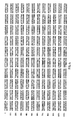
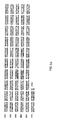
- the specificity of the gene probes was analyzed using the gene probe test described. To this end, characterized gram-negative and gram-positive bacteria, among others, also bacteria that degrade halogen aromatics, nitro aromatics, amino aromatics, alkyl sulfonic acids and aryl sulfonic acids and extract the nucleic acid from various nitrosomonas isolates and check in a dot blot hybridization test with the gene probes described which bacterial lysates led to a positive hybridization signal (Table 2).
- Nitrosomonas gene probes for the detection and quantification of Nitrosomonas in water / waste water
- the total nucleic acid was first isolated from the centrifuged water / wastewater samples.
- 50 mg of wet biomass were distilled with 150 ⁇ l 0.5 M EDTA and 150 ⁇ l bidist. H2O and 3 ⁇ l SDS 20% and then incubated for 60 seconds in a water bath at 100 ° C, then immediately placed in an ice / salt bath for 1 minute and then mixed with 600 ⁇ l tris-saturated phenol for the first phenol extraction, mixed and 5 Centrifuged at 5000 g for minutes. The phenol extraction was repeated with the upper aqueous DNA phase. Phenol residues were removed by subsequent ether extraction.
- the ether phase was drawn off and the DNA was then precipitated with isopropanol and centrifuged at 5000 g in the table centrifuge.
- the DNA pellet was washed with 70% ethanol.
- the DNA pellet was then taken up in 220 .mu.l TE buffer and fixed on nitrocellulose or nylon membranes as described when performing the gene probe test and then hybridized with the gene probes described.
- Nitrosomonas DNA standard was applied in concentrations of 250 ng to 3.5 ng corresponding to the cell numbers from 2.5x10⁶ to 3.5x10⁴ Nitrosomonas cells.
- the positive hybridization reaction was measured on the basis of the color intensity of the 5-bromo-4-chloro-3-indolyl-nitro blue tetrazolium complex in a Shimadzu CS930 densitometer and the concentration of the nitrosomonas-specific DNA in comparison with the slot blots of the Nitrosomonas DNA standard or the Nitrosomonas cell number in the sample material.
- the detection limit with the described detection method was 105-106 Nitrosomonas bacteria.
- Nitrosomonas gene probes for the detection and quantification of Strains of Nitrosomonas in soil
- the nucleic acid of the bacteria contained in the soil was isolated using the method of Torsvik and Marmur (4). 10 g of soil were mixed with 100 ml of TE buffer (Tris / HCl 10 mmol / l, EDTA 1 mmol / l pH 8), the sample was mixed well and then the soil was separated from the bacterial extract by filtration. The bacteria were separated from the filtrate by centrifugation at 5000 g.
- TE buffer Tris / HCl 10 mmol / l, EDTA 1 mmol / l pH 8.
- the bacterial fraction was washed once with 100 ml 0.1 M Na4P2O7 (pH7) and once with 100 ml 0.15 M NaCl, 10 mM EDTA (saline EDTA) and resuspended in 25 ml saline EDTA after centrifugation at 5000 g .
- the bacteria were lysed with sodium dodecyl sulfate (SDS) at a final concentration of 1% by adding 1 mg / ml lysozyme followed by 30 minutes incubation at 37 ° C.
- SDS sodium dodecyl sulfate
- further purification by ion exchange chromatography can be carried out and hydroxylapatite chromatography or pronase, RNase treatment and phenol extraction.
- the DNA was fixed to nitrocellulose or nylon membranes as described when the gene probe test was carried out and the hybridization reaction was carried out using the Boehringer, Mannheim digoxigenin test kit.
- the nitrosomonas specific DNA concentration or cell number was evaluated quantitatively via the color intensity of the 5-bromo-4-chloro-3-indolyl-nitro blue tetrazolium complex of the slot blots.
- the genomic DNA was isolated from the strain Nitrosomonas europaea ATCC 19718 and cloned.
- the 6 kb gene probe from 258/29 was cloned in both orientations into the vectors pSPT19 and pSK Bluescript.
Landscapes
- Chemical & Material Sciences (AREA)
- Life Sciences & Earth Sciences (AREA)
- Analytical Chemistry (AREA)
- Proteomics, Peptides & Aminoacids (AREA)
- Organic Chemistry (AREA)
- Zoology (AREA)
- Wood Science & Technology (AREA)
- Health & Medical Sciences (AREA)
- Engineering & Computer Science (AREA)
- Microbiology (AREA)
- Immunology (AREA)
- Molecular Biology (AREA)
- Biotechnology (AREA)
- Biophysics (AREA)
- Physics & Mathematics (AREA)
- Biochemistry (AREA)
- Bioinformatics & Cheminformatics (AREA)
- General Engineering & Computer Science (AREA)
- General Health & Medical Sciences (AREA)
- Genetics & Genomics (AREA)
- Measuring Or Testing Involving Enzymes Or Micro-Organisms (AREA)
- Processing Of Solid Wastes (AREA)
Applications Claiming Priority (2)
| Application Number | Priority Date | Filing Date | Title |
|---|---|---|---|
| DE4014845 | 1990-05-09 | ||
| DE4014845A DE4014845A1 (de) | 1990-05-09 | 1990-05-09 | Verfahren zur detektion und quantitativen bestimmung von nitrosomonas-staemmen in abwaessern oder boeden |
Publications (2)
| Publication Number | Publication Date |
|---|---|
| EP0456047A1 true EP0456047A1 (fr) | 1991-11-13 |
| EP0456047B1 EP0456047B1 (fr) | 1996-01-17 |
Family
ID=6406013
Family Applications (1)
| Application Number | Title | Priority Date | Filing Date |
|---|---|---|---|
| EP91106742A Expired - Lifetime EP0456047B1 (fr) | 1990-05-09 | 1991-04-26 | Méthode pour déceler et déterminer quantitativement des souches de nitrosomonas dans les eaux résiduaires ou dans le terrain |
Country Status (8)
| Country | Link |
|---|---|
| US (1) | US5462855A (fr) |
| EP (1) | EP0456047B1 (fr) |
| JP (1) | JPH0787996A (fr) |
| AT (1) | ATE133209T1 (fr) |
| CA (1) | CA2041889A1 (fr) |
| DE (2) | DE4014845A1 (fr) |
| DK (1) | DK0456047T3 (fr) |
| ES (1) | ES2082881T3 (fr) |
Cited By (3)
| Publication number | Priority date | Publication date | Assignee | Title |
|---|---|---|---|---|
| AT401270B (de) * | 1994-09-26 | 1996-07-25 | Immuno Ag | Verfahren zur quantifizierung von genomischer dna |
| EP0688873A3 (fr) * | 1994-06-23 | 1999-02-24 | Bayer Ag | Test DNA rapide pour la détection de staphylococcus aureus résistant à la chinolone dans du matériel clinique |
| WO2022147868A1 (fr) * | 2021-01-08 | 2022-07-14 | The University Of Hong Kong | Surveillance des eaux d'égout pour sars-cov-2 |
Families Citing this family (6)
| Publication number | Priority date | Publication date | Assignee | Title |
|---|---|---|---|---|
| AU5716098A (en) * | 1996-12-23 | 1998-07-17 | University Of Chicago, The | Customized oligonucleotide microchips as multiple biosensors |
| US6458584B1 (en) * | 1996-12-23 | 2002-10-01 | University Of Chicago | Customized oligonucleotide microchips that convert multiple genetic information to simple patterns, are portable and reusable |
| US6124094A (en) * | 1997-10-17 | 2000-09-26 | Eastman Chemical Company | Zoogloeal and hyphomicrobium spp. nucleic acids |
| EP1032648A4 (fr) | 1997-12-22 | 2004-03-17 | Aquaria Inc | Bacterie oxydant le nitrite et procede d'utilisation |
| JP4046588B2 (ja) * | 2002-10-10 | 2008-02-13 | Necエレクトロニクス株式会社 | キャパシタの製造方法 |
| US7544501B2 (en) | 2003-10-09 | 2009-06-09 | Aquaria, Inc. | Nitrite-oxidizing bacteria and methods of using and detecting the same |
Family Cites Families (1)
| Publication number | Priority date | Publication date | Assignee | Title |
|---|---|---|---|---|
| DE3486488T2 (de) * | 1983-01-10 | 2003-04-03 | Gen-Probe Inc., San Diego | Verfahren zum Nachweis, Identifizieren und Quantifizieren von Organismen und Viren |
-
1990
- 1990-05-09 DE DE4014845A patent/DE4014845A1/de not_active Withdrawn
-
1991
- 1991-04-26 DK DK91106742.9T patent/DK0456047T3/da active
- 1991-04-26 ES ES91106742T patent/ES2082881T3/es not_active Expired - Lifetime
- 1991-04-26 EP EP91106742A patent/EP0456047B1/fr not_active Expired - Lifetime
- 1991-04-26 DE DE59107264T patent/DE59107264D1/de not_active Expired - Fee Related
- 1991-04-26 AT AT91106742T patent/ATE133209T1/de not_active IP Right Cessation
- 1991-05-06 CA CA002041889A patent/CA2041889A1/fr not_active Abandoned
- 1991-05-07 JP JP3130292A patent/JPH0787996A/ja active Pending
-
1993
- 1993-04-30 US US08/055,945 patent/US5462855A/en not_active Expired - Fee Related
Non-Patent Citations (3)
| Title |
|---|
| CANADIAN JOURNAL OF MICROBIOLOGY, Band 34, Nr. 10, Oktober 1988, Seiten 1122-1128, CA; R.D. JONES et al.: "A new marine ammonium-oxidizing bacterium, Nitrosomonas crytolerans sp. nov." * |
| HAKKOKOGAKU KAISHI, Band 66, Nr. 2, 1988, Seiten 103-107; T. TOKUYAMA et al.: "Cloning and expression of the hydroxylamine oxidase gene of Nitrosomonas europaea in Pseudomonas putida" * |
| INTERNATIONAL JOURNAL OF SYSTEMATIC BACTERIOLOGY, Band 33, Nr. 3, July 1983, Seiten 521-524, International Union of Microbiological Societies; M.S. DODSON et al.: "Comparison of deoxyribonucleic acid homologies of six strains of ammonia-oxidizing bacteria" * |
Cited By (5)
| Publication number | Priority date | Publication date | Assignee | Title |
|---|---|---|---|---|
| EP0688873A3 (fr) * | 1994-06-23 | 1999-02-24 | Bayer Ag | Test DNA rapide pour la détection de staphylococcus aureus résistant à la chinolone dans du matériel clinique |
| US6015666A (en) * | 1994-06-23 | 2000-01-18 | Bayer Aktiengesellschaft | Rapid DNA test for detecting quinolone-resistant Staphylococcus aureus pathogens in clinical material |
| AT401270B (de) * | 1994-09-26 | 1996-07-25 | Immuno Ag | Verfahren zur quantifizierung von genomischer dna |
| WO2022147868A1 (fr) * | 2021-01-08 | 2022-07-14 | The University Of Hong Kong | Surveillance des eaux d'égout pour sars-cov-2 |
| CN114755376A (zh) * | 2021-01-08 | 2022-07-15 | 香港大学 | 关于sars-cov-2的污水监测 |
Also Published As
| Publication number | Publication date |
|---|---|
| DE4014845A1 (de) | 1991-11-14 |
| DK0456047T3 (da) | 1996-05-20 |
| EP0456047B1 (fr) | 1996-01-17 |
| ATE133209T1 (de) | 1996-02-15 |
| JPH0787996A (ja) | 1995-04-04 |
| US5462855A (en) | 1995-10-31 |
| CA2041889A1 (fr) | 1991-11-10 |
| DE59107264D1 (de) | 1996-02-29 |
| ES2082881T3 (es) | 1996-04-01 |
Similar Documents
| Publication | Publication Date | Title |
|---|---|---|
| DE69410291T2 (de) | Schutz von nukleinsäuren und verfahren zur analyse | |
| DE3486467T2 (de) | Verfahren zum Nachweis, Identifizieren und Quantifizieren von Organismen und Viren | |
| DE69836012T2 (de) | Zwei-schritt hybridisierung und einfang von einem polynukleotid | |
| US5124444A (en) | Lactam-containing compositions and methods useful for the extraction of nucleic acids | |
| EP0688873A2 (fr) | Test DNA rapide pour la détection de staphylococcus aureus résistant à la chinolone dans du matériel clinique | |
| DE3586659T2 (de) | Hybridizierungstest fuer nukleinsaeure. | |
| DE69316801T2 (de) | Spezies-Spezifische Oligonukleotide gegen Bifidobakterien und Verfahren zum Nachweis unter Verwendung derselben | |
| EP0608737B1 (fr) | Nucléotides qui contiennent sulfocumarin et leur utilisation dans les méthodes de détection des acides nucléiques | |
| DE68923665T2 (de) | Nachweis von Campylobacter. | |
| EP0456047B1 (fr) | Méthode pour déceler et déterminer quantitativement des souches de nitrosomonas dans les eaux résiduaires ou dans le terrain | |
| DE19515891C2 (de) | Gattungs- und speziesspezifische Identifizierung von Legionellen | |
| DE69514883T2 (de) | Spezies-spezifischer Nachweis von Mycobacterium Kansasii | |
| DE69019393T2 (de) | Nukleinsäure-Sonde zum Nachweis von humanen Salmonella Pathogenen. | |
| EP0595167A1 (fr) | Sonde génétique spécifique et méthode de diagnostic de Candia albicans | |
| DE68923608T2 (de) | Verfahren zur Vorbereitung von Nukleotid-Sonden unter Verwendung eines hybridizierbaren Komplementärelements. | |
| DE69933755T2 (de) | Ef-tu mrna als marker für lebensfähige bakterien | |
| DE69318072T2 (de) | Genomische DNS-Fragmente von Streptococcus Pneumoniae, Hybridationssonden, Amplifikationsprimern und Verfahren für dessen Nachweis | |
| DE60028758T2 (de) | Polynukleotidsonden zur detektion und quantifizierung von actinomycetes | |
| EP0658630B1 (fr) | Oligonucléotides pour la détection d'entérobactériacéae | |
| EP1390541B1 (fr) | Procede de detection de bacteries gram positif | |
| DE68929112T2 (de) | Nachweis von Yersinia Intermedia | |
| DE10154290B4 (de) | Verfahren zum Nachweis Parodontitis und Karies assoziierter Bakterien | |
| US6582952B1 (en) | Method for eliminating a nitrogenated heterocyclic, or aromatic, compound in an effluent | |
| Padayachee et al. | Elucidation of the Microbial Community Structure Within a Laboratory Scale Activated Sludge Process Using Molecular Techniques | |
| Goldstein | Digestion of ribonucleic acid by an alkylated ribonuclease |
Legal Events
| Date | Code | Title | Description |
|---|---|---|---|
| PUAI | Public reference made under article 153(3) epc to a published international application that has entered the european phase |
Free format text: ORIGINAL CODE: 0009012 |
|
| AK | Designated contracting states |
Kind code of ref document: A1 Designated state(s): AT BE CH DE DK ES FR GB IT LI NL SE |
|
| 17P | Request for examination filed |
Effective date: 19911216 |
|
| 17Q | First examination report despatched |
Effective date: 19940223 |
|
| GRAA | (expected) grant |
Free format text: ORIGINAL CODE: 0009210 |
|
| AK | Designated contracting states |
Kind code of ref document: B1 Designated state(s): AT BE CH DE DK ES FR GB IT LI NL SE |
|
| REF | Corresponds to: |
Ref document number: 133209 Country of ref document: AT Date of ref document: 19960215 Kind code of ref document: T |
|
| REF | Corresponds to: |
Ref document number: 59107264 Country of ref document: DE Date of ref document: 19960229 |
|
| PGFP | Annual fee paid to national office [announced via postgrant information from national office to epo] |
Ref country code: SE Payment date: 19960312 Year of fee payment: 6 |
|
| REG | Reference to a national code |
Ref country code: CH Ref legal event code: NV Representative=s name: E. BLUM & CO. PATENTANWAELTE |
|
| GBT | Gb: translation of ep patent filed (gb section 77(6)(a)/1977) |
Effective date: 19960220 |
|
| ITF | It: translation for a ep patent filed | ||
| REG | Reference to a national code |
Ref country code: ES Ref legal event code: FG2A Ref document number: 2082881 Country of ref document: ES Kind code of ref document: T3 |
|
| PGFP | Annual fee paid to national office [announced via postgrant information from national office to epo] |
Ref country code: ES Payment date: 19960409 Year of fee payment: 6 |
|
| PGFP | Annual fee paid to national office [announced via postgrant information from national office to epo] |
Ref country code: DK Payment date: 19960417 Year of fee payment: 6 |
|
| PGFP | Annual fee paid to national office [announced via postgrant information from national office to epo] |
Ref country code: AT Payment date: 19960423 Year of fee payment: 6 |
|
| PGFP | Annual fee paid to national office [announced via postgrant information from national office to epo] |
Ref country code: BE Payment date: 19960508 Year of fee payment: 6 |
|
| ET | Fr: translation filed | ||
| REG | Reference to a national code |
Ref country code: DK Ref legal event code: T3 |
|
| PLBE | No opposition filed within time limit |
Free format text: ORIGINAL CODE: 0009261 |
|
| STAA | Information on the status of an ep patent application or granted ep patent |
Free format text: STATUS: NO OPPOSITION FILED WITHIN TIME LIMIT |
|
| 26N | No opposition filed | ||
| PG25 | Lapsed in a contracting state [announced via postgrant information from national office to epo] |
Ref country code: DK Effective date: 19970426 Ref country code: AT Effective date: 19970426 |
|
| REG | Reference to a national code |
Ref country code: DK Ref legal event code: EBP |
|
| PG25 | Lapsed in a contracting state [announced via postgrant information from national office to epo] |
Ref country code: SE Effective date: 19970427 |
|
| PG25 | Lapsed in a contracting state [announced via postgrant information from national office to epo] |
Ref country code: ES Free format text: LAPSE BECAUSE OF NON-PAYMENT OF DUE FEES Effective date: 19970428 |
|
| PG25 | Lapsed in a contracting state [announced via postgrant information from national office to epo] |
Ref country code: BE Effective date: 19970430 |
|
| BERE | Be: lapsed |
Owner name: BAYER A.G. Effective date: 19970430 |
|
| EUG | Se: european patent has lapsed |
Ref document number: 91106742.9 |
|
| PGFP | Annual fee paid to national office [announced via postgrant information from national office to epo] |
Ref country code: DE Payment date: 19980316 Year of fee payment: 8 |
|
| PGFP | Annual fee paid to national office [announced via postgrant information from national office to epo] |
Ref country code: CH Payment date: 19980415 Year of fee payment: 8 |
|
| PGFP | Annual fee paid to national office [announced via postgrant information from national office to epo] |
Ref country code: FR Payment date: 19980416 Year of fee payment: 8 |
|
| PGFP | Annual fee paid to national office [announced via postgrant information from national office to epo] |
Ref country code: GB Payment date: 19980417 Year of fee payment: 8 |
|
| PGFP | Annual fee paid to national office [announced via postgrant information from national office to epo] |
Ref country code: NL Payment date: 19980430 Year of fee payment: 8 |
|
| PG25 | Lapsed in a contracting state [announced via postgrant information from national office to epo] |
Ref country code: GB Free format text: LAPSE BECAUSE OF NON-PAYMENT OF DUE FEES Effective date: 19990426 |
|
| PG25 | Lapsed in a contracting state [announced via postgrant information from national office to epo] |
Ref country code: LI Free format text: LAPSE BECAUSE OF NON-PAYMENT OF DUE FEES Effective date: 19990430 Ref country code: CH Free format text: LAPSE BECAUSE OF NON-PAYMENT OF DUE FEES Effective date: 19990430 |
|
| REG | Reference to a national code |
Ref country code: ES Ref legal event code: FD2A Effective date: 19990503 |
|
| PG25 | Lapsed in a contracting state [announced via postgrant information from national office to epo] |
Ref country code: NL Free format text: LAPSE BECAUSE OF NON-PAYMENT OF DUE FEES Effective date: 19991101 |
|
| GBPC | Gb: european patent ceased through non-payment of renewal fee |
Effective date: 19990426 |
|
| REG | Reference to a national code |
Ref country code: CH Ref legal event code: PL |
|
| PG25 | Lapsed in a contracting state [announced via postgrant information from national office to epo] |
Ref country code: FR Free format text: LAPSE BECAUSE OF NON-PAYMENT OF DUE FEES Effective date: 19991231 |
|
| NLV4 | Nl: lapsed or anulled due to non-payment of the annual fee |
Effective date: 19991101 |
|
| REG | Reference to a national code |
Ref country code: FR Ref legal event code: ST |
|
| PG25 | Lapsed in a contracting state [announced via postgrant information from national office to epo] |
Ref country code: DE Free format text: LAPSE BECAUSE OF NON-PAYMENT OF DUE FEES Effective date: 20000201 |
|
| PG25 | Lapsed in a contracting state [announced via postgrant information from national office to epo] |
Ref country code: IT Free format text: LAPSE BECAUSE OF NON-PAYMENT OF DUE FEES;WARNING: LAPSES OF ITALIAN PATENTS WITH EFFECTIVE DATE BEFORE 2007 MAY HAVE OCCURRED AT ANY TIME BEFORE 2007. THE CORRECT EFFECTIVE DATE MAY BE DIFFERENT FROM THE ONE RECORDED. Effective date: 20050426 |