EP0456567B1 - Procédé de détermination d'un activateur du plasminogène et de son inhibiteur - Google Patents
Procédé de détermination d'un activateur du plasminogène et de son inhibiteur Download PDFInfo
- Publication number
- EP0456567B1 EP0456567B1 EP91401181A EP91401181A EP0456567B1 EP 0456567 B1 EP0456567 B1 EP 0456567B1 EP 91401181 A EP91401181 A EP 91401181A EP 91401181 A EP91401181 A EP 91401181A EP 0456567 B1 EP0456567 B1 EP 0456567B1
- Authority
- EP
- European Patent Office
- Prior art keywords
- tpa
- plasma
- pai
- plasmin
- plasminogen
- Prior art date
- Legal status (The legal status is an assumption and is not a legal conclusion. Google has not performed a legal analysis and makes no representation as to the accuracy of the status listed.)
- Expired - Lifetime
Links
- 238000000034 method Methods 0.000 title claims description 54
- 102000001938 Plasminogen Activators Human genes 0.000 title claims description 39
- 108010001014 Plasminogen Activators Proteins 0.000 title claims description 39
- 229940127126 plasminogen activator Drugs 0.000 title claims description 39
- 239000003112 inhibitor Substances 0.000 title claims description 25
- 108090000435 Urokinase-type plasminogen activator Proteins 0.000 claims description 85
- 102000010752 Plasminogen Inactivators Human genes 0.000 claims description 74
- 108010077971 Plasminogen Inactivators Proteins 0.000 claims description 74
- 239000002797 plasminogen activator inhibitor Substances 0.000 claims description 74
- 239000002435 venom Substances 0.000 claims description 66
- 210000001048 venom Anatomy 0.000 claims description 66
- 231100000611 venom Toxicity 0.000 claims description 66
- 229940012957 plasmin Drugs 0.000 claims description 64
- 239000000463 material Substances 0.000 claims description 55
- 102000003990 Urokinase-type plasminogen activator Human genes 0.000 claims description 44
- 241000271937 Bitis arietans Species 0.000 claims description 35
- 102000013566 Plasminogen Human genes 0.000 claims description 30
- 108010051456 Plasminogen Proteins 0.000 claims description 30
- 239000000872 buffer Substances 0.000 claims description 29
- 241000271450 Crotalus basiliscus Species 0.000 claims description 20
- 241000271480 Lachesis muta Species 0.000 claims description 20
- 239000000203 mixture Substances 0.000 claims description 17
- -1 on the one hand Proteins 0.000 claims description 13
- 102000005741 Metalloproteases Human genes 0.000 claims description 12
- 108010006035 Metalloproteases Proteins 0.000 claims description 12
- 239000000126 substance Substances 0.000 claims description 12
- 238000012360 testing method Methods 0.000 claims description 12
- 239000003153 chemical reaction reagent Substances 0.000 claims description 10
- 239000003593 chromogenic compound Substances 0.000 claims description 9
- 230000005764 inhibitory process Effects 0.000 claims description 9
- 230000004936 stimulating effect Effects 0.000 claims description 7
- 238000006243 chemical reaction Methods 0.000 claims description 6
- 230000003287 optical effect Effects 0.000 claims description 5
- 102000004506 Blood Proteins Human genes 0.000 claims description 4
- 108010017384 Blood Proteins Proteins 0.000 claims description 4
- 102100031358 Urokinase-type plasminogen activator Human genes 0.000 claims description 2
- 240000008791 Antiaris toxicaria Species 0.000 claims 1
- 239000012429 reaction media Substances 0.000 claims 1
- 210000002381 plasma Anatomy 0.000 description 84
- 230000000694 effects Effects 0.000 description 35
- 229960005356 urokinase Drugs 0.000 description 30
- 239000000758 substrate Substances 0.000 description 16
- 238000003556 assay Methods 0.000 description 15
- DHMQDGOQFOQNFH-UHFFFAOYSA-N Glycine Chemical compound NCC(O)=O DHMQDGOQFOQNFH-UHFFFAOYSA-N 0.000 description 14
- 102000003978 Tissue Plasminogen Activator Human genes 0.000 description 12
- 108090000373 Tissue Plasminogen Activator Proteins 0.000 description 12
- 239000003998 snake venom Substances 0.000 description 11
- QTBSBXVTEAMEQO-UHFFFAOYSA-N Acetic acid Chemical compound CC(O)=O QTBSBXVTEAMEQO-UHFFFAOYSA-N 0.000 description 10
- 210000001519 tissue Anatomy 0.000 description 10
- 230000009466 transformation Effects 0.000 description 10
- SLXKOJJOQWFEFD-UHFFFAOYSA-N 6-aminohexanoic acid Chemical compound NCCCCCC(O)=O SLXKOJJOQWFEFD-UHFFFAOYSA-N 0.000 description 8
- 230000002401 inhibitory effect Effects 0.000 description 8
- 239000000243 solution Substances 0.000 description 8
- 229960000187 tissue plasminogen activator Drugs 0.000 description 8
- XLYOFNOQVPJJNP-UHFFFAOYSA-N water Chemical compound O XLYOFNOQVPJJNP-UHFFFAOYSA-N 0.000 description 8
- 102000004179 Plasminogen Activator Inhibitor 2 Human genes 0.000 description 7
- 108090000614 Plasminogen Activator Inhibitor 2 Proteins 0.000 description 7
- 102000005686 Serum Globulins Human genes 0.000 description 7
- 108010045362 Serum Globulins Proteins 0.000 description 7
- 230000020764 fibrinolysis Effects 0.000 description 7
- 102000009123 Fibrin Human genes 0.000 description 6
- 108010073385 Fibrin Proteins 0.000 description 6
- BWGVNKXGVNDBDI-UHFFFAOYSA-N Fibrin monomer Chemical compound CNC(=O)CNC(=O)CN BWGVNKXGVNDBDI-UHFFFAOYSA-N 0.000 description 6
- 239000004471 Glycine Substances 0.000 description 6
- 229940009550 c1 esterase inhibitor Drugs 0.000 description 6
- 229950003499 fibrin Drugs 0.000 description 6
- 238000011534 incubation Methods 0.000 description 6
- 108010073863 saruplase Proteins 0.000 description 6
- 108010039627 Aprotinin Proteins 0.000 description 5
- 229960004405 aprotinin Drugs 0.000 description 5
- 238000003149 assay kit Methods 0.000 description 5
- 229940012952 fibrinogen Drugs 0.000 description 5
- ZPNFWUPYTFPOJU-LPYSRVMUSA-N iniprol Chemical compound C([C@H]1C(=O)NCC(=O)NCC(=O)N[C@H]2CSSC[C@H]3C(=O)N[C@@H](CCCCN)C(=O)N[C@@H](C)C(=O)N[C@@H](CCCNC(N)=N)C(=O)N[C@H](C(N[C@H](C(=O)N[C@@H](CCCNC(N)=N)C(=O)N[C@@H](CC=4C=CC(O)=CC=4)C(=O)N[C@@H](CC=4C=CC=CC=4)C(=O)N[C@@H](CC=4C=CC(O)=CC=4)C(=O)N[C@@H](CC(N)=O)C(=O)N[C@@H](C)C(=O)N[C@@H](CCCCN)C(=O)N[C@@H](C)C(=O)NCC(=O)N[C@@H](CC(C)C)C(=O)N[C@@H](CSSC[C@H](NC(=O)[C@H](CC(O)=O)NC(=O)[C@H](CCC(O)=O)NC(=O)[C@H](C)NC(=O)[C@H](CO)NC(=O)[C@H](CCCCN)NC(=O)[C@H](CC=4C=CC=CC=4)NC(=O)[C@H](CC(N)=O)NC(=O)[C@H](CC(N)=O)NC(=O)[C@H](CCCNC(N)=N)NC(=O)[C@H](CCCCN)NC(=O)[C@H](C)NC(=O)[C@H](CCCNC(N)=N)NC2=O)C(=O)N[C@@H](CCSC)C(=O)N[C@@H](CCCNC(N)=N)C(=O)N[C@@H]([C@@H](C)O)C(=O)N[C@@H](CSSC[C@H](NC(=O)[C@H](CC=2C=CC=CC=2)NC(=O)[C@H](CC(O)=O)NC(=O)[C@H]2N(CCC2)C(=O)[C@@H](N)CCCNC(N)=N)C(=O)N[C@@H](CC(C)C)C(=O)N[C@@H](CCC(O)=O)C(=O)N2[C@@H](CCC2)C(=O)N2[C@@H](CCC2)C(=O)N[C@@H](CC=2C=CC(O)=CC=2)C(=O)N[C@@H]([C@@H](C)O)C(=O)NCC(=O)N2[C@@H](CCC2)C(=O)N3)C(=O)NCC(=O)NCC(=O)N[C@@H](C)C(O)=O)C(=O)N[C@@H](CCC(N)=O)C(=O)N[C@H](C(=O)N[C@@H](CC=2C=CC=CC=2)C(=O)N[C@H](C(=O)N1)C(C)C)[C@@H](C)O)[C@@H](C)CC)=O)[C@@H](C)CC)C1=CC=C(O)C=C1 ZPNFWUPYTFPOJU-LPYSRVMUSA-N 0.000 description 5
- 238000005259 measurement Methods 0.000 description 5
- 239000000546 pharmaceutical excipient Substances 0.000 description 5
- 239000008363 phosphate buffer Substances 0.000 description 5
- 108010049003 Fibrinogen Proteins 0.000 description 4
- 102000008946 Fibrinogen Human genes 0.000 description 4
- 108010063312 Metalloproteins Proteins 0.000 description 4
- 102000010750 Metalloproteins Human genes 0.000 description 4
- 102000035195 Peptidases Human genes 0.000 description 4
- 108091005804 Peptidases Proteins 0.000 description 4
- 102100027637 Plasma protease C1 inhibitor Human genes 0.000 description 4
- 108050007539 Plasma protease C1 inhibitor Proteins 0.000 description 4
- 208000007536 Thrombosis Diseases 0.000 description 4
- 239000002253 acid Substances 0.000 description 4
- 230000009471 action Effects 0.000 description 4
- 230000004913 activation Effects 0.000 description 4
- 239000012190 activator Substances 0.000 description 4
- 238000010668 complexation reaction Methods 0.000 description 4
- 239000012153 distilled water Substances 0.000 description 4
- PMMYEEVYMWASQN-UHFFFAOYSA-N dl-hydroxyproline Natural products OC1C[NH2+]C(C([O-])=O)C1 PMMYEEVYMWASQN-UHFFFAOYSA-N 0.000 description 4
- 238000004108 freeze drying Methods 0.000 description 4
- 230000007246 mechanism Effects 0.000 description 4
- 239000002806 plasmin inhibitor Substances 0.000 description 4
- 239000011541 reaction mixture Substances 0.000 description 4
- 239000007790 solid phase Substances 0.000 description 4
- 239000002753 trypsin inhibitor Substances 0.000 description 4
- CEAZRRDELHUEMR-URQXQFDESA-N Gentamicin Chemical compound O1[C@H](C(C)NC)CC[C@@H](N)[C@H]1O[C@H]1[C@H](O)[C@@H](O[C@@H]2[C@@H]([C@@H](NC)[C@@](C)(O)CO2)O)[C@H](N)C[C@@H]1N CEAZRRDELHUEMR-URQXQFDESA-N 0.000 description 3
- 229930182566 Gentamicin Natural products 0.000 description 3
- 101100406879 Neurospora crassa (strain ATCC 24698 / 74-OR23-1A / CBS 708.71 / DSM 1257 / FGSC 987) par-2 gene Proteins 0.000 description 3
- 229910019142 PO4 Inorganic materials 0.000 description 3
- 102100024078 Plasma serine protease inhibitor Human genes 0.000 description 3
- 108010001953 Protein C Inhibitor Proteins 0.000 description 3
- 241000270295 Serpentes Species 0.000 description 3
- FAPWRFPIFSIZLT-UHFFFAOYSA-M Sodium chloride Chemical compound [Na+].[Cl-] FAPWRFPIFSIZLT-UHFFFAOYSA-M 0.000 description 3
- VDQQXEISLMTGAB-UHFFFAOYSA-N chloramine T Chemical compound [Na+].CC1=CC=C(S(=O)(=O)[N-]Cl)C=C1 VDQQXEISLMTGAB-UHFFFAOYSA-N 0.000 description 3
- 238000010586 diagram Methods 0.000 description 3
- 239000012634 fragment Substances 0.000 description 3
- CEAZRRDELHUEMR-UHFFFAOYSA-N gentamicin Chemical compound O1C(C(C)NC)CCC(N)C1OC1C(O)C(OC2C(C(NC)C(C)(O)CO2)O)C(N)CC1N CEAZRRDELHUEMR-UHFFFAOYSA-N 0.000 description 3
- 229960002518 gentamicin Drugs 0.000 description 3
- 230000003993 interaction Effects 0.000 description 3
- NBIIXXVUZAFLBC-UHFFFAOYSA-K phosphate Chemical compound [O-]P([O-])([O-])=O NBIIXXVUZAFLBC-UHFFFAOYSA-K 0.000 description 3
- 239000010452 phosphate Substances 0.000 description 3
- 239000004033 plastic Substances 0.000 description 3
- 229920003023 plastic Polymers 0.000 description 3
- 108090000765 processed proteins & peptides Proteins 0.000 description 3
- 230000001105 regulatory effect Effects 0.000 description 3
- 238000001179 sorption measurement Methods 0.000 description 3
- 108091003079 Bovine Serum Albumin Proteins 0.000 description 2
- 108010080865 Factor XII Proteins 0.000 description 2
- 102000000429 Factor XII Human genes 0.000 description 2
- 206010018910 Haemolysis Diseases 0.000 description 2
- GUBGYTABKSRVRQ-QKKXKWKRSA-N Lactose Natural products OC[C@H]1O[C@@H](O[C@H]2[C@H](O)[C@@H](O)C(O)O[C@@H]2CO)[C@H](O)[C@@H](O)[C@H]1O GUBGYTABKSRVRQ-QKKXKWKRSA-N 0.000 description 2
- 241001465754 Metazoa Species 0.000 description 2
- BAVYZALUXZFZLV-UHFFFAOYSA-N Methylamine Chemical compound NC BAVYZALUXZFZLV-UHFFFAOYSA-N 0.000 description 2
- 239000004365 Protease Substances 0.000 description 2
- 229930006000 Sucrose Natural products 0.000 description 2
- CZMRCDWAGMRECN-UGDNZRGBSA-N Sucrose Chemical compound O[C@H]1[C@H](O)[C@@H](CO)O[C@@]1(CO)O[C@@H]1[C@H](O)[C@@H](O)[C@H](O)[C@@H](CO)O1 CZMRCDWAGMRECN-UGDNZRGBSA-N 0.000 description 2
- GYDJEQRTZSCIOI-UHFFFAOYSA-N Tranexamic acid Chemical compound NCC1CCC(C(O)=O)CC1 GYDJEQRTZSCIOI-UHFFFAOYSA-N 0.000 description 2
- 125000003277 amino group Chemical group 0.000 description 2
- ZPNFWUPYTFPOJU-MPSLMFKFSA-N aprotinin Chemical compound CC[C@H](C)[C@@H]1NC(=O)[C@@H](CCCNC(N)=N)NC(=O)[C@@H](C)NC(=O)[C@H](CCCCN)NC(=O)[C@@H]2CSSC[C@H]3NC(=O)CNC(=O)CNC(=O)[C@H](Cc4ccc(O)cc4)NC(=O)[C@H](NC(=O)[C@H](Cc4ccccc4)NC(=O)[C@@H](NC(=O)[C@H](CCC(N)=O)NC(=O)[C@@H](CSSC[C@@H](NC(=O)[C@H](CC(O)=O)NC(=O)[C@@H](CCC(O)=O)NC(=O)[C@H](C)NC(=O)[C@@H](CO)NC(=O)[C@H](CCCCN)NC(=O)[C@@H](Cc4ccccc4)NC(=O)[C@H](CC(N)=O)NC(=O)[C@@H](CC(N)=O)NC(=O)[C@H](CCCNC(N)=N)NC(=O)[C@@H](CCCCN)NC(=O)[C@H](C)NC(=O)[C@H](CCCNC(N)=N)NC3=O)C(=O)N[C@H](CCSC)C(=O)N[C@@H](CCCNC(N)=N)C(=O)N[C@@H]([C@@H](C)O)C(=O)N[C@H](CSSC[C@@H](NC(=O)[C@H](Cc3ccccc3)NC(=O)[C@@H](CC(O)=O)NC(=O)[C@H]3CCCN3C(=O)[C@H](N)CCCNC(N)=N)C(=O)N[C@H](CC(C)C)C(=O)N[C@@H](CCC(O)=O)C(=O)N3CCC[C@@H]3C(=O)N3CCC[C@H]3C(=O)N[C@H](Cc3ccc(O)cc3)C(=O)N[C@H]([C@H](C)O)C(=O)NCC(=O)N3CCC[C@H]3C(=O)N2)C(=O)NCC(=O)NCC(=O)N[C@H](C)C(O)=O)NC(=O)[C@@H](CC(C)C)NC(=O)CNC(=O)[C@@H](C)NC(=O)[C@H](CCCCN)NC(=O)[C@@H](C)NC(=O)[C@H](CC(N)=O)NC(=O)[C@@H](Cc2ccc(O)cc2)NC(=O)[C@H](Cc2ccccc2)NC(=O)[C@@H](Cc2ccc(O)cc2)NC(=O)[C@H](CCCNC(N)=N)NC(=O)[C@H](NC1=O)[C@H](C)CC)[C@@H](C)O)C(C)C ZPNFWUPYTFPOJU-MPSLMFKFSA-N 0.000 description 2
- 230000005540 biological transmission Effects 0.000 description 2
- 210000004369 blood Anatomy 0.000 description 2
- 239000008280 blood Substances 0.000 description 2
- 238000011088 calibration curve Methods 0.000 description 2
- 210000004027 cell Anatomy 0.000 description 2
- 150000001875 compounds Chemical class 0.000 description 2
- 230000002950 deficient Effects 0.000 description 2
- 239000012895 dilution Substances 0.000 description 2
- 238000010790 dilution Methods 0.000 description 2
- 239000013024 dilution buffer Substances 0.000 description 2
- 230000003511 endothelial effect Effects 0.000 description 2
- 230000003480 fibrinolytic effect Effects 0.000 description 2
- 239000008187 granular material Substances 0.000 description 2
- 150000003278 haem Chemical class 0.000 description 2
- 230000008588 hemolysis Effects 0.000 description 2
- 230000023597 hemostasis Effects 0.000 description 2
- 230000007062 hydrolysis Effects 0.000 description 2
- 238000006460 hydrolysis reaction Methods 0.000 description 2
- 230000002779 inactivation Effects 0.000 description 2
- 239000004615 ingredient Substances 0.000 description 2
- 230000006623 intrinsic pathway Effects 0.000 description 2
- 239000008101 lactose Substances 0.000 description 2
- 239000007791 liquid phase Substances 0.000 description 2
- 108010087750 lysyl-plasminogen Proteins 0.000 description 2
- 201000001441 melanoma Diseases 0.000 description 2
- QYSGYZVSCZSLHT-UHFFFAOYSA-N octafluoropropane Chemical compound FC(F)(F)C(F)(F)C(F)(F)F QYSGYZVSCZSLHT-UHFFFAOYSA-N 0.000 description 2
- 230000001590 oxidative effect Effects 0.000 description 2
- 230000020477 pH reduction Effects 0.000 description 2
- 230000037361 pathway Effects 0.000 description 2
- 229920001223 polyethylene glycol Polymers 0.000 description 2
- 230000003389 potentiating effect Effects 0.000 description 2
- 238000001556 precipitation Methods 0.000 description 2
- 239000003755 preservative agent Substances 0.000 description 2
- 230000002335 preservative effect Effects 0.000 description 2
- 235000019833 protease Nutrition 0.000 description 2
- 230000018477 regulation of fibrinolysis Effects 0.000 description 2
- 229960004793 sucrose Drugs 0.000 description 2
- 125000004213 tert-butoxy group Chemical group [H]C([H])([H])C(O*)(C([H])([H])[H])C([H])([H])[H] 0.000 description 2
- 238000012549 training Methods 0.000 description 2
- 201000002282 venous insufficiency Diseases 0.000 description 2
- 102000004411 Antithrombin III Human genes 0.000 description 1
- 108090000935 Antithrombin III Proteins 0.000 description 1
- 241000283690 Bos taurus Species 0.000 description 1
- 101710201511 Coagulation factor X-activating enzyme heavy chain Proteins 0.000 description 1
- 102000004190 Enzymes Human genes 0.000 description 1
- 108090000790 Enzymes Proteins 0.000 description 1
- 241000238631 Hexapoda Species 0.000 description 1
- 241000234435 Lilium Species 0.000 description 1
- 239000002202 Polyethylene glycol Substances 0.000 description 1
- 108010039918 Polylysine Proteins 0.000 description 1
- 108010007544 Protease Nexins Proteins 0.000 description 1
- 102000007324 Protease Nexins Human genes 0.000 description 1
- 229920002684 Sepharose Polymers 0.000 description 1
- 102000012479 Serine Proteases Human genes 0.000 description 1
- 108010022999 Serine Proteases Proteins 0.000 description 1
- 101710154810 Snake venom metalloproteinase Proteins 0.000 description 1
- 108090000190 Thrombin Proteins 0.000 description 1
- 241000271897 Viperidae Species 0.000 description 1
- 240000008042 Zea mays Species 0.000 description 1
- 101710197154 Zinc metalloproteinase-disintegrin VMP-II Proteins 0.000 description 1
- 101710112278 Zinc metalloproteinase-disintegrin-like Proteins 0.000 description 1
- 101710200352 Zinc metalloproteinase-disintegrin-like VMP-III Proteins 0.000 description 1
- 125000001980 alanyl group Chemical group 0.000 description 1
- 229960002684 aminocaproic acid Drugs 0.000 description 1
- 230000002823 anti-activator Effects 0.000 description 1
- 229940019748 antifibrinolytic proteinase inhibitors Drugs 0.000 description 1
- 229960005348 antithrombin iii Drugs 0.000 description 1
- 125000000637 arginyl group Chemical group N[C@@H](CCCNC(N)=N)C(=O)* 0.000 description 1
- 125000001797 benzyl group Chemical group [H]C1=C([H])C([H])=C(C([H])=C1[H])C([H])([H])* 0.000 description 1
- 230000004071 biological effect Effects 0.000 description 1
- 230000033228 biological regulation Effects 0.000 description 1
- 230000017531 blood circulation Effects 0.000 description 1
- 238000009395 breeding Methods 0.000 description 1
- 230000001488 breeding effect Effects 0.000 description 1
- 238000004113 cell culture Methods 0.000 description 1
- 230000008859 change Effects 0.000 description 1
- 238000004891 communication Methods 0.000 description 1
- 230000009918 complex formation Effects 0.000 description 1
- 230000000593 degrading effect Effects 0.000 description 1
- 230000003111 delayed effect Effects 0.000 description 1
- 230000001419 dependent effect Effects 0.000 description 1
- 235000013681 dietary sucrose Nutrition 0.000 description 1
- 239000003085 diluting agent Substances 0.000 description 1
- 238000010494 dissociation reaction Methods 0.000 description 1
- 230000005593 dissociations Effects 0.000 description 1
- 229940088598 enzyme Drugs 0.000 description 1
- 125000001495 ethyl group Chemical group [H]C([H])([H])C([H])([H])* 0.000 description 1
- 239000011521 glass Substances 0.000 description 1
- 125000001939 glutaminyl group Chemical group 0.000 description 1
- 125000003827 glycol group Chemical group 0.000 description 1
- 125000003630 glycyl group Chemical group [H]N([H])C([H])([H])C(*)=O 0.000 description 1
- IXCSERBJSXMMFS-UHFFFAOYSA-N hydrogen chloride Substances Cl.Cl IXCSERBJSXMMFS-UHFFFAOYSA-N 0.000 description 1
- 238000000338 in vitro Methods 0.000 description 1
- 238000001727 in vivo Methods 0.000 description 1
- 238000010348 incorporation Methods 0.000 description 1
- 230000006698 induction Effects 0.000 description 1
- 230000002452 interceptive effect Effects 0.000 description 1
- 229940057337 lachesis muta venom Drugs 0.000 description 1
- 244000144972 livestock Species 0.000 description 1
- 230000002979 macrophagic effect Effects 0.000 description 1
- 238000004519 manufacturing process Methods 0.000 description 1
- 125000001360 methionine group Chemical group N[C@@H](CCSC)C(=O)* 0.000 description 1
- 125000002496 methyl group Chemical group [H]C([H])([H])* 0.000 description 1
- 239000000178 monomer Substances 0.000 description 1
- 210000001672 ovary Anatomy 0.000 description 1
- 239000007800 oxidant agent Substances 0.000 description 1
- 230000003647 oxidation Effects 0.000 description 1
- 238000007254 oxidation reaction Methods 0.000 description 1
- 230000001575 pathological effect Effects 0.000 description 1
- 239000000137 peptide hydrolase inhibitor Substances 0.000 description 1
- 230000035699 permeability Effects 0.000 description 1
- 239000012071 phase Substances 0.000 description 1
- 125000000405 phenylalanyl group Chemical group 0.000 description 1
- 230000001766 physiological effect Effects 0.000 description 1
- 230000003169 placental effect Effects 0.000 description 1
- 230000036470 plasma concentration Effects 0.000 description 1
- 229920000656 polylysine Polymers 0.000 description 1
- 230000002980 postoperative effect Effects 0.000 description 1
- 230000035935 pregnancy Effects 0.000 description 1
- 230000002797 proteolythic effect Effects 0.000 description 1
- 239000000376 reactant Substances 0.000 description 1
- 238000011160 research Methods 0.000 description 1
- 150000003839 salts Chemical class 0.000 description 1
- 230000035945 sensitivity Effects 0.000 description 1
- 210000002966 serum Anatomy 0.000 description 1
- 239000011780 sodium chloride Substances 0.000 description 1
- 230000003068 static effect Effects 0.000 description 1
- 239000005720 sucrose Substances 0.000 description 1
- 229960004072 thrombin Drugs 0.000 description 1
- GYDJEQRTZSCIOI-LJGSYFOKSA-N tranexamic acid Chemical compound NC[C@H]1CC[C@H](C(O)=O)CC1 GYDJEQRTZSCIOI-LJGSYFOKSA-N 0.000 description 1
- 229960000401 tranexamic acid Drugs 0.000 description 1
- 210000004291 uterus Anatomy 0.000 description 1
- 230000002792 vascular Effects 0.000 description 1
Images


Classifications
-
- C—CHEMISTRY; METALLURGY
- C12—BIOCHEMISTRY; BEER; SPIRITS; WINE; VINEGAR; MICROBIOLOGY; ENZYMOLOGY; MUTATION OR GENETIC ENGINEERING
- C12Q—MEASURING OR TESTING PROCESSES INVOLVING ENZYMES, NUCLEIC ACIDS OR MICROORGANISMS; COMPOSITIONS OR TEST PAPERS THEREFOR; PROCESSES OF PREPARING SUCH COMPOSITIONS; CONDITION-RESPONSIVE CONTROL IN MICROBIOLOGICAL OR ENZYMOLOGICAL PROCESSES
- C12Q1/00—Measuring or testing processes involving enzymes, nucleic acids or microorganisms; Compositions therefor; Processes of preparing such compositions
- C12Q1/56—Measuring or testing processes involving enzymes, nucleic acids or microorganisms; Compositions therefor; Processes of preparing such compositions involving blood clotting factors, e.g. involving thrombin, thromboplastin, fibrinogen
-
- G—PHYSICS
- G01—MEASURING; TESTING
- G01N—INVESTIGATING OR ANALYSING MATERIALS BY DETERMINING THEIR CHEMICAL OR PHYSICAL PROPERTIES
- G01N2333/00—Assays involving biological materials from specific organisms or of a specific nature
- G01N2333/435—Assays involving biological materials from specific organisms or of a specific nature from animals; from humans
- G01N2333/46—Assays involving biological materials from specific organisms or of a specific nature from animals; from humans from vertebrates
- G01N2333/4609—Assays involving biological materials from specific organisms or of a specific nature from animals; from humans from vertebrates from reptiles
- G01N2333/4613—Snake venom
-
- G—PHYSICS
- G01—MEASURING; TESTING
- G01N—INVESTIGATING OR ANALYSING MATERIALS BY DETERMINING THEIR CHEMICAL OR PHYSICAL PROPERTIES
- G01N2333/00—Assays involving biological materials from specific organisms or of a specific nature
- G01N2333/81—Protease inhibitors
-
- G—PHYSICS
- G01—MEASURING; TESTING
- G01N—INVESTIGATING OR ANALYSING MATERIALS BY DETERMINING THEIR CHEMICAL OR PHYSICAL PROPERTIES
- G01N2333/00—Assays involving biological materials from specific organisms or of a specific nature
- G01N2333/81—Protease inhibitors
- G01N2333/8107—Endopeptidase (E.C. 3.4.21-99) inhibitors
- G01N2333/811—Serine protease (E.C. 3.4.21) inhibitors
- G01N2333/8121—Serpins
- G01N2333/8132—Plasminogen activator inhibitors
-
- G—PHYSICS
- G01—MEASURING; TESTING
- G01N—INVESTIGATING OR ANALYSING MATERIALS BY DETERMINING THEIR CHEMICAL OR PHYSICAL PROPERTIES
- G01N2333/00—Assays involving biological materials from specific organisms or of a specific nature
- G01N2333/90—Enzymes; Proenzymes
- G01N2333/914—Hydrolases (3)
- G01N2333/948—Hydrolases (3) acting on peptide bonds (3.4)
- G01N2333/972—Plasminogen activators
- G01N2333/9726—Tissue plasminogen activator
Definitions
- the present invention relates to a new solution technique for determining or dosing a plasminogen activator chosen from the group consisting by tissue type plasminogen activators and urokinase type, on the one hand, and an inhibitor of said plasminogen activator, on the other hand.
- It relates to the method for the determination of a plasminogen activator and of its inhibitor, which comprises, according to said new solution, the inhibition of two plasma proteins: ⁇ 2 -antiplasmin ( ⁇ 2 -AP) and ⁇ 2 -macroglobulin ( ⁇ 2 -M).
- tPA tissue type
- uPA urokinase type
- PAI plasminogen activator inhibitor
- Fibrinolysis aims to restore permeability by degrading susceptible fibrin deposits to form on the vascular walls.
- the fibrinolysis is provided by plasmin which is an enzyme very powerful circulating in the plasma in its form inactive: plasminogen.
- Activation of plasminogen to plasmin may occur unfold in two ways: a so-called intrinsic way (or endogenous) and a so-called extrinsic (or exogenous) pathway.
- In vivo fibrinolysis is constantly regulated by a inhibitor system so that the blood flow is always maintained.
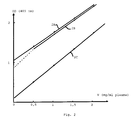
- the mechanisms of fibrinolysis have been schematized in the figure 1 below with the interventions of the activators and inhibitors.
- each arrow in continuous thick line indicates an activation
- each thick dashed line arrow indicates inhibition.
- Urokinase also known as activator of urokinase-type plasminogen (abbreviated: uPA)] is involved in the mechanisms (intrinsic pathway) of fibrinolysis first in the form prourokinase [called structural urokinase plasminogen activator single-stranded (abbreviated: scuPA)] then in the form so-called high molecular weight urokinase [also called urokinase-type plasminogen activator from double-stranded structure (abbreviated: tcuPA or HMW-UK)].
- prourokinase called structural urokinase plasminogen activator single-stranded (abbreviated: scuPA)] then in the form so-called high molecular weight urokinase [also called urokinase-type plasminogen activator from double-stranded structure (abbreviated: tcuPA or
- tPA intervenes in the mechanisms (extrinsic way) of fibrinolysis in the form known as sctPA [called tissue type plasminogen activator single-stranded (other abbreviation given in the literature : tPA-I)] and in the form known as tctPA [called tissue type plasminogen activator double-stranded (other abbreviation given in the literature : tPA-II)].
- TPA is mainly released from cells endothelial. It can be extracted from different tissues of animal (ovary and heart of pig) or human origin (uterus). However, as the amount of purified tPA extracted from these tissues is tiny, the main source preferred purified tPA comes from culture human melanoma cell (BOWES). Thanks to that cell culture that secretes a lot of tPA, we were able to obtain the purified tPA, estimate its molecular weight, determine its biochemical structure and characterize its physiological activities. TPA is a serine protease having an average molecular weight of around 70,000 daltons, able to transform plasminogen into plasmin. The presence of fibrin allows optimal activation of the plasminogen by tPA.
- PAI The plasminogen activator inhibitor
- PAI-1 inhibitor 1 of plasminogen activators
- PAI-2 inhibitor 2 of plasminogen activators
- PAI-3 inhibitor 3 of plasminogen activators
- protease nexin see Thrombosis and Haemostasis 56 (No 3), pages 415-416, (1986)].
- tissue-type plasminogen activators and urokinase are regulated by at least two specific inhibitors endothelial (PAI-1) and placental (PAI-2) and that the couples tPA / PAI and uPA / PAI have an essential role in the regulation of fibrinolysis.
- ⁇ 2 -AP and ⁇ 2 -M In the presence of normal plasma concentrations of ⁇ 2 -AP and ⁇ 2 -M, the other plasmin inhibitors play little role in the inactivation of plasmin.
- the role of ⁇ 2 -M is to inhibit excess plasmin when there is no more free ⁇ 2 -AP.
- These inhibitors mainly ⁇ 2 -AP and ⁇ 2 -M, significantly interfere with PAI assays [see the article by G. CONTANT et al. Thrombosis Research 56, pages 377-386, (1989) and the presentation by W. KAUSEL et al.
- the M2 method is illustrated by the test instructions "STACHROM PA" dosing unit from DIAGNOSTICA STAGO (catalog number 0822 of this company).
- the activity measured is particularly related to tPA thanks to fibrinogen fragments, but it is amplified by the other activation pathways (Factor XII, prourokinase, urokinase). So that the activity measurement be specific to tPA, it is necessary to add anti-tPA antibodies.
- method M7 Another method is also known (method M7) which consists in separating the free tPA by adsorption on a lysine-sepharose column and which has been described by E.GYZANDER et al., Thromb. Res., 35, pages 547-548, (1984).
- the methods applicable to the assay of the PAI are also applicable to the assay of tPA, provided that they are based on the determination of the residual tPA after complexation of the PAI contained in the plasma to be tested. They include in particular the M3 method described by C. KORNINGER et al., Thromb. Haem., 46, pages 622-665, (1981) and 52 , pages 127-130, (1984) which uses euglobulins; the M4 method described by J. CHMIELEWSKA et al., Thromb. Res., 31, pages 427-436, (1983) which uses acidified plasma; the M5 method described by JH VERREIJEN et al., Thromb.
- EP-A-0 020 780 an extract of snake venom belonging to the Trimesurus family which has fibrinolytic activity. This extract acts as a plasminogen activator during the generation of plasmin (see EP-AO 020 780, page 6 lines 11 and 15-18).
- the metalloproteinic material used according to the invention has no action on fibrinogen (see example 4 below).
- the new technical solution that is recommended according to the invention for the determination of a plasminogen activator chosen from the group consisting of plasminogen activators of tissue type and urokinase type, on the one hand, and of a inhibitor of said plasminogen activator, on the other hand, is based on the use of a new means inhibiting or annihilating the inhibitors of plasmin, ⁇ 2 -AP and / or ⁇ 2 -M.
- the present invention is based on the surprising discovery that snake venoms containing a metalloproteinic material inhibiting ⁇ 2 -AP and / or ⁇ 2 -M and described in the article by LFKRESS entitled “The Action of Snake Venom Metalloproteinases on Plasma Proteinase Inhibitors "and published in Hematology, 7 , pages 335-348, (1988), do not degrade or destroy tissue-type and urokinase-type plasminogen activators, on the one hand, and their PAI inhibitors, on the other. go.
- the new technical solution according to the invention overcomes the aforementioned drawbacks of the methods above-mentioned anterior dosage.
- a first aspect of the invention offers a new technical solution for determining plasminogen activators and their inhibitors that use at least one material metalloproteinics.
- tPA tissue-type plasminogen
- PAI inhibitors
- kit, kit or dosing kit including as a reactant at least one metalloproteinic material.
- a new method is proposed according to the invention for the determination in plasma (i) of a plasminogen activator chosen from the group consisting of tissue type plasminogen activators (tPA) and urokinase type plasminogen activators ( uPA), and (ii) an inhibitor (PAI) of said plasminogen activator, said method, which comprises the inhibition of the plasma proteins ⁇ 2 -antiplasmin and / or ⁇ 2 -macroglobulin by means of a substance chosen from l assembly consisting of metalloprotein materials, on the one hand, and the transformation of plasminogen into plasmin then the assay of plasmin resulting from said transformation, on the other hand, being characterized in that it comprises (1) the incorporation metalloproteinic material in the plasma to be studied, (2) adding to the medium resulting from a means stimulating the transformation of plasminogen into plasmin, then (3) assaying the plasmin which results from ladi transformation.
- a plasminogen activator chosen from the group
- a kit is also proposed for determining a tissue-type or urokinase-type plasminogen activator, on the one hand, or a plasminogen activator inhibitor, on the other hand, characterized in that it comprises (A) at least one metalloproteinic material chosen from the group consisting of the venoms of Bitis arietans , Crotalus basiliscus and Lachesis muta, and (B) at least one plasminogen activator chosen from the group consisting of plasminogen activators of the type tissue (tPA) and urokinase-like plasminogen activators (uPA).
- tPA type tissue
- uPA urokinase-like plasminogen activators
- metalloproteinic material is meant according to the invention a substance consisting of one or more metalloproteinases or a substance containing at least one metalloproteinase.
- the object of the metalloproteinic material which intervenes according to the invention is to annihilate, inhibit or destroy the plasma proteases which are ⁇ 2 -AP and / or ⁇ 2 -M.
- Venoms containing at least one metalloproteinase can be used either as collected especially snakes or insects, or purified.
- snake venoms that we can use we can in particular quote those obtained from animals belonging to families of vipers and crotalids.
- the preferred metalloproteinic material according to the invention is chosen from products which cleave ⁇ 2 -antiplasmin with a molecular weight of the order of 68,000 daltons to give a peptide which is essentially devoid of ⁇ 2 -AP activity and has a MS of around 53,000 daltons.
- the metalloprotein materials which are preferably recommended according to the invention consist of the venoms of Bitis arietans, Crotalus basiliscus and Lachesis muta (or Lachesis mutus ).
- ⁇ -amino acids such as AMCHA and EACA promote the transformation of plasminogen into plasmin according to two mechanisms: induction of a change in conformation of Glu-plasminogen into Lys-plasminogen more activatable in plasmin, and interference on the interaction of plasmin with ⁇ 2 -AP making it possible to reduce the inhibitory effect of plasmin by ⁇ 2 -AP by at least 10 times.
- a stimulator In the case of the determination or determination of tPA, it is recommended according to the invention to incorporate a stimulator.
- the usable stimulator is here a means classic of the prior art, for example monomers of fibrin marketed in particular under the trade name of DESASIF® [des-AA-fibrinogen] by the company BIOPOOL, fibrinogen fragments (see article by VERHEIJEN above) and marketed in particular by the DIAGNOSTICA STAGO in its dosing kit STACHROM® PA, or a polylysine described in particular in the above-mentioned article by GYZANDER.
- the method according to the invention comprises, for the determination or the assay of tPA, the methods according to which (a) the material is incorporated metalloprotein in the plasma to be studied diluted in the appropriate buffer, (b) incubate at 37 ° C for 2 minutes, (c) add a means stimulating the transformation plasminogen to plasmin, (d) incubate at 37 ° C for 150 minutes, (e) add the plasmin-specific chromogenic substrate, then (f) incubates at 37 ° C for 5 minutes, reading the optical density corresponding to the release of the means chromogenic being then carried out in particular by comparison with a test with white in which the plasma to be studied added with metalloproteinic material of stage (a) is replaced by a buffer with added material metalloproteinics.
- the method for determining or assaying the PAI, comprises the methods by which (a) tPA or uPA is incorporated into the plasma to be studied, (b) incubate at 37 ° C for 5 minutes, (c) add a mixture consisting of plasminogen, a ⁇ -amino acid and said metalloproteinic material, (d) incubates at 37 ° C for 3 minutes, (e) add the chromogenic substrate specific for the plasmin, then (f) incubate at 37 ° C for 3 minutes, reading the optical density corresponding to the release of the chromogenic medium then being carried out in particular by comparison with a blank test in which at stage (c) the plasminogen activator (tPA or uPA) is replaced by a buffer.
- a concentration of venom of Bitis arietans, Crotalus basiliscus or Lachesis muta in an appropriate buffer greater than or equal to 0.025 mg / ml (corresponding at a content greater than or equal to 0.0125 mg / ml final in the test mixture).
- the maximum concentration of venom in the buffer will be less than or equal to 1 mg / ml.
- a concentration of Bitis arietans, Crotalus basiliscus or Lachesis muta venom will be used more advantageously in the buffer of the order of 0.05 mg / ml.
- the preferred buffer will be a phosphate buffer of pH 7.0 to 9.0 and more preferably a phosphate buffer of pH 7.5.
- Said buffer may contain bovine albumin (BSA) to promote lyophilization of the reagents to be incorporated into the assay kits.
- BSA bovine albumin
- a venom concentration in the plasma of 0.1 to 1 mg / ml, and preferably a concentration of 0.24 mg / ml.
- tPA for the determination or the assay of tPA, (a) one incorporates venom of Bitis arietans, Crotalus basiliscus or Lachesis muta in the plasma to be studied diluted in the appropriate buffer , (b) incubate at 37 ° C for 2 minutes, (c) add the means stimulating the transformation of plasminogen into plasmin (in particular the product marketed under the name STIMUGEN by the company DIAGNOSTICA STAGO), (d) incubate at 37 ° C for 150 minutes, (e) add the chromogenic substrate, then (f) incubate at 37 ° C for 5 minutes.
- plasminogen in particular the product marketed under the name STIMUGEN by the company DIAGNOSTICA STAGO
- the release of the chromogenic means is then read, in particular at 405 nm, either by a static method called "end point” (in English: “technical end-point”), or by a kinetic method called “two points "(in English:” two-point technique ”) (adding in this case acetic acid).
- end point in English: “technical end-point”
- two points in this case acetic acid.
- the reading of OD (in particular by transmission) is controlled by a blank test in which the plasma to be studied supplemented with venom from Bitis arietans, Crotalus basiliscus or Lachesis muta is replaced by the buffer supplemented with said venom.
- the metalloproteinic material here the venom of Bitis arietans, Crotalus basiliscus or Lachesis muta, can be incorporated into the system at stage (c) with the stimulating means.
- the release of the chromogenic means is then read, as indicated above, in particular at 405 nm, by the so-called end point method or in kinetics according to the so-called two-point method (by adding in this case acid acetic). Reading of OD (in particular by transmission) is also controlled by a blank test in which the tPA or the uPA is replaced by a buffer.
- the kit, kit or assay kit according to the invention will comprise at least one metalloproteinic material preferably chosen from the venoms of Bitis arietans, Crotalus basiliscus, Lachesis muta and their mixtures, and pure tPA, uPA and / or PAI samples.
- the solution according to the invention which uses a metalloproteinic material to inhibit the plasma proteases ⁇ 2 -AP and / or ⁇ 2 -M, is suitable for the assay of tissue type and urokinase type plasminogen activators, and their inhibitors .
- the solution according to the invention is more particularly intended for assaying or determining tPA and its inhibitor, PAI.
- DOSAGE OF tPA Ingredients Test White Plasma diluted in a buffer with metalloproteinic material (a) 200 ⁇ l - Buffer plus metalloproteinic material (a) - 200 ⁇ l Incubation 2 minutes 2 minutes Stimulating (b) 200 ⁇ l 200 ⁇ l Incubation 150 minutes 150 minutes Substrate (c) 200 ⁇ l 200 ⁇ l Notes (a) venom from B. arietans, C. basiliscus or L.
- the ⁇ 2 -AP content of a normal plasma was measured using the "STACHROM ⁇ 2 -AP" assay kit marketed by the company DIAGNOSTICA STAGO, in the presence or absence of a metalloproteinic material consisting of venom from B. arietans, C. basiliscus or L. muta, the venom content being at a concentration greater than or equal to 0.50 mg / ml of plasma in dilution buffer (i.e. a content greater than or equal to 0.0125 mg / ml of the mixture containing plasmin).
- the inhibition of ⁇ 2 -AP measured with four different lots of B.arietans venom, four different lots of C. basiliscus and four different lots of L. muta is obtained for concentrations ranging from 0.5 to 1 g / ml of plasma (i.e. 0.025 to 0.050 g / l of buffer) of B. arietans, on the one hand, and for the concentration of 0.5 mg / ml of plasma (i.e. 0.025 mg / ml of buffer) of C. basiliscus or L. muta, on the other hand.
- ⁇ 2 -AP content When we dose the ⁇ 2 -AP from a normal plasma ( ⁇ 2 -AP content called 100%) in the presence of one of said venoms, we find a (relative) ⁇ 2 -AP content of approximately 25 % (20 to 30%), which demonstrates an inhibition of ⁇ 2 -AP by the metalloproteinic material contained in the venom of B.arietans, C.basiliscus or L.muta.
- the metalloproteinic material in particular the venom of B. arietans, C. basiliscus or L. muta
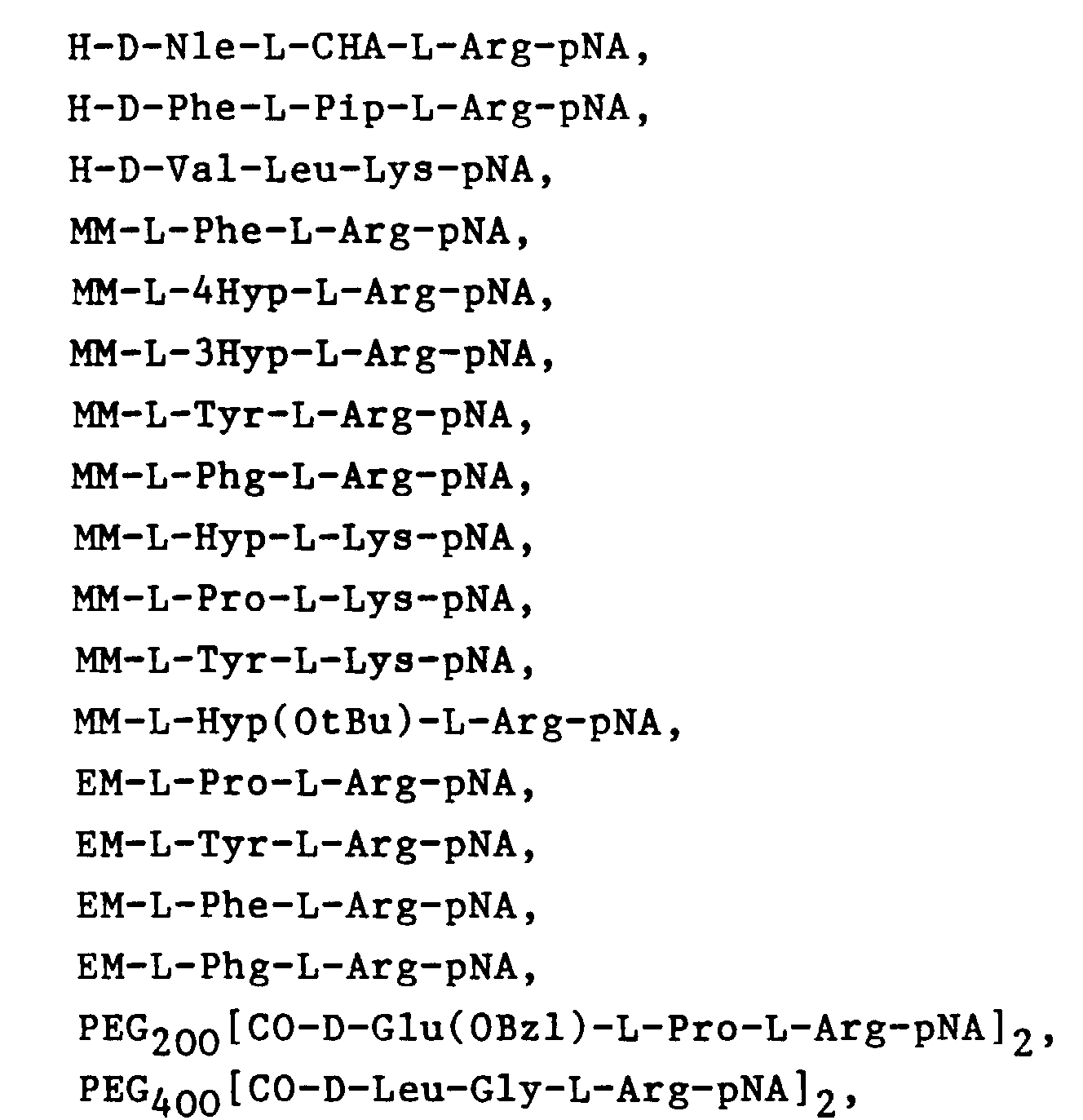
- the metalloproteinic material is capable hydrolyze specific synthetic substrates of the plasmin [in particular the substrates CBS 30.41 and CBS 10.65, which are respectively H-D-Abu-L-CHA-L-Lys-pNA, AcOH and MM-Hyp-Arg-pNA, AcOH].
- This hydrolysis is a function of venom concentration; when we use a concentration relatively low venom (0.0125 mg / ml of medium), 95% of the plasmin is active on the substrate: the effect of the venom on plasmin is then statistically not significant.
- UPA urokinase
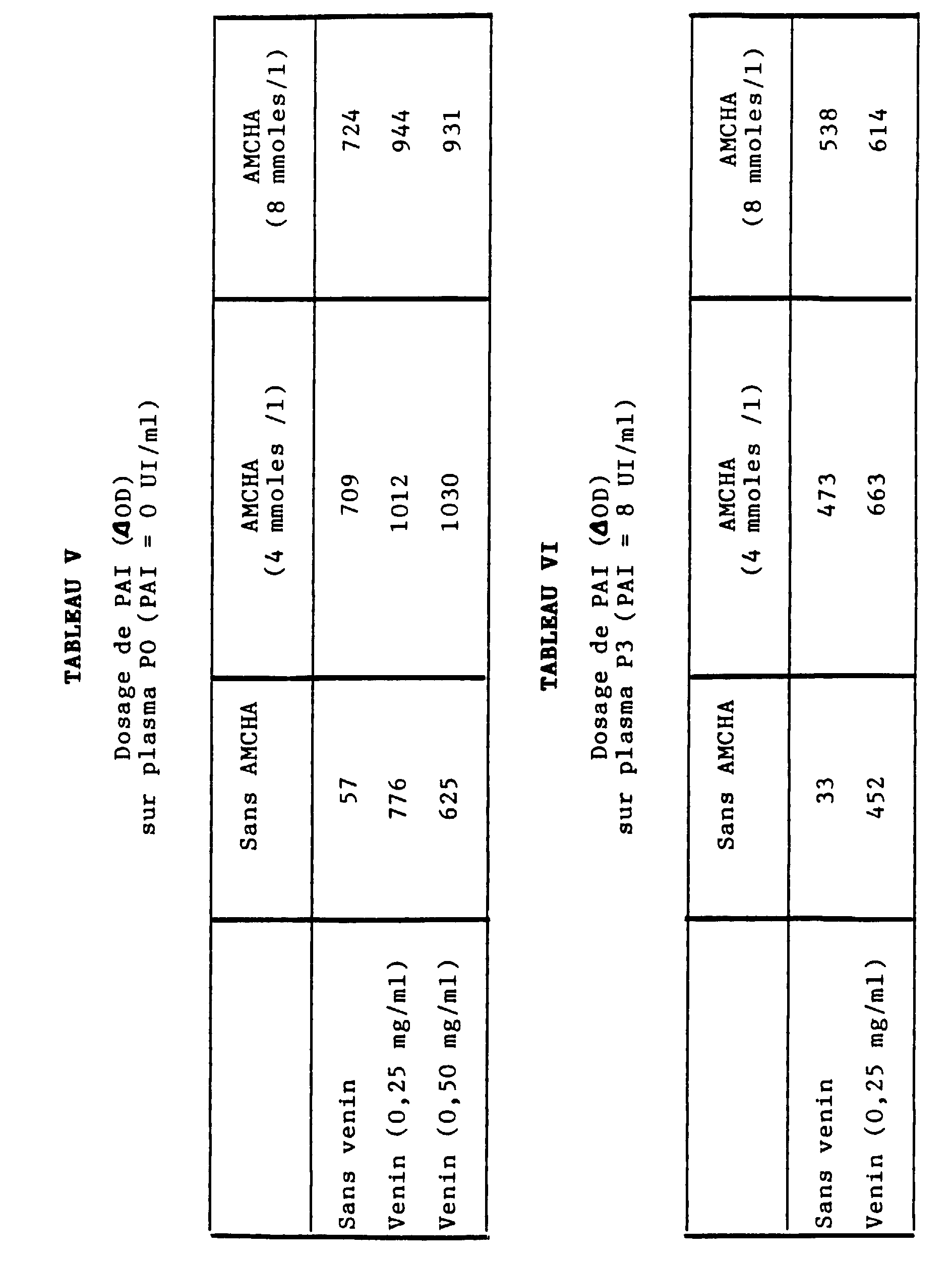
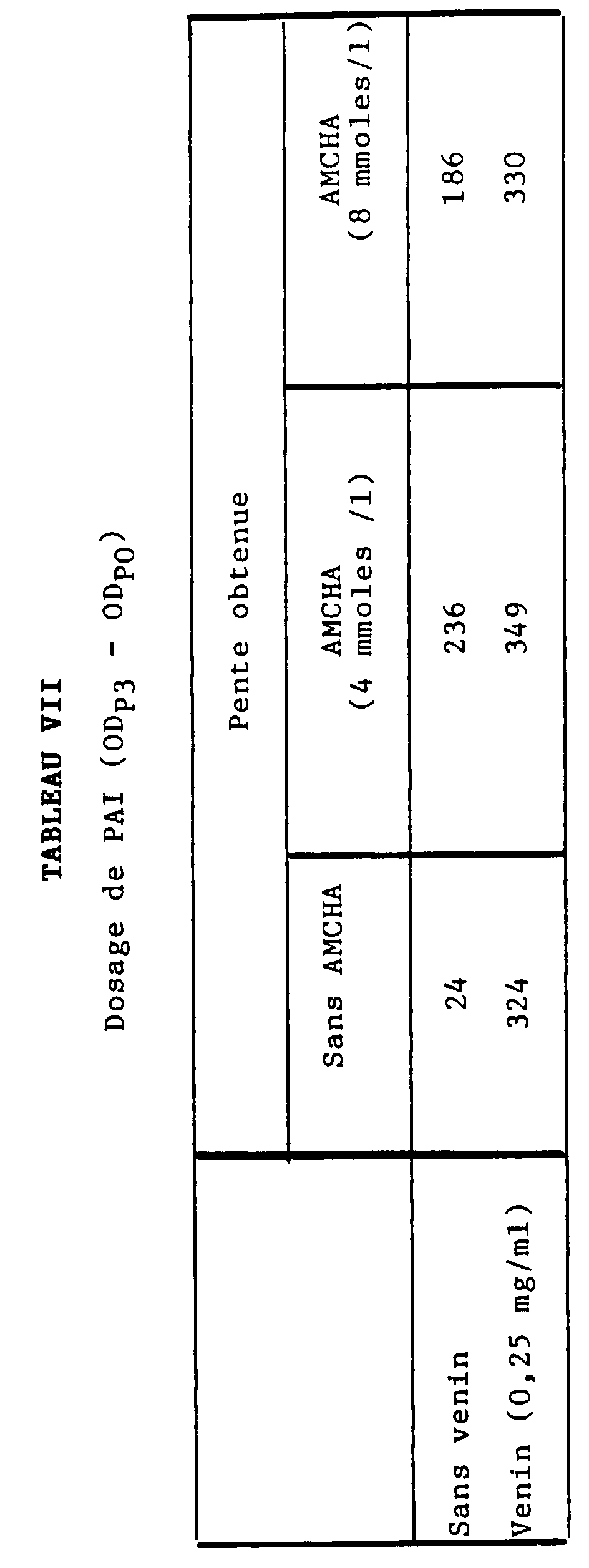
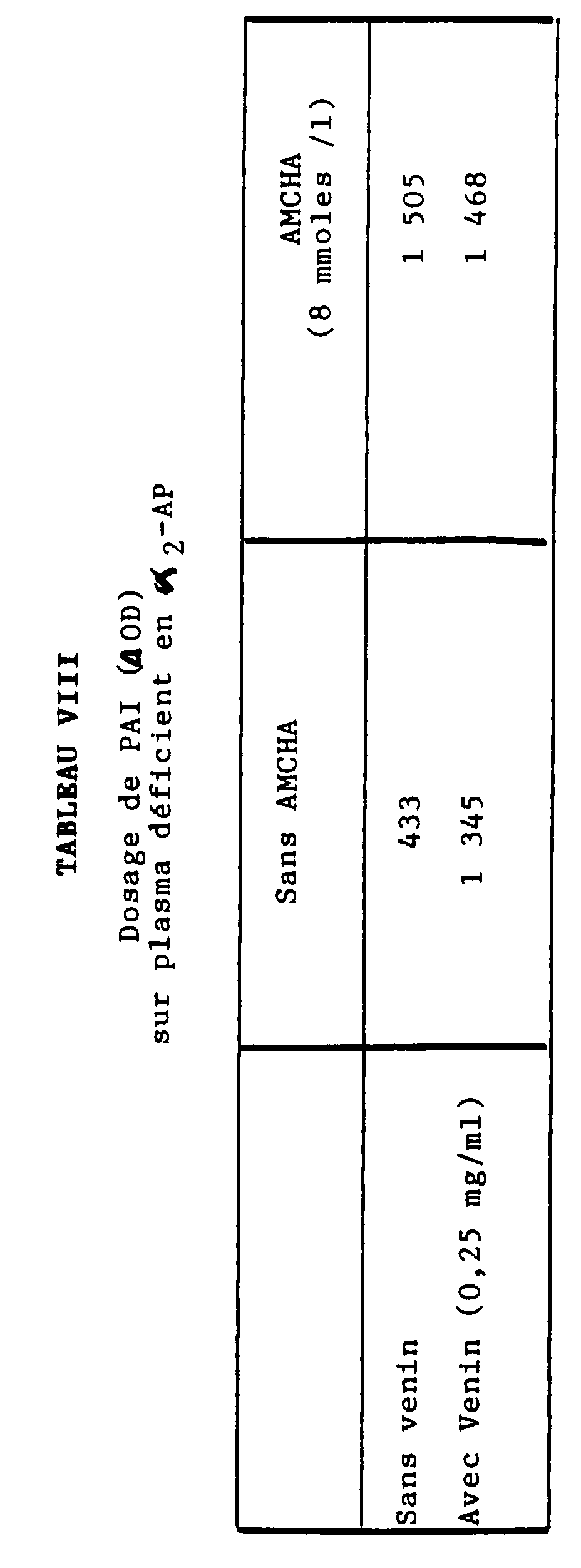
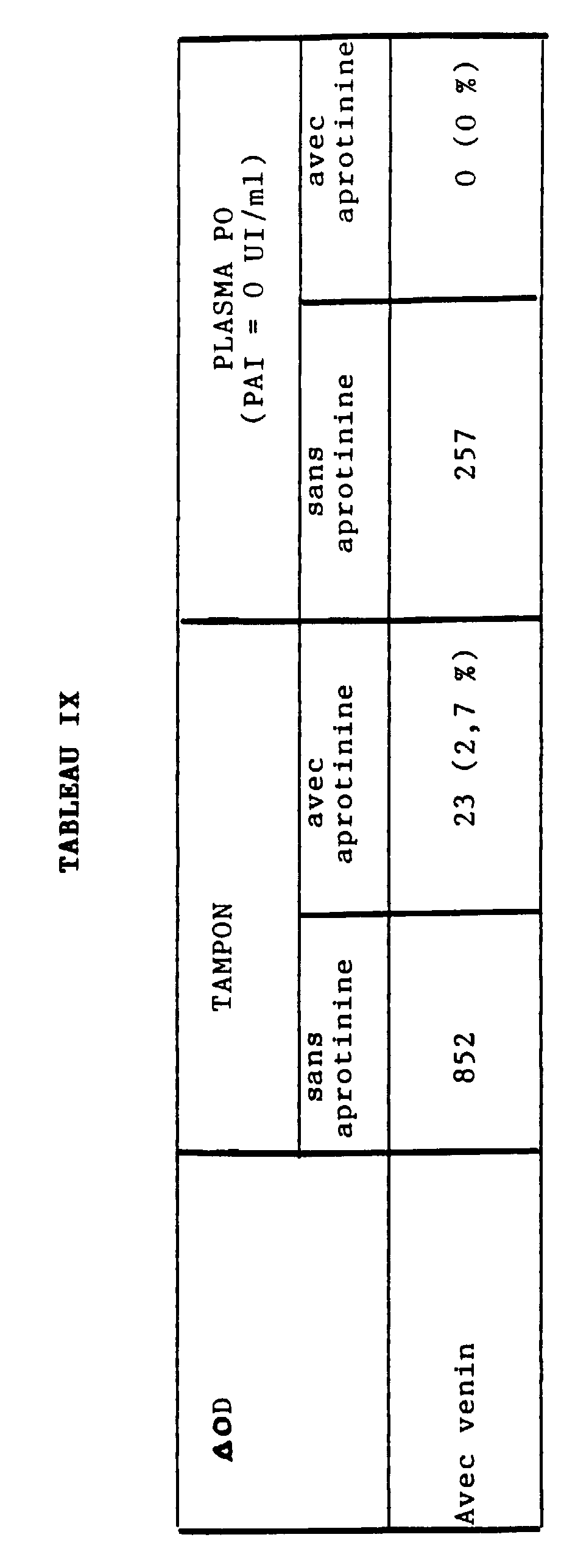
- Table IX relates to the measurement of plasmin generated in the presence of urokinase (uPA), on the one hand, in the presence or absence of aprotinin, on the other hand, in a normal plasma in ⁇ 2 - AP but depleted in PAI.
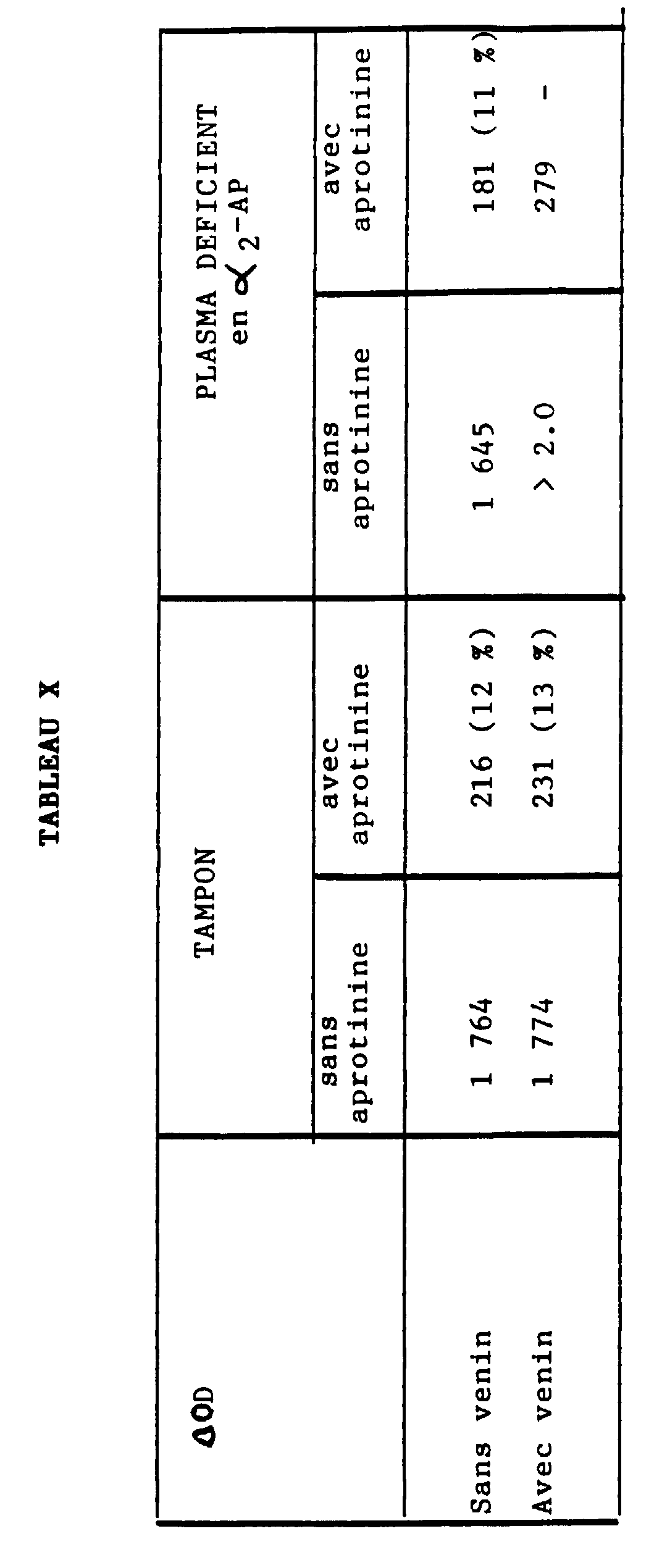
- Table X relates to the measurement of plasmin generated in the presence of urokinase, on the one hand, in the presence or absence of aprotinin, on the other hand, in a plasma depleted in ⁇ 2 -AP.
- the optimal plasmin generation is obtained by 2.50 h for a range of tPA from 0 to 4 IU / ml, in glass or plastic tubes.
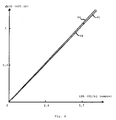
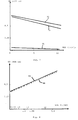
- the calibration curve obtained is linear (see curve 8A in Figure 8).
- the curve obtained with a plasma rich in tPA and diluted in plasma depleted in tPA and PAI is also linear (see curve 8B in figure 8).
- Figure 8 was obtained according to the OD system in ordinates (at 405 nm) / tPA in IU / ml on the abscissa.
Landscapes
- Chemical & Material Sciences (AREA)
- Life Sciences & Earth Sciences (AREA)
- Health & Medical Sciences (AREA)
- Organic Chemistry (AREA)
- Wood Science & Technology (AREA)
- Proteomics, Peptides & Aminoacids (AREA)
- Zoology (AREA)
- Engineering & Computer Science (AREA)
- Molecular Biology (AREA)
- Hematology (AREA)
- Biotechnology (AREA)
- Immunology (AREA)
- Microbiology (AREA)
- Physics & Mathematics (AREA)
- Neurosurgery (AREA)
- Biophysics (AREA)
- Analytical Chemistry (AREA)
- Biochemistry (AREA)
- Bioinformatics & Cheminformatics (AREA)
- General Engineering & Computer Science (AREA)
- General Health & Medical Sciences (AREA)
- Genetics & Genomics (AREA)
- Measuring Or Testing Involving Enzymes Or Micro-Organisms (AREA)
Description
- l'α1-antitrypsine,
- l'inter-α-antitrypsine,
- l'inhibiteur de la C1 estérase (en abrégé C1-Inh),
- l'antithrombine III (en abrégé AT III),
- l'α2-macroglobuline (en abrégé α2-M), et
- l'α2-antiplasmine (en abrégé α2-AP).


En phase solide (méthode M1), on connaít une technique fondée sur la fixation d'un réseau de fibrine à la surface de cupules d'une microplaque; après fixation de la source de tPA, des lavages sont effectuées afin d'éliminer la plupart des facteurs gênant la génération de plasmine. Cette technique présente des avantages :
- utilisation de toute source de tPA, comme le plasma,
- l'activité mesurée est spécifique du tPA et indépendante de la prourokinase [en abrégé : scuPA] et de l'urokinase [en abrégé : tcuPA].
- acidification du plasma (voir méthode M4),
- précipitation des euglobulines (voir méthode M5), ou
- adsorption sur colonne (voir méthode M7).
- α2-AP =
- α2-antiplasmine
- C1-Inh =
- inhibiteur de la C1 estérase
- α2-M =
- α2-macroglobuline
- tPA =
- activateur du plasminogène de type tissulaire (en anglais : "tissue plasminogen activator")
- sctPA =
- activateur du plasminogène de type tissulaire de structure monocaténaire (en anglais : "single-chain tissue plasminogen activator"); autre nomenclature : tPA-I
- tctPA =
- activateur du plasminogène de type tissulaire de structure bicaténaire (en anglais : "two-chain tissue plasminogen activator); autre nomenclature : tPA-II
- uPA =
- activateur du plasminogène de type urokinase (en anglais : "urokinase plasminogen activator"); autres nomenclatures : urokinase ou activateur du plasminogène de type urinaire
- scuPA =
- activateur du plasminogène de type urokinase de structure monocaténaire (en anglais : "single-chain urokinase plasminogen activator"); autre nomenclature : prourokinase
- tcuPA =
- activateur du plasminogène de type urokinase de structure bicaténaire (en anglais : "two-chain urokinase plasminogen activator"); autres nomenclatures : urokinase de haut poids moléculaire ou HMW-UK
- PAI =
- inhibiteur d'activateur du plasminogène
- PAI-1 =
- inhibiteur 1 des activateurs du plasminogène, substance formant des complexes (tPA-PAI-1) et (uPA-PAI-1) avec tPA et respectivement uPA
- PAI-2 =
- inhibiteur 2 des activateurs du plasminogène, substance formant des complexes avec tPA et uPA
- PAI-3 =
- inhibiteur 3 des activateurs du plasminogène, substance susceptible de former des complexes avec uPA
- UK =
- urokinase (autre nomenclature de uPA).
- Arg =
- arginyle
- Abu =
- 2-aminobutyryle
- CHA =
- 3-cyclohexylalanyle
- CHT =
- 3-(4-hydroxycyclohexyl)alanyle
- Glu =
- glutaminyle
- Gly =
- glycyle
- Hyp =
- hydroxyprolyle (3Hyp ou 4Hyp)
- 3Hyp =
- 3-hydroxyprolyle (ou 3-hydroxy-2-pyrrolidinecarbonyle)
- 4Hyp =
- 4-hydroxyprolyle (ou 4-hydroxy-2-pyrrolidinecarbonyle)
- Leu =
- leucyle
- Lys =
- lysyle
- Nle =
- norleucyle
- Nva =
- norvalyle
- Phe =
- phénylalanyle
- Phg =
- phénylglycyle
- Pip =
- pipécolinoyle
- Pro =
- prolyle
- Pyr =
- pyroglutaminyle (ou 2-pyrrolidone-5-carbonyle)
- Tyr =
- tyrosyle
- Val =
- valyle
- AMCHA =
- acide tranexamique, de nomenclature systématique : acide 4-(aminométhyl)-cyclohexane-carboxylique
- BSA =
- albumine bovine sérique
- Bzl =
- benzyle
- EACA =
- acide ε-aminocaproïque
- EM =
- éthyloxymalonyle (EtO-CO-CH2-CO)
- Et =
- éthyle
- Me =
- méthyle
- MM =
- méthyloxymanolyne (MeO-CO-CH2-CO)
- OD =
- densité optique
- OtBu =
- t-butyloxy
- PEGn =
- reste de polyéthylèneglycol de PM = n
- PM =
- poids moléculaire
- pNA =
- p-nitroanilino [ou (4-NO2)C6H4NH]
- RT =
- température ambiante (15-20°C)

| DOSAGE DU tPA | ||
| Ingrédients | Essai | Blanc |
| Plasma dilué dans un tampon avec matériau métalloprotéinasique (a) | 200 µl | - |
| Tampon plus matériau métalloprotéinasique (a) | - | 200 µl |
| Incubation | 2 minutes | 2 minutes |
| Stimulant (b) | 200 µl | 200 µl |
| Incubation | 150 minutes | 150 minutes |
| Substrat (c) | 200 µl | 200 µl |
| Notes (a) venin de B.arietans, C.basiliscus ou L.muta (b) produit commercialisé sous le nom de STIMUGEN par la société DIAGNOSTICA STAGO (c) substrat chromogène spécifique de la plasmine Remarque La lecture est faite avec un spectrophotomètre pour apprécier la libération du groupement chromogène à 405 nm. |
| DOSAGE DU PAI | ||
| Ingrédients | Essai | Blanc |
| Plasma | 50 µl | 50 µl |
| uPA ou tPA | 200 µl | - |
| Tampon | - | 200 µl |
| Incubation | 5 minutes | 5 minutes |
| Plasminogène plus (a) plus (b) | 200 µl | 200 µl |
| Incubation | 3 minutes | 3 minutes |
| Substrat (c) | 200 µl | 200 µl |
| Incubation | 3 minutes | 3 minutes |
| Notes (a) venin de B.arietans, C.basiliscus ou L.muta (b) ω-aminoacide (AMCHA ou EACA) (c) substrat chromogène spécifique de la plasmine Remarque La lecture est faite avec un spectrophotomètre pour apprécier la libération du groupement chromogène à 405 nm. |
- l'aprotinine (0,1 TIU/ml) inhibe la plasmine purifiée mais pas le venin,
- la plasmine générée en présence d'aprotinine est environ de 3 % dans un système tamponné,
- la teneur en plasmine générée en milieu plasmatique et liée à l'α2-M est inférieure à 5 %, même en l'absence d'α2-AP.
- supérieures à 0,0125 mg/ml dans le mélange réactionnel (c'est-à-dire à des concentrations supérieures à 0,025 mg/ml dans le tampon),
- et plus préférentiellement, de l'ordre de 0,025
mg/ml dans le mélange réactionnel (i.e. 0,050 mg/ml dans
le tampon),
quel que soit le lot de venin.
- d'uPA de 10 à 50 UI/ml (de préférence 10 UI/ml), ou de tPA (selon le dosage au moyen de "STACHROM PAI"),
- de plasminogène de 1 à 4 U/ml (de préférence 3 U/ml) de mélange réactionnel, quel que soit le lot de plasminogène,
- d'AMCHA de 0,4 à 4 mmoles/ 1 (de préférence 0,8 mmole/l) de mélange réactionnel, ou de tout autre oméga-aminoacide,
- de venin (de préférence venin brut de B.arietans) de 0,1 à 1 mg/ml de plasma et mieux 0,24 mg/ml de plasma,
- de substrat (spécifique de la plasmine) de 1 à 5 micromoles/ml de plasma et mieux de 3,5 micromoles/ml de plasma.
- les réactifs de la trousse de dosage "STACHROM PA" de la société DIAGNOSTICA STAGO,
- un matériau métalloprotéinasique (constitué par du venin de serpent) lyophilisé seul ou lyophilisé avec le "STIMUGEN".
- tPA : réactif de la trousse de dosage "STACHROM PAI" de la société DIAGNOSTICA STAGO,
- uPA (urokinase) : 20 UI/flacon, à reprendre par 2 ml d'eau distillée,
- excipients de lyophilisation : tampon phosphate (100 mM; pH 9,0) et BSA à 5 g/l,
- conservateur : gentamicine 50 mg/l,
- réactif, à reprendre par 2 ml d'eau distillée :
- 1 volume de plasminogène purifié en tampon phosphate à pH 7,5,
- 3 volumes de matériau métalloprotéinasique (venin de serpent) à la concentration de 0,15 mg/ml dans de l'eau distillée,
- 2 volumes d'AMCHA à 4 mmoles/ l dans un diluant contenant un tampon phosphate (50 mM; pH 7,5), 3 % de glycine et 0,9 % de NaCl (conservateur : gentamicine à 50 mg/l),
- substrat : 16,5 micromoles/flacon à reprendre par 2 ml d'eau distillée, en excipient glycine classique,
- plasma étalon ou contrôle lyophilisé dans un milieu
comprenant 3 % de glycine, 1 % de lactose, 1 % de
saccharose et 50 mg/l de gentamicine.

Claims (6)
- Procédé pour la détermination dans le plasma (i) d'un activateur du plasminogène choisi parmi l'ensemble constitué par les activateurs du plasminogène de type tissulaire (tPA) et les activateurs du plasminogène de type urokinase (uPA), et (ii) d'un inhibiteur (PAI) dudit activateur du plasminogène, ledit procédé, qui comporte l'inhibition des protéines plasmatiques α2-antiplasmine et/ou α2-macroglobuline au moyen d'une substance choisie parmi l'ensemble constitué par les matériaux métalloprotéinasiques, d'une part, et la transformation du plasminogène en plasmine puis le dosage de la plasmine résultant de ladite transformation, d'autre part, étant caractérisé en ce qu'il comprend (1) l'incorporation du matériau métalloprotéinasique dans le plasma à étudier, (2) l'ajout dans le milieu résultant d'un moyen stimulant la transformation du plasminogène en plasmine, puis (3) le dosage de la plasmine qui résulte de ladite transformation.
- Procédé suivant la revendication 1, caractérisé en ce que pour la détermination du tPA, (a) l'on incorpore le matériau métalloprotéinasique dans le plasma à étudier dilué dans le tampon approprié, (b) incube à 37°C pendant 2 minutes, (c) ajoute un moyen stimulant la transformation du plasminogène en plasmine, (d) incube à 37°C pendant 150 minutes, (e) ajoute le substrat chromogène spécifique de la plasmine, puis (f) incube à 37°C pendant 5 minutes, la lecture de la densité optique correspondant à la libération du moyen chromogène étant ensuite effectuée notamment par comparaison avec un essai à blanc dans lequel le plasma à étudier additionné de matériau métalloprotéinasique du stade (a) est remplacé par un tampon additionné de matériau métalloprotéinasique.
- Procédé suivant la revendication 2, dans lequel le matériau métalloprotéinasique est incorporé au stade (c) au lieu du stade (a).
- Procédé suivant la revendication 1, caractérisé en ce que pour la détermination du PAI, (a) l'on incorpore tPA ou uPA dans le plasma à étudier, (b) incube à 37°C pendant 5 minutes, (c) ajoute un mélange constitué par du plasminogène, un ω-aminoacide et ledit matériau métalloprotéinasique, (d) incube à 37°C pendant 3 minutes, (e) ajoute le substrat chromogène spécifique de la plasmine, puis (f) incube à 37°C pendant 3 minutes, la lecture de la densité optique correspondant à la libération du moyen chromogène étant ensuite effectuée notamment par comparaison avec un essai à blanc dans lequel au stade (c) l'activateur du plasminogène (tPA ou uPA) est remplacé par un tampon.
- Procédé suivant la revendication 2 ou 4, caractérisé en ce que le matériau métalloprotéinasique est choisi parmi les venins de Bitis arietans, Crotalus basiliscus et Lachesis muta.
- Nécessaire pour la détermination d'un activateur du plasminogène de type tissulaire ou de type urokinase, d'une part, ou d'un inhibiteur d'activateur du plasminogène, d'autre part, caractérisé en ce qu'il comprend (A) au moins un matériau métalloprotéinasique choisi parmi l'ensemble constitué par les venins de Bitis arietans, Crotalus basiliscus et Lachesis muta, et (B) au moins un activateur du plasminogène choisi parmi l'ensemble constitué par les activateurs du plasminogène de type tissulaire (tPA) et les activateurs du plasminogène de type urokinase (uPA).
Applications Claiming Priority (2)
| Application Number | Priority Date | Filing Date | Title |
|---|---|---|---|
| FR9005808A FR2661920B1 (fr) | 1990-05-10 | 1990-05-10 | Procede de determination d'un activateur du plasminogene et de son inhibiteur. |
| FR9005808 | 1990-05-10 |
Publications (2)
| Publication Number | Publication Date |
|---|---|
| EP0456567A1 EP0456567A1 (fr) | 1991-11-13 |
| EP0456567B1 true EP0456567B1 (fr) | 1998-01-07 |
Family
ID=9396452
Family Applications (1)
| Application Number | Title | Priority Date | Filing Date |
|---|---|---|---|
| EP91401181A Expired - Lifetime EP0456567B1 (fr) | 1990-05-10 | 1991-05-06 | Procédé de détermination d'un activateur du plasminogène et de son inhibiteur |
Country Status (5)
| Country | Link |
|---|---|
| US (1) | US5472851A (fr) |
| EP (1) | EP0456567B1 (fr) |
| JP (1) | JP2966968B2 (fr) |
| DE (1) | DE69128557T2 (fr) |
| FR (1) | FR2661920B1 (fr) |
Families Citing this family (4)
| Publication number | Priority date | Publication date | Assignee | Title |
|---|---|---|---|---|
| IT1277904B1 (it) * | 1995-08-07 | 1997-11-12 | Polifarma Spa | Metodo per determinare l'attivita' terapeutica di composti inibitori di metalloproteinasi, nuovi composti inibitori, e loro impiego |
| US6057297A (en) * | 1996-08-06 | 2000-05-02 | Polifarma S.P.A. | Inhibitor compounds of zinc-dependent metalloproteinases associated with pathological conditions, and therapeutic use thereof |
| CA2384295A1 (fr) * | 1999-04-28 | 2000-11-02 | Yahia Gawad | Procede de determination d'inhibiteur d'un activateur de plasminogene |
| RU2252421C1 (ru) * | 2003-10-23 | 2005-05-20 | Айсина Роза Бакировна | Способ определения тканевого активатора плазминогена |
Family Cites Families (9)
| Publication number | Priority date | Publication date | Assignee | Title |
|---|---|---|---|---|
| DE2440254A1 (de) * | 1973-08-27 | 1975-03-06 | Pentapharm Ag | Unloesliches enzympraeparat und verfahren zu dessen herstellung |
| JPS5569595A (en) * | 1978-11-20 | 1980-05-26 | Suguru Abe | Novel substance having fibrinolytic activity, remedy for thrombotic embolic disease comprising it, and its preparation |
| NL8003402A (nl) * | 1980-06-11 | 1982-01-04 | Leuven Res & Dev Vzw | Nieuwe plasminogeen-activator en farmaceutisch preparaat met trombolytische werking. |
| US4640835A (en) * | 1981-10-30 | 1987-02-03 | Nippon Chemiphar Company, Ltd. | Plasminogen activator derivatives |
| US4629694A (en) * | 1983-07-12 | 1986-12-16 | Cornell Research Foundation, Inc. | Detecting and distinguishing between plasminogen activators |
| US4661453A (en) * | 1984-06-19 | 1987-04-28 | American Biogenetic Sciences, Inc. | Production of tissue plasminogen activator factor |
| CA1267602A (fr) * | 1985-09-10 | 1990-04-10 | Fumio Kakimoto | Compose contenant un activateur du plasminogene |
| US4999194A (en) * | 1988-01-14 | 1991-03-12 | Collaborative Research, Inc. | Two-chain urokinase plasminogen activators for treatment of thrombotic disease |
| US5073626A (en) * | 1988-11-09 | 1991-12-17 | Monsanto Company | Affinity purification of plasminogen activator inhibitor I using a modified urokinase |
-
1990
- 1990-05-10 FR FR9005808A patent/FR2661920B1/fr not_active Expired - Fee Related
-
1991
- 1991-05-06 DE DE69128557T patent/DE69128557T2/de not_active Expired - Fee Related
- 1991-05-06 EP EP91401181A patent/EP0456567B1/fr not_active Expired - Lifetime
- 1991-05-10 JP JP3135977A patent/JP2966968B2/ja not_active Expired - Fee Related
- 1991-05-10 US US07/698,314 patent/US5472851A/en not_active Expired - Fee Related
Also Published As
| Publication number | Publication date |
|---|---|
| US5472851A (en) | 1995-12-05 |
| DE69128557T2 (de) | 1998-04-23 |
| EP0456567A1 (fr) | 1991-11-13 |
| FR2661920B1 (fr) | 1995-10-06 |
| FR2661920A1 (fr) | 1991-11-15 |
| JP2966968B2 (ja) | 1999-10-25 |
| DE69128557D1 (de) | 1998-02-12 |
| JPH05328997A (ja) | 1993-12-14 |
Similar Documents
| Publication | Publication Date | Title |
|---|---|---|
| JP5096759B2 (ja) | セリンエンドペプチダーゼの安定化調製物、その製造および使用 | |
| Maier et al. | Inactivation of human high molecular weight kininogen by human mast cell tryptase. | |
| JP2892828B2 (ja) | 血漿プロテインの検定方法 | |
| ES2476815T3 (es) | Fibrin�geno terapéutico estable | |
| US5057414A (en) | Method for the determination of the activity of serine proteases or serine protease inhibitors | |
| US4957903A (en) | Pharmaceutical and clinical compositions of desAA fibrin monomers and the tetrapeptide gly-pro-arg-pro | |
| EP0456567B1 (fr) | Procédé de détermination d'un activateur du plasminogène et de son inhibiteur | |
| JPH04501460A (ja) | 触媒活性セリンプロテアーゼに関する免疫検定法 | |
| Rijkers et al. | Prevention of the influence of fibrin and α2-Macroglobulin in the continuous measurement of the thrombin potential: Implications for an endpoint determination of the optical density | |
| EP2639586B1 (fr) | Procédé de mesure utilisant des enzymes | |
| Miller-Andersson et al. | Preparation and stability of a highly purified human thrombin standard | |
| Gandrille et al. | Association of inherited dysfibrinogenaemia and protein C deficiency in two unrelated families | |
| JP3127263B2 (ja) | 第▲VIII▼:Ca因子色素原アッセイ | |
| JPS63119675A (ja) | 変形組織プラスミン活性化剤 | |
| EP0133070A2 (fr) | Procédé de production d'un activateur tissulaire du plasminogène et activateur obtenu par ce procédé | |
| Budzynski | Chromogenic substrates in coagulation and fibrinolytic assays | |
| CA2333252C (fr) | Utilisation de bromelaine proteases pour empecher la coagulation du sang | |
| EP1406920B1 (fr) | Nouveaux substrats chromogenes et leur utilisation pour le dosage de l'activite de carboxypeptidases | |
| AU620812B2 (en) | Determination of components active in proteolysis | |
| EP0937158B1 (fr) | DISPOSITIF POUR DETERMINER L'ACTIVITE CATALYTIQUE DU FACTEUR IXa | |
| JP3761925B2 (ja) | 安定なプラスミン溶液 | |
| US5945297A (en) | Process for screening candidate agents that modulate the hemostatic system | |
| Prydz | AN ACTIVATED FORM OF FACTOR VII IN PLASMA | |
| SE407985B (sv) | Forfarande vid fotometrisk analys av koagulationsfaktorer |
Legal Events
| Date | Code | Title | Description |
|---|---|---|---|
| PUAI | Public reference made under article 153(3) epc to a published international application that has entered the european phase |
Free format text: ORIGINAL CODE: 0009012 |
|
| AK | Designated contracting states |
Kind code of ref document: A1 Designated state(s): DE |
|
| 17P | Request for examination filed |
Effective date: 19920325 |
|
| RAP1 | Party data changed (applicant data changed or rights of an application transferred) |
Owner name: DIAGNOSTICA STAGO (SOCIETE ANONYME) |
|
| 17Q | First examination report despatched |
Effective date: 19940615 |
|
| GRAG | Despatch of communication of intention to grant |
Free format text: ORIGINAL CODE: EPIDOS AGRA |
|
| GRAG | Despatch of communication of intention to grant |
Free format text: ORIGINAL CODE: EPIDOS AGRA |
|
| GRAH | Despatch of communication of intention to grant a patent |
Free format text: ORIGINAL CODE: EPIDOS IGRA |
|
| GRAH | Despatch of communication of intention to grant a patent |
Free format text: ORIGINAL CODE: EPIDOS IGRA |
|
| GRAA | (expected) grant |
Free format text: ORIGINAL CODE: 0009210 |
|
| AK | Designated contracting states |
Kind code of ref document: B1 Designated state(s): DE |
|
| REF | Corresponds to: |
Ref document number: 69128557 Country of ref document: DE Date of ref document: 19980212 |
|
| PLBE | No opposition filed within time limit |
Free format text: ORIGINAL CODE: 0009261 |
|
| STAA | Information on the status of an ep patent application or granted ep patent |
Free format text: STATUS: NO OPPOSITION FILED WITHIN TIME LIMIT |
|
| 26N | No opposition filed | ||
| PGFP | Annual fee paid to national office [announced via postgrant information from national office to epo] |
Ref country code: DE Payment date: 20060531 Year of fee payment: 16 |
|
| PG25 | Lapsed in a contracting state [announced via postgrant information from national office to epo] |
Ref country code: DE Free format text: LAPSE BECAUSE OF NON-PAYMENT OF DUE FEES Effective date: 20071201 |