EP0458437B1 - Procédé pour la production du facteur humain de croissance des nerfs par génie génétique - Google Patents
Procédé pour la production du facteur humain de croissance des nerfs par génie génétique Download PDFInfo
- Publication number
- EP0458437B1 EP0458437B1 EP91301386A EP91301386A EP0458437B1 EP 0458437 B1 EP0458437 B1 EP 0458437B1 EP 91301386 A EP91301386 A EP 91301386A EP 91301386 A EP91301386 A EP 91301386A EP 0458437 B1 EP0458437 B1 EP 0458437B1
- Authority
- EP
- European Patent Office
- Prior art keywords
- dna
- hngf
- growth factor
- nerve growth
- plasmid
- Prior art date
- Legal status (The legal status is an assumption and is not a legal conclusion. Google has not performed a legal analysis and makes no representation as to the accuracy of the status listed.)
- Expired - Lifetime
Links
- 108010025020 Nerve Growth Factor Proteins 0.000 title claims description 25
- 102000015336 Nerve Growth Factor Human genes 0.000 title claims description 25
- 229940053128 nerve growth factor Drugs 0.000 title claims description 25
- 238000000034 method Methods 0.000 title claims description 13
- 238000004519 manufacturing process Methods 0.000 title description 10
- 238000010353 genetic engineering Methods 0.000 title description 3
- QIVBCDIJIAJPQS-VIFPVBQESA-N L-tryptophane Chemical compound C1=CC=C2C(C[C@H](N)C(O)=O)=CNC2=C1 QIVBCDIJIAJPQS-VIFPVBQESA-N 0.000 claims description 28
- QIVBCDIJIAJPQS-UHFFFAOYSA-N Tryptophan Natural products C1=CC=C2C(CC(N)C(O)=O)=CNC2=C1 QIVBCDIJIAJPQS-UHFFFAOYSA-N 0.000 claims description 28
- 239000002773 nucleotide Substances 0.000 claims description 26
- 125000003729 nucleotide group Chemical group 0.000 claims description 26
- 241000588724 Escherichia coli Species 0.000 claims description 25
- 108090000765 processed proteins & peptides Proteins 0.000 claims description 17
- 229920001184 polypeptide Polymers 0.000 claims description 16
- 102000004196 processed proteins & peptides Human genes 0.000 claims description 16
- 244000005700 microbiome Species 0.000 claims description 13
- 108010076504 Protein Sorting Signals Proteins 0.000 claims description 10
- 101150108727 trpl gene Proteins 0.000 claims description 10
- 238000011144 upstream manufacturing Methods 0.000 claims description 9
- 238000012258 culturing Methods 0.000 claims description 7
- 108090000204 Dipeptidase 1 Proteins 0.000 claims description 6
- 108700005075 Regulator Genes Proteins 0.000 claims description 6
- 102000006635 beta-lactamase Human genes 0.000 claims description 6
- 239000013600 plasmid vector Substances 0.000 claims description 6
- 230000001131 transforming effect Effects 0.000 claims description 4
- 239000000411 inducer Substances 0.000 claims description 2
- 108020004414 DNA Proteins 0.000 description 87
- 239000013612 plasmid Substances 0.000 description 54
- 108091028043 Nucleic acid sequence Proteins 0.000 description 52
- 108090000623 proteins and genes Proteins 0.000 description 43
- 239000012634 fragment Substances 0.000 description 34
- 150000001413 amino acids Chemical class 0.000 description 16
- 108091008146 restriction endonucleases Proteins 0.000 description 15
- 210000004027 cell Anatomy 0.000 description 14
- 241001131785 Escherichia coli HB101 Species 0.000 description 13
- 102000053602 DNA Human genes 0.000 description 11
- 235000001014 amino acid Nutrition 0.000 description 11
- 108010054576 Deoxyribonuclease EcoRI Proteins 0.000 description 10
- ISWSIDIOOBJBQZ-UHFFFAOYSA-N Phenol Chemical compound OC1=CC=CC=C1 ISWSIDIOOBJBQZ-UHFFFAOYSA-N 0.000 description 8
- 239000000499 gel Substances 0.000 description 7
- 239000013598 vector Substances 0.000 description 7
- PEDCQBHIVMGVHV-UHFFFAOYSA-N Glycerine Chemical compound OCC(O)CO PEDCQBHIVMGVHV-UHFFFAOYSA-N 0.000 description 6
- 238000004458 analytical method Methods 0.000 description 6
- 238000001962 electrophoresis Methods 0.000 description 6
- 238000012869 ethanol precipitation Methods 0.000 description 6
- 239000000243 solution Substances 0.000 description 6
- 108020004705 Codon Proteins 0.000 description 5
- 108020004682 Single-Stranded DNA Proteins 0.000 description 5
- 108020005038 Terminator Codon Proteins 0.000 description 5
- 238000006243 chemical reaction Methods 0.000 description 5
- 230000002068 genetic effect Effects 0.000 description 5
- 239000002480 mineral oil Substances 0.000 description 5
- 235000010446 mineral oil Nutrition 0.000 description 5
- 239000000203 mixture Substances 0.000 description 5
- 238000002264 polyacrylamide gel electrophoresis Methods 0.000 description 5
- 238000003752 polymerase chain reaction Methods 0.000 description 5
- 235000018102 proteins Nutrition 0.000 description 5
- 102000004169 proteins and genes Human genes 0.000 description 5
- XLYOFNOQVPJJNP-UHFFFAOYSA-N water Chemical compound O XLYOFNOQVPJJNP-UHFFFAOYSA-N 0.000 description 5
- 238000010276 construction Methods 0.000 description 4
- 230000000694 effects Effects 0.000 description 4
- 238000000605 extraction Methods 0.000 description 4
- 230000026731 phosphorylation Effects 0.000 description 4
- 238000006366 phosphorylation reaction Methods 0.000 description 4
- 238000002360 preparation method Methods 0.000 description 4
- 108091032973 (ribonucleotides)n+m Proteins 0.000 description 3
- 108010021757 Polynucleotide 5'-Hydroxyl-Kinase Proteins 0.000 description 3
- 102000008422 Polynucleotide 5'-hydroxyl-kinase Human genes 0.000 description 3
- 238000000246 agarose gel electrophoresis Methods 0.000 description 3
- 238000001311 chemical methods and process Methods 0.000 description 3
- 230000008021 deposition Effects 0.000 description 3
- 239000008223 sterile water Substances 0.000 description 3
- 210000001913 submandibular gland Anatomy 0.000 description 3
- QKNYBSVHEMOAJP-UHFFFAOYSA-N 2-amino-2-(hydroxymethyl)propane-1,3-diol;hydron;chloride Chemical compound Cl.OCC(N)(CO)CO QKNYBSVHEMOAJP-UHFFFAOYSA-N 0.000 description 2
- 238000001712 DNA sequencing Methods 0.000 description 2
- 102000004163 DNA-directed RNA polymerases Human genes 0.000 description 2
- 108090000626 DNA-directed RNA polymerases Proteins 0.000 description 2
- 108091036060 Linker DNA Proteins 0.000 description 2
- FAPWRFPIFSIZLT-UHFFFAOYSA-M Sodium chloride Chemical compound [Na+].[Cl-] FAPWRFPIFSIZLT-UHFFFAOYSA-M 0.000 description 2
- 108010006785 Taq Polymerase Proteins 0.000 description 2
- 238000000137 annealing Methods 0.000 description 2
- 238000010420 art technique Methods 0.000 description 2
- 229940041514 candida albicans extract Drugs 0.000 description 2
- 238000013461 design Methods 0.000 description 2
- 229940079593 drug Drugs 0.000 description 2
- 239000003814 drug Substances 0.000 description 2
- 238000005516 engineering process Methods 0.000 description 2
- 238000011534 incubation Methods 0.000 description 2
- 210000002569 neuron Anatomy 0.000 description 2
- BASFCYQUMIYNBI-UHFFFAOYSA-N platinum Chemical compound [Pt] BASFCYQUMIYNBI-UHFFFAOYSA-N 0.000 description 2
- 229920002401 polyacrylamide Polymers 0.000 description 2
- 238000011160 research Methods 0.000 description 2
- 238000003786 synthesis reaction Methods 0.000 description 2
- XSQUKJJJFZCRTK-UHFFFAOYSA-N urea group Chemical group NC(=O)N XSQUKJJJFZCRTK-UHFFFAOYSA-N 0.000 description 2
- 239000012138 yeast extract Substances 0.000 description 2
- NLXLAEXVIDQMFP-UHFFFAOYSA-N Ammonia chloride Chemical compound [NH4+].[Cl-] NLXLAEXVIDQMFP-UHFFFAOYSA-N 0.000 description 1
- 239000004475 Arginine Substances 0.000 description 1
- 241000894006 Bacteria Species 0.000 description 1
- 102000004190 Enzymes Human genes 0.000 description 1
- 108090000790 Enzymes Proteins 0.000 description 1
- 108700039691 Genetic Promoter Regions Proteins 0.000 description 1
- WQZGKKKJIJFFOK-GASJEMHNSA-N Glucose Natural products OC[C@H]1OC(O)[C@H](O)[C@@H](O)[C@@H]1O WQZGKKKJIJFFOK-GASJEMHNSA-N 0.000 description 1
- WHUUTDBJXJRKMK-UHFFFAOYSA-N Glutamic acid Natural products OC(=O)C(N)CCC(O)=O WHUUTDBJXJRKMK-UHFFFAOYSA-N 0.000 description 1
- 101001111439 Homo sapiens Beta-nerve growth factor Proteins 0.000 description 1
- 239000007836 KH2PO4 Substances 0.000 description 1
- COLNVLDHVKWLRT-QMMMGPOBSA-N L-phenylalanine Chemical compound OC(=O)[C@@H](N)CC1=CC=CC=C1 COLNVLDHVKWLRT-QMMMGPOBSA-N 0.000 description 1
- 239000000020 Nitrocellulose Substances 0.000 description 1
- 101800005149 Peptide B Proteins 0.000 description 1
- ONIBWKKTOPOVIA-UHFFFAOYSA-N Proline Natural products OC(=O)C1CCCN1 ONIBWKKTOPOVIA-UHFFFAOYSA-N 0.000 description 1
- MTCFGRXMJLQNBG-UHFFFAOYSA-N Serine Natural products OCC(N)C(O)=O MTCFGRXMJLQNBG-UHFFFAOYSA-N 0.000 description 1
- 108700005078 Synthetic Genes Proteins 0.000 description 1
- JZRWCGZRTZMZEH-UHFFFAOYSA-N Thiamine Natural products CC1=C(CCO)SC=[N+]1CC1=CN=C(C)N=C1N JZRWCGZRTZMZEH-UHFFFAOYSA-N 0.000 description 1
- 238000002835 absorbance Methods 0.000 description 1
- 239000002253 acid Substances 0.000 description 1
- 239000011543 agarose gel Substances 0.000 description 1
- AVKUERGKIZMTKX-NJBDSQKTSA-N ampicillin Chemical compound C1([C@@H](N)C(=O)N[C@H]2[C@H]3SC([C@@H](N3C2=O)C(O)=O)(C)C)=CC=CC=C1 AVKUERGKIZMTKX-NJBDSQKTSA-N 0.000 description 1
- 229960000723 ampicillin Drugs 0.000 description 1
- 230000003321 amplification Effects 0.000 description 1
- 239000007864 aqueous solution Substances 0.000 description 1
- ODKSFYDXXFIFQN-UHFFFAOYSA-N arginine Natural products OC(=O)C(N)CCCNC(N)=N ODKSFYDXXFIFQN-UHFFFAOYSA-N 0.000 description 1
- 108010005774 beta-Galactosidase Proteins 0.000 description 1
- 230000015572 biosynthetic process Effects 0.000 description 1
- LLSDKQJKOVVTOJ-UHFFFAOYSA-L calcium chloride dihydrate Chemical compound O.O.[Cl-].[Cl-].[Ca+2] LLSDKQJKOVVTOJ-UHFFFAOYSA-L 0.000 description 1
- 239000004202 carbamide Substances 0.000 description 1
- 238000005119 centrifugation Methods 0.000 description 1
- 238000010367 cloning Methods 0.000 description 1
- 239000002299 complementary DNA Substances 0.000 description 1
- NKLPQNGYXWVELD-UHFFFAOYSA-M coomassie brilliant blue Chemical compound [Na+].C1=CC(OCC)=CC=C1NC1=CC=C(C(=C2C=CC(C=C2)=[N+](CC)CC=2C=C(C=CC=2)S([O-])(=O)=O)C=2C=CC(=CC=2)N(CC)CC=2C=C(C=CC=2)S([O-])(=O)=O)C=C1 NKLPQNGYXWVELD-UHFFFAOYSA-M 0.000 description 1
- 230000003247 decreasing effect Effects 0.000 description 1
- 230000004069 differentiation Effects 0.000 description 1
- BNIILDVGGAEEIG-UHFFFAOYSA-L disodium hydrogen phosphate Chemical compound [Na+].[Na+].OP([O-])([O-])=O BNIILDVGGAEEIG-UHFFFAOYSA-L 0.000 description 1
- 229910000397 disodium phosphate Inorganic materials 0.000 description 1
- 239000013604 expression vector Substances 0.000 description 1
- 238000000855 fermentation Methods 0.000 description 1
- 230000004151 fermentation Effects 0.000 description 1
- 239000008103 glucose Substances 0.000 description 1
- 235000013922 glutamic acid Nutrition 0.000 description 1
- 239000004220 glutamic acid Substances 0.000 description 1
- 102000046917 human NGF Human genes 0.000 description 1
- 230000000415 inactivating effect Effects 0.000 description 1
- 239000003112 inhibitor Substances 0.000 description 1
- 230000000977 initiatory effect Effects 0.000 description 1
- 238000011835 investigation Methods 0.000 description 1
- WRUGWIBCXHJTDG-UHFFFAOYSA-L magnesium sulfate heptahydrate Chemical compound O.O.O.O.O.O.O.[Mg+2].[O-]S([O-])(=O)=O WRUGWIBCXHJTDG-UHFFFAOYSA-L 0.000 description 1
- 239000012528 membrane Substances 0.000 description 1
- 108020004999 messenger RNA Proteins 0.000 description 1
- 230000004048 modification Effects 0.000 description 1
- 238000012986 modification Methods 0.000 description 1
- 229910000402 monopotassium phosphate Inorganic materials 0.000 description 1
- 201000001119 neuropathy Diseases 0.000 description 1
- 230000007823 neuropathy Effects 0.000 description 1
- 229920001220 nitrocellulos Polymers 0.000 description 1
- 238000003199 nucleic acid amplification method Methods 0.000 description 1
- 102000039446 nucleic acids Human genes 0.000 description 1
- 108020004707 nucleic acids Proteins 0.000 description 1
- 150000007523 nucleic acids Chemical class 0.000 description 1
- 108010091748 peptide A Proteins 0.000 description 1
- 208000033808 peripheral neuropathy Diseases 0.000 description 1
- 210000001322 periplasm Anatomy 0.000 description 1
- COLNVLDHVKWLRT-UHFFFAOYSA-N phenylalanine Natural products OC(=O)C(N)CC1=CC=CC=C1 COLNVLDHVKWLRT-UHFFFAOYSA-N 0.000 description 1
- 229910052697 platinum Inorganic materials 0.000 description 1
- GNSKLFRGEWLPPA-UHFFFAOYSA-M potassium dihydrogen phosphate Chemical compound [K+].OP(O)([O-])=O GNSKLFRGEWLPPA-UHFFFAOYSA-M 0.000 description 1
- 230000001105 regulatory effect Effects 0.000 description 1
- 239000011347 resin Substances 0.000 description 1
- 229920005989 resin Polymers 0.000 description 1
- 239000000523 sample Substances 0.000 description 1
- 239000012723 sample buffer Substances 0.000 description 1
- 238000004062 sedimentation Methods 0.000 description 1
- 239000011780 sodium chloride Substances 0.000 description 1
- 230000004083 survival effect Effects 0.000 description 1
- 239000000725 suspension Substances 0.000 description 1
- 235000019157 thiamine Nutrition 0.000 description 1
- KYMBYSLLVAOCFI-UHFFFAOYSA-N thiamine Chemical compound CC1=C(CCO)SCN1CC1=CN=C(C)N=C1N KYMBYSLLVAOCFI-UHFFFAOYSA-N 0.000 description 1
- 229960003495 thiamine Drugs 0.000 description 1
- 239000011721 thiamine Substances 0.000 description 1
- 210000001519 tissue Anatomy 0.000 description 1
- 238000013519 translation Methods 0.000 description 1
- 108700026220 vif Genes Proteins 0.000 description 1
- 238000005406 washing Methods 0.000 description 1
- DGVVWUTYPXICAM-UHFFFAOYSA-N β‐Mercaptoethanol Chemical compound OCCS DGVVWUTYPXICAM-UHFFFAOYSA-N 0.000 description 1
Images




Classifications
-
- C—CHEMISTRY; METALLURGY
- C07—ORGANIC CHEMISTRY
- C07K—PEPTIDES
- C07K14/00—Peptides having more than 20 amino acids; Gastrins; Somatostatins; Melanotropins; Derivatives thereof
- C07K14/435—Peptides having more than 20 amino acids; Gastrins; Somatostatins; Melanotropins; Derivatives thereof from animals; from humans
- C07K14/475—Growth factors; Growth regulators
- C07K14/48—Nerve growth factor [NGF]
-
- C—CHEMISTRY; METALLURGY
- C07—ORGANIC CHEMISTRY
- C07K—PEPTIDES
- C07K2319/00—Fusion polypeptide
- C07K2319/01—Fusion polypeptide containing a localisation/targetting motif
- C07K2319/02—Fusion polypeptide containing a localisation/targetting motif containing a signal sequence
Definitions
- the present invention relates to synthetic gene DNA encoding human nerve growth factor (hereinafter simply referred to as "hNGF”), a plasmid vector carrying the gene, a transformant transformed with the plasmid and processes for production of hNGF using the transformant.
- hNGF human nerve growth factor
- Nerve growth factor is known as a polypeptide which participates in survival of nerve cells, extension of neuraxon or differentiation of nerve cells.
- NGF extracted from the submaxillary gland of matured male mouse is a polypeptide having a molecular weight of 140,000 and is called 7SNGF in view of its sedimentation constant.
- ß subunit is a polypeptide which independently exhibits NGF activity by itself and is composed of 118 amino acids; this NGF is termed ßNGF.
- ßNGF any tissue as in the submaxillary gland of mouse where NGF is present in large quantities is not noted. Therefore, using ßNGF cDNA of mouse as a probe, human gene library was screened to isolate hNGF gene and the amino acid sequence of hNGF was determined (Japanese Patent Application Laid-Open No. 60-84299).
- hNGF is considered to be effective as a drug for the treatment of neuropathy.
- hNGF is required in large quantities.
- expression of a gene has been attempted using natural hNGF gene.
- This technique comprises incorporating hNGF gene into an expression vector and culturing cells, especially, E. coli , bearing the vector to produce hNGF in large quantities.
- An object of the present invention is to provide a newly synthesized hNGF gene DNA having a high expression efficiency in host cells such as E. coli , etc., and a recombinant plasmid constructed by incorporating said DNA together with a promoter having a high expression efficiency, as well as a transformed microorganism having an excellent hNGF productivity which is obtained by transforming with this recombinant plasmid.
- Another object of the present invention is to provide a novel process for production of hNGF efficiently, by applying the optimum medium conditions.
- the amino acid sequence of hNGF was previously identified by Ullrich et al. (Nature, 303 , 821 (1983)) and is composed of 118 amino acids.
- the nucleotide sequence of hNGF gene may be apparently deduced from the correspondence table of the amino acids to genetic codons. However, since there are a plurality of genetic codons corresponding to one amino acid, this correspondence is not primarily determined. In order to obtain hNGF gene DNA having a high expression efficiency, consideration should be taken as to whether, among several nucleotide sequences deduced from the amino acid sequence of hNGF, genetic codons used in the nucleotide sequences would appear with a high frequency in host cells, especially in E.
- nucleotide sequence shown in the characteristic feature (1) of the present invention has been designed, since the sequence is considered to be most pertinent as the nucleotide sequence of the structural gene of hNGF.
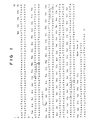
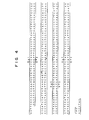
- DNA sequence A in Fig. 1 and shown by DNA sequence B in Fig. 2 which strands contain the former half sequence and the latter half sequence of the nucleotide sequence of the structural gene of hNGF, respectively.
- DNA sequences are independently introduced into plasmid pTRLBT1.
- E. coli strain HB101 carrying pTRLBT1 has been deposited as HB101 (pTRLBT1) in the Fermentation Research Institute of the Agency of Industrial Science & Technology of Japan and given Accession Number FERM P-9907, and then transferred to an international deposition under the Budapest Treaty and given Accession Number BP-02348.
- HB101 pTRLBT1
- DNA sequence A in Fig. 1 is described more specifically.
- the DNA sequence is composed of 283 base pairs of DNA prepared from 8 DNA fragments synthesized by organic chemistry technique using, e.g., an automated DNA synthesizer (Applied Biosystems Inc., Model 380B).
- the DNA sequence has restriction enzyme Hpa I site at the 5′ end and BamH I site at the 3′ end and comprises a part of tryptophan regulatory gene (promoter), a nucleotide sequence of signal peptide of ⁇ -lactamase, a gene encoding amino acids from serine at the N-terminal to glutamic acid at 55-position in the amino acid sequence of hNGF, and termination codons, TAA and TAG.
- promoter tryptophan regulatory gene
- CCCGGG Sma I site
- ⁇ -galactosidase gene may be ligated therewith utilizing the Sma I site.
- DNA sequence B in Fig. 2 is composed of 203 base pairs prepared from 6 DNA fragments similarly synthesized by organic chemistry technique.
- the DNA sequence has restriction enzyme Eco RI site at the 5′ end and BamH I site at the 3′ end and comprises a gene encoding amino acids from phenylalanine at 54-position to arginine at 118-position in the amino acid sequence of hNGF, and termination codons, TAA and TAG. Restriction enzyme maps of these DNA sequences A and B are shown in Fig. 5.
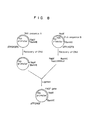
- DNA sequences A and B are inserted between Hpa I site and Bam HI site and between Eco RI site and Bam HI site of plasmid vector pTRLBT1 to give plasmids pTRSNGFA in Fig. 6 and pTRLNGFB in Fig. 7, respectively, which enables the cloning of DNA sequences A and B.
- a part of tryptophan promoter in DNA sequence A at the plasmid pTRSNGFA in Fig. 6 has the nucleotide sequence corresponding to the latter half of tryptophan promoter.
- tryptophan promoter is reconstructed.
- cloned DNA sequence A or B can be expressed independently in E. coli and can be obtained as peptide A or B as a divided hNGF protein.
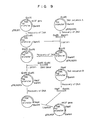
- the full length hNGF gene may be prepared by ligation utilizing restriction enzyme Nsp V site (TTCGAA) at the 3′ end of DNA sequence A and the same restriction enzyme Nsp V site at the 5′ end of DNA sequence B (cf. Fig. 8).
- the plasmid bearing the thus prepared hNGF gene has a good expression efficiency because it has a tryptophan promoter derived from pTRSNGFA.
- the plasmid has the signal sequence of ⁇ -lactamase upstream of the hNGF gene and hence, matured hNGF can be secreted into the periplasmic space of E. coli by culturing recombinant E. coli carrying the plasmid.
- the fragment obtained by digesting the plasmid pTRSNGFA having DNA sequence A with Eco RI and Bam HI is ligated with the fragment obtained by digesting plasmid pTRLBT1 similarly with Eco RI and Bam HI to construct a plasmid pTRLNGFA′.
- the plasmid is digested with Nsp V and Bam HI to prepare Nsp V/Bam HI DNA fragment.
- This fragment is ligated with a fragment obtained by digesting the aforesaid plasmid pTRLNGFB having DNA sequence B with Nsp V and Bam HI thereby to ligate DNA sequence A with DNA sequence B.
- a plasmid pTRLNGF having the nucleotide sequence of the full length hNGF gene can be obtained.
- This plasmid has upstream of the 5′ end of the full length hNGF gene a DNA sequence encoding the N terminus of trpL polypeptide in tryptophan operon which is ligated with tryptophan promoter.
- the DNA sequence which is shown by trpL' in Fig. 9 and which encodes the N terminus of this trpL polypeptide has the following nucleotide sequence.
- the polypeptide obtained by culturing a microorganism transformed with the plasmid pTRLNGF is in the fused form of 8 amino acids peptide derived from this trpL' and hNGF polypeptide.
- the thus obtained plasmids pTRLNGF can efficiently express hNGF gene.
- a transformed microorganism capable of producing hNGF can be obtained.
- RNA polymerase binds to trp promoter and this enzyme shifts to a site downstream of the promoter to transcribe DNA nucleotide sequence, whereby RNA is synthesized.
- Ribosome translates information on the synthesized RNA to synthesize a polypeptide.
- tryptophan binds to repressor to activate the repressor and the repressor binds to an operator region.
- RNA polymerase binds to the promoter region, so that RNA is not synthesized and production of the polypeptide stops.
- tryptophan acts as an inhibitor. Therefore, the present inventors have adopted the process of initiating expression of the gene, by inactivating repressor by the addition of IA or changing to tryptophan-free medium, utilizing regulation system of genetic expression in trp promoter.
- the nucleotide sequence of hNGF gene is designed to be a nucleotide sequence having a high expression efficiency in a host microorganism, especially in E. coli and at the same time, the gene is incorporated into a plasmid, together with a promoter having an excellent expression efficiency.
- the microorganism transformed with the plasmid produces the hNGF with an extremely good expression efficiency.
- medium conditions are further improved so that hNGF can be produced easily in large quantities. Therefore, the present invention greatly contributes to production of drugs.
- the nucleotide sequence of hNGF was designed in such a way that genetic codons with a high appearance frequency in E. coli were selected for each amino acid and various restriction enzyme sites were introduced within the hNGF structural gene to replace genes in a simple manner.
- 8 single stranded DNAs of A-1 through A-8 (Fig. 3) and 6 single stranded DNAs of B-1 through B-6 (Fig. 4) were synthesized using an automated DNA synthesizer (Applied Biosystems Inc., Model 380B). These single stranded DNAs are small fragments having base pairs of 57 to 75.
- Each of the synthesized single stranded DNAs was cut out of resin carrier and then subjected to electrophoresis on 8% polyacrylamide gel modified with urea.
- the gel fragment containing a DNA band having the desired size was cut out and DNA was recovered by electrophoresis. After the recovered DNA was concentrated, DNA was purified by phenol extraction and ethanol precipitation and then dissolved in sterile water. By the foregoing procedures, 100 to 200 ⁇ g of the desired single stranded DNAs could be obtained.
- the prepared 4 double stranded DNAs were mixed with each other and ligated using a ligation kit (manufactured by Takara Shuzo Co., Ltd.). After 0.5 ⁇ l (2.5 U) of Taq DNA polymerase, 16 ⁇ l (1.25 mM) of 4 kinds of dNTP, 5 ⁇ l each of two primers (DNA obtained by adding GTT to DNA fragment A-1 at the 5′ end followed by phosphorylation and DNA obtained by adding G to DNA fragment A-8 at the 5′ end followed by phosphorylation) were added, buffer was further added to make the whole volume 100 ⁇ l, and 100 ⁇ l of mineral oil was also added to effect amplification by PCR (polymerase chain reaction).
- the reaction was repeated 25 times under conditions at 94°C for a minute, at 55°C for 2 minutes and at 72°C for 3 minutes and then the reaction was finally carried out under conditions at 72°C for 17 minutes. Then, mineral oil was removed and ethanol precipitation treatment was conducted twice.
- the DNA mixture produced by PCR was subjected to 5% polyacrylamide gel electrophoresis and the gel fragment containing a DNA band having the desired size was cut out. DNA was recovered by electrophoresis. After the recovered DNA was concentrated, DNA was purified by phenol extraction and ethanol precipitation and then dissolved in sterile water. To 1 ⁇ l of the purified DNA solution was added 1 ⁇ l of M13 mp11 phage DNA previously digested with Sma I.
- E. coli strain JM103 was transformed. Twenty two plaques having the inserted fragment were obtained. DNA sequencing reveals that 3 out of 22 plaques contained the desired DNA sequence A. M13 mp11 phage DNA having the desired DNA sequence A was digested with Bam HI and Hpa I to recover DNA sequence A of 283 base pairs. DNA sequence A was ligated with pTRLBT1 previously digested with Bam HI and Hpa I similarly. E. coli strain C600 was transformed with the ligation product, whereby 8 colonies were obtained. The DNAs of 8 clones were digested with restriction enzyme for analysis. The results reveal that two clones contained the desired plasmid. Thus, plasmid pTRSNGFA (32 ⁇ g) having DNA sequence A shown by the nucleotide sequence of Fig. 1 could be obtained.
- the prepared 3 double stranded DNAs were mixed using 30.5 ⁇ l of double strand of B-1 and B-4, 57 ⁇ l of double strand of B-2 and B-5 and, 39.3 ⁇ l of double strand of B-3 and B-6. After phenol extraction and ethanol precipitation, they were ligated with each other using the ligation kit. The ligated DNA was subjected to 5% polyacrylamide gel electrophoresis and the gel fragment containing a DNA band having the desired size was cut out. DNA was recovered by electrophoresis. After the recovered DNA was concentrated, DNA was purified by phenol extraction and ethanol precipitation and then dissolved in sterile water.
- M13 mp11 phage DNA having the desired DNA sequence B was digested with Eco RI and Bam HI to recover DNA sequence B of 203 base pairs.
- DNA sequence B was ligated with pTRLBT1 previously digested with Eco RI and Bam HI similarly.
- E. coli strain C600 was transformed with the ligation product, whereby 170 colonies were obtained.
- DNAs of 16 clones were digested with restriction enzyme for analysis. The results reveal that all of the clones contained the desired plasmid.
- 152 ⁇ g of plasmid pTRLNGFB having DNA sequence B shown by the nucleotide sequence of Fig. 2 could be obtained.
- the restriction enzyme map of DNA sequence B is shown in Fig. 5.
- E. coli strain HB101 was transformed with plasmid pTRSNGF to produce a transformant E. coli HB101 [pTRSNGF] which was deposited in the Fermenation Research Institute of the Agency of Industrial Science & Technology of Japan (FRI) on February 19, 1990 and given Accession Number P-11285, and then transferred to an international deposition under the Budapest Treaty on December 3, 1990 and given Accession Number BP-03187.
- plasmid pTRLNGFA was digested with 30 U of Nsp (7524) V and 50 U of Bam HI, and 0.8% agarose gel electrophoresis was then performed to recover the DNA fragment containing the vector and DNA sequence A.
- 2 ⁇ g of plasmid pTRLNGFB was digested with 30 U of Nsp (7524) V and 50 U of Bam HI, and 5% polyacrylamide gel electrophoresis was then performed to recover the DNA fragment containing DNA sequence B of 199 bp. After 0.5 ⁇ l each of these two fragments were ligated using the ligation kit, E . coli strain C600 was transformed to give 224 colonies.
- DNAs of 6 clones were digested with restriction enzyme for analysis.
- the results reveal that 2 clones contained the desired plasmid.
- 110 ⁇ g of plasmid pTRLNGF having the entire DNA sequence of the hNGF gene ligated with the gene encoding the N terminus of trpL polypeptide could be obtained.
- E . coli strain HB101 was transformed with plasmid pTRLNGF to produce a transformant E . coli HB101 [pTRLNGF] which was deposited in FRI on February 19, 1990 and given Accession Number P-11283, and then transferred to an international deposition under the Budapest Treaty on December 3, 1990 and given Accession Number BP-03185.
- E . coli HB101 [pTRSNGF], and E . coli HB101 [pTRLNGF] were cultured to produce hNGF, respectively, as described below.
- One platinum loop of the stock strain was inoculated on 10 ml of M9 medium (1 g of NH 4 Cl, 6 g of Na 2 HPO 4 , 3 g of KH 2 PO 4 , 0.5 g of NaCl, 0.015 g of CaCl 2 .2H 2 O, 0.5 g of MgSO 4 .7H 2 O, 2.5 g of Casamino acid, 5 g of glucose, 1.5 g of yeast extract, 0.04 g of tryptophan, 0.1 g of proline, 0.1 g of thiamine, 50 mg of ampicillin, 1 liter of water; pH 7.4) followed by culturing at 37°C overnight.
- M9 medium 1 g of NH 4 Cl, 6 g of Na 2 HPO 4 , 3 g of KH 2 PO 4 , 0.5 g of NaCl, 0.015 g of CaCl 2 .2H 2 O, 0.5 g of MgSO 4 .7H 2 O, 2.5 g of Casamin
- the preincubated solution 5 ml, was taken and centrifuged at 15000 rpm for a minute to recover the cells. Then, the cells were washed with 1 ml of modified M9 medium which was free from Trp and from which yeast extract and tryptophan were removed. The cells were inoculated on 50 ml of the modified M9 medium followed by incubation at 37°C for 8 hours. The cells after incubation for 8 hours were recovered by centrifugation. After washing with 50 mM Tris-HCl buffer (pH 7.5), the cells were resuspended in pure water to show absorbance about 10 at 550 nm.
- sample buffer (0.25 M Tris-HCl, pH 6.8; 8% SDS; 40% glycerol; 20% ⁇ -mercaptoethanol; 0.004% BPB
- 50% glycerol BPB solution 5 ⁇ l of 50% glycerol BPB solution
- the mixture was heated at 100°C for 5 minutes.
- 40 ⁇ l of this solution was subjected to 14% polyacrylamide gel electrophoresis, the gel was stained with Coomassie Brilliant Blue R-250 so that a band expected to be hNGF was observed around standard ⁇ NGF.
- the protein in the gel was transferred onto a nitrocellulose membrane and hNGF was detected with polyclonal antibody to 2.5 SNGF of mouse submaxillary gland.
- E . coli HB101 [pTRSNGF[, and E . coli HB101 (pTRLNGF) were cultured as described below, respectively, to produce hNGF.
- Example 3 In a manner similar to Example 3, 50 ml of the cells were inoculated on 50 ml of the modified M9 medium followed by culturing at 37°C for 8 hours. In order to express the gene, 15 ⁇ g/ml of IA was supplemented one hour after the culture. After completion of the culture, the system was treated as in Example 3. An amount of hNGF produced by the recombinant E . coli was determined. In E . coli HB101 [pTRLNGF], and E . coli HB101 [pTRSNGF], about 25%, about 4% of hNGF, which were almost the same as in Example 3, were produced, respectively, based on the amount of protein in the cells. the cells.
Landscapes
- Chemical & Material Sciences (AREA)
- Health & Medical Sciences (AREA)
- Life Sciences & Earth Sciences (AREA)
- Organic Chemistry (AREA)
- General Health & Medical Sciences (AREA)
- Gastroenterology & Hepatology (AREA)
- Biochemistry (AREA)
- Biophysics (AREA)
- Zoology (AREA)
- Genetics & Genomics (AREA)
- Medicinal Chemistry (AREA)
- Molecular Biology (AREA)
- Proteomics, Peptides & Aminoacids (AREA)
- Toxicology (AREA)
- Preparation Of Compounds By Using Micro-Organisms (AREA)
- Micro-Organisms Or Cultivation Processes Thereof (AREA)
Claims (11)
- ADN codant le facteur de croissance des nerfs humain et ayant la séquence nucléotidique suivante :dans lequel un ADN codant la séquence signal de la β-lactamase est lié en amont de l'extrémité 5' dudit ADN codant le facteur de croissance des nerfs humain.

- ADN selon la revendication 1, dans lequel ledit ADN codant la séquence signal de la β-lactamase à la séquence nucléotidique suivante :

- ADN selon la revendication 1 ou 2, dans lequel en outre un gène régulateur du tryptophane est lié en amont de ladite séquence signal.
- ADN codant le facteur de croissance des nerfs humain et ayant la séquence nucléotidique suivante :dans lequel un ADN codant l'extrémité N-terminale du polypeptide trpL dans l'opéron tryptophane lié à un gène régulateur du tryptophane est lié en amont de l'extrémité 5' dudit ADN codant le facteur de croissance des nerfs humain.

- ADN selon la revendication 4, dans lequel ledit ADN codant l'extrémité N-terminale du polypeptide trpL dans l'opéron tryptophane à la séquence nucléotidique suivante :

- Vecteur plasmidique portant un ADN selon l'une quelconque des revendications 1 à 5.
- Transformant obtenu par transformation d'un micro-organisme avec un vecteur plasmidique selon la revendication 6.
- Transformant selon la revendication 7, dans lequel le micro-organisme est E. coli.
- Procédé pour la production du facteur de croissance des nerfs humain, qui comprend la culture d'un transformant selon la revendication 7 ou 8 pour produire le facteur de croissance des nerfs humain
- Procédé pour la production du facteur de croissance des nerfs humain selon la revendication 9, dans lequel le transformant est cultivé en présence d'acide 3-β-indolylacrylique (IA) comme inducteur de l'expression.
- Procédé pour la production de croissance des nerfs humain selon la revendication 9 ou 10, dans lequel le transformant est cultivé dans du milieu dépourvu de tryptophane.
Applications Claiming Priority (2)
| Application Number | Priority Date | Filing Date | Title |
|---|---|---|---|
| JP38358/90 | 1990-02-21 | ||
| JP3835890A JPH03244385A (ja) | 1990-02-21 | 1990-02-21 | ヒト神経成長因子の遺伝子工学的生産方法 |
Publications (2)
| Publication Number | Publication Date |
|---|---|
| EP0458437A1 EP0458437A1 (fr) | 1991-11-27 |
| EP0458437B1 true EP0458437B1 (fr) | 1996-10-09 |
Family
ID=12523059
Family Applications (1)
| Application Number | Title | Priority Date | Filing Date |
|---|---|---|---|
| EP91301386A Expired - Lifetime EP0458437B1 (fr) | 1990-02-21 | 1991-02-21 | Procédé pour la production du facteur humain de croissance des nerfs par génie génétique |
Country Status (3)
| Country | Link |
|---|---|
| EP (1) | EP0458437B1 (fr) |
| JP (1) | JPH03244385A (fr) |
| DE (1) | DE69122545T2 (fr) |
Family Cites Families (3)
| Publication number | Priority date | Publication date | Assignee | Title |
|---|---|---|---|---|
| DK161152C (da) * | 1983-03-03 | 1991-11-11 | Genentech Inc | Polypeptid med egenskaber som human beta-nervevaekstfaktor og fremgangsmaade til fremstilling deraf, dna-isolat omfattende en sekvens som koder for polypeptidet, replicerbar udtrykkelsesvektor for dna-sekvensen, rekombinant vaertscelle transformeret med vektoren, farmaceutisk praeparat indeholdende polypeptidet og fremg. der omfatter anvendelsen af polypeptidet til fremst. af et farmaceutisk praeparat |
| JPH01211490A (ja) * | 1988-02-19 | 1989-08-24 | Tosoh Corp | ヒト神経成長因子遺伝子セグメント |
| DE68915841T2 (de) * | 1988-03-30 | 1995-02-02 | Hitachi Chemical Co Ltd | Verfahren zur Herstellung von Epidermal-Wachstumsfaktor durch genetische Transformation. |
-
1990
- 1990-02-21 JP JP3835890A patent/JPH03244385A/ja active Pending
-
1991
- 1991-02-21 EP EP91301386A patent/EP0458437B1/fr not_active Expired - Lifetime
- 1991-02-21 DE DE1991622545 patent/DE69122545T2/de not_active Expired - Fee Related
Non-Patent Citations (1)
| Title |
|---|
| CHEMICAL ABSTRACTS, vol. 100, no. 17, 23 April 1984, Columbus, OH (US); V.R. LINGAPPA et al., p. 150, no. 100:1334450 * |
Also Published As
| Publication number | Publication date |
|---|---|
| DE69122545T2 (de) | 1997-04-24 |
| EP0458437A1 (fr) | 1991-11-27 |
| JPH03244385A (ja) | 1991-10-31 |
| DE69122545D1 (de) | 1996-11-14 |
Similar Documents
| Publication | Publication Date | Title |
|---|---|---|
| AU630450B2 (en) | Fusion proteins containing n-terminal fragments of human serum albumin | |
| US4375514A (en) | Preparation and use of recombinant plasmids containing genes for alkaline phosphatases | |
| US5670340A (en) | Process for producing peptides in E. coli | |
| WO2008100833A2 (fr) | Production de collagénases recombinantes colg et colh dans escherichia coli | |
| EP0528686B1 (fr) | Procédé pour la production de peptides | |
| EP0129073B1 (fr) | Synthèse de l'ADN hybride de facteur mûr de déclenchement de l'hormone de croissance | |
| CN115261363B (zh) | Apobec3a的rna脱氨酶活性测定方法及rna高活性的apobec3a变体 | |
| US5888766A (en) | Method for producing recombinant human myoglobin | |
| EP0220482B1 (fr) | Plasmide et son utilisation | |
| EP0458437B1 (fr) | Procédé pour la production du facteur humain de croissance des nerfs par génie génétique | |
| WO1990001542A1 (fr) | Luciferase, gene de codage de la luciferase et procede de production de luciferase | |
| SU1479005A3 (ru) | Способ получени интерлейкина-2 человека | |
| NO175318B (no) | Hybridgen for veksthormonfrigjörende faktor, replikerbar mikrobiell ekspresjonsvektor inneholdende et slikt gen, samt mikroorganisme transformert med en slik vektor og hybridpolypeptid som inneholder en Trp-GRF | |
| AU603145B2 (en) | Aminoglycoside phosphotransferase-proteinfusions | |
| FI97549C (fi) | Menetelmä vierasproteiinien valmistamiseksi Streptomycessoluissa | |
| Tarragona-Fiol et al. | Production of mature bovine pancreatic ribonuclease in Escherichia coli | |
| EP0109559A1 (fr) | Vecteur plasmidique à grande efficacité pour levure et procédé pour son utilisation | |
| US5304471A (en) | Process for producing foreign protein in Escherichia coli | |
| JPH06306100A (ja) | Vipアナログ調製用融合蛋白、vipアナログの製法並びにそのための遺伝子組換えプラスミド及び形質転換微生物 | |
| JPH08103278A (ja) | 活性型ヒトaltの製造方法 | |
| EP0295286B1 (fr) | Procede de production de l'hormone de croissance du saumon par l'utilisation d'un gene synthetique | |
| RU2009199C1 (ru) | Рекомбинантная плазмидная днк pccs, кодирующая соматостатин-14, штамм бактерий escherichia coli - продуцент соматостатина-14 | |
| US5766881A (en) | Induction-free process for the recombinant preparation of glutarylamidase | |
| US5541086A (en) | Method for the production of porcine growth hormone using a synthetic gene in yeast cells | |
| CN118207213A (zh) | 一种利用内源启动子表达胶原蛋白的重组菌及其应用 |
Legal Events
| Date | Code | Title | Description |
|---|---|---|---|
| PUAI | Public reference made under article 153(3) epc to a published international application that has entered the european phase |
Free format text: ORIGINAL CODE: 0009012 |
|
| 17P | Request for examination filed |
Effective date: 19910315 |
|
| AK | Designated contracting states |
Kind code of ref document: A1 Designated state(s): DE FR GB |
|
| 17Q | First examination report despatched |
Effective date: 19930924 |
|
| GRAG | Despatch of communication of intention to grant |
Free format text: ORIGINAL CODE: EPIDOS AGRA |
|
| GRAH | Despatch of communication of intention to grant a patent |
Free format text: ORIGINAL CODE: EPIDOS IGRA |
|
| GRAH | Despatch of communication of intention to grant a patent |
Free format text: ORIGINAL CODE: EPIDOS IGRA |
|
| GRAA | (expected) grant |
Free format text: ORIGINAL CODE: 0009210 |
|
| AK | Designated contracting states |
Kind code of ref document: B1 Designated state(s): DE FR GB |
|
| REF | Corresponds to: |
Ref document number: 69122545 Country of ref document: DE Date of ref document: 19961114 |
|
| ET | Fr: translation filed | ||
| PLBE | No opposition filed within time limit |
Free format text: ORIGINAL CODE: 0009261 |
|
| STAA | Information on the status of an ep patent application or granted ep patent |
Free format text: STATUS: NO OPPOSITION FILED WITHIN TIME LIMIT |
|
| 26N | No opposition filed | ||
| PGFP | Annual fee paid to national office [announced via postgrant information from national office to epo] |
Ref country code: GB Payment date: 19971209 Year of fee payment: 8 |
|
| PGFP | Annual fee paid to national office [announced via postgrant information from national office to epo] |
Ref country code: FR Payment date: 19971216 Year of fee payment: 8 |
|
| PGFP | Annual fee paid to national office [announced via postgrant information from national office to epo] |
Ref country code: DE Payment date: 19980204 Year of fee payment: 8 |
|
| PG25 | Lapsed in a contracting state [announced via postgrant information from national office to epo] |
Ref country code: GB Free format text: LAPSE BECAUSE OF NON-PAYMENT OF DUE FEES Effective date: 19990221 |
|
| GBPC | Gb: european patent ceased through non-payment of renewal fee |
Effective date: 19990221 |
|
| PG25 | Lapsed in a contracting state [announced via postgrant information from national office to epo] |
Ref country code: FR Free format text: LAPSE BECAUSE OF NON-PAYMENT OF DUE FEES Effective date: 19991029 |
|
| PG25 | Lapsed in a contracting state [announced via postgrant information from national office to epo] |
Ref country code: DE Free format text: LAPSE BECAUSE OF NON-PAYMENT OF DUE FEES Effective date: 19991201 |
|
| REG | Reference to a national code |
Ref country code: FR Ref legal event code: ST |