EP0458940B1 - Methode pour la detection quantitative de la thyrotropine (tsh) ou d'autoanticorps contre le recepteur de la thyrotropine (anti-tshr) utilsant un recepteur recombinant de la thyrotropine et kit pour la performance de ladite methode - Google Patents
Methode pour la detection quantitative de la thyrotropine (tsh) ou d'autoanticorps contre le recepteur de la thyrotropine (anti-tshr) utilsant un recepteur recombinant de la thyrotropine et kit pour la performance de ladite methode Download PDFInfo
- Publication number
- EP0458940B1 EP0458940B1 EP91901286A EP91901286A EP0458940B1 EP 0458940 B1 EP0458940 B1 EP 0458940B1 EP 91901286 A EP91901286 A EP 91901286A EP 91901286 A EP91901286 A EP 91901286A EP 0458940 B1 EP0458940 B1 EP 0458940B1
- Authority
- EP
- European Patent Office
- Prior art keywords
- tsh
- sequence
- receptor
- acid residues
- polypeptide
- Prior art date
- Legal status (The legal status is an assumption and is not a legal conclusion. Google has not performed a legal analysis and makes no representation as to the accuracy of the status listed.)
- Expired - Lifetime
Links
Images












Classifications
-
- C—CHEMISTRY; METALLURGY
- C07—ORGANIC CHEMISTRY
- C07K—PEPTIDES
- C07K14/00—Peptides having more than 20 amino acids; Gastrins; Somatostatins; Melanotropins; Derivatives thereof
- C07K14/435—Peptides having more than 20 amino acids; Gastrins; Somatostatins; Melanotropins; Derivatives thereof from animals; from humans
- C07K14/705—Receptors; Cell surface antigens; Cell surface determinants
- C07K14/72—Receptors; Cell surface antigens; Cell surface determinants for hormones
- C07K14/723—G protein coupled receptor, e.g. TSHR-thyrotropin-receptor, LH/hCG receptor, FSH receptor
-
- C—CHEMISTRY; METALLURGY
- C07—ORGANIC CHEMISTRY
- C07K—PEPTIDES
- C07K16/00—Immunoglobulins [IG], e.g. monoclonal or polyclonal antibodies
- C07K16/18—Immunoglobulins [IG], e.g. monoclonal or polyclonal antibodies against material from animals or humans
- C07K16/28—Immunoglobulins [IG], e.g. monoclonal or polyclonal antibodies against material from animals or humans against receptors, cell surface antigens or cell surface determinants
- C07K16/2869—Immunoglobulins [IG], e.g. monoclonal or polyclonal antibodies against material from animals or humans against receptors, cell surface antigens or cell surface determinants against hormone receptors
-
- Y—GENERAL TAGGING OF NEW TECHNOLOGICAL DEVELOPMENTS; GENERAL TAGGING OF CROSS-SECTIONAL TECHNOLOGIES SPANNING OVER SEVERAL SECTIONS OF THE IPC; TECHNICAL SUBJECTS COVERED BY FORMER USPC CROSS-REFERENCE ART COLLECTIONS [XRACs] AND DIGESTS
- Y10—TECHNICAL SUBJECTS COVERED BY FORMER USPC
- Y10S—TECHNICAL SUBJECTS COVERED BY FORMER USPC CROSS-REFERENCE ART COLLECTIONS [XRACs] AND DIGESTS
- Y10S530/00—Chemistry: natural resins or derivatives; peptides or proteins; lignins or reaction products thereof
- Y10S530/827—Proteins from mammals or birds
- Y10S530/854—Glands
Definitions
- the invention relates to a method for the quantitative detection of thyrotropine (TSH) or of anti-thyrotropine receptor autoantibodies (anti-TSHr) in biological fluids using a recombinant thyrotropin receptor polypeptide, and to kits for conducting said method.
- TSH thyrotropine
- anti-TSHr anti-thyrotropine receptor autoantibodies
- Pituitary glycoproteins (Luteinizing hormone, LH; follicle stimulating hormone, FHS ; and thyroid stimulating hormone or thyrotropin, TSH) form a family of closely related hormones.
- the pituitary hormone thyrotropin is the main physiological agent regulating the thyroid gland. It stimulates the function and the proliferation of thyrocytes and induces the expression of differentiation (1). Most of its effects are mediated by cyclic AMP (cAMP) (1).
- cAMP cyclic AMP
- TSH is a heterodimer. All these hormones share an identical alpha subunit ; the beta subunit, despite sequence similarity, is specific for each (2).
- the activated TSH, FSH and LH-CG receptors stimulate adenylyl cyclase in their target cells via mechanisms mediated by the G protein Gs (3).
- the TSH receptor may be the target of autoimmune reactions leading to hyper- or hypo-stimulation of the thyroid gland by autoantibodies in Grave's disease and in idiopathic myxoedema, respectively (4).
- particulate membrane preparations and detergent-solubilised thyroid membranes often of porcine or bovine origin (4) and (31) or (32) have been used in such studies.
- Human receptor preparations are not only costly but are also difficult to reproduce identically.
- the known preparations cannot be considered to be "purified" receptors; they are enriched with respect to their receptor content but do not allow purification of the receptor to a degree which would enable a partial sequence analysis, and hence its cloning.
- a cDNA for the rat LH-CG receptor was isolated with use of a DNA probe generated in a polymerase chain reaction with oligonucleotide primers based on peptide sequences of purified receptor protein (15). Variants of the porcine LH-CG receptor were cloned by screening a ⁇ gt11 library with cDNA probes isolated with monoclonal antibodies (16).
- (34) describes the preparation of TSH anti-idiotypic antibodies as monoclonals which are reported to recognize the TSH receptor.
- the nature of the molecules recognized by the antibodies described in (34) cannot be clearly derived from the Western blot experiments, and the authors in (34) could not identify the nature of the antigen recognized by their antibodies.
- antiparatypical antibodies for detecting and treating autoimmune diseases, i.e. the use of antibodies which are raised against specific paratopes of other antibodies, i.e. against immunoglobulins.
- the use of antiparatypical antibodies is proposed in view of the difficulties in obtaining defined pure antigens as e.g. the TSH receptor.
- the present inventors have succeeded in cloning the TSH receptor and variants thereof, firstly by applying the technique described in (6) but with different sets of primers, and with human genomic DNA as the template, and secondly by use of a selected sequence amplified by this technique as a probe.
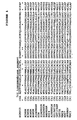
- Figure 1 is a sequence comparison of clone HGMP09 with a panel of G-protein coupled receptors ((6) and ref. therein). Only the sequence around transmembrane segment III of each receptor is shown in the one letter code. Residues conserved in HGMP09 and in more than 50 % of the other receptors are indicated by an asterisk. The "DRY” and "Asp113" residues (9) are indicated by ⁇ .
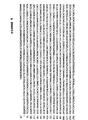
- Figure 2a shows the primary structure of the dog TSH receptor, as deduced from the nucleic acid sequence of dTSHr.
- the sequence was aligned (17) with full-length rat and pig LH-CG sequences (15, 16) and with HGMP09 partial sequence. Numbering is given from the first residue predicted in the mature polypeptide by von Heijne algorithm (11). Identical residues and conservative replacements in TSHr and LH-CGr are indicated by * and ., respectively. Sites for N glycosylation are underlined. Putative transmembrane segments are overlined.
- Lambda phages containing dTSHr inserts were subcloned in M13 and sequenced on both strands (Applied Biosystems model 370A) using a combination of forced cloning and exonuclease III deletions (21).
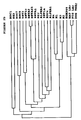
- Figure 2b is a dendogram constructed from the sequences of G-protein coupled receptors.
- the CLUSTAL algorithm (17) was used to construct a dendogram from the sequences of 22 receptors ((6) and references therein) including rat and pig LH-CG receptors (16, 17), HGMP09 and the TSH receptor.
- a segment corresponding to the known sequence of HGMP09 131 residues, extending from transmembrane segments II to V was used for comparison by the program.
- FIG. 3a shows TSH induced morphological changes in Y1 cells microinjected with TSH receptor mRNA.
- Y1 cells were microinjected with recombinant TSH receptor mRNA (0.1 pl at 0.25 ug/ul) (right) or water (left) as described (13) and incubated in control medium (upper panel) or with TSH (0.1nM) (lower panel).
- RO 201724 and isobutylmethylxanthine (10 -6 M each) were present in all incubations.
- FIG. 3b shows TSH induced CAMP accumulation in Xenopus oocytes microinjected with TSH receptor mRNA.
- Xenopus oocytes were handled as described (22) and injected with water (open symbols) or recombinant TSH receptor mRNA (13) (50 nl at 0.1 ug/ul) (filled symbols).
- After 3 days in control medium batches of 35 oocytes were incubated for 90 min. in medium supplemented with various concentrations of TSH (circles), LH (squares) or FSH (triangles).
- cAMP was determined as described (14).
- RO 201724 and isobutylmethylxanthine (10 -6 M each) were present in all incubations. Incubation of control oocytes in forskolin at 10 -4 M resulted in doubling of the cAMP concentration (not shown).
- FIG. 4 illustrates the displacement of 125 I TSH receptors expressed in cos7 cells.
- Cos7 cells were transfected with TSH receptor cDNA subcloned in pSVL (23). After 72 hours, cells were harvested and a membrane fraction was prepared (24). Membranes were similarly prepared from wild type cos7 cells and from dog thyrocytes in primary culture (20). Binding of 125 I TSH (TRAK Henning) was performed at 0°C for 120 min. in the presence of various concentrations of competitors (TSH-Armour, FSH and LH, UCB bioproducts). Bound radioactivity was separated by centrifugation and counted.
- Results are expressed as percent 125 I TSH bound by transfected cells in the absence of competitor (3,000 cpm) over nonspecific binding (radioactivity bound in the presence of 100nM cold TSH, 800 cpm).
- Open and filled circles represent displacement by cold TSH from cos7 and thyrocyte membranes respectively.
- Open and filled squares represent displacement from cos7 by LH and FSH, respectively.
- Diamonds represent control cos7 cells in presence of various amounts of cold TSH.
- Figure 5 shows the cDNA sequence coding for the dog TSH receptor, which was expressed in oocytes and culture cells.
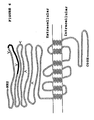
- Figure 6 is a schematic representation of the dog thyrotropin receptor, showing the 7 putative transmembrane segments and the large NH2 terminal extracellular domain (to the exclusion of the signal peptide). The amino-acids deleted in the variant form are indicated in black. The five putative glycosylation sites are shown.
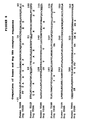
- Figure 7 shows the sequence alignment of the repeats constituting the extracellular domain of the thyrotropin receptor amino-acid sequence.
- the signal peptide as determined by Von Heijne algorithm is represented in italic.
- the repeat missing in the molecular varian of the receptor is indicated by the leftward arrow.
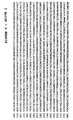
- Figure 8 shows the primary structure of the human TSH receptor as deduced from its cDNA sequence.
- the amino-acid sequence corresponds to the 2292 nucleotide open reading frame determined from the sequencing of two overlapping inserts in lamda gtll clones (see examples). It is aligned for comparison with the dog TSH receptor sequence (only non conserved amino-acids are indicated). Numbering starts from the first residue of the mature polypeptide as determined by von Heijne algorithm [11]. Potential N-glycosylation sites are underlined and putative transmembrane segments are overlined.
- Figure 9 shows the displacement by nonradioactive TSH of [ 125 I]TSH from human TSH receptors expressed in cos-7 cells. Results are expressed as percentage of the [ 125 I]-labelled TSH bound by transfected cells in the absence of competitor (1400 cpm) after correcting for -nonspecific binding (radioactivity bound in the presence of 100 nM unlabelled TSH, 240 cpm).
- Figure 10 represents the displacement by immunoglobulins of [ 125 I]TSH from human TSH receptor expressed in cos-7 cells. Results are expressed as described in the legend to -fig. 9. Immoglobulins were prepared (see examples) from a normal individual (N), from patients with idiopathic myxoedema (IM1, IM2) or Graves' disease (GD1, GD2). The concentration of immunoglobulins in the assay is indicated. The ability of IM1 and IM2 (1.5 mg/ml) to inhibit TSH-stimulated cAMP production in a human thyrocyte assay was 100 % and 85 %, respectively. The thyroid stimulating activity of GD1 and GD2 (1.5 mg/ml) was equivalent to that of 10 mU/ml of TSH, respectively.
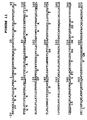
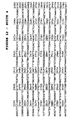
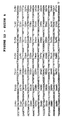
- Figure 11 shows the primary structure of a TSH receptor according to the invention, in which a plurality of letters at any one site indicates the presence of one of the given amino acid residues at that site.
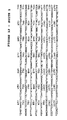
- Figure 12 illustrates the cDNA sequence of the cloned human TSH receptor.
- the invention relates to the use of such recombinant polypeptides in methods for the quantitative detection of thyrotropine (TSH) or of anti-thyrotropine receptor autoantibodies (anti-TSHr) in a biological sample, in which method such polypeptide is contacted with the biological sample suspected of containing TSH or anti-TSHr antibodies, and is either simultaneously or subseqently further contacted with labelled TSH, or with labelled anti-TSHr antibodies, and wherein after competition between the labelled and the unlabelled species in the reaction system the remaining bound labelled TSH or bound labelled anti-TSHr antibodies are measured.
- TSH thyrotropine
- anti-TSHr anti-thyrotropine receptor autoantibodies
- kits for carrying out such method which kits contain recombinant polypeptides as mentioned above as constituents of a kit component.
- TSH-receptor activity is meant either TSH-binding properties or anti-TSH receptor antibody-binding properties or ability to activate adenylyl cyclase or phospholipase C via G proteins when exposed to TSH or anti-TSHr antibodies. These properties are easily verified by contacting the polypeptide with for example labelled TSH or labelled anti-TSHr antibodies or by monitoring the adenylyl cyclase activity of a membrane preparation containing the polypeptide.
- the polypeptides of the invention include the entire TSH receptor as identified by the inventors, and fragments or variants of this polypeptide as defined below.
- the entire TSH receptor is composed of a signal peptide (20 residues) followed by a large putative extracellular domain (398 residues) containing 5 sites for N-glycosylation, connected to a 346 residue COOH domain containing seven putative transmembrane segments.
- the amino-acid sequence of the receptor is illustrated in fig. 11.
- the labelled anti-TSHr antibodies are polyclonal or monoclonal antibodies raised against a recombinant polypeptide possessing thyrotropin receptor activity as defined above.
- the sequence represented by [x] n in the above general formula corresponds to the signal sequence of the TSH receptor.
- This part of the polypeptide naturally ensures the transport to the cell membrane of the adjoining [y] and/or [z] fragments, after its production in the cell.
- the signal sequence does not need to be present in the polypeptide in cases where transport to the membrane is not required (for example in in vitro translation of the mRNA encoding the polypeptide), or may be replaced by other signal sequences to facilitate production of the recombinant receptor in certain host cells.
- the sequence represented by [z] P in the above general formula corresponds to the COOH domain of the entire polypeptide containing the seven putative transmembrane fragments I-VII, which show homology with the corresponding region of other G-protein coupled receptors.
- the polypeptides of the invention include, as indicated above, variants of the basic TSH receptor - sequence lacking part or all of the transmembrane domain. It is thought that these types of variants may exist naturally as a result of an alternative splicing phenomenom. By homology with other, known G-protein coupled receptors, the seven putative transmembrane segments have tentatively been identified as shown in Fig. 11 (numbered I to VII).
- the variant polypeptides of the invention include polypeptides missing some or all of the fragments I - VII; as defined above, which definition includes the putative extracellular and intracellular "loops" occuring between the transmembrane segments (see fig. 6).
- the transmembrane segment(s) missing may therefore, for example, be a segment selected from segments I to VII as indicated in fig. 11 or may be part of one of those segments, or may be a transmembrane segment in conjunction with its adjoining intracellular and/or extracellular loop.
- transmembrane domain it is also within the terms of the invention to replace some or all of the transmembrane domain by the transmembrane domain, or part of this domain, of a different receptor, thus giving rise to a hybrid receptor.
- This type of receptor is particularly interesting in cases where the extracellular part of the TSH receptor needs to be anchored in a cell membrane having characteristics which are different from, or even incompatible with, the transmembrane portion of the TSH receptor. It is also possible to use as the transmembrane domain in a hybrid receptor any amino-acid sequence exhibiting suitable anchoring properties. Such a sequence could be entirely synthetic or based on any transmembrane protein.
- the invention also embraces the use of polypeptides having thyrotropin receptor activity which lack the entire transmembrane domain.
- the polypeptide corresponds to the extracellular domain of the naturally occuring receptor. This-extracellular part of the receptor which is apparently responsible for ligand binding, is identified by the region [y] in the general formula.
- This extracellular part of the receptor [y] is characterised by an imperfect repeat structure which can be aligned as shown in Fig 7.
- the polypeptides of the invention include variants in which one or more of these repeats is missing.
- immunogenic amino-acid sequences may comprise for example 5, 6, 7, 8 or 9 consecutive amino-acids of the "y" sequence defined above.
- the immunogenic nature of the fragments of the invention is tested by injection of the fragment in question into a laboratory animal, followed by investigation of the reactivity between any antibodies thus formed and the immunising fragment.
- the invention encompasses the use of polypeptides in which the second repeat (marked by an arrow in fig 7) is missing.
- nucleic acid sequences coding for the polypeptides are those shown in figs. 5 and 12, and fragments of these sequences, as well as corresponding degenerate sequences.
- the nucleic acid fragments normally have at least 8 nucleotides and have preferably at least 12 or preferably at least 16 nucleotides.
- Such fragments, or their complementary sequences can be used as primers in the amplification of segments of DNA using the polymerase chain reaction, for example in the production of cDNA coding- for the polypeptides having thyrotropin receptor activity.
- the nucleic acid sequences of the invention coding for the entire TSH receptor are in a genetic environment other than that found naturally in thyroid cells.
- the genetic environment may be that of a Cos-7 cell, a CH0 cell or Y1 cells.
- polypeptides to be used in the present invention can be produced in several different ways.
- a host cell such as COS 7 cells, CHO cells, NIH3T3 cells, Xenopus oocytes or Y1 cells can be transformed by a vector containing a nucleic acid insert coding for the desired peptide, in conjunction with all the necessary regulatory elements such as promoter, transcription termination signals etc, or can be microinjected with recombinant mRNA transcribed from appropriate vectors containing the receptor encoded sequence . Expression of the insert normally leads to the insertion of the recombinant polypeptide in the membrane of the cell used as host.
- the receptor polypeptide can be used in this form, the receptor thus being present in a non-thyroidal eukaryotic cellular environment, or in a solubilised membrane fragment form.
- the non-thyroid cells expressing the recombinant receptor exhibit a receptor density of upto ten times that observed in thyroid cells.
- the correspondingly shorter nucleic acid sequence can be used to transform a suitable host cell, for example, a DNA coding for the putative extracellular region only, or one or more repeats of the repetitive portion of this region. It is also within the terms of the invention to synthesise the polypeptide chemically, by successive assembly of the required amino-acid residues. In cases where larger fragments are desired, it is possible to synthesise first a series of smaller fragments and to ultimately assemble these fragments to form the larger fragment.
- the invention also relates to the use of antibodies, both polyclonal and monoclonal, to the thyrotropin-receptor polypeptides.
- the antibodies of the invention are preferably in a purified form, and may be of animal origin e.g. rabbit or mouse.
- the TSH-receptor may be the target of auto-immune reactions giving rise to hyper- or hypo-stimulation of the thyroid gland by stimulating or blocking autoantibodies respectively.
- the antigenic nature of the polypeptides of the invention particularly the putative extracellular domain, permits the preparation of antibodies, which can be used in a variety of studies and assays.
- the TSH-receptor binds both TSH and anti-TSHr antibodies, thus it is possible in certain studies to replace TSH by anti-TSHr antibodies.
- the phenomenon of competition between labelled and unlabelled species is particularly useful in such assays.
- Use of specific fragments of the TSH receptor allows the preparation of antibodies against defined epitopes, and, by using a panel of such antibodies, allows further characterisation of the type of disorder present in auto-immune patients.
- An assay of the invention is a process for the quantitative detection of thyrotropine (TSH) or of anti-thyrotropine receptor antibodies (anti-TSHr) in a biological sample characterised in that a polypeptide according to the invention is contacted with the biological sample suspected of containing TSH or anti-TSHr antibodies and, either simultaneously or subsequently, contacted with labelled TSH, or with labelled anti-TSHr antibodies and the remaining, bound labelled TSH or bound labelled anti-TSHr antibodies after competition between the labelled and unlabelled species, is measured.
- TSH thyrotropine
- anti-TSHr anti-thyrotropine receptor antibodies
- the competition between the labelled TSH or labelled antibodies with the unlabelled TSH or antibodies present in the biological sample is measured as an indication of the concentration of that species in the sample.
- a receptor polypeptide to bind the TSH in the biological sample, and then after washing to add labelled anti-TSH antibodies which selectively detect the bound TSH.
- This type of assay can also be carried out using immobilized or solubilised receptor polypeptide to bind the anti-TSHr-antibody in a biological sample, followed by detection of the bound antibody by labelled anti immunoglobulins or protein A or protein G or any other agent capable of recognizing an antibody.
- the labels used in the assays of the invention are those conventionally used in the art, for example, radioactive labelling, enzymatic labelling, labelled anti-immunoglobulins, protein A, protein G, depending upon the type of assay.
- kits suitable for the detection of TSH or anti-TSHr antibodies are characterised in that they contain:
- kits for effecting the detection of autoantibodies directed against the TSH receptor by competition would include the recombinant polypeptide in immobilised or solubilised form, with labelled TSH or unlabelled TSH in combination with agents permitting the TSH to be labelled.
- a kit for effecting the detection of autoantibodies directed against the TSH receptor by competition would include the recombinant polypeptide in immobilised or solubilised form, with labelled TSH or unlabelled TSH in combination with agents permitting the TSH to be labelled.
- such a kit might include antibodies to the TSH receptor and means of labelling them, instead of the TSH.
- the primers used in this amplification were: and a plurality of nucleotides at any one site indicating the presence of one of the given nucleotides at that site.
- a dendrogram constructed from the alignment shown in fig. 1 demonstrated that it is equally distant from all receptors cloned to date (7); in particular, it does not contain the canonical Asp Arg Tyr (DRY) tripeptide close to transmembrane segment III (8) and lacks the Asp residue implicated in the binding of charged amines is adrenergic (Asp113), muscarinic, dopaminergic and serotonergic receptors (9).
- HGMP09 was used as a probe both in Northern blotting experiments with thyroid and non-thyroid tissues, and in screening of a dog thyroid cDNA library. HGMP09 did not hybridize to thyroid mRNA but identified a major 2.6 kb transcript in the ovary and the testis. However, under moderate conditions of stringency it hybridized to one out of 50,000 thyroid cDNA clones suggesting cross-hybridization with a relatively abundant putative receptor of the thyroid. From these characteristics, it was hypothesized that HGMP09 encoded a receptor fragment, distinct from the TSH receptor, but with sequence characteristics expected from close relatives like LH or FSH receptors.
- dTSHr cross-hybridizing clone
- the encoded polypeptide was unambiguously identified as the TSH receptor by expression of the cDNA in a variety of systems.
- Microinjection of recombinant mRNA in adrenocortical Y1 cells and in Xenopus oocytes conferred a TSH responsive phenotype to both systems.
- Y1 cells responded to TSH by a characteristic morphological change which is triggered by elevation of cAMP in the cytoplasm (12,13).
- Xenopus oocytes (fig. 3) displayed a dose-dependant increase in cAMP which was specific for stimulation by TSH and corresponded to the expected sensivity of the dog receptor to bovine TSH (half-maximal effect around 0.3 nM) (14).
- Transient expression of the receptor cDNA was obtained in Cos7 cells (fig 4). Specific binding of 125 I TSH to membranes was observed only in transfected cells.
- the displacement curve of the label by TSH presented characteristics very similar to that obtained with membranes from dog thyrocytes (half-maximal displacement at 0.4 nM and 0.16 nM for cos cells and thyrocytes, respectively) (fig. 4c). The slight rightward shift of the displacement curve obtained with Cos7 cell membranes may reflect the higher amount of receptors in this system.
- the cDNA coding for the dog TSH receptor was sequenced completely. The sequence is given in fig. 5.
- TSH receptor Comparison of the TSH receptor with the LH-CG receptor cloned recently (15, 16) reveals interesting common characteristics which make them members of a new subfamily of G-protein coupled receptors. They both display a long aminoterminal extension containing multiple sites for N glycosylation (five in the TSH receptor).
- the TSH receptor has an extra 52 residue insert close to the junction between the putative extracellular domain and the first transmembrane segment (fig. 2a).
- the overall sequence similarity between the extracellular domains of the TSH and LH-CG receptors is 45% (fig 2a).
- the similarity between a segment of soybean lectin and the rat LH receptor (15) is not conserved in the TSH receptor, which suggests that it may be fortuitous.
- the C-terminal half of the TSH receptor containing the transmembrane segments is 70% similar to both the pig and rat LH receptors (fig. 2a).
- the homology is particularly impressive in the transmembrane segments themselves, where stretches of up to 24 identical residues are observed in a row (transmembrane region III).
- the carboxyl terminal region of the third putative intracellular loop which is particularly short in TSH and LH receptors and which has been implicated in the interaction with Gas (8, 9), is identical in both receptor types. This pattern of similarities gives support to the view that the extracellular domain would be involved in the recognition of the ligands (4) , while the membrane-inserted domain would be responsible for the activation of Gas (15, 16).
- TSH and LH-CG receptors, and HGMP09 constitute clearly a distinct subfamily of G-protein coupled receptors.
- a sequence similarity dendrogram (17) including most of the G-protein coupled receptors cloned to date demonstrates both their close relationships and their distance from the bulk of the other receptors (fig. 2b).
- the complete sequence of the FSH receptor will reveal whether the known ability of LH-CG to stimulate the TSH receptor (18) is reflected by a higher sequence similarity of the extracellular domains of LH and TSH receptors.
- dTSHR3 was shorter, and consisted of 2200 and 1500 bp EcoRI fragments. Restriction analysis of the 2800 bp fragments of dTSHR1 and dTSHR2 revealed slight differences in the restriction map, the main discordance being the presence of a PstI restriction site in dTSHR1 and its absence in dTSGR2.
- dTSHR1 was sequenced completely and revealed an open reading frame of 764 codons which was identified as the thyrotropin receptor by expression of the cDNA in oocytes and cell cultures (see example I(b) + fig 5).
- dTSHR3 was shown by sequencing to be completely colinear with dTSHR1 but this clone lacked 600 bp at its 5' end. Because of the difference in the restriction map of dTSHR1 and dTSHR2, this latter clone was also sequenced on both strands.
- a total of 5 mutations, including two single base substitutions, one single base deletion, one single base insertion and one 5 base insertion were found scattered in the 2060 bp long 3' untranslated region (not shown).
- the main difference between dTSHR2 and dTSHR1 was located in the coding region, and consisted in a 75 bp deletion located 240 bp after the start codon.
- the corresponding 25 amino-acids deletion in the protein itself is located in the long NH2 terminal extracellular domain which is characteristic of the TSH receptor (25) and its recently cloned close relative, the LH receptor (15, 16) (fig. 6).
- the NH2 terminal part of the thyrotropin receptor is characterized by an imperfect repeat structure that can be aligned as indicated in fig. 7. These repeats are similar in structure to the leucine-rich repeats found in the various proteins comprising the family of leucine-rich glycoproteins (26, 15), and references therein).
- the deletion in the dTSHR2 clone corresponds exactly to one of these repeats, in a region of the protein where the repeat length is regular and their alignment unambiguous. The existence of such variant reinforces considerably the significance of this repeated structure and sets up interesting questions concerning its functional meaning and the structure of the chromosomal gene.
- the extracellular domains of TSH and LH receptors are apparently responsible for the ligand binding (4).
- the deleted repeat also contains one of the 5 consensus sequences for N-glycosylation. Glycosylation of the TSH receptor could be important for ligand binding or signal transduction. If, and to what extent, the lack of this repeat influences the binding capabilities and/or the function of the receptor variant, is not yet known. Comparison of cell lines expressing this variant with the presently available stable transfectants expressing the full size receptor should partially answer this question. The functional analysis of other in-vitro generated mutants of the TSH receptor will complete the study.
- a human lambda gtll cDNA library (29) was screened with a fragment of the dog TSHr (25). Out of the 218 clones scored as positive (1/6000), 24 were plaque-purified to homogeneity and the size of the inserts was determined. Two clones which harbored inserts of 2370 bp and 3050 bp, respectively, were subcloned as overlapping fragments in M13 derivatives and sequenced (fig 12). A total of 4272 bp were determined in which a 2292 bp open reading frame was identified. When translated into protein, the coding sequence showed an overall 90.3 % similarity with the dog TSHr (Fig. 8) [1].
- the coding sequence was inserted in the SV40-based vector pSVL, and the resulting construct transfected in Cos-7 cells (24).
- Membranes prepared from transfected cells demonstrated specific binding of [ 125 I]TSH (fig. 9).
- the unlabelled competitor TSH was bovine.
- the characteristics of the displacement curve with unlabelled TSH were similar to those observed with the dog TSHr assayed under similar conditions (half maximal displacement around 0.5 nM) (25).
Landscapes
- Health & Medical Sciences (AREA)
- Chemical & Material Sciences (AREA)
- Life Sciences & Earth Sciences (AREA)
- Organic Chemistry (AREA)
- Immunology (AREA)
- Medicinal Chemistry (AREA)
- Proteomics, Peptides & Aminoacids (AREA)
- Endocrinology (AREA)
- Biochemistry (AREA)
- Biophysics (AREA)
- General Health & Medical Sciences (AREA)
- Genetics & Genomics (AREA)
- Molecular Biology (AREA)
- Biomedical Technology (AREA)
- Neurology (AREA)
- Engineering & Computer Science (AREA)
- Cell Biology (AREA)
- Toxicology (AREA)
- Zoology (AREA)
- Gastroenterology & Hepatology (AREA)
- Peptides Or Proteins (AREA)
- Preparation Of Compounds By Using Micro-Organisms (AREA)
- Measuring Or Testing Involving Enzymes Or Micro-Organisms (AREA)
- Investigating Or Analysing Biological Materials (AREA)
Claims (4)
- Procédé pour la détection quantitative de la thyrotropine (TSH) ou d'autoanticorps anti-récepteur de la thyrotropine (anti-TSHr) dans un échantillon biologique, caractérisé en ce qu'un polypeptide recombinant possédant une activité de récepteur de la thyrotropine, lequel polypeptide i) est caractérisé en ce qu'il comprend une séquence d'acides aminés représentée par la formule générale suivante :
[X]n - [Y]m - [Z]p
dans laquelle n = 0 ou 1, m = 1, p = 0 ou 1,
et X, Y et Z sont définis de la manière suivante (à l'aide des symboles d'acides aminés à une lettre et une multiplicité de lettres à un site quelconque indiquant la présence à ce site de l'un quelconque des résidus d'acides aminés donnés) :Y = au moins le nombre minimum d'acides aminés consécutifs de la séquence suivante nécessaire pour la présentation des propriétés immunogènes :
 et Z = [I - II - IIi - III - IIIi - IV - V - VI - VII - VIIi] où les séquences d'acides aminés I - II - IIi - III - IIIi - IV - V - VI - VII - VIIi sont indépendamment présentes ou absentes et ont les significations suivantes :
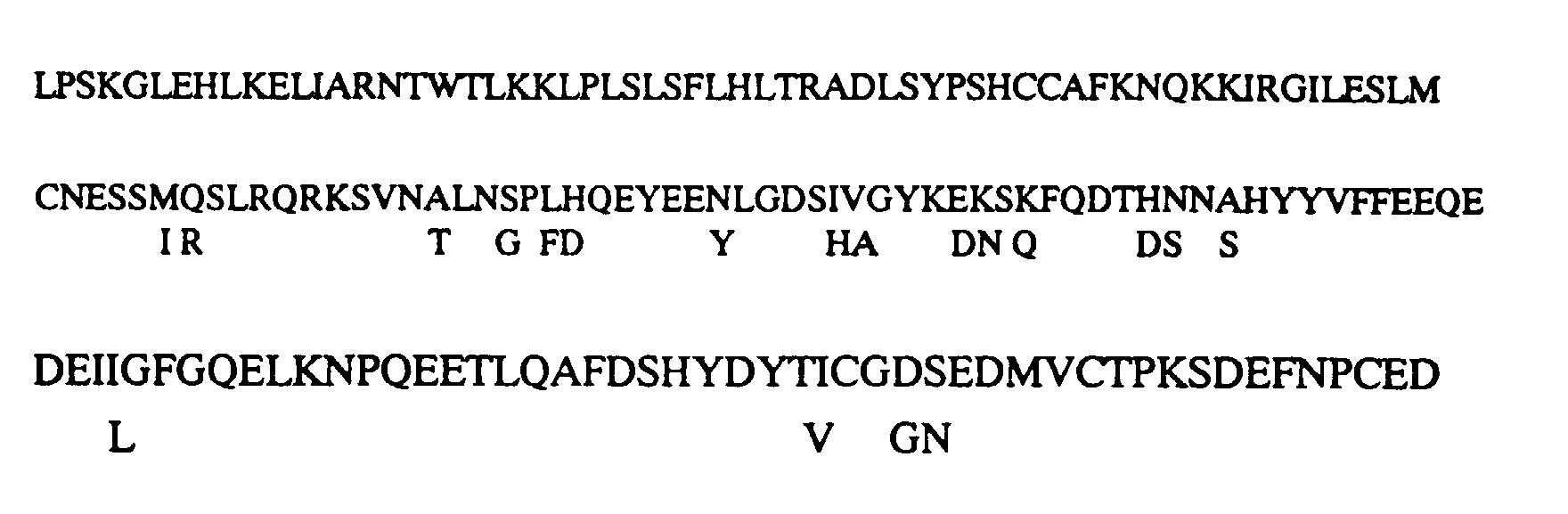 ou au moins 12 résidus d'acides aminés consécutifs de cette séquence ;
 ou au moins 12 résidus d'acides aminés consécutifs de cette séquence ;
 ou au moins 2 résidus d'acides aminés consécutifs de cette séquence ;
 ou au moins 22 résidus d'acides aminés consécutifs de cette séquence ;
 ou au moins 2 résidus d'acides aminés consécutifs de cette séquence ;
 ou au moins 12 résidus d'acides aminés consécutifs de cette séquence ;
 ou au moins 12 résidus d'acides aminés consécutifs de cette séquence ;
 ou au moins 12 résidus d'acides aminés consécutifs de cette séquence ;
 ou au moins 12 résidus d'acides aminés consécutifs de cette séquence ;
 ou au moins 12 résidus d'acides aminés consécutifs de cette séquence ;
étant entendu que l'un quelconque des acides aminés spécifiés ci-dessus peut être remplacé ou délété et que des résidus d'acides aminés supplémentaires peuvent être insérés à condition que l'activité de récepteur de la thyrotropine soit maintenue, ledit polypeptide étant obtenu par l'expression d'un acide nucléique codant le polypeptide dans une cellule hôte transformée par un vecteur dans lequel ledit acide nucléique a été inséré de manière active,
et lequel polypeptide, ii) dans le cas où p = 1, est caractérisé encore en ce qu'il est associé à une telle cellule hôte, le récepteur étant ainsi présent dans un environnement cellulaire non thyroïdien, ou à une préparation de membranes qui est dépourvue d'impuretés associées aux préparations de membranes thyroïdiennes stabilisées par des détergents, est mis en contact avec l'échantillon biologique supposé contenir de la TSH ou des anticorps anti-TSH, et en ce qu'il est mis en contact en même temps ou ultérieurement avec de la TSH marquée, ou avec des anticorps anti-TSHr marqués, et en ce que, après compétition entre les espèces marquées et les espèces non marquées dans le système réactionnel, la TSH marquée liée restante ou les anticorps anti-TSHr marqués liés restants sont mesurés. - Procédé selon la revendication 1, dans lequel les anticorps anti-TSHr marqués sont des anticorps polyclonaux ou monoclonaux dirigés contre un polypeptide recombinant possédant une activité de récepteur de la thyrotropine tel que défini dans la revendication 1.
- Trousse pour la détection de la TSH ou d'anticorps anti-TSHr, caractérisée en ce qu'elle contient :a) un polypeptide recombinant possédant une activité de récepteur de la thyrotropine tel que défini dans la revendication 1, ledit polypeptide étant présent sous une forme immobilisée ou solubilisée ;b) au moins l'un des réactifs suivants :i) de la TSH marquée,ii) des anticorps anti-TSHr marqués,iii) des réactifs nécessaires pour la mesure de l'activité adénylyl cyclase.
- Trousse selon la revendication 3, caractérisée en ce que ledit polypeptide recombinant est sous forme de cellules intactes préablement transformées de manière active par une séquence nucléotidique codant ledit polypeptide et portant par conséquent ledit polypeptide dans leur membrane, ou sous forme de membranes solubilisées de telles cellules.
Priority Applications (1)
| Application Number | Priority Date | Filing Date | Title |
|---|---|---|---|
| EP91901286A EP0458940B1 (fr) | 1989-12-14 | 1990-12-12 | Methode pour la detection quantitative de la thyrotropine (tsh) ou d'autoanticorps contre le recepteur de la thyrotropine (anti-tshr) utilsant un recepteur recombinant de la thyrotropine et kit pour la performance de ladite methode |
Applications Claiming Priority (4)
| Application Number | Priority Date | Filing Date | Title |
|---|---|---|---|
| EP89403493 | 1989-12-14 | ||
| EP89403493A EP0433509B1 (fr) | 1989-12-14 | 1989-12-14 | Polypeptides possédant l'activité réceptrice de la thyrotropine, séquences d'acides nucléiques codant pour de tels récepteurs et polypeptides, et applications de ces polypeptides |
| PCT/EP1990/002154 WO1991009121A2 (fr) | 1989-12-14 | 1990-12-12 | Polypeptides possedant de recepteurs actifs de thyrotropine, sequences d'acide nucleique codant pour ces recepteurs et polypetides, et applications de ces polypeptides |
| EP91901286A EP0458940B1 (fr) | 1989-12-14 | 1990-12-12 | Methode pour la detection quantitative de la thyrotropine (tsh) ou d'autoanticorps contre le recepteur de la thyrotropine (anti-tshr) utilsant un recepteur recombinant de la thyrotropine et kit pour la performance de ladite methode |
Publications (2)
| Publication Number | Publication Date |
|---|---|
| EP0458940A1 EP0458940A1 (fr) | 1991-12-04 |
| EP0458940B1 true EP0458940B1 (fr) | 1996-09-25 |
Family
ID=8203015
Family Applications (2)
| Application Number | Title | Priority Date | Filing Date |
|---|---|---|---|
| EP89403493A Expired - Lifetime EP0433509B1 (fr) | 1989-12-14 | 1989-12-14 | Polypeptides possédant l'activité réceptrice de la thyrotropine, séquences d'acides nucléiques codant pour de tels récepteurs et polypeptides, et applications de ces polypeptides |
| EP91901286A Expired - Lifetime EP0458940B1 (fr) | 1989-12-14 | 1990-12-12 | Methode pour la detection quantitative de la thyrotropine (tsh) ou d'autoanticorps contre le recepteur de la thyrotropine (anti-tshr) utilsant un recepteur recombinant de la thyrotropine et kit pour la performance de ladite methode |
Family Applications Before (1)
| Application Number | Title | Priority Date | Filing Date |
|---|---|---|---|
| EP89403493A Expired - Lifetime EP0433509B1 (fr) | 1989-12-14 | 1989-12-14 | Polypeptides possédant l'activité réceptrice de la thyrotropine, séquences d'acides nucléiques codant pour de tels récepteurs et polypeptides, et applications de ces polypeptides |
Country Status (10)
| Country | Link |
|---|---|
| US (1) | US6228597B1 (fr) |
| EP (2) | EP0433509B1 (fr) |
| JP (1) | JP3090682B2 (fr) |
| AT (2) | ATE145240T1 (fr) |
| AU (1) | AU641209B2 (fr) |
| CA (1) | CA2046917C (fr) |
| DE (2) | DE68927461T2 (fr) |
| DK (1) | DK0458940T3 (fr) |
| ES (2) | ES2092998T3 (fr) |
| WO (1) | WO1991009121A2 (fr) |
Families Citing this family (23)
| Publication number | Priority date | Publication date | Assignee | Title |
|---|---|---|---|---|
| US6261800B1 (en) | 1989-05-05 | 2001-07-17 | Genentech, Inc. | Luteinizing hormone/choriogonadotropin (LH/CG) receptor |
| DE69033990T2 (de) * | 1989-05-05 | 2003-02-13 | Genentech, Inc. | Glykoprotein-Hormonrezeptor-Moleküle |
| US5614363A (en) * | 1990-01-25 | 1997-03-25 | New England Medical Center Hospitals, Inc. | TSH receptor |
| WO1991003483A1 (fr) * | 1989-09-08 | 1991-03-21 | New England Medical Center Hospitals, Inc. | Recepteur de thyrotropine |
| JPH05504683A (ja) * | 1989-12-20 | 1993-07-22 | ニコルス インスティテュート ダイアグノスティックス | 組み換えチロトロピン受容体 |
| EP0482598A3 (en) * | 1990-10-24 | 1993-05-19 | Ishihara Sangyo Kaisha, Ltd. | Peptide analog of human tsh receptor affective against autoimmune hyperthyroidism |
| EP0719858A3 (fr) * | 1994-12-27 | 1997-12-29 | Tosoh Corporation | Lignée cellulaire de myélome exprimant le récepteur humain recombinant pour l'hormone stimulatrice de la thyroide |
| DE19645729C1 (de) * | 1996-11-06 | 1998-06-04 | Brahms Diagnostica Gmbh | Rezeptorbindungsassay, für den Rezeptorbindungsassay geeigneter rekombinanter Fusionsrezeptor, Vektor zu dessen Herstellung sowie Reagenziensatz für die Durchführung des Rezeptorbindungsassays |
| DE19728991A1 (de) * | 1996-11-06 | 1999-02-11 | Brahms Diagnostica Gmbh | Rezeptorbindungsassay, für den Rezeptorbindungsassay geeigneter rekombinanter Fusionsrezeptor, Vektor zu dessen Herstellung sowie Reagenziensatz für die Durchführung des Rezeptorbindungsassays |
| DE19651093C2 (de) * | 1996-12-09 | 1999-06-10 | Brahms Diagnostica Gmbh | Rezeptorbindungsassay zum Nachweis von TSH-Rezeptor-Autoantikörpern sowie Reagenziensatz für die Durchführung eines solchen Rezeptorbindungsassays |
| DE19801154A1 (de) * | 1998-01-14 | 1999-07-15 | Brahms Diagnostica Gmbh | Verfahren zur Herstellung von gereinigten und gegebenenfalls markierten TSH-Rezeptor-Präparaten, neue radioiodierte TSH-Rezeptor-Präparate, und die Verwendung derartiger Präparate in Diagnostik und Therapie |
| DE19907094C1 (de) | 1999-02-19 | 2000-04-13 | Brahms Diagnostica Gmbh | Verwendung von blockierenden Anti-TSH-Rezeptor-Antikörpern bei der Therapie von Hyperthyreosen sowie monoklonale Antikörper für eine solche Verwendung |
| WO2001027634A2 (fr) * | 1999-10-12 | 2001-04-19 | Ulrich Loos | Procede de determination de differents types d'autoanticorps contre le recepteur de tsh par immuno-precipitation selective, proteines de fusion pour la mise en oeuvre d'un tel procede, et utilisation de chimeres de recepteur de tsh marquees lors d'un tel procede |
| WO2002034042A2 (fr) * | 2000-10-26 | 2002-05-02 | Deltagen, Inc. | Souris transgeniques contenant des disruptions geniques du recepteur de l'hormone de stimulation thyroidienne (tch-r) |
| GB2376016A (en) * | 2001-05-30 | 2002-12-04 | Nadir R Farid | Thyrotropin receptor (TSHR) domain cleavage catalysed by the metalloprotease ADAM 10 |
| ES2736165T3 (es) * | 2001-08-23 | 2019-12-26 | Rsr Ltd | Regiones epítopo de un receptor de tirotropina (TSH), sus usos y anticuerpos para las mismas |
| JP4744147B2 (ja) | 2002-11-26 | 2011-08-10 | ベー・エル・アー・ハー・エム・エス・ゲーエムベーハー | アフィニティー精製抗体を用いた甲状腺刺激ホルモン受容体自己抗体の同定 |
| KR101468830B1 (ko) | 2005-06-24 | 2014-12-03 | 바이엘 크롭사이언스 엔.브이. | 식물 세포벽의 반응성을 변경하는 방법 |
| US8097699B2 (en) | 2006-08-30 | 2012-01-17 | Rsr Limited | Crystal structure of thyroid stimulating hormone receptor |
| US8350012B2 (en) * | 2007-01-25 | 2013-01-08 | Cedars-Sinai Medical Center | Inverse agonist monoclonal antibody that suppresses thyrotropin receptor constitutive activity |
| GB201314052D0 (en) * | 2013-08-06 | 2013-09-18 | Apitope Int Nv | Peptides |
| US20240426837A1 (en) * | 2021-09-22 | 2024-12-26 | Xiamen Innobiomax Biotechnology Co., Ltd. | Recombinant thyroid-stimulating hormone receptor protein, preparation method and application thereof |
| WO2026028159A1 (fr) | 2024-07-31 | 2026-02-05 | Biohaven Therapeutics Ltd. | Agents de dégradation bifonctionnels pour le traitement d'une maladie de graves |
Family Cites Families (6)
| Publication number | Priority date | Publication date | Assignee | Title |
|---|---|---|---|---|
| US4448764A (en) * | 1982-07-06 | 1984-05-15 | Pierce Chemical Company | Direct-acting iodinating reagent |
| DE3609271A1 (de) * | 1986-03-19 | 1987-09-24 | Boehringer Mannheim Gmbh | Verfahren und reagenz zum nachweis von autoimmunerkrankungen, arzneimittel zur behandlung von autoimmunerkrankungen sowie hierzu geeignete antiparatypische antikoerper |
| US5144007A (en) * | 1988-11-03 | 1992-09-01 | La Jolla Cancer Research Foundation | Thyroid hormone receptor |
| WO1991003483A1 (fr) * | 1989-09-08 | 1991-03-21 | New England Medical Center Hospitals, Inc. | Recepteur de thyrotropine |
| US5614363A (en) | 1990-01-25 | 1997-03-25 | New England Medical Center Hospitals, Inc. | TSH receptor |
| JPH05504683A (ja) * | 1989-12-20 | 1993-07-22 | ニコルス インスティテュート ダイアグノスティックス | 組み換えチロトロピン受容体 |
-
1989
- 1989-12-14 DE DE68927461T patent/DE68927461T2/de not_active Expired - Lifetime
- 1989-12-14 AT AT89403493T patent/ATE145240T1/de not_active IP Right Cessation
- 1989-12-14 ES ES89403493T patent/ES2092998T3/es not_active Expired - Lifetime
- 1989-12-14 EP EP89403493A patent/EP0433509B1/fr not_active Expired - Lifetime
-
1990
- 1990-12-12 DE DE69028695T patent/DE69028695T2/de not_active Expired - Lifetime
- 1990-12-12 AU AU70386/91A patent/AU641209B2/en not_active Expired
- 1990-12-12 WO PCT/EP1990/002154 patent/WO1991009121A2/fr not_active Ceased
- 1990-12-12 AT AT91901286T patent/ATE143375T1/de not_active IP Right Cessation
- 1990-12-12 JP JP03501671A patent/JP3090682B2/ja not_active Expired - Lifetime
- 1990-12-12 US US07/741,453 patent/US6228597B1/en not_active Expired - Lifetime
- 1990-12-12 CA CA002046917A patent/CA2046917C/fr not_active Expired - Lifetime
- 1990-12-12 ES ES91901286T patent/ES2091317T3/es not_active Expired - Lifetime
- 1990-12-12 DK DK91901286.4T patent/DK0458940T3/da active
- 1990-12-12 EP EP91901286A patent/EP0458940B1/fr not_active Expired - Lifetime
Non-Patent Citations (6)
| Title |
|---|
| 64th MEETING of the American Thyroid Association, 1989; FRAZIER-SEABROOK et al., AN T-51 * |
| BIOCHEMICAL & BIOPHYSICAL RESEARCH COMMUNICATIONS, vol. 165, no. 3, 29 December 1989, Academic Press Inc., Duluth, MN (US); F. LIBERT et al., pp. 1250-1255; and Y. NAGAYAMA et al., pp. 1184-1190 * |
| CHEMICAL ABSTRACTS, vol. 108, 1988; Columbus, OH (US); p. 349, AN 71722w * |
| MOLECULAR & CELLULAR ENDOCRINOLOGY, vol. 73, no. 1, 01 October 1990, Elsevier Scientific Publishers Ireland Ltd.; M. LUDGATE et al., pp. R13-R18 * |
| RADIOIMMUNOASSAY & RELATED PROCEDURES IN MEDICINE, 1982, Proceedings of a Symposium, 21-25 June 1982, Vienna (AT); P. KOTULLA et al., pp. 297-305 * |
| SCIENCE, vol. 245, 04 August 1989, Washington, DC (US); H. LOOSFELT et al., pp. 525-527 * |
Also Published As
| Publication number | Publication date |
|---|---|
| JP3090682B2 (ja) | 2000-09-25 |
| EP0433509A2 (fr) | 1991-06-26 |
| CA2046917A1 (fr) | 1991-06-15 |
| AU7038691A (en) | 1991-07-18 |
| EP0433509A3 (en) | 1991-07-24 |
| ES2092998T3 (es) | 1996-12-16 |
| WO1991009121A2 (fr) | 1991-06-27 |
| DE68927461D1 (de) | 1996-12-19 |
| DE69028695T2 (de) | 1997-02-20 |
| JPH04506752A (ja) | 1992-11-26 |
| CA2046917C (fr) | 2003-07-01 |
| DK0458940T3 (da) | 1996-11-11 |
| WO1991009121A3 (fr) | 1991-09-19 |
| EP0458940A1 (fr) | 1991-12-04 |
| ATE145240T1 (de) | 1996-11-15 |
| US6228597B1 (en) | 2001-05-08 |
| DE69028695D1 (de) | 1996-10-31 |
| DE68927461T2 (de) | 1997-03-20 |
| AU641209B2 (en) | 1993-09-16 |
| ATE143375T1 (de) | 1996-10-15 |
| EP0433509B1 (fr) | 1996-11-13 |
| ES2091317T3 (es) | 1996-11-01 |
Similar Documents
| Publication | Publication Date | Title |
|---|---|---|
| EP0433509B1 (fr) | Polypeptides possédant l'activité réceptrice de la thyrotropine, séquences d'acides nucléiques codant pour de tels récepteurs et polypeptides, et applications de ces polypeptides | |
| Roglić et al. | cDNA cloning of a novel G protein-coupled receptor with a large extracellular loop structure | |
| AU661110B2 (en) | Somatostatin receptors | |
| Nagayama et al. | The thyrotropin receptor 25 years after its discovery: new insight after its molecular cloning. | |
| Demchyshyn et al. | Cloning and expression of a human somatostatin-14-selective receptor variant (somatostatin receptor 4) located on chromosome 20. | |
| Marazziti et al. | Cloning of GPR37, a gene located on chromosome 7 encoding a putative G-protein-coupled peptide receptor, from a human frontal brain EST library | |
| EP0870020B1 (fr) | Polypeptides formant ligands vis-a-vis de la proteine receptrice pituitaire liee a la proteine g-, leur fabrication et utilisation | |
| US20010009766A1 (en) | Dna encoding galanin galr3 receptors and uses thereof | |
| US20030055238A1 (en) | Dna encoding a cholecystokinin receptor | |
| US6399316B1 (en) | PACAP receptor protein, method for preparing said protein, and use thereof | |
| CA2116489A1 (fr) | Proteine du recepteur de pacap, methode de preparation de cette proteine et son utilisation | |
| Morel et al. | Molecular cloning and expression of rat V1a and V2 arginine vasopressin receptors | |
| WO1997000952A2 (fr) | Homologue du recepteur de edg-2 de l'homme | |
| AU689119B2 (en) | Cloning and recombinant production of CRF (corticotropin releasing factor) receptor(s) | |
| WO1992002640A1 (fr) | Recepteur de cannabinoides | |
| US6660496B1 (en) | Nucleic acid molecules encoding a KOR3 kappa opioid receptor and the methods of producing the encoded receptor | |
| US6511827B1 (en) | Nucleotide encoding human galanin receptor 3 (GALR3) | |
| Civelli et al. | The next frontier in the molecular biology of the opioid system: The opioid receptors | |
| Miotto et al. | Molecular characterization of opioid receptors | |
| WO1997031945A1 (fr) | Adn codant un recepteur humain d'imidazoline | |
| US6881545B1 (en) | Polypeptides, their production and use | |
| WO1999011668A1 (fr) | Molecules d'adn codant des polypeptides receptifs a l'imidazoline et polypeptides codes par cet adn | |
| US20030104572A1 (en) | Nucleic acid molecules encoding kappa3, opioid receptors, receptors encoded thereby, and uses thereof | |
| Jung | Discovery and characterization of three genes encoding G protein-coupled receptors | |
| Prossnitz | cDNA cloning of a novel G protein-coupled receptor with a large extracellular loop structure |
Legal Events
| Date | Code | Title | Description |
|---|---|---|---|
| PUAI | Public reference made under article 153(3) epc to a published international application that has entered the european phase |
Free format text: ORIGINAL CODE: 0009012 |
|
| AK | Designated contracting states |
Kind code of ref document: A1 Designated state(s): AT BE CH DE DK ES FR GB GR IT LI LU NL SE |
|
| 17P | Request for examination filed |
Effective date: 19911202 |
|
| 17Q | First examination report despatched |
Effective date: 19930804 |
|
| RAP1 | Party data changed (applicant data changed or rights of an application transferred) |
Owner name: HENNING BERLIN ANLAGEN GMBH |
|
| RAP1 | Party data changed (applicant data changed or rights of an application transferred) |
Owner name: B.R.A.H.M.S. DIAGNOSTICA GMBH |
|
| RAP3 | Party data changed (applicant data changed or rights of an application transferred) |
Owner name: B.R.A.H.M.S DIAGNOSTICA GMBH |
|
| GRAH | Despatch of communication of intention to grant a patent |
Free format text: ORIGINAL CODE: EPIDOS IGRA |
|
| GRAH | Despatch of communication of intention to grant a patent |
Free format text: ORIGINAL CODE: EPIDOS IGRA |
|
| GRAA | (expected) grant |
Free format text: ORIGINAL CODE: 0009210 |
|
| ITF | It: translation for a ep patent filed | ||
| AK | Designated contracting states |
Kind code of ref document: B1 Designated state(s): AT BE CH DE DK ES FR GB GR IT LI LU NL SE |
|
| PG25 | Lapsed in a contracting state [announced via postgrant information from national office to epo] |
Ref country code: GR Free format text: LAPSE BECAUSE OF FAILURE TO SUBMIT A TRANSLATION OF THE DESCRIPTION OR TO PAY THE FEE WITHIN THE PRESCRIBED TIME-LIMIT Effective date: 19960925 |
|
| REF | Corresponds to: |
Ref document number: 143375 Country of ref document: AT Date of ref document: 19961015 Kind code of ref document: T |
|
| ET | Fr: translation filed | ||
| ET | Fr: translation filed | ||
| REF | Corresponds to: |
Ref document number: 69028695 Country of ref document: DE Date of ref document: 19961031 |
|
| REG | Reference to a national code |
Ref country code: CH Ref legal event code: NV Representative=s name: REBMANN-KUPFER & CO. PATENTANWAELTE |
|
| REG | Reference to a national code |
Ref country code: ES Ref legal event code: FG2A Ref document number: 2091317 Country of ref document: ES Kind code of ref document: T3 |
|
| REG | Reference to a national code |
Ref country code: DK Ref legal event code: T3 |
|
| PG25 | Lapsed in a contracting state [announced via postgrant information from national office to epo] |
Ref country code: SE Effective date: 19961213 |
|
| PG25 | Lapsed in a contracting state [announced via postgrant information from national office to epo] |
Ref country code: DK Effective date: 19961225 |
|
| REG | Reference to a national code |
Ref country code: DK Ref legal event code: EBP |
|
| PG25 | Lapsed in a contracting state [announced via postgrant information from national office to epo] |
Ref country code: LU Free format text: LAPSE BECAUSE OF NON-PAYMENT OF DUE FEES Effective date: 19961231 |
|
| PG25 | Lapsed in a contracting state [announced via postgrant information from national office to epo] |
Ref country code: NL Effective date: 19970701 |
|
| PLBE | No opposition filed within time limit |
Free format text: ORIGINAL CODE: 0009261 |
|
| STAA | Information on the status of an ep patent application or granted ep patent |
Free format text: STATUS: NO OPPOSITION FILED WITHIN TIME LIMIT |
|
| NLV4 | Nl: lapsed or anulled due to non-payment of the annual fee |
Effective date: 19970701 |
|
| EUG | Se: european patent has lapsed |
Ref document number: 91901286.4 |
|
| 26N | No opposition filed | ||
| REG | Reference to a national code |
Ref country code: GB Ref legal event code: IF02 |
|
| PGFP | Annual fee paid to national office [announced via postgrant information from national office to epo] |
Ref country code: AT Payment date: 20091217 Year of fee payment: 20 Ref country code: CH Payment date: 20091224 Year of fee payment: 20 Ref country code: ES Payment date: 20091222 Year of fee payment: 20 |
|
| PGFP | Annual fee paid to national office [announced via postgrant information from national office to epo] |
Ref country code: FR Payment date: 20100108 Year of fee payment: 20 Ref country code: IT Payment date: 20091223 Year of fee payment: 20 Ref country code: GB Payment date: 20091218 Year of fee payment: 20 |
|
| PGFP | Annual fee paid to national office [announced via postgrant information from national office to epo] |
Ref country code: BE Payment date: 20100212 Year of fee payment: 20 Ref country code: DE Payment date: 20100223 Year of fee payment: 20 |
|
| REG | Reference to a national code |
Ref country code: CH Ref legal event code: PL |
|
| BE20 | Be: patent expired |
Owner name: *B.R.A.H.M.S DIAGNOSTICA G.M.B.H. Effective date: 20101212 |
|
| REG | Reference to a national code |
Ref country code: GB Ref legal event code: PE20 Expiry date: 20101211 |
|
| PG25 | Lapsed in a contracting state [announced via postgrant information from national office to epo] |
Ref country code: GB Free format text: LAPSE BECAUSE OF EXPIRATION OF PROTECTION Effective date: 20101211 |
|
| PG25 | Lapsed in a contracting state [announced via postgrant information from national office to epo] |
Ref country code: DE Free format text: LAPSE BECAUSE OF EXPIRATION OF PROTECTION Effective date: 20101212 |
|
| REG | Reference to a national code |
Ref country code: ES Ref legal event code: FD2A Effective date: 20130807 |
|
| PG25 | Lapsed in a contracting state [announced via postgrant information from national office to epo] |
Ref country code: ES Free format text: LAPSE BECAUSE OF EXPIRATION OF PROTECTION Effective date: 20101213 |