EP0459639A1 - Getrennte Phasen aufweisende Polymerlegierungen - Google Patents
Getrennte Phasen aufweisende Polymerlegierungen Download PDFInfo
- Publication number
- EP0459639A1 EP0459639A1 EP91304171A EP91304171A EP0459639A1 EP 0459639 A1 EP0459639 A1 EP 0459639A1 EP 91304171 A EP91304171 A EP 91304171A EP 91304171 A EP91304171 A EP 91304171A EP 0459639 A1 EP0459639 A1 EP 0459639A1
- Authority
- EP
- European Patent Office
- Prior art keywords
- polymer
- rubbery
- alloy according
- coherent
- polymer alloy
- Prior art date
- Legal status (The legal status is an assumption and is not a legal conclusion. Google has not performed a legal analysis and makes no representation as to the accuracy of the status listed.)
- Withdrawn
Links
- 229920000642 polymer Polymers 0.000 title claims abstract description 122
- 229910045601 alloy Inorganic materials 0.000 title claims abstract description 62
- 239000000956 alloy Substances 0.000 title claims abstract description 62
- 239000000203 mixture Substances 0.000 claims abstract description 18
- 238000010791 quenching Methods 0.000 claims abstract description 9
- 230000000171 quenching effect Effects 0.000 claims abstract description 8
- 229920001169 thermoplastic Polymers 0.000 claims description 49
- 230000001427 coherent effect Effects 0.000 claims description 38
- 239000004416 thermosoftening plastic Substances 0.000 claims description 24
- 229920001971 elastomer Polymers 0.000 claims description 20
- 229920002554 vinyl polymer Polymers 0.000 claims description 14
- 238000000034 method Methods 0.000 claims description 12
- 238000005191 phase separation Methods 0.000 claims description 12
- 239000000243 solution Substances 0.000 claims description 12
- 239000000178 monomer Substances 0.000 claims description 10
- -1 alkenyl nitriles Chemical class 0.000 claims description 9
- 229920001400 block copolymer Polymers 0.000 claims description 9
- 229920000515 polycarbonate Polymers 0.000 claims description 9
- 239000004417 polycarbonate Substances 0.000 claims description 9
- 239000004793 Polystyrene Substances 0.000 claims description 7
- 229920000728 polyester Polymers 0.000 claims description 7
- 125000004178 (C1-C4) alkyl group Chemical group 0.000 claims description 6
- 238000010438 heat treatment Methods 0.000 claims description 6
- 238000004519 manufacturing process Methods 0.000 claims description 6
- 238000002844 melting Methods 0.000 claims description 6
- 230000008018 melting Effects 0.000 claims description 6
- 229920002959 polymer blend Polymers 0.000 claims description 6
- 229920002223 polystyrene Polymers 0.000 claims description 6
- 238000002156 mixing Methods 0.000 claims description 5
- 229920001955 polyphenylene ether Polymers 0.000 claims description 5
- 239000002904 solvent Substances 0.000 claims description 5
- 239000011557 critical solution Substances 0.000 claims description 4
- 239000005060 rubber Substances 0.000 claims description 4
- 150000001735 carboxylic acids Chemical class 0.000 claims description 3
- 229920005623 miscible polymer blend Polymers 0.000 claims description 3
- 239000004952 Polyamide Substances 0.000 claims description 2
- 239000004642 Polyimide Substances 0.000 claims description 2
- 238000002441 X-ray diffraction Methods 0.000 claims description 2
- 229920002647 polyamide Polymers 0.000 claims description 2
- 229920001721 polyimide Polymers 0.000 claims description 2
- RTZKZFJDLAIYFH-UHFFFAOYSA-N ether Substances CCOCC RTZKZFJDLAIYFH-UHFFFAOYSA-N 0.000 claims 3
- 239000004734 Polyphenylene sulfide Substances 0.000 claims 2
- 229920000069 polyphenylene sulfide Polymers 0.000 claims 2
- 150000005215 alkyl ethers Chemical class 0.000 claims 1
- 125000002496 methyl group Chemical group [H]C([H])([H])* 0.000 claims 1
- 239000011159 matrix material Substances 0.000 abstract description 4
- 230000009477 glass transition Effects 0.000 abstract 1
- 239000012071 phase Substances 0.000 description 12
- PPBRXRYQALVLMV-UHFFFAOYSA-N Styrene Chemical compound C=CC1=CC=CC=C1 PPBRXRYQALVLMV-UHFFFAOYSA-N 0.000 description 9
- 229920002432 poly(vinyl methyl ether) polymer Polymers 0.000 description 8
- 239000002245 particle Substances 0.000 description 5
- 238000010587 phase diagram Methods 0.000 description 5
- UHOVQNZJYSORNB-UHFFFAOYSA-N Benzene Chemical compound C1=CC=CC=C1 UHOVQNZJYSORNB-UHFFFAOYSA-N 0.000 description 3
- YXFVVABEGXRONW-UHFFFAOYSA-N Toluene Chemical compound CC1=CC=CC=C1 YXFVVABEGXRONW-UHFFFAOYSA-N 0.000 description 3
- 239000003054 catalyst Substances 0.000 description 3
- 238000006243 chemical reaction Methods 0.000 description 3
- 238000000926 separation method Methods 0.000 description 3
- 238000002145 thermally induced phase separation Methods 0.000 description 3
- NXXYKOUNUYWIHA-UHFFFAOYSA-N 2,6-Dimethylphenol Chemical compound CC1=CC=CC(C)=C1O NXXYKOUNUYWIHA-UHFFFAOYSA-N 0.000 description 2
- 229920000265 Polyparaphenylene Polymers 0.000 description 2
- UCKMPCXJQFINFW-UHFFFAOYSA-N Sulphide Chemical compound [S-2] UCKMPCXJQFINFW-UHFFFAOYSA-N 0.000 description 2
- 150000001491 aromatic compounds Chemical class 0.000 description 2
- 125000003118 aryl group Chemical group 0.000 description 2
- 125000001246 bromo group Chemical group Br* 0.000 description 2
- CQEYYJKEWSMYFG-UHFFFAOYSA-N butyl acrylate Chemical compound CCCCOC(=O)C=C CQEYYJKEWSMYFG-UHFFFAOYSA-N 0.000 description 2
- 239000000460 chlorine Substances 0.000 description 2
- 229910052801 chlorine Inorganic materials 0.000 description 2
- 125000001309 chloro group Chemical group Cl* 0.000 description 2
- 150000001875 compounds Chemical class 0.000 description 2
- 229920001577 copolymer Polymers 0.000 description 2
- 238000009826 distribution Methods 0.000 description 2
- 239000007789 gas Substances 0.000 description 2
- 229920005669 high impact polystyrene Polymers 0.000 description 2
- 239000004797 high-impact polystyrene Substances 0.000 description 2
- QQVIHTHCMHWDBS-UHFFFAOYSA-N isophthalic acid Chemical compound OC(=O)C1=CC=CC(C(O)=O)=C1 QQVIHTHCMHWDBS-UHFFFAOYSA-N 0.000 description 2
- 239000007788 liquid Substances 0.000 description 2
- 239000007791 liquid phase Substances 0.000 description 2
- XJRBAMWJDBPFIM-UHFFFAOYSA-N methyl vinyl ether Chemical compound COC=C XJRBAMWJDBPFIM-UHFFFAOYSA-N 0.000 description 2
- 239000012046 mixed solvent Substances 0.000 description 2
- XNGIFLGASWRNHJ-UHFFFAOYSA-N phthalic acid Chemical compound OC(=O)C1=CC=CC=C1C(O)=O XNGIFLGASWRNHJ-UHFFFAOYSA-N 0.000 description 2
- 239000002798 polar solvent Substances 0.000 description 2
- 229920002285 poly(styrene-co-acrylonitrile) Polymers 0.000 description 2
- GHMLBKRAJCXXBS-UHFFFAOYSA-N resorcinol Chemical compound OC1=CC=CC(O)=C1 GHMLBKRAJCXXBS-UHFFFAOYSA-N 0.000 description 2
- NJVOHKFLBKQLIZ-UHFFFAOYSA-N (2-ethenylphenyl) prop-2-enoate Chemical compound C=CC(=O)OC1=CC=CC=C1C=C NJVOHKFLBKQLIZ-UHFFFAOYSA-N 0.000 description 1
- RNFJDJUURJAICM-UHFFFAOYSA-N 2,2,4,4,6,6-hexaphenoxy-1,3,5-triaza-2$l^{5},4$l^{5},6$l^{5}-triphosphacyclohexa-1,3,5-triene Chemical compound N=1P(OC=2C=CC=CC=2)(OC=2C=CC=CC=2)=NP(OC=2C=CC=CC=2)(OC=2C=CC=CC=2)=NP=1(OC=1C=CC=CC=1)OC1=CC=CC=C1 RNFJDJUURJAICM-UHFFFAOYSA-N 0.000 description 1
- GVLZQVREHWQBJN-UHFFFAOYSA-N 3,5-dimethyl-7-oxabicyclo[2.2.1]hepta-1,3,5-triene Chemical compound CC1=C(O2)C(C)=CC2=C1 GVLZQVREHWQBJN-UHFFFAOYSA-N 0.000 description 1
- JLBJTVDPSNHSKJ-UHFFFAOYSA-N 4-Methylstyrene Chemical compound CC1=CC=C(C=C)C=C1 JLBJTVDPSNHSKJ-UHFFFAOYSA-N 0.000 description 1
- ZAMOUSCENKQFHK-UHFFFAOYSA-N Chlorine atom Chemical compound [Cl] ZAMOUSCENKQFHK-UHFFFAOYSA-N 0.000 description 1
- JIGUQPWFLRLWPJ-UHFFFAOYSA-N Ethyl acrylate Chemical compound CCOC(=O)C=C JIGUQPWFLRLWPJ-UHFFFAOYSA-N 0.000 description 1
- 244000043261 Hevea brasiliensis Species 0.000 description 1
- 239000004609 Impact Modifier Substances 0.000 description 1
- OFOBLEOULBTSOW-UHFFFAOYSA-N Malonic acid Chemical compound OC(=O)CC(O)=O OFOBLEOULBTSOW-UHFFFAOYSA-N 0.000 description 1
- CERQOIWHTDAKMF-UHFFFAOYSA-N Methacrylic acid Chemical compound CC(=C)C(O)=O CERQOIWHTDAKMF-UHFFFAOYSA-N 0.000 description 1
- OKKJLVBELUTLKV-UHFFFAOYSA-N Methanol Chemical compound OC OKKJLVBELUTLKV-UHFFFAOYSA-N 0.000 description 1
- VVQNEPGJFQJSBK-UHFFFAOYSA-N Methyl methacrylate Chemical compound COC(=O)C(C)=C VVQNEPGJFQJSBK-UHFFFAOYSA-N 0.000 description 1
- ISWSIDIOOBJBQZ-UHFFFAOYSA-N Phenol Chemical compound OC1=CC=CC=C1 ISWSIDIOOBJBQZ-UHFFFAOYSA-N 0.000 description 1
- YGYAWVDWMABLBF-UHFFFAOYSA-N Phosgene Chemical compound ClC(Cl)=O YGYAWVDWMABLBF-UHFFFAOYSA-N 0.000 description 1
- 239000005062 Polybutadiene Substances 0.000 description 1
- 239000004721 Polyphenylene oxide Substances 0.000 description 1
- 239000002253 acid Substances 0.000 description 1
- 150000007513 acids Chemical class 0.000 description 1
- 125000005907 alkyl ester group Chemical group 0.000 description 1
- 229910000905 alloy phase Inorganic materials 0.000 description 1
- XYLMUPLGERFSHI-UHFFFAOYSA-N alpha-Methylstyrene Chemical compound CC(=C)C1=CC=CC=C1 XYLMUPLGERFSHI-UHFFFAOYSA-N 0.000 description 1
- 238000013459 approach Methods 0.000 description 1
- IISBACLAFKSPIT-UHFFFAOYSA-N bisphenol A Chemical compound C=1C=C(O)C=CC=1C(C)(C)C1=CC=C(O)C=C1 IISBACLAFKSPIT-UHFFFAOYSA-N 0.000 description 1
- 238000010382 chemical cross-linking Methods 0.000 description 1
- 238000000354 decomposition reaction Methods 0.000 description 1
- 238000010586 diagram Methods 0.000 description 1
- 150000002009 diols Chemical class 0.000 description 1
- 239000006185 dispersion Substances 0.000 description 1
- 150000002148 esters Chemical class 0.000 description 1
- LYCAIKOWRPUZTN-UHFFFAOYSA-N ethylene glycol Natural products OCCO LYCAIKOWRPUZTN-UHFFFAOYSA-N 0.000 description 1
- 238000002474 experimental method Methods 0.000 description 1
- 238000001125 extrusion Methods 0.000 description 1
- 239000003063 flame retardant Substances 0.000 description 1
- 239000001257 hydrogen Substances 0.000 description 1
- 229910052739 hydrogen Inorganic materials 0.000 description 1
- WGCNASOHLSPBMP-UHFFFAOYSA-N hydroxyacetaldehyde Natural products OCC=O WGCNASOHLSPBMP-UHFFFAOYSA-N 0.000 description 1
- 238000001746 injection moulding Methods 0.000 description 1
- 229920000554 ionomer Polymers 0.000 description 1
- 229920002521 macromolecule Polymers 0.000 description 1
- 239000000463 material Substances 0.000 description 1
- 239000000155 melt Substances 0.000 description 1
- 229910021645 metal ion Inorganic materials 0.000 description 1
- 239000003607 modifier Substances 0.000 description 1
- 229920003052 natural elastomer Polymers 0.000 description 1
- 229920001194 natural rubber Polymers 0.000 description 1
- 239000012299 nitrogen atmosphere Substances 0.000 description 1
- 230000003287 optical effect Effects 0.000 description 1
- 238000005691 oxidative coupling reaction Methods 0.000 description 1
- 239000008188 pellet Substances 0.000 description 1
- PNJWIWWMYCMZRO-UHFFFAOYSA-N pent‐4‐en‐2‐one Natural products CC(=O)CC=C PNJWIWWMYCMZRO-UHFFFAOYSA-N 0.000 description 1
- 230000000737 periodic effect Effects 0.000 description 1
- 229920003023 plastic Polymers 0.000 description 1
- 239000004033 plastic Substances 0.000 description 1
- 229920002857 polybutadiene Polymers 0.000 description 1
- 229920001707 polybutylene terephthalate Polymers 0.000 description 1
- 229920000139 polyethylene terephthalate Polymers 0.000 description 1
- 239000005020 polyethylene terephthalate Substances 0.000 description 1
- 238000006116 polymerization reaction Methods 0.000 description 1
- 229920006380 polyphenylene oxide Polymers 0.000 description 1
- 238000002360 preparation method Methods 0.000 description 1
- 238000012545 processing Methods 0.000 description 1
- 229910052979 sodium sulfide Inorganic materials 0.000 description 1
- GRVFOGOEDUUMBP-UHFFFAOYSA-N sodium sulfide (anhydrous) Chemical compound [Na+].[Na+].[S-2] GRVFOGOEDUUMBP-UHFFFAOYSA-N 0.000 description 1
- 239000007858 starting material Substances 0.000 description 1
- 125000003011 styrenyl group Chemical group [H]\C(*)=C(/[H])C1=C([H])C([H])=C([H])C([H])=C1[H] 0.000 description 1
- 150000004763 sulfides Chemical class 0.000 description 1
- 238000012360 testing method Methods 0.000 description 1
Images

Classifications
-
- C—CHEMISTRY; METALLURGY
- C08—ORGANIC MACROMOLECULAR COMPOUNDS; THEIR PREPARATION OR CHEMICAL WORKING-UP; COMPOSITIONS BASED THEREON
- C08L—COMPOSITIONS OF MACROMOLECULAR COMPOUNDS
- C08L69/00—Compositions of polycarbonates; Compositions of derivatives of polycarbonates
-
- C—CHEMISTRY; METALLURGY
- C08—ORGANIC MACROMOLECULAR COMPOUNDS; THEIR PREPARATION OR CHEMICAL WORKING-UP; COMPOSITIONS BASED THEREON
- C08L—COMPOSITIONS OF MACROMOLECULAR COMPOUNDS
- C08L101/00—Compositions of unspecified macromolecular compounds
-
- C—CHEMISTRY; METALLURGY
- C08—ORGANIC MACROMOLECULAR COMPOUNDS; THEIR PREPARATION OR CHEMICAL WORKING-UP; COMPOSITIONS BASED THEREON
- C08L—COMPOSITIONS OF MACROMOLECULAR COMPOUNDS
- C08L67/00—Compositions of polyesters obtained by reactions forming a carboxylic ester link in the main chain; Compositions of derivatives of such polymers
- C08L67/02—Polyesters derived from dicarboxylic acids and dihydroxy compounds
-
- C—CHEMISTRY; METALLURGY
- C08—ORGANIC MACROMOLECULAR COMPOUNDS; THEIR PREPARATION OR CHEMICAL WORKING-UP; COMPOSITIONS BASED THEREON
- C08L—COMPOSITIONS OF MACROMOLECULAR COMPOUNDS
- C08L71/00—Compositions of polyethers obtained by reactions forming an ether link in the main chain; Compositions of derivatives of such polymers
- C08L71/08—Polyethers derived from hydroxy compounds or from their metallic derivatives
- C08L71/10—Polyethers derived from hydroxy compounds or from their metallic derivatives from phenols
- C08L71/12—Polyphenylene oxides
- C08L71/123—Polyphenylene oxides not modified by chemical after-treatment
Definitions
- the present invention relates to polymer alloys or polyblends which have a reduced tendency to fail in a brittle manner. More particularly, the polymer alloys of the present invention are prepared by subjecting the alloy to conditions which will cause phase separation, then quenching the alloy.
- Thermoplastic polymers that is polymers which have a Tg above room temperature, and more preferably polymers which melt above about 100°C, have been known for a considerable length of time.
- thermoplastic polymers tend to fail in a brittle mode; that is the polymer tends to fail due to crack propagation and there is not significant polymer deformation.
- thermoplastics There are a number of approachs to reduce the brittleness of thermoplastics by either copolymerizing or grafting the thermoplastic polymer onto a rubbery polymer, such as high impact polystyrene (HIPS) or by blending an impact modifier in the thermoplastic polymer.
- HIPS high impact polystyrene
- polyesters or polycarbonates may be toughened by physically blending into the polyester or polycarbonate a modifier polymer which adheres (reacts) with the thermoplastic and which is distributed so that it has a particle size from 0.01 to 1.0 micron.
- the above methods require dissolving a rubbery polymer in a monomer which is then polymerized to form a thermoplastic polymer or the dispersion of a rubbery polymer in a thermoplastic matrix using an extruder. In both cases it is essential to control the shear exerted on the mixture of thermoplastic and rubbery polymer to obtain the required particle size distribution and morphology.
- thermoplastic polymers may undergo thermally induced phase separation as discussed in "Thermally Induced Phase Separation Behaviour of Compatible Polymer Mixtures" T. Nish, T.T. Wang, and T.K. Kwei Macromolecules Vol. 8 No. 2 March-April 1975 page 227. These studies have focused on the optical properties of the polymer blends. To the best of applicants knowledge this procedure has not been considered for modifying the brittleness of thermoplastic polymers. Surprisingly, applicants have discovered that the thermally induced phase separation of a blend of a thermoplastic and a rubbery polymer results in a polyblend having reduced brittleness. It is not necessary that the rubbery phase be grafted to or chemically combined with the thermoplastic polymer.
- the present invention also provides a process for preparing the above composition characterized by comprising preparing a miscible melt blend of said thermoplastic polymer which undergoes failure in a brittle mode and said rubbery coherent polymer, heating the miscible polymer blend to a temperature at which the polymers become immiscible and quenching the polymer blend to below the Tg of the thermoplastic polymer.
- the present invention further provides a process for preparing the above composition
- a process for preparing a polymer alloy according to claim 1 comprising a process for preparing a polymer alloy according to claim 1, the process being characterized by comprising preparing a miscible melt blent of said thermoplastic polymer which undergoes failure in a brittle mode and said rubbery coherent polymer, heating and miscible polymer blend to a temperature at which the polymers become immiscible and quenching the polymer blend to below the Tg of the thermoplastic polymer.
- the present invention also provides a process for preparing the above composition, the process being characterized by comprising mixing a solution of said thermoplastic polymer which undergoes failure in a brittle mode, with a solution of said rubbery coherent polymer, heating the resulting solution to above the lower critical solution temperature to evaporate the solvent and cause phase separation.
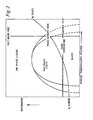
- Figure 1 is a drawing of a phase diagram of an ideal system having a LCST in accordance with one example of the present invention.
- Figure 2 is a drawing of a phase diagram of an ideal system having a UCST in accordance with one example of the present invention.
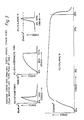
- Figure 3 is a series of stress/strain diagrams for polystyrene and various polymers of vinyl methyl ether.
- thermoplastic polymers which undergo failure in a brittle mode are e.g. polymers having a tg greater than room temperature, preferably above 100°C.
- the polymers tend to be amorphous.
- the thermoplastic polymer may be selected from: polyesters, polycarbonates, vinyl aromatic polymers, polyamides, polyimides, polyphenylene ethers, and polyphenylene sulphides.
- polyesters are those derived from an alphatic diol such as a c2 ⁇ 8 alkylene glycol and an aromatic dicarboxylic acid such as phthalic acid, isophthalic acid and ester deratives of such acids such as DMT.
- alphatic diol such as a c2 ⁇ 8 alkylene glycol
- aromatic dicarboxylic acid such as phthalic acid, isophthalic acid and ester deratives of such acids such as DMT.
- the two most common polyesters are polyethylene terephthalate and polybutylene terephthalate.
- Vinyl aromatic polymers may be polymers comprising:
- Polycarbonates may be derived from polyhydroxy aromatic compounds such as resorcinol or bisphenol A. These starting compounds may be further substituted by chlorine or bromine atoms to enhance the flame retardance of the final polycarbonate.
- the polycarbonate may be produced by the reaction of the starting polyhydroxy aromatic compound with phosgene.
- the thermoplastic may be a polyphenylene ether (sometimes called polyphenylene oxides). These compounds may be produced by the oxidative coupling (polymerization) of phenol based compounds. For example the most common polyphenylene ether (poly 2,6-dimethyl-1,4 phenylene oxide) is produced from 2,6-dimethylphenol. As with the polycarbonates the aromatic ring may further contain chlorine or bromine atoms to enhance the flame retardant properties of the polymer.
- the thermoplastic may be a polyphenylene sulphide. These materials may be produced by the reaction of a dihalo (preferably chloro) benzene with a reactive sulfide, such as sodium sulfide in a polar solvent.
- a dihalo preferably chloro
- a reactive sulfide such as sodium sulfide in a polar solvent.
- the thermoplastic is a styrenic polymer such as polystyrene, a styrene acrylonitrile copolymer (SAN) or a styrene acrylate such as a copolymer of styrene and one or more of methyl methacrylate, ethyl acrylate, or butyl acrylate.
- the styrene may be present in the polymer in an amount of at least 60 percent by weight.
- styrene While the term styrene has been used above, one skilled in the art will understand that all or part of the styrene may be replaced with styrene homologues such as alpha methyl styrene and paramethylstyrene , etc.
- the polymer alloy may comprise from 95 to 50, preferably 90 to 60 weight percent of the thermoplastic and the balance, from 5 to 50 preferably from 10 to 40 weight percent of the rubbery coherent polymer.
- the rubbery coherent polymer which is used in accordance with the present invention preferably will have a Tg below 0°C, most preferably below -20°C.
- the rubbery polymer may be coherent. That is it has a certain amount of integrity. This integrity may be provided in a number of manners.
- the polymer may be chemically crosslinked. However, if the rubbery polymer is chemically crosslinked the crosslink density should not be so high as to prevent the rubbery polymer from becoming miscible in the thermoplastic polymer.
- the rubbery polymer should have a very low level of gel or most preferably no gel.
- the chemical crosslinking is labile as in the case of hydrogen bonding such as in carboxylated polymers such as a copolymer of butyl acrylate and (meth)acrylic acid or as in an ionomer bonded through a metal ion.
- the rubber polymer may be coherent due to polymer chain entanglements such as in unvulcanized rubber.
- the rubbery polymer may be coherent due to the presence of crystallinity.
- the polymer will have a low degree of crystallinity from about 1 to 20, preferably from about 3 to 10 percent as measured using X-ray diffraction.
- the rubbery polymer may be stereo regular. That is it may be syndiotactic, or isotactic.
- a particularly useful class of rubbery polymers are the polyvinyl C1 ⁇ 4 alkyl ethers.
- a most useful rubbery polymer is isotactic or heterotactic polyvinyl methyl ether (pvme).
- pvme polyvinyl methyl ether
- the coherent rubbery polymer may also be a block copolymer such as an A-B or an A-B-A block copolymer.
- the block copolymer may contain one or more stereoregular blocks such as isotactic pvme.
- the block copolymer itself may display microphase separation. That is, one or more of the blocks may become miscible with the thermoplastic while the other block is not miscible in or only slightly soluble in the thermoplastic.
- the rubbery coherent polymer may have a molecular weight from 20,000 to 175,000. If the rubbery coherent polymer is not a block copolymer preferably it will have a molecular weight from about 20,000 to 80,000 most preferably from about 20,000 to 60,000. If the rubbery coherent polymer is a block copolymer preferably it will have a molecular weight from about 70,000 to 150,000 most preferably from about 70,000 to 100,000.
- thermoplastic and the rubbery coherent polymer may be selected so that the blend will exhibit a Lower Critical Solution Temperature (LCST), an Upper Critical Solution Temperature (UCST), or both; and the components of the polymer alloy are miscible above the melting temperature of the polymer having the higher Tg.
- LCST Lower Critical Solution Temperature
- UST Upper Critical Solution Temperature
- the polymer miscibility and the compositional range over which the polymers remain miscible may be determined using noninventive experimentation following the procedures outlined by T. Nish, T.T. Wang, and T.K. Kwei referred to above. The text of which is herein incorporated by reference.
- a critical feature of the present invention is that if the polymer alloy is subjected to conditions, which will cause phase separation, typically by heating above the LCST, and then quenched, the resulting quenched polymer alloy must have a yield of greater than 10 percent under a stress of 30 MN/M2.
- alloys of the present invention may be prepared or partially prepared by either extrusion techniques or solvent blending.
- the thermoplastic and rubbery coherent polymers may be dry blended (e.g. using a tumble blender).
- the dry blend may be fed into an extruder which operates in the range of polymer miscibility.
- the extrudate may then be chopped into pellets for further processing, or molded and further treated to cause phase separation and quenching.
- thermoplastic and a solution of the rubbery coherent polymer are blended to produce the required ratio of thermoplastic to rubbery polymer.
- the solution is heated to drive off the solvent and then the resulting blend is heated to cause phase separation, then quenched.
- the rubbery polymer should have a Tg less than 0°C, preferably less than -20°C.
- the thermoplastic will typically have a melting temperature of about 100°C or greater.
- the first part of the treatment will generally be at temperature between 100°C and the LCST (or UCST). Then the blend is quenched.
- figure 1 is a phase diagram of an ideal system of the present invention.
- the alloy is heated.
- the temperature reaches the dark LCST line it first undergoes spinoidal separation (e.g. forms a periodic and interconnected structure) then a binodal separation (discrete spherical phases).
- the alloy phase separates into a more rich thermoplastic phase which has a composition where the horizontal temperature line intersects the right side of the LCST line and a rubber rich separated phase having a composition where the horizontal temperature line intersects the left side of the LCST line.
- the alloy is then quenched, in about 2-5 minutes. The rate of locking in of the particle structure will be determined by the temperature the alloy is above the Tg of the thermoplastic polymer.
- the temperature conditions it is also possible to control the structure of the separated phase. Thus, if a spinodal structure is desired the alloy would be heated in the temperature range where spinoidal decomposition or phase separation occurs, and then the alloy would be quenched.
- FIG. 2 is a phase diagram for a system having a UCST in accordance with the present invention.
- an alloy rich in thermoplastic at the right of the phase diagram
- the alloy is heated above the Tg of the blend to a phase seperated liquid. This results in a thermoplastic rich liquid phase and a rubbery rich liquid phase.
- the liquid is quenched to room temperature or below the melting point of each component. This results in a plastic rich continuous phase and a rubbery rich discontinuous phase.
- the particle size of the discontinuous phase may be up to about 10 microns.
- thermoplastic components have a similar melting temperature and that the melt of thermoplastic and rubbery components is miscible.
- Vinyl methyl ether gas from Matheson Gas Products was dissolved in a mixed solvent to provide a ratio of 25 parts by weight monomer per 100 parts by weight solvent.
- a catalyst BF3O(Et)2 was added in an amount of 0.4 ml per 100 g of monomer solution.
- the monomer solution was kept at about -75°C and under a nitrogen atmosphere for 2 hours.
- the reaction was terminated with NH3/MEOH.
- the product was dried in a rotovac and stored at room temperature under vacuum for 3 days.
- i-PVME isotactic polyvinyl methyl ether
- any numerical value includes the precise value and any value "about” or “essentially” or “substantially” the same as the precise value.
- the wording of the appended claims and abstract is incorporated into the present description.
Landscapes
- Chemical & Material Sciences (AREA)
- Health & Medical Sciences (AREA)
- Chemical Kinetics & Catalysis (AREA)
- Medicinal Chemistry (AREA)
- Polymers & Plastics (AREA)
- Organic Chemistry (AREA)
- Compositions Of Macromolecular Compounds (AREA)
Applications Claiming Priority (2)
| Application Number | Priority Date | Filing Date | Title |
|---|---|---|---|
| US522828 | 1983-08-12 | ||
| US52282890A | 1990-05-14 | 1990-05-14 |
Publications (1)
| Publication Number | Publication Date |
|---|---|
| EP0459639A1 true EP0459639A1 (de) | 1991-12-04 |
Family
ID=24082551
Family Applications (1)
| Application Number | Title | Priority Date | Filing Date |
|---|---|---|---|
| EP91304171A Withdrawn EP0459639A1 (de) | 1990-05-14 | 1991-05-09 | Getrennte Phasen aufweisende Polymerlegierungen |
Country Status (2)
| Country | Link |
|---|---|
| US (1) | US5310804A (de) |
| EP (1) | EP0459639A1 (de) |
Families Citing this family (1)
| Publication number | Priority date | Publication date | Assignee | Title |
|---|---|---|---|---|
| US5998220A (en) | 1991-05-29 | 1999-12-07 | Beckman Coulter, Inc. | Opposable-element assay devices, kits, and methods employing them |
Citations (2)
| Publication number | Priority date | Publication date | Assignee | Title |
|---|---|---|---|---|
| DD149535A1 (de) * | 1980-03-21 | 1981-07-15 | Guenter Lueders | Schlagzaehe,thermoplastisch verarbeitbare polymere formmassen und ihre herstellung |
| EP0392763A2 (de) * | 1989-04-14 | 1990-10-17 | Edison Polymer Innovation Corporation ( Epic) | Polymerlegierungen |
Family Cites Families (4)
| Publication number | Priority date | Publication date | Assignee | Title |
|---|---|---|---|---|
| US4174358A (en) * | 1975-05-23 | 1979-11-13 | E. I. Du Pont De Nemours And Company | Tough thermoplastic nylon compositions |
| US4172859A (en) * | 1975-05-23 | 1979-10-30 | E. I. Du Pont De Nemours And Company | Tough thermoplastic polyester compositions |
| US4734359A (en) * | 1985-11-07 | 1988-03-29 | Canon Kabushiki Kaisha | Thermal recording material for display and image display device utilizing the same |
| DE3708428C2 (de) * | 1987-03-16 | 1996-09-12 | Roehm Gmbh | Verfahren zur Aufzeichnung, Speicherung und Darstellung optisch ablesbarer Information unter Verwendung von Kunststoffmaterial aus verträglichen Polymermischungen mit optisch detektierbarem Phasenübergang |
-
1991
- 1991-05-09 EP EP91304171A patent/EP0459639A1/de not_active Withdrawn
-
1992
- 1992-06-05 US US07/895,413 patent/US5310804A/en not_active Expired - Fee Related
Patent Citations (2)
| Publication number | Priority date | Publication date | Assignee | Title |
|---|---|---|---|---|
| DD149535A1 (de) * | 1980-03-21 | 1981-07-15 | Guenter Lueders | Schlagzaehe,thermoplastisch verarbeitbare polymere formmassen und ihre herstellung |
| EP0392763A2 (de) * | 1989-04-14 | 1990-10-17 | Edison Polymer Innovation Corporation ( Epic) | Polymerlegierungen |
Non-Patent Citations (1)
| Title |
|---|
| MACROMOLECULES, vol. 8, No. 2, March-April 1975 T. NISHI et al. "Thermally induced phase separation behaviour of compatible polymer mixtures" pages 227-235 * |
Also Published As
| Publication number | Publication date |
|---|---|
| US5310804A (en) | 1994-05-10 |
Similar Documents
| Publication | Publication Date | Title |
|---|---|---|
| EP0577281B1 (de) | Kern-Schale Zähigkeitsvermittler für amorphes aromatisches Polyester | |
| EP0006291B1 (de) | Mischungen von einem Polycarbonatharz und einem modifizierenden Mischpolymerisat und aus diesen Mischungen geformte Produkte | |
| US3166606A (en) | Polycarbonate resins having improved flow properties | |
| JPH02380B2 (de) | ||
| JPH01223153A (ja) | 芳香族ポリエステル、ビニル共重合体及びグラフト化されたシリコーンゴムの成形配合物 | |
| JPH10505380A (ja) | ポリカーボネートとエチレンポリマーとのブレンド | |
| EP0590723A1 (de) | Blockcopolymere, die Polyaryl(alkyl)methacrylatblöcke enthalten und ihre Mischungen mit Polycarbonaten | |
| AU661995B2 (en) | Impact resistant blends of high heat polycarbonate and aromatic polyester | |
| EP0021980A1 (de) | Mischungen aus Polyarylaten, Polyestern und gepfropften Elastomeren | |
| JPH06500144A (ja) | 改善された溶媒抵抗性及び衝撃強さを有する熱可塑性成形組成物並びにその用途 | |
| EP0111810A2 (de) | Hochbeanspruchbare, bei reduzierter Temperatur verformbare thermoplastische Mischung | |
| JPS63215765A (ja) | 耐衝撃性の向上した樹脂ブレンド | |
| EP0074400B1 (de) | Ternäre polykarbonatzusammensetzungen | |
| EP0230604B1 (de) | Harzzusammensetzung | |
| US4831082A (en) | Impact modified aromatic carbonate compositions | |
| EP0543975A1 (de) | Zusammensetzungen aus wiederverwendeten Polymeren | |
| WO1987005920A1 (en) | Polymer mixture which comprises an aromatic polycarbonate, a polyalkylene terephthalate and an agent to improve the impact strength | |
| US5310804A (en) | Phase separated polystyrene/polyvinyl methyl ether alloys | |
| US4444949A (en) | Composition of a polycarbonate, a butadiene-styrene copolymer and a (meth)acrylate interpolymer | |
| US5274034A (en) | Polycarbonate polystyrene composition | |
| McKay | Polystyrene/Polycarbonate/Polystyrene‐block‐Polycaprolactone blends. Emulsification and mechanical performance | |
| EP0590724A1 (de) | Blockcopolymere, die stereoreguläre Polymethylmethacrylate enthalten und ihre Mischungen mit Polycarbonaten | |
| JPH05287180A (ja) | ポリ(シクロヘキサンジメチレンテレフタレート)組成物 | |
| US4775717A (en) | Process of mixing melts of amorphous polyester and a graft modified polystyrene and composition thereof | |
| CA1204895A (en) | Polycarbonate blends having an improved impact strength |
Legal Events
| Date | Code | Title | Description |
|---|---|---|---|
| PUAI | Public reference made under article 153(3) epc to a published international application that has entered the european phase |
Free format text: ORIGINAL CODE: 0009012 |
|
| AK | Designated contracting states |
Kind code of ref document: A1 Designated state(s): AT BE CH DE DK ES FR GB GR IT LI LU NL SE |
|
| RBV | Designated contracting states (corrected) |
Designated state(s): DE FR GB IT NL |
|
| 17P | Request for examination filed |
Effective date: 19920526 |
|
| 17Q | First examination report despatched |
Effective date: 19930825 |
|
| STAA | Information on the status of an ep patent application or granted ep patent |
Free format text: STATUS: THE APPLICATION IS DEEMED TO BE WITHDRAWN |
|
| 18D | Application deemed to be withdrawn |
Effective date: 19950920 |