EP0460472B1 - Dérivés de l'acide carbamic, leur préparation et utilisation - Google Patents
Dérivés de l'acide carbamic, leur préparation et utilisation Download PDFInfo
- Publication number
- EP0460472B1 EP0460472B1 EP91108484A EP91108484A EP0460472B1 EP 0460472 B1 EP0460472 B1 EP 0460472B1 EP 91108484 A EP91108484 A EP 91108484A EP 91108484 A EP91108484 A EP 91108484A EP 0460472 B1 EP0460472 B1 EP 0460472B1
- Authority
- EP
- European Patent Office
- Prior art keywords
- group
- chloro
- atom
- ethylcarbamate
- phenoxy
- Prior art date
- Legal status (The legal status is an assumption and is not a legal conclusion. Google has not performed a legal analysis and makes no representation as to the accuracy of the status listed.)
- Expired - Lifetime
Links
- 0 C=*1CCCC1 Chemical compound C=*1CCCC1 0.000 description 8
Classifications
-
- C—CHEMISTRY; METALLURGY
- C07—ORGANIC CHEMISTRY
- C07C—ACYCLIC OR CARBOCYCLIC COMPOUNDS
- C07C271/00—Derivatives of carbamic acids, i.e. compounds containing any of the groups, the nitrogen atom not being part of nitro or nitroso groups
- C07C271/06—Esters of carbamic acids
- C07C271/40—Esters of carbamic acids having oxygen atoms of carbamate groups bound to carbon atoms of six-membered aromatic rings
- C07C271/42—Esters of carbamic acids having oxygen atoms of carbamate groups bound to carbon atoms of six-membered aromatic rings with the nitrogen atoms of the carbamate groups bound to hydrogen atoms or to acyclic carbon atoms
- C07C271/46—Esters of carbamic acids having oxygen atoms of carbamate groups bound to carbon atoms of six-membered aromatic rings with the nitrogen atoms of the carbamate groups bound to hydrogen atoms or to acyclic carbon atoms to carbon atoms of hydrocarbon radicals substituted by halogen atoms or by nitro or nitroso groups
-
- A—HUMAN NECESSITIES
- A01—AGRICULTURE; FORESTRY; ANIMAL HUSBANDRY; HUNTING; TRAPPING; FISHING
- A01N—PRESERVATION OF BODIES OF HUMANS OR ANIMALS OR PLANTS OR PARTS THEREOF; BIOCIDES, e.g. AS DISINFECTANTS, AS PESTICIDES OR AS HERBICIDES; PEST REPELLANTS OR ATTRACTANTS; PLANT GROWTH REGULATORS
- A01N47/00—Biocides, pest repellants or attractants, or plant growth regulators containing organic compounds containing a carbon atom not being member of a ring and having no bond to a carbon or hydrogen atom, e.g. derivatives of carbonic acid
- A01N47/08—Biocides, pest repellants or attractants, or plant growth regulators containing organic compounds containing a carbon atom not being member of a ring and having no bond to a carbon or hydrogen atom, e.g. derivatives of carbonic acid the carbon atom having one or more single bonds to nitrogen atoms
- A01N47/10—Carbamic acid derivatives, i.e. containing the group —O—CO—N<; Thio analogues thereof
- A01N47/24—Carbamic acid derivatives, i.e. containing the group —O—CO—N<; Thio analogues thereof containing the groups, or; Thio analogues thereof
-
- A—HUMAN NECESSITIES
- A01—AGRICULTURE; FORESTRY; ANIMAL HUSBANDRY; HUNTING; TRAPPING; FISHING
- A01N—PRESERVATION OF BODIES OF HUMANS OR ANIMALS OR PLANTS OR PARTS THEREOF; BIOCIDES, e.g. AS DISINFECTANTS, AS PESTICIDES OR AS HERBICIDES; PEST REPELLANTS OR ATTRACTANTS; PLANT GROWTH REGULATORS
- A01N47/00—Biocides, pest repellants or attractants, or plant growth regulators containing organic compounds containing a carbon atom not being member of a ring and having no bond to a carbon or hydrogen atom, e.g. derivatives of carbonic acid
- A01N47/08—Biocides, pest repellants or attractants, or plant growth regulators containing organic compounds containing a carbon atom not being member of a ring and having no bond to a carbon or hydrogen atom, e.g. derivatives of carbonic acid the carbon atom having one or more single bonds to nitrogen atoms
- A01N47/10—Carbamic acid derivatives, i.e. containing the group —O—CO—N<; Thio analogues thereof
- A01N47/12—Carbamic acid derivatives, i.e. containing the group —O—CO—N<; Thio analogues thereof containing a —O—CO—N< group, or a thio analogue thereof, neither directly attached to a ring nor the nitrogen atom being a member of a heterocyclic ring
-
- C—CHEMISTRY; METALLURGY
- C07—ORGANIC CHEMISTRY
- C07C—ACYCLIC OR CARBOCYCLIC COMPOUNDS
- C07C271/00—Derivatives of carbamic acids, i.e. compounds containing any of the groups, the nitrogen atom not being part of nitro or nitroso groups
- C07C271/06—Esters of carbamic acids
- C07C271/08—Esters of carbamic acids having oxygen atoms of carbamate groups bound to acyclic carbon atoms
- C07C271/10—Esters of carbamic acids having oxygen atoms of carbamate groups bound to acyclic carbon atoms with the nitrogen atoms of the carbamate groups bound to hydrogen atoms or to acyclic carbon atoms
- C07C271/16—Esters of carbamic acids having oxygen atoms of carbamate groups bound to acyclic carbon atoms with the nitrogen atoms of the carbamate groups bound to hydrogen atoms or to acyclic carbon atoms to carbon atoms of hydrocarbon radicals substituted by singly-bound oxygen atoms
-
- C—CHEMISTRY; METALLURGY
- C07—ORGANIC CHEMISTRY
- C07C—ACYCLIC OR CARBOCYCLIC COMPOUNDS
- C07C271/00—Derivatives of carbamic acids, i.e. compounds containing any of the groups, the nitrogen atom not being part of nitro or nitroso groups
- C07C271/06—Esters of carbamic acids
- C07C271/08—Esters of carbamic acids having oxygen atoms of carbamate groups bound to acyclic carbon atoms
- C07C271/10—Esters of carbamic acids having oxygen atoms of carbamate groups bound to acyclic carbon atoms with the nitrogen atoms of the carbamate groups bound to hydrogen atoms or to acyclic carbon atoms
- C07C271/22—Esters of carbamic acids having oxygen atoms of carbamate groups bound to acyclic carbon atoms with the nitrogen atoms of the carbamate groups bound to hydrogen atoms or to acyclic carbon atoms to carbon atoms of hydrocarbon radicals substituted by carboxyl groups
-
- C—CHEMISTRY; METALLURGY
- C07—ORGANIC CHEMISTRY
- C07C—ACYCLIC OR CARBOCYCLIC COMPOUNDS
- C07C271/00—Derivatives of carbamic acids, i.e. compounds containing any of the groups, the nitrogen atom not being part of nitro or nitroso groups
- C07C271/06—Esters of carbamic acids
- C07C271/32—Esters of carbamic acids having oxygen atoms of carbamate groups bound to carbon atoms of rings other than six-membered aromatic rings
- C07C271/34—Esters of carbamic acids having oxygen atoms of carbamate groups bound to carbon atoms of rings other than six-membered aromatic rings with the nitrogen atoms of the carbamate groups bound to hydrogen atoms or to acyclic carbon atoms
-
- C—CHEMISTRY; METALLURGY
- C07—ORGANIC CHEMISTRY
- C07C—ACYCLIC OR CARBOCYCLIC COMPOUNDS
- C07C307/00—Amides of sulfuric acids, i.e. compounds having singly-bound oxygen atoms of sulfate groups replaced by nitrogen atoms, not being part of nitro or nitroso groups
- C07C307/04—Diamides of sulfuric acids
- C07C307/06—Diamides of sulfuric acids having nitrogen atoms of the sulfamide groups bound to acyclic carbon atoms
-
- C—CHEMISTRY; METALLURGY
- C07—ORGANIC CHEMISTRY
- C07C—ACYCLIC OR CARBOCYCLIC COMPOUNDS
- C07C313/00—Sulfinic acids; Sulfenic acids; Halides, esters or anhydrides thereof; Amides of sulfinic or sulfenic acids, i.e. compounds having singly-bound oxygen atoms of sulfinic or sulfenic groups replaced by nitrogen atoms, not being part of nitro or nitroso groups
- C07C313/08—Sulfenic acids; Derivatives thereof
- C07C313/18—Sulfenamides
- C07C313/26—Compounds containing any of the groups, X being a hetero atom, Y being any atom
- C07C313/30—Y being a hetero atom
- C07C313/32—X and Y not being nitrogen atoms, e.g. N-sulfenylcarbamic acid
-
- C—CHEMISTRY; METALLURGY
- C07—ORGANIC CHEMISTRY
- C07C—ACYCLIC OR CARBOCYCLIC COMPOUNDS
- C07C333/00—Derivatives of thiocarbamic acids, i.e. compounds containing any of the groups, the nitrogen atom not being part of nitro or nitroso groups
- C07C333/02—Monothiocarbamic acids; Derivatives thereof
- C07C333/04—Monothiocarbamic acids; Derivatives thereof having nitrogen atoms of thiocarbamic groups bound to hydrogen atoms or to acyclic carbon atoms
-
- C—CHEMISTRY; METALLURGY
- C07—ORGANIC CHEMISTRY
- C07C—ACYCLIC OR CARBOCYCLIC COMPOUNDS
- C07C381/00—Compounds containing carbon and sulfur and having functional groups not covered by groups C07C301/00 - C07C337/00
- C07C381/06—Compounds containing sulfur atoms only bound to two nitrogen atoms
- C07C381/08—Compounds containing sulfur atoms only bound to two nitrogen atoms having at least one of the nitrogen atoms acylated
-
- C—CHEMISTRY; METALLURGY
- C07—ORGANIC CHEMISTRY
- C07C—ACYCLIC OR CARBOCYCLIC COMPOUNDS
- C07C2601/00—Systems containing only non-condensed rings
- C07C2601/02—Systems containing only non-condensed rings with a three-membered ring
-
- C—CHEMISTRY; METALLURGY
- C07—ORGANIC CHEMISTRY
- C07C—ACYCLIC OR CARBOCYCLIC COMPOUNDS
- C07C2601/00—Systems containing only non-condensed rings
- C07C2601/06—Systems containing only non-condensed rings with a five-membered ring
- C07C2601/08—Systems containing only non-condensed rings with a five-membered ring the ring being saturated
-
- C—CHEMISTRY; METALLURGY
- C07—ORGANIC CHEMISTRY
- C07C—ACYCLIC OR CARBOCYCLIC COMPOUNDS
- C07C2601/00—Systems containing only non-condensed rings
- C07C2601/12—Systems containing only non-condensed rings with a six-membered ring
- C07C2601/14—The ring being saturated
Definitions
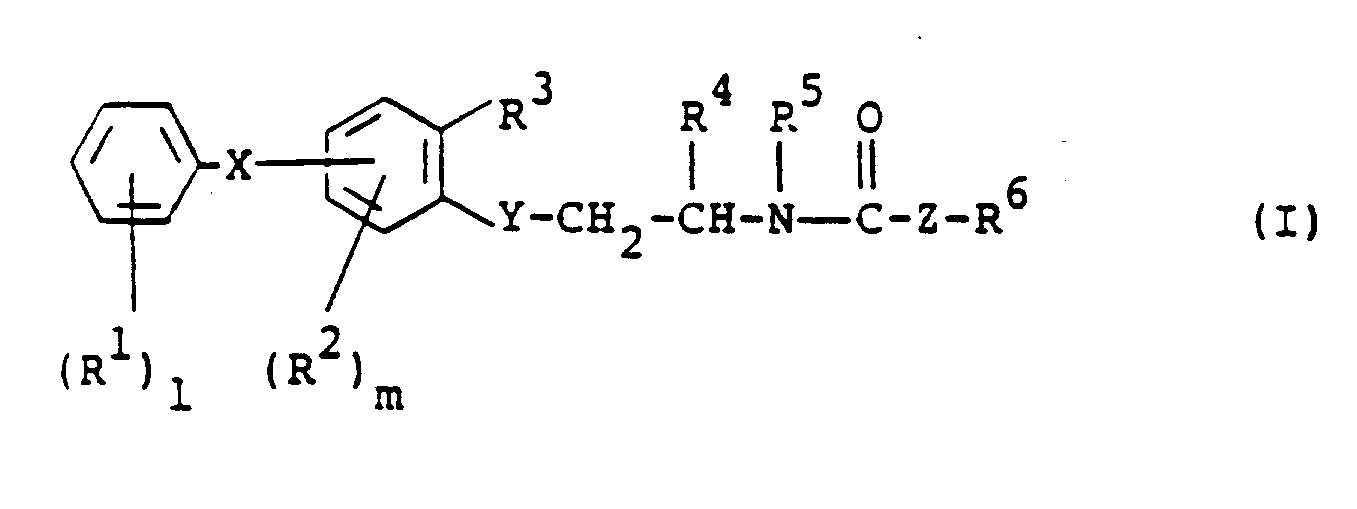
- the present invention relates to carbamic acid derivatives, and their production and use. More particularly, it relates to novel carbamic acid derivatives, processes for producing them, and methods for controlling insect pests using them.
- the present invention is based on the above finding.
- the carbamic acid derivatives of the formula (I) have an excellent juvenile hormone-like activity against various kinds of insect pests. They exhibit actions such as metamorphosis inhibition, embryogenesis inhibition and sterilization and are quite efficacious as growth regulators, chemosterilants, ovicides or reproduction inhibitory agents against various insect pests such as agricultural, forestal, hygienic and stored grain insect pests. Further, they are also efficacious against insect pests having an increased resistance to commercial insecticides or pesticides.
- C 1 -C 3 alkyl are methyl, ethyl, n-propyl and isopropyl.
- C 1 -C 3 haloalkyl examples include trifluoromethyl, difluoromethyl, 2-fluoroethyl, 1-fluoroethyl, 1,2-difluoroethyl, 2,2,2-trifluoroethyl, 2-chloroethyl, 3-fluoro-n-propyl, 2-fluoro-n-propyl, 1-fluoro-n-propyl, 3-chloro-n-propyl and 3-bromo-n-propyl.
- C 1 -C 3 alkoxy examples include methoxy, ethoxy, n-propoxy and isopropoxy.
- C 1 -C 3 haloalkoxy are trifluoromethoxy, difluoromethoxy, bromodifluoromethoxy, 2-fluoroethoxy, 2,2,2-trifluoroethoxy, 1-chloroethoxy, 1,1,2-trifluoroethoxy, 3-fluoro-n-propoxy, 2-chloro-1,1,2-trifluoroethoxy, 2-fluoro-n-propoxy, 2-chloroethoxy, 3-chloro-n-propoxy, 3-bromo-n-propoxy and 1,1,2,2-tetrafluoroethoxy.
- C i -C 6 alkyl are methyl, ethyl, n-propyl, isopropyl, n-butyl, sec-butyl, isobutyl, tertbutyl, n-pentyl, neo-pentyl, 2-methyl-n-butyl, 1-methyl-n-butyl, 1-ethyl-n-propyl, 1,1-dimethyl-n-propyl, n-hexyl, 1-methyl-n-pentyl, 2-methyl-n-pentyl, 3-methyl-n-pentyl, 4-methyl-n-pentyl, 3,3-dimethyl-n-butyl, 2,2-dimethyl-n-butyl, 1,1-dimethyl-n-butyl, 2-ethyl-n-butyl, 1-ethyl-n-butyl and 1,3-dimethyl-n-butyl.
- C i -C 6 haloalkyl examples include difluoromethyl, trifluoromethyl, 2-fluoroethyl, 2-chloroethyl, 2-bromoethyl, 2-iodoethyl, 2,2,2-trifluoroethyl, 2,2,2-trichloroethyl, 2,2,2-tribromoethyl, 3-fluoro-n-propyl, 2,2,3,3,3-pentafluoro-n-propyl, 2-chloro-1-methyl-n-propyl, 3-chloro-n-propyl, 2-chloro-n-propyl, 2,3-dichloro-n-propyl, 1,3-dichloro-2-n-propyl, 3-bromo-n-propyl, 2-bromo-n-propyl, 1-bromo-2-n-propyl, 2,3-dibromo-n-propyl, 3-iodo-n-n-
- C 3 -C 6 alkenyl are allyl, 2-methylallyl, 1,1-dimethyl-2-n-propenyl, 2-n-butenyl, 3-n-butenyl, 3-methyl-2-n-butenyl, 2-methyl-2-n-butenyl, 2-methyl-3-n-butenyl, 2-n-pentenyl, 2-n-hexenyl and 5-n-hexenyl.
- C 3 -C 4 haloalkenyl examples include 2,3-dichloroallyl, 2,3-dibromoallyl, 2-chloro-2-n-propenyl, 3-chloro-2-n-propenyl, 2-bromo-2-n-propenyl, 2-chloromethyl-2-n-propenyl, 2-chloro-3-n-butenyl, 3-chloro-2-n-butenyl, 4-chloro-2-n-butenyl and 4-bromo-2-n-butenyl.
- C 3 -C 6 alkynyl examples include 2-n-propynyl, 1-methyl-2-n-propynyl, 1-ethyl-2-n-propynyl, 1-ethynyl-n-butyl, 2-n-butynyl, 1-ethyl-2-n-butynyl, 1-n-propynyl-2-n-butynyl, 2-n-pentynyl, 4-methyl-2-n-pentynyl, 1-methyl-2-n-pentynyl, 2-n-hexynyl and 3-n-hexynyl.
- C 3 -C 5 haloalkynyl are 3-chloro-2-propynyl, 3-chloro-n-propynyl, 3-bromo-n-propynyl, 1-chloro-2-n-butynyl, 4-chloro-3-n-butynyl, 1-bromo-2-n-butynyl, 4-bromo-3-n-butynyl, 5-chloro-4-n-pentynyl, 5-bromo-4-n-pentynyl, 1-bromo-2-n-pentynyl and 1-bromo-4-n-pentynyl.
- C 3 -C 6 alkoxyalkyl examples include 2-methoxyethyl, 2-ethoxyethyl, 2-isopropoxyethyl, 3-methoxy-n-propyl, 2-methoxy-n-propyl, 2- ethoxy-n-propyl, 3-(n-propoxy)-n-propyl, 4-methoxy-n-butyl and 4-ethoxy-n-butyl.
- C 3 -C 6 alkylthioalkyl examples include 2-methylthioethyl, 2-ethylthioethyl, 3-methylthio-n-propyl, 2-methylthio-n-propyl, 2-ethylthio-n-propyl, 3-(n-propyl)thio-n-propyl, 4-methylthio-n-butyl and 4-ethylthio-n-butyl.
- Examples of “C 3 -C 6 cycloalkyl” are cyclopropyl, cyclobutyl, cyclopentyl and cyclohexyl.
- Ci-Cio 0 alkyl examples include methyl, ethyl, n-propyl, isopropyl, n-butyl, sec-butyl, isobutyl, tert- butyl, n-pentyl, n-hexyl, n-heptyl, n-octyl, n-nonyl and n-decyl.
- the halogen atom are chlorine, bromine, fluorine, iodine, etc.
- R 1 is, the same or different, a hydrogen atom, a fluorine atom, a chlorine atom or a methyl group
- R 2 is a hydrogen atom or a chlorine atom
- R 3 is a halogen atom
- R 4 and R 5 are each a hydrogen atom
- R 6 is a C 1 -C 5 alkyl group, a C 2 haloalkyl group, an allyl group, a propargyl group or a methoxyethyl group
- X is an oxygen atom or a methylene group
- Y is an oxygen atom
- Z is an oxygen atom or a sulfur atom
- I is an integer of 1 or 2
- m is an integer of 1
- the optionally substituted phenyl-X- group is present at the 4- or 5-position.
- R 1 is a fluorine atom or a chlorine atom
- R 2 is a hydrogen atom or a chlorine atom at the 5-position
- R 3 is a chlorine atom
- R 4 and R 5 are each a hydrogen atom
- R 6 is a methyl group, an ethyl group or a 2-chloroethyl group
- X is an oxygen atom or a methylene group
- Y and Z are each an oxygen atom
- the optionally substituted phenyl-X- group is present at the 4-position
- I is an integer of 2
- m is an integer of 1
- the optionally substituted phenyl group therein represents a 3,5-difluorophenyl group or a 3,4-dichlorophenyl group.
- the optionally substituted phenyl-X- group may represent 3-chlorophenyloxy, 4-chlorophenyloxy or 4-fluorophenyloxy when X is an oxygen atom, or benzyl when X is a methylene group.
- R 1 is a fluorine atom
- R 2 is a hydrogen atom or a chlorine atom at the 5-position
- R 3 is a chlorine atom
- R 4 and R 5 are each a hydrogen atom
- R 6 is a methyl group or an ethyl group
- X is an oxygen atom or a methylene group
- Y and Z are each an oxygen atom
- I is an integer of 2
- m is an integer of 1
- the optionally substituted phenyl-X- group is present at the 4-position and the optionally substituted phenyl group therein represents 3,5-difluorophenyl.
- the optionally substituted phenyl-X- group may represent 3,4-dichlorophenyloxy or 3-chlorophenyloxy when X is an oxygen atom, or benzyl when X is a methylene group.
- the carbamic acid derivatives (I) can be produced by various processes, of which some typical examples will be hereinafter explained in details.
- the reaction is usually carried out in an inert solvent in the presence of a base at a temperature of from about -20 ° C to the boiling point of the inert solvent, preferably from about -5 ° C to the boiling point of the inert solvent.
- a base at a temperature of from about -20 ° C to the boiling point of the inert solvent, preferably from about -5 ° C to the boiling point of the inert solvent.
- an ammonium salt e.g. triethyl benzyl ammonium chloride
- the molar proportion of the amine compound (III) and the acid halide (IV) to be used in the reaction may be from about 1 : 3 to 3 : 1, preferably around 1 : 1.
- the base are alkali metal carbonates (e.g. potassium carbonate), organic bases (e.g. triethylamine, pyridine), etc.
- the inert solvent are ketones (e.g. acetone, methyl ethylketone), hydrocarbons (e.g. hexane, benzene, toluene), ethers (e.g.
- diethyl ether diisopropyl ether, tetrahydrofuran, dioxane
- halogenated hydrocarbons e.g. dichloromethane, chloroform, 1,2-dichloroethane, chlorobenzene
- nitriles e.g. acetonitrile
- nitro compounds e.g. nitromethane
- dimethyl sulfoxide water or mixtures thereof.
- the product may further be purified by chromatography, distillation, recrystallization or the like.
- the carbamic acid derivative (II) can be produced by reacting an isocyanate compound of the formula (V) wherein R 1 , R 2 , R 3 , R 4 , X, Y, I and m are each as defined above with a (thio)alcohol of the formula (VI) R 6- Z-H (VI) wherein R 6 and Z are each as defined above.
- the reaction is usually carried out in an inert solvent in the presence of a catalyst at a temperature of from about -20 ° C to the boiling point of the inert solvent, preferably from about -5 ° C to the boiling point of the inert solvent.
- the molar proportion of the isocyanate compound (V) and the (thio)alcohol (VI) to be used in the reaction may be from about 1 : 3 to 3 : 1, preferably around 1 : 1.
- the catalyst are an organic base (e.g. triethylamine, pyridine, sodium acetate), an acid (e.g. aluminium chloride, hydrogen chloride, boron trifluoride ether complex (BF 3 .(C 2 Hs) 2 0)), etc.
- the inert solvent are hydrocarbons (e.g.
- benzene, toluene, hexane, etc. ether such as diethyl ether, diisopropyl ether, tetrahydrofuran, dioxane,etc.; polar solvent such as N,N-dimethylformamide, dimethylsulfoxide, hexamethylphosphoric triamide, etc.; halogenated hydrocarbons such as dichloromethane, chloroform, 1,2-dichloroethane, chlorobenzene, etc.; nitriles such as acetonitrile etc.; nitro compounds such as nitromethane etc., or mixtures thereof.
- ether such as diethyl ether, diisopropyl ether, tetrahydrofuran, dioxane,etc.
- polar solvent such as N,N-dimethylformamide, dimethylsulfoxide, hexamethylphosphoric triamide, etc.
- halogenated hydrocarbons such as dichloromethan
- the product may further be purified by chromatography, distillation, recrystallization or the like.
- the carbamic acid derivative (II) can be produced by reacting a (thio)phenol compound of the formula (VII) wherein R 1 , R 2 , R 3 , X, Y, I and m are each as defined above and M 1 is an alkali metal atom or a hydrogen atom with a reactive alkane of the formula (VIII) wherein R 4 , R 6 and Z are each as defined above and L 2 is a halogen atom, a methanesulfonyloxy group or a toluenesulfonyloxy group.
- the reaction is normally carried out in an inert solvent in the presence of a base at a temperature of from about -20 ° C to the boiling point of the inert solvent, preferably from about -5 ° C to the boiling point of the inert solvent.
- M 1 in the (thio)phenol compound (VII) is an alkali metal atom, it is not necessarily required to use the base.
- the molar proportion of the (thio)phenol compound (VII) and the reactive alkane (VIII) to be used in the reaction may be from about 1 : 3 to 3 : 1, preferably around 1 : 1.
- the inert solvent are lower alcohols (e.g. methanol, ethanol, propanol, isopropanol, tert-butanol), ketones (e.g. acetone, methyl ethyl ketone), hydrocarbons (e.g. hexane, benzene, toluene), ethers (e.g. diethyl ether, diisopropyl ether, tetrahydrofuran, dioxane), polar solvents (e.g.
- the base are alkali metal hydroxides (e.g. sodium hydroxide, potassium hydroxide), alkali metal carbonates (e.g. potassium carbonate), alkali metals (e.g. metallic sodium), alkali metal hydrides (e.g. sodium hydride), organic bases (e.g. sodium methoxide, sodium ethoxide, triethylamine, pyridine), etc.
- ammonium salts such as triethyl benzylammonium chloride may be added to the reaction system as a catalyst.
- the product may further be purified by chromatography, distillation, recrystallization or the like.
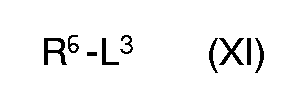
- the carbamic acid derivative (I) wherein R 5 is a hydrogen atom and Z is a sulfur atom, which is representable by the formula (IX) wherein R 1 , R 2 , R 3 , R 4 , R 6 , X, Y, I and m are each as defined above, can be produced by reacting a thiocarbamic acid compound of the formula (X) wherein R 1 , R 2 , R 3 , R 4 , X, Y, I and m are each as defined above and M 2 ⁇ is an alkali metal ion or a quaternary ammonium ion with a reactive alkane of the formula (XI)
- the reaction is normally effected in an inert solvent at a temperature of from about -20 ° C to the boiling point of the inert solvent, preferably from -5 ° C to the boiling point of the inert solvent.
- the proportion of the thiocarbamic acid compound (X) and the reactive alkane (XI) to be used for the reaction may be optional, but it is normally preferred to be in a nearly equal molar ratio.
- the inert solvent which are lower alcohols (e.g. methanol, ethanol, propanol, isopropanol, tert-butanol), ketones (e.g. acetone, methyl ethyl ketone), hydrocarbons (e.g. hexane, benzene, toluene), ethers (e.g. diethyl ether, diisopropyl ether, tetrahydrofuran, dioxane), polar solvents (e.g.
- halogenated hydrocarbons e.g. dichloromethane, chloroform, 1,2-dichloroethane, chlorobenzene
- nitriles e.g. acetonitrile
- nitro compounds e.g. nitromethane
- water or mixtures thereof water or mixtures thereof.
- ammonium salts such as triethylbenzylammonium chloride may be added to the reaction mixture as a catalyst.
- the product may further be purified by chromatography, distillation, recystallization or the like.
- the reaction is ordinarily performed in an inert solvent in the presence of a base at a temperature of from about -10°C to the boiling point of the inert solvent.
- the proportion of the reagents, i.e. the carbamic acid compound (XIII), the reactive alkane (XIV) and the base, to be used for the reaction may be optional.
- the amounts of the reactive alkane (XIV) and the base may be respectively from about 1 to 2 moles and from about 0.9 to 20 moles to one mole of the carbamic acid compound (XIII).
- the inert solvent are ketones (e.g. acetone, methyl ethyl ketone), hydrocarbons (e.g. hexane, benzene, toluene), ethers (e.g.
- the base are alkali metal carbonates (e.g. potassium carbonate), alkali metal hydrides (e.g. sodium hydride), organic bases (e.g. sodium methoxide, sodium ethoxide, triethylamine, pyridine), etc.
- the product may further be purified by chromatography, distillation, recystallization or the like.
- the carbamic acid derivatives (I) of the invention thus produced have optical isomers due to some asymmetric carbon atoms therein and are usually obtained in a mixture of those optical isomers. Such mixture may be separated into each optical isomer by application of an appropriate separation procedure thereto. These optical isomers and their mixtures at any mixing ration fall within the scope of the invention.
- Some of the starting compounds in the above processes i.e. the acid halide (IV), the (thio)alcohol (VI), the reactive alkane (VIII), the reactive alkane (XI) and the reactive alkane (XIV), are available on the commercial market or can be readily produced from appropriate commercial products by a conventional procedure, for instance, as described in J. Prakt. Chem., 21, 124 (1880).
- Other starting compounds i.e. the amine compound (III), the isocyanate compound (V), the (thio)phenol compound (VII) and the thiocarbamic acid compound (X) may be prepared, for instance, by the chemical conversions as shown in Reaction Schemes 1 and 2.
- R 1 , R 2 , R 3 , R 4 , X, Y, I, m and M 2 ⁇ are each as defined above and M 1' is an alkali metal atom.
- R 1 , R 2 , R 3 , R 4 , X, Y, I and m are each as defined above.
- the (thio)phenol compound (VII) wherein M 1 is a hydrogen atom may be also produced according to the chemical conversions as shown in Reaction scheme 3.
- R 1 , R 2 , R 3 , X, I and m are each as defined above.
- each reaction may be carried out by a per se conventional procedure.
- the (thio)phenol compound (VII) wherein R 3 is a chlorine atom, Y is an oxygen atom and M 1 is a hydrogen atom is produced by reacting the corresponding non-chlorinated compound with a chlorinating agent, optionally in an inert solvent.
- the molar proportion of the starting non-chlorinated compound and the chlorinating agent to be used for the reaction is not limitative, but usually the chlorinating agent is used in nearly an equvalent molar amount or somewhat an excessive amount.
- the chlorinating agent are chlorine, tert-butyl- hypochlorous acid, sulfuryl chloride, etc.
- the inert solvent are dichloromethane, dichloroethane, carbon tetrachloride, benzene, acetic acid, etc.
- the chlorinating agent is itself available as a reaction medium when it is in liquid.
- the reaction temperature is usually from about -80 °C to the refluxing temperature of the reaction system, preferably from about -20 °C to the refluxing temperature of the reaction system.
- post-treatment may follow in a per se conventional manner such as extraction with an organic solvent and concentration.
- the product may further be purified by chromatography, distillation, recrystallization, etc.
- halogenation such as fluorination or bromination and alkylation such as methylation may be carried out by a per se conventional procedure as disclosed in Tetrahedron Lett., 27, 4465 (1986), J. Org. Chem., 32, 2358 (1967), Tetrahedron Lett., 899 (1974), etc.
- Said non-chlorinated compound used as the starting material in the above reaction may be produced by various procedures, of which some examples are shown in Reaction Scheme 4. wherein Ha is a halogen atom and R 1 , R 2 , I and m are each as defined above.
- the carbamic acid derivatives (I) are particularly effective in controlling those belonging to Hemiptera. They exhibit a noticeable insecticidal activity especially against planthoppers and leafhoppers in a field of rice plant.
- the carbamic acid derivatives (I) of the invention may be used as such, i.e. without admixing with any other component.
- they are normally admixed with any additive(s) as conventionally used in the related art field to make insecticidal compositions. They may be thus admixed with solid carriers, liquid carriers, gaseous carriers, food substances, etc.
- the mixtures may be further supplemented with surfactants and/or other adjuvants to make insecticidal compositions in forms such as oil sprays, emulsifiable concentrates, wettable powders, flowable concentrates (e.g.
- water-based suspension formulations water-based emulsion formulations
- granules dusts, aerosols
- heat smoking formulations e.g. self-burning type smoking formulations, chemical reaction type smoking formulations, porous ceramic plate type smoking formulations
- ULV formulations poison baits, etc.
- the insecticidal composition of the invention comprises the carbamic acid derivative(s) (I) usually in a concentration of about 0.001 to 95 % by weight.
- the solid carrier used for making the insecticidal composition examples include fine powders or granules, etc. of clays (e.g. kaolin clay, diatomaceous earth, synthetic hydrated silicon dioxide, bentonite, Fubasami clay, terra alba, etc.), talc, ceramics, other inorganic minerals (e.g. sericite, quartz, sulfur, activated carbon, calcium carbonate, hydrated silica, etc.), chemical fertilizers (e.g. ammonium sulfate, ammonium phosphate, ammonium nitrate, urea, ammonium chloride, etc.), etc.
- the liquid carrier examples include water, alcohols (e.g. methanol, ethanol, etc.), ketones (e.g.
- acetone, methyl ethyl ketone, etc. aromatic hydrocarbons (e.g. benzene, toluene, xylene, ethylbenzene, methylnaphthalene, etc.), aliphatic hydrocarbons (e.g. hexane, cyclohexane, kerosene, gas oil, etc.), esters (e.g. ethyl acetate, butyl acetate, etc.), nitriles (e.g. acetonitrile, isobutyronitrile, etc.), ethers (e.g. diisopropyl ether, dioxane, etc.), acid amides (e.g.
- N,N-dimethylformamide, N,N-dimethylacetamide, etc. halogenated hydrocarbons (e.g. dichloromethane, trichloroethane, carbon tetrachloride, etc.), dimethylsulfoxide, vegetable oils (e.g. soybean oil, cotton seed oil), etc.
- gaseous carrier i.e. propellant
- freon gas butane gas
- LPG liquefied petroleum gas
- dimethyl ether carbon dioxide, etc.
- surfactant examples include alkyl sulfates, alkyl sulfonates, alkylaryl sulfonates, alkyl aryl ethers and polyoxyethylene derivatives thereof, polyethylene glycol ether, polyvalent alcohol esters, sugar alcohol derivatives, etc.
- polysaccharides e.g. starch powders, gum arabic, cellulose derivatives, alginic acid, etc.
- lignin derivatives e.g. starch powders, gum arabic, cellulose derivatives, alginic acid, etc.
- bentonite lignin derivatives
- sugars e.g. polyvinyl alcohol, polyvinylpyrrolidone, polyacrylic acid, etc.
- the stabilizer examples include PAP (acidic isopropyl phosphate), BHT (2,6-di-tert-butyl-4-methylphenol), BHA (mixture of 2-tert-butyl-4-methoxyphenol and 3-tert- butyl-4-methoxyphenol), vegetable oils, mineral oils, surfactants, fatty acids or esters thereof, and the like.
- PAP acidic isopropyl phosphate
- BHT 2,6-di-tert-butyl-4-methylphenol
- BHA mixture of 2-tert-butyl-4-methoxyphenol and 3-tert- butyl-4-methoxyphenol
- vegetable oils mineral oils
- surfactants fatty acids or esters thereof, and the like.
- the base material for self-burning type smoking formulations includes, for example, heat-generating agents such as nitrates, nitrites, guanidine salts, potassium chlorate, nitrocellulose, ethyl cellulose, wood powders, etc.; pyrolysis-promoting agents such as alkali metal salts, alkaline earth metal salts, dichromates, chromates, etc.; oxygen-supplying agents such as potassium nitrate, etc.; burning-supporting agents such s melamine, wheat starch, etc.; extenders such as diatomaceous earth, etc.; and binders such as synthetic pastes, etc.
- heat-generating agents such as nitrates, nitrites, guanidine salts, potassium chlorate, nitrocellulose, ethyl cellulose, wood powders, etc.
- pyrolysis-promoting agents such as alkali metal salts, alkaline earth metal salts, dichromates, chromates, etc.
- oxygen-supplying agents
- the base material for chemical reaction type smoking formulations includes, for example, heat-generating agents such as sulfides, polysulfides, hydrosulfides or salt hydrates of alkali metals, calcium oxide, etc.; catalyzing agents such as carbonaceous substances, iron carbide, activated clay, etc.; organic foaming agents such as azodicarbonamide, benzenesulfonyl hydrazide, dinitrosopentamethylenetetramine, polystyrene, polyurethane, etc.; fillers such as natural fiber pieces, synthetic fiber pieces, etc.
- heat-generating agents such as sulfides, polysulfides, hydrosulfides or salt hydrates of alkali metals, calcium oxide, etc.
- catalyzing agents such as carbonaceous substances, iron carbide, activated clay, etc.
- organic foaming agents such as azodicarbonamide, benzenesulfonyl hydrazide, dinitrosopentamethylenet
- the base material for poison baits there are, for example, food components such as crop powders, essential vegetable oil, sugars, crystalline cellulose, etc.; anti-oxidants such as dibutylhydroxytoluene, nordihydroguaiaretic acid, etc.; preservatives such as dehydroacetic acid, etc.; mis-food preventing agents such as red pepper powders, etc.; incentive flavor such as cheese flavor, onion flavor, etc.
- food components such as crop powders, essential vegetable oil, sugars, crystalline cellulose, etc.
- anti-oxidants such as dibutylhydroxytoluene, nordihydroguaiaretic acid, etc.
- preservatives such as dehydroacetic acid, etc.
- mis-food preventing agents such as red pepper powders, etc.
- incentive flavor such as cheese flavor, onion flavor, etc.
- the flowable concentrates are generally obtained by finely dispersing about 1 to 75 % of the active ingredient into water containing about 0.5 to 15 % of a dispersing agent, about 0.1 to 10 % of a suspending agent such as protective colloids (e.g. gelatin, casein, gum arabic, cellulose ethers, polyvinyl alcohols, etc) and thixotropic property- giving compounds (e.g. bentonite, aluminum magnesium silicate, xanthane gum, polyacrylic acid, etc.) and about 0 to 10 % of other auxiliary agent(s) (e.g.
- a suspending agent such as protective colloids (e.g. gelatin, casein, gum arabic, cellulose ethers, polyvinyl alcohols, etc) and thixotropic property- giving compounds (e.g. bentonite, aluminum magnesium silicate, xanthane gum, polyacrylic acid, etc.) and about 0 to 10 % of other auxiliary agent(s) (e.g
- defoaming agents anticorrosives, stabilizers, spreading agents, penetration auxiliaries, antifreezing agents, antibacterial agents, antimolding agents. It is also possible to obtain oil-based suspension formulations by replacing water by an oil which hardly dissolves the active compound.
- formulations may be used as they are or after diluting with water, etc.
- the formulations may be used as admixture with other insecticides, nematocides, acaricides, fungicides, bacteriocides, herbicides, plant growth controllers, synergistic agents, fertilizers, soil conditioners, animal food, etc., or may also be used simultaneously with them, without mixing therewith.
- the dosage of the active ingredient may be generally from about 0.001 to 500 grams, preparably from about 0.1 to 500 grams, per 10 ares.
- the composition is normally diluted with water and applied in a concentration of from about 0.0001 to 1,000 ppm. Granules, dusts, etc. may be used as such.
- composition in the form of emulsifiable concentrates, wettable powders or flowable concentrates, etc. is used as a dilution with water in a concentration of from about 0.0001 to 10,000 ppm. Oils, aerosols, fumigants, ULV formulations, poison baits, etc. can be used as such.
- doses and concentrations may vary depending on kind of formulations, timing for application, place applied, method for application, kind and species of insects, condition of damages, etc. and may be increased or decreased, irrespective of the ranges set forth above.
- the carbamic acid derivatives (I) may be employed in conjuction with other insecticides and/or acaricides to enhance their insecticidal and/or pesticidal activity.
- examples of the other insecticides and/or acaricides include organophosphorus compounds (e.g.
- fenitrothion O,O-dimethyl O-(3-methyl-4-nitrophenyl)phosphorothioate
- fenthion O,O-dimethyl O-[3-methyl-4-(methylthio)phenyl]phosphorothioate
- diazinon O,O-diethyl-O-(2-isopropyl-6-methylpyrimidin-4-yl)phosphorothioate
- chlorpyrifos (0,0-diethy!-0-(3,5,6-trichloro-2-pyridyl)phosphorothioate
- acephate O,S-dimethyl acetylphosphoramidothioate
- methidathion S-2,3-dihydro-5-methoxy-2-oxo-1,3,4-thiadiazol-3-ylmethyl O,O-dimethylphosphorodithioate
- disulfoton O,O-diethyl S-2-ethylthioethy
- BPMC (2-sec-butylphenyl methylcarbamate), benfuracarb (ethyl N-[2,3-dihydro-2,2-dimethylbenzofuran-7-yloxycarbonyl(methyl)aminothio]-N-isopropyl- beta-alaninate), propoxur (2-isopropoxyphenyl N-methylcarbamate), carbosulfan (2,3-dihydro-2,2-dimethyl-7-benzo[b]furanyl N-methylcarbamate), carbaryl (1-naphthyl-N-methylcarbamate), methomyl (S-methyl-N-[-(methylcarbamoyl)oxy]thioacetimidate), ethiofencarb (2-(ethylthiomethyl)phenyl methylcarbamate), aldicarb (2-methyl-2-(methylthio)propionaldehyde O-methylcarbamoyloxime),Oxamyl (N
- buprofezin (2-tert-butylimino-3-isopropyl-5-phenyl-1,3,5-triazin-4-one), etc.
- nitroimidazolidine derivatives e.g. imidacloprid (1-((6-chloro-3-pyridylmethyl)-N-nitroimidazolidin-2-ylideneamine), etc.
- nereistoxin derivatives e.g.
- cartap S,S'-(2-dimethylaminotrimethylene) bis-(thiocarbamate), thiocyclam (N,N-dimethyl-1,2,3-trithian-5-ylamine), bensultap (S,S'-2-dimethylaminotrimethylene di(benzenethiosulphonate), etc.
- halogenated hydrocarbons e.g.
- chlorfluazuron (1-[3,5-dichloro-4-(3-chloro-5-trifluoromethylpyridin-2-yloxy)phenyl]-3-(2,6-difluorobenzoyl)urea), teflubenzuron (1-(3,5-dichloro-2,4-difluorophenyl)-3-(2,6-difluorobenzoyl)urea), flufenoxuron (1-[4-(2-chloro-4-trifluoromethyl- phenoxy)-2-fluorophenyl]-3-(2,6-difluorobenzoyl)urea, etc.); formamidine derivatives (e.g.
- amitraz N,N'-[-(methylimino)dimethylidyne] di-2,4-xylidine
- chlordimeform N'-(4-chloro-2-methylphenyl)-N,N-dimethyl- methanimidamide, etc.
- a propellant liquefied petroleum gas
- a propellant liquefied petroleum gas
Landscapes
- Chemical & Material Sciences (AREA)
- Organic Chemistry (AREA)
- Life Sciences & Earth Sciences (AREA)
- Health & Medical Sciences (AREA)
- Pest Control & Pesticides (AREA)
- Plant Pathology (AREA)
- Agronomy & Crop Science (AREA)
- Engineering & Computer Science (AREA)
- Dentistry (AREA)
- General Health & Medical Sciences (AREA)
- Wood Science & Technology (AREA)
- Zoology (AREA)
- Environmental Sciences (AREA)
- Organic Low-Molecular-Weight Compounds And Preparation Thereof (AREA)
- Agricultural Chemicals And Associated Chemicals (AREA)
Claims (16)



dans laquelle R5' représente ce qui est défini dans la revendication 1 et L4 représente un atome d'halogène, pour obtenir le dérivé d'acide carbamique (I) pour lequel R5 est n'importe quel radical autre qu'un atome d'hydrogène.
Applications Claiming Priority (2)
| Application Number | Priority Date | Filing Date | Title |
|---|---|---|---|
| JP149017/90 | 1990-06-06 | ||
| JP14901790 | 1990-06-06 |
Publications (2)
| Publication Number | Publication Date |
|---|---|
| EP0460472A1 EP0460472A1 (fr) | 1991-12-11 |
| EP0460472B1 true EP0460472B1 (fr) | 1995-03-08 |
Family
ID=15465854
Family Applications (1)
| Application Number | Title | Priority Date | Filing Date |
|---|---|---|---|
| EP91108484A Expired - Lifetime EP0460472B1 (fr) | 1990-06-06 | 1991-05-24 | Dérivés de l'acide carbamic, leur préparation et utilisation |
Country Status (10)
| Country | Link |
|---|---|
| EP (1) | EP0460472B1 (fr) |
| KR (1) | KR920000713A (fr) |
| CN (1) | CN1025675C (fr) |
| AU (1) | AU636983B2 (fr) |
| BR (1) | BR9102122A (fr) |
| CA (1) | CA2043220A1 (fr) |
| DE (1) | DE69107902T2 (fr) |
| ES (1) | ES2072480T3 (fr) |
| MY (1) | MY109847A (fr) |
| ZA (1) | ZA913759B (fr) |
Families Citing this family (2)
| Publication number | Priority date | Publication date | Assignee | Title |
|---|---|---|---|---|
| TW242109B (fr) * | 1992-08-20 | 1995-03-01 | Ciba Geigy | |
| CN116602309A (zh) * | 2023-05-31 | 2023-08-18 | 河南农王实业有限公司 | 一种含苯氧威和有机磷农药的农用组合物 |
Family Cites Families (4)
| Publication number | Priority date | Publication date | Assignee | Title |
|---|---|---|---|---|
| CA1137506A (fr) * | 1978-03-17 | 1982-12-14 | Ulf Fischer | Derives d'acide carbamique |
| NL8104076A (nl) * | 1980-09-23 | 1982-04-16 | Hoffmann La Roche | Carbaminezuurderivaten. |
| IL94016A0 (en) * | 1989-04-14 | 1991-01-31 | Ciba Geigy | Sulfenylated carbamic esters |
| EP0395582A3 (fr) * | 1989-04-27 | 1991-01-09 | Ciba-Geigy Ag | Bisacyléthylamines |
-
1991
- 1991-05-17 ZA ZA913759A patent/ZA913759B/xx unknown
- 1991-05-23 MY MYPI91000870A patent/MY109847A/en unknown
- 1991-05-24 BR BR919102122A patent/BR9102122A/pt unknown
- 1991-05-24 DE DE69107902T patent/DE69107902T2/de not_active Expired - Fee Related
- 1991-05-24 CA CA002043220A patent/CA2043220A1/fr not_active Abandoned
- 1991-05-24 CN CN91102880A patent/CN1025675C/zh not_active Expired - Fee Related
- 1991-05-24 ES ES91108484T patent/ES2072480T3/es not_active Expired - Lifetime
- 1991-05-24 AU AU77296/91A patent/AU636983B2/en not_active Ceased
- 1991-05-24 KR KR1019910008512A patent/KR920000713A/ko not_active Ceased
- 1991-05-24 EP EP91108484A patent/EP0460472B1/fr not_active Expired - Lifetime
Also Published As
| Publication number | Publication date |
|---|---|
| KR920000713A (ko) | 1992-01-29 |
| CA2043220A1 (fr) | 1991-12-07 |
| ZA913759B (en) | 1992-02-26 |
| AU636983B2 (en) | 1993-05-13 |
| MY109847A (en) | 1997-08-30 |
| DE69107902T2 (de) | 1995-07-27 |
| BR9102122A (pt) | 1991-12-24 |
| EP0460472A1 (fr) | 1991-12-11 |
| AU7729691A (en) | 1991-12-12 |
| DE69107902D1 (de) | 1995-04-13 |
| CN1025675C (zh) | 1994-08-17 |
| ES2072480T3 (es) | 1995-07-16 |
| CN1057048A (zh) | 1991-12-18 |
Similar Documents
| Publication | Publication Date | Title |
|---|---|---|
| AU633436B1 (en) | Pyridine derivatives, their production processes and their compounds for control of insect pests | |
| EP0754683B1 (fr) | Compose d'ether, son utilisation et intermediaire pour l'obtention de ce compose | |
| EP0656351B1 (fr) | Dérivés de dithiocarbonimide comme fongicides, insecticides et acaricides | |
| EP0484688B1 (fr) | Composés aromatiques, procédé pour leur production et leurs compositions pour la lutte contre les insectes nuisibles | |
| US5346920A (en) | Carbamic acid derivatives, and their production and use | |
| EP0460472B1 (fr) | Dérivés de l'acide carbamic, leur préparation et utilisation | |
| EP0504812B1 (fr) | Composés aromatiques, procédés pour leur préparation et leurs compositions comme insecticides | |
| US5252610A (en) | Aromatic compounds and their compositions for the control of insect pests | |
| US5243087A (en) | Pyridine derivatives, their production processes and their compositions for the control of insect pests | |
| US5137907A (en) | 1-(3-(4-(3,5-difluorophenoxy) phenoxy) propyl) - pyrazole, and its production and use | |
| US5356930A (en) | Amide derivatives, their production processes and their compositions for the control of insect pests | |
| EP0488236B1 (fr) | Composés aromatiques, procédés pour leur préparation et leurs compositions pour combattre les insectes | |
| US5232949A (en) | 3-(4-substituted-2-chlorophenoxy)propionaldoxime ethyl ether compounds, their production processes and their compositions for the control of insect pests | |
| US5883262A (en) | Ether compounds and their use | |
| US5262441A (en) | Aromatic compounds, their production processes and their compositions for the control of insect pests |
Legal Events
| Date | Code | Title | Description |
|---|---|---|---|
| PUAI | Public reference made under article 153(3) epc to a published international application that has entered the european phase |
Free format text: ORIGINAL CODE: 0009012 |
|
| AK | Designated contracting states |
Kind code of ref document: A1 Designated state(s): CH DE ES FR GB IT LI NL |
|
| 17P | Request for examination filed |
Effective date: 19920311 |
|
| 17Q | First examination report despatched |
Effective date: 19931228 |
|
| GRAA | (expected) grant |
Free format text: ORIGINAL CODE: 0009210 |
|
| AK | Designated contracting states |
Kind code of ref document: B1 Designated state(s): CH DE ES FR GB IT LI NL |
|
| ITF | It: translation for a ep patent filed | ||
| REF | Corresponds to: |
Ref document number: 69107902 Country of ref document: DE Date of ref document: 19950413 |
|
| PGFP | Annual fee paid to national office [announced via postgrant information from national office to epo] |
Ref country code: ES Payment date: 19950516 Year of fee payment: 5 |
|
| PGFP | Annual fee paid to national office [announced via postgrant information from national office to epo] |
Ref country code: CH Payment date: 19950524 Year of fee payment: 5 |
|
| PGFP | Annual fee paid to national office [announced via postgrant information from national office to epo] |
Ref country code: NL Payment date: 19950531 Year of fee payment: 5 Ref country code: FR Payment date: 19950531 Year of fee payment: 5 |
|
| PG25 | Lapsed in a contracting state [announced via postgrant information from national office to epo] |
Ref country code: GB Effective date: 19950608 |
|
| ET | Fr: translation filed | ||
| REG | Reference to a national code |
Ref country code: ES Ref legal event code: FG2A Ref document number: 2072480 Country of ref document: ES Kind code of ref document: T3 |
|
| PGFP | Annual fee paid to national office [announced via postgrant information from national office to epo] |
Ref country code: DE Payment date: 19950728 Year of fee payment: 5 |
|
| PLBE | No opposition filed within time limit |
Free format text: ORIGINAL CODE: 0009261 |
|
| STAA | Information on the status of an ep patent application or granted ep patent |
Free format text: STATUS: NO OPPOSITION FILED WITHIN TIME LIMIT |
|
| GBPC | Gb: european patent ceased through non-payment of renewal fee |
Effective date: 19950608 |
|
| 26N | No opposition filed | ||
| PG25 | Lapsed in a contracting state [announced via postgrant information from national office to epo] |
Ref country code: ES Free format text: LAPSE BECAUSE OF NON-PAYMENT OF DUE FEES Effective date: 19960525 |
|
| PG25 | Lapsed in a contracting state [announced via postgrant information from national office to epo] |
Ref country code: LI Effective date: 19960531 Ref country code: CH Effective date: 19960531 |
|
| PG25 | Lapsed in a contracting state [announced via postgrant information from national office to epo] |
Ref country code: NL Effective date: 19961201 |
|
| REG | Reference to a national code |
Ref country code: CH Ref legal event code: PL |
|
| PG25 | Lapsed in a contracting state [announced via postgrant information from national office to epo] |
Ref country code: FR Effective date: 19970131 |
|
| PG25 | Lapsed in a contracting state [announced via postgrant information from national office to epo] |
Ref country code: DE Effective date: 19970201 |
|
| NLV4 | Nl: lapsed or anulled due to non-payment of the annual fee |
Effective date: 19961201 |
|
| REG | Reference to a national code |
Ref country code: FR Ref legal event code: ST |
|
| REG | Reference to a national code |
Ref country code: ES Ref legal event code: FD2A Effective date: 19990503 |
|
| PG25 | Lapsed in a contracting state [announced via postgrant information from national office to epo] |
Ref country code: IT Free format text: LAPSE BECAUSE OF NON-PAYMENT OF DUE FEES;WARNING: LAPSES OF ITALIAN PATENTS WITH EFFECTIVE DATE BEFORE 2007 MAY HAVE OCCURRED AT ANY TIME BEFORE 2007. THE CORRECT EFFECTIVE DATE MAY BE DIFFERENT FROM THE ONE RECORDED. Effective date: 20050524 |