EP0460700A1 - Korrosionsbeständiger Schutzüberzug auf Aluminiumsubstrat oder Oberfläche und Verfahren zur Herstellung derselben - Google Patents
Korrosionsbeständiger Schutzüberzug auf Aluminiumsubstrat oder Oberfläche und Verfahren zur Herstellung derselben Download PDFInfo
- Publication number
- EP0460700A1 EP0460700A1 EP91109362A EP91109362A EP0460700A1 EP 0460700 A1 EP0460700 A1 EP 0460700A1 EP 91109362 A EP91109362 A EP 91109362A EP 91109362 A EP91109362 A EP 91109362A EP 0460700 A1 EP0460700 A1 EP 0460700A1
- Authority
- EP
- European Patent Office
- Prior art keywords
- protective coating
- aluminum
- corrosion
- high purity
- resistant protective
- Prior art date
- Legal status (The legal status is an assumption and is not a legal conclusion. Google has not performed a legal analysis and makes no representation as to the accuracy of the status listed.)
- Granted
Links
Images
Classifications
-
- C—CHEMISTRY; METALLURGY
- C23—COATING METALLIC MATERIAL; COATING MATERIAL WITH METALLIC MATERIAL; CHEMICAL SURFACE TREATMENT; DIFFUSION TREATMENT OF METALLIC MATERIAL; COATING BY VACUUM EVAPORATION, BY SPUTTERING, BY ION IMPLANTATION OR BY CHEMICAL VAPOUR DEPOSITION, IN GENERAL; INHIBITING CORROSION OF METALLIC MATERIAL OR INCRUSTATION IN GENERAL
- C23C—COATING METALLIC MATERIAL; COATING MATERIAL WITH METALLIC MATERIAL; SURFACE TREATMENT OF METALLIC MATERIAL BY DIFFUSION INTO THE SURFACE, BY CHEMICAL CONVERSION OR SUBSTITUTION; COATING BY VACUUM EVAPORATION, BY SPUTTERING, BY ION IMPLANTATION OR BY CHEMICAL VAPOUR DEPOSITION, IN GENERAL
- C23C8/00—Solid state diffusion of only non-metal elements into metallic material surfaces; Chemical surface treatment of metallic material by reaction of the surface with a reactive gas, leaving reaction products of surface material in the coating, e.g. conversion coatings, passivation of metals
- C23C8/06—Solid state diffusion of only non-metal elements into metallic material surfaces; Chemical surface treatment of metallic material by reaction of the surface with a reactive gas, leaving reaction products of surface material in the coating, e.g. conversion coatings, passivation of metals using gases
- C23C8/34—Solid state diffusion of only non-metal elements into metallic material surfaces; Chemical surface treatment of metallic material by reaction of the surface with a reactive gas, leaving reaction products of surface material in the coating, e.g. conversion coatings, passivation of metals using gases more than one element being applied in more than one step
-
- C—CHEMISTRY; METALLURGY
- C23—COATING METALLIC MATERIAL; COATING MATERIAL WITH METALLIC MATERIAL; CHEMICAL SURFACE TREATMENT; DIFFUSION TREATMENT OF METALLIC MATERIAL; COATING BY VACUUM EVAPORATION, BY SPUTTERING, BY ION IMPLANTATION OR BY CHEMICAL VAPOUR DEPOSITION, IN GENERAL; INHIBITING CORROSION OF METALLIC MATERIAL OR INCRUSTATION IN GENERAL
- C23C—COATING METALLIC MATERIAL; COATING MATERIAL WITH METALLIC MATERIAL; SURFACE TREATMENT OF METALLIC MATERIAL BY DIFFUSION INTO THE SURFACE, BY CHEMICAL CONVERSION OR SUBSTITUTION; COATING BY VACUUM EVAPORATION, BY SPUTTERING, BY ION IMPLANTATION OR BY CHEMICAL VAPOUR DEPOSITION, IN GENERAL
- C23C8/00—Solid state diffusion of only non-metal elements into metallic material surfaces; Chemical surface treatment of metallic material by reaction of the surface with a reactive gas, leaving reaction products of surface material in the coating, e.g. conversion coatings, passivation of metals
- C23C8/80—After-treatment
-
- C—CHEMISTRY; METALLURGY
- C25—ELECTROLYTIC OR ELECTROPHORETIC PROCESSES; APPARATUS THEREFOR
- C25D—PROCESSES FOR THE ELECTROLYTIC OR ELECTROPHORETIC PRODUCTION OF COATINGS; ELECTROFORMING; APPARATUS THEREFOR
- C25D11/00—Electrolytic coating by surface reaction, i.e. forming conversion layers
- C25D11/02—Anodisation
- C25D11/04—Anodisation of aluminium or alloys based thereon
- C25D11/18—After-treatment, e.g. pore-sealing
Definitions
- This invention relates to a corrosion resistant protective coating formed on an aluminum substrate.
- the chamber walls of processing apparatus used in the production of integrated circuit structures on semiconductor wafers such as, for example, chemical vapor deposition (CVD) chambers and/or etching chambers, e.g. reactive ion etching chambers, are subject to attack by the chemicals used in such deposition and etching processes.
- CVD chemical vapor deposition
- etching chambers e.g. reactive ion etching chambers
- the substitution of an ordinary stainless steel material for aluminum in the construction of an etching or deposition chamber may result in a cost increase of about four times the cost of aluminum, while the use of a highly polished and air oxidized stainless steel may be as much as four times the cost of ordinary stainless steel; i.e., the substitution of such highly polished and specially processed stainless steels for conventional anodized aluminum can result in an increase of costs of over fifteen times what the cost would be to use aluminum.
- the invention provides a high purity protective coating formed on an aluminum substrate or surface by contacting a high purity aluminum oxide coating with one or more fluorine-containing gases to form a coated aluminum substrate capable for use in processing apparatus used to form integrated circuit structures on semi-conductor wafers.
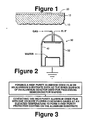
- Figure 1 is a fragmentary cross-sectional view of an aluminum substrate having a corrosion-resistant protective coating formed on the surface of the substrate.
- Figure 2 is a fragmentary vertical cross-sectional view of an aluminum vacuum chamber for processing semiconductor wafers having a high purity protective coating formed on the inner aluminum surfaces of the chamber.
- Figure 3 is a flow sheet illustrating the process of the invention.
- the invention in its broadest aspects, comprises an aluminum surface, such as surface 12 on aluminum substrate 10 shown in Figure 1, having formed thereon a corrosion-resistant protective coating 20 capable of withstanding corrosion attack by process halogen gases and plasmas.
- the protective coating is formed on the aluminum substrate by first forming an aluminum oxide layer on the aluminum substrate and then contacting the aluminum oxide layer with one or more fluorine-containing gases to form the protective coating thereon.
- the invention comprises an aluminum chamber used in the processing of semiconductor wafers, such as aluminum reactor chamber 30 shown in Figure 2, having its inner surfaces 32 protected by a high purity corrosion-resistant protective coating 40 formed thereon capable of withstanding corrosion attack by the aforesaid process halogen gases and plasmas.
- the high purity protective coating is formed on the aluminum substrate by first forming a high purity aluminum oxide layer on the aluminum substrate and then contacting the high purity aluminum oxide layer with one or more high purity fluorine-containing gases to form the high purity protective coating of the invention thereon.
- high purity aluminum oxide is meant to define an aluminum oxide having a purity of at least 97 wt.%, preferably greater than 99 wt.%, and in particular having less than 3 wt.%, preferably less than 1 wt.%, of impurities such as, for example, sulfur, boron, and phosphorus and any other elements, including, in general, any other metals and metalloids (including silicon), which could interact with processing materials used in the formation of integrated circuit structures on semiconductor wafers to introduce undesirable impurities.
- impurities such as, for example, sulfur, boron, and phosphorus and any other elements, including, in general, any other metals and metalloids (including silicon), which could interact with processing materials used in the formation of integrated circuit structures on semiconductor wafers to introduce undesirable impurities.
- the aluminum substrate on which such a high purity aluminum oxide is to be formed should have a purity of at least about 99 wt.%, and preferably a purity of about 99.9 wt.%.
- aluminum oxide is intended to both fully dehydrated aluminum oxide, i.e., Al2O3 (alpha alumina), as well as hydrated forms of aluminum oxide, e.g., Al(OH)3 (bayerite) or AlO(OH) (boehmite).
- high purity protective coating is meant to define a high purity aluminum oxide, as defined above, which has been contacted with one or more fluorine-containing gases to form a coating which contains less than about 3 wt.%, and preferably less than about 1 wt.%, of elements other than aluminum, oxygen, hydrogen, and fluorine.
- concentrated halogen acid with respect to the concentrated aqueous halogen acids used to evaluate the corrosion resistance of the protective coating of the invention is meant a 35 wt.% or higher concentration of HCl or a 48 wt.% or higher concentration of HF.
- the corrosion-resistant protective coating of the invention it is necessary to contact an aluminum oxide film previously formed on the aluminum substrate with one or more fluorine-containing gases.
- the aluminum oxide film to be contacted by the one or more fluorine-containing gases should have a thickness of from at least about 0.1 micrometers (1000 Angstroms) up to about 20 micrometers (microns) prior to the contacting step. Thicker oxide films or layers can be used, but are not necessary to form the corrosion-resistant protective coating of the invention.
- the one or more fluorine-containing gases which will be used to contact the previously formed aluminum oxide layer on the aluminum substrate will comprise acid vapors or gases such as gaseous HF or F2, with or without inert carrier gases such as, for example, argon, or neon; or other carrier gases such as hydrogen, oxygen, air, or water vapor, e.g., steam.
- acid vapors or gases such as gaseous HF or F2
- inert carrier gases such as, for example, argon, or neon
- carrier gases such as hydrogen, oxygen, air, or water vapor, e.g., steam.
- fluorine-containing gases include NF3, CF4, CHF3, and C2F6.
- the reagents used in this step must also be of a sufficient purity so as to not introduce any impurities into the high purity aluminum oxide previously formed on the aluminum substrate. If the fluorine-containing gases, and other gaseous reagents used in this step have a purity of less than about 100 ppm impurities, i.e., have a purity of at least about 99.99 wt.% (usually at least semiconductor grade), the desired high purity of the protective coating, when such high purity is desired, will be preserved.
- the contacting step is preferably carried out in an enclosed reaction chamber, particularly when the high purity protective coating is being formed.
- the reaction area is well ventilated, it is within the scope of the invention to contact the aluminum oxide-coated aluminum substrate with one or more fluorine-containing gases in an open area, particularly when the purity of the resultant protective coating is not an issue.
- the aluminum reactor may already be preassembled in which case the oxidized aluminum substrates to be contacted may comprise the inner walls of the aluminum reactor.
- the aluminum reactor will then additionally serve as the containment vessel for the contacting step as well as providing a high purity environment for the contacting step.
- the contacting step may be carried out for a time period within a range of from about 30 minutes to about 120 minutes at a temperature which may range from about 375°C to about 500°C, and preferably from about 450°C to about 475°C.
- the amount of contact time needed to ensure formation of the protective coating of the invention will vary with the temperature and the concentration of the fluorine-containing gas. Longer periods of time than that specified, however, should not be used if reducing gases (such as H2) are present in the fluorine-containing gas to avoid damage to the underlying oxide layer.
- the coated aluminum substrate may be flushed with water or other non-reactive gases or liquids to remove any traces of the fluorine-containing gases.
- the contact step is carried out within a closed vessel, wherein the vessel walls comprise oxidized aluminum which has been contacted with the one or more fluorine-containing gases, for example, when forming the high purity protective coating, the reactor vessel may be flushed with non-reactive gases to remove the fluorine-containing gases from the reactor.
- the resulting protective coating on the aluminum substrate may then be examined by a number of analytical techniques such as, for example, Auger analysis, SIMS, ESCA LIMS, and EDX and will be found to have a fluorine concentration ranging from 3 to 18 wt.%, based on total weight of the coating.
- analytical techniques such as, for example, Auger analysis, SIMS, ESCA LIMS, and EDX and will be found to have a fluorine concentration ranging from 3 to 18 wt.%, based on total weight of the coating.
- a high purity aluminum oxide film or layer must first be formed on the aluminum substrate.
- the high purity aluminum oxide layer may be either a thermally formed layer or an anodically formed layer.
- the reagents used in forming the oxide layer should, preferably, be essentially free of impurities which might otherwise be incorporated into the aluminum oxide layer. Therefore, as previously defined with respect to the high purity aluminum oxide coating itself, the reagents used in forming the aluminum oxide coating should preferably have a purity of at least about 97 wt.%, preferably greater than 99 wt.%.
- the reagents should preferably have less than 3 wt.%, and more preferably less than 1 wt.%, of impurities such as, for example, sulfur, boron, and phosphorus and any other elements, including, in general, any other metals and metalloids (including silicon), which may be incorporated into the high purity coating and possibly interact with processing materials used in the formation of integrated circuit structures on semiconductor wafers to introduce undesirable impurities.
- impurities such as, for example, sulfur, boron, and phosphorus and any other elements, including, in general, any other metals and metalloids (including silicon), which may be incorporated into the high purity coating and possibly interact with processing materials used in the formation of integrated circuit structures on semiconductor wafers to introduce undesirable impurities.
- reagents which contain impurities that are introduced into the coating may be used in the practice of the invention, even when producing high purity coatings in accordance with the preferred embodiment if the impurity is of a type which may be easily removed from the surface of the coating.
- the impurity is of a type which may be easily removed from the surface of the coating.
- sulfuric acid is used as the electrolyte in forming an anodized aluminum oxide coating
- undesirable sulfur in the resultant coating may be removed by thoroughly rinsing the surface with deionized water containing a sufficient amount of nitric acid to adjust the pH to about 5.
- the nitrate ions apparently exchange with the sulfate ions in the coating and then, due to the solubility of the nitrate ions, are easily removed from the coating as well.
- the aluminum substrate is made the anode in an electrolytic cell wherein the electrolyte preferably comprises a compound which will not introduce any other elements into the aluminum oxide coating to be formed anodically on the aluminum substrate, as previously discussed.
- the electrolyte comprises a high purity inorganic acid such as nitric acid or a high purity organic acid such as a monocarboxylic acid, for example, formic acid (HCOOH), acetic acid (CH3COOH), propionic acid (C2H5COOH), butyric acid (C3H7COOH), valeric acid (C4H9COOH), palmitic acid (CH3(CH2)14COOH), and stearic acid (CH3(CH2)16COOH); or a dicarboxylic acid, for example, oxalic acid (COOH)2), malonic acid (CO2H(CH2)CO2H), succinic acid (CO2H(CH2)2CO2H), glutaric acid (CO2H(CH2)3CO2H), and adipic acid (CO2H(CH2)4CO2H).
- a monocarboxylic acid for example, formic acid (HCOOH), acetic acid (CH3COOH), propionic acid (C2H
- mineral acids such as sulfuric acid, phosphorus-containing acid, and boronic acid usually should be avoided, when forming a high purity aluminum oxide, because of their tendencies to include in the resulting anodically formed aluminum oxide traces of the respective elements, e.g., sulfur, phosphorus, boron, etc. from the acid electrolyte.
- mineral acid electrolytes may be used if such impurities can be subsequently removed from the surface of the resulting aluminum oxide coating, as previously discussed.
- the anodizing bath may be maintained at a temperature ranging from about 0°C up to about 30°C.
- the anodization should be carried out at a voltage within a range of from at least about 15 to about 45 volts D.C. to ensure formation of the desired minimum thickness of anodically formed aluminum oxide, as is well known to those skilled in the art. While conventional DC voltage is preferred, AC voltage may, in some instances, also be utilized.
- the anodizing process should be carried out for a time period sufficient to form the desired thickness of aluminum oxide on the aluminum substrate.
- the high purity aluminum oxide coating may also be formed on the aluminum substrate by a combination of thermal and anodic oxide formation, for example, by first anodically forming an oxide coating layer and then thermally oxidizing the anodically formed oxide coating.
- the aluminum oxide may be contacted, in accordance with the invention, with one or more fluorine-containing gases, as previously described above, to form the high purity corrosion-resistant protective coating of the invention on the aluminum substrate.
- the inner walls of an aluminum reactor suitable for use in the processing of semiconductor wafers were initially oxidized to form an aluminum oxide layer thereon by anodizing the aluminum reactor surfaces by immersing them in an electrolyte containing 15 wt.% sulfuric acid, with the balance deionized water.
- the electrolyte was maintained at a temperature of about 13°C while the aluminum was anodized for about 35 minutes to a final voltage of about 24 volts D.C. and a final current density of 22 amperes/ft.2.
- a gaseous mixture of 50 vol.% C2F6 and 50 vol.% O2 was then introduced into the reactor at a pressure of about 10 Torr.
- the gaseous mixture remained in contact with the reactor walls for about 1 hour while the reactor was maintained at a temperature of about 400°C.
- the reactor was then flushed with argon gas.
- coated pieces or samples of the coated reactor surfaces were tested with drops of aqueous concentrated (35 wt.%) hydrochloric acid and monitored for the evolution of gas signifying attack or reaction by the acid on the samples. No visible evolution of gas was noted for about 40 minutes.
- the reactor was then disassembled and the protective coating which had been formed on the inner walls was examined. No visible signs of corrosion attack on the protective surface were noted.
- the protective coating on the reactor wall was analyzed for impurities by Auger analysis and found to have less than 3 wt.% of elements other than Al, O, H, and F in the coating layer, indicating the high purity of the protective layer.
- the invention provides a corrosion-resistant protective coating for an aluminum substrate which is capable of protecting the aluminum substrate from corrosive attack by process halogen gases and plasmas.
- a high purity protective coating may be formed on an aluminum reactor wall suitable for use in the processing of semiconductor wafers in the construction of integrated circuit structures by first forming a high purity aluminum oxide film and then contacting this film with one or more high purity fluorine-containing gases to form a high purity corrosion-resistant protective film which will not introduce impurities into semiconductor wafer processes carried out in a reactor protected by such high purity coatings.
Landscapes
- Chemical & Material Sciences (AREA)
- Chemical Kinetics & Catalysis (AREA)
- Engineering & Computer Science (AREA)
- Materials Engineering (AREA)
- Metallurgy (AREA)
- Organic Chemistry (AREA)
- Mechanical Engineering (AREA)
- Electrochemistry (AREA)
- Chemical Vapour Deposition (AREA)
- Drying Of Semiconductors (AREA)
Applications Claiming Priority (4)
| Application Number | Priority Date | Filing Date | Title |
|---|---|---|---|
| US07/534,807 US5069938A (en) | 1990-06-07 | 1990-06-07 | Method of forming a corrosion-resistant protective coating on aluminum substrate |
| US534807 | 1990-06-07 | ||
| US534796 | 1990-06-07 | ||
| US07/534,796 US5192610A (en) | 1990-06-07 | 1990-06-07 | Corrosion-resistant protective coating on aluminum substrate and method of forming same |
Publications (2)
| Publication Number | Publication Date |
|---|---|
| EP0460700A1 true EP0460700A1 (de) | 1991-12-11 |
| EP0460700B1 EP0460700B1 (de) | 1997-04-16 |
Family
ID=27064592
Family Applications (2)
| Application Number | Title | Priority Date | Filing Date |
|---|---|---|---|
| EP19910109362 Expired - Lifetime EP0460700B1 (de) | 1990-06-07 | 1991-06-07 | Korrosionsbeständiger Schutzüberzug auf Aluminiumsubstrat oder Oberfläche und Verfahren zur Herstellung derselben |
| EP19910109363 Expired - Lifetime EP0460701B1 (de) | 1990-06-07 | 1991-06-07 | Verfahren zur Herstellung eines korrosionsbeständigen Schutzüberzugs auf Aluminiumsubstrat |
Family Applications After (1)
| Application Number | Title | Priority Date | Filing Date |
|---|---|---|---|
| EP19910109363 Expired - Lifetime EP0460701B1 (de) | 1990-06-07 | 1991-06-07 | Verfahren zur Herstellung eines korrosionsbeständigen Schutzüberzugs auf Aluminiumsubstrat |
Country Status (2)
| Country | Link |
|---|---|
| EP (2) | EP0460700B1 (de) |
| DE (2) | DE69128982T2 (de) |
Cited By (12)
| Publication number | Priority date | Publication date | Assignee | Title |
|---|---|---|---|---|
| EP0702098A1 (de) * | 1994-08-15 | 1996-03-20 | Applied Materials, Inc. | Korrosionsbeständiges Aluminiumbauteil für Vorrichtung zur Behandlung von Halbleitermaterialen |
| RU2122605C1 (ru) * | 1996-06-04 | 1998-11-27 | Самарский государственный аэрокосмический университет им.С.П.Королева | Способ наполнения анодных оксидных покрытий на алюминиевых сплавах |
| EP0902101A1 (de) * | 1997-09-12 | 1999-03-17 | Showa Denko Kabushiki Kaisha | Metallisches Material oder Film mit fluorierter Oberfläche und Fluorierungsverfahren |
| EP0760526A4 (de) * | 1994-05-17 | 2001-01-10 | Hitachi Ltd | Einrichtung und verfahren zur plasma-behandlung |
| EP1026281A3 (de) * | 1999-02-01 | 2001-02-14 | Ngk Insulators, Ltd. | Verfahren zur Herstellung eines korrosionsbeständigen Bauteils, und korrosionsbeständiges Bauteil |
| EP1118692A1 (de) * | 2000-01-18 | 2001-07-25 | Asm Japan K.K. | Remote-Plasma-Vorrichtung |
| US6280597B1 (en) | 1997-09-12 | 2001-08-28 | Showa Denko K.K. | Fluorinated metal having a fluorinated layer and process for its production |
| WO2003036216A1 (en) * | 2001-10-25 | 2003-05-01 | Showa Denko K.K. | Heat exchanger, method for fluorination of the heat exchanger or component members thereof, and method of manufacturing the heat exchanger |
| WO2003067634A1 (en) * | 2002-02-07 | 2003-08-14 | Applied Materials, Inc. | Article for use in a semiconductor processing chamber and method of fabricating the same |
| US7713886B2 (en) | 2004-10-28 | 2010-05-11 | Tokyo Electron Limited | Film forming apparatus, film forming method, program and storage medium |
| US12392040B2 (en) | 2019-12-30 | 2025-08-19 | Entegris, Inc. | Metal body having magnesium fluoride region formed therefrom |
| US12601050B2 (en) | 2023-07-27 | 2026-04-14 | Entegris, Inc. | Surface modified substrates and related methods |
Families Citing this family (8)
| Publication number | Priority date | Publication date | Assignee | Title |
|---|---|---|---|---|
| EP1120817B8 (de) * | 1991-03-26 | 2007-10-10 | Ngk Insulators, Ltd. | Verwendung eines korrosion beständigen Substratshalters |
| FR2730746B1 (fr) * | 1995-02-16 | 1997-04-30 | Fond Et Ateliers Du Belier | Procede de mouillage d'un insert en aluminium dans une piece moulee en aluminium |
| JP3689524B2 (ja) * | 1996-03-22 | 2005-08-31 | キヤノン株式会社 | 酸化アルミニウム膜及びその形成方法 |
| DE10028772B4 (de) * | 2000-06-07 | 2005-03-17 | Technische Universität Dresden | Aluminiumwerkstoff mit ultrahydrophober Oberfläche, Verfahren zu dessen Herstellung sowie Verwendung |
| DE102016102504A1 (de) | 2016-02-08 | 2017-08-10 | Salzgitter Flachstahl Gmbh | Aluminiumbasierte Beschichtung für Stahlbleche oder Stahlbänder und Verfahren zur Herstellung hierzu |
| DE102018101183A1 (de) * | 2017-10-17 | 2019-04-18 | Fraunhofer-Gesellschaft zur Förderung der angewandten Forschung e.V. | Passives elektrisches Bauteil mit Isolierschicht |
| US20200010946A1 (en) * | 2018-07-05 | 2020-01-09 | The Board Of Trustees Of The University Of Illinois | Ferrous structural component for use in fouling and corrosive environments, and method of making and using a ferrous structural component |
| CN113026010A (zh) * | 2021-01-29 | 2021-06-25 | 昆明理工大学 | 一种铝材环保型碱性钝化液 |
Citations (1)
| Publication number | Priority date | Publication date | Assignee | Title |
|---|---|---|---|---|
| US4111762A (en) * | 1975-01-31 | 1978-09-05 | Martin Marietta Corporation | Optically black coating and process for forming it |
-
1991
- 1991-06-07 EP EP19910109362 patent/EP0460700B1/de not_active Expired - Lifetime
- 1991-06-07 DE DE1991628982 patent/DE69128982T2/de not_active Expired - Fee Related
- 1991-06-07 EP EP19910109363 patent/EP0460701B1/de not_active Expired - Lifetime
- 1991-06-07 DE DE1991625651 patent/DE69125651T2/de not_active Expired - Fee Related
Patent Citations (1)
| Publication number | Priority date | Publication date | Assignee | Title |
|---|---|---|---|---|
| US4111762A (en) * | 1975-01-31 | 1978-09-05 | Martin Marietta Corporation | Optically black coating and process for forming it |
Non-Patent Citations (1)
| Title |
|---|
| PATENT ABSTRACTS OF JAPAN vol. 11, no. 317 (C-452)(2764) October 15, 1987 & JP-A-62 103 377 (SHOWA ALUM CORP ) May 13, 1987 * |
Cited By (18)
| Publication number | Priority date | Publication date | Assignee | Title |
|---|---|---|---|---|
| EP0760526A4 (de) * | 1994-05-17 | 2001-01-10 | Hitachi Ltd | Einrichtung und verfahren zur plasma-behandlung |
| US5756222A (en) * | 1994-08-15 | 1998-05-26 | Applied Materials, Inc. | Corrosion-resistant aluminum article for semiconductor processing equipment |
| US5811195A (en) * | 1994-08-15 | 1998-09-22 | Applied Materials, Inc. | Corrosion-resistant aluminum article for semiconductor processing equipment |
| EP0702098A1 (de) * | 1994-08-15 | 1996-03-20 | Applied Materials, Inc. | Korrosionsbeständiges Aluminiumbauteil für Vorrichtung zur Behandlung von Halbleitermaterialen |
| RU2122605C1 (ru) * | 1996-06-04 | 1998-11-27 | Самарский государственный аэрокосмический университет им.С.П.Королева | Способ наполнения анодных оксидных покрытий на алюминиевых сплавах |
| US6280597B1 (en) | 1997-09-12 | 2001-08-28 | Showa Denko K.K. | Fluorinated metal having a fluorinated layer and process for its production |
| EP0902101A1 (de) * | 1997-09-12 | 1999-03-17 | Showa Denko Kabushiki Kaisha | Metallisches Material oder Film mit fluorierter Oberfläche und Fluorierungsverfahren |
| EP1026281A3 (de) * | 1999-02-01 | 2001-02-14 | Ngk Insulators, Ltd. | Verfahren zur Herstellung eines korrosionsbeständigen Bauteils, und korrosionsbeständiges Bauteil |
| US6406799B1 (en) | 1999-02-01 | 2002-06-18 | Ngk Insulators, Ltd. | Method of producing anti-corrosion member and anti-corrosion member |
| EP1118692A1 (de) * | 2000-01-18 | 2001-07-25 | Asm Japan K.K. | Remote-Plasma-Vorrichtung |
| US6736147B2 (en) | 2000-01-18 | 2004-05-18 | Asm Japan K.K. | Semiconductor-processing device provided with a remote plasma source for self-cleaning |
| WO2003036216A1 (en) * | 2001-10-25 | 2003-05-01 | Showa Denko K.K. | Heat exchanger, method for fluorination of the heat exchanger or component members thereof, and method of manufacturing the heat exchanger |
| WO2003067634A1 (en) * | 2002-02-07 | 2003-08-14 | Applied Materials, Inc. | Article for use in a semiconductor processing chamber and method of fabricating the same |
| US6632325B2 (en) | 2002-02-07 | 2003-10-14 | Applied Materials, Inc. | Article for use in a semiconductor processing chamber and method of fabricating same |
| KR101012812B1 (ko) * | 2002-02-07 | 2011-02-08 | 어플라이드 머티어리얼스, 인코포레이티드 | 반도체 공정 챔버 내에서 사용하기 위한 부품 및 그것을제조하는 방법 |
| US7713886B2 (en) | 2004-10-28 | 2010-05-11 | Tokyo Electron Limited | Film forming apparatus, film forming method, program and storage medium |
| US12392040B2 (en) | 2019-12-30 | 2025-08-19 | Entegris, Inc. | Metal body having magnesium fluoride region formed therefrom |
| US12601050B2 (en) | 2023-07-27 | 2026-04-14 | Entegris, Inc. | Surface modified substrates and related methods |
Also Published As
| Publication number | Publication date |
|---|---|
| EP0460701B1 (de) | 1998-03-04 |
| DE69128982D1 (de) | 1998-04-09 |
| EP0460701A1 (de) | 1991-12-11 |
| DE69125651T2 (de) | 1997-09-04 |
| DE69125651D1 (de) | 1997-05-22 |
| EP0460700B1 (de) | 1997-04-16 |
| DE69128982T2 (de) | 1998-08-27 |
Similar Documents
| Publication | Publication Date | Title |
|---|---|---|
| US5069938A (en) | Method of forming a corrosion-resistant protective coating on aluminum substrate | |
| US5192610A (en) | Corrosion-resistant protective coating on aluminum substrate and method of forming same | |
| EP0460700B1 (de) | Korrosionsbeständiger Schutzüberzug auf Aluminiumsubstrat oder Oberfläche und Verfahren zur Herstellung derselben | |
| US20020066532A1 (en) | Corrosion-resistant protective coating for an apparatus and method for processing a substrate | |
| EP1918427A1 (de) | Metalloxidfilm, laminat, metallbauelement und herstellungsverfahren dafür | |
| EP0702098B1 (de) | Korrosionsbeständiges Aluminiumbauteil für Vorrichtung zur Behandlung von Halbleitermaterialen | |
| US6713188B2 (en) | Clean aluminum alloy for semiconductor processing equipment | |
| US20030205479A1 (en) | Halogen-resistant, anodized aluminium for use in semiconductor processing apparatus | |
| CN1321207C (zh) | 用于半导体处理设备中的抗卤素的阳极氧化铝 | |
| US5891253A (en) | Corrosion resistant apparatus | |
| US5522932A (en) | Corrosion-resistant apparatus | |
| Chou et al. | Organic-inorganic sol-gel coating for corrosion protection of stainless steel | |
| US5545262A (en) | Method of preparing a metal substrate of improved surface morphology | |
| EP0902101B1 (de) | Metallisches Material oder Film mit fluorierter Oberfläche und Fluorierungsverfahren | |
| EP0023429A2 (de) | Trockene Ätzung eines metallischen Films | |
| US20100062243A1 (en) | Method for treating semiconductor processing components and components formed thereby | |
| CN115698383B (zh) | 耐蚀性构件 | |
| EP0352061A2 (de) | Metallischer Werkstoff mit durch Fluorierung passiviertem Film und aus dem metallischen Werkstoff bestehende Anlage | |
| IL99216A (en) | Protective coating for metal parts to be used at high temperatures | |
| US20180374706A1 (en) | Corrosion resistant coating for semiconductor process equipment | |
| EP0407349A2 (de) | Elektrode für elektrolytische Verfahren und Verfahren zur Herstellung der Elektrode | |
| US5167788A (en) | Metal substrate of improved surface morphology | |
| US5262040A (en) | Method of using a metal substrate of improved surface morphology | |
| JPH09302499A (ja) | アルミニウム材 | |
| KR20220089725A (ko) | 저 내부식성 금속 기재를 이용한 고순도 불화수소를 저장하기 위한 용기 및 이의 제조방법 |
Legal Events
| Date | Code | Title | Description |
|---|---|---|---|
| PUAI | Public reference made under article 153(3) epc to a published international application that has entered the european phase |
Free format text: ORIGINAL CODE: 0009012 |
|
| AK | Designated contracting states |
Kind code of ref document: A1 Designated state(s): DE FR GB NL |
|
| 17P | Request for examination filed |
Effective date: 19920124 |
|
| 17Q | First examination report despatched |
Effective date: 19930803 |
|
| GRAG | Despatch of communication of intention to grant |
Free format text: ORIGINAL CODE: EPIDOS AGRA |
|
| GRAH | Despatch of communication of intention to grant a patent |
Free format text: ORIGINAL CODE: EPIDOS IGRA |
|
| GRAH | Despatch of communication of intention to grant a patent |
Free format text: ORIGINAL CODE: EPIDOS IGRA |
|
| GRAA | (expected) grant |
Free format text: ORIGINAL CODE: 0009210 |
|
| AK | Designated contracting states |
Kind code of ref document: B1 Designated state(s): DE FR GB NL |
|
| PG25 | Lapsed in a contracting state [announced via postgrant information from national office to epo] |
Ref country code: NL Effective date: 19970416 Ref country code: FR Effective date: 19970416 |
|
| REF | Corresponds to: |
Ref document number: 69125651 Country of ref document: DE Date of ref document: 19970522 |
|
| PGFP | Annual fee paid to national office [announced via postgrant information from national office to epo] |
Ref country code: DE Payment date: 19970627 Year of fee payment: 7 |
|
| NLV1 | Nl: lapsed or annulled due to failure to fulfill the requirements of art. 29p and 29m of the patents act | ||
| EN | Fr: translation not filed | ||
| PLBE | No opposition filed within time limit |
Free format text: ORIGINAL CODE: 0009261 |
|
| STAA | Information on the status of an ep patent application or granted ep patent |
Free format text: STATUS: NO OPPOSITION FILED WITHIN TIME LIMIT |
|
| 26N | No opposition filed | ||
| PGFP | Annual fee paid to national office [announced via postgrant information from national office to epo] |
Ref country code: GB Payment date: 19980529 Year of fee payment: 8 |
|
| PG25 | Lapsed in a contracting state [announced via postgrant information from national office to epo] |
Ref country code: DE Free format text: LAPSE BECAUSE OF NON-PAYMENT OF DUE FEES Effective date: 19990401 |
|
| PG25 | Lapsed in a contracting state [announced via postgrant information from national office to epo] |
Ref country code: GB Free format text: LAPSE BECAUSE OF NON-PAYMENT OF DUE FEES Effective date: 19990607 |
|
| GBPC | Gb: european patent ceased through non-payment of renewal fee |
Effective date: 19990607 |