EP0469897A2 - Gentechnisch hergestellte Antikörper - Google Patents
Gentechnisch hergestellte Antikörper Download PDFInfo
- Publication number
- EP0469897A2 EP0469897A2 EP91307050A EP91307050A EP0469897A2 EP 0469897 A2 EP0469897 A2 EP 0469897A2 EP 91307050 A EP91307050 A EP 91307050A EP 91307050 A EP91307050 A EP 91307050A EP 0469897 A2 EP0469897 A2 EP 0469897A2
- Authority
- EP
- European Patent Office
- Prior art keywords
- dna
- library
- sequences
- variable region
- immunoglobulin
- Prior art date
- Legal status (The legal status is an assumption and is not a legal conclusion. Google has not performed a legal analysis and makes no representation as to the accuracy of the status listed.)
- Withdrawn
Links
Images

Classifications
-
- C—CHEMISTRY; METALLURGY
- C12—BIOCHEMISTRY; BEER; SPIRITS; WINE; VINEGAR; MICROBIOLOGY; ENZYMOLOGY; MUTATION OR GENETIC ENGINEERING
- C12N—MICROORGANISMS OR ENZYMES; COMPOSITIONS THEREOF; PROPAGATING, PRESERVING, OR MAINTAINING MICROORGANISMS; MUTATION OR GENETIC ENGINEERING; CULTURE MEDIA
- C12N15/00—Mutation or genetic engineering; DNA or RNA concerning genetic engineering, vectors, e.g. plasmids, or their isolation, preparation or purification; Use of hosts therefor
- C12N15/09—Recombinant DNA-technology
- C12N15/63—Introduction of foreign genetic material using vectors; Vectors; Use of hosts therefor; Regulation of expression
-
- C—CHEMISTRY; METALLURGY
- C07—ORGANIC CHEMISTRY
- C07K—PEPTIDES
- C07K16/00—Immunoglobulins [IG], e.g. monoclonal or polyclonal antibodies
-
- C—CHEMISTRY; METALLURGY
- C12—BIOCHEMISTRY; BEER; SPIRITS; WINE; VINEGAR; MICROBIOLOGY; ENZYMOLOGY; MUTATION OR GENETIC ENGINEERING
- C12N—MICROORGANISMS OR ENZYMES; COMPOSITIONS THEREOF; PROPAGATING, PRESERVING, OR MAINTAINING MICROORGANISMS; MUTATION OR GENETIC ENGINEERING; CULTURE MEDIA
- C12N15/00—Mutation or genetic engineering; DNA or RNA concerning genetic engineering, vectors, e.g. plasmids, or their isolation, preparation or purification; Use of hosts therefor
- C12N15/09—Recombinant DNA-technology
- C12N15/63—Introduction of foreign genetic material using vectors; Vectors; Use of hosts therefor; Regulation of expression
- C12N15/64—General methods for preparing the vector, for introducing it into the cell or for selecting the vector-containing host
-
- C—CHEMISTRY; METALLURGY
- C12—BIOCHEMISTRY; BEER; SPIRITS; WINE; VINEGAR; MICROBIOLOGY; ENZYMOLOGY; MUTATION OR GENETIC ENGINEERING
- C12N—MICROORGANISMS OR ENZYMES; COMPOSITIONS THEREOF; PROPAGATING, PRESERVING, OR MAINTAINING MICROORGANISMS; MUTATION OR GENETIC ENGINEERING; CULTURE MEDIA
- C12N15/00—Mutation or genetic engineering; DNA or RNA concerning genetic engineering, vectors, e.g. plasmids, or their isolation, preparation or purification; Use of hosts therefor
- C12N15/09—Recombinant DNA-technology
- C12N15/63—Introduction of foreign genetic material using vectors; Vectors; Use of hosts therefor; Regulation of expression
- C12N15/70—Vectors or expression systems specially adapted for E. coli
Definitions
- This invention is concerned with the expression and detection of recombinant high affinity binding proteins that are made up of two different immunoglobulin subunits.
- this invention concerns a method for selection of DNA sequences encoding immunoglobulin Fab proteins with affinity for particular moieties.
- the first detectable genetic event is an immunoglobulin heavy chain (IgH) gene rearrangement involving the variable, diversity, and joining regions of the heavy chain (V H , D H , and J H , respectively), consisting of two successive somatic recombinations, D H -J H and V H -D H -J H (Waldman (1987) Adv. Immunol , 40 :247-321).
- IgH immunoglobulin heavy chain
- V H , D H , and J H segments can be randomly combined, and the flexibility arising at the recombination sites can include the insertion and deletion of heterogeneous, non-template-derived nucleotides.
- somatic mutation can further diversify the rearranged gene segments.
- an assembled V H region contains a framework of relatively conserved amino acid sequences that are interrupted by three hypervariable regions called complementarity-determining regions (CDR). Similar rearrangement generates the light chain variable region.
- CDR complementarity-determining regions
- nucleic acid sequences corresponding to various immunoglobulin domains from both genomic DNA and mRNA sources since the mid-1970's. Cloning is complicated by the highly diverse nature of the immunoglobulin sequences. Nucleic acid amplification schemes such as the polymerase chain reaction (PCR) have been used to circumvent this problem. For example, short, highly conserved sequences flanking the highly diverse variable regions of the immunoglobulin genes have been used to generate oligonucleotide primers for the polymerase chain reaction.
- PCR polymerase chain reaction
- binding proteins of higher affinity could probably be produced by use of a similar approach in which E. coli clones of transformed cell, expressing both heavy, and light chain immunoglobulin domains, excreted Fab fragments formed from light and heavy chain proteins linked together by disulfide bridges in the manner described by Skerra, et al., and Better, et al.
- Huse et al. used libraries of DNA sequences encoding the light and heavy chain fragments obtained initlally by PCR amplification of mRNA.
- an appropriate host cell is transformed with a plasmid expression vector population comprising a library of sequences encoding at least the variable region of either light or heavy immunoglobulin chains.
- the plasmid library-containing host cell population is infected with a bacteriophage expression vector population comprising a library of sequences encoding at least the variable region of the other of either light or heavy immunoglobulin chains.
- Fab molecules representing random combinations of the heavy and light chains in the two libraries can be recovered from plaques. The plaques are screened for Fab molecules with the desired specific affinity for a particular moiety, using any of the available methodologies described in the literature.
- a library of sequences encoding the light chain is incorporated into a plasmid vector, and the library of sequences encoding the heavy chain is incorporated into a phage vector.
- Cells which are appropriate hosts for both vectors are transformed first with the plasmid vector.
- cells which now contain the plasmid vector are then infected by the phage. Plates on which the infected cells are grown are screened for the presence of specific Fab molecules which bind with a particular moiety, as desired.
- the method of this invention provides a rapid method for shuffling DNA sequences and selecting those which encode Fab molecules with desired binding activity.
- the library can be constructed from genomic DNA rather than from mRNA as was done by Huse, et al.
- Use of genomic DNA has an advantage because the mRNA population may be biased in favor of sequences coding for immunoglobulins with a limited set of specificities, depending on the prior immune exposure of the individual.
- the rearranged genomic DNA sequences are likely to contain broader diversity, reflective of a lymphocyte population which is unselected and not amplified.
- the method can be readily monitored at each step. Moreover, the method of this invention is much easier to accomplish than a method wherein the DNA for both the heavy chain and the light chain is incorporated into a single vector. This is because the construction of a single vector requires cumbersome, lengthy and difficult genetic manipulation in vitro , while a method using separate vectors can rely on cellular machinery to accomplish simultaneous expression.
- Figure 1 The double stranded DNA sequence used to introduce the PelB leader peptide into expression vectors.
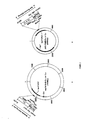
- Figure 2A A map of the vector mp19-Pel-C ⁇ 1 or -C ⁇ 2.
- Figure 2B A map of the vector pUC-Pel-C ⁇ or -C ⁇ .
- This invention contemplates a rapid method for identifying novel binding proteins by screening a heterogeneous population of Fab molecules where the heavy and light Ig polypeptides that make up the Fab's are produced by random association of two heterogenous populations of DNA encoding the respective chains.
- the invention contemplates construction of hlghly heterogeneous libraries of DNA comprising the coding sequences for the variable region of individual immunoglobulin heavy chain and light chain polypeptides, preferably by amplification from genomic DNA.
- Light chain and heavy chain sequences are then inserted into two different prokaryotic expression vectors. These specialized vectors contain promoters as well as initiation, translation and export signal sequences at the 5′ end of the insertion point to direct secretion of the expressed polypeptides. They preferably also contain the light chain constant region or a portion of the heavy chain constant region in translational reading frame on the 3′ side of the insertion point.
- the invention contemplates the use of two separate vectors wherein one of vectors is a plasmid and the other is a phage and where the library corresponding to the Ig light chain is introduced into one vector and the library corresponding to the Ig heavy chain is introduced in the other vector.
- the present invention creates two separately microheterogeneous vector populations where the microheterogeneity results from the heterogeneity of the DNAh the gene sequence exactly (Lee, et al., (1988) Science , 239 :1288-1291), and restriction sites can be incorporated within the primers to allow the forced cloning of the amplified DNA (Scharf, et al. (1986) Science , 233 :1076-1078).
- the preferred approach of the invention uses the PCR technology to amplify the rearranged regions of the variable immunoglobulin genes, without introns, and uses custom-made oligonucleotide primers to produce V region cassettes corresponding to the entire coding region of the respective heavy and light chain variable regions.
- Amplification of the rearranged variable regions at the genomic level is feasible by using oligonucleotides that have homology to the conserved sequences in the FR1 region of V H gene segments and the 3′ region of J H segments.
- V gene oligonucleotide primers are designed based on sequences of framework region 1 (FR1) which display sequence homology with members of the V H and V L families thus far identified.
- the J H and J L antisense primers are designed to match the 3′ ends of the J H or J L segments. Sequences for the primers can be selected from the conserved portion of the variable region sequences given in Kabat, et al. (1987) Sequences of Proteins of Immunological Interest , U.S. Dept. of Health and Human Services, Government Printing Office as described by, e.g., Sastry, et al.
- the 5′ oligonucleotide primer sequences should contain enough of the 5′ sequence to ensure hybridization to the sequence encoding the first amino acid of each published sequence.
- 3′ oligonucleotide primer sequences are designed to hybridize to the 3′ end of all known J sequences in the species of interest. While these 5′ and 3′ regions are highly conserved, so that relatively few distinct sequences occur in these regions, multiple primers will be necessary, especially on the 5′ end, to provide sequences which hybridize to all or even a plurality of the distinct V and J segments.
- the PCR reagent mixture should optimally contain multiple primers to ensure capturing, within the V region capsule, the diversity inherent in the rearranged lymphocyte genome. Alternatively, separate reactions can be carried out using different combinations of primers.
- Primers are modified by introducing point mutations, preferably near their 5′ end (Scharf, et al., 1986), to generate restriction sites.
- the presence of artificial restriction sites in the primers will allow the cloning of the V capsules into plasmid or phage vectors.
- the restriction sites incorporated into the primers correspond to restriction sites in the vectors that will be used to clone and express each V capsule library.
- Unique sites may be present in the respective heavy and light chain vectors, to permit independent manipulation of each library.
- the unique 5′ and 3′ primer sequences should preferably be further multiplied (tripled) by including either 0, 1 or 2 additional nucleotides on the 3′ side of the restriction site to generate in-frame translation products once the variable region cassettes are ligated to the leader sequences and to the constant region sequences.
- the use of such primers will rescue additional diversity in the V regions of the genome that would otherwise be lost as a result of some rearrangement during stem cell differentiation that produced a shift of reading frame in the sequences following the rearrangement site.
- An alternative, less preferred method to accomplish the same rescue of diversity would be to insert 0, 1, or 2 added nucleotides in the vector on the 3′ side of the restriction site, next to the constant region. This alternate procedure may necessitate construction of three different vectors into which the library would be inserted.
- Two different expression vectors are used to introduce intronless DNA from the two libraries into the desired host cell: a plasm i d vector and a bacteriophage vector.
- the library of sequences containing the amplified light chain variable region is inserted into one expression vector, and the library of sequences containing the amplified heavy chain variable region is inserted into the other expression vector.
- the population of host cells transformed and infected with the expression vectors containing the immunoglobulin variable region libraries produces a highly diverse population of Fab molecules.
- the light chain variable region is inserted into the plasmid vector and the heavy chain variable region is inserted into the phage vector.
- Vectors used in this invention are constructed from prokaryotic expression vectors which are known to transform or infect a host cell selected as described below and which have a well-characterized polycloning site.
- the plasmid and phage vectors preferably have limited homology to avoid exchange of genetic material.
- the vectors should preferably contain different markers to permit separate or simultaneous selection.
- the vectors are each constructed to have, 3′ to the promoter that will be used to direct expression, a ribosome binding site followed by a secretory signal sequence that is effective in the host strain chosen for expression.
- the Pel B leader sequence which was used by Better, et al., can be used with E. coli host cells.
- Restriction sites corresponding to the sites present in the PCR primers used to generate the V L or V H libraries, follow after the signal sequence such that the V region capsule will be inserted in translational frame.
- a sequence which encodes the constant region for the appropriate heavy or light chain and ends with a stop codon is preferably inserted.
- An appropriate constant region sequence can be readily selected from published sequences by the skilled worker.
- nucleotide sequence corresponding to this sequence can be prepared, for example, by oligonucleotide synthesis or by PCR using primers designed from the published immunoglobulin sequences.
- an additional sequence can be added between the end of the constant region and the stop codon. This sequence will result in expression of an additional peptide tag attached to the expressed immunoglobulin peptide which may be used for identification or for screening.
- variable region cassettes can be prepared from lymphocyte DNA, and after insertion into said vectors, a complete sequence for the light or heavy chain of the Fab fragment can be transcribed and translated in a prokaryotic system without need for removing intron sequences.
- variable region or complete chain sequences can be obtained from lymphocyte mRNA as reported by Huse, et al. However, this population is likely to be skewed in favor of antibodies specific for antigens to which the organism is sensitized, and therefore the ultimate diversity of the resulting Fab population will be reduced compared to the preferred approach.
- promoters used are very active ones, because the purpose is screening for DNA sources, not high volume protein production. More efficient production systems can be constructed later, once the desired DNA sequences have been selected.
- the promoters used on the two vectors may be the same (for coordinate induction by a single chemical) or different (to permit individualized control of expression).
- Plasmids and phages are known in the art (e.g., Pouwels, et al., "Cloning Vectors," Elsevier, 1985).
- the choice of a particular plasmid and phage to be used in conjunction with any given host is easily within the skill of the art.
- the choice of a promoter, a secretory signal sequence, location and type of restriction sites and stop codon are within the skill of the routineer.
- a preferred plasmid vector for an E. coli host system is pUC19.
- a preferred phage vector is based on M13.
- the pUC19 plasmid vector carries an ampicillin resistance marker and has a multiple site inserted in the lac operon as does M-13, both available from e.g., American Type Culture Collection (ATCC) or Bethesda Research Laboratories.
- Host cells compatible with each of the vectors should be used for transformation.
- the preferred system is based on E. coli and E. coli cloning vehicles.
- the host cell's genetic makeup is preferably chosen to simplify selection procedures during cloning.
- the selection procedures may include, e.g., antibiotic resistance, or other known procedures.
- Vectors and host cell systems having the desired properties are described in Pouwel, et al. (1985) and readily available from a number of sources, e.g., ATCC, and the selection procedures are described, e.g., in Sambrook, et al., Molecular Cloning: A Laboratory Manual , 2nd ed., Cold Spring Harbor Laboratory Press, 1989, which is incorporated herein by reference.
- the host cell is transformed with the recombinant plasmid carrying a library of immunoglobulin sequences, coding for one of the chains.
- the successful transformants are selected using standard techniques, preferably antibiotic resistance. Transformation, and selection of transformed cells, is within the skill of the ordinary worker and well described in the published literature, e.g., Sambrook, et al.
- Infection of a population of transformed host cells carrying an expression library for one immunoglobulin polypeptide by a bacteriophage vector which includes an expression library for the corresponding immunoglobulin polypeptide can be accomplished by any one of a number of well-known methods which are used in the art for expression of a recombinant nucleotide sequence carried on a bacteriophage.
- a virus stock of the bacteriophage vector which includes the library for the other immunoglobulin chain is prepared, and a suspension of the host cells is mixed with the virus stock. The mixture of cells and bacteriophage is incubated to allow attachment of the virus particles to the cells, and then the cells are plated out.
- the plating medium may contain inducers for the expression system(s) of the two vectors selected.
- the plate may be overlaid with a filter pre-soaked in inducers for the promoters present on the two expression vectors.
- transformed host cells carrying an expression library for one immunoglobulin polypeptide are plated out in lawns and then infected by the bacteriophage which includes an expression library for the immunoglobulin polypeptide corresponding to the other immunoglobulin chain.
- the infected lawn is then overlaid with nitrocellulose filter pre-soaked in inducers for the promoters present on the two expression vectors.
- the concentration of bacteriophage used will be adjusted to generate an appropriate number of plaques on the final plate, preferably about 20,000 per 15 cm plate.
- plaques are screened for the presence of binding proteins specific for the particular moiety desired, using standard procedures.
- the particular moieties to which the Fab molecules generated during the screening phase bind include, but are not limited to antigens, haptens, epitopes and similar chemical structures capable of molecular recognition.
- One procedure described by Huse, et al. (1989) involved lifting the binding protein on nitrocellulose filters and performing binding assays on the filters, using iodinated antigen proteins as the moiety to which the Fab bound. For example, an inducer-soaked filter can be lifted from the colonies, blocked with irrelevant protein and then probed with labeled (either radiolabeled or enzymatically labeled) antigen. The specific detection events are then used to locate the DNA clones of interest from the master plate. The relevant plaques can then be picked and replated and rescreened to enrich for the relevant Fab producing colonies.
- the filter paper could be coated with molecules containing the relevant moiety and blocked prior to incubation onto the lawn of infected bacterial cell.
- the recombinant Fab fragments bind to specific regions of the filter paper correlated with their colonies of origin and are then detected by antisera reactive with anti-FAB antibodies or with an encoded tag region included in the construct.
- the procedure for infecting the cells and screening expressed Fab fragments is so simple, the ordinary worker may prefer to simply perform a new bacteriophage infection experiment followed by screening each time a protein specific for a new moiety is required.
- Fab fragments, or molecules, which bind to additional moieties may be identified by testing the plaques for binding ability toward these other moieties in a subsequent step.
- different molecules containing other moieties for which binding proteins of interest are desired may be labelled with different, uniquely detectable tags that can be labelled to simultaneously detect in distinct plaques different Fabs binding to different moieties.
- the bacteriophage and plasmids of the plaque identified with the binding protein of interest are recovered by standard methods.
- Identified bacteriophage can be recovered from plaques by standard methods for the isolation and plaque purification of bacteriophage. Plasmids can be recovered from plaques by, for example, publication of supercoiled DNA followed by transformation of new host bacteria and subsequent expansion and growth of independent colonies. Since each plaque can contain different bacterial cell that possess different plasmids, several different plasmid types may be independently isolated by growth of independent colonies. Colonies that contain each plasmid type can be expanded and again infected with the bacteriophage that was derived from the same plaque. Each bacteriophage/plasmid combination can be tested for its ability to bind the antigen, in order that the most desired plasmid/ bacteriophage combination can be identified.
- the method of this invention may be optimally practiced by placing the V H library in the bacteriophage vector and infecting a lawn of transformed bacteria.
- a plaque will then contain a variety of Fab fragments composed of a single heavy chain and a variety of light chains, increasing the chances that a heavy chain specific for the desired target will combine with the light chain that most enhances its affinity. Further, this may increase the probability of detecting the heavy chain, since more than one of the light chains in the region of the plaque may combine to produce Fab's of enhanced affinity, resulting in a more easily detected population of Fab's with the desired specificity.
- the bacteriophage comprises the preferred M-13-based vector
- transformed and infected cells are not lysed, so the cell which produces the Fab molecule with the highest affinity may be colonized by plating out cells of the plaque identified in the original binding study.
- the desired DNA sequences can then be recovered from the plasmid and bacteriophage present in the cells of the single cell colony which shows the highest binding affinity.
- DNA can be isolated and the sequences encoding the heavy and light chain variable domains can be excised using the same restriction sites that were used in their initial introduction into the screening vectors. These sequences can then be inserted into any expression system; where necessary, they can be further modified prior to introduction into other expression systems through standard methods of mutagenesis to insert and/or remove restriction sites and/or other sequences as may prove effective in achieving maximal expression in any particular system.
- the synthetic PelB has been force ligated into the Hind III - Sal cloning sites of the polylinker present in pUC 19 and M13 mp 19 vectors and transfected Into E. coli DH5 ⁇ F′IQ cells using established methods.
- the two vectors obtained have been called pUC-PelB and mp19-PelB.
- the ⁇ and ⁇ constant regions have been amplified from human peripheral blood lymphocyte DNA using the polymerase chain reaction.
- the amplified material was ligated into the pUC-PelB vector by force cloning into the Kpn 1 and EcoRI sites.
- the vectors obtained have been called pUC-PelB-C ⁇ and pUC-PelB-C ⁇ .
- the segment of the constant region of the immunoglobulin heavy chain that codes for the sequence of constant region present in the Fab fragment is present in the first exon of the constant region gene.
- This segment (CH1) has been amplified using the primers shown in Table 4 and using as a template the DNA of peripheral blood human lymphocytes. The amplified material was force cloned in the mp19-PelB vector at the KpnI and EcoRI cloning sites.
- the identified positive clones were sequenced to confirm that the CH1- ⁇ 1 and CH1- ⁇ 2 sequences were correctly inserted into the vector.
- the vector has been called mp 19-PelC- ⁇ 2.
- Genomic DNA is isolated from spleen cells or peripheral blood lymphocytes by established procedures (Sambrook, et al. 1989). Genomic DNA sequences are amplified by the polymerase chain reaction according to Yamada et al. 1989.
- PCR is carried out as described by Saiki et al. (1985, 1986).
- the DNA is initially denatured in boiling water for 5 minutes followed by addition of 5 units of Thermus aquatics (Taq) DNA polymerase (Perkin-Elmer/Cetus).
- Taq Thermus aquatics
- Each cycle contains an annealing step at 55°C for 1 minute, an elongation step at 70°C for 2 minutes, and a denaturation step at 95°C for 2 minutes. A total of 30-40 cycles are carried out.
- Primers used for amplification of V H -D-J H cassettes are listed in Table 1.
- the amplified DNA is precipitated in 2 volumes of 100% ethanol and resuspended in buffer containing 10 mM Tris with 1 mM EDTA (pH 7.5), and one-fifth of the reaction product is analyzed by gel electrophoresis in 4% agarose gel (NuSieve, FMC) in 0.089M Tris borate/0.002 M EDTA.
- 4% agarose gel NuSieve, FMC
- Tris borate/0.002 M EDTA 0.089M Tris borate/0.002 M EDTA.
- Southern blotting the electrophoresed DNA is transferred to nylon membranes (Zetabind, Cuno) using 1 M ammonium acetate buffer (pH 8.0) and hybridized at 50°C to 32P-labeled diagnostic oligonucleotide probes which are homologous to the 5′ end of J regions.
- Impurities in the amplified mateiral are removed by Geneclean (Bio 101, La Jolla, CA) treatment.
- DNA is digested with Sal I and Kpn 1 and ligated to the specialized phage vector mp 19-PelC ⁇ -1 or mp19 Pe1C ⁇ -2 described below to generate a V H chain bacterophage library.
- a library of light chain sequences is prepared similarly except that a different set of primers are used in the polymerase chain reaction.
- the primers to be used for amplification of V L -J L regions are shown in Table 2.
- the amplified material is cloned into the specialized plasmid vector pUC-PelB-C ⁇ or pUC-PelB-C ⁇ to generate a V L plasmid library.
- the host cell used for this example is obtained from Bethesda Research Laboratory and is designated DH5 ⁇ F1 I Q. This is a male E. coli strain containing a stable F1 episome and producing a-lac repressor protein which regulates transcription from the lac I promoter. These cells are transformed with specialized plasmid vectors pUC-PelB-C ⁇ or pUC-PelB-c ⁇ which contain the light chain library. Transformed cells are selected by growth in an ampicillin-containing medium.
- a suspension of the selected transformed cells described in B above is mixed with a suspension of the specialized bacteriophage mp19 PelC- ⁇ vectors containing the immunoglobulin variable heavy chain library prepared as described above and plated as described in Sambrook, et al. (1980). After incubation, plaques are lifted with nitrocellulose filters and screened for binding of the desired protein antigen, which has been labelled with 125I, using autoradiography as described by Huse, et al. (1989).
- the section of agar in the plate corresponding to positive binding locations on the nitrocellulose filter are excised, DNA is extracted from them, and the resultant DNA extracts are amplified by PCR as described above.
- Transformed cells and bacteriophage containing the heavy chain library are prepared as described for Example 2 A.
- Recombinant E. coli transfected with pUC-PelB-C ⁇ specialized vector are plated out in lawns and then infected by the recombinant variable heavy chain-containing mp19-Pel C - ⁇ preparation.
- the infected lawns are then allowed to incubate until the average plaque density per plate is 20,000 single plaques per plate.
- the lawn is then overlaid with marked (for later orientation) nitrocellulose-based filters presoaked in IPTG for induction of the construct insert via the ⁇ -gal promoter. This initiates production of the secreted forms of the recombinant Fab's within the infected lawns.
- the IPTG soaked filter is lifted from the colonies, blocked with irrelevant protein and then probed with labeled (either radiolabeled or enzymatically labeled) antigen.
- the specific detection events are then used to locate the DNA clones of interest from the master plate.
- the relevant colonies can then be picked and replated and rescreened to correctly enrich for the relevant Fab producing colonies. It is clear that there can be several variations of this approach; for example, it is entirely possible to pick the relevant clones and PCR the inserted variable region cassettes directly. These variable regions can then easily be transferred to other expres s ion systems for further studies and insert verification.
- Example 2 The procedure is the same as Example 2, except that the nitrocellulose-based induction paper is coated with the relevant antigen and blocked prior to incubation on the lawn of infected bacterial cells.
- the recombinant Fab fragments bind to specific regions of the filter paper corresponding to their colonies of origin, which are then detected by antisera reacting with the encoded tag region of the construct or with anti-Fab antibodies.
- the identified colonies are then picked and rescreened to isolate relevant clones of interest.
Landscapes
- Health & Medical Sciences (AREA)
- Genetics & Genomics (AREA)
- Life Sciences & Earth Sciences (AREA)
- Engineering & Computer Science (AREA)
- Chemical & Material Sciences (AREA)
- Organic Chemistry (AREA)
- Wood Science & Technology (AREA)
- Biomedical Technology (AREA)
- Biotechnology (AREA)
- General Engineering & Computer Science (AREA)
- Zoology (AREA)
- Bioinformatics & Cheminformatics (AREA)
- Biophysics (AREA)
- Molecular Biology (AREA)
- Biochemistry (AREA)
- General Health & Medical Sciences (AREA)
- Microbiology (AREA)
- Plant Pathology (AREA)
- Physics & Mathematics (AREA)
- Cell Biology (AREA)
- Immunology (AREA)
- Medicinal Chemistry (AREA)
- Proteomics, Peptides & Aminoacids (AREA)
- Preparation Of Compounds By Using Micro-Organisms (AREA)
- Micro-Organisms Or Cultivation Processes Thereof (AREA)
- Measuring Or Testing Involving Enzymes Or Micro-Organisms (AREA)
Applications Claiming Priority (2)
| Application Number | Priority Date | Filing Date | Title |
|---|---|---|---|
| US56056690A | 1990-07-31 | 1990-07-31 | |
| US560566 | 1995-11-20 |
Publications (2)
| Publication Number | Publication Date |
|---|---|
| EP0469897A2 true EP0469897A2 (de) | 1992-02-05 |
| EP0469897A3 EP0469897A3 (en) | 1992-11-19 |
Family
ID=24238350
Family Applications (1)
| Application Number | Title | Priority Date | Filing Date |
|---|---|---|---|
| EP19910307050 Withdrawn EP0469897A3 (en) | 1990-07-31 | 1991-07-31 | Engineered antibodies |
Country Status (2)
| Country | Link |
|---|---|
| EP (1) | EP0469897A3 (de) |
| JP (1) | JPH0568599A (de) |
Cited By (10)
| Publication number | Priority date | Publication date | Assignee | Title |
|---|---|---|---|---|
| US5427908A (en) * | 1990-05-01 | 1995-06-27 | Affymax Technologies N.V. | Recombinant library screening methods |
| US5498530A (en) * | 1991-10-16 | 1996-03-12 | Affymax Technologies, N.V. | Peptide library and screening method |
| US5733731A (en) * | 1991-10-16 | 1998-03-31 | Affymax Technologies N.V. | Peptide library and screening method |
| US8268756B2 (en) | 2004-01-20 | 2012-09-18 | Merus B.V. | Mixture of binding proteins |
| US9303081B2 (en) | 2002-07-18 | 2016-04-05 | Merus B.V. | Recombinant production of mixtures of antibodies |
| US9738701B2 (en) | 2003-05-30 | 2017-08-22 | Merus N.V. | Method for selecting a single cell expressing a heterogeneous combination of antibodies |
| US9758805B2 (en) | 2012-04-20 | 2017-09-12 | Merus N.V. | Methods and means for the production of Ig-like molecules |
| US10138478B2 (en) | 2010-07-16 | 2018-11-27 | Adimab, Llc | Antibody libraries |
| USRE47770E1 (en) | 2002-07-18 | 2019-12-17 | Merus N.V. | Recombinant production of mixtures of antibodies |
| US11237165B2 (en) | 2008-06-27 | 2022-02-01 | Merus N.V. | Antibody producing non-human animals |
Family Cites Families (1)
| Publication number | Priority date | Publication date | Assignee | Title |
|---|---|---|---|---|
| JPS63267295A (ja) * | 1986-12-03 | 1988-11-04 | Sumitomo Chem Co Ltd | ヒト抗体、抗体遺伝子及び対応する組換え体 |
-
1991
- 1991-07-31 EP EP19910307050 patent/EP0469897A3/en not_active Withdrawn
- 1991-07-31 JP JP3192279A patent/JPH0568599A/ja active Pending
Cited By (22)
| Publication number | Priority date | Publication date | Assignee | Title |
|---|---|---|---|---|
| US5427908A (en) * | 1990-05-01 | 1995-06-27 | Affymax Technologies N.V. | Recombinant library screening methods |
| US5580717A (en) * | 1990-05-01 | 1996-12-03 | Affymax Technologies N.V. | Recombinant library screening methods |
| US5498530A (en) * | 1991-10-16 | 1996-03-12 | Affymax Technologies, N.V. | Peptide library and screening method |
| US5733731A (en) * | 1991-10-16 | 1998-03-31 | Affymax Technologies N.V. | Peptide library and screening method |
| US6156511A (en) * | 1991-10-16 | 2000-12-05 | Affymax Technologies N.V. | Peptide library and screening method |
| USRE47770E1 (en) | 2002-07-18 | 2019-12-17 | Merus N.V. | Recombinant production of mixtures of antibodies |
| US9303081B2 (en) | 2002-07-18 | 2016-04-05 | Merus B.V. | Recombinant production of mixtures of antibodies |
| US10934571B2 (en) | 2002-07-18 | 2021-03-02 | Merus N.V. | Recombinant production of mixtures of antibodies |
| US9738701B2 (en) | 2003-05-30 | 2017-08-22 | Merus N.V. | Method for selecting a single cell expressing a heterogeneous combination of antibodies |
| US10605808B2 (en) | 2003-05-30 | 2020-03-31 | Merus N.V. | Antibody producing non-human animals |
| US10670599B2 (en) | 2003-05-30 | 2020-06-02 | Merus N.V. | Method for selecting a single cell expressing a heterogeneous combination of antibodies |
| US8268756B2 (en) | 2004-01-20 | 2012-09-18 | Merus B.V. | Mixture of binding proteins |
| US11237165B2 (en) | 2008-06-27 | 2022-02-01 | Merus N.V. | Antibody producing non-human animals |
| US12018403B2 (en) | 2010-07-16 | 2024-06-25 | Adimab, Llc | Antibody libraries |
| US10138478B2 (en) | 2010-07-16 | 2018-11-27 | Adimab, Llc | Antibody libraries |
| US10889811B2 (en) | 2010-07-16 | 2021-01-12 | Adimab, Llc | Antibody libraries |
| US10329596B2 (en) | 2012-04-20 | 2019-06-25 | Merus N.V. | Methods and means for the production of Ig-like molecules |
| US10752929B2 (en) | 2012-04-20 | 2020-08-25 | Merus N.V. | Methods and means for the production of ig-like molecules |
| US10337045B2 (en) | 2012-04-20 | 2019-07-02 | Merus N.V. | Methods and means for the production of Ig-like molecules |
| US11926859B2 (en) | 2012-04-20 | 2024-03-12 | Merus N.V. | Methods and means for the production of Ig-like molecules |
| US9758805B2 (en) | 2012-04-20 | 2017-09-12 | Merus N.V. | Methods and means for the production of Ig-like molecules |
| US12123043B2 (en) | 2012-04-20 | 2024-10-22 | Merus N.V. | Methods and means for the production of Ig-like molecules |
Also Published As
| Publication number | Publication date |
|---|---|
| JPH0568599A (ja) | 1993-03-23 |
| EP0469897A3 (en) | 1992-11-19 |
Similar Documents
| Publication | Publication Date | Title |
|---|---|---|
| EP0368684B2 (de) | Klonierung von Immunglobulin sequenzen aus den variabelen Domänen. | |
| CA2048178A1 (en) | Engineered antibodies | |
| US5830663A (en) | In situ recombinant PCR within single cells | |
| JP3344584B2 (ja) | 組換えライブラリースクリーニング法 | |
| JP3919830B2 (ja) | 抗ネコヘルペスウイルス−1組換え抗体および該抗体をコードする遺伝子断片 | |
| Wysocki et al. | Single germline VH and V kappa genes encode predominating antibody variable regions elicited in strain A mice by immunization with p-azophenylarsonate. | |
| JPH06510671A (ja) | キメラ抗体の製造−組合せアプローチ | |
| WO1997038102A1 (en) | Multivalent and multispecific antigen-binding protein | |
| Ford et al. | Chimeric molecules created by gene amplification interfere with the analysis of somatic hypermutation of murine immunoglobulin genes | |
| JPH04141095A (ja) | 組換え抗hiv改変抗体および改変抗体の調製方法 | |
| CN114149506A (zh) | 一种抗cd22抗体及其应用 | |
| US5589573A (en) | Amino acid sequences of anti-idiotypic antibodies against anti-cancer human monoclonal antibody, and DNA base sequences encoding those sequences | |
| CN107236710B (zh) | 稳定表达抗TNF-α单克隆抗体细胞表达体系 | |
| JPH0568599A (ja) | 遺伝子工学的に作られた抗体 | |
| US5182205A (en) | Nucleotide sequences which are selectively expressed in pre-B cells and probes therefor | |
| Lewis et al. | Immunoglobulin complementarity-determining region grafting by recombinant polymerase chain reaction to generate humanised monoclonal antibodies | |
| EP0269127B1 (de) | Nukleotid-Sequenzen, die selektiv exprimiert sind in pre-B-Zellen und Sonden zu diesem Zweck | |
| US6740747B2 (en) | Bovine VDJ cassette, BF1H1, suitable for antigenization | |
| WO1992015678A1 (en) | Pcr generated dicistronic dna molecules for producing antibodies | |
| Sikder et al. | Amino acid substitutions in VH CDR2 change the idiotype but not the antigen-binding of monoclonal antibodies to alpha (1----6) dextrans. | |
| WO1994011507A2 (en) | Production of monoclonal recombinant antibodies without the use of hybridomas by in vitro spleen fragment culture combined with isothermal self-sustained sequence replication of rna | |
| JPH09248186A (ja) | ラクトバチルス属微生物のポリペプチド鎖延長因子遺伝子Tuおよびその利用 | |
| KR102025079B1 (ko) | 고병원성 바이러스성출혈성패혈증 바이러스 검출용 조성물 및 이를 이용한 바이러스성출혈성패혈증 바이러스의 검출방법 | |
| JPH09100300A (ja) | 抗癌ヒトモノクローナル抗体のアミノ酸配列およびそれをコードするdna塩基配列 | |
| EP0344319A1 (de) | Einem immunglobulingen verwandtes dns-fragment |
Legal Events
| Date | Code | Title | Description |
|---|---|---|---|
| PUAI | Public reference made under article 153(3) epc to a published international application that has entered the european phase |
Free format text: ORIGINAL CODE: 0009012 |
|
| AK | Designated contracting states |
Kind code of ref document: A2 Designated state(s): AT BE CH DE DK ES FR GB GR IT LI LU NL SE |
|
| PUAL | Search report despatched |
Free format text: ORIGINAL CODE: 0009013 |
|
| AK | Designated contracting states |
Kind code of ref document: A3 Designated state(s): AT BE CH DE DK ES FR GB GR IT LI LU NL SE |
|
| STAA | Information on the status of an ep patent application or granted ep patent |
Free format text: STATUS: THE APPLICATION IS DEEMED TO BE WITHDRAWN |
|
| 18D | Application deemed to be withdrawn |
Effective date: 19930521 |