EP0470604A2 - PACAP38, protéine ayant une activité adénylate-cyclase - Google Patents
PACAP38, protéine ayant une activité adénylate-cyclase Download PDFInfo
- Publication number
- EP0470604A2 EP0470604A2 EP19910113293 EP91113293A EP0470604A2 EP 0470604 A2 EP0470604 A2 EP 0470604A2 EP 19910113293 EP19910113293 EP 19910113293 EP 91113293 A EP91113293 A EP 91113293A EP 0470604 A2 EP0470604 A2 EP 0470604A2
- Authority
- EP
- European Patent Office
- Prior art keywords
- pacap38
- human
- dna
- genomic dna
- human pacap38
- Prior art date
- Legal status (The legal status is an assumption and is not a legal conclusion. Google has not performed a legal analysis and makes no representation as to the accuracy of the status listed.)
- Withdrawn
Links
Images






Classifications
-
- C—CHEMISTRY; METALLURGY
- C07—ORGANIC CHEMISTRY
- C07K—PEPTIDES
- C07K14/00—Peptides having more than 20 amino acids; Gastrins; Somatostatins; Melanotropins; Derivatives thereof
- C07K14/435—Peptides having more than 20 amino acids; Gastrins; Somatostatins; Melanotropins; Derivatives thereof from animals; from humans
- C07K14/575—Hormones
- C07K14/57563—Vasoactive intestinal peptide [VIP]; Related peptides
Definitions
- the present invention relates to a genomic DNA of human PACAP 38 which is a bioactive peptide derived from testes or brain hypothalami, a DNA containing a DNA sequence coding for the peptide, a transformant bearing the DNA, and a method for preparing a mature PACAP38 peptide in a transformant.
- hormones secreted by brain hypothalami and hypophyses are well known. Examples thereof include thyrotropin releasing hormone, luteinizing hormone releasing hormone, somatostatin, adrenocorticotropic hormone(ACTH), growth hormone(GH) and prolactin. The action of these hormones has been well studied.
- a novel peptide consisting of 38 amino acid residues which has the adenylate cyclase activity was discovered in a different hormone derived from sheep hypophyse. The structure thereof was determined and the peptide was named "PACAP38" (EP-A 0 404 652).
- the amino acid sequence corresponding to human PACAP38 is the same as that of sheep PACAP38, although there is substitution of some amino acids in the precursors thereof.
- PACAP38 a peptide consisting of 38 amino acid residues which enhances adenylate cyclase activity, is one such peptide whose expression mechanism was unknown in the prior art.
- the present inventors have undertaken the study of the mechanism of the expression of the human PACAP38 gene in order to develop methods for inducing the expression. Their study has led to the isolation of genomic DNA of PACAP38 from a human DNA library and the determination of its nucleotide sequence. This has made it possible to induce human PACAP38 through genetic engineering techniques, thus achieving the present invention.
- the present inventors have further cloned the gene of human PACAP38, which has been compared with the structure of the previously cloned cDNA of human PACAP38 to determine the structure thereof and to elucidate the relationship between an intron and an exon.
- a promoter region essential for the expression of the gene has been identified.
- a genome of human PACAP38 (2) a DNA containing a DNA sequence coding for human PACAP38; (3) a transformant bearing a DNA containing a DNA segment coding for PACAP38; and (4) a method for preparing a mature PACAP38 protein comprising cultivating the transformant described in the above (3), accumulating the protein in a culture product, and collecting the resulting protein.
- an expression vector containing a DNA having the nucleotide sequence coding for the precursor protein of human PACAP38 or mature PACAP38 can be prepared, for example, by the following process:
- the plasmids into which the DNA is introduced include, for example, pBR322 [Gene 2, 95 (1977)], pBR325 [Gene 4, 121 (1978)], pUC12 [Gene 19, 259 (1982)] and pUC13 [Gene 19, 259 (1982)], each derived from Escherichia coli, and pUB110 derived from Bacillus subtilis [Biochemical and Biophysical Research Communication 112, 678 (1983)].
- any other plasmid can be used as long as it is replicable and viable in the host.
- the phage vectors into which the DNA is introduced include, for example, ⁇ gt11 [R. Young and R. Davis, Proc. Natl. Acad. Sci., U.S.A. 80, 1194 (1983)] and EMBL3 [Prischauf et al., J. Mol. Biol. 170, 827 (1983)].
- any other phage vector can be used as long as it is replicable and viable in the host
- Methods for introducing the DNA into the plasmid include, for example, the method described in T. Maniatis et al., Molecular Cloning, p.239, Cold Spring Laboratory, (1982). Methods for introducing the DNA into the phage vector include, for example, the method of T. V. Hyunh et al. [DNA Cloning, A Practical Approach 1, 49 (1985)].
- the plasmid thus obtained is introduced into the appropriate host cells such as Escherichia and Bacillus.
- Escherichia described above examples include Escherichia coli K12DH1 [Proc. Natl. Acad. Sci. U.S.A. 60, 160 (1968)], M103 [Nucleic Acids Research 9, 309 (1981)], JA221 [Journal of Molecular Biology 120 , 517, (1978)], HB101 [Journal of Molecular Biology 41, 459 (1969)] and C600 [Genetics 39, 440 (1954)].
- Bacillus described above examples include Bacillus subtilis M1114 [Gene 24, 255 (1983)] and 207-21 [Journal of Biochemistry 95, 87 (1984)].
- Methods for transforming the host with the plasmid include, for example, the calcium chloride method and the calcium chloride/rubidium chloride method described in T. Maniatis et al., Molecular Cloning, p.249, Cold Spring Harbor Laboratory, (1982).
- the phage vector can be transduced into proliferated E. coli, using the in vitro packaging method.
- a human DNA library can be obtained by the methods described above and the like.
- Methods for cloning the PACAP38 DNA from the human DNA library include, for example, the plaque hybridization method [T. Maniatis et al., Molecular Cloning, Cold Spring Harbor Laboratory (1982)] using as a probe an oligonucleotide chemically synthesized reflecting phage vector ⁇ gt11 or EMBL and the amino acid sequence of PACAP38, or the cDNA of PACAP38.
- the PACAP38 cDNA thus cloned is subcloned to a plasmid such as pBR322, pUC12, pUC13, pUC18, pUC19, pUC118, pUC119 or the like to obtain the human PACAP38 DNA, if necessary.
- a plasmid such as pBR322, pUC12, pUC13, pUC18, pUC19, pUC118, pUC119 or the like to obtain the human PACAP38 DNA, if necessary.
- the nucleotide sequence of the DNA thus obtained is determined, for example, by the Maxam-Gilbert method [A. M. Maxam and W. Gilbert, Proc. Natl. Acad. Sci., U.S.A. 74, 560 (1977)] or the dideoxy method [J. Messing et al., Nucleic Acids Research 9, 309 (1981)], and the existence of the human PACAP38 DNA is confirmed in comparison with the known amino acid sequence.
- the restriction enzyme fragment map of the DNA coding for the precursor protein of human PACAP38 is shown in Fig. 1.
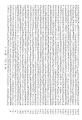
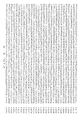
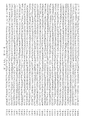
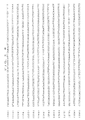
- the nucleotide sequence of the DNA determined by the dideoxy method and the amino acid sequence deduced from that nucleotide sequence are shown in Fig. 2.
- the DNA coding for the precursor protein of human PACAP38 cloned as described above can be used as is, or cut out by digestion with a restriction enzyme if desired, according to the intended use.
- the region intended to be expressed is cut out from the cloned DNA and ligated downstream from the promoter in a vehicle (vector) suitable for expression, whereby the expression vector can be obtained.
- the DNA has ATG as a translation initiating codon at the 5'-terminus thereof and may have TAA, TGA or TAG as a translation terminating codon at the 3'-terminus. Further, a consensus sequence reactive to cyclic AMP is observed upstream from ATG of the 5'-terminus.
- These translation initiating codon and translation terminating codon may be added by use of an appropriate synthetic DNA adaptor such as adaptor containing a translation initiating codon ATG or a translation terminating codon TAA, TAG or TGA.
- the vectors include the above plasmids derived from E. coli such as pBR322, pBR325, pUC12 and pUC13, plasmids derived from Bacillus subtilis such as pU B110 , p TP5 and pC194, plasmids derived from yeast such as pSH19 and pSH15, bacteriophages such as phage, and animal viruses such as retroviruses and vaccinia viruses.
- SV40-derived promoter When the host is an animal cell, a SV40-derived promoter, a retrovirus promoter, a metallothionein promoter, a heat shock promoter or the like can be used.
- an enhancer such as an SV40-derived enhancer, a retrovirus-derived enhancer, is also effective for expression.
- the transformant is prepared.
- animal cells examples include monkey cell COS-7, Vero, Chinese hamster cell (CHO), mouse L cell and human FL cell.
- Escherichia The transformation of Escherichia described above is conducted, for example, according to the method described in Proc. Natl. Acad. Sci. U.S.A., 69, 2110 (1972), Gene, 17, 107 (1982) or the like.
- the transformation of animal cells is carried out, for example, according to the method described in Virology, 52, 456 (1973).
- the transformant transformed with the expression vector containing the DNA coding for the precursor protein of human PACAP38 or the mature peptide (PACAP38) is obtained.
- the pH of the medium is preferably about 5 to 8.
- examples of the media which can be used include MEM medium containing about 5 to 20% fetal calf serum [Science, 122, 501 (1952)], DMEM medium [Virology, 8, 396 (1959)], RPM11640 medium [The Journal of the American Medical Association, 199, 519 (1967)] and 199 medium [Proceeding of the Society for the Biological Medidine, 73, 1 (1950)].
- the pH is preferably about 6 to 8.
- the cultivation is usually carried out at about 30 to 40 ° C for about 15 to 60 hours, with aeration or agitation if necessary.
- induction of PACAP is observed by introducing the 5'-region (promoter region) fragment of the genomic DNA of PACAP38 into the animal cell expression vector, whereby the promoter activity of PACAP can be examined.
- a recognition sequence of a cyclic AMP response element (CRE) or 12-O-tetradecanoylphorbol-13 acetate (TPA) exists in the promoter region of the genomic DNA, synthesis of mRNA is specifically initiated from the genomic DNA by adding cyclic AMP, a compound similar thereto or TPA to the cells, which results in protein synthesis.
- the amount of PACAP produced can be determined, for example, by the use of the sandwich EIA method. Furthermore, by using this experimental system, it is possible to screen the chemical substance (drug) necessary for production of PACAP. Substances showing promise during screening may be given to experimental animals to understand their action, particularly on brain functions, more particularly on brain functions due to hormones. Moreover, the information thus obtained provides information which serves to elucidate human brain functions.
- Human PACAP38 results in an increase in CAMP activity, and therefore can be utilized as therapeutic agents for growth and maintenance of human brain nerves.
- a portion of the amino acid sequence may be modified, through addition, elimination of amino acid(s) or substitution with other amino acid(s).
- Transformants E. coli MV1184/pHGP2312 and MV1184/pHGP2306 obtained in Example 2 described below were deposited with the Fermentation Research Institute, the Agency of Industrial Science and Technology, the Ministry of International Trade and Industry, Japan (FRI) under the accession number FERM BP-3054 on August 10, 1990, and under the accession number FERM BP-3033 on July 30, 1990, respectively. These microorganisms were also deposited with the Institute for Fermentation, Osaka, Japan (IFO) under the accession numbers IFO 15068 and IFO 15067, respectively, on July 24, 1990.
- the amino acid sequence of sheep PACAP38 is believed to be identical to that of human PACAP38.
- PACAP38 purified from sheep hypothalami (hereinafter, "Nat. 38p”) and synthesized PACAP38 (hereinafter, "Syn.38p”) were allowed to act on rat pituicytes in vitro, an increase in adenylate cyclase activity was identified by observing an increase of CAMP observed. The result is shown in Table 1. The minimum effective amount was 10 -12 M, and it was shown that the activity increased with increasing concentration.
- the cDNA of cloned human PACAP38 was labelled by the random prime method using 32 P-dCTP for use in screening of the human genomic DNA library.
- E. coli LE392 was infected with a human leukocyte-derived DNA library (Clontech Laboratories, Inc., Catalog No. HL1006d) and plated to cause phage plaques to appear. A portion of plaque DNA was transferred to a nitrocellulose film according to the method of W. Benton and R. Davis [Science 196, 180-182 (1977)] and hybridized with the cDNA probe labeled with 32p in Example 1. Hybridization was carried out in the absence of formaldehyde at 60 C. Clones positive to hybridization were isolated.
- a cDNA portion of XHGP23 which was one of the clones described above, was cut out with Sall and recloned into the Sall site of plasmid pUC18 to prepare plasmids pHGP2312 and pHGP2306.
- plasmids pHGP2312 and pHGP2306 By transforming E. coli MV1184 with these plasmids, transformants E. coli MV1184/pHGP2312 (FERM BP-3054) and E. coli MV1184/pHGP2306 (FERM BP-3033) were obtained.
- the cDNA portions included in these plasmids were 11.1 kbp and 6 kbp, respectively.
- the simplified restriction enzyme maps thereof are shown in Fig. 1.
- black box ( ⁇ ) shows a mature human PACAP38 code region.
- the nucleotide sequence of this DNA portion was determined by the method of Sanger [Proc. Natl. Acad. Sci. U.S.A. 74, 5463-5467 (1977)]. This nucleotide sequence is shown in Fig. 2. The region from amino acid Nos. 132 to 169 is the mature peptide portion of human PACAP38.
- the 7539th to 7649th nucleotides form the first exon, which codes for amino acid residues M(1) to R(37) in the lower row.
- the amino acid numbers are designated in parentheses.
- the 9813rd to 9944th nucleotides form the second exon, which codes for amino acid residues P(38) to R(81).
- the 10420th to 10518th nucleotides form the third exon, which codes for amino acid residues D(82) to G-(114).
- the 11601st to 11787th nucleotides form the fourth exon, which codes for amino acid residues G-(115) to L(176).
- PACAP38 NH 2 was synthesized by using 1.04 g (0.5 mmole) of a commercially available p-methyl BHA resin (Applied Biosystems Inc., California USA) and a peptide synthesizer (Model 430A, Applied Biosystems Inc.).
- Boc-Lys(CI-Z) was activated with HOBt/DCC and then condensed to the resin. Thereafter, the Boc group on the resin was treated with 50% trifluoroacetic acid/methylene chloride to deprotect the amino group.
- the concentrated solution was applied to a Sephadex LH-20 column (2 X 90 cm) for elution with 50% acetic acid.
- the main fractions were collected, and then removed by distillation under reduced pressure.
- the residue was dissolved in 100 ml of 0.1% aqueous trifluoroacetic acid.
- the resulting solution was subjected to a YMC-ODS AM120 S-50 resin column (2.6 X 7 cm) and eluted by a linear gradient of 0.1% aqueous trifluoroacetic acid and 50% acetonitrile containing 0.1% trifluoroacetic acid.
- PACAP27 NH 2 was synthesized by using 1.04 g (0.5 mmole) of a commercially available p-methyl BHA resin (Applied Biosystems Inc.) and a peptide synthesizer (Model 430A, Applied Biosystems Inc.).
- a starting amino acid, Boc-Leu was activated with HOBt/DCC and then condensed to the resin. Thereafter, the Boc group on the resin was treated with 50% trifluoroacetic acid/methylene chloride to deprotect the amino group. To this free amino group, the following protected amino acids activated with HOBt/DCC were reacted in turn according to the amino acid sequence of PACAP38 (1-27):
- the concentrated solution was applied on a Sephadex LH-20 column (2 X 90 cm) for elution with 50% acetic acid. The main fractions were collected, followed by removal by distillation under reduced pressure. 129 mg of a white powder was obtained. This powder was dissolved in 5 ml of 0.1% aqueous trifluoroacetic acid. The resulting solution was subjected to a TSK-GEL (ODS-120T) column (21.5 x 300 mm) and eluted with 27% acetonitrile containing 0.1% aqueous trifluoroacetic acid.
- ODS-GEL ODS-120T
Landscapes
- Health & Medical Sciences (AREA)
- Chemical & Material Sciences (AREA)
- Organic Chemistry (AREA)
- Life Sciences & Earth Sciences (AREA)
- Biochemistry (AREA)
- Genetics & Genomics (AREA)
- Gastroenterology & Hepatology (AREA)
- Toxicology (AREA)
- Endocrinology (AREA)
- Biophysics (AREA)
- General Health & Medical Sciences (AREA)
- Zoology (AREA)
- Medicinal Chemistry (AREA)
- Molecular Biology (AREA)
- Proteomics, Peptides & Aminoacids (AREA)
- Vascular Medicine (AREA)
- Medicines That Contain Protein Lipid Enzymes And Other Medicines (AREA)
- Peptides Or Proteins (AREA)
Applications Claiming Priority (2)
| Application Number | Priority Date | Filing Date | Title |
|---|---|---|---|
| JP21032790 | 1990-08-10 | ||
| JP210327/90 | 1990-08-10 |
Publications (2)
| Publication Number | Publication Date |
|---|---|
| EP0470604A2 true EP0470604A2 (fr) | 1992-02-12 |
| EP0470604A3 EP0470604A3 (en) | 1992-12-09 |
Family
ID=16587588
Family Applications (1)
| Application Number | Title | Priority Date | Filing Date |
|---|---|---|---|
| EP19910113293 Withdrawn EP0470604A3 (en) | 1990-08-10 | 1991-08-08 | Pacap38, proteine with adenylate cyclase activity |
Country Status (2)
| Country | Link |
|---|---|
| EP (1) | EP0470604A3 (fr) |
| CA (1) | CA2048880A1 (fr) |
Family Cites Families (3)
| Publication number | Priority date | Publication date | Assignee | Title |
|---|---|---|---|---|
| ZA811895B (en) * | 1980-04-07 | 1982-04-28 | Univ California | Expression of hormone genomic clones |
| US5128242A (en) * | 1989-06-19 | 1992-07-07 | The Administrators Of The Tulane Educational Fund | Hypothalamic polypeptides with adenylate cyclase stimulating activity |
| US5198542A (en) * | 1989-06-20 | 1993-03-30 | Takeda Chemical Industries, Inc. | Dna encoding a pitvitary adenylate cyclase activating protein and use thereof |
-
1991
- 1991-08-08 EP EP19910113293 patent/EP0470604A3/en not_active Withdrawn
- 1991-08-09 CA CA 2048880 patent/CA2048880A1/fr not_active Abandoned
Also Published As
| Publication number | Publication date |
|---|---|
| CA2048880A1 (fr) | 1992-02-11 |
| EP0470604A3 (en) | 1992-12-09 |
Similar Documents
| Publication | Publication Date | Title |
|---|---|---|
| EP0404034B1 (fr) | DNA et son utilisation | |
| AU598205B2 (en) | Peptide analogues of mammalian insulin-like growth factor-1 | |
| US5231166A (en) | Endothelin | |
| EP0468337B1 (fr) | ADN codant un peptide vaso-constricteur humain et son utilisation | |
| US5580953A (en) | Amylin antagonist peptides and uses therefor | |
| KR970001580B1 (ko) | 환상 혈관활성 펩티드 | |
| Krane et al. | Molecular cloning of cDNAs encoding the human bombesin-like peptide neuromedin B. Chromosomal localization and comparison to cDNAs encoding its amphibian homolog ranatensin. | |
| JPH0532696A (ja) | 副甲状腺ホルモン誘導体 | |
| EP0270376B1 (fr) | Dérivés peptidiques liés au gène de la calcitonine | |
| US5208320A (en) | Polypeptide having c-amp-producing activity | |
| JPH0684400B2 (ja) | 新規な生長ホルモン遊離ペプチド | |
| US5521069A (en) | Genomic DNA exons having exons encoding human pituitary adenylate cyclase activity peptide with 38 amino acids residues(PACAP38) and a promoter thereof | |
| US4824937A (en) | Synthetic natriuretic peptides | |
| US5234907A (en) | Synthetic vasoactive intestinal peptide analogs | |
| EP0315118A2 (fr) | ADN codant pour endothéline et son utilisant | |
| EP0315687A1 (fr) | (n-alpha-acyl, 8-glycine, des-19-leucine)-calcitonine. | |
| CA2048880A1 (fr) | Adn et son utilisation | |
| JP3034894B2 (ja) | 新規dnaおよびその用途 | |
| US4959352A (en) | Cyclic growth hormone releasing factor analogs and method for the manufacture thereof | |
| JP3007361B2 (ja) | Dnaおよびその用途 | |
| EP0421284A1 (fr) | ADNc de l'endothélin-3 humaine et son utilisation | |
| JPH05207882A (ja) | 新規dnaおよびその用途 | |
| JPH04352798A (ja) | ポリペプチド | |
| JPH04368396A (ja) | 新規なカルシトニン遺伝子関連ペプチド誘導体 |
Legal Events
| Date | Code | Title | Description |
|---|---|---|---|
| PUAI | Public reference made under article 153(3) epc to a published international application that has entered the european phase |
Free format text: ORIGINAL CODE: 0009012 |
|
| AK | Designated contracting states |
Kind code of ref document: A2 Designated state(s): AT BE CH DE DK ES FR GB GR IT LI LU NL SE |
|
| RAP3 | Party data changed (applicant data changed or rights of an application transferred) |
Owner name: TAKEDA CHEMICAL INDUSTRIES, LTD. |
|
| PUAL | Search report despatched |
Free format text: ORIGINAL CODE: 0009013 |
|
| AK | Designated contracting states |
Kind code of ref document: A3 Designated state(s): AT BE CH DE DK ES FR GB GR IT LI LU NL SE |
|
| 17P | Request for examination filed |
Effective date: 19930330 |
|
| 17Q | First examination report despatched |
Effective date: 19940929 |
|
| GRAG | Despatch of communication of intention to grant |
Free format text: ORIGINAL CODE: EPIDOS AGRA |
|
| GRAH | Despatch of communication of intention to grant a patent |
Free format text: ORIGINAL CODE: EPIDOS IGRA |
|
| STAA | Information on the status of an ep patent application or granted ep patent |
Free format text: STATUS: THE APPLICATION HAS BEEN WITHDRAWN |
|
| 18W | Application withdrawn |
Withdrawal date: 19970114 |