EP0470980B1 - Synthetisches peptid für einen hiv-1 impfstoff - Google Patents
Synthetisches peptid für einen hiv-1 impfstoff Download PDFInfo
- Publication number
- EP0470980B1 EP0470980B1 EP90906803A EP90906803A EP0470980B1 EP 0470980 B1 EP0470980 B1 EP 0470980B1 EP 90906803 A EP90906803 A EP 90906803A EP 90906803 A EP90906803 A EP 90906803A EP 0470980 B1 EP0470980 B1 EP 0470980B1
- Authority
- EP
- European Patent Office
- Prior art keywords
- peptide
- hiv
- protein
- cell
- cell epitope
- Prior art date
- Legal status (The legal status is an assumption and is not a legal conclusion. Google has not performed a legal analysis and makes no representation as to the accuracy of the status listed.)
- Expired - Lifetime
Links
Images
Classifications
-
- C—CHEMISTRY; METALLURGY
- C07—ORGANIC CHEMISTRY
- C07K—PEPTIDES
- C07K14/00—Peptides having more than 20 amino acids; Gastrins; Somatostatins; Melanotropins; Derivatives thereof
- C07K14/005—Peptides having more than 20 amino acids; Gastrins; Somatostatins; Melanotropins; Derivatives thereof from viruses
-
- A—HUMAN NECESSITIES
- A61—MEDICAL OR VETERINARY SCIENCE; HYGIENE
- A61K—PREPARATIONS FOR MEDICAL, DENTAL OR TOILETRY PURPOSES
- A61K39/00—Medicinal preparations containing antigens or antibodies
-
- C—CHEMISTRY; METALLURGY
- C12—BIOCHEMISTRY; BEER; SPIRITS; WINE; VINEGAR; MICROBIOLOGY; ENZYMOLOGY; MUTATION OR GENETIC ENGINEERING
- C12N—MICROORGANISMS OR ENZYMES; COMPOSITIONS THEREOF; PROPAGATING, PRESERVING, OR MAINTAINING MICROORGANISMS; MUTATION OR GENETIC ENGINEERING; CULTURE MEDIA
- C12N2740/00—Reverse transcribing RNA viruses
- C12N2740/00011—Details
- C12N2740/10011—Retroviridae
- C12N2740/16011—Human Immunodeficiency Virus, HIV
- C12N2740/16211—Human Immunodeficiency Virus, HIV concerning HIV gagpol
- C12N2740/16222—New viral proteins or individual genes, new structural or functional aspects of known viral proteins or genes
-
- C—CHEMISTRY; METALLURGY
- C12—BIOCHEMISTRY; BEER; SPIRITS; WINE; VINEGAR; MICROBIOLOGY; ENZYMOLOGY; MUTATION OR GENETIC ENGINEERING
- C12N—MICROORGANISMS OR ENZYMES; COMPOSITIONS THEREOF; PROPAGATING, PRESERVING, OR MAINTAINING MICROORGANISMS; MUTATION OR GENETIC ENGINEERING; CULTURE MEDIA
- C12N2740/00—Reverse transcribing RNA viruses
- C12N2740/00011—Details
- C12N2740/10011—Retroviridae
- C12N2740/16011—Human Immunodeficiency Virus, HIV
- C12N2740/16211—Human Immunodeficiency Virus, HIV concerning HIV gagpol
- C12N2740/16234—Use of virus or viral component as vaccine, e.g. live-attenuated or inactivated virus, VLP, viral protein
Definitions
- the present invention relates to the design and preparation of a synthetic peptide vaccine against acquired immunodeficiency syndrome (AIDS) caused by the human Immunodeficiency Virus (HIV).
- AIDS acquired immunodeficiency syndrome
- HIV human Immunodeficiency Virus
- the invention is related to the identification and characterization of a T-cell epitope of the core protein, p24, of HIV-1, and methodologies utilizing this epitope to construct immunogenic oligopeptides with autologous (p24) and several heterologous (HIV proteins other than p24) B-cell epitopes capable of inducing effective immunity against HIV.
- AIDS is the ultimate result of infection with HIV, and there is currently no cure for the disease, so the development of an HIV-specific vaccine is urgently required.
- protective antibodies against a specific disease can be elicited by the administration of specific components of the organism causing the disease, rather than the whole organism that has been inactivated or has been attenuated to give a non-pathogenic strain.
- the envelope protein (gp160) of HIV-1 has been employed as a candidate vaccine against AIDS. Although it has been shown that this immunogen, prepared in a vaccinia vector, is capable of inducing virus neutralizing antibodies, all vaccine trials failed to protect primates against challenge with wild HIV isolates.
- T- and B-cell epitopes may be necessary for tandem epitopes to be efficiently processed and immunogenic.
- T- and B-cell epitopes in a proposed designer vaccine are assembled in the optimal configuration so that both T- and B-cell memory can be elicited effectively and antibodies of the desired specificity produced.
- THD have been found not to be universal and are immunologically functional only when presented in association with the appropriate Major Histocompatibility Complex (MHC) class II antigens.
- MHC Major Histocompatibility Complex
- THD and BE of the gp160 protein have been fully characterised and although the Band T-epitopes of gag and pol proteins have been predicted by standard algorithms, the structure of these epitopes have yet to be determined experimentally.
- Recent studies have indicated that the gag gene products may play a crucial role in eliciting an immune response against HIV infection.
- clinical progression of AIDS is associated with a reduction of circulatory antibodies to the gag p24 protein and antibodies raised against an immunodominant gag p17 peptide are capable of inhibiting HIV-1 infection in vitro.
- Hepatitis B virus core THD have been shown to be more efficient than envelope THD in helping the induction of the antibody response to the S surface antigen.
- HIV-1 p24 a potent synthetic HIV-1 immunogen comprising gag-p24 tandem T- and B-cell epitopes.
- EIA peptide-specific enzyme immunoassay
- the anti-peptide antibodies recognised the viral p24 protein in immunoblotting.
- the peptide presented in the appropriate MHC context was shown to be highly stimulatory for p24- specific murine T-cell lines.
- T-cell epitope of HIV-1-p24, p24E can mediate an antibody response to heterologous B-cell determinants (envelope B-cell determinants, for example) and constructed several immunogenic chimeric p24/gp160 oligopeptides capable of inducing an anti-envelope antibody response.
- heterologous B-cell determinants envelope B-cell determinants, for example
- the inventors have further shown that polarity of the T- and B-cell epitopes affects the immunogenicity of the chimeric peptides, and that the incorporation of a linker between the two epitopes can modulate the immunogenicity of the peptides.
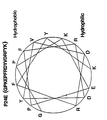
- Figure 1 is schematic representation of the structure of the p24E protein.
- T-cell antigenic determinants Two models have recently been proposed for the prediction of T-cell antigenic determinants on the basis of the primary sequence. It has been proposed (ref I.) that T-cell epitopes are likely to involve protein sequences that have a potential to adopt stable amphipathic a-helix conformations, such that hydrophilic residues are positioned on one side of the helix and hydrophobic residues lie on the other side. It has been independently observed that a primary sequence pattern occurs frequently in T-cell antigenic sites. This T-cell binding motif usually consists of a charged residue or a glycine followed by two or three hydrophobic residues followed by an hydrophilic residue (ref 2.).
- Tp24E The results of the in vitro proliferation experiment demonstrating that p24E indeed contains a T-cell epitope are shown in Table 2.
- the p24-specific murine T-cell line, Tp241 was found to respond only to the synthetic peptide, p24E, but not to either TE1 E or TB8 peptides which individually contain a partial sequence of p24E.
- the T-cell carrier function of p24E was demonstrated by studying the immunogenicity of an unconjugated oligopeptide HIV-1-p24 encompassing p24E (residues 292-306), and a predicted p24 B-cell epitope, B (residues 307-316), of the gag protein, p24.
- HIV-1-P24 and B p24 peptides were injected separately in increasing amounts in complete Freund's adjuvant into five inbred mouse strains of different Major Histocompatibility Complex (MHC) haplotypes. The mice were boosted three weeks later with half the original amount of peptide in incomplete Freund's adjuvant. Sera were collected 9 days post-challenge and assayed for the presence of peptide-specific IgG antibodies.
- MHC Major Histocompatibility Complex
- mice appeared to be the best responders as judged by their high serum anti-peptide IgG titres (12,000 and 4,000, respectively), while the SWR/J and C3H strains with anti-HIV-1-p24 titres of 1 in 1,200 and the SJL/J strain with a titre of 1 in 150 were intermediate and poor responders to the peptide, respectively.
- the immunogenicity of the B-cell epitope was found to depend on the polarity of B and p24E peptides .
- the oligopeptide in which the B-cell epitope, B is linked to the N-terminus of p24E was unable to induce an antibody response against its B-cell determinant (Table 3).
- the specificity of the anti-HIV-1-p24 IgG antibodies was demonstrated by showing that a Balb/c (H-2d) anti-HIV-I-p24 antiserum reacted exclusively against p24 and not against other viral proteins, in EIA's using either recombinant p24 or gp41 (DuPont) or gp160 (Repligen Corp.) as target antigens.
- the same antiserum also specifically recognized the viral p24 protein in immunoblotting using commercial HIV-1 Western blotting strips (Pan.Data Systems, Bio Rad).
- p24E is a potent T-helper epitope (Th) capable of providing "immunological help" to induce the generation of antibody responses against autologous p24 B-cell epitopes in the absence of a foreign carrier protein.
- the five inbred mouse strains (Balb/c, SJL/J, A/J, C3H and C57BL/6) immunised with the free chimeric peptide following the protocol used for immunisation with the HIV-1-p24 peptide were able to generate a secondary anti-envelope (BE3) antibody response as shown in Table 4.
- the highest anti-BE3 serum IgG titres (1 in 1,600) were obtained in Balb/c and C57BL/6 mouse strains immunized with 100 ug of p24E-BE3 peptide, suggesting that these two haplotypes are the best responders to the chimeric peptide.
- BE3-p24E a spacer sequence between the T-and B-cell epitopes to modulate the immunogenicity of a chimeric peptide, BE3-p24E.
- the BE3 sequence of the BE3-p24E peptide is located at the N-terminus of p24E. This BE3-p24E peptide was not, immunogenic in the five inbred mouse strains tested (Table 5).
- the chimeric peptide, BE3-PP-p24E in which two proline residues (PP) have been inserted between the T and B-cell epitopes was immunogenic, and able to induce anti-BE3 antibody production in the five inbred mouse strains tested (SJL/J, A/J, C57BL/6, Balb/c and C3H).
- the p24E peptide was also used to enhance the immunogenicity of other heterologous B-cell epitopes.
- the chimeric peptides, ENV-PP-p24E and p24E-PP-ENV were synthesized using another HIV-1 B-cell epitope, ENV, encompassing the amino acid residues 256-273 (GIRPVVSTQLLLNGSLAE) of the envelope protein gp120 (ref 4) linked in tandem to either the N- or C- terminus of p24E, respectively, via a proline-proline linker.
- the construct p24E-PP-ENV was found to be immunogenic in the five inbred strains examined as judged by the humoral response against the ENV peptide (Table 6). In contrast, ENV-PP-p24E was immunogenic in only three out of the five strains.
- the carrier function of the p24E peptide was further assessed by studying the immunogenicity of another chimeric peptide, V3A-PP-p24E.
- V3A sequence NTRKSIRIQRGPGRAFVTIG (residues 308-327) of the variable loop of HIV-1 gp 120, which contains a major neutralising B-cell epitope (ref 5), is not immunogenic in inbred mice (Table 7).
- the V3A peptide was made immunogenic by being linked to the N-terminus of p24E via the proline-proline linker. The highest anti-V3A peptide IgG titre was measured in sera of STL/J mice immunised with V3A-PP-p24E.
- This Example illustrates the synthesis of peptides.
- the oligopeptides shown in Table I were synthesized according to the amino acid sequence reported for the HIV/LAV isolate using the ABI (Applied Biosystems Inc) 430A peptide synthesizer. The solid-phase synthesis protocol was followed as described by the manufacturer except that addition of histidine was done by double coupling. The crude peptides were removed from the resin by treatment with hydrofluoric acid in the presence of anisole, thiocresol and dimethyl sulphide followed by precipitation with diethyl ether.
- the peptides were purified by reverse-phase high performance liquid chromatography (RP-HPLC) using a Vydac C4 column and an acetonitrile gradient in 0.1% trifluoracetic acid. Amino acid analyses showed that amino acid compositions of individual purified peptides were correct.
- This Example illustrates the method used to demonstrate that the p24E peptide is a functional T-cell epitope.
- Murine T-cell lines specific for the peptide HIV1-p24, were generated according to a method similar to that described by Sia (ref 6). An optimal concentration of HIV-1-p24 peptide (100 ug/ml) was used to propagate the antigen-specific Balb/c T-cell lines in the presence of recombinant interleukin-2 (20 u/ml). The ability of the p24E peptide presented by syngeneic splenocytes to induce the proliferation of the T-cell lines in vitro as judged by a standard tritiated thymidine uptake assay clearly demonstrated that p24E contained a functional T-cell epitope (Table 2). In addition, the immunisation of Balb/c mice with the free p24E peptide emulsified in Freund's adjuvant did not elicit an anti-p24E antibody response.
- This Example describes the protocol used to test the immunogenicity of the HIV-1-p24 peptide and chimeric oligopeptides.
- mice from each strain were immunised with either 4, 20 or 100 ug of the free oligopeptide as follows.
- the animals received the given dose of the peptide in complete Freund's adjuvant (CFA) by the subcutaneous route; this was followed with a challenge-dose of half of the amount of the same peptide emulsified in incomplete Freund's adjuvant (IFA) three weeks later.
- Sera of the experimental animals collected on the 9th day post-challenge were assayed for peptide-specific IgG antibodies using a standard EIA.
- This Example illustrates the testing of anti-peptide antibodies using an Enzyme Immunoassay (EIA).
- EIA Enzyme Immunoassay
- EIA for the detection of anti-HIV-1-p24 antibodies was performed by coating EIA plates (Maxisorp, NUNC, Denmark) with HIV-1-p24 in phosphate buffered saline (PBS, pH 7.0) at 1 ug per well. Absorption of the peptide was allowed to take place overnight at 4 ° C. The peptide solution was aspirated from the wells, and the plates were blocked by the addition of 300 ul 2% (w/v) of skimmed milk (Carnation, U.K.) per well.
- PBS phosphate buffered saline
- This Example further illustrates the detection of anti-HIV envelope peptide antibodies.
- Anti-envelope peptide antibodies were detected in an EIA similar to that described above, with the following modifications.
- EIA plates were coated with streptavidine in PBS at 3ug/well. After the plates were blocked with 2% skimmed milk, 0.1 ug of biotinylated envelope peptide (BE3, ENV or V3A) was then added to each of the streptavidine-coated wells. Binding of the biotinylated peptide to streptavidine was allowed to take place for 2 hr. at room temperature. Unbound peptide was removed by washing the plates three times with the washing buffer (PBS, pH 7.0, containing 0.25% Tween 20).
- PBS washing buffer
- Anti-envelope IgG activity was then assayed by adding 100 ul of the experimental sera serially diluted in PBS containing 1% skimmed milk, into each of the wells coated with biotinylated peptide bound to streptavidine. Binding of anti- envelope antibodies was then detected using an affinity-purified goat anti-mouse IgG antibody conjugated to horseradish-peroxidase as described in Example IV. Results were represented in Tables 4, 5, 6 and 7.
- This Example illustrates the biotinylation of peptides.
- This example illustrates the use of the T-cell epitope, p24E as a T-cell carrier peptide.
- This Example illustrates the use of a proline-proline linker to modulate the immunogenicity of chimeric peptides.
- This Example illustrates the use of p24E as a T-cell carrier for other heterologous B-cell epitopes.
- Example III An immunogenicity experiment similar to that in Example III was performed with the chimeric peptides, ENV-PP-p24E, p24E-PP-ENV and V3A-PP-p24E. Results are presented in Tables 6 and 7, respectively.
- This Example illustrates the use of the immunoblotting technique.
- Antibodies raised in mice against the synthetic peptides were tested for their immuno-specificity using the immuno-blot technique.
- HIV-1 viral proteins immobilised on nitrocellulose strips were purchased from Pan Data System Inc. and Bio-rad and immunoblotting was performed according to the manufacturer's specification. Mice sera were assayed at 1 in 100 dilution.
Landscapes
- Chemical & Material Sciences (AREA)
- Organic Chemistry (AREA)
- Health & Medical Sciences (AREA)
- Life Sciences & Earth Sciences (AREA)
- Biophysics (AREA)
- Biochemistry (AREA)
- Gastroenterology & Hepatology (AREA)
- General Health & Medical Sciences (AREA)
- Genetics & Genomics (AREA)
- Medicinal Chemistry (AREA)
- Molecular Biology (AREA)
- Proteomics, Peptides & Aminoacids (AREA)
- Virology (AREA)
- Peptides Or Proteins (AREA)
- Medicines Containing Antibodies Or Antigens For Use As Internal Diagnostic Agents (AREA)
Claims (17)
Applications Claiming Priority (2)
| Application Number | Priority Date | Filing Date | Title |
|---|---|---|---|
| GB8910145 | 1989-05-03 | ||
| GB898910145A GB8910145D0 (en) | 1989-05-03 | 1989-05-03 | Synthetic peptides for an hiv-1 vaccine |
Publications (2)
| Publication Number | Publication Date |
|---|---|
| EP0470980A1 EP0470980A1 (de) | 1992-02-19 |
| EP0470980B1 true EP0470980B1 (de) | 1994-03-02 |
Family
ID=10656139
Family Applications (1)
| Application Number | Title | Priority Date | Filing Date |
|---|---|---|---|
| EP90906803A Expired - Lifetime EP0470980B1 (de) | 1989-05-03 | 1990-05-03 | Synthetisches peptid für einen hiv-1 impfstoff |
Country Status (9)
| Country | Link |
|---|---|
| EP (1) | EP0470980B1 (de) |
| JP (1) | JP2609764B2 (de) |
| AT (1) | ATE102217T1 (de) |
| CA (1) | CA2053921C (de) |
| DE (1) | DE69007099T2 (de) |
| DK (1) | DK0470980T3 (de) |
| ES (1) | ES2062521T3 (de) |
| GB (1) | GB8910145D0 (de) |
| WO (1) | WO1990013564A1 (de) |
Cited By (2)
| Publication number | Priority date | Publication date | Assignee | Title |
|---|---|---|---|---|
| US7105164B1 (en) | 1998-04-07 | 2006-09-12 | Sanofi Pasteur Limited | HIV-specific cytotoxic T-cell responses |
| CN102134609A (zh) * | 1994-10-20 | 2011-07-27 | 巴斯德研究所 | Hiv-1 o组(或亚组)逆转录病毒抗原的核苷酸序列 |
Families Citing this family (13)
| Publication number | Priority date | Publication date | Assignee | Title |
|---|---|---|---|---|
| DE4039925A1 (de) * | 1990-12-14 | 1992-06-17 | Behringwerke Ag | Ausgewaehlte peptide des gruppenspezifischen antigens (gag) von humanem immundefizienzvirus (hiv), ihre herstellung und verwendung |
| JPH0748276A (ja) * | 1992-03-26 | 1995-02-21 | Inmeru:Kk | Hiv感染症予防ワクチンおよびその製造法 |
| GB9208218D0 (en) * | 1992-04-14 | 1992-05-27 | British Bio Technology | Hybrid particles |
| AU693098B2 (en) * | 1993-06-09 | 1998-06-25 | Connaught Laboratories Limited | Tandem synthetic HIV-1 peptides |
| US5693325A (en) * | 1994-03-15 | 1997-12-02 | Molecumetics, Ltd. | Peptide vaccines and methods relating thereto |
| FR2731225B1 (fr) * | 1995-03-03 | 2003-10-31 | Pasteur Institut | Peptides de glycoproteine transmembranaire d'enveloppe et de proteine de capside du retrovirus humain du type hiv-1 et peptides presentant avec eux une parente immunologique |
| FR2734281B1 (fr) * | 1995-05-18 | 1997-07-25 | Commissariat Energie Atomique | Fragments d'acide nucleique derives du genome du virus vih-1, peptides correspondants et leurs applications en tant que reactifs d'evaluation du risque de transmission materno-foetale du vih-1 |
| US5972339A (en) * | 1997-11-13 | 1999-10-26 | The General Hospital Corporation | Method of eliciting anti-HIV-1 helper T cell responses |
| US6395714B1 (en) | 1999-02-24 | 2002-05-28 | Aventis Pasteur Limited | Expressing gp140 fragment of primary HIV-1 isolate |
| JP2007528838A (ja) * | 2003-12-24 | 2007-10-18 | ライデン ユニバーシティ メディカル センター | 腫瘍特異的ワクチンとしての合成タンパク質 |
| FR2882557A1 (fr) * | 2005-02-25 | 2006-09-01 | Centre Nat Rech Scient | Epitopes de vih et composition pharmaceutique les contenant |
| GB0716494D0 (en) * | 2007-08-23 | 2007-10-03 | Isis Innovation | HIV-2 antigenic peptides |
| WO2020123964A1 (en) * | 2018-12-13 | 2020-06-18 | Labyrx Immunologic Therapeutics (Usa) Limited | Labyrinthin-based peptides for cancer immunotherapies and uses thereof |
Family Cites Families (6)
| Publication number | Priority date | Publication date | Assignee | Title |
|---|---|---|---|---|
| EP0387915B1 (de) * | 1984-10-18 | 1993-03-10 | Institut Pasteur | F Antigene vom menschlichen Immunodefizienz-Virus und deren Verwendungen |
| KR910002374B1 (ko) * | 1985-04-29 | 1991-04-20 | 제네틱 시스템즈 코포레이션 | Aids 관련질병의 검출을 위한 합성항원 |
| EP0245362B1 (de) * | 1985-10-24 | 1994-06-29 | Ronald C. Kennedy | Synthetische peptide und deren verwendung zur diagnose und impfung für aids und arc |
| JPH0762031B2 (ja) * | 1986-12-30 | 1995-07-05 | アメリカ合衆国 | エイズウイルスおよびエイズウイルスのタンパク質に対する細胞性免疫を誘導する合成ペプチド |
| ATE108457T1 (de) * | 1987-03-25 | 1994-07-15 | Genetic Systems Corp | Synthetische antigene zur bestimmung der aids- bezogenen, von lav-2 verursachten krankheiten. |
| CA1339363C (en) * | 1987-05-01 | 1997-08-26 | Alan Ray Flesher | Monoclonal antibodies to specific antigenic regions of the human immunodeficiency virus and methods for use |
-
1989
- 1989-05-03 GB GB898910145A patent/GB8910145D0/en active Pending
-
1990
- 1990-05-03 AT AT90906803T patent/ATE102217T1/de not_active IP Right Cessation
- 1990-05-03 DE DE69007099T patent/DE69007099T2/de not_active Expired - Lifetime
- 1990-05-03 WO PCT/CA1990/000146 patent/WO1990013564A1/en not_active Ceased
- 1990-05-03 JP JP2507140A patent/JP2609764B2/ja not_active Expired - Lifetime
- 1990-05-03 EP EP90906803A patent/EP0470980B1/de not_active Expired - Lifetime
- 1990-05-03 ES ES90906803T patent/ES2062521T3/es not_active Expired - Lifetime
- 1990-05-03 CA CA002053921A patent/CA2053921C/en not_active Expired - Lifetime
- 1990-05-03 DK DK90906803.3T patent/DK0470980T3/da active
Cited By (2)
| Publication number | Priority date | Publication date | Assignee | Title |
|---|---|---|---|---|
| CN102134609A (zh) * | 1994-10-20 | 2011-07-27 | 巴斯德研究所 | Hiv-1 o组(或亚组)逆转录病毒抗原的核苷酸序列 |
| US7105164B1 (en) | 1998-04-07 | 2006-09-12 | Sanofi Pasteur Limited | HIV-specific cytotoxic T-cell responses |
Also Published As
| Publication number | Publication date |
|---|---|
| ES2062521T3 (es) | 1994-12-16 |
| DE69007099D1 (de) | 1994-04-07 |
| ATE102217T1 (de) | 1994-03-15 |
| DK0470980T3 (da) | 1994-03-28 |
| EP0470980A1 (de) | 1992-02-19 |
| JPH04502013A (ja) | 1992-04-09 |
| GB8910145D0 (en) | 1989-06-21 |
| WO1990013564A1 (en) | 1990-11-15 |
| JP2609764B2 (ja) | 1997-05-14 |
| CA2053921A1 (en) | 1990-11-04 |
| DE69007099T2 (de) | 1994-06-01 |
| CA2053921C (en) | 1999-07-20 |
Similar Documents
| Publication | Publication Date | Title |
|---|---|---|
| US5817318A (en) | Synthetic peptides for an HIV-1 vaccine | |
| RU2201421C2 (ru) | Синтетический пептид hiv (варианты), иммуногенная композиция для индукции иммунного ответа против пептидов hiv, диагностический набор для определения hiv-специфичных антител | |
| EP0273716B1 (de) | Synthetische Peptide, die zelluläre Immunität gegen den AIDS-Virus und dessen Proteine erzeugen | |
| Griffiths et al. | Hybrid human immunodeficiency virus Gag particles as an antigen carrier system: induction of cytotoxic T-cell and humoral responses by a Gag: V3 fusion | |
| AU632475B2 (en) | Human immunodeficiency virus (hiv) env-coded peptide capable of eliciting hiv-inhibiting antibodies in mammals | |
| US20100121029A1 (en) | Anti-hiv immunogenic formulation and process for preparation thereof | |
| WO1990003984A1 (en) | Hiv proteins and peptides useful in the diagnosis, prophylaxis or therapy of aids | |
| CA2053921C (en) | Synthetic peptides for an hiv-1 vaccine | |
| EP0330359A2 (de) | Zusammensetzung, verwendbar zur Diagnose und Behandlung von HIV-I-Infektion | |
| EP0284587A2 (de) | Synthetische Peptid-Antigene für den Nachweis von HIV-1-Infektionen | |
| US5081226A (en) | Synthetic peptides sharing sequence homology with the HIV envelope protein | |
| US6210873B1 (en) | Methods and compositions for the priming of specific cytotoxic T-lymphocyte response | |
| Anderson et al. | Hypervariable epitope constructs as a means of accounting for epitope variability | |
| Charbit et al. | Immunogenicity and antigenicity of conserved peptides from the envelope of HIV-1 expressed at the surface of recombinant bacteria | |
| AU2002231510B2 (en) | Immunogenic formulations of variable peptidic epitopes and process for preparation thereof | |
| NZ235538A (en) | Peptides immunoreactive with antibodies to hiv p17; carrier-bound peptides, vaccines, immunoassay and a method for forming antibody enriched sera | |
| KR100348183B1 (ko) | 텐덤합성hiv-1펩티드들 | |
| JPH08509597A (ja) | 診断に使用するためのhtlv−▲i▼およびhtlv−▲ii▼gp21由来ペプチド | |
| SIA et al. | Synthesis and immunological characterization of a 134‐mer synthetic peptide corresponding to the N‐terminal half of the HIV‐1 nucleoprotein, p24 | |
| Ding et al. | Induction of multi-epitopespecific antibodies against HIV-1 by multi-epitopevaccines | |
| ZA200405492B (en) | Immunogenic formulations of variable peptidic epitopes and process for preparation thereof. |
Legal Events
| Date | Code | Title | Description |
|---|---|---|---|
| PUAI | Public reference made under article 153(3) epc to a published international application that has entered the european phase |
Free format text: ORIGINAL CODE: 0009012 |
|
| 17P | Request for examination filed |
Effective date: 19911112 |
|
| AK | Designated contracting states |
Kind code of ref document: A1 Designated state(s): AT BE CH DE DK ES FR GB IT LI LU NL SE |
|
| 17Q | First examination report despatched |
Effective date: 19930301 |
|
| GRAA | (expected) grant |
Free format text: ORIGINAL CODE: 0009210 |
|
| AK | Designated contracting states |
Kind code of ref document: B1 Designated state(s): AT BE CH DE DK ES FR GB IT LI LU NL SE |
|
| REF | Corresponds to: |
Ref document number: 102217 Country of ref document: AT Date of ref document: 19940315 Kind code of ref document: T |
|
| REG | Reference to a national code |
Ref country code: DK Ref legal event code: T3 |
|
| REF | Corresponds to: |
Ref document number: 69007099 Country of ref document: DE Date of ref document: 19940407 |
|
| ITF | It: translation for a ep patent filed | ||
| ET | Fr: translation filed | ||
| EPTA | Lu: last paid annual fee | ||
| REG | Reference to a national code |
Ref country code: ES Ref legal event code: FG2A Ref document number: 2062521 Country of ref document: ES Kind code of ref document: T3 |
|
| PLBE | No opposition filed within time limit |
Free format text: ORIGINAL CODE: 0009261 |
|
| STAA | Information on the status of an ep patent application or granted ep patent |
Free format text: STATUS: NO OPPOSITION FILED WITHIN TIME LIMIT |
|
| EAL | Se: european patent in force in sweden |
Ref document number: 90906803.3 |
|
| 26N | No opposition filed | ||
| REG | Reference to a national code |
Ref country code: GB Ref legal event code: IF02 |
|
| PGFP | Annual fee paid to national office [announced via postgrant information from national office to epo] |
Ref country code: ES Payment date: 20090605 Year of fee payment: 20 Ref country code: NL Payment date: 20090504 Year of fee payment: 20 Ref country code: DK Payment date: 20090514 Year of fee payment: 20 |
|
| PGFP | Annual fee paid to national office [announced via postgrant information from national office to epo] |
Ref country code: FR Payment date: 20090515 Year of fee payment: 20 Ref country code: SE Payment date: 20090512 Year of fee payment: 20 Ref country code: IT Payment date: 20090516 Year of fee payment: 20 Ref country code: LU Payment date: 20090522 Year of fee payment: 20 Ref country code: DE Payment date: 20090429 Year of fee payment: 20 Ref country code: AT Payment date: 20090514 Year of fee payment: 20 |
|
| PGFP | Annual fee paid to national office [announced via postgrant information from national office to epo] |
Ref country code: BE Payment date: 20090525 Year of fee payment: 20 |
|
| PGFP | Annual fee paid to national office [announced via postgrant information from national office to epo] |
Ref country code: CH Payment date: 20090513 Year of fee payment: 20 |
|
| PGFP | Annual fee paid to national office [announced via postgrant information from national office to epo] |
Ref country code: GB Payment date: 20090429 Year of fee payment: 20 |
|
| REG | Reference to a national code |
Ref country code: NL Ref legal event code: V4 Effective date: 20100503 |
|
| REG | Reference to a national code |
Ref country code: CH Ref legal event code: PL |
|
| REG | Reference to a national code |
Ref country code: DK Ref legal event code: EUP |
|
| REG | Reference to a national code |
Ref country code: GB Ref legal event code: PE20 Expiry date: 20100502 |
|
| BE20 | Be: patent expired |
Owner name: *CONNAUGHT LABORATORIES LTD Effective date: 20100503 |
|
| EUG | Se: european patent has lapsed | ||
| REG | Reference to a national code |
Ref country code: ES Ref legal event code: FD2A Effective date: 20100504 |
|
| PG25 | Lapsed in a contracting state [announced via postgrant information from national office to epo] |
Ref country code: NL Free format text: LAPSE BECAUSE OF EXPIRATION OF PROTECTION Effective date: 20100503 |
|
| PG25 | Lapsed in a contracting state [announced via postgrant information from national office to epo] |
Ref country code: ES Free format text: LAPSE BECAUSE OF EXPIRATION OF PROTECTION Effective date: 20100504 |
|
| PG25 | Lapsed in a contracting state [announced via postgrant information from national office to epo] |
Ref country code: GB Free format text: LAPSE BECAUSE OF EXPIRATION OF PROTECTION Effective date: 20100502 |
|
| PG25 | Lapsed in a contracting state [announced via postgrant information from national office to epo] |
Ref country code: DE Free format text: LAPSE BECAUSE OF EXPIRATION OF PROTECTION Effective date: 20100503 |