EP0473155A2 - Contrôl initial de la production dépendante de la cible de moules par la réaction enchaîne de ligase - Google Patents
Contrôl initial de la production dépendante de la cible de moules par la réaction enchaîne de ligase Download PDFInfo
- Publication number
- EP0473155A2 EP0473155A2 EP91114541A EP91114541A EP0473155A2 EP 0473155 A2 EP0473155 A2 EP 0473155A2 EP 91114541 A EP91114541 A EP 91114541A EP 91114541 A EP91114541 A EP 91114541A EP 0473155 A2 EP0473155 A2 EP 0473155A2
- Authority
- EP
- European Patent Office
- Prior art keywords
- lcr
- ligation
- template
- target
- probes
- Prior art date
- Legal status (The legal status is an assumption and is not a legal conclusion. Google has not performed a legal analysis and makes no representation as to the accuracy of the status listed.)
- Withdrawn
Links
Images

Classifications
-
- C—CHEMISTRY; METALLURGY
- C12—BIOCHEMISTRY; BEER; SPIRITS; WINE; VINEGAR; MICROBIOLOGY; ENZYMOLOGY; MUTATION OR GENETIC ENGINEERING
- C12Q—MEASURING OR TESTING PROCESSES INVOLVING ENZYMES, NUCLEIC ACIDS OR MICROORGANISMS; COMPOSITIONS OR TEST PAPERS THEREFOR; PROCESSES OF PREPARING SUCH COMPOSITIONS; CONDITION-RESPONSIVE CONTROL IN MICROBIOLOGICAL OR ENZYMOLOGICAL PROCESSES
- C12Q1/00—Measuring or testing processes involving enzymes, nucleic acids or microorganisms; Compositions therefor; Processes of preparing such compositions
- C12Q1/68—Measuring or testing processes involving enzymes, nucleic acids or microorganisms; Compositions therefor; Processes of preparing such compositions involving nucleic acids
-
- C—CHEMISTRY; METALLURGY
- C12—BIOCHEMISTRY; BEER; SPIRITS; WINE; VINEGAR; MICROBIOLOGY; ENZYMOLOGY; MUTATION OR GENETIC ENGINEERING
- C12Q—MEASURING OR TESTING PROCESSES INVOLVING ENZYMES, NUCLEIC ACIDS OR MICROORGANISMS; COMPOSITIONS OR TEST PAPERS THEREFOR; PROCESSES OF PREPARING SUCH COMPOSITIONS; CONDITION-RESPONSIVE CONTROL IN MICROBIOLOGICAL OR ENZYMOLOGICAL PROCESSES
- C12Q1/00—Measuring or testing processes involving enzymes, nucleic acids or microorganisms; Compositions therefor; Processes of preparing such compositions
- C12Q1/70—Measuring or testing processes involving enzymes, nucleic acids or microorganisms; Compositions therefor; Processes of preparing such compositions involving virus or bacteriophage
- C12Q1/701—Specific hybridization probes
- C12Q1/708—Specific hybridization probes for papilloma
-
- C—CHEMISTRY; METALLURGY
- C12—BIOCHEMISTRY; BEER; SPIRITS; WINE; VINEGAR; MICROBIOLOGY; ENZYMOLOGY; MUTATION OR GENETIC ENGINEERING
- C12Q—MEASURING OR TESTING PROCESSES INVOLVING ENZYMES, NUCLEIC ACIDS OR MICROORGANISMS; COMPOSITIONS OR TEST PAPERS THEREFOR; PROCESSES OF PREPARING SUCH COMPOSITIONS; CONDITION-RESPONSIVE CONTROL IN MICROBIOLOGICAL OR ENZYMOLOGICAL PROCESSES
- C12Q1/00—Measuring or testing processes involving enzymes, nucleic acids or microorganisms; Compositions therefor; Processes of preparing such compositions
- C12Q1/68—Measuring or testing processes involving enzymes, nucleic acids or microorganisms; Compositions therefor; Processes of preparing such compositions involving nucleic acids
- C12Q1/6844—Nucleic acid amplification reactions
- C12Q1/6848—Nucleic acid amplification reactions characterised by the means for preventing contamination or increasing the specificity or sensitivity of an amplification reaction
-
- C—CHEMISTRY; METALLURGY
- C12—BIOCHEMISTRY; BEER; SPIRITS; WINE; VINEGAR; MICROBIOLOGY; ENZYMOLOGY; MUTATION OR GENETIC ENGINEERING
- C12Q—MEASURING OR TESTING PROCESSES INVOLVING ENZYMES, NUCLEIC ACIDS OR MICROORGANISMS; COMPOSITIONS OR TEST PAPERS THEREFOR; PROCESSES OF PREPARING SUCH COMPOSITIONS; CONDITION-RESPONSIVE CONTROL IN MICROBIOLOGICAL OR ENZYMOLOGICAL PROCESSES
- C12Q1/00—Measuring or testing processes involving enzymes, nucleic acids or microorganisms; Compositions therefor; Processes of preparing such compositions
- C12Q1/68—Measuring or testing processes involving enzymes, nucleic acids or microorganisms; Compositions therefor; Processes of preparing such compositions involving nucleic acids
- C12Q1/6844—Nucleic acid amplification reactions
- C12Q1/6862—Ligase chain reaction [LCR]
-
- C—CHEMISTRY; METALLURGY
- C12—BIOCHEMISTRY; BEER; SPIRITS; WINE; VINEGAR; MICROBIOLOGY; ENZYMOLOGY; MUTATION OR GENETIC ENGINEERING
- C12Q—MEASURING OR TESTING PROCESSES INVOLVING ENZYMES, NUCLEIC ACIDS OR MICROORGANISMS; COMPOSITIONS OR TEST PAPERS THEREFOR; PROCESSES OF PREPARING SUCH COMPOSITIONS; CONDITION-RESPONSIVE CONTROL IN MICROBIOLOGICAL OR ENZYMOLOGICAL PROCESSES
- C12Q1/00—Measuring or testing processes involving enzymes, nucleic acids or microorganisms; Compositions therefor; Processes of preparing such compositions
- C12Q1/68—Measuring or testing processes involving enzymes, nucleic acids or microorganisms; Compositions therefor; Processes of preparing such compositions involving nucleic acids
- C12Q1/6876—Nucleic acid products used in the analysis of nucleic acids, e.g. primers or probes
- C12Q1/6883—Nucleic acid products used in the analysis of nucleic acids, e.g. primers or probes for diseases caused by alterations of genetic material
Definitions
- This invention pertains to the detection of nucleic acid sequences; specifically, it pertains to target-dependent enhancement of signal relative to background in the detection of nucleic acid sequences by the Ligase Chain Reaction (LCR) technique described below.
- LCR Ligase Chain Reaction
- LCR a method for detecting the presence of specific nucleic acid sequences in samples.
- LCR features target-dependent ligation using two sets of nucleic acid probes.
- the members of the first set of probes are designed to hybridize to a target strand at abutting locations, in end to end fashion.
- the abutting probes thus aligned are ligated by template-dependent creation of a phosphodiester bond.
- the newly created molecule serves as a template (as does target complement if present) to mediate ligation of the second pair of probes to generate a new template for ligation of additional first pairs of probes, and so on.
- LCR the power of LCR derives from the ability of each set of ligated probes to act as a template for further ligation, thus providing ligation at an increasing (geometric) rate--i.e., an increasing number of molecules containing ligated target sequences is added by each cycle.
- LCR has been disclosed in EP-A-320 308. Because LCR generates a specific phosphodiester linkage and thereby amplifies the number of templates for creating such a linkage in further cycles, we may sometimes characterize LCR as an amplification technique. We do not mean to say that LCR amounts to amplification in the sense of synthesis of nucleic acid. LCR products have the sequence information of the probes provided, which is not necessarily identical to that of the target.
- template-dependent ligation occurs if and only if the template is present. In fact, however, template-independent ligation may occur as well. Template-independent ligation events create amplifiable products that can result in a background signal even in the absence of target. More specifically, LCR probe sets generally are in significant excess of the target DNA throughout most of the process. These excess complementary probes are free to hybridize to one another creating blunt end duplex DNA molecules which can be joined together by DNA ligase independently of target (albeit at substantially lower efficiencies than target mediated ligation), resulting in the generation of spurious templates that can then enable a chain reaction of template-dependent ligation and lead to a spurious "background" signal in LCR.
- One method for controlling spurious background in LCR amplification involves modifying the ends of the probes to prevent ligation (including undesired blunt end ligation), and then reversing the modification in a template-dependent fashion. See EP-A-0 439 182 by Backman, Bond, Carrino and Laffler.
- the LCR can be improved by adding a first stage comprising a controlled template-dependent reaction in which the population of templates capable of supporting template-dependent ligation in LCR is increased while substantially avoiding template-independent (i.e. in the absence of target nucleic acid) creation of detrimental amounts of template molecules capable of supporting LCR.
- a first stage comprising a controlled template-dependent reaction in which the population of templates capable of supporting template-dependent ligation in LCR is increased while substantially avoiding template-independent (i.e. in the absence of target nucleic acid) creation of detrimental amounts of template molecules capable of supporting LCR.
- detrimental amounts we mean amounts of spurious templates which limit sensitivity in comparison to LCR without the initial controlled reaction.
- the controlled reaction comprises template-dependent ligation controlled or weighted to substantially avoid detrimental blunt end ligation.
- the initial template-dependent ligation is heavily weighted to selectively produce ligation products having a sequence of or corresponding to (e.g., identical to or made by ligating probes hybridizable with) the target strand, over products having a sequence corresponding to the target complement strand.
- ligation products having a sequence of or corresponding to (e.g., identical to or made by ligating probes hybridizable with) the target strand, over products having a sequence corresponding to the target complement strand.
- one strand of the target is effectively the predominant template controlling ligation because effectively little or no means (i.e. reagents) are provided to use the target-generated ligation products for further amplification.
- no means is provided for such secondary ligation at all and, in the controlled reaction, ligation is a substantially linear function of the number of ligation cycles. For that reason, we sometimes refer to the initial controlled ligation stage as linear amplification of the phosphodiester bonds or "linear preamplification".
- the first reaction usually consists of 10-50 cycles, although up to 100 cycles or more may be performed.
- the number of ligation events for sequences of one strand occurs "selectively" or that the reaction is "weighted” in favor of ligation events for one target strand
- product is produced preferentially from one target strand over the second target strand. This is done primarily by varying the ratio of reagents (probes) selectively operating on the two respective strands. The ratio may be controlled in a continuum from 1:1 (even amounts of reagents operating on each strand) to infinity (no reagents operating on one of the strands).
- the controlled reaction features providing a set of the primary nucleic acid probes and ligating the primary probes in a template-dependent manner to create additional molecules hybridizable with the first target sequence. No "secondary" probes are provided.
- Another preferred embodiment under the first branch of the invention takes advantage of the fact that DNA ligases can exhibit a decided preference for ligating nicked sites (i.e., for template-dependent ligation) over blunt-end ligation.
- the desired template-dependent ligation is far more efficient, and its efficiency falls less rapidly with decreasing concentration than does the efficiency of blunt end ligation. Therefore, if the concentration of at least one set of probes is kept very low during the initial controlled stage, then the chance of blunt end ligation becomes vanishingly small.
- the concentration of the selected probe set may be reduced by as much as 100 fold, although about 10 fold appears to be sufficient. For example, we prefer a concentration for each probe of 10 11 probes or less per standard reaction vessel (20-50uL) during the controlled reaction stage.
- the two preferred embodiments of the first branch of the invention represent extremes of a continuum--i.e., standard concentrations of probes for one target strand with no complementary probes, on the one hand, and low concentrations of probes for both strands on the other hand.
- the invention includes points intermediate on this continuum i.e., using probes for both strands, but controlling concentration so that the population of probes for one strand is favored, and the likelihood of probe duplex formation and blunt end ligation is not detrimental. For example, fewer than 10 11 molecules of probe per 50 uL vessel of at least one of the sets of probes may be present as described above.
- a second branch of the invention features an initial controlled stage employing nucleic acid (preferably DNA) polymerization to generate the templates for LCR.
- nucleic acid preferably DNA
- polymerization extension products generally will require the presence of the intended target sequence.
- polymerization extension products are created from sites other than the intended target, such products will not significantly affect the subsequent LCR, because they will not serve as ligation templates.
- standard PCR or polymerization weighted to selectively amplify one strand over the other, can serve as the initial controlled reaction.
- a significant advantage of using PCR as an initial controlled reaction to be followed by LCR is the resulting increased specificity over that achieved with PCR alone, by filtering out (eliminating) signal from spurious PCR extension products.
- the controlled reaction comprises providing copies of a single primer nucleic acid sequence complementary to a portion of one strand of the target molecule (TM) 3' to the ligation point that will occur in subsequent LCR, together with a nucleic acid polymerase and a supply of nucleoside triphosphates (by which we mean to include and even prefer deoxribonucleoside triphosphates) suitable for template-dependent polymerization.
- TM target molecule
- nucleoside triphosphates by which we mean to include and even prefer deoxribonucleoside triphosphates
- this weighting of the polymerase-based controlled stage is a continuum just as it was for the ligase-based controlled stage.
- Those reagents are used in repeated cycles of first hybridizing the primer to the target nucleic acid sequence and then reacting the hybrid with the polymerase and nucleotide triphosphates to yield an extension product/template. Denaturation yields a single stranded extension product sequence hybridizable with a sequence of the first target strand. The cycle is then repeated a number of times.
- the two controlled reactions described above can be performed serially. Preferably polymerization is performed first.
- the reaction can be weighted to produce sequences corresponding to one strand as described above.
- a second parallel controlled reaction may be conducted in a separate vessel, the second reaction being weighted to produce sequences corresponding to the second target strand.
- the products of the two controlled amplification stages are then mixed so that the population of sequences of the two target strands subjected to LCR are approximately equal.
- a standard LCR assay is used to achieve geometric amplification, in which probes with sequences corresponding to both target strand sequences are ligated, and each ligation product serves as a template for further ligation.
- primary nucleic acid probes hybridize to adjacent portions of one target nucleic acid sequence and are ligated in a reaction that depends on the presence of a template (either the complement of the original target or ligation products created by ligation of probes in a manner dependent originally on the presence of the original target sequence as a template).
- a third aspect of the invention features a linear preamplification/LCR kit for performing the alternate (ligation-based) linear preamplification described above, comprising a DNA ligase, at least one of the sets of nucleic probes, a template-dependent polymerase, the above-described primer sequence, and a supply of nucleoside triphosphates suitable for polymerization by the polymerase.
- a DNA ligase Preferably both the ligase and the polymerase are thermostable.
- the invention permits a substantial increase in sensitivity by increasing the number of molecules containing a target sequence in a step that avoids the creation of spurious (target-independent) signal from blunt end ligation.
- the invention also provides the ability to control reagent concentrations and other preamplification variables such as cycle number to optimize final LCR signal sensitivity.
- the assay can be evaluated by the "window" (in terms of number of cycles) bounded by the number of LCR cycles that will reliably develop a signal in the presence of target and the number of cycles likely to generate a signal in the absence of target.
- the "window” is enlarged by reducing the number of LCR cycles necessary to develop a signal without substantially reducing the number of cycles at which a background signal appears in the absence of target.
- the improvement of the invention may be evaluated in terms of improved sensitivity of an assay.
- initial controlled amplification according to the invention improves the ability to distinguish samples containing target from samples without target.
- a single-stranded nucleic acid target molecule e.g., DNA
- TM contains a known nucleic acid sequence target sequence
- TS nucleic acid sequence target sequence
- the molecule TM may occur in the sample as a single stranded molecule; alternatively, the sample may contain a double stranded (hybridized) target molecule, in which case we arbitrarily denote one strand TM and the other TM'.
- TS' designates the sequence complementary to TS.
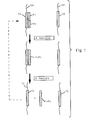
- Controlled amplification according to the invention is depicted in Fig. 1 by target-dependent ligation of probes P1 and P2 hybridized to TS (step A, Fig. 1).
- step B Fig. 1
- the ligated entity P1.P2 is separated from TM. Note that this entity (P1.P2) cannot serve as a template for ligation of P1 and P2.
- Each cycle comprises:
- the LCR step involves addition of probes P1' and P2', in order to amplify the P1.P2 product of linear preamplification.
- Geometric LCR amplification in the presence of the P1.P2 product will yield a signal within a predictable number of cycles.
- a greater number of LCR cycles would be required to yield that signal.
- the invention substantially reduces the chance that undesired blunt end ligation products will be present in sufficient amount to yield an LCR signal in the cycle range producing a target-generated signal.
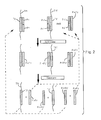
- Fig. 3 linear preamplification is achieved by polymerization, in contrast to the ligation shown in Fig. 1.
- the target sequence TS of target molecule TM is used to produce additional copies of the complementary sequence TS'.
- a primer sequence Pr is supplied which includes a sequence C complementary to the 3' end of TS.
- the primer need only hybridize to the target molecule (TM) 3' to the ligation point that will occur in subsequent LCR.
- Sequence C is hybridized to TS, and polymerase and nucleotide triphosphates are added to extend sequence C in a template-dependent fashion, creating Pr.TS' containing an additional copy of TS', complementary to TS.
- the result of multiple cycles is multiple copies of TS', but those copies do not themselves serve as template for further amplification during the linear stage, since a second primer is omitted.
- Controlled preamplification techniques employing either ligase or polymerase enzymes are useful to increase the sensitivity of LCR.
- controlled initial amplification increases the signal/noise ratio compared to a control that does not include controlled initial amplification.
- controlled amplification may improve the sensitivity by 10 fold or more thus enhancing the ability to distinguish samples containing the desired target from samples without the target.
- the controlled amplification is run for 10-100 cycles.
- the sample may then be heat treated at a temperature sufficient to destroy the activity of the enzyme present in the sample.
- the initial controlled amplification is a ligased-based amplification, this step is optional.
- the reaction mixture is then suitably adjusted (buffer, pH, etc.) in a manner known to those skilled in the art to support the LCR reaction.
- oligonucleotides are added to a concentration sufficient to serve as a complete LCR probe set, fresh ligase may be added, and LCR is performed on the target enriched sample.
- oligonucleotides are used in the geometric phase in equimolar amounts at a final concentration of 10-100nM, more usually 30-100nM.
- Further considerations regarding oligonucleotides, reagents, and cycling conditions for the ligase linear amplification reaction are the same as those used for geometric LCR and are generally disclosed in EP-A-320 308. Conditions which can be used for controlled polymerase reactions are generally disclosed in Maniatis et al. Molecular Cloning (1982 Cold Spring Harbor); and Panet and Khorana (1974) J. Biol. Chem. 249:5213-5221. This polymerization differs from that described in U.S. patent Nos 4,683,202 and 4,683,195, in incorporated herein by reference, in that only one primer is used.
- duplex target DNA sequence is present in the commercially available vector PUC19. It is presented as a single strand for simplicity sake.
- the "-" in the sequence represents the intended point of ligation of the probes.
- Thermostable ligase was prepared according to the procedure described in EP-A-O 373 962. Samples were prepared which contained "1X LCR Buffer"--i.e., 50mM EPPS, pH 7.8, 100mM KCI, 10.0mM MgC12, 1.0mM dithiothreitol, 10mM NH 4 CI, 10ug/ml Bovine Serum Albumin--and 100uM NAD, 20ug/ml carrier DNA such as calf thymus DNA plus equimolar amounts of primers A and B (85nM each). Controlled amplification was performed on a sample containing 1000 target molecules in the presence of thermostable ligase. A single cycle encompasses the following steps and is the same for either linear or geometric ligase-mediated amplification.
- the control sample without target sequence produces signal with characteristic kinetics, and the sample with 1000 target sequences (but no controlled amplification) produces signal which has very similar kinetics.
- the signal in the target-containing sample subjected to initial controlled amplification appeared at least 4 to 6 cycles earlier in the LCR (geometric amplification) procedure than the others.
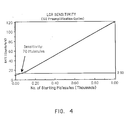
- 1000 targets can be readily distinguished from background in a case where such distinction is difficult without preamplification. This allows identification of numbers of targets not reliably identifiable without linear pre-amplification, and represents an improved sensitivity.
- Example 2 features the use of the target and probe sequences given in Example 1.
- a single oligonucleotide probe, A is added.
- Thermostable DNA polymerase, buffer, and dNTPs are added according to the method described in Maniatis et al., cited above; see also the other references cited above regarding polymerization. Fifty hybridization, extension, and denaturation cycles are performed; the reaction is then stopped and the polymerase activity is destroyed by boiling for 10 minutes.
- the entire preamplified sample is ethanol precipitated and centrifuged, residual salts removed by ethanol wash and the precipitate dried.
- the precipitate is then resuspended in the standard LCR reaction mix, probes A, B, A', B' (80nM for each probe) are added, thermostable ligase is added, and LCR is performed. Controls containing 1000 or zero targets are also run.
- Example 2 Using the target and probe sequences given in Example 1, a single oligonucleotide probe, A, is added to a sample containing 1000 targets. Polymerase-mediated preamplification is performed as in Example 2 including precipitation, washing, resuspension in LCR buffer and addition of ligase enzyme. As opposed to Example 2, only probes A' and B' are added, probe B is omitted. In the absence of probe B, geometric amplification cannot occur and thus a second linear amplification step is initiated. The linear reaction is performed for 50 cycles at which point the reaction is stopped as in Example 1, and fresh thermostable ligase and probe B are added and the geometric amplification is performed for 20-50 additional cycles. Controls may be run as in the previous Examples.
- Duplex DNA having the following sequence (adapted from the L1 region of Human Papilloma Virus Type 16) was used as a target to study the linear preamplification process.
- the sequence is presented as a single strand for simplicity with a hyphen designating the ligation site: 5'-AGGTTGTAAG CACGGATGAA TATGT-TGCAC GCACAAACAT ATATTATCAT G-3'
- the following probe set was designed to hybridize to the above target sequence for use in preamplific- tion of the target sequence.
- probe 179.1 was haptenated with fluorescein for use in the IMx MEIA assay as follows.
- a solution of 15 uL of 0.9 A 260 Unit/uL of oligo 5' XAAGTTGTAAGCACGGATGAATATGT-3' (ID No 3), where X is Aminomodifier II(TM) (Clontech) was treated with 4 mg of fluorescein isothiocyanate (FITC, Kodak) dissolved in 485 uL of sodium borate buffer, pH 9.2, at room temperature for 15h in the dark.
- FITC fluorescein isothiocyanate
- the excess FITC was removed on a NAP-5 column (Pharmacia), and the eluate was concentrated to a volume of 100 uL on a Speedvac(TM) (Savant Instruments).
- the solution was diluted to 200 uL with formamide, and the sample was separated by electrophoresis at 40 W constant power on a 1.5 mm thick, 12% acrylamide/8M urea gel. The electrophoresis was stopped after 5h, and the product band on the gel was visualized with long-wave UV shadowing. The product had a lower mobility than unlabeled starting material.
- the excised FITC-oligo band was extracted overnight with 3 ml of 1.0 M triethylammonium acetate, and the aqueous extracts were lyophilized. Reconstitution of the residue in distilled water was followed by NAP-5 desalting. After haptenation, the probe was diluted to 1012 molecules per uL in Tris-EDTA buffer (10mM Tris, 1 mM EDTA).
- probe 179.2 (ID No 4) was haptenated with fluorescein as described above, using 3'-amino CPG (Glen Research) in place of 5' Aminomodifier II(TM).
- the probe is treated with polynucleotide kinase and diluted to 10 12 molecules per uL.
- CPG controlled pore glass
- the probe was treated with polynucleotide kinase and ATP to phosphorylate the 5' end, and it was diluted to 10 12 molecules per uL.
- probe 179.4 (ID No 6) was haptenated as described above and diluted to 10 12 molecules per uL.
- Each reaction aliquot (minus the ligase) was subjected to 100°C for 3 minutes to denature the target, followed by 85 °C for 30 sec and 50 °C for 20 sec. Then 1 uL of ligase was added. The preamplification reaction was run for 50 thermal cycles (30 secs at 85°C followed by 20 secs at 50°C).
- the LCR geometric amplification phase was accomplished by adding a 3uL aliquot of a pool consisting of:
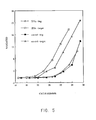
- the following example illustrates template-dependent ligation using reduced probe concentration as a method for controlling blunt end ligation.
- Fig. 5 depicts the results of the control (standard LCR) and of the use of an initial controlled (low probe concentration) ligation ("ICL").
- CF cystic fibrosis
- reaction products were diluted 1:200 with water and 1 uL aliquots were used as target for LCR reactions with probe sets specific for the normal CF allele and the major defective CF allele which contains a three nucleotide deletion (Riordan, J.R. et al. Science 245:1066 (1989); Kerem, B. et al. Science 245:1073 1989).
- LCR probes used for amplification of the normal and deleted CF alleles are listed in Table 1.
- Probes C', E', and D' were phosphorylated as in Example 1, above. LCR was performed for 25 cycles. Each cycle consisted of a 30 sec incubation at 85°C and a 20 sec incubation at 50°C.
- oligonucleotides C' and D were used at 7.5 x 10 11 molecules/reaction and oligonucleotides E and D' at 5 x 10 11 molecules/reaction.
- oligonucleotides C' and D were used at 7.5 x 10 11 molecules/reaction and oligonucleotides E and D' at 5 x 10 11 molecules/reaction.
- Reaction volume in each case was 50uL.
- reaction products were analyzed by the IMx@ MEIA assay. Selected representative results are shown in Table 2. Although all patients were "PCR positive", LCR distinguished those who carried the CF allele from those who did not.
- Example 5 the low probe concentration controlled amplification of Example 5 may be combined with one or more of the weighted amplification stages described above.
Landscapes
- Chemical & Material Sciences (AREA)
- Life Sciences & Earth Sciences (AREA)
- Organic Chemistry (AREA)
- Health & Medical Sciences (AREA)
- Proteomics, Peptides & Aminoacids (AREA)
- Zoology (AREA)
- Wood Science & Technology (AREA)
- Engineering & Computer Science (AREA)
- Genetics & Genomics (AREA)
- Analytical Chemistry (AREA)
- Immunology (AREA)
- Molecular Biology (AREA)
- Microbiology (AREA)
- Biotechnology (AREA)
- Biophysics (AREA)
- Physics & Mathematics (AREA)
- Biochemistry (AREA)
- Bioinformatics & Cheminformatics (AREA)
- General Engineering & Computer Science (AREA)
- General Health & Medical Sciences (AREA)
- Chemical Kinetics & Catalysis (AREA)
- Virology (AREA)
- Pathology (AREA)
- Measuring Or Testing Involving Enzymes Or Micro-Organisms (AREA)
Applications Claiming Priority (2)
| Application Number | Priority Date | Filing Date | Title |
|---|---|---|---|
| US57517790A | 1990-08-30 | 1990-08-30 | |
| US575177 | 1990-08-30 |
Publications (2)
| Publication Number | Publication Date |
|---|---|
| EP0473155A2 true EP0473155A2 (fr) | 1992-03-04 |
| EP0473155A3 EP0473155A3 (en) | 1992-05-20 |
Family
ID=24299250
Family Applications (1)
| Application Number | Title | Priority Date | Filing Date |
|---|---|---|---|
| EP19910114541 Withdrawn EP0473155A3 (en) | 1990-08-30 | 1991-08-29 | Controlled initial target-dependent production of templates for ligase chain reaction |
Country Status (5)
| Country | Link |
|---|---|
| EP (1) | EP0473155A3 (fr) |
| JP (1) | JPH04229200A (fr) |
| KR (1) | KR920004581A (fr) |
| AU (1) | AU8344591A (fr) |
| CA (1) | CA2049879A1 (fr) |
Cited By (11)
| Publication number | Priority date | Publication date | Assignee | Title |
|---|---|---|---|---|
| WO1996040996A1 (fr) * | 1995-06-07 | 1996-12-19 | Abbott Laboratories | Procede de detection de sequences d'acide nucleique ayant recours a une amplification competitive |
| EP0642592A4 (fr) * | 1992-05-29 | 1997-01-02 | Abbott Lab | Reaction en chaine de ligase commen ant avec des sequences d'arn. |
| US5605796A (en) * | 1994-07-19 | 1997-02-25 | Behringwerke Ag | Method for preventing amplification of nucleic acid contaminants in amplification mixtures using nuclease-receptor conjugates |
| US5792614A (en) * | 1994-12-23 | 1998-08-11 | Dade Behring Marburg Gmbh | Detection of nucleic acids by target-catalyzed product formation |
| US5800994A (en) * | 1994-04-04 | 1998-09-01 | Chiron Diagnostics Corporation | Hybridization-ligation assays for the detection of specific nucleic acid sequences |
| US5871921A (en) * | 1994-02-16 | 1999-02-16 | Landegren; Ulf | Circularizing nucleic acid probe able to interlock with a target sequence through catenation |
| US5952201A (en) * | 1994-11-07 | 1999-09-14 | Landegren; Ulf | Method of preparing oligonucleotide probes or primers, vector therefor and use thereof |
| US6180338B1 (en) | 1992-08-04 | 2001-01-30 | Beckman Coulter, Inc. | Method, reagent and kit for the detection and amplification of nucleic acid sequences |
| US6207368B1 (en) | 1992-08-04 | 2001-03-27 | Beckman Coulter, Inc. | Methods and reagents for controlling chain extension and ligation chain reactions |
| US7014994B1 (en) | 1999-03-19 | 2006-03-21 | Cornell Research Foundation,Inc. | Coupled polymerase chain reaction-restriction-endonuclease digestion-ligase detection reaction process |
| WO2011089393A1 (fr) | 2010-01-23 | 2011-07-28 | Trillion Genomics Limited | Détection |
Families Citing this family (1)
| Publication number | Priority date | Publication date | Assignee | Title |
|---|---|---|---|---|
| US6335160B1 (en) | 1995-02-17 | 2002-01-01 | Maxygen, Inc. | Methods and compositions for polypeptide engineering |
Family Cites Families (3)
| Publication number | Priority date | Publication date | Assignee | Title |
|---|---|---|---|---|
| CA1341584C (fr) * | 1988-04-06 | 2008-11-18 | Bruce Wallace | Methode d'amplification at de detection de sequences d'acides nucleiques |
| AU3539089A (en) * | 1988-04-08 | 1989-11-03 | Salk Institute For Biological Studies, The | Ligase-based amplification method |
| ATE142272T1 (de) * | 1989-01-19 | 1996-09-15 | Behringwerke Ag | Nukleinsäure-amplifikation unter verwendung eines einzelprimers |
-
1991
- 1991-08-26 CA CA002049879A patent/CA2049879A1/fr not_active Abandoned
- 1991-08-29 AU AU83445/91A patent/AU8344591A/en not_active Abandoned
- 1991-08-29 KR KR1019910014990A patent/KR920004581A/ko not_active Withdrawn
- 1991-08-29 EP EP19910114541 patent/EP0473155A3/en not_active Withdrawn
- 1991-08-30 JP JP3219720A patent/JPH04229200A/ja active Pending
Cited By (18)
| Publication number | Priority date | Publication date | Assignee | Title |
|---|---|---|---|---|
| US5686272A (en) * | 1992-05-29 | 1997-11-11 | Abbott Laboratories | Amplification of RNA sequences using the ligase chain reaction |
| EP0642592A4 (fr) * | 1992-05-29 | 1997-01-02 | Abbott Lab | Reaction en chaine de ligase commen ant avec des sequences d'arn. |
| US6180338B1 (en) | 1992-08-04 | 2001-01-30 | Beckman Coulter, Inc. | Method, reagent and kit for the detection and amplification of nucleic acid sequences |
| US6207368B1 (en) | 1992-08-04 | 2001-03-27 | Beckman Coulter, Inc. | Methods and reagents for controlling chain extension and ligation chain reactions |
| US5871921A (en) * | 1994-02-16 | 1999-02-16 | Landegren; Ulf | Circularizing nucleic acid probe able to interlock with a target sequence through catenation |
| US6235472B1 (en) | 1994-02-16 | 2001-05-22 | Ulf Landegren | Nucleic acid detecting reagent |
| US5800994A (en) * | 1994-04-04 | 1998-09-01 | Chiron Diagnostics Corporation | Hybridization-ligation assays for the detection of specific nucleic acid sequences |
| US5605796A (en) * | 1994-07-19 | 1997-02-25 | Behringwerke Ag | Method for preventing amplification of nucleic acid contaminants in amplification mixtures using nuclease-receptor conjugates |
| US5952201A (en) * | 1994-11-07 | 1999-09-14 | Landegren; Ulf | Method of preparing oligonucleotide probes or primers, vector therefor and use thereof |
| US5792614A (en) * | 1994-12-23 | 1998-08-11 | Dade Behring Marburg Gmbh | Detection of nucleic acids by target-catalyzed product formation |
| US6368803B1 (en) * | 1994-12-23 | 2002-04-09 | Dade Behring Inc. | Detection of nucleic acids by target-catalyzed formation |
| US6110677A (en) * | 1994-12-23 | 2000-08-29 | Dade Behring Marburg Gmbh | Oligonucleotide modification, signal amplification, and nucleic acid detection by target-catalyzed product formation |
| US6121001A (en) * | 1994-12-23 | 2000-09-19 | Dade Behring Marburg Gmbh | Detection of nucleic acids by target-catalyzed product formation |
| US5955598A (en) * | 1995-06-07 | 1999-09-21 | Abbott Laboratories | Primer compositions and kits for detecting hepatitis B virus |
| WO1996040996A1 (fr) * | 1995-06-07 | 1996-12-19 | Abbott Laboratories | Procede de detection de sequences d'acide nucleique ayant recours a une amplification competitive |
| US5667974A (en) * | 1995-06-07 | 1997-09-16 | Abbott Laboratories | Method for detecting nucleic acid sequences using competitive amplification |
| US7014994B1 (en) | 1999-03-19 | 2006-03-21 | Cornell Research Foundation,Inc. | Coupled polymerase chain reaction-restriction-endonuclease digestion-ligase detection reaction process |
| WO2011089393A1 (fr) | 2010-01-23 | 2011-07-28 | Trillion Genomics Limited | Détection |
Also Published As
| Publication number | Publication date |
|---|---|
| KR920004581A (ko) | 1992-03-27 |
| EP0473155A3 (en) | 1992-05-20 |
| AU8344591A (en) | 1992-03-05 |
| JPH04229200A (ja) | 1992-08-18 |
| CA2049879A1 (fr) | 1992-03-01 |
Similar Documents
| Publication | Publication Date | Title |
|---|---|---|
| EP1453979B1 (fr) | Pcr multiplex | |
| JP3936798B2 (ja) | Rna標的配列の増幅方法 | |
| US6063604A (en) | Target nucleic acid sequence amplification | |
| JP3080178B2 (ja) | 核酸配列の増幅方法およびそのための試薬キット | |
| AU676197B2 (en) | Method, reagent and kit for the detection and amplification of nucleic acid sequences | |
| US5449603A (en) | Method for hybridizing nucleic acids using single-stranded nucleic acid binding protein | |
| JP2703183B2 (ja) | 複数標的の同時増幅 | |
| EP0336731B2 (fr) | Procédé pour l'amplification et détection des séquences d'acides nucléiques | |
| US5512462A (en) | Methods and reagents for the polymerase chain reaction amplification of long DNA sequences | |
| AU2002366098A2 (en) | Multiplex PCR | |
| JPH02503054A (ja) | 核酸配列の増幅および検出 | |
| US7105318B2 (en) | Specific and sensitive nucleic acid detection method | |
| US5474916A (en) | Promotor controlled specific amplification of nucleic acid sequences | |
| EP0632134A2 (fr) | Réactif et procédé pour la transcription inverse à haute température suivi par la réaction en chaîne de la polymérase | |
| US5605824A (en) | Composition for hybridizing nucleic acids using single-stranded nucleic acid binding protein | |
| EP0473155A2 (fr) | Contrôl initial de la production dépendante de la cible de moules par la réaction enchaîne de ligase | |
| EP0795612B1 (fr) | Amplification et détection des acides nucléiques cibles avec une incubation post-amplification | |
| US6335184B1 (en) | Linked linear amplification of nucleic acids | |
| JP3090100B2 (ja) | ホウ素化ヌクレオチドを用いた鎖置換増幅 | |
| JPH05146299A (ja) | 核酸配列の増幅方法およびそのための試薬キツト | |
| US20210371941A1 (en) | Systems and methods for detection of low-copy number nucleic acids | |
| EP4621055A1 (fr) | Kit et procédé de détection de différences dans des séquences de bases | |
| US6124093A (en) | Process for reducing the formation of artifacts during transcription of ribonucleic acids to deoxynucleic acids | |
| JPH05211873A (ja) | 核酸鋳型の特異的増殖方法および核酸の決定方法 | |
| WO1995021270A9 (fr) | Procede, reactif et kit pour la detection et l'amplification de sequences d'acides nucleiques |
Legal Events
| Date | Code | Title | Description |
|---|---|---|---|
| PUAI | Public reference made under article 153(3) epc to a published international application that has entered the european phase |
Free format text: ORIGINAL CODE: 0009012 |
|
| AK | Designated contracting states |
Kind code of ref document: A2 Designated state(s): AT BE CH DE ES FR GB IT LI NL |
|
| PUAL | Search report despatched |
Free format text: ORIGINAL CODE: 0009013 |
|
| AK | Designated contracting states |
Kind code of ref document: A3 Designated state(s): AT BE CH DE ES FR GB IT LI NL |
|
| RIN1 | Information on inventor provided before grant (corrected) |
Inventor name: BACKMAN, KEITH C. Inventor name: CARRINO, JOHN J. Inventor name: SHIMER, GEORGE H. |
|
| 17P | Request for examination filed |
Effective date: 19921110 |
|
| STAA | Information on the status of an ep patent application or granted ep patent |
Free format text: STATUS: THE APPLICATION HAS BEEN WITHDRAWN |
|
| 18W | Application withdrawn |
Withdrawal date: 19930713 |
|
| RIN1 | Information on inventor provided before grant (corrected) |
Inventor name: BACKMAN, KEITH C. Inventor name: CARRINO, JOHN J. Inventor name: SHIMER, GEORGE H. |