EP0475444A1 - Die Verwendung von 4-Fluor-pyrimidin-Derivaten als Komponente für ferroelektrische Flüssigkristallmischungen - Google Patents
Die Verwendung von 4-Fluor-pyrimidin-Derivaten als Komponente für ferroelektrische Flüssigkristallmischungen Download PDFInfo
- Publication number
- EP0475444A1 EP0475444A1 EP91115584A EP91115584A EP0475444A1 EP 0475444 A1 EP0475444 A1 EP 0475444A1 EP 91115584 A EP91115584 A EP 91115584A EP 91115584 A EP91115584 A EP 91115584A EP 0475444 A1 EP0475444 A1 EP 0475444A1
- Authority
- EP
- European Patent Office
- Prior art keywords
- independently
- alkyl
- zero
- formula
- another
- Prior art date
- Legal status (The legal status is an assumption and is not a legal conclusion. Google has not performed a legal analysis and makes no representation as to the accuracy of the status listed.)
- Granted
Links
- 239000000203 mixture Substances 0.000 title claims abstract description 34
- 239000005262 ferroelectric liquid crystals (FLCs) Substances 0.000 title claims abstract description 17
- 150000005744 4-fluoropyrimidines Chemical class 0.000 title claims description 7
- 125000000217 alkyl group Chemical group 0.000 claims abstract description 21
- 125000004432 carbon atom Chemical group C* 0.000 claims abstract description 15
- 150000005699 fluoropyrimidines Chemical class 0.000 claims abstract 3
- -1 2,5-pyridine-diyl Chemical group 0.000 claims description 15
- 239000004973 liquid crystal related substance Substances 0.000 claims description 9
- 238000000034 method Methods 0.000 claims description 8
- 125000004955 1,4-cyclohexylene group Chemical group [H]C1([H])C([H])([H])C([H])([*:1])C([H])([H])C([H])([H])C1([H])[*:2] 0.000 claims description 7
- 125000001140 1,4-phenylene group Chemical group [H]C1=C([H])C([*:2])=C([H])C([H])=C1[*:1] 0.000 claims description 7
- DNCYBUMDUBHIJZ-UHFFFAOYSA-N 1h-pyrimidin-6-one Chemical class O=C1C=CN=CN1 DNCYBUMDUBHIJZ-UHFFFAOYSA-N 0.000 claims description 7
- ZBCSZYVDLLOFMU-UHFFFAOYSA-N 4-fluoropyrimidine Chemical compound FC1=CC=NC=N1 ZBCSZYVDLLOFMU-UHFFFAOYSA-N 0.000 claims description 6
- 229910052799 carbon Inorganic materials 0.000 claims description 6
- 230000008569 process Effects 0.000 claims description 6
- 229910052760 oxygen Inorganic materials 0.000 claims description 5
- 238000002360 preparation method Methods 0.000 claims description 5
- 125000003342 alkenyl group Chemical group 0.000 claims description 4
- 238000006243 chemical reaction Methods 0.000 claims description 2
- XVEFAFPICKTHBB-UHFFFAOYSA-N N[SH3] Chemical compound N[SH3] XVEFAFPICKTHBB-UHFFFAOYSA-N 0.000 claims 2
- 125000001424 substituent group Chemical group 0.000 claims 2
- 125000004956 cyclohexylene group Chemical group 0.000 abstract 1
- 125000000843 phenylene group Chemical group C1(=C(C=CC=C1)*)* 0.000 abstract 1
- 239000012071 phase Substances 0.000 description 28
- 238000000819 phase cycle Methods 0.000 description 16
- 150000001875 compounds Chemical class 0.000 description 11
- YMWUJEATGCHHMB-UHFFFAOYSA-N Dichloromethane Chemical compound ClCCl YMWUJEATGCHHMB-UHFFFAOYSA-N 0.000 description 9
- 239000004990 Smectic liquid crystal Substances 0.000 description 8
- CSJLBAMHHLJAAS-UHFFFAOYSA-N diethylaminosulfur trifluoride Chemical compound CCN(CC)S(F)(F)F CSJLBAMHHLJAAS-UHFFFAOYSA-N 0.000 description 8
- CZPWVGJYEJSRLH-UHFFFAOYSA-N Pyrimidine Chemical compound C1=CN=CN=C1 CZPWVGJYEJSRLH-UHFFFAOYSA-N 0.000 description 5
- 230000000052 comparative effect Effects 0.000 description 5
- 239000007788 liquid Substances 0.000 description 4
- 125000001997 phenyl group Chemical group [H]C1=C([H])C([H])=C(*)C([H])=C1[H] 0.000 description 4
- WEVYAHXRMPXWCK-UHFFFAOYSA-N Acetonitrile Chemical compound CC#N WEVYAHXRMPXWCK-UHFFFAOYSA-N 0.000 description 3
- 0 C=*C(CCC1N)O[C@@]1O Chemical compound C=*C(CCC1N)O[C@@]1O 0.000 description 3
- 239000004642 Polyimide Substances 0.000 description 3
- 238000003682 fluorination reaction Methods 0.000 description 3
- 229910052731 fluorine Inorganic materials 0.000 description 3
- 239000011737 fluorine Substances 0.000 description 3
- 125000001153 fluoro group Chemical group F* 0.000 description 3
- 238000002844 melting Methods 0.000 description 3
- 230000008018 melting Effects 0.000 description 3
- 230000010287 polarization Effects 0.000 description 3
- 229920001721 polyimide Polymers 0.000 description 3
- 230000002269 spontaneous effect Effects 0.000 description 3
- 238000006467 substitution reaction Methods 0.000 description 3
- SVIHKRXLXDVXJL-UHFFFAOYSA-N N[SH2]F Chemical compound N[SH2]F SVIHKRXLXDVXJL-UHFFFAOYSA-N 0.000 description 2
- UIIMBOGNXHQVGW-UHFFFAOYSA-M Sodium bicarbonate Chemical compound [Na+].OC([O-])=O UIIMBOGNXHQVGW-UHFFFAOYSA-M 0.000 description 2
- 230000015572 biosynthetic process Effects 0.000 description 2
- 150000001805 chlorine compounds Chemical class 0.000 description 2
- 239000013078 crystal Substances 0.000 description 2
- 239000012025 fluorinating agent Substances 0.000 description 2
- 150000002222 fluorine compounds Chemical class 0.000 description 2
- VLKZOEOYAKHREP-UHFFFAOYSA-N n-Hexane Chemical compound CCCCCC VLKZOEOYAKHREP-UHFFFAOYSA-N 0.000 description 2
- XHXFXVLFKHQFAL-UHFFFAOYSA-N phosphoryl trichloride Chemical compound ClP(Cl)(Cl)=O XHXFXVLFKHQFAL-UHFFFAOYSA-N 0.000 description 2
- 238000001953 recrystallisation Methods 0.000 description 2
- 239000013558 reference substance Substances 0.000 description 2
- 230000001629 suppression Effects 0.000 description 2
- NIBRAYHIFUGIHI-UHFFFAOYSA-N (4-octoxyphenyl) pyrimidine-5-carboxylate Chemical compound C(CCCCCCC)OC1=CC=C(C=C1)OC(=O)C=1C=NC=NC=1 NIBRAYHIFUGIHI-UHFFFAOYSA-N 0.000 description 1
- 125000000008 (C1-C10) alkyl group Chemical group 0.000 description 1
- 125000006527 (C1-C5) alkyl group Chemical group 0.000 description 1
- WSLDOOZREJYCGB-UHFFFAOYSA-N 1,2-Dichloroethane Chemical compound ClCCCl WSLDOOZREJYCGB-UHFFFAOYSA-N 0.000 description 1
- FNTMXYQHXOKZPV-UHFFFAOYSA-N 2-(4-ethoxyphenyl)-4-fluoro-5-octoxypyrimidine Chemical compound N1=C(F)C(OCCCCCCCC)=CN=C1C1=CC=C(OCC)C=C1 FNTMXYQHXOKZPV-UHFFFAOYSA-N 0.000 description 1
- VPLJEZVXHRAUSR-UHFFFAOYSA-N 2-(4-hydroxyphenyl)-5-octoxy-1H-pyrimidin-6-one Chemical compound CCCCCCCCOc1cnc([nH]c1=O)-c1ccc(O)cc1 VPLJEZVXHRAUSR-UHFFFAOYSA-N 0.000 description 1
- VSQSTXKFPGWJNB-UHFFFAOYSA-N 2-[4-(4-cyclopropylbutoxy)phenyl]-4-fluoro-5-octoxypyrimidine Chemical compound N1=C(F)C(OCCCCCCCC)=CN=C1C(C=C1)=CC=C1OCCCCC1CC1 VSQSTXKFPGWJNB-UHFFFAOYSA-N 0.000 description 1
- MNXMLQDBQDXDDC-UHFFFAOYSA-N 2-[4-(8-cyclopropyloctoxy)phenyl]-4-fluoro-5-octoxypyrimidine Chemical compound N1=C(F)C(OCCCCCCCC)=CN=C1C(C=C1)=CC=C1OCCCCCCCCC1CC1 MNXMLQDBQDXDDC-UHFFFAOYSA-N 0.000 description 1
- WAVYAFBQOXCGSZ-UHFFFAOYSA-N 2-fluoropyrimidine Chemical compound FC1=NC=CC=N1 WAVYAFBQOXCGSZ-UHFFFAOYSA-N 0.000 description 1
- SCURLSPHKAXIFS-UHFFFAOYSA-N 4-fluoro-2-(4-octoxyphenyl)-5-octylpyrimidine Chemical compound C1=CC(OCCCCCCCC)=CC=C1C1=NC=C(CCCCCCCC)C(F)=N1 SCURLSPHKAXIFS-UHFFFAOYSA-N 0.000 description 1
- QOQLRJAGMWSOPK-UHFFFAOYSA-N 4-fluoro-2-phenylpyrimidine Chemical class FC1=CC=NC(C=2C=CC=CC=2)=N1 QOQLRJAGMWSOPK-UHFFFAOYSA-N 0.000 description 1
- FGYWFVDWTAMIBX-UHFFFAOYSA-N 4-fluoro-5-heptyl-2-(4-octoxyphenyl)pyrimidine Chemical compound C1=CC(OCCCCCCCC)=CC=C1C1=NC=C(CCCCCCC)C(F)=N1 FGYWFVDWTAMIBX-UHFFFAOYSA-N 0.000 description 1
- LSJWWULAALLHGP-UHFFFAOYSA-N 4-fluoro-5-nonyl-2-(4-octoxyphenyl)pyrimidine Chemical compound N1=C(F)C(CCCCCCCCC)=CN=C1C1=CC=C(OCCCCCCCC)C=C1 LSJWWULAALLHGP-UHFFFAOYSA-N 0.000 description 1
- PAYVXRFQOJOUMR-UHFFFAOYSA-N 4-fluoro-5-octoxy-2-(4-octoxyphenyl)pyrimidine Chemical compound C1=CC(OCCCCCCCC)=CC=C1C1=NC=C(OCCCCCCCC)C(F)=N1 PAYVXRFQOJOUMR-UHFFFAOYSA-N 0.000 description 1
- RVLAXPQGTRTHEV-UHFFFAOYSA-N 4-pentylcyclohexane-1-carboxylic acid Chemical compound CCCCCC1CCC(C(O)=O)CC1 RVLAXPQGTRTHEV-UHFFFAOYSA-N 0.000 description 1
- QLLIFGVUUOHHBK-UHFFFAOYSA-N 5-decyl-4-fluoro-2-(4-octoxyphenyl)pyrimidine Chemical compound N1=C(F)C(CCCCCCCCCC)=CN=C1C1=CC=C(OCCCCCCCC)C=C1 QLLIFGVUUOHHBK-UHFFFAOYSA-N 0.000 description 1
- FWABCBYRBQSLME-UHFFFAOYSA-N 5-octoxy-2-(4-octoxyphenyl)-1h-pyrimidin-6-one Chemical compound C1=CC(OCCCCCCCC)=CC=C1C1=NC=C(OCCCCCCCC)C(=O)N1 FWABCBYRBQSLME-UHFFFAOYSA-N 0.000 description 1
- QOSSAOTZNIDXMA-UHFFFAOYSA-N Dicylcohexylcarbodiimide Chemical compound C1CCCCC1N=C=NC1CCCCC1 QOSSAOTZNIDXMA-UHFFFAOYSA-N 0.000 description 1
- 229910019213 POCl3 Inorganic materials 0.000 description 1
- ZIIKHYUMWDNFLJ-TZIWHRDSSA-N [4-(4-fluoro-5-octoxypyrimidin-2-yl)phenyl] (2r,3r)-3-propyloxirane-2-carboxylate Chemical compound N1=C(F)C(OCCCCCCCC)=CN=C1C(C=C1)=CC=C1OC(=O)[C@H]1[C@@H](CCC)O1 ZIIKHYUMWDNFLJ-TZIWHRDSSA-N 0.000 description 1
- CHNHKWJACPNPSS-UHFFFAOYSA-N [4-(5-octylpyrimidin-2-yl)phenyl] pyrimidine-5-carboxylate Chemical compound C(CCCCCCC)C=1C=NC(=NC=1)C1=CC=C(C=C1)OC(=O)C=1C=NC=NC=1 CHNHKWJACPNPSS-UHFFFAOYSA-N 0.000 description 1
- 239000002253 acid Substances 0.000 description 1
- 150000007513 acids Chemical class 0.000 description 1
- 239000000853 adhesive Substances 0.000 description 1
- 230000001070 adhesive effect Effects 0.000 description 1
- 238000000149 argon plasma sintering Methods 0.000 description 1
- 230000004888 barrier function Effects 0.000 description 1
- 230000008901 benefit Effects 0.000 description 1
- 235000010290 biphenyl Nutrition 0.000 description 1
- 150000004074 biphenyls Chemical class 0.000 description 1
- IAHGHWYMEWXXET-UHFFFAOYSA-N butyl-[4-[4-fluoro-2-(4-octoxyphenyl)pyrimidin-5-yl]oxybutyl]-dimethylsilane Chemical compound C1=CC(OCCCCCCCC)=CC=C1C1=NC=C(OCCCC[Si](C)(C)CCCC)C(F)=N1 IAHGHWYMEWXXET-UHFFFAOYSA-N 0.000 description 1
- 230000008859 change Effects 0.000 description 1
- 239000003153 chemical reaction reagent Substances 0.000 description 1
- 238000005660 chlorination reaction Methods 0.000 description 1
- 239000000460 chlorine Substances 0.000 description 1
- 230000003098 cholesteric effect Effects 0.000 description 1
- 150000001840 cholesterol esters Chemical class 0.000 description 1
- 238000004587 chromatography analysis Methods 0.000 description 1
- 150000001851 cinnamic acid derivatives Chemical class 0.000 description 1
- 239000000470 constituent Substances 0.000 description 1
- 238000002425 crystallisation Methods 0.000 description 1
- 230000008025 crystallization Effects 0.000 description 1
- IGARGHRYKHJQSM-UHFFFAOYSA-N cyclohexylbenzene Chemical class C1CCCCC1C1=CC=CC=C1 IGARGHRYKHJQSM-UHFFFAOYSA-N 0.000 description 1
- 125000004212 difluorophenyl group Chemical group 0.000 description 1
- 150000002148 esters Chemical class 0.000 description 1
- YCWDQAKDVQNVAR-UHFFFAOYSA-N ethyl pyrimidine-5-carboxylate Chemical compound CCOC(=O)C1=CN=CN=C1 YCWDQAKDVQNVAR-UHFFFAOYSA-N 0.000 description 1
- 239000012530 fluid Substances 0.000 description 1
- 150000005754 fluoropyridines Chemical class 0.000 description 1
- 239000011521 glass Substances 0.000 description 1
- 239000012535 impurity Substances 0.000 description 1
- 238000010348 incorporation Methods 0.000 description 1
- 229910052751 metal Inorganic materials 0.000 description 1
- 239000002184 metal Substances 0.000 description 1
- 230000003287 optical effect Effects 0.000 description 1
- 239000012074 organic phase Substances 0.000 description 1
- 238000002161 passivation Methods 0.000 description 1
- RLOWWWKZYUNIDI-UHFFFAOYSA-N phosphinic chloride Chemical compound ClP=O RLOWWWKZYUNIDI-UHFFFAOYSA-N 0.000 description 1
- 239000004033 plastic Substances 0.000 description 1
- 150000003222 pyridines Chemical class 0.000 description 1
- 150000003230 pyrimidines Chemical class 0.000 description 1
- 230000009467 reduction Effects 0.000 description 1
- 238000004904 shortening Methods 0.000 description 1
- 229910000030 sodium bicarbonate Inorganic materials 0.000 description 1
- 235000017557 sodium bicarbonate Nutrition 0.000 description 1
- 125000006850 spacer group Chemical group 0.000 description 1
- 230000007480 spreading Effects 0.000 description 1
- 239000000126 substance Substances 0.000 description 1
- 239000000725 suspension Substances 0.000 description 1
- 150000001911 terphenyls Chemical class 0.000 description 1
- VLLMWSRANPNYQX-UHFFFAOYSA-N thiadiazole Chemical compound C1=CSN=N1.C1=CSN=N1 VLLMWSRANPNYQX-UHFFFAOYSA-N 0.000 description 1
- 239000010409 thin film Substances 0.000 description 1
- UFXIRMVZNARBDL-UHFFFAOYSA-N trifluoro(morpholin-4-yl)-$l^{4}-sulfane Chemical compound FS(F)(F)N1CCOCC1 UFXIRMVZNARBDL-UHFFFAOYSA-N 0.000 description 1
Classifications
-
- C—CHEMISTRY; METALLURGY
- C09—DYES; PAINTS; POLISHES; NATURAL RESINS; ADHESIVES; COMPOSITIONS NOT OTHERWISE PROVIDED FOR; APPLICATIONS OF MATERIALS NOT OTHERWISE PROVIDED FOR
- C09K—MATERIALS FOR MISCELLANEOUS APPLICATIONS, NOT PROVIDED FOR ELSEWHERE
- C09K19/00—Liquid crystal materials
- C09K19/04—Liquid crystal materials characterised by the chemical structure of the liquid crystal components, e.g. by a specific unit
- C09K19/42—Mixtures of liquid crystal compounds covered by two or more of the preceding groups C09K19/06 - C09K19/40
-
- C—CHEMISTRY; METALLURGY
- C09—DYES; PAINTS; POLISHES; NATURAL RESINS; ADHESIVES; COMPOSITIONS NOT OTHERWISE PROVIDED FOR; APPLICATIONS OF MATERIALS NOT OTHERWISE PROVIDED FOR
- C09K—MATERIALS FOR MISCELLANEOUS APPLICATIONS, NOT PROVIDED FOR ELSEWHERE
- C09K19/00—Liquid crystal materials
- C09K19/02—Liquid crystal materials characterised by optical, electrical or physical properties of the components, in general
-
- C—CHEMISTRY; METALLURGY
- C07—ORGANIC CHEMISTRY
- C07D—HETEROCYCLIC COMPOUNDS
- C07D239/00—Heterocyclic compounds containing 1,3-diazine or hydrogenated 1,3-diazine rings
- C07D239/02—Heterocyclic compounds containing 1,3-diazine or hydrogenated 1,3-diazine rings not condensed with other rings
- C07D239/24—Heterocyclic compounds containing 1,3-diazine or hydrogenated 1,3-diazine rings not condensed with other rings having three or more double bonds between ring members or between ring members and non-ring members
- C07D239/28—Heterocyclic compounds containing 1,3-diazine or hydrogenated 1,3-diazine rings not condensed with other rings having three or more double bonds between ring members or between ring members and non-ring members with hetero atoms or with carbon atoms having three bonds to hetero atoms with at the most one bond to halogen, directly attached to ring carbon atoms
- C07D239/32—One oxygen, sulfur or nitrogen atom
- C07D239/34—One oxygen atom
-
- C—CHEMISTRY; METALLURGY
- C07—ORGANIC CHEMISTRY
- C07D—HETEROCYCLIC COMPOUNDS
- C07D405/00—Heterocyclic compounds containing both one or more hetero rings having oxygen atoms as the only ring hetero atoms, and one or more rings having nitrogen as the only ring hetero atom
- C07D405/02—Heterocyclic compounds containing both one or more hetero rings having oxygen atoms as the only ring hetero atoms, and one or more rings having nitrogen as the only ring hetero atom containing two hetero rings
- C07D405/12—Heterocyclic compounds containing both one or more hetero rings having oxygen atoms as the only ring hetero atoms, and one or more rings having nitrogen as the only ring hetero atom containing two hetero rings linked by a chain containing hetero atoms as chain links
-
- C—CHEMISTRY; METALLURGY
- C07—ORGANIC CHEMISTRY
- C07F—ACYCLIC, CARBOCYCLIC OR HETEROCYCLIC COMPOUNDS CONTAINING ELEMENTS OTHER THAN CARBON, HYDROGEN, HALOGEN, OXYGEN, NITROGEN, SULFUR, SELENIUM OR TELLURIUM
- C07F7/00—Compounds containing elements of Groups 4 or 14 of the Periodic Table
- C07F7/02—Silicon compounds
- C07F7/08—Compounds having one or more C—Si linkages
- C07F7/0803—Compounds with Si-C or Si-Si linkages
- C07F7/081—Compounds with Si-C or Si-Si linkages comprising at least one atom selected from the elements N, O, halogen, S, Se or Te
- C07F7/0812—Compounds with Si-C or Si-Si linkages comprising at least one atom selected from the elements N, O, halogen, S, Se or Te comprising a heterocyclic ring
-
- C—CHEMISTRY; METALLURGY
- C09—DYES; PAINTS; POLISHES; NATURAL RESINS; ADHESIVES; COMPOSITIONS NOT OTHERWISE PROVIDED FOR; APPLICATIONS OF MATERIALS NOT OTHERWISE PROVIDED FOR
- C09K—MATERIALS FOR MISCELLANEOUS APPLICATIONS, NOT PROVIDED FOR ELSEWHERE
- C09K19/00—Liquid crystal materials
- C09K19/04—Liquid crystal materials characterised by the chemical structure of the liquid crystal components, e.g. by a specific unit
- C09K19/06—Non-steroidal liquid crystal compounds
- C09K19/34—Non-steroidal liquid crystal compounds containing at least one heterocyclic ring
- C09K19/3441—Non-steroidal liquid crystal compounds containing at least one heterocyclic ring having nitrogen as hetero atom
- C09K19/345—Non-steroidal liquid crystal compounds containing at least one heterocyclic ring having nitrogen as hetero atom the heterocyclic ring being a six-membered aromatic ring containing two nitrogen atoms
- C09K19/3458—Uncondensed pyrimidines
-
- C—CHEMISTRY; METALLURGY
- C09—DYES; PAINTS; POLISHES; NATURAL RESINS; ADHESIVES; COMPOSITIONS NOT OTHERWISE PROVIDED FOR; APPLICATIONS OF MATERIALS NOT OTHERWISE PROVIDED FOR
- C09K—MATERIALS FOR MISCELLANEOUS APPLICATIONS, NOT PROVIDED FOR ELSEWHERE
- C09K19/00—Liquid crystal materials
- C09K19/04—Liquid crystal materials characterised by the chemical structure of the liquid crystal components, e.g. by a specific unit
- C09K19/06—Non-steroidal liquid crystal compounds
- C09K19/34—Non-steroidal liquid crystal compounds containing at least one heterocyclic ring
- C09K19/3441—Non-steroidal liquid crystal compounds containing at least one heterocyclic ring having nitrogen as hetero atom
- C09K19/345—Non-steroidal liquid crystal compounds containing at least one heterocyclic ring having nitrogen as hetero atom the heterocyclic ring being a six-membered aromatic ring containing two nitrogen atoms
- C09K19/3458—Uncondensed pyrimidines
- C09K19/3466—Pyrimidine with at least another heterocycle in the chain
-
- C—CHEMISTRY; METALLURGY
- C09—DYES; PAINTS; POLISHES; NATURAL RESINS; ADHESIVES; COMPOSITIONS NOT OTHERWISE PROVIDED FOR; APPLICATIONS OF MATERIALS NOT OTHERWISE PROVIDED FOR
- C09K—MATERIALS FOR MISCELLANEOUS APPLICATIONS, NOT PROVIDED FOR ELSEWHERE
- C09K19/00—Liquid crystal materials
- C09K19/04—Liquid crystal materials characterised by the chemical structure of the liquid crystal components, e.g. by a specific unit
- C09K19/40—Liquid crystal materials characterised by the chemical structure of the liquid crystal components, e.g. by a specific unit containing elements other than carbon, hydrogen, halogen, oxygen, nitrogen or sulfur, e.g. silicon, metals
- C09K19/406—Liquid crystal materials characterised by the chemical structure of the liquid crystal components, e.g. by a specific unit containing elements other than carbon, hydrogen, halogen, oxygen, nitrogen or sulfur, e.g. silicon, metals containing silicon
Definitions
- Ferroelectric liquid crystalline mixtures have been of particular interest in recent years (see, for example, Lagerall et al. "Ferroelectric Liquid Crystals for Display", SID Symposium, October Meeting 1985, San Diego, Ca.USA).
- EP-B 0 158 137 describes 4-fluoropyrimidines as compounds and as mixture components in general. However, they show little or no tendency to develop smectic phases.
- the present invention relates to the use of special 4-fluoropyrimidine derivatives as a component for a liquid crystal mixture, at least one 4-fluoropyrimidine of the general formula (I) being used as a component in a ferroelectric liquid crystal mixture consisting of 2 to 20, preferably 2 to 15, components starts.
- the invention further relates to a ferroelectric liquid crystal mixture consisting of 2 to 20 components which contains at least one 4-fluoropyrimidine of the general formula (I) as one component.
- This FLC mixture generally contains 0.1 to 80, preferably 1 to 60, in particular 1 to 20 mol% of the compound of the formula (I). If several of the compounds are present in the mixture, the total content is 0.1 to 80 mol%, preferably 1 to 60 mol%.
- the other constituents of the mixtures are preferably selected from the known compounds with nematic, cholesteric and / or inclined / smectic phases, these include, for example, thiadiazole, difluorophenyls, fluoropyridines, pyridines, biphenyls, terphenyls, phenylcyclohexanes, cyclohexylbiphenyls, pyrimidines, cinnamic acid esters, cholesterol esters or various bridged esters of p-alkylbenzoic acids.
- liquid crystal mixtures described can be used advantageously in electro-optical switching and display devices (FLC light valves or displays) and lead, for example, to a shortening of the switching time and to spreading of the nematic phase.
- FLC light valves or displays include the following components: a liquid-crystalline mixture (containing a 4-fluoropyrimidine), carrier plates (e.g. made of glass or plastic), coated with transparent electrodes (two electrodes), at least one orientation layer, spacers, adhesive frames, polarizers, and thin ones for color displays Color filter layers.
- Other possible components are antireflection, passivation, compensation and barrier layers as well as electrically non-linear layers Elements such as thin-film transistors (TFT) and metal-insulator-metal (MIM) elements.
- TFT thin-film transistors
- MIM metal-insulator-metal
- the 4-fluoropyrimidines of the formula (I) are chemically, photochemically and thermally stable; they preferably have both S c phases and nematic phases. Particularly preferred are the 5-alkyloxy-2- (4-alkyloxy) phenyl-4-fluoropyrimidines which, in addition to the S c phase, also have lower melting points than their non-fluorinated analogs. Preferably, the fluorine substitution also suppresses the formation of higher order phases.
- Preferred fluorinating agents are aminofluorosulfurans, in which in formula (III) R 5 and R 6 C i - to C 3 -alkyl, or R 5 and R 6 together the group - (CH 2 ) 2 -0- (CH 2 ) 2 - mean (see, for example, M. Hudlicky in Org. Reactions 53, 513). Diethylaminosulfur trifluoride and morpholinosulfur trifluoride are particularly preferably used.
- the unfluorinated comparative compound has a melting point of 51 ° C, which is 7 ° C higher.
- the unfluorinated reference substance has a higher order smectic phase up to 83 ° C.
- the fluorine substitution obviously leads to a suppression of the higher ordered smectic phase and thus to an expansion of the S c phase after low temperatures.
- the unfluorinated reference substance on the other hand, has a higher-order smectic phase at 74 ° C, which is obviously suppressed by the fluorination.
- the substance according to the invention has a low melting point and an S c phase is observed instead of the S A phase.
- the fluorine substitution leads to a suppression of the orthogonal S A phase and an intensification of the inclined S c phase.
- a ferroelectric mixture consists of the following components and has the following phase sequence S c * 84 S A * 97 N * 125 I.
- This mixture switches at a temperature of 60 ° C with a field strength of 10 V ⁇ m -1 in a 2 ⁇ m thick cell with a switching time of 140 ⁇ sec.
- Example of use 2 A mixture consists of the components
- the ferroelectric mixture switches in a 2 ⁇ m thick polyimide-coated cell with an applied pulse field strength of 10 V ⁇ m -1 with a pulse width of 114 ⁇ s.
- This example shows that fast-switching ferroelectric mixtures can be produced with the compounds according to the invention.
- the ferroelectric mixture switches in a 2 ⁇ m thick cell coated with polyimide with an applied pulse field strength of 10 V ⁇ m -1 with a pulse width of 115 ⁇ s.
- This example proves that the compounds according to the invention contribute to a reduction in the switching time in ferroelectric mixtures.
- the mixture with the component according to the invention has a broader phase.
Landscapes
- Chemical & Material Sciences (AREA)
- Organic Chemistry (AREA)
- Crystallography & Structural Chemistry (AREA)
- Engineering & Computer Science (AREA)
- Materials Engineering (AREA)
- Liquid Crystal Substances (AREA)
- Plural Heterocyclic Compounds (AREA)
Abstract
Description
- Die ungewöhnliche Kombination von anisotropem und fluidem Verhalten der Flüssigkristalle hat zu ihrer Verwendung in einer Vielzahl verschiedener elektro-optischer Schalt- und Anzeigevorrichtungen geführt. Dabei können ihre elektrischen, magnetischen, elastischen und/oder thermischen Eigenschaften zu Orientierungsänderungen genutzt werden. Optische Effekte lassen sich beispielsweise mit Hilfe der Doppelbrechung, der Einlagerung dichroitisch absorbierender Farbstoffmoleküle ("guest-host mode") oder der Lichtstreuung erzielen.
- Zur Erfüllung der ständig steigenden Praxisanforderungen auf den verschiedenen Anwendungsgebieten besteht laufend ein Bedarf an neuen verbesserten Flüssigkristall ("liquid crystal")-Mischungen und somit auch an einer Vielzahl mesogener Verbindungen unterschiedlicher Struktur. Dies gilt sowohl für die Gebiete, bei denen nematische LC-Phasen verwendet werden, als auch für solche mit smektischen LC-Phasen.
- Auf besonderes Interesse sind in den letzten Jahren ferroelektrische flüssigkristalline Mischungen (FLC-Mischungen) gestoßen (siehe z.B. Lagerall et al. "Ferroelectric Liquid Crystals for Display", SID Symposium, October Meeting 1985, San Diego, Ca. USA).
- Für die praktische Verwendung von ferroelektrischen Flüssigkristallen in elektrooptischen Anzeigen werden chirale, geneigt-smektische Phasen wie z.B. Sc Phasen benötigt [siehe R.B. Meyer, L. Liebert, L, Strzelecki und P. Keller, J. Physique 36, L-69 (1975)], die über einen großen Temperaturbereich stabil sind. Dieses Ziel kann man mit Verbindungen erreichen, die selbst solche Phasen, z.B. Sc* Phasen, ausbilden oder aber, indem man nicht chirale geneigt-smektische Phasen ausbildende Verbindungen mit optisch aktiven Verbindungen dotiert [siehe M. Brunet, Cl. Williams, Ann. Phys. 3, 237 (1978)].
- Da der flüssigkristalline Temperaturbereich der meisten ferroelektrischen Flüssigkristallsysteme zu klein ist, besteht laufend ein Bedarf an neuen Komponenten und neuen Flüssigkristallmischungen, die eine Sc-Phase nahe Raumtemperatur ausbilden.
- In EP-B 0 158 137 werden 4-Fluorpyrimidine als Verbindungen und als Mischungskomponenten allgemein beschrieben. Sie weisen jedoch keine oder nur eine geringe Tendenz zur Ausbildung smektischer Phasen auf.
- Die vorliegende Erfindung betrifft die Verwendung von speziellen 4-Fluorpyrimidin-Derivaten als Komponente für eine Flüssigkristallmischung, wobei man mindestens ein 4-Fluorpyrimidin der allgemeinen Formel (I) als Komponente in einer ferroelektrischen Flüssigkristallmischung bestehend aus 2 bis 20, vorzugsweise 2 bis 15, Komponenten einsetzt.

- Die Symbole haben hierbei folgende Bedeutung:
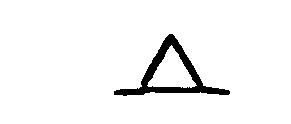
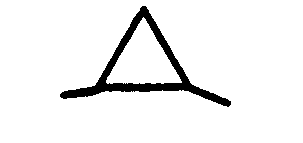
- R1, R2 unabhängig voneinander geradkettiges oder verzweigtes Alkyl mit 1 bis 16 C-Atomen, wobei ein oder zwei nicht benachbarte -CH2-Gruppen durch -O-,-S-, -CO-, -CO-O-, -O-CO-, - CH = CH-, -OC(O)O-, -C=C-,


- R3, R4 unabhängig voneinander H oder Alkyl mit 1 bis 16 oder Alkenyl mit 2 bis 16 C-Atomen, oder R3 und R4 zusammen -(CH2)4 oder -(CH2)5
- -M1- -CO-O, -O-CO-, -CH2-O-, -O-CH2-, -C=C-, -CH=CH-, -CH2-CH2-, -CH2CH2CH2CH2-, -CH2CH2CH2O-
- -M2- -CH2-O-,


- a, b unabhängig voneinander Null oder Eins, unter der Bedingung, daß a Null ist, wenn b Null ist,

- In einer bevorzugten Ausführungsform haben die Symbole in Formel (I) folgende Bedeutung:
- R1, R2 unabhängig voneinander Alkyl mit 1 bis 16 C-Atomen, wobei eine -CH2-Gruppe durch -O-, -CO-O-, -O-CO-,


- -M1- CO-O, O-CO, CH20 oder OCH2
- -M 2- CO-O, CH20
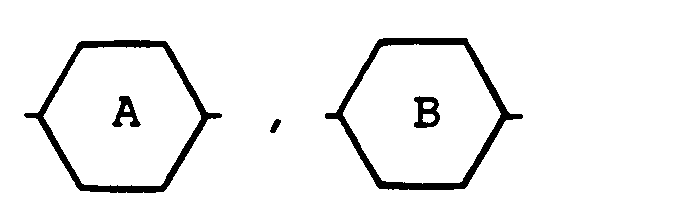
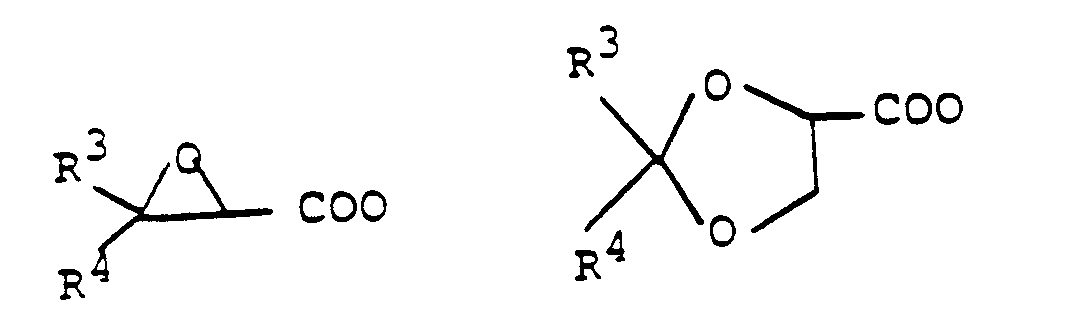
- R3, R4 beide H oder C1-C5-Alkyl oder R3 und R4 zusammen -(CH2)5-
- a, b unabhängig voneinander Null oder Eins, unter der Bedingung, daß a Null ist, wenn b Null ist.
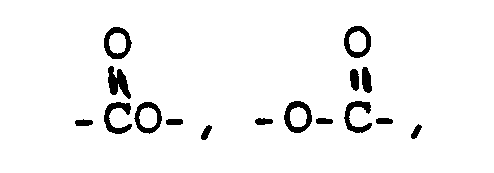
- Besonders bevorzugt bedeuten R1, R2 unabhängig voneinander Alkyl mit 5 bis 12 C-Atomen, wobei eine -CH2-Gruppe durch -O- und eine weitere -CH2-Gruppe, insbesondere die endständige CH2-Gruppe des Alkyls, durch

- -M1- CO-O oder O-CO,


- R3, R4 beide gleich H oder C1-Cs-Alkyl oder R3 und R4 zusammen -(CH2)s- und
- a=b b Null oder Eins.
- Die Erfindung betrifft ferner eine ferroelektrische Flüssigkristallmischung bestehend aus 2 bis 20 Komponenten, die als eine Komponente mindestens ein 4-Fluor-pyrimidin der allgemeinen Formel (I) enthält.
- Diese FLC-Mischung enthält im allgemeinen 0,1 bis 80, vorzugsweise 1 bis 60, insbesondere 1 bis 20 Mol-% der Verbindung der Formel (I). Sind mehrere der Verbindungen in der Mischung enthalten, so liegt der Gesamtgehalt bei 0,1 bis 80 Mol-%, vorzugsweise bei 1 bis 60 Mol-%.
- Die anderen Bestandteile der Mischungen werden vorzugsweise ausgewählt aus den bekannten Verbindungen mit nematischen, cholesterischen und/oder geneigt/smektischen Phasen, dazu gehören beispielsweise Thiadiazol, Difluorphenyle, Fluorpyridine, Pyridine, Biphenyle, Terphenyle, Phenylcyclohexane, Cyclohexylbiphenyle, Pyrimidine, Zimtsäureester, Cholesterinester oder verschieden überbrückte Ester von p-Alkylbenzoesäuren.
- Die beschriebenen Flüssigkristallmischungen lassen sich in elektrooptischen Schalt- und Anzeigevorrichtungen (FLC-Lichtventilen bzw. Displays) vorteilhaft einsetzen und führen z.B. zu einer Verkürzung der Schaltzeit und zu Verbreitungen der nematischen Phase. Diese weisen u.a. folgende Bestandteile auf: eine flüssigkristalline Mischung (enthaltend ein 4-Fluorpyrimidin), Trägerplatten (z.B. aus Glas oder Kunststoff), beschichtet mit transparenten Elektroden (zwei Elektroden), mindestens eine Orientierungsschicht, Abstandhalter, Kleberahmen, Polarisatoren, sowie für Farbdisplays dünne Farbfilterschichten. Weiter mögliche Komponenten sind Antireflex-, Passivierungs-, Ausgleichs- und Sperrschichten sowie elektrisch nichtlineare Elemente, wie z.B. Dünnschichttransistoren (TFT) und Metall-Isolator-Metall(MIM)-Elemente. Im Detail ist der allgemeine Aufbau von Flüssigkristalldisplays bereits in einschlägigen Monographien beschrieben (z.B. E. Kaneko, "Liquid Crystal Displays", KTK, Scientific Publishers, 1987, Seiten 12-30 und 163-172).
- Die 4-Fluor-pyrimidine der Formel (I) sind chemisch, photochemisch und thermisch stabil; sie weisen vorzugsweise sowohl Sc-Phasen als auch nematische Phasen auf. Besonders bevorzugt sind dabei die 5-Alkyloxy-2-(4-alkyloxy)phenyl-4-fluor-pyrimidine, die neben der Sc-Phase auch noch niedrigere Schmelzpunkte als ihre nichzt fluorierten Analogen aufweisen. Vorzugsweise unterdrückt die Fluor-Substitution ferner die Bildung von höhergeordneten Phasen.
- Die Erfindung betrifft ein Verfahren zur Herstellung von 4-Fluor-pyrimidin-Derivaten, insbesondere solcher der Formel (I), wobei man Pyrimidin-4-on-Verbindungen der Formel (II) mit einem Aminofluorosulfuran der Formel (III) zur Reaktion bringt,


- c = eine ganze Zahl von 1 bis 5,
- d = Null oder 1 und
- e = eine ganze Zahl von 1 bis 5 sind. Dabei wird eine
- Bevorzugt werden als Fluorierungsmittel Aminofluorosulfurane, bei denen in Formel (III) R5 und R6 Ci- bis C3-Alkyl, oder R5 und R6 zusammen die Gruppe -(CH2)2-0-(CH2)2- bedeuten, (siehe z.B. M. Hudlicky in Org. Reactions 53, 513). Besonders bevorzugt werden Diethylaminoschwefeltrifluorid und Morpholinoschwefeltrifluorid eingesetzt.
- Die Erfindung wird durch die nachfolgenden Beispiele näher erläutert.
-

- Eine Suspension von 2.1 g 5-Octyloxy-2-(4-octyloxy-phenyl) pyrimidin-4-on (hergestellt z.B. nach Boller et al., Z. Naturf. 33b, 433 (1978)) in 30 ml Dichlormethan wird bei 0°C binnen 10 Minuten mit einer Lösung von 0.7 ml Diethylaminoschwefeltrifluorid (DAST) in 10 ml Dichlormethan versetzt. Nach 8 h bei 40 °C wird mit wäßriger Natriumhydrogencarbonatlösung versetzt. Die organische Phase liefert nach Chromatographie und Umkristallisation aus Acetonitril 0.7 g farblose Kristalle. Phasenfolge X 43,5 Sc 52 N 64,2 I
- Die unfluorierte Vergleichsverbindung weist mit 51 °C einen Schmelzpunkt auf, der um 7°C höher liegt.
- Analog werden erhalten:
- 4-Fluor-5-heptyl-2-(4-octyloxy-phenyl)pyrimidin Phasenfolge X 40 N 43.8 I
- 4-Fluor-5-octyl-2-(4-octyloxy-phenyl)pyrimidin Phasenfolge X 37 N 41,5 I
- 4-Fluor-5-nonyl-2-(4-octyloxy-phenyl)pyrimidin Phasenfolge X 34 N 45 I
- 5-Decyl-4-fluor-2-(4-octyloxy-phenyl)pyrimidin Phasenfolge X 36 N 43 I
- 2-(4-Ethoxy-phenyl)-4-fluor-5-octyloxy-pyrimidin Phasenfolge X 70,5 (N) 55 I
- 5-[4-(Butyldimethylsilyl)butyloxy]-4-fluor-2-(4-octyloxyphenyl)pyrimidin Phasenfolge: X 12.4 N 16 I
- 4-Fluor-5-octyloxy-2-[4-(4-trans-pentyl-cyclohexyl)phenyl]pyrimidin Phasenfolge X 71 (Sc) 61 N 148 I
- Die unfluorierte Vergleichssubstanz weist bis 83°C eine höher geordnete smektische Phase auf. Offensichtlich führt die Fluorsubstitution zu einer Unterdrückung der höher geordneten smektischen Phase und damit zu einer Ausweitung der Sc-Phase nach tiefen Temperaturen.
- 2-[4-(4-Cyclopropylbutyloxy)phenyl]-4-fluor-5-octyloxypyrimidin Phasenfolge X (45 N) 62 I
- 2-[4-(8-Cyclopropyloctyloxy)phenyl]-4-fluor-5-octyloxypyrimidin Phasenfolge X 51 (Sc 45 N 55) I
-

- Eine Lösung von 1.6 g 5-Octyloxy-2-[4-(4-transpentylcyclohexylcarbonyloxy)phenyl]pyrimidin-4-on (erhalten durch Umsetzung von 2-(4-Hydroxy-phenyl)-5-octyloxy-pyrimidin-4-on - Herstellung nach Boller et al. - mit trans-4-Pentylcyclohexancarbonsäure mittels Dicyclohexylcarbodiimid) in 40 ml Dichlormethan wird mit 0.45 ml Diethylamino-schwefeltrifluorid versetzt und 16 h bei 20°C gehalten. Nach Aufarbeitung wie in Beispiel 1 und Umkristallisation aus n-Hexan werden 0.3 g farblose Kristelle erhalten.
- Phasenfolge X 80 Sc 87 N 173 I
- Diese Sc-Phase ist bis zur Kristallisation bei 60 existent.
- Die unfluorierte Vergleichssubstanz weist hingegen bei 74°C eine höher geordnete smektische Phase auf, die offensichtlich durch die Fluorierung unterdrückt wird.
- Analog werden erhalten:
- 4-Fluor-5-octyl-2-[4-(4-trans-pentylcyclohexylcarbonyloxy) phenyl]pyrimidin Phasenfolge X 78 N 137 I
- (2R,3R)-3-Propyloxirancarbonsäure-[4-(4-fluor-5-octyloxypyrimidin-2-yl)phenyl]ester Drehwert [α]20 D =-24.9° (c = 2, 1,2-Dichlorethan) Phasenfolge X 90 I
- 2-(Octyloxyphenyl)-4-fluor-5-(4'-trans-pentyl-cyclohexylcarbonyloxy)-pyrimidin Phasenfolge: X 61 Sc 77 N 188 I
- 2-Dodecyloxyphenyl-5-(4'-trans-pentyl-cyclohexancarbonyloxy)-pyrimidin Phasenfolge: X 90 SA 185 N 188
- Die erfindungsgemäße Substanz weist einen niedrigen Schmelzpunkt auf und anstelle der SA-Phase beobachtet man eine Sc-Phase. Die Fluor-Substitution führt zu einer Unterdrückung der orthogonalen SA-Phase und zu einer Verstärkung der geneigten Sc-Phase.
- 4-Fluor-2-(4-trans-pentylcyclohexyl)-pyrimidin-5-carbonsäureethylester 37 I
- 4-Fluor-2-(4-trans-pentylcyclohexyl)-pyrimidin-5-carbonsäure-(4-octyloxyphenyl)ester X 80 Sc 98 SA 118 N 143 I
- 4-Fluor-2-(4-trans-pentylcyclohexyl)-pyrimidin-5-carbonsäure[4-(5-octyl-pyrimidin-2-yl)phenyl]ester X 120 N 233 I
- Eine ferroelektrische Mischung besteht aus den folgenden Komponenten

- Diese Mischung schaltet bei einer Temperatur von 60 °C bei einer Feldstärke von 10 V µm-1 in einer 2 µm dicken Zelle mit einer Schaltzeit von 140 µsec.
-

- zeigt folgende flüssigkristalline Phasenbereiche:
- Sc 58 SA 62N 80 I
- Die ferroelektrische Mischung schaltet in einer 2 um dicken mit Polyimid beschichteten Zelle bei einem angelegte Pulsfeldstärke von 10 Vµm-1 mit einer Pulsbreite von 114 µs.
- Dieses Beispiel belegt, daß mit den erfindungsgemäßen Verbindungen schnell schaltende ferroelektrische Mischungen hergestellt werden können.
-
- a) Eine Mischung besteht aus den Komponentenzeigt folgende flüssigkristalline Phasenbereiche:


- b) Eine Vergleichsmischung, diesich von der obengenannten nur dadurch unterscheidet, daßsie keine Fluor-pyrimidin-Komponente enthält weist bei 25 ° C eine spontane Polarisation von 27 nC/cm auf und zeigt folgende flüssigkristalline Phasenbereiche:

- Die ferroelektrische Mischung schaltet in einer 2 um dicken mit Polyimid beschichteten Zelle bei einem angelegte Pulsfeldstärke von 10 Vµm-1 mit einer Pulsbreite von 115 µs. Diese Beispiel belegt, daß die erfindungsgemäßen Verbindungen in ferroelektrischen Mischungen zu einer Verkürzung der Schaltzeit beitragen. Außerdem weist die Mischung mit der erfindungsgemäßen Komponente eine breitere Phase auf.
Pyrimidin-4-on-Verbindung (II) - die Herstellung erfolgt in Analogie zu Boller et al., Z. Naturf. 33 b (1978) - mit einem Fluorierungsreagenz direkt zu (I) umgesetzt. Gegenüber dem Verfahren der EP-B 0 158 137, Pyrimidin-4-on mit POCl3 in die entsprechenden Chlorverbindungen zu überführen und diese dann mit einem fluorierenden Mittel zu den Fluorverbindungen umzusetzen, hat das erfindungsgemäße Verfahren den Vorteil, die Stufe der Chlorierung - die häufig mit Dunkelfärbungen und Bildung schwer abtrennbarer Verunreinigungen einhergeht - zu vermeiden. Prinzipiell ist das beschriebene Fluorierungsverfahren auf andere Pyrimidin-4-on-Verbindungen allgemein anwendbar.
und weist bei 25 °C eine spontane Polarisation von 27,5 nC/cm auf.
Claims (16)














Applications Claiming Priority (4)
| Application Number | Priority Date | Filing Date | Title |
|---|---|---|---|
| DE4029165 | 1990-09-14 | ||
| DE19904029165 DE4029165A1 (de) | 1990-09-14 | 1990-09-14 | Verwendung von 4-fluor-pyrimidinen als komponente fuer ferroelektrische fluessigkristallmischungen |
| DE4030582 | 1990-09-27 | ||
| DE4030582 | 1990-09-27 |
Publications (2)
| Publication Number | Publication Date |
|---|---|
| EP0475444A1 true EP0475444A1 (de) | 1992-03-18 |
| EP0475444B1 EP0475444B1 (de) | 1999-07-14 |
Family
ID=25896853
Family Applications (1)
| Application Number | Title | Priority Date | Filing Date |
|---|---|---|---|
| EP91115584A Expired - Lifetime EP0475444B1 (de) | 1990-09-14 | 1991-09-13 | Die Verwendung von 4-Fluor-pyrimidin-Derivaten als Komponente für ferroelektrische Flüssigkristallmischungen und ihre Herstellung |
Country Status (5)
| Country | Link |
|---|---|
| US (1) | US5344585A (de) |
| EP (1) | EP0475444B1 (de) |
| JP (1) | JP3070992B2 (de) |
| KR (1) | KR920006479A (de) |
| DE (1) | DE59109140D1 (de) |
Cited By (4)
| Publication number | Priority date | Publication date | Assignee | Title |
|---|---|---|---|---|
| WO1993020068A1 (de) * | 1992-04-07 | 1993-10-14 | Hoechst Aktiengesellschaft | Chirale oxiranderivate und ihre verwendung als dotierstoffe in flüssigkristallmischungen |
| EP0573878A1 (de) * | 1992-06-09 | 1993-12-15 | Hoechst Aktiengesellschaft | 3-Fluorpyridine, Verfahren zu ihrer Herstellung und ihre Verwendung in Flüssigkristallmischungen |
| EP0476567B1 (de) * | 1990-09-17 | 1996-06-12 | Canon Kabushiki Kaisha | Mesomorphverbindung, flüssigkristalline Zusammensetzung, flüssigkristalline Vorrichtung, Display-Apparat und Display-Verfahren |
| WO1999064537A1 (de) * | 1998-06-08 | 1999-12-16 | Aventis Research & Technologies Gmbh & Co. Kg | Monostabiles ferroelektrisches aktivmatrix-display |
Families Citing this family (1)
| Publication number | Priority date | Publication date | Assignee | Title |
|---|---|---|---|---|
| KR20000070396A (ko) * | 1997-01-22 | 2000-11-25 | 고토 기치 | 액정 화합물, 이를 함유하는 액정 조성물 및 이를 함유하는액정 디스플레이 장치 |
Citations (2)
| Publication number | Priority date | Publication date | Assignee | Title |
|---|---|---|---|---|
| EP0154840A2 (de) * | 1984-02-18 | 1985-09-18 | MERCK PATENT GmbH | Flüssigkristalline Verbindungen |
| EP0158137A2 (de) * | 1984-03-29 | 1985-10-16 | MERCK PATENT GmbH | Pyrimidine |
Family Cites Families (5)
| Publication number | Priority date | Publication date | Assignee | Title |
|---|---|---|---|---|
| EP0084194B1 (de) * | 1982-01-14 | 1986-04-30 | MERCK PATENT GmbH | Flüssigkristallmischungen |
| JP2554473B2 (ja) * | 1986-08-18 | 1996-11-13 | チッソ株式会社 | シアノ基を有する新規光学活性液晶化合物 |
| JPS63137983A (ja) * | 1986-11-28 | 1988-06-09 | Chisso Corp | ゲストホスト型表示素子用強誘電性液晶混合物 |
| JPH07107011B2 (ja) * | 1987-02-05 | 1995-11-15 | チッソ株式会社 | 光学活性−2−置換プロピルエ−テル類および液晶組成物 |
| JP2691405B2 (ja) * | 1987-11-06 | 1997-12-17 | チッソ株式会社 | 強誘電性液晶組成物 |
-
1991
- 1991-09-12 US US07/758,633 patent/US5344585A/en not_active Expired - Fee Related
- 1991-09-13 JP JP3235117A patent/JP3070992B2/ja not_active Expired - Fee Related
- 1991-09-13 KR KR1019910015957A patent/KR920006479A/ko not_active Withdrawn
- 1991-09-13 DE DE59109140T patent/DE59109140D1/de not_active Expired - Fee Related
- 1991-09-13 EP EP91115584A patent/EP0475444B1/de not_active Expired - Lifetime
Patent Citations (2)
| Publication number | Priority date | Publication date | Assignee | Title |
|---|---|---|---|---|
| EP0154840A2 (de) * | 1984-02-18 | 1985-09-18 | MERCK PATENT GmbH | Flüssigkristalline Verbindungen |
| EP0158137A2 (de) * | 1984-03-29 | 1985-10-16 | MERCK PATENT GmbH | Pyrimidine |
Cited By (7)
| Publication number | Priority date | Publication date | Assignee | Title |
|---|---|---|---|---|
| EP0476567B1 (de) * | 1990-09-17 | 1996-06-12 | Canon Kabushiki Kaisha | Mesomorphverbindung, flüssigkristalline Zusammensetzung, flüssigkristalline Vorrichtung, Display-Apparat und Display-Verfahren |
| WO1993020068A1 (de) * | 1992-04-07 | 1993-10-14 | Hoechst Aktiengesellschaft | Chirale oxiranderivate und ihre verwendung als dotierstoffe in flüssigkristallmischungen |
| EP0573878A1 (de) * | 1992-06-09 | 1993-12-15 | Hoechst Aktiengesellschaft | 3-Fluorpyridine, Verfahren zu ihrer Herstellung und ihre Verwendung in Flüssigkristallmischungen |
| WO1993025529A1 (de) * | 1992-06-09 | 1993-12-23 | Hoechst Aktiengesellschaft | 3-fluorpyridine, verfahren zu ihrer herstellung und ihre verwendung in flüssigkristallmischungen |
| US5445763A (en) * | 1992-06-09 | 1995-08-29 | Hoechst Aktiengesellschaft | 3-fluoropyridines, process for their preparation, and their use in liquid-crystal mixtures |
| WO1999064537A1 (de) * | 1998-06-08 | 1999-12-16 | Aventis Research & Technologies Gmbh & Co. Kg | Monostabiles ferroelektrisches aktivmatrix-display |
| US6605323B1 (en) | 1998-06-08 | 2003-08-12 | Aventis Research & Technologies Gmbh & Co. Kg | Monostable ferroelectric active matrix display |
Also Published As
| Publication number | Publication date |
|---|---|
| DE59109140D1 (de) | 1999-08-19 |
| JP3070992B2 (ja) | 2000-07-31 |
| JPH04331285A (ja) | 1992-11-19 |
| US5344585A (en) | 1994-09-06 |
| KR920006479A (ko) | 1992-04-27 |
| EP0475444B1 (de) | 1999-07-14 |
Similar Documents
| Publication | Publication Date | Title |
|---|---|---|
| EP0318423B1 (de) | Flüssigkristalline Cyclopropyl-alkyl- oder -alkenyl-Heterocyclen, Verfahren zu ihrer Herstellung und ihre Verwendung in flüssig-kristallinen Mischungen | |
| EP0217240A1 (de) | Chirale Ester mesogener Carbonsäuren, ein Verfahren zu deren Herstellung und ihre Verwendung als Dotierstoff in Flüssigkristall-Phasen | |
| EP0355008A2 (de) | Organosilylalkyl- oder -alkenyl- Verbindungen, Verfahren zu ihrer Herstellung und ihre Verwendung in flüssigkristallinen Mischungen | |
| EP0541081B1 (de) | Verbindungen mit nur einer Seitenkette zur Verwendung in Flüssigkristallmischungen | |
| EP0573878B1 (de) | 3-Fluorpyridine, Verfahren zu ihrer Herstellung und ihre Verwendung in Flüssigkristallmischungen | |
| EP0563146B1 (de) | 2-fluorpyridine, verfahren zu ihrer herstellung und ihre verwendung in flüssigkristallmischungen | |
| EP0398155B1 (de) | Cyclopropylalkyl oder -alkenylverbindungen, Verfahren zu ihrer Herstellung und ihre Verwendung in flüssigkristallinen Mischungen | |
| EP0308794B1 (de) | Flüssigkristalline Cyclohexancarbonsäurephenylpyrimidinester mit smektischer Phase in Flüssigkristall-Mischungen und ihre Verwendung | |
| EP0295370B1 (de) | Flüssigkristalline 5-Phenylpyrimidin-Derivate mit Sc- oder Sc(Stern)-Phase und Verfahren zu ihrer Herstellung | |
| EP0552658B1 (de) | Derivate der 3-Cyclohexylpropionsäure und ihre Verwendung in ferroelektrischen Flüssigkristallmischungen | |
| EP0475444B1 (de) | Die Verwendung von 4-Fluor-pyrimidin-Derivaten als Komponente für ferroelektrische Flüssigkristallmischungen und ihre Herstellung | |
| EP0477901A2 (de) | Cyclohexylphenylpyrimidine, Verfahren zu ihrer Herstellung und ihre Verwendung in flüssigkristallinen Mischungen | |
| EP0618914B1 (de) | Chirale oxiranylmethyl-ether und ihre verwendung als dotierstoffe in flüssigkristallmischungen | |
| EP0883618B1 (de) | Difluorphenylpyrimidylpyridin-derivate und ihre verwendung in flüssigkristallinen mischungen | |
| EP0361272B1 (de) | Optische aktive Ester der 5-Ethyl- und der 5-Vinyl-1,3-dioxolan-4-carbonsäure, ihre Verwendung als Dotierstoffe in Flüssigkristallmischungen und die Ester enthaltende Flüssigkristallmischungen | |
| EP0532916B1 (de) | 2-Fluorpyrazine, Verfahren zu ihrer Herstellung und ihre Verwendung in flüssigkristallinen Mischungen | |
| DE4029165A1 (de) | Verwendung von 4-fluor-pyrimidinen als komponente fuer ferroelektrische fluessigkristallmischungen | |
| EP0438811A2 (de) | Ester von 3-Halogen- bzw. 3-Cyano-substituierten 2-Methylalkancarbonsäuren und ihre Verwendung als Dotierstoffe in flüssigkristallinen Mischungen | |
| EP0821049B1 (de) | Cyclopentyl-Verbindungen | |
| EP0743971B1 (de) | Phenanthridin-derivate und ihre verwendung in flüssigkristallinen mischungen | |
| DE19538404B4 (de) | Difluorchinolin-Derivate und diese enthaltenden Flüssigkristallmischungen sowie Schalt- und/oder Anzeigevorrichtung | |
| EP0513069A1 (de) | Geminale dimethylalkyl-verbindungen, verfahren zu ihrer herstellung und ihre verwendung in flüssigkristallinen mischungen | |
| DE4240041A1 (de) | Neue Derivate des Naphthalins zur Verwendung in ferroelektrischen Flüssigkristallmischungen | |
| DE4116751A1 (de) | Cyclohexylphenylpyrimidine, verfahren zu ihrer herstellung und ihre verwendung in fluessigkristallinen mischungen | |
| DE4211563A1 (de) | Chirale Oxiranderivate und ihre Verwendung als Dotierstoffe in Flüssigkristallmischungen |
Legal Events
| Date | Code | Title | Description |
|---|---|---|---|
| PUAI | Public reference made under article 153(3) epc to a published international application that has entered the european phase |
Free format text: ORIGINAL CODE: 0009012 |
|
| AK | Designated contracting states |
Kind code of ref document: A1 Designated state(s): CH DE DK ES FR GB IT LI NL |
|
| 17P | Request for examination filed |
Effective date: 19920523 |
|
| 17Q | First examination report despatched |
Effective date: 19940502 |
|
| GRAG | Despatch of communication of intention to grant |
Free format text: ORIGINAL CODE: EPIDOS AGRA |
|
| GRAG | Despatch of communication of intention to grant |
Free format text: ORIGINAL CODE: EPIDOS AGRA |
|
| GRAG | Despatch of communication of intention to grant |
Free format text: ORIGINAL CODE: EPIDOS AGRA |
|
| GRAH | Despatch of communication of intention to grant a patent |
Free format text: ORIGINAL CODE: EPIDOS IGRA |
|
| GRAH | Despatch of communication of intention to grant a patent |
Free format text: ORIGINAL CODE: EPIDOS IGRA |
|
| GRAA | (expected) grant |
Free format text: ORIGINAL CODE: 0009210 |
|
| AK | Designated contracting states |
Kind code of ref document: B1 Designated state(s): CH DE DK ES FR GB IT LI NL |
|
| PG25 | Lapsed in a contracting state [announced via postgrant information from national office to epo] |
Ref country code: IT Free format text: LAPSE BECAUSE OF FAILURE TO SUBMIT A TRANSLATION OF THE DESCRIPTION OR TO PAY THE FEE WITHIN THE PRE;WARNING: LAPSES OF ITALIAN PATENTS WITH EFFECTIVE DATE BEFORE 2007 MAY HAVE OCCURRED AT ANY TIME BEFORE 2007. THE CORRECT EFFECTIVE DATE MAY BE DIFFERENT FROM THE ONE RECORDED.SCRIBED TIME-LIMIT Effective date: 19990714 Ref country code: FR Free format text: LAPSE BECAUSE OF FAILURE TO SUBMIT A TRANSLATION OF THE DESCRIPTION OR TO PAY THE FEE WITHIN THE PRESCRIBED TIME-LIMIT Effective date: 19990714 Ref country code: GB Free format text: LAPSE BECAUSE OF FAILURE TO SUBMIT A TRANSLATION OF THE DESCRIPTION OR TO PAY THE FEE WITHIN THE PRESCRIBED TIME-LIMIT Effective date: 19990714 Ref country code: NL Free format text: LAPSE BECAUSE OF FAILURE TO SUBMIT A TRANSLATION OF THE DESCRIPTION OR TO PAY THE FEE WITHIN THE PRESCRIBED TIME-LIMIT Effective date: 19990714 Ref country code: ES Free format text: THE PATENT HAS BEEN ANNULLED BY A DECISION OF A NATIONAL AUTHORITY Effective date: 19990714 |
|
| REG | Reference to a national code |
Ref country code: CH Ref legal event code: EP |
|
| REF | Corresponds to: |
Ref document number: 59109140 Country of ref document: DE Date of ref document: 19990819 |
|
| PG25 | Lapsed in a contracting state [announced via postgrant information from national office to epo] |
Ref country code: LI Free format text: LAPSE BECAUSE OF NON-PAYMENT OF DUE FEES Effective date: 19990930 Ref country code: CH Free format text: LAPSE BECAUSE OF NON-PAYMENT OF DUE FEES Effective date: 19990930 |
|
| RAP2 | Party data changed (patent owner data changed or rights of a patent transferred) |
Owner name: AVENTIS RESEARCH & TECHNOLOGIES GMBH & CO. KG |
|
| PG25 | Lapsed in a contracting state [announced via postgrant information from national office to epo] |
Ref country code: DK Free format text: LAPSE BECAUSE OF FAILURE TO SUBMIT A TRANSLATION OF THE DESCRIPTION OR TO PAY THE FEE WITHIN THE PRESCRIBED TIME-LIMIT Effective date: 19991014 |
|
| NLT2 | Nl: modifications (of names), taken from the european patent patent bulletin |
Owner name: AVENTIS RESEARCH & TECHNOLOGIES GMBH & CO. KG |
|
| EN | Fr: translation not filed | ||
| NLV1 | Nl: lapsed or annulled due to failure to fulfill the requirements of art. 29p and 29m of the patents act | ||
| GBV | Gb: ep patent (uk) treated as always having been void in accordance with gb section 77(7)/1977 [no translation filed] |
Effective date: 19990714 |
|
| PLBE | No opposition filed within time limit |
Free format text: ORIGINAL CODE: 0009261 |
|
| STAA | Information on the status of an ep patent application or granted ep patent |
Free format text: STATUS: NO OPPOSITION FILED WITHIN TIME LIMIT |
|
| REG | Reference to a national code |
Ref country code: CH Ref legal event code: PL |
|
| 26N | No opposition filed | ||
| PGFP | Annual fee paid to national office [announced via postgrant information from national office to epo] |
Ref country code: DE Payment date: 20040804 Year of fee payment: 14 |
|
| PG25 | Lapsed in a contracting state [announced via postgrant information from national office to epo] |
Ref country code: DE Free format text: LAPSE BECAUSE OF NON-PAYMENT OF DUE FEES Effective date: 20060401 |