EP0476408A1 - Conjugaison chimique de morpholino-anthracyclines avec des anticorps - Google Patents
Conjugaison chimique de morpholino-anthracyclines avec des anticorps Download PDFInfo
- Publication number
- EP0476408A1 EP0476408A1 EP91114725A EP91114725A EP0476408A1 EP 0476408 A1 EP0476408 A1 EP 0476408A1 EP 91114725 A EP91114725 A EP 91114725A EP 91114725 A EP91114725 A EP 91114725A EP 0476408 A1 EP0476408 A1 EP 0476408A1
- Authority
- EP
- European Patent Office
- Prior art keywords
- antibody
- morpholino
- linker
- composition
- anthracycline
- Prior art date
- Legal status (The legal status is an assumption and is not a legal conclusion. Google has not performed a legal analysis and makes no representation as to the accuracy of the status listed.)
- Withdrawn
Links
- 0 C(CO**1)N1C1**O*C1 Chemical compound C(CO**1)N1C1**O*C1 0.000 description 1
Images




Classifications
-
- A—HUMAN NECESSITIES
- A61—MEDICAL OR VETERINARY SCIENCE; HYGIENE
- A61K—PREPARATIONS FOR MEDICAL, DENTAL OR TOILETRY PURPOSES
- A61K47/00—Medicinal preparations characterised by the non-active ingredients used, e.g. carriers or inert additives; Targeting or modifying agents chemically bound to the active ingredient
- A61K47/50—Medicinal preparations characterised by the non-active ingredients used, e.g. carriers or inert additives; Targeting or modifying agents chemically bound to the active ingredient the non-active ingredient being chemically bound to the active ingredient, e.g. polymer-drug conjugates
- A61K47/51—Medicinal preparations characterised by the non-active ingredients used, e.g. carriers or inert additives; Targeting or modifying agents chemically bound to the active ingredient the non-active ingredient being chemically bound to the active ingredient, e.g. polymer-drug conjugates the non-active ingredient being a modifying agent
- A61K47/68—Medicinal preparations characterised by the non-active ingredients used, e.g. carriers or inert additives; Targeting or modifying agents chemically bound to the active ingredient the non-active ingredient being chemically bound to the active ingredient, e.g. polymer-drug conjugates the non-active ingredient being a modifying agent the modifying agent being an antibody, an immunoglobulin or a fragment thereof, e.g. an Fc-fragment
- A61K47/6801—Drug-antibody or immunoglobulin conjugates defined by the pharmacologically or therapeutically active agent
- A61K47/6803—Drugs conjugated to an antibody or immunoglobulin, e.g. cisplatin-antibody conjugates
- A61K47/6807—Drugs conjugated to an antibody or immunoglobulin, e.g. cisplatin-antibody conjugates the drug or compound being a sugar, nucleoside, nucleotide, nucleic acid, e.g. RNA antisense
- A61K47/6809—Antibiotics, e.g. antitumor antibiotics anthracyclins, adriamycin, doxorubicin or daunomycin
-
- A—HUMAN NECESSITIES
- A61—MEDICAL OR VETERINARY SCIENCE; HYGIENE
- A61K—PREPARATIONS FOR MEDICAL, DENTAL OR TOILETRY PURPOSES
- A61K47/00—Medicinal preparations characterised by the non-active ingredients used, e.g. carriers or inert additives; Targeting or modifying agents chemically bound to the active ingredient
- A61K47/50—Medicinal preparations characterised by the non-active ingredients used, e.g. carriers or inert additives; Targeting or modifying agents chemically bound to the active ingredient the non-active ingredient being chemically bound to the active ingredient, e.g. polymer-drug conjugates
- A61K47/51—Medicinal preparations characterised by the non-active ingredients used, e.g. carriers or inert additives; Targeting or modifying agents chemically bound to the active ingredient the non-active ingredient being chemically bound to the active ingredient, e.g. polymer-drug conjugates the non-active ingredient being a modifying agent
- A61K47/68—Medicinal preparations characterised by the non-active ingredients used, e.g. carriers or inert additives; Targeting or modifying agents chemically bound to the active ingredient the non-active ingredient being chemically bound to the active ingredient, e.g. polymer-drug conjugates the non-active ingredient being a modifying agent the modifying agent being an antibody, an immunoglobulin or a fragment thereof, e.g. an Fc-fragment
- A61K47/6889—Conjugates wherein the antibody being the modifying agent and wherein the linker, binder or spacer confers particular properties to the conjugates, e.g. peptidic enzyme-labile linkers or acid-labile linkers, providing for an acid-labile immuno conjugate wherein the drug may be released from its antibody conjugated part in an acidic, e.g. tumoural or environment
-
- A—HUMAN NECESSITIES
- A61—MEDICAL OR VETERINARY SCIENCE; HYGIENE
- A61P—SPECIFIC THERAPEUTIC ACTIVITY OF CHEMICAL COMPOUNDS OR MEDICINAL PREPARATIONS
- A61P31/00—Antiinfectives, i.e. antibiotics, antiseptics, chemotherapeutics
- A61P31/04—Antibacterial agents
Definitions
- This invention generally relates to methods of synthesizing novel morpholino anthracycline derivatives and, more particularly, to methods of coupling morpholino anthracyclines and derivatives thereof to antibodies for use as therapeutic agents.
- Antibodies particularly monoclonal antibodies, which specifically recognize selected antigens are especially suited for targeting therapeutic agents.
- Monoclonal antibodies are advantageous since they have the ability to recognize a single molecular site or epitope on a cell.
- Studies have identified monoclonal antibodies specifically directed toward tumor-associated antigens and other antigens on cancer cells, T-cells and B-cells.
- These monoclonal antibodies can be used to deliver drugs directly and specifically to the target cells by first attaching the drug to the antibody. Delivery of such antibody-therapeutic agents to specific cells, tissues, organs, or any other sites in vivo can be accomplished using whole antibodies or fragments of antibodies. Such fragments should retain the ability to recognize selected antigens.
- Antibody-therapeutic agent conjugates can be made by chemically coupling the two molecules through covalent bonds.
- the critical features of the resulting conjugate are that both the antibody and cytotoxic agent maintain their biological activity.
- the attachment of the therapeutic agent to the target cell binding protein must be stable to all conditions of administration to a patient and under all conditions present in the microenvironment at the site of action.
- the conjugate must remain immunospecific for an antigenic determinant on specific cells or tissues.
- Morpholino anthracyclines are potent cytotoxic agents. Their potency is attributed to the combined effects of several factors. First, morpholino anthracyclines are potent inhibitors of DNA synthesis because of their ability to inhibit DNA topoisomerase II. Second, morpholino anthracyclines also inhibit RNA synthesis. This phenomenon is mostly attributed to the intercalating nature of the drug into the large groove of DNA and thereby impeding RNA polymerase movement. Finally, the morpholino substituent on these drugs greatly increases the lipophilicity, and therefore their ability to enter the cell, without changing the N-basicity. N-basicity is important for electrostatic binding of the drug to the phosphate backbone.
- morpholino anthracyclines have not been attached to carrier molecules for the purpose of targeting specific cells. Attempts to attach particular cyanomorpholino anthracycline derivatives to carrier molecules have resulted in decomposition reactions.
- a morpholino anthracycline-linker compound comprising the structure M-L, wherein M is a morpholino anthracycline compound and L is a linker molecule which is attached to the carbonyl moiety on the C13 substituent of the terminal cyclohexane ring of M.
- Figure 1 shows the structure of a morpholino anthracycline compound, cyanomorpholino doxorubicin. The arrow indicates the C13 carbonyl moiety for linker attachment.
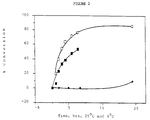
- Figure 2 shows the Lewis acid catalyzed (open circles) and uncatalyzed (filled circles) reactions of 4-hydrazino sulfonylbenzoic acid with cyanomorpholino doxorubicin at 25°C. Also shown is the catalyzed reaction at 4°C (half-filled circles).
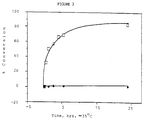
- Figure 3 shows the Lewis acid catalyzed (open circles) and uncatalyzed (filled circles) reactions of 4-hydrazino sulfonylbenzoic acid with morpholino doxorubicin at 35°C.
- Figure 4 shows the reaction rates catalyzed by various Lewis acids of morpholino doxorubicin with 4-hydrazino sulfonyl benzoic acid.
- the acids are: ⁇ uncatalyzed; ⁇ lithium chloride; ⁇ BF3 etherate; tosyl chloride [HCl]; ⁇ toluene sulfonic acid.
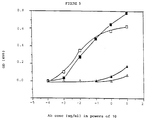
- Figure 5 shows the immunoreactivity of: an unconjugated antibody (open squares); a morpholino anthracycline-antibody conjugate on A-375 target cells (filled squares); an unconjugated non-specific antibody on A-375 cells (open triangles); and a morpholino anthracycline-antibody conjugate on UCLA-P3 non-target cells (filled triangles).
- Figure 6 shows the cytotoxic effects of the morpholino anthracycline derivatives morpholino doxorubicin (open squares) and a morpholino doxorubicin-antibody conjugate (filled squares) on A-375 cells.
- Figure 7 shows the cytotoxic effects of morpholino anthracyclines-antibody conjugates on A-375 target cells (open squares) and UCLA-P3 non-target cells (filled squares).
- Figure 8 shows the efficacy of morpholino anthracyclines-antibody conjugates on suppressing tumor growth in nude mice.
- Open squares represent antibody or saline control; filled squares represent free drug; open triangles represent a mixture of drug and antibody; the filled triangles represent tumor growth from animals injected with MRA conjugates having an initial tumor size of 4 mm2; X represents animals injected with MRA conjugates two days after inoculation with tumor cells.
- This invention is directed to simple and efficient methods of producing novel morpholino anthracycline compounds and to methods of coupling these morpholino anthracycline compounds to antibodies.
- An advantage of such conjugates is that morpholino anthracycline compounds are highly cytotoxic and coupling of the drug to an antibody is an effective way to specifically target any desired cell type to which there is a specific antibody.
- the invention is applicable for therapeutic use against the growth of a variety of cell types such as cancer.
- the morpholino anthracycline compound is attached to a linker molecule through the C13 carbonyl moiety on the doxorubicin component.
- the linker molecule hydrazino sulfonylbenzoic acid, is an acid labile heterobifunctional linker with a hydrazine moiety on one end and a carboxylic acid moiety on the other end.
- Heterobifunctional linkers are preferable because they provide specificity to the reaction and thereby eliminate unwanted side products in the coupling reactions.
- the acid lability of the linker regenerates the free drug which can influence its potency; however, linkers cleavable by other means can work as well.
- the hydrazine end of the linker reacts with the carbonyl moiety to form a covalent bond. Hydrazides and oximes can also react with the carbonyl moiety to form a covalent bond.
- the reaction is catalyzed by a Lewis acid such as BF3.
- the resultant morpholino anthracycline-linker compounds can be coupled to target cell binding proteins such as antibodies to produce morpholino anthracycline-antibody conjugates.
- morpholino anthracycline or “morpholino anthracycline compound” refers to a cytotoxic drug of the morpholino class of compounds. This term includes derivatives and analogs which contain a carbonyl moiety on the C13 substituent of the cyclohexane ring of, for example, the doxorubicin or danorubicin moiety.
- An example of a morpholino anthracycline compound is cyanomorpholino doxorubicin and is shown in Figure 1. The arrow indicates the carbonyl moiety on the C13 substituent.
- the term also includes those derivatives and analogs of morpholino anthracycline compounds with chemically equivalent moieties at positions other than the C13 carbonyl moiety.
- reactive group refers to a chemical moiety which exhibits bond formation activity. Coupling a molecule through a reactive group on a second molecule results in bond formation between the two molecules.
- the reacting moiety on the first molecule being coupled is therefore also a reactive group.
- Reactive groups can be, for example, hydrazines, hydrazides, oximes, primary amines, carboxylic acids, hydroxyls and isocyanates. Other reactive groups known to one skilled in the art can also be included.
- the term is also meant to include bond formation between two reactive groups regardless of prior activation to achieve bond formation.
- linker refers to a molecule which can form a bridge-like structure between a morpholino anthracycline compound and an antibody.
- the linker can be used, for example, as a means for coupling a morpholino anthracycline compound to an antibody.
- Such linkers can consist of one or more atoms, such as activating moieties, but are preferably between 6 and 30 atoms in length, more preferably between 8 and 12 atoms.
- the term includes both bifunctional, and more preferably, heterobifunctional linkers, both of which can be acid labile.
- Both types of linkers contain reactive groups on each end of the molecule for use in coupling morpholino anthracycline compounds to an antibody.
- Bifunctional linkers have two similar chemical reactive groups.
- Heterobifunctional linkers on the other hand, have different reactive groups at each end. Heterobifunctionality is beneficial because it reduces crosslinking and the production of unwanted side products in the coupling reaction.
- Heterobifunctional linkers include, for example, hydrocarbons of about seven to twenty carbon atoms in length.
- a carboxylic acid moiety is included as one of the chemical reactive groups.
- the other chemical reactive group will contain one of a variety of chemical moieties which can be, for example, a hydrazine, hydrazide or oxime moiety.
- Peptide linkers are also included which have, for example, the structure: R-Peptide-R1-COOH.
- R corresponds to the morpholino anthracycline-reactive end and includes, for example, chemical moieties such as hydrazines, hydrazides and oximes.
- R1 corresponds to the antibody-reactive end and can include, for example, structures such as maleic acid, succinic acid, citraconic acid, diglyconic acid and dimethylmaleic acid.
- the peptide can be of any length and sequence but is preferably about three to four amino acids in length.
- the sequence is preferably Ala-Ala-Ala, Ala-Leu-Ala-Leu, Leu-Ala-Leu-Ala, Ser-Ser-Ser, Gly-Gly-Gly-Leu, Gly-Phe-Leu-Gly or Gly-Phe-Phe-Leu.
- Coupled refers to the two molecules joined together.
- the two molecules can be, for example, a morpholino anthracycline compound and a linker molecule. Morpholino anthracycline-linker compounds and antibodies can also be joined together by coupling to produce a morpholino anthracycline-antibody conjugate. Therefore, “coupling reaction” as used herein refers to the chemical reaction for joining two molecules together.
- the term "antibody” refers to a antibody which exhibits selective binding to a target cell.
- the antibody can be, for example, polyclonal or monoclonal.
- the term is also meant to include fragments of antibodies such as Fab' or (Fab)2 fragments.
- “Functional fragments” as used herein refers to fragments which exhibit the selective binding properties to a target cell as that of the intact molecule. Selective binding includes binding specificity and affinity of the antibody for the target cell. Binding is typically to a cell surface molecule such as a protein antigen.
- Binding to other cell surface molecules can include antigens such as carbohydrate, lipid, inorganic molecules such as phosphorylated and sulphated moieties, as well as polypeptide and peptide so long as the antibody exhibits selective binding for these antigens.
- the target cell can be any cell or population of cells which contain a cell surface molecule capable of being bound to the antibody. This includes cells in culture as well as cells within an organism.
- the invention provides for morpholino anthracyclines coupled to linker molecules and methods for producing such compounds which have the structure M-L where M is a morpholino anthracycline compound and L is a linker molecule which is attached to the C13 substituent of the cyclohexane ring of M.
- Morpholino anthracycline compounds contain a carbonyl moiety on the C13 substituent of the terminal cyclohexane ring. This carbonyl moiety can be advantageously used to attach a linker molecule such as hydrazino sulfonylbenzoic acid (HSB).
- HSA hydrazino sulfonylbenzoic acid
- Morpholino anthracycline compounds with chemically equivalent carbonyl moieties can also be used.
- Other hydrazine containing linkers as well as hydrazide and oxime containing linkers can also be used as well.
- HSB or any of the above linker molecules can be coupled to morpholino anthracycline compounds by reacting the morpholino anthracycline and linker with a Lewis acid catalyst.
- a Lewis acid catalyst useful for catalysis is BF3 although other Lewis acids can be used as well.
- the morpholino anthracycline-linker compounds can further be coupled to, for example, an antibody to produce morpholino anthracycline-antibody conjugates.
- the antibody can be polyclonal or monoclonal.
- the antibody can also be functional fragments such as Fab or (Fab)2.
- the free end of the linker molecule for example, the carboxylic acid moiety of HSB, can be activated by methods known to one skilled in the art.
- the activated moiety can then be coupled to free amino groups on proteins, such as antibodies, to produce morpholino anthracycline-antibody conjugates.
- Activation typically does not change greatly the chemical specificity of the chemical moiety, but instead, allows the chemical moiety to be reacted faster, easier and often with the production of fewer side products.
- Activation of the carboxylic acid moiety with reagents such as carbodiimide, N-hydroxysuccimide, N-ethoxycarbonyl-2-ethoxy-1, 2-dihydroquinoline (EEDQ) or isobutyl chloroformate, will allow rapid and efficient coupling of the activated carboxylic acid moiety with a primary amine to form an amide bond.
- Other activating reagents include, for example, isocyanates, thioisocyanates, azides and diazo-halides. The activating reagent used will depend on the particular chemical moiety involved and on the desired bond to be produced. These reactions are known to one skilled in the art and can be performed readily.
- the extent of the coupling reactions should be such that the antibody retains functionality. Mild reaction conditions is one way to maintain antibody functionality. Such reaction conditions are standard procedures for one skilled in the art as well as the determination of the functionality of the resultant morpholino anthracycline conjugates. Additional steps, such as binding the antibody to antigen prior to coupling for protection of the binding site, can also be used to ensure functionality of the morpholino anthracycline-antibody conjugates.
- the morpholino anthracycline conjugates can be used to specifically target morpholino anthracyclines to any cell type in which a specific antibody is available.
- Other proteins which show specific binding properties to cell antigens can also be coupled to the morpholino anthracycline-linker compounds.
- Targets can include, for example, viral or bacterial cells containing specific antigens as well as host cells containing specific antigens recognized by an antibody.
- the morpholino anthracycline-antibody conjugates of the present invention can be used to deliver morpholino anthracycline compounds and to produce cytotoxic effects on target cells.
- tumor cells can be targeted by coupling a morpholino anthracycline compound to an antibody which selectively binds the tumor cell.
- a specific cell type can be purified from a contaminating population of cells in culture with a morpholino anthracycline conjugate in which the antibody has binding specificity for the contaminant cell type.
- the invention provides a method of delivering a morpholino anthracycline conjugate to immunoreactive cells and for remitting tumor growth of such cells.
- An example is the purging of bone marrow contaminated with tumor cells by mixing the bone marrow with an antibody-morpholino compound.
- This example illustrates the coupling of hydrazino sulfonylbenzoic acid (HSB) linker molecules to morpholino doxorubicin (MRA) cyanomorpholino doxorubicin (CN-MRA) to produce a morpholino anthracycline-linker compound.
- HLB hydrazino sulfonylbenzoic acid
- MRA morpholino doxorubicin
- CN-MRA cyanomorpholino doxorubicin
- CN-MRA was coupled to HSB by mixing 100 ⁇ l of N-methylpyrrolidone (NMP) containing 2.89 mg (4.51 x 10 ⁇ 6 moles) with 20 ⁇ l of HSB stock (5.3 mg HSB/100 ⁇ l NMP). The mixture was reacted at 25°C with or without the addition of 5 ⁇ l of BF3 etherate/100 ⁇ l NMP as a catalyst. An aliquot was also reacted at 4°C using BF3 as a catalyst.
- NMP N-methylpyrrolidone
- CN-MRA was also reacted as described above using a reaction temperature of 40°C instead of 25°C. HPLC analysis showed multiple product peaks characteristic of many decomposition products.
- MRA-HSB morpholino anthracycline-linker compound
- This example illustrates the coupling of a CN-MRA-HSB morpholino anthracycline-linker compound to an antibody to produce a morpholino anthracycline-antibody conjugate.
- the cyanomorpholino doxorubicin-HSB derivative of Example I was activated by adding 10 ⁇ l each of a stock solution of N-hydroxysuccinimide (NHS) and ECDI (5 x 10 ⁇ 7 moles/ ⁇ l) and stirring at 25°C in the dark for 1 hour followed by reaction at 4°C for 18 hours.
- the total amount of CN-MRH-HSB conjugate was 3.7 mg (5.78 x 10 ⁇ 6 moles) which was a 25-fold molar excess.
- the 40 ⁇ l additions were made at 10 minute intervals. A clear reddish solution was observed throughout the addition of CN-MRA-HSB.
- the pH was maintained at pH 8.0 after each addition by adding 5 ⁇ l of 1 N NaOH.
- an ELISA was performed on A-375 (target) and UCLA-P3 (non-target) cell lines ( Figure 4). Unlike the UCLA-P3 cell line, the A-375 line expresses antigens which are specifically recognized by the monoclonal antibody 9.2.27.
- Appropriate cell lines that were in logarithmic growth phase were harvested using 1 mM EDTA.
- the cells were centrifuged at 1000 x g and rinsed 2 times with 1 x PBS.
- the cell pellet was resuspended in 1 x PBS in a volume to equal 1 x 10⁶ cells/ml.
- cells were platted out in 50 ⁇ l/well volume to equal 5 x 10⁴ cells/well in flexible 96 well plates (Falcon #3912, Becton Dickinson & Co., Lincoln Park, NJ).
- the 96 well plates were placed in a dry 37°C incubator for 3 to 5 days until the wells were completely dry.
- the new plates were tested with purified monoclonal antibody standards before using in specificity assays.
- the above prepared dry cell plates (both target and non-target cells) were coated with 200 ⁇ l of 0.5% BSA in PBS (0.5% BSA/PBS). The plates were placed on a shaker for 1 hour at room temperature and then washed with 0.5% BSA/PBS in the following manner. For the first wash, 300 ⁇ l of 0.5% BSA/PBS was added and immediately flicked out followed by slapping dry on a teri towel. For the remaining washes, 300 ⁇ l of 0.5% BSA/PBS was added and allowed to incubate at room temperature for 3-5 minutes before flicking dry. Following the final wash, the plates were slapped dry on a teri towel.
- A-375 cells were treated as above with serial dilutions of a morpholino anthracycline-antibody conjugate (MRA-antibody conjugate coupled as described in Examples I and II) and the uncoupled morpholino anthracycline drug alone.
- Figure 6 shows the results obtained. Identical cytoxicity was observed for both the morpholino anthracycline alone (open squares) and the morpholino anthracycline-antibody conjugate (filled squares)
- This example illustrates the specific cytotoxic effects of morpholino anthracycline-antibody conjugates on antigen- containing target cells compared to non-target cells.
- A-375 target and UCLA-P3 non-target cell lines were cultured in RPMI tissue culture media supplemented with 10% fetal bovine serum (FBS).
- the cell lines (1x10⁴/ml) were plated in 100 ⁇ l volumes and incubated with serial dilutions of the morpholino anthracycline-antibody conjugate for 2 hours (open squares, A-375 target cells; filled squares, UCLA-P3 non-target cells). Thereafter, the plates were washed three times in tissue culture media and incubated overnight. Each well received 1 ⁇ Ci of 3H-thymidine and after 16 hour incubation, the cells were harvested onto glass fiber filters with a PHD cell harvester (Cambridge Technology Inc., Cambridge, MA).
- the filters were placed in Ecolume scintillation solution (International Chemical and Nuclear Pharmapseuticals Inc., Irvine, CA) and were counted in a scintillation counter. 3H-Thymidine incorporation, as percentage of cell survival, is used to express cytotoxicity. The results, shown in figure 7, demonstrated specific cytotoxic effects on A-375 target cells using CN-MRA-antibody conjugates.
- This example illustrates the efficacy of morpholino anthracycline-antibody conjugates in suppressing tumor growth in nude mice.
- mice Balb/c (Nu/Nu) (Imdyne Inc., San Diego, CA) were injected with M-21 tumor cells at a density of 2 x 10⁶/ml. The mice were kept for 7 days prior to injection of immunoconjugates. Mice were injected with either saline or 500 ⁇ g/200 ⁇ l of unconjugated 9.2.27 control antibody (open squares); MRA alone (filled squares); a mixture of MRA plus 500 ⁇ g/200 ⁇ l of unconjugated 9.2.27 antibody (open triangles); MRA conjugates injected two days after inoculation (X); or MRA conjugates injected into mice with initial tumor sizes of 4 mm2. The total amount of MRA given per mouse was 2 ⁇ g in two injections.
- mice bearing palpable, measurable subcutaneous (s.c.) tumors of M-21 cell line. All animals had palpable, measurable tumors of about 2 x 2 mm or 4 mm2 at the time therapy was started.
- Each individual experiment contained ten animals in each of six arms including a PBS control, antibody alone, drug alone, the immunoconjugate specific for antigen present on M-21, the immunoconjugate not specific for antigen present on M-21, and a mixture of antibody with drug.
- Each animal received an i.p. injection once a week for two weeks. Animals were observed daily for general well-being and survival. Maximum cross-sectioned diameters were measured every third day using calipers.
- mice which received the control injections grew to sizes in the range of 500 to 1500 mm3.
- mice which received injections of MRA-antibody conjugates had tumors whose growth rate was significantly suppressed to a size of 50-200 mm3 after two weeks of treatment.
Landscapes
- Health & Medical Sciences (AREA)
- Engineering & Computer Science (AREA)
- Bioinformatics & Cheminformatics (AREA)
- Chemical & Material Sciences (AREA)
- Life Sciences & Earth Sciences (AREA)
- Public Health (AREA)
- Veterinary Medicine (AREA)
- Medicinal Chemistry (AREA)
- Pharmacology & Pharmacy (AREA)
- Animal Behavior & Ethology (AREA)
- General Health & Medical Sciences (AREA)
- Immunology (AREA)
- Epidemiology (AREA)
- Molecular Biology (AREA)
- Biochemistry (AREA)
- Communicable Diseases (AREA)
- Oncology (AREA)
- Chemical Kinetics & Catalysis (AREA)
- General Chemical & Material Sciences (AREA)
- Nuclear Medicine, Radiotherapy & Molecular Imaging (AREA)
- Organic Chemistry (AREA)
- Medicines Containing Antibodies Or Antigens For Use As Internal Diagnostic Agents (AREA)
- Pharmaceuticals Containing Other Organic And Inorganic Compounds (AREA)
- Peptides Or Proteins (AREA)
- Saccharide Compounds (AREA)
Applications Claiming Priority (2)
| Application Number | Priority Date | Filing Date | Title |
|---|---|---|---|
| US58381590A | 1990-09-17 | 1990-09-17 | |
| US583815 | 1996-01-05 |
Publications (1)
| Publication Number | Publication Date |
|---|---|
| EP0476408A1 true EP0476408A1 (fr) | 1992-03-25 |
Family
ID=24334675
Family Applications (1)
| Application Number | Title | Priority Date | Filing Date |
|---|---|---|---|
| EP91114725A Withdrawn EP0476408A1 (fr) | 1990-09-17 | 1991-09-02 | Conjugaison chimique de morpholino-anthracyclines avec des anticorps |
Country Status (3)
| Country | Link |
|---|---|
| EP (1) | EP0476408A1 (fr) |
| JP (1) | JPH05238951A (fr) |
| CA (1) | CA2048089A1 (fr) |
Cited By (9)
| Publication number | Priority date | Publication date | Assignee | Title |
|---|---|---|---|---|
| GR1001459B (el) * | 1992-10-08 | 1993-12-30 | Lilly Co Eli | Σύμπλεγμα συζυγών φαρμάκων με αντισώματα. |
| EP0525992A3 (fr) * | 1991-07-01 | 1994-03-16 | Lilly Co Eli | |
| WO1998047538A3 (fr) * | 1997-04-23 | 1999-01-21 | Diagnostikforschung Inst | Colorants de synthese labiles aux acides et clivables par voie enzymatique pour le diagnostic avec de la lumiere dans le proche infrarouge et pour l'usage therapeutique |
| WO2002049672A3 (fr) * | 2000-12-21 | 2003-01-03 | Univ Mcgill | Compose utilise pour cibler des cellules specifiques a toxicite systemique reduite |
| WO2004067038A1 (fr) * | 2003-01-24 | 2004-08-12 | Immunomedics, Inc. | Conjugues d'anticorps et d'anthracycline |
| EP1501524A4 (fr) * | 2001-07-31 | 2005-11-02 | Mallinckrodt Inc | Anticorps images internes pour imagerie optique et therapie |
| WO2010009124A3 (fr) * | 2008-07-15 | 2010-12-23 | Genentech, Inc. | Conjugués de dérivés d’anthracycline, procédé de préparation associé et utilisation comme composés antitumoraux |
| US8361464B2 (en) | 2002-03-01 | 2013-01-29 | Immunomedics, Inc. | Anthracycline-Antibody Conjugates for Cancer Therapy |
| US8877202B2 (en) | 2013-02-07 | 2014-11-04 | Immunomedics, Inc. | Pro-drug form (P2PDOX) of the highly potent 2-pyrrolinodoxorubicin conjugated to antibodies for targeted therapy of cancer |
Citations (2)
| Publication number | Priority date | Publication date | Assignee | Title |
|---|---|---|---|---|
| EP0328147A2 (fr) * | 1988-02-11 | 1989-08-16 | Bristol-Myers Squibb Company | Immunoconjugués d'anthracyclines à spacer et leurs procédés de préparation |
| EP0398305A2 (fr) * | 1989-05-17 | 1990-11-22 | Bristol-Myers Squibb Company | Conjugés d'anthracycline comportant un nouvel agent de liaison et méthodes pour leur production |
-
1991
- 1991-07-29 CA CA002048089A patent/CA2048089A1/fr not_active Abandoned
- 1991-09-02 EP EP91114725A patent/EP0476408A1/fr not_active Withdrawn
- 1991-09-17 JP JP3236661A patent/JPH05238951A/ja active Pending
Patent Citations (2)
| Publication number | Priority date | Publication date | Assignee | Title |
|---|---|---|---|---|
| EP0328147A2 (fr) * | 1988-02-11 | 1989-08-16 | Bristol-Myers Squibb Company | Immunoconjugués d'anthracyclines à spacer et leurs procédés de préparation |
| EP0398305A2 (fr) * | 1989-05-17 | 1990-11-22 | Bristol-Myers Squibb Company | Conjugés d'anthracycline comportant un nouvel agent de liaison et méthodes pour leur production |
Cited By (22)
| Publication number | Priority date | Publication date | Assignee | Title |
|---|---|---|---|---|
| EP0525992A3 (fr) * | 1991-07-01 | 1994-03-16 | Lilly Co Eli | |
| GR1001459B (el) * | 1992-10-08 | 1993-12-30 | Lilly Co Eli | Σύμπλεγμα συζυγών φαρμάκων με αντισώματα. |
| WO1998047538A3 (fr) * | 1997-04-23 | 1999-01-21 | Diagnostikforschung Inst | Colorants de synthese labiles aux acides et clivables par voie enzymatique pour le diagnostic avec de la lumiere dans le proche infrarouge et pour l'usage therapeutique |
| WO2002049672A3 (fr) * | 2000-12-21 | 2003-01-03 | Univ Mcgill | Compose utilise pour cibler des cellules specifiques a toxicite systemique reduite |
| US7431925B2 (en) | 2001-07-31 | 2008-10-07 | Mallinckrodt, Inc. | Internal image antibodies for optical imaging and therapy |
| EP1501524A4 (fr) * | 2001-07-31 | 2005-11-02 | Mallinckrodt Inc | Anticorps images internes pour imagerie optique et therapie |
| US8361464B2 (en) | 2002-03-01 | 2013-01-29 | Immunomedics, Inc. | Anthracycline-Antibody Conjugates for Cancer Therapy |
| US9107962B2 (en) | 2002-03-01 | 2015-08-18 | Immunomedics, Inc. | Anthracycline-antibody conjugates for cancer therapy |
| US8568729B2 (en) | 2002-03-01 | 2013-10-29 | Immunomedics, Inc. | Anthracycline-antibody conjugates for cancer therapy |
| US8895013B2 (en) | 2002-03-01 | 2014-11-25 | Immunomedics, Inc. | Anthracycline-antibody conjugates for cancer therapy |
| AU2004207494C1 (en) * | 2003-01-24 | 2009-11-05 | Immunomedics, Inc. | Anthracycline-antibody conjugates |
| WO2004067038A1 (fr) * | 2003-01-24 | 2004-08-12 | Immunomedics, Inc. | Conjugues d'anticorps et d'anthracycline |
| AU2004207494B2 (en) * | 2003-01-24 | 2009-05-28 | Immunomedics, Inc. | Anthracycline-antibody conjugates |
| WO2010009124A3 (fr) * | 2008-07-15 | 2010-12-23 | Genentech, Inc. | Conjugués de dérivés d’anthracycline, procédé de préparation associé et utilisation comme composés antitumoraux |
| US8389697B2 (en) | 2008-07-15 | 2013-03-05 | Genentech, Inc. | Anthracycline derivative conjugates, process for their preparation and their use as antitumor compounds |
| US8900589B2 (en) | 2008-07-15 | 2014-12-02 | Genetech, Inc. | Anthracycline derivative conjugates, process for their preparation and their use as antitumor compounds |
| US9695240B2 (en) | 2008-07-15 | 2017-07-04 | Genentech, Inc. | Anthracycline derivative conjugates, process for their preparation and their use as antitumor compounds |
| US8877202B2 (en) | 2013-02-07 | 2014-11-04 | Immunomedics, Inc. | Pro-drug form (P2PDOX) of the highly potent 2-pyrrolinodoxorubicin conjugated to antibodies for targeted therapy of cancer |
| US9283286B2 (en) | 2013-02-07 | 2016-03-15 | Immunomedics, Inc. | Pro-drug form (P2PDox) of the highly potent 2-pyrrolinodoxorubicin conjugated to antibodies for targeted therapy of cancer |
| US9486536B2 (en) | 2013-02-07 | 2016-11-08 | Immunomedics, Inc. | Pro-drug form (P2PDOX) of the highly potent 2-pyrrolinodoxorubicin conjugated to antibodies for targeted therapy of cancer |
| US9095628B2 (en) | 2013-02-07 | 2015-08-04 | Immunomedics, Inc. | Pro-drug form (P2PDOX) of the highly potent 2-pyrrolinodoxorubicin conjugated to antibodies for targeted therapy of cancer |
| US9694088B2 (en) | 2013-02-07 | 2017-07-04 | Immunomedics, Inc. | Pro-drug form (P2PDox) of the highly potent 2-pyrrolinodoxorubicin conjugated to antibodies for targeted therapy of cancer |
Also Published As
| Publication number | Publication date |
|---|---|
| JPH05238951A (ja) | 1993-09-17 |
| CA2048089A1 (fr) | 1992-03-18 |
Similar Documents
| Publication | Publication Date | Title |
|---|---|---|
| AU2020200975B2 (en) | New stable antibody-drug conjugate, preparation method therefor, and use thereof | |
| AU627785B2 (en) | Vasopermeability-enhancing conjugates | |
| Kanellos et al. | Studies of methotrexate-monoclonal antibody conjugates for immunotherapy | |
| EP0088695B1 (fr) | Liaisons d'anticorps | |
| JP3234980B2 (ja) | 新規な二官能性化合物を含むコンジュゲートの製法 | |
| US4671958A (en) | Antibody conjugates for the delivery of compounds to target sites | |
| FI102355B (fi) | Menetelmä yhdistävän välikappaleen omaavien antrasykliini-immunokonjug aattien valmistamiseksi | |
| EP0253202A2 (fr) | Immuno conjugés et leurs méthodes d'utilisation dans la thérapie des tumeurs | |
| HU208161B (en) | Process for producing cytotoxic active ingredient - antibody conjugates and pharmaceutical compositions | |
| Smyth et al. | Specific targeting of chlorambucil to tumors with the use of monoclonal antibodies | |
| WO1995001806A1 (fr) | Conjugues de medicaments pro-cytotoxiques destines a la therapie contre le cancer | |
| EP0366770B1 (fr) | Liposomes accouples a des hormones | |
| Shih et al. | Site‐specific linkage of methotrexate to monoclonal antibodies using an intermediate carrier | |
| JP3273608B2 (ja) | 治療薬の部位特異的インビボ活性化 | |
| JP2820256B2 (ja) | メチルトリチオ抗腫瘍剤のターゲテッド形態 | |
| US5155210A (en) | Methods of conjugating actinomycin d | |
| Sinkule et al. | Monoclonal antibody 44–3A6 doxorubicin immunoconjugates: comparative in vitro anti-tumor efficacy of different conjugation methods | |
| CA2048089A1 (fr) | Conjugaison chimique de morpholinoanthracyclines a des anticorps | |
| US6007817A (en) | Vasopermeability enhancing immunoconjugates | |
| AU622105B2 (en) | Immunoglobulin conjugates | |
| JP2003513985A (ja) | 天然に存在しないエナンチオマー(L−ビオチン)を結合する抗体および該抗体のターゲッティング薬剤(agent)としての使用 | |
| EP0485749A2 (fr) | Modification chimique d'anticorps pour la création d'immunoconjugués | |
| EP0577146A2 (fr) | Liposomes couplés sur des hormones | |
| RU2009500C1 (ru) | Способ получения цитотоксического коньюгата | |
| CA2000479C (fr) | Conjuges accroissant la vasopermeabilite |
Legal Events
| Date | Code | Title | Description |
|---|---|---|---|
| PUAI | Public reference made under article 153(3) epc to a published international application that has entered the european phase |
Free format text: ORIGINAL CODE: 0009012 |
|
| AK | Designated contracting states |
Kind code of ref document: A1 Designated state(s): CH DE FR GB IT LI SE |
|
| 17P | Request for examination filed |
Effective date: 19920916 |
|
| RAP1 | Party data changed (applicant data changed or rights of an application transferred) |
Owner name: RESEARCH CORPORATION TECHNOLOGIES, INC. |
|
| STAA | Information on the status of an ep patent application or granted ep patent |
Free format text: STATUS: THE APPLICATION IS DEEMED TO BE WITHDRAWN |
|
| 18D | Application deemed to be withdrawn |
Effective date: 19950331 |