EP0485044B1 - Plasmides pour la production de plantes transgéniques à apparence et rendement modifiés - Google Patents
Plasmides pour la production de plantes transgéniques à apparence et rendement modifiés Download PDFInfo
- Publication number
- EP0485044B1 EP0485044B1 EP91250301A EP91250301A EP0485044B1 EP 0485044 B1 EP0485044 B1 EP 0485044B1 EP 91250301 A EP91250301 A EP 91250301A EP 91250301 A EP91250301 A EP 91250301A EP 0485044 B1 EP0485044 B1 EP 0485044B1
- Authority
- EP
- European Patent Office
- Prior art keywords
- promoter
- plant
- plants
- plasmid
- expression
- Prior art date
- Legal status (The legal status is an assumption and is not a legal conclusion. Google has not performed a legal analysis and makes no representation as to the accuracy of the status listed.)
- Expired - Lifetime
Links
- 239000013612 plasmid Substances 0.000 title claims abstract description 61
- 230000009261 transgenic effect Effects 0.000 title claims abstract description 29
- 238000004519 manufacturing process Methods 0.000 title claims abstract description 4
- 108090000623 proteins and genes Proteins 0.000 claims abstract description 38
- 108010009595 Inorganic Pyrophosphatase Proteins 0.000 claims abstract description 21
- 102000009617 Inorganic Pyrophosphatase Human genes 0.000 claims abstract description 20
- 108091028043 Nucleic acid sequence Proteins 0.000 claims abstract description 19
- 235000000346 sugar Nutrition 0.000 claims abstract description 19
- 230000004060 metabolic process Effects 0.000 claims abstract description 7
- 241000196324 Embryophyta Species 0.000 claims description 105
- 244000061456 Solanum tuberosum Species 0.000 claims description 30
- 235000002637 Nicotiana tabacum Nutrition 0.000 claims description 28
- 244000061176 Nicotiana tabacum Species 0.000 claims description 23
- 241000588724 Escherichia coli Species 0.000 claims description 13
- 230000009466 transformation Effects 0.000 claims description 13
- 241000701489 Cauliflower mosaic virus Species 0.000 claims description 12
- 238000000034 method Methods 0.000 claims description 12
- 230000001105 regulatory effect Effects 0.000 claims description 6
- 108700039691 Genetic Promoter Regions Proteins 0.000 claims description 5
- 108010066133 D-octopine dehydrogenase Proteins 0.000 claims description 4
- 108700001094 Plant Genes Proteins 0.000 claims description 4
- 230000002103 transcriptional effect Effects 0.000 claims 3
- 108700005077 Viral Genes Proteins 0.000 claims 2
- 230000001131 transforming effect Effects 0.000 claims 1
- 150000008163 sugars Chemical class 0.000 abstract description 14
- 102000004169 proteins and genes Human genes 0.000 abstract description 13
- 238000009826 distribution Methods 0.000 abstract description 9
- 238000012546 transfer Methods 0.000 abstract description 4
- 239000003795 chemical substances by application Substances 0.000 abstract description 2
- 239000012634 fragment Substances 0.000 description 32
- 210000004027 cell Anatomy 0.000 description 26
- 108010009413 Pyrophosphatases Proteins 0.000 description 20
- CZMRCDWAGMRECN-UGDNZRGBSA-N Sucrose Chemical compound O[C@H]1[C@H](O)[C@@H](CO)O[C@@]1(CO)O[C@@H]1[C@H](O)[C@@H](O)[C@H](O)[C@@H](CO)O1 CZMRCDWAGMRECN-UGDNZRGBSA-N 0.000 description 20
- 229930006000 Sucrose Natural products 0.000 description 20
- 239000005720 sucrose Substances 0.000 description 20
- 108020004414 DNA Proteins 0.000 description 16
- 239000013598 vector Substances 0.000 description 15
- 108091032973 (ribonucleotides)n+m Proteins 0.000 description 14
- 229920002472 Starch Polymers 0.000 description 13
- 238000003776 cleavage reaction Methods 0.000 description 13
- 239000002773 nucleotide Substances 0.000 description 13
- 125000003729 nucleotide group Chemical group 0.000 description 13
- 230000007017 scission Effects 0.000 description 13
- 235000019698 starch Nutrition 0.000 description 13
- 239000008107 starch Substances 0.000 description 13
- 238000004458 analytical method Methods 0.000 description 12
- WQZGKKKJIJFFOK-GASJEMHNSA-N Glucose Natural products OC[C@H]1OC(O)[C@H](O)[C@@H](O)[C@@H]1O WQZGKKKJIJFFOK-GASJEMHNSA-N 0.000 description 10
- 235000002595 Solanum tuberosum Nutrition 0.000 description 10
- 239000008103 glucose Substances 0.000 description 10
- 102000009609 Pyrophosphatases Human genes 0.000 description 9
- XPPKVPWEQAFLFU-UHFFFAOYSA-J diphosphate(4-) Chemical compound [O-]P([O-])(=O)OP([O-])([O-])=O XPPKVPWEQAFLFU-UHFFFAOYSA-J 0.000 description 9
- 235000011180 diphosphates Nutrition 0.000 description 9
- 230000000694 effects Effects 0.000 description 9
- 239000000284 extract Substances 0.000 description 9
- 229930091371 Fructose Natural products 0.000 description 8
- 239000005715 Fructose Substances 0.000 description 8
- RFSUNEUAIZKAJO-ARQDHWQXSA-N Fructose Chemical compound OC[C@H]1O[C@](O)(CO)[C@@H](O)[C@@H]1O RFSUNEUAIZKAJO-ARQDHWQXSA-N 0.000 description 8
- 210000001519 tissue Anatomy 0.000 description 8
- 241000589155 Agrobacterium tumefaciens Species 0.000 description 7
- WQZGKKKJIJFFOK-VFUOTHLCSA-N beta-D-glucose Chemical compound OC[C@H]1O[C@@H](O)[C@H](O)[C@@H](O)[C@@H]1O WQZGKKKJIJFFOK-VFUOTHLCSA-N 0.000 description 7
- 230000015572 biosynthetic process Effects 0.000 description 7
- 239000000203 mixture Substances 0.000 description 6
- 210000000056 organ Anatomy 0.000 description 6
- CURLTUGMZLYLDI-UHFFFAOYSA-N Carbon dioxide Chemical compound O=C=O CURLTUGMZLYLDI-UHFFFAOYSA-N 0.000 description 5
- GSXOAOHZAIYLCY-UHFFFAOYSA-N D-F6P Natural products OCC(=O)C(O)C(O)C(O)COP(O)(O)=O GSXOAOHZAIYLCY-UHFFFAOYSA-N 0.000 description 5
- 241000208125 Nicotiana Species 0.000 description 5
- DBMJMQXJHONAFJ-UHFFFAOYSA-M Sodium laurylsulphate Chemical compound [Na+].CCCCCCCCCCCCOS([O-])(=O)=O DBMJMQXJHONAFJ-UHFFFAOYSA-M 0.000 description 5
- BGWGXPAPYGQALX-ARQDHWQXSA-N beta-D-fructofuranose 6-phosphate Chemical compound OC[C@@]1(O)O[C@H](COP(O)(O)=O)[C@@H](O)[C@@H]1O BGWGXPAPYGQALX-ARQDHWQXSA-N 0.000 description 5
- 150000001720 carbohydrates Chemical class 0.000 description 5
- 235000014633 carbohydrates Nutrition 0.000 description 5
- 210000002421 cell wall Anatomy 0.000 description 5
- 239000000499 gel Substances 0.000 description 5
- 239000002609 medium Substances 0.000 description 5
- 230000004048 modification Effects 0.000 description 5
- 238000012986 modification Methods 0.000 description 5
- 239000006870 ms-medium Substances 0.000 description 5
- 235000019333 sodium laurylsulphate Nutrition 0.000 description 5
- 102000004190 Enzymes Human genes 0.000 description 4
- 108090000790 Enzymes Proteins 0.000 description 4
- TWRXJAOTZQYOKJ-UHFFFAOYSA-L Magnesium chloride Chemical compound [Mg+2].[Cl-].[Cl-] TWRXJAOTZQYOKJ-UHFFFAOYSA-L 0.000 description 4
- 108700026244 Open Reading Frames Proteins 0.000 description 4
- 240000004808 Saccharomyces cerevisiae Species 0.000 description 4
- AZZMGZXNTDTSME-JUZDKLSSSA-M cefotaxime sodium Chemical compound [Na+].N([C@@H]1C(N2C(=C(COC(C)=O)CS[C@@H]21)C([O-])=O)=O)C(=O)\C(=N/OC)C1=CSC(N)=N1 AZZMGZXNTDTSME-JUZDKLSSSA-M 0.000 description 4
- 238000006243 chemical reaction Methods 0.000 description 4
- 229940088530 claforan Drugs 0.000 description 4
- 238000001514 detection method Methods 0.000 description 4
- 229940088598 enzyme Drugs 0.000 description 4
- -1 for example Chemical class 0.000 description 4
- 238000003780 insertion Methods 0.000 description 4
- 230000037431 insertion Effects 0.000 description 4
- 239000003550 marker Substances 0.000 description 4
- 230000008488 polyadenylation Effects 0.000 description 4
- 230000009467 reduction Effects 0.000 description 4
- 239000006228 supernatant Substances 0.000 description 4
- PRPINYUDVPFIRX-UHFFFAOYSA-N 1-naphthaleneacetic acid Chemical compound C1=CC=C2C(CC(=O)O)=CC=CC2=C1 PRPINYUDVPFIRX-UHFFFAOYSA-N 0.000 description 3
- QTBSBXVTEAMEQO-UHFFFAOYSA-N Acetic acid Chemical compound CC(O)=O QTBSBXVTEAMEQO-UHFFFAOYSA-N 0.000 description 3
- 229920001817 Agar Polymers 0.000 description 3
- LFQSCWFLJHTTHZ-UHFFFAOYSA-N Ethanol Chemical compound CCO LFQSCWFLJHTTHZ-UHFFFAOYSA-N 0.000 description 3
- 238000000636 Northern blotting Methods 0.000 description 3
- 238000002105 Southern blotting Methods 0.000 description 3
- 239000007983 Tris buffer Substances 0.000 description 3
- 241000209140 Triticum Species 0.000 description 3
- HSCJRCZFDFQWRP-JZMIEXBBSA-N UDP-alpha-D-glucose Chemical compound O[C@@H]1[C@@H](O)[C@H](O)[C@@H](CO)O[C@@H]1OP(O)(=O)OP(O)(=O)OC[C@@H]1[C@@H](O)[C@@H](O)[C@H](N2C(NC(=O)C=C2)=O)O1 HSCJRCZFDFQWRP-JZMIEXBBSA-N 0.000 description 3
- 239000002253 acid Substances 0.000 description 3
- 150000007513 acids Chemical class 0.000 description 3
- 239000008272 agar Substances 0.000 description 3
- 239000000872 buffer Substances 0.000 description 3
- 229910002092 carbon dioxide Inorganic materials 0.000 description 3
- 238000010367 cloning Methods 0.000 description 3
- 230000001419 dependent effect Effects 0.000 description 3
- 238000000605 extraction Methods 0.000 description 3
- 238000011534 incubation Methods 0.000 description 3
- 229930027917 kanamycin Natural products 0.000 description 3
- 229960000318 kanamycin Drugs 0.000 description 3
- SBUJHOSQTJFQJX-NOAMYHISSA-N kanamycin Chemical compound O[C@@H]1[C@@H](O)[C@H](O)[C@@H](CN)O[C@@H]1O[C@H]1[C@H](O)[C@@H](O[C@@H]2[C@@H]([C@@H](N)[C@H](O)[C@@H](CO)O2)O)[C@H](N)C[C@@H]1N SBUJHOSQTJFQJX-NOAMYHISSA-N 0.000 description 3
- 229930182823 kanamycin A Natural products 0.000 description 3
- 230000029553 photosynthesis Effects 0.000 description 3
- 238000010672 photosynthesis Methods 0.000 description 3
- 229920002401 polyacrylamide Polymers 0.000 description 3
- 238000002360 preparation method Methods 0.000 description 3
- 239000000243 solution Substances 0.000 description 3
- XLYOFNOQVPJJNP-UHFFFAOYSA-N water Substances O XLYOFNOQVPJJNP-UHFFFAOYSA-N 0.000 description 3
- JKMHFZQWWAIEOD-UHFFFAOYSA-N 2-[4-(2-hydroxyethyl)piperazin-1-yl]ethanesulfonic acid Chemical compound OCC[NH+]1CCN(CCS([O-])(=O)=O)CC1 JKMHFZQWWAIEOD-UHFFFAOYSA-N 0.000 description 2
- 241000589156 Agrobacterium rhizogenes Species 0.000 description 2
- IJGRMHOSHXDMSA-UHFFFAOYSA-N Atomic nitrogen Chemical compound N#N IJGRMHOSHXDMSA-UHFFFAOYSA-N 0.000 description 2
- 241000894006 Bacteria Species 0.000 description 2
- 108091026890 Coding region Proteins 0.000 description 2
- KCXVZYZYPLLWCC-UHFFFAOYSA-N EDTA Chemical compound OC(=O)CN(CC(O)=O)CCN(CC(O)=O)CC(O)=O KCXVZYZYPLLWCC-UHFFFAOYSA-N 0.000 description 2
- 241001646716 Escherichia coli K-12 Species 0.000 description 2
- LYCAIKOWRPUZTN-UHFFFAOYSA-N Ethylene glycol Chemical compound OCCO LYCAIKOWRPUZTN-UHFFFAOYSA-N 0.000 description 2
- 239000007995 HEPES buffer Substances 0.000 description 2
- NWBJYWHLCVSVIJ-UHFFFAOYSA-N N-benzyladenine Chemical compound N=1C=NC=2NC=NC=2C=1NCC1=CC=CC=C1 NWBJYWHLCVSVIJ-UHFFFAOYSA-N 0.000 description 2
- 241000723873 Tobacco mosaic virus Species 0.000 description 2
- 235000021307 Triticum Nutrition 0.000 description 2
- 239000003242 anti bacterial agent Substances 0.000 description 2
- 230000001580 bacterial effect Effects 0.000 description 2
- 230000008901 benefit Effects 0.000 description 2
- 230000003115 biocidal effect Effects 0.000 description 2
- 239000003139 biocide Substances 0.000 description 2
- 239000001569 carbon dioxide Substances 0.000 description 2
- 230000008859 change Effects 0.000 description 2
- 238000011161 development Methods 0.000 description 2
- 235000013399 edible fruits Nutrition 0.000 description 2
- 238000004520 electroporation Methods 0.000 description 2
- 150000002402 hexoses Chemical class 0.000 description 2
- 238000002347 injection Methods 0.000 description 2
- 239000007924 injection Substances 0.000 description 2
- 238000002955 isolation Methods 0.000 description 2
- 229910001629 magnesium chloride Inorganic materials 0.000 description 2
- 108020004707 nucleic acids Proteins 0.000 description 2
- 102000039446 nucleic acids Human genes 0.000 description 2
- 150000007523 nucleic acids Chemical class 0.000 description 2
- YBYRMVIVWMBXKQ-UHFFFAOYSA-N phenylmethanesulfonyl fluoride Chemical compound FS(=O)(=O)CC1=CC=CC=C1 YBYRMVIVWMBXKQ-UHFFFAOYSA-N 0.000 description 2
- 230000000243 photosynthetic effect Effects 0.000 description 2
- 239000001267 polyvinylpyrrolidone Substances 0.000 description 2
- 229920000036 polyvinylpyrrolidone Polymers 0.000 description 2
- 235000013855 polyvinylpyrrolidone Nutrition 0.000 description 2
- 230000008569 process Effects 0.000 description 2
- 239000000047 product Substances 0.000 description 2
- 238000000751 protein extraction Methods 0.000 description 2
- 238000000926 separation method Methods 0.000 description 2
- 238000012360 testing method Methods 0.000 description 2
- 230000008719 thickening Effects 0.000 description 2
- 238000013519 translation Methods 0.000 description 2
- DGVVWUTYPXICAM-UHFFFAOYSA-N β‐Mercaptoethanol Chemical compound OCCS DGVVWUTYPXICAM-UHFFFAOYSA-N 0.000 description 2
- JDIIGWSSTNUWGK-UHFFFAOYSA-N 1h-imidazol-3-ium;chloride Chemical compound [Cl-].[NH2+]1C=CN=C1 JDIIGWSSTNUWGK-UHFFFAOYSA-N 0.000 description 1
- 102100031126 6-phosphogluconolactonase Human genes 0.000 description 1
- 108010029731 6-phosphogluconolactonase Proteins 0.000 description 1
- 241000589158 Agrobacterium Species 0.000 description 1
- 241000228245 Aspergillus niger Species 0.000 description 1
- 241000219310 Beta vulgaris subsp. vulgaris Species 0.000 description 1
- 108010006654 Bleomycin Proteins 0.000 description 1
- 101710117545 C protein Proteins 0.000 description 1
- HMFHBZSHGGEWLO-SOOFDHNKSA-N D-ribofuranose Chemical compound OC[C@H]1OC(O)[C@H](O)[C@@H]1O HMFHBZSHGGEWLO-SOOFDHNKSA-N 0.000 description 1
- 102000053602 DNA Human genes 0.000 description 1
- 230000006820 DNA synthesis Effects 0.000 description 1
- YQYJSBFKSSDGFO-UHFFFAOYSA-N Epihygromycin Natural products OC1C(O)C(C(=O)C)OC1OC(C(=C1)O)=CC=C1C=C(C)C(=O)NC1C(O)C(O)C2OCOC2C1O YQYJSBFKSSDGFO-UHFFFAOYSA-N 0.000 description 1
- 239000005980 Gibberellic acid Substances 0.000 description 1
- 108010073178 Glucan 1,4-alpha-Glucosidase Proteins 0.000 description 1
- 108010018962 Glucosephosphate Dehydrogenase Proteins 0.000 description 1
- 102000005548 Hexokinase Human genes 0.000 description 1
- 108700040460 Hexokinases Proteins 0.000 description 1
- 102100027050 Inorganic pyrophosphatase Human genes 0.000 description 1
- 102000004195 Isomerases Human genes 0.000 description 1
- 108090000769 Isomerases Proteins 0.000 description 1
- 235000007688 Lycopersicon esculentum Nutrition 0.000 description 1
- 229910019142 PO4 Inorganic materials 0.000 description 1
- 101710091688 Patatin Proteins 0.000 description 1
- 102000012435 Phosphofructokinase-1 Human genes 0.000 description 1
- 108010022684 Phosphofructokinase-1 Proteins 0.000 description 1
- 108020005120 Plant DNA Proteins 0.000 description 1
- KWYUFKZDYYNOTN-UHFFFAOYSA-M Potassium hydroxide Chemical compound [OH-].[K+] KWYUFKZDYYNOTN-UHFFFAOYSA-M 0.000 description 1
- 101710167959 Putative UTP-glucose-1-phosphate uridylyltransferase Proteins 0.000 description 1
- PYMYPHUHKUWMLA-LMVFSUKVSA-N Ribose Natural products OC[C@@H](O)[C@@H](O)[C@@H](O)C=O PYMYPHUHKUWMLA-LMVFSUKVSA-N 0.000 description 1
- 238000012300 Sequence Analysis Methods 0.000 description 1
- VMHLLURERBWHNL-UHFFFAOYSA-M Sodium acetate Chemical compound [Na+].CC([O-])=O VMHLLURERBWHNL-UHFFFAOYSA-M 0.000 description 1
- DWAQJAXMDSEUJJ-UHFFFAOYSA-M Sodium bisulfite Chemical compound [Na+].OS([O-])=O DWAQJAXMDSEUJJ-UHFFFAOYSA-M 0.000 description 1
- 240000003768 Solanum lycopersicum Species 0.000 description 1
- 108091081024 Start codon Proteins 0.000 description 1
- 235000021536 Sugar beet Nutrition 0.000 description 1
- QAOWNCQODCNURD-UHFFFAOYSA-N Sulfuric acid Chemical compound OS(O)(=O)=O QAOWNCQODCNURD-UHFFFAOYSA-N 0.000 description 1
- 239000004098 Tetracycline Substances 0.000 description 1
- 102000048175 UTP-glucose-1-phosphate uridylyltransferases Human genes 0.000 description 1
- HSCJRCZFDFQWRP-UHFFFAOYSA-N Uridindiphosphoglukose Natural products OC1C(O)C(O)C(CO)OC1OP(O)(=O)OP(O)(=O)OCC1C(O)C(O)C(N2C(NC(=O)C=C2)=O)O1 HSCJRCZFDFQWRP-UHFFFAOYSA-N 0.000 description 1
- XJLXINKUBYWONI-DQQFMEOOSA-N [[(2r,3r,4r,5r)-5-(6-aminopurin-9-yl)-3-hydroxy-4-phosphonooxyoxolan-2-yl]methoxy-hydroxyphosphoryl] [(2s,3r,4s,5s)-5-(3-carbamoylpyridin-1-ium-1-yl)-3,4-dihydroxyoxolan-2-yl]methyl phosphate Chemical compound NC(=O)C1=CC=C[N+]([C@@H]2[C@H]([C@@H](O)[C@H](COP([O-])(=O)OP(O)(=O)OC[C@@H]3[C@H]([C@@H](OP(O)(O)=O)[C@@H](O3)N3C4=NC=NC(N)=C4N=C3)O)O2)O)=C1 XJLXINKUBYWONI-DQQFMEOOSA-N 0.000 description 1
- 102000004139 alpha-Amylases Human genes 0.000 description 1
- 108090000637 alpha-Amylases Proteins 0.000 description 1
- HMFHBZSHGGEWLO-UHFFFAOYSA-N alpha-D-Furanose-Ribose Natural products OCC1OC(O)C(O)C1O HMFHBZSHGGEWLO-UHFFFAOYSA-N 0.000 description 1
- RNBGYGVWRKECFJ-ZXXMMSQZSA-N alpha-D-fructofuranose 1,6-bisphosphate Chemical compound O[C@H]1[C@H](O)[C@](O)(COP(O)(O)=O)O[C@@H]1COP(O)(O)=O RNBGYGVWRKECFJ-ZXXMMSQZSA-N 0.000 description 1
- HXXFSFRBOHSIMQ-VFUOTHLCSA-N alpha-D-glucose 1-phosphate Chemical compound OC[C@H]1O[C@H](OP(O)(O)=O)[C@H](O)[C@@H](O)[C@@H]1O HXXFSFRBOHSIMQ-VFUOTHLCSA-N 0.000 description 1
- 229940024171 alpha-amylase Drugs 0.000 description 1
- 239000011609 ammonium molybdate Substances 0.000 description 1
- APUPEJJSWDHEBO-UHFFFAOYSA-P ammonium molybdate Chemical compound [NH4+].[NH4+].[O-][Mo]([O-])(=O)=O APUPEJJSWDHEBO-UHFFFAOYSA-P 0.000 description 1
- 229940010552 ammonium molybdate Drugs 0.000 description 1
- 235000018660 ammonium molybdate Nutrition 0.000 description 1
- 229940088710 antibiotic agent Drugs 0.000 description 1
- 108010051210 beta-Fructofuranosidase Proteins 0.000 description 1
- 238000010170 biological method Methods 0.000 description 1
- 238000011138 biotechnological process Methods 0.000 description 1
- 238000004061 bleaching Methods 0.000 description 1
- 229960001561 bleomycin Drugs 0.000 description 1
- OYVAGSVQBOHSSS-UAPAGMARSA-O bleomycin A2 Chemical compound N([C@H](C(=O)N[C@H](C)[C@@H](O)[C@H](C)C(=O)N[C@@H]([C@H](O)C)C(=O)NCCC=1SC=C(N=1)C=1SC=C(N=1)C(=O)NCCC[S+](C)C)[C@@H](O[C@H]1[C@H]([C@@H](O)[C@H](O)[C@H](CO)O1)O[C@@H]1[C@H]([C@@H](OC(N)=O)[C@H](O)[C@@H](CO)O1)O)C=1N=CNC=1)C(=O)C1=NC([C@H](CC(N)=O)NC[C@H](N)C(N)=O)=NC(N)=C1C OYVAGSVQBOHSSS-UAPAGMARSA-O 0.000 description 1
- UDSAIICHUKSCKT-UHFFFAOYSA-N bromophenol blue Chemical compound C1=C(Br)C(O)=C(Br)C=C1C1(C=2C=C(Br)C(O)=C(Br)C=2)C2=CC=CC=C2S(=O)(=O)O1 UDSAIICHUKSCKT-UHFFFAOYSA-N 0.000 description 1
- 239000001913 cellulose Substances 0.000 description 1
- 229920002678 cellulose Polymers 0.000 description 1
- 238000005119 centrifugation Methods 0.000 description 1
- 229960005091 chloramphenicol Drugs 0.000 description 1
- WIIZWVCIJKGZOK-RKDXNWHRSA-N chloramphenicol Chemical compound ClC(Cl)C(=O)N[C@H](CO)[C@H](O)C1=CC=C([N+]([O-])=O)C=C1 WIIZWVCIJKGZOK-RKDXNWHRSA-N 0.000 description 1
- 210000003763 chloroplast Anatomy 0.000 description 1
- 238000004891 communication Methods 0.000 description 1
- 230000021615 conjugation Effects 0.000 description 1
- 239000000470 constituent Substances 0.000 description 1
- 238000010276 construction Methods 0.000 description 1
- 230000007613 environmental effect Effects 0.000 description 1
- 210000003527 eukaryotic cell Anatomy 0.000 description 1
- 238000002474 experimental method Methods 0.000 description 1
- 210000001723 extracellular space Anatomy 0.000 description 1
- 239000011536 extraction buffer Substances 0.000 description 1
- 230000002349 favourable effect Effects 0.000 description 1
- 238000001914 filtration Methods 0.000 description 1
- 229940025237 fructose 1,6-diphosphate Drugs 0.000 description 1
- 230000004927 fusion Effects 0.000 description 1
- 238000001502 gel electrophoresis Methods 0.000 description 1
- 238000012239 gene modification Methods 0.000 description 1
- 230000002068 genetic effect Effects 0.000 description 1
- 230000005017 genetic modification Effects 0.000 description 1
- 235000013617 genetically modified food Nutrition 0.000 description 1
- IXORZMNAPKEEDV-UHFFFAOYSA-N gibberellic acid GA3 Natural products OC(=O)C1C2(C3)CC(=C)C3(O)CCC2C2(C=CC3O)C1C3(C)C(=O)O2 IXORZMNAPKEEDV-UHFFFAOYSA-N 0.000 description 1
- IXORZMNAPKEEDV-OBDJNFEBSA-N gibberellin A3 Chemical compound C([C@@]1(O)C(=C)C[C@@]2(C1)[C@H]1C(O)=O)C[C@H]2[C@]2(C=C[C@@H]3O)[C@H]1[C@]3(C)C(=O)O2 IXORZMNAPKEEDV-OBDJNFEBSA-N 0.000 description 1
- 229950010772 glucose-1-phosphate Drugs 0.000 description 1
- 238000003306 harvesting Methods 0.000 description 1
- 238000010438 heat treatment Methods 0.000 description 1
- 230000006801 homologous recombination Effects 0.000 description 1
- 238000002744 homologous recombination Methods 0.000 description 1
- 230000003301 hydrolyzing effect Effects 0.000 description 1
- WGCNASOHLSPBMP-UHFFFAOYSA-N hydroxyacetaldehyde Natural products OCC=O WGCNASOHLSPBMP-UHFFFAOYSA-N 0.000 description 1
- 229910052816 inorganic phosphate Inorganic materials 0.000 description 1
- 239000002198 insoluble material Substances 0.000 description 1
- 230000010354 integration Effects 0.000 description 1
- 239000001573 invertase Substances 0.000 description 1
- 235000011073 invertase Nutrition 0.000 description 1
- 101150109249 lacI gene Proteins 0.000 description 1
- 239000007788 liquid Substances 0.000 description 1
- 238000011068 loading method Methods 0.000 description 1
- FDZZZRQASAIRJF-UHFFFAOYSA-M malachite green Chemical compound [Cl-].C1=CC(N(C)C)=CC=C1C(C=1C=CC=CC=1)=C1C=CC(=[N+](C)C)C=C1 FDZZZRQASAIRJF-UHFFFAOYSA-M 0.000 description 1
- 229940107698 malachite green Drugs 0.000 description 1
- 239000000463 material Substances 0.000 description 1
- 230000007246 mechanism Effects 0.000 description 1
- 210000003470 mitochondria Anatomy 0.000 description 1
- 239000004570 mortar (masonry) Substances 0.000 description 1
- 238000002703 mutagenesis Methods 0.000 description 1
- 231100000350 mutagenesis Toxicity 0.000 description 1
- 229910052757 nitrogen Inorganic materials 0.000 description 1
- 235000015097 nutrients Nutrition 0.000 description 1
- 210000003463 organelle Anatomy 0.000 description 1
- 210000000496 pancreas Anatomy 0.000 description 1
- NBIIXXVUZAFLBC-UHFFFAOYSA-K phosphate Chemical compound [O-]P([O-])([O-])=O NBIIXXVUZAFLBC-UHFFFAOYSA-K 0.000 description 1
- 239000010452 phosphate Substances 0.000 description 1
- 239000000843 powder Substances 0.000 description 1
- 239000002244 precipitate Substances 0.000 description 1
- 239000002243 precursor Substances 0.000 description 1
- 210000001938 protoplast Anatomy 0.000 description 1
- 101150079601 recA gene Proteins 0.000 description 1
- 230000010076 replication Effects 0.000 description 1
- 238000011160 research Methods 0.000 description 1
- 230000035945 sensitivity Effects 0.000 description 1
- 238000004904 shortening Methods 0.000 description 1
- 239000001632 sodium acetate Substances 0.000 description 1
- 235000017281 sodium acetate Nutrition 0.000 description 1
- FQENQNTWSFEDLI-UHFFFAOYSA-J sodium diphosphate Chemical compound [Na+].[Na+].[Na+].[Na+].[O-]P([O-])(=O)OP([O-])([O-])=O FQENQNTWSFEDLI-UHFFFAOYSA-J 0.000 description 1
- 239000004289 sodium hydrogen sulphite Substances 0.000 description 1
- 235000010267 sodium hydrogen sulphite Nutrition 0.000 description 1
- 239000001488 sodium phosphate Substances 0.000 description 1
- 229910000162 sodium phosphate Inorganic materials 0.000 description 1
- 239000002689 soil Substances 0.000 description 1
- 238000010186 staining Methods 0.000 description 1
- 239000000725 suspension Substances 0.000 description 1
- 229960002180 tetracycline Drugs 0.000 description 1
- 229930101283 tetracycline Natural products 0.000 description 1
- 235000019364 tetracycline Nutrition 0.000 description 1
- 150000003522 tetracyclines Chemical class 0.000 description 1
- UZKQTCBAMSWPJD-UQCOIBPSSA-N trans-Zeatin Natural products OCC(/C)=C\CNC1=NC=NC2=C1N=CN2 UZKQTCBAMSWPJD-UQCOIBPSSA-N 0.000 description 1
- UZKQTCBAMSWPJD-FARCUNLSSA-N trans-zeatin Chemical compound OCC(/C)=C/CNC1=NC=NC2=C1N=CN2 UZKQTCBAMSWPJD-FARCUNLSSA-N 0.000 description 1
- 230000014621 translational initiation Effects 0.000 description 1
- 230000005068 transpiration Effects 0.000 description 1
- MBYLVOKEDDQJDY-UHFFFAOYSA-N tris(2-aminoethyl)amine Chemical compound NCCN(CCN)CCN MBYLVOKEDDQJDY-UHFFFAOYSA-N 0.000 description 1
- 150000004043 trisaccharides Chemical class 0.000 description 1
- RYFMWSXOAZQYPI-UHFFFAOYSA-K trisodium phosphate Chemical compound [Na+].[Na+].[Na+].[O-]P([O-])([O-])=O RYFMWSXOAZQYPI-UHFFFAOYSA-K 0.000 description 1
- 239000010981 turquoise Substances 0.000 description 1
- 210000003934 vacuole Anatomy 0.000 description 1
- 210000003462 vein Anatomy 0.000 description 1
- 229940023877 zeatin Drugs 0.000 description 1
Images


Classifications
-
- C—CHEMISTRY; METALLURGY
- C12—BIOCHEMISTRY; BEER; SPIRITS; WINE; VINEGAR; MICROBIOLOGY; ENZYMOLOGY; MUTATION OR GENETIC ENGINEERING
- C12N—MICROORGANISMS OR ENZYMES; COMPOSITIONS THEREOF; PROPAGATING, PRESERVING, OR MAINTAINING MICROORGANISMS; MUTATION OR GENETIC ENGINEERING; CULTURE MEDIA
- C12N15/00—Mutation or genetic engineering; DNA or RNA concerning genetic engineering, vectors, e.g. plasmids, or their isolation, preparation or purification; Use of hosts therefor
- C12N15/09—Recombinant DNA-technology
- C12N15/63—Introduction of foreign genetic material using vectors; Vectors; Use of hosts therefor; Regulation of expression
- C12N15/79—Vectors or expression systems specially adapted for eukaryotic hosts
- C12N15/82—Vectors or expression systems specially adapted for eukaryotic hosts for plant cells, e.g. plant artificial chromosomes (PACs)
-
- C—CHEMISTRY; METALLURGY
- C12—BIOCHEMISTRY; BEER; SPIRITS; WINE; VINEGAR; MICROBIOLOGY; ENZYMOLOGY; MUTATION OR GENETIC ENGINEERING
- C12N—MICROORGANISMS OR ENZYMES; COMPOSITIONS THEREOF; PROPAGATING, PRESERVING, OR MAINTAINING MICROORGANISMS; MUTATION OR GENETIC ENGINEERING; CULTURE MEDIA
- C12N15/00—Mutation or genetic engineering; DNA or RNA concerning genetic engineering, vectors, e.g. plasmids, or their isolation, preparation or purification; Use of hosts therefor
- C12N15/09—Recombinant DNA-technology
- C12N15/63—Introduction of foreign genetic material using vectors; Vectors; Use of hosts therefor; Regulation of expression
- C12N15/79—Vectors or expression systems specially adapted for eukaryotic hosts
- C12N15/82—Vectors or expression systems specially adapted for eukaryotic hosts for plant cells, e.g. plant artificial chromosomes (PACs)
- C12N15/8241—Phenotypically and genetically modified plants via recombinant DNA technology
- C12N15/8261—Phenotypically and genetically modified plants via recombinant DNA technology with agronomic (input) traits, e.g. crop yield
-
- C—CHEMISTRY; METALLURGY
- C12—BIOCHEMISTRY; BEER; SPIRITS; WINE; VINEGAR; MICROBIOLOGY; ENZYMOLOGY; MUTATION OR GENETIC ENGINEERING
- C12N—MICROORGANISMS OR ENZYMES; COMPOSITIONS THEREOF; PROPAGATING, PRESERVING, OR MAINTAINING MICROORGANISMS; MUTATION OR GENETIC ENGINEERING; CULTURE MEDIA
- C12N15/00—Mutation or genetic engineering; DNA or RNA concerning genetic engineering, vectors, e.g. plasmids, or their isolation, preparation or purification; Use of hosts therefor
- C12N15/09—Recombinant DNA-technology
- C12N15/63—Introduction of foreign genetic material using vectors; Vectors; Use of hosts therefor; Regulation of expression
- C12N15/79—Vectors or expression systems specially adapted for eukaryotic hosts
- C12N15/82—Vectors or expression systems specially adapted for eukaryotic hosts for plant cells, e.g. plant artificial chromosomes (PACs)
- C12N15/8241—Phenotypically and genetically modified plants via recombinant DNA technology
- C12N15/8242—Phenotypically and genetically modified plants via recombinant DNA technology with non-agronomic quality (output) traits, e.g. for industrial processing; Value added, non-agronomic traits
- C12N15/8243—Phenotypically and genetically modified plants via recombinant DNA technology with non-agronomic quality (output) traits, e.g. for industrial processing; Value added, non-agronomic traits involving biosynthetic or metabolic pathways, i.e. metabolic engineering, e.g. nicotine, caffeine
- C12N15/8245—Phenotypically and genetically modified plants via recombinant DNA technology with non-agronomic quality (output) traits, e.g. for industrial processing; Value added, non-agronomic traits involving biosynthetic or metabolic pathways, i.e. metabolic engineering, e.g. nicotine, caffeine involving modified carbohydrate or sugar alcohol metabolism, e.g. starch biosynthesis
-
- C—CHEMISTRY; METALLURGY
- C12—BIOCHEMISTRY; BEER; SPIRITS; WINE; VINEGAR; MICROBIOLOGY; ENZYMOLOGY; MUTATION OR GENETIC ENGINEERING
- C12N—MICROORGANISMS OR ENZYMES; COMPOSITIONS THEREOF; PROPAGATING, PRESERVING, OR MAINTAINING MICROORGANISMS; MUTATION OR GENETIC ENGINEERING; CULTURE MEDIA
- C12N9/00—Enzymes; Proenzymes; Compositions thereof; Processes for preparing, activating, inhibiting, separating or purifying enzymes
- C12N9/14—Hydrolases (3)
-
- Y—GENERAL TAGGING OF NEW TECHNOLOGICAL DEVELOPMENTS; GENERAL TAGGING OF CROSS-SECTIONAL TECHNOLOGIES SPANNING OVER SEVERAL SECTIONS OF THE IPC; TECHNICAL SUBJECTS COVERED BY FORMER USPC CROSS-REFERENCE ART COLLECTIONS [XRACs] AND DIGESTS
- Y02—TECHNOLOGIES OR APPLICATIONS FOR MITIGATION OR ADAPTATION AGAINST CLIMATE CHANGE
- Y02A—TECHNOLOGIES FOR ADAPTATION TO CLIMATE CHANGE
- Y02A40/00—Adaptation technologies in agriculture, forestry, livestock or agroalimentary production
- Y02A40/10—Adaptation technologies in agriculture, forestry, livestock or agroalimentary production in agriculture
- Y02A40/146—Genetically Modified [GMO] plants, e.g. transgenic plants
Definitions
- the present invention relates to plasmids for the production of transgenic plants that are modified in habit and yield.
- the growth, development and yield of a productive plant or an ornamental plant depend on the energy that the plant obtains by fixing CO 2 in carbohydrates during photosynthesis.
- the primary locations for photosynthesis are the leaf and, to a lesser extent, the stem tissue, whereas other plant organs, such as roots, seeds or tubers, make no substantial contribution to the formation of photoassimilates but, on the contrary, are dependent as regards their growth on being supplied by photo-synthetically active organs. That means that there is a flow of photosynthetically obtained energy from photosynthetically active tissues to photosynthetically inactive parts of a plant.
- the photosynthetically active tissues are referred to as sources. They are defined as net exporters of fixed carbon dioxide.
- the photosynthetically inactive parts of a plant are referred to as "sinks”. They are defined as net importers of photosynthetically fixed carbon dioxide.
- the habit of plants may be mentioned as an example. Newly developing organs such as very young leaves, or other regions such as the root and seeds, are completely dependent on the photosynthetic capacity of the sources. That means that the development of such organs is dependent on the distribution inside the plant of the photoassimilates formed in the sources.
- the possibility of forming young leaves, or of forming roots, could have drastic effects on the habit of a plant, such as, for example, the size of a plant, the internodal distance, the size and shape of a leaf, the appearance of a leaf and the amount and shape of the root formed.
- An object of the present invention is to provide plants that are modified in their habit, such as size, leaf shape, internodal distance, cell wall structure, seed, bulb and root formation, and especially in their yield on harvesting.
- the present invention provides a plant which comprises a DNA coding for a protein that modifies sugar metabolism or sugar distribution.
- the DNA sequence is expressiv in the resulting transgenic plant, which leads, for example, to an increase, in those transgenic plants, in the proportion of photoassimilates that are present in the form of soluble sugars in the source leaves.
- plasmids are provided that comprise a DNA sequence coding for a protein that modifies the metabolism of soluble sugars, those plasmids being inserted into plant cells and those cells being regenerated to whole plants.
- the product coded for by the DNA sequence intervenes in the phosphate/pyrophosphate metabolism, the DNA sequence being a DNA sequence of an inorganic pyrophosphatase gene.
- sucrose is the most important form of transport for carbohydrates from source to sinks
- another important determinant for the strength of a source, and therefore the efficient supply to sinks could be the availability and content of soluble sugars (various mono-, di- and tri-saccharides, such as, for example, fructose, glucose and sucrose) in the leaves.
- soluble sugars variant mono-, di- and tri-saccharides, such as, for example, fructose, glucose and sucrose
- a relatively high content of sucrose in the source leaves should result in an increased supply to sinks and, accordingly, also in an increased proportion of photoassimilates in the harvestable organs. That would lead to an increase in yield.
- the ratio between soluble sugars and starch in the source leaves is assumed to be of decisive importance for the distribution of carbohydrates between sink and source parts of a plant.
- An efficient supply of sinks with sucrose from the source leaves should lead to a modification in the habit of the plant, but especially to an increase in yield, which is in most cases determined by the sink store, such as seed and tuber or root.
- fructose- 1,6-diphosphate Fru-1,6-P2
- fructose-6-phosphate Fru-6-P
- One of the enzymes involved in that step is the pyrophosphate: fructose-6-phosphate-1-phosphotransferase (PFP). That enzyme can on the one hand convert Fru-1,6-P2 into Fru-6-P, with the release of inorganic pyrophosphate, and can on the other hand phosphorylate Fru-6-P into Fru-1,6-P2, with the consumption of inorganic pyrophosphate.
- the direction of the reaction which is catalysed by PFP, is controlled by the relative content of inorganic pyrophosphate and inorganic phosphate.
- Continuous removal of inorganic pyrophosphate by an inorganic pyrophosphatase should bring about a shift in the above equilibrium in the direction of Fru-6-P and accordingly an increased formation of soluble sugars, such as, for example, hexoses and/or sucrose.
- a shift in the distribution of the photoassimilates by removing the pyrophosphate using an inorganic pyrophosphatase should also cause in reaction, catalysed by the UDP-glucose-pyrophosphorylase, glucose-1-phosphate + UTP -----> UDP-glucose + PPi to be shifted in the direction of UDP glucose.
- the thus increased provision of UDP glucose leads to other modified properties of the plant, such as, for example, thicker cell walls. That is effected by increased provision of the precursors for cell wall biosynthesis. The thickening of the cell walls leads to an increase in the resistance to dryness in those plants, which is brought about by a reduced rate of transpiration.
- a large number of cloning vectors comprising a replication system in E . coli and a marker that permits selection of the transformed cells are available for preparation for the insertion of foreign genes into higher plants.
- the vectors comprise, for example, pBR 322, pUC series, M13 mp series, pACYC 184, etc.. Accordingly, the sequence can be inserted into the vector at a suitable restriction site.
- the resulting plasmid is used for transformation into E . coli.
- the E . coli cells are cultivated in a suitable nutrient medium, then harvested and lysed. The plasmid is recovered. Sequence analysis, restriction analysis, electrophoreses and other biochemical-molecular biological methods are generally carried out as methods of analysis.
- each plasmid sequence can be cloned in the same or other plasmids. Depending on the method of inserting desired genes into the plant, other DNA sequences may be necessary. If, for example, the Ti or Ri plasmid is used for the transformation of the plant cell, then at least the right border, but often the right and the left border of the Ti or Ri plasmid T-DNA, has to be joined as the flanking region of the genes to be inserted.
- T-DNA for the transformation of plant cells has been intensively researched and sufficiently described in EP 120 516; Hoekema, In: The Binary Plant Vector System Offset-drukkerij Kanters B.V., Alblasserdam, 1985, Chapter V; Fraley et al ., Crit. Rev. Plant Sci., 4: 1-46 and An et al ., EMBO J. (1985) 4: 277-287.
- the inserted DNA Once the inserted DNA has been integrated in the genome it is relatively stable there and, as a rule, does not come out again. It normally contains a selection marker that confers on the transformed plant cells resistance to a biocide or an antibiotic, such as kanamycin, G 418, bleomycin, hygromycin or chloramphenicol, inter alia.
- the individually employed marker should accordingly permit the selection of transformed cells rather than cells that do not contain the inserted DNA.
- a plasmid that comprises a DNA sequence that can be fused to the regulatory region of one or more other genes capable of bringing about expression of the gene in a plant cell or in a plant.
- the regulatory region comprises the promotor region of a plant gene and the termination signal of the same or of a different plant gene.
- a promotor for example, the cauliflower mosaic virus promotor (CaMV) that brings about constitutive expression and a plant termination signal.
- CaMV cauliflower mosaic virus promotor
- Other possible promtors are promotors encoding an expression specifically only in photosynthetically active cells (e.g. the ST-Ls1 promotor, Stockhaus et al., EMBO J. 8 , 2445-2451) which should be a special advantage when a change in the sucrose metabolism is to be reached in leaves, a source-specific promotor active only during loading of sinkorgans (i.e. at a special developmental phase) a root-specific promotor; if a specific expression in roots is advantageous due to e.g.
- a storage-sink-specific promotor (being active e.g. only in tubers of potato, tap root of sugar beet, fruits of tomato like is the case for the class I patatin promotor) if the changes to be achieved are specifically advantageous for a sink tissue.
- a plant termination signal may comprise the 3'-end of the poly-A side of the octopine synthase gene.
- a large number of techniques are available for inserting DNA into a plant host cell. Those techniques include transformation with T-DNA using Agrobacterium tumefaciens or Agrobacterium rhizogenes as transformation agent, fusion, injection or electroporation as well as other possible methods. If agrobacteria are used for the transformation, the DNA to be inserted has to be cloned into special plasmids, namely either into an intermediate vector or into a binary vector.
- the intermediate vectors can be integrated into the Ti or Ri plasmid by homologous recombination owing to sequences that are homologous to sequences in the T-DNA.
- the Ti or Ri plasmid also comprises the vir region necessary for the transfer of the T-DNA.
- Intermediate vectors cannot replicate themselves in agrobacteria.
- the intermediate vector can be transferred into Agrobacterium tumefaciens by means of a helper plasmid (conjugation).
- Binary vectors can replicate themselves both in E . coli and in agrobacteria. They comprise a selection marker gene and a linker or polylinker which are framed by the right and left T-DNA border regions. They can be transformed directly into agrobacteria (Holsters et al., Mol. Gen. Genet. (1978), 163: 181-187).
- the agrobacterium used as host cell is to comprise a plasmid carrying a vir region. The vir region is necessary for the transfer of the T-DNA into the plant cell.
- Additional T-DNA may be contained.
- the bacterium so transformed is used for the transformation of plant cells.
- Plant explants can advantageously be cultivated with Agrobacterium tumefaciens or Agrobacterium rhizogenes for the transfer of the DNA into the plant cell.
- Whole plants can then be regenerated from the infected plant material (for example pieces of leaf, segments of stalk, roots, but also protoplasts or suspension-cultivated cells) in a suitable medium, which may contain antibiotics or biocides for selection.
- the plants so obtained can then be tested for the presence of the inserted DNA.
- No special demands are made of the plasmids in the case of injection and electroporation. It is possible to use ordinary plasmids, such as, for example, pUC derivatives.
- the transformed cells grow inside the plants in the usual manner.
- the plants can be grown in the normal manner and crossed with plants that have the same transformed hereditary factors or other hereditary factors.
- the resulting hybrid individuals have the corresponding phenotypic properties.
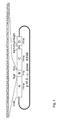
- the plasmid comprises the following fragments:
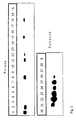
- RNA coded for by the pyrophosphatase gene
- the black spots indicate the RNA coded for by the pyrophosphatase.
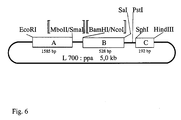
- the plasmid comprises the following fragments:
- the vector pUC18 (Yanisch-Perron et al ., Gene (1985), 33, 103-119) was used for cloning.
- the E . coli strains BMH71-18 (Messing et al ., Proc. Natl. Acad. Sci. USA (1977), 24, 6342-6346) or TB1 were used for the pUC vectors.
- TB1 is a recombination-negative, tetracycline-resistant derivative of strain JM101 (Yanisch-Perron et al ., Gene (1985), 33, 103-119).
- the genotype of the TB1 strain is (Bart Barrel, pers. communication): F (traD36, proAB, lacI, lacZ ⁇ M15), ⁇ (lac, pro), SupE, this, recA, Sr1::Tn10(Tc R ).
- the plant transformation was carried out by means of the Agrobacterium tumefaciens strain LBA4404 (Bevan, M., Nucl. Acids Res. 12 , 8711-8721, (1984); BIN19 derivative).
- the insertion of the DNA into the agrobacteria was effected by direct transformation in accordance with the method developed by Holsters et al ., (Mol. Gen. Genet. (1978), 163, 181-187).
- the plasmid DNA of transformed agrobacteria was isolated in accordance with the method developed by Birnboim and Doly (Nucl. Acids Res. (1979), 7, 1513-1523) and was separated by gel electrophoresis after suitable restriction cleavage.
- A) Tobacco 10 ml of an overnight culture of Agrobacterium tumefaciens, grown under selection, were centrifuged off, the supernatant was discarded, and the bacteria were resuspended in the same volume of antibiotic-free medium.
- leaf discs of sterile plants approximately 1 cm 2
- the leaf discs were then placed in a closely packed arrangement in Petri dishes containing MS medium (according to Murashige and Skoog, Physiologia Plantarum (1962), 15, 473-497) with 2 % sucrose and 0.8 % Bacto agar.
- MS medium containing 100 mg/l of kanamycin, 500 mg/l of claforan, 1 mg/l of benzylaminopurine (BAP), 0.2 mg/l of naphthylacetic acid (NAA) and 0.8 % Bacto agar. Growing shoots were transferred onto hormone-free MS medium with 250 mg/l of claforan.
- RNA samples 50 ⁇ g portions of total RNA were investigated by means of Northern blotting for the presence of the transcripts sought.
- protein extraction buffer 25 mM sodium phosphate pH 7.0, 2 mM sodium hydrogen sulphite, 2 mM phenylmethylsulphonyl fluoride (PMSF)
- PMSF phenylmethylsulphonyl fluoride
- PVP insoluble polyvinylpyrrolidone
- cell detritus After filtering through cellulose, cell detritus was centrifuged off for 20 minutes at 10,000 revolutions per minute and the protein concentration of the supernatant was determined in accordance with the method developed by Bradford (Anal. Biochem. (1976)/ 72 , 248-254).
- the total protein was extracted from plants as described under point 7, and unmodified SB buffer (125 mM tris/HCl pH 6.8, 10 % 2-mercaptoethanol, 20 % glycol, 0.004 % bromophenol blue) was added and the whole was added to 10 % SDS polyacrylamide gels.
- the mixtures were denatured, not by heating, before separation in the SDS polyacrylamide gels.
- electrophoretic separation the gels were rinsed briefly in water and incubated for 1 hour at 37'C in pyrophosphate buffer (0.05 M tris/HCl pH 9.0; 0.03 mM inorganic pyrophosphate (Na 4 P 2 O 7 ), 5 mM MgCl 2 ).
- the insoluble material that remained was rinsed with water and finely ground in a mortar.
- the extract was then boiled for 1 hour at 95°C in 0.2 M potassium hydroxide solution, neutralised with 70 ⁇ l of 1N acetic acid and then centrifuged. Aliquots of the resulting starch solution were used to determine the starch.
- a DNA sequence from E . coli K12 that codes for inorganic pyrophosphatase was provided with a promoter of the 35S RNA of cauliflower mosaic virus (CaMV) that brings about constitutive expression, a DNA segment from tobacco mosaic virus that serves as a translation amplifier, and a plant termination signal.
- the plant termination signal comprises the 3'-end of the poly-A side of the octopine synthase gene.
- the vicinity of the translation initiation codon ATG of the sequence for inorganic pyrophosphatase was subjected to a controlled mutagenesis in order to achieve optimum expression in eukaryotic cells.
- Plasmid p35S- ⁇ -ppase comprises the four fragments A, B, C and D which were cloned into the cleavage sites of the polylinker of pUC 18 ( Figure 1).
- Fragment A contains the 35S promoter of cauliflower mosaic virus (CaMV). That fragment includes the nucleotides 6909 to 7437 of CaMV (Franck et al. , Cell 21, 285-294). It was isolated in the form of Eco RI-Kpn I fragment from plasmid pDH51 (Pietrzak et al. , Nucleic Acids Research 14, 5857-5868) and cloned between the Eco RI-Kpn I cleavage sites of the polylinker of plasmid pUC 18.
- CaMV cauliflower mosaic virus
- Fragment B contains a segment consisting of 61 nucleotides having the sequence which is homologous to a portion of the DNA segment, serving as a translation amplifier, from the tobacco mosaic virus strain U (Gallie et al ., Nucleic Acids Res. 15, 3257-3273). That segment, which was produced by DNA synthesis, was provided at the 5'-end with an Asp 718 linker having the sequence and at the 3'-end with an Nco I-linker having the sequence
- Fragment B was cloned between the Kpn I and Sma I cleavage site of the polylinker of pUC 18.
- Fragment C includes the protein-coding region of inorganic pyrophosphatase (ppa) from E . coli which comprises the nucleotides, positions -39 to +565, of the sequence according to Lahti et al ., (J. Bacteriology 170, 5901-5907).
- Fragment C was cloned between the Nco I site of fragment B and the Sal I site of the polylinker of pUC 18.
- Fragment D (192 bp) contains the polyadenylation signal of gene 3 of the T-DNA of the Ti plasmid pTiACH5 (Gielen et al ., EMBO J. 3, 835-846), nucleotides 11749-11939, which was isolated in the form of Pvu II-Hind III fragment from plasmid pAGV 40 (Herrera-Estrella et al. , (1983) Nature 303, 209-213) and, after the addition of Sph I linkers to the Pvu II cleavage site, was cloned between the Sph I-Hind III cleavage sites of the polylinker of pUC 18.
- the size of plasmid p35S- ⁇ -ppase is 4.0 kb.
- Plasmid p35S- ⁇ -ppase was inserted into binary vectors and then inserted into tobacco and potato plants by means of the agrobacteria system. Intact and fertile plants were regenerated from transformed cells.
- RNA that hybridises specifically with the coding sequence of inorganic pyrophosphatase and that is absent in untransformed plants (potato plant, position A, tobacco plant, position B) ( Figure 2).
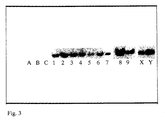
- the protein extracts of transformed plants that comprise an RNA hybridising specifically with the coding sequence of inorganic pyrophosphatase exhibited an inorganic pyrophosphatase activity (potato plants: positions 1 to 7 and tobacco plants: positions 8 and 9) which was not present in untransformed plants, positions A to C (see Figure 3).
- Transgenic tobacco and potato plants were thus produced that comprise a new inorganic pyrophosphatase activity that originates from the E . coli gene inserted into those plants (see Figure 3).
- the regenerated tobacco and potato plants exhibited a number of differences in respect of phenotypic and biochemical parameters.
- Transgenic tobacco plants having a high level of expression of the pyrophosphatase gene exhibited a marked reduction in plant size, while tobacco plants having a medium level of expression of the pyrophosphatase gene exhibited only a slight reduction in size.
- the compactness is not attributable to a reduction in the number of leaves but to a reduction in the internodal distance.
- the young leaves of the tobacco plants that express pyrophosphatase did not exhibit any marked phenotypic differences in comparison with untransformed control plants.
- the older leaves of the pyrophosphatase-expressing leaves on the other hand, exhibited a marked thickening of the leaf.
- a bleaching of the older leaves was observed.
- the tobacco plants that express the pyrophosphatase gene exhibited a marked change in the composition of the carbohydrates in leaves of different age (see Figure 4).
- the amounts of soluble sugars were distinctly increased in all leaves compared with leaves of untransformed plants, an increase by a factor of up to 20-50 being observed in the older leaves.
- the older leaves there was an increase in the amount of starch formed, but that increase was not as great as the increase in the proportion of soluble sugars, so that, overall, on the one hand a marked increase was observed in the total content of starch and soluble sugars as a result of the expression of pyrophosphatase and, on the other hand, there was a clear shift in the distribution of the photoassimilates between starch and soluble sugars towards soluble sugars.
- the compactness is accompanied by increased branching of the plants owing to the increased formation of axial shoots. It is obvious that this compact growth has many advantages with regard to stability and sensitivity to wind.
- the potato plants that express the pyrophosphatase gene also exhibited drastic changes in respect of the composition of the carbohydrates in the leaf (see Figure 5).
- the potato plants have an increased sucrose:starch ratio. The increase in that ratio can be as much as a factor of 20.
- the transgenic potato plants did not exhibit a drastic increase in hexoses (glucose and fructose).
- the pyrophosphatase gene can be cloned from many other sources and be used for similar experiments.
- the primary sequence of the pyrophosphatase can be modified to achieve a higher expression level and/or to target the ppase into e.g. other subcellular organelles (chloroplasts, mitochondria, vacuole, extracellular space) or to use other promtors ensuring the expression specifically only in e.g. photosynthetically active cells, in seeds, tubers, tap roots, fruits, roots. stem, flowers etc. or under specific environmental conditions such as drought, heat, cold, high-salt soils etc.
- a DNA sequence from E . coli K12 that codes for inorganic pyrophosphatase was provided with a promotor of the ST-LS1 gene (Stockhaus et al., EMBO J. 8 , 2445-2451 (1989)) that brings about specific expression in photosynthetically active cells, and a plant termination signal.
- the plant termination signal comprises the 3'-end of the poly-A side of the octopine synthase gene.
- Plasmid L700:ppa comprises the three fragments A, B and C which were cloned into the cleavage sites of the polylinker of pUC 18 ( Figure 6).
- Fragment A (1585 bp) contains the promotor of the ST-LS1 gene (op.cit.). That fragment includes the nucleotides +1 to +1585 of the ST-LS1 gene (Eckes et al., Mol. Gen. Genetics 205 , 14-22). It was isolated in the form of a EcoRI-Mboll fragment and cloned between the EcoRI-SmaI cleavage sites of the polylinker of plasmid pUC 18 after the Mboll site had been flushed by T4-DNA Polymerase.
- Fragment B includes the protein-coding region of inorganic pyrophosphatase (ppa) from E . coli which comprises the nucleotides, positions +39 to +565, of the sequence according to Lahti et al ., (J. Bacteriology 170, 5901-5907). It was isolated in the form of a NcoI - Sail fragment from the plasmid p35S- -ppase (cf. fig. 1). Fragment B was cloned between the BamHI site and the SALI site of the polylinker of pUC 18 after the NcoI site and the BamHI site had been made blunt end by fill-in reactions.
- ppa inorganic pyrophosphatase
- Fragment C (192 bp) contains the polyadenylation signal of gene 3 of the T-DNA of the Ti plasmid pTiACH5 (Gielen et al., EMBO J. 3, 835-846) nucleotides 11749-11939, which was isolated in the form of a PvuII-HindIII fragment from plasmid pAGV 40 (Herrera-Estrella et al., (1983) Nature 303, 209-213) and, after the addition of SphI linkers to the PvuII cleavage site, was cloned between the SphI-HindIII cleavage sites of the polylinker of pUC 18.
- the size of plasmid L700:ppa is 5.0 kb.
- Plasmid L700:ppa was inserted into binary vectors and then inserted into tobacco and potato plants by means of the agrobacteria system. Intact and fertile plants were regenerated from transformed cells.
- E. coli pyrophosphatase in photosynthetically active cells (leaf) leads to an increased supply of sink organs (roots, tubers) with sucrose and thus increases yield.
Landscapes
- Health & Medical Sciences (AREA)
- Life Sciences & Earth Sciences (AREA)
- Genetics & Genomics (AREA)
- Engineering & Computer Science (AREA)
- Chemical & Material Sciences (AREA)
- Zoology (AREA)
- Biotechnology (AREA)
- Bioinformatics & Cheminformatics (AREA)
- Wood Science & Technology (AREA)
- Organic Chemistry (AREA)
- Molecular Biology (AREA)
- General Engineering & Computer Science (AREA)
- Biomedical Technology (AREA)
- Microbiology (AREA)
- Biochemistry (AREA)
- General Health & Medical Sciences (AREA)
- Cell Biology (AREA)
- Physics & Mathematics (AREA)
- Biophysics (AREA)
- Plant Pathology (AREA)
- Nutrition Science (AREA)
- Medicinal Chemistry (AREA)
- Breeding Of Plants And Reproduction By Means Of Culturing (AREA)
- Micro-Organisms Or Cultivation Processes Thereof (AREA)
- Saccharide Compounds (AREA)
Claims (17)
- Plasmide comprenant une séquence d'ADN codant pour une pyrophosphatase inorganique, soudée aux régions régulatrices d'un ou plusieurs autres gènes capables de provoquer l'expression de ladite séquence d'ADN dans des cellules végétales ou des plantes.
- Plasmide selon la revendication 1, dans lequel ladite séquence d'ADN codant pour une pyrophosphatase inorganique est dérivée de E. coli.
- Plasmide selon la revendication 1, dans lequel lesdites régions régulatrices comprennent des régions de promoteur et des signaux de terminaison de transcription.
- Plasmide selon la revendication 3, dans lequel ladite région de promoteur est choisie dans le groupe formé par :un promoteur d'un gène végétal,un promoteur d'un gène viral,un promoteur provoquant une expression constitutive,un promoteur provoquant une expression dans des cellules à activité de photosynthèse,un promoteur provoquant une expression dans des cellules de puits de réserve,un promoteur provoquant une expression dans des cellules de racines,le promoteur de l'ARN 35S du virus de la mosaïque du chou-fleur,le promoteur ST-Ls 1 etles promoteurs de patatingène de classe I.
- Plasmide selon la revendication 3, dans lequel ledit signal de terminaison de transcription est dérivé du gène d'octopine-synthase.
- Plasmide p35S-Ω-ppase (DSM6141).
- Plasmide L700:ppa (DSM 6733).
- Procédé pour la production de plantes transgéniques ayant un métabolisme des sucres modifié, comprenant les étapes suivantes :a) transformer des cellules végétales avec un plasmide selon l'une quelconque des revendications 1 à 7, etb) utiliser lesdites cellules végétales transformées pour régénérer des plantes transgéniques.
- Procédé selon la revendication 8, dans lequel lesdites cellules végétales sont dérivées d'un plant de pomme de terre.
- Procédé selon la revendication 8, dans lequel lesdites cellules végétales sont dérivées d'un plant de tabac.
- Plantes transgéniques dérivées de cellules végétales comprenant une séquence d'ADN codant pour une pyrophosphatase inorganique soudée aux régions régulatrices d'un ou plusieurs autres gènes capables de provoquer l'expression de ladite séquence d'ADN dans des cellules végétales ou des plantes.
- Plantes transgéniques selon la revendication 11, dans lesquelles ladite séquence d'ADN codant pour une pyrophosphatase inorganique est dérivée de E. coli.
- Plantes transgéniques selon l'une quelconque des revendications 11 et 12, dans lesquelles lesdites régions régulatrices comprennent des régions de promoteur et des signaux de terminaison de transcription.
- Plantes transgéniques selon la revendication 13, dans lesquelles ladite région de promoteur est choisie dans le groupe formé par :un promoteur d'un gène végétal,un promoteur d'un gène viral,un promoteur provoquant une expression constitutive,un promoteur provoquant une expression dans des cellules à activité de photosynthèse,un promoteur provoquant une expression dans des cellules de puits de réserve,un promoteur provoquant une expression dans des cellules de racines,le promoteur de l'ARN 35S du virus de la mosaïque du chou-fleur,le promoteur ST-Ls 1,les promoteurs de patatingène de classe I.
- Plantes transgéniques selon l'une quelconque des revendications 11 à 14, caractérisées en ce que ce sont des plants de pomme de terre.
- Plantes transgéniques selon l'une quelconque des revendications 11 à 14, caractérisées en ce que ce sont des plants de tabac.
- Utilisation d'un plasmide selon l'une quelconque des revendications 1 à 7 pour la transformation de cellules végétales.
Priority Applications (1)
| Application Number | Priority Date | Filing Date | Title |
|---|---|---|---|
| EP01106521A EP1114866A3 (fr) | 1990-11-08 | 1991-11-04 | Plasmides pour la production de plantes transgéniques à apparence et rendement modifiés |
Applications Claiming Priority (2)
| Application Number | Priority Date | Filing Date | Title |
|---|---|---|---|
| DE4035756A DE4035756A1 (de) | 1990-11-08 | 1990-11-08 | Neue plasmide zur herstellung von im habitus und ertrag veraenderten transgenen pflanzen |
| DE4035756 | 1990-11-08 |
Related Child Applications (1)
| Application Number | Title | Priority Date | Filing Date |
|---|---|---|---|
| EP01106521A Division EP1114866A3 (fr) | 1990-11-08 | 1991-11-04 | Plasmides pour la production de plantes transgéniques à apparence et rendement modifiés |
Publications (3)
| Publication Number | Publication Date |
|---|---|
| EP0485044A2 EP0485044A2 (fr) | 1992-05-13 |
| EP0485044A3 EP0485044A3 (en) | 1992-07-08 |
| EP0485044B1 true EP0485044B1 (fr) | 2001-10-10 |
Family
ID=6417980
Family Applications (2)
| Application Number | Title | Priority Date | Filing Date |
|---|---|---|---|
| EP01106521A Withdrawn EP1114866A3 (fr) | 1990-11-08 | 1991-11-04 | Plasmides pour la production de plantes transgéniques à apparence et rendement modifiés |
| EP91250301A Expired - Lifetime EP0485044B1 (fr) | 1990-11-08 | 1991-11-04 | Plasmides pour la production de plantes transgéniques à apparence et rendement modifiés |
Family Applications Before (1)
| Application Number | Title | Priority Date | Filing Date |
|---|---|---|---|
| EP01106521A Withdrawn EP1114866A3 (fr) | 1990-11-08 | 1991-11-04 | Plasmides pour la production de plantes transgéniques à apparence et rendement modifiés |
Country Status (13)
| Country | Link |
|---|---|
| US (1) | US5492820A (fr) |
| EP (2) | EP1114866A3 (fr) |
| JP (1) | JP3431177B2 (fr) |
| KR (1) | KR920009983A (fr) |
| AT (1) | ATE206761T1 (fr) |
| AU (1) | AU655209B2 (fr) |
| CA (1) | CA2055150A1 (fr) |
| DE (2) | DE4035756A1 (fr) |
| DK (1) | DK0485044T3 (fr) |
| ES (1) | ES2164636T3 (fr) |
| HU (1) | HU215255B (fr) |
| IE (2) | IE913884A1 (fr) |
| IL (1) | IL99828A0 (fr) |
Families Citing this family (20)
| Publication number | Priority date | Publication date | Assignee | Title |
|---|---|---|---|---|
| DE4220758A1 (de) * | 1992-06-24 | 1994-01-05 | Inst Genbiologische Forschung | DNA-Sequenz und Plasmide zur Herstellung von Pflanzen mit veränderter Saccharose-Konzentration |
| EP0628636A1 (fr) * | 1993-06-07 | 1994-12-14 | Stichting Agrotechnologisch Onderzoek ( Ato-Dlo) | Plantes transgéniques présentant un métabolisme des carbohydrates modifié |
| DE4337597C2 (de) * | 1993-10-28 | 2002-07-18 | Aventis Cropscience Gmbh | DNA-Sequenzen für Ammoniumtransporter, Plasmide, Bakterien, Hefen, Pflanzenzellen und Pflanzen enthaltend den Transporter |
| CN1155713C (zh) * | 1995-04-06 | 2004-06-30 | 塞迷尼思蔬菜种子公司 | 选择转基因植物细胞的方法 |
| US6420629B1 (en) * | 1996-09-09 | 2002-07-16 | B.C. Research Inc. | Process of increasing plant growth and yield and modifying cellulose production in plants |
| US6416985B1 (en) | 1996-10-15 | 2002-07-09 | Board Of Trustees Of Michigan State University | DNA encoding mannose 6-phosphate reductase and recombinants produced therefrom |
| US6274319B1 (en) * | 1999-01-29 | 2001-08-14 | Walter Messier | Methods to identify evolutionarily significant changes in polynucleotide and polypeptide sequences in domesticated plants and animals |
| US7252966B2 (en) * | 1999-01-29 | 2007-08-07 | Evolutionary Genomics Llc | EG307 polynucleotides and uses thereof |
| US7439018B2 (en) * | 1999-01-29 | 2008-10-21 | Evolutionary Genomics, Inc. | EG1117 Polynucleotides and uses thereof |
| US20080047032A1 (en) * | 1999-01-29 | 2008-02-21 | Evolutionary Genomics Llc | Eg307 nucleic acids and uses thereof |
| ES2258489T3 (es) * | 1999-12-22 | 2006-09-01 | Basf Plant Science Gmbh | Proteinas relacionadas con el estres por pirofosfatasas y metodos de utilizacion en plantas. |
| JP2003521921A (ja) * | 2000-02-02 | 2003-07-22 | ウニベルジダード プブリカ デ ナバラ | 植物adpグルコースピロホスファターゼ、その製造方法、アッセイ装置及びトランスジェニック植物の製造におけるその使用 |
| ES2164582B1 (es) * | 2000-02-02 | 2003-07-01 | Univ Navarra Publica | Adpglucosa pirofosfatasa vegetal alternativamente llamada adpglucosa fosfodiesterasa procedimiento de obtencion y su uso en la fabricacion de dispositivos de ensayo. |
| US20040133944A1 (en) * | 2003-01-08 | 2004-07-08 | Delta And Pine Land Company | Seed oil suppression to enhance yield of commercially important macromolecules |
| DE10313795A1 (de) * | 2003-03-20 | 2004-10-07 | Südzucker Aktiengesellschaft Mannheim/Ochsenfurt | Veränderte PPase-Expression in Zuckerrübe |
| AU2006230352A1 (en) * | 2005-03-29 | 2006-10-05 | Evolutionary Genomics Llc | EG1117 and EG307 polynucleotides and uses thereof |
| WO2007028121A2 (fr) * | 2005-09-02 | 2007-03-08 | Evolutionary Genomics, Inc. | Polynucleotides eg8798 et eg9703 et utilisations |
| CN101490079B (zh) * | 2006-07-17 | 2012-08-22 | 北京北方杰士生物科技有限责任公司 | 植物生长和耐逆性相关同功酶及其编码基因与应用 |
| US20100257639A1 (en) * | 2009-02-26 | 2010-10-07 | Robert Edward Bruccoleri | Methods and compositions for altering sugar beet or root crop storage tissue |
| CN108728478B (zh) * | 2017-04-20 | 2021-08-27 | 中国科学院分子植物科学卓越创新中心 | 利用氢离子焦磷酸化酶提高产量及改良淀粉性质的方法 |
Family Cites Families (8)
| Publication number | Priority date | Publication date | Assignee | Title |
|---|---|---|---|---|
| US4771002A (en) * | 1984-02-24 | 1988-09-13 | Lubrizol Genetics, Inc. | Transcription in plants and bacteria |
| WO1989012386A1 (fr) * | 1988-06-21 | 1989-12-28 | Calgene, Inc. | Procedes et compositions modifiant les caracteristiques physiques de fruits et de produits a base de fruits |
| GB8826356D0 (en) * | 1988-11-10 | 1988-12-14 | Ici Plc | Adp glucose-pyrophosphorylase |
| DK198089D0 (da) * | 1989-04-24 | 1989-04-24 | Danske Spritfabrikker | Dna-materialer og anvendelse deraf |
| AU644619B2 (en) * | 1989-12-21 | 1993-12-16 | Advanced Technologies (Cambridge) Limited | Modification of plant metabolism |
| DE4004800C2 (de) * | 1990-02-13 | 2000-12-21 | Aventis Cropscience Gmbh | Im Habitus und Ertrag veränderte transgene Pflanzen |
| IE913215A1 (en) * | 1990-09-13 | 1992-02-25 | Gist Brocades Nv | Transgenic plants having a modified carbohydrate content |
| EP0479539B1 (fr) * | 1990-10-02 | 1998-07-08 | Canon Kabushiki Kaisha | Système d'enregistrement et de réproduction d'images |
-
1990
- 1990-11-08 DE DE4035756A patent/DE4035756A1/de not_active Ceased
-
1991
- 1991-10-23 IL IL99828A patent/IL99828A0/xx unknown
- 1991-11-04 AU AU87021/91A patent/AU655209B2/en not_active Ceased
- 1991-11-04 DK DK91250301T patent/DK0485044T3/da active
- 1991-11-04 EP EP01106521A patent/EP1114866A3/fr not_active Withdrawn
- 1991-11-04 ES ES91250301T patent/ES2164636T3/es not_active Expired - Lifetime
- 1991-11-04 DE DE69132758T patent/DE69132758T2/de not_active Expired - Fee Related
- 1991-11-04 AT AT91250301T patent/ATE206761T1/de not_active IP Right Cessation
- 1991-11-04 EP EP91250301A patent/EP0485044B1/fr not_active Expired - Lifetime
- 1991-11-07 IE IE388491A patent/IE913884A1/en not_active Application Discontinuation
- 1991-11-07 HU HU913508A patent/HU215255B/hu not_active IP Right Cessation
- 1991-11-07 IE IE20020633A patent/IE20020633A1/en unknown
- 1991-11-07 JP JP29106591A patent/JP3431177B2/ja not_active Expired - Fee Related
- 1991-11-07 KR KR1019910019723A patent/KR920009983A/ko not_active Withdrawn
- 1991-11-07 CA CA002055150A patent/CA2055150A1/fr not_active Abandoned
-
1993
- 1993-11-02 US US08/147,007 patent/US5492820A/en not_active Expired - Fee Related
Also Published As
| Publication number | Publication date |
|---|---|
| EP0485044A3 (en) | 1992-07-08 |
| US5492820A (en) | 1996-02-20 |
| JP3431177B2 (ja) | 2003-07-28 |
| IE20020633A1 (en) | 2003-07-09 |
| JPH05236971A (ja) | 1993-09-17 |
| EP1114866A2 (fr) | 2001-07-11 |
| IL99828A0 (en) | 1992-08-18 |
| KR920009983A (ko) | 1992-06-26 |
| DK0485044T3 (da) | 2002-02-04 |
| CA2055150A1 (fr) | 1992-05-09 |
| HU215255B (hu) | 1998-11-30 |
| HUT60774A (en) | 1992-10-28 |
| AU8702191A (en) | 1992-05-14 |
| AU655209B2 (en) | 1994-12-08 |
| ES2164636T3 (es) | 2002-03-01 |
| IE913884A1 (en) | 1992-05-20 |
| EP1114866A3 (fr) | 2001-11-28 |
| DE4035756A1 (de) | 1992-05-14 |
| HU913508D0 (en) | 1992-01-28 |
| EP0485044A2 (fr) | 1992-05-13 |
| ATE206761T1 (de) | 2001-10-15 |
| DE69132758T2 (de) | 2002-09-05 |
| DE69132758D1 (de) | 2001-11-15 |
Similar Documents
| Publication | Publication Date | Title |
|---|---|---|
| US5492820A (en) | Plasmids for the production of transgenic plants that are modified in habit and yield | |
| US5436394A (en) | Plasmid for the preparation of transgenic plants with a change in habit and yield | |
| EP0455316B1 (fr) | Plasmides contenant des séquences d'ADN entraínant la modification de la concentration et de la composition en hydrates de carbones et en protéines dans les plantes, ainsi que des cellules de plantes et des plantes contenant ces plasmides | |
| ES2275302T3 (es) | Moleculas de acidos nucleicos procedentes de alcachofa (cynara scolymus) que codificsan enzimas que tienen actividad de fructosipolimerasa. | |
| US20050009165A1 (en) | Raffinose synthase gene, method for producing raffinose, and transgenic plant | |
| EP0584324B1 (fr) | Cassette d'expression et plasmides utilises dans l'expression specifique de cellules stomatiques et leur emploi dans l'introduction de cellules de plantes et de plantes transgeniques | |
| AU672017B2 (en) | Dna sequences and plasmids for the preparation of plants with changed sucrose concentration | |
| AU8220291A (en) | Increased starch content in plants | |
| AU715002B2 (en) | Transgenic plants with improved biomass production | |
| HU228696B1 (en) | Plastid-targeting nucleic acid sequence, beta-amylase sequence, a stimulus-responsive promoter and uses thereof | |
| US5917127A (en) | Plasmids useful for and methods of preparing transgenic plants with modifications of habit and yield | |
| US20050066391A1 (en) | Methods of producing nucleic acids coding for proteins have raffinose synthase activity |
Legal Events
| Date | Code | Title | Description |
|---|---|---|---|
| PUAI | Public reference made under article 153(3) epc to a published international application that has entered the european phase |
Free format text: ORIGINAL CODE: 0009012 |
|
| 17P | Request for examination filed |
Effective date: 19911104 |
|
| AK | Designated contracting states |
Kind code of ref document: A2 Designated state(s): AT BE CH DE DK ES FR GB GR IT LI LU NL SE |
|
| PUAL | Search report despatched |
Free format text: ORIGINAL CODE: 0009013 |
|
| AK | Designated contracting states |
Kind code of ref document: A3 Designated state(s): AT BE CH DE DK ES FR GB GR IT LI LU NL SE |
|
| 17Q | First examination report despatched |
Effective date: 19941103 |
|
| RAP1 | Party data changed (applicant data changed or rights of an application transferred) |
Owner name: HOECHST SCHERING AGREVO GMBH |
|
| RAP1 | Party data changed (applicant data changed or rights of an application transferred) |
Owner name: AVENTIS CROPSCIENCE GMBH |
|
| GRAG | Despatch of communication of intention to grant |
Free format text: ORIGINAL CODE: EPIDOS AGRA |
|
| RAP1 | Party data changed (applicant data changed or rights of an application transferred) |
Owner name: AVENTIS CROPSCIENCE GMBH |
|
| GRAG | Despatch of communication of intention to grant |
Free format text: ORIGINAL CODE: EPIDOS AGRA |
|
| GRAH | Despatch of communication of intention to grant a patent |
Free format text: ORIGINAL CODE: EPIDOS IGRA |
|
| GRAH | Despatch of communication of intention to grant a patent |
Free format text: ORIGINAL CODE: EPIDOS IGRA |
|
| GRAA | (expected) grant |
Free format text: ORIGINAL CODE: 0009210 |
|
| AK | Designated contracting states |
Kind code of ref document: B1 Designated state(s): AT BE CH DE DK ES FR GB GR IT LI LU NL SE |
|
| PG25 | Lapsed in a contracting state [announced via postgrant information from national office to epo] |
Ref country code: GR Free format text: LAPSE BECAUSE OF NON-PAYMENT OF DUE FEES Effective date: 20011010 Ref country code: AT Free format text: LAPSE BECAUSE OF FAILURE TO SUBMIT A TRANSLATION OF THE DESCRIPTION OR TO PAY THE FEE WITHIN THE PRESCRIBED TIME-LIMIT Effective date: 20011010 |
|
| REF | Corresponds to: |
Ref document number: 206761 Country of ref document: AT Date of ref document: 20011015 Kind code of ref document: T |
|
| REG | Reference to a national code |
Ref country code: CH Ref legal event code: EP |
|
| REF | Corresponds to: |
Ref document number: 69132758 Country of ref document: DE Date of ref document: 20011115 |
|
| REG | Reference to a national code |
Ref country code: GB Ref legal event code: IF02 |
|
| PG25 | Lapsed in a contracting state [announced via postgrant information from national office to epo] |
Ref country code: SE Free format text: LAPSE BECAUSE OF FAILURE TO SUBMIT A TRANSLATION OF THE DESCRIPTION OR TO PAY THE FEE WITHIN THE PRESCRIBED TIME-LIMIT Effective date: 20020110 |
|
| REG | Reference to a national code |
Ref country code: DK Ref legal event code: T3 |
|
| ET | Fr: translation filed | ||
| REG | Reference to a national code |
Ref country code: ES Ref legal event code: FG2A Ref document number: 2164636 Country of ref document: ES Kind code of ref document: T3 |
|
| REG | Reference to a national code |
Ref country code: CH Ref legal event code: PL |
|
| REG | Reference to a national code |
Ref country code: CH Ref legal event code: NV Representative=s name: PATENTANWAELTE SCHAAD, BALASS, MENZL & PARTNER AG Ref country code: CH Ref legal event code: AEN Free format text: DAS PATENT IST AUFGRUND DES WEITERBEHANDLUNGSANTRAGS VOM 16.05.2002 REAKTIVIERT WORDEN. |
|
| PLBE | No opposition filed within time limit |
Free format text: ORIGINAL CODE: 0009261 |
|
| STAA | Information on the status of an ep patent application or granted ep patent |
Free format text: STATUS: NO OPPOSITION FILED WITHIN TIME LIMIT |
|
| 26N | No opposition filed | ||
| PGFP | Annual fee paid to national office [announced via postgrant information from national office to epo] |
Ref country code: DE Payment date: 20030905 Year of fee payment: 13 |
|
| PGFP | Annual fee paid to national office [announced via postgrant information from national office to epo] |
Ref country code: GB Payment date: 20031029 Year of fee payment: 13 |
|
| PGFP | Annual fee paid to national office [announced via postgrant information from national office to epo] |
Ref country code: NL Payment date: 20031105 Year of fee payment: 13 |
|
| PGFP | Annual fee paid to national office [announced via postgrant information from national office to epo] |
Ref country code: FR Payment date: 20031110 Year of fee payment: 13 |
|
| PGFP | Annual fee paid to national office [announced via postgrant information from national office to epo] |
Ref country code: LU Payment date: 20031112 Year of fee payment: 13 |
|
| PGFP | Annual fee paid to national office [announced via postgrant information from national office to epo] |
Ref country code: DK Payment date: 20031114 Year of fee payment: 13 |
|
| PGFP | Annual fee paid to national office [announced via postgrant information from national office to epo] |
Ref country code: CH Payment date: 20031118 Year of fee payment: 13 |
|
| PGFP | Annual fee paid to national office [announced via postgrant information from national office to epo] |
Ref country code: ES Payment date: 20031209 Year of fee payment: 13 |
|
| PGFP | Annual fee paid to national office [announced via postgrant information from national office to epo] |
Ref country code: BE Payment date: 20040121 Year of fee payment: 13 |
|
| PG25 | Lapsed in a contracting state [announced via postgrant information from national office to epo] |
Ref country code: LU Free format text: LAPSE BECAUSE OF NON-PAYMENT OF DUE FEES Effective date: 20041104 Ref country code: GB Free format text: LAPSE BECAUSE OF NON-PAYMENT OF DUE FEES Effective date: 20041104 |
|
| PG25 | Lapsed in a contracting state [announced via postgrant information from national office to epo] |
Ref country code: ES Free format text: LAPSE BECAUSE OF NON-PAYMENT OF DUE FEES Effective date: 20041105 |
|
| PG25 | Lapsed in a contracting state [announced via postgrant information from national office to epo] |
Ref country code: LI Free format text: LAPSE BECAUSE OF NON-PAYMENT OF DUE FEES Effective date: 20041130 Ref country code: DK Free format text: LAPSE BECAUSE OF NON-PAYMENT OF DUE FEES Effective date: 20041130 Ref country code: CH Free format text: LAPSE BECAUSE OF NON-PAYMENT OF DUE FEES Effective date: 20041130 Ref country code: BE Free format text: LAPSE BECAUSE OF NON-PAYMENT OF DUE FEES Effective date: 20041130 |
|
| BERE | Be: lapsed |
Owner name: *AVENTIS CROPSCIENCE G.M.B.H. Effective date: 20041130 |
|
| PG25 | Lapsed in a contracting state [announced via postgrant information from national office to epo] |
Ref country code: NL Free format text: LAPSE BECAUSE OF NON-PAYMENT OF DUE FEES Effective date: 20050601 Ref country code: DE Free format text: LAPSE BECAUSE OF NON-PAYMENT OF DUE FEES Effective date: 20050601 |
|
| GBPC | Gb: european patent ceased through non-payment of renewal fee |
Effective date: 20041104 |
|
| REG | Reference to a national code |
Ref country code: DK Ref legal event code: EBP |
|
| REG | Reference to a national code |
Ref country code: CH Ref legal event code: PL |
|
| PG25 | Lapsed in a contracting state [announced via postgrant information from national office to epo] |
Ref country code: FR Free format text: LAPSE BECAUSE OF NON-PAYMENT OF DUE FEES Effective date: 20050729 |
|
| NLV4 | Nl: lapsed or anulled due to non-payment of the annual fee |
Effective date: 20050601 |
|
| REG | Reference to a national code |
Ref country code: FR Ref legal event code: ST |
|
| PG25 | Lapsed in a contracting state [announced via postgrant information from national office to epo] |
Ref country code: IT Free format text: LAPSE BECAUSE OF NON-PAYMENT OF DUE FEES;WARNING: LAPSES OF ITALIAN PATENTS WITH EFFECTIVE DATE BEFORE 2007 MAY HAVE OCCURRED AT ANY TIME BEFORE 2007. THE CORRECT EFFECTIVE DATE MAY BE DIFFERENT FROM THE ONE RECORDED. Effective date: 20051104 |
|
| REG | Reference to a national code |
Ref country code: ES Ref legal event code: FD2A Effective date: 20041105 |
|
| BERE | Be: lapsed |
Owner name: *AVENTIS CROPSCIENCE G.M.B.H. Effective date: 20041130 |