EP0502474A2 - Curculin B et DNA codant pour celui-ci, et procédé de sa production - Google Patents
Curculin B et DNA codant pour celui-ci, et procédé de sa production Download PDFInfo
- Publication number
- EP0502474A2 EP0502474A2 EP92103608A EP92103608A EP0502474A2 EP 0502474 A2 EP0502474 A2 EP 0502474A2 EP 92103608 A EP92103608 A EP 92103608A EP 92103608 A EP92103608 A EP 92103608A EP 0502474 A2 EP0502474 A2 EP 0502474A2
- Authority
- EP
- European Patent Office
- Prior art keywords
- curculin
- dna
- base sequence
- indicates
- acid residues
- Prior art date
- Legal status (The legal status is an assumption and is not a legal conclusion. Google has not performed a legal analysis and makes no representation as to the accuracy of the status listed.)
- Granted
Links
Images



Classifications
-
- C—CHEMISTRY; METALLURGY
- C07—ORGANIC CHEMISTRY
- C07K—PEPTIDES
- C07K14/00—Peptides having more than 20 amino acids; Gastrins; Somatostatins; Melanotropins; Derivatives thereof
- C07K14/415—Peptides having more than 20 amino acids; Gastrins; Somatostatins; Melanotropins; Derivatives thereof from plants
- C07K14/43—Sweetening agents, e.g. thaumatin, monellin
-
- A—HUMAN NECESSITIES
- A23—FOODS OR FOODSTUFFS; TREATMENT THEREOF, NOT COVERED BY OTHER CLASSES
- A23L—FOODS, FOODSTUFFS OR NON-ALCOHOLIC BEVERAGES, NOT OTHERWISE PROVIDED FOR; PREPARATION OR TREATMENT THEREOF
- A23L27/00—Spices; Flavouring agents or condiments; Artificial sweetening agents; Table salts; Dietetic salt substitutes; Preparation or treatment thereof
- A23L27/20—Synthetic spices, flavouring agents or condiments
- A23L27/21—Synthetic spices, flavouring agents or condiments containing amino acids
-
- A—HUMAN NECESSITIES
- A23—FOODS OR FOODSTUFFS; TREATMENT THEREOF, NOT COVERED BY OTHER CLASSES
- A23L—FOODS, FOODSTUFFS OR NON-ALCOHOLIC BEVERAGES, NOT OTHERWISE PROVIDED FOR; PREPARATION OR TREATMENT THEREOF
- A23L27/00—Spices; Flavouring agents or condiments; Artificial sweetening agents; Table salts; Dietetic salt substitutes; Preparation or treatment thereof
- A23L27/30—Artificial sweetening agents
- A23L27/31—Artificial sweetening agents containing amino acids, nucleotides, peptides or derivatives
-
- A—HUMAN NECESSITIES
- A61—MEDICAL OR VETERINARY SCIENCE; HYGIENE
- A61K—PREPARATIONS FOR MEDICAL, DENTAL OR TOILETRY PURPOSES
- A61K38/00—Medicinal preparations containing peptides
Definitions
- the present invention relates to curculin B and a DNA encoding the same, and a process for production thereof.
- Curculigo latifolia is a plant belonging to Hypoxidaceae (or Amaryllidaceae according to a different method of classification) and grows naturally in Western Malaysia, the southern part of Thailand, etc.
- Curculin homologue hereinafter referred to as curculin
- curculin the protein contained in Curculigo latifolia
- curculin A a curculin in curculin homologue
- curculin B another curculin (hereinafter referred to as curculin B) in curculin homologue. Further, the fact was confirmed that the microorganisms transformed by a plasmid containing the above cloning DNA produced curculin B, and thus the invention was completed.
- the present invention relates to essentially pure curculin B.
- the "essentially pure curculin B” particularly means curculin B essentially free of other proteins of Curculigo latifolia origin, and may be produced by recombinant host cells or microorganisms in accordance with the present invention.
- the present invention also relates to a DNA including a base sequence encoding curculin B.
- the present invention relates to a process for producing curculin B, comprising: culturing a transformed cell or microorganism containing a recombinant DNA containing a base sequence encoding curculin B, whereby curculin B is produced by the transformed cell or microorganism, and isolating curculin B from the transformed cell or microorganism.
- the present invention relates to a process for producing a DNA including a base sequence encoding curculin B, comprising: separating a fraction containing a curculin B mRNA from Curculigo latifolia preparing a single-stranded DNA from the mRNA using reverse transcriptase, preparing a double-stranded DNA from the single-stranded DNA, inserting the double-stranded DNA into a vector, transforming a host with the vector to produce a cDNA library, and isolating a cDNA encoding curculin B from the library, using one or more synthesized DNA's containing a base sequence coding for a partial amino acid sequence elucidated using curculin A purified from Curculigo latifolia, as a probe.
- FIG 1 illustrates the structure of an EcoRI adapter.
- Figure 2 is a restriction map of the cloning DNA encoding curculin B.
- Figure 3 illustrates the structure of plasmid pQ9.
- Figure 4 illustrates the process of preparation and structure of the expression plasmid.
- FIG. 5 illustrates the results of electrophoresis and Western analysis.
- Figure 6 is a graph showing the elution pattern of CM-sepharose ion exchange chromatography of a taste modifier obtained by a rinsing, extraction and desalting procedure from the fruit of Curculigo latifolia .
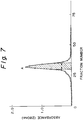
- Figure 7 is a graph showing the elution pattern of Sephadex G-100 molecular sieve chromatography of the fraction shown by the hatching of the peak (B) of Fig. 6.
- Figure 8 is a graph showing the activity of a taste-modifier comprised of high purity curculin A.
- curculin is produced in the plant cells in the form of a premature protein including a prepeptide or a prepropeptide, and the mature protein is formed by separating the prepeptide or prepropeptide in processing.
- the mature curculin B is comprised of 114 amino acids having an amino acid sequence of the formula (I):
- premature curculin B is comprised of the 158 amino acids having an amino acid sequence of the formula (II):
- the present invention also relates to a DNA characterized by including a base sequence encoding the mature or premature curculin B having the amino acid sequence of the formula (I) or (II), and further to a DNA containing a base sequence comprising the said base sequence containing ATG (coding for the starting methionine) bonded therewith, for the production of the mature or premature curculin B by microorganisms or culture cells.
- the above-mentioned DNA's of the present invention include even DNA's containing base sequences encoding polypeptides having the structures corresponding to homologous mutants of all of the above-mentioned polypeptides.
- the DNA encoding curculin B can be obtained by the following method.
- RNA was extracted from a sample of the powder.
- the RNA can be extracted using the guanidine-thiocyanate method (Maniatis et al.: Molecular Cloning, A Laboratory Manual, Cold Spring Harbor Laboratory, New York (1982)) or the phenol-SDS method (Brawerman et al., Biochemistry, 11, 637-641 (1972)).
- the guanidine-thiocyanate method comprises adding a guanidine-thiocyanate solution to the sample, then homogenizing the same.
- the homogenate obtained is placed in a swing rotor polyallomer tube and centrifuged to obtain the RNA residue.
- the RNA residue is refined to obtain the mRNA.
- the phenol-SDS method comprises adding a tris-hydrochloride buffer solution containing phenol, EDTA and SDS, and dithiothreitol to the powder sample to obtain an aqueous phase.
- the resulting aqueous phase contains substances other than RNA, such as polysaccharides, so lithium chloride etc. is used for a salting-out procedure so as to obtain the RNA residue.
- the RNA residue is redissolved in a suitable solvent and the mRNA is extracted by purifying with an oligo (dT) column (Aviv et al., Proc. Natl. Acad. Sci. U.S.A. 69, 1408-1418 (1972)).
- oligo (dT) column Aviv et al., Proc. Natl. Acad. Sci. U.S.A. 69, 1408-1418 (1972)
- it is preferable to use the phenol-SDS method because the plant of Curculigo latifolia or the like has
- the synthesis of the cDNA and the insertion of the cDNA in the vector may be performed in the above way. In the present invention, however, as shown in the later-mentioned examples, it is preferable to use the Gubler-Hoffman method and it is preferable to use ⁇ gt10 as the vector.
- Curculin A has already been purified from the Curculigo latifolia plant by the present inventors.
- the complete amino acid sequence of the protein was decided, and disclosed in Japanese Unexamined Published Patent Application (Kokai) No. 3-190899. Suitable portions of the amino acid sequence may be selected to prepare the probes.
- the synthesis of the DNA used as the probes may be performed using a known method (for example, the phosphoamidite method using an automatic DNA synthesizer, The Japanese Biochemical Society ed., Genetic Research Methods I, 1-27 (1986) or Matteucci et al., Tetrahedron Lett., 21, 719 (1980)).
- Screening of the plaques containing the desired gene from the cDNA library prepared in the above item (B) may be performed using the probes prepared in the above item (C).
- the plaques are baked on a nylon membrane or nitrocellulose or other filter membranes.
- the probes obtained in the above item (C) are labeled by radioactive isotopes such as [32P] by a method described in the aforementioned reference of Manitis et al. etc.
- the plaques baked on the above filter membranes and the probes labeled by 32P etc. are hybridized to carry out the screening of the plaques including the desired gene.
- the method described in Glover, DNA Cloning, 1, 51-52, IRL Press may also be used.
- the screening method comprises detecting the activity of the protein corresponding to an expression of the desired cDNA, or detecting the protein corresponding to an expression of the desired cDNA using an antibody specific to the protein, and identifying the cDNA.
- the method using plaque hybridization or colony hybridization is desirable.
- the examples of the vector which may be used for the subcloning are plasmids of the pUC line (for example, pUC7, pUC8, pUC9, pUC18, or pUC19) or the pBR line (for example, pBR322, pBR325, or pBR327).
- pUC18 Phage DNA or plasmid DNA is extracted and purified from the plaques or colonies selected by the above-mentioned screening process and is digested by a suitable restriction enzyme and inserted into a subcloning vector.
- the thus obtained recombinant vector is introduced into the competent cells by the method described, for example, in Hanahan et al., Mol. Biol. 166, 557-580 (1983).
- the host cells there may be mentioned, cells derived from E. coli K12 strain, such as HB101 or MM294, MC1061, C600, DH1, and JM109.
- the thus obtained transformant may be determined by, for example, the method described in the above-mentioned reference of Maniatis et al., for example, the method using isopropyl- ⁇ -D-thiogalactopyranoside (IPTG).
- the plasmid DNA obtained in the above item (F) is cleaved by various types of restriction enzymes to prepare a restriction map. Further, the dideoxy method (Sanger et al., J. Mol. Biol. 143, 161-178 (1980) etc. are used to determine the nucleotide sequence.
- the plasmid DNA obtained in the above item (F) may be utilized and, for example, the method described in the above-mentioned reference of Maniatis et al. may be used so as to transform the competent cells of the E. coli YA21 strain and express curculin B.
- the host cells for the expression there may be mentioned E. coli MM294, DH1, DH5, JM109, HB101, GC508, or CES201 in addition to the above-mentioned E. coli YA21.
- Co1E1 plasmid vectors such as the pUC line (for example, pUC7, pUC8, pUC9, pUC18, pUC19), the pBR line (for example, pBR322, pBR325 and pBR327), and further, their derivant pTV118, pUC118, pUC119, etc.
- the phage vectors there may be mentioned the vectors derived from ⁇ -phage, such as ⁇ gt10, ⁇ gt11, Charon 4A, ⁇ gtWES- ⁇ B, EMBL3, EMBL4, etc.
- vectors for expression in yeast there may be mentioned, for example, pYES2.0, pAH9, pMAC561, pLG669, pMA91, pAM82, pMC2010, pOP, pTE432, and pSD922.
- vectors for expression in Bacillus subtilis there may be mentioned, for example, pPL608, pKTH50, pKTH51, pKTH53, pKTH38, pHY300, pLH, etc.
- vectors for expression in the animal cells for example, COS-7 cells, Bowes melanoma cells, CHO cells
- COS-7 cells for example, COS-7 cells, Bowes melanoma cells, CHO cells
- pMT for example, COS-7 cells, Bowes melanoma cells, CHO cells
- pCD for example, COS-7 cells, Bowes melanoma cells
- pBPV pBPV
- the obtained transformant is incubated in a suitable known medium until the cell density reaches a sufficient concentration. Then, the cells are destroyed by, for example, ultrasonication, and the resulting liquid may be treated by a known method to purify curculin B.
- the obtained curculin B may be used as taste-modifiers, food, pharmaceuticals, and the like.
- Curculigo latifolia a mixture of different fruit of different stages from shortly after flowering to full ripening, namely 0 week to about 8 weeks; all fruit components such as the fruit skin, seeds, pulp, and the like were included because of the use of the fruit as a whole) was frozen by dry ice and pulverized, while preventing from thawing, to obtain 5 g of powder.
- RNA as precipitate was treated with ethanol to obtain 768 ⁇ g of RNA.
- RNA obtained in Example 1 was thermally denatured (65°C for 10 minutes), and a 0.5 M sodium chloride solution containing the thermally denatured RNA was prepared, the solution was passed through an oligo (dT) column (mRNA purifying column; Pharmacia LKB Biotechnology Co.). The unabsorbed fraction was removed by the 0.5 M sodium chloride solution, and the column was eluted by an elution solution not containing sodium chloride so as to obtain 8 ⁇ g of the RNA in a high concentration.
- oligo (dT) column mRNA purifying column; Pharmacia LKB Biotechnology Co.
- cDNA Synthesis Kit Pharmacia LKB Biotechnology Co.
- a buffer including oligo d(T)12-18 primer
- dATP dCTP
- dGTP dGTP
- dTTP dTTP
- an RNase free water containing 4 ⁇ g of thermally denatured mRNA.
- the mixture was reacted at 37°C for one hour.
- a buffer (second-strand reaction mix) containing RNase H DNA polymerase I, dATP, dCTP, dGTP, and dTTP was added the above-mentioned reaction mixture to make the overall volume 100 ⁇ l.
- the reaction solution was heated at 65°C for 10 minutes to denature the DNA ligase and was cooled with ice, then 10 ⁇ l of an ATP solution and 1 ⁇ l of T4 polynucleotidekinase were added. The mixture was gently agitated, then reacted at 37°C for 30 minutes. To the reaction solution was added 100 ⁇ l of phenol/chloroform, then the mixture was centrifuged for one minute, the upper aqueous phase was purified by a column, and thus an EcoRI adapter-ligated dscDNA was obtained.
- the EcoRI site of ⁇ gt10 was cleaved by Eco RI, treated by alkali phosphatase and then dephosphorylated, and the EcoRI adapter-ligated dscDNA obtained in Example 3 was ligated thereto.
- test ligation was performed. Namely, 2 ⁇ l of ⁇ gt10, 3 ⁇ l of 3M sodium acetate and 60 ⁇ l of cold ethanol were added to 30 ⁇ l of the eluate obtained in Example 3 (diluted by a column buffer solution to obtain solutions containing 5.0 ng, 15.0 ng, or 40.0 ng of dscDNA). The whole was mixed, cooled at -70°C for 15 minutes, and then centrifuged for 10 minutes to obtain the precipitate. The resulting precipitate was dried. The dried cDNA was resuspended in 9 ⁇ l of a column buffer solution, then 1 ⁇ l of an ATP solution and 1 ⁇ l of T4 DNA ligase were added.
- N indicates the deoxyribonucleic acid residues of A, C, G and T
- H indicates A, C and T
- D indicates A, G and T
- R indicates A and G
- K indicates G and T
- Y indicates C and T.
- the plaques of the library obtained in Example 4 were transferred to a nylon membrane and the DNA's were fixed. Then, hybridization was carried out in order by the probes (1) to (3) prepared in Example 5. The temperature of the hybridization was 33 to 34°C for the probe (1), 55°C for the probe (2), and 45 to 46°C for the probe (3).
- the washing conditions were 6 x SSC (1 x SSC being 0.15 M sodium chloride and 0.015M sodium citrate) for each of the probes (1) to (3), while the temperatures were the same temperatures as the respective hybridization temperatures. As a result, 16 plaque groups hybridizing with all of the probes were obtained from the approximately 300,000 plaques.
- each of the plaque groups was separated into independent plaques, which were successively hybridized with the probes (1) to (3) in the same manner as in Example 6.
- One plaque which hybridized with all of the probes (1) to (3) was obtained from each of the 16 plaque groups, respectively.
- the resulting plaques were named the phages ⁇ Q1 to ⁇ Q16. From these phages ⁇ Q1 to ⁇ Q16, the phage DNA's were extracted, digested by Eco RI and compared in the insert molecular weight by electrophoresis, whereupon it was found that the insert included in the phage ⁇ Q9 was the longest (about 1.2 kbp).
- the insert included in the phage ⁇ Q9 was subcloned. Namely, from the phage ⁇ Q9, 30 ⁇ g of DNA of the phage ⁇ Q9 was purified by the method described, for example, in The Japanese Biochemical Society ed., Cont. Biochemical Experiment Lectures I, Genetic Research Methods 2, 100 (1986) and digested by 100 units of Eco RI to obtain 400 ng of Eco RI fragments encoding the curculin. On the other hand, pUC18 (50 ng) was cleaved by Eco RI, then treated by alkali phosphatase and dephosphorylazed.
- a ligation buffer solution (66 mM tris-hydrochloride buffer solution containing 0.01 mM ATP, 6.6 mM magnesium chloride, and 10 mM ditheothreitol, pH 7.6) containing the above-mentioned 100 ng of the Eco RI fragments and 1.0 ⁇ l of T4 ligase was added thereto and the mixture was incubated at 12°C for 16 hours for the ligation.
- transformation was carried out by the method described in the above-mentioned reference of Hanahan et al. Namely, 5 ⁇ l of the above-mentioned buffer solution containing 100 ng of c-DNA-plasmid DNA was added to 210 ⁇ l of the competent cells of E. coli MM 294 prepared for transformation. The mixture was allowed to stand at 0°C for 30 minutes and at 42°C for 80 seconds, then was cooled by ice. Thereafter, 800 ⁇ l of SOC medium was added and the mixture was shaken at 37°C for one hour. Further, the mixture was incubated by an ⁇ -broth agar medium containing 50 ⁇ g/ml of ampicillin at 37°C to obtain about 100 transformants per plate.
- Example 8 The replicas of the plates obtained in Example 8 were denatured and baked by ordinary methods to fix the DNA.
- the probe (2) prepared in the above-mentioned Example 5 was used for hybridization at 55°C, and washed by 6 x SSC at the same temperature. Seventy-five positive clones were obtained.
- Example 9 One of the transformants considered positive in Example 9 was reimplanted in 30 ml of ⁇ -medium containing 50 ⁇ l/ml of anpillicin. The mixture was subjected to shake incubation at 37°C over one night, then was centrifuged at 4°C (7 minutes at 2000 x g) to obtain about 200 ⁇ g of cells. The cells (approximately 200 ⁇ g) were dissolved in 800 ⁇ l of a 25 mM tris-hydrochloride buffer solution (containing 50 mM glucose and 10 mM EDTA, pH 8.0) containing lysozyme (10 mg/ml).
- a 25 mM tris-hydrochloride buffer solution containing 50 mM glucose and 10 mM EDTA, pH 8.0
- plasmid pQ9 plasmid DNA was obtained by the method described in the above-mentioned reference of Maniatis et al.
- the structure of the plasmid pQ9 is shown in Fig. 3 (in the insertion portion of Fig. 3, the arrow mark indicates the insertion direction of DNA encoding curculin B).
- the plasmid pQ9 was cleaved by various restriction enzymes, and the restriction map shown in Fig. 2 was prepared. Further, the nucleotide sequences of the various DNA fragments were determined by the dideoxy method (see above-mentioned reference of Sanger et al.). The results are shown in the following Table 1. In the Table 1, the amino acid sequence deduced from the base sequence is also shown. The hatched portion in Fig. 2 shows the coding portion, while the arrow mark shows the direction of determination of the base sequence. Further, in the Table 1, each of the base sequences of the 5' and 3' nontranslational regions is one example, respectively.
- An expression vector was prepared by the method described in the above-mentioned reference of Hanahan et al. Namely, the plasmid pQ9 (10 ⁇ g) was digested by Eco RI and then was filled in by Klenow fragments (1.0 ⁇ l: 5.0 units) to obtain DNA fragment (about 1.2 kbp) encoding curculin B, then 100 ng of the DNA fragment was inserted into pUC18 (50 ng) digested by Hin cII to prepare a recombinant plasmid (see Fig. 4). On the other hand, the E. coli YA21 strain was rendered to be competent by the calcium method, and transformation was carried out by the above-mentioned recombinant plasmid.
- the transformants were inoculated in 0.2 ml of ⁇ -broth medium containing 50 ⁇ g/ml of anpillicin and incubated at 37°C for 18 hours. Then, the bacterial suspension was centrifuged (10 minutes at 3000 x g), about 5 ⁇ g of the resulting precipitate was suspended in 1.0 ml of M9 medium and preliminarily incubated. Thereafter, isopropyl- ⁇ -D-thiogalactopyranoside (IPTG) was added at a concentration of 1 mM and incubation was continued for further two hours.
- IPTG isopropyl- ⁇ -D-thiogalactopyranoside
- the water-in-oil emulsions obtained by mixing 4 ml of the antigen solution with equal amounts of Freund's complete adjuvant (FCA) or Freund's incomplete adjuvant (FIA) were used as the FCA antigen solution and the FIA antigen solution, respectively.
- FCA antigen solution Two ml of the above-mentioned FCA antigen solution was injected intramuscularly into the left and right thighs of rabbits (two females of about 1.5 kg body weight) to immunize the same (initial immunization). After one week elapsed from the initial immunization, immunization was carried out (additional immunization) in the same manner as the initial immunization except for the use of the FIA antigen solution. After one week elapsed from the additional immunization, 30 ml/rabbit of blood was sampled. The obtained blood was allowed to stand at room temperature for about 2 hours, then was centrifuged at 3500 rpm for 5 minutes.
- the supernatant was further centrifuged at 10,000 rpm for 20 minutes, and antiserum containing anti-curculin A antibodies was prepared from the supernatant.
- the antiserum was treated by column chromatography (column 1.0 x 4.0 cm, natural falling) using insoluble protein A so as to prepare the purified antiserum.
- Example 12 The cells obtained in Example 12 were suspended in 100 ⁇ l of a 10 mM tris-1 mM-EDTA buffer solution (pH 7.5) containing 1 mM-PMSF (phenylmethanesulfonylfluoride), and destroyed by ultrasonication. Then, 3 ⁇ l of the resulting liquid was separated by SDS-polyacrylamide gel electrophoresis. The results are shown in lane 3 of Fig. 5. Lane 4 of Fig. 5 is a control lane and was obtained by destroying the E. coli YA21 strain transformed by a plasmid without the recombination procedure of Example 12 and separating the resulting liquid by SDS-polyacrylamide gel electrophoresis in the same manner as above.
- a 10 mM tris-1 mM-EDTA buffer solution pH 7.5
- PMSF phenylmethanesulfonylfluoride
- a protein component is found at the position of about 17 kd.
- Pre-stained SDS-PAGE Standards (containing phospholyrase B (110 kd), bovine serum albumin (84 kd), ovoalbumin (47 kd), carbonic anhydrase (33 kd), soybean trypsin inhibitor (24 kd), and lysozyme (16 kd); Biorad Laboratories) was used.
- the separated component was transferred to a nitrocellulose membrane filter.
- the membrane filter was washed at room temperature for 5 minutes with a 10 mM sodium phosphate buffer solution (pH 7.4; containing 0.14 M sodium chloride and 0.05% (v/v) Twin 20; hereinafter referred to as TPBS), then a 20 mM sodium phosphate buffer solution (pH 7.4; containing 3% albumin and 0.5 M sodium chloride) was added as a blocking solution. The mixture was allowed to stand at 37°C for 60 minutes, whereby blocking was carried out.
- the purified antiserum obtained in Example 13 was diluted to 1500 volumes, 10 ml of the 1500-dilution purified antiserum was added to the above-mentioned membrane filter.
- the filter was allowed to stand at 4°C for one day. After washing with TPBS three times, a secondary antibody was added. Then, the filter was allowed to stand at room temperature for 2 hours.
- a secondary antibody 5 ml of a 1000-dilution of alkali-phosphatase conjugate antirabbit IgG (Sigma Co.) was used.
- Lane 1 is a transfer of lane 3
- lane 2 is a transfer of lane 4 (for control).
- Lane 2 does not include any component reacting with the anti-curculin A antibody
- Lane 1 includes the component which reacts with the anti-curculin A antibody at a position corresponding to the protein appearing at the position of about 17 kd of lane 3.
- the protein was monitored by the absorption at 280 nm.
- the peak (A) shown in Fig. 7 is the fraction including the taste-modifier curculin.
- the purity and the molecular weight of the substance of the fraction shown by the hatched portion of the peak (A) of Fig. 7, obtained in Reference Example 4, were determined by SDS-polyacrylamide gel electrophoresis containing 8 M urea. As a result, a single band was shown at a molecular weight of 12,000 daltons, so it was confirmed that the taste-modifier curculin of the fraction shown by the hatched portion of the peak (A) of Fig. 7 was pure. Accordingly, the resulting purified curculin was named "curculin A”.
- the content of protein, the yield of the active substance, and the degree of purification of the curculin fractions obtained from 30 g of Curculigo latifolia pulp were shown in Table 2.
- the protein content was determined by the method of Lowry et al.
- the activity was measured by keeping a sample in the mouth for 3 minutes, and rinsing the mouth out with water. Then, the sweetness was compared upon tasting a 0.02M citric acid solution with sucrose solutions having various concentrations so as to find the sucrose concentration giving the equivalent sweetness. The results are shown in Fig. 8. As will be understood from Fig. 8, the activity of high purity curculin A corresponded to the sweetness of 0.3M sucrose.
- essentially pure and stable curculin B can be prepared by the procedure easier than the prior art and mass production thereof is possible.
Landscapes
- Life Sciences & Earth Sciences (AREA)
- Chemical & Material Sciences (AREA)
- Proteomics, Peptides & Aminoacids (AREA)
- Health & Medical Sciences (AREA)
- Nutrition Science (AREA)
- Engineering & Computer Science (AREA)
- Food Science & Technology (AREA)
- Polymers & Plastics (AREA)
- Organic Chemistry (AREA)
- Biochemistry (AREA)
- Gastroenterology & Hepatology (AREA)
- Biophysics (AREA)
- General Health & Medical Sciences (AREA)
- Genetics & Genomics (AREA)
- Medicinal Chemistry (AREA)
- Molecular Biology (AREA)
- Botany (AREA)
- Micro-Organisms Or Cultivation Processes Thereof (AREA)
- Peptides Or Proteins (AREA)
- Preparation Of Compounds By Using Micro-Organisms (AREA)
- Saccharide Compounds (AREA)
- Enzymes And Modification Thereof (AREA)
Applications Claiming Priority (2)
| Application Number | Priority Date | Filing Date | Title |
|---|---|---|---|
| JP6101291 | 1991-03-04 | ||
| JP61012/91 | 1991-03-04 |
Publications (3)
| Publication Number | Publication Date |
|---|---|
| EP0502474A2 true EP0502474A2 (fr) | 1992-09-09 |
| EP0502474A3 EP0502474A3 (en) | 1993-06-23 |
| EP0502474B1 EP0502474B1 (fr) | 1998-10-21 |
Family
ID=13158994
Family Applications (1)
| Application Number | Title | Priority Date | Filing Date |
|---|---|---|---|
| EP92103608A Expired - Lifetime EP0502474B1 (fr) | 1991-03-04 | 1992-03-03 | Curculin B et DNA codant pour celui-ci, et procédé de sa production |
Country Status (12)
| Country | Link |
|---|---|
| US (1) | US5480795A (fr) |
| EP (1) | EP0502474B1 (fr) |
| CN (1) | CN1064704A (fr) |
| AT (1) | ATE172495T1 (fr) |
| AU (1) | AU647585B2 (fr) |
| CA (1) | CA2062174A1 (fr) |
| DE (1) | DE69227333T2 (fr) |
| MY (1) | MY108190A (fr) |
| NZ (1) | NZ241807A (fr) |
| RU (1) | RU2113440C1 (fr) |
| TW (1) | TW218026B (fr) |
| WO (1) | WO1992015612A1 (fr) |
Cited By (3)
| Publication number | Priority date | Publication date | Assignee | Title |
|---|---|---|---|---|
| WO1995031547A1 (fr) * | 1994-05-13 | 1995-11-23 | Wisconsin Alumni Research Foundation | Edulcorant a base de brazzeine |
| US6375947B1 (en) | 1998-11-05 | 2002-04-23 | International Flavors & Fragrances Inc. | Recombinant kid pregastric esterase and methods for its production and use |
| WO2009136757A1 (fr) * | 2008-05-08 | 2009-11-12 | Unigen, Inc. | Gène codant pour une protéine ayant une activité anti-allergique et immunomodulatrice |
Families Citing this family (4)
| Publication number | Priority date | Publication date | Assignee | Title |
|---|---|---|---|---|
| US7888477B2 (en) | 1998-12-17 | 2011-02-15 | Corixa Corporation | Ovarian cancer-associated antibodies and kits |
| US6488931B1 (en) * | 1998-12-17 | 2002-12-03 | Corixa Corporation | Compositions and methods for therapy and diagnosis of ovarian cancer |
| US20110177082A1 (en) * | 2000-07-17 | 2011-07-21 | Corixa Corporation | Compositions and methods for the therapy and diagnosis of ovarian cancer |
| EP1724341A4 (fr) * | 2004-01-28 | 2007-08-01 | Mitsukan Group Corp | Peptide nas novateur modifiant la sensation de goût, adn de celui-ci et son utilisation |
Family Cites Families (8)
| Publication number | Priority date | Publication date | Assignee | Title |
|---|---|---|---|---|
| AU577334B2 (en) * | 1983-10-11 | 1988-09-22 | International Genetic Engineering, Inc. | Synthetic thaumatin genes |
| NZ229419A (en) * | 1988-06-21 | 1992-03-26 | Kurihara Yoshie | Curuculigo latifolia fruits, protein extract from them and their use as taste modifiers |
| JP2509989B2 (ja) * | 1988-06-21 | 1996-06-26 | 良枝 栗原 | 蛋白質クルクリン及びその用途 |
| US5242693A (en) * | 1988-06-21 | 1993-09-07 | Yoshie Kurihara | Protein curuculin and application of the same |
| JP2733352B2 (ja) * | 1989-12-20 | 1998-03-30 | 良枝 栗原 | 味覚修飾物質 |
| JPH0427356A (ja) * | 1990-05-22 | 1992-01-30 | Yoshie Kurihara | 味覚修飾組成物及び味覚修飾物質の安定化方法 |
| NZ243666A (en) * | 1991-08-02 | 1994-10-26 | Kurihara Yoshie | Taste modifier compositions containing curculigo latifolia fruits, processed fruits thereof or a component containing curulin obtained therefrom |
| JPH0597896A (ja) * | 1991-10-01 | 1993-04-20 | Yoshie Kurihara | 味覚修飾物質 |
-
1992
- 1992-02-19 WO PCT/JP1992/000165 patent/WO1992015612A1/fr not_active Ceased
- 1992-02-19 RU RU92016376A patent/RU2113440C1/ru active
- 1992-02-22 TW TW081101326A patent/TW218026B/zh active
- 1992-03-02 CA CA002062174A patent/CA2062174A1/fr not_active Abandoned
- 1992-03-02 NZ NZ241807A patent/NZ241807A/en unknown
- 1992-03-03 EP EP92103608A patent/EP0502474B1/fr not_active Expired - Lifetime
- 1992-03-03 MY MYPI92000339A patent/MY108190A/en unknown
- 1992-03-03 DE DE69227333T patent/DE69227333T2/de not_active Expired - Fee Related
- 1992-03-03 AT AT92103608T patent/ATE172495T1/de active
- 1992-03-04 AU AU11415/92A patent/AU647585B2/en not_active Ceased
- 1992-03-04 US US07/845,592 patent/US5480795A/en not_active Expired - Fee Related
- 1992-03-04 CN CN92101364A patent/CN1064704A/zh active Pending
Cited By (7)
| Publication number | Priority date | Publication date | Assignee | Title |
|---|---|---|---|---|
| US5527555A (en) * | 1993-02-16 | 1996-06-18 | Wisconsin Alumni Research Foundation | Brazzein sweetener |
| US5741537A (en) * | 1993-02-16 | 1998-04-21 | Wisconsin Alumni Research Foundation | Brazzein sweetener |
| WO1995031547A1 (fr) * | 1994-05-13 | 1995-11-23 | Wisconsin Alumni Research Foundation | Edulcorant a base de brazzeine |
| US6375947B1 (en) | 1998-11-05 | 2002-04-23 | International Flavors & Fragrances Inc. | Recombinant kid pregastric esterase and methods for its production and use |
| US6582948B1 (en) | 1998-11-05 | 2003-06-24 | International Flavors & Fragrances Inc. | Recombinant kid pregastric esterase and methods for its production and use |
| US6844178B2 (en) | 1998-11-05 | 2005-01-18 | International Flavors & Fragrances Inc. | Recombinant kid pregastric esterase and methods for its production and use |
| WO2009136757A1 (fr) * | 2008-05-08 | 2009-11-12 | Unigen, Inc. | Gène codant pour une protéine ayant une activité anti-allergique et immunomodulatrice |
Also Published As
| Publication number | Publication date |
|---|---|
| MY108190A (en) | 1996-08-30 |
| WO1992015612A1 (fr) | 1992-09-17 |
| CN1064704A (zh) | 1992-09-23 |
| NZ241807A (en) | 1994-01-26 |
| EP0502474B1 (fr) | 1998-10-21 |
| ATE172495T1 (de) | 1998-11-15 |
| RU2113440C1 (ru) | 1998-06-20 |
| DE69227333D1 (de) | 1998-11-26 |
| US5480795A (en) | 1996-01-02 |
| AU647585B2 (en) | 1994-03-24 |
| AU1141592A (en) | 1992-09-10 |
| EP0502474A3 (en) | 1993-06-23 |
| DE69227333T2 (de) | 1999-04-01 |
| TW218026B (fr) | 1993-12-21 |
| CA2062174A1 (fr) | 1992-09-05 |
Similar Documents
| Publication | Publication Date | Title |
|---|---|---|
| Larsen et al. | PCR based cloning and sequencing of isogenes encoding the tree pollen major allergen Car b I from Carpinus betulus, hornbeam | |
| EP0155549A2 (fr) | ADN codant pour le facteur humain de nécrose de tumeur et le polypeptide du facteur humain de nécrose de tumeur | |
| HK137794A (en) | Expression of human proapolipoprotein a-1 | |
| NZ287447A (en) | Synthetic peptide analogs of human lung surfactant protein sp-c | |
| EP0502474B1 (fr) | Curculin B et DNA codant pour celui-ci, et procédé de sa production | |
| AU640643B2 (en) | Genes coding for a protein having human macif activity, expression vectors containing said genes, transformant cells and proteins having human macif activity | |
| AU730367B2 (en) | Water-soluble peptides | |
| TWI284537B (en) | Blood-viscosity reducing agent | |
| KR102543962B1 (ko) | 장독소성대장균 이열성독소(lt)의 b 서브유닛에 특이적으로 결합하는 펩타이드를 포함하는 장독소성대장균 감염 예방 또는 치료용 약학 조성물 | |
| KR102543970B1 (ko) | 장독소성대장균 이열성독소(lt)의 부착억제능을 갖는 펩타이드를 포함하는 장독소성대장균 감염 예방 또는 치료용 약학 조성물 | |
| Berle et al. | Comparative studies on the effect of human growth hormone, human prolactin and human placental lactogen on lipid metabolism | |
| AU643194B2 (en) | Recombinant fish hormone proteins | |
| EP0351826B1 (fr) | DNA codant un polypeptide anticoagulant | |
| JPH06189771A (ja) | ポリペプチドおよびそれをコードするdna | |
| US5179081A (en) | Method of treatment using an anticoagulant polypeptide | |
| US6077827A (en) | Family of peptides known as xenoxins | |
| JPH05500809A (ja) | 新規タンパク質及びその製造 | |
| KR102543966B1 (ko) | 장독소성대장균의 독소부착을 억제하는 펩타이드 | |
| PL212891B1 (pl) | Warianty alergenu glównego Phl p 1 tymotki lakowej, sposoby ich otrzymywania i oczyszczania, kodujace je czasteczki DNA i wektory ekspresyjne zawierajace takie czasteczki, oraz ich zastosowanie do wytwarzania leków i diagnozy alergii in vitro | |
| JP3034994B2 (ja) | 糖タンパク質10遺伝子 | |
| US7250491B2 (en) | Hemolytic active proteins and genes encoding the same | |
| JP2759320B2 (ja) | 抗血液凝固作用を有するポリペプチド | |
| JPH07188289A (ja) | ポリペプチドとその製造方法並びに用途 | |
| EP0443790A1 (fr) | Glycoprotéines ressemblant à l'hormone de croissance | |
| JPH1080281A (ja) | 新規蛋白質及びその製造方法 |
Legal Events
| Date | Code | Title | Description |
|---|---|---|---|
| PUAI | Public reference made under article 153(3) epc to a published international application that has entered the european phase |
Free format text: ORIGINAL CODE: 0009012 |
|
| AK | Designated contracting states |
Kind code of ref document: A2 Designated state(s): AT BE CH DE DK ES FR GB GR IT LI LU MC NL PT SE |
|
| PUAL | Search report despatched |
Free format text: ORIGINAL CODE: 0009013 |
|
| AK | Designated contracting states |
Kind code of ref document: A3 Designated state(s): AT BE CH DE DK ES FR GB GR IT LI LU MC NL PT SE |
|
| 17P | Request for examination filed |
Effective date: 19930818 |
|
| 17Q | First examination report despatched |
Effective date: 19950829 |
|
| GRAG | Despatch of communication of intention to grant |
Free format text: ORIGINAL CODE: EPIDOS AGRA |
|
| GRAG | Despatch of communication of intention to grant |
Free format text: ORIGINAL CODE: EPIDOS AGRA |
|
| GRAG | Despatch of communication of intention to grant |
Free format text: ORIGINAL CODE: EPIDOS AGRA |
|
| GRAH | Despatch of communication of intention to grant a patent |
Free format text: ORIGINAL CODE: EPIDOS IGRA |
|
| GRAH | Despatch of communication of intention to grant a patent |
Free format text: ORIGINAL CODE: EPIDOS IGRA |
|
| GRAA | (expected) grant |
Free format text: ORIGINAL CODE: 0009210 |
|
| AK | Designated contracting states |
Kind code of ref document: B1 Designated state(s): AT BE CH DE DK ES FR GB GR IT LI LU MC NL PT SE |
|
| PG25 | Lapsed in a contracting state [announced via postgrant information from national office to epo] |
Ref country code: IT Free format text: LAPSE BECAUSE OF FAILURE TO SUBMIT A TRANSLATION OF THE DESCRIPTION OR TO PAY THE FEE WITHIN THE PRE;WARNING: LAPSES OF ITALIAN PATENTS WITH EFFECTIVE DATE BEFORE 2007 MAY HAVE OCCURRED AT ANY TIME BEFORE 2007. THE CORRECT EFFECTIVE DATE MAY BE DIFFERENT FROM THE ONE RECORDED.SCRIBED TIME-LIMIT Effective date: 19981021 Ref country code: ES Free format text: THE PATENT HAS BEEN ANNULLED BY A DECISION OF A NATIONAL AUTHORITY Effective date: 19981021 Ref country code: CH Free format text: LAPSE BECAUSE OF FAILURE TO SUBMIT A TRANSLATION OF THE DESCRIPTION OR TO PAY THE FEE WITHIN THE PRESCRIBED TIME-LIMIT Effective date: 19981021 Ref country code: GR Free format text: LAPSE BECAUSE OF NON-PAYMENT OF DUE FEES Effective date: 19981021 Ref country code: BE Free format text: LAPSE BECAUSE OF FAILURE TO SUBMIT A TRANSLATION OF THE DESCRIPTION OR TO PAY THE FEE WITHIN THE PRESCRIBED TIME-LIMIT Effective date: 19981021 Ref country code: LI Free format text: LAPSE BECAUSE OF FAILURE TO SUBMIT A TRANSLATION OF THE DESCRIPTION OR TO PAY THE FEE WITHIN THE PRESCRIBED TIME-LIMIT Effective date: 19981021 Ref country code: AT Free format text: LAPSE BECAUSE OF FAILURE TO SUBMIT A TRANSLATION OF THE DESCRIPTION OR TO PAY THE FEE WITHIN THE PRESCRIBED TIME-LIMIT Effective date: 19981021 Ref country code: NL Free format text: LAPSE BECAUSE OF FAILURE TO SUBMIT A TRANSLATION OF THE DESCRIPTION OR TO PAY THE FEE WITHIN THE PRESCRIBED TIME-LIMIT Effective date: 19981021 |
|
| REF | Corresponds to: |
Ref document number: 172495 Country of ref document: AT Date of ref document: 19981115 Kind code of ref document: T |
|
| REG | Reference to a national code |
Ref country code: CH Ref legal event code: EP |
|
| REF | Corresponds to: |
Ref document number: 69227333 Country of ref document: DE Date of ref document: 19981126 |
|
| ET | Fr: translation filed | ||
| PG25 | Lapsed in a contracting state [announced via postgrant information from national office to epo] |
Ref country code: DK Free format text: LAPSE BECAUSE OF FAILURE TO SUBMIT A TRANSLATION OF THE DESCRIPTION OR TO PAY THE FEE WITHIN THE PRESCRIBED TIME-LIMIT Effective date: 19990121 Ref country code: PT Free format text: LAPSE BECAUSE OF FAILURE TO SUBMIT A TRANSLATION OF THE DESCRIPTION OR TO PAY THE FEE WITHIN THE PRESCRIBED TIME-LIMIT Effective date: 19990121 Ref country code: SE Free format text: LAPSE BECAUSE OF FAILURE TO SUBMIT A TRANSLATION OF THE DESCRIPTION OR TO PAY THE FEE WITHIN THE PRESCRIBED TIME-LIMIT Effective date: 19990121 |
|
| PG25 | Lapsed in a contracting state [announced via postgrant information from national office to epo] |
Ref country code: GB Free format text: LAPSE BECAUSE OF NON-PAYMENT OF DUE FEES Effective date: 19990303 Ref country code: LU Free format text: LAPSE BECAUSE OF NON-PAYMENT OF DUE FEES Effective date: 19990303 |
|
| NLV1 | Nl: lapsed or annulled due to failure to fulfill the requirements of art. 29p and 29m of the patents act | ||
| REG | Reference to a national code |
Ref country code: CH Ref legal event code: PL |
|
| PLBE | No opposition filed within time limit |
Free format text: ORIGINAL CODE: 0009261 |
|
| STAA | Information on the status of an ep patent application or granted ep patent |
Free format text: STATUS: NO OPPOSITION FILED WITHIN TIME LIMIT |
|
| PG25 | Lapsed in a contracting state [announced via postgrant information from national office to epo] |
Ref country code: MC Free format text: LAPSE BECAUSE OF NON-PAYMENT OF DUE FEES Effective date: 19990930 |
|
| 26N | No opposition filed | ||
| GBPC | Gb: european patent ceased through non-payment of renewal fee |
Effective date: 19990303 |
|
| PG25 | Lapsed in a contracting state [announced via postgrant information from national office to epo] |
Ref country code: FR Free format text: LAPSE BECAUSE OF NON-PAYMENT OF DUE FEES Effective date: 19991130 |
|
| REG | Reference to a national code |
Ref country code: FR Ref legal event code: ST |
|
| PG25 | Lapsed in a contracting state [announced via postgrant information from national office to epo] |
Ref country code: DE Free format text: LAPSE BECAUSE OF NON-PAYMENT OF DUE FEES Effective date: 20000101 |