EP0510678A2 - Expression von menschlichen Serum-Albuminen in Pichia pastoris - Google Patents
Expression von menschlichen Serum-Albuminen in Pichia pastoris Download PDFInfo
- Publication number
- EP0510678A2 EP0510678A2 EP92107043A EP92107043A EP0510678A2 EP 0510678 A2 EP0510678 A2 EP 0510678A2 EP 92107043 A EP92107043 A EP 92107043A EP 92107043 A EP92107043 A EP 92107043A EP 0510678 A2 EP0510678 A2 EP 0510678A2
- Authority
- EP
- European Patent Office
- Prior art keywords
- pichia pastoris
- gene
- hsa
- isolated
- expression
- Prior art date
- Legal status (The legal status is an assumption and is not a legal conclusion. Google has not performed a legal analysis and makes no representation as to the accuracy of the status listed.)
- Granted
Links
Images



Classifications
-
- C—CHEMISTRY; METALLURGY
- C12—BIOCHEMISTRY; BEER; SPIRITS; WINE; VINEGAR; MICROBIOLOGY; ENZYMOLOGY; MUTATION OR GENETIC ENGINEERING
- C12N—MICROORGANISMS OR ENZYMES; COMPOSITIONS THEREOF; PROPAGATING, PRESERVING, OR MAINTAINING MICROORGANISMS; MUTATION OR GENETIC ENGINEERING; CULTURE MEDIA
- C12N15/00—Mutation or genetic engineering; DNA or RNA concerning genetic engineering, vectors, e.g. plasmids, or their isolation, preparation or purification; Use of hosts therefor
- C12N15/09—Recombinant DNA-technology
- C12N15/63—Introduction of foreign genetic material using vectors; Vectors; Use of hosts therefor; Regulation of expression
- C12N15/79—Vectors or expression systems specially adapted for eukaryotic hosts
- C12N15/80—Vectors or expression systems specially adapted for eukaryotic hosts for fungi
- C12N15/81—Vectors or expression systems specially adapted for eukaryotic hosts for fungi for yeasts
- C12N15/815—Vectors or expression systems specially adapted for eukaryotic hosts for fungi for yeasts for yeasts other than Saccharomyces
-
- C—CHEMISTRY; METALLURGY
- C07—ORGANIC CHEMISTRY
- C07K—PEPTIDES
- C07K14/00—Peptides having more than 20 amino acids; Gastrins; Somatostatins; Melanotropins; Derivatives thereof
- C07K14/435—Peptides having more than 20 amino acids; Gastrins; Somatostatins; Melanotropins; Derivatives thereof from animals; from humans
- C07K14/76—Albumins
- C07K14/765—Serum albumin, e.g. HSA
-
- C—CHEMISTRY; METALLURGY
- C12—BIOCHEMISTRY; BEER; SPIRITS; WINE; VINEGAR; MICROBIOLOGY; ENZYMOLOGY; MUTATION OR GENETIC ENGINEERING
- C12N—MICROORGANISMS OR ENZYMES; COMPOSITIONS THEREOF; PROPAGATING, PRESERVING, OR MAINTAINING MICROORGANISMS; MUTATION OR GENETIC ENGINEERING; CULTURE MEDIA
- C12N1/00—Microorganisms; Compositions thereof; Processes of propagating, maintaining or preserving microorganisms or compositions thereof; Processes of preparing or isolating a composition containing a microorganism; Culture media therefor
- C12N1/32—Processes using, or culture media containing, lower alkanols, i.e. C1 to C6
-
- C—CHEMISTRY; METALLURGY
- C07—ORGANIC CHEMISTRY
- C07K—PEPTIDES
- C07K2319/00—Fusion polypeptide
-
- C—CHEMISTRY; METALLURGY
- C07—ORGANIC CHEMISTRY
- C07K—PEPTIDES
- C07K2319/00—Fusion polypeptide
- C07K2319/01—Fusion polypeptide containing a localisation/targetting motif
- C07K2319/036—Fusion polypeptide containing a localisation/targetting motif targeting to the medium outside of the cell, e.g. type III secretion
Definitions
- This invention relates to the field of recombinant DNA biotechnology.
- this invention relates to a process for the improved expression of secreted human serium albumin (HSA) in Pichia pastoris .
- HSA human serium albumin
- Human serum albumin is the most abundant plasma protein of adults.
- the concentration of albumin is 40 mg/ml, or 160g of albumin circulating throughout the human body for a 70 Kg adult male.
- This protein maintains osmotic pressure and functions in the binding and transport of copper, nickel, calcium (weakly, at 2-3 binding sites), bilirubin and protoporphyrin, long-chain fatty acids, prostaglandins, steroid hormones (weak binding with these hormones promotes their transfer across the membranes), thyroxine, triiodothyronine, crystine, and glutathione.
- Peters, T. and Reed, R. G. in Albumin: Structure, Biosynthesis and Function , (Peter, T. and Sjoholm, J. eds.) 1977 p.11-20 over 10,000 kilograms of purified albumin are administered annually in the United States alone to patients with circulatory failure or with albumin depletion.
- HSA has also been expressed in Saccharomyces cerevisiae as disclosed by Etcheverry et al. in Bio/technology , August 1986, p. 726 and Arjum Singh in EPA 123,544.
- Etcheverry disclosed HSA expression intracellularly in a concentration of approximately 6 mg/l and the secretion of HSA which remained cell associated.
- Arjum Singh also disclosed the expression of HSA in Saccharomyces cerevisiae in combination with the ⁇ -factor promoter and signal sequence. Singh appears to have been able to achieve an intracellular production level of approximately 25 mg/l and a secreted production level of 3 mg/l.
- Pichia pastoris has also been used to express HSA as is disclosed in EPA 344,459.
- the concentration of HSA produced in Pichia pastoris appears to be about 89 ng HSA/mg of protein.
- Figure 1 provides a representation of plasmid pAO804 which contains a linear site-specific integrative vector in the fragment clockwise from Bgl II to Bgl II.
- the structural gene may be inserted in the unique Eco RI site of this plasmid.
- This plasmid may be recovered from the plasmid DNA of NRRL B-18114 by Eco RI digest and gel electrophoresis to recover a linear ⁇ 7.4 kb Eco RI fragment corresponding to Figure 1.
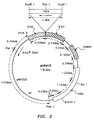
- Figure 2 provides a representation of pHSA13 in circular form.
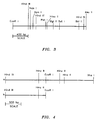
- Figure 3 provides a restriction map of the AOX1 5' regulatory region isolated from Pichia pastoris .
- Figure 4 provides a restriction map of the DAS1 5' regulatory region isolated from Pichia pastoris .
- Figure 5 provides a restriction map of the AOX1 3' termination sequence isolated from Pichia pastoris .
- Figure 6 provides a restriction map of the DAS1 3' termination sequence isolated from Pichia pastoris .
- Figure 7 provides a representation of pHSA113 in linear form.
- Figure 8 provides a representation of plasmid pAO807N which contains a linear site-specific integrative vector in the fragment clockwise from Not I to Not I.
- the structural gene may be inserted in the unique Eco RI site of this plasmid.
- Pichia pastoris is optimally grown at from about pH 4.8 to about pH 5.2. Between this pH range Pichia pastoris provided with a suitable nutrient media exhibits robust growth. This pH range also appears to result in high levels of expression of several foreign proteins such as hepatitis B surface antigen. This pH range also appeared to provide high levels of expression with human serum albumin (HSA). For example growing Pichia pastoris cells which had been transformed with a vector containing a HSA structural gene operably linked to a 5' regulatory region (i.e. a promoter) and a 3' termination sequence, the expression levels of HSA which had been obtained were approximately .71 to .81 grams/liters of HSA in the fermentation broth.
- HSA human serum albumin
- heterologous proteins which may be expressed at higher levels utilizing this method include but are not limited to heterologous proteins selected from the group consisting of tissue plasminogen activator, albumins (such as human serum albumin), lysozymes (such as bovine lysozyme), interferons (such as gamma-interferon and beta-interferon) and invertase.
- Each of the heterologous structural genes utilized in the present invention must have a signal sequence operably linked to the 5' end of sequence coding for the mature heterologous protein to effect the secretion of the mature protein.
- tissue plasmigen activator human serum albumins, bovine lysozyme, beta-interferon, gamma-interferon and invertase proteins may all be secreted utilizing the native signal sequence.
- these proteins may also be secreted utilizing secretion signal sequences from Pichia pastoris such as the acid phosphatase signal sequence disclosed in U.S. Patent Application Serial Number 07/627,539 filed December 14, 1990 by Richard Buckholz assigned to Phillips Petroleum Company (incorporated herein by reference) or the alpha-mating factor signal sequence from Saccharomyces cerevisiae .
- HSA secretion levels of approximately 1-3 grams of authentic HSA per liter of fermentation broth have been obtained.
- This invention thus provides a means for the high level secretion of HSA. Achieving these levels of HSA production is a significant advancement over the prior production levels, since at the level of 1-3 grams per liter the recovery of HSA in high yields with high purities is possible.
- the gene To express the HSA structural gene, the gene must be operably linked to a 5' regulatory region and a 3' termination sequence, which forms an expression cassette which will be inserted into a host (usually a microorganism) via a vector (such as a plasmid or linear site-specific integrative vector).
- Operably linked as used in this context refers to a juxtaposition wherein the 5'regulatory region, structural gene, and 3' termination sequence are linked and configured so as to perform their normal function.
- 5' regulatory region or promoter means DNA sequences which respond to various stimuli and provide enhanced rates of mRNA transcription.
- 3' termination sequence are sequences 3' to the stop codon of a structural gene which function to stabilize the mRNA transcription product of the gene to which the sequence is operably linked (such as sequences which elicit polyadenylation).
- the ATG of the structural gene be linked with as few intervening deoxyribonucleotides as possible to the 3' end of the 5' regulatory region, preferrably about 11 or less deoxyribonucleotides and most preferably 8 or less deoxyribonucleotides.
- the adenine and thymine content of the intervening deoxyribonucleotides be in the range of from about 55 percent to about 64 percent.
- nucleotide preferences for certain specific locations. Counting left from the ATG codon of the structural gene with the first position left being the -1 position, it appears that adenine or cytosine is the most preferred deoxyribonucleotide, in the -2 position the most preferred deoxyribonucleotide is either adenine or thymine, in the -3 position the most preferred deoxyribonucleotide is adenine or thymine and the most preferred nucleotide at the -4 position is adenine, thymine or cytosine.
- the AOX1 or DAS1 5' regulatory region having the restriction maps of Figures 3 and 4 or, the sequences provided as SEQ ID No: 1 and SEQ ID No: 2, respectively, be linked at their 3' end of the sequence to the ATG start codon of the HSA structural gene.
- One example of an appropriate linkages for the AOX1 5' regulatory region is illustrated below: Table I Construct Designation End of the 5' Regulatory Region for AOX 1 Deoxyribonucleotide intervening before ATG start condon pHSA413 5' - TTCGAAACG 5' - NONE
- AOX1 primary alcohol oxidase
- DAS1 dihydroxyacetone synthase
- GAP glyceraldehyde-3-phosphate dehydrogenase gene
- PHO1 acid phosphatase gene
- the AOX1 5' regulatory region, DAS1 5' regulatory region and p40 5' regulatory region are described in U.S. Patent 4,855,231, incorporated herein by reference.
- the GAP 5' regulatory region is disclosed in EPA 374,913 published June 27, 1990, incorporated herein by reference.
- the PHO1 5' regulatory region is disclosed in U.S. Patent Application 07/672,539 filed December 14, 1990, assigned to Phillips Petroleum Company.
- the presently preferred 5'regulatory regions employed in the practice of this invention are those characterized by their ability to respond to methanol-containing media, such regulatory regions selected from the group consisting of AOX1 , and DAS1 .
- the most preferred 5' regulatory region for the practice of this invention is the AOX1 5' regulatory region.
- 3' termination sequences should be utilized in the expression cassette as discussed above. 3' termination sequences may function to terminate, polyadenylate and/or stabilize the messenger RNA coded for by the structural gene when operably linked to a gene, but the particular 3' termination sequence is not believed to be critical to the practice of the present invention.
- a few examples of illustrative sources for 3' termination sequences for the practice of this invention include but are not limited to the Hansenula polymorpha and Pichia pastoris 3' termination sequences. Preferred are those derived from Pichia pastoris such as those selected from the group consisting of the 3' termination sequences of AOX1 gene, DAS1 gene, p40 gene GAP gene, PHO1 gene and HIS4 gene. Particularly preferred is the 3' termination sequence of the AOX1 gene.
- Pichia pastoris may be transformed with a variety of HSA structural genes (in the inventive transformants discussed herein the HSA structural gene encodes both a signal sequence and a mature HSA protein).
- HSA structural genes have been sequenced by Lawn et al. Nuc. Acids Res. 9:6105 (1981), and Dugaiczyk et al., Proc. Natl. Acad. Sci. USA 79:71 (1982). These genes may also be obtained by reisolation of the genes by the technique of Lawn et al., Dugaiczyk et al. or synthesized in vitro by a custom gene manufacturer such as British Biotechnology, Ltd.
- HSA gene One possible method of obtaining a HSA gene would be to screen a human liver cDNA library with oligonucleotide probes or screen a human liver cDNA expression library with anti-HSA antisera to identify HSA expressing cDNAs.
- One suitable HSA structural gene is provided in SEQ ID NO: 3. Once a structural gene for HSA is recovered, it may be necessary to further tailor the gene. Following the isolation of an HSA structural gene, the gene is inserted into a suitable Pichia pastoris vector such as a plasmid or linear site-specific integrative vector.
- Plasmid-type vectors have long been one of the basic elements employed in recombinant DNA technology. Plasmids are circular extra-chromosomal double-stranded DNA found in microorganisms. Plasmids have been found to occur in single or multiple copies per cell. Included in plasmid DNA is the information required for plasmid reproduction, e.g. an autonomous replication sequence such as those disclosed by James M. Cregg in U.S. Patent 4,837,148, issued June 6, 1989, incorporated herein by reference. Additionally one or more means of phenotypically selecting the plasmid in transformed cells may also be included in the information encoded in the plasmid.
- an autonomous replication sequence such as those disclosed by James M. Cregg in U.S. Patent 4,837,148, issued June 6, 1989, incorporated herein by reference.
- one or more means of phenotypically selecting the plasmid in transformed cells may also be included in the information encoded in the plasmid.
- Suitable integrative vectors for the practice of the present invention are the linear site-specific integrative vectors described by James M. Cregg, in U.S. Patent 4,882,279, issued November 21, 1989, which is incorporated herein by reference. These vectors comprise a serially arranged sequence of at least 1) a first insertable DNA fragment; 2) a selectable marker gene; and 3) a second insertable DNA fragment. An expression cassette containing a heterologous structural gene is inserted in this vector between the first and second insertable DNA fragments either before or after the marker gene. Alternatively, an expression cassette can be formed in situ if a regulatory region or promoter is contained within one of the insertable fragments to which the structural gene may be operably linked.
- the first and second insertable DNA fragments are each at least about 200 nucleotides in length and have nucleotide sequences which are homologous to portions of the genomic DNA of the species to be transformed.
- the various components of the integrative vector are serially arranged forming a linear fragment of DNA such that the expression cassette and the selectable marker gene are positioned between the 3' end of the first insertable DNA fragment and the 5' end of the second insertable DNA fragment.
- the first and second insertable DNA fragments are oriented with respect to one another in the serially arranged linear fragment as they are oriented in the parent genome.
- Nucleotide sequences useful as the first and second insertable DNA fragments are nucleotide sequences which are homologous with separate portions of the native genomic site at which genomic modification is to occur. For example, if genomic modification is to occur at the locus of the alcohol oxidase gene, the first and second insertable DNA fragments employed would be homologous to separate portions of the alcohol oxidase gene locus.
- nucleotide sequences which could be used as first and second insertable DNA fragments are deoxyribonucleotide sequences selected from the group consisting of the Pichia pastoris alcohol oxidase (AOX1 ) gene, dihydroxyacetone synthase ( DAS1 ) gene, p40 gene glyceraldehyde-3-phosphate dehydrogenase ( GAP ), acid phosphatase ( PHO1 ) and HIS4 gene.
- the AOX1 gene, DAS1 gene, p40 gene and HIS4 genes are disclosed in U.S. Patents 4,855,231 and 4,885,242 both incorporated herein by reference.
- the designation DAS1 is equivalent to the DAS designation originally used in U.S.
- the GAP gene is disclosed in EPA 374,913 published June 27, 1990 incorporated herein by reference.
- the PHO1 gene is disclosed in U.S. Patent Application 07/672,539 filed December 14, 1990, assigned to Phillips Petroleum Company, incorporated herein by reference.
- the first insertable DNA fragment may contain an operable regulatory region which may comprise the regulatory region utilized in the expression cassette.
- the use of the first insertable DNA fragment as the regulatory region for an expression cassette is a preferred embodiment of this invention.
- Figure 1 provides a diagram of a vector utilizing the first insertable DNA fragment as a regulatory region for a cassette.
- an insertion site or sites and a 3' termination sequence may be placed immediately 3' to the first insertable DNA fragment.
- This conformation of the linear site-specific integrative vector has the additional advantage of providing a ready site for insertion of a structural gene without necessitating the separate addition of a compatible 3' termination sequence.
- the first insertable DNA fragment does not contain a regulatory region, a suitable regulatory region will need to be inserted linked to the structural gene, in order to provide an operable expression cassette.
- a 3' termination sequence can be operably linked to the 3' end of the structural gene.
- selectable marker gene in the DNA used to transform the host strain. This facilitates selection and isolation of those organisms which have incorporated the transforming DNA.
- the marker gene confers a phenotypic trait to the transformed organism which the host did not have, e.g. restoration of the ability to produce a specific amino acid where the untransformed host strain has a defect in the specific amino acid biosynthetic pathway, or provides resistance to antibiotics and the like.
- Exemplary selectable marker genes may be selected from the group consisting of the HIS4 gene (disclosed in U.S. Patent 4,885,242) and the ARG4 gene (disclosed in U.S.
- Patent 4,818,700 incorporated herein by reference from Pichia pastoris and Saccharomyces cerevisiae , the invertase gene ( SUC2 ) (disclosed in U.S. Patent 4,857,467 incorporated herein by reference) from Saccharomyces cerevisia e, or the G418 R /kanamycin resistance gene from the E. coli transposable elements Tn601 or Tn903 .
- DNA sequences can also be incorporated into the vectors employed in the practice of the present invention, such as, for example, bacterial plasmid DNA, bacteriophage DNA, and the like. Such sequences enable the amplification and maintenance of these vectors in bacterial hosts.
- the insertion of the HSA structural gene into suitable vectors may be accomplished by any suitable technique which cleaves the chosen vector at an appropriate site or sites and results in at least one operable expression cassette containing the HSA structural gene being present in the vector.
- Ligation of the HSA structural gene may be accomplished by any appropriate ligation technique such as utilizing T4 DNA ligase.
- the initial selection, propagation, and optional amplification of the ligation mixture of the HSA structural gene and a vector is preferably performed by transforming the mixture into a bacterial host such as E. coli (although the ligation mixture could be transformed directly into a yeast host but, the transformation rate would be extremely low). Suitable transformation techniques for E. coli are well known in the art. Additionally, selection markers and bacterial origins of replication necessary for the maintenance of a vector in a bacterial host are also well known in the art.
- the isolation and/or purification of the desired plasmid containing the HSA structural gene in an expression system may be accomplished by any suitable means for the separation of plasmid DNA from the host DNA.
- the vectors formed by ligation may be tested, preferably after propagation, to verify the presence of the HSA gene and its operable linkage to a regulatory region and a 3' termination sequence. This may be accomplished by a variety of techniques including but not limited to endonuclease digestion, gel electrophoresis, or Southern hybridization.
- Transformation of plasmids or linear vectors into yeast hosts may be accomplished by suitable transformation techniques including but not limited to those taught by Cregg and Barringer, U.S. Patent 4,929,555; Hinnen et al., Proc. Natl. Acad. Sci. 75, (1978) 1929; Ito et al., J. Bacteriol. 153, (1983) 163; Cregg et al. Mol. Cell Biol. 5 (1985), pg. 3376; D. W. Stroman et al., U.S. Patent 4,879,231, issued November 7, 1989; or Sreekrishna et al., Gene , 59 (1987), pg. 115.
- Preferable for the practice of this invention is the transformation technique of Cregg et al. (1985). It is desirable for the practice of this invention to utilize an excess of linear vectors and select for multiple insertions by Southern hybridization.
- the yeast host for transformation may be any suitable methylotrophic yeast.
- Suitable methylotrophic yeasts include but are not limited to yeast capable of growth on methanol selected from the group consisting of the genera Hansenula and Pichia .
- a list of specific species which are exemplary of this class of yeasts may be found in C. Anthony, The Biochemistry of Methylotrophs , 269 (1982).
- Presently preferred are methylotrophic yeasts of the genus Pichia such as the auxotrophic Pichia pastoris GS115 (NRRL Y-15851); Pichia pastoris GS190 (NRRL Y-18014) disclosed in U.S.
- Auxotrophic Pichia pastoris strains are also advantageous to the practice of this invention for their ease of selection. It is recognized that wild type Pichia pastoris strains (such as NRRL Y-11430 and NRRL Y-11431) may be employed with equal success if a suitable transforming marker gene is selected, such as the use of SUC2 to transform Pichia pastoris to a strain capable of growth on sucrose or an antibiotic resistance marker is employed, such as G418.
- Transformed Pichia pastoris cells can be selected for by using appropriate techniques including but not limited to culturing previously auxotrophic cells after transformation in the absence of the biochemical product required (due to the cell's auxotrophy), selection for and detection of a new phenotype ("methanol slow"), or culturing in the presence of an antibiotic which is toxic to the yeast in the absence of a resistance gene contained in the transformant.
- Isolated transformed Pichia pastoris cells are cultured by appropriate fermentation techniques such as shake flask fermentation, high density fermentation or the technique disclosed by Cregg et al. in, High-Level Expression and Efficient Assembly of Hepatitis B Surface Antigen in the Methylotrophic Yeast, Pichia Pastoris 5 Bio/Technology 479 (1987). Isolates may be screened by assaying for HSA production to identify those isolates with the highest HSA production level.
- the cultivation of transformed Pichia pastoris can be conducted in an aqueous continuous or batch-fed manner, utilizing a variety of carbon-energy sources and/or nutrient sources.
- batch-fed fermentation is preferred.
- Suitable carbon-energy sources for growing Pichia pastoris include but are not limited to the carbon-energy source selected from the group consisting of methanol, glycerol, sorbitol, glucose, fructose and combinations of any two or more thereof.
- Preferred carbon-energy sources for growing Pichia pastoris are carbon-energy sources selected from the group consisting of methanol, glycerol, and combinations thereof.
- a suitable nutrient source or media for Pichia pastoris would include at least one nitrogen source, at least one phosphate source, at least one source of minerals such as iron, copper, zinc, magnesium, manganese, calcium, and other trace elements, and vitamins (such as biotin, pantothenic acid, and thiamine as required).
- Suitable sources of at least one carbon-energy source and nutrients can be obtained from a variety of sources or may consist of a single source. However, preferred are at least one carbon-energy source and/or nutrient sources which have a defined character.
- One carbon-energy source and/or nutrient composition which has proven effective is: Table II Carbon-Energy Source and Nutrients Component per Liter of Water Carbon-energy Source (glycerol) 50.0 g/l H3PO4 (85%) 21 ml/l CaSO4 ⁇ 2H2O 0.9 g/l K2SO4 14.28 g/l MgSO4 ⁇ 7H2O 11.7 g/l KOH 3.9 g/l Peptone 10.0 g/l 1Yeast Extracts 5.0 g/l 2Minerals and Trace Metals 1.0 ml/l 1Yeast extract is AmberexTM 1003 which is available from and a trademark of Universal Foods Corporation, Milwaukee, Wisconsin.
- 2Minerals and trace metals are FeSO4 ⁇ 7H2O 65.0 g/l, CuSO4 ⁇ 5H2O 6.0 g/l, ZnSO4 ⁇ 7H2O 20 g/l, MnSO4 3.0 g/l and H2SO4 5.0 ml/l
- yeast extracts utilized in the present invention include but are not limited to yeast extracts selected from the group consisting of AmberexTM 1003 and BactoTM Yeast Extract (Difco Laboratories Incorporated). Alternatively, corn steep liquor could be used to replace yeast extracts as a source of nitrogen.
- Trace metals utilized in the present invention are those trace metals generally utilized in the yeast growth provided in an amount sufficient to not limit the growth rate or HSA production of Pichia pastoris which include but are not limited to trace metals selected from the group consisting of cobalt, molybdenum, iron, copper, zinc, and manganese.
- the fermentation temperature should generally range from about 20°C to about 35°C and preferably should be about 30°C.
- the dissolved oxygen content in the fermentation vessel where the fermentation is conducted in a batch-fed manner may range from about 20 percent to about 80 percent of saturation and preferably will range from about 30 percent to about 60 percent of saturation.
- the transformed strains should then be induced to express HSA at a pH of from about 5.7 to about 6.0.
- a pH of from about 5.7 to about 6.0.
- the culture would first be grown to the desired density on minimal salts, biotin and 5 percent glycerol by weight.
- the pH should be adjusted to 5.8 (with ammonia) with a temperature of about 30°C and a dissolved oxygen concentration of about 20 percent of saturation. After the glycerol is exhausted, the promoter would be induced by beginning a slow methanol feed.
- the fed should provide methanol to the culture at a rate at least sufficient to maintain the viability of the culture but the maximum methanol concentration in contact with the culture should be no more than about 5.0 percent by weight.
- the HSA secretion can be monitored during the methanol feeding by sampling the HSA present in the cell free broth. Suitable test for quantifying the amount of HSA produced are known to those skilled in the art, such as running polyacrylamide gels.
- the methanol feed should be continued until the HSA concentration reaches an acceptable level. Generally, the HSA production will peak after about 120 hours on methanol feed.
- the transformed Pichia pastoris cells are grown in shake tubes or shake flasks instead of pH controlled fermenter, additional steps should be taken to assure the maximum yields of secreted proteins, such as HSA. Specifically, it is recommended that the media used be modified from that used in fermenter to a complex media and the aeration be increased.
- the complex media utilized in the shake flasks and shake tubes should contain added amino acids.
- the amino acids may be in a defined media containing glutamic acid, methionine, lysine, leucine, isoluecine and other amino acids or through a complex media supplement, such as yeast extract or casamino acids.
- the relative concentrations of the added amino acids should generally range from about 2.5 mg/liter to about 10 mg/liter with the preferred range being from about 4 mg/liter to about 6 mg/liter of glutamic acid, methionine, lysine, leucine and isoluecine and from about 0.5 mg/liter to about 3 mg liters of the remaining amino acid (however,histidine may be omitted entirely from the added amino acids).
- yeast extract is used in place of the added amino acids, it is preferred that the yeast extract be provided in a concentration of in the range of from about 1 g/liter to about 15 g/liter be utilized in the media and most preferably the yeast extract will be provided in a concentration of 10 g/liter.
- peptone it has also been found desirable to add peptone to the media to improve secretion in shake tubes and shake flasks.
- peptone be used with the yeast extract in a concentration of from in the range of from about 1 g/liter to about 50 g/liter, and most preferably in a concentration of about 20 g/liter.
- the peptone concentration be twice the yeast extract concentration.
- Aeration in shake flask and shake tube growth of transformed Pichia pastoris appears to be an important parameter in obtaining optimum secretion.
- shake tube or flask have a large aperture covered with an air permeable cap.
- Suitable air permeable caps can be made of a loose filter material, such as cheese cloth.
- One suitable shake flask for this invention is the Tunair shake flask.
- low baffle shake flasks are also recommended to avoid excessive foaming.
- Shaker speed for aeration is recommended to be in the range of from about 250 rpms to about 300 rpms.
- the cells may be recovered then resuspended in a medium containing methanol in place of the carbon source used for growth to induce the secretion of protein.
- the flask or shake tubes may then be monitored on a regular basis to determine when the desired level of production has been achieved.
- Pichia pastoris GS115 his 4 ) NRRL Y-15851 E. coli DG75' ( hsd1 , leu6 , lacY , thr-1 , supE44 , tonA21 , lambda ⁇ )
- Suitable techniques for recombinant DNA lab work may be found in many different references including but not limited to: Methods in Enzymology , (Orlando, FL: Academic Press, Inc.), particularly Volume 152, published as, Guide to Molecular Cloning Techniques , by Berger and Kimmel (Orlando, FL: Academic Press, Inc., 1987) and Molecular Cloning/A Laboratory Manual , by Sambrook et al., 2d ed. (Cold Spring Harbor Laboratory Press, 1989) and which are all hereby incorporated by reference.
- the pHSA313 vector was constructed to provide a vector with an exact linkage between the 3' end of the native AOX1 5' regulatory region (promoter) and the start codon of the HSA structural gene.
- pHSA113 disclosed in European Patent Application 0 344 459 which is herein incorporated by reference, (see Figure 7) was digested at 37°C for 1 hour with 1 unit of Cla I in 20 ⁇ l of REact 1 buffer.
- the digestion mixture was brought to 100 ⁇ l with water and extracted once with an equal volume of phenol:chloroform:isoamyl alcohol (25:24:1 V/V), followed by extracting the aqueous layer with an equal volume of chloroform:isoamyl alcohol (24:1).
- the DNA in the aqueous phase was precipitated by adjusting the NaCl concentration to 0.2 M and adding 3 volumes of cold ethanol.
- the mixture was allowed to stand on ice (4°C) for 10 minutes and the DNA precipitate was collected by centrifugation for 30 minutes at 10,000 x g in a microfuge at 4°C.
- the DNA pellet was washed 2 times with 70% aqueous cold ethanol. The washed pellet was vacuum dried and dissolved in 10 ⁇ l water to which 2 ⁇ l of 10 x ligation buffer, 2 ⁇ l of 1 mg/ml BSA, 6 ⁇ l of water and 1 unit T4 DNA ligase were added. The mixture was incubated overnight at 4°C and a 10 ⁇ l aliquot was used to transform E .
- pHSA113 ⁇ Cla represents the deletion of HIS4 and 3' AOX1 , along with small stretches of pBR322 sequences used to link these sequences.
- the deletion of the HIS4 , 3' AOX1 and pBR322 sequences removes one of two Csp 45I sites present in the pHSA113 vector. The remaining Csp 45I site is in the AOX1 5' regulatory region (promoter).
- the gel portion corresponding to one of the lanes was stained and this was used to locate the position of the Csp 45I- Bst EII fragment of pHSA113 ⁇ Cla in the unstained lane.
- the gel portion containing the larger Csp 45I- Bst EII fragment was excised out and the DNA in the gel was electroeluted into 500 ⁇ l of 5 mM EDTA, pH 8.0.
- the DNA solution was phenol extracted as detailed in step A and the DNA precipitate was dissolved in 100 ⁇ l water.
- the larger Csp 45I- Bst EII fragment was then ligated with the Bst EII- Csp 45I oligonucleotide linker described below.
- the pXHSA113 ⁇ Cla vector by virtue of the linker described above has an exact linkage between the 3' end of the native AOX1 5' regulatory region (promoter) and the HSA ATG start codon with no extraneous DNA sequences.
- DNA was digested for 4 hours at 37°C with 5 units of Cla I in 100 ⁇ l REact 1 buffer containing 100 ⁇ g/ml BSA, followed by phenol extraction and precipitation of DNA as outlined in step A.
- the DNA precipitate was dissolved in water at a concentration of approximately 20 ng/ ⁇ l.
- the pHSA313 plasmid from this ligation contains the complete pXHSA113 ⁇ Cla sequence linked to the HIS4 gene and the AOX1 3' second insertable sequence derived from AO807N.
- the relative orientation of the components of the pHSA313 plasmid is the same as that shown in Figure 7 for plasmid pHSA113.
- the expression vector pPGP1 was constructed in the following manner. pXHSA113 ⁇ Cla (see Example I) was digested with Bsu 36I and Pvu II (partial) and the vector backbone was isolated. An HSA structural gene on a Pvu II- Bsu 36I fragment analogous to the structural gene contained in pHSA113 (disclosed in European Patent Application 0 344 459) was ligated to this vector backbone to obtain pPGP1 ⁇ Cla. About 100 ng of pPGP1 ⁇ Cla was digested with Cla I at 37°C for 1 hour. The DNA was recovered as in Example I.
- pAO807N (shown herein in Figure 8 and disclosed in European Patent Application 0 344 459) was digested with PstI, alkaline phosphatase treated and then digested with ClaI as detailed in Example I C. This fragment was then ligated to Cla I cleaned, alkaline phosphatase treated pPGP1 ⁇ Cla to obtain pPGPI.
- GS115 pPGP1-9-6 is a clone which was obtained by transformation of Pichia pastoris GS115 with pPGP1 and this clone was used in fermentation).
- the pHSA413 vector was constructed to provide a vector with an exact linkage between the 3' end of the AOX1 5' regulatory region and the start codon fo the HSA structural gene as well as an exact linkage between the 5' end of the AOX1 3' termination sequence and the 3' end of the HSA structural gene.
- Example VI 1 ⁇ g of pXHSA113 ⁇ Cla was digested for 4 hours at 37°C with 10 units of Eco RI in 100 ⁇ l REact 3 buffer. The digestion mixture was phenol extracted and DNA precipitated as detailed in Example VI. DNA precipitate was dissolved in 20 ⁇ l water and digested for 1 hour at 37°C with 20 units of Bsu 36I in 100 ⁇ l of Bsu 36I buffer. The digestion mixture was phenol extracted, DNA precipitated and dissolved in 100 ⁇ l of water as detailed in Example VI.
- the pHSA413 plasmid from theis ligation contains the complete pXHSA113 ⁇ Cla sequence linked to the HIS4 gene and the AOX1 3' second insertable sequence derived from AO807N.
- the relative orientation of the components of the pHSA413 plasmid is the same as that shown in Figure 7 for plasmid pHSA113.
- pHSA313, pHSA413, pPGP1, and pAO807N (negative control) were digested for 12 hours at 37°C in 200 ⁇ l of HS buffer with 50 units of Not I.
- the digested DNA samples were phenol extracted, precipitated as described in Example VI, dissolved in 20 ⁇ l of CaS, and were then used for transformation of Pichia pastoris GS115.
- About 10 ⁇ g each of pHSA313, pHSA413, and pAO807N were also digested with 20 units of Sst I for 12 hours at 37°C in 200 ⁇ l of REact 2 buffer containing 100 ⁇ g/ml of BSA.
- the digested DNA samples were extracted with phenol, precipitated as described in Example VI and dissolved in 20 ⁇ l of CaS.
- Pichia pastoris GS115 (NRRL Y-15851) was inoculated into about 10 ml of YPD medium and shake cultured at 30°C for 12-20 hours. 100 ml of YPD medium was inoculated with a seed culture to give an OD600 of about 0.001. The medium was cultured in a shake flask at 30°C for about 12-20 hours. The culture was harvested when the OD600 was about 0.2-0.3 by centrifugation at 1555 g for 5 minutes using a Sorvall RB5C.
- the cells were washed in 10 ml of sterile water, and then centrifuged at 1500 g for 5 minutes. (Centrifugation is performed after each cell wash at 1500 g for 5 minutes using a Sorvall RT6000B unless otherwise indicated.)
- the cells were washed once in 10 ml of freshly prepared SED, once in 10 ml of sterile 1M sorbitol, and finally resuspended in 10 ml of SCE buffer.
- 7.5 ⁇ l of 3 mg/ml Zymolyase 100,000 units/g, obtained from Miles Laboratories was added to the cell suspension. The cells were incubated at 30°C for about 10 minutes.
- Pichia pastoris GS115 cells were transformed with 10 ⁇ g of linearized DNA (see step A) using the spheroplast transformation technique of Sreekrishna et al, Gene 59, 115-125 (1987).
- DNA samples were added (up to 20 ⁇ l volume) to 12 x 75 mm sterile polypropylene tubes. (DNA should be in a suitable buffer such as TE buffer or CaS.) 100 ⁇ l of spheroplasts were added to each DNA sample and incubated at room temperature for about 20 minutes. 1 ml of PEG solution was added to each sample and incubated at room temperature for about 15 minutes and centrifuged at 700 g for 5-10 minutes. SOS (150 ⁇ l) was added to the pellet and incubated for 30 minutes at room temprature. Finally 850 ⁇ l of 1M sorbitol was added.
- a bottom agarose layer of 20 ml of regeneration agar SDR was poured per plate at least 30 minutes before transformation samples were ready.
- 8 ml aliquots of regeneration agar were distributed to 15 ml conical bottom Corning tubes in a 45°C water bath during the period that transformation samples were in SOS.
- Aliquots of 50 or 250 ⁇ l of the transformed sample was added to the 8 ml aliquots of molten regeneration agar held at 45°C and poured onto plates containing the solid 20 ml bottom agar layer. The plates were incubated at 30°C for 3-5 days.
- Transformants were selected for by culturing on SDR, a media lacking histidine. The colonies which grew in the absence of histidine were also screened for "methanol-slow" phenotype, indicating displacement of the AOX1 structural gene by the Not I DNA fragment) in the case of transformants obtained using Not I linearized vectors. Several transformed GS115 cells showing "methanol-normal" (those obtained with Sst I linearized DNA) and methanol-slow were then cultured and assayed for the production of HSA.
- Pichia pastoris GS115 strains transformed with pHSA313, pHSA413, and pPGP1 were analysed for HSA secretion in shake tube cultures. Both methanol-slow and methanol-normal strains were used. In each case 36 independent clones were studied. Transformants obtained with pAO807N served as negative controls. A protocol was developed to ensure efficient secretion and stable accumulation of HSA in the culture medium.
- Cells were grown to saturation in 10 ml BMGR or BMGY, and were placed in 50 ml tubes (2-3 days). The cells would be in the range of 10-20 A600 units. The cells were harvested, the supernatant liquid was discarded, and then the pellet was resuspended in 2 ml of BMMR or BMMY. The tube was covered with a sterile gauze (cheese cloth) instead of a cap. The tube(s) were then returned to a 30°C shaker. At the end of 2-3 days, the cells were pelleted, and the supernatant assayed for product. The pellets could be resuspended with fresh medium and returned to the shaker for renewed secretion.
- Pichia pastoris GS115:pHSA 413-6 and pPGP1-9-6 were inoculated into two 20 liter Biolafitte fermenters with an 8.5 1 working volume.
- Glycerol exhaustion was complete after about 24 hours, at which time a slow methanol feed was begun at a rate of 10-15 ml/hr.
- the methanol concentration was monitored in the fermenter and the feed rate was adjusted to maintain a concentration of 0.5-0.9 percent of methanol in the broth.
- Table III Production of HSA by Batch- Fed Fermentation Run Strain pH HSA g/l 1 GS115:pPGP1-9-6 5.09-5.32 0.71 2 GS115:pPGP1-9-6 5.22 0.81 3 GS115:pPGP1-9-6 5.91 1.28 4 GS115:pPGP1-9-6 5.78 1.59 5 GS115:pPGP1-9-6 5.78 1.98 6 GS115:pPGP1-9-6 5.79 1.32
Landscapes
- Health & Medical Sciences (AREA)
- Life Sciences & Earth Sciences (AREA)
- Chemical & Material Sciences (AREA)
- Genetics & Genomics (AREA)
- Organic Chemistry (AREA)
- Engineering & Computer Science (AREA)
- Zoology (AREA)
- Biotechnology (AREA)
- Bioinformatics & Cheminformatics (AREA)
- Wood Science & Technology (AREA)
- Biochemistry (AREA)
- General Health & Medical Sciences (AREA)
- Biomedical Technology (AREA)
- General Engineering & Computer Science (AREA)
- Molecular Biology (AREA)
- Microbiology (AREA)
- Mycology (AREA)
- Medicinal Chemistry (AREA)
- Biophysics (AREA)
- Gastroenterology & Hepatology (AREA)
- Toxicology (AREA)
- Tropical Medicine & Parasitology (AREA)
- Proteomics, Peptides & Aminoacids (AREA)
- Virology (AREA)
- Physics & Mathematics (AREA)
- Plant Pathology (AREA)
- Preparation Of Compounds By Using Micro-Organisms (AREA)
- Micro-Organisms Or Cultivation Processes Thereof (AREA)
- Peptides Or Proteins (AREA)
- Medicines Containing Material From Animals Or Micro-Organisms (AREA)
- Medicines That Contain Protein Lipid Enzymes And Other Medicines (AREA)
Applications Claiming Priority (2)
| Application Number | Priority Date | Filing Date | Title |
|---|---|---|---|
| US07/691,079 US5330901A (en) | 1991-04-26 | 1991-04-26 | Expression of human serum albumin in Pichia pastoris |
| US691079 | 1991-04-26 |
Publications (3)
| Publication Number | Publication Date |
|---|---|
| EP0510678A2 true EP0510678A2 (de) | 1992-10-28 |
| EP0510678A3 EP0510678A3 (en) | 1993-12-29 |
| EP0510678B1 EP0510678B1 (de) | 1998-03-18 |
Family
ID=24775069
Family Applications (1)
| Application Number | Title | Priority Date | Filing Date |
|---|---|---|---|
| EP92107043A Expired - Lifetime EP0510678B1 (de) | 1991-04-26 | 1992-04-24 | Expression von menschlichen Serum-Albuminen in Pichia pastoris |
Country Status (8)
| Country | Link |
|---|---|
| US (1) | US5330901A (de) |
| EP (1) | EP0510678B1 (de) |
| JP (2) | JP3579430B2 (de) |
| AT (1) | ATE164184T1 (de) |
| CA (1) | CA2059167C (de) |
| DE (1) | DE69224768T2 (de) |
| DK (1) | DK0510678T3 (de) |
| ES (1) | ES2113387T3 (de) |
Cited By (15)
| Publication number | Priority date | Publication date | Assignee | Title |
|---|---|---|---|---|
| EP0655503A1 (de) * | 1993-11-26 | 1995-05-31 | The Green Cross Corporation | Verfahren zur Herstellung von humanen Serumalbumin |
| EP0683233A3 (de) * | 1994-05-18 | 2000-05-03 | Yoshitomi Pharmaceutical Industries, Ltd. | Verfahren zur Herstellung von rekombinantem menschlichen Serumalbumin |
| CN1103373C (zh) * | 1999-03-04 | 2003-03-19 | 上海贸基生物工程科技有限公司 | 人血清白蛋白改构基因、表达载体及其宿主 |
| CN1103374C (zh) * | 1999-03-04 | 2003-03-19 | 上海贸基生物工程科技有限公司 | 重组dna技术生产人血清白蛋白的方法 |
| CN1105727C (zh) * | 1998-06-17 | 2003-04-16 | 上海海济医药生物工程有限公司 | 重组人血清白蛋白的生产方法 |
| US6686179B2 (en) | 1992-01-31 | 2004-02-03 | Aventis Behring L.L.C. | Fusion polypeptides of human serum albumin and a therapeutically active polypeptide |
| US6905688B2 (en) | 2000-04-12 | 2005-06-14 | Human Genome Sciences, Inc. | Albumin fusion proteins |
| US6946134B1 (en) | 2000-04-12 | 2005-09-20 | Human Genome Sciences, Inc. | Albumin fusion proteins |
| US7045318B2 (en) | 1995-12-30 | 2006-05-16 | Delta Biotechnology Limited | Recombinant fusion proteins to growth hormone and serum albumin |
| US7141547B2 (en) | 2001-12-21 | 2006-11-28 | Human Genome Sciences, Inc. | Albumin fusion proteins comprising GLP-1 polypeptides |
| RU2306333C2 (ru) * | 2005-05-27 | 2007-09-20 | Общество с ограниченной ответственностью научно-производственная компания "Генные и клеточные технологии" | ШТАММ ДРОЖЖЕЙ Pichia pastoris Х-33/2albumin ДЛЯ СЕКРЕЦИИ ЧЕЛОВЕЧЕСКОГО АЛЬБУМИНА |
| US7507413B2 (en) | 2001-04-12 | 2009-03-24 | Human Genome Sciences, Inc. | Albumin fusion proteins |
| US7521424B2 (en) | 2003-01-22 | 2009-04-21 | Human Genome Sciences, Inc. | Albumin fusion proteins |
| EP2272961A1 (de) * | 1999-01-30 | 2011-01-12 | Novozymes Biopharma DK A/S | Verfahren zur Herstellung von rekombinantem Albumin mit reduzierter Mannosylierung |
| CN119039424A (zh) * | 2024-08-13 | 2024-11-29 | 河北华凯惠合生物医药有限公司 | 一种高效获得高纯度重组人血清白蛋白的纯化工艺 |
Families Citing this family (24)
| Publication number | Priority date | Publication date | Assignee | Title |
|---|---|---|---|---|
| JPH0669365B2 (ja) * | 1989-05-22 | 1994-09-07 | 株式会社ミドリ十字 | アルブミン遺伝子を含むプラスミド、形質転換体、形質転換体の製造方法、アルブミンの製造方法 |
| FR2686620B1 (fr) * | 1992-01-27 | 1995-06-23 | Rhone Poulenc Rorer Sa | Serum-albumine humaine, preparation et utilisation. |
| JP3360315B2 (ja) * | 1992-07-31 | 2002-12-24 | 三菱ウェルファーマ株式会社 | ヒト血清アルブミンの高度精製方法 |
| US5728553A (en) * | 1992-09-23 | 1998-03-17 | Delta Biotechnology Limited | High purity albumin and method of producing |
| WO1995014096A1 (en) * | 1993-11-16 | 1995-05-26 | Eli Lilly And Company | Dna sequences encoding porcine pancreatic carboxypeptidase b |
| US5863894A (en) * | 1995-06-05 | 1999-01-26 | Corvas International, Inc. | Nematode-extracted anticoagulant protein |
| CA2202351A1 (en) * | 1994-10-18 | 1996-04-25 | George Phillip Vlasuk | Nematode-extracted serine protease inhibitors and anticoagulant proteins |
| US5866542A (en) * | 1994-10-18 | 1999-02-02 | Corvas International, Inc. | Nematode-extracted anticoagulant protein |
| US5945275A (en) * | 1994-10-18 | 1999-08-31 | Corvas International, Inc. | Nematode-extracted anticoagulant protein |
| US5866543A (en) * | 1995-06-05 | 1999-02-02 | Corvas International, Inc. | Nematode-extracted anticoagulant protein |
| US5872098A (en) * | 1995-06-05 | 1999-02-16 | Corvas International, Inc. | Nematode-extracted anticoagulant protein |
| US6090916A (en) * | 1994-10-18 | 2000-07-18 | Corvas International, Inc. | Nematode-extracted serine protease inhibitors and anticoagulant proteins |
| US6068995A (en) * | 1994-10-25 | 2000-05-30 | Yoshitomi Pharmaceutical Industries, Ltd. | Method for producing protein |
| EP0807165A4 (de) * | 1995-01-30 | 1998-07-15 | New York Blood Center Inc | REKOMBINANTES -g(a)-GALAKTOSIDASE ENZYM |
| WO1997012044A2 (en) * | 1995-09-25 | 1997-04-03 | Chiron Corporation | Pichia secretory leader for protein expression |
| MX9605082A (es) | 1996-10-24 | 1998-04-30 | Univ Autonoma De Nuevo Leon | Levaduras metilotroficas modificadas geneticamente para la produccion y secrecion de hormona de crecimiento humano. |
| US6150081A (en) * | 1997-12-24 | 2000-11-21 | Fuji Photo Film B.V. | Silver halide emulsions with recombinant collagen suitable for photographic application and also the preparation thereof |
| AU2002211661A1 (en) * | 2000-10-12 | 2002-04-22 | Uab Research Foundation | An artificial gene and vectors for expressing high-yield recombinant ovine interferon-tau in pichia pastoris |
| WO2004108890A2 (en) * | 2003-05-30 | 2004-12-16 | New Century Pharmaceuticals, Inc. | Dilute methanol -or ethanol- induced production of polypeptides in microorganisms |
| DK1678314T3 (da) * | 2003-10-22 | 2012-12-03 | Keck Graduate Inst | Fremgangsmåde til syntetisering af heteromultimere polypeptider i gær ved anvendelse af en haploid parringsstrategi |
| CA2724052A1 (en) * | 2008-05-15 | 2009-11-19 | R-Tech Ueno, Ltd. | Pharmaceutical composition for the treatment of dry eye and/or corneal and conjunctival lesion |
| WO2014011723A1 (en) | 2012-07-12 | 2014-01-16 | Uab Baltymas | Generation of native recombinant secreted human endoplasmic reticulum chaperones by using their native signal sequences in yeast expression systems |
| BR112015021753B1 (pt) * | 2013-03-08 | 2023-02-23 | Keck Graduate Institute Of Applied Life Sciences | Ácidos nucleicos isolados de pichia pastoris, vetor de expressão, células hospedeiras de levedura e construto de dna, bem como método para produzir uma proteína |
| CN103397036B (zh) * | 2013-03-27 | 2014-12-10 | 广州白云山拜迪生物医药有限公司 | 一种用于毕赤酵母表达重组人血清白蛋白的基因序列 |
Family Cites Families (15)
| Publication number | Priority date | Publication date | Assignee | Title |
|---|---|---|---|---|
| US4414329A (en) * | 1980-01-15 | 1983-11-08 | Phillips Petroleum Company | Biochemical conversions by yeast fermentation at high cell densities |
| IL66614A (en) * | 1981-08-28 | 1985-09-29 | Genentech Inc | Method of constructing a dna sequence encoding a polypeptide,microbial production of human serum albumin,and pharmaceutical compositions comprising it |
| US4775622A (en) * | 1982-03-08 | 1988-10-04 | Genentech, Inc. | Expression, processing and secretion of heterologous protein by yeast |
| US4885242A (en) * | 1984-10-30 | 1989-12-05 | Phillips Petroleum Company | Genes from pichia histidine pathway and uses thereof |
| US4837148A (en) * | 1984-10-30 | 1989-06-06 | Phillips Petroleum Company | Autonomous replication sequences for yeast strains of the genus pichia |
| US4855231A (en) * | 1984-10-30 | 1989-08-08 | Phillips Petroleum Company | Regulatory region for heterologous gene expression in yeast |
| US4808537A (en) * | 1984-10-30 | 1989-02-28 | Phillips Petroleum Company | Methanol inducible genes obtained from pichia and methods of use |
| AU5890286A (en) * | 1985-06-17 | 1986-12-24 | Genex Corp. | Cloned human serum albumin gene |
| US4882279A (en) * | 1985-10-25 | 1989-11-21 | Phillips Petroleum Company | Site selective genomic modification of yeast of the genus pichia |
| US4895800A (en) * | 1985-11-26 | 1990-01-23 | Phillips Petroleum Company | Yeast production of hepatitis B surface antigen |
| GB8613388D0 (en) * | 1986-06-03 | 1986-07-09 | Delta Biotechnology Ltd | Induction of galactose regulated gene expression in yeast |
| GB8615701D0 (en) * | 1986-06-27 | 1986-08-06 | Delta Biotechnology Ltd | Stable gene integration vector |
| IL82935A0 (en) * | 1986-08-12 | 1987-12-20 | Phillips Petroleum Co | Secretion of heterologous proteins from yeast |
| IL89992A0 (en) * | 1988-04-25 | 1989-12-15 | Phillips Petroleum Co | Expression of human serum albumin in methylotrophic yeasts |
| CA2058820C (en) * | 1991-04-25 | 2003-07-15 | Kotikanyad Sreekrishna | Expression cassettes and vectors for the secretion of human serum albumin in pichia pastoris cells |
-
1991
- 1991-04-26 US US07/691,079 patent/US5330901A/en not_active Expired - Lifetime
-
1992
- 1992-01-10 CA CA002059167A patent/CA2059167C/en not_active Expired - Lifetime
- 1992-03-13 JP JP05551892A patent/JP3579430B2/ja not_active Expired - Lifetime
- 1992-04-24 AT AT92107043T patent/ATE164184T1/de active
- 1992-04-24 DE DE69224768T patent/DE69224768T2/de not_active Expired - Lifetime
- 1992-04-24 EP EP92107043A patent/EP0510678B1/de not_active Expired - Lifetime
- 1992-04-24 ES ES92107043T patent/ES2113387T3/es not_active Expired - Lifetime
- 1992-04-24 DK DK92107043T patent/DK0510678T3/da active
-
2004
- 2004-04-12 JP JP2004116572A patent/JP2004242678A/ja active Pending
Cited By (41)
| Publication number | Priority date | Publication date | Assignee | Title |
|---|---|---|---|---|
| US7041478B2 (en) | 1992-01-31 | 2006-05-09 | Aventis Behring L.L.C. | G-CSF and albumin fusion protein |
| US7435410B2 (en) | 1992-01-31 | 2008-10-14 | Novozymes Biopharma Uk Limited | Methods of treatment with interferson and albumin fusion protein |
| US7410779B2 (en) | 1992-01-31 | 2008-08-12 | Novozymes Biopharma Uk Limited | Fusion polypeptides of human serum albumin and a therapeutically active polypeptide |
| US6686179B2 (en) | 1992-01-31 | 2004-02-03 | Aventis Behring L.L.C. | Fusion polypeptides of human serum albumin and a therapeutically active polypeptide |
| US7094577B2 (en) | 1992-01-31 | 2006-08-22 | Aventis Behring L.L.C. | Insulin and albumin fusion protein |
| US7081354B2 (en) | 1992-01-31 | 2006-07-25 | Aventis Behring L.L.C. | Interleukin and albumin fusion protein |
| US7056701B2 (en) | 1992-01-31 | 2006-06-06 | Aventis Behring L.L.C. | Hormone and albumin fusion protein |
| US6972322B2 (en) | 1992-01-31 | 2005-12-06 | Aventis Behring L.L.C. | Interferon and albumin fusion protein |
| US6987006B2 (en) | 1992-01-31 | 2006-01-17 | Aventis Behring L.L.C. | Erythropoietin and albumin fusion protein, nucleic acids, and methods thereof |
| US6989365B2 (en) | 1992-01-31 | 2006-01-24 | Aventis Behring L.L.C. | Methods of treatment with erythropoietin and albumin fusion protein |
| EP0655503A1 (de) * | 1993-11-26 | 1995-05-31 | The Green Cross Corporation | Verfahren zur Herstellung von humanen Serumalbumin |
| EP0683233A3 (de) * | 1994-05-18 | 2000-05-03 | Yoshitomi Pharmaceutical Industries, Ltd. | Verfahren zur Herstellung von rekombinantem menschlichen Serumalbumin |
| US7045318B2 (en) | 1995-12-30 | 2006-05-16 | Delta Biotechnology Limited | Recombinant fusion proteins to growth hormone and serum albumin |
| US7550432B2 (en) | 1995-12-30 | 2009-06-23 | Novozymes Biopharma Uk Limited | Recombinant fusion proteins to growth hormone and serum albumin |
| CN1105727C (zh) * | 1998-06-17 | 2003-04-16 | 上海海济医药生物工程有限公司 | 重组人血清白蛋白的生产方法 |
| US9555344B2 (en) | 1999-01-30 | 2017-01-31 | Albumedix A/S | Process for the purification of recombinant albumin |
| EP2272961A1 (de) * | 1999-01-30 | 2011-01-12 | Novozymes Biopharma DK A/S | Verfahren zur Herstellung von rekombinantem Albumin mit reduzierter Mannosylierung |
| US9029102B2 (en) | 1999-01-30 | 2015-05-12 | Novozymes Biopharma Dk A/S | Process for the purification of recombinant albumin |
| CN1103374C (zh) * | 1999-03-04 | 2003-03-19 | 上海贸基生物工程科技有限公司 | 重组dna技术生产人血清白蛋白的方法 |
| CN1103373C (zh) * | 1999-03-04 | 2003-03-19 | 上海贸基生物工程科技有限公司 | 人血清白蛋白改构基因、表达载体及其宿主 |
| US6905688B2 (en) | 2000-04-12 | 2005-06-14 | Human Genome Sciences, Inc. | Albumin fusion proteins |
| US6926898B2 (en) | 2000-04-12 | 2005-08-09 | Human Genome Sciences, Inc. | Albumin fusion proteins |
| US6946134B1 (en) | 2000-04-12 | 2005-09-20 | Human Genome Sciences, Inc. | Albumin fusion proteins |
| US6994857B2 (en) | 2000-04-12 | 2006-02-07 | Human Genome Sciences, Inc. | Albumin fusion proteins |
| US7482013B2 (en) | 2000-04-12 | 2009-01-27 | Human Genome Sciences, Inc. | Albumin fusion proteins |
| US7507414B2 (en) | 2000-04-12 | 2009-03-24 | Human Genome Sciences, Inc. | Albumin fusion proteins |
| US7785599B2 (en) | 2000-04-12 | 2010-08-31 | Human Genome Sciences, Inc. | Albumin fusion proteins |
| US7507413B2 (en) | 2001-04-12 | 2009-03-24 | Human Genome Sciences, Inc. | Albumin fusion proteins |
| US7847079B2 (en) | 2001-12-21 | 2010-12-07 | Human Genome Sciences, Inc. | Albumin fusion proteins |
| US7592010B2 (en) | 2001-12-21 | 2009-09-22 | Human Genome Sciences, Inc. | Albumin fusion proteins |
| US8071539B2 (en) | 2001-12-21 | 2011-12-06 | Human Genome Sciences, Inc. | Albumin fusion proteins |
| US8252739B2 (en) | 2001-12-21 | 2012-08-28 | Human Genome Sciences, Inc. | Albumin fusion proteins |
| US8513189B2 (en) | 2001-12-21 | 2013-08-20 | Human Genome Sciences, Inc. | Albumin fusion proteins |
| US8993517B2 (en) | 2001-12-21 | 2015-03-31 | Human Genome Sciences, Inc. | Albumin fusion proteins |
| US7238667B2 (en) | 2001-12-21 | 2007-07-03 | Human Genome Sciences, Inc. | Albumin fusion proteins |
| US9221896B2 (en) | 2001-12-21 | 2015-12-29 | Human Genome Sciences, Inc. | Albumin fusion proteins |
| US9296809B2 (en) | 2001-12-21 | 2016-03-29 | Human Genome Sciences, Inc. | Albumin fusion proteins |
| US7141547B2 (en) | 2001-12-21 | 2006-11-28 | Human Genome Sciences, Inc. | Albumin fusion proteins comprising GLP-1 polypeptides |
| US7521424B2 (en) | 2003-01-22 | 2009-04-21 | Human Genome Sciences, Inc. | Albumin fusion proteins |
| RU2306333C2 (ru) * | 2005-05-27 | 2007-09-20 | Общество с ограниченной ответственностью научно-производственная компания "Генные и клеточные технологии" | ШТАММ ДРОЖЖЕЙ Pichia pastoris Х-33/2albumin ДЛЯ СЕКРЕЦИИ ЧЕЛОВЕЧЕСКОГО АЛЬБУМИНА |
| CN119039424A (zh) * | 2024-08-13 | 2024-11-29 | 河北华凯惠合生物医药有限公司 | 一种高效获得高纯度重组人血清白蛋白的纯化工艺 |
Also Published As
| Publication number | Publication date |
|---|---|
| DE69224768T2 (de) | 1998-07-09 |
| DK0510678T3 (da) | 1998-12-21 |
| US5330901A (en) | 1994-07-19 |
| CA2059167A1 (en) | 1992-10-27 |
| EP0510678B1 (de) | 1998-03-18 |
| JP2004242678A (ja) | 2004-09-02 |
| DE69224768D1 (de) | 1998-04-23 |
| JPH05115294A (ja) | 1993-05-14 |
| EP0510678A3 (en) | 1993-12-29 |
| CA2059167C (en) | 2001-08-21 |
| JP3579430B2 (ja) | 2004-10-20 |
| ATE164184T1 (de) | 1998-04-15 |
| ES2113387T3 (es) | 1998-05-01 |
Similar Documents
| Publication | Publication Date | Title |
|---|---|---|
| EP0510678B1 (de) | Expression von menschlichen Serum-Albuminen in Pichia pastoris | |
| EP0510693B1 (de) | Expression von menschlichen Serum-Albuminen in Pichia Pastoris | |
| EP0226752B1 (de) | Methode zur erhöten Expression von Polypeptiden in Hefe des Gattung Pichia | |
| EP0180899B1 (de) | Autonome Replikationssequenzen für Hefestämme des Genus Pichia | |
| EP0495208B1 (de) | Pichia pastoris Säure-Phosphatase-Gen | |
| JPH09182585A (ja) | 酵母中でのポリペプチドの発現 | |
| EP0341746B1 (de) | Expression von Hepatitis B S und preS2 Proteinen in methylotrophen Hefen | |
| WO1990003431A1 (en) | Mixed feed recombinant yeast fermentation | |
| US5135868A (en) | Cultures of yeast of the genus Pichia altered by site selective genomic modification | |
| US5310660A (en) | Method and a hybrid promoter for controlling exogenous gene transcription | |
| CA1340063C (en) | Production of animal lysozyme c via secretion from pichia pastoris and composition therefor | |
| CA2136564C (en) | Process for producing human serum albumin | |
| EP0339567A1 (de) | Expression von Hepatitis B PreS 2-Protein in methylotrophen Hefen | |
| EP0245479B1 (de) | Verkürzter phosphoglycerat-kinase-promotor | |
| GB2217332A (en) | Expression of salmon growth hormone in methylotrophic yeast of genus pichia | |
| EP0180958A1 (de) | Rekombinantes Plasmid und durch dieses Plasmid transformierter mikrobieller Stamm |
Legal Events
| Date | Code | Title | Description |
|---|---|---|---|
| PUAI | Public reference made under article 153(3) epc to a published international application that has entered the european phase |
Free format text: ORIGINAL CODE: 0009012 |
|
| AK | Designated contracting states |
Kind code of ref document: A2 Designated state(s): AT BE CH DE DK ES FR GB GR IT LI LU NL PT SE |
|
| PUAL | Search report despatched |
Free format text: ORIGINAL CODE: 0009013 |
|
| RAP1 | Party data changed (applicant data changed or rights of an application transferred) |
Owner name: RESEARCH CORPORATION TECHNOLOGIES, INC. |
|
| AK | Designated contracting states |
Kind code of ref document: A3 Designated state(s): AT BE CH DE DK ES FR GB GR IT LI LU NL PT SE |
|
| RHK1 | Main classification (correction) |
Ipc: C12N 15/81 |
|
| 17P | Request for examination filed |
Effective date: 19940505 |
|
| 17Q | First examination report despatched |
Effective date: 19951124 |
|
| GRAG | Despatch of communication of intention to grant |
Free format text: ORIGINAL CODE: EPIDOS AGRA |
|
| GRAG | Despatch of communication of intention to grant |
Free format text: ORIGINAL CODE: EPIDOS AGRA |
|
| GRAG | Despatch of communication of intention to grant |
Free format text: ORIGINAL CODE: EPIDOS AGRA |
|
| GRAH | Despatch of communication of intention to grant a patent |
Free format text: ORIGINAL CODE: EPIDOS IGRA |
|
| RBV | Designated contracting states (corrected) |
Designated state(s): AT BE CH DE DK ES FR GB IT LI NL SE |
|
| GRAH | Despatch of communication of intention to grant a patent |
Free format text: ORIGINAL CODE: EPIDOS IGRA |
|
| GRAA | (expected) grant |
Free format text: ORIGINAL CODE: 0009210 |
|
| AK | Designated contracting states |
Kind code of ref document: B1 Designated state(s): AT BE CH DE DK ES FR GB IT LI NL SE |
|
| REF | Corresponds to: |
Ref document number: 164184 Country of ref document: AT Date of ref document: 19980415 Kind code of ref document: T |
|
| REG | Reference to a national code |
Ref country code: CH Ref legal event code: EP Ref country code: CH Ref legal event code: NV Representative=s name: R. A. EGLI & CO. PATENTANWAELTE |
|
| ET | Fr: translation filed | ||
| REF | Corresponds to: |
Ref document number: 69224768 Country of ref document: DE Date of ref document: 19980423 |
|
| REG | Reference to a national code |
Ref country code: ES Ref legal event code: FG2A Ref document number: 2113387 Country of ref document: ES Kind code of ref document: T3 |
|
| ITF | It: translation for a ep patent filed | ||
| REG | Reference to a national code |
Ref country code: DK Ref legal event code: T3 |
|
| PLBE | No opposition filed within time limit |
Free format text: ORIGINAL CODE: 0009261 |
|
| STAA | Information on the status of an ep patent application or granted ep patent |
Free format text: STATUS: NO OPPOSITION FILED WITHIN TIME LIMIT |
|
| 26N | No opposition filed | ||
| REG | Reference to a national code |
Ref country code: GB Ref legal event code: IF02 |
|
| PGFP | Annual fee paid to national office [announced via postgrant information from national office to epo] |
Ref country code: DK Payment date: 20110324 Year of fee payment: 20 |
|
| PGFP | Annual fee paid to national office [announced via postgrant information from national office to epo] |
Ref country code: FR Payment date: 20110331 Year of fee payment: 20 Ref country code: CH Payment date: 20110328 Year of fee payment: 20 |
|
| PGFP | Annual fee paid to national office [announced via postgrant information from national office to epo] |
Ref country code: DE Payment date: 20110429 Year of fee payment: 20 Ref country code: GB Payment date: 20110328 Year of fee payment: 20 Ref country code: SE Payment date: 20110406 Year of fee payment: 20 Ref country code: ES Payment date: 20110425 Year of fee payment: 20 |
|
| PGFP | Annual fee paid to national office [announced via postgrant information from national office to epo] |
Ref country code: NL Payment date: 20110420 Year of fee payment: 20 Ref country code: AT Payment date: 20110324 Year of fee payment: 20 Ref country code: BE Payment date: 20110509 Year of fee payment: 20 |
|
| PGFP | Annual fee paid to national office [announced via postgrant information from national office to epo] |
Ref country code: IT Payment date: 20110423 Year of fee payment: 20 |
|
| REG | Reference to a national code |
Ref country code: DE Ref legal event code: R071 Ref document number: 69224768 Country of ref document: DE |
|
| REG | Reference to a national code |
Ref country code: DE Ref legal event code: R071 Ref document number: 69224768 Country of ref document: DE |
|
| BE20 | Be: patent expired |
Owner name: *RESEARCH CORP. TECHNOLOGIES INC. Effective date: 20120424 |
|
| REG | Reference to a national code |
Ref country code: CH Ref legal event code: PL |
|
| REG | Reference to a national code |
Ref country code: NL Ref legal event code: V4 Effective date: 20120424 |
|
| REG | Reference to a national code |
Ref country code: DK Ref legal event code: EUP |
|
| REG | Reference to a national code |
Ref country code: GB Ref legal event code: PE20 Expiry date: 20120423 |
|
| REG | Reference to a national code |
Ref country code: SE Ref legal event code: EUG |
|
| PG25 | Lapsed in a contracting state [announced via postgrant information from national office to epo] |
Ref country code: DE Free format text: LAPSE BECAUSE OF EXPIRATION OF PROTECTION Effective date: 20120425 |
|
| PG25 | Lapsed in a contracting state [announced via postgrant information from national office to epo] |
Ref country code: GB Free format text: LAPSE BECAUSE OF EXPIRATION OF PROTECTION Effective date: 20120423 |
|
| REG | Reference to a national code |
Ref country code: AT Ref legal event code: MK07 Ref document number: 164184 Country of ref document: AT Kind code of ref document: T Effective date: 20120424 |
|
| REG | Reference to a national code |
Ref country code: ES Ref legal event code: FD2A Effective date: 20130711 |
|
| PG25 | Lapsed in a contracting state [announced via postgrant information from national office to epo] |
Ref country code: ES Free format text: LAPSE BECAUSE OF EXPIRATION OF PROTECTION Effective date: 20120425 |